Direct Answer
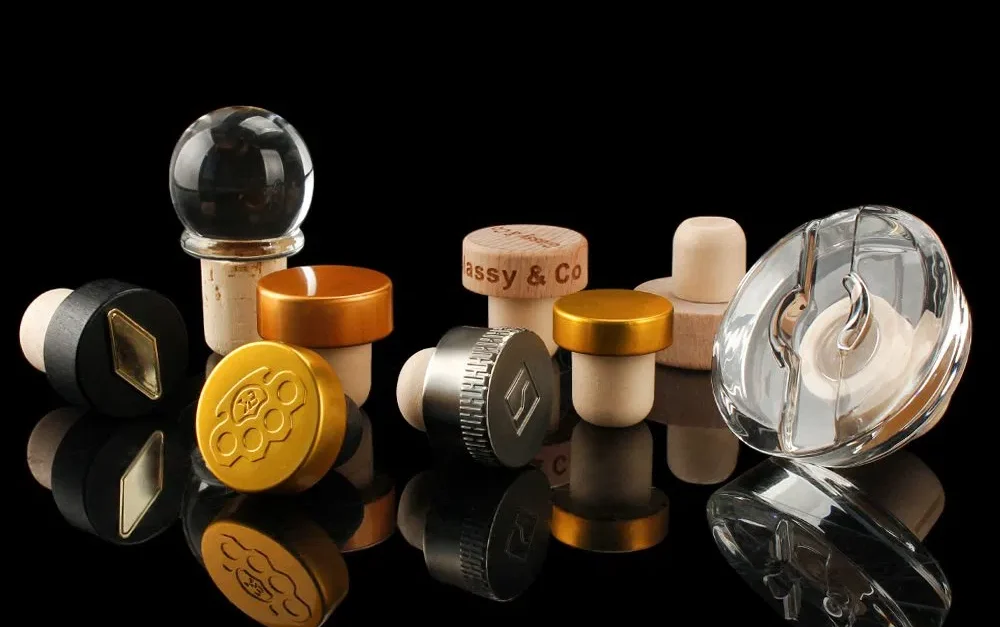
Matte vs glossy bar-top stoppers should be selected according to brand positioning, bottle design, stopper material, logo decoration, retail lighting, sample testing, and production requirements. Matte bar-top stoppers are usually better for craft, heritage, natural, minimalist, and understated premium spirits packaging. Glossy bar-top stoppers are usually better for polished, colorful, high-contrast, nightlife, and gift-ready spirits packaging.
For spirits brands, distilleries, private-label buyers, importers, distributors, bottlers, and packaging buyers, the right choice is not only visual. A suitable bar-top stopper must fit the bottle neck, seal reliably, support repeated opening, match the label and capsule, and remain consistent during bulk production.
This guide compares matte and glossy bar-top stoppers from a practical sourcing perspective, helping buyers evaluate finish options before requesting samples or quotations from Kandacork Closures.
Quick Navigation
- Matte vs Glossy Bar-Top Stoppers: Quick Comparison
- What Most Bar-Top Stopper Pages Don’t Explain
- Matte vs Glossy by Stopper Material
- Best Logo Decoration Methods
- Finish Risk and Sample Testing Matrix
- Technical Requirements Before Sampling
- Sample Approval and Quality Control Checklist
- Supplier Capability Evidence Buyers Should Request
- FAQ
Matte vs Glossy Bar-Top Stoppers: Quick Comparison
| Comparison Point | Matte Bar-Top Stoppers | Glossy Bar-Top Stoppers |
|---|---|---|
| Visual style | Soft, muted, low-sheen, refined | Bright, polished, reflective, high-sheen |
| Brand message | Craft, natural, heritage, minimalist, premium restraint | Modern, bold, commercial, luxury, gift-ready |
| Retail lighting | Reduces glare and strong reflections | Creates highlights and stronger shelf visibility |
| Hand feel | Often softer, warmer, or more tactile | Smooth, polished, slick, or lacquered |
| Logo effect | Works well with embossing, debossing, foil, and laser engraving | Works well with screen printing, foil, metallic effects, and high-contrast logos |
| Fingerprint visibility | Usually lower, depending on coating | Often higher on dark glossy surfaces |
| Scratch visibility | Often less obvious, but soft-touch coatings need testing | More visible on black or dark high-gloss finishes |
| Best materials | Plastic, aluminum, wood, resin, coated composite | Plastic, aluminum, acrylic, lacquered wood, resin |
| Best spirits categories | Whisky, rum, gin, tequila, mezcal, craft spirits | Vodka, gin, liqueurs, limited editions, gift sets |
| Key sample test | Texture, coating uniformity, color consistency | Scratch resistance, reflection quality, surface defects |
Always compare matte and glossy stopper samples on the actual bottle with the label, capsule, and carton in place. A closure finish can look very different once it is combined with glass color, label texture, metallic details, and retail lighting.
What Most Bar-Top Stopper Pages Don’t Explain
Many bar-top stopper pages explain material, size, color, or basic customization. Fewer pages explain how finish choice affects real purchasing decisions.
For commercial spirits packaging, matte and glossy finishes should be reviewed beyond appearance. Buyers should test how the stopper looks under retail lighting, how the logo reads on the selected surface, how the finish resists handling marks, and whether the supplier can keep the color and coating consistent across repeat orders.
Glossy dark stoppers may need stricter packing protection because fingerprints, dust, and scratches can be more visible. Matte soft-touch stoppers may require scuff and oil-mark testing. Wood finishes may show natural grain variation. Metallic finishes may change appearance under different lighting angles.
The safest approach is to approve the finish on the complete bottle package, not on a loose stopper alone. Buyers developing a full packaging program can also review bottle structure, decoration, and closure alignment through an integrated spirits packaging partner such as Kandacork Glass.
What Are Matte and Glossy Bar-Top Stoppers?
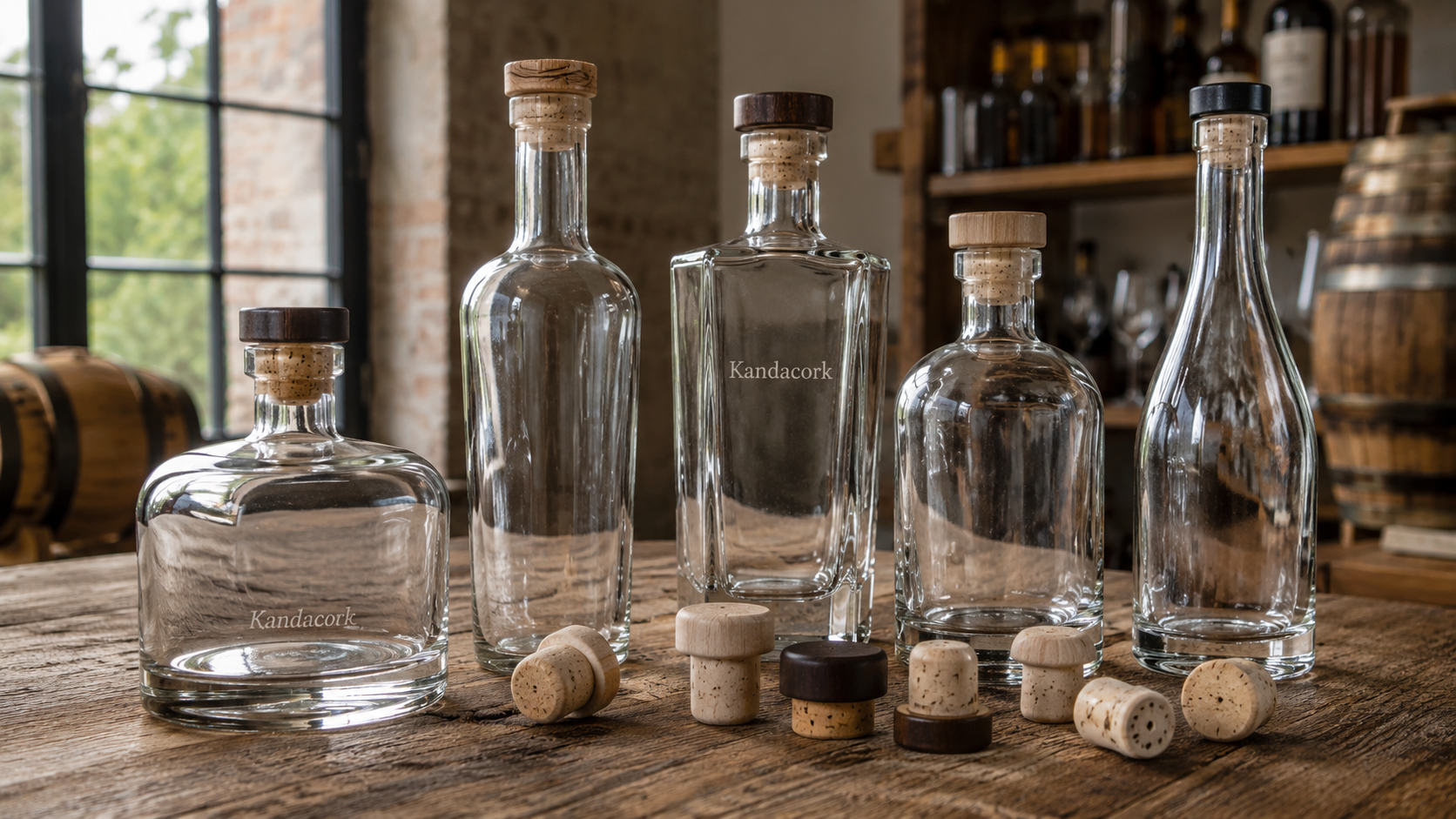
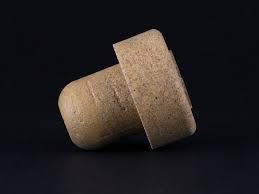
A bar-top stopper, also called a T-top closure or T-stopper, usually combines a visible top head with a shank that fits into the bottle neck. The top head creates the visual and tactile brand impression, while the shank provides fit and sealing performance.
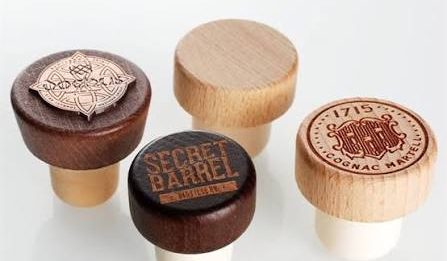
Matte bar-top stoppers have a low-reflection surface. Depending on the material and process, the finish may be satin, frosted, brushed, soft-touch, raw, natural, or lightly textured. Matte finishes are often used for craft spirits, premium whisky, botanical gin, aged rum, mezcal, tequila, and minimalist private-label packaging.
Glossy bar-top stoppers have a reflective, polished, lacquered, or high-shine surface. They catch light more directly and can make colors appear brighter and more saturated. Glossy finishes are often used for vodka, modern gin, liqueurs, flavored spirits, gift sets, and high-visibility retail packaging.
Both options can be developed with plastic, aluminum, wood, resin, acrylic, and composite stopper heads. Buyers comparing closure types, materials, and bulk supply options can start with Kandacork Closures’ custom spirits bottle closures and stoppers range to understand how different stopper structures support premium liquor packaging projects.
When to Choose Matte Bar-Top Stoppers
Spirits brands should choose matte bar-top stoppers when they want a refined, tactile, and low-glare appearance. Matte finishes are often suitable for premium packaging that relies on restraint instead of shine.
Matte is especially effective for brands using textured labels, embossed glass, dark color palettes, natural materials, or minimalist design. A matte black stopper can communicate modern luxury. A matte wooden stopper can suggest craft and authenticity. A matte cream, green, navy, or stone-like stopper can support botanical, natural, or artisanal positioning.
Matte bar-top stoppers are commonly used for whisky, bourbon, rum, gin, tequila, mezcal, organic spirits, and premium private-label ranges. They can reduce glare in retail lighting and support subtle decoration methods such as debossing, embossing, foil stamping, and laser engraving.
For buyers, matte finishes are worth considering when the bottle already has strong decorative elements. If the package uses a heavy base, metallic label, foil capsule, textured paper, or premium gift box, a matte stopper can balance the design and make the overall bottle feel more controlled.
When to Choose Glossy Bar-Top Stoppers
Spirits brands should choose glossy bar-top stoppers when they want a bright, polished, and high-impact finish. Glossy closures can create stronger shelf visibility and help the bottle stand out in photography, bars, retail displays, and gift packaging.
Glossy finishes work well for vodka, modern gin, liqueurs, flavored spirits, cocktail-focused products, limited editions, and color-coded product ranges. Glossy black can create a sleek and modern premium effect. Glossy white can make a bottle look clean and contemporary. Glossy red, blue, green, gold, or metallic finishes can help product families become easier to recognize.
Glossy bar-top stoppers can look highly premium when paired with clear glass, metallic labels, polished cartons, or bright capsules. However, buyers should test the surface carefully. Dark glossy surfaces may show fingerprints, scratches, dust, and packing marks more clearly than matte finishes.
For commercial projects, glossy stoppers should be checked after handling, packing, and transport simulation. A showroom sample may look perfect, but bulk production requires stable coating quality, protective packaging, and clear inspection standards.
Matte vs Glossy by Stopper Material
Plastic Bar-Top Stoppers
Plastic bar-top stoppers are widely used because they support flexible shapes, custom colors, molded logos, and cost-efficient production. They can be produced in matte, glossy, translucent, metallic-look, ribbed, or soft-touch finishes.
Matte plastic is suitable for premium private-label spirits, minimalist packaging, and modern craft brands. Glossy plastic works well for vibrant colors, strong shelf visibility, and flavor-coded product ranges.
Buyers should confirm whether the plastic head is molded in color or surface coated. Molded color can support repeatability, while coated finishes may provide more advanced visual effects. In both cases, color tolerance, logo clarity, surface defects, and bonding strength between the head and shank should be checked during sampling.
Aluminum Bar-Top Stoppers
Aluminum bar-top stoppers are often selected for premium spirits packaging because they look precise, modern, and durable. Aluminum can support matte, brushed, satin, anodized, glossy, polished, and metallic effects.
Matte black aluminum is suitable for whisky, gin, tequila, and premium vodka. Brushed silver, brushed gold, gunmetal, copper, and bronze can create a refined metallic appearance. Glossy aluminum can work well for limited editions, gifting, and modern luxury packaging.
For aluminum projects, buyers should review surface treatment, coating adhesion, oxidation resistance, decoration method, and finish consistency. Laser marking, screen printing, embossing, debossing, and color filling may produce different results depending on the selected finish.
Wooden Bar-Top Stoppers
Wooden bar-top stoppers communicate craft, heritage, warmth, and natural quality. Wood can be raw, stained, varnished, matte coated, semi-gloss, or high-gloss.
Matte wood is suitable for whisky, bourbon, rum, tequila, mezcal, and botanical spirits. It emphasizes grain, texture, and authenticity. Glossy varnished wood creates a more classic and polished appearance, often suitable for heritage spirits or gift packaging.
Because wood is a natural material, buyers should review grain variation, stain absorption, color consistency, coating uniformity, logo sharpness, and moisture protection. A matte finish may look more natural, while glossy varnish can make the stopper appear more formal and polished.
Resin and Acrylic Bar-Top Stoppers
Resin and acrylic bar-top stoppers are useful for distinctive spirits packaging. They can support opaque, transparent, marbled, stone-like, ceramic-look, matte, and high-gloss effects.
Matte resin can create a soft-touch, stone, or ceramic impression. Glossy acrylic can create a jewel-like, glass-like, or highly polished effect. These materials are suitable for special editions, luxury launches, and brands that want the closure to feel like a custom design object.
Buyers should check weight, molding marks, air bubbles, color dispersion, surface finish, logo placement, and bonding strength.
Natural Cork, Synthetic Cork, and Polymer Shanks
The visible stopper head is only one part of the closure. The shank is the part that enters the bottle neck and provides fit and sealing performance.
Common shank materials include natural cork, micro-agglomerated cork, synthetic cork, and polymer or TPE-based shanks. The shank must match the bottle neck opening and support the required insertion force, pull-out force, leakage resistance, and repeat use.
As a practical starting point, some closure projects use a shank diameter slightly larger than the bottle neck opening to help create a tight fit. However, final sizing should always be confirmed by physical testing because glass tolerance, shank material, insertion force, pull-out force, and filling-line handling can affect performance. Buyers can use a dedicated glass bottle neck closure matching guide to prepare neck dimensions, drawings, and samples before development.
For matte vs glossy bar-top stoppers, buyers should approve the complete closure assembly, not only the top finish.
Best Logo Decoration Methods for Matte and Glossy Bar-Top Stoppers
Embossed Logos
Embossing raises the logo above the surface. It works well on matte bar-top stoppers because shadows and tactile details can make the logo visible without strong color contrast. Embossed matte closures are suitable for whisky, rum, gin, and limited-edition spirits that need subtle premium branding.
Debossed Logos
Debossing presses the logo into the surface. It creates a quiet luxury effect and is especially suitable for matte plastic, matte aluminum, soft-touch resin, and coated wood. Debossed logos are useful when the brand wants tactile recognition rather than a loud printed mark.
Hot Foil Logos
Hot foil can create strong contrast on matte stoppers. Gold, silver, copper, bronze, black, or holographic foil can stand out clearly against matte black, matte white, navy, dark green, or natural wood tones. On glossy stoppers, foil can create a more reflective luxury effect, but glare and readability should be tested.
Screen Printing and Pad Printing
Screen printing and pad printing are common for logos, icons, batch marks, and decorative details. These methods can work on both matte and glossy surfaces. Ink adhesion depends on substrate, coating, surface energy, ink system, and curing process.
Laser Marking and Engraving
Laser marking can produce precise logos on wood, aluminum, coated plastic, and some synthetic materials. Laser engraving on matte wood can look authentic and craft-focused, while laser marking on aluminum can look technical and premium.
Decoration should be tested on the selected finish before bulk production to confirm adhesion, readability, alignment, color accuracy, and rub resistance. If the stopper sidewall or grip area is part of the branding strategy, Kandacork Closures can also support custom closure sidewall design for bar-top stoppers, screw caps, ROPP closures, and related closure systems.
Finish Recommendations by Spirits Category
| Spirits Category | Recommended Finish | Reason |
|---|---|---|
| Whisky and bourbon | Matte black, stained wood, brushed metal, dark varnished wood | Supports heritage, maturity, and premium restraint |
| Vodka | Glossy black, glossy white, polished silver, clear acrylic | Communicates purity, modernity, and clean shelf impact |
| Gin | Matte botanical tones or glossy color-coded finishes | Supports either craft botanicals or flavor recognition |
| Rum | Matte wood, dark stained wood, bronze, copper, glossy varnished wood | Matches aged, warm, heritage, or gift positioning |
| Tequila and mezcal | Matte resin, stone-like texture, wood, brushed metal | Supports earthy, artisanal, and tactile brand cues |
| Liqueurs | Glossy colors, metallic finishes, custom molded tops | Improves flavor recognition and gifting appeal |
| Private-label spirits | Matte for premium restraint; glossy for shelf visibility | Helps buyers match target price and retail strategy |
These recommendations are not fixed rules. The best result depends on the full packaging system: bottle shape, glass color, label stock, capsule, carton, target price, and retail environment.
Finish Risk and Sample Testing Matrix
| Finish Issue | More Common With | Buyer Risk | How to Reduce Risk |
|---|---|---|---|
| Fingerprints | Dark glossy surfaces | Premium bottle looks handled before purchase | Test handling marks and use protective packing |
| Scuffs | Soft-touch matte coatings | Surface looks inconsistent after shipping | Confirm coating durability and carton protection |
| Glare | Glossy metallic finishes | Logo may be hard to read under strong light | Test under retail and photo lighting |
| Color variation | Wood and coated finishes | Batch inconsistency | Approve a physical color standard |
| Low logo contrast | Matte-on-matte decoration | Brand mark may look too subtle | Test foil, embossing depth, debossing, or color filling |
| Pinholes or orange peel | Glossy coatings | Visible quality defect on premium packaging | Define visual inspection criteria |
| Grain variation | Wooden tops | Each stopper may look slightly different | Approve acceptable range for natural wood |
| Packing marks | Glossy or soft-touch finishes | Finish may look damaged after transit | Use separated packing or protective layers |
This matrix helps buyers move from general appearance preference to specific testing standards before confirming bulk production.
Technical Requirements Before Sampling
Before ordering custom bar-top stoppers, buyers should prepare technical details that help the supplier evaluate fit, appearance, and production feasibility.
Important information includes:
- Bottle neck inner diameter
- Bottle neck finish drawing
- Physical bottle sample if available
- Current closure sample if available
- Target stopper head diameter
- Shank diameter and length
- Shank material
- Stopper head material
- Preferred finish: matte, glossy, satin, brushed, soft-touch, varnished, lacquered, or metallic
- Pantone color or physical color sample
- Logo artwork file
- Preferred decoration method
- Capsule or tamper-evident sleeve requirements
- Expected order quantity
- Destination market
- Export packing requirements
This information helps Kandacork Closures recommend a practical closure structure, finish process, decoration method, and sample development path. Buyers who need a broader project checklist can also review how a custom bar-top closure supplier evaluates materials, sizing, logo options, samples, MOQ, and bulk supply support.
Sample Approval and Quality Control Checklist
Sample approval should go beyond visual preference. Buyers should evaluate how the closure performs on the actual bottle and how the finish behaves under real handling conditions.
A practical sample approval checklist includes:
- Fit on the actual bottle neck
- Insertion force
- Pull-out force
- Leakage after inversion
- Repeated opening and closing
- Head and shank bonding strength
- Logo alignment and sharpness
- Color under daylight and retail lighting
- Matte or gloss level consistency
- Scratch resistance
- Fingerprint visibility
- Surface defects
- Capsule compatibility
- Odor neutrality
- Packing protection
For matte bar-top stoppers, buyers should pay close attention to coating uniformity, texture consistency, oil marks, scuffs, color variation, and logo contrast. Some soft-touch matte coatings feel premium but require careful packing to avoid surface marks.
For glossy bar-top stoppers, buyers should check reflection quality, scratches, fingerprints, pinholes, orange peel, dust marks, and color depth. High-gloss black and other dark finishes often need stricter visual inspection.
For repeat orders, the supplier should maintain approved reference samples, color standards, production records, and inspection criteria.
Regulatory and Documentation Questions Buyers Should Ask
Spirits bottle closures may involve materials, coatings, inks, adhesives, and shank components that require documentation depending on the destination market and intended use.
Buyers should ask whether the shank material contacts the spirit, whether coatings and colorants are suitable for the intended application, and whether the supplier can provide food-contact documentation when required. For U.S. projects, buyers may need to consider U.S. FDA food packaging and food-contact substance guidance. For EU projects, food contact materials are commonly reviewed under the safety and inertness principles of Regulation (EC) No. 1935/2004.
For export projects, these questions should be discussed early. Documentation needs can vary by market, material, closure structure, and whether the component has direct or indirect contact with the product.
Supplier Capability Evidence Buyers Should Request
A qualified stopper supplier should provide more than product photos and a unit price. Buyers should ask for evidence that the supplier can support finish development, fit testing, decoration, quality control, and repeat production.
Useful evidence includes:
- Matte and glossy finish sample board
- Bottle-fit test sample
- Decoration proof or logo trial
- Pre-production sample
- Approved color standard
- Approved finish standard
- Packing method photo
- Bulk inspection criteria
- Food-contact documentation if required
- Repeat-order color control process
- Surface protection recommendation for glossy or soft-touch finishes
This evidence helps buyers confirm whether the supplier can support a full commercial spirits packaging project, not only a one-time sample.
Key Questions to Ask a Bar-Top Stopper Supplier
Before moving from sample review to quotation, buyers should ask five practical questions:
- Can you test matte and glossy finishes on our actual bottle?
- Can you recommend the correct shank size and material?
- Can you test our logo decoration before production?
- Can you maintain finish and color consistency for repeat orders?
- Can you provide packing and documentation support for export markets?
These questions help buyers identify whether the supplier is only selling standard closures or can support a full custom spirits packaging project.
How Matte and Glossy Finishes Affect Cost
The cost of matte vs glossy bar-top stoppers depends on material, shape, decoration, order quantity, coating process, color matching, mold requirements, and inspection standards.
A simple matte plastic stopper may be cost-efficient for private-label spirits. A custom glossy resin stopper with a molded logo may require higher tooling and sampling costs. A matte aluminum stopper with laser marking may cost more than a standard plastic top but can create stronger premium positioning.
Main cost factors include stopper head material, shank material, custom mold requirements, coating process, logo method, inspection standard, packing protection, order quantity, and repeat order stability.
Buyers should compare total packaging value, not only unit price. A well-designed stopper can improve perceived product value, strengthen brand consistency, and reduce launch risk.
How to Request Samples from Kandacork Closures
To compare matte vs glossy bar-top stoppers for a spirits bottle project, buyers should send clear project information to Kandacork Closures.
Recommended sample request information includes:
- Bottle drawing or physical bottle sample
- Neck opening measurement
- Current closure sample if available
- Spirits category
- Target stopper material
- Preferred matte or glossy finish
- Brand color reference
- Logo artwork
- Decoration method preference
- Expected order quantity
- Destination market
- Capsule, label, and gift box requirements
- Launch timeline
- Private-label or branded project details
With this information, Kandacork Closures can help review material options, shank fit, logo decoration, finish development, sample approval, and quotation requirements.
Conclusion
Matte vs glossy bar-top stoppers are both effective for spirits bottles, but they serve different commercial purposes. Matte finishes are usually better for craft, heritage, natural, minimalist, and understated premium packaging. Glossy finishes are usually better for polished, colorful, high-contrast, nightlife, and gift-ready packaging.
To compare both options for your project, send Kandacork Closures your bottle drawing, neck measurement, finish reference, logo artwork, target material, order quantity, and destination market through the custom closure quote page. The team can support material comparison, sample development, decoration testing, quality review, and quotation planning.
FAQ
Are matte bar-top stoppers more premium than glossy stoppers?
Matte bar-top stoppers often communicate understated luxury, craft quality, and modern restraint. However, glossy bar-top stoppers can also look premium when paired with metallic labels, clear glass, polished cartons, or gift packaging. Premium perception depends on the full packaging system.
Do glossy bar-top stoppers show scratches more easily?
Glossy stoppers do not always scratch more easily, but scratches, fingerprints, dust, and packing marks can be more visible on glossy dark surfaces. Buyers should test surface resistance and packing protection before approving production.
Which finish is better for whisky bottles?
Matte black, stained wood, brushed metal, and dark varnished wood are often suitable for whisky bottles because they support heritage and premium restraint. Glossy finishes can also work for modern whisky brands or gift editions.
Which finish is better for vodka bottles?
Glossy black, glossy white, polished metal, and clear acrylic are often suitable for vodka bottles because they support a clean, modern, and reflective appearance. Matte black or matte white can work well for minimalist premium vodka.
Can matte bar-top stoppers use foil logos?
Yes. Matte surfaces often work well with foil logos because the contrast between a low-sheen finish and metallic foil can be strong. Gold, silver, copper, bronze, and black foil are common options.
What information is needed for a quotation?
A quotation usually requires bottle neck details, stopper size, head material, shank material, finish target, logo method, color reference, order quantity, packing requirements, and destination market.
What is the safest way to choose between matte and glossy finishes?
The safest way is to compare physical samples on the actual bottle with the label, capsule, and carton in place. Buyers should review appearance, fit, surface quality, logo decoration, handling marks, and packing protection before confirming production.