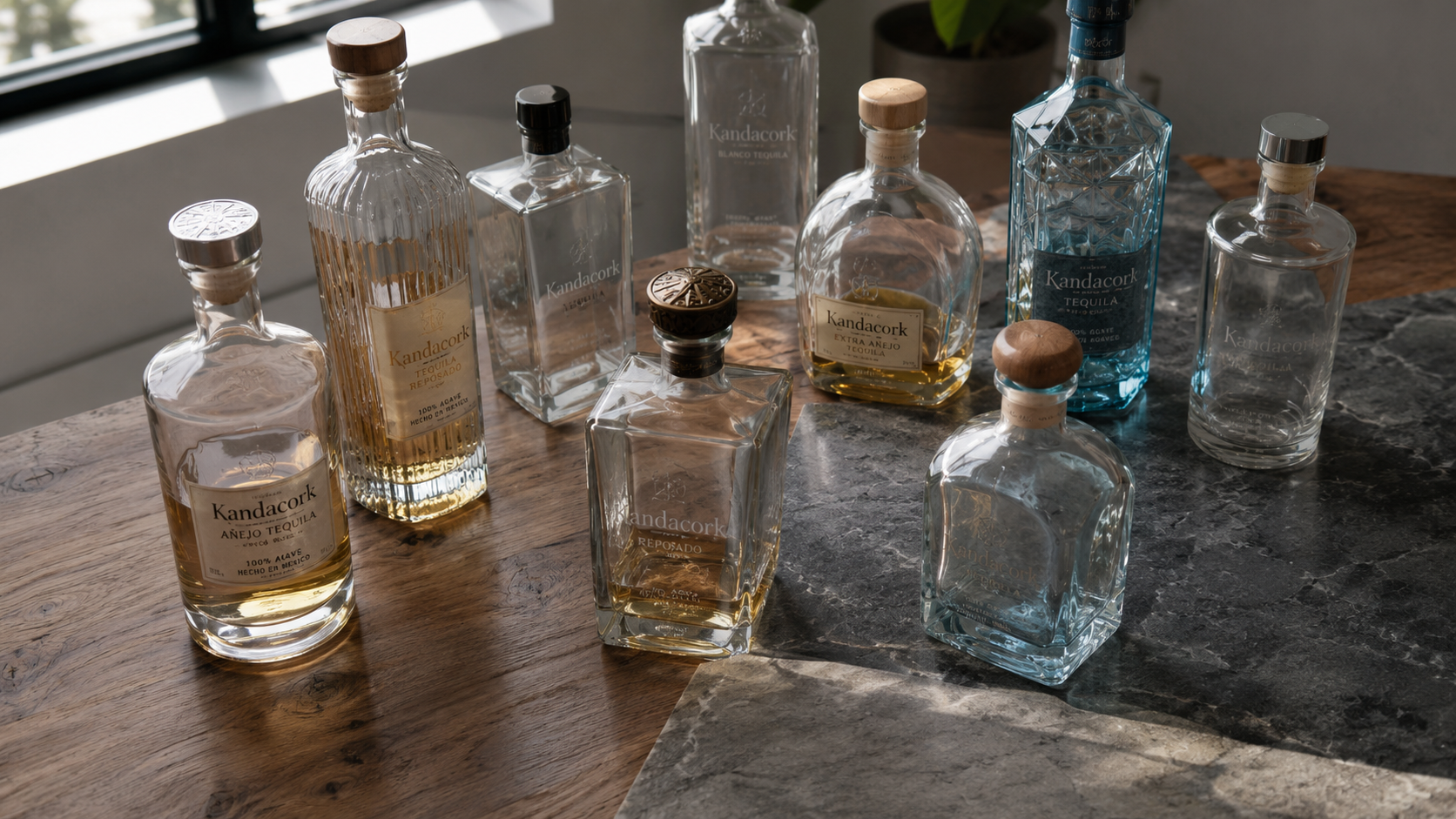
Aluminum bar-top stoppers are lightweight premium spirits closures made with an aluminum head and a cork, synthetic cork, or synthetic sealing shank. They are used for spirits bottles because they combine a refined metal finish, practical handling, flexible branding, and reliable closure performance for commercial bottling projects.
For spirits brands, distilleries, private label buyers, importers, distributors, bottlers, and packaging buyers, the right stopper is not only a finishing detail. It affects bottle compatibility, shelf presentation, consumer opening experience, transport safety, production consistency, and total packaging cost.
This guide explains how aluminum bar-top stoppers work, when they are the right choice, when another closure material may be better, what technical specifications buyers should check, and how to prepare a clear sample request or quotation inquiry.
What Are Aluminum Bar-Top Stoppers?
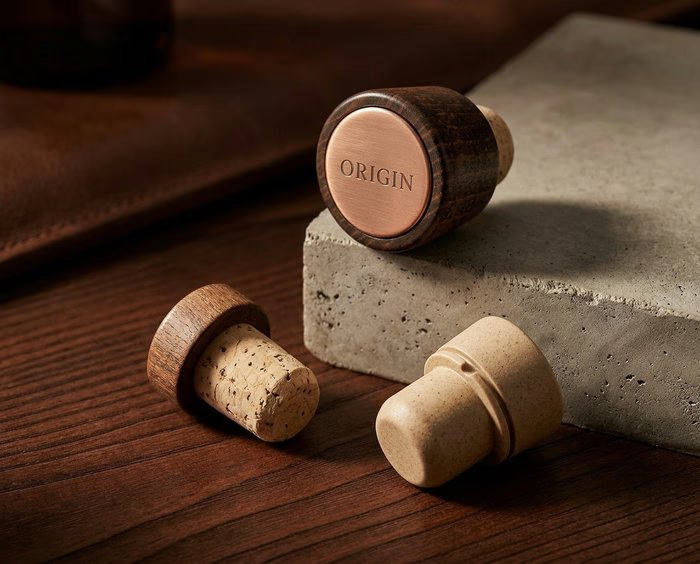
Aluminum bar-top stoppers, also called aluminum T-top stoppers, aluminum top corks, aluminum bottle stoppers, or aluminium bar-top closures, are two-part spirits bottle closures. The aluminum head provides premium appearance, grip, and branding space, while the shank fits into the bottle neck to support resealing, insertion feel, and pull-out resistance.
The aluminum head is the visible part of the closure. It can be finished in matte, brushed, polished, anodized, coated, black, silver, gold, bronze, champagne, or custom colors. It can also support laser engraving, printing, embossing, debossing, and sidewall branding.
The shank is the functional part. Common options include synthetic shank, synthetic cork shank, natural cork shank, black synthetic shank, and beige synthetic cork-style shank. The best option depends on bottle neck dimensions, brand style, target price level, production volume, and sample test results.
Buyer Decision Summary
| Buyer Question | Short Answer |
|---|---|
| Best for | Premium spirits brands needing lightweight metal closures |
| Main advantage | Metal finish with lower weight than many heavy alloy closures |
| Common applications | Vodka, gin, whisky, rum, tequila, mezcal, brandy, liqueur, private label spirits |
| Key technical risk | Incorrect shank fit if the bottle neck is not tested |
| Common shank options | Synthetic shank, synthetic cork shank, natural cork shank |
| Must test before bulk production | Yes, with actual bottle samples whenever possible |
| RFQ information needed | Bottle drawing, neck inner diameter, finish, logo, quantity, destination market |
This summary helps packaging buyers quickly decide whether aluminum bar-top stoppers fit their project before reviewing detailed specifications.
Why Choose Aluminum for Lightweight Premium Spirits Closures?
Premium spirits packaging must communicate value before the bottle is opened. Bottle shape, glass weight, label material, decoration, closure finish, and carton design all influence how buyers and consumers perceive the product.
Aluminum bar-top stoppers are useful when a brand wants a premium metal closure without unnecessary weight. Compared with many zinc alloy closures, aluminum can offer a lighter handling experience. Compared with glass or crystal stoppers, aluminum is less fragile and easier to manage in commercial packaging.
Aluminum also gives brands strong decoration flexibility. A brushed silver stopper can fit modern gin or vodka packaging. Matte black can support premium tequila or minimalist spirits. Champagne gold, bronze, copper, or dark metal finishes can strengthen whisky, rum, brandy, and liqueur packaging.
For private label buyers and importers, aluminum is practical because it can support both standard head styles and customized decoration. This allows buyers to develop a premium-looking closure without always starting from a fully custom mold.
When Aluminum May Not Be the Best Choice
Aluminum bar-top stoppers are versatile, but they are not the best option for every spirits packaging project.
If a brand wants a very heavy luxury feel, zinc alloy or zamak may be more suitable because closure weight can become part of the premium experience. Buyers comparing heavier closure systems can also review metal stopper options for premium spirits bottles before finalizing material direction.
If the brand story is focused on natural craft, heritage, or hand-finished authenticity, a wooden bar-top stopper may better support the visual message.
If the project is extremely price-sensitive, plastic stoppers may be more suitable for entry-level spirits or promotional bottles.
If the bottle is a collectible decanter or gift display item, glass or crystal stoppers may provide a stronger decorative effect, although they can be heavier and more fragile.
A reliable supplier should help buyers compare materials honestly instead of recommending aluminum for every project.
Aluminum Bar-Top Stopper Specification Guide
Buyers should review the following specifications before approving samples or requesting a quotation.
| Specification | Buyer Should Check | Why It Matters |
|---|---|---|
| Shank diameter | 19.5 mm, 20 mm, 21.5 mm, 22.5 mm, or custom size | Determines bottle neck fit and sealing behavior |
| Head material | Aluminum, anodized aluminum, coated aluminum | Affects weight, finish, color, and premium feel |
| Head shape | Flat, rounded, stepped, tapered, wide, low-profile, or custom | Influences grip, shelf presence, and brand style |
| Shank material | Synthetic, synthetic cork, natural cork, black synthetic, beige synthetic | Affects insertion, pull-out force, appearance, and consistency |
| Surface finish | Matte, brushed, polished, anodized, coated, metallic color | Controls visual consistency and brand positioning |
| Decoration method | Laser engraving, printing, embossing, debossing, sidewall branding | Determines logo clarity, durability, and visual impact |
| Testing requirement | Insertion test, pull-out force test, leakage check, finish inspection | Reduces production and shipment risk |
| Documentation | Food-contact declaration, material information, inspection records | Supports importer, distributor, bottler, and brand-owner approval |
A clear specification helps the supplier recommend the right aluminum bar-top stoppers faster and reduces the risk of incorrect samples.
Aluminum vs. Wood, Plastic, Zinc Alloy, and Glass Stoppers
The best stopper material depends on brand positioning, bottle design, order volume, target market, and budget. Aluminum is often selected when buyers need a premium metal look with lighter handling and strong decoration flexibility.
| Material | Main Strength | Possible Limitation | Best Use Case |
|---|---|---|---|
| Aluminum | Lightweight metal look, strong decoration options, consistent finish | Less heavy than zinc alloy if closure weight is part of the luxury signal | Vodka, gin, tequila, rum, whisky, private label spirits |
| Wood | Natural, warm, craft-oriented appearance | Grain and color may vary between batches | Heritage whisky, craft spirits, artisanal rum |
| Plastic | Cost-effective and lightweight | Lower perceived premium value | Entry-level spirits, promotional bottles, budget projects |
| Zinc alloy | Heavy luxury feel and strong sculptural design | Higher weight and potentially higher cost | Ultra-premium whisky, rum, tequila, limited editions |
| Glass or crystal | Decorative and high-end visual appeal | Fragile, heavier, and more complex to pack | Gift sets, decanters, collectible spirits |
For many commercial spirits lines, aluminum bar-top stoppers provide a balanced option: premium enough for shelf impact, light enough for practical production, and flexible enough for custom branding. Buyers comparing broader material trade-offs can use this glass stoppers vs metal stoppers guide as a reference when the project involves luxury decanters, heavy closures, or collectible packaging.
How to Confirm Bottle Neck Fit
Bottle neck fit is the most important technical requirement. A stopper can look premium but still fail if the shank does not match the actual bottle neck.
The final stopper fit depends on bottle neck inner diameter, shank material, insertion depth, shank compression, and pull-out force. Buyers should not choose aluminum bar-top stoppers by nominal shank size alone.
Common shank diameters for spirits closures may include 19.5 mm, 20 mm, 21.5 mm, and 22.5 mm. However, different glass bottle suppliers, molds, and production batches can create small variations in the neck opening.
The safest process is to test physical stopper samples with the actual bottle. Bottle drawings are useful, but real bottle testing gives better confirmation of fit, insertion feel, pull-out force, sealing behavior, and visual proportion.
Recommended Testing Process Before Bulk Production
Before approving aluminum bar-top stoppers for commercial production, buyers should follow a structured sample and testing process.
Bottle Drawing Review
The supplier should review the bottle drawing, especially the neck inner diameter, neck depth, and finish tolerance. This helps identify suitable shank sizes before samples are prepared.
Physical Bottle Sample Check
Physical bottle samples allow the supplier to test fit and appearance more accurately than drawings alone. This step is especially important when the bottle comes from a new mold or a new glass supplier.
Standard Stopper Sample Selection
The supplier may recommend existing aluminum head styles, shank materials, and shank sizes for initial review. This helps buyers compare appearance, weight, finish, and basic fit before custom development.
Insertion and Pull-Out Force Test
The stopper should insert smoothly without excessive force. It should also provide enough resistance when removed, so the closure feels secure but not difficult for consumers to open.
Leakage and Inverted Bottle Check
Buyers should test the stopper with the actual bottle and filling condition. Inverted checks, storage observation, vibration review, and shipment simulation can help identify potential sealing risks.
Decoration Sample Approval
Logo position, engraving depth, print adhesion, embossing detail, color matching, and surface finish should be reviewed before mass production.
Pre-Production Confirmation
Before bulk production, buyers should approve final samples that represent the confirmed material, size, finish, logo method, and packing method.
Before confirming bulk production, buyers can share bottle drawings, neck inner diameter, preferred finish, and logo artwork with Kandacork Closures for sample recommendation. This helps reduce packaging risk before tooling, decoration, filling, or shipment planning begins.
Decoration Options for Aluminum Stopper Heads
Aluminum is well suited for customized branding because it offers a stable surface for several decoration methods.
Laser engraving is often used for precise logos, fine text, icons, and minimalist branding. Printing is useful when the brand needs colored logos or product-family color systems. Embossing and debossing add tactile value by creating raised or recessed branding on the stopper head.
Sidewall branding, grooves, ridges, and custom textures can improve grip and help the bottle remain recognizable from different angles. Custom color matching can also align the aluminum head with labels, glass decoration, capsules, cartons, and gift boxes.
Buyers can coordinate stopper color, logo treatment, and packaging finish through Kandacork Closures’ custom colors and finishes support before approving final samples.
Best Aluminum Stopper Styles by Spirits Category
Different spirits categories require different closure styles. The table below gives practical starting points for design review.
| Spirits Category | Recommended Aluminum Stopper Style |
|---|---|
| Vodka | Silver, black, brushed, or matte aluminum for a clean modern look |
| Gin | Color-matched or botanical-inspired metallic finish |
| Whisky | Bronze, champagne, dark gold, matte black, or brushed metal |
| Rum | Copper, bronze, black, or aged-metal finish |
| Tequila / Mezcal | Engraved logo, wide profile, bold metallic finish, or custom head shape |
| Private Label / Limited Edition | Standard aluminum head with custom logo, or custom finish for special launches |
These recommendations are starting points only. Final selection should be based on the bottle shape, neck fit, brand position, label design, target price level, and sample approval.
Supplier Capability Checklist with Red Flags
A reliable supplier should provide more than a low unit price. For commercial spirits packaging, buyers should evaluate technical support, quality control, customization capability, documentation, and export readiness.
| Capability | What Buyers Should Confirm | Red Flag |
|---|---|---|
| Fit support | Bottle neck review, shank size recommendation, head diameter advice | Supplier quotes only from photos without asking for neck details |
| Sampling | Standard samples, logo samples, fit review, pre-production samples | No physical sample testing before bulk production |
| Customization | Laser engraving, printing, embossing, debossing, custom finish, sidewall branding | Limited branding options or unclear decoration limits |
| Quality control | Diameter checks, bonding strength, finish inspection, logo position control | No inspection record or inconsistent sample quality |
| Functional checks | Insertion feel, pull-out force, leakage review, sample comparison | Supplier cannot explain how fit is tested |
| Documentation | Food-contact declaration, material information, coating details, inspection records | Cannot provide basic packaging documentation |
| Export readiness | Inner packing, carton labels, palletization, shipping marks, batch identification | No clear packing standard for international shipment |
| Communication | Clear sample process, artwork confirmation, pre-production approval, quotation support | Slow replies or unclear responsibility during sample approval |
For spirits packaging buyers, documentation matters because closure components such as shanks, coatings, inks, or adhesives may be reviewed as part of the food-contact packaging system. FDA food-contact packaging guidance is relevant when buyers evaluate components that may contact beverages, while quality management principles help buyers review supplier consistency, inspection procedures, and repeat-order reliability.
Cost Factors That Affect Quotation
The price of aluminum bar-top stoppers depends on head size, head shape, surface finish, shank material, shank diameter, decoration method, logo complexity, color matching, mold requirements, sample quantity, order volume, packing method, and delivery destination.
A standard aluminum head with a common synthetic shank and laser engraving is usually easier to quote and produce than a custom-shaped stopper with special coating, embossed sidewall branding, and multiple finish approvals.
For tight launch schedules, standard head options with customized branding may be the safest starting point. For premium limited editions, custom tooling may be worthwhile if the closure is central to the brand experience.
RFQ Checklist for Buyers
To receive a faster and more accurate quotation, buyers should prepare the following information.
| RFQ Information | Why It Is Needed |
|---|---|
| Bottle drawing or physical bottle sample | Confirms neck dimensions and visual proportion |
| Bottle neck inner diameter | Helps select the correct shank size |
| Spirit category | Supports suitable material and finish recommendations |
| Preferred stopper style | Helps narrow head shape and decoration direction |
| Shank material preference | Affects fit, appearance, and cost |
| Logo artwork | Needed for engraving, printing, embossing, or debossing |
| Finish reference | Helps confirm color, texture, and surface treatment |
| Estimated order quantity | Affects unit price, MOQ, and production planning |
| Destination market | Helps prepare packing, export, and documentation support |
| Target launch schedule | Helps plan sampling, approval, and bulk delivery |
A complete RFQ reduces back-and-forth communication and helps the supplier recommend practical aluminum bar-top stoppers more efficiently.
Common Buyer Mistakes to Avoid
Do not choose a stopper only from a product photo. Closure selection should start with bottle neck compatibility.
Do not assume all 19.5 mm or 21.5 mm shanks fit the same. Actual performance depends on bottle neck tolerance, shank material, insertion depth, and compression.
Do not skip sample testing. Digital drawings cannot fully predict pull-out force, leakage behavior, or consumer opening experience.
Do not confirm decoration before confirming head shape and finish. Logo quality depends on surface texture, color, engraving depth, and print compatibility.
Do not compare suppliers only by unit price. A cheaper closure can become expensive if it causes delays, poor fit, inconsistent color, or rejected shipments.
Why Work with Kandacork Closures?
Kandacork Closures supports spirits brands, distilleries, private label buyers, importers, distributors, bottlers, and packaging buyers with aluminum bar-top stoppers for lightweight premium closure projects.
The team can assist with bottle neck review, stopper specification, shank material selection, aluminum head design, surface finish, logo decoration, sample development, and bulk production planning.
For brands managing multiple spirits SKUs, Kandacork Closures can help develop a consistent closure family across vodka, gin, whisky, rum, tequila, mezcal, brandy, liqueur, and private label products while adjusting colors, logos, and finishes for different product lines. If the closure needs to be matched with the full bottle structure, buyers can also review complete spirits bottle packaging solutions before finalizing the stopper direction.
FAQ
What are aluminum bar-top stoppers?
Aluminum bar-top stoppers are T-shaped spirits closures made with an aluminum head and a sealing shank. The head provides premium appearance and branding space, while the shank fits into the bottle neck to support resealing, insertion feel, and pull-out resistance.
Are aluminum bar-top stoppers suitable for premium spirits?
Yes. Aluminum bar-top stoppers are suitable for premium spirits because they offer a refined metal finish, lightweight handling, decoration flexibility, and reliable customization options.
What shank size should I choose?
The correct shank size depends on the bottle neck inner diameter, insertion depth, shank material, shank compression, and pull-out force requirement. Common sizes include 19.5 mm, 20 mm, 21.5 mm, and 22.5 mm, but physical sample testing is recommended.
Can aluminum bar-top stoppers use synthetic cork shanks?
Yes. Aluminum bar-top stoppers can use synthetic shanks, synthetic cork shanks, natural cork shanks, or custom sealing shanks depending on bottle design and brand requirements.
Which logo method is best for aluminum stopper heads?
Laser engraving is often best for precise and premium logos. Printing is useful for colored logos, while embossing and debossing add tactile value for higher-end packaging.
What information is needed for a quotation?
Buyers should provide bottle drawings or samples, neck inner diameter, spirit category, preferred finish, shank material, logo artwork, estimated order quantity, destination market, and target launch schedule.