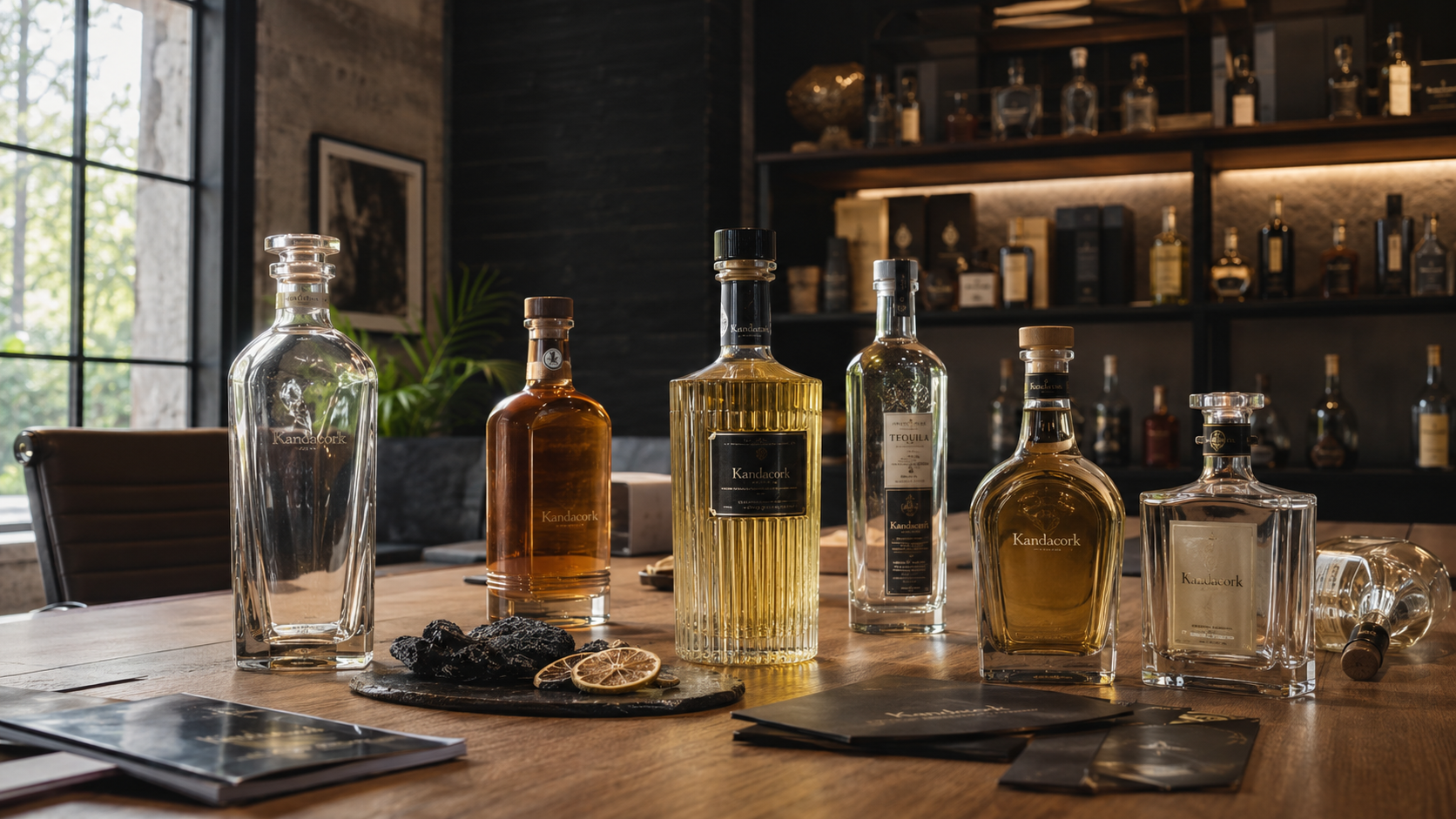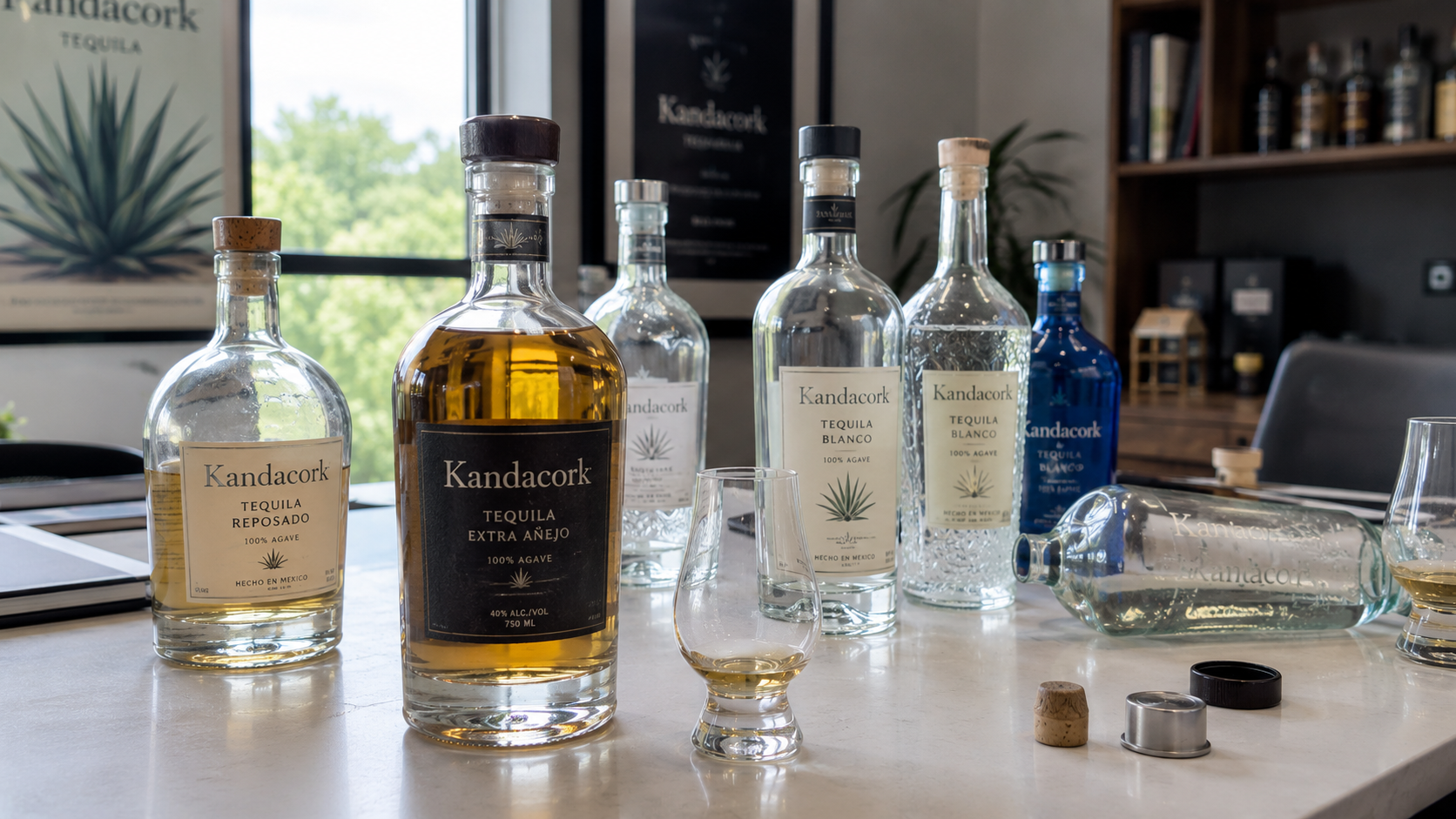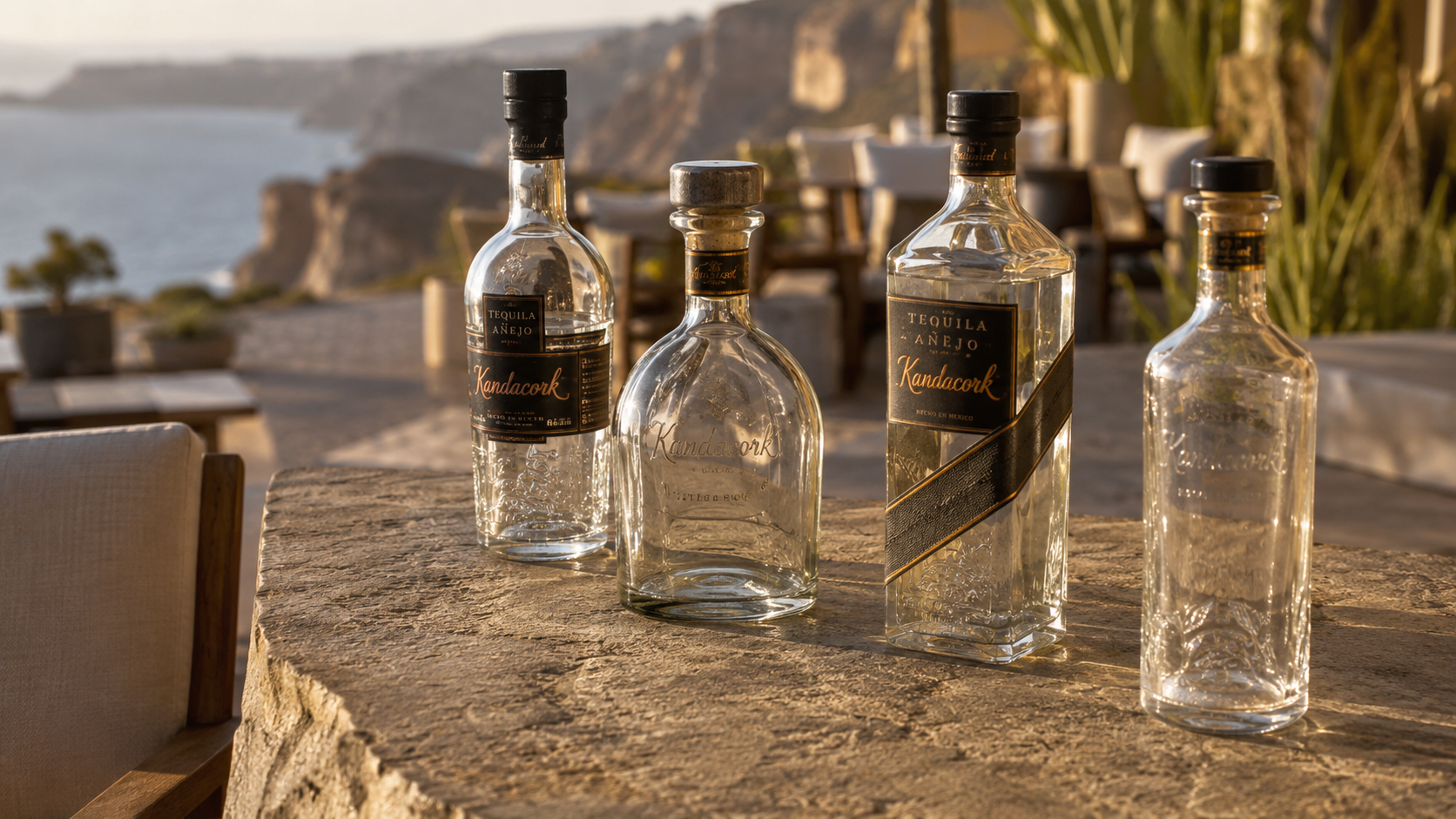
Ordering the wrong aluminium stopper can delay a spirits launch, increase sampling costs, create leakage risk, damage closure finishes, or cause an inconsistent opening feel. For premium spirits brands, the stopper is not only a decorative top. It is a technical packaging component that must match the bottle neck, shank material, filling method, export conditions, and brand image.
This aluminium stopper finish, fit, and shank guide helps distilleries, spirits brands, private-label buyers, packaging designers, and purchasing teams choose a reliable aluminium bar-top stopper for commercial production. For buyers developing a custom closure program, Kandacork Closures offers custom aluminium stoppers for spirits bottles with finish, shank, fit, and branding options aligned to real bottling requirements.
The best aluminium stopper combines three essential elements: a suitable surface finish, a precise bottle-neck fit, and the correct shank material and size. When these elements work together, the closure improves shelf appeal, protects the product, supports bottling efficiency, and gives consumers a premium opening experience.
Quick Answer
The right aluminium stopper should match the bottle neck finish, use a shank that compresses securely inside the bottle opening, pass fit and leak testing, and support the brand’s desired visual style.
For many spirits bottles, a 19.5 mm shank is commonly used as a starting point for an 18.5 mm bottle opening, while a 22.5 mm shank is commonly used for a 21.5 mm opening. Final fit should always be tested with the real bottle because glass tolerance, shank material, insertion depth, and pull-out feel can vary.
What Is an Aluminium Stopper?
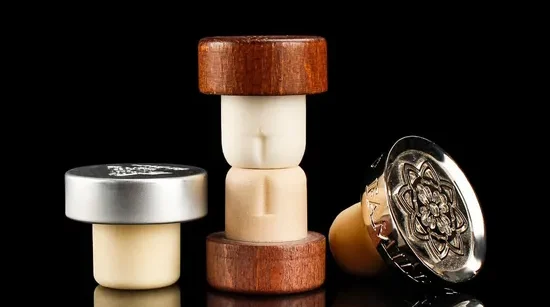
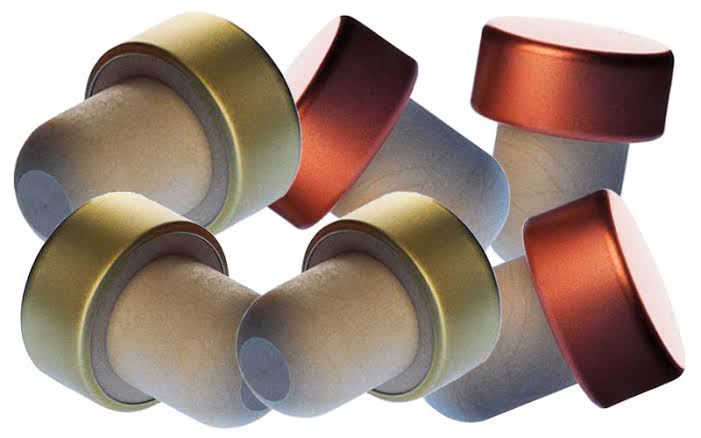
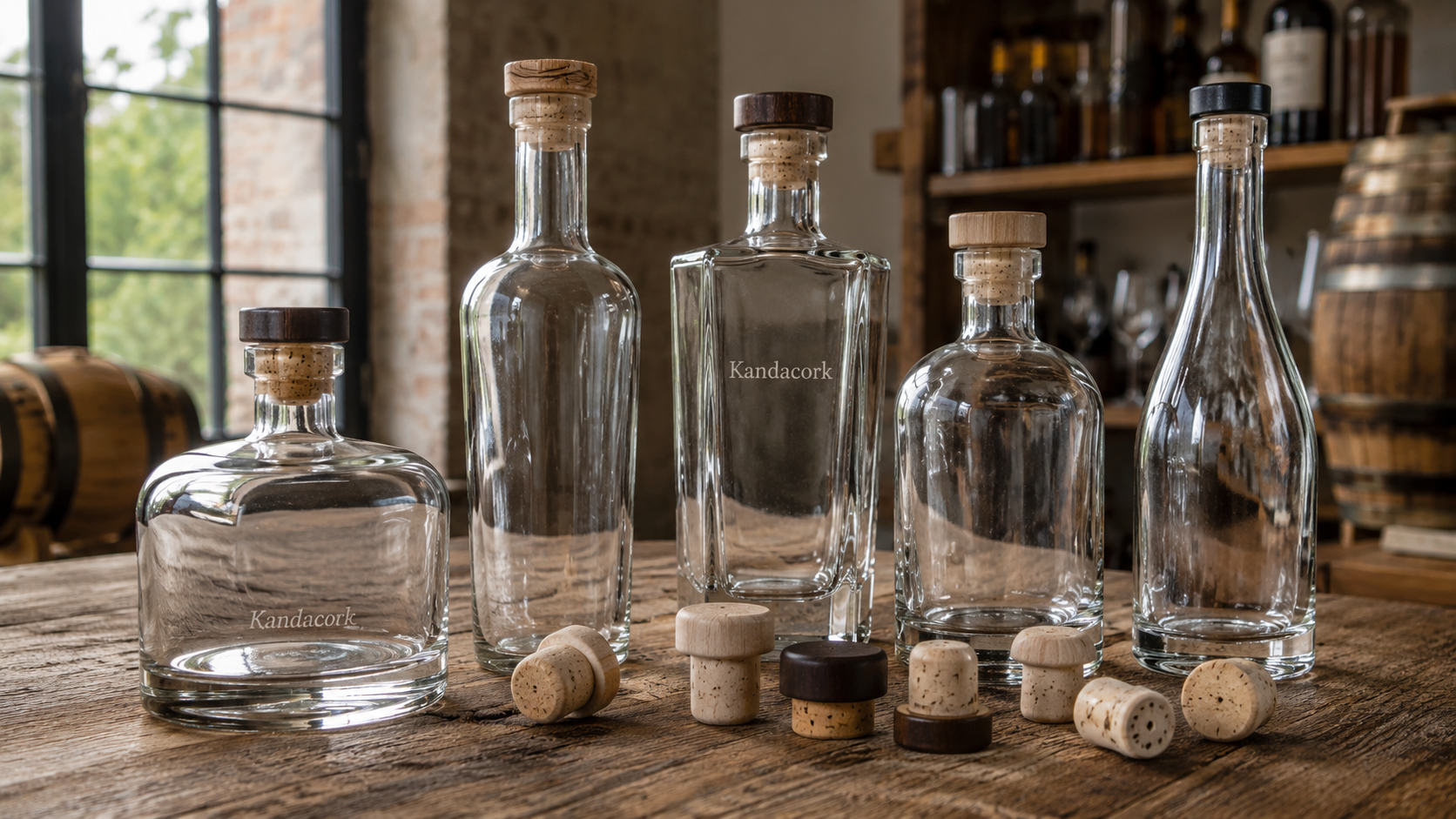
An aluminium stopper is a premium bar-top closure made with an aluminium head and a sealing shank. The aluminium head provides the visible design element, while the shank enters the bottle neck and creates a friction fit.
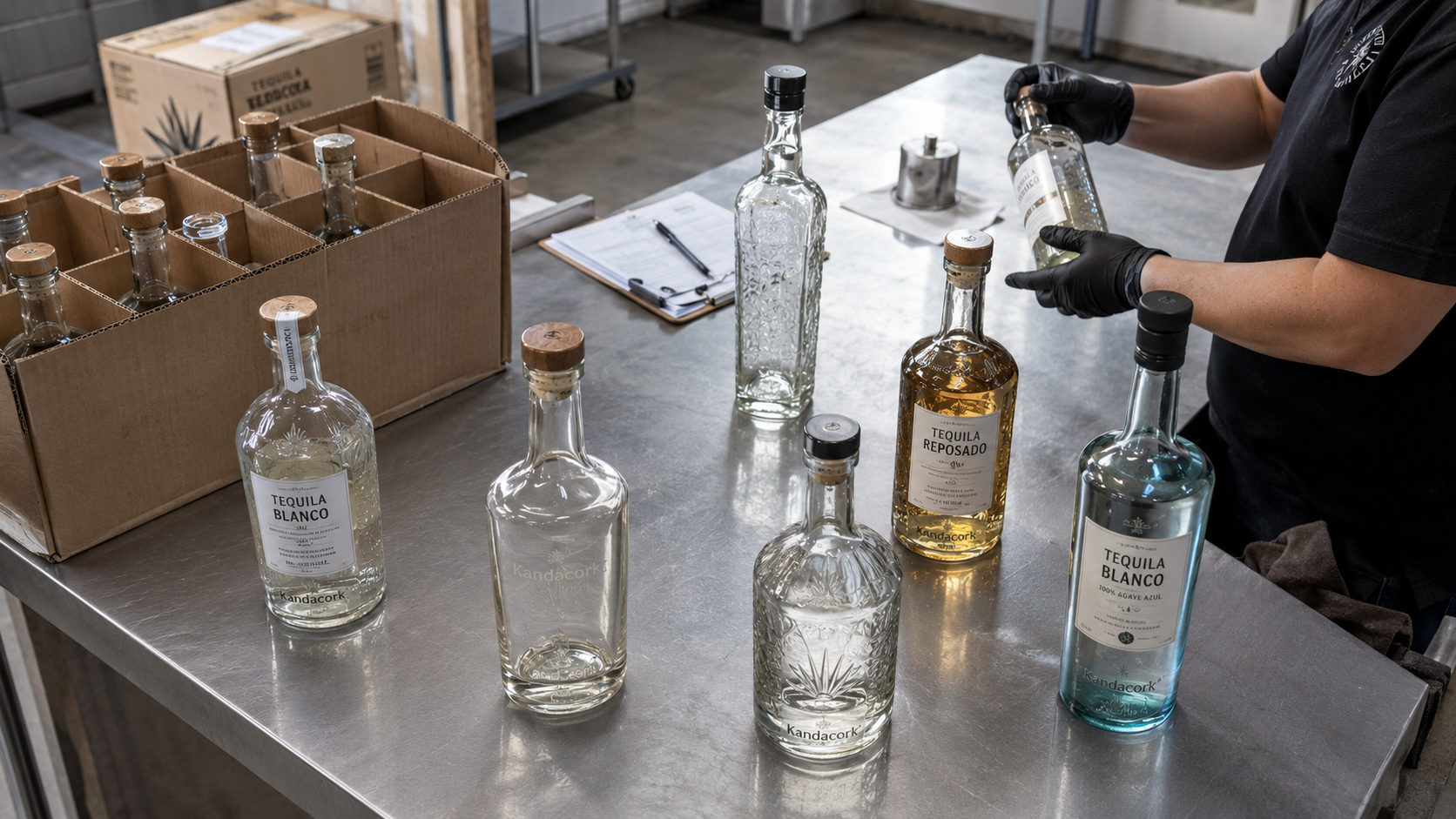
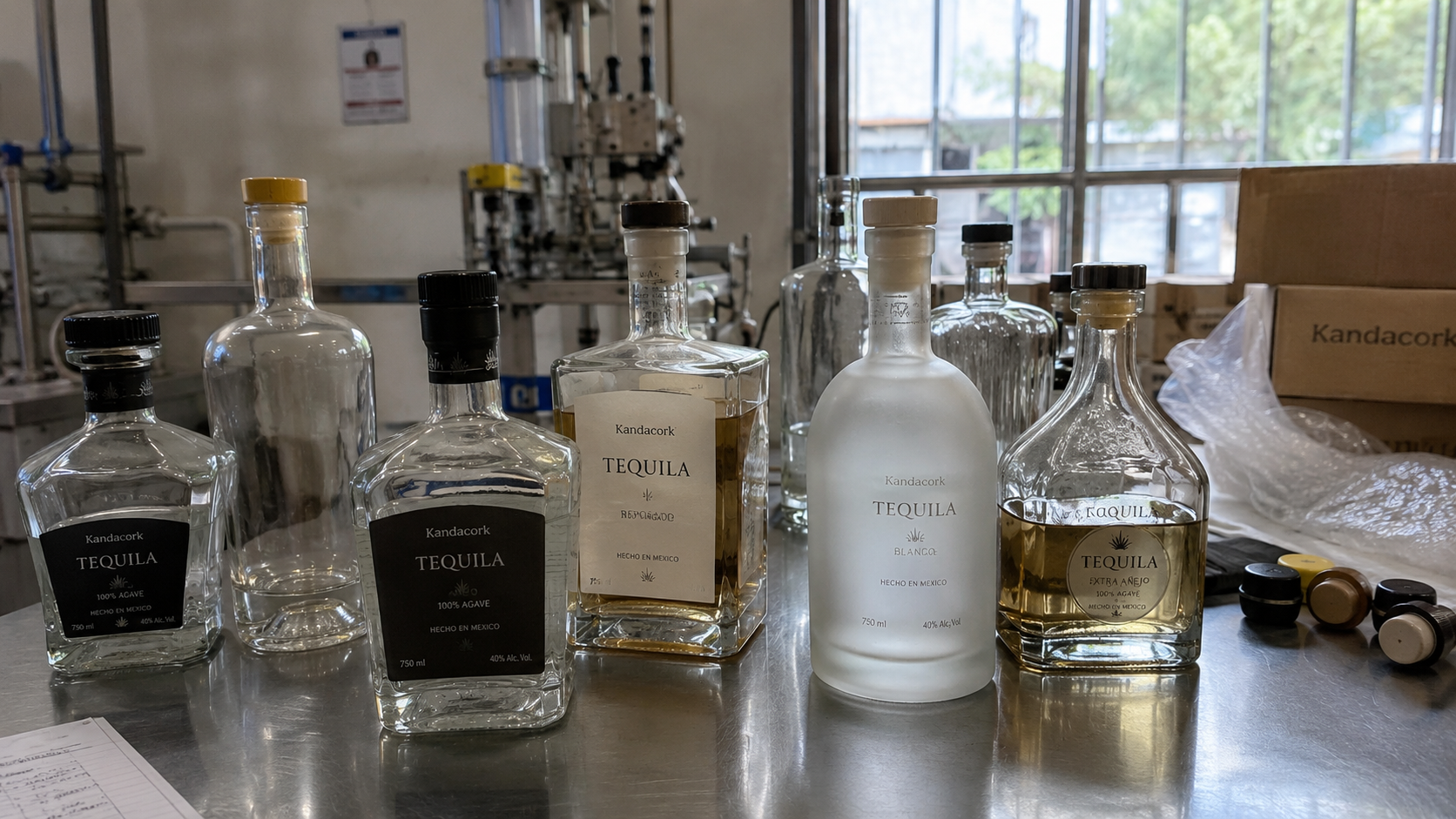
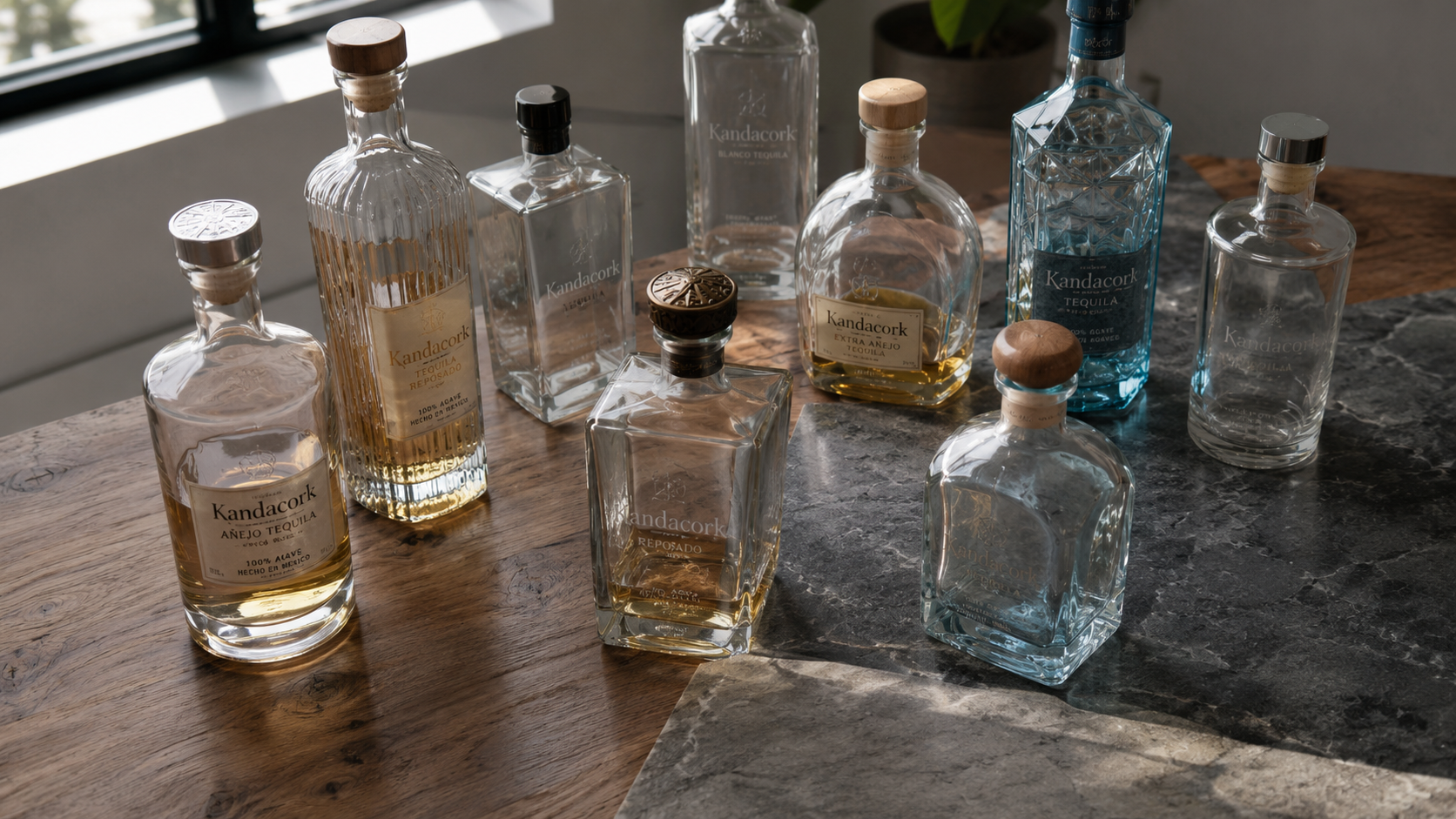
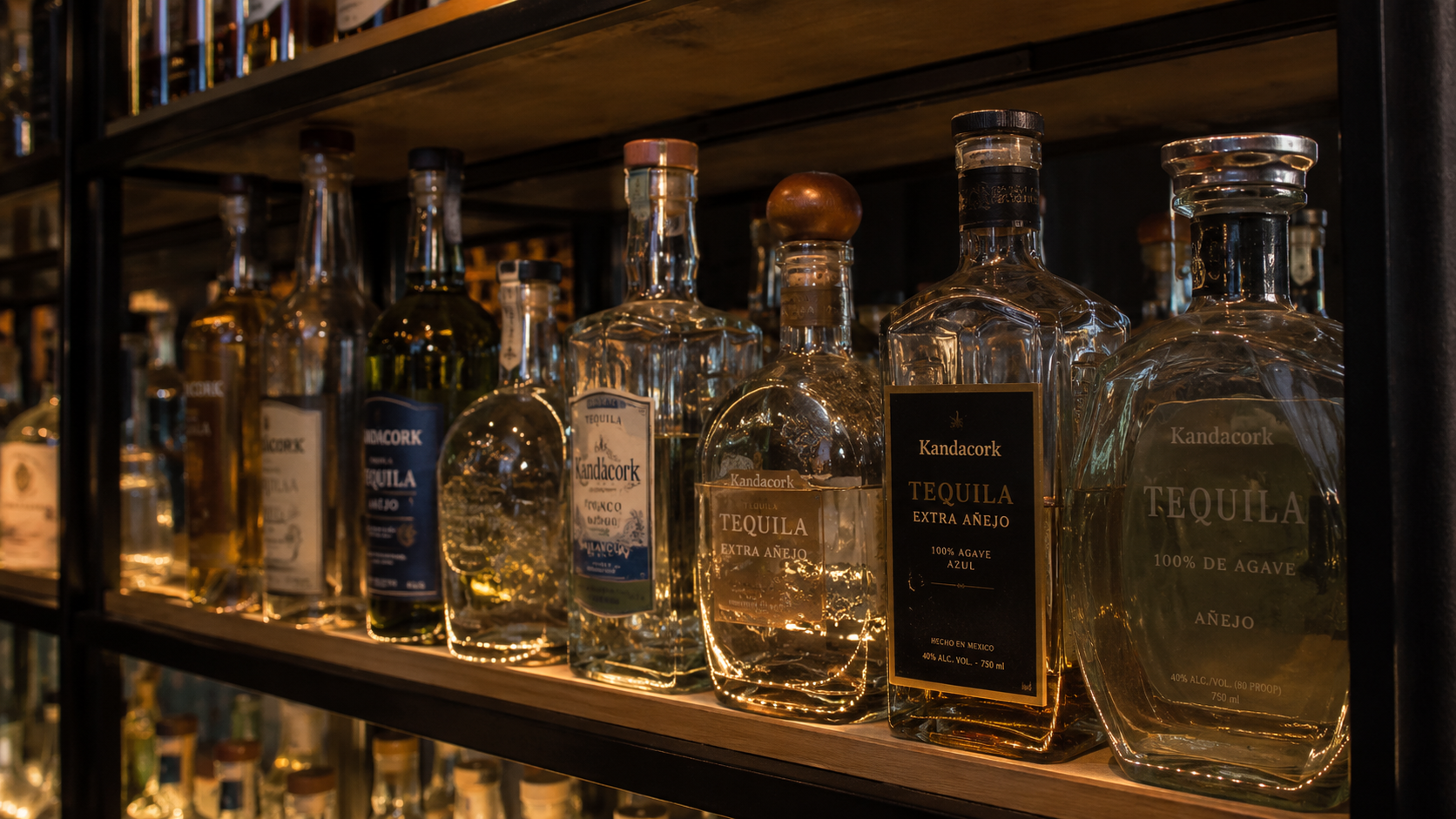
Aluminium stoppers are widely used for whisky, vodka, gin, rum, tequila, mezcal, brandy, liqueurs, and premium ready-to-drink spirits. They are especially suitable for brands that want a clean metallic appearance, reusable functionality, and a stronger sense of quality than a basic closure.
The head can be customized by diameter, height, shape, color, surface finish, logo decoration, side texture, and top design. The shank can be made from natural cork, micro-agglomerated cork, synthetic cork, or technical synthetic material depending on the bottle, spirit category, and target user experience.
A successful aluminium stopper is not selected by appearance alone. It must fit the bottle correctly, seal consistently, insert smoothly, and remain stable during shipping, retail display, and consumer use. Buyers comparing different closure families can also review the broader bottle stoppers and closures range to understand how aluminium, wood, glass, synthetic, screw-cap, and security closures support different spirits packaging goals.
How Aluminium Stopper Finish, Fit, and Shank Size Work Together
Aluminium stopper finish affects the appearance and brand value of the bottle. Fit affects sealing performance and consumer confidence. Shank size affects insertion force, pull-out feel, leakage risk, and bottling-line performance.
These three factors should be reviewed together. A premium brushed aluminium head may look excellent, but if the shank is too loose, the closure may wobble or leak. A tight shank may improve sealing, but if it requires too much insertion force, it can slow production or create a poor opening experience.
Before bulk production, buyers should confirm aluminium stopper finish, bottle fit, and shank compatibility through sample testing. This is especially important for export spirits, duty-free packaging, limited editions, and multi-SKU ranges where visual consistency and repeatable closure performance matter.
A complete closure specification should include the aluminium head drawing, surface finish, logo decoration, shank material, shank diameter, insertion depth, target pull-out feel, bottle neck drawing, and approved control sample. This gives both the buyer and manufacturer a practical reference for repeat orders.
Aluminium Stopper Finish Options
The finish of an aluminium stopper has a direct effect on shelf appeal. A spirits bottle is often judged by the quality of its closure before the consumer reads the label. The right finish can communicate luxury, craft, modernity, heritage, or limited-edition value.
| Aluminium Stopper Finish | Best For | Key Advantage | Buyer Consideration |
|---|---|---|---|
| Brushed aluminium | Minimalist spirits, modern vodka, gin, tequila | Clean metallic texture and premium restraint | Brushing direction should match the bottle and label design |
| Polished aluminium | Luxury spirits, gifting products, limited editions | Bright reflective shelf impact | Careful handling may be needed to reduce visible scratches |
| Matte aluminium | Craft spirits, premium contemporary packaging | Soft, modern, understated appearance | Dark matte surfaces may show handling marks |
| Anodized aluminium | Color-matched spirits packaging | Metallic color with strong brand identity | Color approval should be confirmed by sample |
| Embossed or debossed aluminium | Heritage, luxury, collectible bottles | Tactile logo and premium recognition | Tooling and artwork must be prepared accurately |
| Laser-engraved aluminium | Minimalist premium packaging | Precise, durable, high-end marking | Works best with suitable contrast and surface finish |
A brushed aluminium finish creates a precise and architectural look. It works well for minimalist spirits packaging and premium brands that want a clean technical style.
A polished aluminium finish creates stronger reflection and visual brightness. It can be suitable for luxury spirits, gift packaging, and limited-edition launches.
A matte aluminium finish gives the bottle a softer and more contemporary appearance. Matte black, matte silver, champagne, and gunmetal finishes are common choices for craft spirits and premium private-label projects.
Anodized aluminium allows metallic color development. It can help the closure match label foil, glass decoration, capsule color, or a specific brand palette. The Aluminum Association also highlights aluminium’s durability and recyclability, which makes material selection relevant not only to appearance but also to long-term packaging strategy.
Decorative options such as embossing, debossing, printing, knurling, and laser engraving can turn the closure into a recognizable brand asset. For spirits brands competing on shelf presence, the aluminium stopper can become part of the product’s visual identity, especially when coordinated with bottle shape, label stock, glass color, and secondary packaging.
What Does Bottle Neck Finish Mean?
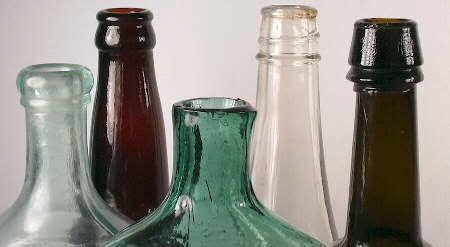
Bottle neck finish refers to the geometry of the top part of the bottle where the closure fits. For aluminium bar-top stoppers, the most important measurement is usually the internal neck diameter, also called the bore or bottle opening.
However, fit is not determined by diameter alone. Neck height, inner wall shape, bore tolerance, glass roundness, mouth finish, insertion depth, and stopper material all influence the final fit.
Two bottles may both be described as having an 18.5 mm opening, but they may perform differently with the same aluminium stopper. Small differences in glass tolerance, coating, neck height, or inner surface smoothness can change insertion force and pull-out feel.
For buyers developing a new bottle and closure together, it is useful to coordinate closure design with bottle engineering from the beginning. A spirits bottle platform from Kandacork Spirits can help packaging teams consider glass shape, closure proportion, branding space, and filling-line compatibility as one complete system.
Common Bottle Opening and Shank Size Guide
A common starting point is to choose a shank slightly larger than the internal bottle opening. This allows the shank to compress inside the neck and create a secure friction fit.
| Bottle Neck Opening | Common Starting Shank Size | Typical Use Case | Testing Required |
|---|---|---|---|
| 18.5 mm | 19.5 mm | Standard spirits bottles, smaller bar-top necks | Yes |
| 21.5 mm | 22.5 mm | Larger spirits bottle openings | Yes |
| Custom opening | Custom shank size | Unique bottle shapes, premium custom molds | Yes |
This sizing rule is only a starting point. The final aluminium stopper fit depends on shank material, hardness, compression behavior, bottle tolerance, alcohol exposure, filling-line pressure, and the desired consumer opening feel.
If the shank is too small, the closure may feel loose, leak, wobble, or reseal poorly. If the shank is too large, insertion may require too much force, causing production delays, cosmetic damage, or consumer complaints.
The ideal fit should be secure but not excessive. It should insert smoothly, sit straight, seal reliably, and open with a controlled premium pull.
Shank Material Options for Aluminium Stoppers
The shank is the functional part of the stopper. It controls compression, sealing behavior, insertion feel, and pull-out force. Choosing the correct shank material is as important as choosing the aluminium head finish.
| Shank Material | Best For | Advantages | Considerations |
|---|---|---|---|
| Natural cork | Heritage spirits, whisky, rum, brandy | Classic opening feel and traditional premium image | Natural variation must be controlled |
| Micro-agglomerated cork | Mid-to-premium spirits | Cork-based image with improved consistency | Requires quality inspection and material approval |
| Synthetic cork | High-volume spirits production | Strong dimensional consistency and clean appearance | Must be matched to target compression and bottle neck |
| Technical synthetic or TPE | Precision fit projects | Controlled sealing behavior and repeatability | Material choice should be validated with testing |
Natural cork offers a traditional tactile experience. It is often selected for whisky, rum, brandy, and heritage-style spirits where the opening ritual matters.
Micro-agglomerated cork is made from processed cork granules and can provide a more uniform cork-based shank. It is useful when a brand wants the image of cork with more controlled dimensions.
Synthetic cork provides strong consistency for larger production runs. It can help maintain stable insertion and pull-out performance across batches when properly matched to the bottle neck finish. Buyers prioritizing dimensional repeatability can compare aluminium heads with synthetic bottle stoppers to decide which construction best fits their production volume and brand tier.
Technical synthetic or TPE shanks can be used when the project requires precise compression, recovery, and sealing behavior. This can be valuable for brands that need controlled performance on automated or semi-automatic bottling lines.
How to Confirm the Right Aluminium Stopper Fit
The correct aluminium stopper fit should be confirmed through sampling and testing, not guesswork. Drawings help define the starting point, but real bottle samples reveal how the stopper performs in practice.
Buyers should send the bottle drawing, physical bottle sample, target aluminium finish, preferred shank material, filling method, and order quantity requirements to the closure manufacturer. This information allows a more accurate fit recommendation before mass production.
A practical review should include the bottle neck opening, bore tolerance, neck height, mouth finish, stopper seating depth, head diameter, shank length, shank material, and target opening feel. If the stopper will be applied by machine, the filling-line speed, stoppering head, feeding method, and contact points should also be reviewed.
A bottle may pass a simple hand-fit check but still fail during bulk packing or shipping if the closure is scratched, tilted, too tight, or too loose under real conditions. That is why pre-production samples, line trials, and control samples are essential for serious spirits packaging projects.
Aluminium Stopper Testing Process
A practical testing process should review both appearance and function. The goal is to confirm that the stopper looks correct, fits the bottle, seals reliably, and performs consistently during real production.
| Testing Step | What to Check | Why It Matters |
|---|---|---|
| Bottle drawing review | Neck opening, neck height, tolerance, finish type | Confirms the technical starting point |
| Physical sample review | Real bore, glass variation, actual stopper seating | Identifies issues drawings may not show |
| Sample fitting | Shank size, insertion depth, head position | Confirms basic bottle compatibility |
| Visual inspection | Finish quality, scratches, color consistency, logo clarity | Protects brand presentation |
| Insertion review | Stopper seating, insertion smoothness, closure height | Supports production efficiency |
| Pull-out testing | Opening feel and extraction consistency | Supports premium consumer experience |
| Leak testing | Seal stability under handling and storage | Reduces leakage and evaporation risk |
| Line trial | Feeding, insertion, closure height, damage risk | Confirms production compatibility |
| Control sample approval | Final approved bottle and stopper reference | Supports repeat orders and batch consistency |
A good aluminium stopper should insert cleanly without excessive pressure. It should sit straight on the bottle, seal securely, and remove with a controlled feel.
For premium spirits, pull-out feel is not a minor detail. It affects the consumer’s first physical interaction with the product. A closure that feels too loose can reduce trust. A closure that feels too tight can frustrate the user.
Leak testing should consider upright storage, horizontal handling, temperature changes, transport vibration, repeated opening, and shipping vibration. For packed goods, test methods such as ASTM D999 vibration testing of shipping containers are relevant because transport vibration can expose weaknesses in the bottle, closure, and outer packaging system.
Control samples should be kept after approval. They help both the buyer and manufacturer compare future production against the accepted standard for color, finish, logo position, shank fit, and overall appearance.
Need help confirming the correct fit? Send Kandacork Closures your bottle drawing, bottle sample, target aluminium finish, and shank preference for a custom aluminium stopper recommendation before bulk production.
Common Aluminium Stopper Fit Problems and Solutions
Fit problems usually come from a mismatch between the bottle neck, shank size, shank material, and production conditions. The table below summarizes common issues.
| Problem | Possible Cause | Practical Solution |
|---|---|---|
| Stopper feels loose | Shank too small, weak compression, bottle bore variation | Test larger shank size or different shank material |
| Stopper feels too tight | Shank too large, material too hard, insertion depth too deep | Adjust shank diameter, hardness, or length |
| Head wobble | Poor shank seating, unstable assembly, incorrect neck match | Review shank geometry and bottle neck compatibility |
| Leakage | Weak friction fit, inconsistent bore, poor recovery | Conduct leak testing and adjust shank specification |
| Scratched aluminium head | Bulk handling, line contact, inadequate packaging | Improve handling, separators, feeding equipment, and QC |
| Inconsistent fit across batches | Glass tolerance variation or closure tolerance variation | Keep approved drawings, tolerance records, and control samples |
A loose stopper can increase leakage risk and reduce consumer confidence. It may also make the product feel less premium.
A tight stopper can slow down production, increase rejection rates, or make the bottle difficult to open. In severe cases, it may create stress on the bottle neck.
Head wobble is especially damaging for premium spirits because it is visible and tactile. A high-quality aluminium stopper should sit straight and feel stable.
Scratches and finish damage can happen during bulk handling, shipping, feeding, or stoppering. Dark matte, polished, and highly reflective finishes may require extra care during packing and production.
Inconsistent fit across bottle batches is another common challenge. Glass bottles can vary slightly from batch to batch, so approved drawings, tolerance records, and control samples should be maintained for repeat orders.
Aluminium Stopper Design and Brand Positioning
An aluminium stopper should support the bottle’s complete packaging system. It should match the bottle shape, glass color, label material, decoration method, price tier, and target consumer.
For minimalist premium spirits, a brushed silver or matte black aluminium stopper with laser engraving can create a clean and confident look.
For heritage whisky or rum, a warmer metallic tone, embossed top, or textured sidewall can communicate tradition and craftsmanship. If a brand wants a warmer natural feel rather than a metallic closure, wooden bar-top stoppers may be more suitable for classic whisky, rum, and brandy positioning.
For tequila, mezcal, or craft gin, anodized colors and custom decoration can create stronger shelf differentiation. Decoration strategy should consider not only the stopper head but also the label, capsule, carton, back-bar visibility, and consumer hand feel. For projects that require coordinated logo treatment, color matching, and packaging decoration, Kandacork Decor supports branding and decoration across glass packaging components.
For limited-edition spirits, aluminium stoppers can support special colors, top emblems, numbered designs, collectible effects, and gift-box presentation.
A closure should not look like an isolated component. It should feel like a deliberate part of the brand’s packaging identity.
Aluminium Stopper Buying Checklist
Before ordering a custom aluminium stopper, buyers should prepare the following information.
| Information Needed | Why It Helps |
|---|---|
| Bottle capacity | Helps define bottle category and closure proportion |
| Bottle neck internal diameter | Supports initial shank size recommendation |
| Neck height and finish drawing | Helps confirm seating and insertion depth |
| Physical bottle sample | Allows real fit testing |
| Spirit category | Helps choose suitable closure style and material |
| Alcohol strength | Supports material compatibility review |
| Filling method | Determines manual or machine insertion needs |
| Target market | Helps consider compliance and packaging expectations |
| Required aluminium finish | Defines surface treatment and visual direction |
| Logo decoration method | Supports artwork, tooling, printing, or engraving |
| Preferred shank material | Helps match opening feel and performance |
| Target insertion feel | Supports production efficiency |
| Target pull-out feel | Supports consumer experience |
| MOQ and lead time | Helps plan sampling and production |
| Export packaging requirement | Reduces shipping and handling risk |
| Sample testing plan | Reduces mass-production uncertainty |
Preparing this information early can reduce sampling delays, prevent incorrect fit, and improve production success.
Ready to confirm your aluminium stopper specification? Send Kandacork Closures your bottle drawing, physical bottle sample, target finish, logo artwork, and preferred shank material. The team can help review fit, sampling, decoration, and production requirements before bulk ordering.
Compliance and Food Contact Considerations
Spirits packaging must be developed with food-contact safety and market compliance in mind. The aluminium head, coating, printing, adhesive, and shank material should be suitable for the intended use.
For the U.S. market, packaging teams often review the FDA’s guidance on packaging and food contact substances. For the European market, Regulation (EC) No 1935/2004 provides a general framework for materials and articles intended to come into contact with food.
Distilled spirits brands may also need to consider alcohol packaging rules, labeling requirements, tamper-evident expectations, importer requirements, and market-specific documentation. In the United States, the Alcohol and Tobacco Tax and Trade Bureau notes requirements related to closures on bottles of distilled spirits, including tamper-evident closure expectations.
Glass packaging terminology and bottle quality considerations are also relevant. The Glass Packaging Institute represents the North American glass container industry and supports education, standards advocacy, and recycling policy for glass packaging.
| Compliance Item | Buyer Action |
|---|---|
| Food-contact suitability | Confirm shank, coating, ink, adhesive, and decorative finish suitability |
| Market requirements | Check destination-market alcohol packaging and labeling rules |
| Material documentation | Request material declarations or compliance documents where needed |
| Tamper evidence | Confirm whether the target market, importer, or retailer requires tamper-evident packaging |
| Import review | Confirm requirements with importer, distributor, or legal consultant |
| Packaging claims | Avoid unsupported sustainability, safety, or performance claims |
| Sample approval | Keep approved samples and documentation before full production |
Kandacork Closures can support closure development and technical communication, but brands should confirm legal requirements with their compliance teams, importers, or professional consultants.
Completing the Neck Finish with Capsules and Security Features
An aluminium stopper may need to work with a capsule, shrink sleeve, or tamper-evident neck band depending on the market and retail channel. Capsules can protect the closure from scuffing, improve shelf presentation, and create a visible first-opening feature.
For premium spirits, the neck finish should be treated as a complete system: bottle mouth, stopper, shank, capsule, label, carton, and export packing. Buyers who need a clean neck presentation or tamper-evident layer can coordinate aluminium stoppers with custom capsules and shrink sleeves to improve brand consistency and market readiness.
Security requirements may vary by destination, brand policy, importer expectation, and retail environment. For higher-risk channels, brands may also compare aluminium bar-top stoppers with non-refillable closures when anti-refill protection is an important commercial requirement.
Why Work With a Custom Aluminium Stopper Manufacturer?
A standard catalog closure may work for simple projects, but premium spirits packaging often requires custom development. A custom aluminium stopper manufacturer can support both design and performance.
Custom development can include head shape design, surface finish selection, logo decoration, shank material selection, shank size adjustment, bottle fit testing, tolerance review, sample approval, quality inspection, and bulk production support.
This is especially important when a brand is launching a new bottle, upgrading from a standard closure, preparing an export product, creating a limited edition, or building a distinctive private-label spirits package.
Kandacork Closures works with spirits brands and packaging buyers that need aluminium bar-top stoppers with premium finish options, reliable bottle fit, and scalable production support. Buyers managing glass, closures, decoration, and export packaging together can also coordinate projects through Kandacork Glass for broader packaging development support.
Instead of choosing a closure only by diameter, buyers can develop a complete closure solution based on bottle compatibility, brand design, and real production performance. For sustainability-focused glass projects, Kandacork Eco Glass can also support packaging discussions around glass format, lightweighting, and eco-conscious brand positioning.
FAQ
What shank size fits an 18.5 mm spirits bottle neck?
A 19.5 mm shank is commonly used as the starting point for an 18.5 mm bottle opening. Final fit should still be tested with the real bottle because glass tolerance, shank material, and pull-out force can vary.
What shank size fits a 21.5 mm spirits bottle neck?
A 22.5 mm shank is commonly used as the starting point for many 21.5 mm spirits bottle openings. The final specification should be confirmed through sampling, leak testing, and insertion testing.
How do I choose the right aluminium stopper shank size?
Choose a shank that is slightly larger than the bottle’s internal neck diameter, then confirm the fit with real bottle samples. The best size depends on bottle tolerance, shank material, compression, insertion force, and desired pull-out feel.
Can I use the same aluminium stopper for different bottle suppliers?
Not always. Even bottles with the same listed opening size may have different neck tolerance, bore shape, neck height, and inner surface conditions, so each bottle should be tested before production.
What information should I send before ordering aluminium stoppers?
Send the bottle drawing, physical bottle sample, internal neck diameter, preferred aluminium finish, logo artwork, shank material preference, filling method, MOQ, and target market.
Why does my aluminium stopper feel loose?
An aluminium stopper may feel loose if the shank is too small, the bottle bore is inconsistent, or the shank material does not provide enough compression recovery. Testing a larger shank or a different material can help solve the issue.
Why does my aluminium stopper feel too tight?
An aluminium stopper may feel too tight if the shank is too large, too hard, or too long for the bottle neck. Adjusting shank diameter, material hardness, or insertion depth can improve fit.
Which aluminium stopper finish looks most premium?
Brushed, matte, polished, and anodized aluminium can all look premium. The best finish depends on the bottle shape, label design, glass color, price level, and target consumer.
Are aluminium stoppers suitable for luxury spirits?
Yes. Aluminium stoppers are suitable for luxury spirits because they offer a premium metallic appearance, custom decoration options, strong shelf presence, and reusable bar-top functionality.
Should I order samples before mass production?
Yes. Samples are essential because aluminium stopper fit depends on the real bottle neck, shank material, glass tolerance, aluminium head design, and bottling-line conditions.
Conclusion
An aluminium stopper is a small component with a large impact on spirits packaging performance. The right closure must match the bottle visually, technically, and commercially.
For a successful project, buyers should evaluate aluminium stopper finish, bottle neck fit, shank size, shank material, insertion force, pull-out feel, leak performance, food-contact suitability, tamper-evident needs, and filling-line compatibility before bulk production.
Kandacork Closures helps spirits brands develop custom aluminium stoppers that combine premium appearance with practical bottle compatibility. To begin a project, prepare your bottle drawing, physical sample, preferred finish, logo artwork, shank material preference, target market, and order requirements.