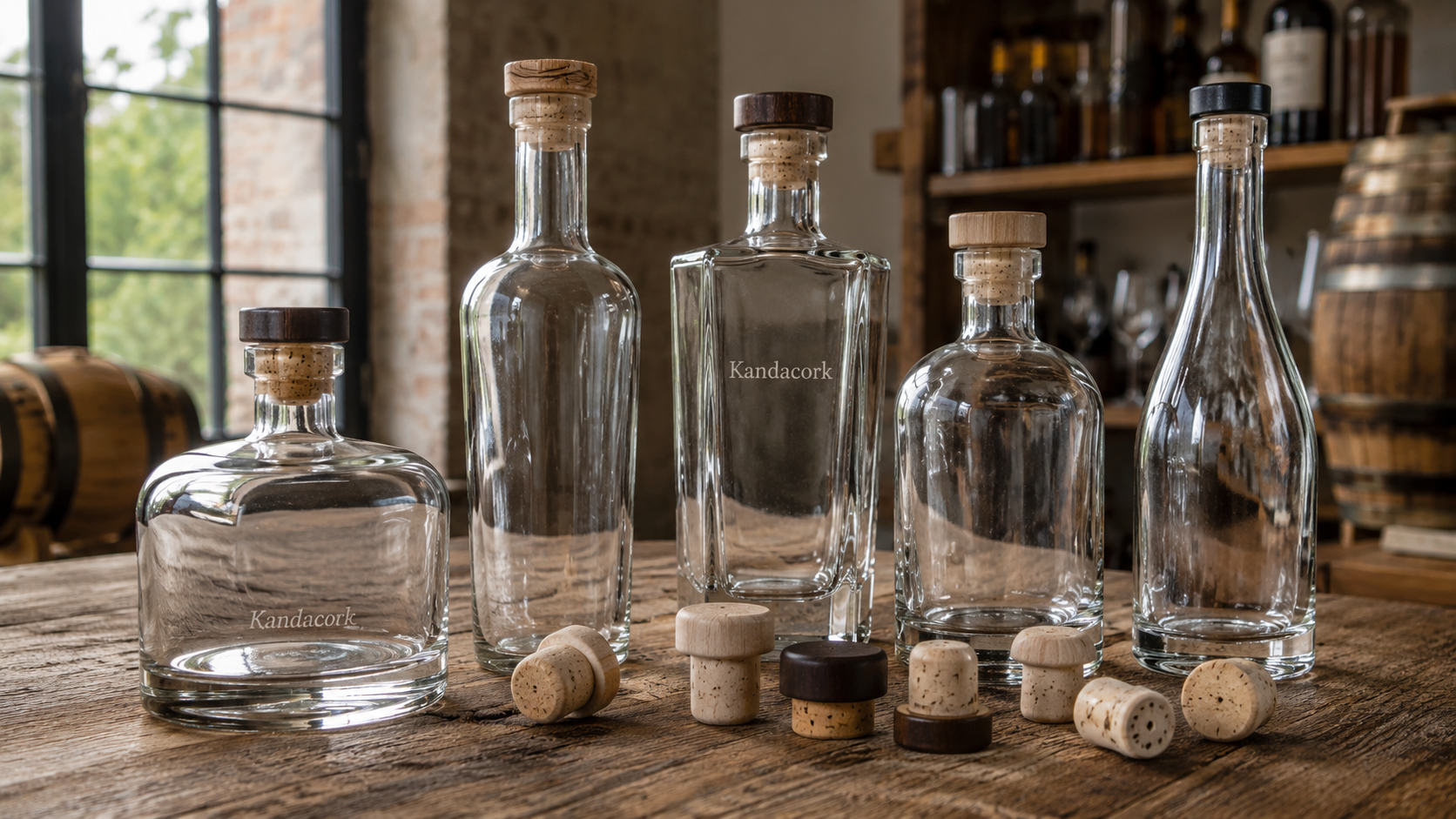
Distilleries need closure systems that match bottle design, filling process, brand positioning and distribution needs. This guide helps distillery teams compare stoppers, caps, ROPP closures, tamper-evident options and testing steps before approving production.
Quick Recommendations for Distillery Closure Selection
The best closure depends on the spirit category, bottle shape, brand position, bottling equipment, and target market. A premium craft whisky may need wooden bar-top stoppers, while a vodka or gin line may benefit from screw caps or ROPP closures. Export spirits may require non-refillable closures or other visible security features.
| Buyer Need | Recommended Closure Solution | Why It Works |
|---|---|---|
| Premium whisky, bourbon, or rum | Wood or metal bar-top stopper | Creates a premium opening experience and strong shelf appeal |
| Vodka, gin, or liqueur with efficient bottling | Screw cap or ROPP closure | Supports fast application, resealing, and torque control |
| Export spirits requiring security | Tamper-evident or non-refillable closure | Helps protect brand integrity and reduce refilling risk |
| Mini bottles or travel retail | Compact screw cap or ROPP cap | Suitable for smaller bottle formats and automated filling |
| Limited-edition spirits | Custom molded stopper with capsule | Enhances collectability and premium presentation |
| Cost-sensitive high-volume production | Plastic top stopper or standard screw cap | Balances brand appearance, price, and production efficiency |
This quick decision framework gives distilleries a practical starting point, but final selection should always be confirmed through bottle drawing review, physical sample testing, and line compatibility checks.
Best Closure Options by Spirit Type
Different spirits create different expectations at the shelf and in the hand. Closure selection should match the product category, bottle design, retail channel, and target customer. A whisky buyer often expects a tactile opening ritual, while a vodka or gin buyer may expect a clean, precise, easy-to-reseal closure.
| Spirit Type | Recommended Closure Option | Technical Focus | Branding Focus |
|---|---|---|---|
| Whisky, bourbon, rye | Bar-top stopper with wood or metal top | Extraction force, cork compression, neck bore fit | Premium feel, tradition, collectability |
| Vodka | Screw cap or ROPP closure | Torque control, liner compatibility, clean resealing | Minimalist, modern, precise |
| Gin | Screw cap, ROPP closure, or decorative stopper | Cap-to-label alignment, resealing, filling-line speed | Botanical, premium, contemporary |
| Rum | Wood, metal, or synthetic cork stopper | Secure fit, shank stability, shelf handling | Bold, warm, craft-driven |
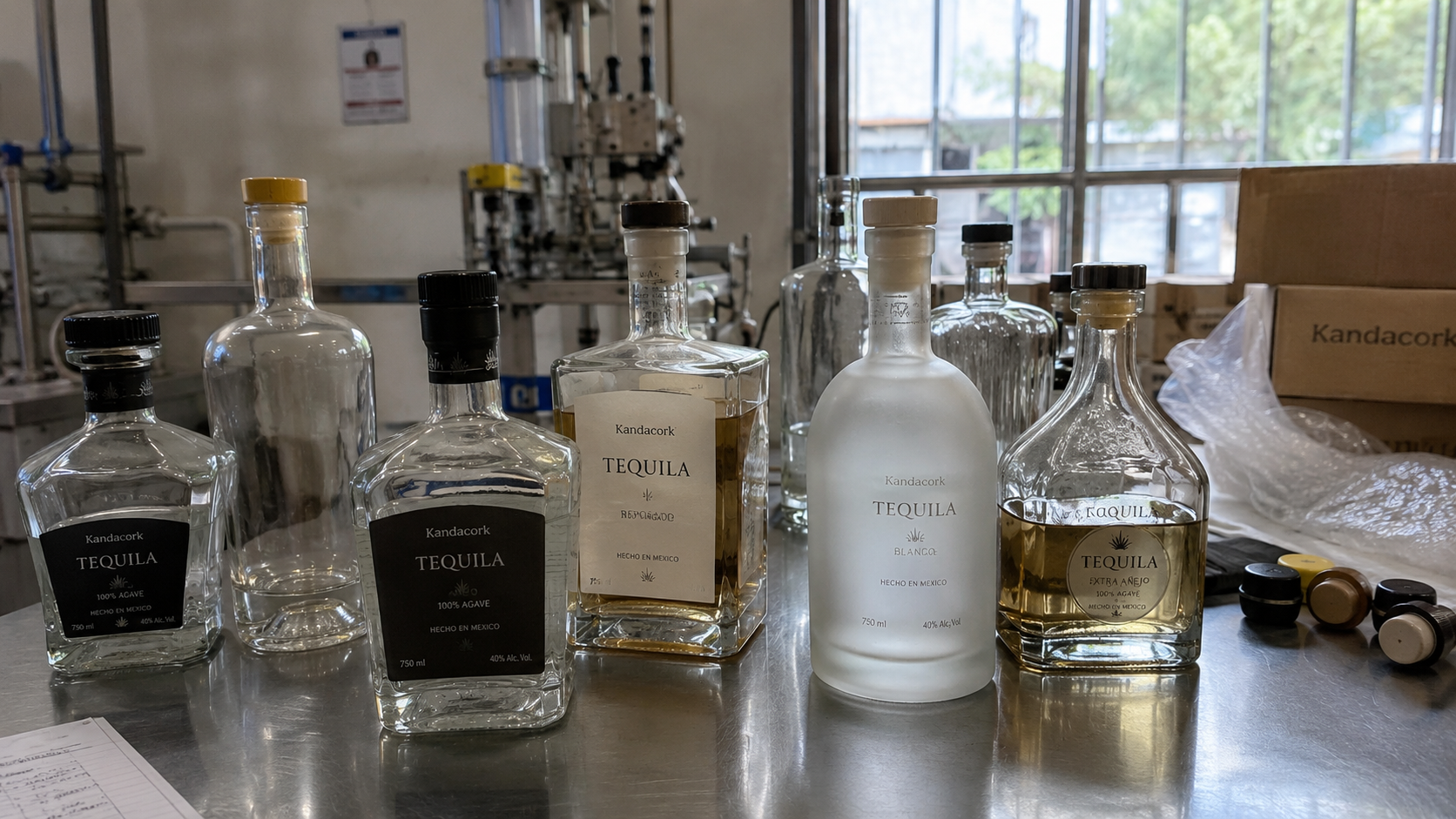
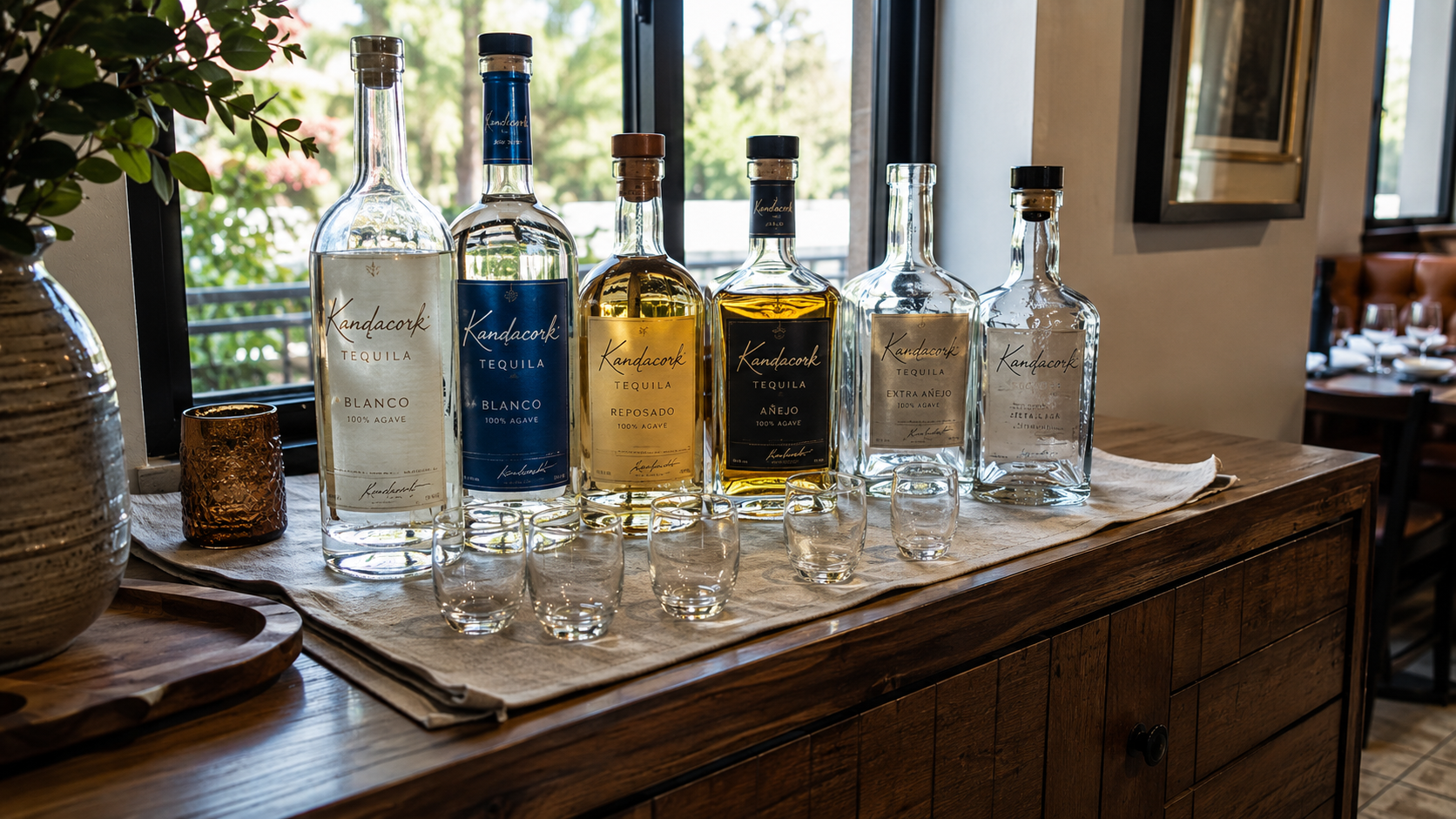
| Tequila and mezcal | Custom decorative stopper | Weight, bottle fit, security, tactile feel | Authenticity, craft, strong shelf impact |
| Brandy and cognac | Premium cork stopper or metallic top | Resealing, extraction feel, presentation consistency | Luxury, heritage, refinement |
| Liqueurs | Screw cap or ROPP closure | Clean resealing, repeat opening, liner performance | Color coordination, practical use |
| Mini bottles | Compact screw cap or ROPP cap | Small-format tolerance, capping speed | Portability, travel retail, sampling |
For a premium whisky launch, a distillery may test several stopper shank diameters to balance secure sealing with smooth extraction force. For vodka and gin lines using automatic cappers, torque consistency and liner compatibility may matter more than decorative weight. For export spirits, tamper-evident or non-refillable features should be considered before bottle mold confirmation.
Why Distilleries Need the Right Closure Solution
A spirits closure has to perform several functions at once. It must seal the bottle, protect the liquid, support safe handling, create a smooth opening experience, and match the visual identity of the brand. For craft distilleries and established spirits companies alike, closure selection can affect quality control, packaging cost, logistics performance, and customer trust.
Poor closure selection can create costly issues. A loose stopper may cause leakage during shipping. An oversized shank may make the bottle difficult to open. A screw cap with incorrect torque may damage the liner or create an inconsistent seal. A closure that does not match the bottle neck finish can slow production and increase rejection rates.
Professional closure solutions for distilleries should begin with technical information. Before choosing a wood top, metal finish, cork grade, or cap color, the supplier should understand the bottle neck, spirit type, alcohol strength, filling line, target market, and expected order volume. When bottle development and closure sourcing are managed together, buyers can reduce the risk of last-minute fit problems; this is why many projects begin with coordinated spirits bottle development before moving into closure sampling.
Common buyer concerns include:
- Leakage during storage or transport
- Loose or overly tight stopper fit
- Inconsistent insertion and extraction force
- Closure mismatch with bottle neck finish
- Poor cap torque control
- Weak decoration quality or color variation
- Limited tamper-evident options
- Unclear MOQ, sampling process, or lead time
A reliable closure supplier should help prevent these problems before mass production begins.
Main Types of Closure Solutions for Distilleries
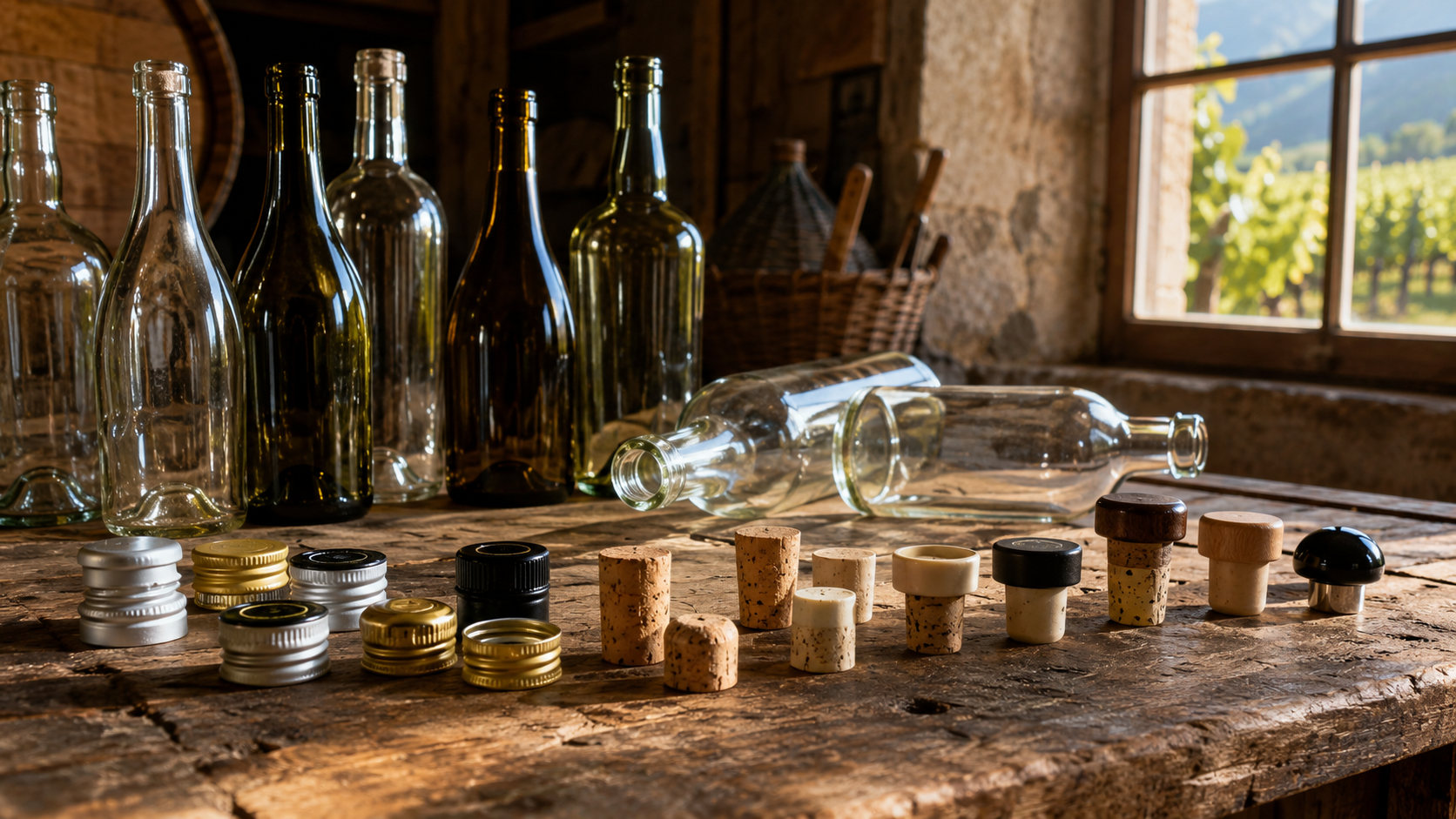
Distilleries can choose from several closure systems depending on bottle design, packaging goals, filling equipment, and market requirements. Some spirits need traditional cork stoppers, while others require screw caps, ROPP closures, non-refillable systems, capsules, or decorative sleeves.
| Closure Type | Best For | Key Benefits | Technical Considerations | Customization Options |
|---|---|---|---|---|
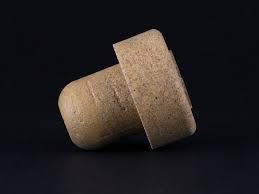
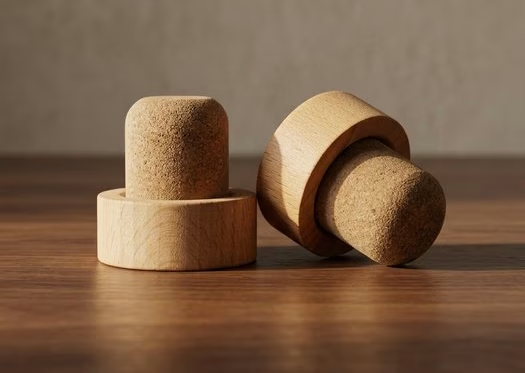
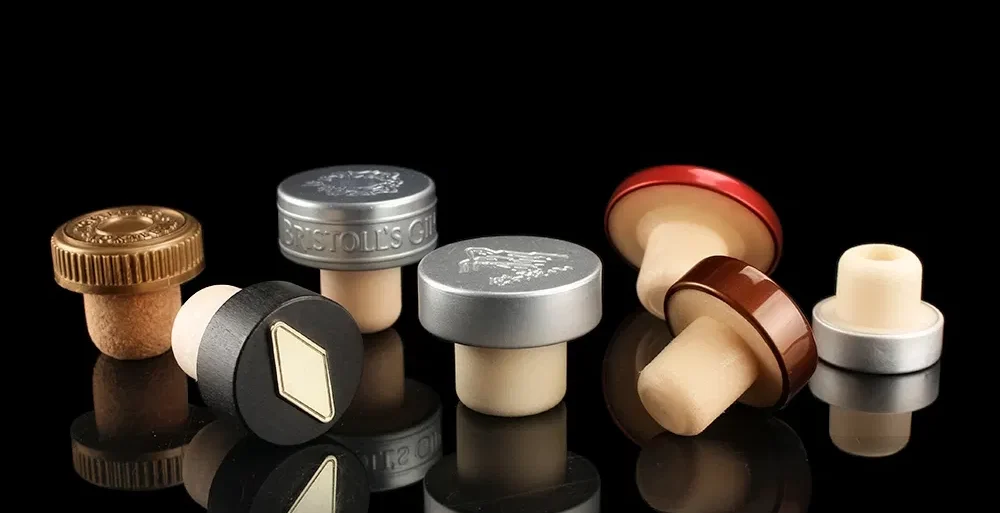
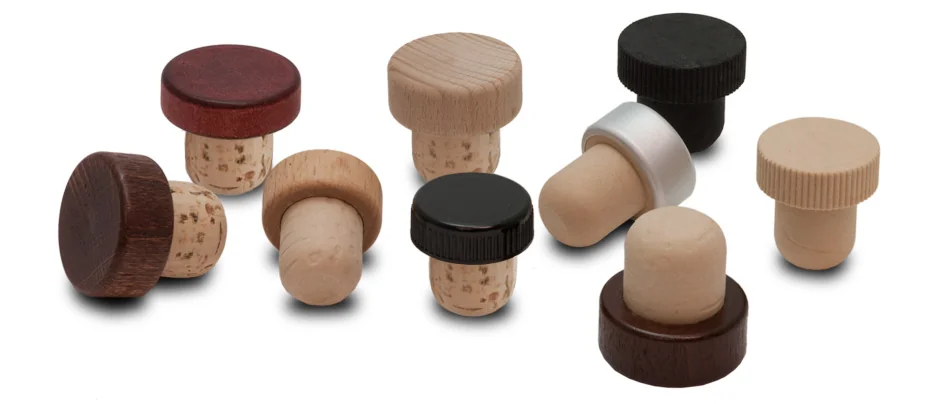
| Bar-top stoppers | Whisky, rum, brandy, tequila, premium gin | Premium feel, reusable, strong shelf appeal | Shank diameter, bottle opening, extraction force | Wood, metal, glass-look, plastic, logo decoration |
| Natural cork stoppers | Traditional and premium spirits | Natural material, classic perception | Cork grade, compression, humidity control | Branding, top material, capsule pairing |
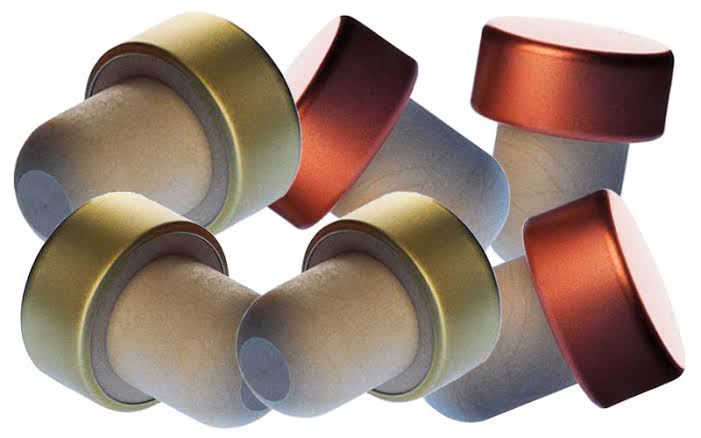
| Synthetic cork stoppers | Spirits needing dimensional consistency | Stable fit and controlled extraction | Material compatibility, neck bore tolerance | Color, shape, top decoration |
| Screw caps | Vodka, gin, liqueurs, RTDs, mini bottles | Fast application, resealable, cost-efficient | Thread finish, liner compatibility, torque | Color, embossing, printing, knurling |
| ROPP closures | Spirits needing tamper evidence | Secure seal and efficient bottling | Capper compatibility, torque range, liner | Top printing, side printing, embossing |
| Non-refillable closures | Premium spirits and controlled markets | Helps reduce refilling risk | Bottle compatibility, pourer design | Security structure, brand color, cap finish |
| Capsules and shrink sleeves | Premium presentation and tamper evidence | Neck decoration and visible protection | Heat application, material thickness | Printed, embossed, metallic, matte, glossy |
A luxury whisky may use a wooden bar-top stopper with a natural or synthetic cork shank. A vodka brand may prefer an aluminum screw cap with precise torque performance. A premium export spirit may need a non-refillable closure with a tamper-evident band.
Bottle Neck Fit, Sealing Performance & Line Compatibility
A closure should be engineered around the bottle, not selected only from a catalog image. Even an attractive stopper can fail if the shank diameter, neck bore, thread profile, liner, or capping torque is wrong.
For bar-top stoppers, the supplier should review the bottle opening diameter and recommend the correct shank size. The stopper needs enough compression to seal securely, but not so much that customers struggle to open the bottle. Insertion force and extraction force should be tested before bulk production.
For screw caps and ROPP closures, the supplier should check the neck finish, thread profile, liner compatibility, and torque range. Low torque may create leakage. Excessive torque may damage the cap, liner, thread, or consumer opening experience. A formal cap and neck compatibility review helps packaging, procurement, and bottling-line teams align before committing to full production.
For automatic filling lines, closure compatibility is critical. Distilleries should confirm whether the closure works with corkers, ROPP cappers, screw cappers, feeding bowls, cap tracks, inspection systems, and packing lines.
Buyers should prepare the following information before requesting closure solutions for distilleries:
- Bottle drawing or physical bottle sample
- Neck finish, neck bore, and opening diameter
- Spirit category and alcohol strength
- Expected filling temperature and storage conditions
- Target market and compliance needs
- Annual order volume and launch timeline
- Closure style, material, and finish preference
- Logo artwork and decoration requirements
- Bottling-line and capping-equipment information
This technical review helps reduce the risk of leakage, poor fit, rejected shipments, and launch delays.
Common Closure Issues and How Distilleries Can Avoid Them
Many closure problems can be prevented before production if the supplier reviews the bottle, closure, liquid, and filling conditions together. The table below shows common issues and practical prevention methods.
| Issue | Likely Cause | Preventive Action |
|---|---|---|
| Leakage during shipping | Poor neck fit, low torque, or weak liner compression | Test closures with real bottles before mass production |
| Stopper is difficult to open | Oversized shank or excessive cork compression | Confirm insertion and extraction force during sampling |
| Stopper feels loose | Undersized shank or poor material recovery | Match shank diameter to bottle neck bore |
| Cap damage during capping | Incorrect torque or machine setting | Test torque range with actual filling equipment |
| Inconsistent appearance | Uncontrolled color, plating, or logo process | Approve pre-production samples and define quality standards |
| Weak shelf appeal | Generic closure design | Use custom material, finish, logo, and capsule coordination |
| Export packaging concerns | Missing tamper-evident or non-refillable feature | Confirm destination-market requirements before production |
This type of problem-prevention approach is especially valuable for new product launches, private-label projects, premium spirits, and export packaging programs.
Custom Branding, Materials & Decorative Finishes
Closures are one of the most visible brand elements on a spirits bottle. A customer may touch the stopper before reading the back label. For premium spirits, this tactile experience matters.
A strong closure should work with the bottle, label, capsule, carton, and visual identity. Teams developing premium spirits often coordinate closures with decoration and branding decisions such as bottle coating, screen printing, hot stamping, label texture, embossing, and secondary packaging. This helps the finished pack feel intentional rather than assembled from unrelated components.
Popular material options include:
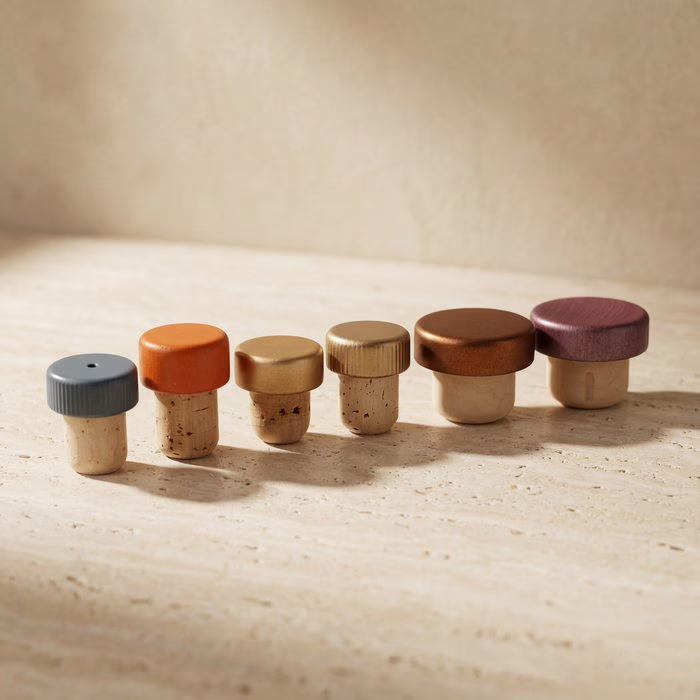
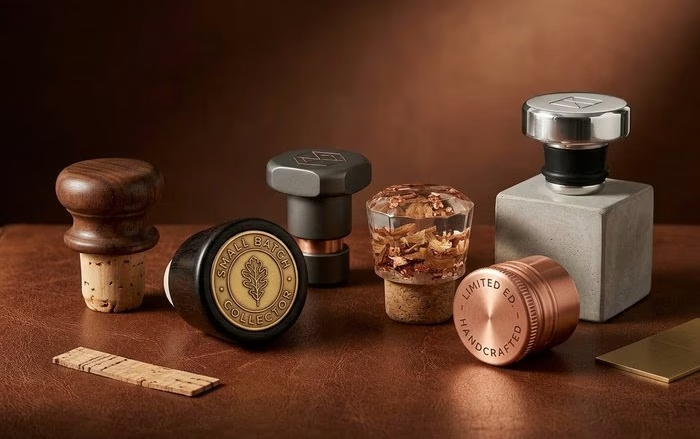
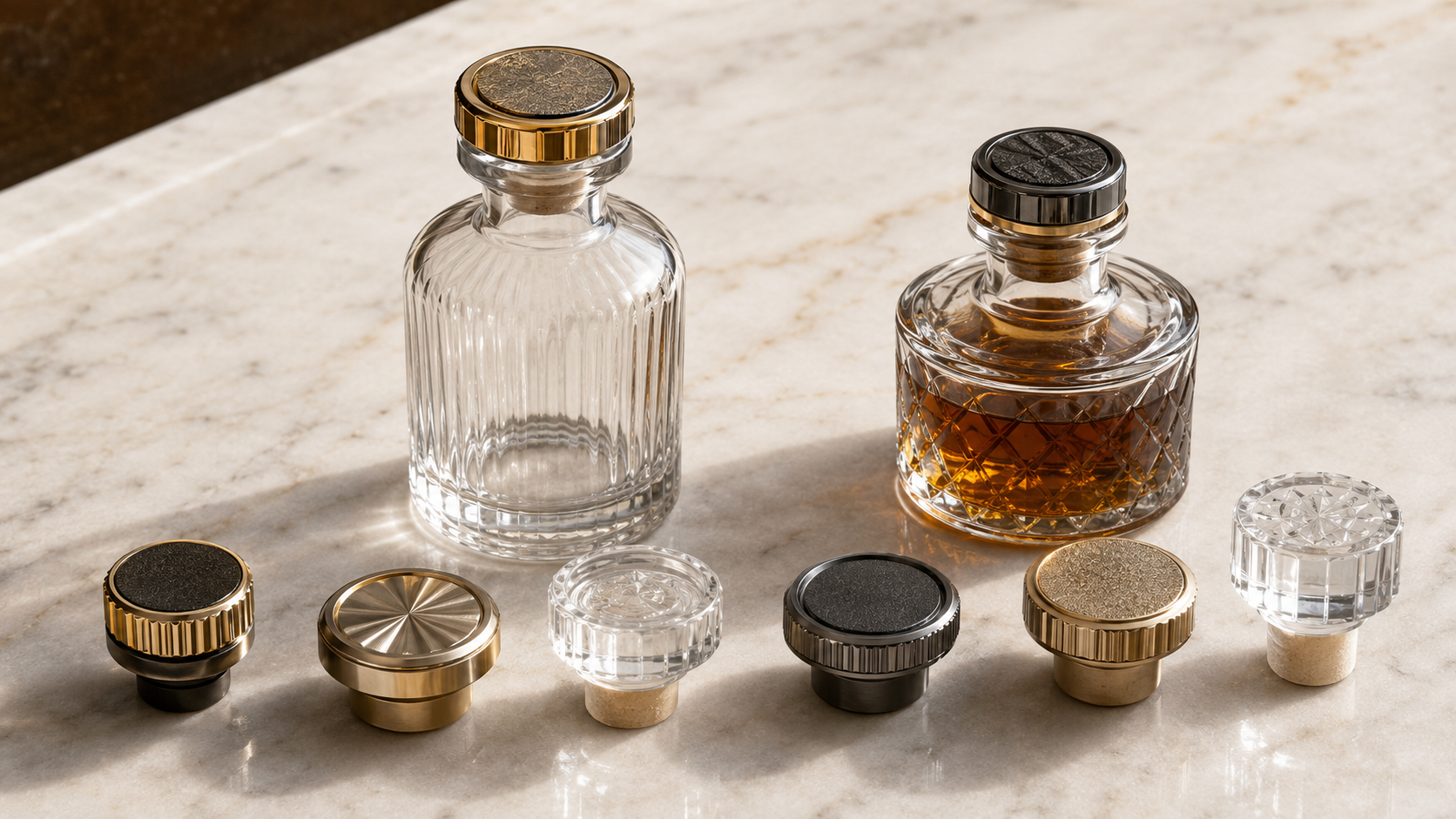
- Wood tops: natural, stained, painted, laser engraved, hot stamped, or logo branded
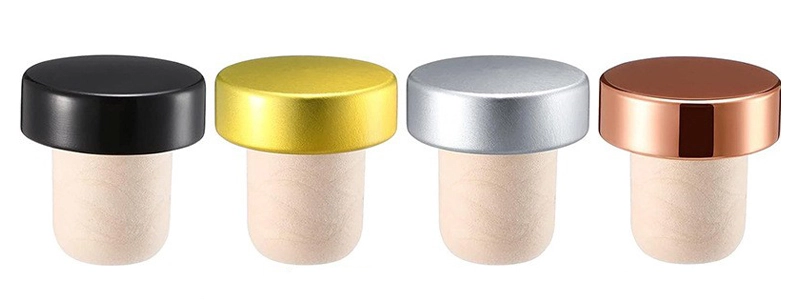
- Metal tops: aluminum, zinc alloy, plated, brushed, polished, embossed, or knurled
- Plastic tops: lightweight, cost-efficient, color-matched, and suitable for larger-volume projects
- Glass-look or clear tops: suitable for premium and gift packaging concepts
- Natural cork shanks: traditional appearance and natural material positioning
- Synthetic cork shanks: consistent dimensions and controlled extraction performance
Decoration options may include laser engraving, embossing, debossing, UV printing, hot stamping, foil effects, color matching, and custom-molded shapes. For spirits brands, the goal is not simply to add a logo. The goal is to make the closure feel intentional, premium, and consistent with the bottle design.
A well-designed closure can also support product line architecture. A distillery may use the same stopper shape across whisky, rum, and brandy while changing the top color, insert, or logo finish for each SKU. This keeps the brand consistent while allowing each product to feel distinct.
Tamper-Evident, Non-Refillable & Export-Ready Closure Systems
Many distilleries need more than a decorative stopper. Depending on the target market, product value, and sales channel, the closure may need to provide tamper evidence, anti-refill protection, or export-ready packaging performance.
The U.S. Alcohol and Tobacco Tax and Trade Bureau states that distilled spirits plants and importers are required to securely affix a tamper-evident closure or similar device to bottles or other containers of distilled spirits. Distilleries selling into regulated markets should confirm the applicable packaging, labeling, and closure requirements before finalizing the bottle-and-closure system.
Tamper-evident options may include:
- ROPP closures
- Tamper-evident bands
- Capsules
- Shrink sleeves
- Breakable security features
- Non-refillable closure systems
Non-refillable closures can be especially useful for premium spirits, export markets, hospitality channels, and regions where refilling or counterfeiting is a concern. These systems can help protect the brand, support consumer confidence, and reduce the risk of product misuse.
For distilleries selling through duty-free, distributors, bars, hotels, or premium retail channels, closure security should be considered early in the packaging design process. It is easier to design the correct bottle-and-closure system from the beginning than to fix compatibility problems after the bottle mold has already been produced.
Quality Control and Production Consistency
For B2B buyers, the most attractive closure design is not enough. The supplier must also deliver consistent dimensions, color, finish, packing, and documentation from sample approval to repeat orders. This is especially important for multi-SKU spirits programs, regional bottling partners, and export shipments that must arrive ready for production.
Quality planning should cover incoming material checks, dimensional inspection, logo position control, visual defect standards, torque or pull testing, leak testing, and packing verification. The quality mindset behind ISO 9001 is useful for buyers because it emphasizes repeatable systems, customer requirements, process control, and continual improvement.
For closure projects, buyers should clarify the following before production:
- Approved sample reference
- Critical dimensions and tolerance range
- Color standard or Pantone reference
- Logo position and decoration method
- Acceptable visual defect limits
- Packing method and carton labeling
- Inspection points before shipment
- Reorder consistency requirements
These details help turn an attractive sample into a reliable production component.
Sustainability Considerations for Distillery Closures
Sustainability is becoming more important in spirits packaging, but buyers need practical details rather than vague claims. A closure supplier should help evaluate material choices, production efficiency, packaging waste, recyclability, and documentation support.
The bottle and closure should be considered as one packaging system. The Glass Packaging Institute notes that glass can be recycled repeatedly without loss in quality or purity, while The Aluminum Association highlights the importance of aluminum recycling in reducing energy use and carbon impact. For wood-based closure components, FSC provides a recognized framework connected to responsible forestry and sourcing.
Sustainable closure selection may include:
- Natural cork or agglomerated cork shanks
- Wood options with responsible sourcing documentation where available
- Recyclable aluminum or metal cap components where local recycling systems accept them
- Reduced-plastic material choices
- Better fit to reduce leakage, rejects, and waste
- Bulk packing to reduce unnecessary secondary packaging materials
- Quality control to reduce defective closures
- Long-term supplier consistency to reduce redesign, tooling waste, and repeated sample rounds
Sustainability should not be treated as decoration. It should be part of the full packaging system, including material selection, transport efficiency, sealing performance, defect reduction, documentation, and end-of-life considerations. Brands that also need bottle development may review custom glass bottle packaging options or explore Kandacork Eco Glass when recycled-content positioning is part of the packaging brief.
How Kandacork Supports Distillery Closure Projects
Kandacork Closures works with distilleries, spirits brands, bottlers, importers, and private-label packaging teams that need reliable closure solutions for distilleries. The focus is not only on supplying a closure, but also on helping buyers align bottle fit, closure material, brand finish, production testing, and export packing.
Core support areas include:
- Custom bar-top stopper development
- Natural and synthetic cork stopper options
- Wooden, metal, plastic, and glass-look tops
- Screw cap and ROPP closure sourcing
- Non-refillable and tamper-evident closure options
- Cap and neck compatibility review
- Logo decoration and color matching
- Bulk packaging and export support
- Sampling, inspection, and production coordination
For buyers, the value is the ability to move from concept to sample, from sample to test, and from test to stable production. This is especially important for spirits brands preparing a new launch, upgrading packaging, or coordinating multiple SKUs under one brand family.
Custom Closure Development Process
A structured development process helps distilleries avoid delays and packaging failures. Custom closure solutions for distilleries should follow a clear path from technical review to mass production.
Project brief and bottle review
The buyer shares bottle drawings, physical samples, spirit category, target market, filling equipment, and closure preferences. This helps the supplier evaluate technical fit and recommend suitable closure types.
Closure type recommendation
Based on the bottle and product positioning, the supplier recommends bar-top stoppers, screw caps, ROPP closures, non-refillable systems, capsules, or a combined closure solution.
Material and finish selection
The buyer chooses top material, shank material, cap color, finish, weight, logo method, and decoration style. This stage should also consider brand tier, shelf position, and logistics requirements.
Artwork and branding confirmation
Logo files, Pantone colors, embossing details, engraving positions, and printing areas are reviewed before sampling. Clear artwork approval reduces the risk of repeat sampling and production delays.
Prototype or sample approval
Samples are produced or selected for fit, appearance, insertion force, extraction force, torque, or sealing evaluation. The buyer should test both visual quality and functional performance.
Filling-line and sealing test
The distillery or bottling partner tests the closure with the real bottle, liquid, and equipment. This step is essential before mass production, especially for automatic lines or export shipments.
Mass production
After sample approval, the closure moves into bulk production with quality checks for dimensions, color, decoration, sealing performance, and packing.
Inspection, packing, and delivery
Closures are packed for safe transport and prepared for domestic or export delivery. Documentation can be supplied according to buyer needs.
FAQ
What are closure solutions for distilleries?
Closure solutions for distilleries are bottle sealing systems designed for spirits packaging. They include bar-top stoppers, cork closures, screw caps, ROPP closures, non-refillable closures, capsules, and shrink sleeves.
The right closure solution should match the bottle neck, spirit type, filling line, branding requirements, and target market. It should also support reliable sealing, easy opening, and consistent production performance.
What is the best closure type for a craft distillery?
The best closure type for a craft distillery depends on the spirit category, bottle neck, brand position, and filling equipment. Many craft whisky, rum, brandy, and tequila brands choose bar-top stoppers because they provide a premium opening experience.
Vodka, gin, liqueurs, and mini bottles may use screw caps or ROPP closures for efficient capping, resealing, and tamper evidence. The best option should always be tested with the actual bottle before mass production.
Are bar-top stoppers better than screw caps for spirits?
Bar-top stoppers are often better for premium presentation and a reusable opening experience. Screw caps are often better for speed, consistency, cost control, and high-volume production.
Neither option is automatically better. The right choice depends on the bottle design, price point, retail channel, filling equipment, and consumer expectation.
What is a ROPP closure used for?
A ROPP closure is commonly used when a spirits bottle needs a secure screw cap with tamper-evident performance. It is often selected for vodka, gin, liqueurs, mini bottles, and export-oriented products.
ROPP closures require suitable bottle neck finishes and compatible capping equipment. Torque control should be tested before full production.
Can bottle stoppers be customized with a logo?
Yes. Bottle stoppers can be customized with logo engraving, embossing, debossing, hot stamping, UV printing, metal plating, color matching, and custom-molded shapes.
The best decoration method depends on the closure material, artwork complexity, order quantity, and desired brand effect. A premium whisky stopper may use engraved wood, while a modern gin closure may use printed metal or a clean color-matched cap.
What information is needed to quote a custom closure project?
A supplier usually needs the bottle drawing or sample, neck finish, closure type, material preference, logo artwork, target quantity, spirit category, destination market, and launch timeline.
For screw caps and ROPP closures, torque range and liner compatibility are especially important. For bar-top stoppers, shank diameter, cork compression, and extraction force should be reviewed.
Can closures be tested with existing bottles?
Yes. Closures should be tested with the actual bottle whenever possible. Fit testing may include insertion force, extraction force, leakage testing, torque testing, capping-line compatibility, and visual review after storage or transport simulation.
Testing is especially important for custom bottles, premium stoppers, export packaging, and automated bottling lines.
What closure is best for whisky, gin, vodka, rum, or tequila?
Whisky and rum often use premium bar-top stoppers. Gin may use decorative stoppers, screw caps, or ROPP closures depending on brand style. Vodka often uses screw caps or ROPP closures. Tequila and mezcal frequently use custom decorative stoppers to create strong shelf impact.
The best closure should match both the bottle and the brand story. It should also be tested for sealing, opening feel, and production compatibility.
Do distilleries need tamper-evident or non-refillable closures?
Some distilleries need tamper-evident or non-refillable closures depending on market rules, product value, export channels, and brand protection goals. Premium spirits, duty-free products, and export bottles may benefit from added security features.
Tamper-evident capsules, shrink sleeves, ROPP closures, and non-refillable systems can help protect product integrity and support consumer confidence.
Request Custom Closure Solutions for Your Distillery
Choosing the right closure is both a technical and branding decision. The best closure solutions for distilleries combine sealing performance, bottle compatibility, brand appearance, tamper evidence, and scalable supply.
If you are developing a new spirits brand, upgrading an existing bottle, or sourcing closures for bulk production, Kandacork Closures can support your project from sample development to mass production. Send your bottle drawing, target closure style, logo artwork, order quantity, spirit category, filling-line information, and launch timeline to request a custom quote.
Kandacork Closures helps distilleries create bottle closures that look premium, seal reliably, and support long-term brand growth.