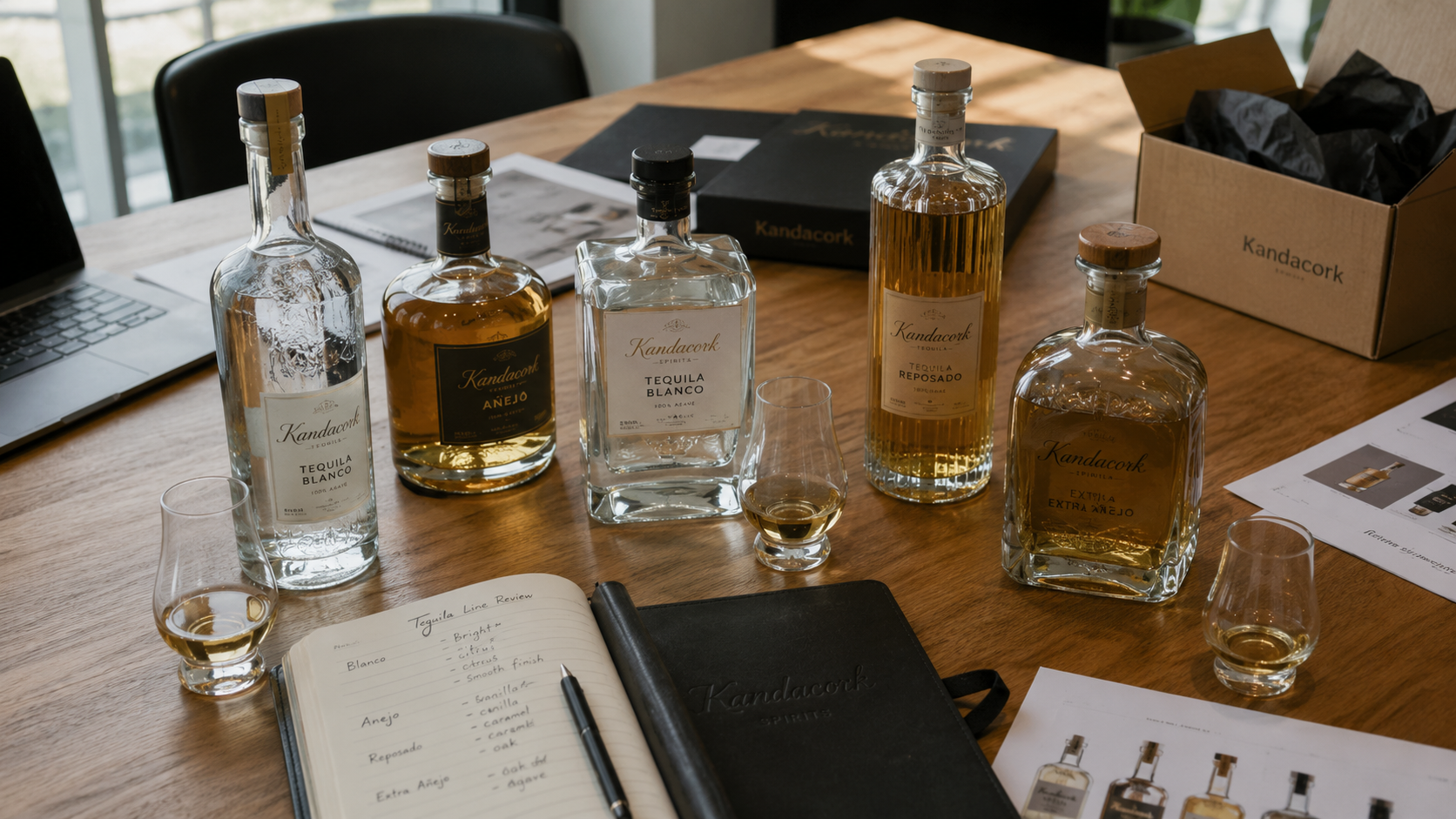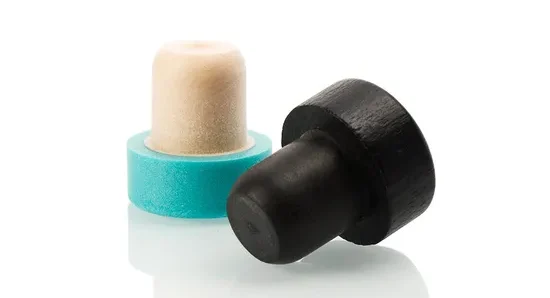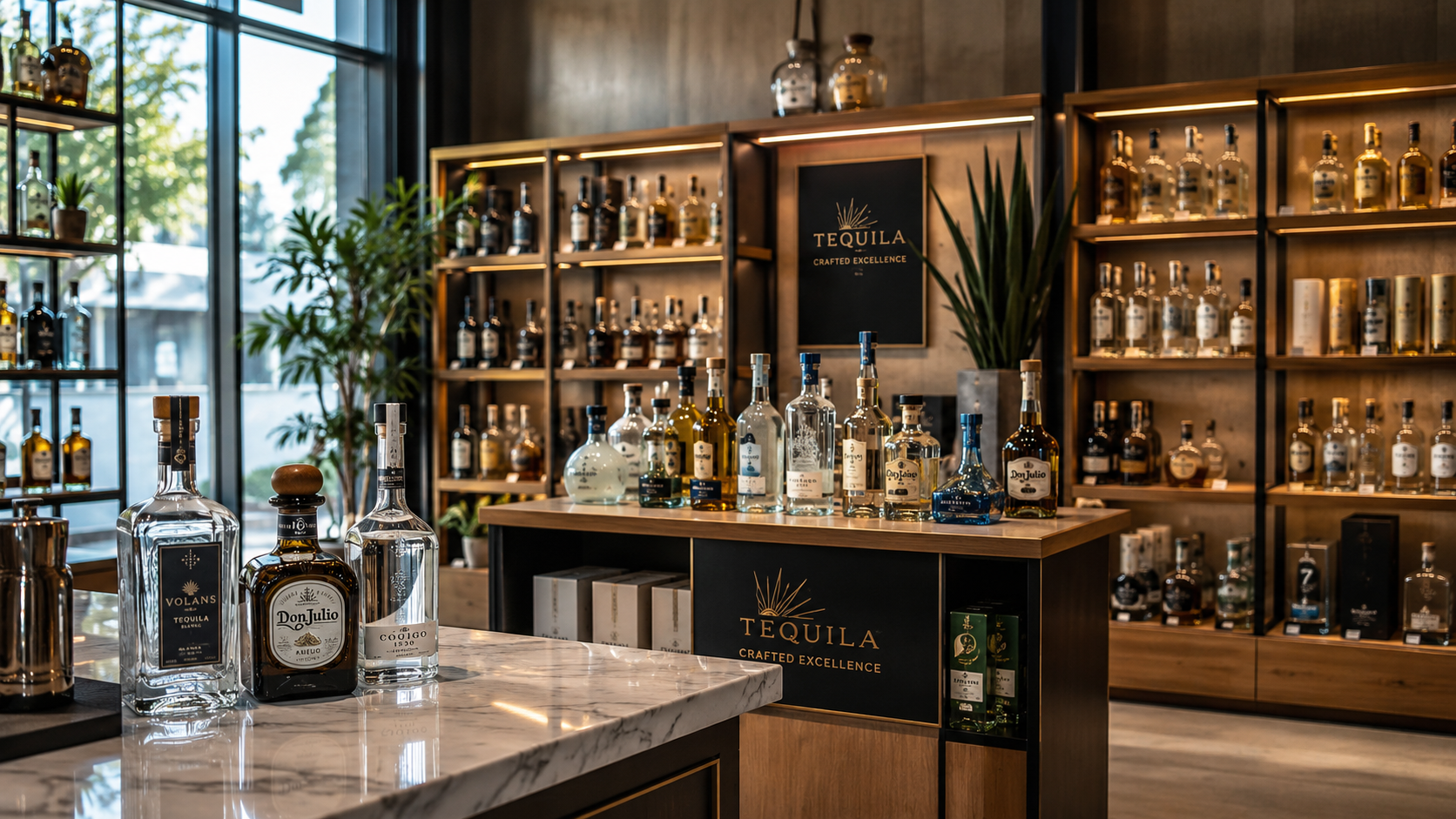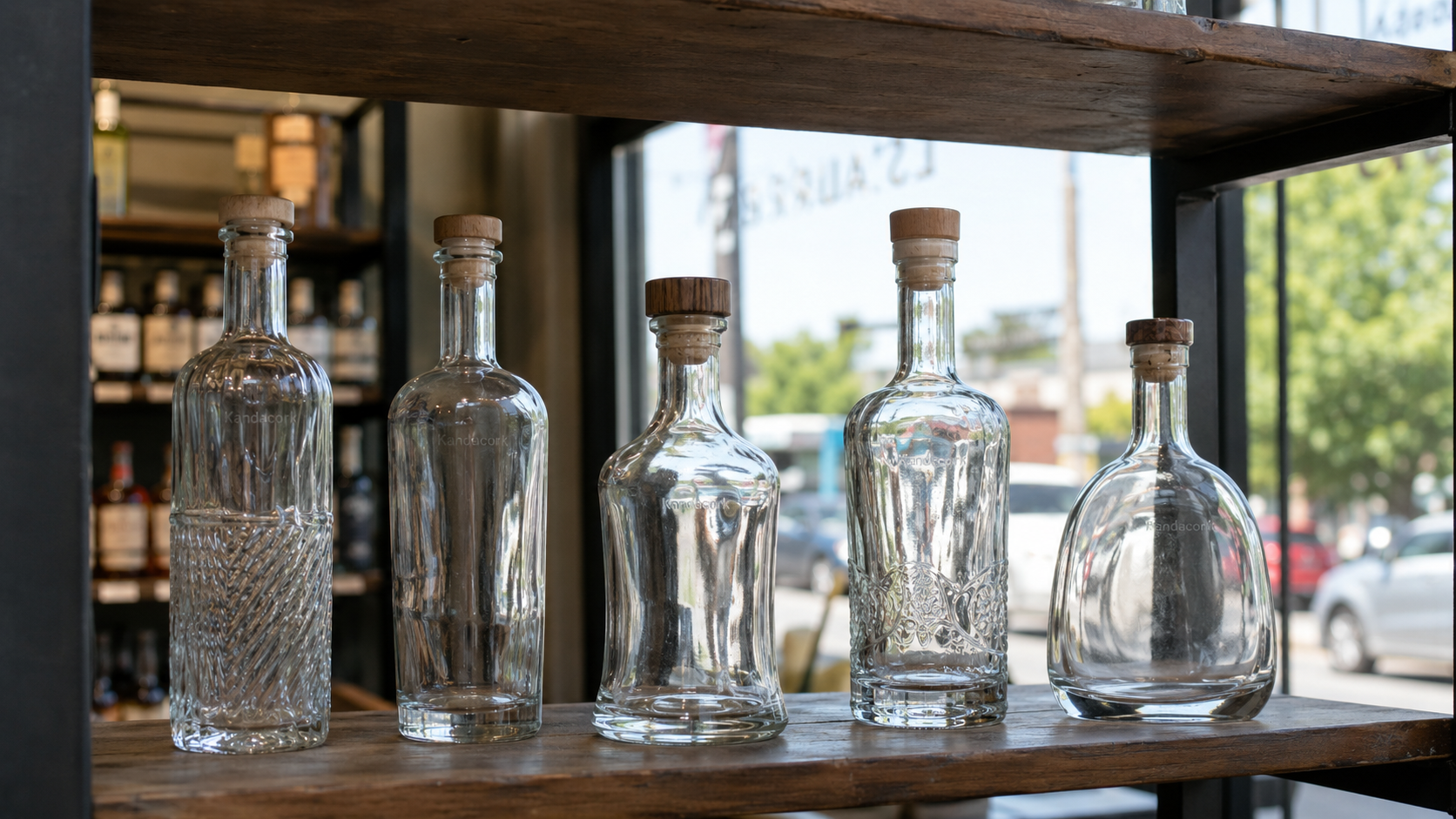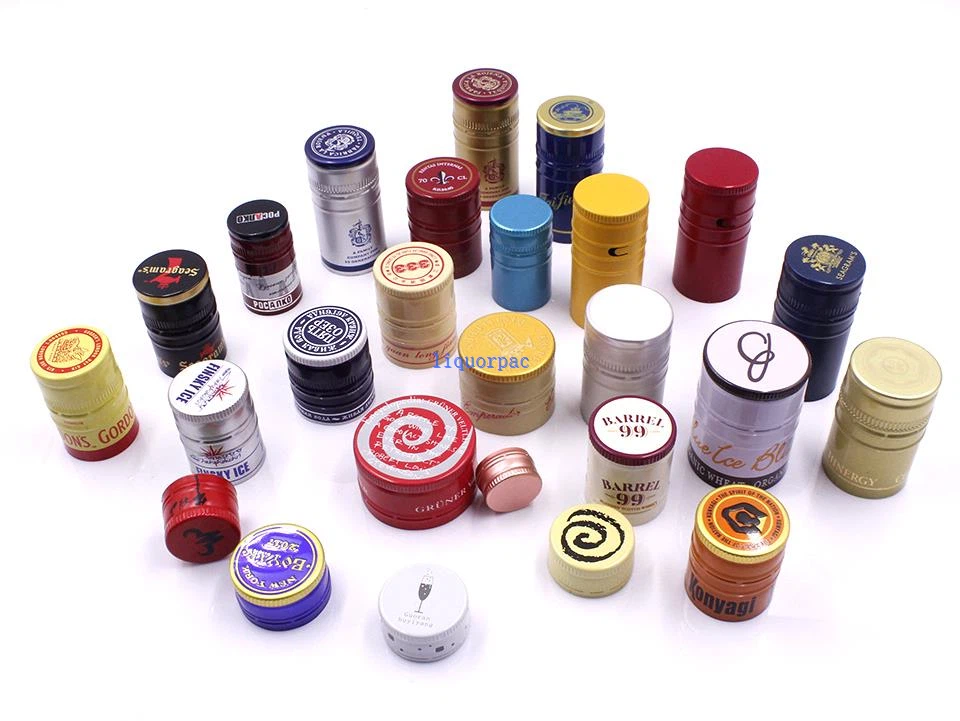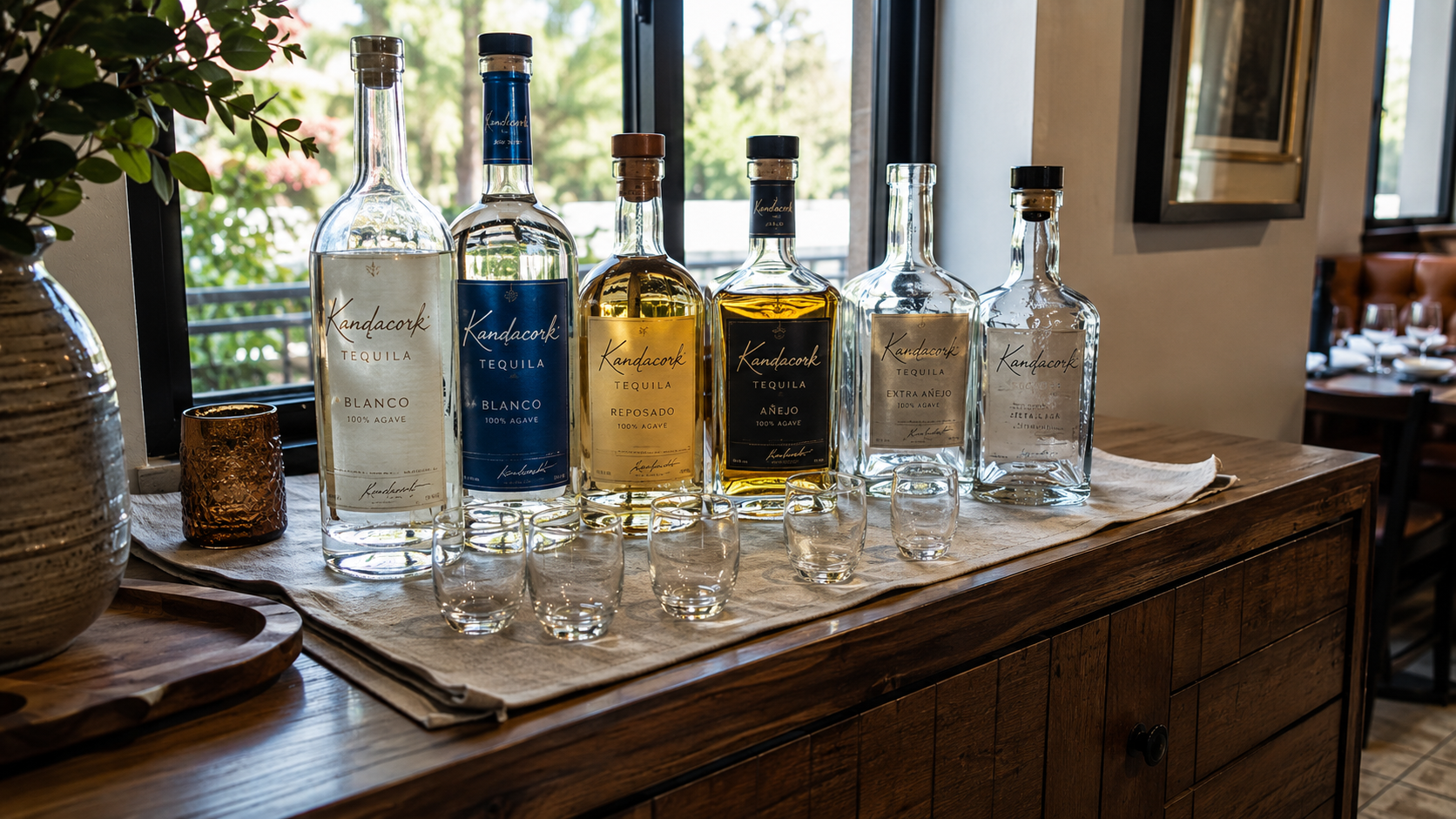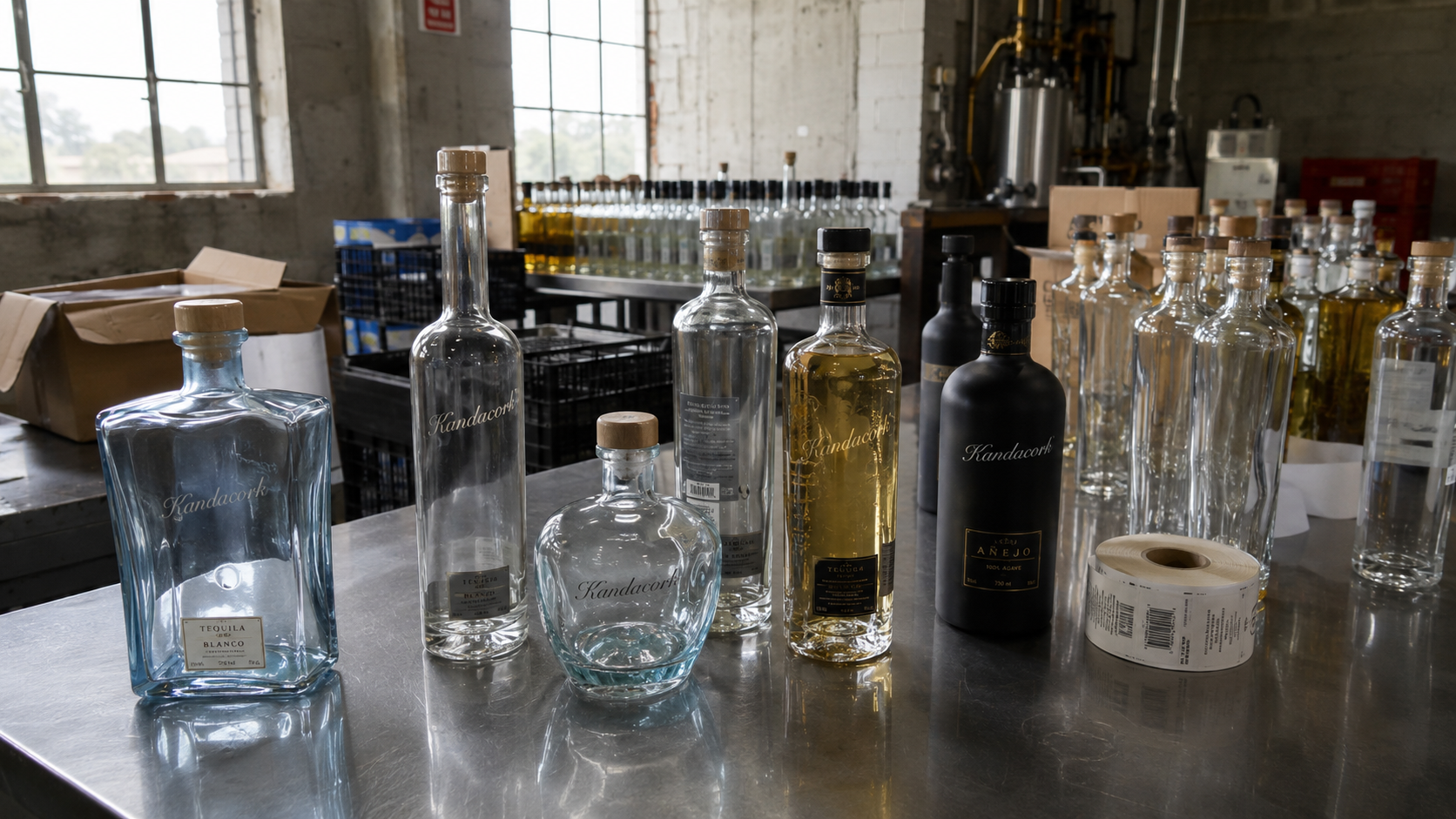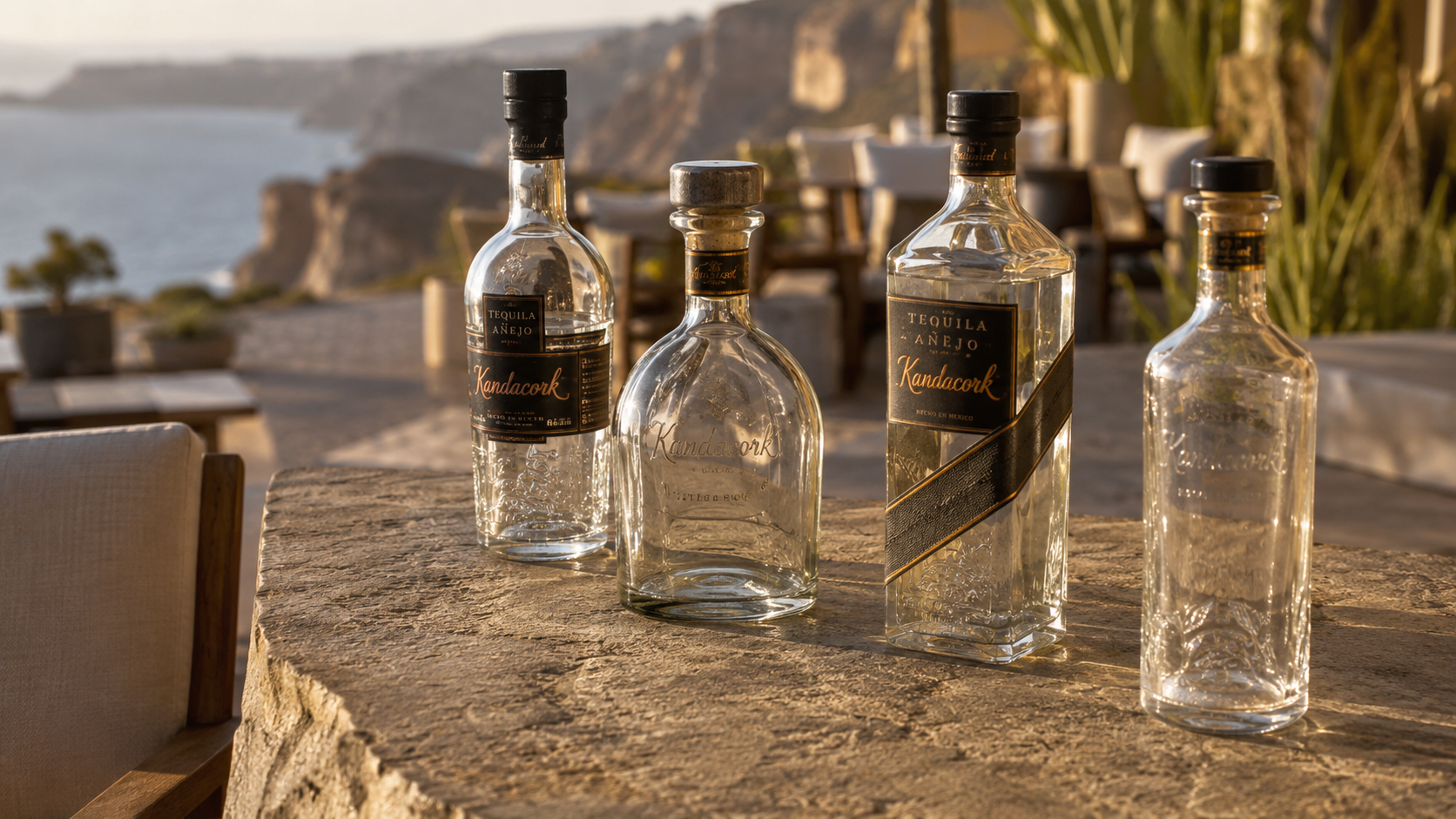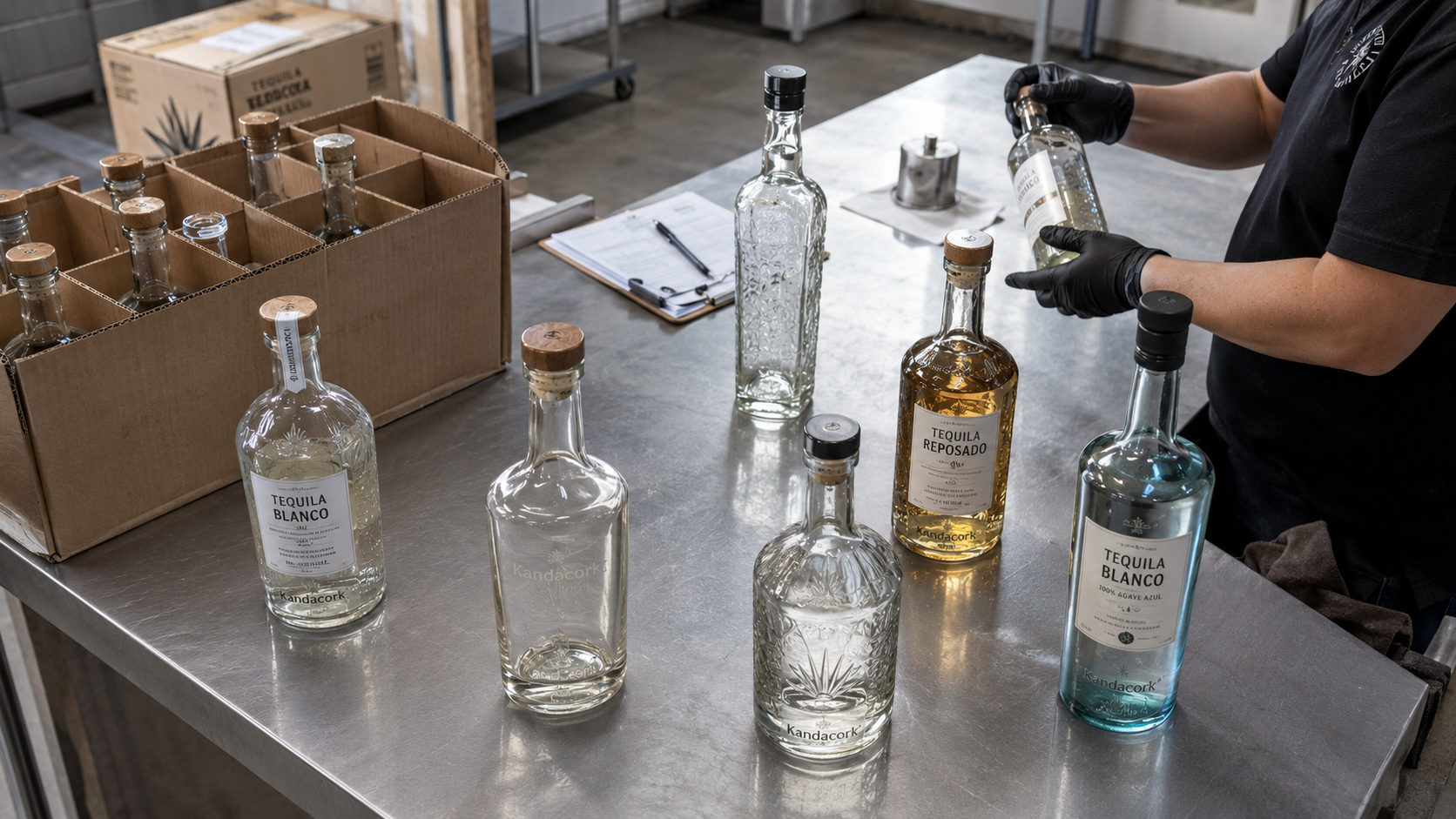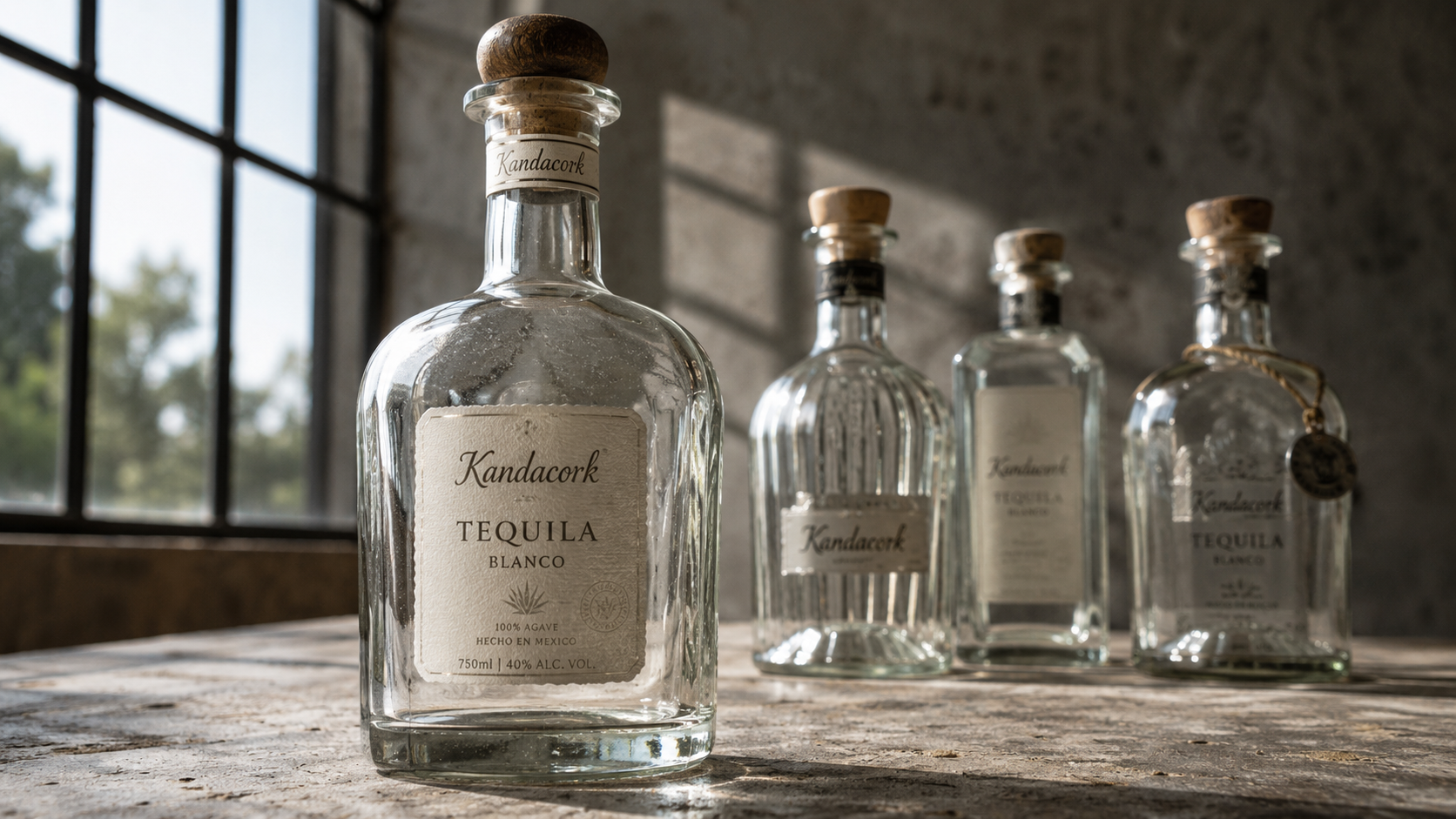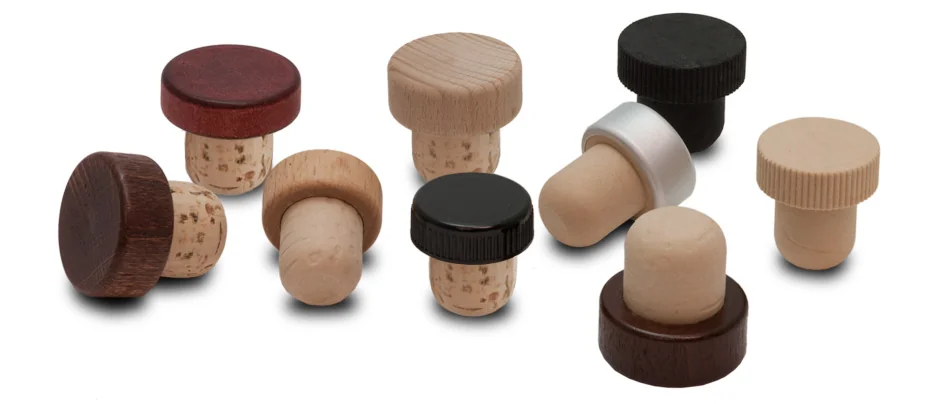
A bar-top stopper is a reusable spirits bottle closure with a decorative top and an inserted sealing shank. The top provides grip, brand identity, and shelf appeal, while the shank fits inside the bottle neck to help reseal the product after opening.
For spirits brands, distilleries, private label buyers, importers, distributors, bottlers, and packaging buyers, the right bar-top stopper must do more than look premium. It should match the bottle neck, support the brand image, perform reliably during filling and transport, meet food-contact expectations, and make the finished bottle easier to sell.
This guide explains bar-top stopper structure, common top and shank materials, bottle fit rules, sample approval steps, supplier documentation, and what buyers should prepare before requesting samples or quotations from Kandacork Closures. Buyers comparing broader closure options can also review Kandacork Closures’ range of bottle stoppers and closures for spirits packaging projects.
What Is a Bar-Top Stopper?
A bar-top stopper is a closure made from two main components: a visible top head and an inserted shank. The top head stays above the bottle neck and is often customized with color, logo, texture, or material finish. The shank enters the bottle neck and creates a friction fit for resealing.
This closure style may also be called a bar top closure, bartop stopper, T-top cork, T-top stopper, capped cork, spirits bottle stopper, or liquor bottle closure. In sourcing conversations, these terms are often used in similar ways, but the final specification depends on bottle neck size, shank material, top material, stopper diameter, and filling requirements.
Bar-top stoppers are widely used for whisky, rum, gin, vodka, tequila, mezcal, brandy, liqueurs, bitters, fortified wines, oils, vinegars, and specialty beverages.
Why Spirits Brands Use Bar-Top Stoppers
Spirits brands use bar-top stoppers because they combine function, presentation, and consumer experience. A closure is one of the first packaging components a customer touches. Its weight, finish, grip, pull-out feel, and resealing performance can influence the perceived quality of the whole bottle.
For whisky and rum, wood or metal tops can communicate tradition, aging, craftsmanship, and premium character. For gin and vodka, aluminum, acrylic, or color-matched plastic can create a cleaner and more modern look. For tequila, mezcal, and limited-edition spirits, sculpted metal or decorative tops can become a recognizable brand asset.
A bar-top stopper also supports product-line differentiation. One bottle family can use different top colors, finishes, or logos across multiple SKUs, which is useful for private label programs, distributor brands, seasonal releases, and gift packaging.
Bar-Top Stopper Anatomy: Top Head, Shank and Contact Zone
A bar-top stopper looks simple, but its performance depends on several technical details. Buyers should review the top head, shank, and contact zone before approving samples or placing bulk orders.
Top Head
The top head is the visible part of the stopper. It provides grip, decoration, and brand recognition.
Key specifications include top diameter, height, shape, material, weight, edge profile, logo position, decoration method, and surface finish. Common shapes include round, square, mushroom, flat-top, domed, faceted, and custom-molded designs.
Decoration options may include laser engraving, embossing, debossing, pad printing, screen printing, hot stamping, plating, varnishing, color coating, and molded brand details. For buyers building a full branded closure system, Kandacork Closures can support custom branding for spirits closures and stoppers across color, finish, logo, sidewall, and material decisions.
A larger or heavier top may feel more premium, but it must still fit the bottle proportion, carton structure, gift box, and filling-line process.
Shank
The shank is the inserted part that fits inside the bottle neck. It is the main functional sealing component.
Important shank specifications include diameter, length, material compression, insertion depth, dimensional tolerance, pull-out force, odor control, alcohol compatibility, and fit stability after transport.
Shanks may be made from natural cork, micro-agglomerated cork, synthetic cork, or polymer materials. The right option depends on bottle bore, product type, alcohol strength, brand positioning, and repeat-order consistency.
Contact Zone
The contact zone is the area where the shank compresses against the inner wall of the bottle neck. This zone affects sealing, insertion feel, stopper stability, and leakage resistance.
If the shank is too loose, the bottle may leak or the stopper may shift during transport. If it is too tight, the stopper may be difficult to insert on the bottling line or uncomfortable for consumers to remove.
Bar-Top Stopper Size Chart and Fit Rules
Correct sizing is one of the most important parts of bar-top stopper sourcing. Buyers should not choose a closure by product name alone. The key measurement is the inner diameter of the bottle neck, often called the bottle bore.
A common starting point is to test a shank that is slightly larger than the bottle opening. However, this is only a starting point, not a final approval rule. Real performance depends on bottle bore tolerance, shank material, shank length, compression behavior, insertion depth, and filling-line application.
| Bottle Inner Neck Diameter | Common Test Shank Diameter | Buyer Note |
|---|---|---|
| 18.5 mm | 19.5 mm | Common starting point for many spirits bottles; verify with real bottle samples |
| 19.0 mm | 20.0 mm | Fit depends on shank compression and bottle bore tolerance |
| 21.5 mm | 22.5 mm | Often used for larger neck finishes; confirm insertion and pull-out force |
| Custom bore | Custom shank | Requires bottle drawing, sample testing, and supplier fit review |
These examples are starting points only. Final approval should be based on real bottle samples, filling-line trials, leakage testing, transport review, and buyer-specific quality requirements.
Key Technical Parameters Buyers Should Confirm
Professional buyers should not approve a bar-top stopper based only on appearance. The following parameters should be reviewed before mass production.
Shank Diameter and Bottle Bore Tolerance
The shank diameter must match the inner diameter of the bottle neck. If tolerance is too wide, the same stopper may feel tight in one bottle and loose in another.
Bottle drawings are useful, but they should be supported by real samples because glass production variation can affect final fit.
Shank Length and Insertion Depth
Shank length influences stability and sealing area. A longer shank may improve contact, but it must not interfere with the bottle neck structure or make removal difficult.
Insertion depth should be checked with real bottles. A closure that looks correct on a technical drawing may perform differently in production.
Insertion Force and Pull-Out Force
Insertion force affects bottling-line efficiency. Pull-out force affects consumer experience.
A premium spirits closure should feel secure but not excessive. If pull-out force is too high, the bottle may feel difficult to open. If it is too low, the closure may not feel reliable.
Leakage and Transport Stability
Leakage testing should be part of sample approval. Buyers should test filled bottles under conditions that reflect storage, vibration, temperature change, export shipping, and carton handling.
Heavy metal tops, plated surfaces, and coated finishes may also require additional packing protection to reduce abrasion during transport.
Top Alignment and Decoration Quality
For custom logo closures, top alignment matters. The logo should appear centered, clean, and consistent across the order.
If the stopper is used with a front-facing label, gift box window, or premium display pack, decoration alignment should be included in the approval standard.
Bar-Top Stopper Materials Compared
Different materials create different brand impressions, costs, technical behaviors, and sourcing requirements.
| Material | Best For | Buyer Advantage | Key Checkpoint |
|---|---|---|---|
| Wood top | Whisky, rum, brandy, craft spirits | Natural premium feel and classic appearance | Grain, color variation, varnish quality |
| Plastic top | Private label, gin, vodka, liqueurs, high-volume spirits | Cost control, color consistency, repeatable molding | Mold quality, surface finish, color matching |
| Aluminum top | Gin, vodka, modern spirits, premium liqueurs | Lightweight metallic look and modern finish | Scratch resistance and coating consistency |
| Zinc alloy / Zamak top | Tequila, mezcal, premium rum, limited editions | Heavy luxury feel and custom sculpted shapes | Mold cost, plating quality, export packing |
| Glass, ceramic or acrylic top | Gift bottles, decanters, collector releases | Strong visual differentiation | Fragility, weight, transit protection |
Wood is suitable when the brand wants a traditional, crafted, or premium image. Buyers should define acceptable color range, grain variation, varnish quality, and logo finish.
Plastic is practical for high-volume programs, private label ranges, and multi-SKU spirits lines. It offers strong color consistency, repeatable molding, and cost control. Buyers evaluating molded color, lightweight structure, and scalable supply can compare the benefits of plastic bar-top stoppers for spirits bottles before selecting a final material direction.
Aluminum supports modern metallic finishes such as matte, glossy, brushed, polished, anodized, black, silver, and gold.
Zinc alloy or Zamak is used when the closure needs weight, sculpture, and luxury impact. It is often selected for tequila, mezcal, premium whisky, aged rum, and limited editions.
Glass, ceramic, and acrylic tops are suitable for gift packaging, decanters, and collector releases, but buyers should pay close attention to weight, fragility, and transit protection.
Which Shank Material Should Buyers Choose?
The top head creates visual value, but the shank controls fit and resealing performance. Buyers should choose the shank material based on sealing behavior, visual expectations, alcohol compatibility, and production consistency.
| Buyer Situation | Recommended Shank Option | Why It Works |
|---|---|---|
| Traditional cork identity is important | Natural cork or micro-agglomerated cork | Maintains a cork-based appearance and familiar premium cue |
| Repeat production consistency is the priority | Synthetic cork or micro-agglomerated cork | Supports stable dimensions and predictable fit |
| The brand wants a natural premium look | Natural cork | Offers traditional appeal and natural elasticity |
| The project needs tighter visual consistency | Synthetic cork | Reduces natural variation in appearance |
| The buyer needs a custom technical solution | Polymer or TPE shank | Supports specific flexibility and sealing requirements after testing |
Natural cork offers premium perception and traditional appeal, but it may show natural variation. Micro-agglomerated cork gives a more controlled cork-based option. Synthetic cork is useful when consistency and repeatability are priorities. Polymer or TPE shanks can support selected custom projects, but they should be tested with the actual product and bottle.
How to Choose the Right Bar-Top Stopper Size
The right size should be confirmed through technical review and sample testing. Buyers should confirm the bottle inner neck diameter, review the bottle drawing and neck finish, select a preliminary shank diameter, test the stopper with real bottle samples, check insertion force, pull-out force and leakage, then approve pre-production samples before bulk production.
This process helps reduce leakage risk, avoid poor opening feel, and confirm filling-line compatibility before committing to bulk orders.
Bar-Top Stopper Uses by Spirits Category
| Spirits Category | Recommended Stopper Style | Buyer Reason |
|---|---|---|
| Whisky | Wood, wood-metal, heavy metal | Premium ritual, aged image, gift appeal |
| Rum | Wood, antique metal, dark finishes | Heritage, warmth, craft positioning |
| Gin | Aluminum, acrylic, colored plastic | Botanical identity, modern branding, SKU color coding |
| Vodka | Aluminum, clear acrylic, clean plastic | Minimalist, modern, precise appearance |
| Tequila / Mezcal | Zinc alloy, sculpted metal, wood | Weight, texture, craft and origin cues |
| Brandy / Cognac-style spirits | Wood, metal-accented tops | Classic and refined presentation |
| Liqueurs and bitters | Plastic, wood, color-coded tops | Frequent resealing and flavor differentiation |
| Private label spirits | Stock molds or semi-custom tops | Faster sampling, cost control, repeat supply |
This category-based approach helps buyers select materials based on brand positioning, retail channel, target price, and expected consumer use.
Bar-Top Stopper vs Screw Cap vs ROPP Closure
Buyers should compare closure types before final selection.
| Closure Type | Best For | Strength | Limitation |
|---|---|---|---|
| Bar-top stopper | Premium spirits, craft brands, gift packaging | Premium opening feel, reusable, highly decorative | Often needs separate tamper-evident solution |
| Screw cap | Cost-sensitive spirits and simple resealing | Easy to apply, economical, familiar to consumers | May feel less premium for some spirits categories |
| ROPP closure | High-speed bottling and tamper-evident programs | Secure, efficient, consistent | Less tactile premium experience |
| Traditional cork stopper | Classic or heritage bottles | Natural image and traditional appeal | More variation depending on cork grade |
A bar-top stopper is usually best when the brand values presentation, reusability, tactile quality, and decorative flexibility. Screw caps and ROPP closures may be better for high-speed production, cost-sensitive projects, or integrated tamper-evident requirements. For a deeper closure comparison, buyers can review bar-top stoppers vs screw caps vs ROPP closures before finalizing a closure route.
Many spirits projects combine a bar-top stopper with a capsule, shrink sleeve, or tamper-evident band to balance premium appearance with channel security.
Sample Approval Process for Bar-Top Stoppers
A structured sample approval process helps buyers move from concept to production with less risk.
| Step | Buyer Action | Supplier Support |
|---|---|---|
| Share bottle details | Send bottle drawing, neck size, and bottle sample if available | Review neck finish and preliminary fit |
| Select closure direction | Choose top material, shank material, finish, and logo method | Recommend suitable stock or custom options |
| Confirm preliminary size | Review bottle bore and test shank diameter | Suggest test sizes based on bottle sample |
| Prepare samples | Review physical closure samples | Provide sample set for fit and appearance check |
| Test performance | Check insertion force, pull-out force, leakage, and alignment | Support technical adjustments if needed |
| Confirm decoration | Approve logo position, color, surface finish, and top appearance | Prepare pre-production sample |
| Review packing | Confirm carton, inner protection, and pallet requirements | Recommend export packing method |
| Approve production | Sign off final sample and order specification | Start bulk production and QC control |
This workflow is especially important for custom bar-top stoppers, heavy metal tops, plated finishes, new bottle molds, and private label programs with repeat shipments. Buyers who need formal inspection support can also review Kandacork Closures’ quality and testing process before approving a bulk order.
Compliance and Supplier Documentation
Spirits closures should be treated as food-contact packaging components because the closure may contact beverage vapor, liquid, or the bottle opening area.
For EU projects, buyers should review food-contact material principles under Regulation (EC) No 1935/2004 and related good manufacturing practice requirements. For U.S. spirits projects, FDA food-contact materials expectations may also be relevant, especially when evaluating packaging components that may contact beverage, vapor, or the bottle finish.
Buyers should ask suppliers for food-contact material declarations, material specifications, batch traceability, odor or sensory checks where required, production inspection records, and export packing specifications.
A capable supplier should be able to support bottle drawing review, shank sizing guidance, material recommendation, custom top development, logo decoration, color matching, pre-production samples, fit and leakage testing support, quality inspection reports, carton planning, pallet protection, and repeat-order consistency.
Common Buyer Mistakes
Many closure problems happen because buyers treat the stopper as a simple accessory instead of a functional packaging component.
Common mistakes include ordering by product name instead of shank diameter, assuming all 19.5 mm shanks fit the same way, ignoring bottle bore tolerance, choosing top material only by appearance, skipping real bottle testing, and forgetting tamper-evident or filling-line requirements.
A lower-cost closure can become expensive if it causes leakage, slow filling, inconsistent branding, product returns, or repacking. Buyers should evaluate total packaging risk, not only unit price.
RFQ Checklist: What Buyers Should Prepare
A clear technical brief helps Kandacork Closures recommend suitable bar-top stopper options faster and reduces sampling delays.
Before requesting samples or a quotation, prepare:
- Bottle drawing
- Bottle sample if available
- Inner neck diameter
- Neck finish details
- Bottle volume
- Spirit category
- Alcohol by volume
- Target market
- Filling method
- Manual or automatic application
- Target order quantity
- Preferred top material
- Preferred shank material
- Logo artwork
- Surface finish requirement
- Packing requirement
- Timeline
- Required documentation
For projects that also need coordinated glass bottle planning, buyers can review Kandacork Spirits’ spirits bottle closure systems to align bottle neck finish, stopper structure, decoration, and filling-line requirements.
This information helps the supplier check fit, recommend materials, prepare relevant samples, and quote a production-ready closure solution.
How Kandacork Closures Supports Spirits Packaging Buyers
Kandacork Closures supports spirits brands, distilleries, private label buyers, importers, distributors, bottlers, and packaging teams with bar-top stopper development and supply.
The team can help evaluate material options, match shank size to bottle necks, develop custom tops, prepare samples, support logo decoration, advise on packing, and quote bulk production based on buyer requirements.
Whether the project requires a classic wood-top stopper for whisky, a cost-efficient plastic top for private label spirits, an aluminum top for gin, or a heavy custom metal closure for a premium release, Kandacork Closures can help buyers move from concept to sample and from sample to production.
Frequently Asked Questions
What is a bar-top stopper?
A bar-top stopper is a reusable bottle closure with a visible top head and an inserted shank. It is commonly used for spirits bottles because it provides both resealing function and decorative brand value.
What size bar-top stopper do I need?
The correct size depends on the bottle inner neck diameter, bore tolerance, shank material, shank length, and required fit. A shank slightly larger than the bottle opening is often tested first, but final approval should always be based on real bottle samples.
What materials are used for bar-top stoppers?
Common top materials include wood, plastic, aluminum, zinc alloy, glass, ceramic, and acrylic. Common shank materials include natural cork, micro-agglomerated cork, synthetic cork, polymer, and TPE.
What is the difference between a bar-top stopper and a T-top cork?
In most spirits packaging projects, bar-top stopper and T-top cork refer to the same general closure style. Both usually include a visible top head and an inserted shank. The exact specification depends on top material, shank material, diameter, and bottle fit.
Can bar-top stoppers be used on bottling lines?
Yes, but they must be tested with the actual bottle and equipment. Buyers should confirm insertion force, top alignment, shank tolerance, application speed, and leakage performance before approving bulk production.
What should I send before requesting samples?
Send the bottle drawing, bottle sample if available, inner neck diameter, spirit type, ABV, target market, order quantity, preferred material, logo artwork, surface finish, filling method, and required documentation.