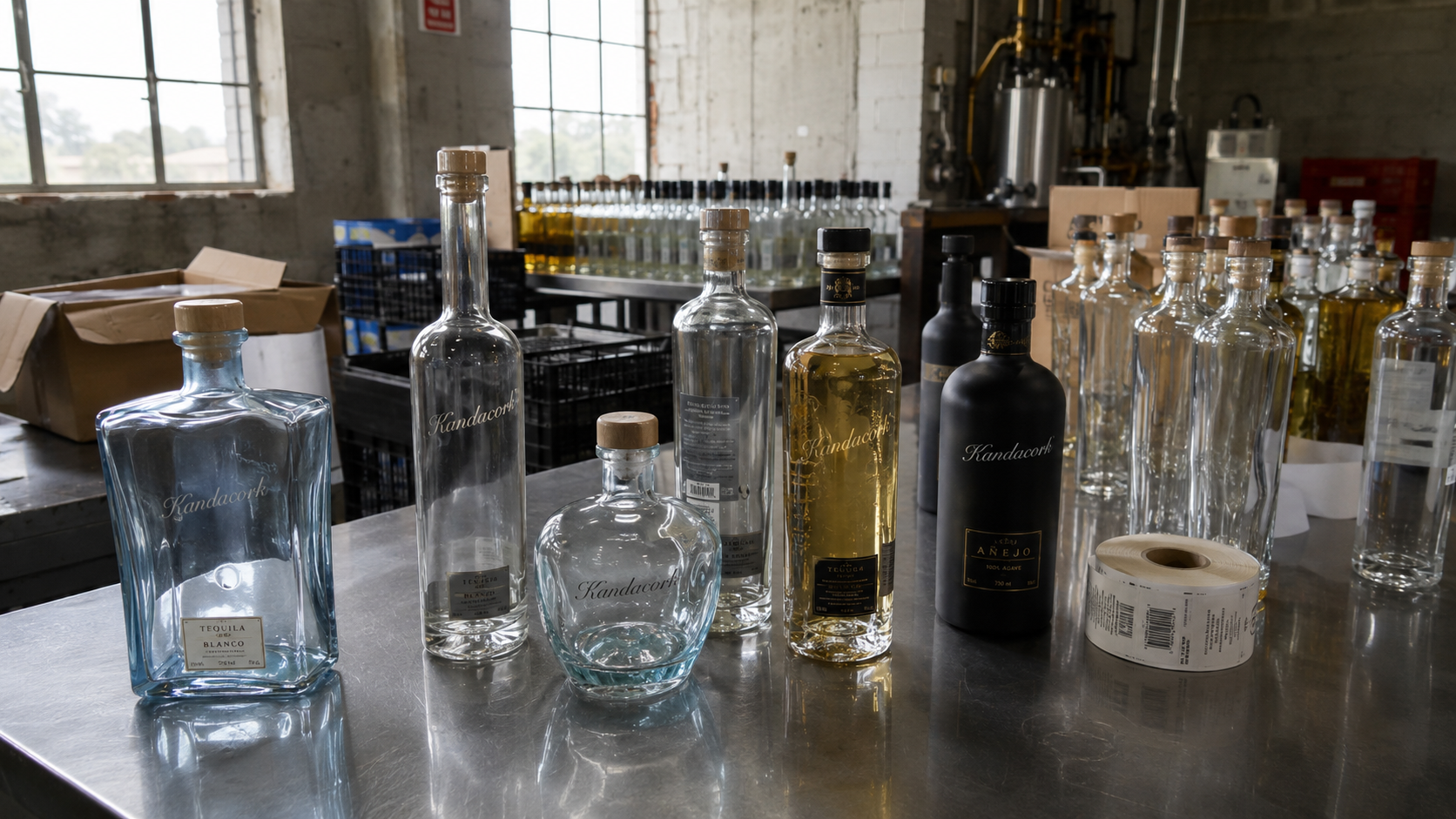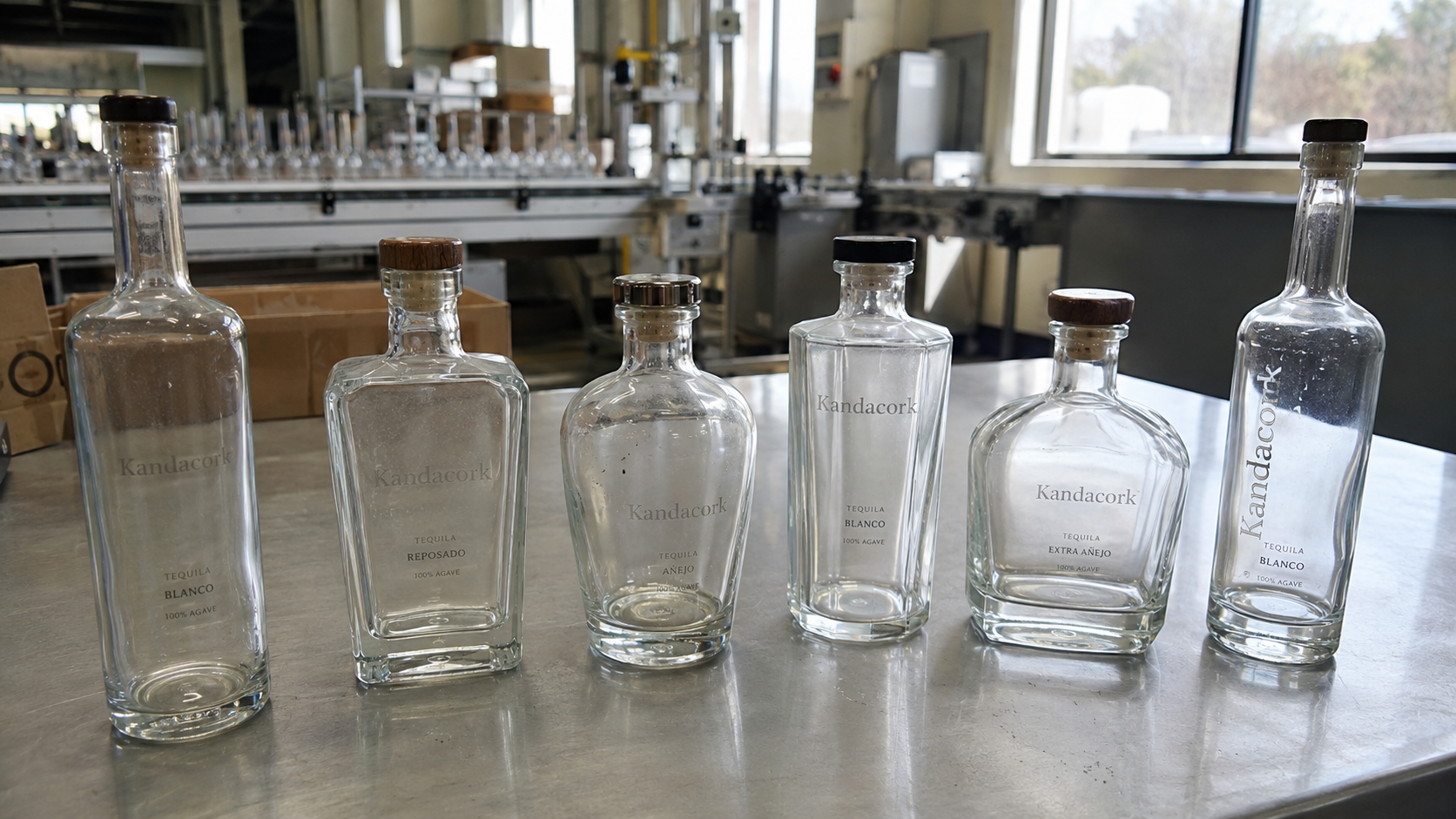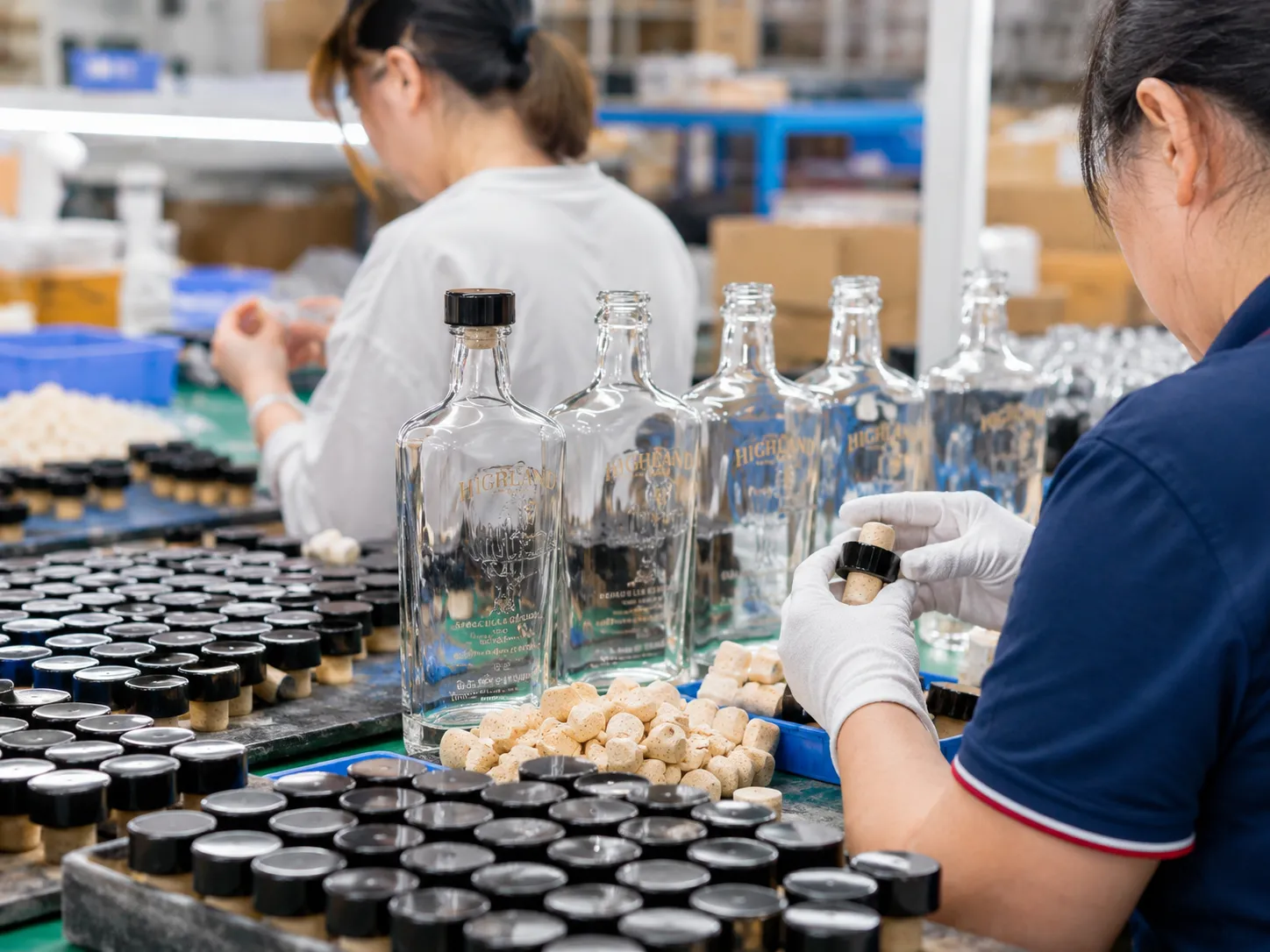
A practical sourcing guide for distilleries, private label buyers, importers, distributors, and bottlers comparing stopper materials, bottle neck fit, supplier capability, samples, and quotations.
Quick Answer: What Are Bar-Top Stoppers Used for in Craft Distillery Packaging?
Bar-top stoppers are pull-out spirits bottle closures made with a decorative top and a sealing shank. They are used in craft distillery packaging because they combine resealability, shelf appeal, tactile opening experience, and custom branding.
For whisky, gin, rum, tequila, mezcal, brandy, vodka, liqueurs, and private label spirits, the right stopper must fit the bottle neck, protect the product, support tamper-evident packaging, and remain consistent from sample approval to bulk production.
If you are comparing stopper materials or checking bottle neck compatibility, Kandacork Closures can review your bottle drawing and recommend sample options before bulk production.
Why Bar-Top Stoppers Matter for Craft Spirits Brands
In premium spirits packaging, the closure is not just a functional part. It influences how the bottle looks on shelf, how it feels when opened, and how confidently the consumer can reseal it after use.
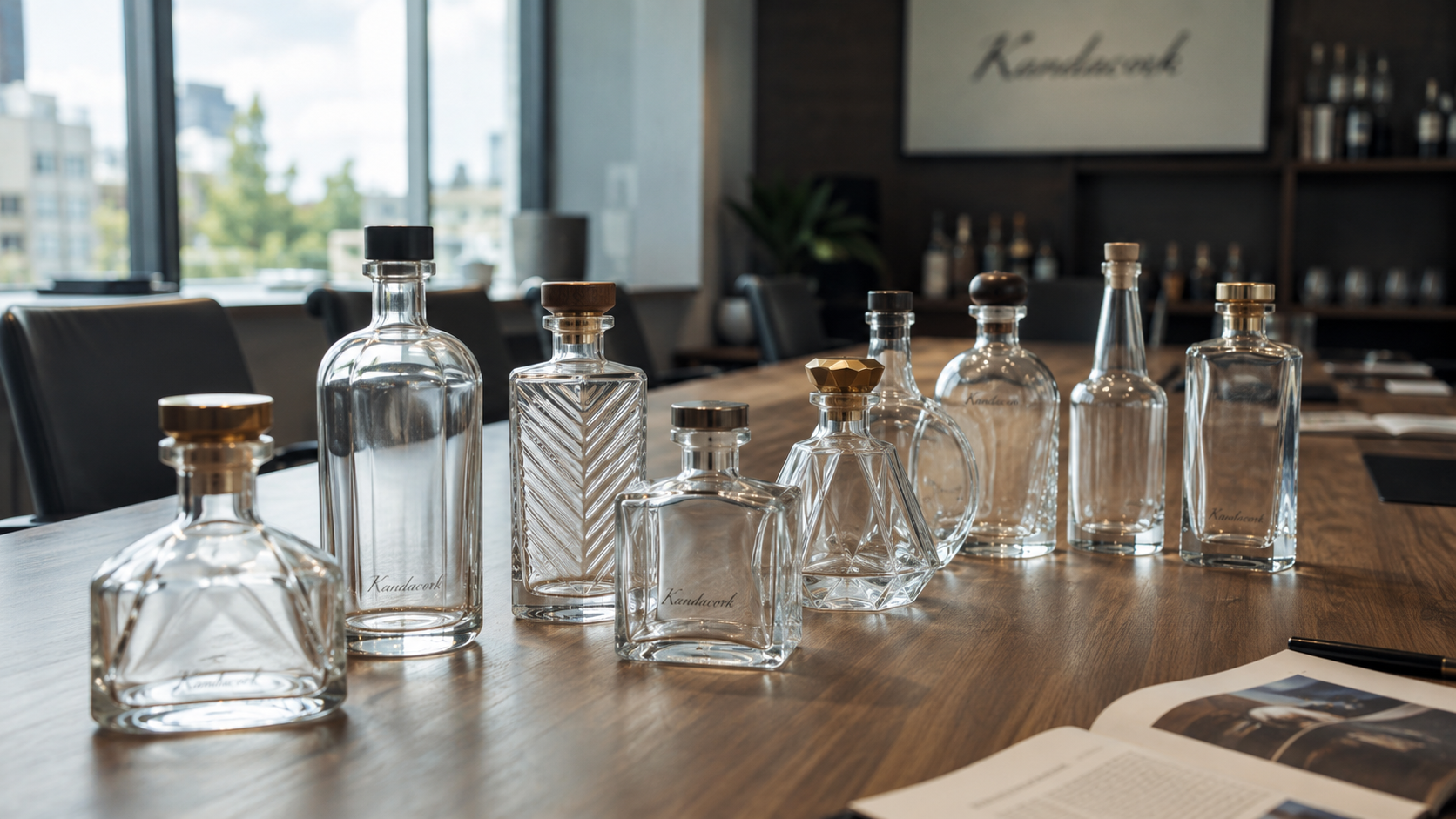
Craft distilleries often choose bar-top stoppers because they create a more premium hand-pull experience than many standard caps. They also help brands add personality without changing the full bottle mold. A simple bottle can feel more distinctive when paired with the right wood, metal, aluminum, plastic, or glass stopper.
For private label buyers, importers, distributors, and bottlers, the stopper also affects commercial performance. If the shank is too loose, leakage risk increases. If it is too tight, opening becomes difficult. If the decorative top scratches during shipment, the product may look damaged before retail display.
That is why bar-top stoppers for craft distillery packaging should be selected through both design review and technical validation.
What Are Bar-Top Stoppers?
Bar-top stoppers are also called bar top corks, bartop closures, T-top corks, T-stoppers, liquor bottle stoppers, and spirits bottle closures.
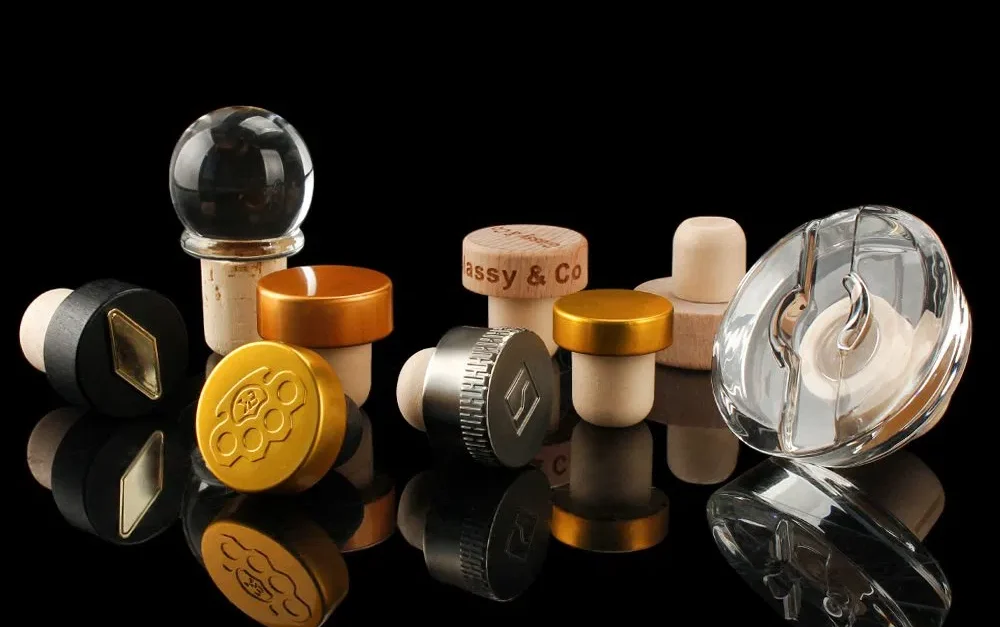
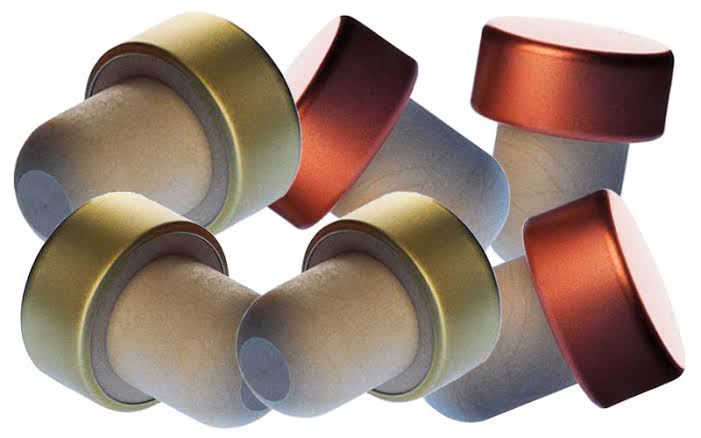
Most designs include two parts. The decorative top is the visible part above the bottle mouth. It can be made from wood, plastic, aluminum, zinc alloy, Zamak, glass, ceramic, or other decorative materials. The shank is the inserted part that seals inside the bottle neck. It may be natural cork, micro-agglomerated cork, synthetic cork, or polymer material.
Unlike screw caps or ROPP closures, bar-top stoppers are designed to be pulled out by hand and reinserted after use. This makes them suitable for spirits that consumers open and close repeatedly over time.
Bar-Top Stoppers vs. Other Spirits Bottle Closures
Packaging buyers often compare bar-top stoppers with ROPP caps, screw caps, and swing-top closures. Each option has a different role in spirits packaging. For a deeper closure-format comparison, buyers can also review this guide to bar-top stoppers vs screw caps vs ROPP closures.
| Closure Type | Best Use | Main Advantage | Watch Point |
|---|---|---|---|
| Bar-top stopper | Premium spirits, craft releases, limited editions | Resealable, decorative, tactile, brandable | Requires bottle neck fit testing and tamper-evident support |
| ROPP cap | High-speed bottling, export spirits, volume production | Machine-applied, tamper-evident, efficient | Less tactile premium feel than bar-top stoppers |
| Screw cap | Cost-sensitive or convenience packaging | Easy opening, stable supply, efficient sourcing | May not support premium craft positioning |
| Swing top | Specialty beverages and selected gift formats | Reusable and distinctive | Less common for mainstream spirits retail |
For craft distillery packaging, bar-top stoppers are usually selected when the brand wants a premium opening experience, visible customization, and strong shelf presence.
Bar-Top Stopper Materials Compared
Different stopper materials create different brand signals, cost structures, technical requirements, and production risks. Buyers should not select a material only by appearance. The best option depends on the spirit category, bottle shape, brand position, decoration requirement, order quantity, and target market.
| Stopper Material | Best For | Main Advantages | Watch Points |
|---|---|---|---|
| Wood | Whisky, rum, brandy, heritage spirits | Natural texture, warm craft feeling, premium association | Grain variation, color consistency, surface finishing |
| Plastic | Gin, vodka, liqueurs, private label spirits | Cost control, stable color, flexible molding, lightweight | Must avoid low-end appearance |
| Aluminum | Gin, vodka, tequila, modern spirits | Clean metallic look, lightweight, modern finish | Surface scratch resistance and coating durability |
| Zamak / Zinc Alloy | Premium whisky, tequila, mezcal, limited editions | Heavy feel, sculpted logo, luxury appearance | Higher cost, weight, packing protection |
| Glass / Crystal | Decanter-style spirits, gift packaging | High-end visual effect, decorative value | Fragility, export packing, weight balance |
| Natural Cork Shank | Heritage and traditional spirits | Traditional image, good compression | Natural variation and batch consistency |
| Synthetic Cork Shank | Commercial spirits bottling | Dimensional consistency, stable fit, clean appearance | Must be tested with actual bottle necks |
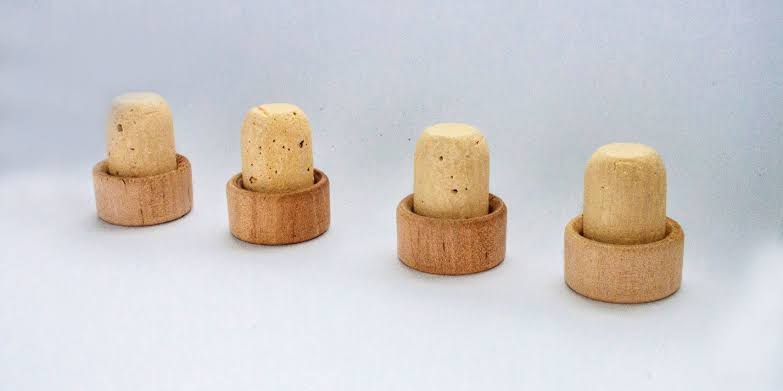
Wooden bar-top stoppers are a strong choice for brands that want a natural, vintage, or barrel-aged identity. They work well with whisky, rum, brandy, bourbon-style spirits, and craft labels. Buyers should confirm staining, varnishing, engraving quality, and acceptable grain variation before production.
Plastic bar-top stoppers are practical when buyers need color consistency, custom shapes, and cost control. They are useful for gin, vodka, liqueurs, flavored spirits, mini bottles, and multi-SKU private label projects. Buyers comparing cost-efficient branded closures can review Kandacork Closures’ guide to plastic bar-top stoppers for spirits bottles before requesting samples.
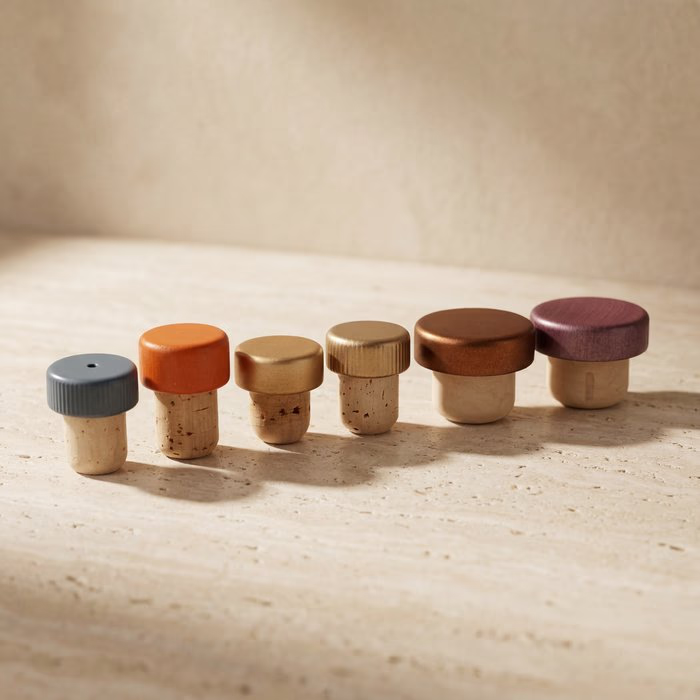
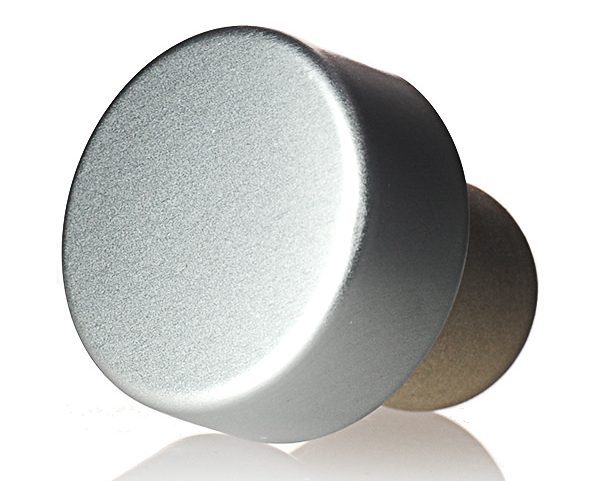
Aluminum bar-top stoppers suit modern spirits brands that want a clean metallic look without excessive weight. They pair well with minimalist labels, clear glass, frosted bottles, and contemporary gin, vodka, or tequila packaging. Buyers should test coating durability and scratch resistance.
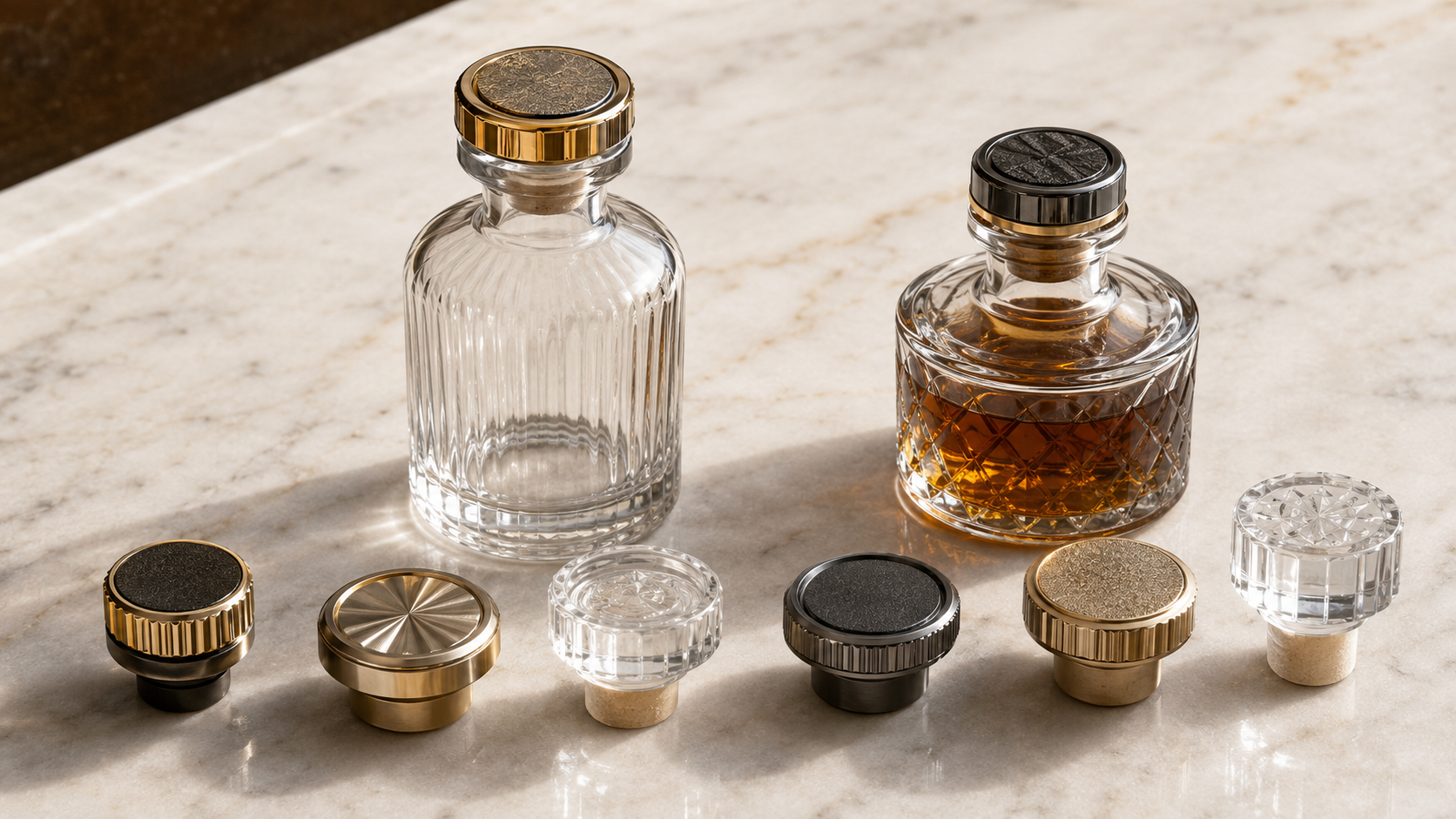
Metal, Zamak, and zinc alloy stoppers are often used for premium spirits and limited editions. Their weight, sculpted shape, plating, embossing, and debossing options can create a strong luxury impression. For premium projects, Kandacork Closures supplies custom metal bar-top stoppers with branding, neck-fit review, sample development, and export packing support.
Glass and crystal-style stoppers are suitable for decanter-style bottles, luxury liqueurs, gift sets, and premium display packaging. They offer strong visual impact but require careful packing and transport protection.
Technical Validation: Shank, Bottle Neck Fit, and Performance Testing
A stopper can look perfect in a sample photo but still fail in production. For commercial use, the shank, bottle neck, liquid, filling process, capsule, and shipping conditions must be evaluated together.
Choose the Right Shank Material
The decorative top creates the brand impression, but the shank controls much of the sealing performance.
Natural cork has a traditional image and flexible compression. It is often chosen for classic spirits packaging, but buyers should review natural variation, odor control, moisture level, and batch consistency.
Micro-agglomerated cork can offer more controlled dimensions while keeping a cork-based appearance. It is useful when buyers want a balance between natural material perception and production repeatability.
Synthetic cork and polymer shanks are widely used in commercial spirits packaging because they provide stable dimensions, clean appearance, and predictable fit. They are often preferred for large-volume orders, private label programs, and projects that require consistent performance across multiple bottle batches.
Confirm Bottle Neck Fit
The correct stopper size depends on the actual inner neck diameter, neck tolerance, insertion depth, and shank compression. Bottle capacity alone is not enough. A 700 ml or 750 ml bottle may use different neck dimensions depending on the glass mold and supplier.
In many spirits projects, common bar-top bottle neck bores include 18.5 mm and 21.5 mm, although custom bottles may vary. As a starting point, buyers often test a shank around 1 mm larger than the bottle’s internal neck diameter, then confirm final fit through actual bottle samples, leakage checks, and pull-out force testing.
For brands still selecting the bottle structure, closure testing should happen alongside bottle sourcing. Coordinating stoppers with custom spirits bottle development can reduce the risk of choosing a bottle neck that limits closure, capsule, or filling-line options later.
| Step | What to Check | Why It Matters |
|---|---|---|
| 1. Review bottle drawing | Inner neck diameter, neck finish, tolerance | Establishes the starting size range |
| 2. Send physical bottle samples | Actual neck dimensions and finish | Confirms real-world variation |
| 3. Test several shank options | Compression, insertion, extraction | Finds the safest fit |
| 4. Add capsule or seal | Top diameter and neck clearance | Prevents tamper-evident packaging conflicts |
| 5. Run filled-bottle tests | Leakage, storage, handling, transport | Confirms production readiness |
A stopper that fits one empty sample may not perform well in filled-bottle storage or distribution. Final approval should be based on physical testing with the intended bottle, liquid, closure, and packaging system.
Test Before Bulk Production
Before placing a bulk order, buyers should request practical performance checks. These may include insertion force, pull-out force, repeated opening and closing, filled-bottle inversion testing, leakage checks, top-to-shank bonding, surface abrasion, capsule compatibility, and transport simulation.
For export or premium retail projects, the stopper should be tested as part of the complete packaging system. The bottle, label, capsule, gift box, carton, partition, and pallet plan may all affect final performance.
Industry entities such as ISTA are commonly associated with packaged-product distribution testing, while ISO 9001 quality management systems can support supplier process control. If the stopper or shank may contact the product, buyers should also request relevant FDA food-contact material guidance or supplier documentation before approving bulk production.
Tamper-Evident Packaging and Retail Readiness
Bar-top stoppers are often combined with capsules, shrink sleeves, paper seals, tax strips, neck bands, or other tamper-evident devices. The right solution depends on the destination market, retailer requirements, bottle shape, filling process, and brand design.
In the United States, spirits brands and importers may need to review requirements from the Alcohol and Tobacco Tax and Trade Bureau for tamper-evident closure expectations. Tamper evidence should be discussed early because a capsule selected after stopper approval may not fit the top diameter, shoulder profile, or neck height.
If tamper-evident packaging is treated as a late-stage accessory, it can create delays, redesign costs, or production problems. The safer process is to check stopper, bottle neck, capsule, label area, and filling-line requirements together.
Custom Branding and Stopper Selection by Spirits Category
Bar-top stoppers offer strong branding flexibility. The top can carry a logo, symbol, monogram, batch mark, region name, or custom texture.
Common decoration methods include pad printing, screen printing, laser engraving, hot stamping, embossing, debossing, molded logo design, metallic plating, antique finishing, matte or gloss coating, color matching, and custom shape development.
For premium spirits, tactile decoration is often more memorable than flat printing. A raised metal emblem, engraved wood top, or sculpted stopper can make the bottle feel more distinctive.
| Spirit Category | Recommended Stopper Style | Brand Logic |
|---|---|---|
| Whisky / Bourbon | Wood, dark metal, Zamak | Heritage, barrel aging, weight, premium tradition |
| Gin | Aluminum, colored plastic, glass | Botanical, modern, clean, colorful |
| Rum | Wood, bronze metal, black finish | Aged, tropical, vintage, craft |
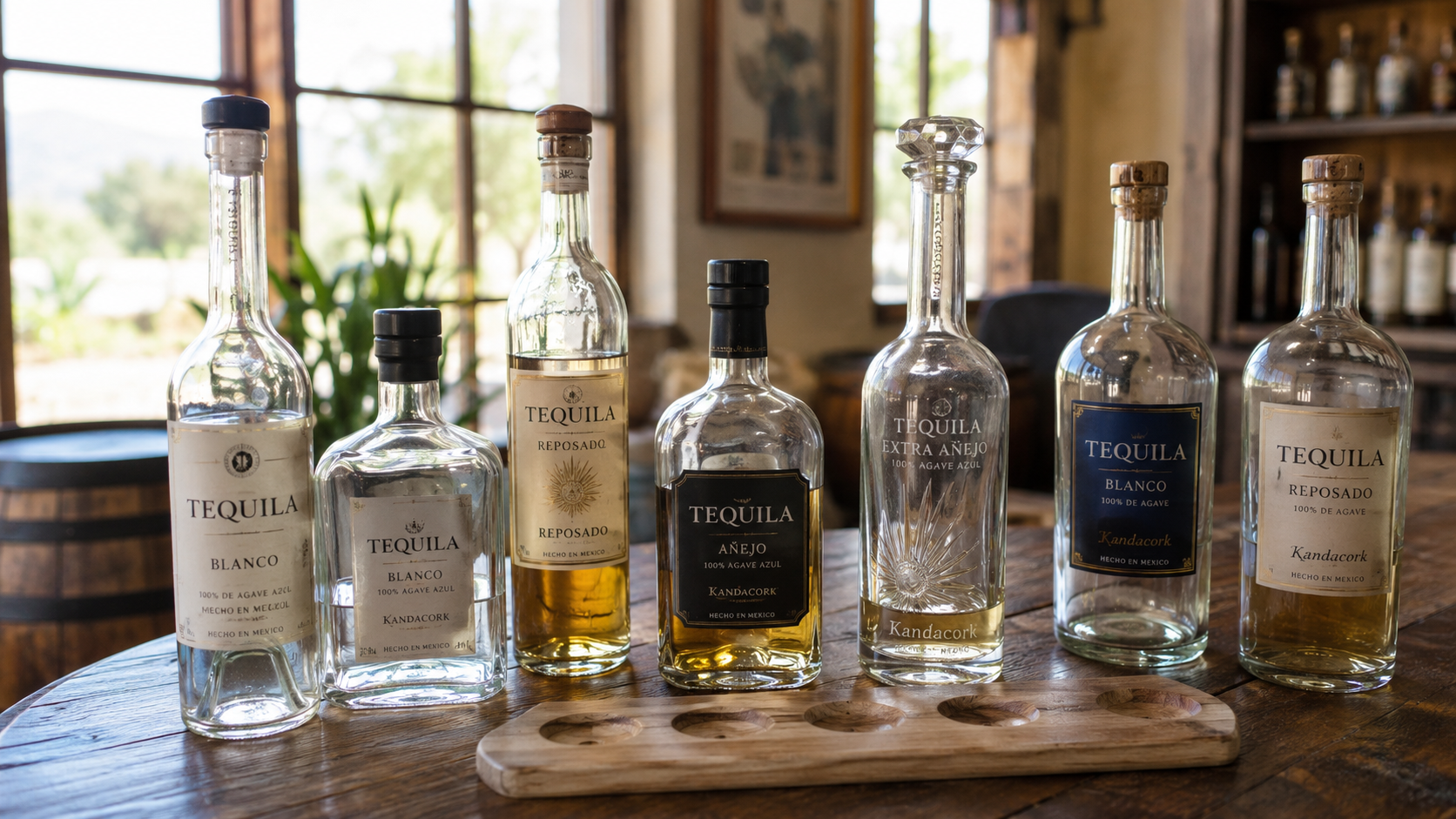
| Tequila / Mezcal | Heavy metal, ceramic-look, custom shape | Origin, ritual, artisanal quality |
| Vodka | Aluminum, clear glass, monochrome plastic | Purity, minimalism, modern shelf appeal |
| Liqueurs | Colored plastic, decorative metal | Flavor coding, gifting, visual differentiation |
| Mini Bottles | Lightweight plastic or compact wood | Cost control, easy handling, sample packs |
| Gift Sets | Metal, wood, glass, custom shapes | Premium presentation and perceived value |
A stopper should not only fit the bottle. It should fit the story of the spirit, the target price point, and the retail environment.
Supplier Capability and RFQ Checklist
A qualified stopper supplier should support more than product delivery. For commercial spirits packaging, the supplier should help buyers evaluate material options, bottle neck fit, decoration methods, documentation, quality control, and export packing.
| Evaluation Item | Why It Matters | Buyer Question |
|---|---|---|
| Material range | Supports different price points and categories | Can you supply wood, plastic, aluminum, Zamak, glass, cork, and synthetic shanks? |
| Bottle fit support | Reduces leakage and approval risk | Can you test stopper fit on our actual bottles? |
| Decoration capability | Builds brand identity | Can you provide engraving, embossing, printing, plating, and color matching? |
| QC process | Controls batch consistency | What dimensional inspections are performed before shipment? |
| Sample support | Reduces production risk | Can we receive pre-production samples before bulk order? |
| Food-contact documentation | Supports compliance review | Can you provide material declarations, coating details, or relevant documents? |
| Export packing | Protects premium surfaces | How are stoppers packed to prevent scratches, deformation, or transit damage? |
| MOQ and lead time | Affects launch planning | What are the sample time, tooling time, MOQ, and reorder lead time? |
The lowest unit price is not always the lowest project cost. A cheap stopper can become expensive if it causes leakage, delayed launch, inconsistent decoration, or customer complaints.
Before requesting samples or a quotation, buyers should prepare the following information:
Bottle drawing with neck dimensions
Physical bottle sample if available
Spirit category and alcohol strength
Target bottle size
Preferred stopper material
Preferred shank material
Logo artwork in vector format
Color or finish requirement
Estimated first order quantity
Annual forecast if available
Destination market
Tamper-evident packaging requirement
Sample quantity needed
Packing and carton requirements
Target launch date
For buyers managing international projects, working with an export-ready closure supplier can help align samples, documentation, packing, lead time, and reorder planning before bulk production begins.
Share your bottle drawing, logo artwork, preferred material, target quantity, and launch timeline to request bar-top stopper samples or a quotation from Kandacork Closures.
Common Sourcing Mistakes to Avoid
The first mistake is choosing the stopper by appearance only. A closure must be tested on the actual bottle with the intended liquid and packaging system.
The second mistake is ignoring bottle neck tolerance. Even bottles from the same mold can vary slightly. The stopper should perform across the acceptable bottle range, not only on one sample.
The third mistake is selecting tamper-evident packaging too late. Capsules, shrink sleeves, and seals should be tested with the stopper and bottle together.
The fourth mistake is using a heavy top without checking shank bonding and pull-out force. Premium weight should not create opening problems or product safety risks.
The fifth mistake is approving a decorative sample without testing bulk packing. Metal, glass, and coated surfaces may scratch if cartons and partitions are not designed properly.
The sixth mistake is not discussing reorder consistency. A craft distillery may start with a small batch, but if the product grows, the stopper supplier must be able to repeat the same dimensions, finish, and decoration quality.
Stock Stoppers vs. Custom Tooling
Stock stoppers are suitable when the buyer needs faster sampling, lower tooling cost, and proven dimensions. They are useful for pilot launches, seasonal spirits, small-batch releases, early-stage craft brands, and private label projects with limited development time.
A stock stopper can still be customized through logo decoration, color selection, surface finish, or shank matching. For many distilleries, this is the fastest path from concept to market.
Custom tooling is appropriate when the stopper must become a signature brand element. It is useful for sculpted tops, unusual diameters, private mold bottles, luxury limited editions, and long-term spirits programs.
Custom tooling usually requires more development time, including design drawing, mold development, sample production, decoration testing, fit testing, and final approval. For premium spirits brands, the investment can be worthwhile because a distinctive stopper can make the bottle more recognizable and support higher shelf value.
Why Work with Kandacork Closures
Kandacork Closures supports bar-top stoppers for craft distillery packaging with a project-based approach. Instead of treating the stopper as a simple catalog item, Kandacork Closures helps buyers evaluate material, bottle neck fit, decoration, samples, testing, and bulk supply.
Kandacork Closures can review bottle drawings and actual bottle samples before recommending stopper size. This helps buyers reduce leakage risk, avoid overly tight fit, and confirm compatibility with capsules or other tamper-evident elements.
The team can compare wood, plastic, aluminum, Zamak, glass, natural cork, and synthetic cork options based on the target spirit category, brand position, order quantity, and launch timeline. For custom projects, Kandacork Closures can support logo decoration, sample approval, pre-production checks, and quotation preparation for bulk production.
For craft distilleries, this means practical support when moving from concept to launch. For private label buyers, importers, and distributors, it means clearer communication around MOQ, lead time, documentation, export packing, and reorder consistency. For bottlers, it means fewer surprises during filling and packaging.
Whether the goal is a small-batch release, a premium spirits launch, or a long-term private label program, the right closure should be tested before production and aligned with the brand’s commercial goals.
Conclusion: Move from Stopper Idea to Tested Sample
Bar-top stoppers for craft distillery packaging should be selected through both brand strategy and technical validation. The right stopper improves shelf presence, supports premium pricing, reseals the bottle, protects the liquid, and gives consumers a better opening experience.
The safest process is straightforward: define the brand position, confirm bottle neck data, compare stopper materials, review shank options, test physical samples, check tamper-evident packaging, approve decoration, and then move to quotation or production.
For distilleries and packaging buyers, a well-tested stopper reduces leakage risk, improves presentation, and supports a smoother launch. Move from stopper concept to tested sample with Kandacork Closures.
FAQ
What size bar-top stopper do I need for my spirits bottle?
You need a stopper size that matches the bottle’s inner neck diameter, neck tolerance, shank compression, and insertion depth. The safest approach is to test physical stopper samples on actual bottles before bulk production.
What is the difference between bar-top stoppers and ROPP closures?
Bar-top stoppers are pull-out closures with a decorative top and inserted shank. ROPP closures are roll-on pilfer-proof aluminum caps applied by machinery. Bar-top stoppers are often chosen for premium feel and resealability, while ROPP caps are often selected for high-speed production and built-in tamper evidence.
Are synthetic cork shanks better than natural cork for spirits?
Synthetic cork shanks can offer more consistent dimensions and stable performance in commercial production. Natural cork provides a traditional image and good compressibility. The better choice depends on brand positioning, bottle neck tolerance, order quantity, and testing results.
Do bar-top stoppers need tamper-evident packaging?
Many retail and export spirits projects require a tamper-evident closure system. Bar-top stoppers are often combined with capsules, shrink sleeves, neck bands, paper seals, or other visible security devices. Buyers should confirm market and retailer requirements before production.
What tests should a distillery run before approving bar-top stoppers?
A distillery should test insertion force, pull-out force, leakage, repeated opening and closing, top-to-shank bonding, capsule compatibility, filled-bottle storage, and transport performance. Testing should use actual bottles and the intended packaging system.
Can custom bar-top stoppers carry a distillery logo?
Yes. Custom bar-top stoppers can carry a distillery logo through laser engraving, embossing, debossing, pad printing, hot stamping, molded logos, or plated metal emblems. Buyers should approve physical samples to confirm logo sharpness, color accuracy, surface durability, and batch consistency.
What information is needed for a bar-top stopper quotation?
Buyers should send the bottle drawing, physical bottle sample if available, target quantity, spirit category, preferred material, shank preference, logo artwork, color or finish requirement, destination market, tamper-evident needs, packing requirements, and launch timeline.