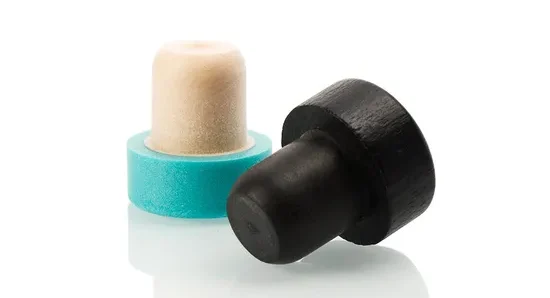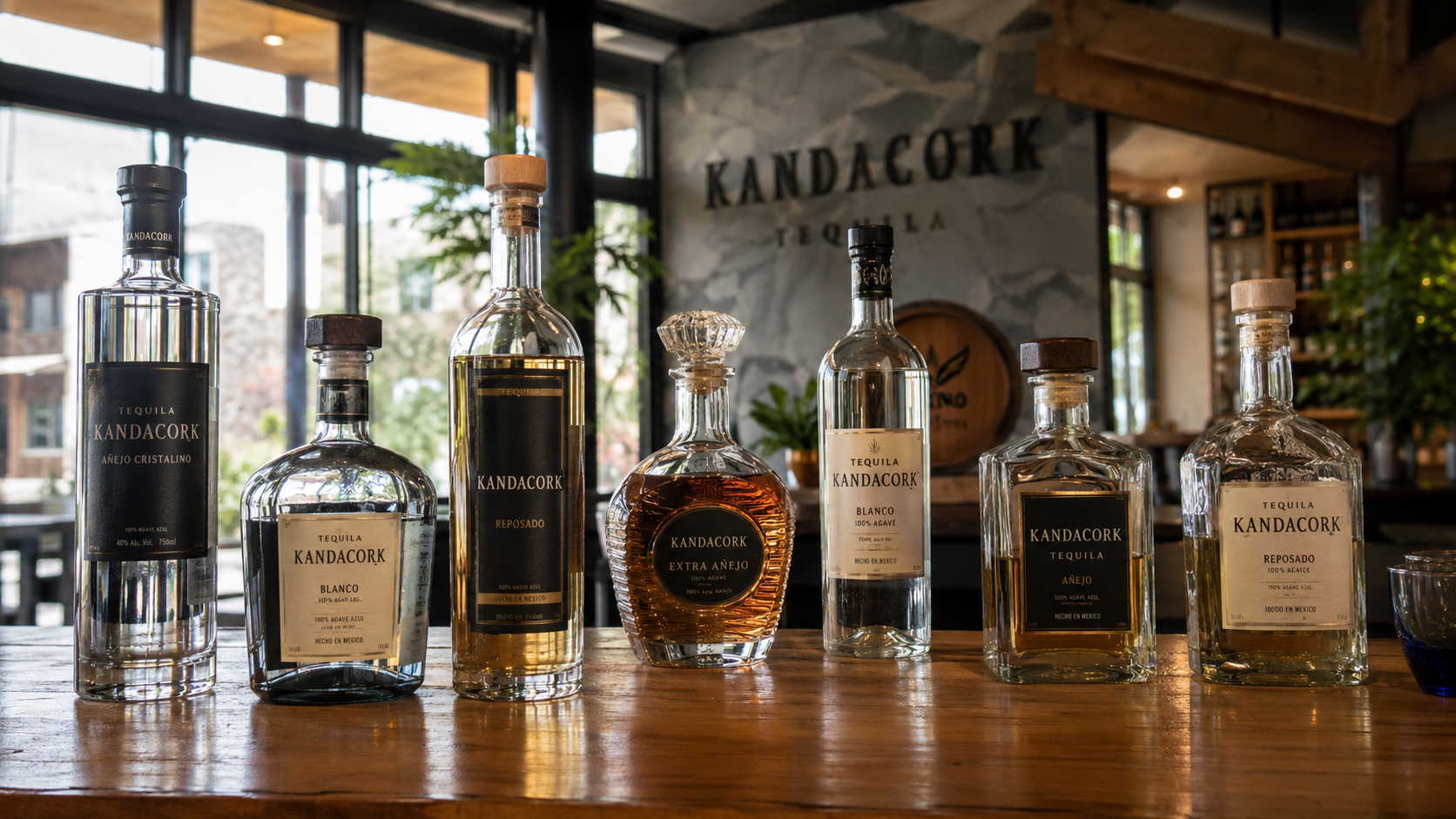
Olive oil pourers and liners leak testing helps bottlers confirm whether a closure system can resist thread seepage, insert leakage, side-storage failure, and shipping vibration before bulk production. For olive oil brands, a leaking bottle is more than a packaging defect. It can stain cartons, damage labels, create distributor complaints, increase product loss, and weaken consumer trust before the bottle reaches the shelf.
A reliable olive oil closure must do several jobs at once. It should seal securely during filling, storage, transport, and retail handling. It should pour smoothly, reduce dripping, support tamper evidence where needed, and protect the premium image of the product. Buyers comparing custom olive oil closures should evaluate the full bottle-and-closure system, not only the cap appearance.
For purchasing teams, the challenge is that “leak resistant” is often used too generally. A pourer may work well during kitchen use but fail during export shipment. A liner may pass a quick upright inspection but leak after vibration, temperature changes, or horizontal storage. A cap may fit one bottle but fail on another bottle with a slightly different neck finish.
This guide explains how olive oil pourers, cap liners, pourer inserts, bottle neck finish, torque control, and leak testing work together as one packaging system. It is written for olive oil brands, private-label bottlers, edible oil exporters, gourmet food companies, and packaging engineers evaluating custom closures with Kandacork Closures.
Quick Answer: What Should Buyers Check Before Ordering Olive Oil Pourers?
Before ordering olive oil pourers and liners, buyers should check bottle neck finish, bore diameter, liner material, cap size, pourer insert design, application torque, tamper-evident function, and test results with the actual bottle and oil.
A safe closure decision should be based on sample testing, not only catalog specifications. A closure that works on one glass bottle may not seal correctly on another bottle with a different sealing land, thread profile, bore diameter, or tolerance range.
For commercial packaging, olive oil pourers and liners leak testing should use the actual bottle, actual oil, intended closure, and the same application method planned for production. This is especially important for export programs, private-label launches, and premium edible oil brands where a single leaking carton can create avoidable claims.
A practical pre-order checklist should include:
- Bottle drawing and neck finish
- Bore diameter and sealing land condition
- Closure size and thread compatibility
- Pourer insert fit and flow rate
- Liner material and oil compatibility
- Tamper-evident band or non-refillable function
- Recommended application torque
- Upright, inverted, and side-storage testing
- Vibration and temperature-cycle testing
- Food-contact documentation
- Sample approval before bulk production
Kandacork Closures helps buyers review these factors before mass production, reducing the risk of leakage, poor pour performance, and packaging complaints.
Why Olive Oil Closure Leakage Matters
Olive oil is a high-value food product, and its packaging must protect both the oil and the brand. Even a small amount of leakage can create visible stains on labels, cartons, shelves, or shipping cases. Once leakage appears, buyers may question the filling process, closure quality, and overall product reliability.
Leakage is especially costly for export packaging. Bottles may be handled many times, stored at different angles, exposed to temperature variation, or shipped through long-distance distribution routes. A closure that seems stable in the factory can still fail during transport if it has not been tested properly.
For premium olive oil, packaging also influences perceived value. A clean, controlled-pour closure supports a better consumer experience. A leaking or dripping bottle can make even high-quality extra virgin olive oil feel poorly packaged.
That is why olive oil closure testing should be included early in packaging development, not only after a shipment failure occurs.
What Are Olive Oil Pourers and Liners?
Olive oil pourers are closure components designed to control how oil flows from the bottle. They may include spouts, flow-control inserts, air-return channels, anti-drip lips, tamper-evident bands, or non-refillable structures.
Cap liners are sealing materials placed inside closures. They create a compression interface between the cap and the bottle finish. For olive oil packaging, the liner must resist oil contact, maintain compression, and help prevent leakage during storage and shipping.
A complete olive oil closure system may include:
- Outer aluminum or plastic cap
- Inner cap liner
- Pourer insert
- Anti-drip spout
- Tamper-evident band
- Non-refillable valve
- Decorative top
- Branded finish or color customization
The closure must be evaluated as a full system. A strong liner cannot fully compensate for an uneven bottle sealing surface. A premium pourer insert cannot perform correctly if it is loose in the bottle neck. A tamper-evident band does not automatically guarantee leak resistance.
Buyers developing olive oil pourer closure systems should confirm sealing, pouring, branding, and line compatibility together before approving samples.
The Kandacork 5-Point Olive Oil Closure Check
Kandacork Closures recommends evaluating olive oil pourers through a full system check instead of selecting closures by appearance alone. This framework helps buyers identify risks before moving to bulk orders.
| Checkpoint | What It Evaluates | Why It Matters |
|---|---|---|
| Neck finish compatibility | Cap size, thread fit, bore diameter, sealing land | Prevents poor seating and uneven sealing |
| Liner and oil compatibility | Liner material, compression, oil resistance | Reduces swelling, seepage, and odor risk |
| Pourer insert retention | Insert diameter, ribs, fit, pull-out resistance | Prevents insert loosening and leakage |
| Torque and application consistency | Application torque, removal torque, line stability | Supports repeatable sealing in production |
| Distribution leak testing | Side storage, inversion, vibration, temperature changes | Simulates real shipping and retail stress |
This 5-point check helps purchasing teams move beyond simple catalog selection. It also helps identify whether a closure is suitable for real filling lines, actual olive oil, and the intended distribution route.
Why Do Olive Oil Pourers Leak?
Olive oil pourers leak when the cap, liner, insert, and bottle neck do not maintain a stable seal during filling, storage, transport, or pouring. Common causes include low torque, poor liner compression, neck-finish variation, insert misalignment, vibration, side storage, and temperature changes.
Poor Bottle and Closure Fit
The bottle neck is the foundation of the closure system. If the neck finish, bore diameter, thread profile, or sealing land is inconsistent, leakage risk increases.
An uneven sealing surface may prevent the liner from compressing evenly. A bore that is too wide may not hold a pourer insert securely. A thread that does not match the cap design may create uneven torque distribution.
Even a small dimensional mismatch can become a major issue when the bottle is placed on its side or shipped through a long distribution route. For complex bottle programs, cap and neck compatibility support helps buyers review neck finish details before production sampling.
Wrong Liner Material
Olive oil is an oil-based food product, so the liner must be compatible with fatty contents. Some liner materials may absorb oil, soften, lose compression recovery, or create odor concerns if they are not properly selected.
Common liner options include EPE foam liners, PE foam liners, LDPE cone liners, induction liners, and specialty tamper-evident liners. Each option has different sealing behavior, cost, compatibility, and application requirements.
The right liner depends on the bottle, cap, oil type, filling method, expected shelf life, and distribution environment. Food packaging components should also be reviewed for intended contact conditions; the U.S. Food and Drug Administration defines food-contact substances as materials that come into contact with food and are not intended to have a technical effect in the food, including packaging and packaging components in its food-contact packaging guidance.
Incorrect Capping Torque
For screw caps, torque control is critical. If the torque is too low, the cap may not compress the liner enough to form a secure seal. If the torque is too high, the liner may deform, the threads may strip, or the closure may become difficult for consumers to open.
Torque should be validated with production equipment, not only by hand tightening. A closure that passes manual application may behave differently on a semi-automatic or automatic capping line.
Misaligned Pourer Insert
Pourer inserts must sit correctly inside the bottle neck or cap structure. If the insert is tilted, loose, or poorly matched to the bore, oil can seep around the insert or drip after pouring.
Insert fit is especially important for controlled-flow pourers, DOP-style closures, T-cap pourers, and non-refillable olive oil closures.
Transport and Temperature Stress
A bottle may not leak on the filling line but still fail later. During transport, bottles may face vibration, side storage, inverted cartons, pressure changes, and temperature variation. These stresses can affect liner recovery, cap tightness, plastic insert fit, and oil movement inside the bottle headspace.
For export olive oil brands, leak testing should simulate the distribution environment as closely as possible.
Common Liner Options for Olive Oil Closures
The best liner for olive oil bottle caps depends on the closure type, bottle finish, product composition, and filling process. No liner should be selected based only on a catalog description. It should be tested with the actual bottle and oil.
EPE and Foam Liners
EPE and PE foam liners are widely used in food and beverage closures because they provide flexible compression sealing. For olive oil screw caps, foam liners can offer practical sealing performance when the bottle finish is consistent and the cap is applied with correct torque.
They are often selected for cost efficiency, clean appearance, and broad packaging use. However, oil-based product liner compatibility should still be confirmed before bulk production.
LDPE Cone Liners
LDPE cone liners create a wedge-style seal inside the bottle neck. This can be useful for liquid products where the seal needs to engage the inner neck area.
For olive oil packaging, cone liners may be considered when the bottle neck geometry and cap structure support this sealing method. The key factor is fit. If the cone does not match the bore correctly, performance may be inconsistent.
Induction Liners
Induction liners can create a sealed membrane over the bottle opening. They are often used where tamper evidence, freshness protection, or stronger sealing is needed.
For olive oil, induction sealing may be useful in certain bottle and cap systems, but it requires compatible materials and suitable induction equipment. Buyers must confirm that the bottle, closure, liner, and sealing process are designed to work together.
Tamper-Evident Liners and Bands
Tamper-evident olive oil closures help consumers identify whether a product has been opened. They are important for retail confidence, export packaging, and premium food products.
However, tamper evidence is not the same as leak prevention. A tamper-evident band can break correctly while the liner still fails under side storage. A liner can seal well while the tamper band performs poorly. Both functions should be evaluated separately.
Leak Testing Methods for Olive Oil Pourers and Liners
Olive oil pourers and liners leak testing should follow a step-by-step process. The goal is to identify failure risks before bulk production, shipment, or retail complaints.
| Test Method | Purpose | What to Inspect |
|---|---|---|
| Visual inspection | Detect cap seating, insert, and liner defects | Tilted cap, loose insert, damaged liner, uneven band |
| Torque testing | Confirm application consistency | Application torque, removal torque, torque relaxation |
| Inversion testing | Check short-term leakage under upside-down storage | Oil around cap, thread, liner, or pourer insert |
| Side-storage testing | Simulate horizontal cartons or retail handling | Slow seepage, carton stains, label damage |
| Temperature cycling | Check seal stability under changing conditions | Cap loosening, liner compression loss, insert movement |
| Vibration testing | Simulate transport movement | Leakage after shaking, thread movement, band failure |
| Bubble or vacuum testing | Detect gross leaks in selected systems | Air bubbles, pressure loss, visible seepage |
For supplier-side sample confirmation, Kandacork Closures can support sealing and leakage review before bulk production.
Visual Inspection
Start with a visual inspection. Check whether the cap is seated evenly, the pourer insert is aligned, the liner is centered, and the tamper band is properly engaged.
Look for tilted caps, uneven gaps, damaged liners, loose inserts, thread misalignment, oil residue around the neck, and distorted tamper bands. This simple step often reveals application problems quickly.
Torque Testing
For screw closures, measure application torque and removal torque. Application torque confirms whether the cap has been tightened within the correct range. Removal torque helps evaluate consumer opening experience and closure stability after storage.
Torque should be tested after filling, after short-term storage, and after distribution simulation. This helps reveal torque relaxation, liner compression loss, or thread movement.
Inversion and Side-Storage Testing
Inversion testing checks whether filled bottles leak when turned upside down. Side-storage testing checks whether bottles leak when placed horizontally, which may happen during carton movement, shelf handling, or consumer storage.
A practical test should define sample size, fill level, torque range, temperature, duration, and pass/fail criteria. Test bottles should be filled with the real oil whenever possible because water and olive oil behave differently in flow, wetting, viscosity, and interaction with liners.
ASTM test methods can provide useful reference points for packaging engineers. ASTM D5094/D5094M covers gross leakage evaluation for rigid and semi-rigid containers with threaded or lug-style closures, including the ability of container-closure systems to resist leakage when stored or transported upright, inverted, or on the side.
Temperature-Cycle Testing
Temperature changes can affect closure performance. Plastic parts may expand or contract. Liners may change compression behavior. Oil viscosity may shift. Headspace pressure may also change.
A practical temperature-cycle test may include warm storage, cool storage, and return to room temperature. The purpose is not only to see whether the bottle leaks immediately, but also to confirm whether the closure remains stable after repeated stress.
Vibration and Transport Simulation
Transport vibration can loosen poorly applied caps, shift inserts, and expose weak seals. For export or long-distance distribution, vibration testing is valuable.
After vibration, inspect every bottle for oil around the thread, closure base, insert area, and carton. Also check whether the tamper band remains intact and whether the pourer still functions correctly.
Bubble or Vacuum Leak Testing
Bubble or vacuum leak testing may be used to detect gross leaks in certain packaging systems. ASTM D3078 is commonly associated with bubble emission leak testing for flexible packaging that contains headspace gas.
The correct test method depends on the package type, headspace, closure design, and test objective. For olive oil bottles with threaded, ROPP, or lug-style closures, testing should focus on whether the full container-closure system prevents leakage when stored upright, inverted, or on its side.
Recommended Sample Approval Workflow for Olive Oil Pourers
Before approving custom olive oil bottle closures, buyers should run a sample approval workflow that reflects real production conditions. The workflow should use the actual bottle, actual oil, selected closure, intended liner, and planned capping method.
| Stage | Recommended Action | Why It Matters |
|---|---|---|
| Sample preparation | Fill test bottles with actual olive oil | Oil behaves differently from water in flow and wetting |
| Closure application | Apply closures using the planned capping method | Confirms real production fit and torque consistency |
| Torque recording | Record application torque immediately after capping | Creates a baseline for later comparison |
| Short-term upright check | Inspect bottles after 24 hours upright | Detects early seepage or application problems |
| Inversion check | Store selected samples upside down for a defined period | Checks short-term sealing under stress |
| Side-storage check | Store bottles horizontally | Simulates carton shifts and retail handling |
| Temperature cycle | Move samples through warm and cool conditions | Reveals liner relaxation or plastic movement |
| Transport simulation | Expose packed bottles to vibration or carton movement | Simulates distribution stress |
| Final inspection | Check cap, liner, insert, label, and carton | Identifies visible and hidden failure points |
For more reliable results, document the sample size, bottle lot, closure lot, fill level, fill temperature, application torque, test duration, and inspection findings. This information helps both the buyer and closure supplier identify whether the issue comes from the cap, liner, insert, bottle neck, or capping process.
Example Pass/Fail Criteria for Olive Oil Closure Testing
Pass/fail criteria should be defined before testing begins. Clear criteria prevent subjective decisions and make it easier to compare different closure samples.
| Inspection Point | Pass Example | Fail Example |
|---|---|---|
| Cap thread area | No oil residue after storage | Visible oil ring, seepage, or wet thread |
| Pourer insert | Insert remains fixed and aligned | Insert shifts, tilts, or loosens |
| Liner condition | Liner remains clean and compressed | Liner swells, deforms, or absorbs oil |
| Label and bottle shoulder | No staining or oil marks | Oil appears near shoulder or label edge |
| Carton surface | Carton remains clean after transport simulation | Oil stains appear inside or outside carton |
| Tamper band | Band remains properly engaged before opening | Band cracks, distorts, or separates early |
| Removal torque | Opening force remains consistent | Cap loosens after storage or becomes too tight |
These examples should be adapted to the product, market, bottle type, and filling line. The goal is to create a repeatable approval method before ordering bulk olive oil pourers and liners.
Food-Contact, Quality, and Market Considerations
Olive oil closures and liners should be evaluated for food-contact suitability. Buyers should request relevant documentation from the closure supplier and confirm that the selected materials are appropriate for edible oil packaging.
Food safety management also matters at the supplier and production-system level. ISO 22000 sets out requirements for a food safety management system and is relevant to organizations throughout the food chain. For olive oil brands selling into regulated markets, closure materials, packaging contact conditions, labeling requirements, and quality expectations should be reviewed together.
The European Commission’s olive oil information notes that EU olive oil marketing standards include rules for packaging and labeling. Even when a closure is not the label itself, it still supports consumer trust by helping protect the product, preserve shelf presentation, and reinforce tamper-evident packaging expectations.
Closure selection should not be based only on appearance or price. It should consider food-contact suitability, sealing performance, product quality, production efficiency, and supply chain risk.
How to Specify Leak-Resistant Olive Oil Pourers
A supplier cannot recommend the right olive oil pourer based only on bottle capacity. Buyers should provide technical details about the bottle, oil, filling line, and market requirements.
Bottle Information
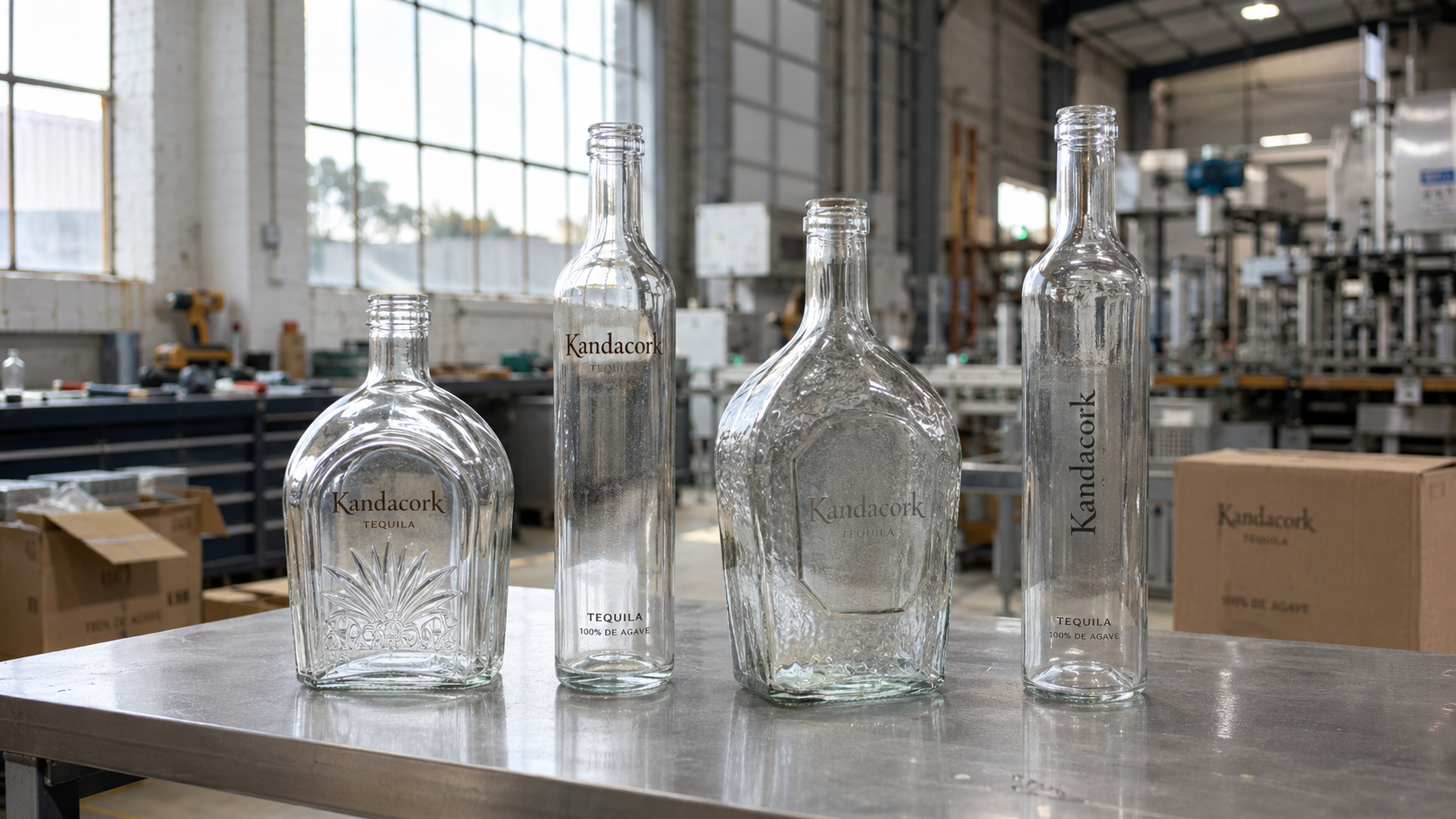
Provide the bottle drawing whenever possible. The drawing should show the neck finish, thread profile, bore diameter, sealing land, height, and tolerance range.
If the drawing is not available, send physical bottle samples. This allows the closure supplier to check actual fit instead of relying on assumptions.
Important bottle details include:
- Bottle material
- Bottle capacity
- Neck finish
- Bore diameter
- Thread type
- Sealing surface
- Bottle weight
- Bottle supplier
- Intended storage orientation
For brands sourcing both bottle and closure components, an integrated closure and stopper range can help align cap structure, bottle finish, decorative direction, and packing requirements early in the project.
Product Information
Olive oil products can vary. Extra virgin olive oil, flavored olive oil, chili oil, garlic-infused oil, vinegar-oil blends, and dressings may require different closure considerations.
Buyers should provide product type, fill temperature, viscosity, ingredient composition, expected shelf life, target market, storage conditions, and export route if applicable.
Oil-based products should be tested with real product whenever possible. Water and olive oil behave differently in flow, wetting, viscosity, and leakage behavior.
Filling Line Information
Application method affects sealing performance. Manual capping, semi-automatic capping, and automatic capping lines can produce different torque consistency.
Provide the capping method, target torque, line speed, capper type, inspection process, packaging format, carton orientation, and palletizing method. This information helps Kandacork Closures recommend a closure structure that fits both the bottle and the production environment.
Branding, Bottle Design, and Shelf Presentation
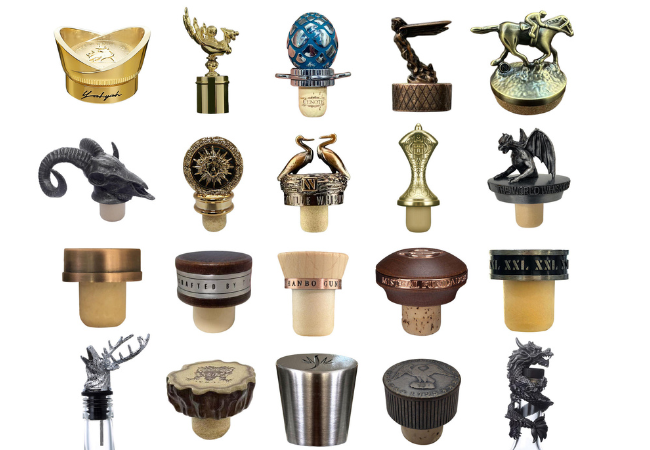
A good olive oil pourer must seal and dispense well, but it also has to support the brand’s visual language. Premium olive oil packaging often uses colored glass, custom labels, textured papers, decorative caps, wood-effect tops, matte finishes, metallic accents, or embossed details to communicate quality.
Closure decoration should be developed with technical fit in mind. Heavy decoration, sidewall printing, embossed tops, and special materials should not interfere with torque control, insert seating, or packing stability. For brands that need a stronger visual system, decoration and branding can support color direction, logo placement, surface finish, and retail presentation.
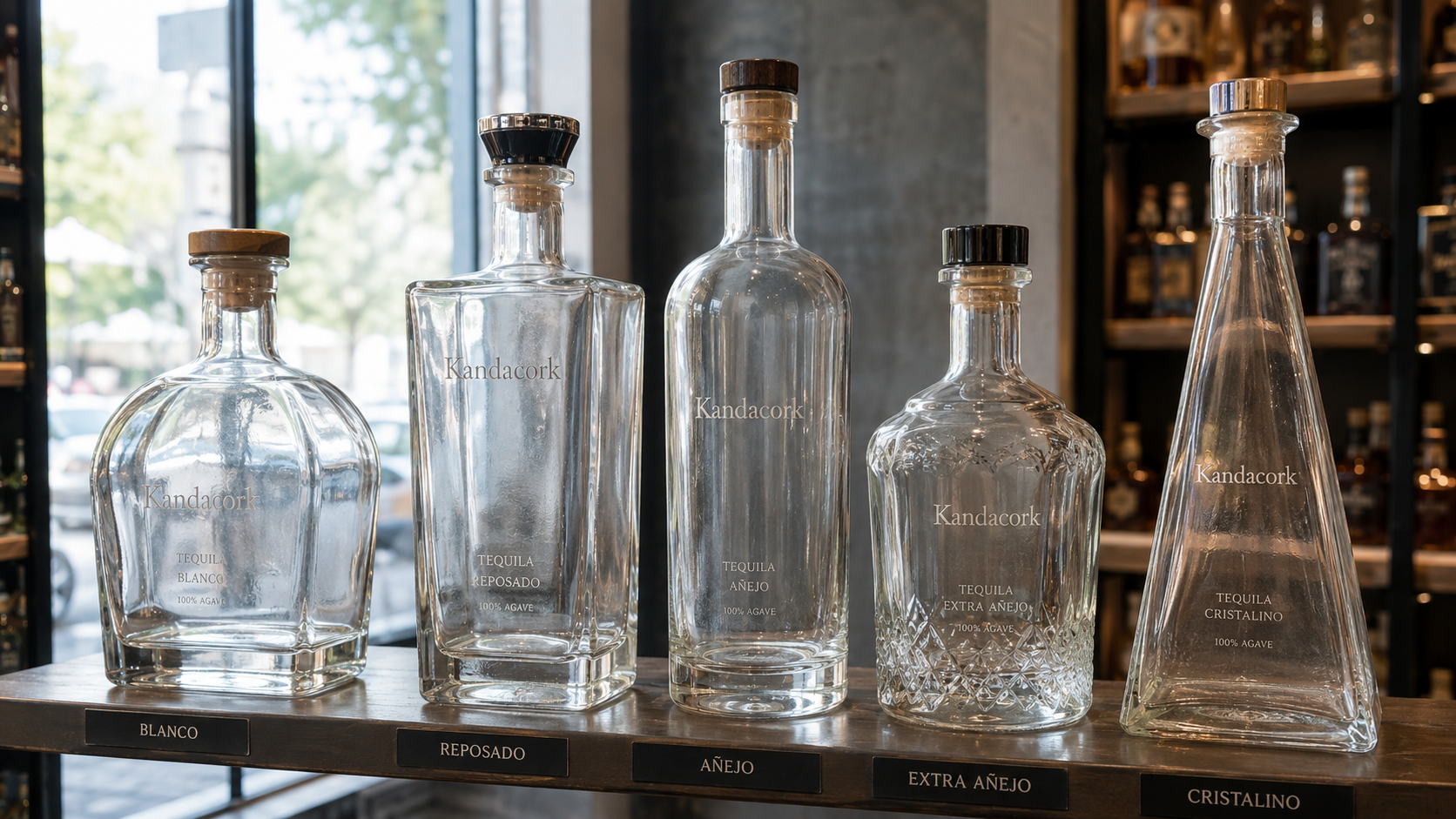
Bottle design should also support closure performance. A beautiful bottle with inconsistent neck finish can create practical sealing problems. Buyers developing new bottle families may coordinate with integrated glass packaging resources to align bottle form, neck finish, decoration, and closure strategy.
For brands expanding into gift packs, premium hospitality channels, or adjacent beverage categories, spirits bottle packaging experience can also inform how closures, neck finishes, weight, and shelf impact work together. For sustainability-focused edible oil lines, a sustainable glass packaging direction can help align premium presentation with long-term material and brand-positioning goals.
Buyer Checklist for Olive Oil Closure Suppliers
Before approving olive oil pourers and liners for bulk production, ask the supplier these questions:
- Which liner materials are suitable for oil-based products?
- Has the liner been tested with real olive oil or similar fatty products?
- What bottle neck finishes are compatible with this closure?
- What torque range is recommended?
- Can the closure support controlled pouring and anti-drip performance?
- Is the pourer insert pre-assembled or applied separately?
- Does the closure include tamper evidence?
- Is a non-refillable function available?
- Can the closure be customized with color, embossing, printing, or brand decoration?
- What sample testing is recommended before mass production?
- What food-contact documentation is available?
- What are the tooling, MOQ, lead time, and quality control procedures?
These questions help buyers compare more than price. They help evaluate whether the supplier understands the full olive oil closure system.
Troubleshooting Common Olive Oil Closure Problems
| Issue | Likely Cause | Corrective Action |
|---|---|---|
| Oil leaks around the threads | Low torque, poor liner compression, uneven sealing land | Adjust torque, change liner, inspect neck finish |
| Dripping after pouring | Poor spout geometry, weak air-return design, residual oil on lip | Improve pourer insert or anti-drip structure |
| Pourer insert comes loose | Bore mismatch, weak retention ribs, bottle tolerance variation | Test new insert diameter or retention design |
| Liner swelling | Material incompatibility with oil-based product | Run oil compatibility testing and change liner material |
| Carton staining during shipment | Slow seepage during side storage or vibration | Add side-storage, vibration, and torque validation |
| Tamper band failure | Incorrect band design, poor application, neck mismatch | Review tamper band geometry and bottle finish |
Troubleshooting should always start with real samples. The bottle, cap, liner, insert, oil, torque, and storage conditions should be reviewed together.
Why Choose Kandacork Closures for Olive Oil Pourer Projects?
Kandacork Closures supports olive oil brands that need more than a standard cap. For premium edible oil packaging, closure selection must balance sealing performance, controlled dispensing, tamper evidence, brand appearance, food-contact expectations, and production efficiency.
Our team can help evaluate custom olive oil pourers and liners based on bottle drawings, actual bottle samples, oil type, filling process, branding goals, and target market requirements. Whether you need aluminum screw caps with pourer inserts, tamper-evident olive oil closures, non-refillable pouring systems, or customized decorative closures, the right solution begins with technical fit and leak testing.
For private-label brands, a stronger closure system helps reduce packaging complaints and improve retail presentation. For export suppliers, it helps reduce leakage risk during long-distance transport. For premium olive oil brands, it protects both product quality and brand image.
To begin a custom olive oil closure project, contact Kandacork Closures with your bottle drawings, bottle samples, oil type, filling method, target torque, annual volume, branding requirements, and target markets. Based on this information, Kandacork Closures can recommend sample closures, liner options, pourer insert structures, and a practical leak-testing plan before mass production.
FAQ
What is the best liner for olive oil bottle caps?
The best liner depends on the bottle, cap type, oil composition, filling process, and distribution conditions. EPE foam, PE foam, LDPE cone, and induction liners may all be suitable in different systems. The safest approach is to test the liner with the actual olive oil and bottle before mass production.
Are anti-drip pourers the same as leak-proof closures?
No. Anti-drip pourers control dispensing after the consumer pours oil. Leak-proof closure performance relates to sealing during filling, storage, side positioning, vibration, and transport. A closure should be tested for both dispensing performance and sealing reliability.
Why do olive oil bottles leak during shipping?
Olive oil bottles often leak during shipping because of low capping torque, poor liner compression, bottle-neck variation, loose pourer inserts, vibration, temperature changes, or side storage. Bottlers should test filled bottles upright, inverted, and horizontally before bulk production.
Do olive oil pourers need tamper evidence?
Many retail olive oil products benefit from tamper-evident closures because they support consumer confidence and product integrity. Export markets and retail channels may also expect tamper-evident packaging. Tamper evidence should still be tested separately from leak prevention.
Should olive oil closures be tested with water or real oil?
Olive oil closures should be tested with real oil whenever possible. Water does not behave the same as olive oil. Olive oil has different viscosity, surface behavior, and interaction with liners, pourer inserts, and sealing surfaces.
What information is needed to quote custom olive oil pourers?
To quote custom olive oil pourers, provide bottle drawings or samples, neck finish, bottle capacity, oil type, filling method, target torque, annual volume, branding requirements, target market, and expected testing needs.
How can buyers reduce leak risk before bulk production?
Buyers can reduce leak risk by approving samples with actual bottles and oil, confirming liner compatibility, controlling torque, testing bottles upright and sideways, checking temperature-cycle performance, and validating transport conditions before mass production.
What causes oil to leak around the cap threads?
Oil may leak around the cap threads when the liner does not compress evenly, the cap is under-torqued, the sealing land is uneven, or the closure does not match the bottle neck finish. Thread leakage should be checked with torque testing, side-storage testing, and inspection of the sealing surface.
Can Kandacork Closures customize olive oil pourers?
Yes. Kandacork Closures can support custom olive oil pourers with options such as color matching, logo decoration, embossing, tamper-evident bands, non-refillable structures, liner selection, and closure designs matched to the buyer’s bottle and filling process.
Conclusion: Reliable Olive Oil Closures Start with System Testing
Olive oil pourers and liners leak testing is essential for brands that want secure, premium, and export-ready packaging. The closure, liner, pourer insert, bottle neck, capping process, and shipping environment must work together as a complete system.
For buyers, the best approach is simple: do not rely on appearance or catalog claims alone. Test real samples with real bottles, real oil, production torque, and realistic storage conditions.
Kandacork Closures helps olive oil brands develop closure solutions that combine controlled pouring, secure sealing, tamper evidence, customization, and practical packaging validation. If your project requires custom olive oil pourers, liners, or leak-resistant closure systems, share your bottle details and packaging goals to begin sample evaluation.