Choosing between plastic stoppers and aluminium stoppers is more than a visual packaging decision. The stopper affects shelf impact, unit cost, bottle-neck fitment, decoration options, production planning, sustainability claims, and how consumers judge the value of a spirits bottle before opening it.
For distilleries, private label brands, packaging buyers, and spirits bottle suppliers, the right closure should deliver secure fit, consistent handling, strong brand expression, and reliable performance through filling, shipping, storage, and repeated use.
This guide compares plastic stoppers vs aluminium stoppers for spirits bottles, especially bar-top closures used for vodka, gin, whiskey, rum, tequila, brandy, liqueurs, mini bottles, and premium gift packaging.
Best Choice Summary
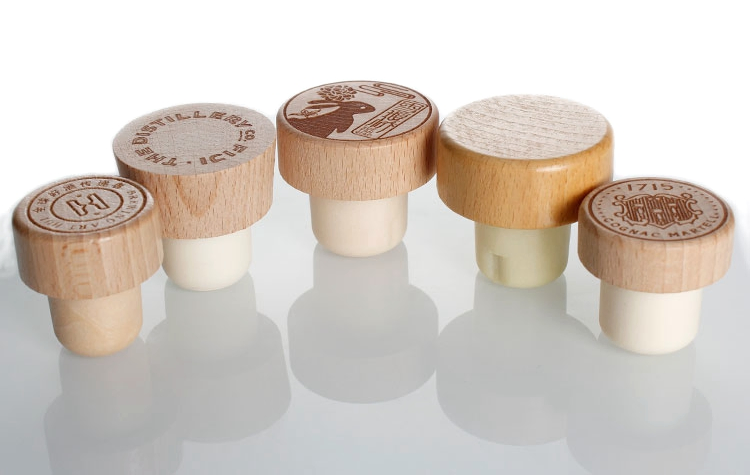
Plastic stoppers are usually better for cost control, lightweight packaging, custom colors, molded shapes, promotional spirits, and multi-SKU product lines.
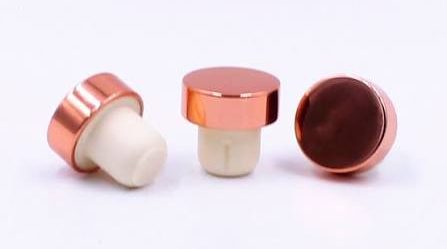
Aluminium stoppers are usually better for premium shelf impact, metallic finishes, engraved branding, luxury bottle design, and a more substantial tactile feel.
Sealing performance does not depend only on whether the visible top is plastic or aluminium. In most bar-top closures, the shank material, shank diameter, bottle-neck tolerance, compression fit, insertion force, and extraction force matter more than the top material alone.
| Buyer Priority | Better Choice |
|---|---|
| Lower unit cost | Plastic stoppers |
| Premium metallic appearance | Aluminium stoppers |
| Multi-SKU color coding | Plastic stoppers |
| Engraving or embossing | Aluminium stoppers |
| Lightweight packaging | Plastic stoppers |
| Luxury gift packaging | Aluminium stoppers |
| Custom molded shape | Plastic stoppers |
| Brushed or anodized finish | Aluminium stoppers |
| Reliable sealing | Depends on shank fit and bottle neck |
| Faster visual SKU differentiation | Plastic stoppers |
For buyers comparing plastic stoppers vs aluminium stoppers, Kandacork Closures can help review bottle neck dimensions, shank requirements, finish targets, logo methods, MOQ, and sample timelines before production.
What Are Plastic Bar-Top Stoppers?
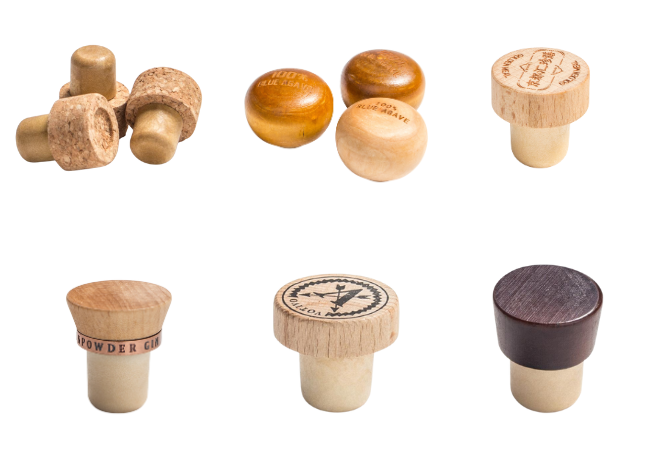
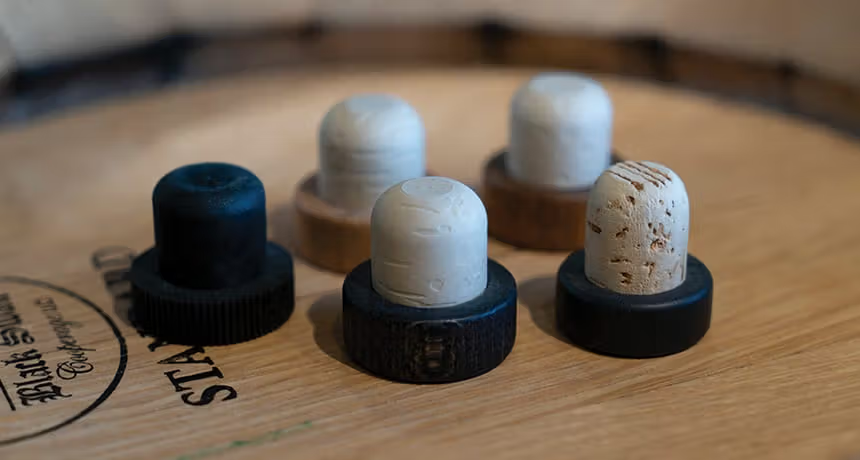
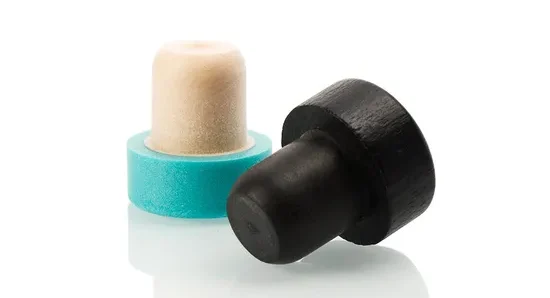
Plastic bar-top stoppers are closures with a plastic head attached to a sealing shank. The head is the visible branded part of the closure, while the shank is inserted into the bottle neck and controls fit and sealing behavior.
The shank may be made from synthetic cork, TPE, TPR, natural cork, or another compatible material. This allows brands to combine flexible visual design with practical closure performance.
Kandacork develops plastic bar-top stoppers for spirits brands that need color control, cost efficiency, line compatibility, and repeatable closure dimensions across vodka, gin, rum, liqueur, RTD, and private label bottle programs.
Advantages of Plastic Stoppers
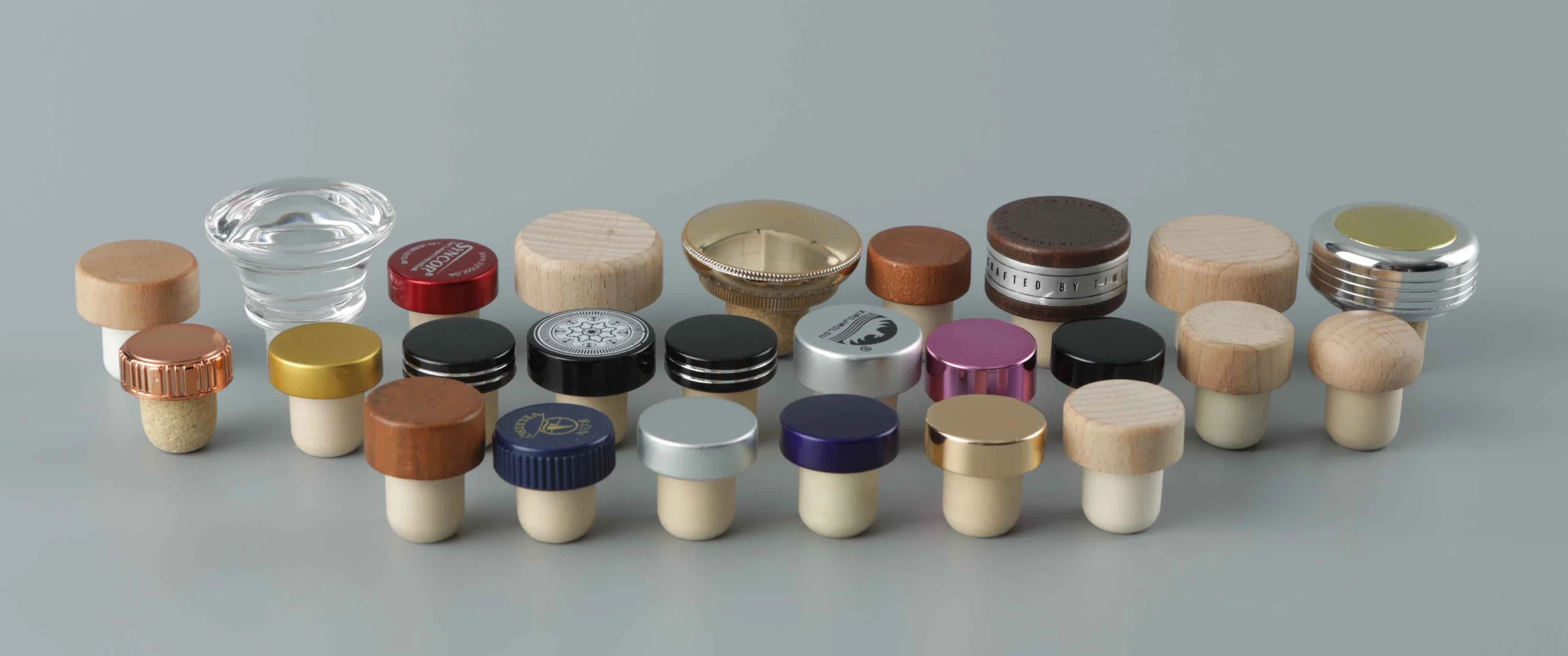
Plastic stoppers are often selected because they are lightweight, flexible, and cost-efficient. They can be molded into round, square, oval, flat-top, domed, or custom shapes. This makes them suitable for brands that want a recognizable closure without the higher cost of metal components.
Color flexibility is one of their strongest advantages. A plastic stopper can match a brand palette, flavor family, seasonal edition, label color, capsule color, or bottle decoration system.
For example, a gin brand may use green, blue, amber, and clear stopper colors to separate botanical profiles. A liqueur brand may use bright color-coded closures to help consumers identify flavors quickly. A vodka brand may choose a clean white, black, or translucent stopper for a modern minimalist look.
Plastic stoppers can also support molded logos, embossed details, debossed patterns, top printing, side printing, matte coating, gloss coating, metallic-look effects, and transparent finishes. When material quality and molding control are strong, plastic stoppers can look clean, modern, and professional.
Limitations of Plastic Stoppers
Plastic stoppers may look less premium than real aluminium if the surface finish, mold quality, or color control is weak. Low-grade plastic can reduce the perceived value of a heavy glass bottle, especially for premium whiskey, aged rum, tequila, or luxury gin.
Decoration also needs testing. Printed logos, hot stamping, coatings, and metallic-look finishes should be checked for scratch resistance, color stability, alcohol exposure, and handling during transport.
Sustainability claims require care. Plastic is lightweight and efficient for high-volume production, but recyclability depends on polymer type, colorant, decoration layer, local recycling infrastructure, and whether the stopper is combined with other materials.
What Are Aluminium Bar-Top Stoppers?
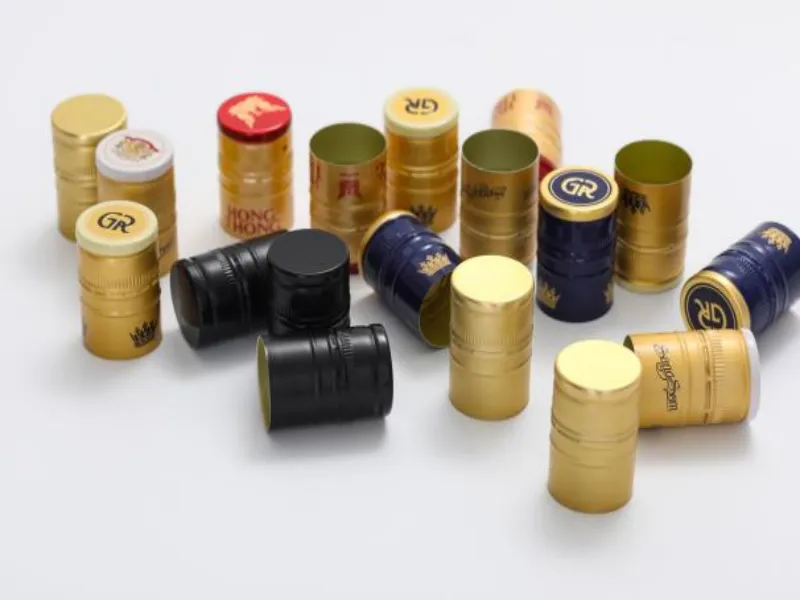
Aluminium bar-top stoppers use an aluminium head attached to a sealing shank. The aluminium top creates the visible metallic appearance, while the shank provides the bottle-neck fit.
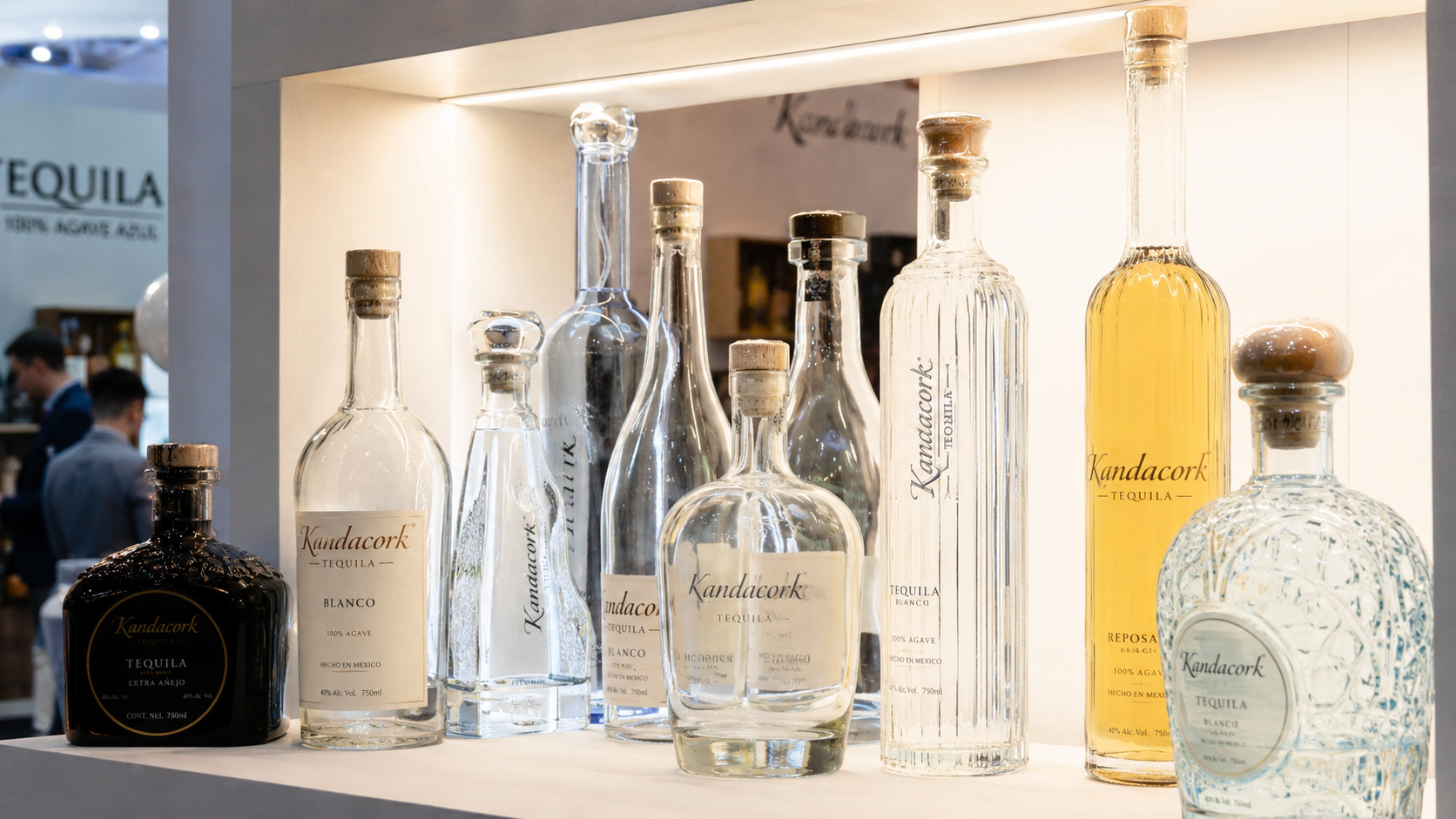
Aluminium stoppers are common in premium vodka, craft gin, whiskey, rum, tequila, mezcal, brandy, and limited-edition spirits packaging. They work especially well with heavy-base glass bottles, minimalist labels, metallic capsules, embossed labels, gift boxes, and premium retail displays.
Kandacork supplies aluminium bar-top stoppers for spirits projects that need a clean metallic finish, stable presentation, and repeatable brand expression across premium bottle ranges.
Advantages of Aluminium Stoppers
Aluminium stoppers provide a genuine metallic appearance that plastic can imitate but not fully duplicate. The surface can be brushed, polished, anodized, lacquered, embossed, debossed, laser engraved, or printed.
This makes aluminium a strong choice for brands that want a refined closure with higher perceived value. The material also creates a cooler, firmer, and more substantial hand feel than most plastic heads.
For premium spirits, this tactile impression matters. Consumers often touch the stopper before pouring the product. A well-made aluminium stopper can reinforce the feeling of quality before the liquid is tasted.
Aluminium also supports luxury color systems such as brushed silver, matte black, champagne gold, bronze, rose gold, gunmetal, and custom anodized finishes. For brands competing through shelf presence, these finishes can create a stronger premium signal.
Limitations of Aluminium Stoppers
Aluminium stoppers usually cost more than plastic stoppers. They may also require more careful sampling, finish approval, and batch-to-batch color control.
If a project uses anodizing, brushing, laser engraving, embossing, or complex surface decoration, buyers should allow enough time for pre-production samples. A small difference in metal tone or surface texture can affect the final bottle appearance.
Aluminium is also not necessary for every product tier. A flavored spirits range, value-tier bottle, RTD line, or promotional pack may not need a metal top. In these cases, plastic may deliver better commercial efficiency.
Plastic Stoppers vs Aluminium Stoppers: Direct Comparison
When comparing plastic stoppers vs aluminium stoppers, the best material depends on market position, bottle structure, decoration needs, order quantity, and target retail price.
| Factor | Plastic Stoppers | Aluminium Stoppers |
|---|---|---|
| Best use | Cost-efficient, colorful, multi-SKU packaging | Premium, metallic, luxury spirits packaging |
| Visual effect | Flexible, modern, color-rich | Refined, metallic, high-end |
| Unit cost | Usually lower | Usually higher |
| Weight | Lightweight | Heavier and more substantial |
| Custom color | Excellent for solid colors | Excellent for metallic finishes |
| Logo method | Molding, printing, coating, hot stamping | Engraving, embossing, debossing, anodizing, printing |
| Best categories | Vodka, gin, liqueur, flavored spirits, mini bottles | Whiskey, gin, vodka, rum, tequila, brandy |
| Premium feel | Depends on design quality | Usually stronger |
| Production complexity | Often simpler for volume programs | More finish-control requirements |
| Sustainability claim | Depends on resin and design | Depends on full mixed-material assembly |
| Best buyer profile | Cost-sensitive or design-flexible brand | Premium or luxury-positioned brand |
The most useful way to compare plastic vs aluminium stoppers is not to ask which material is universally better. The better question is which closure creates the right balance between visual value, technical fit, production cost, and brand promise.
Stopper Selection Matrix by Brand Tier
For entry-level spirits, plastic stoppers are often the most practical option. They keep unit cost under control and still allow color, logo, and shape customization.
For mid-market spirits, both materials can work. Plastic may be better for colorful, modern, or multi-flavor products. Aluminium may be better when the brand wants to move toward a premium look without changing the bottle structure.
For premium spirits, aluminium stoppers often create a stronger first impression. They pair well with heavy-base glass, embossed labels, foil stamping, textured cartons, and gift packaging.
For limited editions, both materials can be effective. Plastic works well for bold seasonal colors or custom molded shapes. Aluminium works well for numbered editions, engraved logos, metallic finishes, and luxury presentation.
Buyers planning a full closure program can review Kandacork’s broader range of custom spirits closures and stoppers to compare stopper heads, shank materials, screw caps, capsules, and other closure options as part of one packaging system.
Choose Plastic Stoppers If
Choose plastic stoppers if your project needs low unit cost, flexible color matching, lightweight closures, custom molded shapes, promotional packaging, or fast SKU differentiation.
Plastic is a strong choice for brands launching multiple flavors, seasonal editions, mini bottles, private label ranges, or large-volume spirits programs. It is also practical when the closure must match a specific Pantone color, label design, capsule color, or flavor system.
Plastic stoppers can be especially effective for flavored vodka, botanical gin, spiced rum, liqueurs, miniature spirits, RTD spirits, promotional gift sets, private label projects, cost-controlled export orders, and multi-SKU supermarket programs.
Choose Aluminium Stoppers If
Choose aluminium stoppers if your project needs a premium metallic look, engraved branding, heavier tactile feel, luxury appearance, or strong shelf impact.
Aluminium is a strong choice for brands that want the closure to communicate quality before the bottle is opened. It is especially suitable for premium whiskey, craft gin, luxury vodka, aged rum, tequila, mezcal, brandy, and gift-box packaging.
Aluminium stoppers can be especially effective for heavy-base bottles, metallic label systems, limited-edition spirits, luxury cartons, premium tequila, aged rum, high-end gin, and modern whiskey packaging.
Technical Factors That Matter More Than Stopper Material
A common mistake in plastic stoppers vs aluminium stoppers comparisons is assuming that the top material determines sealing performance. In most bar-top closures, the visible top does not create the main seal. The shank does.
The shank must match the bottle’s inner neck diameter and finish tolerance. If the shank is too small, the stopper may feel loose or leak during transport. If the shank is too large, insertion force may be too high, and consumers may find the bottle difficult to open.
For projects that require consistent compression and repeatable sealing behavior, Kandacork’s synthetic bottle stoppers can be considered alongside plastic and aluminium heads to build a more stable closure system.
Buyers should review these technical factors before approving bulk production:
- Bottle neck inner diameter
- Neck finish tolerance
- Shank diameter
- Shank height
- Shank material
- Shank compression range
- Insertion force
- Extraction force
- Leakage resistance
- Alcohol compatibility
- Cap-to-shank bonding strength
- Transport vibration performance
- Storage orientation
- Filling-line handling
- Capsule or tamper-evident compatibility
A premium aluminium top with the wrong shank can perform poorly. A well-designed plastic stopper with the correct shank can perform reliably. The complete closure system matters more than the top material alone.
Bottle-Neck Fitment Approval Checklist
Before requesting samples, buyers should prepare the bottle drawing or physical bottle sample. If the bottle is custom-made, closure testing should happen after the glass bottle mold and neck finish are confirmed.
Important fitment details include:
- Bottle type and capacity
- Inner neck diameter
- Neck finish drawing
- Stopper head diameter
- Shank diameter
- Shank height
- Required insertion force
- Required pull-out force
- Alcohol percentage
- Filling temperature
- Filling-line speed
- Transport conditions
- Storage orientation
- Capsule or tamper-evident system
- Target market compliance needs
For brands developing bottles and closures together, teams may also coordinate closure fit with glass structure, decoration zones, and carton presentation. A bottle platform from Kandacork Spirits bottle development can help align shape, neck finish, closure selection, and production expectations from the early design stage.
Common Mistakes When Choosing Plastic or Aluminium Stoppers
Many packaging problems happen because buyers choose the stopper by appearance before confirming technical compatibility. A closure can look perfect in a rendering but fail during sampling if the shank diameter, bottle-neck tolerance, or insertion force is wrong.
Another mistake is comparing only the top material. The visible head may be plastic or aluminium, but the shank material controls sealing behavior. Buyers should compare the complete closure assembly, not only the visible surface.
Brands also need to be careful with recyclability and sustainability claims. A plastic head, aluminium head, synthetic cork shank, or TPE shank may each have different recovery considerations. The full closure design should be reviewed before making environmental claims.
Common sourcing mistakes include:
- Choosing by appearance before checking bottle-neck fit
- Comparing top material without checking shank material
- Approving color or finish without production samples
- Ignoring insertion and extraction force
- Forgetting capsule or tamper-evident compatibility
- Making recyclability claims without reviewing the full closure assembly
- Ordering bulk stoppers before testing with the actual bottle
- Underestimating lead time for custom decoration
Avoiding these mistakes can reduce sampling delays, production risk, and packaging rework.
Branding and Decoration Options
Plastic Stopper Branding
Plastic stoppers provide strong design flexibility. Brands can use molded logos, embossed tops, debossed details, screen printing, hot stamping, color matching, matte finish, gloss finish, metallic-look coating, transparent effects, and custom molded profiles.
Plastic is useful when the closure shape itself is part of the brand identity. A custom molded head can create a recognizable silhouette that repeat customers associate with the brand.
For closures where grip, logo placement, and side profile are important, Kandacork’s sidewall design options can help align knurling, ribbing, print zones, and tactile details with the broader packaging design.
Aluminium Stopper Branding
Aluminium stoppers are stronger for premium decoration. Common options include laser engraving, embossing, debossing, anodizing, brushed finish, polished finish, matte coating, sidewall printing, color lacquer, and top inserts.
Aluminium is especially effective when the closure must coordinate with metallic labels, foil stamping, metal badges, luxury cartons, or heavy-base glass bottles. For more complex surface systems, packaging teams can coordinate artwork, finishes, and visual hierarchy through Kandacork Decor so the stopper, bottle, label, and secondary packaging look unified.
Sustainability and Compliance Considerations
Sustainability should be evaluated across the full closure system, not only the visible top material.
Plastic is lightweight, versatile, and efficient for high-volume production. It can reduce transport weight and provide strong design flexibility. However, recycling outcomes depend on resin type, additives, colorants, decoration layers, local collection systems, and whether the closure is easy to separate from other materials. The U.S. Environmental Protection Agency plastics resource is useful for understanding plastic waste, recycling systems, and recovery limitations.
Aluminium has strong recycling potential and is widely recognized as a valuable recyclable material. The International Aluminium Institute recycling guidance provides useful context for aluminium recovery and lifecycle discussions. However, many aluminium bar-top stoppers are mixed-material assemblies because the aluminium head is attached to a synthetic cork, TPE, TPR, or natural cork shank.
Food-contact suitability is also essential. Spirits closures may come into direct or indirect contact with alcoholic beverages. The U.S. FDA food contact substances guidance explains how food contact substances are considered in the U.S. market, while the European Commission food contact materials rules outline safety expectations for materials intended to contact food and beverages in the EU.
For packaging recoverability, ISO 18604 material recycling guidance can help buyers think more carefully about whether packaging can be classified as recoverable through material recycling. This matters because environmental claims should be supported by material data, closure construction, local recycling infrastructure, and target-market rules.
Cost, MOQ, and Production Planning
Cost is one of the clearest differences in plastic stoppers vs aluminium stoppers.
Plastic stoppers are usually more cost-efficient for large-volume programs. Tooling, color matching, and decoration still matter, but the unit economics are often favorable for bulk spirits packaging.
Aluminium stoppers usually require a higher budget. The material, surface treatment, decoration method, and finish-control process can increase cost. However, the added expense may be justified when the product sells at a premium price or competes in a luxury retail environment.
Buyers should also consider MOQ, sample timing, mold development, decoration approval, packaging method, and shipping schedule. A practical project workflow includes confirming the bottle drawing, selecting the head material, choosing the shank material, approving the head shape, testing stopper fit, checking insertion and extraction force, approving decoration, confirming lead time, and approving a pre-production sample.
This workflow reduces the risk of mismatched closures, delayed shipments, or failed production approval.
Application Guide by Spirit Type
For vodka, plastic stoppers work well for colorful ranges, flavored vodka, promotional bottles, and private label programs. Aluminium stoppers are better for premium vodka bottles that need a clean, metallic, minimalist look.
For gin, plastic stoppers are useful for botanical color systems, creative identities, and seasonal ranges. Aluminium stoppers are ideal for premium gin bottles, especially when paired with clear flint glass, green glass, embossed labels, or heavy-base designs.
For whiskey, plastic stoppers can suit value, miniature, or promotional packaging. Aluminium stoppers are stronger for premium whiskey brands that need a durable, modern, high-value closure.
For rum, plastic stoppers work well for flavored rum, spiced rum, and multi-SKU ranges. Aluminium stoppers are better for aged rum, dark rum, premium rum, and gift packaging.
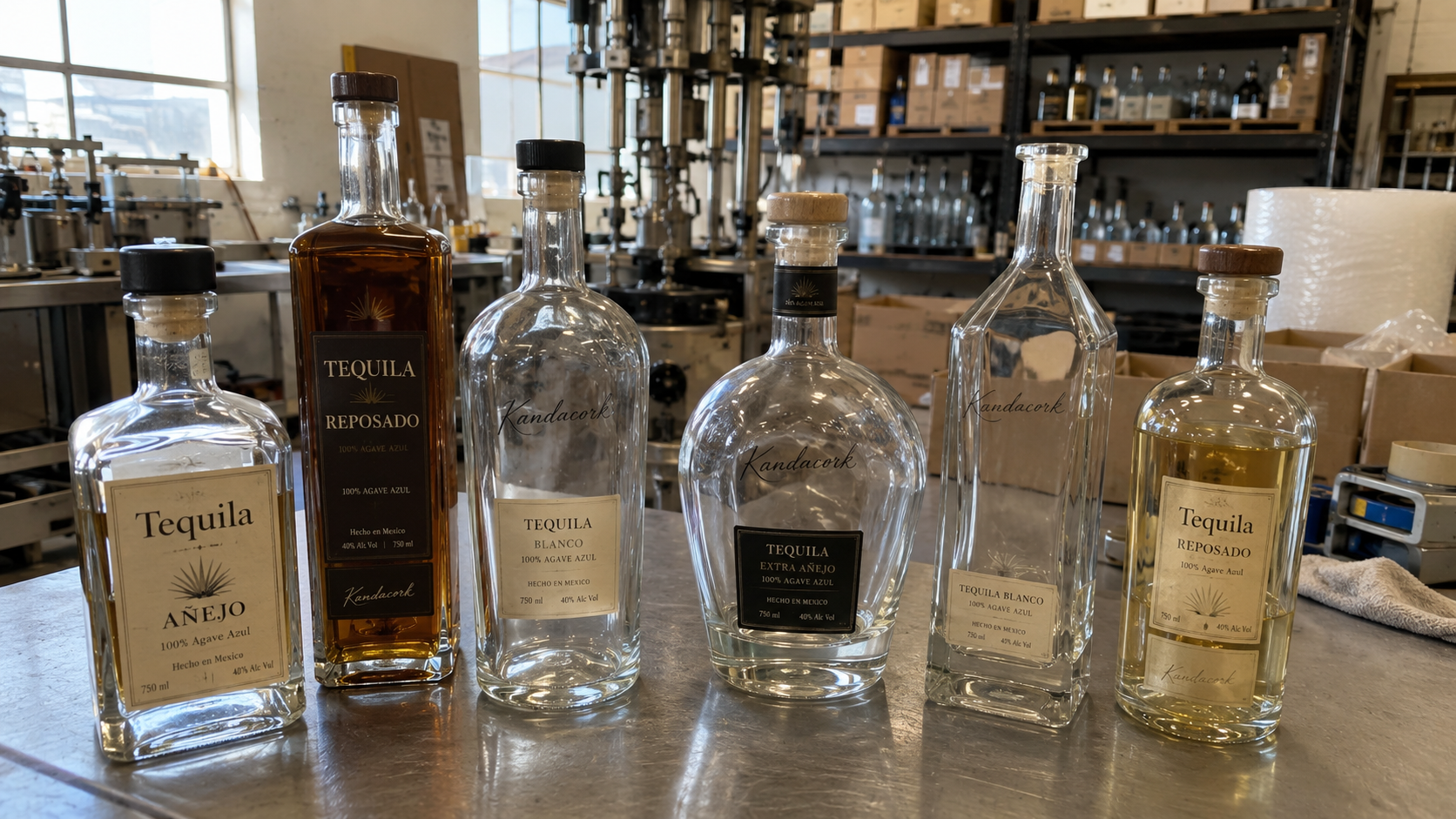
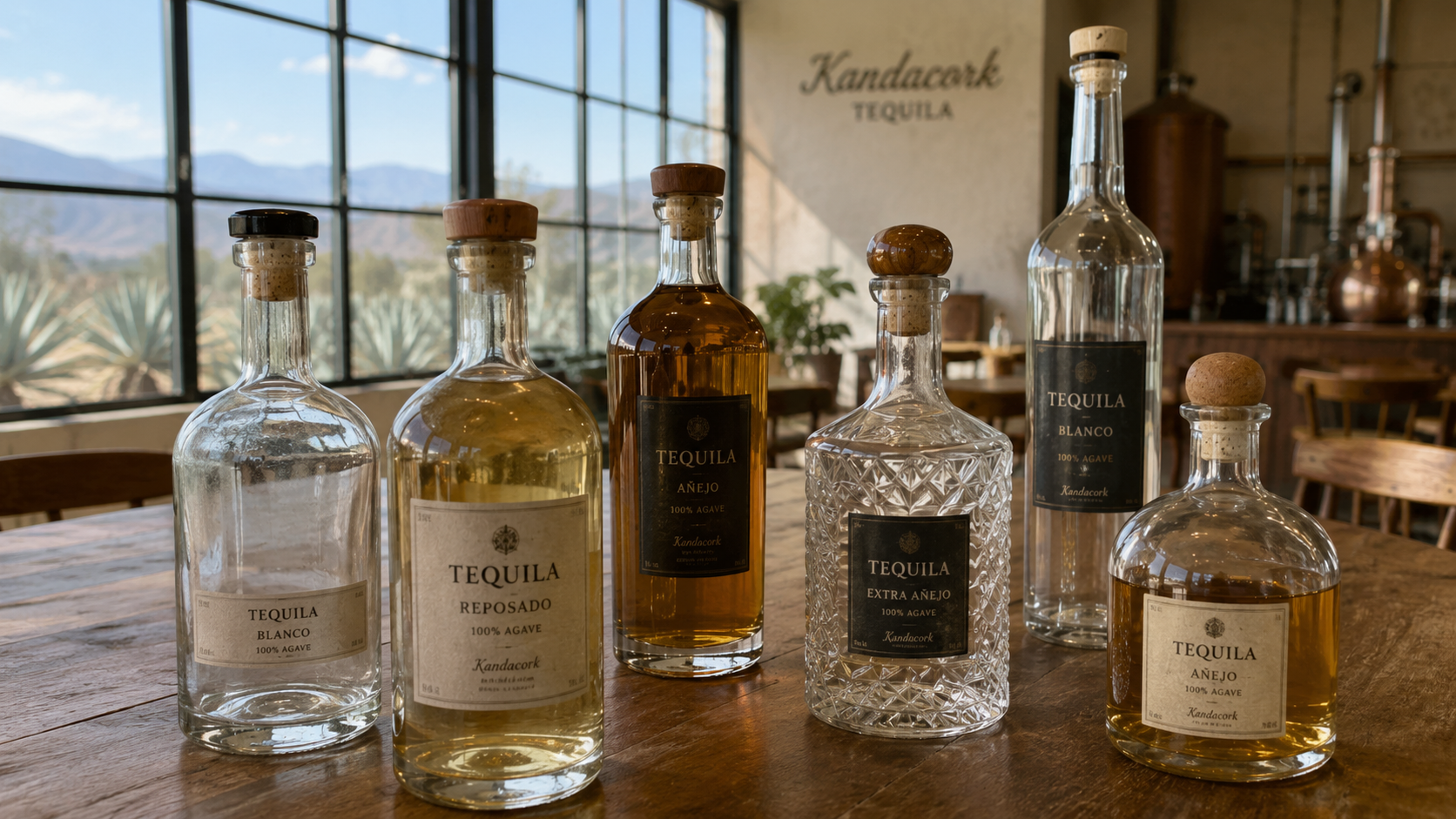
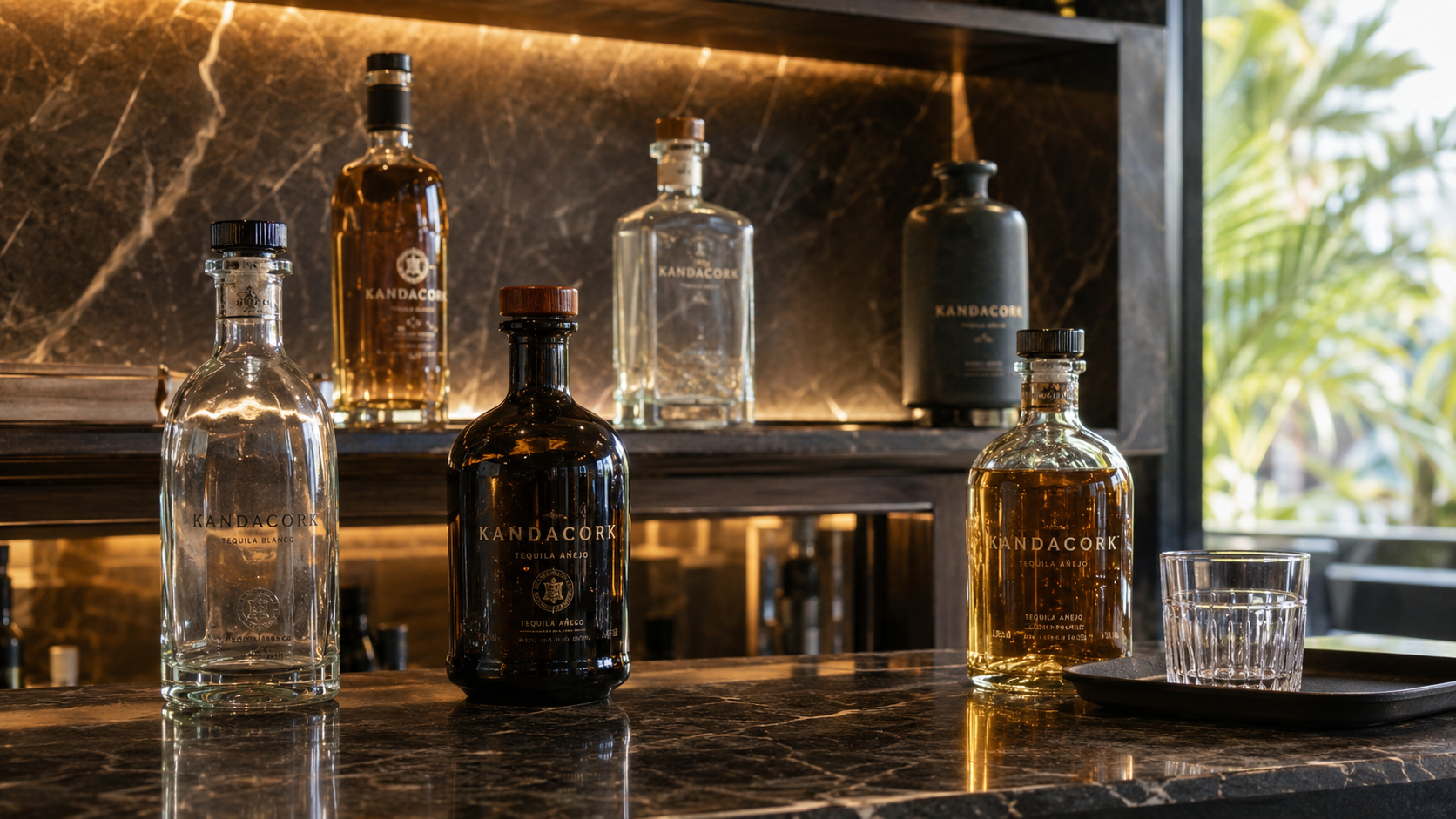
For tequila and mezcal, plastic stoppers can support bold colors, custom shapes, and expressive branding. Aluminium stoppers can create a polished, upscale effect for premium tequila, cristalino tequila, mezcal, and limited-edition bottles.
For liqueurs and RTD spirits, plastic stoppers are practical for color variety and cost efficiency. Aluminium stoppers can elevate special editions, premium liqueurs, gift packs, and higher-price seasonal products.
When bottle shape, shoulder profile, base thickness, and closure style must be developed together, Kandacork Glass can support broader glass packaging requirements beyond the stopper itself.
Buyer Checklist Before Requesting a Quote
Before choosing between plastic stoppers and aluminium stoppers, prepare the following information:
- Bottle type and capacity
- Bottle neck inner diameter
- Bottle drawing or physical sample
- Preferred stopper material
- Preferred shank material
- Stopper head shape
- Color or metallic finish
- Logo decoration method
- Target order quantity
- Target market
- Alcohol percentage
- Filling and capping method
- Transport conditions
- Sample deadline
- Bulk delivery schedule
- Packaging requirements
This information helps the supplier recommend a closure that looks right, fits correctly, and performs consistently. It also helps avoid repeated sampling rounds caused by incomplete bottle data or unclear decoration requirements.
For brands prioritizing recycled-content glass, lighter bottle structures, or responsible packaging direction, Kandacork Eco Glass can support packaging discussions where closure choice and glass strategy need to work together.
Why Work with Kandacork Closures?
Kandacork Closures supports custom plastic stoppers and aluminium stoppers for spirits brands, packaging suppliers, distilleries, private label buyers, and export bottle projects.
The main advantage is not simply choosing between two materials. It is matching the stopper head, shank, bottle neck, decoration method, MOQ, and production plan into one workable packaging solution.
Kandacork Closures can help with material selection, finish development, logo decoration, sample matching, bottle-neck fitment, and bulk order production. Whether your brand needs a cost-efficient plastic stopper for a multi-SKU range or a premium aluminium stopper for a luxury spirits bottle, the closure should be designed around both visual impact and technical performance.
For buyers comparing plastic stoppers vs aluminium stoppers, working with a stopper manufacturer early in the packaging process can reduce sampling delays, improve bottle compatibility, and create a more consistent final product. To move from comparison to project planning, buyers can request a closure quote with bottle drawings, target volumes, market requirements, and branding direction.
FAQ
Are plastic stoppers cheaper than aluminium stoppers?
Yes. Plastic stoppers are usually more cost-effective for bulk production, promotional packaging, and multi-SKU spirits programs. Aluminium stoppers usually cost more but provide a stronger premium appearance and metallic finish.
Do aluminium stoppers seal better than plastic stoppers?
Not automatically. Sealing performance depends mainly on the shank material, shank diameter, bottle neck finish, and compression fit. The visible top material affects appearance and handling, but the shank creates the seal.
Are plastic stoppers suitable for premium spirits?
Yes. Plastic stoppers can be suitable for premium spirits if the molding, surface finish, color, and decoration are carefully controlled. However, aluminium stoppers usually provide a more premium metallic feel.
Are aluminium stoppers recyclable?
Aluminium has strong recycling potential, but spirits stoppers are often mixed-material assemblies. Brands should evaluate the full closure design, shank material, and local recycling infrastructure before making recyclability claims.
Which stopper is better for gin bottles?
Plastic stoppers are good for colorful botanical gin ranges and creative packaging. Aluminium stoppers are better for premium gin bottles that need a refined metallic finish, especially when paired with heavy glass or minimalist labels.
Which stopper is better for whiskey bottles?
Aluminium stoppers are often better for premium whiskey because they support a heavier, more refined shelf presence. Plastic stoppers can still work for value ranges, miniature bottles, or promotional whiskey packaging.
Can both plastic and aluminium stoppers be customized with logos?
Yes. Plastic stoppers can use molded logos, printing, hot stamping, embossing, debossing, and color matching. Aluminium stoppers can use laser engraving, embossing, debossing, anodizing, printing, and brushed metallic finishes.
What is the best way to choose between plastic stoppers vs aluminium stoppers?
Start with brand position, bottle neck, target cost, order volume, and decoration style. Choose plastic for flexibility, color, and cost control. Choose aluminium for premium appearance, metallic finish, and luxury shelf impact.
Conclusion
The choice between plastic stoppers vs aluminium stoppers should be based on more than material preference. Plastic stoppers offer cost efficiency, color flexibility, lightweight handling, and strong customization for volume spirits packaging. Aluminium stoppers offer premium shelf appeal, metallic finishes, durable tactile quality, and high-end branding potential.
For the best result, evaluate the stopper as a complete system: head material, shank material, bottle-neck fit, decoration method, compliance, sustainability, MOQ, and production schedule.
Kandacork Closures helps spirits brands develop closure solutions that balance appearance, performance, and commercial practicality. If your project requires custom plastic stoppers or aluminium stoppers for spirits bottles, the next step is to confirm your bottle specifications and request matched samples before bulk production.