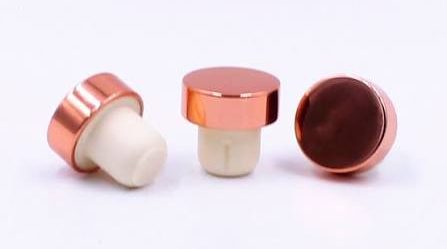
Quick Buying Answer
Bar-top stoppers are premium resealable closures used for whiskey, gin, rum, vodka, tequila, brandy, liqueurs and specialty spirits bottles. For spirits importers, packaging distributors, private label buyers, bottlers and distilleries, the right stopper should be selected by bottle neck inner diameter, shank diameter, head material, alcohol compatibility, decoration method, MOQ, export packing and sample validation.
Do not approve bulk production only by appearance. A stopper should be tested on the actual bottle before mass production. The most common risks are loose fit, excessive insertion force, leakage during transport, inconsistent batch tolerance and decoration damage during export handling.
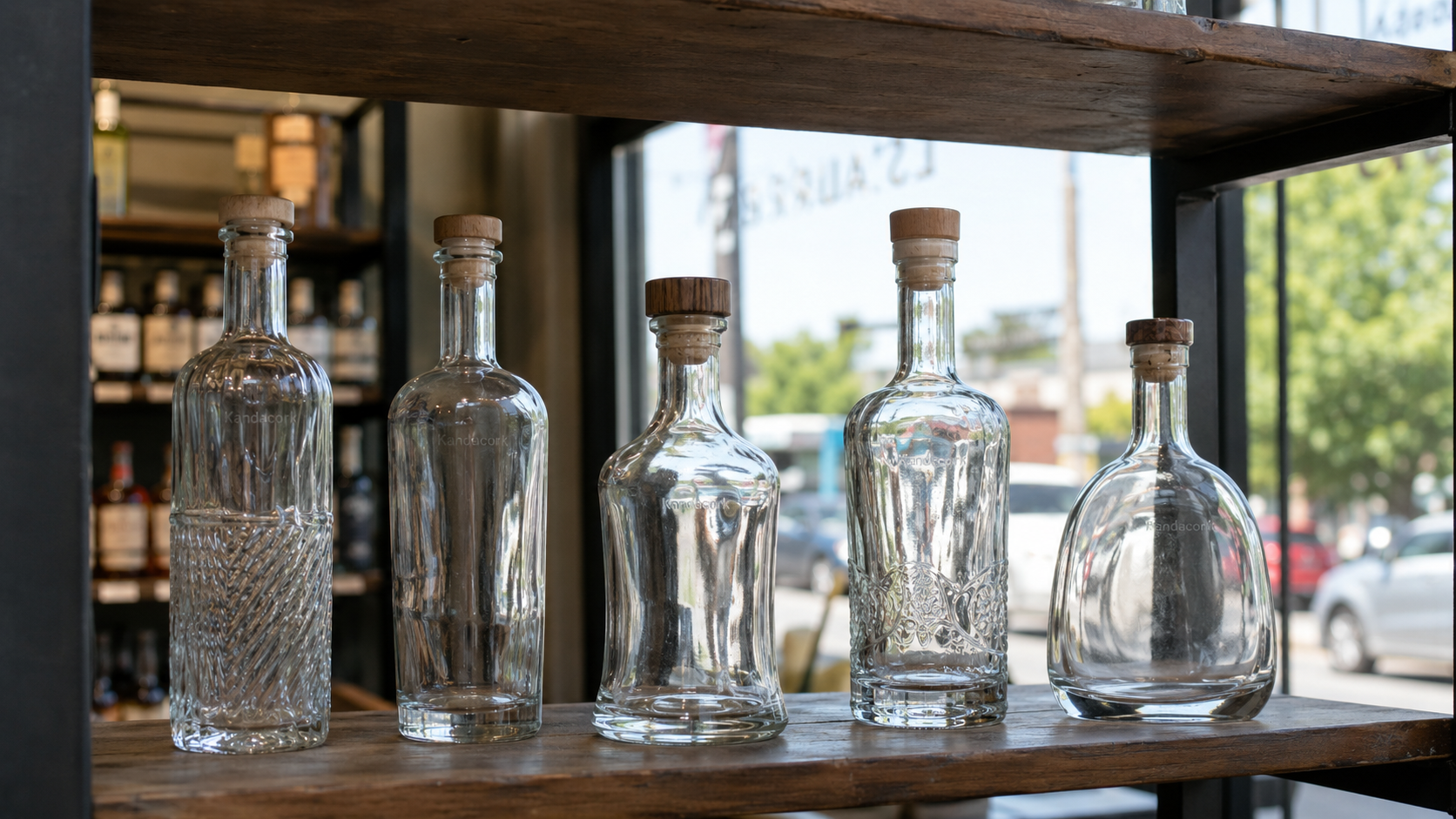
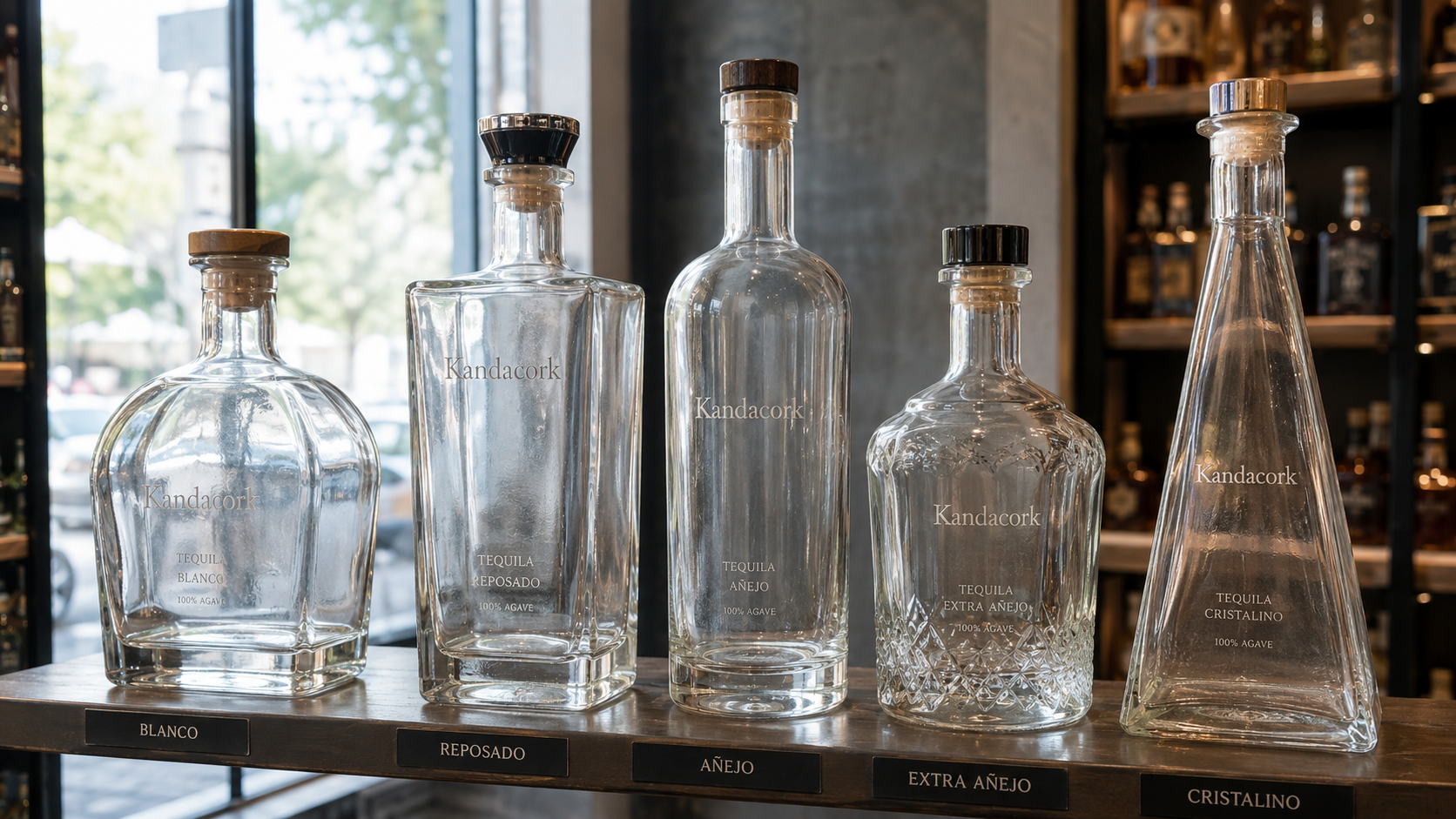
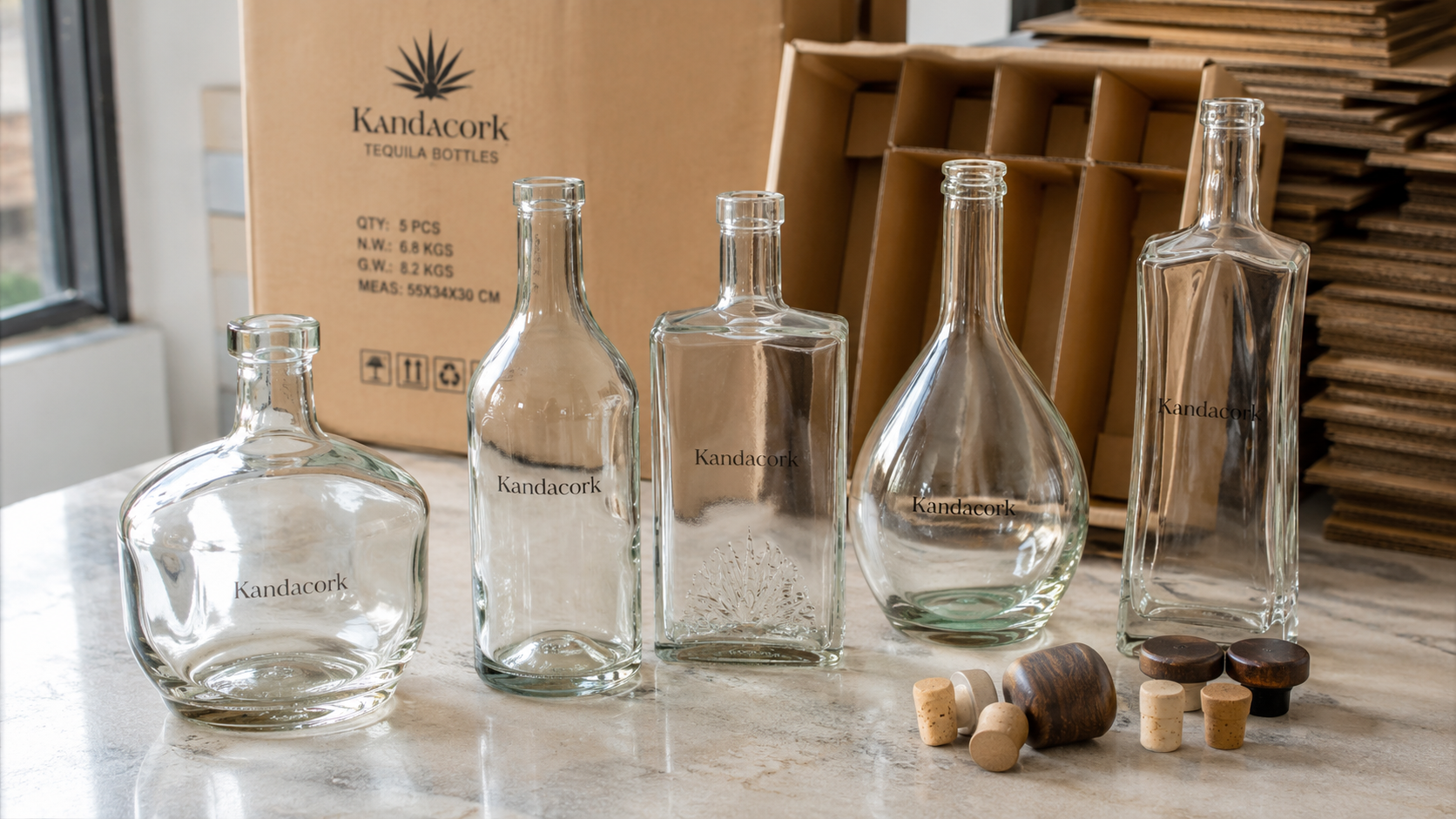
Kandacork Closures supports B2B spirits packaging buyers with material comparison, bottle neck review, sample development, custom decoration, bulk packing and quotation support. Buyers comparing closure options can start with Kandacork’s dedicated custom bar-top stoppers for spirits bottles to understand available materials, shank options and bulk supply support.
CTA: Request samples by sending your bottle drawing, neck inner diameter, target material and estimated quantity.
Bar-Top Stopper RFQ Snapshot
For faster sample requests and quotations, prepare the key information before contacting a supplier.
| Buyer Need | What to Prepare |
|---|---|
| Confirm bottle fit | Bottle drawing, physical sample, inner neck diameter |
| Compare materials | Wood, plastic, aluminum, zamak, cork or synthetic shank |
| Request samples | Target bottle, spirit type, quantity, logo method, delivery country |
| Get quotation | Material, finish, MOQ, packing requirement and timeline |
| Plan bulk orders | Annual demand, reorder schedule, carton labeling and warehouse needs |
Need to confirm stopper fit? Send your bottle drawing, inner neck diameter, target material and estimated quantity to request bar-top stopper samples or a quotation from Kandacork Closures.
What Are Bar-Top Stoppers and Why Do They Matter?
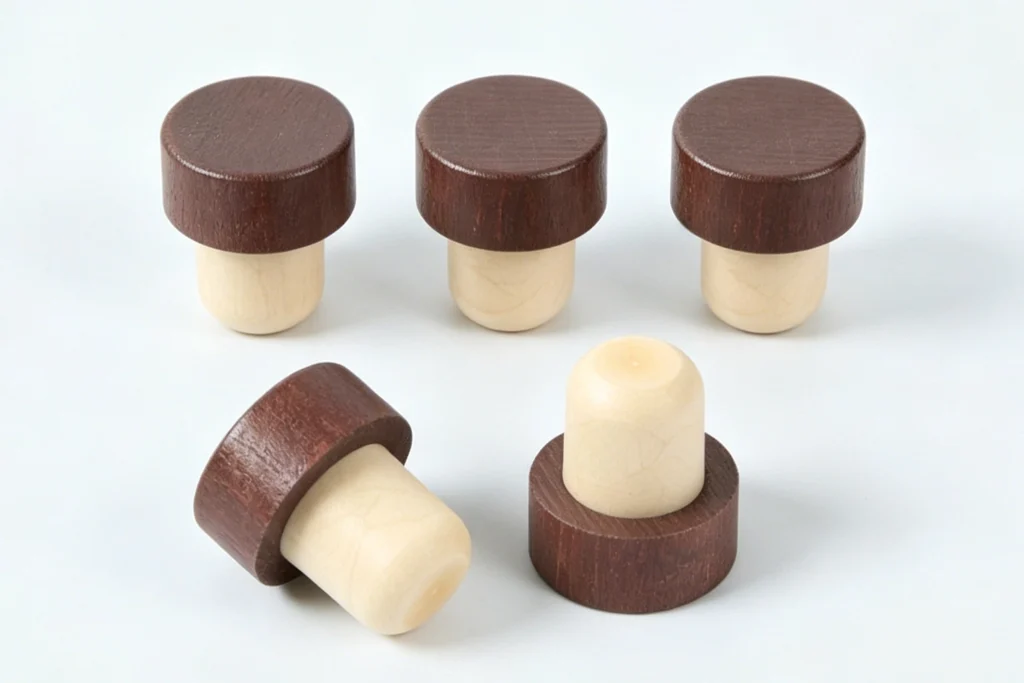
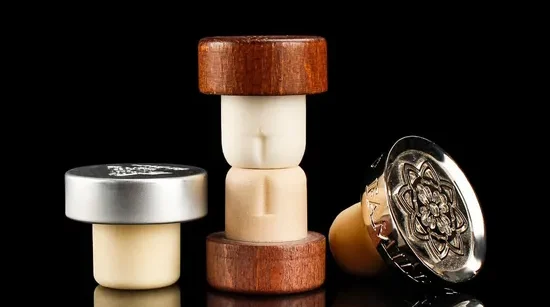
Bar-top stoppers, also called T-top stoppers, are closures with a visible top and an inserted sealing shank. The top creates the premium visual and tactile experience, while the shank fits into the bottle neck to support sealing performance.
Unlike screw caps or ROPP closures, bar-top stoppers are usually friction-fit closures. They are popular in spirits packaging because consumers can open and reseal the bottle repeatedly while enjoying a premium hand feel.
For spirits brands, the closure affects shelf appeal and consumer experience. For importers and packaging distributors, it also affects sampling, quoting, warehousing, export packing, repeat orders and customer satisfaction.
A typical bar-top stopper includes:
| Component | Function | Common Options |
|---|---|---|
| Top head | Provides grip, decoration and brand appearance | Wood, plastic, aluminum, zamak, glass-effect material |
| Shank | Fits into the bottle neck and supports sealing | Natural cork, micro-agglomerated cork, synthetic cork |
| Decoration | Adds branding and shelf differentiation | Laser marking, embossing, debossing, printing, hot stamping |
| Assembly | Connects the head and shank | Adhesive bonding or mechanical assembly |
| Packing | Protects closures during export | Inner bags, trays, dividers, labeled cartons, pallets |
For a distributor, a stopper program may need to support several customers at once: a wooden stopper for craft gin, a plastic stopper for private label vodka, an aluminum stopper for premium tequila and a zamak stopper for a luxury rum gift pack. This is why closure selection should combine design, technical fit and supply-chain planning.
Bar-Top Stopper Materials Compared
Different materials create different brand effects, cost structures and performance considerations. The best option depends on bottle style, target price, brand positioning, filling conditions and reorder needs.
| Material | Best For | Advantages | Buyer Notes |
|---|---|---|---|
| Wood | Craft gin, whiskey, rum, brandy, premium liqueurs | Natural look, warm touch, strong craft image | Check finish consistency, moisture control and surface protection |
| Plastic | Private label spirits, entry-level lines, mini bottles | Cost-effective, lightweight, flexible colors | Check resin quality, color tolerance and decoration durability |
| Aluminum | Vodka, gin, tequila, modern premium spirits | Clean metallic look, consistent surface, premium feel | Check anodizing, scratch resistance and color matching |
| Zamak | Luxury tequila, mezcal, rum, whisky, gift packs | Heavy feel, custom shapes, premium shelf impact | Requires tooling, higher MOQ and tighter QC |
| Natural cork shank | Traditional spirits and premium heritage packaging | Classic appearance and tactile authenticity | Natural variation should be considered |
| Micro-agglomerated cork shank | Premium cork-look projects needing consistency | More engineered consistency than natural cork | Good balance between cork appearance and uniformity |
| Synthetic cork shank | High-volume commercial spirits | Strong dimensional consistency and repeatability | Good for distributor programs and bulk orders |
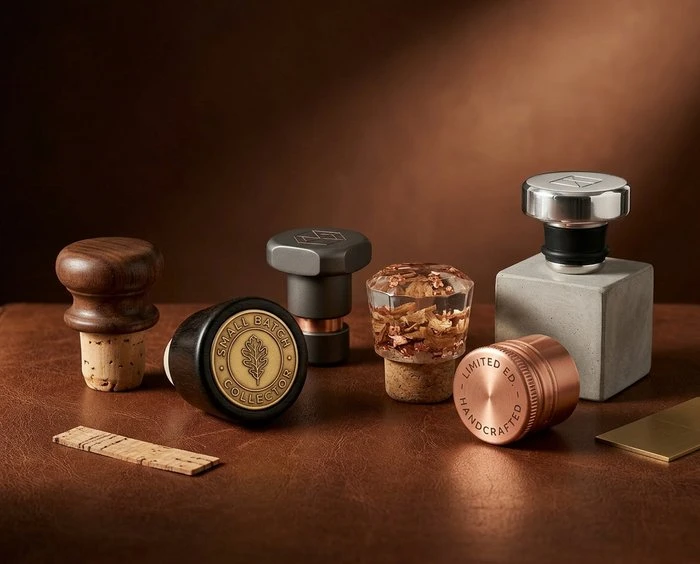
In general, wood suits craft and heritage spirits, plastic supports cost-controlled private label projects, aluminum fits modern premium spirits, and zamak is best for luxury or limited-edition packaging. Buyers comparing top materials, shank choices and branding effects can also review the Kandacork Closures bar-top stopper materials guide for a deeper material-focused breakdown.
In distributor programs, the lowest unit price is not always the safest choice. A slightly higher-cost stopper with stable shank tolerance and better carton protection may reduce customer complaints, replacement costs and reorder risk.
Bottle Neck Fit and Shank Size Requirements
The most important technical requirement is bottle neck fit. Many buyers focus on the outside neck shape, but the stopper seals inside the neck. The inner neck diameter must be confirmed before choosing the shank.
A small difference in inner neck diameter can change the entire closure performance. If the shank is too small, the stopper may feel loose or leak. If the shank is too large, insertion may be difficult and consumers may struggle to open the bottle.
| Specification | Why It Matters | Buyer Action |
|---|---|---|
| Bottle inner neck diameter | Determines whether the shank can seal correctly | Measure accurately or send a bottle sample |
| Shank diameter | Controls compression, tightness and leakage risk | Confirm by sample fitting |
| Shank length | Affects insertion depth and closure stability | Match with bottle neck depth |
| Head diameter | Affects grip, visual proportion and shelf appeal | Match with bottle shoulder and neck style |
| Insertion force | Affects bottling efficiency | Test manually or on filling equipment |
| Pull-out force | Affects consumer opening experience | Confirm it is secure but not too difficult |
| Alcohol compatibility | Reduces risk of swelling, odor or material reaction | Test with real liquid or equivalent formula |
| Decoration durability | Protects brand appearance during shipping | Check abrasion, rubbing and carton protection |
For importers and packaging distributors, the safest approach is to request fit samples before approving a bulk order. A drawing is useful, but a real bottle test is better.
CTA: Need help confirming shank size? Share your bottle sample or technical drawing for fit review.
Common Bar-Top Stopper Size Reference
The following table is a general reference only. Actual fit depends on bottle neck tolerance, shank material, compression, insertion depth and filling conditions. Final approval should always be based on real bottle testing.
| Bottle Neck Opening | Common Stopper Shank Direction | Buyer Note |
|---|---|---|
| 18.5 mm | About 19.5 mm shank | Confirm insertion force and pull-out feel with the actual bottle |
| 21.5 mm | About 22.5 mm shank | Check leakage risk, opening feel and bottling-line performance |
| Other custom neck ID | Custom shank size may be required | Use bottle drawings, caliper measurement and fit samples |
A stopper shank is often slightly larger than the bottle opening to create compression. However, buyers should not use a simple size formula for bulk orders. Different bottles may have similar outer neck shapes but different inner neck tolerances. For a more detailed sizing discussion, buyers can refer to this bar-top stopper size guide for custom spirits bottles.
Common Fit Problems and Solutions
Most stopper problems are preventable if the buyer and supplier validate the bottle neck, shank material and packing method before production.
| Problem | Possible Cause | Recommended Solution |
|---|---|---|
| Stopper feels loose | Shank diameter too small or neck ID too large | Test a larger shank or different material |
| Stopper is hard to insert | Shank oversized or compression too high | Reduce shank size or adjust material hardness |
| Leakage during shipping | Poor fit, temperature change, vibration or side storage | Run leak testing and transport simulation |
| Consumer cannot open bottle easily | Pull-out force too high | Rebalance shank diameter and material |
| Top separates from shank | Weak assembly or poor adhesive compatibility | Improve assembly process and inspection |
| Logo scratches during shipment | Surface finish not protected | Add dividers, trays or better inner packing |
| Color varies between batches | Poor color control | Confirm color tolerance and batch approval sample |
| Reorder feels different | Specification not locked | Confirm production drawings and QC standards |
This troubleshooting approach is valuable for distributors because one closure issue can affect multiple downstream customers.
Sample Testing Workflow Before Bulk Orders
A clear sample approval process reduces rework and protects both the buyer and the supplier. It also helps importers and distributors avoid approving closures that look good in photos but fail during bottling or export handling.
| Step | What to Check | Why It Matters |
|---|---|---|
| Bottle review | Drawing, physical sample, inner neck diameter | Prevents wrong shank selection |
| Fit sample | Insertion feel, pull-out force, stability | Confirms real bottle compatibility |
| Visual sample | Color, logo, finish, proportion | Confirms brand appearance |
| Compatibility test | Alcohol contact, swelling, odor, leakage | Reduces product risk |
| Packing test | Carton, dividers, surface protection | Prevents export damage |
| Pre-production approval | Final material, shank, logo, packing | Locks the mass production standard |
The stopper should be tested with the real spirit or an equivalent liquid. This is especially important for high-proof spirits, white spirits, flavored liqueurs, oils and products with botanical ingredients.
For custom projects, buyers should approve a final pre-production sample that reflects the actual material, color, decoration, shank size and packing method. When buyers need technical help moving from bottle sample to production-ready stopper, Kandacork’s bar-top stopper development and fit testing service can support material selection, sample review and bulk-order preparation.
Supplier Capability Checklist for Importers and Distributors
The best supplier is not only the one with the lowest unit price. For importers and distributors, supplier capability should be judged by fit support, sampling speed, repeat-order control, export reliability and communication accuracy.
| Capability | What to Confirm |
|---|---|
| Neck-fit support | Supplier can review bottle drawings, bottle samples and inner neck diameter |
| Sample development | Fit samples, visual samples and pre-production samples are available |
| Decoration capability | Printing, laser marking, hot stamping, embossing, debossing or molding |
| Material options | Wood, plastic, aluminum, zamak, cork and synthetic shank options |
| MOQ clarity | MOQ by material, color, logo method and custom mold |
| QC inspection | Dimensional checks, surface inspection, color tolerance and packing inspection |
| Compliance support | Food-contact material information and customer-required declarations |
| Export packing | Carton labels, SKU separation, pallet packing and packing list accuracy |
| Repeat-order control | Same specification can be repeated across future batches |
A strong supplier should help buyers avoid wrong-fit closures before the purchase order is placed.
Stock, Semi-Custom and Custom Options: MOQ and Lead Time
Choose stock stoppers for speed, semi-custom stoppers for branded distributor programs, and fully custom stoppers for premium spirits launches that need exclusive shape, weight or decoration.
| Option | Best For | MOQ and Lead Time Notes |
|---|---|---|
| Stock stopper | Fast sampling, general bottle programs, early trials | Lower MOQ and faster delivery |
| Semi-custom stopper | Logo, color, finish or shank adjustment | Medium MOQ and moderate lead time |
| Fully custom stopper | Luxury brands, exclusive launches, special shapes | Higher MOQ, tooling required and longer development time |
MOQ should be evaluated together with material, decoration and production complexity. A plain plastic stopper may have a different MOQ from a custom aluminum or zamak stopper. A laser-marked wood top may have a different lead time from a custom molded metal top.
Before confirming an order, buyers should check MOQ by material, MOQ by color or logo, sample lead time, mass production lead time and repeat-order tolerance. For distributors, repeat order control is especially important because future batches should match the approved specification as closely as possible.
Distributor Stock Program Planning
For packaging distributors, a practical stock program may include neutral wooden bar-top stoppers, cost-effective plastic stoppers, aluminum stoppers for premium spirits and several common synthetic shank sizes. This allows distributors to respond quickly to sample requests while reserving custom molding for higher-value projects.
A distributor-ready program should balance speed, variety and inventory control. Too many custom SKUs can create warehouse pressure, while too few options can limit customer conversion. A practical range usually includes standard materials, common colors, flexible decoration methods and carton labels that make reordering easy.
For importers serving multiple regional markets, it is also useful to separate stock closures from project-specific closures. Stock closures can support urgent sample requests, while custom closures can be developed for private label spirits, limited editions and premium brand launches.
Export Packing and Logistics
Export packing is a major issue for bulk bar-top stoppers. Closures may travel through long-distance sea freight, air freight, inland trucking and warehouse handling before reaching the bottler.
Good export packing should include:
- Inner bags or trays to protect surfaces
- Dividers for decorated or polished tops
- Strong cartons suitable for bulk export
- Clear item numbers and carton labels
- Separated SKUs for mixed orders
- Accurate packing list and carton quantity
- Pallet packing for large shipments
- Moisture control when needed
- Pre-shipment inspection photos
For distributors, carton labeling is not just a shipping detail. It affects warehouse receiving, inventory control and customer delivery accuracy. For premium decorated stoppers, surface protection should be confirmed before shipment to reduce scratches, dents and logo damage.
When a buyer needs bottles, closures, decoration and cartons to work as one project, broader custom spirits packaging support can help align the closure decision with the full bottle structure, decoration route and export packing plan.
Compliance Documents Buyers Should Request
Because closures are part of the spirits packaging system, buyers should request appropriate documentation based on target market requirements.
Useful documents may include:
| Document | Why It Helps |
|---|---|
| Food-contact material declaration | Supports buyer review for packaging components |
| Material composition statement | Clarifies head, shank, coating or assembly material |
| Coating or ink information | Helps evaluate decorated tops |
| Migration or compatibility report | Useful when required by the buyer or market |
| Batch inspection report | Confirms production quality control |
| Packing specification | Confirms carton quantity, SKU labels and export protection |
| Pre-shipment inspection photos | Helps verify goods before dispatch |
For U.S.-market spirits packaging, buyers should review FDA food-contact substance information for packaging components when checking material declarations and indirect food-contact risks. Other target markets may have additional documentation expectations, so importers should confirm requirements with local compliance teams before launch.
The closure supplier does not replace the importer’s regulatory responsibility, but a capable supplier should provide material and production information that supports the buyer’s compliance review.
Bar-Top Stoppers vs Screw Caps vs ROPP Closures
Bar-top stoppers are best when the spirits brand wants a premium, resealable and tactile opening experience. Screw caps are useful for convenience and cost control. ROPP closures are suitable for tamper-evident applications and high-speed bottling programs.
| Closure Type | Best Use | Main Advantage | Buyer Consideration |
|---|---|---|---|
| Bar-top stopper | Premium spirits and resealable bottles | Strong shelf appeal and tactile experience | Requires accurate neck fit testing |
| Screw cap | Cost-sensitive or convenience-focused products | Easy opening and common application | May feel less premium for some spirits |
| ROPP closure | Tamper-evident and high-speed bottling | Strong security and line efficiency | Requires compatible bottle finish and equipment |
For premium spirits, bar-top stoppers remain a strong choice because they combine closure function with brand experience. Buyers comparing shank behavior can also review the Kandacork Closures guide to cork shank vs synthetic shank bar-top stoppers before confirming material direction.
RFQ Information Template
A complete RFQ helps the supplier provide faster and more accurate recommendations. It also reduces repeated communication during sample development.
| RFQ Item | Details to Provide |
|---|---|
| Bottle information | Drawing, physical sample, volume and neck inner diameter |
| Product type | Whiskey, gin, rum, vodka, tequila, liqueur or other spirit |
| Alcohol strength | ABV or proof if available |
| Head material | Wood, plastic, aluminum, zamak or other option |
| Shank material | Natural cork, micro-agglomerated cork or synthetic cork |
| Decoration | Logo, color, printing, engraving, embossing or hot stamping |
| Finish | Matte, glossy, stained, metallic, brushed or custom |
| Quantity | Trial quantity, annual demand or order forecast |
| Packing | Carton quantity, labels, pallet requirement or mixed SKU packing |
| Destination | Country, port or warehouse location |
| Timeline | Sample deadline, production deadline and launch date |
A strong RFQ helps the supplier recommend a suitable closure faster and makes the quotation more practical for bulk ordering.
How Kandacork Closures Supports B2B Buyers
Kandacork Closures supports spirits importers, packaging distributors, private label buyers, bottlers and spirits brands with practical closure development. The process is designed to help buyers move from technical review to sample approval and quotation more efficiently.
Step 1: Send Bottle Details
Share the bottle drawing, physical bottle sample, inner neck diameter, spirit type, target quantity and destination market. This helps Kandacork Closures understand the technical requirements before recommending a stopper.
Step 2: Confirm Fit and Design
Kandacork Closures helps compare shank size, head material, logo method, surface finish, sample options and packing needs. Buyers can evaluate wood, plastic, aluminum, zamak, cork and synthetic shank options based on brand positioning and budget.
Step 3: Approve Samples and Request Quotation
Confirm fit samples, visual samples, pre-production samples, MOQ, lead time and export packing. Once the specification is approved, Kandacork Closures can support quotation preparation and bulk order planning.
For distributors, this support is valuable because it helps turn a single stopper inquiry into a repeatable closure program. Buyers can present options to multiple customers, compare material tiers and reduce the risk of closure mismatch.
CTA: Send your project details through the Kandacork Closures custom closure quote page to compare material, MOQ, decoration and export packing options for your spirits packaging project.
Buyer Decision Matrix
| Buyer Scenario | Recommended Direction |
|---|---|
| Entry-level private label spirits | Plastic top with synthetic shank |
| Craft gin or whiskey | Wooden top with cork or synthetic shank |
| Premium vodka or tequila | Aluminum top with clean metallic finish |
| Luxury rum, whisky or mezcal | Custom zamak top with premium weight |
| Distributor stock program | Standard shapes, neutral colors and common shank sizes |
| Fast sampling project | Existing mold with semi-custom decoration |
| Brand-exclusive launch | Custom head shape and pre-production validation |
| Export bulk order | Confirmed packing plan, SKU labels and inspection criteria |
| High-proof spirit | Compatibility-tested shank and assembly materials |
| Gift packaging project | Premium top material with strong surface protection |
Frequently Asked Questions
What size bar-top stopper do I need for a spirits bottle?
The correct size depends on the bottle’s inner neck diameter and the required shank compression. As a starting reference, an 18.5 mm bottle opening may use about a 19.5 mm shank, while a 21.5 mm opening may use about a 22.5 mm shank. Final approval should always be based on real bottle testing.
How do I test bar-top stopper fit before bulk orders?
Test the stopper with the actual bottle. Check insertion force, pull-out force, stability, leakage, visual proportion and bottling-line performance. For custom projects, approve both fit samples and visual samples before mass production.
What causes leakage in bar-top stoppers?
Common causes include incorrect shank diameter, poor neck fit, temperature changes, weak compression, side storage, vibration during transport or lack of compatibility testing.
Which material is best for premium spirits?
Wood, aluminum and zamak are common premium options. Wood gives a craft look, aluminum creates a modern appearance, and zamak adds weight for luxury spirits.
Can bar-top stoppers be customized with a logo?
Yes. Common customization methods include laser marking, pad printing, hot stamping, embossing, debossing, metal finishing and custom molding.
What information should be included in a stopper RFQ?
A good RFQ should include bottle drawings or samples, inner neck diameter, product type, alcohol strength, preferred material, logo method, finish, quantity, packing requirement, destination and timeline.