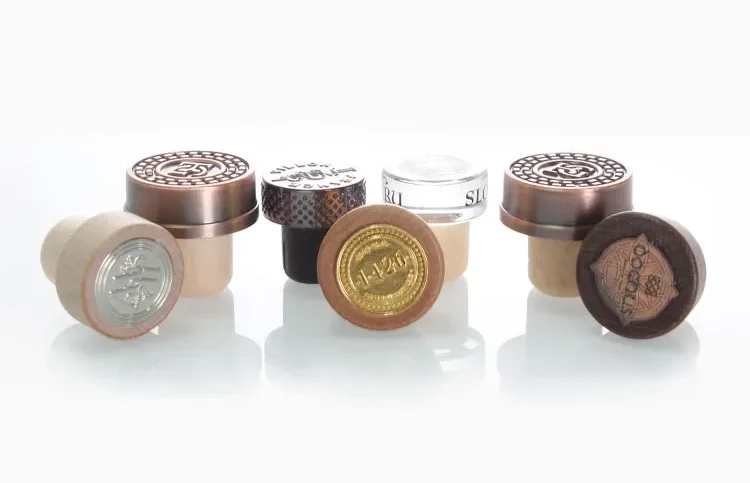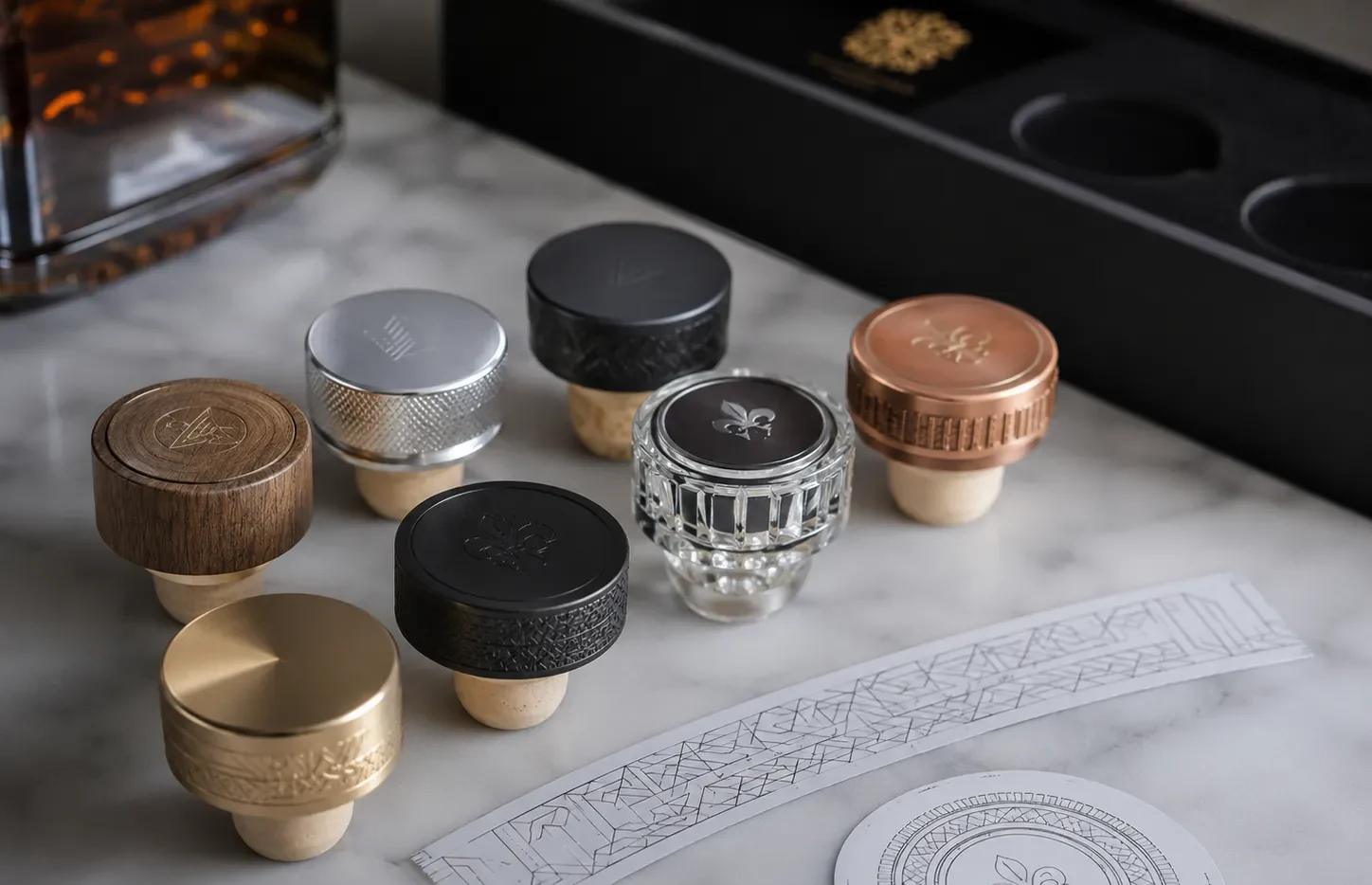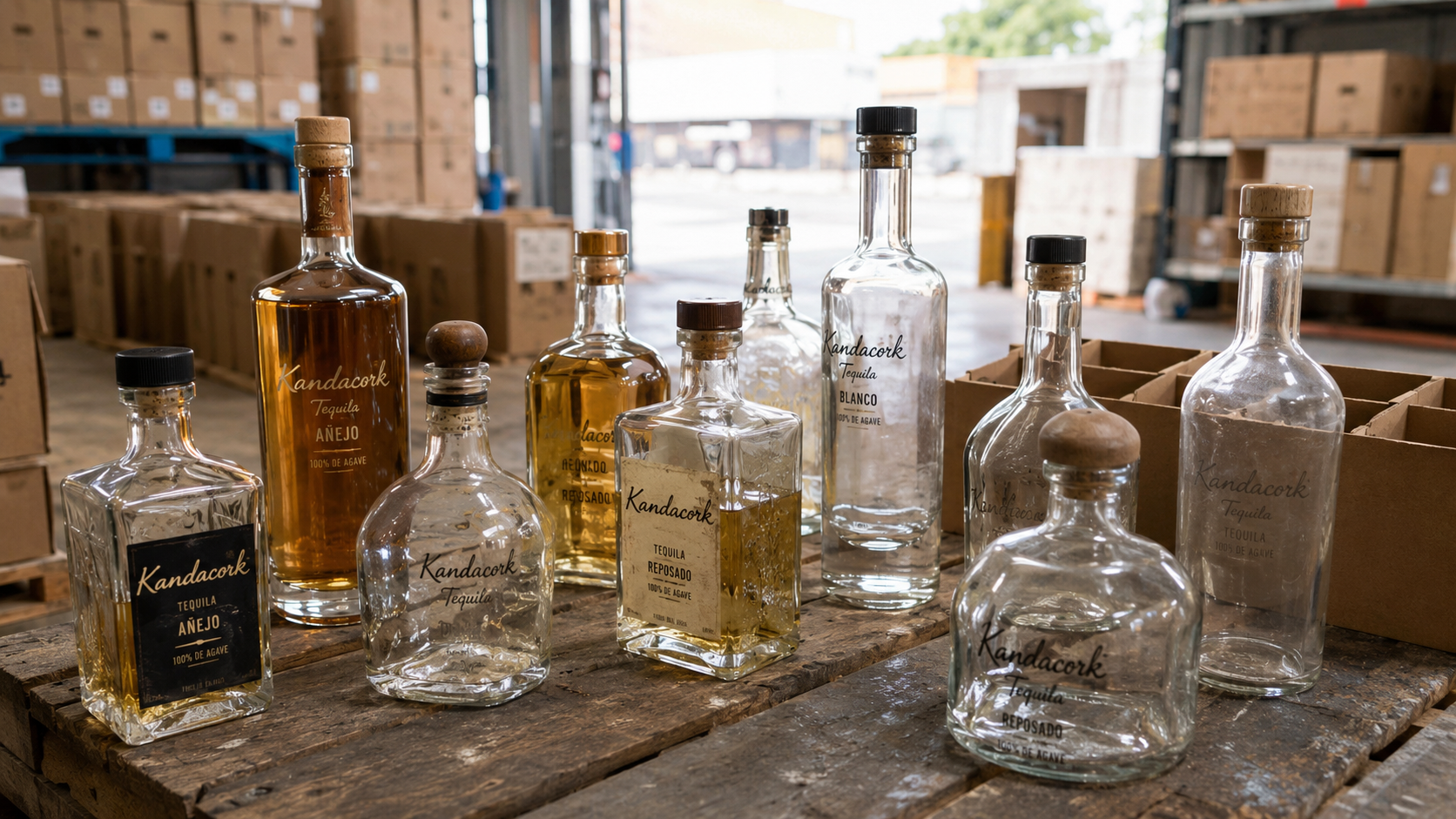
Screw cap performance depends on the relationship between cap thread, liner, bottle neck finish and torque control. This guide explains the key technical details buyers should confirm before approving screw caps for spirits bottles.
What Are Screw Caps for Spirits Bottles?
Screw caps for spirits bottles are closures designed to twist open and reseal after first use. They are commonly made from aluminum or plastic and are usually paired with an internal liner to improve seal integrity.
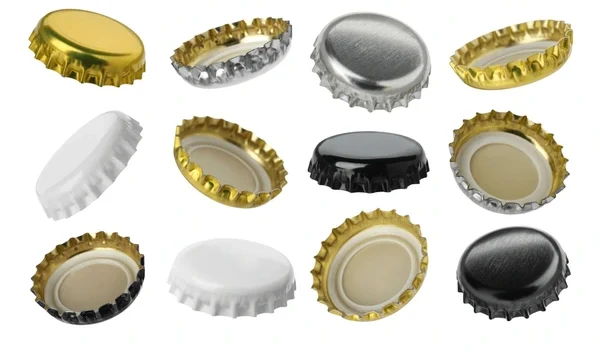
In spirits packaging, many screw caps are ROPP closures. ROPP means Roll-On Pilfer-Proof. Unlike a pre-threaded cap, a ROPP closure is rolled onto the bottle neck during capping. The capping head forms the thread around the glass finish and creates a tamper-evident pilfer band.
This makes ROPP closures useful for commercial spirits packaging because they support secure sealing, visible first-open protection, clean metal presentation, and automated filling-line efficiency.
Why Spirits Brands Use Screw Caps
Spirits brands use screw caps because they solve several packaging problems at once. A well-matched cap can protect the liquid, reduce leakage risk, support tamper evidence, improve resealability, and keep production moving efficiently.
For production teams, screw caps are practical because they can run on automated capping equipment when the bottle finish, cap shell, liner, and torque settings are correctly matched. For brand teams, the cap becomes part of the visual identity. A matte black cap can make a rum bottle feel bold and premium. A silver aluminum cap can reinforce the clean character of vodka. A copper, green, or navy cap can support gin storytelling.
For purchasing teams, screw caps are also scalable. They can be ordered in bulk, customized across multiple SKUs, and tested before mass production. This makes them suitable for both established spirits portfolios and new product launches.
ROPP Closures vs Standard Screw Caps vs Cork Stoppers
Choosing between ROPP closures, standard screw caps, non-refillable closures, and cork stoppers depends on product positioning, technical requirements, and production scale.
| Closure type | Best for | Main advantage | Key consideration |
|---|---|---|---|
| ROPP closure | Vodka, gin, rum, tequila, liqueurs, mini spirits, export spirits | Strong tamper evidence and automated production | Requires compatible bottle finish and capping equipment |
| Pre-threaded screw cap | Small runs, simple screw-neck bottles, sample packs | Easy twist-on application | Must match bottle thread precisely |
| Plastic tamper-evident cap | PET bottles, RTD cocktails, value formats | Lightweight and cost-effective | Must be tested for alcohol compatibility |
| Non-refillable closure | Premium export spirits and anti-counterfeit packaging | Helps prevent refilling and product fraud | More complex structure and higher cost |
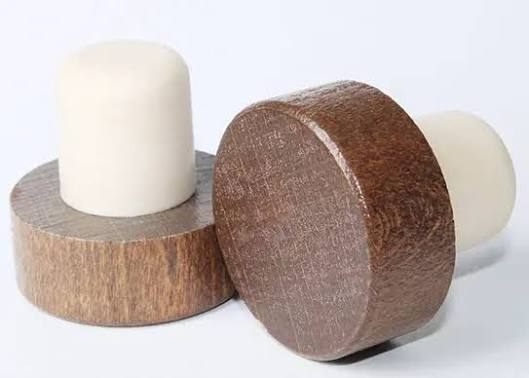
| Bar-top cork stopper | Premium whisky, brandy, tequila, rum, gifting formats | Traditional opening ritual and luxury feel | May need a separate tamper-evident capsule or seal |
For many commercial spirits brands, screw caps offer the best balance of cost, performance, tamper evidence, and scalability. Cork stoppers remain valuable when the brand wants a traditional sensory experience, but they may not be the most efficient option for every filling line. Buyers comparing multiple closure formats can review the broader Bottle Stoppers and Closures range before narrowing the project direction.
Main Types of Screw Caps for Spirits Bottles
Aluminum ROPP Closures
Aluminum ROPP closures are one of the most common choices for spirits bottles. They are lightweight, durable, recyclable in many systems, and suitable for high-speed filling lines. They can be decorated with printing, embossing, debossing, hot foil, coating, knurling, and color matching.
These closures are often used for vodka, gin, rum, tequila, brandy, whisky, liqueurs, schnapps, and miniature spirits.
Pre-Threaded Screw Caps
Pre-threaded caps are manufactured with internal threads already formed. They are suitable for compatible screw-neck bottles and can be useful for lower-volume projects, sample packaging, promotional bottles, and some specialty spirits.
They are easier to understand from a buyer’s perspective, but they still require accurate neck-finish matching. If the thread profile is not correct, the closure may feel loose, leak during transport, or become difficult to open.
Non-Refillable Screw Caps
Non-refillable closures are used when a brand wants added protection against refilling or counterfeiting. They are common for premium export spirits, travel retail, duty-free products, and markets where authenticity protection is important.
Custom Decorative Screw Caps
Custom screw caps for spirits bottles can be designed to match the brand’s shelf position. Options include matte coating, metallic finishes, top printing, side printing, embossed logos, ribbed grip, smooth-wall finishes, and premium color matching.
Best Closure Direction by Project Need
| Project need | Recommended closure direction |
|---|---|
| High-speed spirits filling | Aluminum ROPP closure |
| Premium shelf appearance | Custom decorated aluminum screw cap |
| Export anti-refill protection | Non-refillable closure |
| Miniature spirits | Small-diameter ROPP cap |
| RTD cocktail bottle | Plastic TE cap or compatible aluminum screw cap |
| Traditional luxury opening | Bar-top cork stopper |
| Strong retail tamper evidence | ROPP pilfer-proof closure |
| Low-cost promotional bottle | Standard screw cap or plastic TE cap |
| Multi-SKU private-label program | Custom color-matched aluminum cap |
This table is a starting point, not a final specification. The final choice should always be confirmed through bottle-fit review, sample testing, liner evaluation, and capping trials.
How to Choose the Right Cap Size
The right cap size depends on the bottle neck finish, not only the bottle capacity.
A 750ml spirits bottle does not have one universal cap size. Two bottles with the same capacity may use different neck diameters, thread profiles, finish heights, and sealing surfaces. This is why buyers should provide a technical drawing or physical bottle sample before confirming a closure order.
| Bottle format | Common closure needs | Buyer note |
|---|---|---|
| Mini spirits bottles | Small-diameter ROPP or screw caps | Test opening comfort and pilfer-band break |
| Standard 700ml / 750ml bottles | Aluminum ROPP, GPI-style caps, or custom screw caps | Confirm exact neck finish before bulk order |
| Large-format bottles | Taller caps or stronger closure structures | Check torque and transport stability |
| Premium glass bottles | Custom aluminum caps or hybrid closures | Match finish, weight, and decoration to brand tier |
| PET spirits or RTD bottles | Plastic TE caps or compatible screw caps | Confirm alcohol and formula compatibility |
Common spirits closure diameters may include 18mm, 24mm, 28mm, 30mm, 31.5mm, and 33mm, but project-specific sizes are also common. The best approach is to confirm cap diameter, cap height, thread profile, sealing surface, liner, and capping equipment before production.
ROPP Closure Specification Checklist
Before ordering ROPP screw caps for spirits bottles, buyers should confirm the key technical details.
| Specification item | Why it matters |
|---|---|
| Cap diameter | Must match the bottle neck finish |
| Cap height | Affects appearance, thread coverage, and pilfer band |
| Aluminum thickness | Influences forming quality and premium feel |
| Liner type | Affects sealing, compatibility, and leakage resistance |
| Bottle finish drawing | Confirms thread profile and sealing surface |
| Pilfer-band design | Supports tamper evidence and first-open experience |
| Knurling or ribbing | Improves grip and changes visual style |
| Top decoration | Supports logo visibility and premium branding |
| Side decoration | Supports shelf recognition and brand identity |
| Capping equipment | Determines whether the closure can be applied correctly |
| Application torque | Affects seal integrity |
| Removal torque | Affects consumer opening experience |
This checklist is especially important for new spirits launches, bottle redesigns, private-label programs, and supplier changes.
Liner Selection for Spirits Screw Caps
The liner is one of the most important parts of screw caps for spirits bottles. It sits inside the cap and helps create the seal between the closure and the bottle mouth.
A liner can affect leakage resistance, oxygen transmission, aroma protection, alcohol compatibility, and opening performance. The Australian Wine Research Institute has published technical guidance showing that different screw-cap liners can have different oxygen transmission characteristics. Although wine and spirits have different packaging needs, the same principle applies: liner selection affects closure performance.
| Liner type | Common use | Key benefit |
|---|---|---|
| PE liner | Standard spirits and general sealing | Flexible, practical sealing support |
| Foam liner | Cost-conscious spirits and simple applications | Compressibility and basic seal support |
| Saranex-style liner | Products needing stronger barrier control | Better oxygen and aroma management |
| Low-OTR liner | Sensitive products and export packaging | Helps control oxygen ingress |
| Project-specific liner | Flavored spirits, cream liqueurs, RTDs | Tailored compatibility after testing |
High-ABV spirits, flavored spirits, citrus RTDs, cream liqueurs, botanical gins, and sweet liqueurs should be reviewed carefully. Alcohol, sugar, oils, acids, and flavor compounds may interact differently with closure materials.
How Alcohol Percentage and Formula Affect Closure Choice
A 40% ABV vodka and a 15% ABV cream liqueur may both use screw caps, but they do not create the same packaging conditions.
High-ABV spirits require liner materials that can tolerate alcohol exposure. Flavored spirits may contain oils, acids, botanicals, colorants, or sweeteners that need compatibility testing. RTD cocktails may have carbonation, acidity, sugar, or fruit extracts that create additional pressure and sealing concerns.
For this reason, closure selection should not be based only on cap appearance. The liquid formula should be reviewed before confirming the liner and closure structure. This is especially important for export shipments, long warehouse storage, hot climates, and products sold through travel retail or e-commerce channels.
Torque, Seal Integrity and Capping Trials
A closure must be tight enough to seal but not so tight that consumers struggle to open it. Torque testing helps confirm this balance.
Application torque is the force used to apply the cap. Removal torque is the force needed to open it. If torque is too low, the bottle may leak. If torque is too high, the customer may have a poor opening experience.
For closure engineering, ASTM International torque-retention guidance is often used to understand how threaded closure systems behave under controlled conditions. For spirits packaging, torque should be tested with the actual bottle, actual closure, selected liner, filling condition, and production equipment.
A proper capping trial should review closure fit, application torque, removal torque, liner compression, leakage after storage, leakage after transport simulation, pilfer-band break performance, cap skirt appearance, thread formation on ROPP closures, opening feel after storage, alcohol compatibility, and decoration durability after capping.
Sample Testing Workflow Before Bulk Production
A reliable sample process reduces the risk of leakage, wrong fit, poor opening feel, decoration damage, and production delay.
| Step | What to check | Why it matters |
|---|---|---|
| Bottle drawing review | Neck finish, thread profile, sealing surface | Confirms basic closure direction |
| Physical sample matching | Cap fit, height, skirt coverage | Verifies real-world fit |
| Liner selection | Material, compression, formula compatibility | Supports seal integrity |
| Decoration sample | Color, printing, embossing, coating | Confirms brand appearance |
| Trial capping | Thread formation, pilfer band, cap skirt | Tests filling-line compatibility |
| Torque testing | Application and removal torque | Balances seal and opening comfort |
| Leak testing | Upright, inverted, transport conditions | Reduces shipping risk |
| Storage observation | Heat, time, formula exposure | Checks longer-term performance |
| Final approval | Cap, liner, artwork, quantity, delivery | Confirms bulk production readiness |
Sample testing is most valuable when it reflects real production conditions. Buyers should avoid approving a cap only from photos or isolated samples without testing it with the final bottle and filling setup.
Common Closure Failure Examples
Many spirits closure problems are preventable when the cap is tested early.
A vodka brand may experience leakage after shipment because the liner compresses poorly against the bottle mouth. In this case, the cap may look correct, but the sealing surface is not working with the selected liner.
A gin brand may approve a beautiful metallic cap, then discover during capping that the decoration scratches easily. This can happen when coating selection and capping equipment are not tested together.
A rum brand may choose a cap by diameter only and later find that the pilfer band does not break cleanly. The issue may come from bottle finish geometry, cap height, or incorrect thread formation.
A mini spirits supplier may select a very small cap that seals well but is difficult for consumers to open. In that case, removal torque and grip texture need to be reviewed.
A flavored liqueur brand may pass initial fit testing but fail after storage because the formula interacts with the liner. This is why alcohol compatibility and storage trials are important for non-standard spirits formulas.
These examples show why screw caps for spirits bottles should be treated as functional packaging components, not just decorative accessories.
Compliance and Food-Contact Considerations
Because closures may contact a consumable product, materials should be reviewed for the target market.
In the United States, the FDA packaging and food-contact substances resources help explain how packaging components and food-contact substances are regulated. In the European Union, European Commission food-contact materials legislation sets out the general framework for safety and inertness of food-contact materials.
For a spirits closure project, compliance review may involve the aluminum shell, plastic components, liners, coatings, inks, adhesives, and any internal pourer or valve systems. Brands should also consider alcohol percentage, product formula, storage conditions, export market, and documentation needs before mass production.
Sustainability and Material Considerations
Aluminum screw caps are valued because they are lightweight, strong, decorative, and recyclable in many markets. The Aluminum Association recycling guidance describes aluminum as one of the most recycled and recyclable materials in use today.
For spirits brands, sustainability should be handled realistically. A closure may combine aluminum, liner material, coatings, inks, or plastic inserts, so recyclability can depend on local systems and the full closure structure. Brands should consider material selection, component separation, decoration choices, and packaging weight when evaluating environmental impact.
A lighter cap may reduce material use and shipping weight, while a more complex cap may improve premium feel or anti-refill security. The best solution balances sustainability, product protection, brand presentation, and market expectations.
Screw Caps by Spirit Type
Vodka Bottles
Vodka packaging often uses clean, modern screw caps. Silver, white, black, blue, and clear metallic finishes are common because they support purity, clarity, and coldness cues.
For vodka, the closure should emphasize clean sealing, smooth opening, and visual consistency. Premium vodka brands may use smooth-wall aluminum caps, embossed tops, or minimalist printing.
Gin Bottles
Gin brands often use color and storytelling. Botanical gin may use green, copper, cream, navy, pastel, or metallic cap finishes. The closure can connect the glass color, label artwork, botanical story, and gift-box design.
For gin, screw caps for spirits bottles should balance aroma protection, decoration quality, and shelf visibility.
Rum Bottles
Rum packaging often uses warm, dark, or heritage-inspired design. Black, bronze, copper, gold, brown, and aged-metal cap finishes can work well for spiced rum, dark rum, and premium aged rum.
Modern rum brands may choose screw caps for convenience and tamper evidence. Traditional premium rum brands may compare screw caps with bar-top corks depending on price point and consumer expectations.
Tequila and Mezcal Bottles
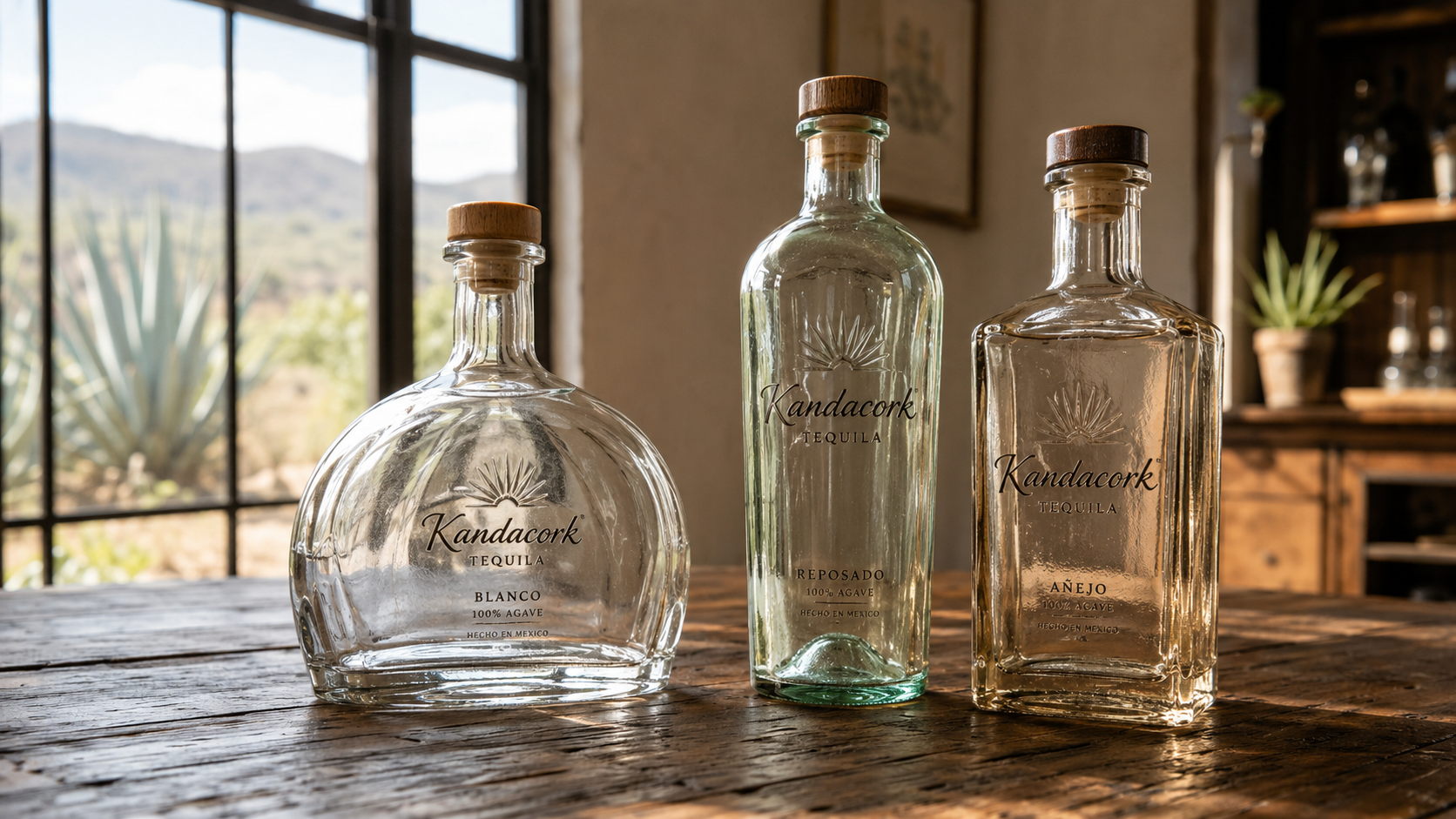
Tequila and mezcal packaging often relies on strong identity. While many premium products use bar-top closures, aluminum screw caps and ROPP closures are useful for export lines, mini bottles, retail-focused SKUs, and hospitality formats.
For tequila and mezcal, the cap should match the bottle shape, label texture, and authenticity cues.
Whisky and Brandy Bottles
Whisky and brandy often use premium closures, but screw caps can still work for mini bottles, travel retail, value ranges, and RTD whisky cocktails.
A high-quality aluminum cap with refined color, embossing, or a smooth finish can help a screw cap feel more premium.
Liqueurs and RTD Cocktails
Liqueurs and RTD cocktails may contain sugar, fruit acids, dairy ingredients, botanicals, or flavor oils. These formulas make liner selection and compatibility testing especially important.
For these products, brands should complete storage tests before large-scale purchasing.
Custom Decoration Options for Brand Differentiation
Screw caps for spirits bottles can be customized to strengthen brand recognition. Kandacork Closures develops custom colors and finishes for spirits closures so caps, labels, capsules, cartons, and bottle decoration can work as one coordinated packaging system.
| Decoration option | Best use | Brand effect |
|---|---|---|
| PMS color matching | Matching label, carton, or brand palette | Strong visual consistency |
| Matte coating | Premium gin, rum, vodka, whisky | Soft, modern, high-end feel |
| Gloss coating | Bright retail spirits and RTD products | Strong shelf visibility |
| Metallic finish | Vodka, tequila, whisky, gifting | Premium shine and luxury cue |
| Embossing | Brand marks and premium caps | Tactile identity |
| Debossing | Minimal luxury branding | Subtle premium detail |
| Top printing | Logos, icons, product codes | Clear brand recognition |
| Knurling or ribbing | Functional grip and industrial style | Better handling and texture |
| Smooth-wall finish | Premium spirits | Clean, refined appearance |
| Hot foil effect | Gift packs and premium SKUs | High-impact luxury detail |
For brands that need more advanced decoration across bottles, caps, cartons, and visual identity systems, Kandacork Decor can support decoration and branding alignment across the full packaging presentation.
Coordinating the Bottle, Neck Finish and Closure
A screw cap performs best when the bottle and closure are developed together. The neck finish, thread profile, sealing surface, shoulder design, bottle weight, label area, and cap height all affect how the final package looks and functions.
For brands developing custom glass, Kandacork Glass can support integrated spirits packaging projects where bottle structure, closure fit, decoration, and export logistics need to work together. For broader glass packaging requirements across categories, Kandacork Glass Packaging can help coordinate bottle and closure considerations for multi-category packaging programs.
This coordination is especially useful when a brand wants to launch multiple SKUs with a shared closure system. If several bottles use the same cap family, the packaging can look consistent across the shelf while improving sourcing efficiency.
Non-Refillable and Anti-Counterfeit Options
Some spirits markets require more than standard tamper evidence. Premium export spirits, travel retail products, high-risk territories, and luxury SKUs may need anti-refill protection.
Kandacork Closures develops non-refillable closures for spirits brands that need added security, tamper evidence, and anti-refill protection. These systems can combine a brandable outer shell with an internal one-way pourer or valve structure that allows the spirit to pour out but helps prevent refilling.
Non-refillable systems can be especially useful for premium whisky, vodka, rum, tequila, brandy, and liqueurs sold in markets where refill fraud can damage brand reputation and consumer trust.
Common Mistakes When Buying Screw Caps
Many packaging problems happen because buyers choose caps too late or rely only on appearance.
A common mistake is choosing the closure by bottle capacity instead of neck finish. A 750ml bottle may still require different caps depending on the finish design.
Another mistake is approving a cap without testing the liner. The cap may look correct but fail during storage, shipping, or consumer opening.
Brands should also avoid skipping capping trials. Even a well-made cap can perform poorly if torque settings, bottle tolerance, or liner compression are wrong.
Common causes of failure include wrong cap diameter, incorrect cap height, poor liner compatibility, inconsistent torque, weak pilfer-band formation, incompatible bottle finish, poor thread formation, cap skirt deformation, decoration damage during capping, insufficient transport testing, missing compliance review, and late artwork confirmation.
A capable supplier should help identify these risks before production.
Buying Checklist for Bulk Orders
Before requesting a quote for screw caps for spirits bottles, prepare the information below.
| Information needed | Why it matters |
|---|---|
| Spirit type | Helps assess alcohol and formula compatibility |
| Bottle capacity | Supports format planning |
| Bottle drawing | Confirms neck finish and dimensions |
| Bottle sample | Allows physical fit testing |
| Target cap diameter | Speeds up closure recommendation |
| Cap height | Affects appearance and fit |
| Closure type | Defines ROPP, threaded, GPI, TE, or custom direction |
| Liner requirement | Affects sealing and compatibility |
| Tamper-evident requirement | Determines pilfer-band or security structure |
| Decoration artwork | Affects printing, embossing, and lead time |
| Order quantity | Helps confirm MOQ and production method |
| Target market | Supports compliance review |
| Filling-line speed | Helps select suitable closure and capping setup |
| Capping machine type | Ensures production compatibility |
| Sample deadline | Supports development schedule |
| Bulk delivery date | Helps plan manufacturing and logistics |
This information helps the closure supplier recommend a suitable cap faster and reduces the risk of production delays.
How to Request a Screw Cap Quote
To receive an accurate recommendation, share the bottle drawing, bottle sample, product type, alcohol percentage, target market, desired cap diameter, cap height, liner requirement, tamper-evident requirement, decoration artwork, estimated order quantity, filling-line speed, and target delivery date.
This allows the technical team to confirm fit, sealing performance, decoration feasibility, sampling needs, and bulk production planning. For new projects, buyers should also share the expected bottle launch date, export destination, packaging style, and whether the cap needs to match labels, cartons, gift boxes, or other packaging components.
Packaging buyers can contact Kandacork Closures to discuss custom screw caps, ROPP closures, sample requests, closure matching, and bulk spirits packaging projects.
Why Work with Kandacork Closures?
Kandacork Closures supports spirits brands that need practical sealing performance, premium appearance, and scalable closure supply.
The process can include bottle-fit review, closure type selection, liner recommendation, tamper-evident design, decoration planning, sample development, and bulk production support. This is valuable for new product development because closure mistakes can delay filling, damage inventory, or create leakage problems.
For established spirits brands, improving the closure can support better production consistency, stronger shelf appeal, and a more reliable consumer opening experience.
Whether the project involves vodka caps, gin bottle screw caps, rum bottle closures, tequila bottle caps, whisky miniatures, RTD cocktail caps, or custom aluminum ROPP closures, Kandacork Closures can help match the cap to the bottle, the product, the filling line, and the brand.
FAQs
What are the best screw caps for spirits bottles?
The best screw caps for spirits bottles depend on the bottle neck finish, product formula, alcohol level, liner compatibility, filling-line setup, tamper-evident needs, decoration goals, and target market. For many commercial spirits, aluminum ROPP closures are a strong option because they combine secure sealing, tamper evidence, and custom branding.
Are ROPP closures the same as screw caps?
ROPP closures are a type of screw cap system. They are rolled onto the bottle during capping, which forms the thread and creates the pilfer-proof band. Standard screw caps may already have internal threads before application.
What size screw cap fits a 750ml spirits bottle?
There is no universal screw cap size for every 750ml spirits bottle. The correct size depends on the bottle neck finish, thread profile, finish height, sealing surface, and capping method. Buyers should provide a bottle drawing or sample before confirming an order.
Do screw caps for spirits bottles need liners?
Most screw caps for spirits bottles use liners because the liner helps create the seal between the cap and the bottle mouth. The liner can affect leakage resistance, oxygen transmission, alcohol compatibility, aroma protection, and opening performance.
Can screw caps be customized with a logo?
Yes. Custom screw caps can include top printing, side printing, embossing, debossing, color coating, metallic effects, knurling, ribbing, and premium surface finishes. The best method depends on artwork, cap size, material, order quantity, and brand positioning.
Are aluminum screw caps suitable for premium spirits?
Yes. Aluminum screw caps can be suitable for premium spirits when the cap design matches the bottle and brand. Smooth-wall finishes, matte coatings, metallic colors, embossing, debossing, and precise color matching can make aluminum caps look premium.
When should a brand choose screw caps instead of cork stoppers?
A brand should choose screw caps when it needs tamper evidence, automated production, resealability, consistent application, and practical logistics. Cork stoppers may be better when the brand wants a traditional opening ritual, luxury feel, or classic spirits presentation.
Why do some spirits screw caps leak after shipping?
Spirits screw caps may leak after shipping if the cap size, liner, bottle finish, torque setting, or thread formation is incorrect. Long-distance transport, temperature changes, bottle tolerance, and formula compatibility can also affect seal performance.
Can one screw cap fit multiple spirits bottles?
Sometimes one cap can work across multiple bottles if the neck finishes are the same. However, buyers should not assume compatibility based only on bottle capacity. Each bottle finish should be checked before using the same closure across multiple SKUs.
Conclusion
Screw caps for spirits bottles should be selected through both technical and branding criteria. The right closure should fit the bottle neck finish, seal reliably, protect the product, support tamper evidence, work with the filling line, meet market requirements, and strengthen the customer’s impression of the brand.
For vodka, gin, rum, tequila, whisky, brandy, liqueur, mini bottle, and RTD cocktail packaging, Kandacork Closures can help evaluate cap size, ROPP closure options, liner selection, decoration, sampling, and bulk production.
To start a project, prepare your bottle drawing, sample bottle, artwork, order quantity, product details, target market information, and expected filling conditions. With those details, the closure supplier can recommend the right screw cap for your spirits bottle project and reduce risk before bulk production.