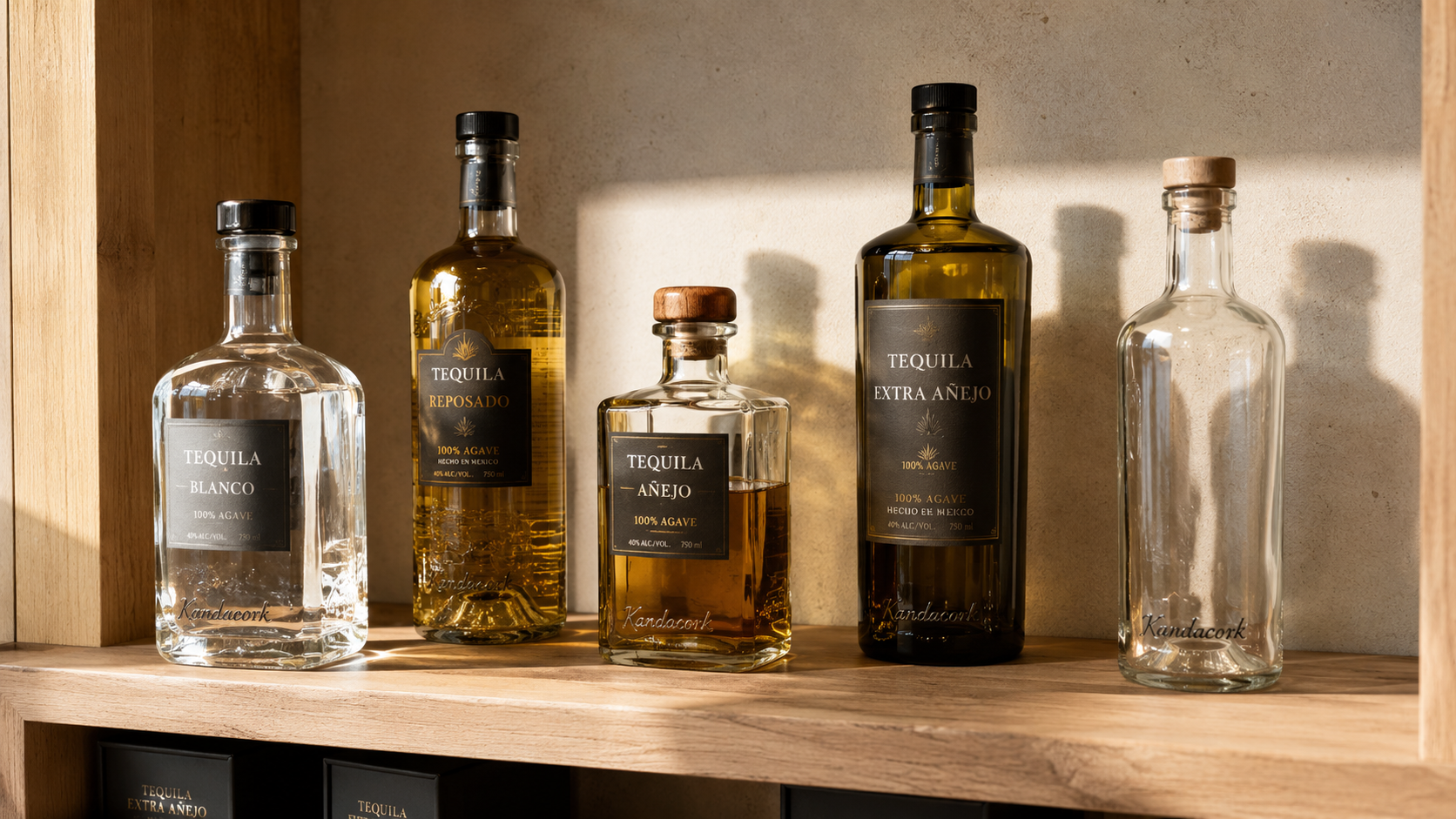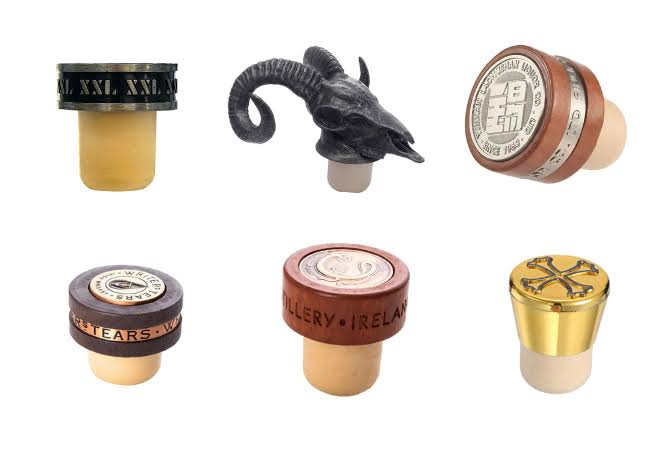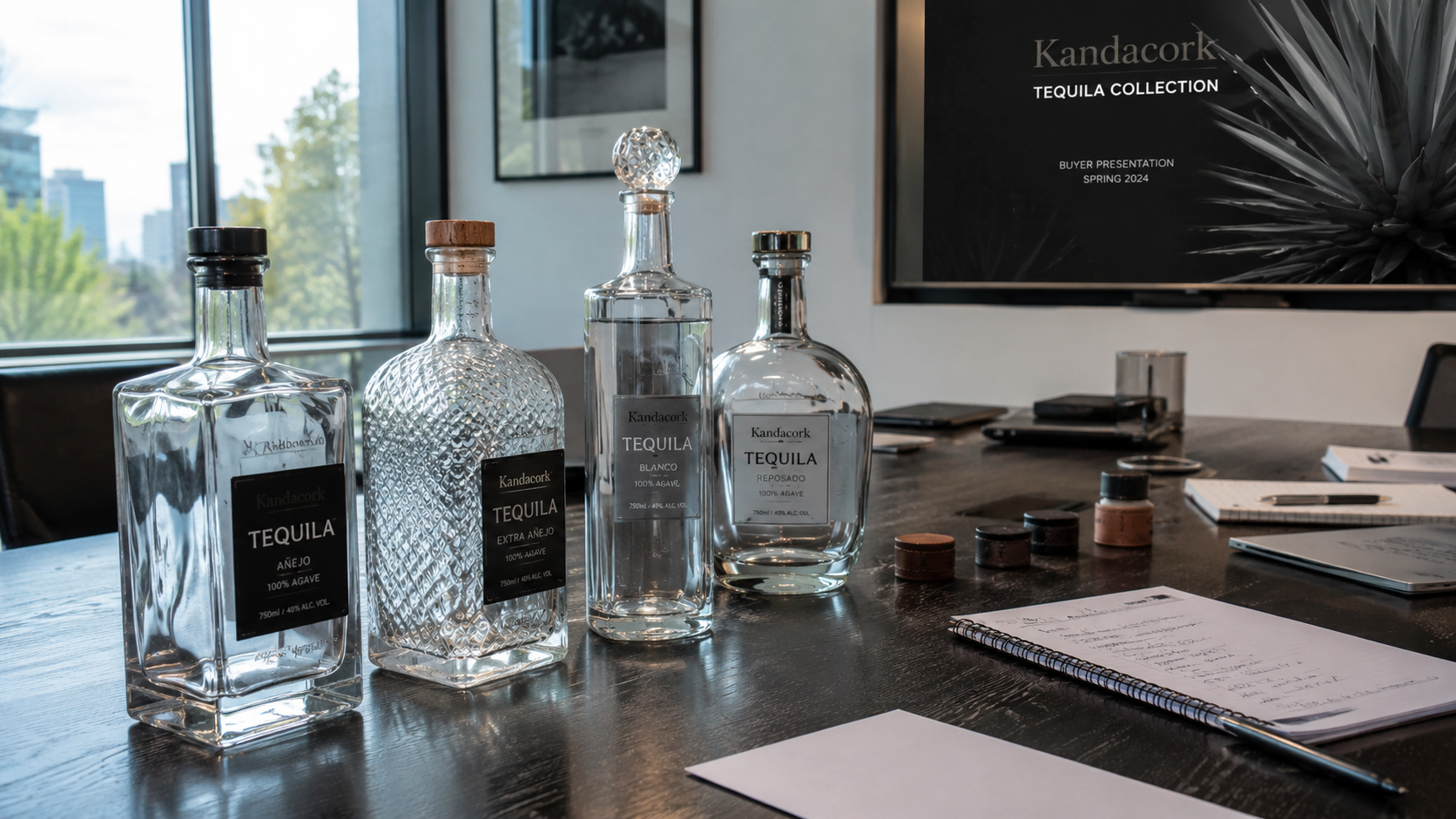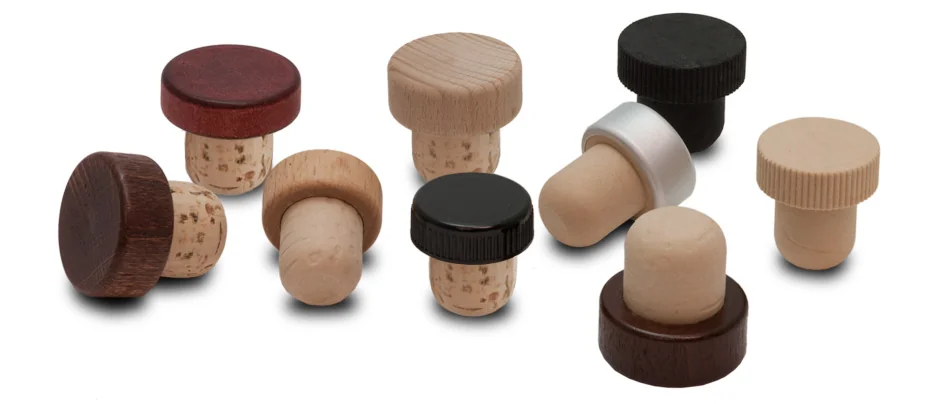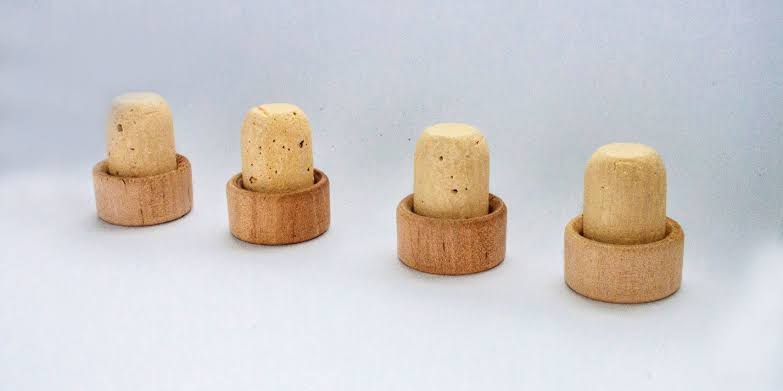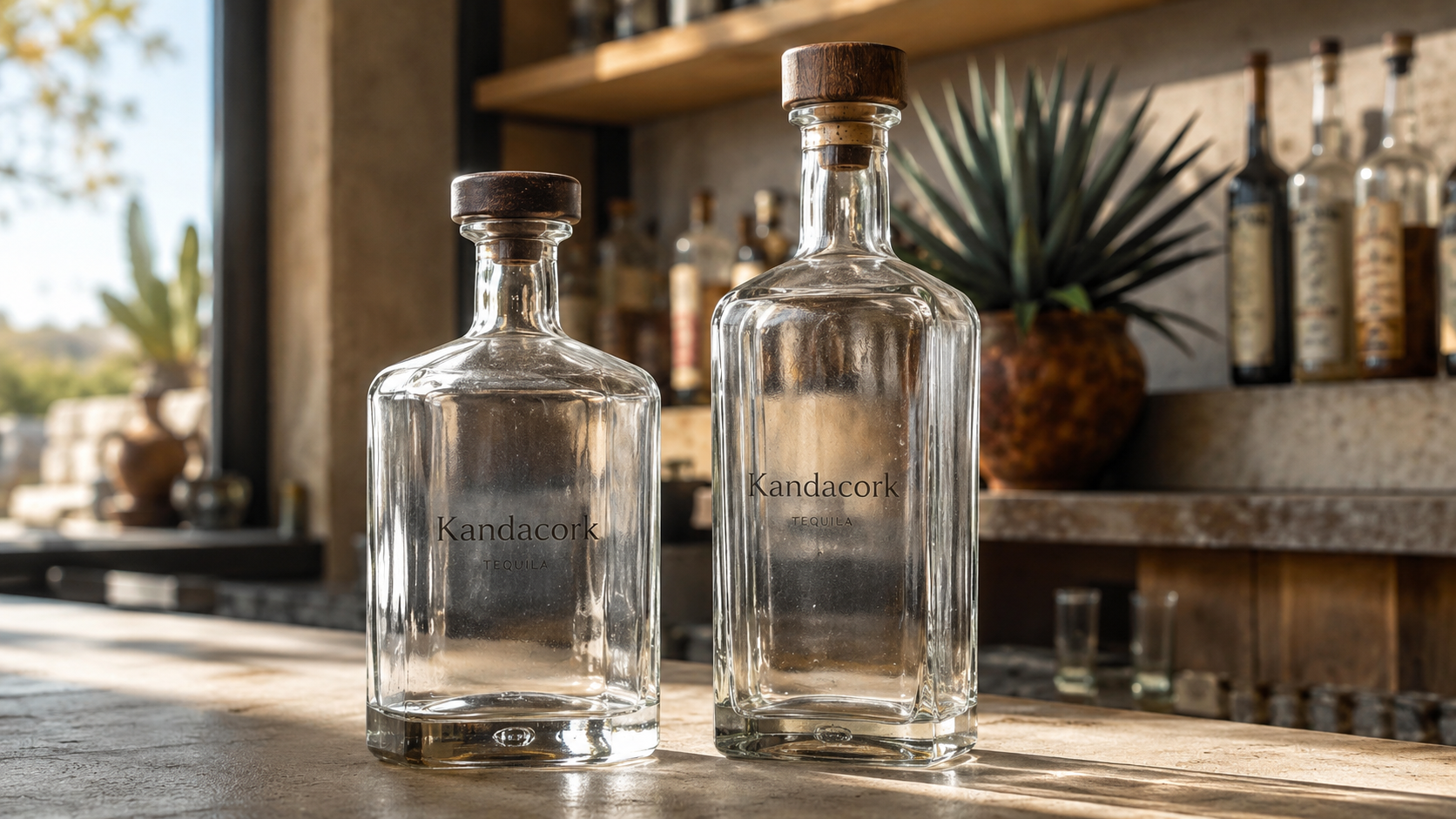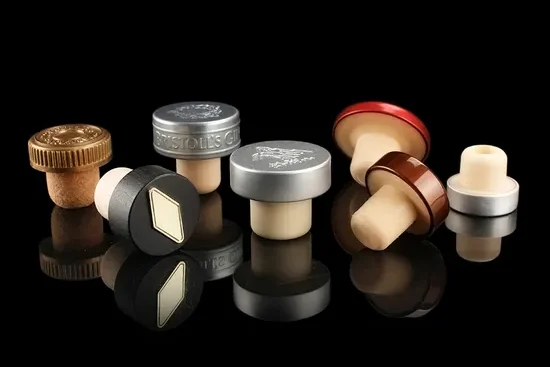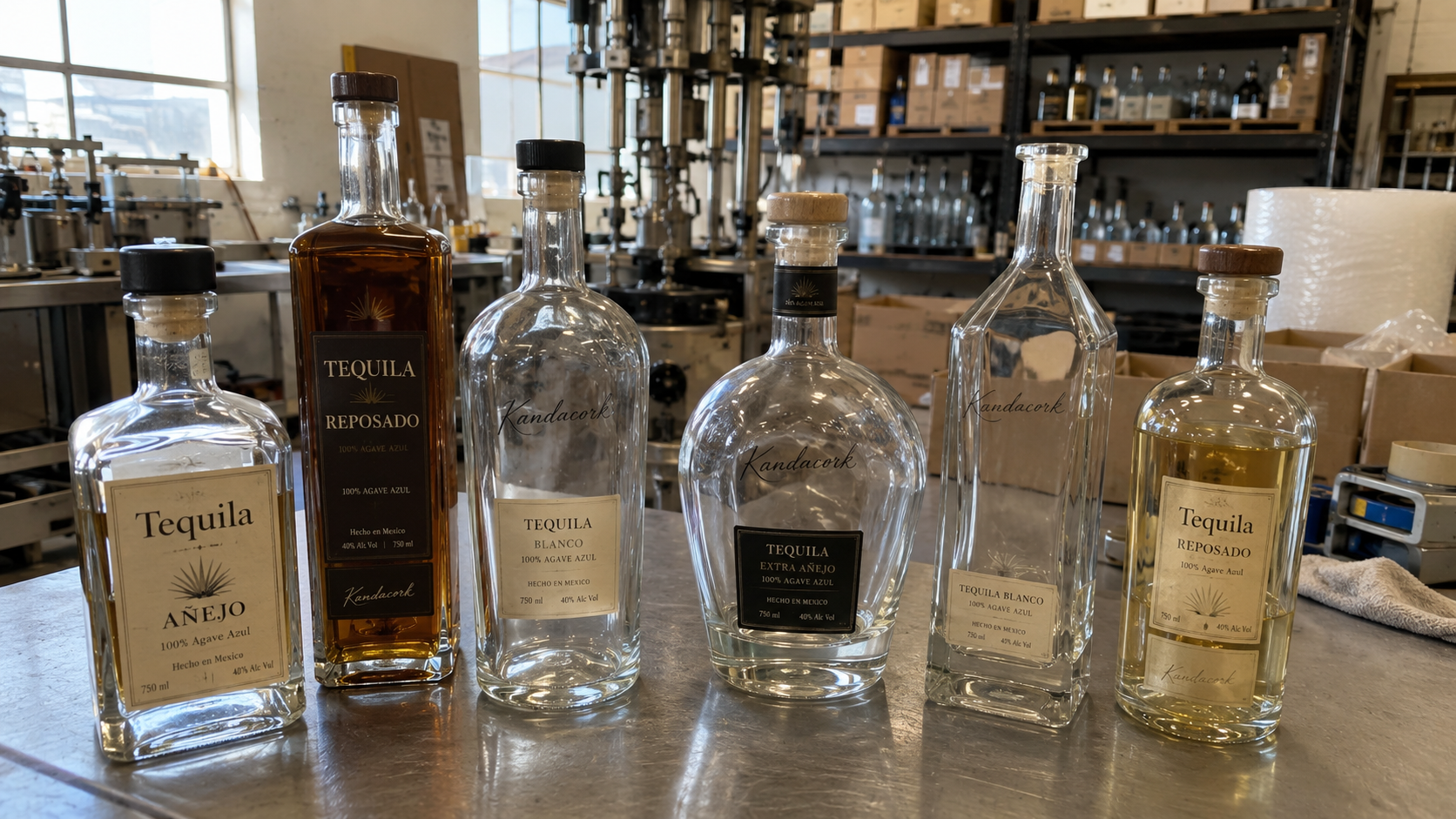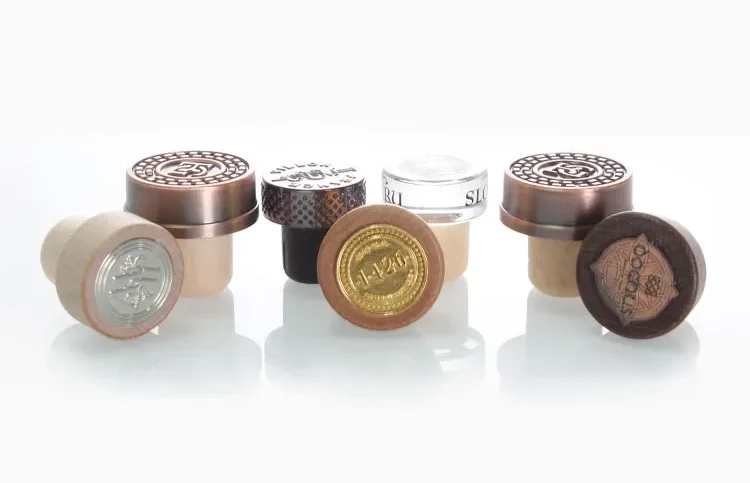
T-top stoppers are widely used for whisky packaging, but fit and material details need to be confirmed carefully. This guide explains how cork shanks, synthetic shanks, stopper tops, bottle neck size and sample testing affect whisky closure performance.
Quick Answer
The best custom bottle closures for whisky depend on the bottle neck, brand position, filling process, export market, and target cost. Wooden T-top stoppers are often best for craft and premium whisky. Metal bar-top closures suit luxury bottles, limited editions, and gift sets. Synthetic cork shanks offer consistency for export and repeat production. ROPP closures and screw caps are useful for high-volume whisky lines that need tamper evidence and efficient filling.
A good whisky closure should match the bottle visually and technically. Before mass production, buyers should confirm the neck inner diameter, shank diameter, insertion force, pull-out force, leak resistance, decoration durability, capsule compatibility, and export packaging protection.
Best for craft whisky: Wooden T-top stoppers create a natural, premium look with controlled cost, making them suitable for small-batch distilleries, new SKU launches, and private-label whisky projects.
Best for luxury whisky: Metal bar-top closures provide weight, premium finishes, and stronger collectible value for high-end single malt, limited-edition bottles, and gift-box packaging.
Best for export whisky: Synthetic cork shanks, tested natural cork, or ROPP closures help improve dimensional consistency, sealing reliability, and repeat production control.
What Are Custom Bottle Closures for Whisky?
Custom bottle closures for whisky are sealing and branding components developed to match a specific bottle, product tier, and brand identity. They are used for Scotch whisky, bourbon, Irish whiskey, Japanese whisky, single malt, blended whisky, craft whisky, and private-label spirits.
A complete whisky closure system may include the visible top, the sealing shank, the liner or insert, the capsule, and the tamper-evident element. For premium spirits, the closure is usually designed together with the bottle, label, decoration, gift box, and shipping carton so that the full package feels consistent.
Common closure components include:
- Wooden T-top stopper
- Metal bar-top stopper
- Natural cork shank
- Synthetic cork shank
- Micro-agglomerated cork
- Glass stopper
- ROPP closure
- Screw cap
- Non-refillable closure
- Tamper-evident capsule
- Shrink sleeve
- Decorative top insert or logo coin
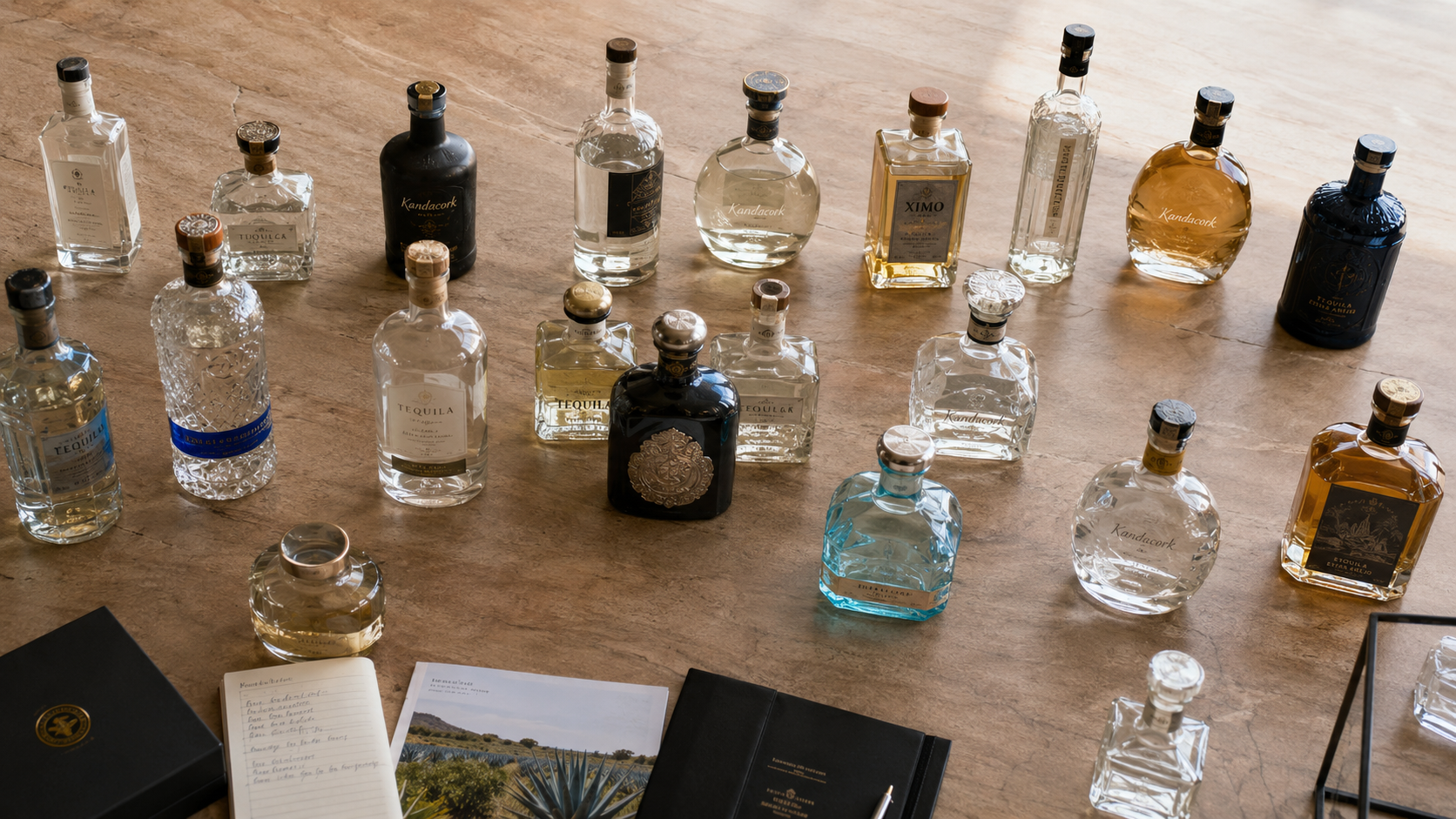
For projects that require multiple closure types across different SKUs, Kandacork offers a dedicated range of custom bottle closures and stoppers for spirits, olive oil, and specialty bottle packaging.
The terms “whisky” and “whiskey” are both relevant in global markets. “Whisky” is commonly used for Scotch, Japanese, Canadian, and many international products, while “whiskey” is common for Irish and American products. Packaging buyers should consider both terms when planning product pages, cartons, and export documentation, but the closure specification should always follow the actual bottle and market requirements.
Why Whisky Brands Choose Custom Closures
Whisky packaging must communicate quality before the bottle is opened. A premium bottle with a weak, loose, generic, or poorly matched closure can reduce perceived value. A well-designed closure helps the bottle feel finished, balanced, and memorable.
Custom bottle closures for whisky help brands achieve:
- Stronger recognition through logo engraving, embossing, debossing, printing, or metal inlays
- Better shelf impact in retail, duty-free, back-bar display, and e-commerce photography
- A more premium opening and resealing experience
- Better proportion between the bottle body, shoulder, neck, and closure top
- More distinctive presentation for limited editions and collector releases
- Better coordination with labels, capsules, gift boxes, and cartons
- More reliable fit when the closure is developed around the real bottle neck
The best closure is not always the most expensive one. For B2B buyers, the goal is to balance appearance, sealing performance, production efficiency, compliance needs, and total landed cost.
Main Types of Custom Bottle Closures for Whisky
Wooden T-Top Stoppers
Wooden T-top stoppers are one of the most widely used closure styles for whisky, bourbon, brandy, rum, and other premium spirits. They combine a decorative wooden top with a cork, synthetic cork, or micro-agglomerated shank that seals inside the bottle neck.
Wood creates a warm, traditional, and craft-oriented impression. It works especially well for whisky brands that want heritage cues, natural texture, or a premium handmade feel. The top can be stained, painted, laser engraved, hot stamped, debossed, or combined with a metal logo coin.
Kandacork develops wooden bar-top stoppers with wood type selection, head shape development, logo decoration, color control, shank matching, and bottle-fit sampling. Buyers should confirm wood grain expectations, color tolerance, varnish, shank material, top diameter, and logo method before sample approval.
Metal Bar-Top Stoppers
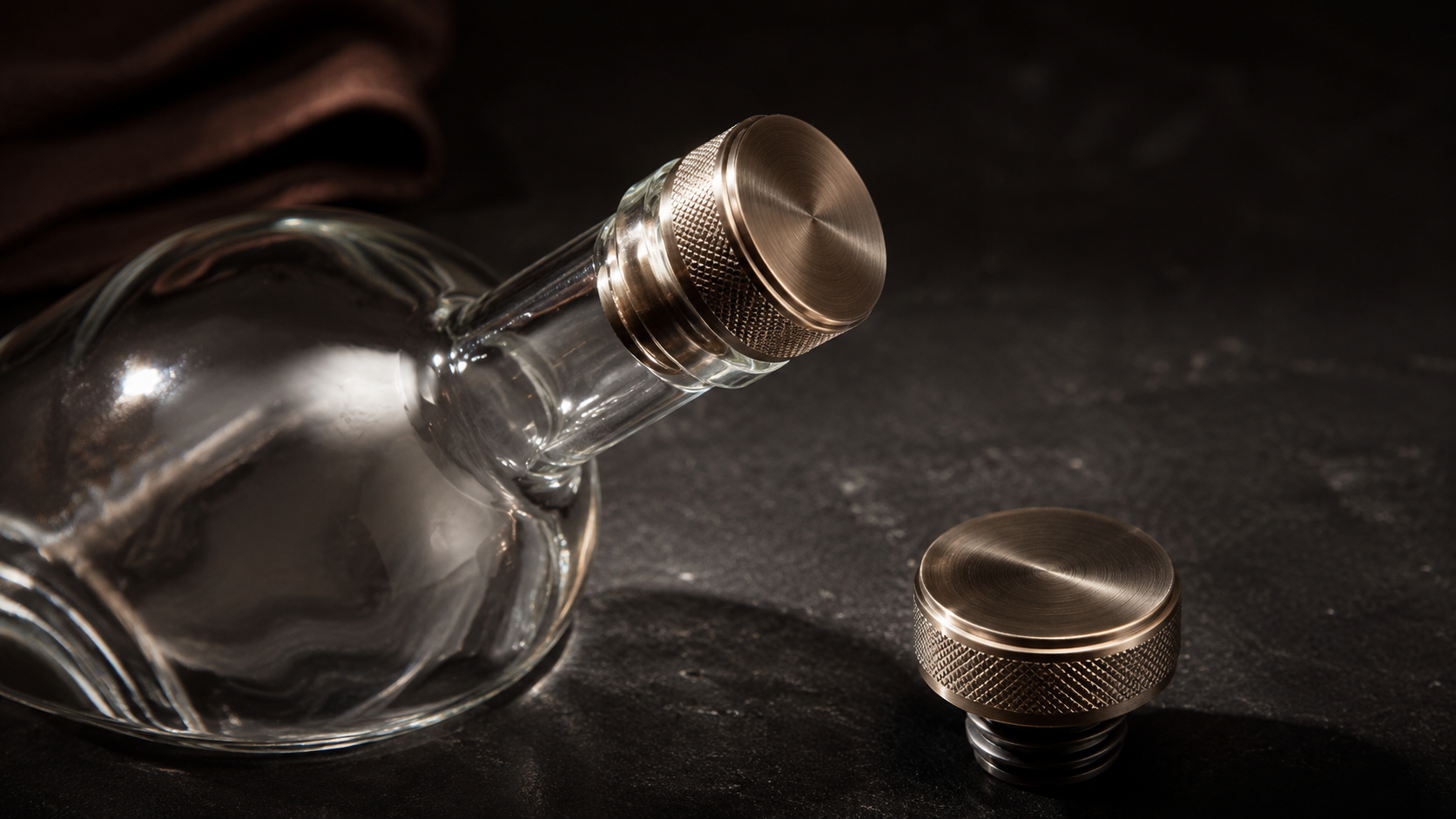
Metal bar-top stoppers are often selected for luxury whisky, limited editions, duty-free gift packs, and collector bottles. They provide weight, cold-touch feel, surface definition, and premium finishing options that are difficult to achieve with lighter materials.
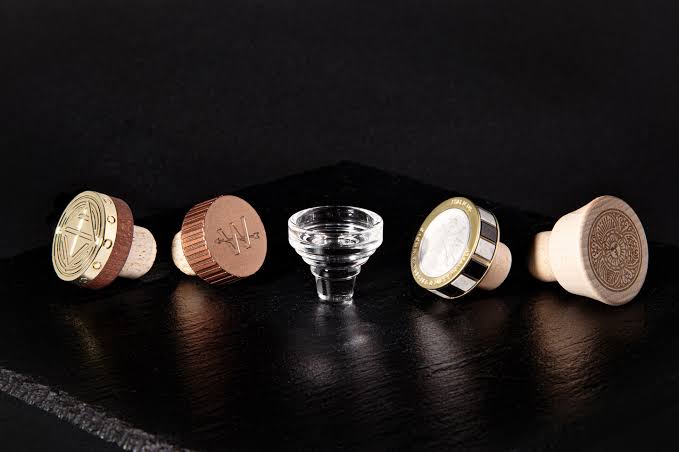
Common metal options include zinc alloy, aluminum, stainless steel, and plated metal components. Finishes may include brushed gold, antique copper, polished silver, matte black, satin nickel, gunmetal, or custom plating. Decoration can include embossing, debossing, laser engraving, enamel filling, epoxy dome labels, and molded logo details.
Kandacork’s custom metal stoppers are suitable when a whisky brand needs a more sculptural or collectible closure. Buyers should consider tooling cost, unit weight, surface durability, carton protection, and whether the closure can run smoothly on the filling line.
Synthetic Cork Stoppers
Synthetic cork stoppers are useful when production consistency matters. Compared with natural cork, synthetic shanks can offer more stable dimensions, controlled compression, and predictable fit across repeat orders.
For export whisky, private-label programs, and multi-market supply, synthetic cork can help reduce variation in insertion force and pull-out force. It can also be paired with wood, plastic, metal, glass, or composite tops, making it flexible for different price levels.
Synthetic cork is often chosen when the brand wants repeatable performance, stable visual quality, and better control over bulk production. It may not carry the same traditional material story as natural cork, but it can be a strong technical solution for scaling whisky brands.
Natural Cork Stoppers
Natural cork is valued for its renewable material origin, classic opening feel, and long association with premium beverage packaging. For heritage whisky and traditional spirits, natural cork can support a familiar, authentic presentation.
Natural cork requires careful specification. Buyers should discuss cork grade, moisture level, diameter tolerance, compression behavior, recovery performance, visual quality, and storage conditions. Because cork is a natural material, some variation is expected and must be managed through supplier selection and batch control.
International cork standards such as ISO cork physical test methods help define reference methods for dimensions, density, moisture content, compression behavior, extraction strength, and related performance characteristics. For whisky closures, these principles are useful when discussing fit, extraction feel, and sealing performance with suppliers.
Micro-Agglomerated Cork Stoppers
Micro-agglomerated cork is made from small cork granules bonded into a more uniform structure. It can provide a balance between cork-based appearance and improved dimensional consistency.
For whisky brands, micro-agglomerated cork may be useful when the buyer wants a cork-related material story but also needs more predictable performance than natural cork alone. It is commonly paired with wooden or metal tops for premium bar-top stoppers.
When evaluating micro-agglomerated cork, buyers should consider density, bonding quality, odor control, surface finish, and compatibility with the target alcohol content and storage conditions.
ROPP Closures and Screw Caps
ROPP closures and screw caps are widely used in spirits packaging where production efficiency, tamper evidence, and repeatable opening performance are important. ROPP means roll-on pilfer-proof, a closure formed onto the bottle neck during the capping process.
These closures are suitable for high-volume whisky, mini bottles, retail programs, airline formats, and export projects. They can be customized with printing, embossing, color matching, liner selection, knurling, and tamper-evident bands.
Kandacork engineers ROPP closures around neck finish, diameter, thread profile, skirt height, liner requirements, and line performance. They may not create the same traditional opening ritual as a T-top stopper, but they are practical for brands that prioritize speed, consistency, and tamper-evident packaging.
Non-Refillable Closures
Non-refillable closures are designed to reduce bottle refilling risk and support brand protection. They may include an internal valve, pourer, tamper-evident ring, decorative shell, and custom outer cap.
These closures are especially relevant for premium spirits sold in markets where counterfeiting, unauthorized refilling, or channel control are concerns. They can help protect brand equity while also giving the consumer visible evidence that the bottle has not been previously opened.
In the United States, the Alcohol and Tobacco Tax and Trade Bureau notes that distilled spirits bottles require a tamper-evident closure or similar device, and the device must be broken when the container is opened. Buyers selling into the U.S. should review current TTB tamper-evident closure guidance with their compliance team before finalizing packaging.
Best Closure Options by Whisky Brand Type
| Whisky Project Type | Recommended Closure | Why It Works |
|---|---|---|
| Craft whisky launch | Wooden T-top stopper | Premium appearance with controlled cost and a strong craft identity |
| Core retail whisky | Synthetic cork stopper or ROPP closure | Reliable fit, repeatable production, and scalable cost |
| Premium whisky | Wood top with natural cork or metal bar-top stopper | Better shelf appeal, tactile value, and brand storytelling |
| Limited-edition whisky | Custom metal, sculpted, glass, or hybrid stopper | Strong collector value and distinctive visual identity |
| Export whisky | Synthetic shank, tested cork, or ROPP closure | Better dimensional consistency and transport reliability |
| Duty-free whisky | Metal stopper or decorated non-refillable closure | Premium display value and stronger brand protection |
| Mini whisky bottle | Screw cap or small ROPP closure | Efficient filling and easier high-volume handling |
This table gives buyers a practical starting point. Final selection should always be confirmed by bottle drawing, sample testing, filling-line review, target market, and brand positioning.
Practical Buyer Scenarios
| Buyer Scenario | Recommended Solution | Reason |
|---|---|---|
| New craft whisky brand launching 5,000 bottles | Wooden T-top stopper with synthetic cork shank and laser-engraved logo | Creates a premium craft look while keeping development cost controlled |
| Premium single malt gift set | Metal bar-top stopper with antique copper plating and embossed logo | Adds weight, shelf impact, and collectible value |
| Export private-label whisky | Synthetic cork shank with tested pull-out force and reinforced export carton | Improves consistency and transport reliability |
| High-volume retail whisky | ROPP closure with printed aluminum shell and tamper-evident band | Supports faster filling-line performance and stable sealing |
| Limited-edition collector bottle | Custom molded metal or hybrid glass stopper | Creates a distinctive visual identity for a premium release |
These examples show why closure selection should be based on both branding and technical performance. A supplier should help buyers compare cost, MOQ, tooling, decoration, filling-line compatibility, and production risk before final approval.
How to Choose the Right Closure for a Whisky Bottle
Match the Closure to the Bottle Neck
The bottle neck is the most important technical factor in closure selection. A beautiful stopper can still fail if the shank is too loose, too tight, too short, or incompatible with the neck finish.
Buyers should confirm:
- Bottle neck inner diameter
- Neck finish type
- Neck tolerance range
- Stopper shank diameter
- Shank length
- Top diameter and height
- Insertion force
- Pull-out force
- Sealing performance
- Capsule or shrink-sleeve compatibility
A small mismatch can cause leakage, unstable fit, difficult opening, inconsistent insertion, or customer complaints. Physical samples should be tested with real bottles before bulk production.
For teams developing the bottle and closure together, coordinated spirits bottle development can help align the neck finish, glass weight, closure size, pouring comfort, and packaging concept before tooling decisions are locked.
Match the Closure to the Whisky Positioning
The closure should match the product’s price level and brand message. A craft whisky may need a natural wooden stopper. A premium single malt may need a heavier metal or wood-and-cork closure. A high-volume retail whisky may need a ROPP closure for speed and cost control.
Packaging should feel consistent. A luxury closure on a low-cost bottle can create unnecessary cost pressure. A basic closure on a high-end bottle can weaken the brand image.
For premium whisky, a closure often works best when it echoes the label, bottle shape, brand color, secondary packaging, and intended retail environment.
Match the Closure to the Filling Line
Custom bottle closures for whisky must work in real production, not only in renderings. Manual insertion, semi-automatic corking, and automated filling lines all have different requirements.
Important production questions include:
- Can the closure feed smoothly into the machine?
- Is the insertion force stable?
- Does the closure require logo orientation?
- Is the top strong enough for machine handling?
- Will the closure scratch during feeding or insertion?
- Is the rejection rate acceptable during trial production?
- Does the closure work with capsules, sleeves, cartons, and pallet loading?
A professional closure project should include pilot samples and filling-line testing before mass production.
Customization Options for Whisky Bottle Closures
Customization turns a closure from a functional part into a brand asset. Kandacork can support different decoration and material options based on closure type, order quantity, tooling requirement, and target budget.
Common customization options include:
- Top logo embossing
- Logo debossing
- Laser engraving on wood or metal
- Hot foil stamping
- Pad printing
- Screen printing
- Epoxy dome logo labels
- Metal coins or inlays
- Pantone color matching
- Wood staining and varnishing
- Matte, satin, brushed, polished, or antique finishes
- Gold, copper, silver, bronze, black, or gunmetal plating
- Custom molded shapes
- Matching capsules and shrink sleeves
- Gift-box and carton coordination
For projects where the closure needs to match labels, coatings, cartons, and bottle decoration, dedicated decoration and branding support can help maintain visual consistency across the full packaging system.
Material Comparison for Whisky Bottle Closures
| Closure Material | Best For | Advantages | Considerations |
|---|---|---|---|
| Wood | Craft whisky, classic whisky, premium core range | Warm natural look, traditional appearance, flexible logo options | Grain and color variation should be controlled |
| Metal | Luxury whisky, limited editions, gift packs | Heavy hand feel, premium finish, strong brand presence | Higher tooling cost and shipping weight |
| Synthetic Cork | Export whisky, repeat orders, production consistency | Stable dimensions, consistent fit, predictable performance | Less traditional than natural cork |
| Natural Cork | Heritage whisky and premium classic packaging | Renewable material story and familiar opening feel | Requires strict quality and storage control |
| Micro-Agglomerated Cork | Premium and scalable whisky projects | Cork-based appearance with improved consistency | Requires correct density and bonding quality |
| Glass | Ultra-premium spirits and distinctive packaging | Elegant, recyclable, visually unique | Requires precise bottle compatibility testing |
| ROPP / Screw Cap | High-volume whisky and retail programs | Efficient, tamper-evident, suitable for automation | Less traditional than bar-top stoppers |
| Non-Refillable Closure | Premium spirits and sensitive markets | Brand protection, anti-refill function, tamper evidence | More complex structure and higher development requirements |
Food-Contact and Regulatory Considerations
Whisky closures may include cork, polymer, metal, coating, adhesive, ink, liner, and decorative components. Any material that may contact the spirit or influence product quality should be reviewed for the target market.
For the European market, the European Commission food contact materials framework explains that materials intended to contact food must not transfer constituents in quantities that could endanger human health, bring unacceptable changes to food composition, or negatively affect taste, smell, or appearance.
Cork-related materials may also require specific technical review. The Council of Europe’s EDQM cork food-contact guidance provides useful context for cork stoppers and other cork materials intended to come into contact with foodstuffs.
For Scotch whisky, packaging and presentation must also respect category rules. The UK government Scotch Whisky specification covers requirements related to production, description, presentation, and labelling of Scotch Whisky. Buyers should confirm market-specific requirements before finalizing closure, capsule, label, and carton design.
Common Mistakes When Ordering Custom Whisky Bottle Closures
Many packaging problems happen because buyers approve the appearance of the closure before confirming the technical fit. A closure may look perfect in a rendering but fail during insertion, transport, or consumer opening.
Common mistakes include:
- Choosing the closure only by top appearance
- Ignoring the bottle neck inner diameter
- Using a shank that is too tight for automated insertion
- Using a shank that is too loose for reliable sealing
- Approving wood color without defining acceptable variation
- Choosing a heavy metal top without testing carton protection
- Forgetting capsule or shrink-sleeve compatibility
- Approving logo decoration without abrasion testing
- Skipping pull-out force and leak testing
- Starting bulk production before testing real bottles
Before mass production, whisky brands should test bottle fit, insertion force, pull-out force, leakage, visual finish, logo durability, capsule compatibility, and export packaging. This helps reduce launch delays, damaged closures, leaking bottles, and inconsistent consumer experience.
Whisky Closure Testing Checklist Before Mass Production
A professional whisky closure project should include both visual approval and functional testing. Buyers should request samples and evaluate them with the actual bottle whenever possible.
Recommended checks include:
- Bottle fit test
- Leak test
- Pull-out force test
- Insertion force test
- Drop test
- Temperature and transport simulation
- Logo alignment check
- Surface finish inspection
- Plating or coating review
- Cork recovery check
- Capsule and shrink-sleeve compatibility
- Carton protection test
- Filling-line trial
For cork-based closures, buyers may also ask about cork recovery, compression behavior, and extraction performance. For metal closures, plating quality, edge smoothness, corrosion resistance, and surface durability may be important. For ROPP or non-refillable closures, torque, tamper evidence, liner compatibility, and assembly performance should be reviewed.
Custom Whisky Closure Development Process
A clear development process helps reduce risk and speed up approval. Kandacork supports buyers from concept to mass production through a structured workflow.
Typical project steps include:
- Review bottle drawing, neck finish, and target market
- Discuss brand positioning, closure style, and budget
- Recommend suitable materials and closure structures
- Confirm logo method, surface finish, and color direction
- Prepare sample or prototype
- Test closure fit with the actual bottle
- Review insertion force, pull-out force, and sealing performance
- Adjust shank size, top size, or decoration details if needed
- Approve pre-production sample
- Start bulk production
- Inspect appearance, dimensions, packaging, and batch consistency
- Arrange export packing and delivery
This process is especially important for premium whisky, limited-edition packaging, and private-label spirits projects where launch timing and visual consistency matter.
What Information Is Needed for a Quotation?
To receive an accurate quotation for custom bottle closures for whisky, buyers should prepare project details before contacting a supplier. Clear information helps reduce back-and-forth communication and allows faster recommendation.
Useful quotation details include:
- Bottle drawing or physical bottle sample
- Neck inner diameter and finish type
- Target whisky type and alcohol strength
- First order quantity and annual forecast
- Preferred closure material
- Logo file in AI, PDF, SVG, or high-resolution format
- Preferred decoration method
- Target color, plating, or wood finish
- Market or export destination
- Filling-line information
- Capsule or shrink-sleeve requirement
- Gift-box or carton requirement
- Target launch date
- Testing or compliance requirements
If buyers do not know the exact closure type yet, they can send the bottle style, target price level, and brand positioning. Kandacork Closures can then recommend practical options based on appearance, cost, MOQ, and technical fit.
For complete packaging programs, buyers may also coordinate closures with custom glass bottle packaging or broader coordinated glass packaging support, especially when the bottle, decoration, closure, carton, and logistics plan need to be developed together.
Why Work with Kandacork Closures?
Kandacork Closures supports whisky brands, spirits companies, packaging distributors, private-label bottlers, and premium liquor packaging projects. The company can help buyers compare wooden stoppers, metal stoppers, synthetic cork closures, natural cork options, micro-agglomerated cork, ROPP closures, screw caps, capsules, and non-refillable closure systems.
The value of a closure supplier is not only production. A strong supplier should help review the bottle neck, confirm decoration feasibility, prepare samples, test fit, improve packaging protection, and support stable repeat orders.
Kandacork Closures can help with:
- Closure style recommendation
- Bottle-neck compatibility review
- Custom logo and finish development
- Sample preparation before mass production
- Bulk manufacturing support
- Export packaging
- Coordination with bottles, labels, capsules, cartons, and gift boxes
- Support for craft launches, premium ranges, and limited-edition projects
For whisky brands that want a reliable B2B partner, Kandacork Closures provides both custom development support and bulk supply capability. Buyers can request a closure quote with bottle drawings, artwork files, quantity targets, and launch details.
FAQ
What is the best closure for a premium whisky bottle?
The best closure for a premium whisky bottle is usually a wooden T-top stopper, metal bar-top stopper, natural cork stopper, micro-agglomerated cork stopper, or synthetic cork stopper. The right choice depends on the bottle neck, brand positioning, budget, filling method, and desired opening feel.
Can whisky bottle closures be customized with a logo?
Yes. Whisky bottle closures can be customized with laser engraving, embossing, debossing, hot foil stamping, pad printing, screen printing, epoxy dome labels, metal coins, or custom molded shapes.
What is the difference between a T-top stopper and a screw cap?
A T-top stopper uses a cork, synthetic cork, or micro-agglomerated shank inserted into the bottle neck. A screw cap or ROPP closure seals through a threaded or roll-on cap system. T-top stoppers are often used for premium appearance, while screw caps and ROPP closures are often chosen for efficiency and tamper evidence.
How do I confirm the right stopper size?
The best method is to provide a bottle drawing or send bottle samples. The supplier should check the neck inner diameter, shank diameter, insertion force, pull-out force, and sealing performance before bulk production.
Are custom bottle closures for whisky suitable for small brands?
Yes. Small whisky brands can use custom closures for craft launches, private-label programs, and limited-edition projects. The key is to choose a structure that matches the MOQ, decoration budget, and launch timeline.
Do whisky closures need tamper evidence?
Many distilled spirits markets require tamper-evident packaging or similar protection. Requirements vary by country and product type, so buyers should confirm local regulations with their compliance team, importer, or regulatory consultant before finalizing the closure system.
What is a non-refillable closure for whisky?
A non-refillable closure is a closure system designed to reduce the risk of bottle refilling after opening. It may include an internal valve, pourer, tamper-evident component, and decorative outer cap. It is often used for premium spirits and markets where brand protection is important.
Is natural cork or synthetic cork better for whisky?
Natural cork is preferred when a brand wants a traditional material story and classic opening feel. Synthetic cork is preferred when the buyer needs more consistent dimensions, repeatable fit, and stable performance for export or repeat production. The best choice depends on brand positioning and technical requirements.
What is the MOQ for custom whisky bottle closures?
MOQ depends on the closure material, decoration method, tooling requirement, and customization level. Standard decorated closures usually have lower MOQ than fully custom molded metal, glass, or non-refillable closures.
How long does it take to develop custom whisky bottle closures?
Development time depends on sample complexity, tooling, logo decoration, material selection, and testing requirements. Simple logo customization is usually faster, while custom molded metal, glass, or non-refillable closures require more development time.
Can Kandacork Closures match the closure color with my label or gift box?
Yes. Kandacork Closures can support color matching for wood stain, printing, plating, paint, capsule color, and other decorative elements. Buyers should provide Pantone references, artwork files, or physical packaging samples for better matching.
What should I send to Kandacork Closures for a quote?
Send the bottle drawing or sample, target order quantity, logo file, preferred material, target finish, market destination, filling method, and launch schedule. Kandacork Closures can then recommend suitable custom bottle closures for whisky based on your project needs.
Conclusion
Custom bottle closures for whisky should balance premium design, reliable sealing, production compatibility, brand protection, and cost control. A good closure makes the bottle look more complete, supports the brand story, and improves the consumer’s first physical interaction with the product.
Whether you need wooden T-top stoppers, metal bar-top closures, synthetic cork stoppers, natural cork, micro-agglomerated cork, screw caps, ROPP closures, capsules, or non-refillable systems, Kandacork Closures can support your whisky packaging project from sample development to bulk supply.
For the best result, start with the bottle drawing, target market, filling method, and brand positioning. From there, the closure can be engineered to fit the bottle, express the brand, and perform reliably from filling line to retail shelf.