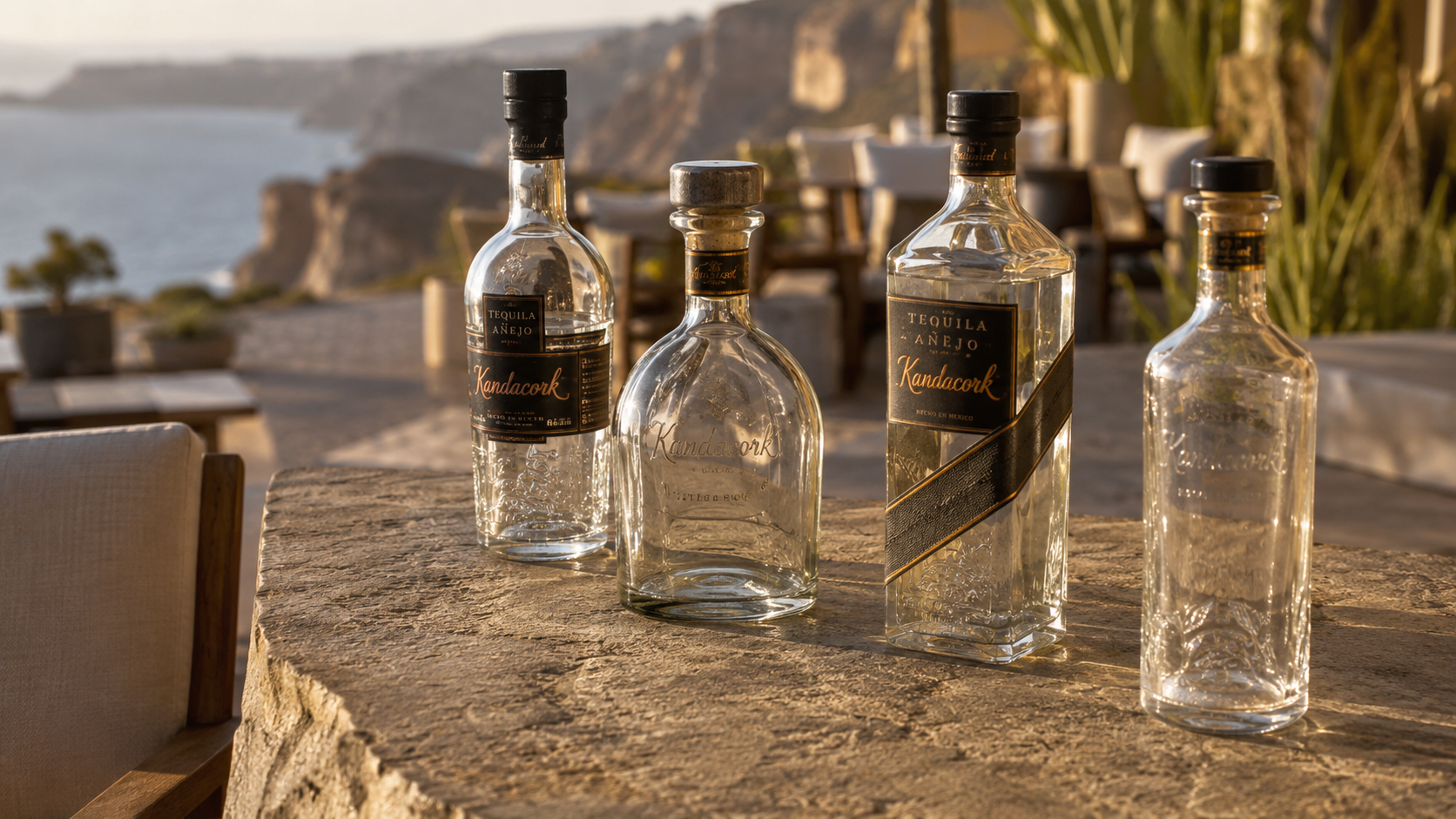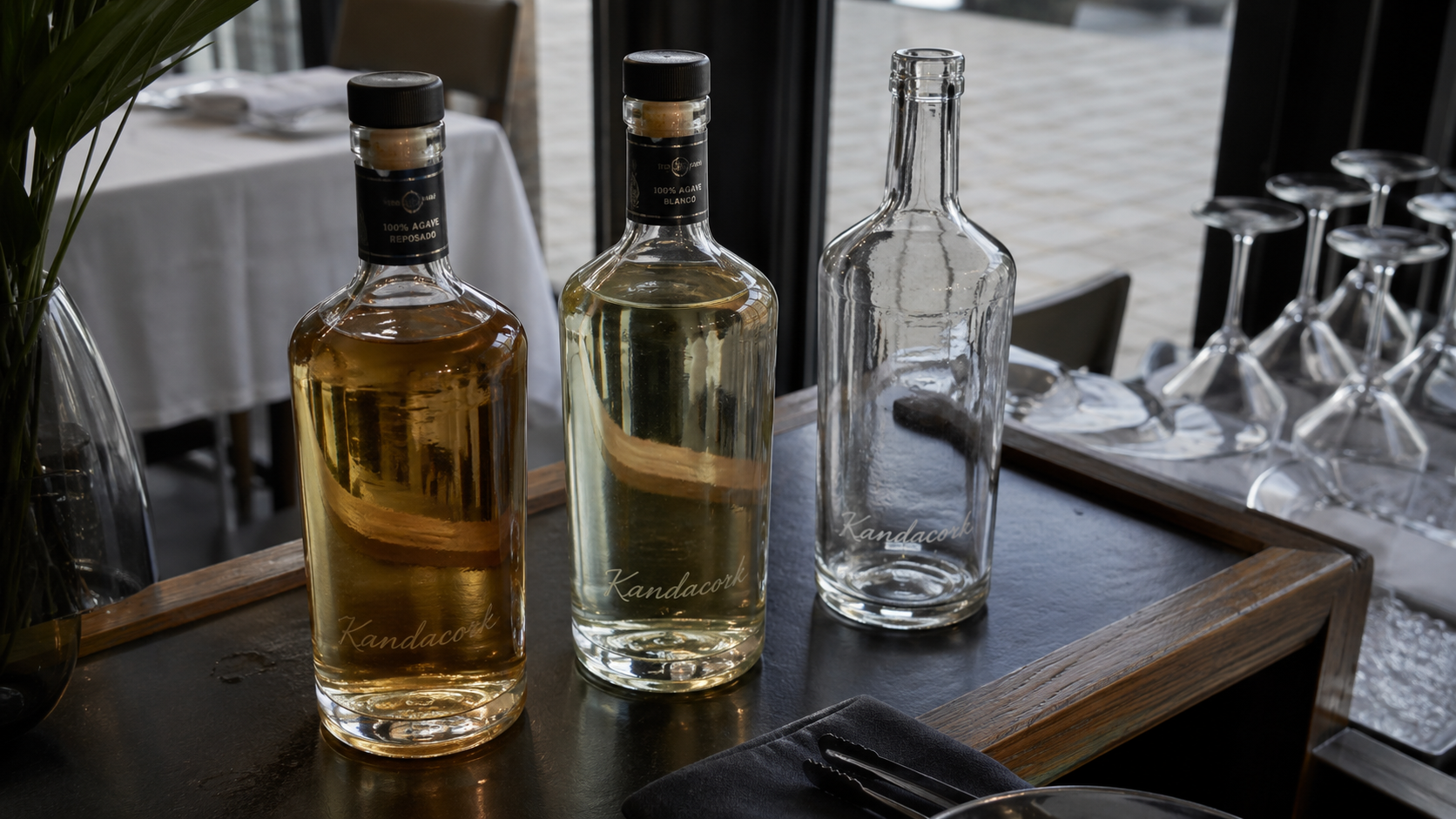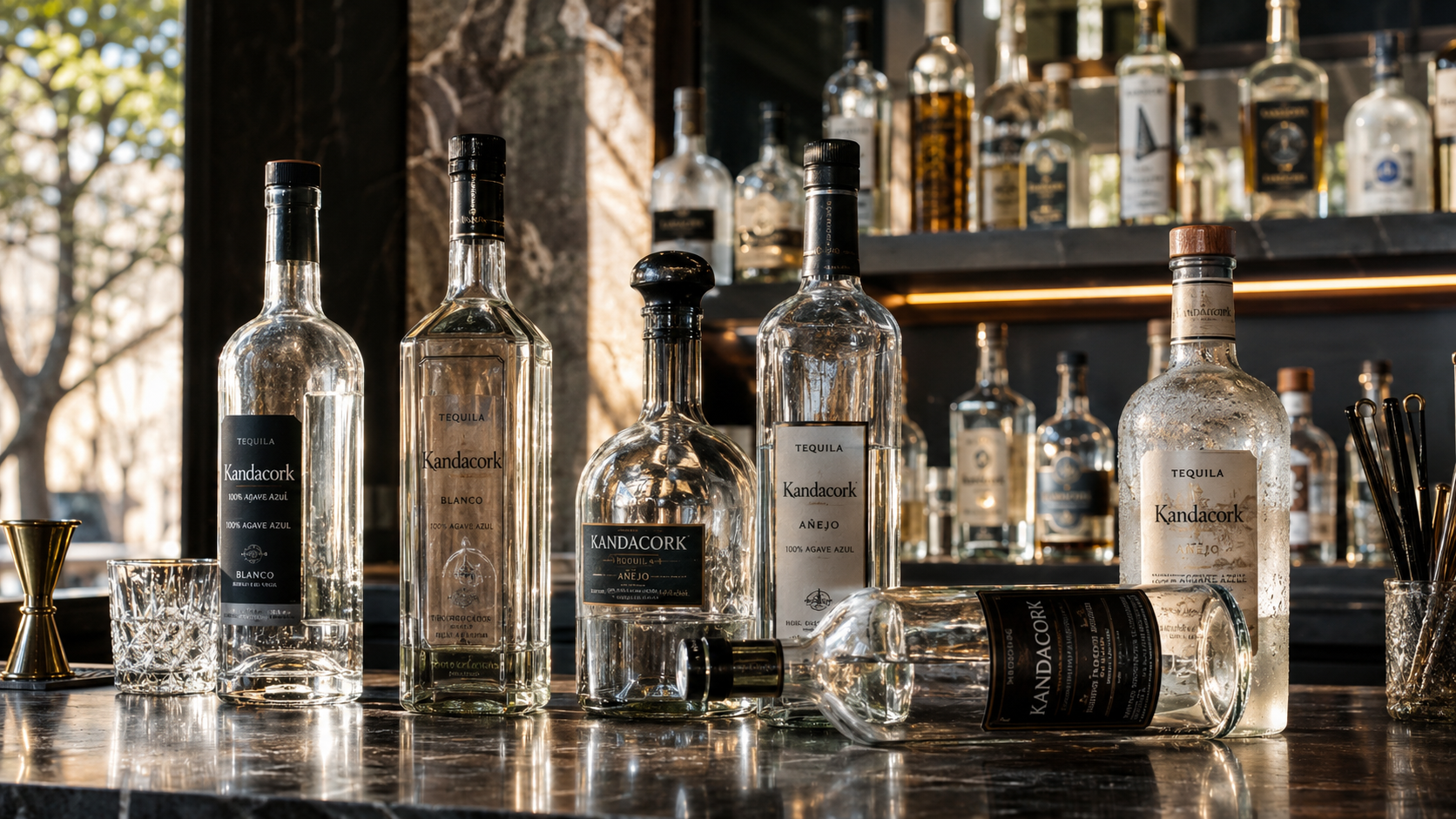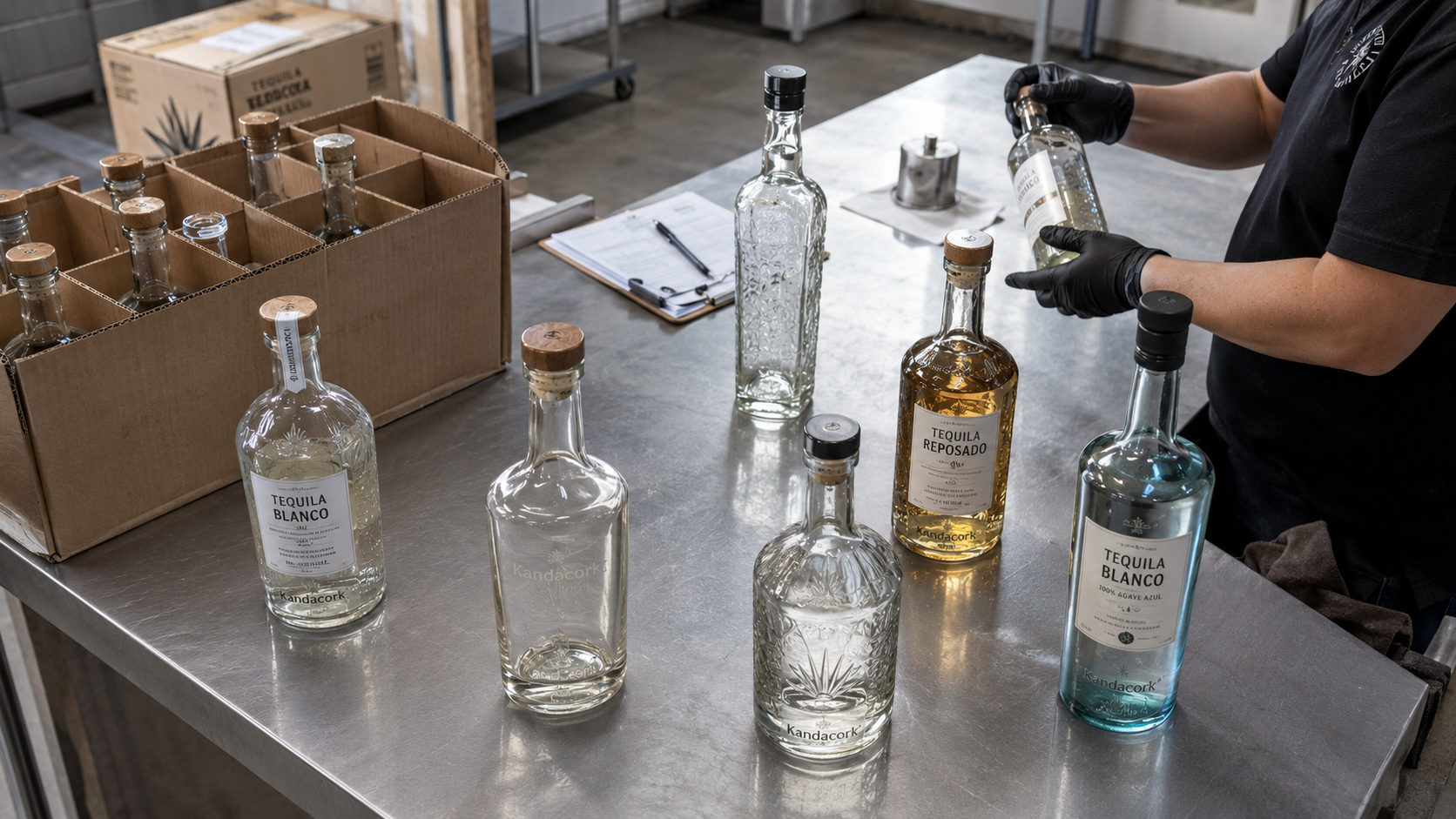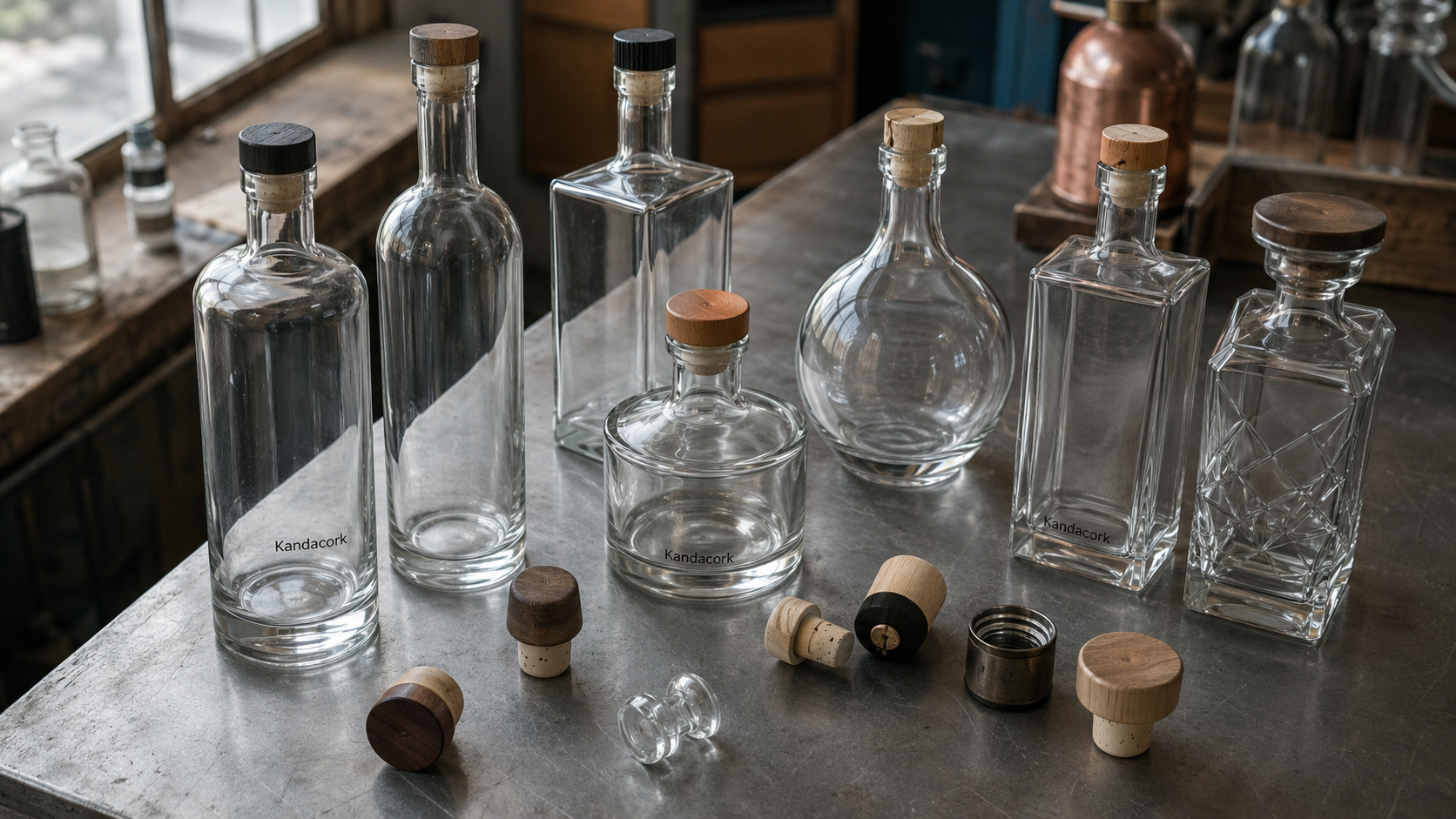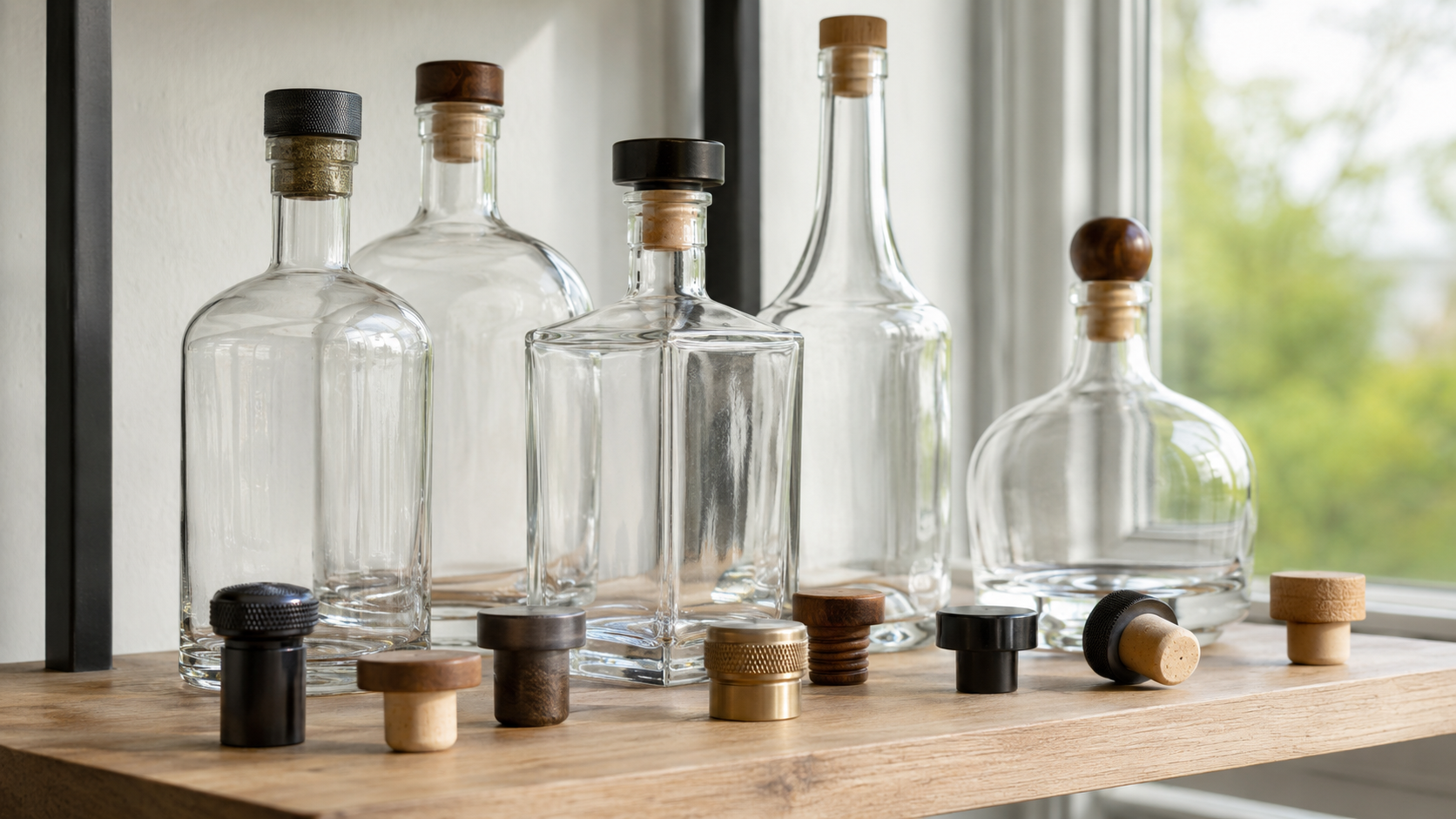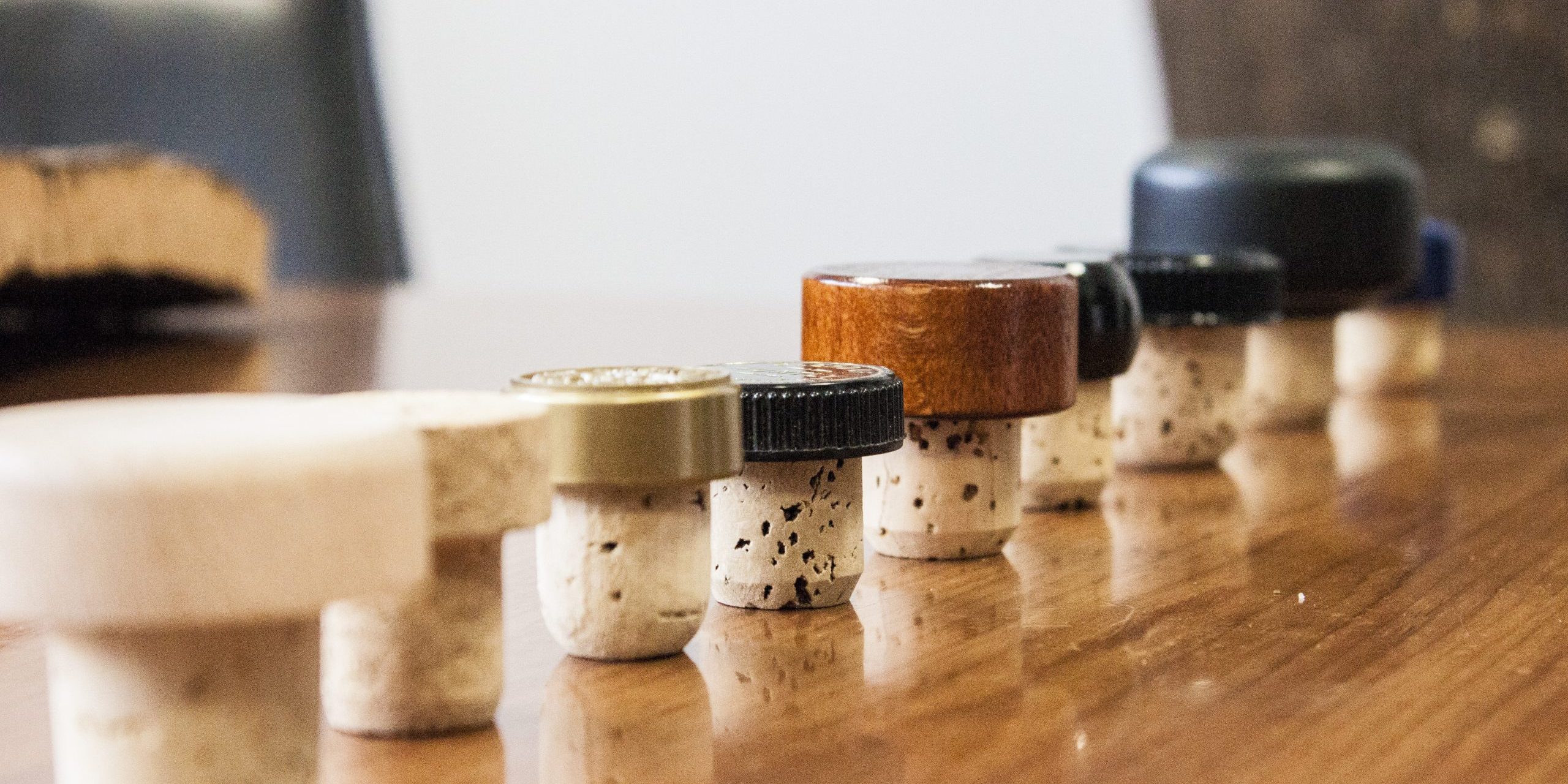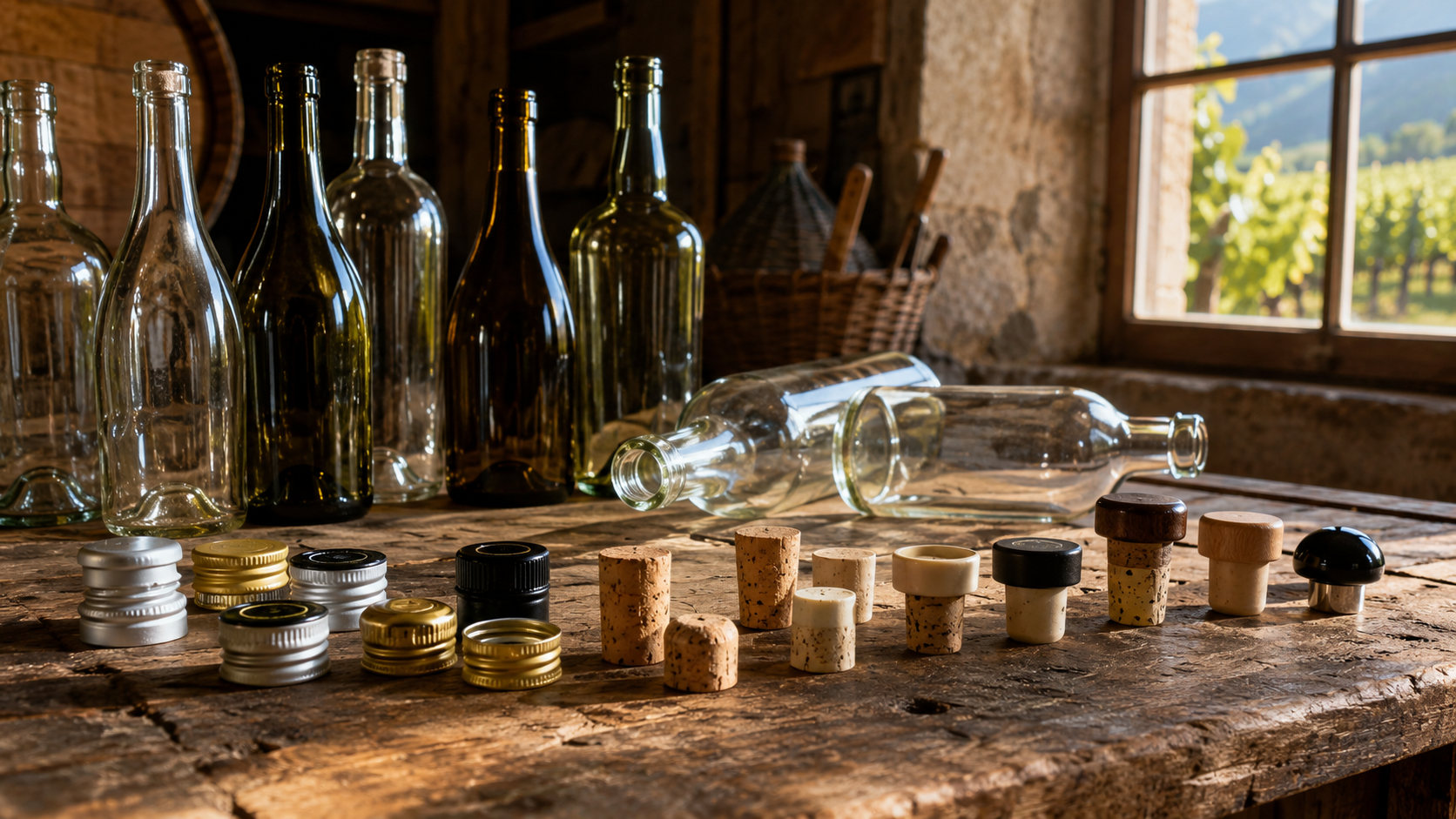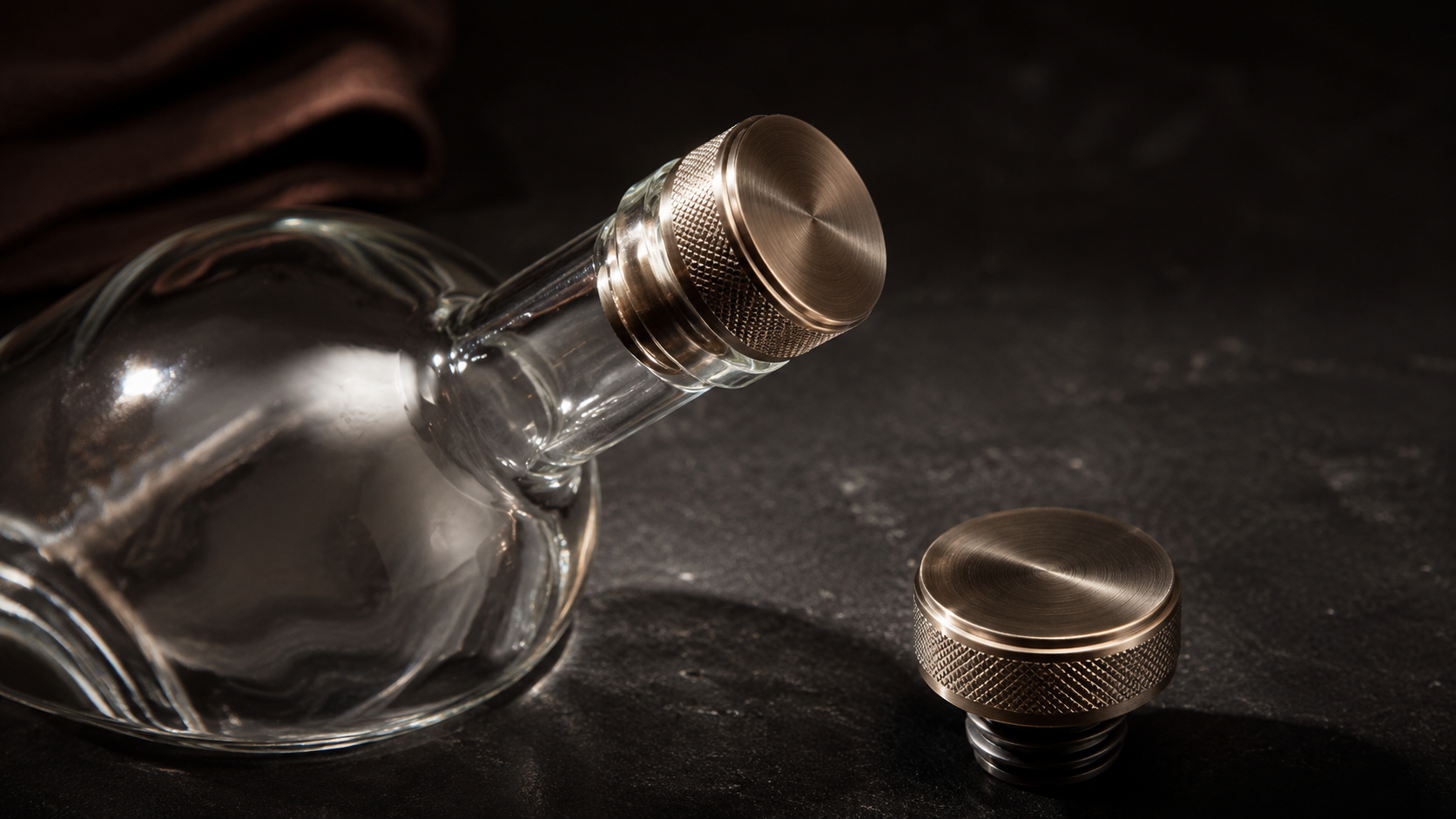
Choosing between glass stoppers vs wooden stoppers is not only a packaging design decision. For spirits brands, the stopper affects shelf impact, opening experience, sealing reliability, production cost, sustainability messaging, and the way customers judge product value before tasting the liquid.
For brand owners, bottlers, importers, and packaging teams, the real question is not simply which stopper looks better. The better question is which stopper fits the bottle neck, supports the brand story, passes functional testing, and can be produced consistently for bulk supply. That is where a specialist closure partner such as Kandacork Closures can help connect design goals with practical production requirements.
Glass stoppers usually create a clean, modern, luxury, and collectible impression. Wooden stoppers create a warmer, natural, craft, and heritage-inspired impression. Both can be premium. The right choice depends on the spirit category, bottle structure, target market, closure insert, decoration method, and final packaging system.
Quick Answer: Glass Stoppers vs Wooden Stoppers
Glass stoppers are usually better for modern luxury spirits bottles that need clarity, weight, visual precision, and a collectible feel. Wooden stoppers are usually better for craft, heritage, natural, rustic, and barrel-aged spirits packaging.
However, glass stoppers vs wooden stoppers should not be judged by head material alone. The visible top creates the brand impression, but sealing performance depends on the shank, insert, TPE ring, cork structure, bottle neck inner diameter, compression, insertion depth, pull-out force, and leakage resistance.
For premium spirits projects, compare both options through three practical questions:
Which stopper material best matches the brand story?
Which sealing structure fits the actual bottle neck?
Which option can be produced consistently at the required price, MOQ, and quality level?
Glass Stoppers vs Wooden Stoppers: Fast Comparison
| Buying Factor | Glass Stoppers | Wooden Stoppers |
|---|---|---|
| Visual impression | Clean, modern, luxury, collectible | Natural, warm, craft, heritage |
| Best-fit spirits | Vodka, gin, tequila, brandy, liqueur, decanter-style bottles | Whisky, rum, mezcal, brandy, cognac, craft gin |
| Touch and feel | Smooth, cool, heavy | Warm, textured, tactile |
| Brand message | Clarity, precision, purity, luxury | Authenticity, aging, nature, tradition |
| Decoration options | Frosting, tinting, engraving, molding, faceting | Laser engraving, staining, painting, hot stamping, top discs |
| Sealing structure | Polymer insert, TPE ring, synthetic cork, or technical insert | Natural cork, micro-agglomerated cork, synthetic cork, or hybrid shank |
| Cost profile | Often higher for custom luxury projects | Often more flexible for standard bar-top programs |
| Main risk | Weight, breakage, insert fit, protective packing | Wood color variation, coating stability, moisture control |
| Best decision point | Strong visual integration with glass bottle design | Natural brand character and flexible customization |
What Are Glass Stoppers?
Glass stoppers are premium bottle closures with a glass head or glass body combined with a sealing system. In spirits packaging, the visible part may be clear glass, frosted glass, tinted glass, faceted glass, or a custom molded glass head. The sealing part may use synthetic cork, technical cork, a polymer insert, a TPE sealing ring, or another engineered component.
This distinction is important. A glass stopper does not perform well simply because it looks premium. The glass head gives the closure its visual identity, while the insert controls neck fit, compression, sealing contact, and removal force.
For spirits brands looking for a refined closure style, custom glass stoppers are especially suitable for premium vodka, gin, tequila, brandy, liqueur, and decanter-style packaging. They can make the stopper feel like part of the bottle rather than a separate accessory.
Glass stoppers work particularly well when the bottle design already uses heavy glass, thick walls, transparent labeling, a luxury gift box, or a collectible silhouette. In these cases, the closure becomes part of the visual architecture of the package.
When Glass Stoppers Make Sense
Glass stoppers make sense when a spirits brand wants a clean, modern, and high-value shelf impression. They are often selected for projects where the bottle must feel premium before the customer picks it up.
A clear glass stopper can reinforce purity and clarity for vodka or gin. A frosted stopper can create a softer, more refined appearance. A faceted glass stopper can add jewel-like detail to tequila, brandy, or liqueur packaging. A tinted stopper can connect the closure with bottle color, liquid color, label design, or secondary packaging.
Glass is also a strong option for limited editions, travel retail, gifting formats, and high-end hospitality presentation. When paired with well-engineered spirits bottles from coordinated spirits bottle programs, the stopper and bottle can be developed as one complete packaging system.
The main buying point is simple: glass stoppers are ideal when the stopper should look permanent, premium, and visually integrated with the bottle.
Advantages of Glass Stoppers
The biggest advantage of glass stoppers is premium presentation. Glass communicates clarity, purity, weight, and collectible value. For a spirits brand competing on shelf impact, the closure can become a signature design element.
Glass stoppers also offer strong design flexibility. They can be clear, frosted, tinted, polished, faceted, molded, engraved, or combined with decorative inserts. This gives design teams more control over how the closure supports the bottle shape and brand language.
From a consumer experience perspective, glass creates a distinctive opening ritual. The cool surface, solid weight, and refined appearance can make the bottle feel more valuable before the spirit is poured.
Glass stoppers can also support premium reuse perception. Consumers are more likely to keep a well-designed glass stopper bottle as a decanter, display item, or gift object, especially when the closure and bottle feel balanced.
Limitations of Glass Stoppers
Glass stoppers are not the best solution for every project. They often require more development attention than standard wooden bar-top stoppers.
Cost is one consideration. Custom glass heads, polishing, tinting, frosting, faceting, insert matching, and protective packing can increase the total project cost. Buyers should compare full landed cost, not only unit price.
Breakage risk is another consideration. Glass must be protected during bulk packing, export shipping, filling-line handling, and retail distribution. If the closure is heavy or has sharp decorative edges, carton design and divider protection become more important.
Fit sensitivity also matters. If the insert is too loose, the stopper may leak or feel insecure. If the insert is too tight, the consumer may struggle to remove it. For this reason, visual samples should not be approved without functional fit testing.
What Are Wooden Stoppers?
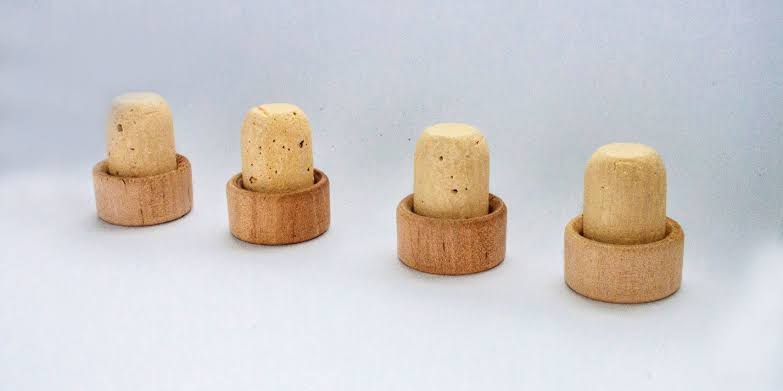
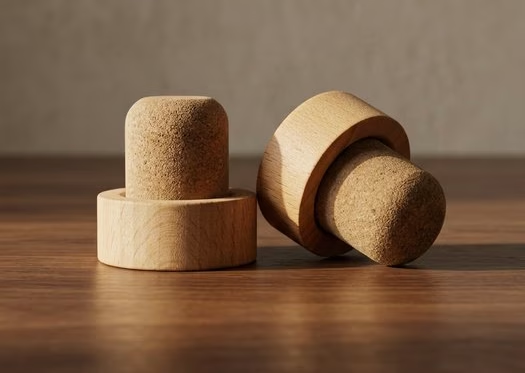
Wooden stoppers are usually bar-top or T-top closures with a wooden head and a separate sealing shank. The head may be natural wood, stained wood, black wood, painted wood, or a custom shaped wooden component. The shank may be natural cork, micro-agglomerated cork, synthetic cork, plastic, or another technical material.
For spirits packaging, wooden stoppers are popular because they combine premium appearance with a familiar opening experience. Consumers often associate wood with whisky barrels, rum aging, craft distilling, handmade quality, and traditional production.
As with glass stoppers, the visible head is only part of the closure. A beautiful wooden top still needs the correct shank diameter, length, compression, surface quality, and bottle compatibility.
The most successful wooden stopper projects balance three factors: natural appearance, repeatable production, and reliable sealing.
When Wooden Stoppers Make Sense
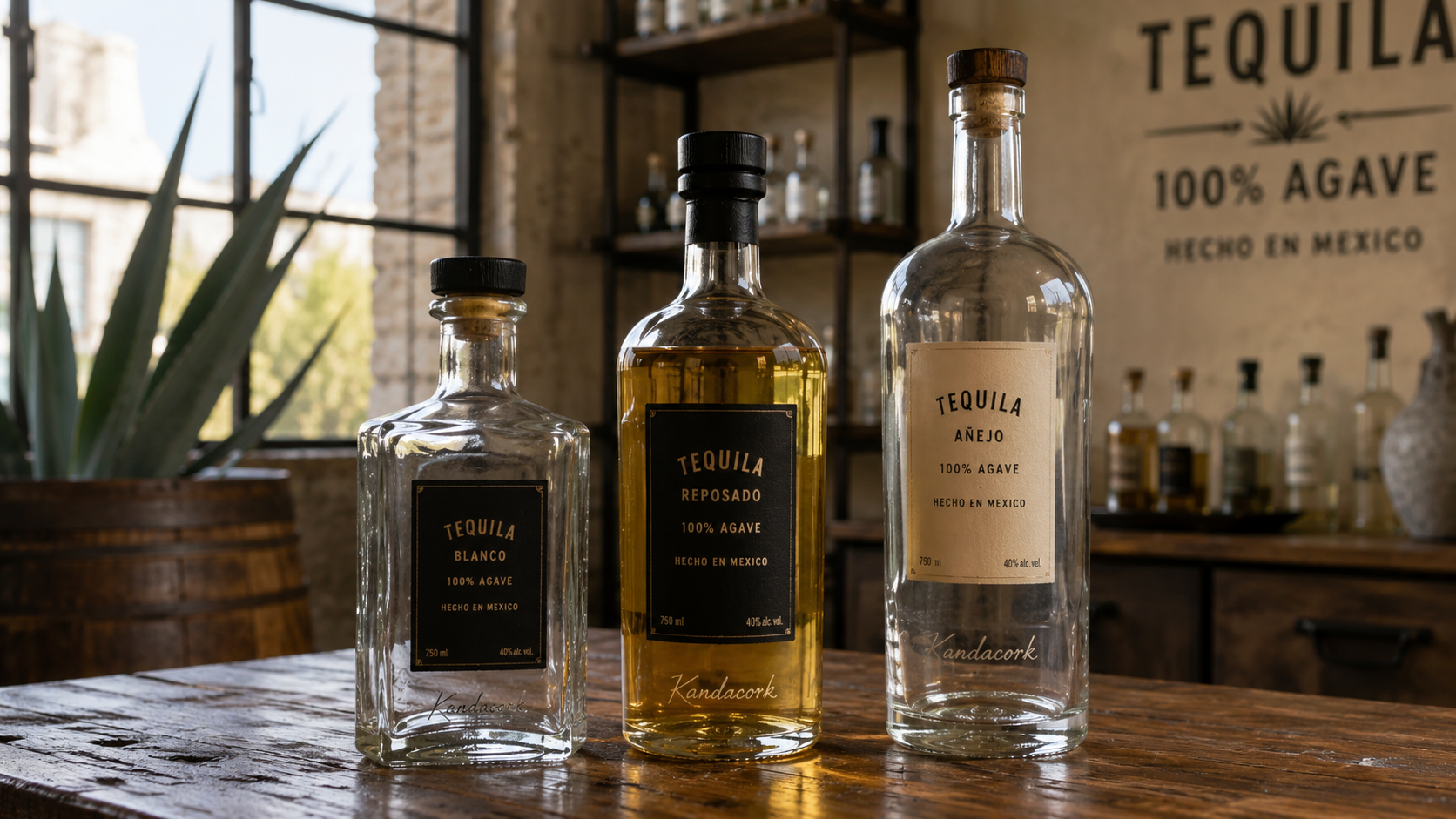
Wooden stoppers make sense when the brand wants a warm, tactile, and natural premium impression. They are especially suitable for whisky, rum, mezcal, tequila, brandy, cognac, craft gin, and premium liqueur packaging.
A natural wood stopper can support a small-batch distillery story. A dark stained wood stopper can fit aged rum or whisky. A black wood stopper can create a modern premium look while keeping the warmth of a natural material. A laser-engraved top can turn the closure into a memorable brand asset.
Wooden stoppers are also useful when brands need flexible customization without moving into a full custom glass-mold project. Head shape, stain, coating, logo application, top insert, shank type, and finish can all be adjusted to fit the packaging concept.
For many spirits brands, wood offers a strong balance between perceived value and production practicality.
Advantages of Wooden Stoppers
The main advantage of wooden stoppers is emotional warmth. Wood feels natural in the hand and gives the bottle a crafted quality. This is especially valuable for spirits categories that rely on aging, barrels, origin, tradition, or artisanal production stories.
Wood is also highly brandable. It can be laser engraved, hot stamped, painted, stained, or combined with metal plates and decorative top discs. For advanced visual identity projects, professional decoration and branding can help align the stopper, bottle, label, capsule, and gift box.
Wooden stoppers are also versatile in shape. Common forms include flat-top, mushroom, domed, cylindrical, faceted, and custom profiles. This flexibility makes wood suitable for both classic and modern packaging.
Cost flexibility is another advantage. Wooden bar-top stoppers often provide a practical upgrade route for brands that want premium presentation without the higher cost and handling complexity of custom glass stoppers.
Limitations of Wooden Stoppers
Wood is a natural material, so buyers should expect some variation in grain, tone, and texture. This variation can be attractive for craft packaging, but it needs clear approval standards if the brand requires a uniform luxury appearance.
Surface finish is also important. Stains, coatings, paints, and sealants must be reviewed for appearance, durability, odor, and handling stability. A poor finish can reduce the perceived quality of the entire bottle.
Wood can also be affected by moisture, storage conditions, and dimensional control. The supplier should manage wood drying, surface finishing, bonding, and assembly consistency. For export shipments, humidity exposure and carton protection should be considered.
Sustainability claims should be handled carefully. A stopper should not be described as responsible or eco-friendly only because it uses wood. Buyers should request sourcing documentation and credible material information where relevant.
Sealing Performance: The Stopper Head Is Not the Whole Story
When comparing glass stoppers vs wooden stoppers, many buyers focus first on appearance. That is understandable, but technical fit is more important for long-term performance.
The stopper head affects the look and feel. The shank or insert affects sealing. A closure that looks perfect can still fail if the bottle neck and sealing component are mismatched.
Important technical factors include bottle neck inner diameter, neck finish tolerance, shank diameter, shank length, insert material, closure compression, insertion force, pull-out force, seating height, leakage resistance, alcohol compatibility, transport stability, and compatibility with capsules or shrink sleeves.
For spirits bottles, even a small mismatch can affect the consumer experience. A loose stopper may leak or feel cheap. A tight stopper may be difficult to remove. An insert that is not compatible with the product environment may create performance issues over time.
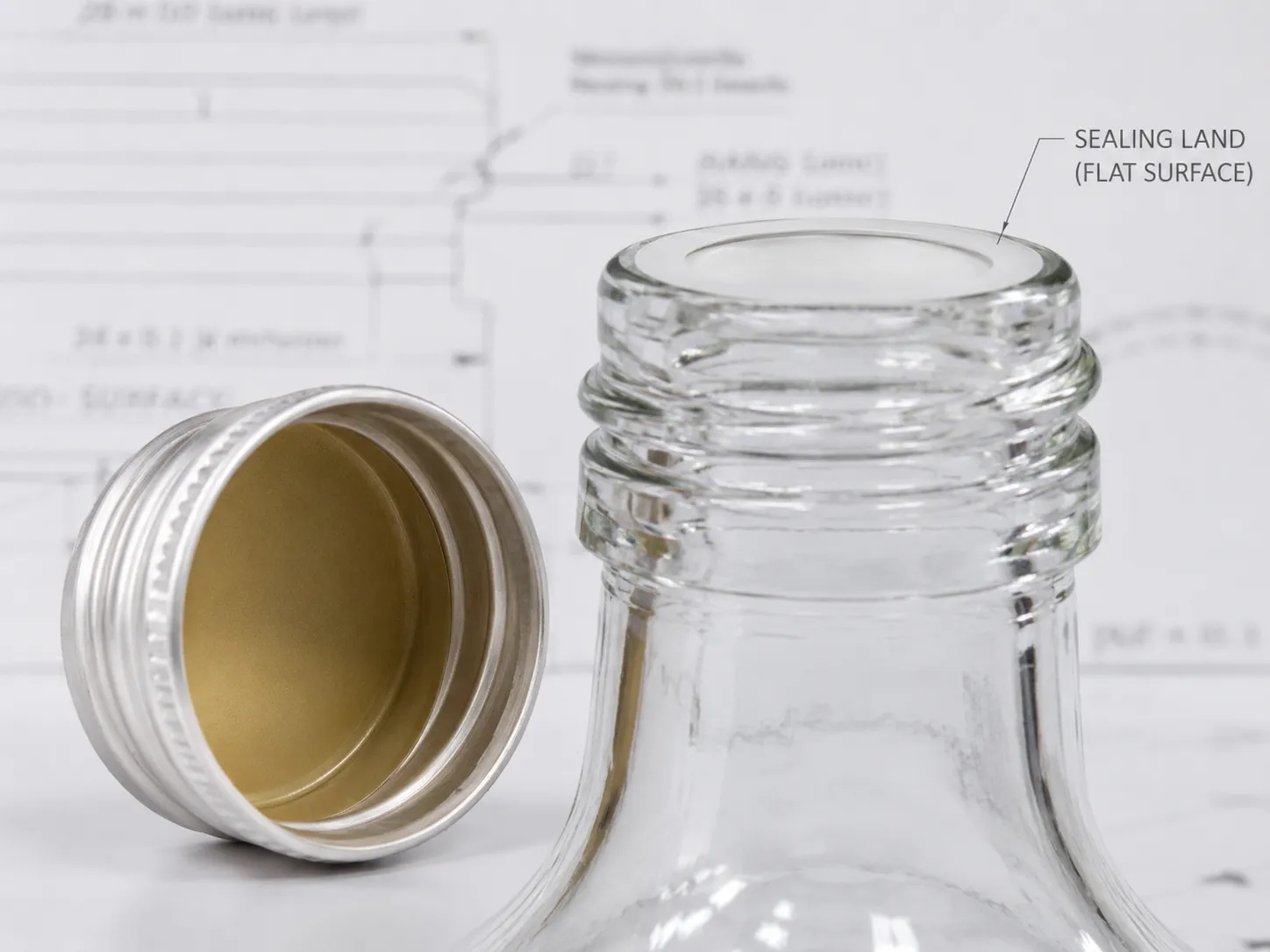
Unlike threaded closures, bar-top stoppers are not mainly evaluated by torque. Buyers should pay closer attention to compression fit, removal force, sealing contact, neck tolerance range, and repeated opening behavior.
Understanding the Complete Closure System
A premium stopper should be evaluated as part of a complete packaging system, not as a standalone decoration. Kandacork’s broader bottle stoppers and closures range includes multiple head materials and shank structures for different spirits categories, bottle necks, price tiers, and branding goals.
The stopper must work with the bottle neck, filling method, label position, capsule, shrink sleeve, gift box, shipping carton, and consumer opening experience. If any part of the system is ignored, the final package may look good in a sample photo but fail during handling or distribution.
Food-contact suitability is also part of the decision. The U.S. FDA explains that certain packaging materials and components may be considered food-contact substances when they are intended to contact food or beverages. For spirits packaging, buyers should request relevant material declarations for inserts, corks, coatings, adhesives, colorants, and sealing components.
Why Bottle Neck Tolerance Matters
Bottle neck tolerance is one of the most important factors in stopper selection. Two bottles may look identical from the outside but have slightly different inner diameters. That small difference can change how a cork shank, synthetic shank, or TPE insert compresses inside the neck.
If the stopper shank is too small, the closure may feel loose, leak during transport, or create a weak consumer experience. If the shank is too large, the stopper may be difficult to insert or remove. In some cases, excessive compression can deform the insert or make manual application inconsistent.
This is why buyers should test the stopper with the actual bottle, not only a drawing or visual mockup. For higher-volume projects, the bottle supplier’s neck tolerance should also be monitored across production batches.
When brands need consistent compression and predictable dimensions, engineered options such as synthetic bar-top stoppers may also be reviewed alongside glass and wood.
Which Stopper Should You Choose for Each Spirits Category?
Different spirits categories carry different packaging expectations. The right stopper should support the product story while meeting technical fit, filling, and cost requirements.
| Spirits Type | Recommended Stopper Direction | Why It Works |
|---|---|---|
| Whisky | Wooden stopper | Supports barrel-aged, heritage, craft, and warm premium positioning |
| Rum | Wooden stopper or dark glass stopper | Works for tropical craft stories, aged rum, and luxury packaging |
| Vodka | Glass stopper | Reinforces purity, clarity, coldness, and modern design |
| Gin | Glass or wooden stopper | Glass suits botanical clarity; wood suits craft distillery storytelling |
| Tequila | Glass or wooden stopper | Glass supports modern luxury; wood supports artisanal character |
| Mezcal | Wooden stopper | Matches handcrafted, earthy, traditional, and natural cues |
| Brandy or Cognac | Glass or stained wood stopper | Glass creates decanter luxury; wood creates heritage warmth |
| Liqueur | Glass stopper | Supports color visibility, gifting, and decorative shelf appeal |
This category-based view helps buyers move beyond simple material preference. The stopper should match the liquid, bottle shape, label design, retail price, target audience, and filling plan.
Brand Positioning: Which Stopper Looks More Premium?
Both glass and wood can look premium, but they express different meanings.
Glass stoppers communicate clarity, modernity, precision, and luxury. They are ideal when the brand wants a clean, polished, high-end impression. They can also support a collectible image, especially when paired with heavy glass bottles and gift packaging.
Wooden stoppers communicate warmth, nature, craft, and heritage. They are ideal when the brand wants to reference oak barrels, distilling tradition, handmade quality, or natural ingredients.
A modern tequila bottle with a faceted clear glass stopper may look sharp and upscale. A dark rum bottle with a stained wooden bar-top stopper may feel richer and more traditional. A craft gin bottle could use glass for a clean botanical style or wood for a warmer small-batch distillery story.
For brands coordinating bottles, closures, decoration, and export supply together, integrated glass packaging support can help ensure each component works as one commercial system.
Customization Options for Glass Stoppers
Glass stoppers offer strong visual customization. Common options include clear glass, frosted glass, tinted glass, colored glass, faceted glass, diamond-cut shapes, round heads, square heads, and custom molded forms.
Branding can be added through engraving, sandblasting, embossing, debossing, printed inserts, or decorative top elements. Some projects combine glass with metal accents to create a heavier luxury effect.
The sealing system can also be customized. Depending on the bottle neck and project requirements, a glass stopper may use a synthetic cork shank, TPE ring, polymer insert, or other technical sealing component.
For premium spirits brands, the goal is not only to make the stopper attractive. The goal is to make it recognizable, repeatable, and compatible with the complete packaging system.
Customization Options for Wooden Stoppers
Wooden stoppers are highly flexible for brand decoration. Buyers can choose natural wood, stained wood, dark wood, black wood, painted wood, or color-coated wood. Head shapes may include flat-top, domed, mushroom, cylindrical, faceted, square, or custom profiles.
Logo decoration can include laser engraving, hot stamping, pad printing, screen printing, top discs, metal medallions, or branded inserts. Laser engraving is especially popular because it works naturally with wood texture and creates a durable branded effect.
The shank can also be adjusted. Options may include natural cork, micro-agglomerated cork, synthetic cork, plastic, or hybrid technical shanks. The correct choice depends on bottle neck dimensions, spirits category, cost target, application method, and desired opening force.
Cost, MOQ, and Production Planning
Glass stoppers and wooden stoppers should be compared by total project cost, not only unit price.
Glass stoppers may involve mold cost, polishing cost, tinting or frosting cost, protective packing, insert matching, and higher shipping weight. They can be highly effective for luxury launches, but the project should allow enough budget for sampling and testing.
Wooden stoppers often provide more flexibility for premium bar-top programs. They can be produced in many shapes and finishes, and they may offer a more accessible route for brands upgrading from standard closures. However, custom wood species, special finishes, metal inserts, or strict color-matching requirements can also increase cost.
MOQ depends on design complexity, material selection, decoration method, and production process. A standard wooden stopper may have a lower development barrier than a fully custom glass stopper. A custom glass stopper may require more planning but can create a stronger signature packaging effect.
Quality planning should also be considered. Many packaging buyers use quality frameworks influenced by international systems such as ISO 9001 quality management to control repeatability, inspection, corrective actions, and supplier performance.
Common Stopper Problems and How to Prevent Them
| Problem | Likely Cause | Buyer Action |
|---|---|---|
| Stopper feels loose | Shank diameter is too small or bottle neck ID is too wide | Test a larger shank, adjusted insert, or revised stopper structure |
| Stopper is hard to remove | Excessive compression or unsuitable insert material | Review pull-out force, insertion depth, and shank material |
| Leakage after transport | Neck-fit mismatch, poor compression, or unstable seating height | Run leakage testing with filled bottles and shipping simulation |
| Wood color varies too much | Natural grain difference or unclear color tolerance | Approve a realistic color range before bulk production |
| Glass stopper chips during shipping | Insufficient protective packing or carton design | Upgrade dividers, wrapping, export cartons, or pallet protection |
| Logo decoration looks inconsistent | Uneven surface, poor artwork adaptation, or unsuitable decoration method | Test engraving, printing, or stamping on production material |
| Stopper does not work with capsule | Head shape, height, or closure profile conflicts with secondary packaging | Confirm capsule, shrink sleeve, and gift box compatibility before order |
For export projects, transport conditions should not be underestimated. Packaging teams often reference procedures from the International Safe Transit Association when evaluating how packed goods may perform through handling, vibration, compression, and distribution environments.
Sustainability Comparison
Sustainability should be discussed with accuracy. Both materials can support responsible packaging stories, but both require context.
Glass can support recyclability and premium reuse messaging, although actual recycling outcomes depend on local collection, sorting, color separation, and market infrastructure. For stoppers, buyers should also consider insert material, separation, and total transport weight. Brands developing recycled-content or lower-impact packaging may also review eco glass packaging options as part of a wider bottle-and-closure strategy.
Wood can support a renewable natural-material story when it comes from responsibly managed sources. For B2B buyers, credible documentation is important. Forest certification systems such as the Forest Stewardship Council and PEFC are widely recognized entities in responsible forest-product sourcing.
The strongest sustainability position is not simply “glass is better” or “wood is better.” A stronger approach is to document materials, reduce waste, confirm compliance, optimize transport packing, and choose a closure that fits the product life cycle.
How to Choose Between Glass Stoppers and Wooden Stoppers
Choose glass stoppers if your brand needs a clean luxury appearance, a heavy collectible feeling, a modern bottle design, clear or frosted visual effects, strong integration with glass bottle shape, premium gift-box presentation, or a closure that becomes a visual signature.
Choose wooden stoppers if your brand needs a natural premium appearance, a warm hand feel, a craft or heritage brand story, strong logo engraving options, flexible head shapes and finishes, a classic bar-top opening experience, or a premium but cost-conscious closure route.
The best choice often becomes clear after reviewing the bottle, label, target price, spirit category, retail channel, and brand story together. A closure that looks excellent in isolation may not be the best choice once filling, packing, distribution, and consumer use are considered.
Common Mistakes Buyers Should Avoid
The first mistake is choosing by appearance before checking bottle neck fit. A stopper must fit the actual bottle, not only a design rendering.
The second mistake is ignoring the shank. The head material creates the style, but the shank or insert controls the seal.
The third mistake is skipping leakage and pull-out testing. A closure that looks acceptable in a visual sample may perform differently during transport or after repeated opening.
The fourth mistake is overclaiming sustainability. Buyers should use specific claims supported by documentation, not vague terms such as “green” or “eco” without proof.
The fifth mistake is forgetting the complete packaging system. The stopper must work with the bottle, label, capsule, shrink sleeve, gift box, filling process, and shipping carton.
Why Work With Kandacork Closures?
Kandacork Closures supports spirits brands that need custom glass stoppers, wooden stoppers, bar-top stoppers, cork shanks, synthetic shanks, and premium liquor bottle closure solutions.
For buyers comparing glass stoppers vs wooden stoppers, the team can help review bottle neck dimensions, stopper head style, sealing structure, decoration method, sampling requirements, and bulk production expectations.
This support is especially valuable for brands developing premium whisky closures, rum bottle stoppers, tequila bottle stoppers, craft gin closures, vodka glass stoppers, and limited-edition spirits packaging.
Instead of choosing only from a catalog photo, buyers can evaluate the stopper as part of a complete packaging system. This includes bottle compatibility, logo application, tactile feel, shipping protection, quality inspection, and production repeatability.
What Information Should You Send for a Quote?
To receive a practical recommendation, prepare these project details:
Bottle drawing or bottle sample
Bottle neck inner diameter
Neck finish details
Bottle photo or 3D rendering
Spirit category
Target retail price tier
Preferred stopper material
Preferred stopper shape
Logo file or decoration requirement
Target order quantity
Market or destination country
Filling method
Packing and shipping requirements
Expected launch timeline
With this information, Kandacork can recommend whether glass stoppers, wooden stoppers, or another closure structure is more suitable for the project. Buyers ready to review samples, fit testing, and bulk supply options can request a custom closure quote.
FAQs
glass stoppers better than wooden stoppers?
Glass stoppers are better for clean luxury, modern design, and collectible spirits packaging. Wooden stoppers are better for natural, warm, craft, and heritage-inspired spirits packaging. The better choice depends on the brand image, bottle neck fit, sealing system, decoration requirement, and budget.
Do glass stoppers seal spirits bottles well?
Glass stoppers can seal spirits bottles well when they use the correct insert, ring, or shank structure. The bottle neck inner diameter, insert material, compression, insertion depth, and pull-out force should be tested before bulk production.
Are wooden stoppers only for whisky bottles?
No. Wooden stoppers are common for whisky bottles, but they are also used for rum, tequila, mezcal, brandy, cognac, gin, liqueur, and other premium spirits. The final effect depends on wood finish, stopper shape, logo decoration, and bottle design.
Which stopper is more suitable for luxury packaging?
Both can work for luxury packaging. Glass stoppers feel clean, heavy, modern, and collectible. Wooden stoppers feel warm, natural, crafted, and traditional. For luxury spirits, the best stopper is the one that matches the bottle design and brand story.
Which stopper is more cost-effective?
Wooden stoppers are often more cost-flexible for standard premium bar-top programs. Glass stoppers may cost more when they require custom molding, polishing, tinting, faceting, or protective packing. Buyers should compare total project cost, not just unit price.
Can wooden stoppers be customized with a logo?
Yes. Wooden stoppers can be customized with laser engraving, hot stamping, printing, staining, painting, top discs, or metal medallions. Laser engraving is popular because it creates a natural and durable branded effect.
Can glass stoppers be customized?
Yes. Glass stoppers can be customized through clear, frosted, tinted, colored, faceted, engraved, molded, or sandblasted designs. They can also be combined with technical inserts and decorative components.
What testing is needed before bulk production?
Recommended checks include bottle neck measurement, stopper fit testing, insertion force, pull-out force, leakage testing, alcohol compatibility review, decoration review, packing test, and transport simulation where needed.
Conclusion: Match the Stopper to the Brand, Bottle, and Production Plan
The decision between glass stoppers vs wooden stoppers should not be reduced to appearance alone. Glass stoppers are ideal for clean luxury, modern clarity, collectible packaging, and high-end bottle integration. Wooden stoppers are ideal for natural warmth, craft storytelling, heritage positioning, and flexible premium customization.
For spirits brands, the right closure must satisfy both marketing and engineering requirements. It should match the brand story, fit the bottle neck, seal reliably, support decoration, survive transport, and remain consistent in bulk production.
The best stopper is not simply the most attractive option. It is the option that strengthens the brand, protects the product, works with the bottle, and supports reliable production from sampling to shipment.