Bulk spirits closure orders require a structured packaging checklist to reduce fit problems, surface defects and shipping damage. This guide explains what buyers should confirm before production, including specifications, inspection points, assembly details and export carton protection.
Quick Answer: What Buyers Should Look for in a Spirits Bottle Packaging Supplier
A spirits bottle packaging supplier helps distilleries source bottles, closures, corks, caps, stoppers, cartons, and custom packaging components. Buyers should choose a supplier that can confirm bottle and closure compatibility, provide samples, support custom branding, manage quality control, and supply consistent bulk orders.
For premium spirits, the closure is especially important because it affects seal performance, shelf appeal, opening experience, and perceived brand value. A good-looking bottle is not enough if the stopper feels loose, the cap scratches during shipment, or the closure does not match the product’s category and price point.
Best Packaging Support by Buyer Type
Different spirits buyers need different levels of packaging support. A new distillery may need fast sampling and a practical semi-custom option, while a premium whiskey brand may require custom wood bar-top closures, tighter fit testing, and more detailed decoration control. For complete bottle projects, buyers can also coordinate with a dedicated custom spirits bottle manufacturer when bottle shape, closure matching, decoration, and export packing need to be planned together.
| Buyer Type | Recommended Packaging Support |
|---|---|
| New distillery | Stock or semi-custom closures with fast sampling |
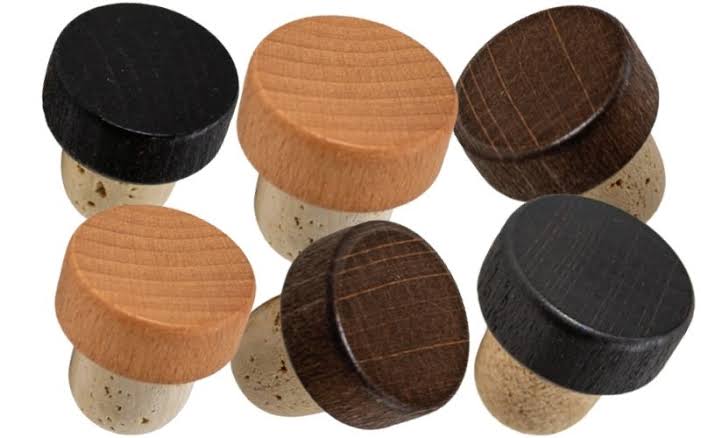
| Premium whiskey brand | Wood bar-top closures with cork or synthetic shank testing |
| Vodka brand | Clean metal caps, minimalist closures, or smooth decorative tops |
| Gin brand | Color-matched closures, custom shapes, and botanical-inspired decoration |
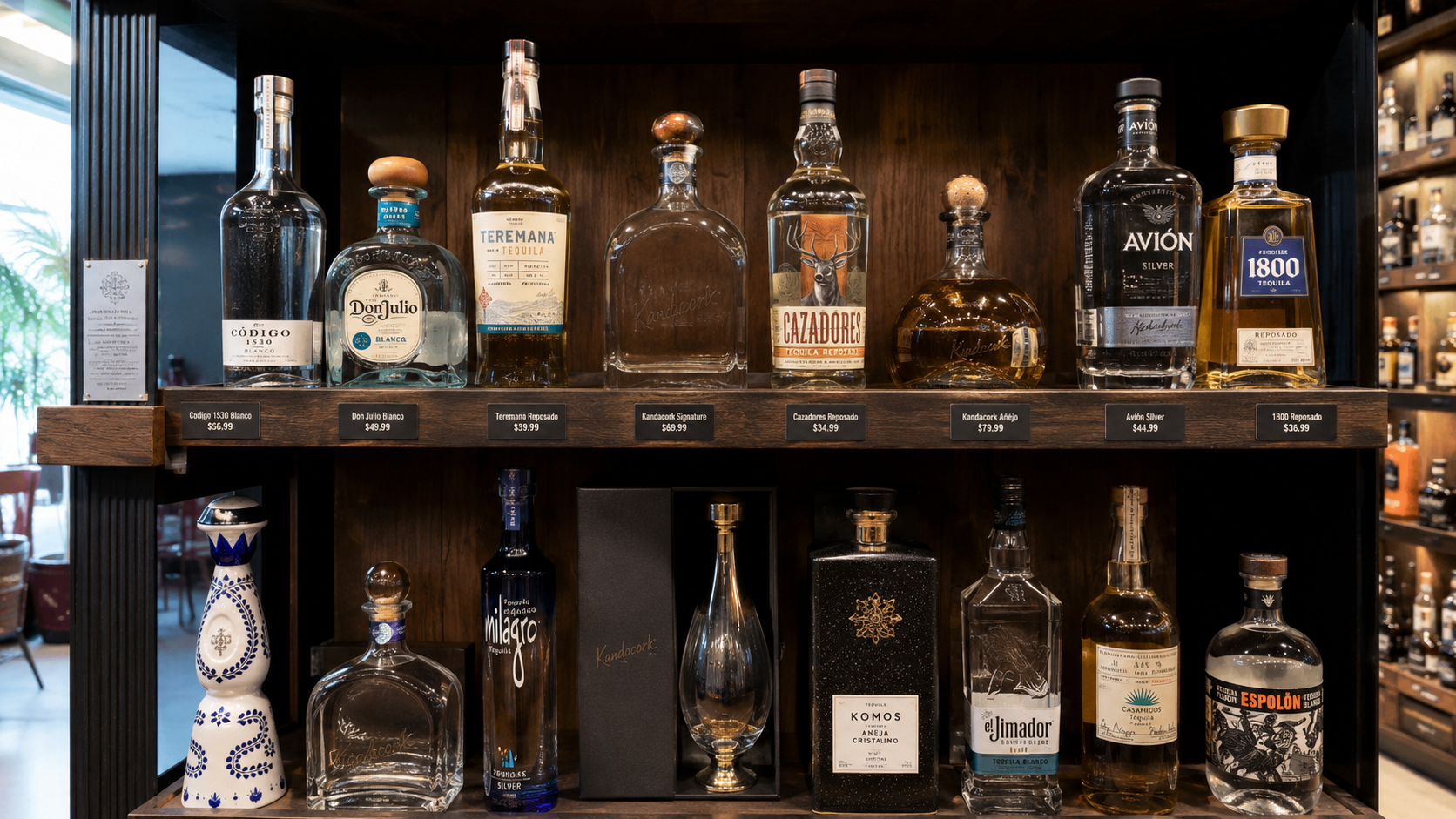
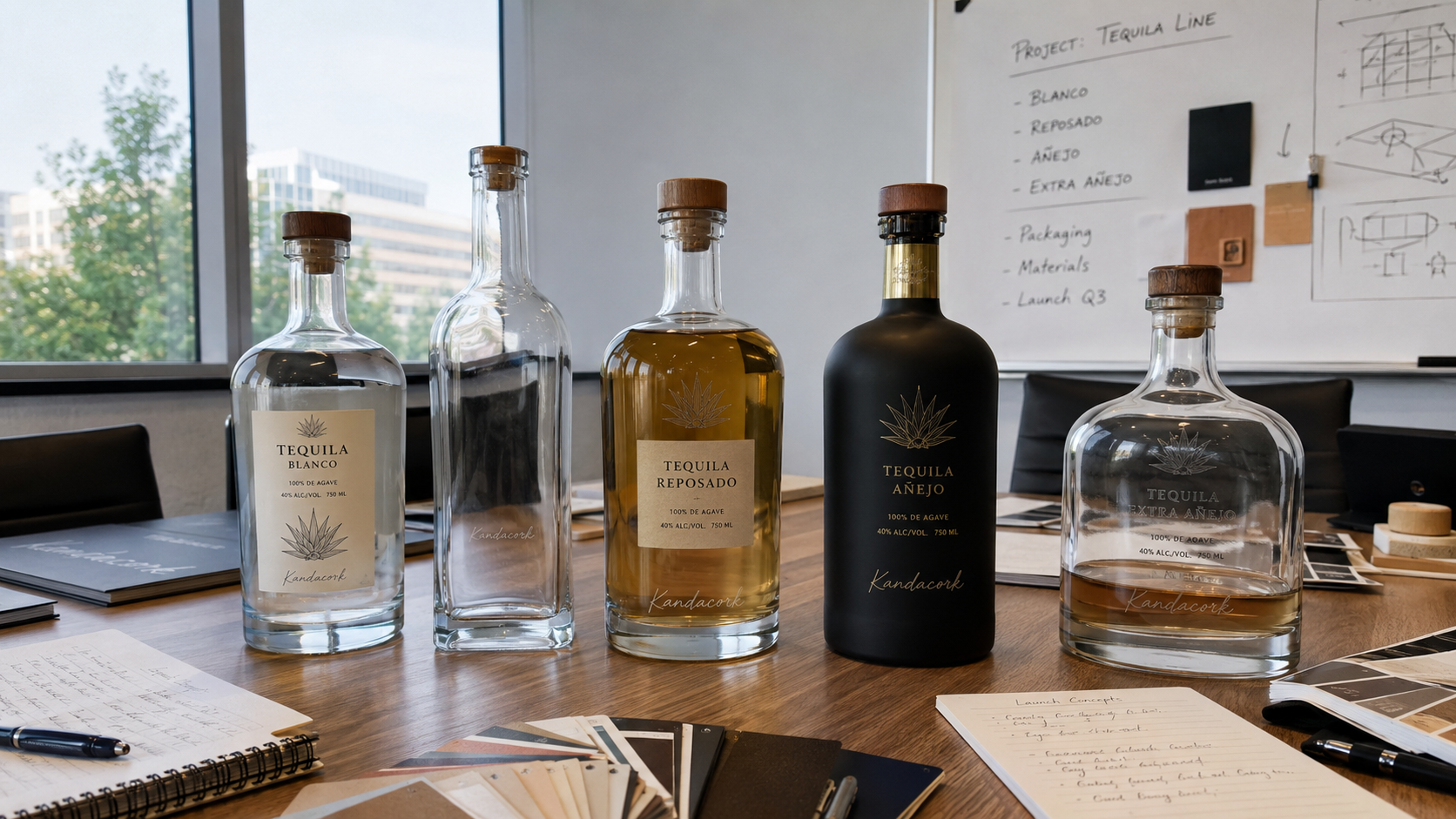
| Tequila or mezcal brand | Cork stoppers, wood tops, textured finishes, and natural materials |
| Private-label spirits buyer | OEM/ODM closure design and repeatable bulk production |
| Gift spirits project | Decorative stoppers, premium finishes, and secondary packaging coordination |
Early planning helps buyers avoid choosing packaging based only on appearance. The best spirits packaging should fit the bottle, support the brand story, work in production, and remain consistent across repeat orders.
Custom Closure Support from Kandacork Closures
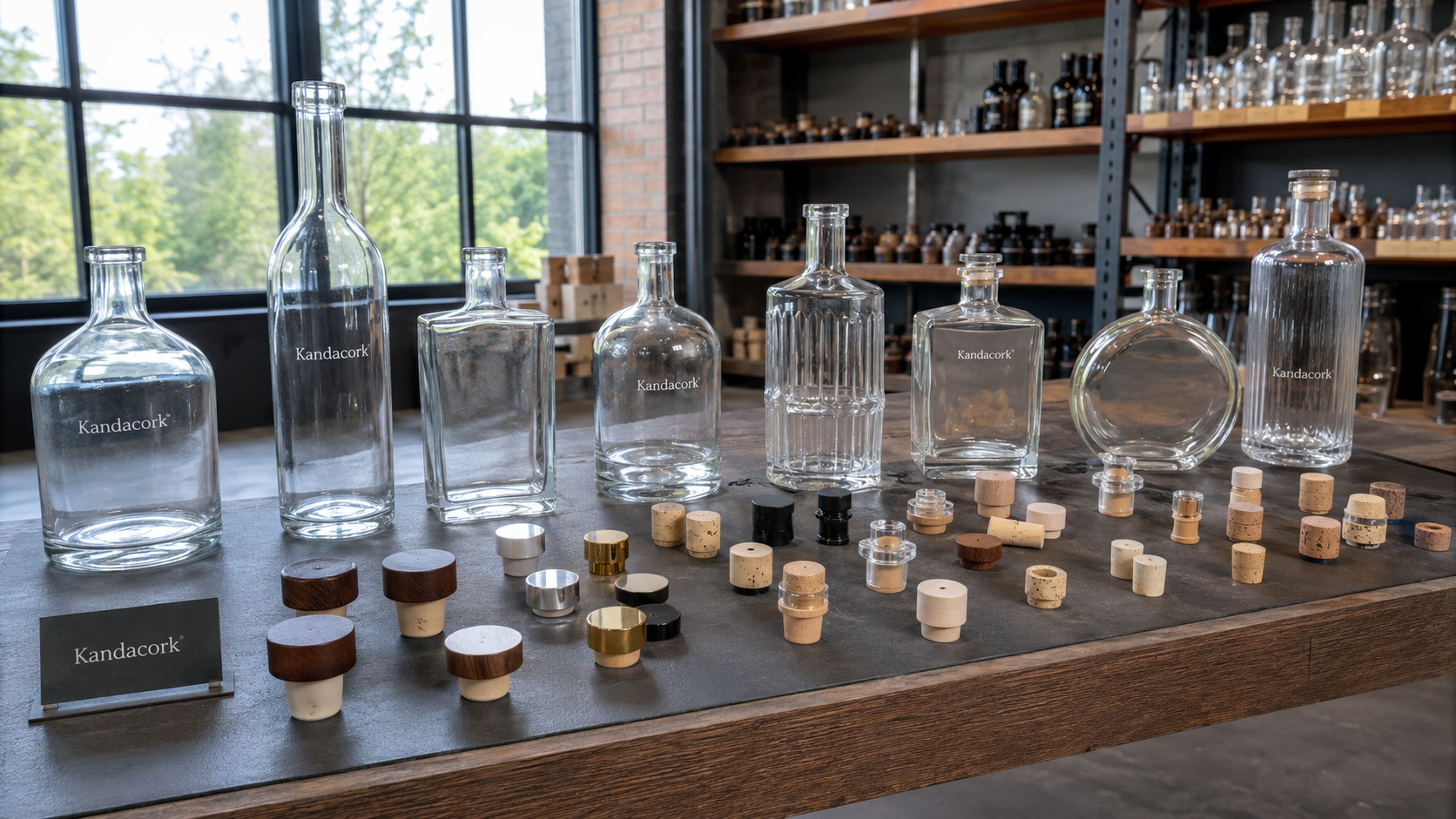
Kandacork Closures focuses on custom closure solutions for spirits brands, distilleries, beverage packaging companies, and private-label projects. The bottle stoppers and closures range includes bar-top stoppers, screw caps, ROPP closures, sleeves, and specialty closure systems for buyers who need a reliable fit and a premium finish.
Kandacork Closures can support:
- Bar-top cork closures for whiskey, rum, tequila, gin, brandy, and liqueurs
- Cork stoppers and synthetic shank closures
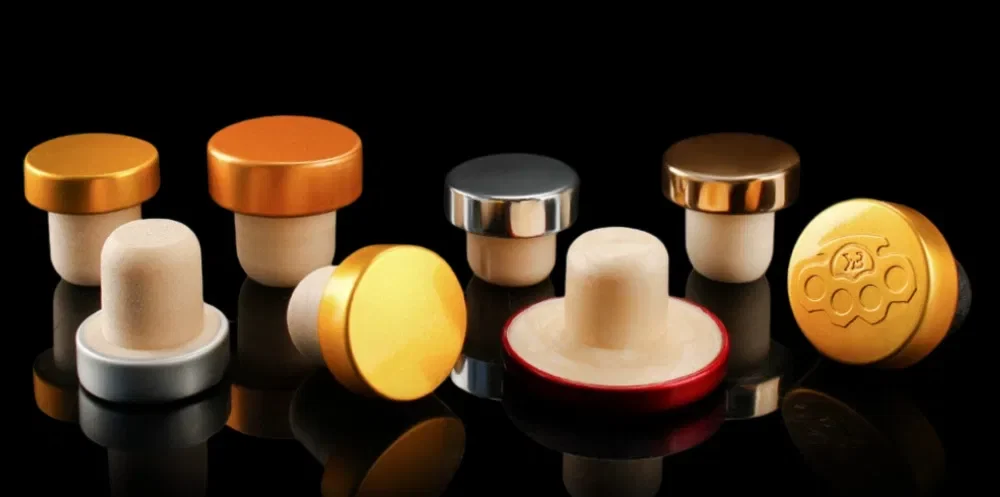
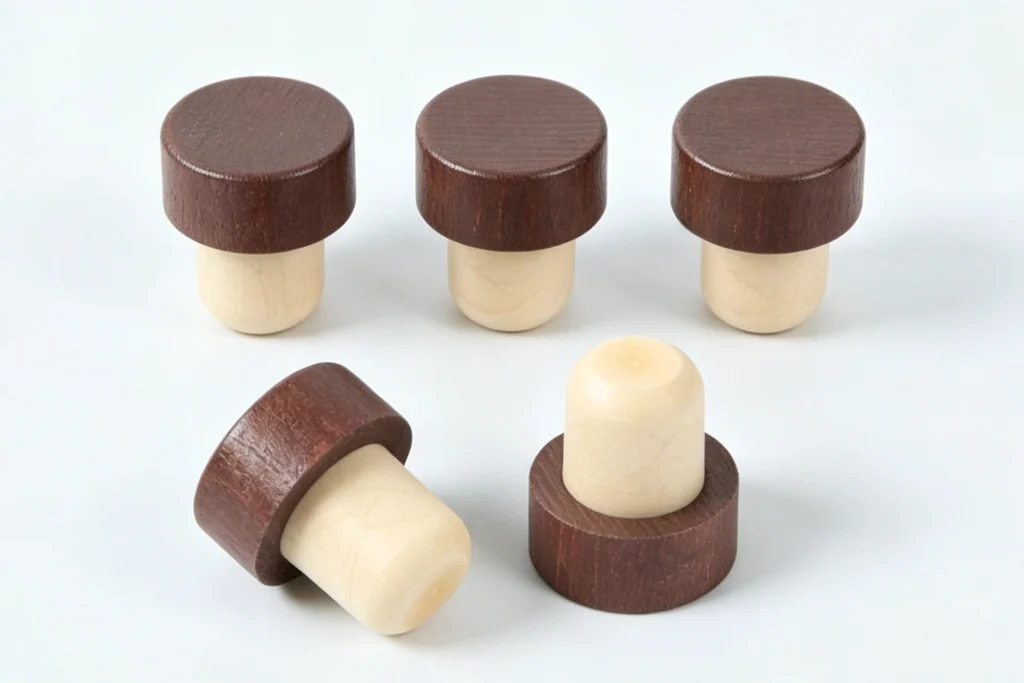
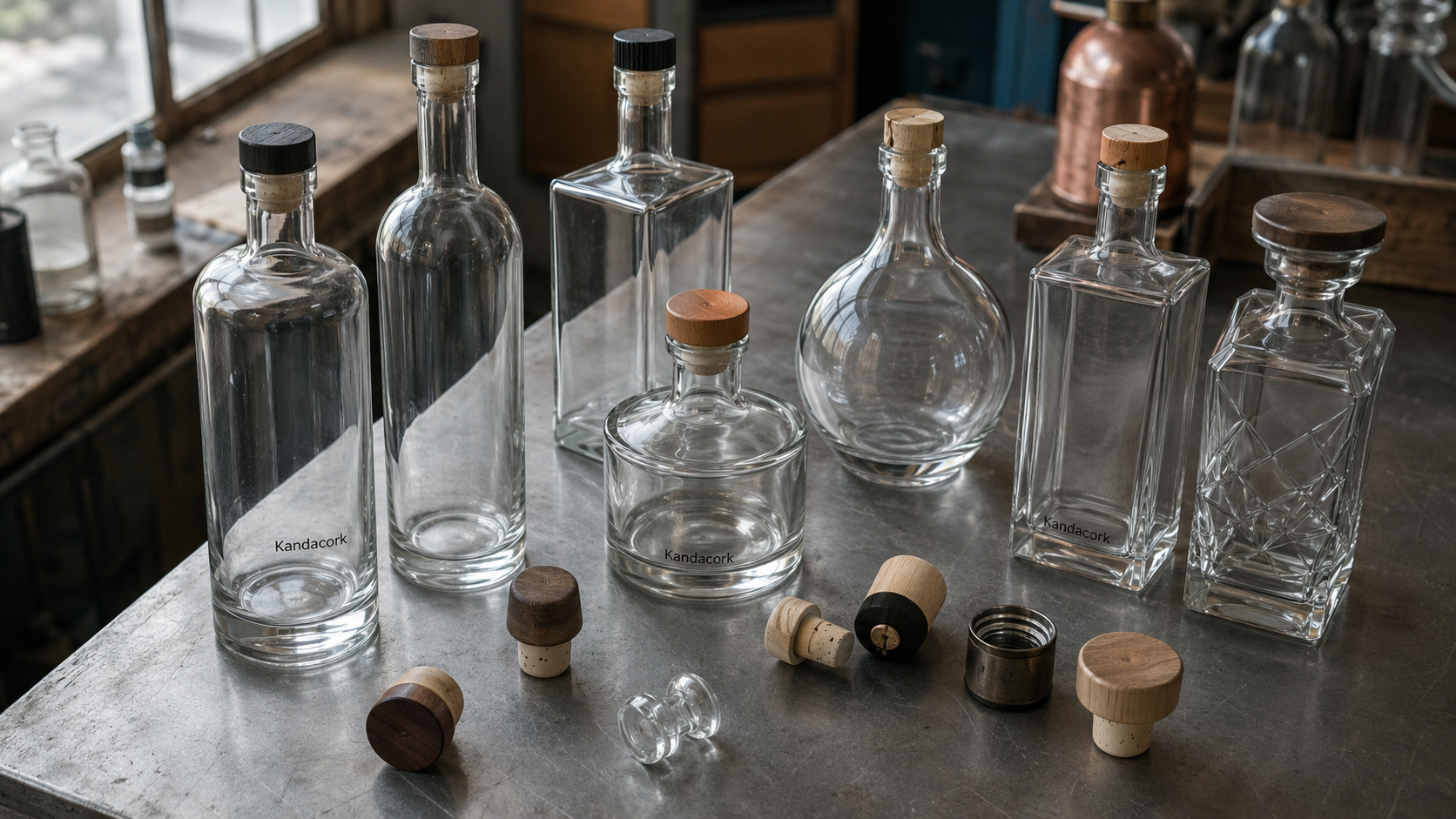
- Wooden top, plastic top, metal top, and decorative top options
- Logo engraving, printing, color matching, and custom finishes
- OEM/ODM closure development for private-label spirits
- Sample development before bulk production
- Bulk supply for distillery packaging programs
- Export-ready packing and production coordination
For brands that need bottle, closure, and packaging coordination across a wider glass program, Kandacork Glass can support broader liquor packaging development while Kandacork Closures focuses on the stopper, cap, and sealing system.
What a Spirits Bottle Packaging Supplier Provides
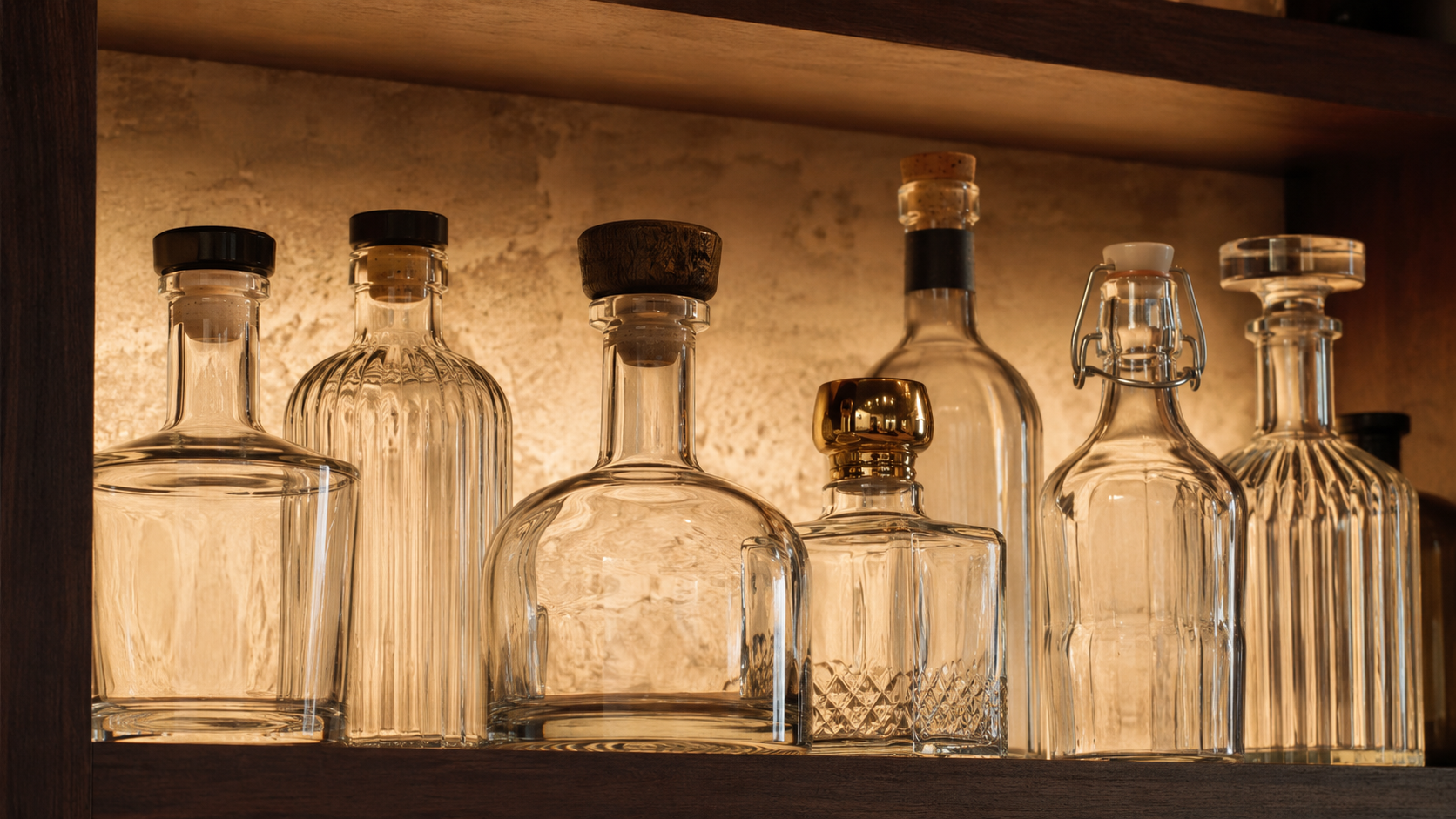
A spirits bottle packaging supplier may support glass bottles, bar-top stoppers, corks, screw caps, ROPP caps, capsules, labels, sleeves, cartons, dividers, gift boxes, and shipping cartons. The exact scope depends on the supplier, but the most valuable support usually happens before production starts.
The main challenge is not simply finding a bottle. The real challenge is making sure every packaging component works together. A premium bottle without the right closure may create problems with fit, sealing, hand feel, brand consistency, or filling-line performance.
A qualified supplier may support:
- Bottle shape, size, and neck finish selection
- Bar-top closure or screw cap matching
- Cork, synthetic, wood, metal, plastic, or glass material options
- Logo decoration and brand customization
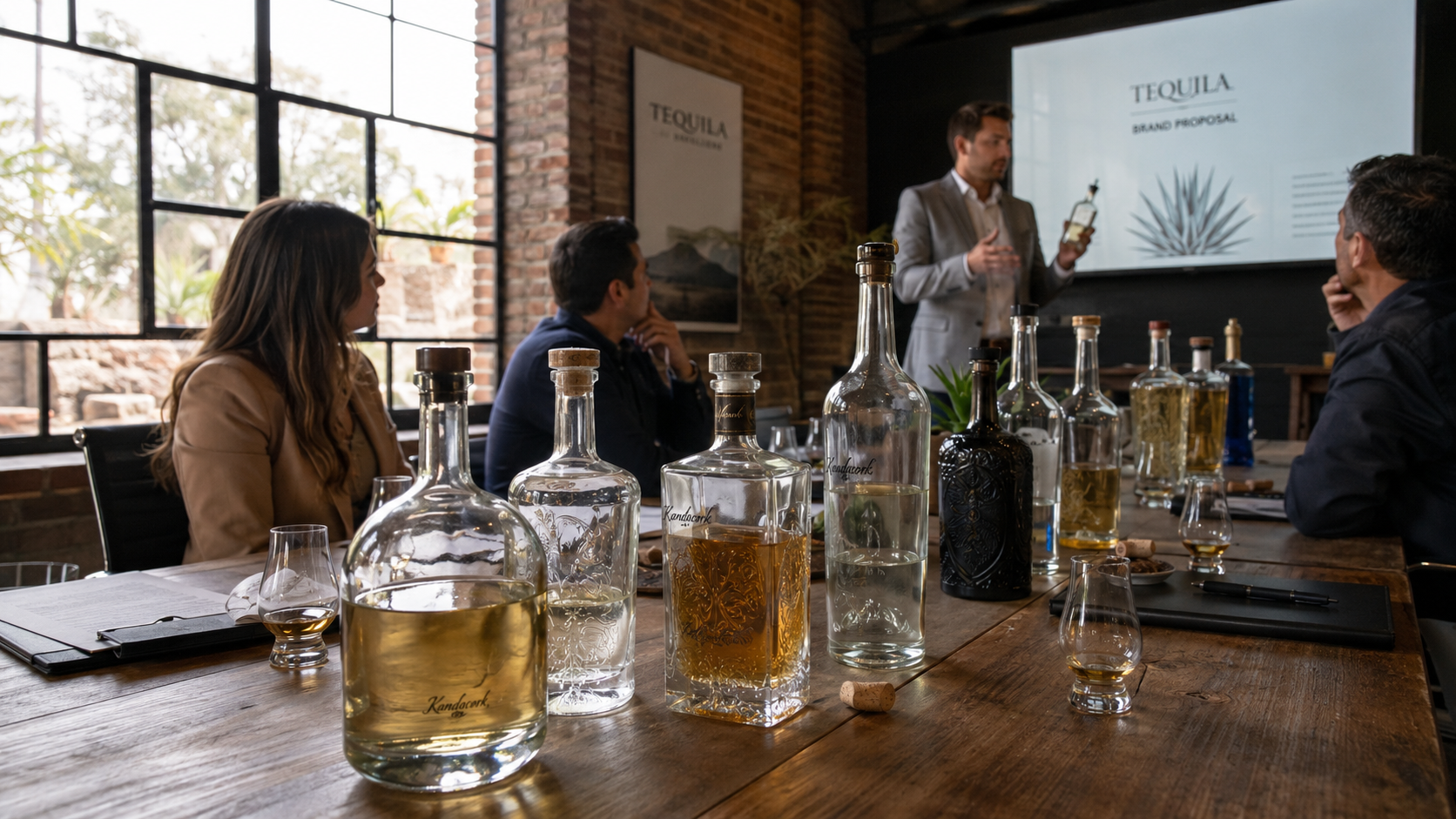
- Sample development and fit testing
- Quality control and dimensional inspection
- Inner carton and export carton protection
- Packing lists, specifications, and buyer documentation
The best spirits bottle packaging supplier acts as a packaging partner, not only a product seller. This is especially important for custom liquor bottle stoppers, premium spirits closures, and private-label packaging projects where repeat-order consistency matters.
Why Spirits Packaging Matters for Brand Growth
Spirits packaging directly affects brand positioning. In retail, buyers often compare bottles visually before they know the taste of the product. Bottle shape, label design, closure style, material texture, and finishing details all influence perceived value.
A whiskey bottle with a natural wood bar-top closure may communicate tradition and craftsmanship. A vodka bottle with a clean metal cap may feel modern and precise. A gin bottle with a colored decorative top may suggest botanical creativity. A tequila or mezcal bottle with a textured closure may support a more handcrafted identity.
Decoration also plays a major role. Frosting, coating, screen printing, hot foil, embossing, debossing, badges, and neck charms can make a bottle more distinctive when they are planned around the closure and label area. For projects where surface finishing is central to the pack, custom spirits bottle decoration can help align branding effects with bottle geometry and export packing needs.
Packaging also affects business performance. If the closure does not fit the bottle neck correctly, the brand may face leakage, loose stoppers, difficult opening, production delays, or customer complaints. If the surface finish scratches during transport, the product may arrive looking less premium than expected.
Good spirits packaging should protect the product, support brand identity, improve shelf appeal, work with production equipment, fit cartons and shipping systems, support required labeling space, and remain consistent across repeat orders.
Bottle and Closure Compatibility Checklist
Bottle and closure compatibility should be confirmed before mass production. A closure that looks correct in a photo may not fit correctly on the actual bottle. This is why physical samples and fit testing are important.
| Compatibility Point | What Buyers Should Check | Why It Matters |
|---|---|---|
| Bottle neck finish | Opening size, inner diameter, outer finish, tolerance | Ensures the closure fits correctly |
| Shank diameter | Cork or synthetic shank size | Affects insertion, removal, and sealing |
| Insertion depth | How far the stopper enters the bottle | Impacts stability and user experience |
| Top diameter | Size of wood, metal, plastic, or decorative top | Affects visual balance and hand feel |
| Material compression | Natural cork or synthetic flexibility | Influences seal and ease of use |
| Filling-line process | Manual or machine insertion | Prevents production delays |
| Carton protection | Inner packing and export carton design | Reduces scratches and transport damage |
For bar-top closures, buyers should test with the actual bottle sample whenever possible. Drawings are useful, but real bottle tolerances can vary between suppliers and batches. A small difference in the neck opening may affect how the stopper feels when inserted or removed.
Closure Type Comparison for Spirits Bottles
Different spirits categories use different closure systems. The best choice depends on brand positioning, bottle neck finish, filling process, target price, tamper requirements, and consumer experience.
| Closure Type | Best For | Advantages | Buyer Notes |
|---|---|---|---|
| Bar-top cork closure | Whiskey, rum, tequila, gin, brandy, liqueurs | Premium appearance, resealable, strong hand feel | Fit must be tested with the actual bottle |
| Synthetic bar-top stopper | Spirits needing consistent dimensions | Stable size, controlled fit, reliable repeat production | Appearance depends on top material and finish |
| Natural cork stopper | Traditional spirits and craft positioning | Natural look, classic perception, tactile value | Cork variation should be controlled through QC |
| Wooden top closure | Premium and craft spirits | Warm appearance, strong brand character | Wood grain and color may vary naturally |
| Metal cap | Vodka, RTD spirits, modern spirits | Clean appearance, efficient production | Requires bottle and cap compatibility |
| ROPP cap | High-volume spirits | Secure closure, tamper-evident options | Requires compatible capping equipment |
| Decorative stopper | Gift spirits and limited editions | High differentiation, strong shelf impact | Usually needs longer sampling and approval time |
For high-speed bottling, custom ROPP closures can be engineered around thread profile, cap height, bottle finish, and line requirements. For premium dark spirits and gifting ranges, a bar-top stopper may create a stronger opening ritual and more tactile brand experience.
Stock, Semi-Custom, and Fully Custom Spirits Packaging
A spirits bottle packaging supplier may offer stock packaging, semi-custom packaging, or fully custom packaging. Each option has a different role.
| Packaging Option | Best For | Advantages | Limitations |
|---|---|---|---|
| Stock packaging | Startup brands, trial batches, urgent launches | Faster lead time, lower development cost, existing components | Less brand differentiation |
| Semi-custom packaging | Growing spirits brands and private-label projects | Good balance of cost, speed, and branding | Limited shape changes |
| Fully custom packaging | Premium spirits, long-term brand programs, exclusive projects | Strong identity, unique shelf presence, tailored design | Higher tooling cost and longer development time |
Stock packaging is useful when speed matters. A new distillery may use standard bottles and closures for the first launch, then upgrade later. Semi-custom packaging is often the most practical option for B2B buyers because it can combine an existing closure structure with custom color, logo, top material, or finish. Fully custom packaging is best for brands that want a distinctive long-term market position.
When glass structure, closure fit, and brand decoration need to be developed as one platform, Kandacork Glass Packaging can support integrated glass bottle and closure planning for broader packaging programs.
Common Mistakes When Sourcing Spirits Bottle Packaging
Many packaging problems happen before production begins. They often come from incomplete specifications, limited sample testing, or choosing components based only on appearance.
Common sourcing mistakes include:
- Choosing a closure before confirming the bottle neck finish
- Approving a closure only by photo instead of testing physical samples
- Comparing unit price without reviewing tolerance, finish, and packing quality
- Ignoring carton protection for premium coated or engraved closures
- Selecting a fully custom design when a semi-custom option would launch faster
- Forgetting to confirm logo artwork size, position, and finish tolerance
- Using only drawings when an actual bottle sample is available
- Overlooking natural variation in wood grain or cork appearance
- Failing to confirm repeat-order consistency before a large launch
- Waiting too long to discuss documentation, inspection, and export packing
For export orders, closures should not be packed loosely in large cartons because surface abrasion can damage premium finishes. For wood-top closures, buyers should confirm acceptable natural grain and color variation before mass production. For bar-top stoppers, the actual bottle sample is more reliable than drawings alone because glass tolerance can vary.
Custom Spirits Bottle Closures for Brand Differentiation
Custom spirits bottle closures help brands create a stronger identity. Since consumers touch the closure when opening and resealing the bottle, the closure becomes part of the product experience.
Kandacork Closures can develop custom closure options such as:
- Wood bar-top closures
- Cork stoppers
- Synthetic shank stoppers
- Plastic top closures
- Metal top closures
- Glass-look decorative tops
- Logo engraved closures
- Printed or color-matched tops
- Matte, glossy, metallic, natural, or textured finishes
- Custom shapes for premium spirits packaging
For whiskey and bourbon, custom wooden bar-top stoppers often support a warm, traditional, and premium image. For gin, colored tops and creative shapes can reflect botanicals, freshness, or craft identity. For tequila and mezcal, textured closures and natural materials can communicate authenticity. For vodka, smooth metallic or clean minimal closures may feel more refined and modern.
A strong spirits bottle packaging supplier should understand not only the component, but also the category. The closure for a craft whiskey should not feel the same as the closure for a minimalist vodka or a colorful botanical gin.
Quality Control for Spirits Bottle Closures
Quality control is essential for spirits packaging because small defects can cause large problems. A slightly loose stopper may reduce consumer confidence. A scratched top may damage premium appearance. An inconsistent shank diameter may affect filling-line performance.
A practical QC process should include:
| QC Item | Inspection Focus | Buyer Benefit |
|---|---|---|
| Dimensional check | Diameter, height, insertion depth, tolerance | Improves bottle compatibility |
| Material inspection | Cork, synthetic, wood, metal, or plastic quality | Reduces defects and inconsistency |
| Fit testing | Actual bottle sample testing | Helps prevent loose or tight closures |
| Surface inspection | Scratches, color, coating, printing, engraving | Protects premium appearance |
| Assembly inspection | Alignment, glue, top and shank connection | Improves durability |
| Packing inspection | Inner bags, trays, cartons, export protection | Reduces transport damage |
| Pre-shipment review | Final product and packing confirmation | Reduces order risk |
For custom closures, buyers should approve physical samples before bulk production. Photos and drawings are useful, but hand feel, insertion resistance, and visual balance are best judged with real samples.
Quality programs should also be documented. The International Organization for Standardization describes ISO 9001 as a framework for quality management systems that helps organizations deliver consistent products and meet customer and regulatory expectations. In packaging procurement, that same mindset translates into clear specifications, inspection records, corrective action, and repeatable production controls.
Compliance, Sustainability, and Buyer Documentation
A packaging supplier does not replace legal or regulatory review, but the supplier should understand that spirits packaging must support compliance in the buyer’s target market.
For the U.S. market, the Alcohol and Tobacco Tax and Trade Bureau provides guidance on distilled spirits labeling, including requirements that affect how brand, class or type, alcohol content, net contents, and other information appear on the container. The legal framework for U.S. distilled spirits labeling and packaging is also set out in 27 CFR Part 5. Packaging design should leave enough practical label space and should be reviewed early when using unusual bottle shapes or small formats.
Environmental claims also need care. If a brand wants to describe packaging as recyclable, sustainable, eco-friendly, biodegradable, or plastic-free, the claim should be specific and supportable. The Federal Trade Commission’s Green Guides are commonly referenced in the U.S. for avoiding misleading environmental marketing claims.
Glass remains important in spirits packaging because of its premium feel, chemical inertness, clarity, and recyclability. The Glass Packaging Institute notes that glass can be recycled with no loss in quality or purity, making glass packaging relevant to many brand sustainability conversations.
Buyers may request documents such as:
- Product specification sheet
- Closure drawing or dimension sheet
- Material information
- Sample approval record
- Packing list
- Quality inspection report
- Compliance declaration when required
- Third-party testing report when applicable
A good supplier helps buyers confirm specifications clearly before bulk production. This reduces misunderstanding between design, purchasing, quality, and production teams.
Tamper Evidence, Non-Refillable Systems, and Market Risk
Some spirits markets require stronger protection against refilling, counterfeiting, or unauthorized reuse. This is especially relevant for premium brands, export markets, duty-free channels, and spirits categories with higher counterfeit risk.
Tamper-evident bands, shrink sleeves, capsules, ROPP systems, and non-refillable pourer inserts can help show whether a package has been opened or interfered with. Non-refillable closures can also help protect brand reputation by making it harder to refill a genuine bottle with lower-quality liquid.
These systems should be planned early because they affect neck finish, cap structure, filling equipment, consumer opening experience, and cost. A supplier should help buyers compare security level, line speed, closure appearance, and market expectations before final approval.
How to Choose a Spirits Bottle Packaging Supplier
Choosing the right spirits bottle packaging supplier requires more than comparing unit price. A low-cost component may become expensive if it causes leakage, production delays, poor shelf appearance, or inconsistent repeat orders.
Use this supplier evaluation checklist before placing a bulk order:
| Evaluation Area | What to Ask | Why It Matters |
|---|---|---|
| Category experience | Has the supplier worked with spirits bottles and closures? | Spirits packaging has specific fit and branding requirements |
| Custom capability | Can the supplier support logo, color, shape, and material customization? | Helps build brand differentiation |
| Sampling process | Can samples be made before mass production? | Reduces development risk |
| Fit testing | Can the closure be tested with the actual bottle? | Helps prevent compatibility problems |
| MOQ | Is the minimum order quantity suitable for your production plan? | Supports realistic purchasing |
| Lead time | Does timing include sampling, approval, production, QC, and shipping? | Prevents launch delays |
| Quality control | What inspection steps are used? | Protects consistency |
| Export packing | How are closures protected during shipment? | Reduces damage and complaints |
| Communication | Are specifications confirmed clearly? | Prevents costly misunderstandings |
A strong supplier should be able to explain materials, tolerances, sample approval, packing, and production details in clear language. If the supplier only gives a price without asking about bottle neck finish, closure type, order quantity, or target market, buyers should be cautious.
Packaging Ideas for Different Spirits Categories
Different spirits categories have different packaging expectations. The closure, bottle, label, and secondary packaging should match the product’s story and price level.
| Spirits Category | Packaging Direction | Closure Ideas |
|---|---|---|
| Whiskey and bourbon | Warm, premium, traditional, craft-focused | Wood bar-top closures, cork stoppers, darker finishes |
| Vodka | Clean, modern, minimal, precise | Metal caps, clear decorative tops, smooth finishes |
| Gin | Fresh, colorful, botanical, creative | Colored tops, custom shapes, engraved closures |
| Tequila and mezcal | Natural, textured, rustic, handcrafted | Cork stoppers, wood tops, earthy finishes |
| Rum | Classic, warm, heritage-inspired | Bar-top corks, darker tones, decorative tops |
| Brandy | Elegant, mature, premium | Wood, metal, or glass-look decorative closures |
| Liqueurs | Giftable, colorful, flavor-led | Custom colors, decorative stoppers, premium finishes |
For premium spirits, packaging should feel intentional. A closure should not look like an afterthought. It should match the bottle shape, label design, brand story, and target consumer.
Quote Request Checklist for Buyers
A clear quote request helps the supplier respond faster and more accurately. It also reduces the risk of misunderstanding during sample development.
Before contacting a spirits bottle packaging supplier, prepare:
- Spirit category, such as whiskey, vodka, gin, rum, tequila, brandy, or liqueur
- Bottle drawing, neck finish, or physical bottle sample
- Target closure type
- Preferred material, such as cork, synthetic, wood, metal, or plastic
- Logo file or decoration requirement
- Color or finish requirement
- Estimated order quantity
- Expected reorder plan if available
- Destination country or shipping port
- Target launch schedule
- Packing preference
- Documentation or testing needs
For custom closures, a physical bottle sample is especially helpful. It allows the supplier to test fit, appearance, insertion resistance, and visual proportion before production.
Why Work With Kandacork Closures?
Kandacork Closures supports spirits brands, distilleries, packaging buyers, and private-label beverage companies that need custom closure solutions for bulk packaging programs. Our focus is not only supplying closures, but helping buyers develop packaging details that support brand value and production reliability.
Kandacork Closures can help with bar-top stopper design, cork and synthetic shank selection, wood top development, logo engraving, color matching, premium finish options, sample approval, and bulk production coordination.
Working with a specialized supplier can help reduce the risk of poor fit, inconsistent appearance, weak shelf presentation, or unclear specifications. For B2B buyers, this means fewer development problems and a smoother path from concept to production.
FAQ
What does a spirits bottle packaging supplier provide?
A spirits bottle packaging supplier provides packaging components for distilled spirits, including bottles, closures, corks, caps, bar-top stoppers, cartons, and custom branding support. A qualified supplier should also help buyers confirm bottle and closure compatibility before bulk production.
What is the best closure for spirits bottles?
The best closure depends on the bottle neck, spirit type, brand position, and production process. Bar-top cork closures are common for premium whiskey, tequila, gin, rum, brandy, and liqueurs, while screw caps or metal caps may suit vodka, mini bottles, RTD spirits, or high-volume filling lines.
Can spirits bottle closures be customized?
Yes. Spirits bottle closures can be customized with logo engraving, printing, embossing, debossing, color matching, special top shapes, wood finishes, synthetic shanks, cork materials, and decorative surface treatments.
Should I choose natural cork or synthetic cork?
Natural cork offers a traditional look and feel, while synthetic shanks can provide controlled dimensions and stable repeat production. The right choice depends on the bottle, brand image, budget, and required fit performance.
What information should I send when requesting a quote?
Buyers should send the bottle drawing or neck finish, closure type, preferred materials, logo requirements, estimated order quantity, destination country, and target delivery timeline. A physical bottle sample is helpful for accurate fit testing.
How long does custom closure development take?
Custom closure development time depends on design complexity, material selection, sample approval, mold requirements, production quantity, and packing needs. Semi-custom closures are usually faster than fully custom closure designs.
Can Kandacork Closures support private-label spirits packaging?
Yes. Kandacork Closures can support private-label spirits brands with custom closure development, OEM/ODM options, logo decoration, sample approval, and bulk production for whiskey, vodka, gin, rum, tequila, brandy, and liqueur packaging projects.
Request a Quote for Custom Spirits Bottle Packaging
If you are developing a new spirits product or upgrading an existing bottle, start by confirming bottle and closure compatibility. The right closure can improve shelf appeal, support brand identity, and create a better consumer experience.
Kandacork Closures can help you develop custom spirits bottle closures for bulk production, private-label packaging, and premium distillery branding. Send your bottle details, closure requirements, logo artwork, order quantity, and target timeline through the custom closure quote request page to discuss samples and production options.