Choosing the right bottle closure supplier for distilleries is a critical packaging decision for any spirits brand. The closure affects sealing performance, shelf presentation, consumer confidence, tamper evidence, opening feel, and production efficiency.
A bottle closure supplier for distilleries provides custom stoppers, screw caps, ROPP closures, non-refillable closures, capsules, and shrink sleeves for spirits bottles. The right supplier helps match the closure with the bottle neck, alcohol product, filling line, branding needs, tamper-evident requirements, and bulk production schedule.
Kandacork Closures supports distilleries, bottlers, spirits brands, importers, and private-label packaging buyers with custom closure solutions for whisky, vodka, gin, rum, tequila, brandy, liqueurs, RTDs, and craft spirits. The goal is simple: help your bottle close securely, look premium, and perform reliably from filling line to retail shelf.
Quick Answer
A bottle closure supplier for distilleries helps spirits brands source and customize closures that fit the bottle neck, protect the product, support brand identity, and meet filling-line requirements. Common options include bar-top stoppers, cork stoppers, screw caps, ROPP caps, non-refillable closures, capsules, and shrink sleeves.
For buyers, the best supplier is not just a cap vendor. It should understand bottle drawings, neck finishes, stopper shanks, cap liners, opening torque, tamper-evident structures, decoration methods, sample approval, quality inspection, and export packaging.
Who This Page Is For
This guide is designed for distilleries, spirits brands, bottlers, packaging distributors, importers, and private-label buyers looking for custom bottle closures for whisky, vodka, gin, rum, tequila, brandy, liqueurs, RTDs, and craft spirits.
It is especially useful if you are developing a new bottle design, replacing an existing closure, preparing a private-label spirits project, sourcing closures in bulk, or comparing different stopper and cap options before requesting samples.
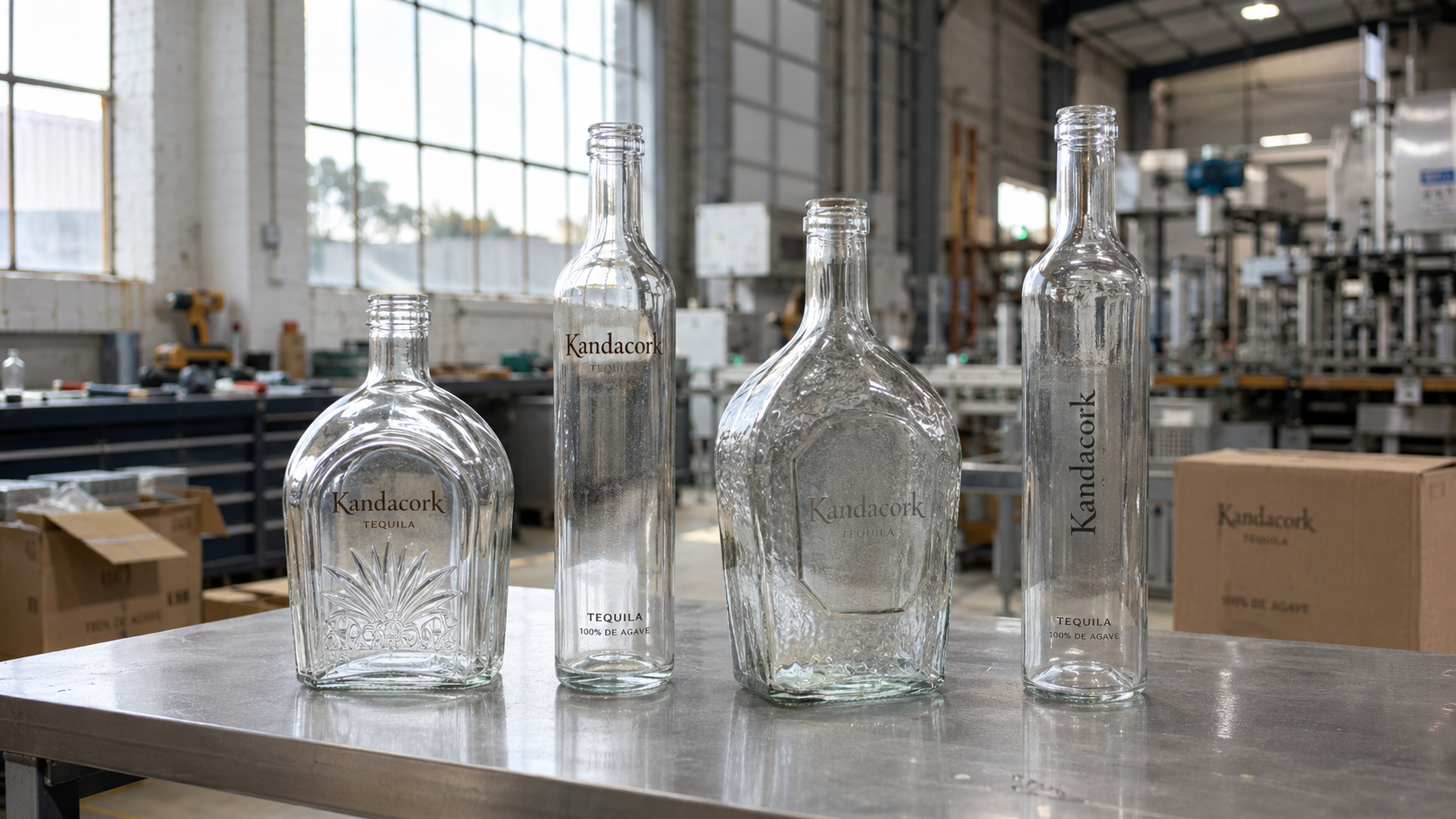
For teams building the full package at the same time, Kandacork Spirits can support custom spirits bottle development, standard mold selection, neck-finish planning, and closure matching for premium liquor packaging projects.
Why the Right Closure Matters for Distillery Packaging
A spirits closure is the final contact point between the product and the consumer. Before a customer smells or tastes the spirit, they see the closure, touch it, open it, and judge the quality of the packaging.
For premium whisky, rum, brandy, gin, tequila, vodka, liqueurs, and craft spirits, a weak closure can create real problems. It may cause leakage, loose fit, poor opening feel, unstable capping, damaged brand presentation, or customer complaints after shipment.
A strong closure system should support several goals at the same time:
- Seal the bottle during storage and transport
- Match the neck finish and bottle tolerance
- Support manual, semi-automatic, or automatic filling lines
- Improve shelf appeal and brand recognition
- Provide tamper evidence where required
- Offer a smooth opening and resealing experience
- Maintain consistency across bulk production batches
In the United States, the Alcohol and Tobacco Tax and Trade Bureau states that distilled spirits bottles and containers require a tamper-evident closure or similar device that is broken when opened, leaving a portion on the container. This makes closure design especially important for whisky, gin, rum, brandy, vodka, cordials, and other distilled spirits sold into regulated markets through compliant packaging programs from the TTB distilled spirits closure guidance.
A reliable bottle closure supplier for distilleries should understand both technical packaging performance and brand presentation. The best result comes from matching the closure, bottle, label, capsule, carton, and filling process as one complete packaging system.
Best Closure Options by Buyer Need
Different distilleries have different packaging goals. A small-batch whisky producer may want a premium wooden stopper, while a high-volume vodka brand may prefer an aluminum screw cap or ROPP closure for production efficiency.
| Buyer Need | Recommended Closure Option | Why It Works |
|---|---|---|
| Premium whisky packaging | Wooden bar-top stopper | Traditional feel, strong shelf appeal, gift-ready appearance |
| Modern vodka bottling | Aluminum screw cap or ROPP closure | Clean look, efficient capping, consistent color control |
| Craft gin branding | Custom bar-top stopper | Flexible material, logo, color, and shape options |
| Export spirits security | Non-refillable closure | Helps reduce refill risk and supports product protection |
| Tamper-evident packaging | ROPP cap, capsule, or shrink sleeve | Provides visible opening evidence |
| Mini bottles and samples | Screw cap or small ROPP cap | Compact, scalable, and cost-efficient |
| Luxury spirits gift sets | Glass, metal, or weighted stopper | Premium touch and strong visual differentiation |
This comparison helps buyers narrow down the right closure direction before requesting samples. The final choice should still be confirmed with the actual bottle drawing, bottle sample, liquid type, filling method, target market, and expected annual volume.
Key Closure Terms Distilleries Should Know
What Is a Bar-Top Stopper?
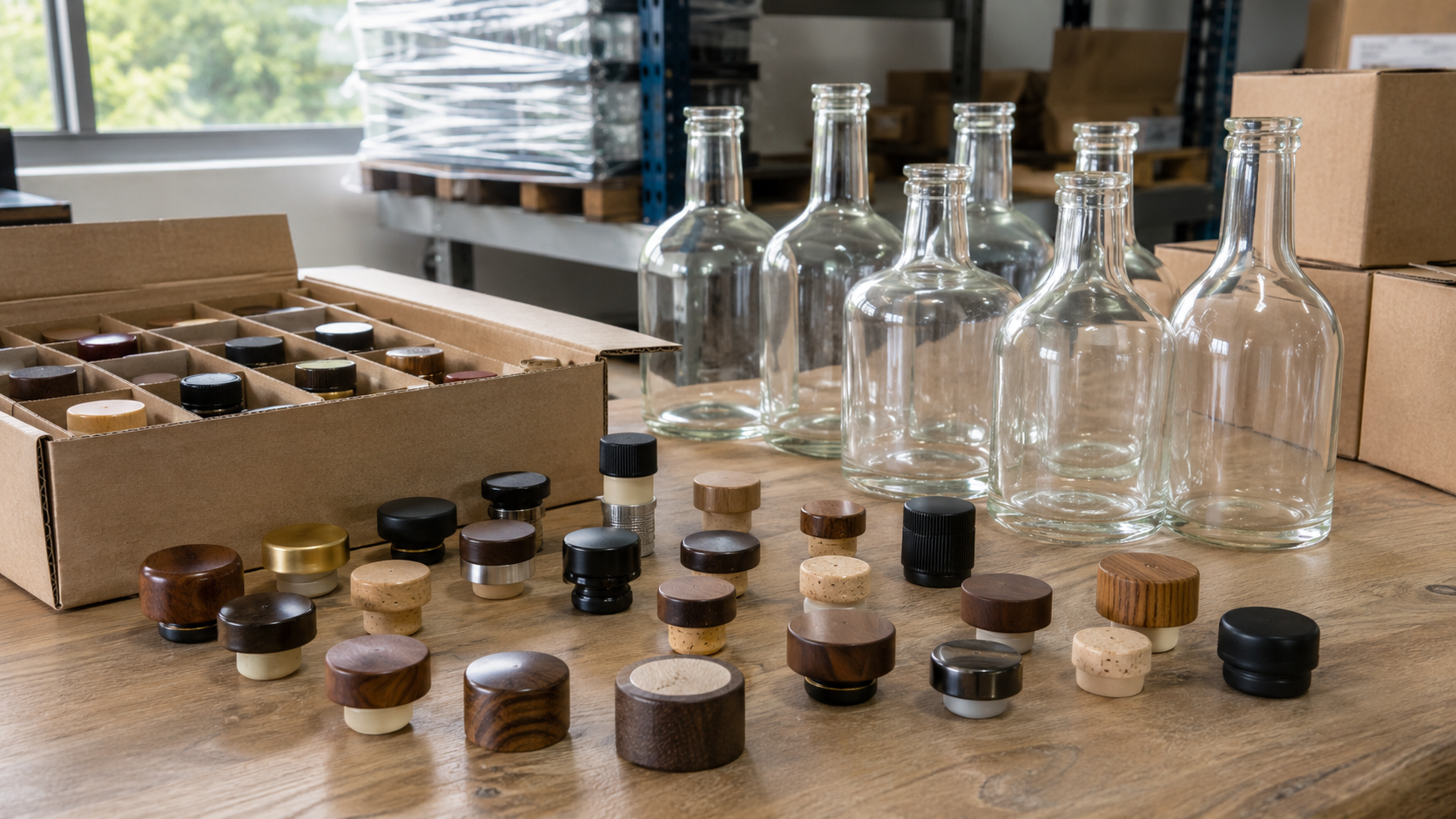
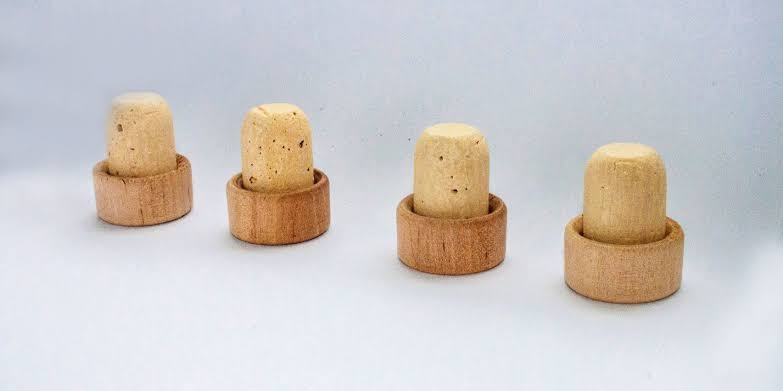
A bar-top stopper is a bottle closure with a decorative top and an inserted shank, usually made from cork, synthetic cork, or polymer material. It is pushed into the bottle mouth and pulled out by hand when the bottle is opened.
Bar-top stoppers are popular for whisky, rum, brandy, gin, tequila, and premium craft spirits because they create a more traditional and premium opening experience than a simple screw cap.
What Is a ROPP Closure?
A ROPP closure is a roll-on pilfer-proof aluminum cap applied to a compatible bottle neck by a capping machine. During application, the cap is rolled onto the bottle finish to form threads and create a tamper-evident structure.
ROPP caps are commonly used for spirits bottles that need efficient production, metal cap appearance, reliable sealing, and visible opening evidence. For projects that require pilot testing and capping-line compatibility, custom ROPP closures can be developed around the bottle finish, shell dimensions, skirt height, liner, torque range, and decoration requirements.
What Is a Non-Refillable Closure?
A non-refillable closure is a security-focused bottle closure designed to make unauthorized refilling more difficult. It may include internal valve systems, pouring inserts, security bands, and tamper-evident structures.
This closure type is often used for premium spirits, export markets, duty-free channels, and regions where counterfeiting or bottle reuse is a concern.
What Is a Closure Liner?
A closure liner is the sealing material inside a cap. It helps create contact between the cap and bottle finish, improving sealing performance and reducing leakage risk.
For spirits packaging, liner selection should consider alcohol compatibility, cap structure, bottle finish, opening torque, and filling-line requirements.
What Is a Bottle Neck Finish?
A bottle neck finish is the technical shape and dimension of the bottle opening area. It includes the mouth diameter, thread profile, bead structure, height, and tolerance.
The closure must match the neck finish correctly. If the closure and bottle finish are not compatible, the bottle may leak, open poorly, or fail during capping.
Main Types of Bottle Closures for Distilleries
Bar-Top Stoppers
Bar-top stoppers are widely used for whisky, rum, brandy, gin, tequila, mezcal, craft spirits, and premium liqueurs. They usually combine a decorative top with a cork, synthetic cork, or polymer shank.
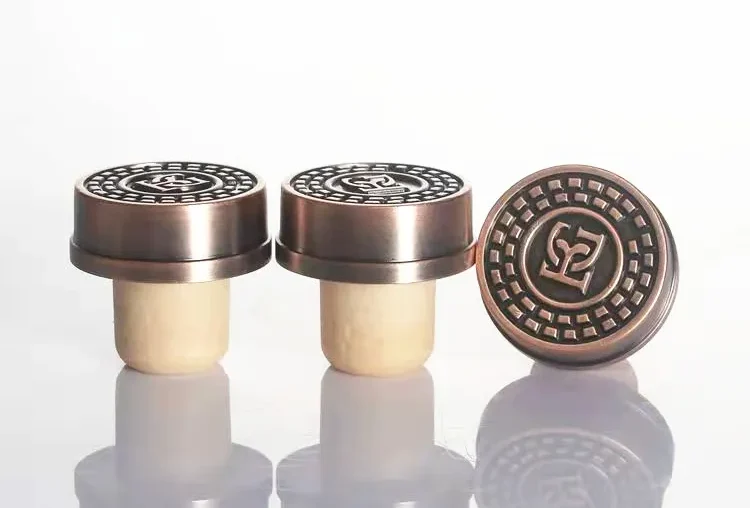
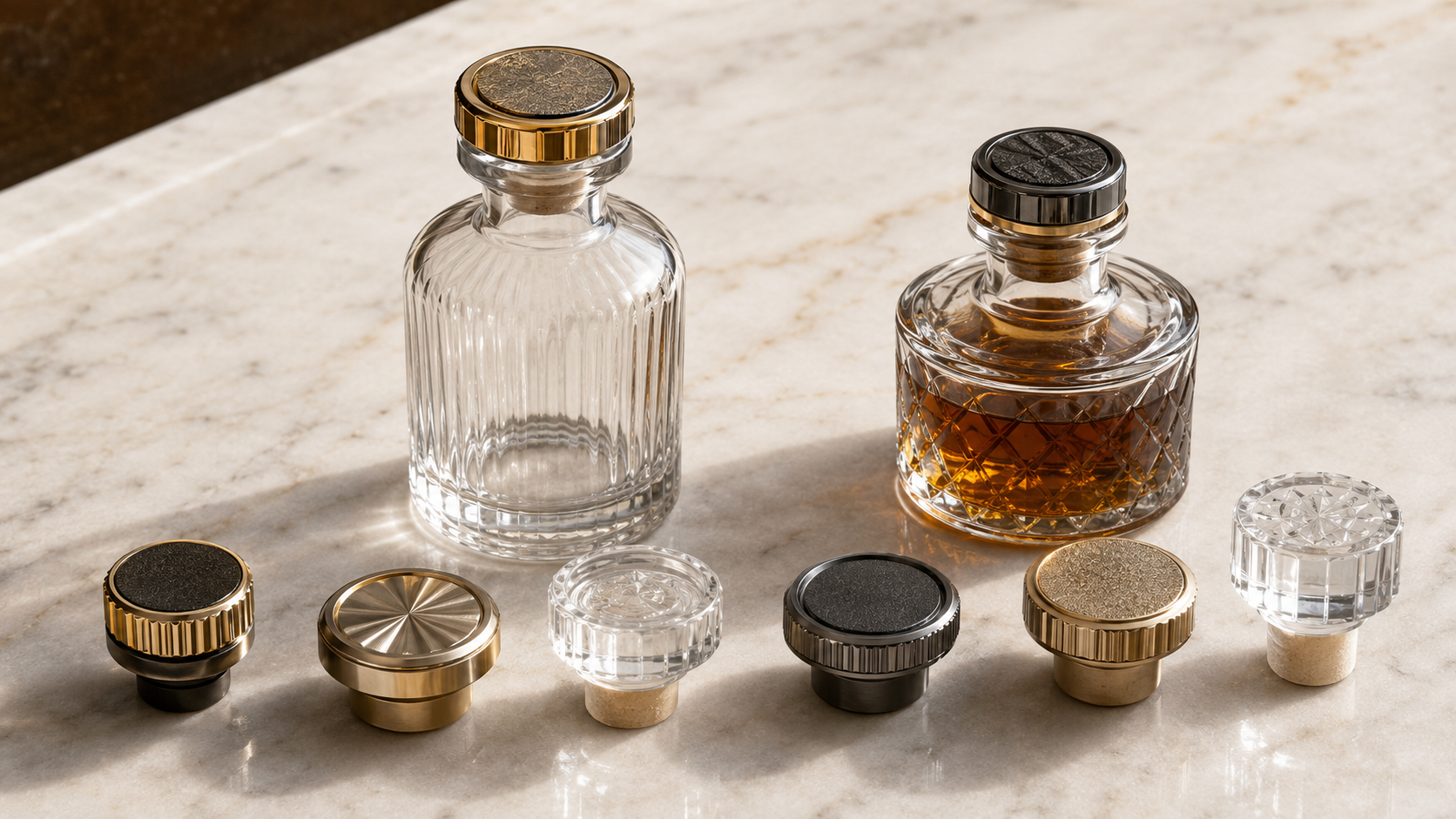
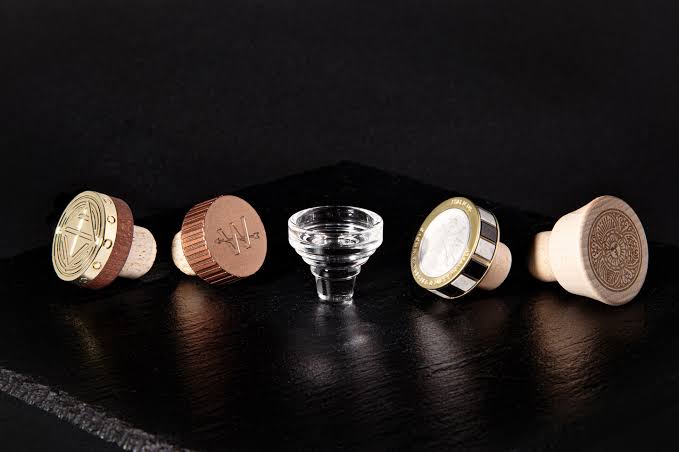
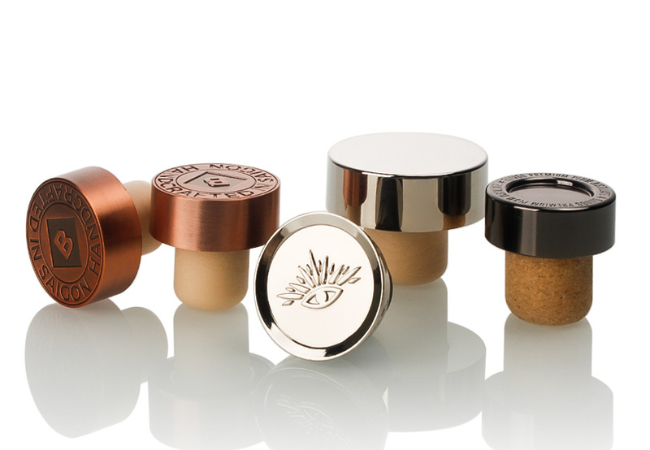
The top can be made from wood, aluminum, zinc alloy, plastic, glass, ceramic, or other specialty materials. The shank provides the sealing function, while the top creates the tactile and visual identity of the bottle.
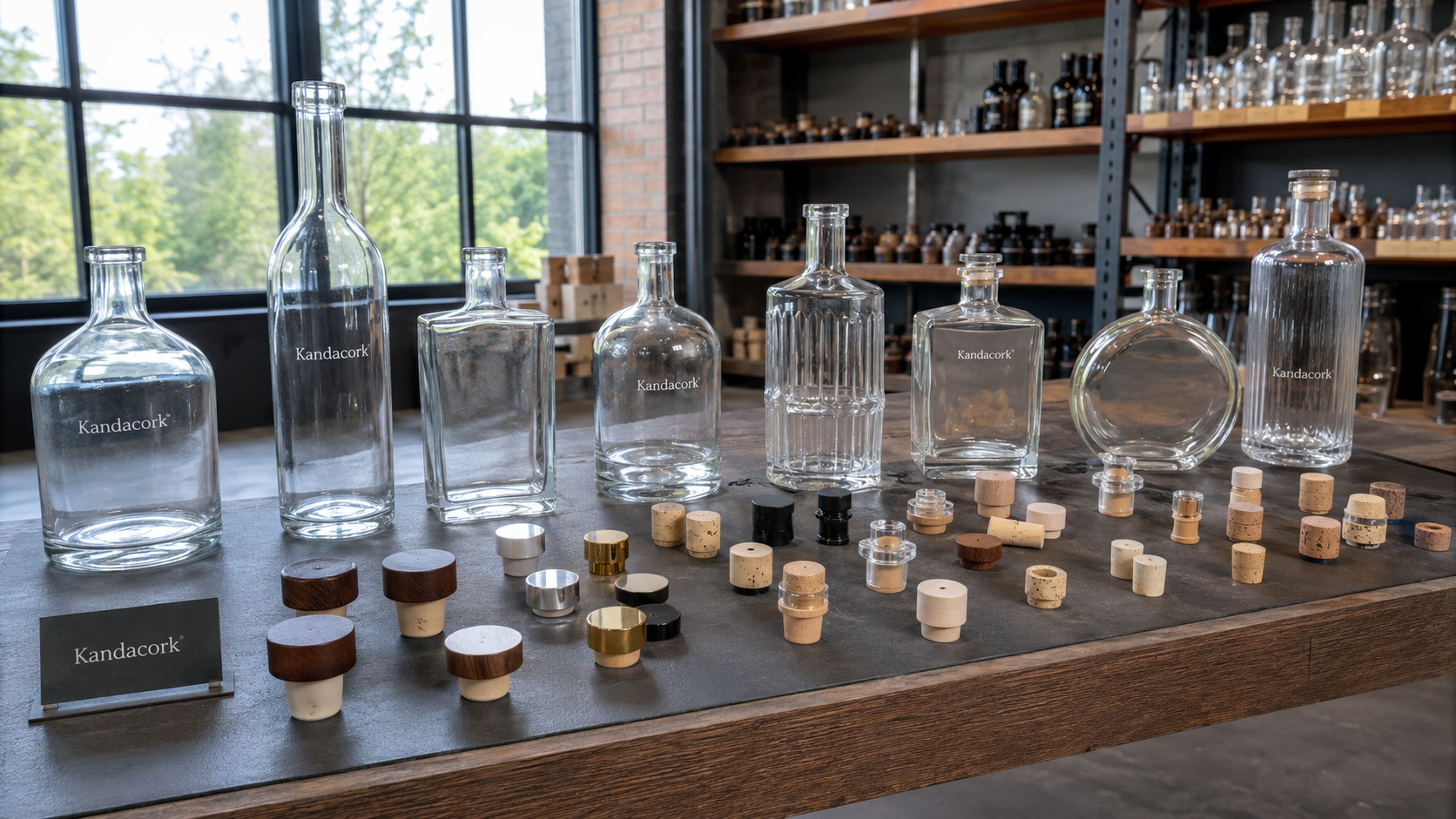
Wooden bar-top stoppers are often selected for whisky, rum, and brandy because they create a natural, traditional, and premium feeling. Aluminum or metal tops work well for vodka, gin, tequila, and modern spirits packaging. Glass stoppers can be suitable for luxury bottles, decanter-style packaging, and limited-edition gift sets.
For bulk orders, distilleries should confirm shank diameter, insertion depth, bottle mouth tolerance, material compatibility, top finish, logo position, packing method, and sample testing before mass production.
Screw Caps
Screw caps are commonly used for vodka, gin, liqueurs, RTDs, mini bottles, flavored spirits, and high-volume spirits packaging. They are easy to open, easy to reseal, and efficient for many bottling operations.
A screw cap may be made from aluminum, plastic, or composite materials. Depending on the bottle and liquid, the cap may include a liner to improve sealing performance. Decoration options can include printing, embossing, debossing, hot stamping, anodized color, matte finish, or glossy finish.
For distilleries, screw caps are useful when the project requires cost control, consistent production, fast capping, easy consumer use, and stable repeat orders. They are also practical for private-label spirits and retail programs where packaging consistency matters.
Before confirming a screw cap order, buyers should check thread compatibility, cap diameter, skirt height, liner type, torque performance, and the capping equipment used by the filling line.
ROPP Closures
ROPP means roll-on pilfer-proof. ROPP closures are usually aluminum caps applied to a specific bottle neck finish. During capping, the cap is rolled onto the bottle neck and forms threads around the finish.
For spirits brands, ROPP closures are useful when the packaging needs tamper evidence, efficient production, and a clean metal appearance. They are common for vodka, gin, rum, tequila, liqueurs, and other bottled spirits.
A ROPP project should confirm cap diameter, skirt height, liner type, thread profile, bottle neck finish, capping head, and opening torque. If these details are not aligned, the bottle may have poor sealing, difficult opening, uneven capping, or inconsistent consumer experience.
Non-Refillable Closures
Non-refillable closures are used when a spirits brand needs stronger product security. These closures can include internal valve systems, pouring inserts, tamper-evident bands, and security structures designed to make bottle refilling more difficult.
They are especially relevant for premium spirits, export markets, duty-free channels, and regions where counterfeiting or unauthorized refilling is a concern. For whisky, tequila, vodka, rum, and other high-value spirits, non-refillable closures for spirits can help protect brand trust, channel integrity, and consumer confidence.
A non-refillable closure should be reviewed with the actual bottle sample, filling method, pouring requirement, and destination market. The structure must balance security, usability, pouring performance, and production feasibility.
Capsules and Shrink Sleeves
Capsules and shrink sleeves are often used together with cork stoppers, bar-top stoppers, screw caps, or other closure systems. They cover the bottle neck and closure area to create a complete finished appearance.
Capsules can improve shelf presentation, support tamper evidence, protect the neck area, and reinforce brand color consistency. Shrink sleeves can also help consumers identify whether a bottle has been opened.
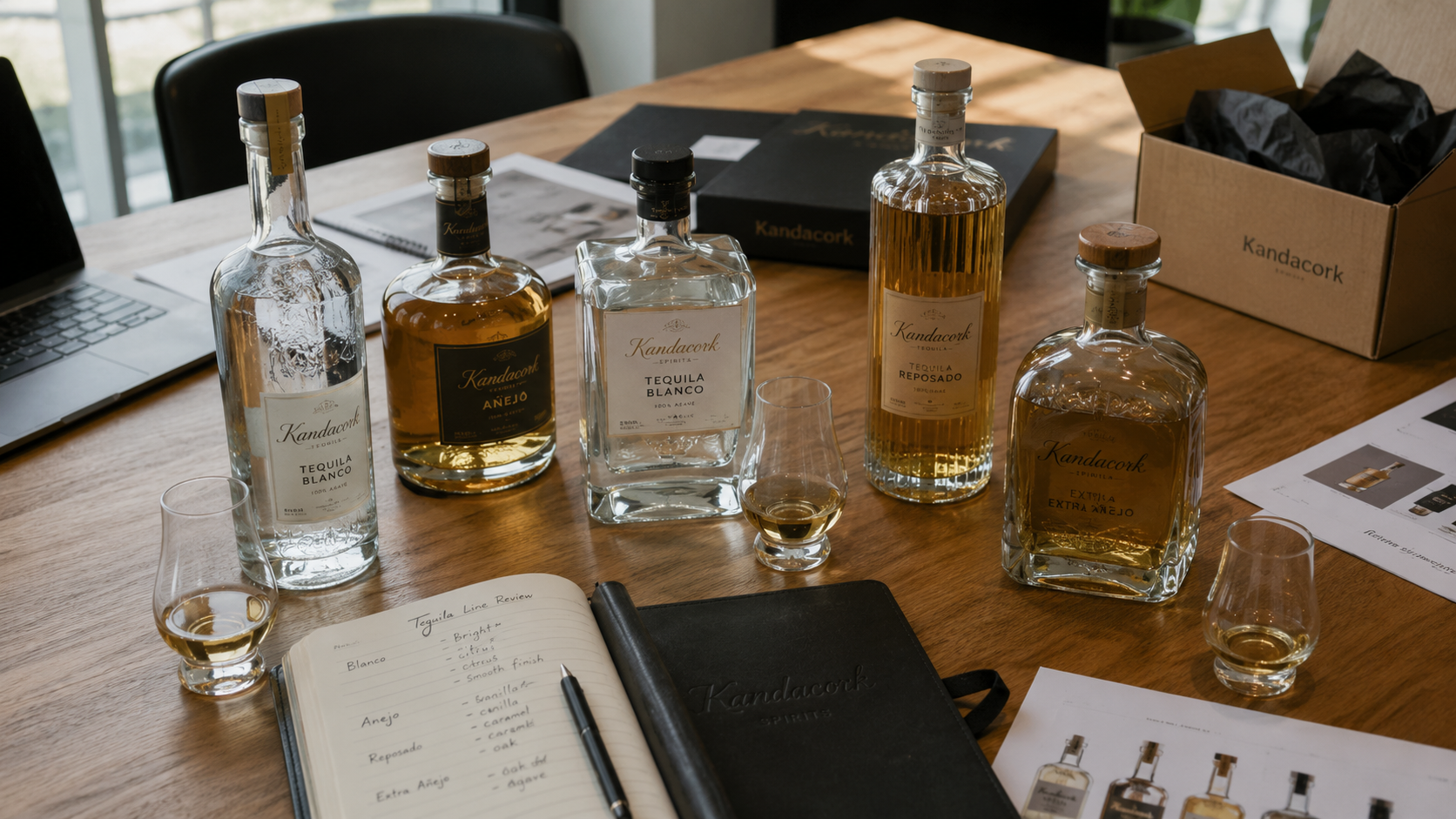
For premium spirits, capsules and sleeves should be designed together with the stopper, bottle shoulder, front label, back label, gift box, and carton. A well-matched capsule can make the entire bottle look more complete and more valuable.
How to Match Closures With Different Spirit Categories
The best closure depends on the spirit category, bottle design, brand position, production method, target market, and price point. A professional bottle closure supplier for distilleries should help buyers choose based on these real packaging conditions.
| Spirit Category | Recommended Closure Options | Buyer Notes |
|---|---|---|
| Whisky / Whiskey | Wooden bar-top stoppers, synthetic cork stoppers, capsules | Premium feel, traditional opening, strong shelf value |
| Vodka | Aluminum screw caps, ROPP caps, metal stoppers | Clean appearance, production efficiency, modern branding |
| Gin | Wood, aluminum, glass, or synthetic stoppers | Good flexibility for craft, botanical, and premium brands |
| Rum / Brandy | Wooden stoppers, metal stoppers, capsules | Warm, mature, gift-ready shelf presentation |
| Tequila / Mezcal | Metal stoppers, glass stoppers, non-refillable closures | Strong identity and security-focused packaging |
| Liqueurs | Screw caps, bar-top stoppers, ROPP closures | Balance between resealing, cost, and decoration |
| RTDs | Screw caps, aluminum caps, ROPP closures | High-volume production and easy consumer use |
| Mini Bottles | Screw caps, small ROPP caps | Compact, efficient, and scalable |
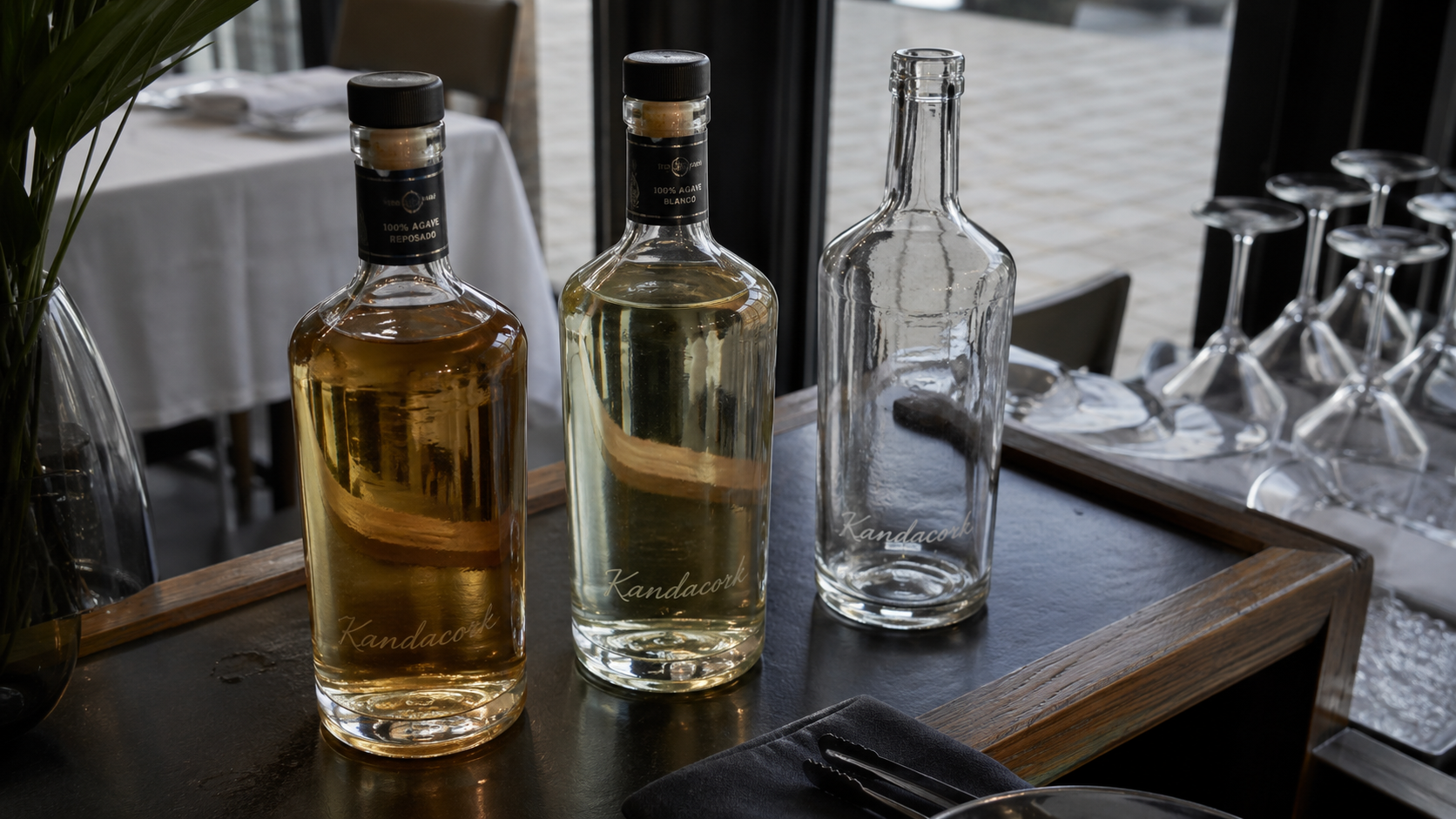
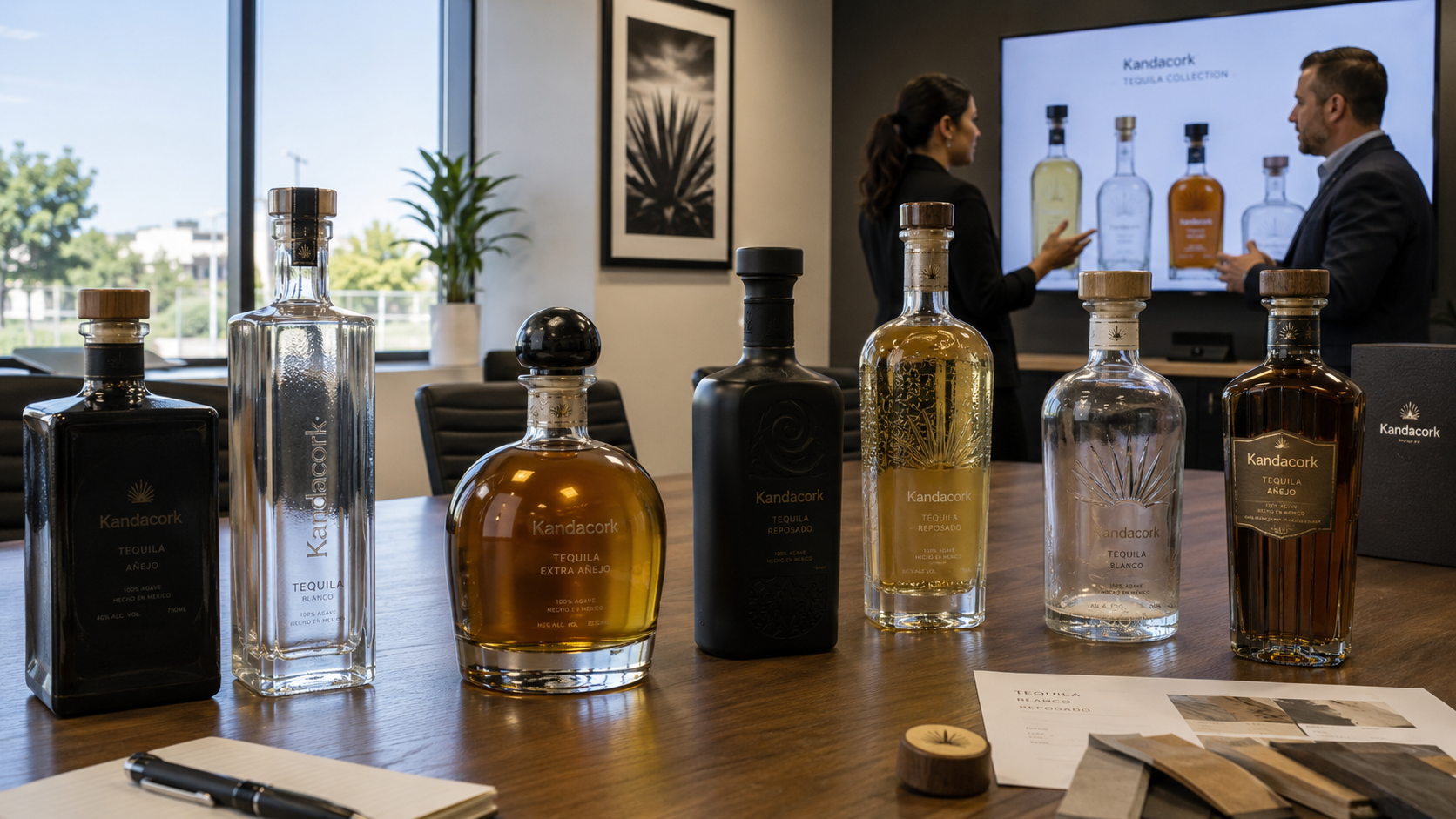
For example, a small-batch whisky brand may prioritize a wooden bar-top stopper with a dark stained top and synthetic cork shank. A modern vodka brand may prefer a tall aluminum cap with a matte silver or black finish. A premium tequila brand may use a custom metal stopper or a non-refillable closure for stronger market protection.
No single closure is best for every distillery. The right solution depends on the bottle, liquid, brand story, filling process, budget, and distribution channel.
Key Factors When Choosing a Bottle Closure Supplier
Bottle Neck Compatibility
Closure selection starts with the bottle neck. Buyers should confirm neck finish, mouth diameter, thread structure, bead design, insertion depth, and tolerance range.
For bar-top stoppers, the shank must fit the bottle mouth correctly. If the stopper is too loose, leakage risk increases. If it is too tight, insertion becomes difficult and the consumer may struggle to open the bottle.
For screw caps and ROPP closures, the cap must match the bottle finish and capping equipment. Even small differences in diameter, thread profile, or skirt height can affect line performance.
Sealing and Leakage Performance
Sealing performance should be tested before bulk production. A supplier may provide samples, but the distillery or filler should test them with the actual bottle, liquid, closure, and handling conditions.
Important checks may include:
- Hand insertion or machine insertion fit
- Inverted leakage testing
- Storage simulation
- Transport vibration review
- Opening and resealing feel
- Torque testing for caps
- Visual inspection after capping
- Carton packing and pallet handling checks
Testing is especially important for export spirits, high-value bottles, e-commerce shipments, and custom packaging projects. ASTM D4169 provides a recognized framework for evaluating shipping units under hazards representative of real distribution environments, which is useful when packaging teams need to review how closures, bottles, cartons, and pallets may perform in transit according to ASTM D4169 package performance testing.
Liner and Shank Material
For screw caps and ROPP closures, liner choice can affect sealing, liquid compatibility, and opening performance. For bar-top stoppers, the shank material affects insertion, resealing, and interaction with the bottle mouth.
Common options include synthetic cork, natural cork, polymer shanks, PE liners, Saran-style liners, and other closure-specific sealing materials. Because spirits contain alcohol, the supplier should confirm whether the closure component is suitable for the intended use.
For U.S. projects, the FDA explains that food-contact substances include packaging and its components, processing equipment, preparation surfaces, and related materials that come into contact with food. This matters for closure liners, gaskets, inks, adhesives, coatings, and polymer parts that may be used in spirits packaging programs involving FDA food-contact substance principles.
For EU-market bottles, Regulation (EC) No 1935/2004 provides the general framework for food-contact materials, including principles of safety and inertness. Spirits brands selling into Europe should consider this framework when reviewing closure components, liners, coatings, inks, gaskets, and materials intended to contact beverages under the European Commission food-contact materials legislation.
Filling-Line Compatibility
A closure that looks excellent on a sample may still fail on a production line if it is not designed for the actual filling process.
Distilleries should tell the supplier whether they use manual insertion, semi-automatic capping, or fully automatic lines. ROPP closures require compatible capping heads and torque control. Screw caps need stable thread engagement. Bar-top stoppers need consistent insertion pressure and bottle support.
For large production runs, the supplier should understand line speed, cap feeding, insertion pressure, carton packing, and palletization requirements. This reduces the risk of production delays, high reject rates, and packaging waste.
Decoration and Branding
Custom decoration is one of the main reasons distilleries work with a specialist bottle closure supplier for distilleries. A closure can carry the brand logo, color system, texture, and premium positioning.
Common decoration options include:
- Logo engraving
- Embossing or debossing
- Hot foil stamping
- Pad printing
- Screen printing
- Laser marking
- Anodized aluminum color
- Wood staining
- Matte or glossy coating
- Custom top shapes
- Custom molds
The decoration method should match the closure material. Aluminum caps may support anodizing and printing. Wooden tops may support engraving, staining, and varnishing. Metal tops may support plating, embossing, or polished finishes. Plastic tops may support color matching and cost-efficient custom molding.
For brands coordinating closure design with coated, printed, frosted, metallic, or decorated bottles, Kandacork Bottle Decor can help align surface effects, logo placement, color references, and decoration choices across the full spirits bottle package.
Tamper Evidence and Security
Tamper evidence is a key consideration for spirits packaging. Depending on the market and bottle type, buyers may use ROPP closures, tamper-evident screw caps, shrink sleeves, capsules, breakable bands, or non-refillable systems.
For premium spirits, tamper evidence is not only a compliance matter. It also protects brand reputation and consumer confidence. A visible security feature helps customers identify whether the bottle has been opened before purchase.
A supplier should help evaluate whether the selected closure visibly changes after first opening, whether it leaves part of the closure on the bottle, and whether it can be combined with capsules or sleeves for a premium finished look.
MOQ, Lead Time, and Sample Approval
Custom closures usually require sampling and approval before bulk production. MOQ and lead time depend on the material, size, mold requirements, decoration process, order quantity, and packaging requirements.
A standard closure may have a lower MOQ and faster delivery. A custom top shape, custom logo, special color, or non-refillable structure may require more time for tooling, sampling, testing, and production.
A professional supplier should provide a clear development process:
- Confirm bottle drawing or physical bottle sample
- Recommend closure structure and material
- Provide quotation, MOQ, and estimated lead time
- Produce samples or pre-production samples
- Test closure fit, sealing, and opening feel
- Confirm artwork, color, and decoration method
- Start bulk production after approval
- Inspect, pack, and ship the order
This process helps reduce the risk of mismatch and allows the distillery to move from concept to production more smoothly.
Custom Closure Development Process
Kandacork Closures supports distillery packaging projects from early design review to bulk shipment. This process is designed to help buyers reduce fit issues, decoration mistakes, production delays, and unnecessary sampling costs.
Bottle and Neck Review
The process starts with the bottle drawing, neck finish specification, or physical bottle sample. Kandacork Closures reviews the bottle mouth, neck height, thread structure, stopper insertion area, and decoration space to recommend suitable closure options.
This step is important because a closure cannot be selected by appearance alone. The technical fit between the bottle and closure determines sealing performance, opening feel, and production stability.
Material and Structure Recommendation
After reviewing the bottle, the supplier recommends closure materials and structures based on the spirit type, target market, brand style, and filling method.
For example, whisky may use a wooden top with synthetic cork shank, vodka may use an aluminum screw cap or ROPP closure, and premium tequila may use a metal stopper or non-refillable closure. The recommendation should balance appearance, cost, durability, production method, and market expectations.
Decoration and Branding Confirmation
The next step is to confirm logo placement, color, surface finish, and decoration method. Depending on the closure material, options may include engraving, hot stamping, embossing, debossing, pad printing, screen printing, anodizing, staining, plating, or custom molding.
For buyers developing a complete bottle family, Kandacork Glass can help coordinate spirits bottles, closures, decoration, and bulk production through one packaging-development direction.
Sample Production and Fit Testing
Before mass production, samples or pre-production samples should be checked with the actual bottle. Buyers should evaluate sealing, insertion force, opening feel, torque, color, logo position, surface finish, and overall shelf appearance.
Sample testing is especially important for custom closures, new bottle molds, export orders, and premium spirits projects where small fit issues can become costly during bulk production.
Bulk Production and Quality Inspection
After sample approval, Kandacork Closures can move into bulk production. Quality checks may focus on dimensions, appearance, logo accuracy, color consistency, surface finish, liner or shank condition, packing method, and batch consistency.
For repeat orders, stable specifications help the buyer maintain consistent packaging across multiple production runs.
Export Packing and Shipment
Closures should be packed to reduce damage, dust, deformation, scratching, or color transfer during transportation. Export packaging may include inner bags, trays, cartons, dividers, labels, pallets, and shipment marks depending on the product type and buyer requirements.
For international buyers, reliable packing is part of supplier quality. It helps ensure the closures arrive clean, organized, and ready for filling or assembly.
Bottle Closure Supplier Checklist for Distilleries
Before choosing a supplier, distilleries should evaluate whether the company can support both design and production needs. A low-cost cap is not always the best option if it creates sealing issues, color inconsistency, or shipment delays.
Use this checklist when comparing suppliers:
- Does the supplier understand spirits bottle neck finishes?
- Can the supplier support bar-top stoppers, screw caps, ROPP caps, capsules, and non-refillable closures?
- Can they recommend a closure based on bottle drawing and spirit category?
- Can they provide samples before bulk production?
- Can they customize material, logo, color, shape, and finish?
- Do they understand sealing, torque, liner, and shank requirements?
- Can they support manual, semi-automatic, and automatic filling needs?
- Do they offer clear MOQ and lead time communication?
- Can they support export cartons, pallets, and international shipment?
- Do they have a quality inspection process before delivery?
- Can they support repeat orders with batch-to-batch consistency?
A qualified bottle closure supplier for distilleries should help prevent common problems such as loose stoppers, cap mismatch, leakage, unstable capping, weak decoration adhesion, poor color matching, and delayed production.
Custom Bottle Closure Options From Kandacork Closures
Kandacork Closures supports custom closure and stopper solutions for spirits brands, distilleries, bottlers, packaging distributors, and private-label projects.
Available options include:
- Wooden bar-top stoppers for whisky, rum, brandy, gin, and craft spirits
- Aluminum stoppers for vodka, gin, tequila, and modern spirits packaging
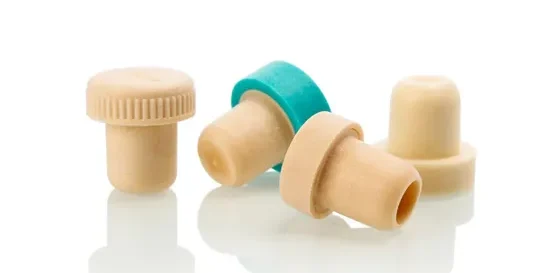
- Plastic and synthetic stoppers for cost-effective and stable production
- Synthetic cork stoppers for consistent fit and resealing performance
- Glass and metal stoppers for luxury spirits and gift packaging
- Screw caps for high-volume and resealable spirits bottles
- ROPP closures for tamper-evident and production-ready bottling
- Non-refillable closures for security-focused markets
- Capsules and shrink sleeves for finished neck presentation
The full bottle stoppers and closures range includes closure formats for spirits, olive oil, specialty bottles, private-label packaging, and export-ready B2B supply programs.
Kandacork Closures focuses on matching closure style, bottle neck fit, sealing behavior, brand decoration, and export packaging requirements. This helps buyers reduce development risk before placing bulk orders.
For new spirits packaging projects, buyers can send a bottle drawing, bottle sample, brand artwork, expected quantity, and closure idea. Kandacork Closures can then recommend suitable materials, structures, decoration methods, and sample steps.
What Distilleries Should Prepare Before Requesting a Quote
To get a faster and more accurate quote, distilleries should prepare key packaging information before contacting a supplier.
Useful information includes:
- Bottle drawing or technical specification
- Bottle sample, if available
- Neck finish details
- Spirit type and alcohol percentage
- Preferred closure type
- Required closure material
- Logo artwork or brand file
- Pantone color or finish reference
- Target order quantity
- Destination market
- Tamper-evident or non-refillable requirements
- Filling and capping method
- Expected lead time
- Export carton or pallet requirements
If the bottle is still in development, it is helpful to discuss the closure direction early. This prevents the common problem of selecting a bottle first and later discovering that the preferred stopper, cap, or capsule does not fit properly.
For projects that need matched color, surface texture, coating direction, and brand finish, Kandacork can support physical samples and finish options through its colors and finishes guide for spirits closures.
Real-World Closure Selection Examples
A craft whisky brand may choose a wooden bar-top stopper with a synthetic cork shank because it wants a traditional opening experience and premium shelf presence. The buyer should test shank fit, insertion pressure, leakage performance, and color consistency before bulk approval.
A vodka brand with a clean modern bottle may choose an aluminum screw cap or ROPP closure. The buyer should confirm cap diameter, thread compatibility, liner type, torque, decoration method, and capping-line suitability.
A tequila or rum brand selling into security-sensitive markets may consider a non-refillable closure. The buyer should review pouring performance, tamper evidence, valve structure, consumer usability, and compatibility with the bottle neck.
A gin brand focused on gift packaging may select a custom glass, wood, or metal stopper with a capsule or shrink sleeve. The buyer should match the closure with the label, bottle shape, gift box, and brand color system.
If the project also includes bottle structure, closure fit, decoration zones, and export packaging, Kandacork Glass Packaging can help coordinate glass bottles, matched closures, accessories, and multi-category packaging programs.
These examples show why a closure should never be chosen only by appearance. Fit, sealing, compliance expectations, production method, and consumer use all matter.
Sustainability and Packaging Fit
Spirits brands are increasingly expected to consider packaging quality, recyclability, transport efficiency, and long-term brand value together. Closures are only one part of this system, but they influence whether the bottle can be sealed, shipped, displayed, opened, resealed, and recycled in a practical way.
Glass remains a preferred material for premium spirits because it supports clarity, weight, shelf presence, and recyclability. The Glass Packaging Institute notes that glass can be recycled repeatedly without loss in quality or purity, which makes material selection, decoration coverage, closure pairing, and recycling compatibility important for brands reviewing long-term packaging strategy through glass recycling facts and benefits.
Closure design should also consider the full lifecycle of the package. Heavy metal tops, multi-material components, sleeves, coatings, and decorative accessories may improve premium feel, but they should be selected with brand goals, market requirements, cost, and recycling expectations in mind. A practical supplier can help buyers balance appearance, performance, and material decisions without compromising sealing quality.
FAQ
What is the best bottle closure for whisky?
The best bottle closure for whisky is usually a wooden bar-top stopper, synthetic cork stopper, or premium capsule system. These options create a traditional opening feel, strong shelf appeal, and a premium brand impression. The final choice depends on bottle neck size, stopper shank fit, filling method, and brand positioning.
What is the difference between a bar-top stopper and a screw cap?
A bar-top stopper is pushed into the bottle mouth and removed by pulling the top. It is common for premium spirits and gift packaging. A screw cap turns onto the bottle thread and is often used for efficient production, easy resealing, and high-volume spirits packaging.
When should a distillery use ROPP closures?
A distillery should use ROPP closures when it needs tamper evidence, metal cap appearance, stable production performance, and compatibility with a specific bottle neck finish. ROPP closures are common for vodka, gin, rum, tequila, liqueurs, and other spirits that require scalable bottling.
Can bottle closures be customized with a logo?
Yes. Bottle closures can be customized with engraving, embossing, debossing, printing, foil stamping, laser marking, color matching, anodizing, wood staining, or custom molding. The best method depends on the closure material, decoration area, artwork complexity, order quantity, and desired brand effect.
What information is needed for a closure quote?
A supplier usually needs the bottle drawing, neck finish, closure type, material, decoration request, logo file, target quantity, destination market, and filling method. A physical bottle sample is helpful when checking fit, sealing, opening feel, and overall appearance.
Can Kandacork Closures support bulk distillery orders?
Kandacork Closures supports custom and bulk closure projects for distilleries, spirits brands, bottlers, importers, and packaging buyers. Projects can include bar-top stoppers, screw caps, ROPP closures, non-refillable closures, capsules, shrink sleeves, and matched packaging accessories.
How do I confirm whether a closure fits my bottle?
The best way to confirm closure fit is to test samples with the actual bottle. Buyers should check insertion fit, sealing performance, opening feel, visual alignment, decoration appearance, and filling-line compatibility before approving bulk production.
What is the best closure for vodka bottles?
Vodka bottles often use aluminum screw caps, ROPP closures, or modern metal stoppers. These options support a clean appearance, efficient production, and strong color consistency. The best choice depends on the bottle neck finish, target price point, branding style, and capping equipment.
Are non-refillable closures necessary for spirits?
Non-refillable closures are useful when a brand needs stronger protection against refilling, counterfeiting, or channel misuse. They are not required for every spirits project, but they can be valuable for premium spirits, export markets, duty-free channels, and security-focused distribution.
Can one supplier provide closures, capsules, and shrink sleeves together?
Yes. A supplier with broader spirits packaging capability can help coordinate closures, capsules, and shrink sleeves together. This improves visual consistency, reduces fit problems, and makes the bottle neck area look more complete after filling and sealing.
Conclusion: Build a Reliable Closure System for Your Spirits Brand
Choosing a bottle closure supplier for distilleries is a strategic packaging decision. The right closure protects the spirit, supports the brand image, improves consumer experience, and helps the bottle move safely through production, storage, transport, and retail channels.
Whether your brand needs wooden bar-top stoppers for whisky, aluminum caps for vodka, ROPP closures for tamper-evident spirits, non-refillable closures for security markets, or capsules for premium presentation, the closure should be selected as part of a complete packaging system.
Kandacork Closures helps distilleries, bottlers, importers, and spirits brands develop custom closure solutions that match bottle neck specifications, sealing needs, decoration goals, production requirements, and bulk supply plans.
Send your bottle drawing, closure idea, logo file, order quantity, and target market requirements to request a custom closure recommendation for your next spirits packaging project.