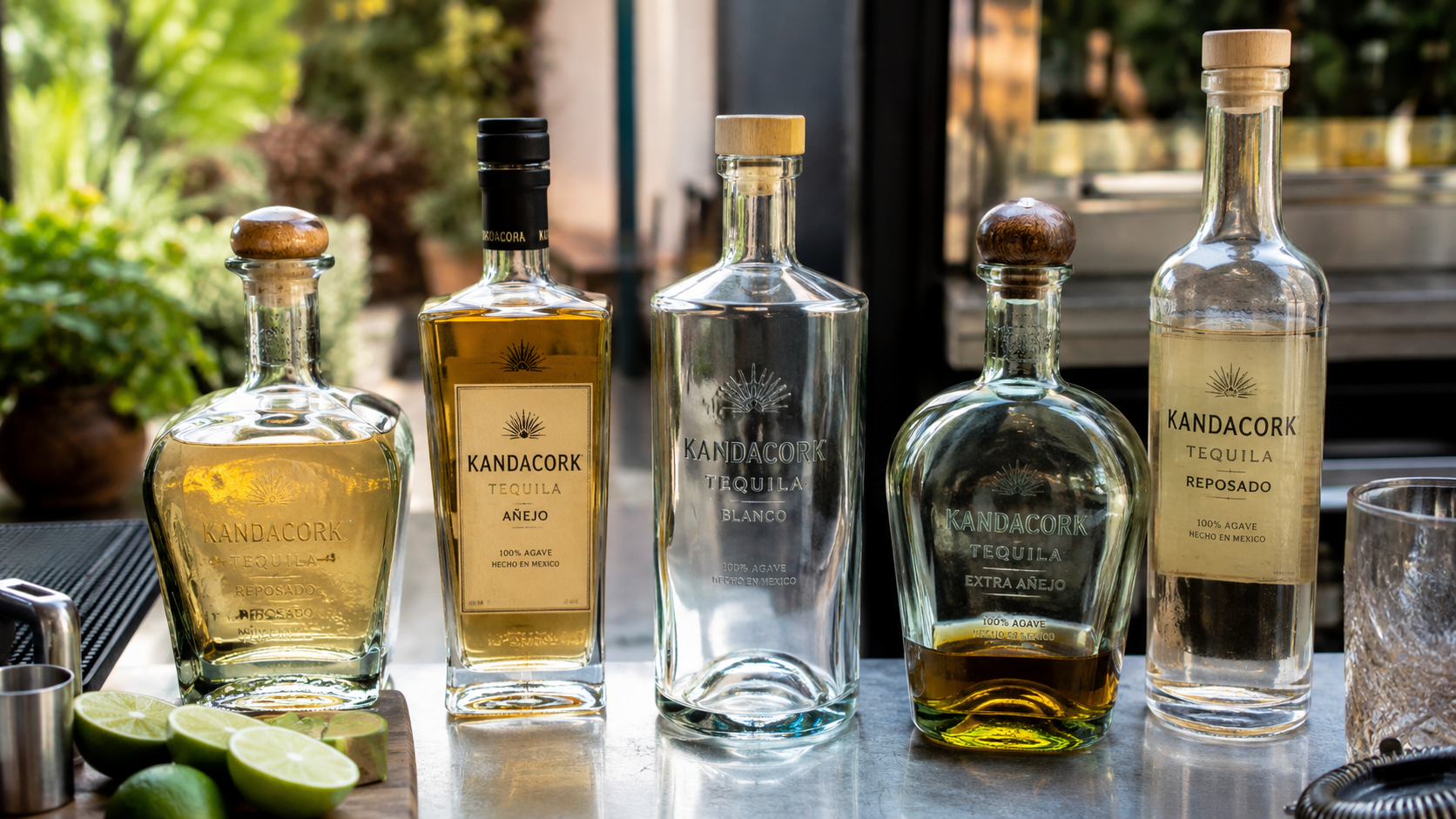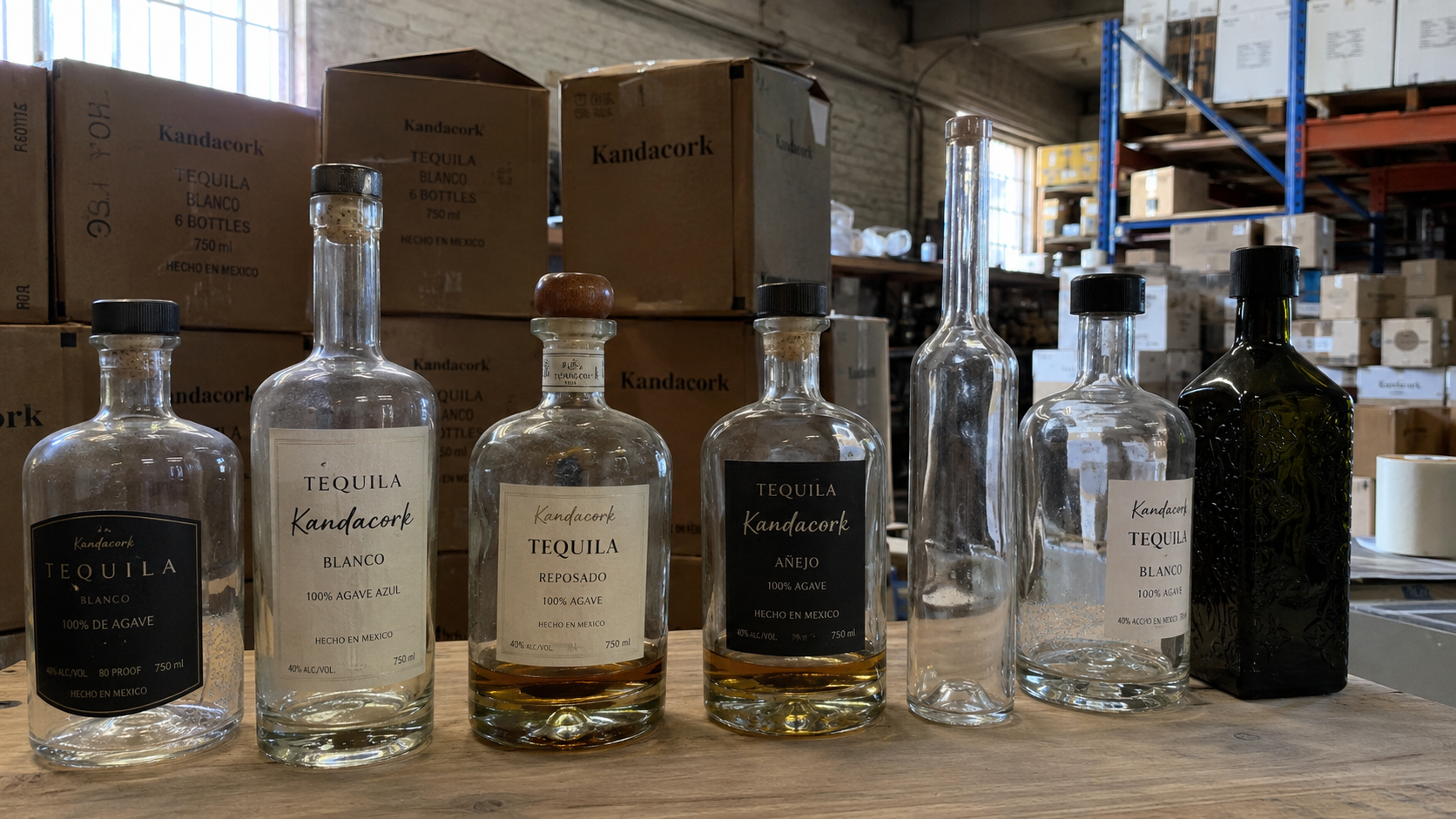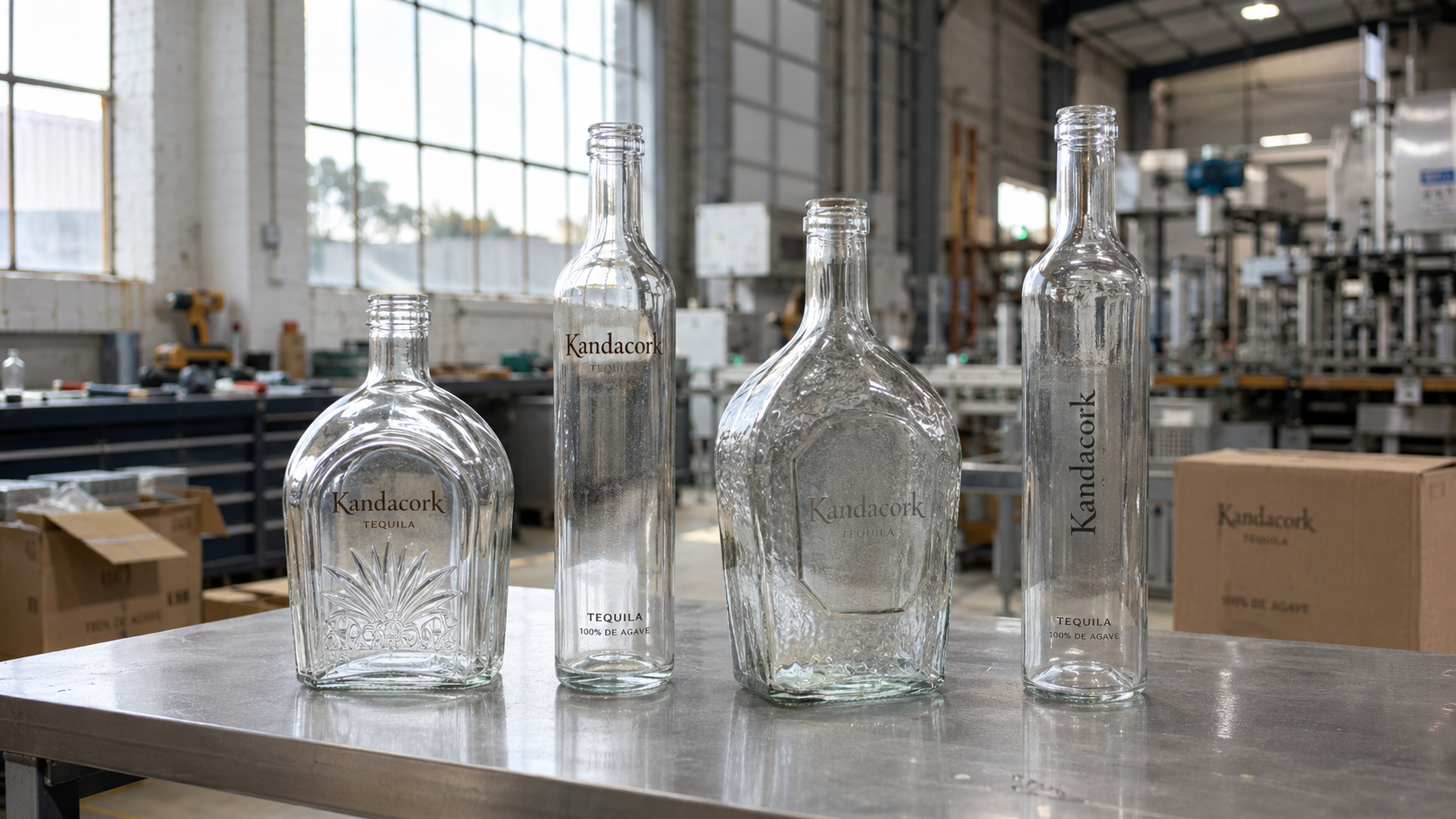
Choosing between screw caps vs cork stoppers affects far more than bottle appearance. For spirits brands, the closure influences sealing reliability, filling-line efficiency, tamper evidence, export stability, shelf impact, perceived value, and the consumer’s first opening experience.
A premium whisky may need the weight and ritual of a bar-top cork stopper. A vodka or gin line may perform better with a clean aluminum screw cap that runs smoothly on automated equipment. A rum, tequila, liqueur, miniature, or private-label project may require a closure that balances cost control, compliance, resealability, branding, and long-distance transport.
This guide compares screw caps vs cork stoppers from a practical B2B packaging perspective. It is written for distilleries, spirits brand owners, importers, private-label buyers, bottlers, packaging engineers, and design teams choosing closures for whisky, vodka, gin, rum, tequila, brandy, liqueurs, RTD spirits, and promotional bottle formats.
Quick Answer: Are Screw Caps or Cork Stoppers Better?
Screw caps are usually better for production consistency, automated capping, easy resealing, tamper-evident structures, and high-volume spirits packaging.
Cork stoppers are usually better for premium presentation, custom top decoration, tactile opening experience, and luxury shelf positioning.
Neither option is automatically better. The right choice depends on bottle neck finish, closure dimensions, filling equipment, alcohol percentage, market requirements, export conditions, retail price point, and brand positioning. For example, a premium aged rum may benefit from a wooden-top cork stopper, while a standard vodka line may be better served by an aluminum screw cap.
For brands that need a threaded closure, Kandacork Closures offers custom screw caps for spirits bottles, including aluminum shells, liner selection, tamper-evident bands, printed finishes, and neck-finish matching.
What Is the Main Difference Between Screw Caps and Cork Stoppers?
Screw caps twist onto a threaded bottle neck. Cork stoppers push into the bottle neck and seal through compression.
This difference changes the full packaging system. Screw caps depend on thread finish, liner material, cap shell design, bridge structure, tamper band, and application torque. Cork stoppers depend on shank diameter, bore tolerance, material elasticity, insertion depth, compression recovery, and extraction force.
In simple terms, screw caps are engineered for convenience and repeatability. Cork stoppers are engineered for tactile presentation and premium experience. Both can perform well when the closure, bottle, liquid, and filling line are specified together.
What Are Screw Caps?
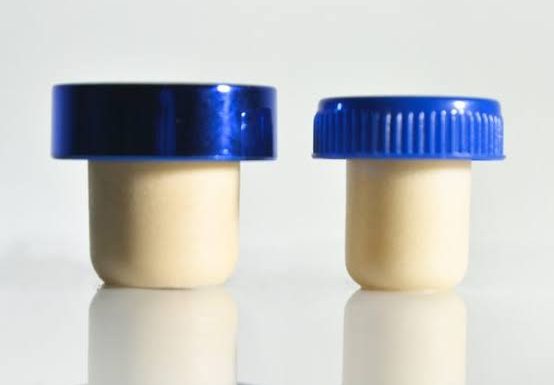
Screw caps are threaded closures that twist onto a compatible glass bottle finish. They are commonly made from aluminum or plastic and usually include a liner to improve sealing performance.
In spirits packaging, screw caps are widely used for vodka, gin, rum, tequila, liqueurs, mini bottles, RTD spirits, private-label products, and export-focused packaging. They are also common in roll-on pilfer-proof systems, where an aluminum closure is formed onto the bottle neck during capping to provide a secure, reclosable, tamper-evident finish.
The main advantage of screw caps is control. When the bottle neck finish, thread profile, liner, and application torque are correctly matched, screw caps can deliver reliable sealing and efficient production. This makes them useful for high-speed filling lines, large-volume orders, and products that require strong repeatability across many SKUs.
Screw caps also support consumer convenience. They open easily, reseal quickly, and do not require a corkscrew or stopper pull. For minimalist vodka, contemporary gin, liqueurs, miniatures, RTD beverages, and private-label spirits, this convenience can support the product’s commercial positioning.
Common Screw Cap Components
A screw cap is more than a visible metal or plastic shell. A complete screw cap system may include an aluminum shell, internal liner, thread profile, skirt height, knurling, smooth-wall finish, tamper-evident bridge, pilfer-proof band, top disc, printed decoration, and capper-compatible dimensions.
For spirits bottles, liner selection is especially important. The liner affects seal integrity, alcohol compatibility, oxygen exposure, and product stability. Closure research from the Australian Wine Research Institute highlights how closure and liner choices can influence oxygen transmission in bottled products. While distilled spirits do not age in the bottle like wine, the broader packaging principle still matters: the closure system must protect the liquid from leakage, evaporation, and unwanted exposure during storage and transport.
Brands should confirm liner type, alcohol resistance, thread engagement, and opening torque before approving mass production.
What Are Cork Stoppers?
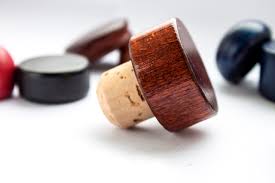
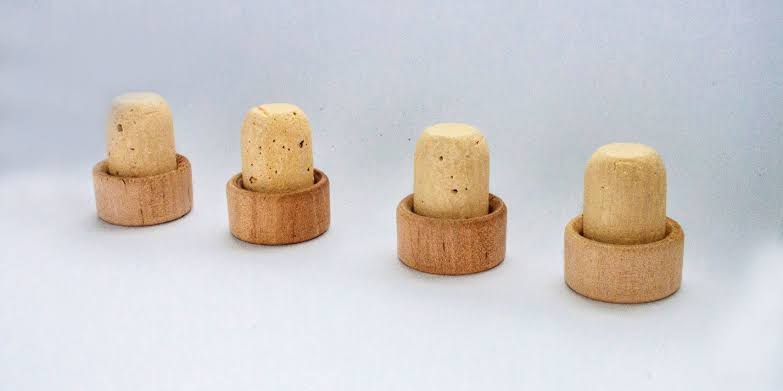
Cork stoppers are push-in closures that seal through compression inside the bottle neck. In spirits packaging, the most common format is the bar-top stopper, also called a T-top stopper.
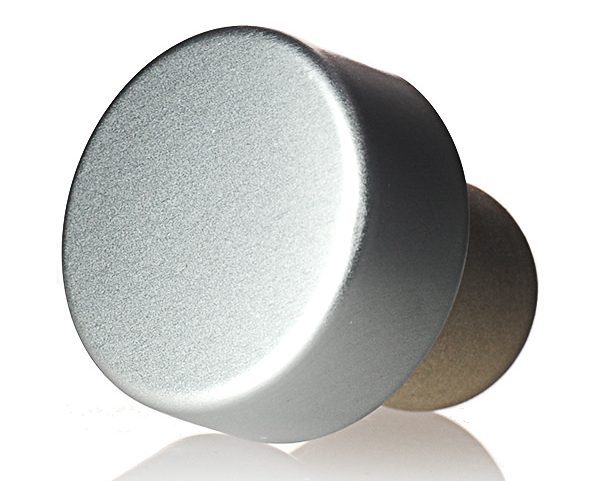
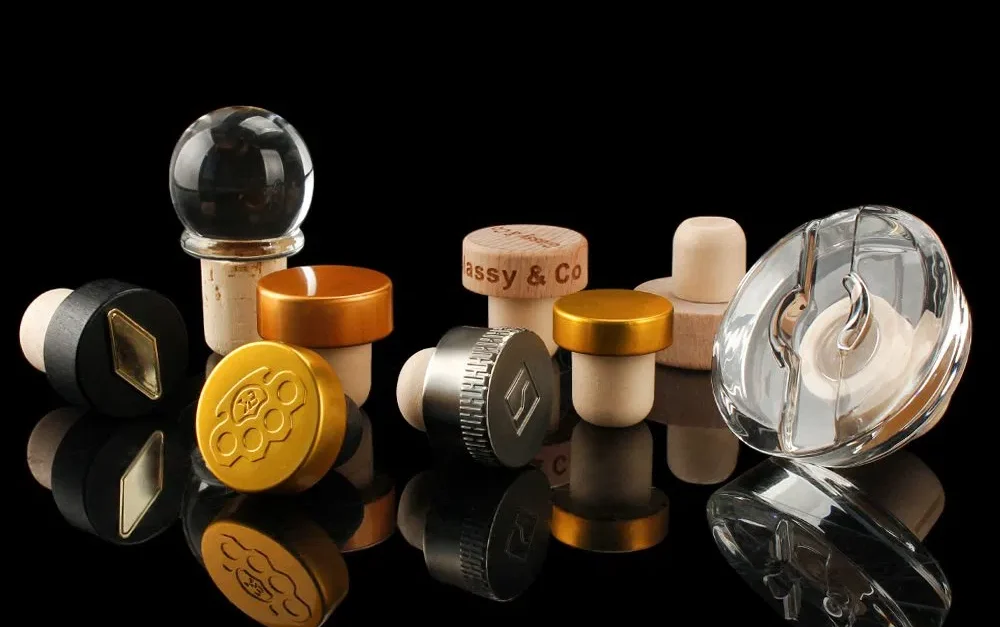
A typical bar-top stopper includes a shank and a decorative head. The shank may be natural cork, micro-agglomerated cork, synthetic cork, or another engineered sealing material. The head may be wood, aluminum, metal, plastic, glass, ceramic, or a custom composite.
Cork stoppers are strongly associated with premium spirits. Whisky, brandy, Cognac-style spirits, aged rum, craft gin, tequila, mezcal, and limited-edition bottles often use cork stoppers because they create a more ceremonial opening experience.
The top component is also important. A wooden top can communicate craft and natural texture. A metal top can suggest weight and luxury. A glass top can create a refined, transparent effect. A custom-shaped or logo-engraved top can make the closure part of the brand identity.
Cork stopper performance depends on physical precision. Standards such as ISO cork stopper physical tests show why dimensions, diameter, length, and physical behavior matter when evaluating cork-based closures. In spirits packaging, even a small mismatch between stopper shank and bottle bore can affect sealing, insertion, extraction, and consumer experience.
Screw Caps vs Cork Stoppers: Side-by-Side Comparison
| Factor | Screw Caps | Cork Stoppers |
|---|---|---|
| Best for | High-volume, modern, export, convenient packaging | Premium, craft, luxury, gift, aged spirits |
| Opening experience | Fast twist-open | Premium pull-and-pop ritual |
| Production efficiency | Strong for automated lines | Good for premium lines, but may require stopper insertion equipment |
| Resealability | Very convenient | Good when stopper fit is correct |
| Custom branding | Printing, embossing, color coating, metallic finish | Custom wood, metal, glass, plastic, engraving, logo top |
| Tamper evidence | Strong with pilfer bands or roll-on systems | Usually paired with capsules, shrink sleeves, or security bands |
| Cost control | Often strong for large-volume orders | Varies by top material, shank, decoration, and assembly |
| Shelf perception | Clean, practical, modern | Traditional, tactile, premium |
| Key technical risk | Wrong thread, liner, torque, or cap height | Wrong shank diameter, compression, bore tolerance, or insertion depth |
| Best spirit examples | Vodka, gin, liqueurs, mini bottles, RTDs | Whisky, aged rum, brandy, tequila, craft gin |
The comparison shows why screw caps vs cork stoppers should be evaluated as part of a full packaging system, not as isolated components.
Best Choice by Buyer Scenario
| Buyer Scenario | Recommended Closure | Why It Works |
|---|---|---|
| High-volume vodka line | Screw cap or ROPP closure | Supports fast application, resealing, and cost control |
| Premium whisky launch | Bar-top cork stopper | Creates ritual, weight, and luxury perception |
| Export rum project | Tested cork stopper, ROPP closure, or non-refillable closure | Depends on neck finish, leakage testing, and market requirements |
| Miniature spirits | Screw cap or small ROPP closure | Compact, efficient, and easy to apply at scale |
| Craft gin gift bottle | Cork stopper | Adds tactile quality and premium shelf impact |
| Private-label spirits | Screw cap | Helps control cost and filling-line efficiency |
| Tequila or mezcal bottle | Cork stopper, synthetic stopper, or tamper-evident cap | Supports premium identity while meeting market needs |
| Liqueur bottle | Screw cap or synthetic stopper | Depends on viscosity, resealability, and pouring behavior |
| Duty-free spirits | ROPP, non-refillable closure, or tested bar-top stopper | Helps support transport stability and tamper evidence |
A craft gin and a supermarket gin may both use glass bottles, but their closure needs may be completely different. One may prioritize custom stopper decoration, while the other may prioritize fast capping and predictable cost.
Closure Choice by Order Volume
| Order Type | Suggested Closure Strategy | Packaging Reason |
|---|---|---|
| Small craft batch | Custom cork stopper or bar-top stopper | Supports premium storytelling and flexible decoration |
| Mid-size brand launch | Synthetic cork stopper, aluminum stopper, or decorated screw cap | Balances consistency, cost, and brand identity |
| Large private-label order | Screw cap or ROPP closure | Supports cost control, filling speed, and repeatability |
| Export-focused spirits | ROPP closure, non-refillable closure, or tested cork stopper | Helps manage leakage risk, tamper evidence, and transport stability |
| Premium gift bottle | Wooden, metal, glass, or custom bar-top stopper | Adds shelf impact and tactile value |
| Miniature or promotional bottle | Screw cap or small ROPP cap | Efficient for compact formats and high-speed production |
This volume-based approach helps buyers avoid over-specifying or under-specifying the closure. A closure that works well for a 5,000-bottle craft release may not be ideal for a 500,000-bottle private-label program.
Sealing Performance and Leakage Risk
For spirits brands, sealing performance is one of the most important technical issues. A beautiful closure is not enough if the bottle leaks during shipping, loses alcohol through evaporation, or fails after temperature changes.
Screw caps depend on thread compatibility, cap dimensions, liner material, and application torque. If torque is too low, the seal may be weak. If torque is too high, the cap, thread, liner, or bridge may deform. For ROPP closures, the capping head and roller settings must match the bottle neck finish.
Cork stoppers depend on shank diameter, shank length, material elasticity, insertion depth, and bottle bore tolerance. A stopper that is too loose may leak. A stopper that is too tight may be difficult to insert or remove. A poorly matched stopper can also create inconsistent consumer experience from bottle to bottle.
Before bulk production, brands should test the closure with the actual bottle, actual liquid, and realistic logistics conditions. Kandacork supports closure matching service for buyers who need to compare stopper types, cap structures, shank materials, neck finishes, and decoration requirements before sample approval.
Closure Testing Checklist
Before approving a bulk order, brands should confirm the bottle neck finish drawing, inner bore diameter, thread finish, stopper shank diameter, shank length, liner type, application torque, insertion pressure, closure height, alcohol percentage, and export carton orientation.
Testing should also include inverted leakage checks, vibration exposure, temperature cycling, carton handling, opening torque, extraction force, and filling-line compatibility. For custom bottles or new closure suppliers, testing is especially important because a closure may look correct in a photo but perform poorly under real shipping or bottling conditions.
A closure should not be approved only from a rendering, catalog image, or unfilled bottle sample. Physical trial testing reduces the risk of leakage claims, loose caps, broken tamper bands, difficult opening, stopper pop-out, and rejected production runs.
Brand Positioning: Premium Ritual vs Practical Convenience
The choice between screw caps vs cork stoppers is partly technical and partly emotional.
Cork stoppers create a stronger opening ritual. The consumer grips the top, pulls the stopper, hears the release, and feels the weight of the closure. This matters for premium whisky, aged rum, brandy, craft gin, tequila, mezcal, and limited-edition spirits. The closure becomes part of the product experience.
Screw caps communicate a different message. They suggest convenience, cleanliness, modern function, and easy resealing. For minimalist vodka, contemporary gin, travel retail, mini bottles, liqueurs, and private-label spirits, screw caps can feel intentional rather than cheap.
A common mistake is assuming cork always means premium and screw cap always means low-end. That is no longer true. A high-quality decorated aluminum cap can look refined, while a poorly fitted stopper can make an expensive bottle feel unreliable.
The closure should support the brand promise. If the brand story is heritage, oak aging, craft distillation, and gifting, a cork stopper may fit better. If the story is purity, convenience, mixology, nightlife, or export efficiency, a screw cap may be the smarter choice.
Production and Filling-Line Considerations
Packaging buyers should involve the production team before choosing a closure.
Screw caps are often preferred for high-speed filling because they can be applied with automated capping equipment. They are repeatable, efficient, and easier to inspect at scale. Roll-on pilfer-proof caps are especially useful when a brand needs secure tamper evidence and consistent metal closure application. Kandacork’s custom ROPP closures can be specified around shell height, liner system, pilfer-band design, branding, and capping-line requirements.
Cork stoppers can also work well in production, but they require correct insertion equipment and dimensional control. Bar-top stoppers may be used in manual, semi-automatic, or automated operations depending on project scale. Premium brands often accept slower line speed because the closure adds more perceived value.
Important production questions include whether the bottle has a threaded neck or bar-top neck, whether the filling line can apply the closure, what the target bottles-per-hour speed is, whether torque control is required, whether stopper insertion pressure is controlled, and whether the package needs a capsule, shrink sleeve, tax strip, or tamper-evident band.
The best closure is the one that performs reliably in real production, not only in a design presentation.
Cost and MOQ Considerations
Cost is a major factor in screw caps vs cork stoppers.
Screw caps are often cost-effective for high-volume projects, especially when using standard sizes and finishes. Custom printing, embossing, special colors, liners, and tamper-evident structures can increase cost, but screw caps usually remain efficient for large production runs.
Cork stoppers have a wider cost range. A simple synthetic cork stopper may be economical, while a custom wooden-top, metal-top, or glass-top bar stopper can cost more because it includes multiple materials, assembly, finishing, and decoration.
Buyers should compare total packaging value, not only unit price. A premium cork stopper may raise the perceived value of a whisky or rum bottle enough to justify the extra cost. A lower-cost screw cap may be the better choice for a fast-moving vodka, liqueur, or mini bottle line where convenience and consistency matter more than opening ritual.
The better question is not “Which closure is cheaper?” The better question is “Which closure protects the product, supports the brand, runs efficiently, and fits the target retail price?”
Sustainability Comparison
Sustainability should be evaluated across the full packaging system, not reduced to a single material claim.
Natural cork is a renewable material associated with cork oak forests and premium closure traditions. For brands that use wood or cork-based components, responsible sourcing is important. The Forest Stewardship Council provides a global framework for responsible forest management, which can be relevant when evaluating wood and cork-related supply chains.
Synthetic cork stoppers can provide dimensional consistency and reduce natural-material variation. Their sustainability profile depends on material composition, recyclability, recovery route, and local waste systems.
Aluminum screw caps are lightweight, durable, and recyclable in many markets. The Aluminum Association notes that aluminum is recyclable and remains an important material in circular material systems. For spirits packaging, aluminum closures can also help reduce product loss if they improve sealing consistency and transport reliability.
No closure is universally sustainable in every market. Brands should evaluate material source, recyclability, product loss prevention, closure weight, decoration method, transport durability, local recycling infrastructure, and the credibility of any sustainability claim.
Compliance and Tamper Evidence
Distilled spirits packaging often requires tamper-evident features depending on the destination market and route to retail.
In the United States, the Alcohol and Tobacco Tax and Trade Bureau states that distilled spirits bottles and containers require a tamper-evident closure or similar device that shows evidence when the container has been opened. This is why many spirits bottles use pilfer-proof caps, shrink sleeves, capsules, security bands, or non-refillable closure systems. Brands shipping to the U.S. should review the relevant TTB tamper-evident closure guidance before finalizing closure specifications.
This does not mean every market uses the same rule. Export brands should check requirements for each destination country. A closure that works for one market may need modification for another.
Tamper evidence is also a brand-protection issue. Premium spirits, travel retail products, and high-risk markets may require stronger protection against refilling, counterfeiting, or unauthorized opening.
Best Closure by Spirits Category
Different spirits categories have different closure expectations.
For whisky, bar-top cork stoppers are common because they match premium cues, oak aging, gifting, and collector appeal. Wooden tops, metal tops, and synthetic cork shanks are popular options.
For vodka, screw caps and ROPP closures often work well because vodka packaging frequently emphasizes clarity, purity, convenience, and clean lines.
For gin, both options can work. A craft gin may choose a cork stopper for a boutique feel, while a modern gin brand may prefer an aluminum screw cap for a sharp, contemporary appearance.
For rum, aged and premium expressions often benefit from cork stoppers, while standard rum lines may use screw caps for cost control and export durability.
For tequila and mezcal, bar-top stoppers can support handcrafted and premium positioning, but tamper-evident caps may be necessary depending on the market and distribution channel.
For brandy and Cognac-style spirits, premium cork stoppers often support tradition, gifting, and a heavier presentation style.
For liqueurs, closure choice depends on viscosity, sugar content, pouring behavior, and resealability. Screw caps are practical, but decorative stoppers may work for premium gift bottles.
For mini spirits bottles, screw caps or small ROPP closures are usually more practical because they are compact, efficient, and easy to apply at scale.
Bottle, Decoration, and Closure Should Work Together
A closure should never be selected in isolation. The bottle shape, shoulder profile, neck finish, label area, cap height, capsule design, and carton structure all affect the final packaging impression.
For new spirits launches, it is often useful to coordinate closure selection with the glass bottle and decoration plan. Brands developing custom bottle structures can review compatible spirits bottles early so the neck finish, closure type, and filling-line requirements are aligned before mold confirmation.
Decoration also matters. A premium closure may lose impact if the bottle coating, label, capsule, or logo treatment does not match the brand system. Teams planning embossing, coating, printing, frosting, hot stamping, or screen printing can coordinate closure color and finish with bottle decoration and branding so the full package feels intentional.
For buyers who want a single packaging partner, Kandacork Glass supports integrated spirits packaging programs covering bottles, closures, decoration, and export-ready project coordination.
Sustainability-focused brands may also evaluate lighter bottle designs, recycled-content concepts, refillable formats, and eco glass packaging alongside closure materials. This helps the final package support both visual identity and responsible packaging goals.
Common Closure Selection Mistakes
Many packaging problems happen because the closure is selected too late or approved only for appearance.
Common mistakes include choosing a closure before confirming the bottle neck finish, ordering based only on product photos, assuming all cork stoppers fit all spirits bottles, ignoring bore tolerance, overlooking shank compression, failing to check torque requirements, selecting a liner without confirming alcohol compatibility, and skipping leakage testing before bulk production.
Other common issues include forgetting tamper-evident requirements, choosing a premium stopper that does not match the filling line, not testing after temperature changes, not checking export carton orientation, and ignoring the consumer’s opening and resealing experience.
Avoiding these mistakes can reduce delays, leakage claims, rejected samples, repacking costs, and packaging redesign work.
Decision Framework: How to Choose the Right Closure
Choose by five key factors: bottle neck finish, filling-line method, brand positioning, tamper-evident requirement, and export leakage risk.
Choose screw caps if you need fast production, strong resealability, threaded bottle compatibility, lower cost at scale, tamper-evident options, export reliability, clean modern design, easy consumer opening, or high-volume private-label packaging.
Choose cork stoppers if you need premium shelf presence, strong opening ritual, custom top decoration, wood or metal materials, gift packaging appeal, craft positioning, bar-top bottle compatibility, or a tactile closure experience.
Choose a hybrid or customized solution if you need both technical reliability and premium appearance. For example, a synthetic cork stopper with a custom wooden top can provide consistent fit and traditional feel. A decorated aluminum screw cap can provide reliable resealing while still looking premium.
How Kandacork Helps Brands Choose the Right Closure
Kandacork Closures helps spirits brands compare screw caps, cork stoppers, ROPP closures, non-refillable systems, capsules, shrink sleeves, and custom decorative tops based on technical fit, production needs, brand positioning, and market requirements.
A typical closure recommendation process may include reviewing the bottle drawing and neck finish, confirming bottle capacity and spirit category, checking alcohol percentage and liquid characteristics, matching closure options, reviewing liner or shank requirements, confirming tamper-evident needs, recommending samples for physical testing, and supporting logo, color, material, and surface finish decisions.
This workflow is useful because closure problems often come from mismatch, not from the closure type itself. A screw cap can fail if the thread finish, liner, or torque is wrong. A cork stopper can fail if the shank diameter, bore tolerance, or insertion depth is wrong.
For buyers comparing multiple closure families, Kandacork’s complete closure and stopper range makes it easier to evaluate screw caps, bar-top stoppers, ROPP systems, capsules, shrink sleeves, and non-refillable closures within one packaging brief.
Practical RFQ Checklist
When requesting a quote, prepare the spirit type, bottle capacity, bottle neck finish, inner bore diameter, thread drawing if using screw caps, target closure material, top material preference, logo decoration requirements, color and finish requirements, tamper-evident needs, filling-line method, annual order quantity, destination market, required sample quantity, and packaging requirements.
For a new project, physical bottle samples are highly valuable. For an existing bottle, provide previous cap or stopper references if available. For a custom bottle still in development, review the closure before finalizing the neck finish so that the bottle mold, closure, and filling line are aligned.
Providing accurate information early helps reduce sampling delays, incorrect closure matching, unnecessary tooling changes, and last-minute packaging risk.
FAQ
Are screw caps better than cork stoppers?
Screw caps are better for automation, resealability, cost control, and consistent application. Cork stoppers are better for premium presentation, opening ritual, custom decoration, and luxury spirits branding.
Do cork stoppers make spirits taste better?
Usually, no. Distilled spirits do not rely on bottle oxygen exposure in the same way wine may. Cork stoppers are mainly chosen for fit, presentation, tradition, and consumer experience.
Are screw caps suitable for premium spirits?
Yes. Screw caps can be suitable for premium spirits when the cap material, finish, liner, color, decoration, and bottle design are carefully matched. However, many luxury spirits still prefer bar-top cork stoppers for stronger tactile appeal.
Which closure is best for whisky bottles?
Premium whisky commonly uses bar-top cork stoppers with wooden, metal, or synthetic components. Screw caps may also work for certain whisky formats, especially when the brand prioritizes convenience, export durability, or high-volume production.
Which closure is best for vodka bottles?
Vodka often works well with screw caps, ROPP closures, or aluminum closures because these options support clean design, efficient filling, easy opening, and reliable resealing.
What is the best closure for liquor bottles?
The best closure for liquor bottles depends on the bottle neck finish, spirit category, filling line, target market, and brand positioning. Screw caps are strong for convenience and scale, while cork stoppers are strong for premium appearance and opening experience.
How can brands prevent closure leakage?
Brands should test the actual closure with the actual bottle. Check neck finish, bore diameter, thread compatibility, stopper shank size, liner selection, application torque, insertion pressure, and shipping conditions before approving mass production.
Can cork stoppers be tamper-evident?
A cork stopper alone may not provide visible tamper evidence. Many brands combine cork stoppers with capsules, shrink sleeves, tax strips, or security bands to create a tamper-evident package.
What is the best closure for export spirits?
For export spirits, screw caps, ROPP closures, non-refillable closures, and well-tested bar-top stoppers can all work. The best choice depends on market regulations, leakage testing, carton packing, temperature changes, and retail positioning.
How should a brand compare screw caps vs cork stoppers before ordering?
A brand should compare screw caps vs cork stoppers by testing actual samples with the actual bottle, reviewing neck finish drawings, checking filling-line compatibility, confirming tamper-evident requirements, and evaluating how the closure supports brand positioning.
What information should I send to a closure supplier?
Send the spirit type, bottle capacity, neck finish drawing, inner bore diameter, target order quantity, destination market, filling-line method, decoration requirements, and sample testing needs. This helps the supplier recommend a closure that fits both the bottle and the production plan.
Conclusion
The decision between screw caps vs cork stoppers should be based on more than tradition or price. A closure must protect the spirit, match the bottle neck, support the filling line, satisfy compliance needs, and strengthen the brand experience.
Screw caps are practical, consistent, efficient, and convenient. Cork stoppers are tactile, premium, customizable, and emotionally powerful. Both can be excellent choices when correctly engineered and tested.
For spirits brands, the smartest approach is to treat the closure as part of the full packaging system. Bottle shape, neck finish, decoration, filling method, tamper evidence, logistics, and consumer experience should all be reviewed together.
To compare screw caps, cork stoppers, ROPP closures, non-refillable systems, capsules, and shrink sleeves for your next spirits packaging project, request closure samples with your bottle drawing, target order quantity, filling-line requirements, and destination market details.