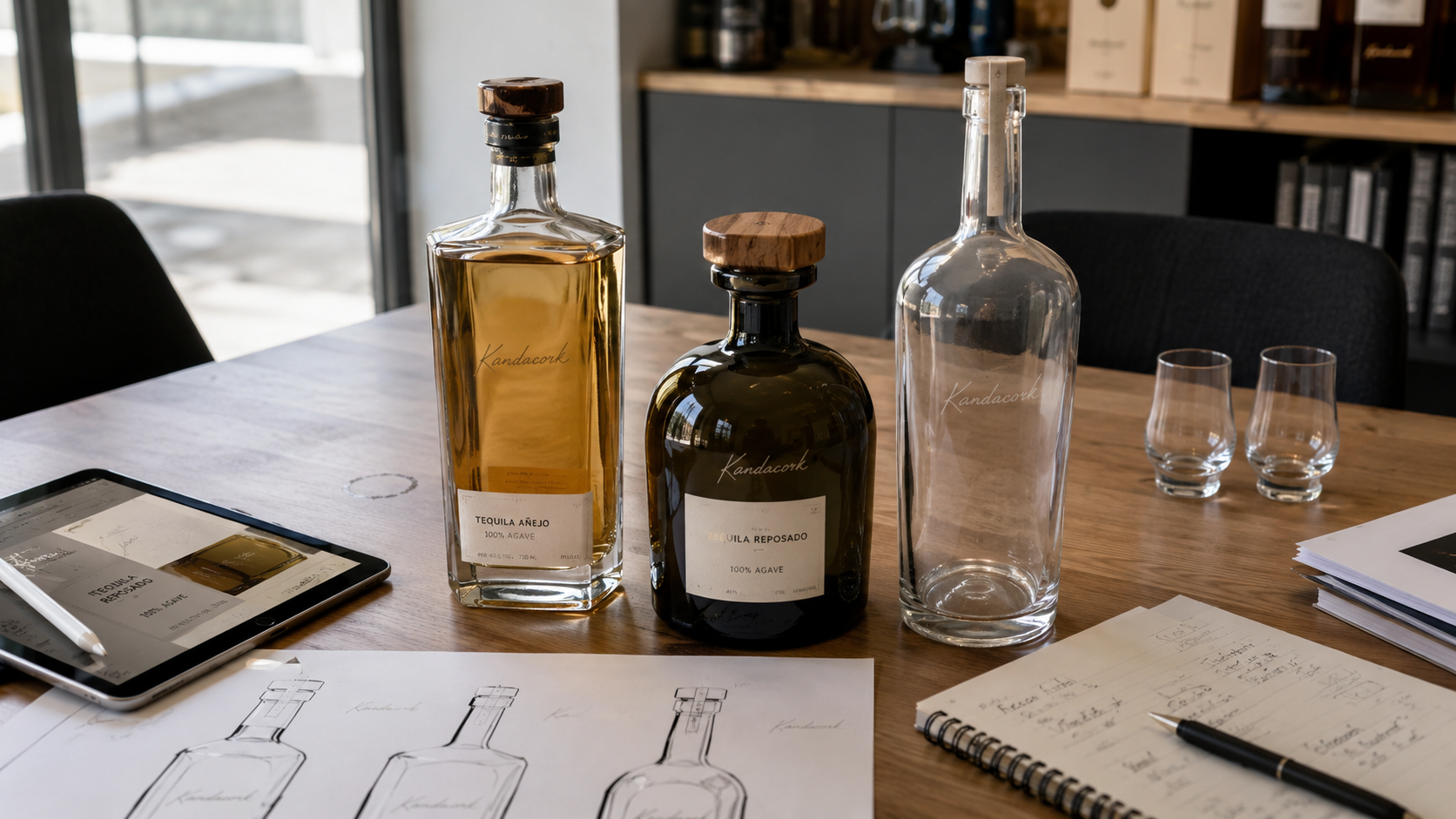
Premium spirits packaging closures should match the custom bottle design while maintaining reliable fit and production consistency. This guide explains how buyers can review material choice, stopper or cap structure, branding method, finish and sample testing.
What Are Premium Spirits Packaging Closures?
Premium spirits packaging closures are bottle closure systems designed for higher-value alcoholic beverage packaging. They may include bar-top stoppers, T-top corks, natural cork stoppers, synthetic stoppers, aluminum screw caps, ROPP closures, non-refillable closures, capsules, shrink sleeves, pourers, or decorative overcaps.
A standard closure closes a bottle. A premium closure supports the full product experience. It must protect the liquid, fit the bottle neck accurately, feel good in hand, support resealing, and match the visual language of the brand.
Material choice is a major part of that experience. Wood suggests craft, warmth, and heritage. Aluminum suggests precision, modernity, and clean production. Glass can suggest purity and elegance. Zamak and other metal components can add weight and luxury. Natural cork provides a traditional ritual, while synthetic cork can improve consistency across large production runs.
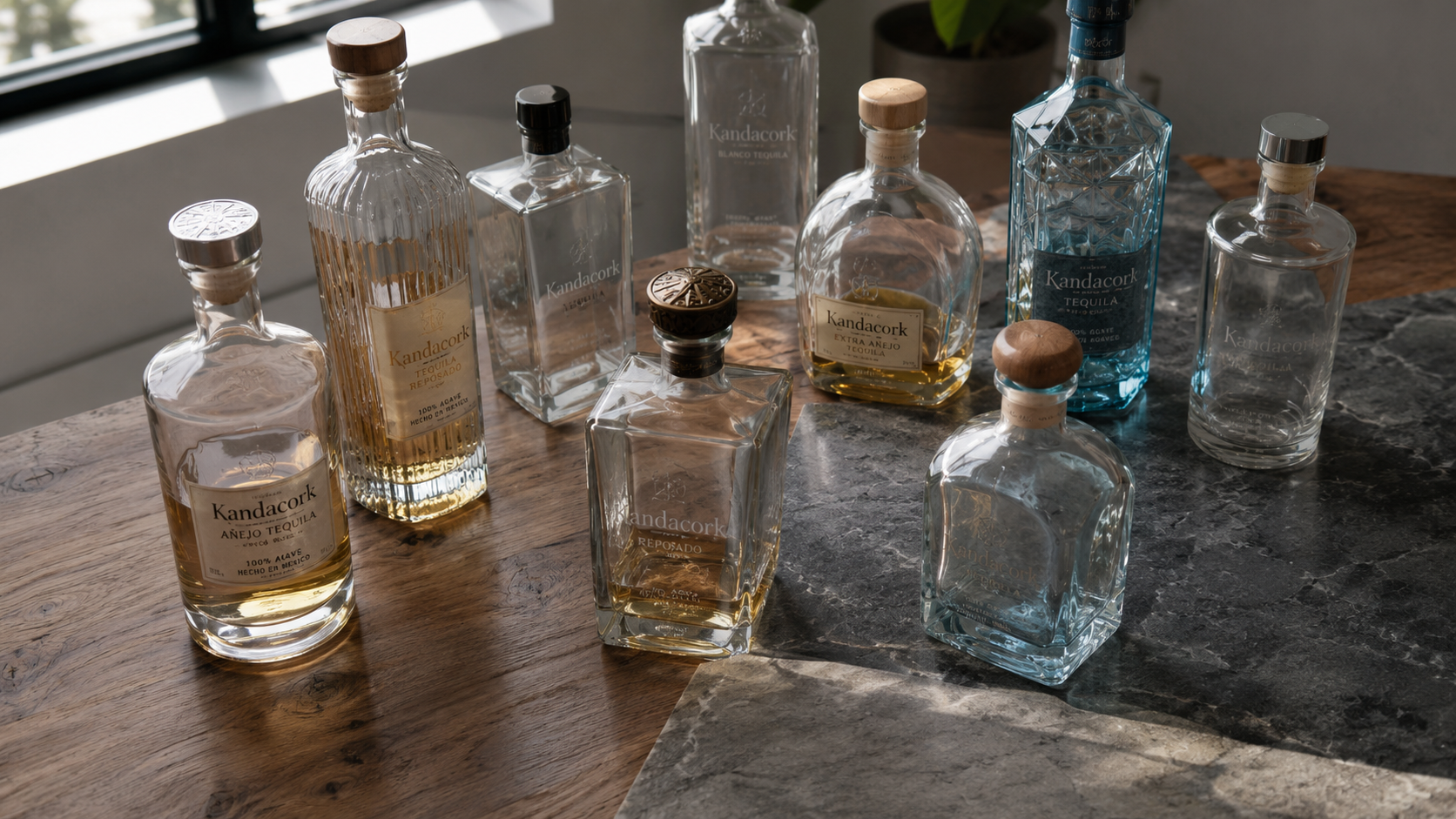
For a full packaging program, closures should also coordinate with the bottle, decoration, label, capsule, carton, and secondary packaging. Brands developing a complete spirits line often coordinate bottle structure with a specialist such as Kandacork Spirits Bottle so the neck finish, closure style, glass weight, decoration surface, and carton height are planned together instead of adjusted late in the project.
Quick Selection Guide
Choose bar-top stoppers when opening ritual, tactile quality, and premium shelf presence matter most.
Choose natural cork or technical cork when the brand wants heritage, tradition, and a familiar premium feel.
Choose synthetic cork when dimensional consistency, controlled extraction force, and scalable production are priorities.
Choose aluminum screw caps when convenience, resealability, clean design, and efficient capping are important.
Choose ROPP closures when tamper evidence, secure sealing, and high-speed bottling-line compatibility are required.
Choose non-refillable closures when export security, anti-refill protection, and authenticity control are major concerns.
Choose capsules or shrink sleeves when the bottle neck needs a more finished appearance, visible tamper evidence, or stronger color coordination.
Premium Spirits Closure Comparison
| Closure Type | Best For | Premium Advantage | Technical Factor to Check |
|---|---|---|---|
| Bar-top stopper | Whisky, rum, gin, tequila, brandy | Strong tactile opening experience and luxury shelf presence | Cork or synthetic shank diameter, extraction force, bore fit, resealability |
| Natural cork stopper | Heritage spirits, craft spirits, aged products | Traditional feel, natural material story, premium ritual | Cork grade, moisture, compression recovery, sensory neutrality |
| Synthetic cork stopper | Scalable spirits lines, consistent production | Stable dimensions, predictable supply, controlled extraction | Alcohol compatibility, shank recovery, long-term seal performance |
| Aluminum screw cap | Vodka, gin, RTD spirits, liqueurs | Clean design, resealability, efficient production | Thread fit, liner selection, opening torque, tamper band performance |
| ROPP closure | Spirits, premium beverages, export formats | Tamper evidence, secure sealing, line efficiency | Rolling pressure, thread formation, torque range, bottle neck finish |
| Non-refillable closure | Premium export spirits, high-risk markets | Brand protection, anti-refill performance, authenticity support | Internal valve function, flow control, market compliance, capping setup |
| Capsule or shrink sleeve | Premium neck finishing and tamper evidence | Completed appearance, color coordination, visible security | Shrink quality, tear strip design, material choice, cap or stopper fit |
Bar-Top Stoppers for Premium Spirits
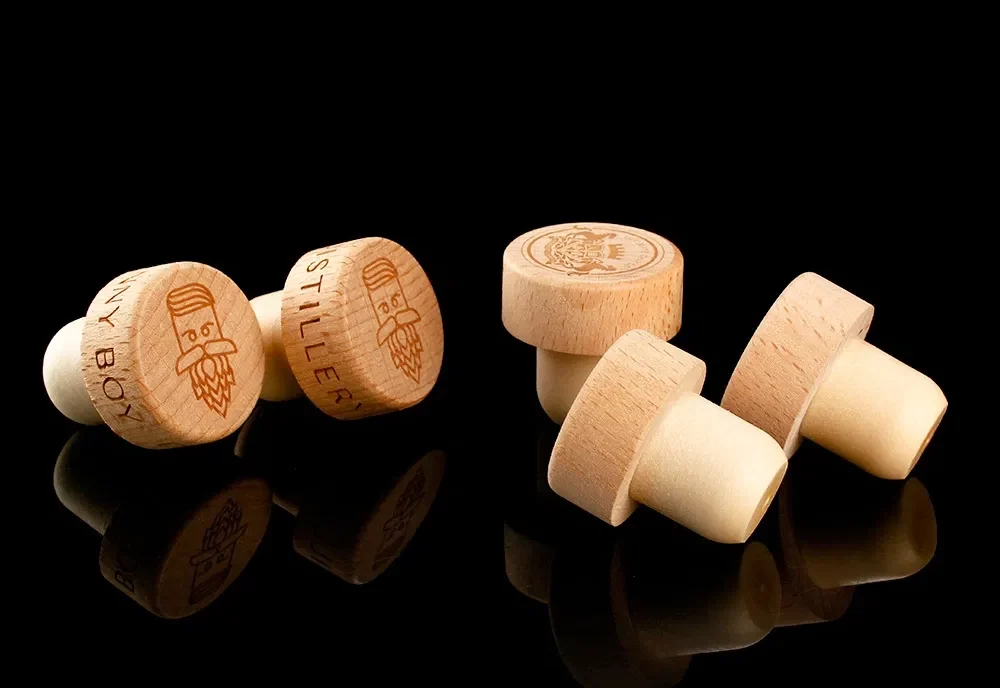
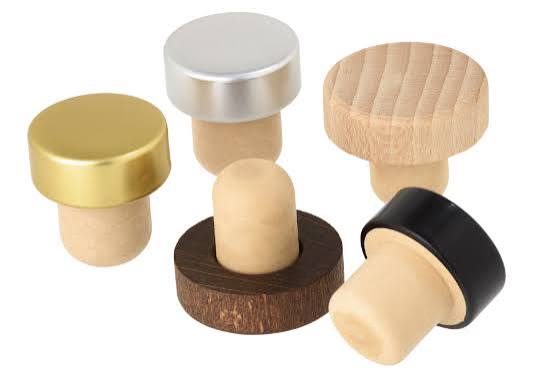
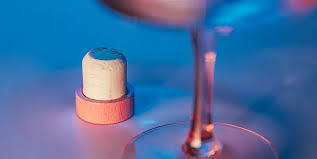
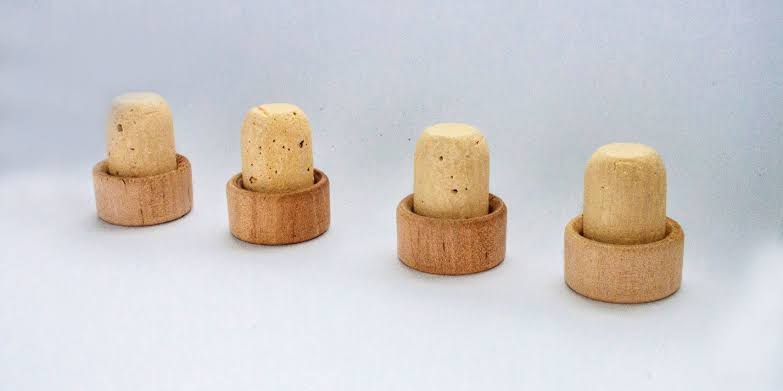
Bar-top stoppers are widely used for whisky, rum, gin, tequila, brandy, and premium liqueurs. They usually combine a decorative top with a cork or synthetic shank. The top may be made from wood, aluminum, glass, plastic, ceramic, zamak, or composite material.
This format works well when a brand wants the closure to feel substantial. The consumer pulls the stopper by hand, hears or feels the release, pours the spirit, and reseals the bottle after use. That repeated interaction makes the closure part of the brand memory.
A craft whisky may use a dark wood-top stopper with a cork shank to reinforce barrel aging and heritage. A botanical gin may use a glass-top stopper or color-matched synthetic stopper to create a cleaner, fresher impression. A limited-edition rum may use a weighted metal top to signal a higher price tier.
When specifying bar-top stoppers, buyers should confirm bore diameter, shank fit, extraction force, top weight, visual finish, carton clearance, and compatibility with filling and packing operations.
Cork, Synthetic Cork, and Material Consistency
Natural cork has a long association with premium beverage packaging because it offers a recognizable opening ritual and a renewable material story. It can work well for brands that want warmth, tradition, and tactile authenticity.
Technical cork and micro-agglomerated cork can improve consistency while keeping a cork-based identity. Synthetic cork, meanwhile, is useful when a brand needs more predictable dimensions, stable extraction force, and easier batch-to-batch control.
For procurement teams, the decision should not be based only on appearance. Cork and synthetic shanks should be reviewed for diameter tolerance, compression recovery, sensory neutrality, alcohol compatibility, visual grade, and long-term resealing performance. If the stopper will be used across multiple SKUs, batch consistency becomes especially important.
Aluminum Screw Caps and ROPP Closures
Aluminum screw caps are common in vodka, gin, liqueur, RTD spirits, and modern premium beverage formats. They offer convenient opening, clean resealing, strong decoration options, and efficient bottling-line performance.
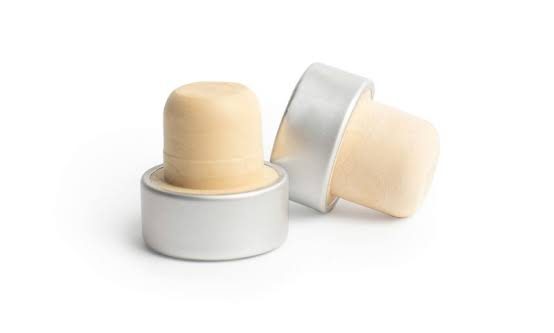
A screw cap can be matte, glossy, ribbed, knurled, embossed, debossed, brushed, printed, color matched, or metallic finished. A premium vodka brand may choose a tall matte aluminum cap with subtle top embossing to communicate purity and precision. A gin range may use the same cap structure in different colors to separate citrus, floral, herbal, and barrel-aged variants.
ROPP means roll-on pilfer-proof. These closures are applied by capping equipment that forms the thread during application. They are valued for tamper evidence, secure sealing, repeatable production, and strong compatibility with many spirits and premium beverage formats. Kandacork Closures develops custom ROPP closures for spirits bottles with shell dimensions, skirt height, liners, graphics, and torque requirements matched to the bottle finish and capping line.
For technical reliability, buyers should review liner selection, thread profile, torque range, tamper-band break, skirt height, coating durability, and capping-head setup before bulk production.
Non-Refillable Closures for Brand Protection
Non-refillable closures are designed to help prevent bottle refilling and product substitution. They are especially relevant for high-value whisky, tequila, rum, vodka, brandy, and export spirits sold in markets where refilling or counterfeiting is a concern.
A non-refillable closure may include an internal valve, flow-control insert, tamper-evident band, multi-part pourer, or other security structure. The goal is to allow normal pouring while making refilling difficult or clearly detectable.
For premium export programs, Kandacork Closures provides non-refillable spirit closures that combine tamper-evident function, pour quality, bottle-neck compatibility, and capping-line performance. These systems should be reviewed early because they may require specific neck finishes, capping equipment settings, and market-specific compliance checks.
Tamper evidence is not only a commercial preference. The U.S. Alcohol and Tobacco Tax and Trade Bureau explains that distilled spirits plants and importers must use a securely affixed tamper-evident closure or similar device on bottles or containers of distilled spirits. Requirements vary by market, so brands should confirm the rules for each target region before approving packaging.
Matching Closures to Spirit Categories
Whisky and brandy often benefit from closures that feel substantial, traditional, and controlled. Wood-top stoppers, metal-top stoppers, natural cork shanks, and heavier decorative components can support barrel-aged cues and premium storytelling. The stopper should feel stable, release smoothly, and reseal without looseness.
Vodka and gin often use cleaner visual systems. Aluminum caps, glass-top stoppers, synthetic shanks, and minimalist closure designs can support purity, freshness, and botanical positioning. In these categories, finish quality and color control are especially important because the closure often sits close to transparent or frosted glass.
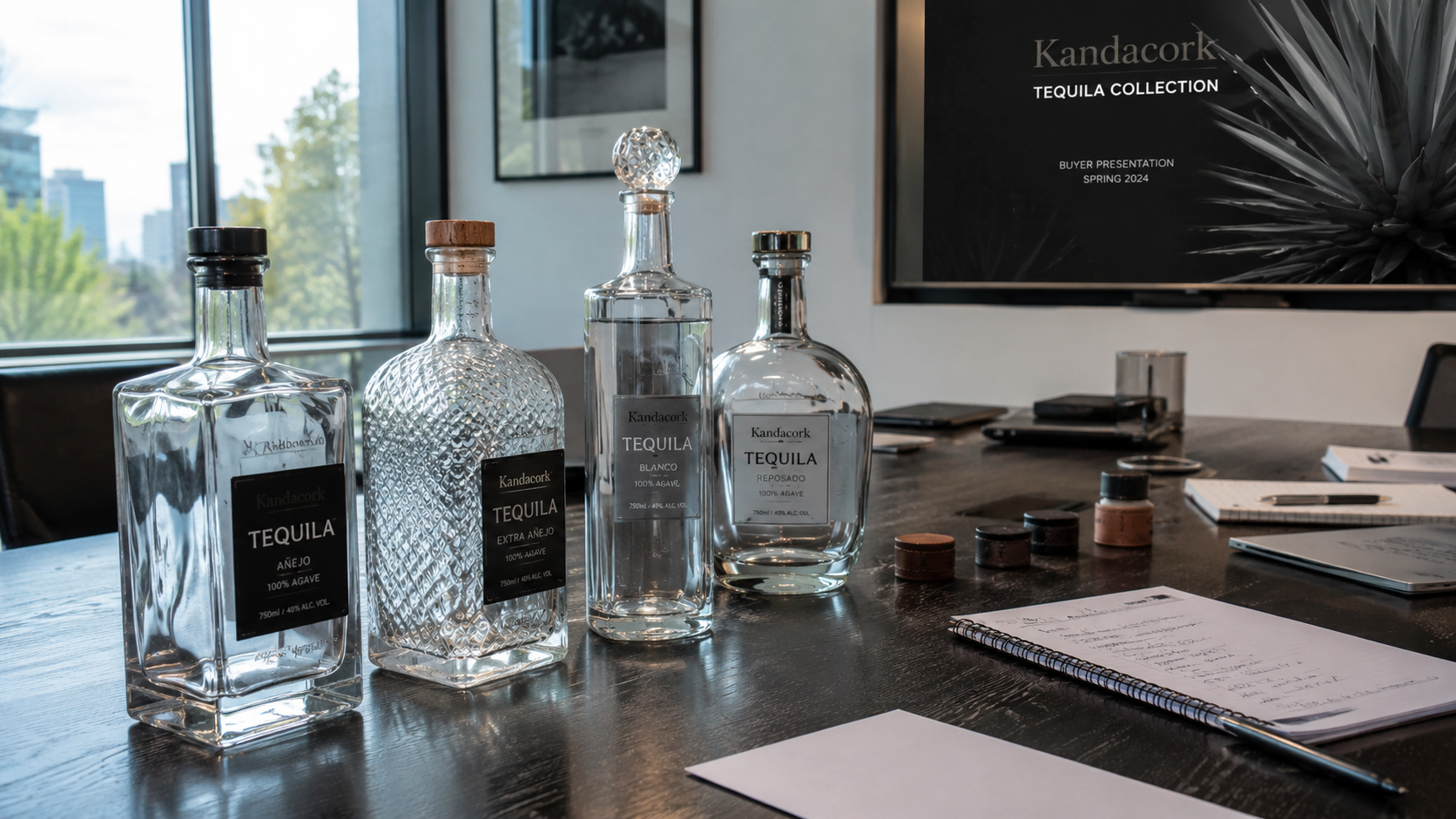
Rum and tequila often use stronger storytelling. Aged rum may benefit from warm wood, dark metal, textured sides, and vintage cues. Tequila and mezcal may use natural finishes, embossed details, or security closures to support origin, craft, and authenticity.
Liqueurs and RTD spirits usually need convenience, resealability, and cost-effective premiumization. Screw caps, ROPP closures, and tamper-evident aluminum caps are common. For multi-flavor ranges, a shared closure structure with different color finishes can create visual unity while helping customers distinguish variants quickly.
Bottle Neck Compatibility Comes First
The most important technical question is simple: will the closure fit the bottle correctly?
Buyers should confirm neck finish, bore diameter, outer diameter, thread profile, height, sealing surface condition, and dimensional tolerance. A small mismatch can cause leakage, poor torque, loose fit, crooked cap application, scratched decoration, broken tamper bands, or inconsistent opening performance.
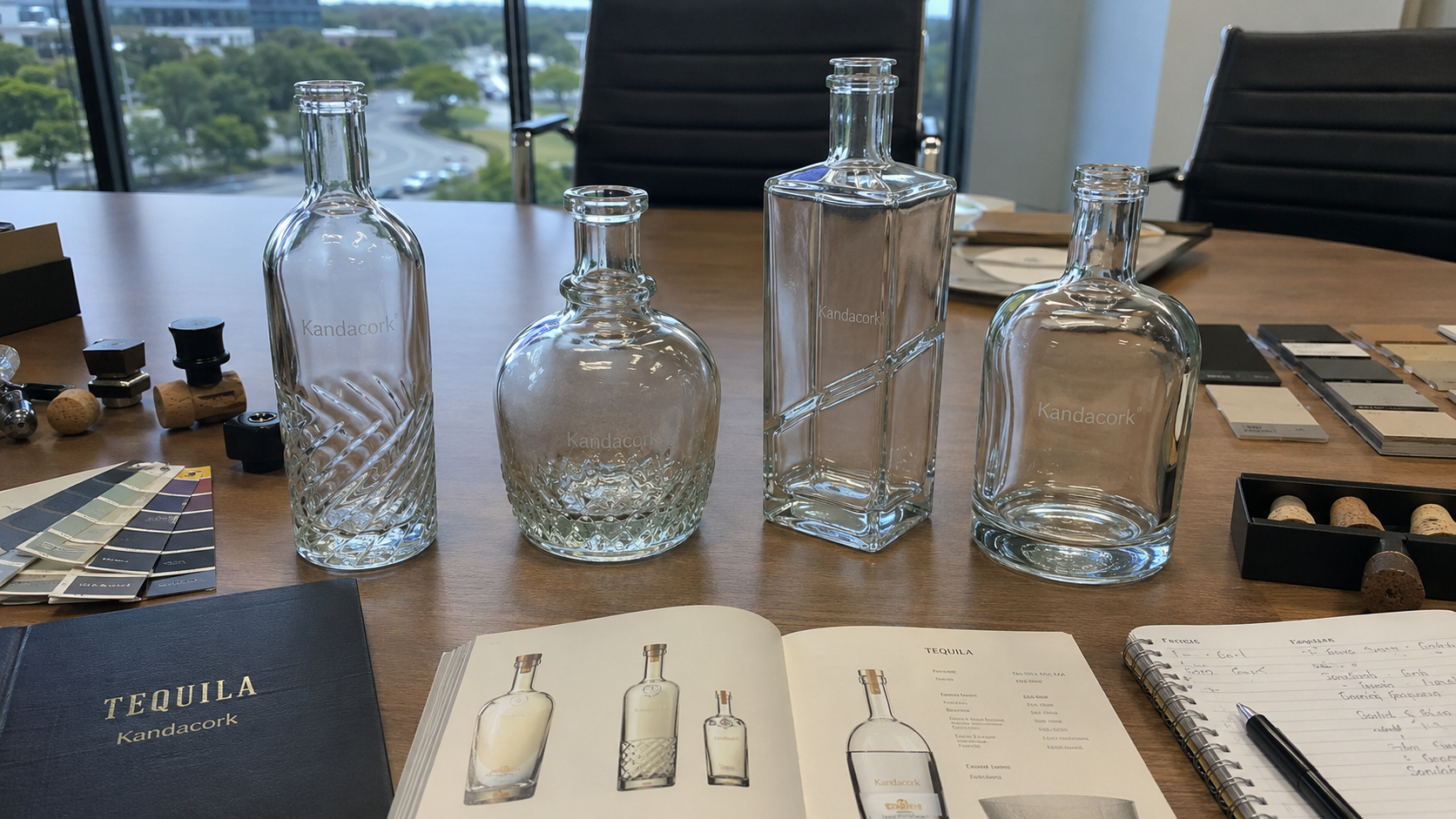
Bottle drawings are helpful, but physical samples are still important. Real bottles reveal tolerance variation, glass distribution, thread quality, and sealing-surface conditions that may not be obvious from drawings alone.
Brands developing glass and closure together may benefit from coordination through Kandacork Glass, especially when the project involves custom bottle molds, decorative finishes, matched closures, and export packing requirements.
Sealing Performance, Torque, and Line Trials
A premium closure must protect the liquid through storage, shipping, retail handling, and consumer use. Sealing performance depends on liner design, cork compression, shank recovery, thread quality, cap application, bottle finish, and dimensional consistency.
Common checks include leakage testing, inverted bottle checks, opening torque testing, extraction force testing, resealability checks, alcohol-resistance evaluation, liner compatibility review, capping-line trials, and transport review.
For higher-ABV spirits, buyers should also consider whether liners, adhesives, coatings, plastics, inks, and decorative finishes are suitable for the product environment. The U.S. Food and Drug Administration describes food packaging components and substances that come into contact with food under its food-contact substance information, which is relevant when reviewing closure liners, coatings, and packaging-contact materials.
Opening feel also matters. For screw caps and ROPP closures, the torque should be controlled within an agreed range. Too tight, and the customer struggles. Too loose, and the bottle feels unreliable. For bar-top stoppers, extraction force should feel firm but comfortable. In bars, restaurants, tasting rooms, and duty-free environments, closures are opened repeatedly, so handling comfort is a real performance factor.
Branding, Decoration, and Sidewall Design
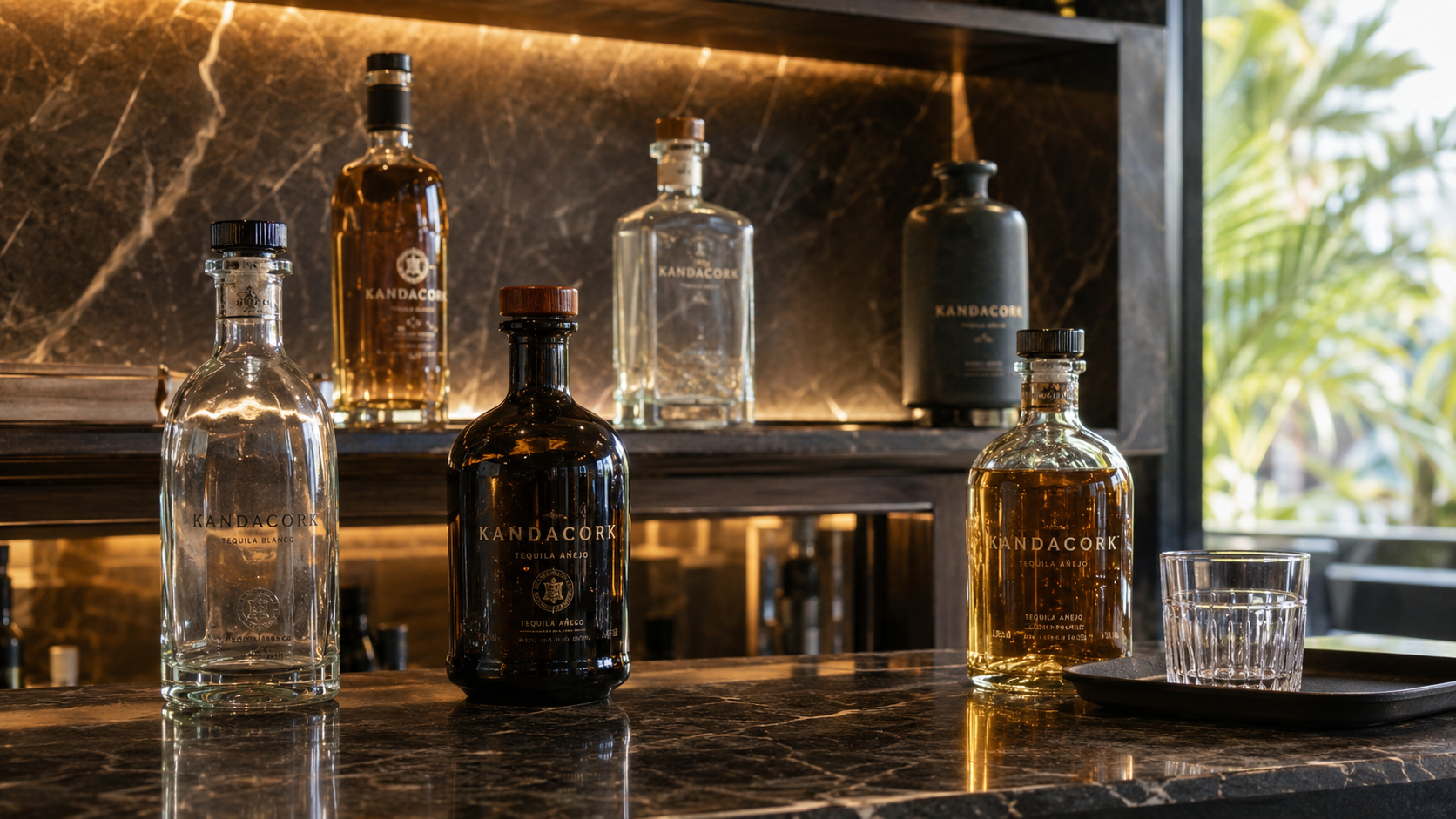
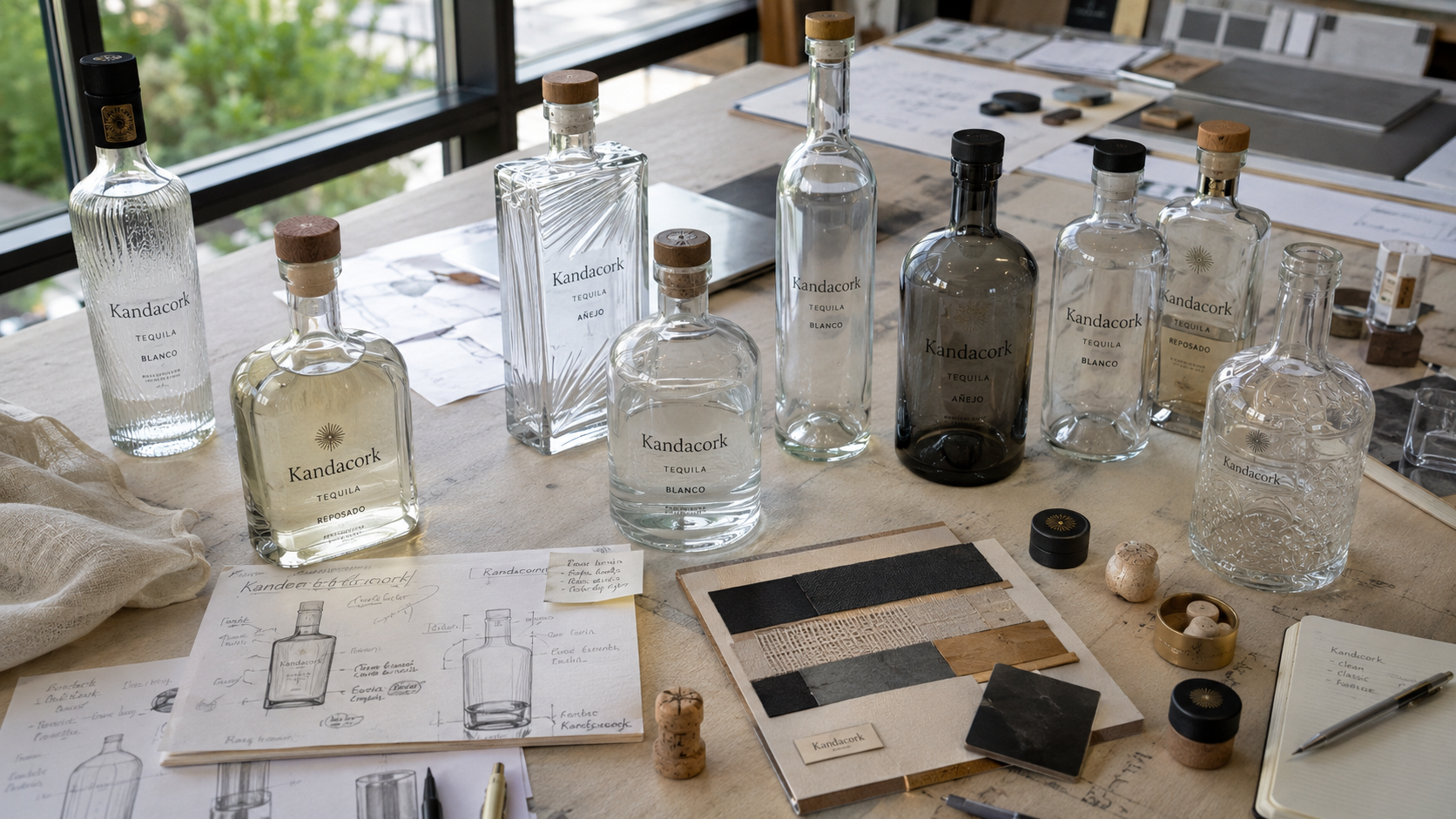
Premium closure branding should feel intentional, not decorative for its own sake. The top, sidewall, finish, color, and texture should work with the bottle shape, label, glass color, capsule, and carton.
Decoration options may include embossing, debossing, laser engraving, hot stamping, pad printing, screen printing, metallic coating, inlaid medallions, color coating, side printing, ribbing, knurling, brushed effects, or soft-touch finishes. Kandacork Closures supports custom branding for spirits closures so logos, colors, finishes, and decoration details can be aligned with the full packaging system.
Sidewall design is especially valuable because it affects both appearance and handling. A ribbed aluminum cap can improve grip. A debossed sidewall can add subtle luxury. A printed wraparound detail can make the bottle more recognizable when poured at the bar. Kandacork Closures offers sidewall design options for spirits closures to help brands coordinate texture, grip, logo placement, and finish.
For brands requiring advanced decoration across bottles, closures, capsules, and cartons, Kandacork Decoration & Branding can help align closure decoration with glass coating, screen printing, hot stamping, labeling, and other visual packaging elements.
Sustainability and Material Responsibility
Sustainability in premium spirits packaging should be specific and measurable. Buyers should ask what materials are used, whether components can be recycled, whether unnecessary packaging can be reduced, whether the format supports reuse or refill, and whether suppliers can provide documentation for material sourcing and compliance.
Natural cork has a strong sustainability story because cork oak bark can be harvested without cutting down the tree. Aluminum can support recyclability where collection and recovery systems exist. Mono-material designs may simplify recovery. Lightweighting can reduce transport impact, but it should not compromise sealing performance, premium feel, or export durability.
The ISO packaging and environment standard family, including ISO 18601, provides a useful framework for thinking about packaging optimization, reuse, recovery, and environmental impact across the packaging life cycle.
For brands prioritizing lower-impact glass packaging alongside closure selection, Kandacork Eco Glass can support packaging discussions that connect glass choice, closure compatibility, decoration readiness, and export logistics.
Food-Contact and Market Compliance
Closures may include components that come into direct or indirect contact with the product. This can include cork shanks, liners, gaskets, synthetic inserts, adhesives, inks, coatings, internal valves, and flow-control parts.
In the European Union, packaging materials intended to come into contact with food or drink must meet safety expectations designed to prevent harmful migration, unwanted composition changes, or effects on taste and smell. The European Commission provides guidance on food contact materials, which is useful for brands reviewing closure components for EU markets.
Before approving bulk production, buyers should ask practical questions. Is the liner suitable for high-ABV spirits? Can the closure tolerate alcohol vapor exposure? Are inks, coatings, adhesives, and decorative finishes appropriate for the intended use? Does the closure need tamper evidence or anti-refill functionality? Can the supplier provide food-contact documentation and batch traceability where required?
These questions help avoid late-stage packaging changes that can delay launch timelines.
Connected Packaging and Authentication
Premium spirits brands increasingly use connected packaging to support authenticity, consumer education, and product storytelling. QR codes, NFC tags, serialized labels, and digital product identities can connect the physical pack to online product information, batch data, cocktail content, brand heritage, or authentication experiences.
The GS1 organization describes GS1 Digital Link as a standardized way to connect identifiers such as GTINs, batch numbers, serial numbers, and other product data to web-based information. For spirits brands, this can support traceability, market-specific content, and consumer engagement when implemented correctly.
Connected packaging does not replace a strong closure system. It works best when physical security, tamper evidence, non-refillable function, label design, and digital verification are planned together.
Custom Closure Development Process
Start with the bottle drawing, physical samples, target fill volume, spirit type, alcohol content, neck finish, desired closure structure, filling method, and market requirements.
Next, choose the closure type. A whisky may need a wood-top stopper. A vodka may need a clean aluminum cap. An export rum may need a non-refillable closure. A liqueur range may need a shared screw cap structure with different colors for each flavor.
Then define material and branding direction. This includes top material, shank material, liner, color, finish, logo placement, sidewall texture, capsule coordination, and carton height.
After that, request prototypes or production samples. Check appearance, hand feel, color match, logo accuracy, bottle fit, opening experience, resealing behavior, and compatibility with the intended retail presentation.
Before bulk production, review sealing and compatibility. This may include leakage checks, torque testing, extraction force review, alcohol compatibility, capping-line performance, and transport risk.
Finally, confirm production specifications, quality criteria, packing method, lead time, inspection requirements, and export documentation.
Procurement Checklist Before Ordering
A clear closure specification helps reduce misunderstandings between brand owners, designers, bottlers, and suppliers. Before approving premium spirits packaging closures, buyers should confirm bottle drawings, physical samples, neck finish, bore size, thread profile, sealing surface, closure material, liner structure, decoration method, torque or extraction-force target, tamper-evident requirements, capping method, sample approval process, MOQ, lead time, packing method, and acceptable tolerance range.
This review helps buyers compare suppliers based on performance, not only on appearance. A beautiful closure is only successful if it fits the bottle, protects the liquid, runs on the line, survives transport, and supports the brand’s price point.
Why Work With Kandacork Closures?
Kandacork Closures supports custom closure development for premium spirits brands that need both visual quality and technical reliability. The product range includes bar-top stoppers, cork stoppers, synthetic stoppers, screw caps, ROPP closures, non-refillable systems, capsules, shrink sleeves, and branded decorative components.
For brand owners, importers, bottlers, and packaging designers, the advantage is coordinated development. Kandacork Closures can help review bottle drawings, match closure structures to neck finishes, develop branded samples, coordinate top and sidewall decoration, check sealing performance, and prepare export-ready bulk orders.
The team can also support closure family development for multiple SKUs. A gin brand may use one closure structure across several botanical variants while changing color or top decoration. A premium rum brand may use a shared stopper shape across different age statements while adjusting material finish to signal price tier.
When a project also requires glass bottles, jars, or multi-category packaging coordination, Kandacork Glass Packaging can support broader packaging development across glass structure, decoration-ready surfaces, matched closures, and export logistics.
Request a Closure Fit Review
Request a closure fit review before committing to tooling or bulk production. Kandacork Closures can review bottle drawings, physical samples, neck finish, spirit type, alcohol content, decoration goals, filling method, target order quantity, and launch timeline.
A fit review helps reduce leakage risk, avoid capping-line problems, improve premium shelf appeal, clarify procurement requirements, and shorten the path from concept to production. For custom closure projects, send your specifications through the Kandacork Closures contact page to begin the review process.
FAQ
What is the best closure for premium spirits?
The best closure depends on the spirit type, bottle neck, brand position, filling line, and market requirements. Bar-top stoppers are common for premium whisky, rum, gin, tequila, and brandy. Aluminum screw caps and ROPP closures are strong choices for modern spirits, RTD products, vodka, gin, liqueurs, and export packaging.
Are bar-top stoppers better than screw caps?
Bar-top stoppers are not automatically better than screw caps. They usually provide a more traditional and tactile premium experience. Screw caps can provide convenience, consistent resealing, strong decoration options, and efficient production. The right choice depends on brand story and technical requirements.
What closure is best for whisky bottles?
Premium whisky bottles often use wood-top, metal-top, or glass-top bar stoppers with cork or synthetic shanks. These closures support heritage, weight, and a strong opening ritual. Some whisky brands also use screw caps or tamper-evident systems depending on the market.
Do premium spirits need tamper-evident closures?
Many premium spirits need tamper-evident closures for compliance, market acceptance, or brand protection. A tamper-evident closure helps show whether the bottle has been opened and supports consumer trust.
Can closures be customized with logos and colors?
Yes. Premium spirits packaging closures can be customized with embossing, debossing, engraving, printing, hot stamping, color coating, metallic effects, sidewall texture, and material selection. Customization should be coordinated with the bottle, label, capsule, and carton design.
How do I know if a closure fits my bottle neck?
The supplier should review the bottle drawing and test physical bottle samples. Key details include neck finish, bore diameter, thread profile, sealing surface, height, and tolerance. Bulk production should not begin until fit and sealing performance are confirmed.
What is the difference between ROPP and non-refillable closures?
ROPP closures are roll-on pilfer-proof caps that provide secure sealing and tamper evidence. Non-refillable closures are designed to help prevent refilling or product substitution. Some premium spirits use non-refillable closures for added security in export or high-risk markets.
Which closure materials look most premium?
Wood, metal, glass, zamak, natural cork, and high-quality aluminum can all look premium when designed well. The best material is the one that matches the brand’s bottle shape, spirit category, target price, and customer expectations.
How can closure design improve shelf appeal?
Closure design improves shelf appeal through material, color, finish, logo placement, texture, height, and visual harmony with the bottle. A well-designed closure can make the bottle look more complete and help the product stand out in retail, bar, and duty-free environments.
How early should a spirits brand choose its closure?
A spirits brand should choose the closure early in the packaging development process. Closure selection affects bottle neck design, capping equipment, tamper evidence, decoration, testing, carton height, procurement timing, and production planning.