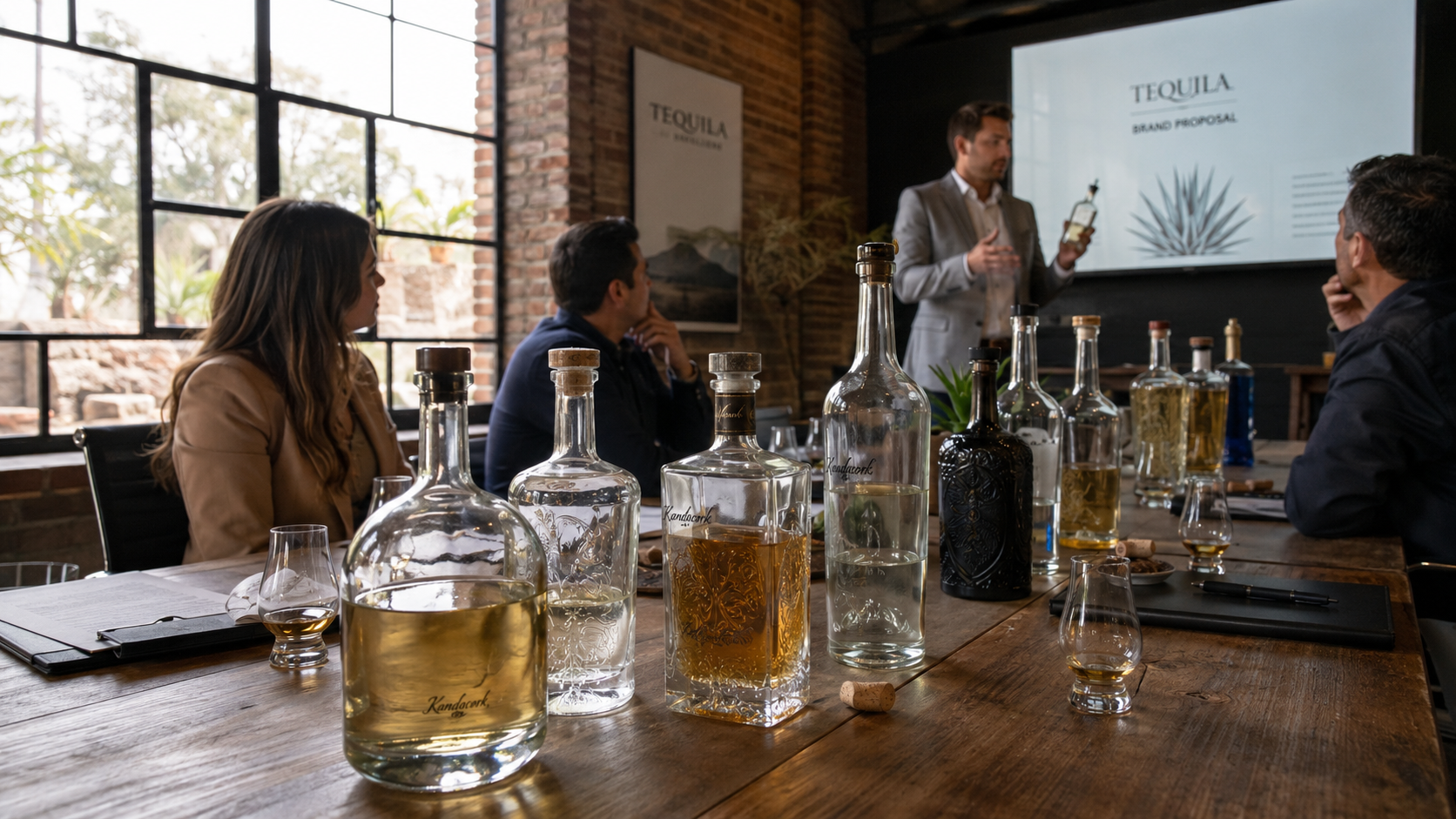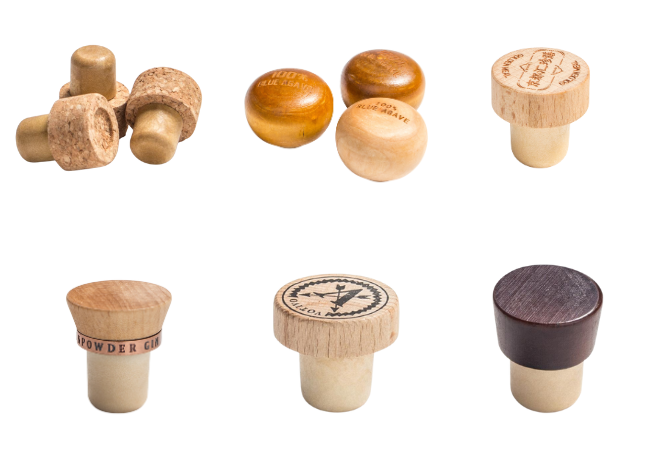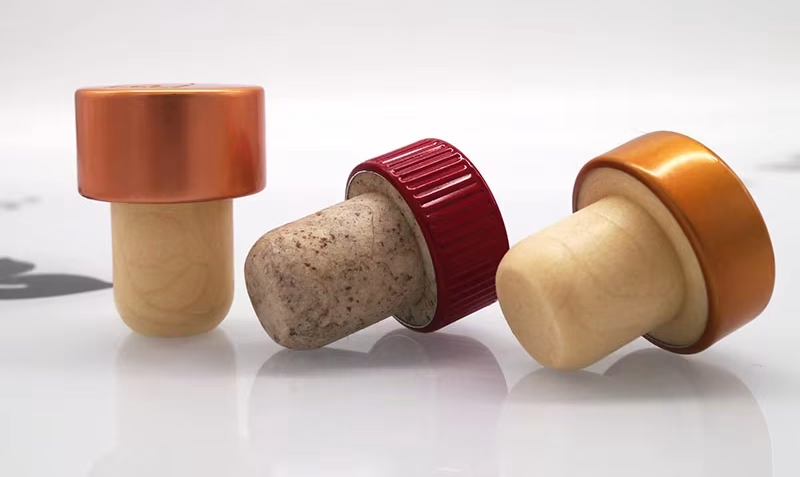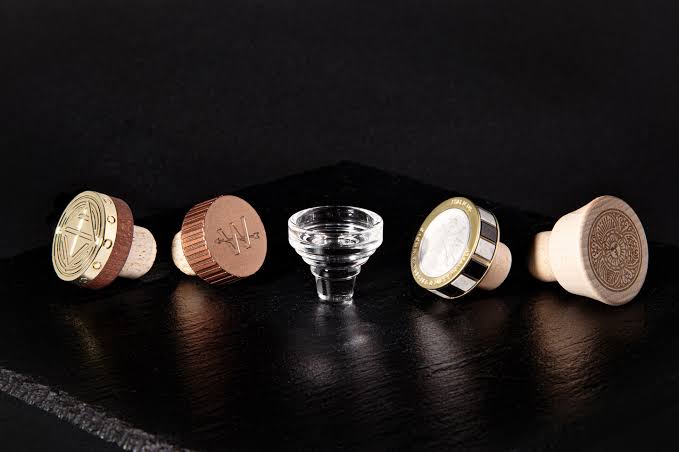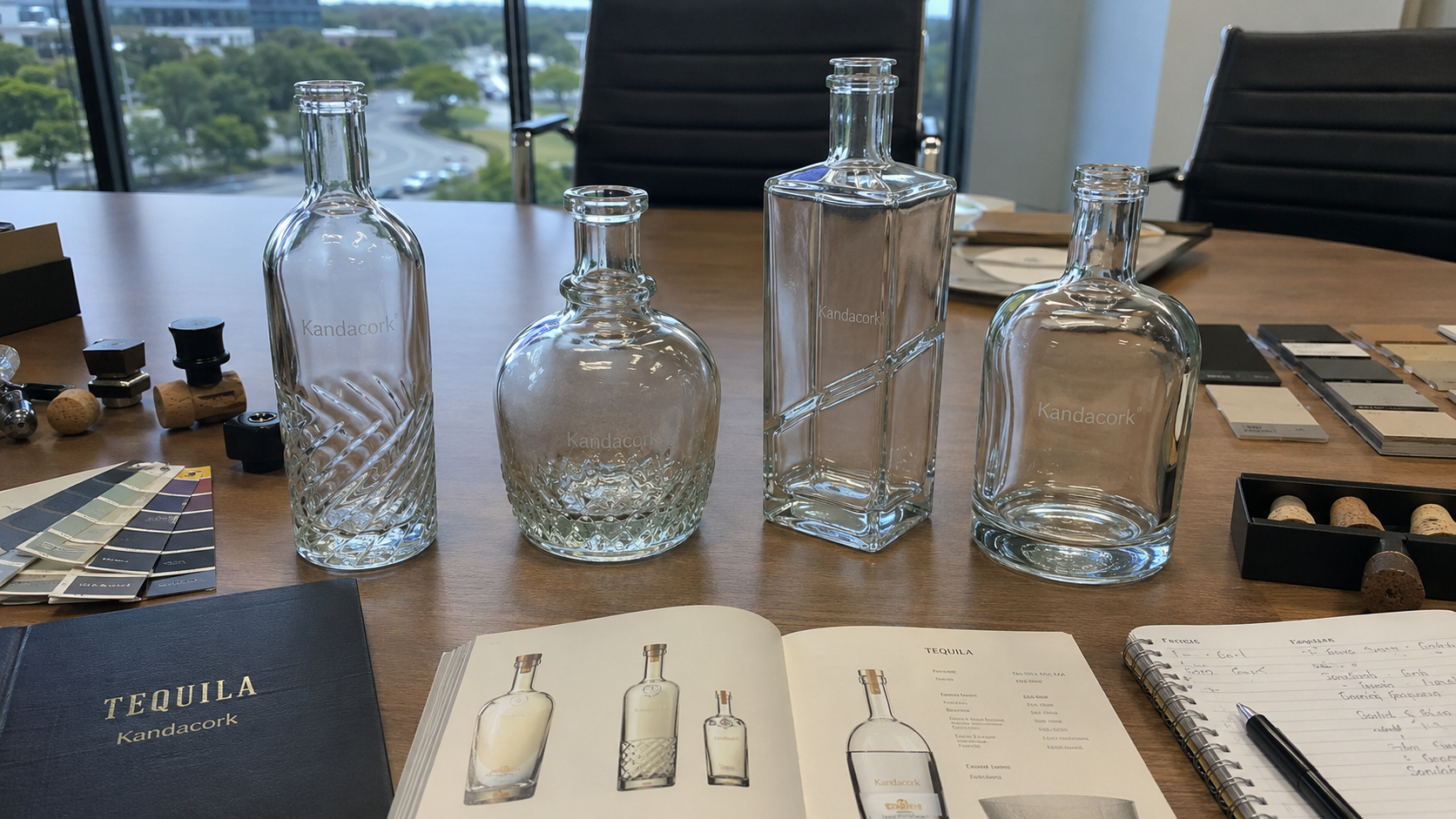
Metal bar-top stopper projects require careful coordination between top design, shank fit and surface finish. This guide explains how buyers can review bottle neck dimensions, material weight, plating, logo method and quality checks before approving samples.
What Are Metal Bar-Top Stoppers?
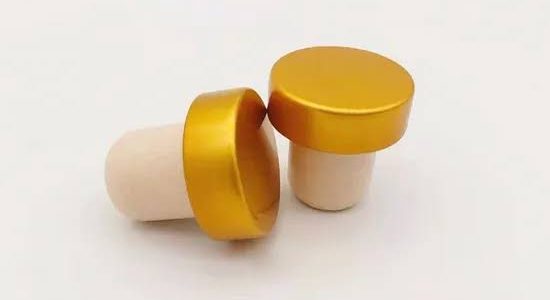
Metal bar-top stoppers are bottle closures made with a metal head and a cork or synthetic shank. The shank fits into the bottle neck to support sealing, while the metal head provides grip, decoration, weight, and brand identity.
They are also called bar-top closures, bartop stoppers, T-top stoppers, T-bar corks, liquor bottle stoppers, spirits bottle closures, and custom bottle stoppers with logo. They are widely used for distilled spirits because they support repeated opening and closing while creating a more premium consumer experience.
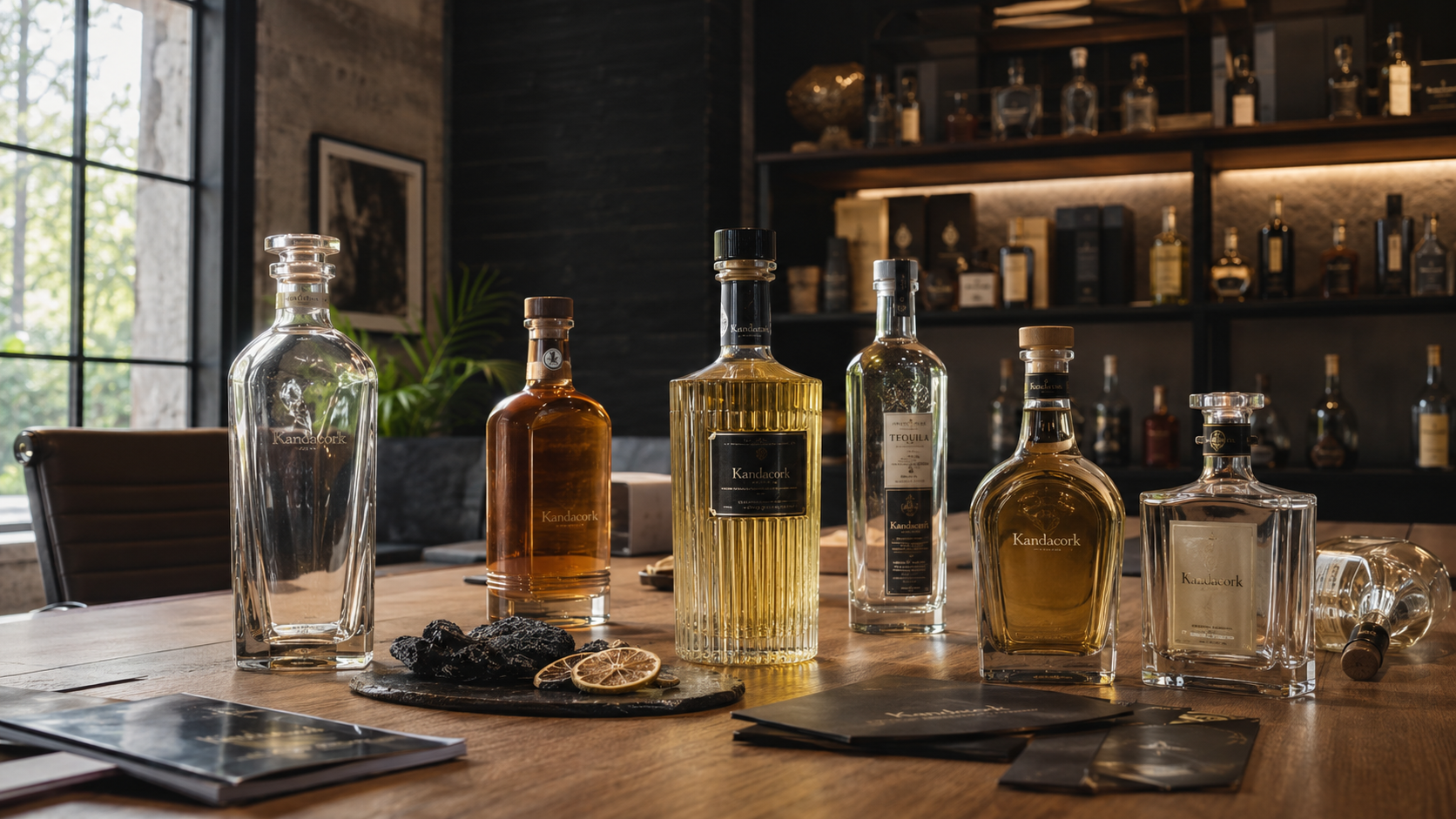
For brands developing new custom spirits bottle structures, the stopper should be considered early in the packaging process. Bottle neck dimensions, glass weight, stopper head diameter, label position, carton structure, and filling-line requirements all influence the final closure choice.
Why Premium Spirits Brands Choose Metal Bar-Top Stoppers
Premium spirits brands choose metal bar-top stoppers because they combine practical sealing performance with strong visual and tactile value. Compared with basic plastic closures or standard corks, metal tops can create a heavier hand feel, a cleaner brand surface, and a more memorable opening ritual.
Metal bar-top stoppers can help brands achieve:
- Stronger shelf differentiation
- Premium weight and hand feel
- Better logo visibility
- More consistent grip during opening
- A reusable closure experience
- Better alignment with luxury glass bottles and gift cartons
- More distinctive packaging across product families
A whisky brand may choose an antique Zamak top to communicate heritage and maturity. A vodka brand may prefer brushed aluminum for a clean, modern impression. A rum brand may use copper or bronze to support warm, aged flavor cues. A tequila or mezcal brand may use a sculpted metal top to reinforce regional identity and collectible value.
Main Components of a Metal Bar-Top Stopper
A metal bar-top stopper may look simple, but it is a technical packaging component. Buyers should evaluate the visible metal top and the hidden sealing structure before confirming mass production.
| Component | Function | Buyer consideration |
|---|---|---|
| Metal head | Provides grip, decoration, weight, and visual identity | Material, shape, finish, logo method, diameter, and cost |
| Shank | Fits into the bottle neck and supports sealing | Diameter, length, taper, compression, and material compatibility |
| Assembly area | Connects the head and shank | Bonding strength and repeated opening performance |
| Surface finish | Creates the final visual appearance | Color consistency, scratch resistance, plating or coating quality |
| Decoration area | Carries the brand mark | Engraving, embossing, debossing, printing, sidewall detail, or inserts |
A premium closure should not be judged only by its top view. A beautiful metal head can still fail if the shank is loose, the adhesive is weak, the finish scratches easily, or the stopper does not match the bottle neck.
Aluminum, Zamak, and Stainless-Style Metal Stoppers
The best metal material depends on the brand’s target market, bottle design, closure weight, decoration method, and production budget. Aluminum is often selected for modern lightweight closures, while Zamak is preferred for heavier luxury spirits packaging.
| Material | Best for | Main benefit | Buyer consideration |
|---|---|---|---|
| Aluminum | Vodka, gin, RTD spirits, modern spirits packaging | Lightweight, clean, cost-efficient, easy to finish | Less heavy and sculptural than Zamak |
| Zamak zinc alloy | Whisky, rum, tequila, mezcal, luxury spirits | Heavy, moldable, premium, suitable for custom shapes | Higher tooling and unit-cost potential |
| Stainless-style metal | Vodka, gin, liqueurs, minimalist spirits | Sleek, precise, durable appearance | More limited warmth than antique metal finishes |
Aluminum Bar-Top Stoppers
Aluminum bar-top stoppers are clean, lightweight, and versatile. They work well for brands that want a modern metallic look without excessive closure weight. They can be finished in silver, black, gold, brushed metal, matte coating, or custom colors depending on the brand direction.
Kandacork Closures supplies aluminium bar-top stoppers for spirits packaging projects that need scalable customization, logo decoration, sample approval, and bulk production. Aluminum is especially suitable for vodka, gin, white spirits, flavored spirits, and contemporary private-label packaging.
Choose aluminum when the packaging goal is clean, modern, premium, and cost-aware.
Zamak Bar-Top Stoppers
Zamak is a zinc alloy used for heavier and more sculptural closure designs. It is a strong choice for whisky, bourbon, aged rum, tequila, mezcal, brandy, cognac, and luxury limited-edition packaging.
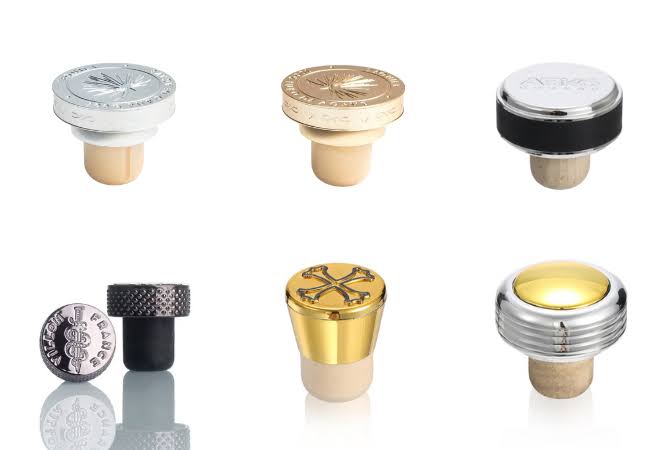
Zamak can be molded into custom shapes, crests, medallions, brand icons, and three-dimensional decorative tops. It also works well with antique gold, bronze, copper, gunmetal, black nickel, polished silver, and other premium finishes.
Choose Zamak when the closure needs a strong hand feel, collectible character, or a highly distinctive brand shape.
Stainless-Style Metal Stoppers
Stainless-style metal stoppers create a precise and minimal impression. They suit premium vodka, gin, liqueurs, and modern spirits brands that want a clean technical look rather than a heavy decorative closure.
This style pairs well with clear glass, frosted glass, monochrome labels, sharp typography, and understated cartons. It is a good option when the bottle design depends on restraint, clarity, and high-end simplicity.
Shank Options: Cork, Micro-Agglomerated Cork, and Synthetic Shank
The shank controls the way the stopper fits, seals, inserts, and opens. A premium metal head cannot compensate for a poorly matched shank. The correct shank should compress securely inside the neck without making insertion difficult or opening uncomfortable.
| Shank type | Best for | Advantage | Watch point |
|---|---|---|---|
| Natural cork | Heritage spirits and craft positioning | Traditional appearance and premium perception | Natural variation requires careful control |
| Micro-agglomerated cork | Premium spirits needing more consistency | Cork identity with more stable dimensions | Must be tested with the actual bottle |
| Synthetic shank | High-volume and modern spirits packaging | Stable dimensions and repeatable performance | Must be selected by neck diameter and sealing depth |
Natural cork gives a traditional look and is often associated with heritage, craft, and classic premium packaging. Micro-agglomerated cork can offer a balance between cork identity and controlled performance. Synthetic shanks are common in spirits packaging because they support consistent dimensions, clean appearance, and repeatable production.
For buyers comparing stopper systems, Kandacork Closures also offers synthetic bar-top stoppers for projects that prioritize dimensional stability and scalable production.
How to Choose the Correct Metal Bar-Top Stopper Size
The correct stopper size depends on the actual bottle neck, not only the bottle volume. A 700 ml, 750 ml, or 1 L spirits bottle can have different inner neck dimensions depending on the glass supplier, mold design, finish, and closure system.
Before ordering custom metal bar-top stoppers, buyers should prepare:
- Bottle drawing
- Physical bottle sample
- Inner neck diameter
- Neck finish type
- Sealing depth
- Preferred shank diameter
- Required shank length
- Target head diameter
- Filling-line method
- Shipping and storage conditions
- Destination market
The shank should be tight enough to seal securely but not so tight that it slows bottling or frustrates consumers. If the shank is too loose, leakage and weak pull feel may occur. If it is too tight, insertion may become difficult and the stopper may feel uncomfortable to remove.
Fit Testing Before Bulk Production
Fit testing confirms whether the stopper, bottle, liquid, filling method, and storage environment work together as a complete packaging system. It reduces the risk of leakage, loose closures, weak pull feel, difficult opening, and production delays.
A practical testing process may include:
- Measuring the bottle neck inner diameter
- Confirming sealing depth and contact area
- Testing several shank diameters if needed
- Checking hand insertion and filling-line insertion
- Reviewing extraction force after rest time
- Testing leakage in upright and inverted positions
- Reviewing repeated opening and closing
- Checking the bond between the metal head and shank
- Inspecting closure appearance after packing simulation
For export orders, gift sets, premium retail launches, and seasonal promotions, fit testing is especially important. A closure failure can damage the product, the shipment, and the brand’s reputation.
Kandacork Closures builds closure quality and testing into stopper development so buyers can review dimensions, finish quality, fit performance, and production readiness before mass supply.
Custom Logo, Shape, and Finish Options
One of the main advantages of metal bar-top stoppers is decoration flexibility. The closure can become a compact brand surface that reinforces the bottle’s identity every time the customer opens it.
Common logo and decoration options include:
- Laser engraving
- Embossed logo
- Debossed logo
- Top printing
- Sidewall printing
- Color-filled logo
- Metal medallion insert
- Knurled edge
- Ribbed grip
- Brushed and polished contrast
- Custom molded brand symbol
The surface finish should match the full packaging system, including bottle color, label stock, label texture, capsule, carton, and retail price point. Kandacork Closures supports colors and finishes for spirits closures such as matte silver, brushed aluminum, polished gold, satin black, copper, bronze, gunmetal, antique brass, rose gold, black nickel, and custom color coating.
For brands that need stronger visual storytelling beyond the closure, bottle decoration and branding can help align the stopper with label effects, glass decoration, screen printing, frosting, embossing, and secondary packaging.
Metal Bar-Top Stoppers by Spirits Category
Different spirits categories need different closure styles. The stopper should reflect the bottle shape, liquid positioning, customer expectation, and sales channel.
| Spirits category | Recommended closure style | Brand direction |
|---|---|---|
| Whisky and bourbon | Heavy Zamak, antique metal, embossed crest | Heritage, maturity, craftsmanship |
| Vodka | Aluminum or stainless-style top | Clean, modern, pure, minimal |
| Gin | Aluminum, colored finish, botanical engraving | Fresh, creative, premium |
| Rum | Copper, bronze, dark gold, antique finish | Warm, aged, rich, craft |
| Tequila and mezcal | Sculpted Zamak, custom symbolic top | Bold, regional, collectible |
| Brandy and cognac | Polished gold, satin black, refined metal | Elegant, gifting, luxury |
| Liqueurs | Custom colors and decorative metal tops | Flavor-led, expressive, shelf-catching |
A premium stopper should feel connected to the bottle, not added at the end. Brands using integrated spirits packaging can coordinate glass shape, closure material, decoration, and export packing from the beginning of the project.
Metal vs Wood, Plastic, Glass, and Ceramic Bar-Top Stoppers
Metal is often selected when a brand needs premium weight, durable decoration, and a strong luxury signal. Other materials may also be suitable depending on brand positioning.
| Top material | Best for | Strength | Limitation |
|---|---|---|---|
| Metal | Premium and super-premium spirits | Weight, durability, decoration, luxury feel | Higher cost than basic plastic |
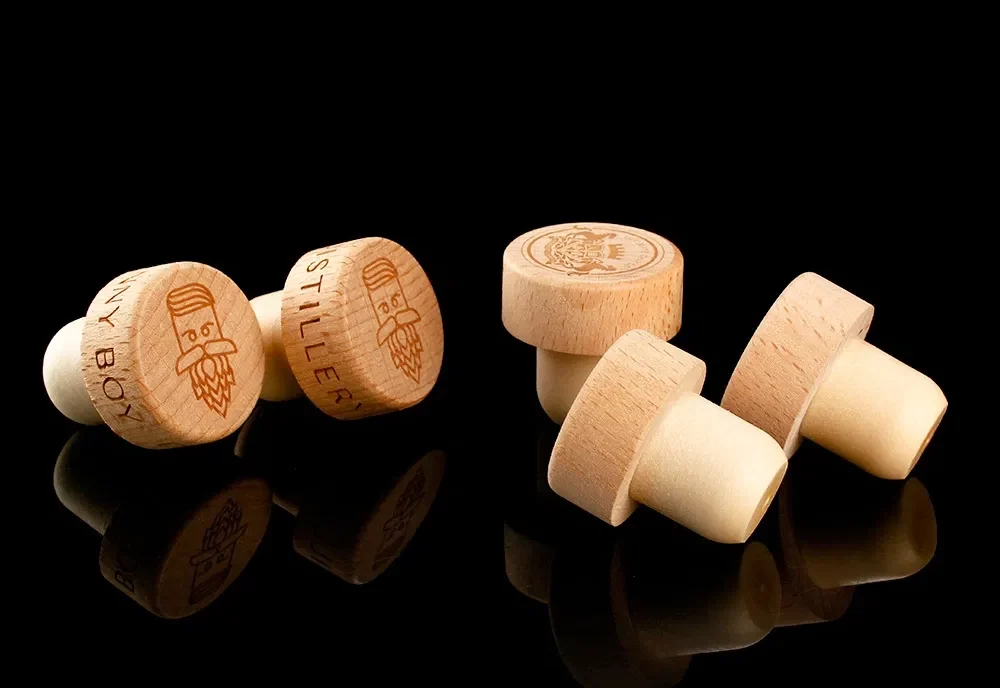
| Wood | Craft, natural, rustic, heritage brands | Warm organic appearance | Natural variation and finish sensitivity |
| Plastic | Entry-level or high-volume spirits | Cost-efficient and lightweight | Lower premium perception |
| Glass | Luxury bottles and decorative packaging | Elegant and distinctive | Fragility and packing protection needs |
| Ceramic | Craft and collectible packaging | Artisanal appearance | Higher handling complexity |
Metal is usually the strongest choice when the closure must communicate value at first touch. Wood may be better for rustic or natural cues. Plastic may suit high-volume price-sensitive products. Glass and ceramic can create highly decorative effects but require careful handling and packing.
For broader bottle and closure coordination across categories, multi-category glass packaging can help brands align container structure, closure fit, decoration-ready surfaces, and export logistics.
Production Process for Custom Metal Bar-Top Stoppers
A custom stopper project should follow a structured development process. This helps reduce sampling errors, launch delays, and production risk.
Project Brief
The buyer shares the bottle drawing, bottle sample, logo file, preferred material, finish reference, spirit category, order quantity, destination market, and launch schedule.
Technical Review
The closure supplier checks the bottle neck dimensions, shank requirement, head diameter, closure weight, decoration method, material choice, and production feasibility.
Design Proposal
The supplier develops a stopper concept that matches the brand direction and technical requirements. This may include metal material, top shape, finish, logo placement, shank type, sample plan, and packing method.
Sampling
Physical samples are produced or selected for fit testing and visual approval. Samples should be tested on real bottles before mass production.
Tooling and Approval
For custom molded metal heads, tooling may be required. The buyer should approve drawings, logo details, finish quality, dimensions, and fit performance before bulk order confirmation.
Mass Production
Production may include casting, forming, polishing, plating, coating, logo decoration, shank assembly, dimensional checking, visual inspection, and export packing.
MOQ, Lead Time, and Cost Factors
MOQ and lead time depend on whether the project uses a standard metal top, custom decoration, or a fully molded design. Wholesale metal bar-top stoppers with standard shapes may move faster, while custom Zamak tops usually require more sampling and tooling time.
Cost factors include:
- Metal material
- Head size and weight
- Custom mold requirement
- Plating or coating complexity
- Logo method
- Shank material
- Sample quantity
- Bulk order quantity
- Quality testing requirements
- Export packing method
- Shipping destination
Aluminum is often more cost-efficient for clean modern closures. Zamak usually costs more but creates a heavier and more sculptural luxury impression. Buyers should not evaluate stoppers by unit price alone. A better closure can support a higher retail price, stronger gifting appeal, improved shelf recognition, and a more consistent brand experience.
Food-Contact, Compliance, and Documentation Considerations
Metal bar-top stoppers should be reviewed as part of the full packaging system. Even if the metal head does not directly touch the liquid, the shank, adhesive, coating, and assembly structure may require food-contact consideration depending on the design and destination market.
For U.S. projects, buyers may review FDA food-contact packaging guidance for packaging substances and components that may come into contact with food. For European projects, the European Commission food contact materials legislation provides the framework for materials intended to come into contact with food.
Spirits brands selling in the United States should also consider TTB labeling resources when planning alcohol packaging, claims, and market-entry documentation. The stopper supplier, bottle supplier, filler, and brand owner should coordinate early so the closure does not become a late-stage compliance or production issue.
Quality Control and Transport Readiness
Quality control should cover both appearance and performance. For premium spirits packaging, small closure defects can become visible quickly on shelf, in gift boxes, or during bottle opening.
Important checks include:
- Head diameter
- Shank diameter
- Shank length
- Head-shank alignment
- Surface finish consistency
- Logo position and clarity
- Bonding strength
- Insertion force
- Extraction force
- Leakage resistance
- Carton protection
- Batch consistency
Dimensional control is especially important for cork-based components. Reference points such as ISO cork stopper physical test standards highlight the importance of measuring stopper dimensions such as diameter and length. For export packaging and distribution planning, ISTA test procedures can help brands think more systematically about transport conditions, package protection, and shipment performance.
Sustainability Considerations for Metal Bar-Top Stoppers
Sustainability should be evaluated across the complete packaging system, not only the visible stopper head. A durable metal top may support premium reuse perception and material recovery, but the final impact depends on material selection, component separation, coating, weight, and local recycling infrastructure.
A practical sustainability review may include:
- Can the closure be separated from the bottle?
- Is the metal head recyclable in the destination market?
- Is the shank natural cork, micro-agglomerated cork, or synthetic?
- Are coatings, paints, and adhesives necessary for the design?
- Can closure weight be optimized without reducing quality?
- Can cartons and dividers protect the finish without excessive material?
- Can production consistency reduce waste?
For premium spirits brands, sustainability should be handled as a design and sourcing decision, not only as a marketing claim. The most responsible closure is one that fits correctly, performs reliably, protects the product, reduces avoidable waste, and supports the brand’s real packaging goals.
How to Order Custom Metal Bar-Top Stoppers from Kandacork Closures
To request an accurate quotation, buyers should prepare both technical and branding details. The more complete the brief, the easier it is to recommend the right metal head, shank type, logo method, finish, sample process, and production plan.
| Information needed | Why it matters |
|---|---|
| Bottle drawing | Confirms neck dimensions and sealing depth |
| Bottle sample | Allows physical fit testing |
| Logo artwork | Supports engraving, embossing, printing, or insert design |
| Preferred material | Helps compare aluminum, Zamak, and stainless-style options |
| Finish reference | Guides plating, coating, color, and texture |
| Target quantity | Affects MOQ, tooling, and unit cost |
| Spirit category | Helps match style, weight, and brand positioning |
| Destination market | Supports documentation and compliance review |
| Launch timeline | Helps plan sampling, tooling, and mass production |
| Filling-line method | Supports insertion and production compatibility |
For a faster quotation, buyers can request a custom closure quote with the bottle drawing, sample bottle, logo file, finish reference, target quantity, destination market, and launch timeline.
FAQ
What are metal bar-top stoppers?
Metal bar-top stoppers are bottle closures made with a metal top and a cork or synthetic shank. The shank fits into the bottle neck to support sealing, while the metal top provides grip, decoration, weight, and brand identity for premium spirits packaging.
What are metal bar-top stoppers used for?
Metal bar-top stoppers are used for spirits bottles that require repeated opening and closing. They are common in whisky, vodka, gin, rum, tequila, mezcal, brandy, cognac, liqueur, RTD spirits, and premium private-label beverage packaging.
Are metal bar-top stoppers suitable for whisky, vodka, gin, rum, and tequila?
Yes. Metal bar-top stoppers are suitable for many spirits categories. Whisky and rum often use heavier Zamak tops, vodka and gin often use aluminum or stainless-style tops, and tequila or mezcal brands may choose sculpted custom metal closures.
How do I choose the correct shank size?
Choose the shank size by checking the bottle neck inner diameter, sealing depth, and bottle drawing. Physical bottle samples should be tested before mass production to confirm insertion force, extraction feel, leakage resistance, and repeated opening performance.
What is the difference between aluminum and Zamak bar-top stoppers?
Aluminum bar-top stoppers are lighter, cleaner, more modern, and often more cost-efficient. Zamak bar-top stoppers are heavier, more sculptural, and more suitable for luxury spirits, custom shapes, antique finishes, and collectible packaging.
Are Zamak bar-top stoppers better than aluminum stoppers?
Zamak is better when the brand needs heavier weight, custom molding, and a luxury feel. Aluminum is better when the brand needs a lighter, modern, cost-efficient metal closure. The better choice depends on bottle design, price point, order quantity, and brand positioning.
Can metal bar-top stoppers be customized with a logo?
Yes. Metal bar-top stoppers can be customized with engraving, embossing, debossing, laser marking, top printing, sidewall printing, color-filled logos, metal inserts, textured edges, and custom molded brand symbols.
Can metal bar-top stoppers be used with any spirits bottle?
Not automatically. The stopper must match the bottle neck inner diameter, sealing depth, and filling-line requirements. Sample testing is recommended before bulk ordering because bottles with the same volume can have different neck dimensions.
What is the MOQ for custom metal bar-top stoppers?
MOQ depends on material, tooling, finish, logo method, and production complexity. Simple aluminum styles may have different MOQ requirements from custom molded Zamak closures. Buyers should share drawings, artwork, and quantity targets for an accurate quotation.
Do I need bottle samples before ordering?
Yes. Bottle samples are strongly recommended. Drawings help with technical review, but real bottle testing confirms shank fit, insertion force, extraction feel, leakage resistance, and visual balance before mass production.
Conclusion
A premium closure should not be selected only by appearance. The best metal bar-top stoppers balance brand design, bottle fit, sealing performance, production reliability, compliance review, sustainability considerations, and customer experience.
For spirits brands, the stopper is part of the product’s value signal. A well-designed metal closure can make a whisky feel more collectible, a vodka feel cleaner, a gin feel more refined, a rum feel richer, and a tequila feel more distinctive.
Kandacork Closures helps buyers develop custom metal bar-top stoppers that match the bottle, support the brand, and perform in real production. The right project starts with a bottle sample, a clear brand direction, and a technical review that connects design ambition with filling-line reality.