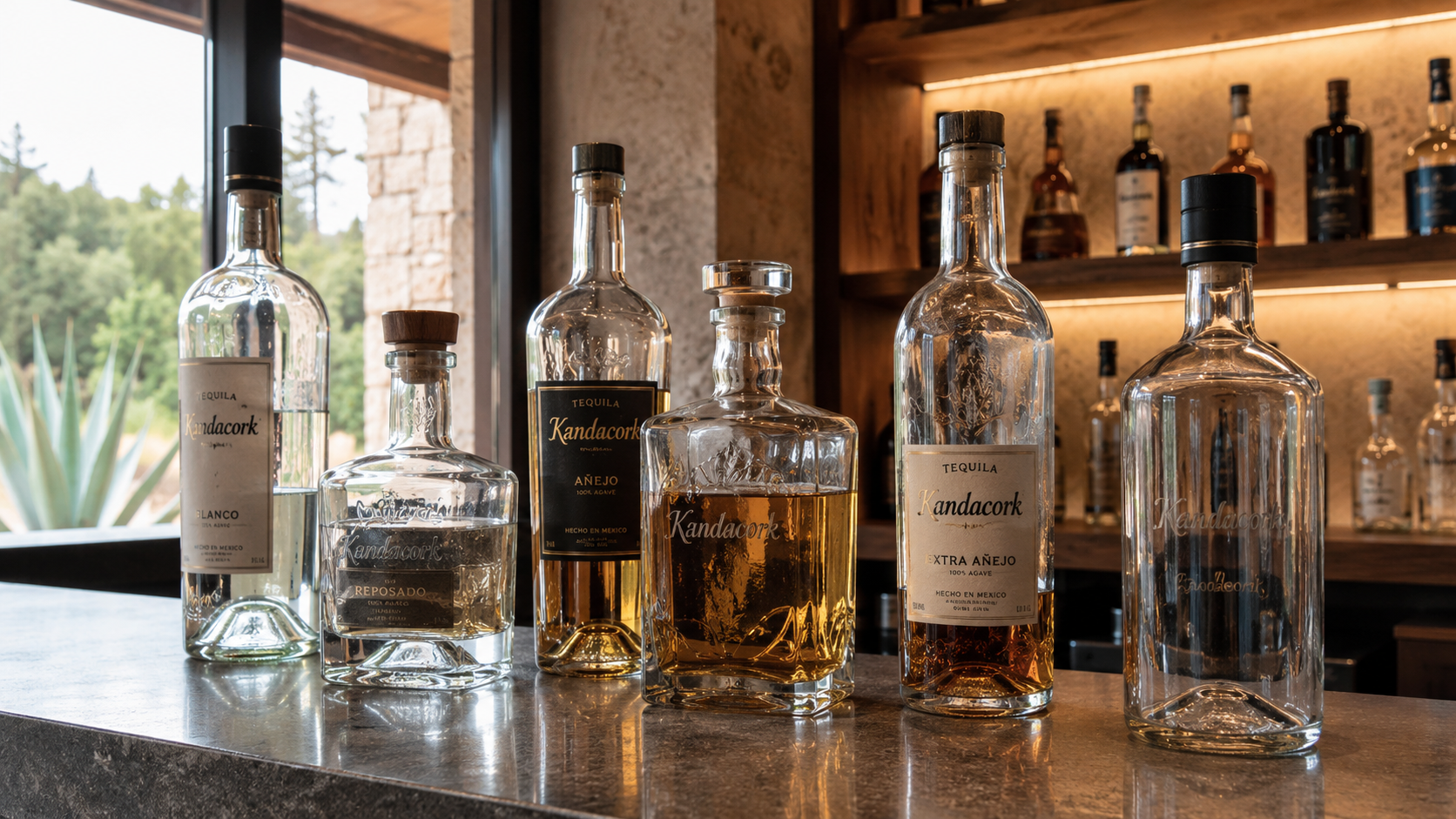
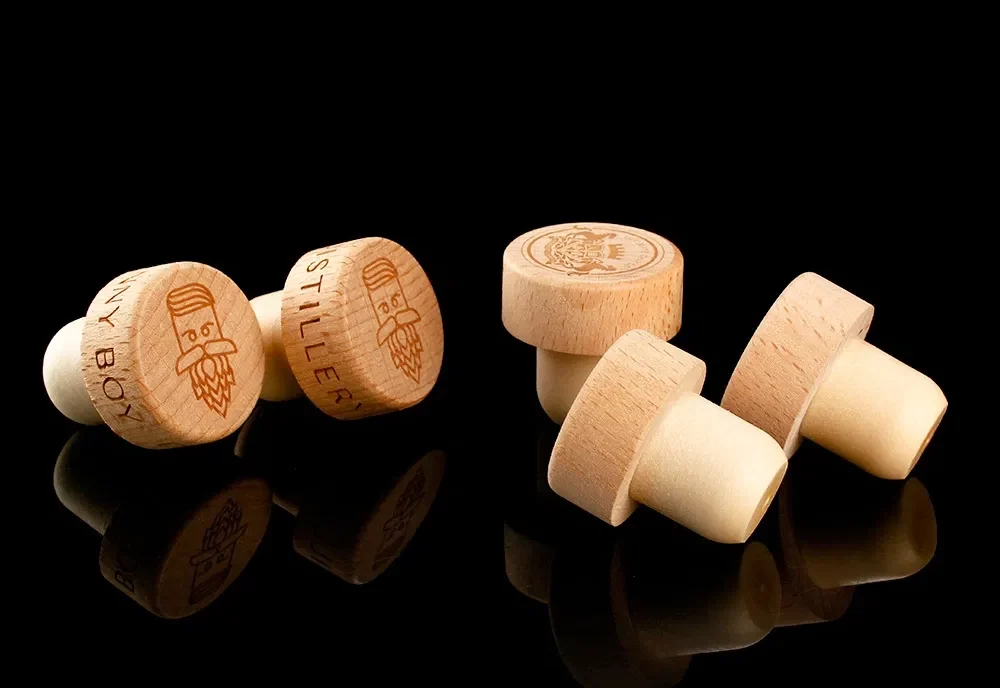
Different spirits bottle closure systems solve different packaging problems. This guide helps buyers compare stoppers, screw caps, ROPP caps and anti-refill closures based on bottle compatibility, sealing performance, brand value and market requirements.
Key Takeaways
- Bottle closure systems for spirits should be selected based on bottle neck finish, spirit type, filling line, security needs, and brand positioning.
- Bar-top stoppers are often best for premium whisky, rum, tequila, brandy, cognac, and craft gin.
- ROPP closures and screw caps are suitable for high-speed bottling, miniatures, vodka, gin, and liqueurs.
- Non-refillable closures are useful for duty-free, export, premium, and high-counterfeit markets.
- Buyers should test closure fit, torque, leakage, alcohol compatibility, and export packaging before bulk production.
What Are Bottle Closure Systems for Spirits?
Bottle closure systems for spirits are the full set of components used to seal, protect, decorate, and authenticate a spirits bottle. They may include the primary cap or stopper, internal liner, cork shank, synthetic plug, pourer insert, tamper-evident band, non-refillable valve, capsule, shrink sleeve, or decorative top.
A complete closure system should solve several practical problems at the same time. It should seal the liquid safely, fit the bottle neck finish, support the filling line, match the brand’s visual identity, protect the product from tampering, and remain consistent during bulk production.
The U.S. Alcohol and Tobacco Tax and Trade Bureau provides guidance on tamper-evident closures for distilled spirits, which highlights why closure security is more than a cosmetic concern. For export brands, travel retail, and premium spirits, visible tamper evidence can help protect both compliance and consumer confidence.
For B2B buyers, the goal is not simply to find a cap that looks attractive. The goal is to select a closure system that works reliably from sampling to filling, transport, retail display, and consumer use.
Who This Page Is For
This guide is written for spirits packaging decision-makers who need practical closure recommendations before placing a bulk order.
It is especially useful for:
- Distilleries developing new bottle packaging
- Spirits brands launching whisky, vodka, gin, rum, tequila, liqueur, brandy, or cognac
- Private-label liquor companies
- Importers and distributors sourcing export-ready spirits packaging
- Packaging designers matching bottles, labels, capsules, and closures
- Procurement teams comparing custom liquor bottle stoppers and caps
- Filling plants checking closure compatibility with capping equipment
- Premium spirits brands looking for tamper-evident or non-refillable solutions
Many spirits projects also require bottle development, decoration, closure matching, and export packaging to be planned together. Brands developing complete liquor packaging can coordinate closure decisions with custom spirits bottles so the bottle finish, stopper style, decoration zone, and carton plan support the same launch goal.
Quick Selection Guide for Spirits Bottle Closures
The best closure depends on the product category, brand position, filling process, target market, and security requirement.
| Spirit Category | Recommended Closure Options | Best Use Case |
|---|---|---|
| Whisky / Whiskey | Wooden bar-top stopper, capsulated cork, synthetic cork | Premium ritual, traditional appearance, luxury shelf presence |
| Vodka | Aluminum screw cap, ROPP cap, tamper-evident cap | Clean design, high-speed filling, modern branding |
| Gin | Bar-top stopper, glass stopper, aluminum cap | Botanical storytelling, premium packaging, craft positioning |
| Rum / Brandy / Cognac | Wooden stopper, metal-top stopper, capsulated cork | Heritage image, gift packaging, aged-spirit positioning |
| Tequila / Mezcal | Bar-top stopper, synthetic cork, tamper-evident closure | Strong identity, export security, distinctive design |
| Liqueurs | Screw cap, ROPP cap, flow-control closure | Easy resealing, controlled pouring, repeat use |
| Miniature Spirits | Small ROPP cap, screw cap, plastic TE cap | Sampling, airline, hotel, and promotional channels |
| Duty-Free / Export Spirits | NRF closure, tamper-evident sleeve, security cap | Anti-refill protection and channel control |
Premium sipping spirits often benefit from tactile stoppers and decorative tops. High-volume spirits, miniatures, and export products often benefit from ROPP closures, tamper-evident screw caps, or non-refillable liquor bottle closures.
How to Choose Bottle Closure Systems for Spirits
Choosing the right closure starts with the bottle, the liquid, and the market. A closure that works for a domestic craft gin may not work for an export whisky, a duty-free tequila, or a high-speed vodka filling line.
| Decision Factor | What to Check | Why It Matters |
|---|---|---|
| Spirit type | Whisky, vodka, gin, rum, tequila, liqueur, brandy | Influences closure style and consumer expectation |
| Bottle neck finish | Thread, bore, finish height, tolerance | Determines physical compatibility |
| Security need | TE band, shrink sleeve, NRF, valve system | Reduces tampering and refill risk |
| Filling line | Manual, semi-auto, automatic | Affects cap application and torque control |
| Brand position | Value, premium, luxury, duty-free | Influences material and decoration choice |
| Alcohol content | ABV, formulation, flavor compounds | Affects liner, cork, and material compatibility |
| Export market | Climate, transport route, regulation | Affects testing and packaging requirements |
| Order quantity | Trial batch, launch order, annual supply | Influences tooling, MOQ, and unit cost |
In export spirits projects, leakage often comes from bottle bore tolerance or liner compression mismatch rather than the closure material alone. For this reason, closure selection should begin before the bottle and neck finish are finalized.
Main Types of Bottle Closure Systems for Spirits
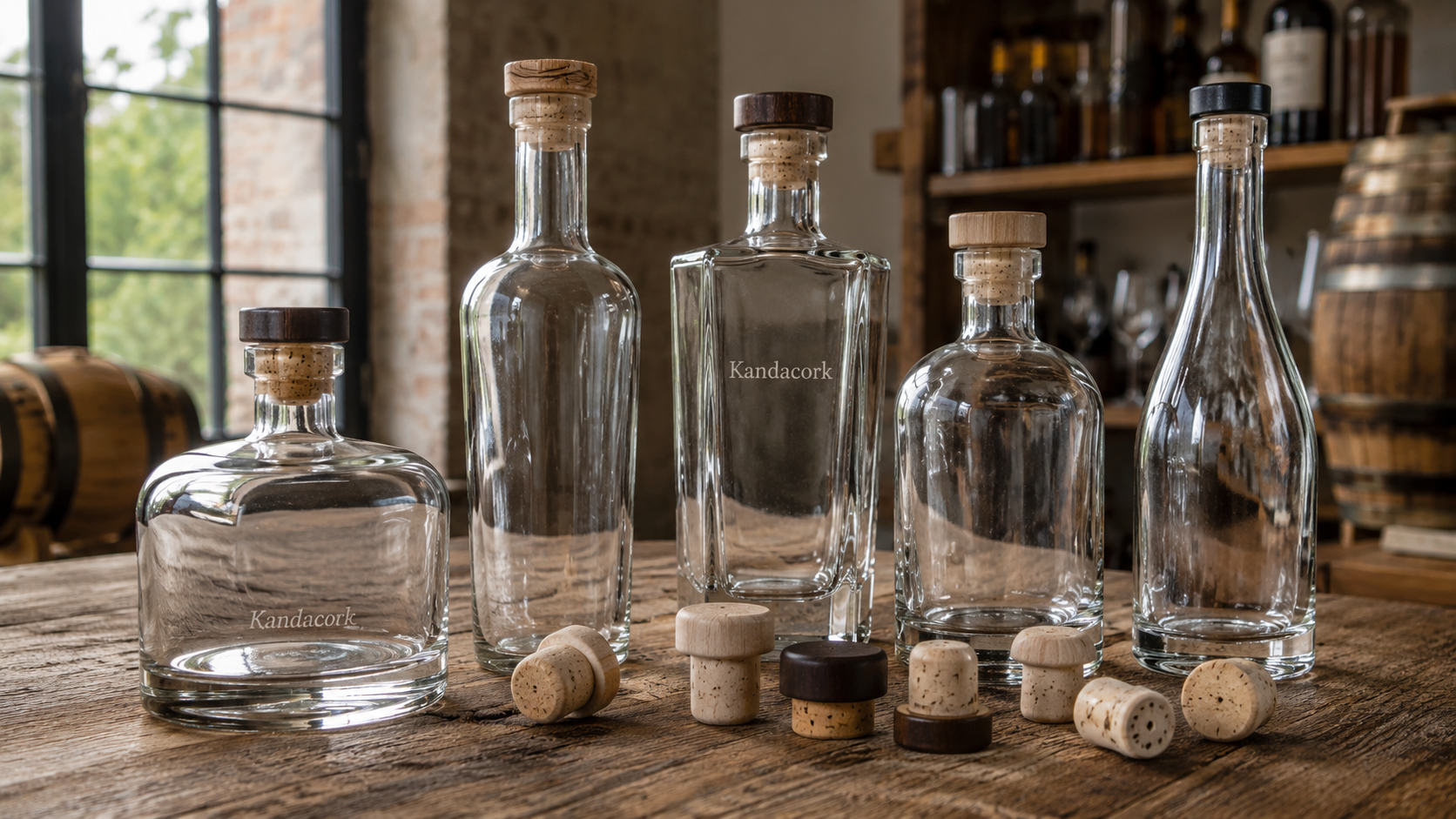
Spirits closures can be divided into several major categories. Kandacork’s full closure and stopper range includes bar-top stoppers, screw caps, ROPP caps, non-refillable systems, capsules, and shrink sleeves for spirits, olive oil, and specialty bottle projects.
Bar-Top Stoppers
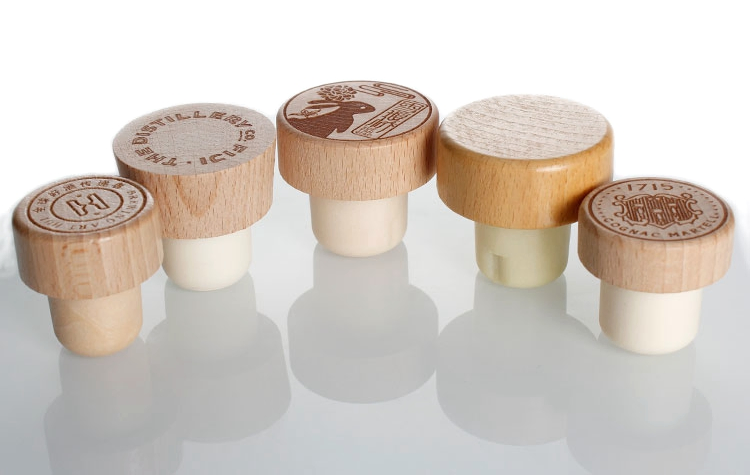
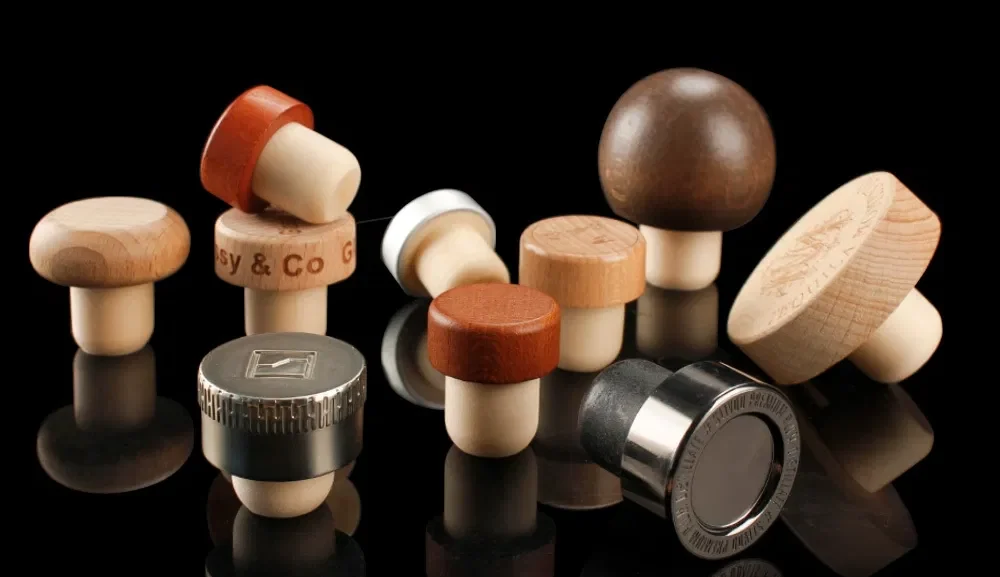
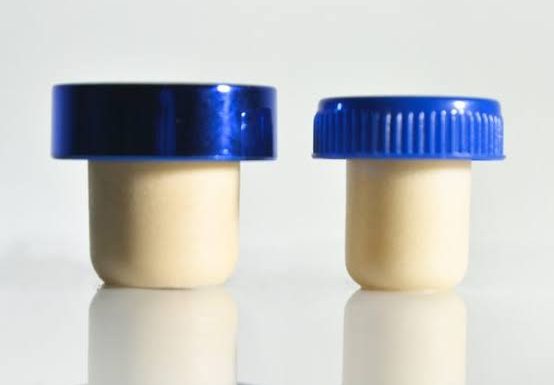
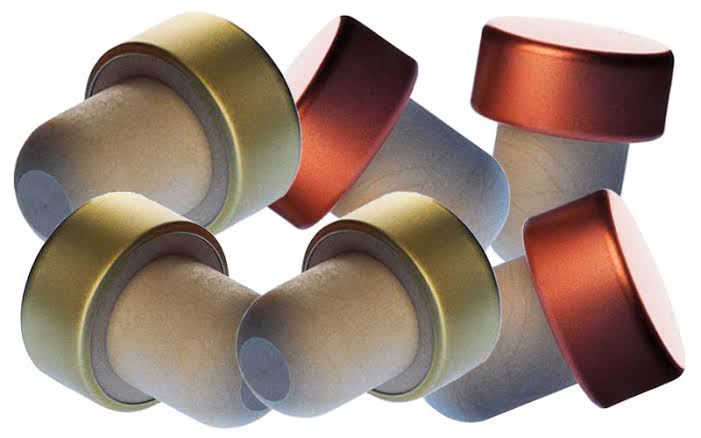
Bar-top stoppers are widely used for whisky, rum, gin, tequila, brandy, cognac, and premium liqueurs. They usually combine a decorative top with a natural cork, synthetic cork, or TPE shank.
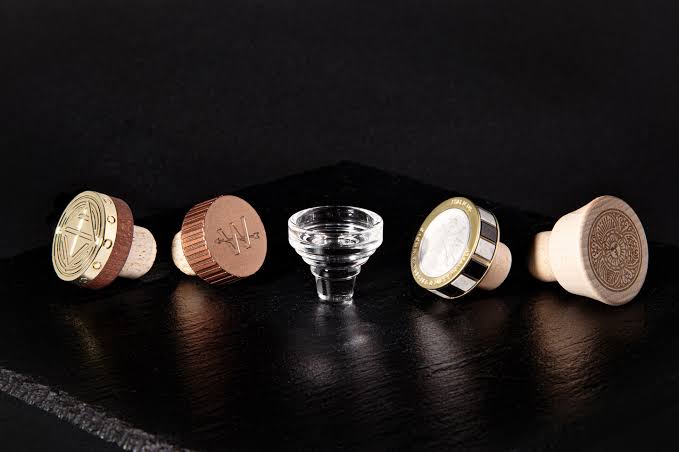
The top can be made from wood, aluminum, zinc alloy, plastic, glass, ceramic, or composite material. The shank provides the sealing function, while the top delivers the visual and tactile brand experience.
Bar-top stoppers are popular because they create a premium opening ritual. Consumers pull the stopper, hear the release, feel the weight, and often reuse the closure after opening. For high-end spirits, this small interaction can strongly influence perceived quality.
Fit testing is essential. The shank diameter, insertion depth, cork compression, bottle bore tolerance, pull-out force, and liquid compatibility must all be reviewed before bulk production.
Screw Caps
Screw caps are common for vodka, gin, liqueurs, RTDs, miniatures, and value-to-premium spirits. They are usually made from aluminum or plastic and may include liners for improved sealing.
Screw closures offer convenience, repeat opening, fast production, and predictable application. They also work well for brands seeking a clean, modern, or minimalist packaging style.
Key specifications include cap diameter, cap height, thread profile, liner type, application torque, removal torque, side-wall decoration, and tamper-evident band strength.
A screw cap should never be selected by diameter alone. The bottle thread finish, liner compression, capping head, and torque settings must be validated together.
ROPP Closures
ROPP means roll-on pilfer-proof. These closures are usually aluminum caps applied to a threaded bottle finish using specialized capping equipment. The cap is rolled onto the bottle neck, creating the thread and tamper-evident band during application.
ROPP closures for spirits are suitable for automated bottling lines, high-volume production, miniatures, vodka, gin, liqueurs, and export products. Kandacork develops custom ROPP closures with shell dimensions, liner selection, skirt height, tamper band design, and decoration tuned to the bottle finish and capping line.
For ROPP closures, a sample may look correct by hand but still fail on the filling line if the capping head, bridge strength, thread profile, and removal torque are not validated together.
Non-Refillable Closures
Non-refillable closures, also called NRF closures, are designed to make unauthorized refilling difficult or visibly detectable. They may include internal valves, pourer inserts, balls, multi-piece plastic structures, aluminum shells, and tamper-evident features.
Non-refillable systems are especially useful for premium export spirits, duty-free channels, high-counterfeit markets, distributor-controlled sales, and limited-edition products. Kandacork can engineer non-refillable closures across multiple closure formats, helping brands add security without completely redesigning the full packaging range.
NRF systems are not only for luxury spirits. They can also protect growing brands entering new markets where unauthorized refilling or channel leakage is a known risk.
Glass Stoppers and Decorative Closures
Glass stoppers are used when a brand wants a premium, clean, collectible, or perfume-style presentation. They work especially well for gin, liqueurs, limited editions, and luxury gift sets.
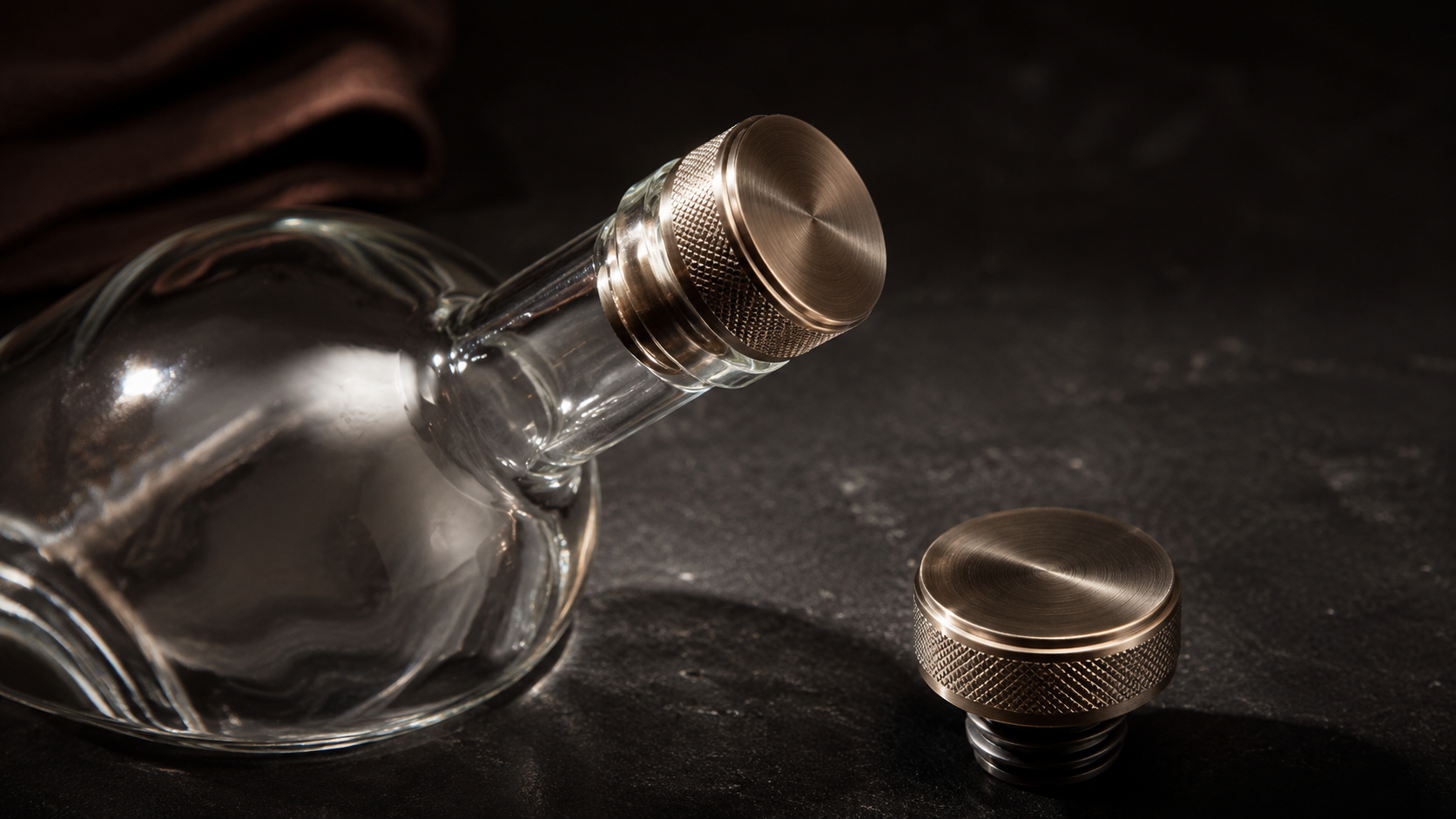
Decorative closures can also include heavy metal tops, wood-metal combinations, ceramic tops, custom-molded caps, and multi-material stoppers. These options are often selected when brand differentiation is more important than lowest unit cost.
The main watchpoints are sealing design, fit tolerance, breakage protection, carton design, and shipment testing. A visually impressive closure must still pass functional and transport requirements.
Capsules, Shrink Sleeves and Neck Decoration
Capsules and shrink sleeves can support tamper evidence, improve shelf appearance, cover the bottle neck, and coordinate the closure with the label and gift box.
For premium spirits, the neck area is a valuable brand zone. A matte capsule, embossed metal top, foil stamp, color-matched sleeve, or printed tamper band can make the bottle more recognizable on the shelf. When the bottle also needs coating, printing, foil, decals, or badges, closure decisions should be coordinated with custom spirits bottle decoration so the neck, label area, and closure finish work together.
Neck decoration should be planned with the closure, not added at the last moment. The closure height, sleeve shrink ratio, tax-strip position, and cap-opening behavior must all be checked during sampling.
Technical Checklist for Spirits Bottle Closures
The most common sourcing mistake is choosing a closure by appearance before confirming technical compatibility.
A closure must be tested with the actual bottle or an accurate technical drawing. Small differences in neck bore, finish height, thread start, bead profile, glass tolerance, or closure material can cause leakage, loose fit, difficult opening, broken tamper bands, or inconsistent bottling-line performance.
Before mass production, buyers should confirm the following:
| Technical Item | Why It Matters |
|---|---|
| Bottle neck finish | Determines whether the closure can physically fit the bottle |
| Inner bore diameter | Critical for bar-top stopper compression and sealing |
| Outer neck diameter | Affects cap fit, sleeve fit, and visual alignment |
| Finish height | Influences cap engagement, thread fit, and closure appearance |
| Thread profile | Essential for screw caps and ROPP closures |
| Stopper shank diameter | Controls insertion force, pull-out force, and leakage risk |
| Liner material | Affects sealing, alcohol resistance, and torque behavior |
| Application torque | Determines correct capping performance |
| Removal torque | Affects consumer opening experience |
| Pull-out force | Important for bar-top stoppers and premium closures |
| Alcohol compatibility | Helps prevent swelling, odor transfer, or liner failure |
| Filling temperature | Can affect pressure, seal behavior, and leakage |
| Capping equipment | Determines whether the closure can run efficiently |
| Export packaging | Protects closure appearance and function during transport |
For materials that may contact the product, buyers should also review applicable food-contact expectations. The U.S. Food and Drug Administration explains the regulatory framework for food contact substances, which is relevant when selecting liners, polymers, coatings, or closure materials for beverage packaging.
Common Closure Selection Mistakes
Many closure problems can be avoided before sampling or mass production. The most frequent mistakes usually come from poor technical matching rather than poor visual design.
| Mistake | Possible Result | Better Approach |
|---|---|---|
| Choosing by appearance only | Leakage, loose fit, poor opening feel | Confirm bottle finish, bore, and closure dimensions |
| Ignoring capping-machine settings | Broken tamper band or unstable torque | Test the cap on the actual filling line |
| Using one stopper size across different molds | Inconsistent insertion or pull-out force | Check tolerance range for each bottle mold |
| Skipping alcohol compatibility testing | Swelling, odor transfer, liner failure | Test closure materials with the actual liquid |
| Not testing export conditions | Leakage, scuffing, carton damage | Run inversion, drop, vibration, and climate checks |
| Forgetting market security needs | Compliance or channel-control risk | Review tamper-evident and NRF requirements early |
| Treating capsule design separately | Poor opening behavior or sleeve damage | Plan capsule, closure, and neck finish together |
This type of prevention-focused planning is especially important for private-label spirits, export launches, and premium products where packaging failure can damage brand trust.
Materials, Sustainability and Recyclability
Material choice affects sealing performance, visual identity, cost, sustainability, and consumer perception.
| Material | Advantages | Watchpoints |
|---|---|---|
| Natural cork | Traditional, premium, renewable appearance | Natural variation, storage control, fit testing |
| Synthetic cork | Consistent size, stable supply, controlled compression | Alcohol compatibility should be checked |
| Wood | Warm, premium, ideal for whisky and rum | Moisture control and color consistency matter |
| Aluminum | Lightweight, decorative, suitable for ROPP | Liner and torque validation are required |
| Plastic | Flexible design, cost-effective, useful for NRF systems | Premium perception depends on design quality |
| Glass | Elegant, distinctive, luxury feel | Higher cost and breakage protection needed |
| Zinc alloy / metal | Heavy tactile feel, strong gift-pack value | Weight and carton protection must be considered |
| Ceramic | Distinctive craft or heritage appearance | Breakage protection and dimensional control are important |
Sustainability claims should be practical and accurate. Natural cork and wood can support a renewable-material story when responsibly sourced. Aluminum is lightweight and recyclable in many markets. Glass stoppers can create a premium reusable impression. Plastic components may be necessary for some NRF or flow-control systems, but material reduction and responsible design can improve the overall packaging profile.
For broader packaging decisions, the European Commission’s overview of packaging waste is a useful reminder that recyclability, material use, and waste prevention should be considered across the complete packaging system, not only one visible component.
For brands building an integrated glass, closure, and accessory platform, Kandacork Glass Packaging supports bottle and closure systems that are engineered as complete packaging assemblies rather than loose catalog parts.
Quality Control and Packaging Tests
A reliable supplier should not only sell closures. It should help validate bottle closure systems for spirits before mass production.
Recommended quality checks include:
- Visual inspection
- Dimensional measurement
- Bottle fit test
- Pull-out force test
- Application torque test
- Removal torque test
- Leak test
- Inversion test
- Drop test
- Climate exposure test
- Alcohol compatibility check
- Decoration adhesion check
- Capping-line trial
- Carton compression test
- Transport simulation
ASTM International provides ASTM D4169 for performance testing of shipping containers and systems, while ISTA publishes recognized transport packaging test procedures. These resources are useful when spirits brands want to validate export packaging, vibration resistance, drop performance, and distribution risks.
For export orders, the closure should be tested together with the bottle, label, capsule, divider, carton, and pallet configuration. A closure that performs well on the filling line can still fail if the carton lacks protection, the divider allows scuffing, or the pallet plan exposes bottles to excessive vibration.
Common Problems and Prevention Methods
Closure failure can create leakage, product returns, damaged cartons, poor consumer experience, or distributor complaints. The best solution is to identify the likely cause before bulk production.
| Problem | Likely Cause | Prevention Method |
|---|---|---|
| Leakage | Poor liner fit, wrong stopper compression, or bore mismatch | Test closure with real bottle samples |
| Difficult opening | Excessive removal torque or tight cork fit | Validate torque or pull-out force |
| Loose stopper | Bottle bore tolerance mismatch | Confirm bore range before production |
| Broken tamper band | Incorrect bridge strength or capping setup | Test on the actual filling line |
| Scuffed decoration | Weak coating or poor carton protection | Run abrasion and transport tests |
| Off-center appearance | Poor alignment between top, shank, and bottle | Review sample assembly tolerance |
| Odor transfer | Incompatible closure material | Test material with actual liquid |
| Export carton damage | Weak divider or insufficient protection | Validate carton and pallet design |
| Sleeve tearing | Incorrect shrink ratio or closure edge design | Test capsule, sleeve, and neck together |
This type of problem-solving content is valuable for B2B buyers because it connects closure selection with real operational risk. It also helps teams compare suppliers based on technical support, not only unit price.
How Kandacork Closures Supports B2B Spirits Projects
Kandacork Closures supports spirits brands, distilleries, importers, packaging companies, and private-label programs that need custom closure development instead of generic catalog sourcing.
Our support can include:
- Project brief review
- Bottle drawing or bottle sample review
- Closure type recommendation
- Neck finish and bore compatibility checking
- Material selection
- Decoration development
- Logo, color, and surface finish guidance
- Sample production
- Fit and leak testing support
- Bulk manufacturing coordination
- Export packaging planning
- Specification and document support
This process helps buyers reduce common risks such as leakage, weak tamper evidence, poor decoration alignment, unstable cork fit, inconsistent torque, and packaging damage during shipment.
For projects that require bottles, closures, decoration, and export packaging to be developed together, Kandacork Glass can support integrated spirits packaging coordination across bottle selection, custom development, closure matching, and decoration planning.
Kandacork Closure Capabilities
Kandacork Closures can support a wide range of spirits packaging projects, from boutique craft launches to bulk private-label programs.
| Capability | Available Options |
|---|---|
| Closure types | Bar-top stoppers, screw caps, ROPP caps, NRF closures, capsules, shrink sleeves |
| Materials | Cork, synthetic cork, wood, aluminum, plastic, glass, metal, ceramic |
| Decoration | Printing, embossing, debossing, hot foil, laser engraving, custom color, custom finish |
| Brand applications | Whisky, vodka, gin, rum, tequila, liqueur, brandy, cognac, miniatures |
| Project types | New brand launch, packaging upgrade, private label, export order, gift-box program |
| Support process | Drawing review, sample development, fit checking, decoration approval, bulk supply |
| Packaging support | Export cartons, dividers, pallet planning, closure protection during shipment |
To recommend the right closure, Kandacork Closures usually needs the bottle drawing, neck finish, spirit type, ABV, target market, preferred closure style, decoration requirements, and estimated order quantity.
If the bottle is not finalized, our team can help review the closure direction before tooling or sampling. This helps buyers avoid common fit problems before investing in molds, bottle production, or bulk closure orders.
For custom decoration, buyers can provide logo files, brand color references, surface finish preferences, and packaging renderings. Kandacork can then recommend suitable decoration methods such as printing, embossing, debossing, hot foil, laser engraving, custom color finishing, or coordinated capsule design.
Complete Packaging Considerations for Spirits Brands
A spirits closure performs best when it is planned with the bottle and decoration system. The closure diameter, neck length, shoulder shape, label panel, capsule height, gift-box insert, and carton divider can all influence the final consumer impression and the production result.
For a premium whisky, the project may require a heavy-base glass bottle, wooden bar-top stopper, natural or synthetic cork shank, neck capsule, tactile label, and rigid gift box. For a vodka or gin line, the best system may use a clean bottle profile, aluminum screw cap or ROPP closure, sharp label graphics, and strong sidewall branding. For travel retail, the project may need extra focus on tamper evidence, non-refillable protection, carton strength, and scuff resistance.
Brands looking for lower-impact glass and refill-oriented packaging concepts can also review eco and refill glass packaging when developing long-term packaging platforms.
Quote Checklist for Custom Spirits Closures
A complete quotation request helps the supplier recommend the right closure faster and more accurately.
Send the following information when requesting bottle closure systems for spirits:
- Spirit category
- Alcohol by volume
- Bottle volume
- Bottle drawing or physical sample
- Neck finish specification
- Preferred closure type
- Tamper-evident or NRF requirement
- Target market or export country
- Decoration requirements
- Logo file or brand guideline
- Estimated order quantity
- Launch timeline
- Filling and capping equipment details
- Packaging requirements
- Required documents or test reports
If the bottle is still under development, Kandacork Closures can review the closure direction early so the glass bottle, neck finish, and closure system are designed together.
For projects that require coordinated bottle structure, closure fit, and brand presentation, Kandacork Spirits also provides a dedicated guide to spirits bottle closure systems for buyers comparing stoppers, screw caps, ROPP closures, capsules, and security inserts.
FAQ
What are bottle closure systems for spirits?
Bottle closure systems for spirits are the complete sealing, security, and decoration components used on spirits bottles. They may include bar-top stoppers, screw caps, ROPP closures, liners, cork shanks, non-refillable pourers, tamper-evident bands, capsules, and shrink sleeves.
What is the best closure for whisky bottles?
The best closure for whisky bottles is usually a bar-top stopper with natural cork, synthetic cork, or TPE shank. Premium whisky often uses wooden, metal, or custom capsulated stoppers because they create a traditional and high-value opening experience.
What is the difference between bar-top stoppers and ROPP closures?
A bar-top stopper is inserted into the bottle mouth and pulled out by hand. A ROPP closure is an aluminum roll-on pilfer-proof cap applied to a threaded bottle finish, usually with a tamper-evident band.
When should a spirits brand use non-refillable closures?
A spirits brand should consider non-refillable closures when selling in high-counterfeit markets, duty-free channels, premium export channels, or distributor networks where refill fraud is a concern.
How do you prevent leaks in spirits bottle closures?
The best way to prevent leaks is to validate the closure and bottle neck finish as one system before mass production. Buyers should test bore size, thread profile, liner material, cork compression, torque, alcohol compatibility, and transport conditions.
Can bottle closure systems for spirits be customized?
Yes. Custom options include logo embossing, top printing, side printing, hot foil, laser engraving, custom color matching, wood staining, aluminum finishing, metal badges, custom molds, capsules, and shrink sleeves.
What information is needed for a quotation?
The most important information includes bottle drawing, neck finish, spirit type, alcohol content, closure type, decoration requirements, target market, order quantity, and whether tamper-evident or non-refillable protection is required.
Are ROPP closures suitable for premium spirits?
Yes. ROPP closures can be suitable for premium spirits when the cap design, decoration, liner, tamper-evident band, and bottle finish are carefully developed. They are especially useful when a brand needs secure sealing, automated capping, and consistent opening performance.
Are sustainable spirits closure options available?
Yes. Sustainable options may include natural cork, responsibly sourced wood, recyclable aluminum, reduced-material designs, and reusable premium stoppers. The best choice depends on product positioning, market recycling systems, closure performance, and transport durability.