Buyers comparing synthetic and natural cork-look stoppers should consider more than surface appearance. This guide explains differences in material consistency, compression, bottle neck fit, branding flexibility, cost control and repeat order stability.
Quick Answer: Which Stopper Is Better?
Synthetic cork stoppers are usually better for consistent dimensions, reliable bottle fit, repeatable pull force, color control, logo decoration, and scalable bulk supply.
Natural cork stoppers are usually better for traditional appearance, natural texture, craft positioning, and premium heritage packaging.
There is no universal winner. The better stopper is the one that matches the bottle neck finish, product category, storage conditions, brand story, production volume, and target price point.
Buyer Decision Matrix
| Buyer Need | Better Option | Why It Matters |
|---|---|---|
| Large-volume production | Synthetic cork | More consistent dimensions and repeatable appearance |
| Premium natural story | Natural cork | Stronger traditional and organic material cue |
| Lower cork-origin odor risk | Synthetic cork | Not made from natural cork bark |
| Classic opening ritual | Natural cork | Familiar tactile and heritage experience |
| Color and logo consistency | Synthetic cork | Easier to control across repeat orders |
| Craft or aged spirits image | Natural cork | Supports authenticity and tradition |
| Private label flexibility | Synthetic cork | Useful for repeatable multi-SKU production |
| Export packaging | Synthetic cork | Stable fit and controlled production are valuable |
| Sustainability-led packaging | Case dependent | Requires material-specific documentation |
What Are Synthetic Cork Stoppers?
Synthetic cork stoppers are engineered closures designed to provide a cork-like sealing function while reducing some of the variability associated with natural cork. They may be made from food-contact polymers, elastomeric materials, plant-based polymers, or composite structures depending on the supplier and application.
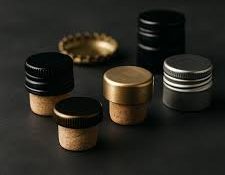
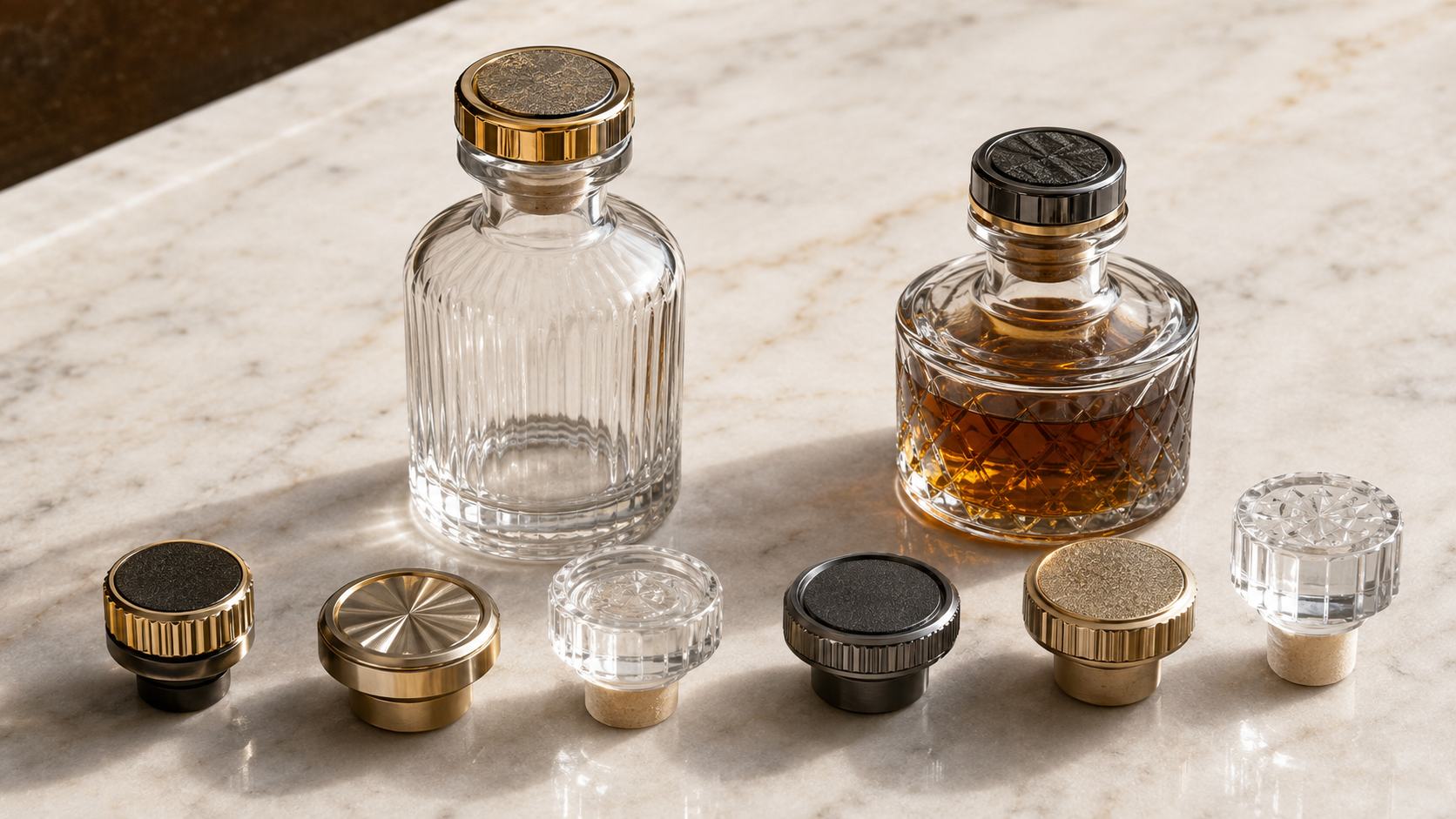
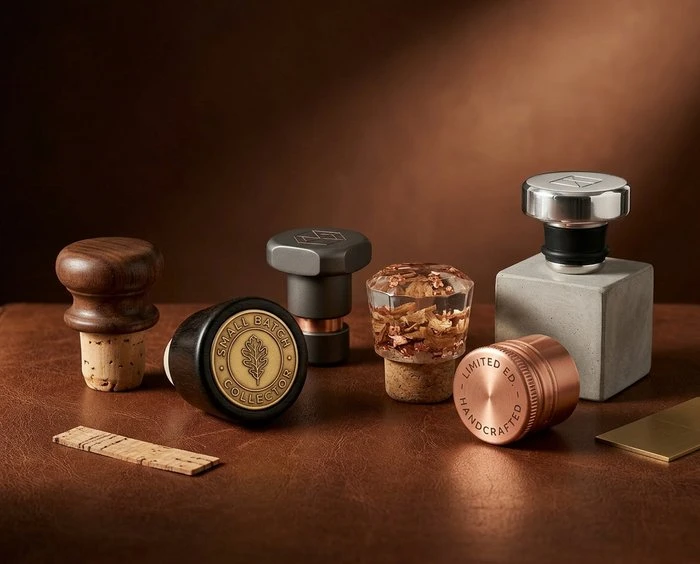
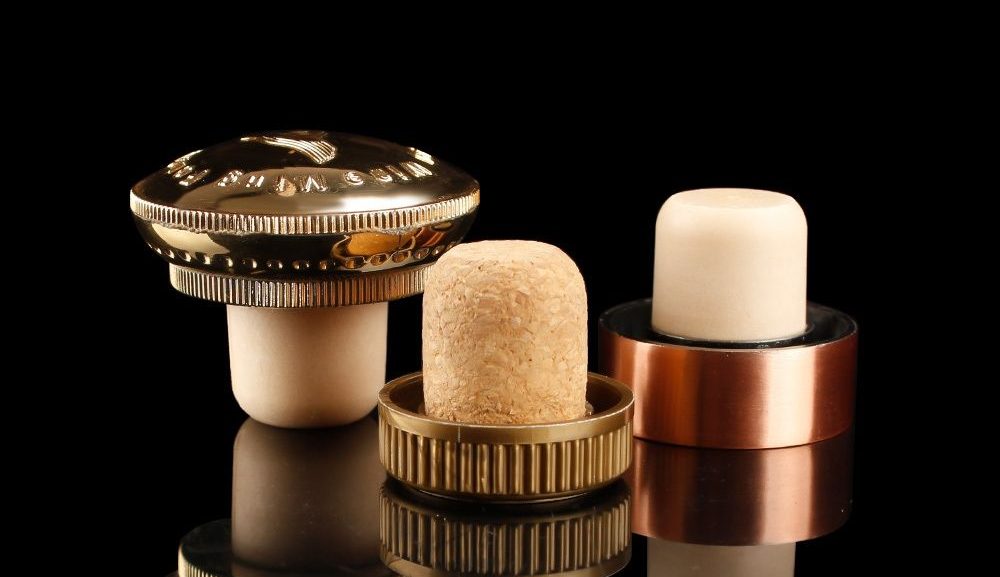
In spirits packaging, synthetic cork is often used as the shank of a bar-top stopper. The decorative top can be made from wood, aluminum, plastic, glass, ceramic, zinc alloy, or other branded materials.
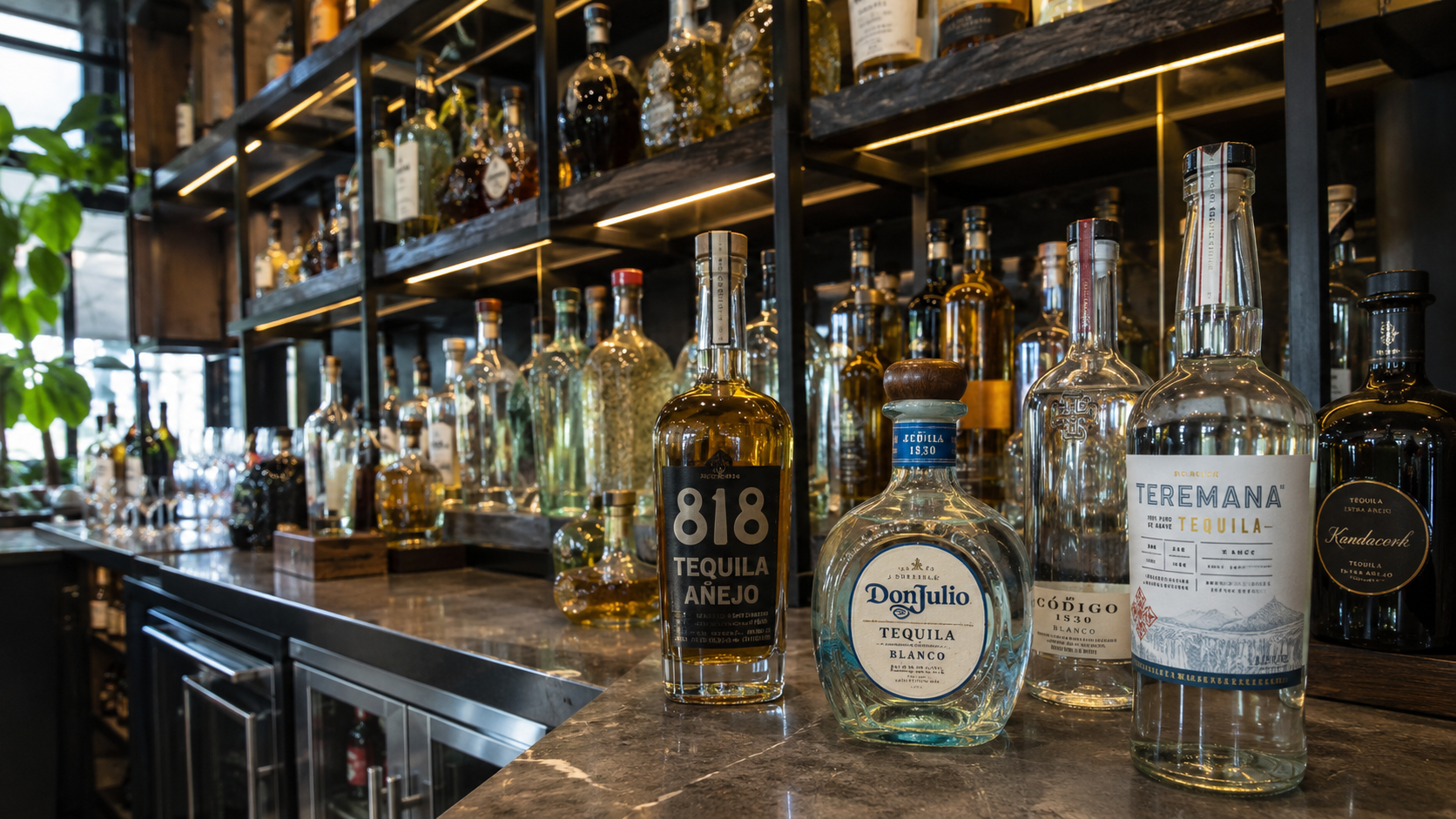
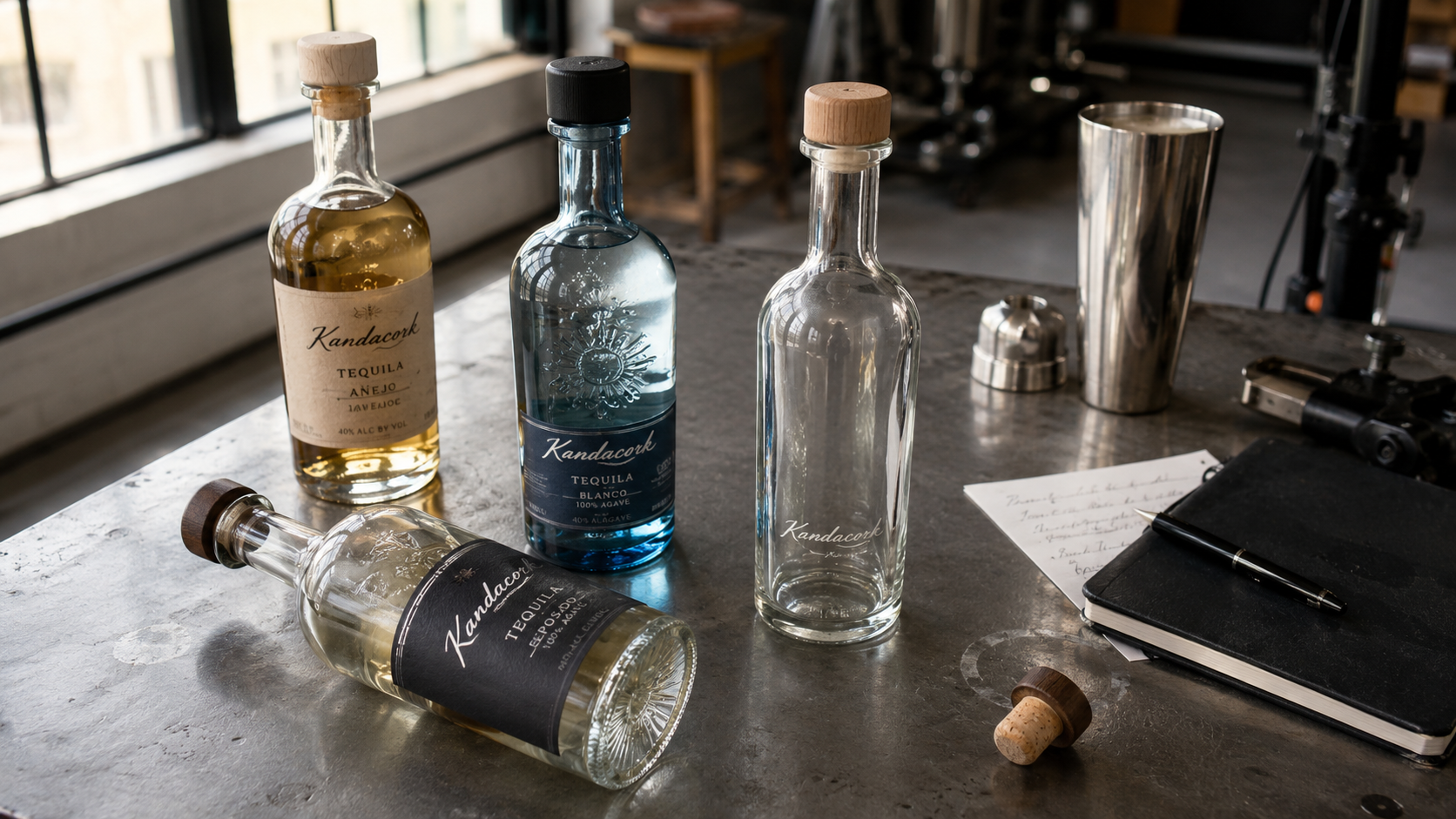
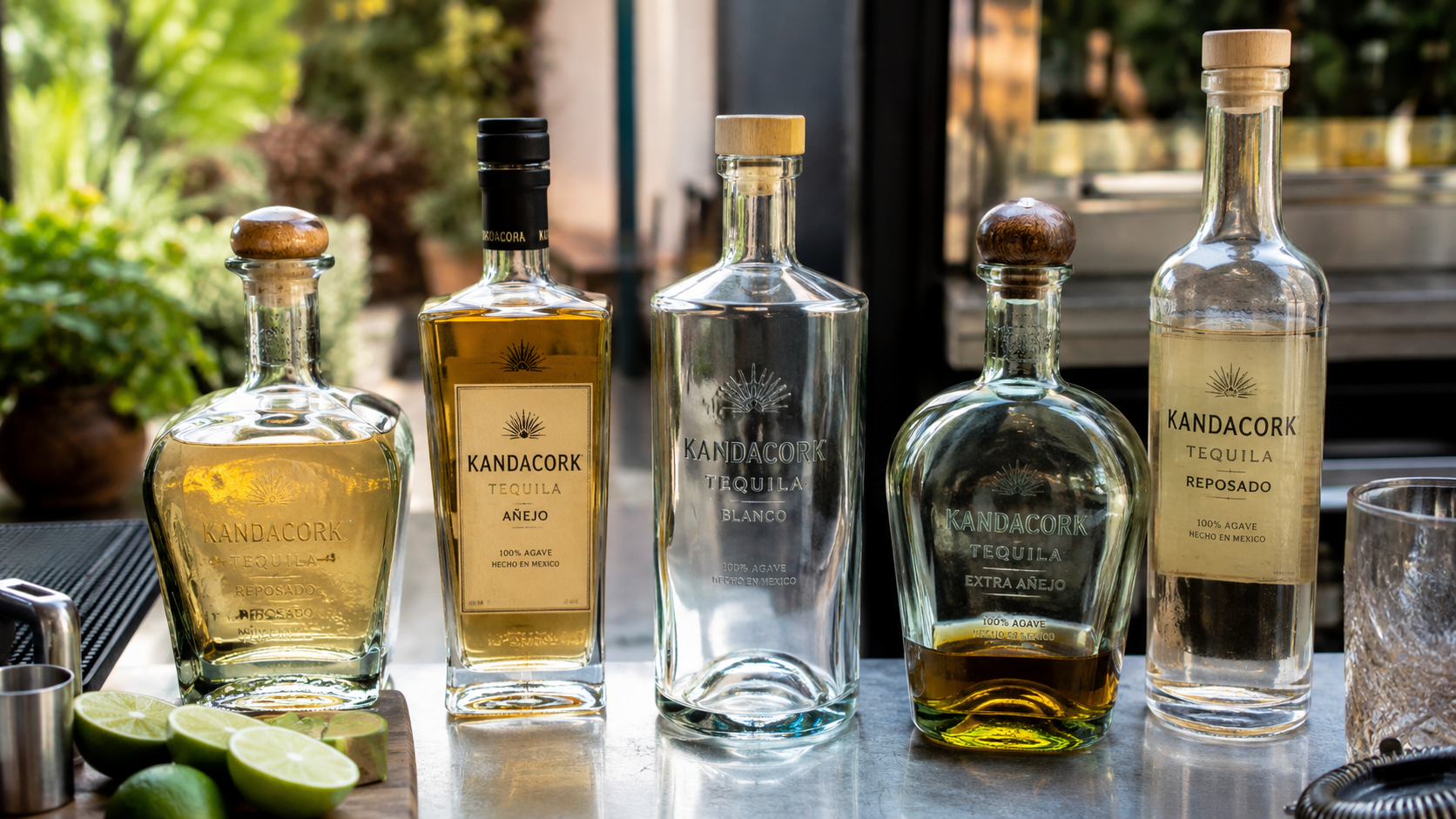
For buyers developing whisky, vodka, gin, rum, tequila, brandy, liqueur, mini spirits, or private label projects, synthetic cork stoppers are often selected when stable bottle fit, clean appearance, and scalable production are priorities.
Synthetic materials can be produced with consistent dimensions, controlled density, predictable compression, and repeatable appearance. For brands that need thousands or millions of closures with the same look and fit, that consistency is commercially valuable.
What Are Natural Cork Stoppers?
Natural cork stoppers are made from cork oak bark. Cork is lightweight, elastic, compressible, and strongly associated with traditional beverage packaging. In spirits, natural cork is often used as a stopper shank under a wooden, metal, glass, or other decorative cap.
Natural cork gives each stopper a unique texture. The grain, pores, and color variation can support a craft, heritage, or luxury brand image. For aged whisky, premium rum, brandy, craft gin, and limited-edition spirits, this natural character can strengthen the packaging story.
Because cork is a natural material, density, surface texture, elasticity, and appearance can vary by grade and batch. Buyers should approve physical samples before confirming bulk production.
Main Differences Between Synthetic Cork and Natural Cork
The main difference between synthetic cork vs natural cork stoppers is that synthetic cork is engineered for consistency, while natural cork is selected for authenticity and traditional material value.
Synthetic cork offers more predictable shape, surface finish, color, compression, and production repeatability. Natural cork offers a more organic texture, familiar premium feel, and stronger natural-material story. This difference affects stopper performance, brand impression, sourcing cost, quality control, and packaging risk.
A practical closure project should start with the full bottle stoppers and closures range, then narrow the choice based on bottle neck, product category, brand style, and testing results.
Bottle Fit and Sealing Performance
Bottle fit is one of the most important factors in closure selection. A stopper must match the bottle’s internal neck diameter, bore tolerance, insertion depth, and expected pull-out force.
Synthetic cork can be useful when tight dimensional control is required. This matters for automated filling lines, export packaging, and large-scale spirits production. Natural cork can also seal effectively, but the buyer must manage grade selection, moisture condition, and dimensional variation.
For spirits brands, stopper failure may result in leakage, evaporation, loose fit, difficult opening, or inconsistent customer experience.
Oxygen, Aroma, and Sensory Risk
Oxygen transmission is often discussed in wine because wine continues to evolve in the bottle. For spirits, the issue is different. Distilled spirits usually have higher alcohol content and do not rely on controlled oxygen exchange for bottle aging in the same way wine does.
However, closure performance still matters. A spirits stopper must help protect aroma, reduce evaporation, prevent leakage, and maintain product quality through storage and transport. For spirits buyers, the focus should be less on “breathing” and more on closure fit, sensory neutrality, seal integrity, and alcohol compatibility.
Cork taint is most often associated with TCA, a compound that can create musty or muted aromas in wine. Synthetic cork is not made from natural cork bark, so it can reduce the risk of cork-origin TCA. However, synthetic materials still require proper food-contact review, odor control, migration testing, and supplier documentation.
For beverage packaging sold in the United States, buyers can review the FDA’s guidance on packaging and food contact substances. For EU-bound projects, the European Commission explains that food contact materials must be safe and should not change the food’s composition, taste, or smell under expected conditions of use.
Custom Stopper Design and Branding
Custom stopper design is where the difference between synthetic cork and natural cork becomes most visible. A closure is not only a sealing component. It is part of the product’s visual identity, tactile experience, and perceived value.
Synthetic cork is usually stronger when a brand needs controlled color, stable shank dimensions, and consistent logo presentation across many orders. Natural cork is usually stronger when the stopper itself needs to communicate natural material quality, especially for aged spirits, craft packaging, and limited-edition releases.
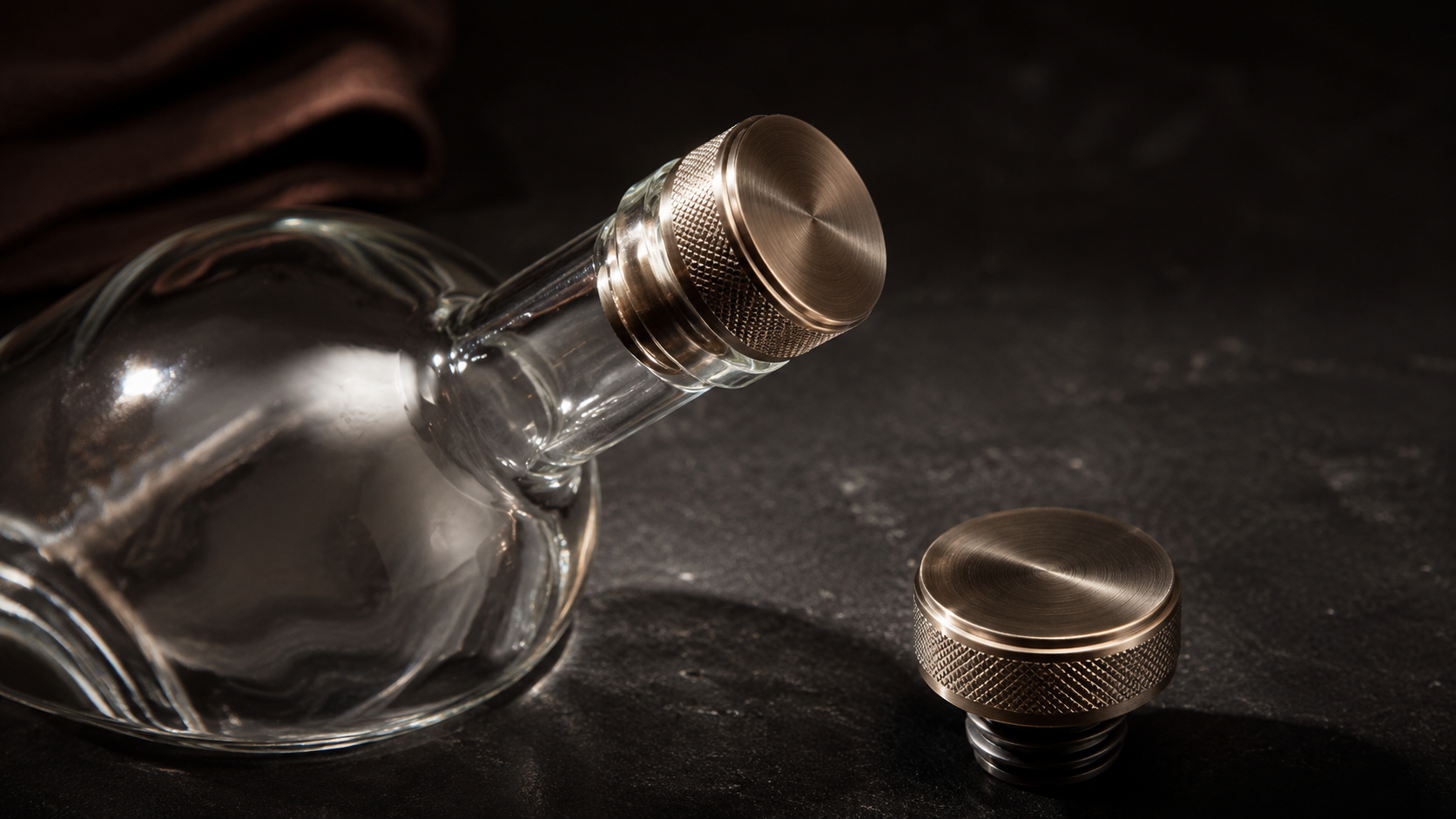
When a brand wants warmth and heritage at the top of the bottle, wooden stoppers can be paired with either natural cork or synthetic cork shanks. When a cleaner metallic look is required, aluminum stoppers can create a modern premium impression while supporting stable closure geometry.
Bulk Sourcing and Total Cost
Bulk synthetic cork stoppers are often preferred when a buyer needs repeatable production performance, consistent packaging appearance, and predictable lead times. They can help reduce variation during bottling, packing, and distribution.
Natural cork stoppers can also be ordered in bulk, but buyers should pay close attention to cork grade, appearance range, moisture condition, inspection standards, and sample approval.
For large production runs, the true cost of a stopper includes more than the purchase price. Buyers should consider filling-line efficiency, rejection rate, leakage risk, customer complaints, shipping conditions, and brand consistency.
Sustainability and Material Responsibility
Sustainability is an important part of stopper selection, but it should be handled carefully. Natural cork is renewable and associated with cork oak landscapes, biodiversity, and traditional harvesting systems. Synthetic cork may offer advantages in production consistency, reduced defect waste, recyclable components, or plant-based material options depending on formulation.
Responsible packaging communication should avoid broad claims such as “100% sustainable” unless the brand can support them with documentation. A stronger approach is to describe specific facts, such as material type, recyclability where applicable, supplier certifications, testing reports, or reduced defect rates.
For natural cork claims, buyers can refer to WWF’s work on cork oak landscapes, which highlights the environmental services of well-managed cork oak ecosystems. For synthetic cork claims, buyers should verify the actual material formulation, recycling route, and supplier documentation rather than assuming every synthetic closure has the same environmental profile.
For sustainability-led packaging, evaluate the full packaging system. Bottle weight, transport distance, carton design, decoration process, rejection rate, and end-of-life options can all influence the final environmental profile. Brands that need coordinated bottle sourcing may also compare stopper choices with integrated glass packaging from Kandacork Glass.
Compliance and Documentation
For beverage closures, buyers should review food-contact material compliance, sensory neutrality, migration documentation, and destination-market requirements. This is especially important for export programs, high-ABV spirits, flavored liqueurs, and products with long storage periods.
Relevant quality topics may include supplier declarations of compliance, migration testing, sensory testing, incoming inspection, batch traceability, and customer-specific packaging standards. The International Organization for Standardization describes ISO 9001 as a globally recognized quality management standard for evaluating repeatable manufacturing and quality-control processes.
The European Food Safety Authority also explains that chemicals in food contact materials can transfer into food and drink, so migration and toxicological evaluation are important in food-contact risk assessment.
How to Choose Cork Stoppers for Spirits Bottle Closures
Choose synthetic cork stoppers when you need consistent dimensions across large production runs, stable bottle fit, controlled pull-out force, clean appearance, color matching, lower cork-origin odor risk, custom cap options, logo decoration, reliable supply, and repeatability across multiple SKUs.
Choose natural cork stoppers when you need traditional material appearance, natural texture, craft positioning, a classic opening experience, a natural packaging story, luxury appeal, or packaging that visually supports aged or artisanal products.
Many brands do not need to choose one material for every product. A brand portfolio can use natural cork for a flagship aged spirit and synthetic cork for a high-volume core range. This allows packaging decisions to match price tier, channel strategy, and brand identity.
For full spirits bottle programs, buyers can align closure decisions with bottle sourcing through Kandacork Spirits and decoration planning through Kandacork Decor.
Best Stopper Choice by Bottle Type
Heavy-base whisky bottles often benefit from a premium bar-top stopper with either a natural cork shank or a high-quality synthetic cork shank. Natural cork supports tradition, while synthetic cork supports consistent supply and predictable fit.
Clear gin bottles often work well with synthetic cork because the closure can be matched to a clean, modern, botanical, or color-controlled brand system. Natural cork can also work for apothecary-style gin packaging.
Rum and brandy bottles often use warm colors, wooden tops, and traditional closure styling. Natural cork can strengthen the aged-product image, while synthetic cork can help brands maintain consistency in export and private label programs.
Liqueur bottles require special attention because formulas may contain sugar, colorants, botanicals, fruit extracts, cream, or flavor compounds. Compatibility testing is especially important for both synthetic cork and natural cork stoppers.
Testing Requirements Before Bulk Approval
Before approving synthetic cork vs natural cork stoppers for bulk production, buyers should test both appearance and performance.
The bottle neck inner diameter should be measured accurately. The stopper shank must match the neck bore and tolerance range. A stopper that is too loose may leak or feel low quality. A stopper that is too tight may be difficult to insert or remove.
The pull-out force should feel secure but comfortable. Leakage testing should be performed under realistic conditions, including upright storage, tilted storage, transport vibration, temperature variation, and carton packing review. Sensory neutrality should also be checked, especially for gin, vodka, tequila, and light-colored spirits where off-notes may be easier to detect.
A 700 ml heavy-base whisky bottle may require a different stopper structure than a 50 ml mini bottle. Clear gin bottles may require extra visual cleanliness, while liqueur bottles may need compatibility testing for sugar, colorants, flavor extracts, or cream-based formulas.
If a project needs a luxury transparent top or special collectible presentation, glass stoppers may be evaluated alongside synthetic and natural cork options. The same testing logic still applies: fit, sealing, pull force, appearance, and packaging compatibility should be approved before bulk production.
What to Send Your Stopper Supplier for an Accurate Quote
To receive a practical recommendation, buyers should send the bottle drawing, physical bottle sample if available, neck inner diameter, bottle capacity, product category, alcohol content, target market, preferred cap material, reference images, logo artwork, order quantity, expected launch schedule, and packaging requirements.
For custom cork stoppers for spirits bottles, the supplier also needs to know whether the bottle will use a capsule, shrink sleeve, tamper-evident seal, gift box, or export carton. These details can affect cap size, stopper height, and final packaging compatibility.
For brands seeking lighter packaging systems or eco-positioned glass programs, stopper selection can also be coordinated with Kandacork Eco Glass to evaluate bottle weight, decoration approach, and closure compatibility together.
Comparison Table
| Factor | Synthetic Cork Stoppers | Natural Cork Stoppers |
|---|---|---|
| Main advantage | Consistency and customization | Natural premium appearance |
| Material character | Engineered and controlled | Organic and variable |
| Appearance | Uniform, clean, repeatable | Natural grain and texture |
| Bottle fit | Highly controllable | Depends on grade and batch |
| Odor risk | Lower cork-origin TCA risk | Requires cork quality control |
| Branding | Strong color and cap customization | Strong heritage and craft appeal |
| Cost control | Often strong for bulk orders | Depends heavily on grade |
| Sustainability message | Depends on material formulation | Renewable natural material story |
| Best use cases | Spirits, private label, export, high-volume production | Premium, craft, heritage, natural-positioned products |
| Key testing need | Fit, pull force, compatibility | Fit, grade, moisture, sensory quality |
How Kandacork Closures Helps Buyers Choose
Kandacork Closures helps beverage brands match stopper structure, bottle dimensions, closure style, decoration method, and production requirements. Instead of choosing based only on material preference, buyers can evaluate how each stopper performs in the actual bottle.
A practical sourcing process includes sharing bottle drawings or physical samples, confirming neck inner diameter and tolerance, reviewing product category and alcohol level, selecting synthetic cork or natural cork shank options, choosing cap material, testing insertion and pull-out force, checking leakage resistance, reviewing logo and color requirements, and approving samples before bulk production.
Kandacork Closures can support custom stopper development for whisky, rum, gin, vodka, tequila, brandy, liqueurs, wine, and private label spirits. Buyers can request recommendations for synthetic cork stoppers, natural cork stoppers, bar-top stoppers, T-top stoppers, wooden stoppers, aluminum stoppers, plastic stoppers, glass stoppers, screw caps, ROPP closures, and other beverage closure solutions through a custom closure quote.
FAQ
Are synthetic cork stoppers better than natural cork stoppers?
Synthetic cork stoppers are better for consistency, customization, and large-volume production. Natural cork stoppers are better for traditional appearance, natural texture, and craft positioning.
Do synthetic cork stoppers work for spirits bottles?
Yes. Synthetic cork stoppers work well for many spirits bottles, especially when used as bar-top stopper shanks with wooden, aluminum, plastic, glass, ceramic, or custom decorative tops.
Are natural cork stoppers more premium?
Natural cork can feel more premium when the brand wants a traditional, organic, or craft image. However, premium perception also depends on bottle weight, cap material, decoration quality, label design, and carton presentation.
Can synthetic cork stoppers be customized?
Yes. Synthetic cork stoppers can often be customized by size, color, surface finish, cap material, logo decoration, and stopper structure.
How do I choose the right stopper size?
Choose the right stopper size by confirming the bottle neck inner diameter, neck tolerance, insertion depth, pull-out force, and cap proportions. Physical testing is the safest way to confirm fit before bulk production.
Should I test samples before bulk production?
Yes. Buyers should test insertion, pull force, leakage resistance, storage position, appearance, sensory neutrality, and compatibility with capsules or shrink sleeves before bulk production.
What is the best stopper for private label spirits?
Synthetic cork is often the best stopper for private label spirits because it supports repeatable production, controlled cost, consistent appearance, and flexible customization across multiple SKUs.
Conclusion
The decision between synthetic cork vs natural cork stoppers should be based on packaging performance, brand positioning, testing results, and production requirements rather than material preference alone.
Synthetic cork is a strong choice for brands that need consistency, customization, scalable supply, controlled bottle fit, and repeatable appearance. Natural cork is a strong choice for brands that want tradition, natural texture, and premium craft appeal.
For spirits packaging and premium beverage packaging, the smartest approach is to test both the visual effect and the functional fit. By reviewing bottle dimensions, stopper structure, pull force, leakage resistance, material compatibility, documentation, and branding requirements, buyers can select a closure that protects the product and strengthens the customer experience.
Kandacork Closures can help brands compare synthetic cork and natural cork options, develop custom stopper designs, and approve samples before bulk production. For new bottle packaging projects, send bottle drawings, product details, design goals, order quantity, and target market requirements for a stopper recommendation.