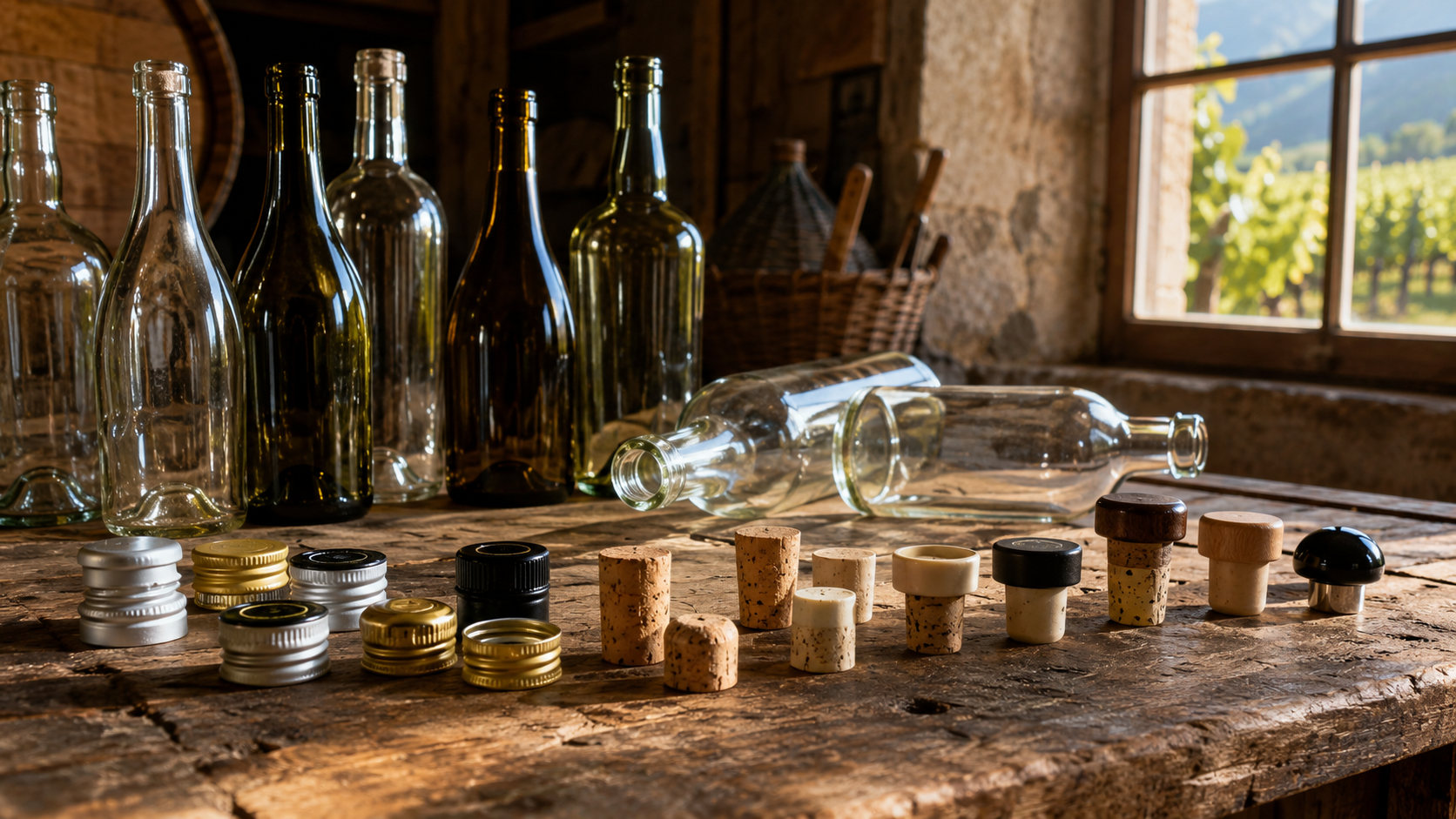
For spirits brands, a bottle stopper is not just the final component on the neck. It influences how the bottle feels in the hand, how the product is presented on shelf, how reliably the closure performs during transport, and how customers perceive quality before they even taste the spirit.
The choice between metal stoppers and aluminium stoppers is especially important for whisky, vodka, gin, rum, tequila, brandy, liqueur, and premium private-label spirits. Both options can look refined and professional, but they are not always used for the same purpose. A heavy metal stopper can make a bottle feel more luxurious and collectible. An aluminium stopper can create a clean metallic look while keeping the closure lighter, more scalable, and easier to integrate into modern packaging programs.
For buyers comparing metal stoppers vs aluminium stoppers, the best choice depends on bottle shape, neck finish, target retail price, brand positioning, order quantity, decoration method, filling-line requirements, and export conditions. A closure should not only look premium; it should fit the bottle accurately, seal consistently, support the brand identity, and perform reliably from sampling to bulk production.
Metal Stoppers vs Aluminium Stoppers: Quick Answer
Metal stoppers are usually the better choice when a spirits brand needs luxury weight, sculpted decoration, a premium hand feel, and strong gift-box impact. Aluminium stoppers, also spelled aluminum stoppers in the US market, are usually the better choice when the brand needs a lighter metallic closure, clean modern finishes, cost control, and scalable production.
Aluminium stoppers are technically a type of metal stopper, but in packaging discussions the phrase “metal stopper” often refers to heavier materials such as Zamak, zinc alloy, or stainless steel. Aluminium is normally discussed separately because it offers a different balance of weight, finish, cost, and production efficiency.
Brands developing premium spirits closures can explore custom metal stoppers when they need a substantial luxury feel, or aluminium bar-top stoppers when they need a lighter metallic appearance with stable sealing and repeatable presentation.
What Are Metal Stoppers?
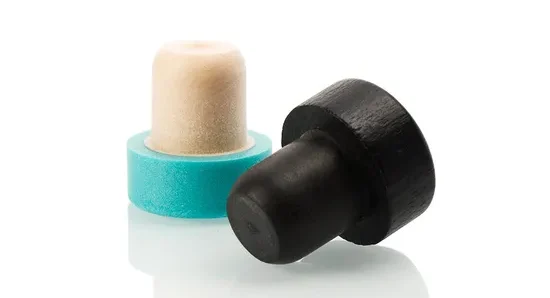
Metal stoppers are bottle closures that combine a decorative metal head with a sealing shank. The visible head may be made from Zamak, zinc alloy, stainless steel, aluminium, or another metal material. The shank may be natural cork, synthetic cork, polymer, or another closure-grade material designed to compress inside the bottle neck.
In spirits packaging, these closures are commonly used as bar-top stoppers or T-top stoppers. They are popular for whisky, rum, tequila, brandy, gin, vodka, liqueurs, and premium specialty bottles because they create a stronger physical interaction than a simple screw cap.
A metal stopper can communicate craftsmanship, value, and permanence. This is why heavier metal closures are common on limited editions, gift packaging, aged spirits, and bottles with thick glass bases. When the closure has the right weight and finish, it becomes part of the product experience rather than just a sealing component.
For buyers, the important point is that the visible metal head is only one part of the closure system. A stopper must also match the bottle neck, maintain the right insertion and pull-out feel, resist leakage, and remain stable during packing, storage, and shipping.
What Are Aluminium Stoppers?
Aluminium stoppers are closures with an aluminium head and a sealing shank. They provide a premium metallic appearance but are usually lighter than zinc alloy or Zamak stoppers. Aluminium can be brushed, polished, matte, anodized, printed, laser-engraved, embossed, debossed, or colour-finished.
Many international buyers search for “aluminium stoppers,” while US buyers often search for “aluminum stoppers,” “aluminum bottle stoppers,” or “custom aluminum bar-top stoppers.” Both spellings refer to the same type of lightweight metal closure.
Aluminium stoppers are widely used for vodka, gin, modern whisky, rum, liqueur, RTD spirits, and private-label beverage projects. They work especially well when the bottle design is clean, minimalist, colourful, or export-oriented. A brushed silver aluminium stopper can support a crisp vodka identity. A black or botanical-colour aluminium stopper can complement a gin bottle. A champagne or gold aluminium finish can give a whisky or liqueur bottle a premium appearance without adding unnecessary weight.
For brands reviewing broader bottle stoppers and closures, aluminium is often one of the most practical materials when the project needs a balance of metallic presentation, production repeatability, and commercial efficiency.
Key Differences Between Metal and Aluminium Stoppers
The main differences between metal and aluminium stoppers are weight, tactile feel, decoration style, cost structure, and packaging application.
| Factor | Heavy Metal Stoppers | Aluminium Stoppers |
|---|---|---|
| Typical materials | Zamak, zinc alloy, stainless steel | Aluminium |
| Weight | Medium to heavy | Light to medium |
| Perceived value | Strong luxury feel | Modern premium feel |
| Decoration style | Sculpted shapes, plating, embossing, antique finishes | Brushed, matte, anodized, printed, engraved finishes |
| Best use | Premium whisky, aged rum, tequila, brandy, limited editions | Vodka, gin, liqueur, RTD, private label, modern spirits |
| Cost profile | Often higher for custom shapes and heavy materials | Often more efficient for scalable metallic projects |
| Brand message | Luxury, collectible, crafted, substantial | Clean, modern, precise, flexible |
| Production focus | Fitment, weight balance, finish durability | Fitment, colour consistency, line efficiency |
A heavy metal stopper can help a thick-base whisky bottle feel complete and balanced. An aluminium stopper can help a slim gin bottle look elegant without making the package feel overbuilt. A tequila brand with heritage positioning may choose a sculpted zinc alloy top, while a modern vodka brand may prefer a brushed aluminium stopper with a simple engraved logo.
Weight, Hand Feel, and Premium Positioning
Weight is one of the clearest differences in the metal stoppers vs aluminium stoppers decision.
A heavier metal stopper can make the opening moment feel more deliberate. This matters for premium spirits because consumers often associate weight with quality, durability, and higher value. On a gift-box whisky, aged rum, premium tequila, or brandy bottle, the closure can reinforce the impression created by thick glass, deep punt bases, embossed labels, and secondary packaging.
Aluminium stoppers create a different kind of premium signal. They feel lighter, cleaner, and more contemporary. This works well for brands that want precision rather than heaviness. Modern gin, vodka, liqueur, and RTD spirits often benefit from a closure that looks metallic and refined without adding too much mass to the bottle.
The right choice depends on the brand story. A heritage rum may need a heavy stopper that feels substantial. A botanical gin may need a coloured aluminium closure that complements the label palette. A private-label spirits program may need a stopper that looks premium but remains cost-efficient across large order volumes.
Cost, Tooling, and Production Scale
Cost is rarely determined by material alone. The final stopper price depends on the head material, diameter, height, finish, logo process, shank type, tooling requirements, order quantity, tolerance control, and packing method.
Heavy metal stoppers often involve higher material weight and more complex finishing. Custom sculpted heads, deep embossing, antique plating, special textures, and large decorative tops can increase both tooling cost and unit cost. These costs may be justified for premium retail pricing, limited editions, and flagship SKUs.
Aluminium stoppers can be more practical when the buyer wants a metallic look at a more scalable cost. They are suitable for larger production runs, multi-SKU product lines, export programs, and private-label projects where consistent colour, repeatable decoration, and manageable weight matter.
Buyers should avoid choosing a stopper by unit price alone. A lower-cost closure can become expensive if it causes leakage, poor pull-out feel, production stoppages, line rejection, or carton damage. Total value should include stopper cost, bottle value, filling-line performance, export risk, shelf appeal, and the retail position of the finished product.
Branding, Decoration, and Surface Finish
Both heavy metal stoppers and aluminium stoppers can support strong brand identity. The better material depends on the decoration style.
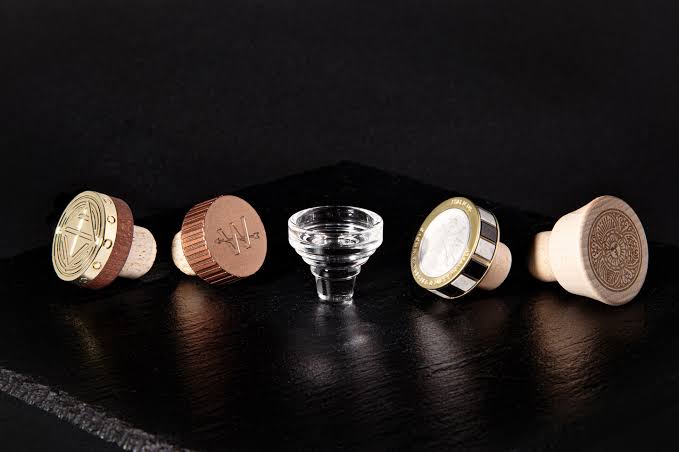
Heavy metal stoppers are well suited for sculptural and luxury effects. Brands may use raised logos, debossed crests, engraved patterns, antique metal finishes, bright plating, matte plating, or custom top profiles. These effects work well when the closure is designed to become a signature brand asset.
Aluminium stoppers are better for clean, controlled finishes. Common options include brushed silver, matte black, polished gold, rose gold, champagne, anodized colours, laser engraving, pad printing, top printing, and sidewall decoration. Aluminium is especially useful when the brand needs accurate colour matching across labels, capsules, cartons, and bottle decoration.
For projects where closure graphics and finishing are central to brand identity, packaging teams may coordinate stopper development with spirits closure sidewall design so that texture, logo position, grip area, and visual rhythm work with the full neck package.
The stopper should never be designed in isolation. It should match the glass colour, label material, capsule, secondary packaging, retail environment, and intended price tier. A closure that looks impressive as a sample can still feel wrong if it does not fit the whole bottle architecture.
Fitment, Sealing, and Line Performance
A premium closure must perform as well as it looks. For bar-top stoppers, the most important technical factors are bottle neck inner diameter, neck height, sealing depth, shank diameter, shank compression, insertion force, pull-out force, leakage resistance, and consistency across bottle batches.
The shank is especially important because it is the part that creates the seal. Natural cork can support a traditional premium story, while synthetic materials can provide strong dimensional consistency. Buyers developing projects that require predictable compression and repeatable sealing may also compare synthetic bottle stoppers when evaluating shank options.
For filling-line performance, the stopper must insert smoothly without damaging the bottle neck or creating excessive machine resistance. It must also remain secure during case packing, pallet movement, export shipping, and retail handling. For transport validation, many packaging teams refer to recognized distribution testing methods such as ASTM D4169, which is commonly used to evaluate shipping container and distribution performance.
A heavier stopper can increase premium feel, but the added head weight should be considered during packing and transport testing. Aluminium can reduce closure weight, but it still requires accurate shank design and proper fitment testing. In both cases, the closure should be approved through samples, line trials, and quality checks before mass production.
Best Stopper Choice by Spirits Category
| Spirits category | Recommended option | Practical reason |
|---|---|---|
| Premium whisky | Heavy metal or Zamak stopper | Adds luxury hand feel and balances thick glass |
| Modern whisky | Aluminium or stainless steel stopper | Creates a clean premium look without excessive weight |
| Vodka | Aluminium stopper | Supports minimalist, pure, modern packaging |
| Gin | Aluminium stopper | Works well with colour finishes and botanical design |
| Aged rum | Heavy metal stopper | Matches rich storytelling and gift packaging |
| Modern rum | Aluminium stopper | Balances metallic style with cost and weight control |
| Tequila | Heavy metal or aluminium stopper | Heavy metal suits heritage positioning; aluminium suits modern tequila |
| Brandy | Heavy metal stopper | Reinforces mature, premium, giftable value |
| Liqueur | Aluminium stopper | Supports decorative colour and scalable production |
| RTD spirits | Aluminium stopper | Lightweight, practical, and suitable for larger runs |
This category view helps buyers make a faster first decision. The final closure should still be confirmed through technical drawings, bottle samples, fitment testing, and packaging approval.
Best Stopper by Buyer Goal
| Buyer goal | Recommended option |
|---|---|
| Luxury hand feel | Heavy metal / Zamak stopper |
| Lightweight export packaging | Aluminium stopper |
| Modern metallic colour | Aluminium stopper |
| Sculpted decorative shape | Heavy metal stopper |
| Minimalist premium design | Stainless steel or aluminium stopper |
| Large-volume private label | Aluminium stopper |
| Gift-box spirits | Heavy metal stopper |
| Cost-controlled premium line | Aluminium stopper |
| Heritage spirits packaging | Zinc alloy or Zamak stopper |
This is where procurement and brand strategy should meet. If the brand goal is luxury impact, the stopper can justify extra weight and cost. If the goal is repeatable modern packaging at scale, aluminium may deliver better commercial balance.
Compliance and Food-Contact Considerations
Spirits closures should be reviewed from both a branding and compliance perspective. The visible stopper head may not always contact the liquid, but the shank, liner, adhesive, coating, cork, synthetic component, or sealing surface may be relevant to food-contact review.
In the United States, buyers can reference the FDA’s guidance on food contact substances. In the European market, packaging teams should review applicable EU food contact materials requirements and supplier declarations. For international spirits programs, compliance should be checked early, before tooling, artwork approval, and bulk production.
A practical documentation package may include material declarations, food-contact statements for the sealing component, coating or plating specifications, alcohol compatibility information, migration test documentation when required, restricted substance information, storage recommendations, and batch quality-control details.
Compliance should not be treated as a final administrative step. It should guide material choice, shank selection, finish design, and market approval from the beginning of the project.
Sustainability and Material Recovery
Sustainability claims should be accurate, specific, and supported by real material information. Aluminium is widely valued because it can be recycled repeatedly, but the environmental profile of a closure also depends on source material, production energy, coating, finish, total weight, separation method, and local recovery systems.
Packaging teams reviewing recyclability can refer to standards such as ISO 18604 for packaging and material recycling. For aluminium-specific context, the International Aluminium Institute provides industry information on aluminium recycling and material value. These references can help brands avoid vague claims and focus on measurable packaging choices.
A heavy metal stopper may strengthen premium presentation but add more material weight. An aluminium stopper can reduce closure weight while preserving a metallic look. The best sustainability strategy is not always the lightest closure or the most expensive closure; it is the closure that fits correctly, prevents product loss, supports recovery where possible, and avoids unnecessary material use.
Bottle, Closure, and Brand System Design
A stopper performs best when it is designed as part of a full packaging system. The bottle shape, glass colour, label, capsule, stopper head, shank, carton, and transport packaging should work together.
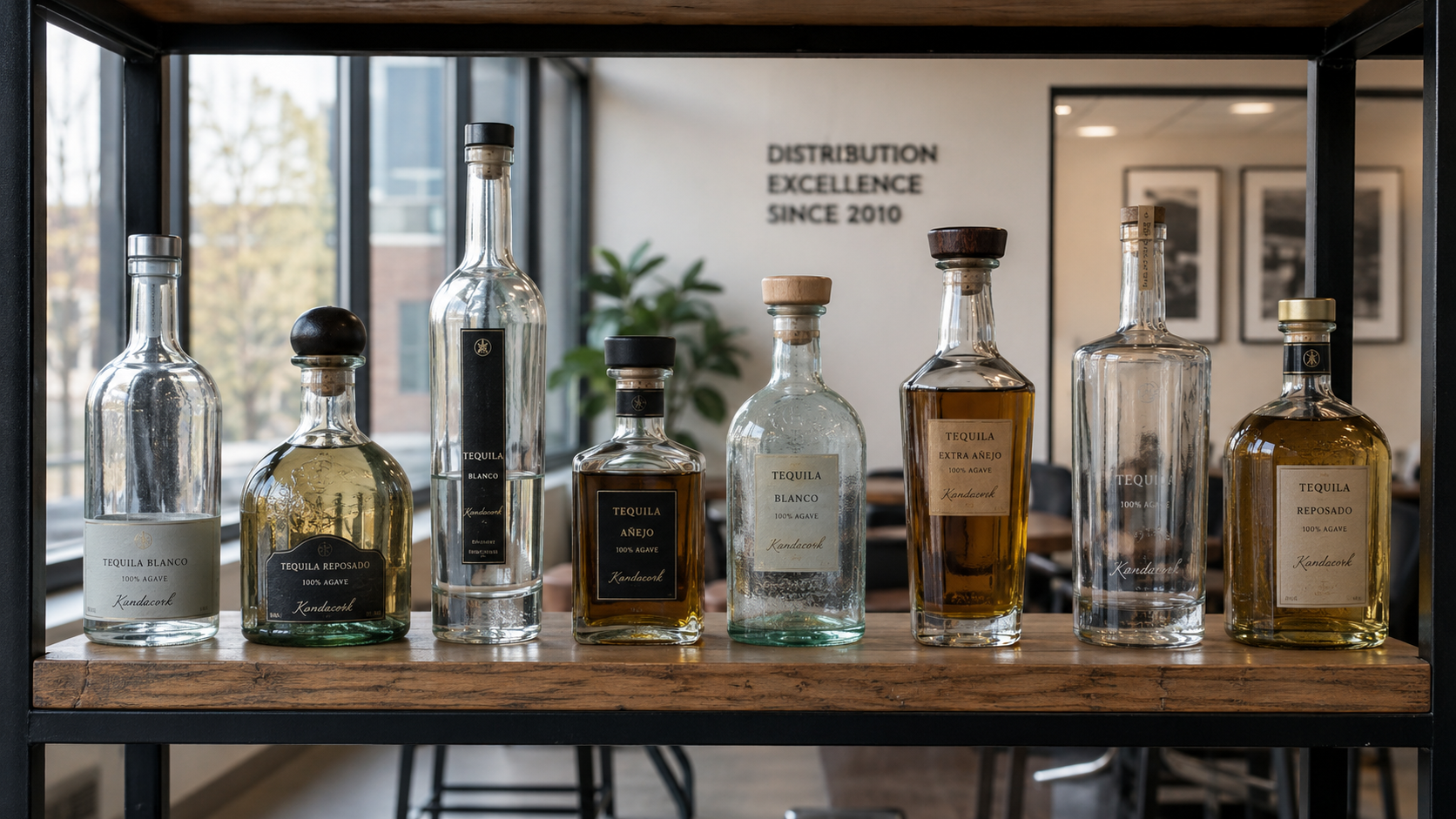
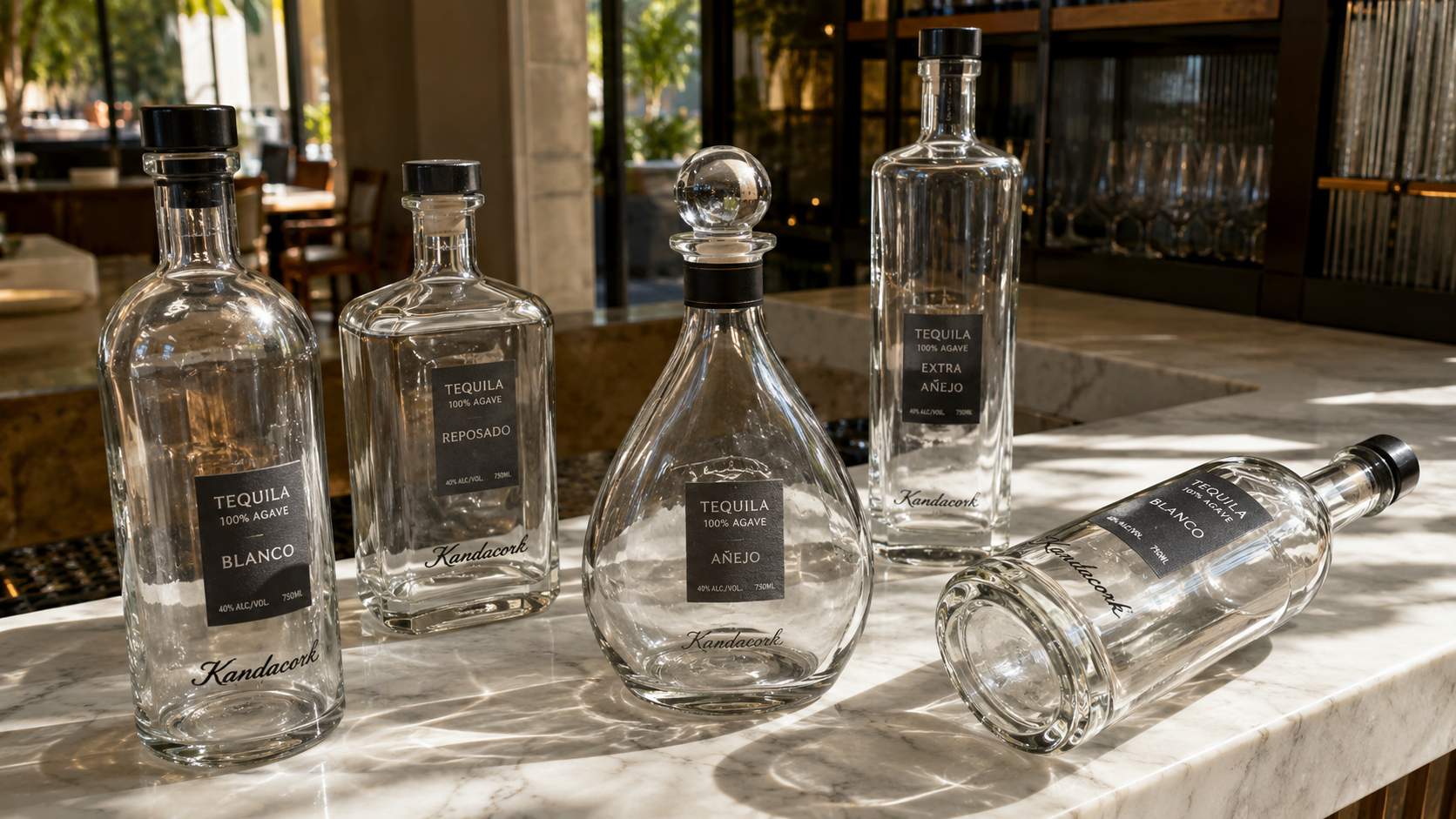
Brands developing a new spirits bottle may coordinate closure choice with custom spirits bottle packaging so the bottle silhouette and stopper proportions feel intentional. A whisky bottle with broad shoulders may need a larger stopper head. A tall gin bottle may need a slimmer aluminium top. A tequila bottle with sculpted glass may need a stopper that echoes the bottle’s form.
If surface decoration is important, closure design can also be developed alongside decoration and branding solutions for labels, coatings, embossing, printing, and other packaging details. This helps the stopper feel like part of the brand identity rather than an afterthought.
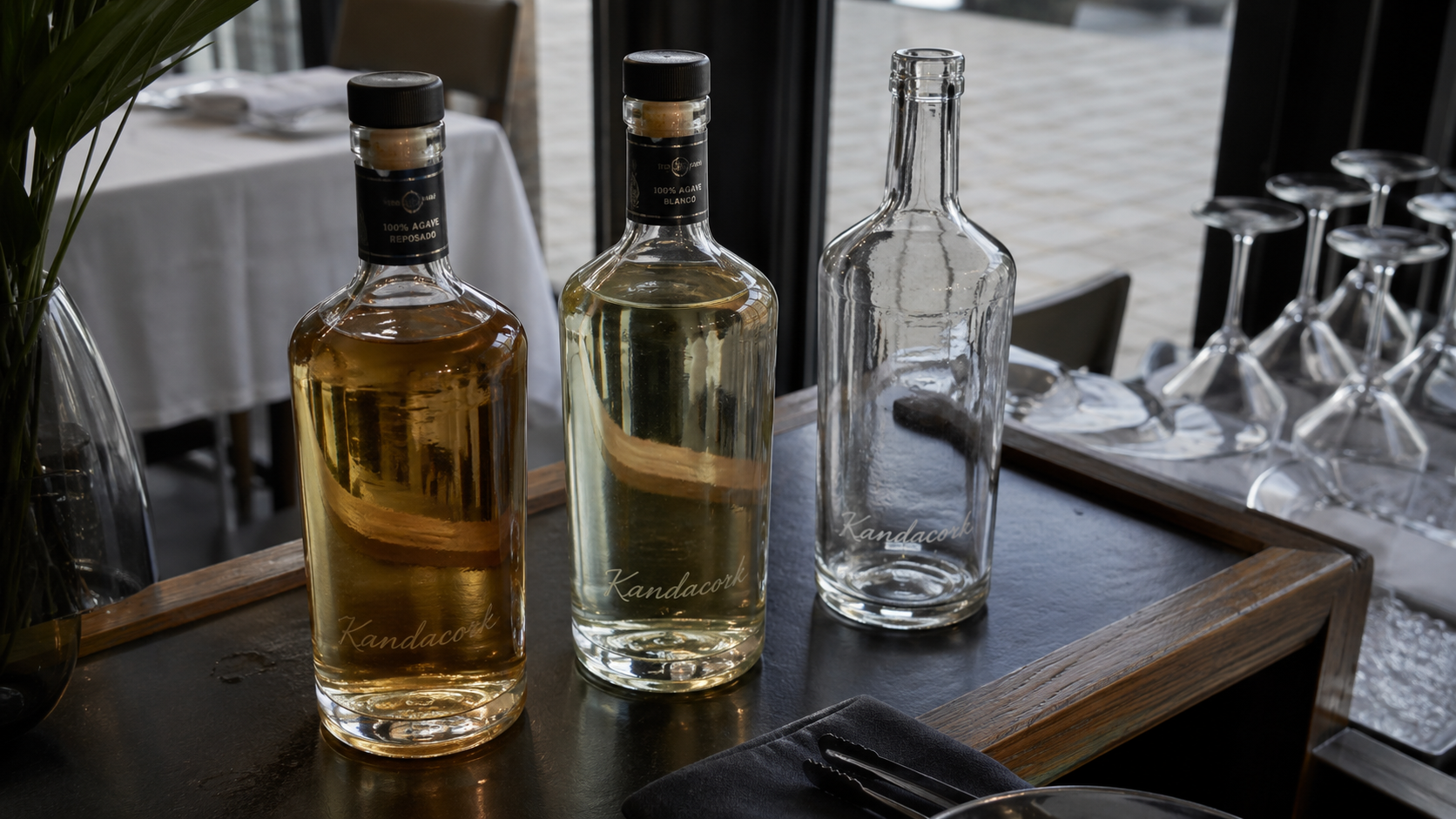
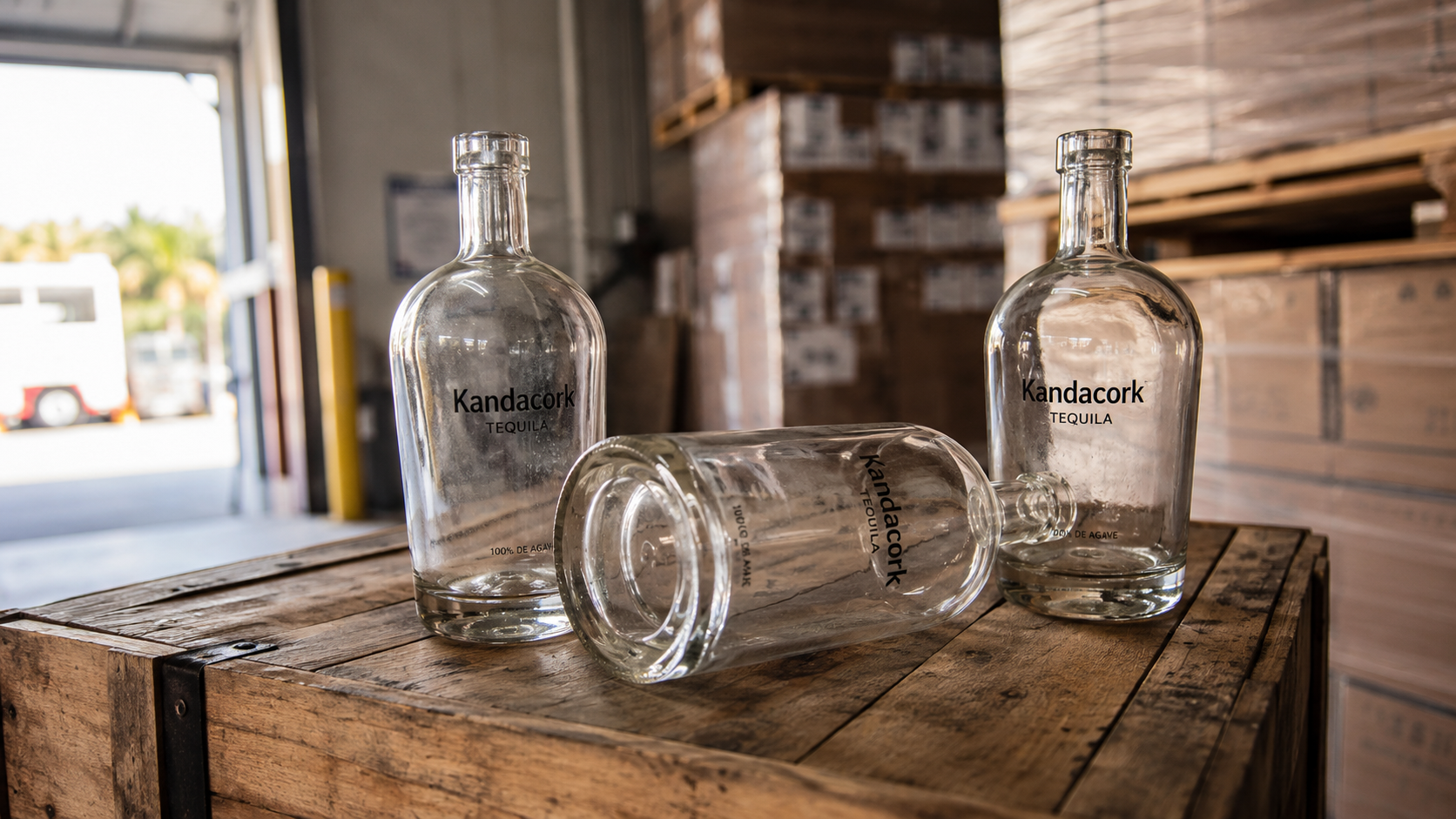
For brands comparing glass bottle formats, Kandacork Glass and Kandacork Eco Glass can support broader packaging decisions where closure weight, glass weight, sustainability goals, and retail presentation must be considered together.
Sample Approval and Testing Process
A professional stopper project should follow a structured approval process before bulk production.
First, the buyer should share the bottle drawing or physical sample. The supplier should review neck inner diameter, neck height, sealing area, dimensional tolerance, and bottle shape. If the bottle is still under development, stopper requirements should be considered before the glass mold is finalized.
Next, the shank material should be selected. Natural cork may suit traditional premium spirits. Synthetic shanks may suit projects requiring consistent diameter, controlled compression, and predictable line performance.
After that, pre-production samples should be made. Buyers should check insertion feel, pull-out force, leakage resistance, logo position, colour finish, head shape, surface quality, and bottle balance. For export projects, transport testing or vibration simulation may be useful before final approval.
Only after fitment, finish, logo, packing, compliance documentation, and performance are approved should the project move into bulk production.
How to Choose Between Metal and Aluminium Stoppers
Choose heavy metal stoppers when the product needs luxury weight, sculpted decoration, collectible value, gift-box impact, and a premium opening ritual. This is often suitable for aged whisky, dark rum, premium tequila, brandy, limited editions, and high-end retail programs.
Choose aluminium stoppers when the product needs a modern metallic look, lighter closure weight, good colour control, scalable cost, and efficient production. This is often suitable for vodka, gin, liqueur, RTD spirits, modern whisky, private-label spirits, and export packaging.
Choose stainless steel when the design requires a clean, durable, minimalist metal effect. This option can work for brands that want precision, restraint, and a technical premium feel.
The best answer to metal stoppers vs aluminium stoppers is not universal. The best stopper is the one that fits the bottle, protects the product, supports the brand story, performs on the filling line, and matches the commercial goals of the project.
Why Work with Kandacork Closures?
Kandacork Closures supports spirits brands, distilleries, bottle suppliers, packaging designers, private-label companies, and importers with custom closure development. Instead of treating the stopper as a decorative part only, Kandacork evaluates the full closure system: material, head design, shank selection, fitment, decoration, compliance support, sample approval, production planning, and export packing.
This approach is useful when buyers are comparing metal stoppers vs aluminium stoppers for a new bottle launch or packaging upgrade. A brand team may know the desired visual direction, but still need technical support on stopper dimensions, sealing performance, shank compression, finish durability, and bulk production feasibility.
If your project requires a custom closure recommendation, Kandacork can review your bottle drawing, target market, order quantity, filling method, and brand positioning before suggesting a suitable stopper structure. Buyers can start the process through a custom closure quote and prepare bottle samples, logo artwork, preferred finish, shank requirements, and delivery expectations for review.
FAQ
Are aluminium stoppers considered metal stoppers?
Yes. Aluminium stoppers are one type of metal stopper. In spirits packaging, however, “metal stoppers” often refers to a broader group that may include Zamak, zinc alloy, stainless steel, and aluminium stopper heads.
Are aluminum stoppers the same as aluminium stoppers?
Yes. “Aluminum stoppers” is the common US spelling, while “aluminium stoppers” is used in the UK, EU, and many international markets. Both terms refer to lightweight metal bottle stoppers made with aluminium heads.
Are metal stoppers better than aluminium stoppers?
Not always. Heavy metal stoppers are better for luxury weight and decorative impact. Aluminium stoppers are better for lightweight premium packaging, modern finishes, cost control, and scalable production.
Which stopper material feels more premium?
Zamak and zinc alloy usually feel heavier and more luxurious. Aluminium feels lighter, cleaner, and more modern. The right choice depends on bottle design, retail positioning, and the customer experience the brand wants to create.
Are aluminium stoppers suitable for premium spirits bottles?
Yes. Aluminium stoppers can be suitable for premium whisky, vodka, gin, rum, tequila, brandy, liqueur, and RTD spirits when the brand wants a clean metallic appearance, reliable fitment, and efficient production.
What affects stopper sealing performance?
Sealing performance depends on bottle neck tolerance, shank material, shank compression, sealing depth, insertion force, pull-out force, leakage resistance, and testing before bulk production.
Which stopper is better for export spirits?
Aluminium stoppers can be useful for export projects because they provide a metallic look with lower closure weight. Heavy metal stoppers can also work well, but buyers should test fitment, packing stability, vibration resistance, and shipping performance before bulk shipment.
What information should I send before ordering custom stoppers?
Send the bottle drawing, bottle sample if available, neck dimensions, desired stopper material, head size, logo artwork, surface finish, shank preference, order quantity, target market, filling method, and delivery schedule. This helps the supplier recommend the right stopper structure for sampling and production.