Introduction
Glass stoppers are often selected for luxury spirits packaging because they add clarity, weight and visual distinction. This guide helps buyers compare design options, fit requirements, safety risks, finishing details and packing methods before production.
Quick Answer: Are Glass Stoppers Right for Your Spirits Bottle?
| Buyer question | Short answer |
|---|---|
| Best for | Premium whisky, rum, tequila, vodka, gin, liqueurs, gift sets, collector bottles, and limited editions |
| Main benefit | Luxury presentation, custom branding, and stronger shelf impact |
| Key technical factor | Bottle neck fit, insert compression, seating height, and sealing performance |
| Best project route | Standard matching, semi-custom adjustment, or full custom mold development |
| Next step | Request a bottle-neck fit review before sample approval and bulk production |
Glass stoppers for spirits bottles are best used when the closure must support both visual value and technical performance. The most successful projects start with bottle-neck data, target brand position, decoration requirements, target market, and sample testing.
What Are Glass Stoppers for Spirits Bottles?
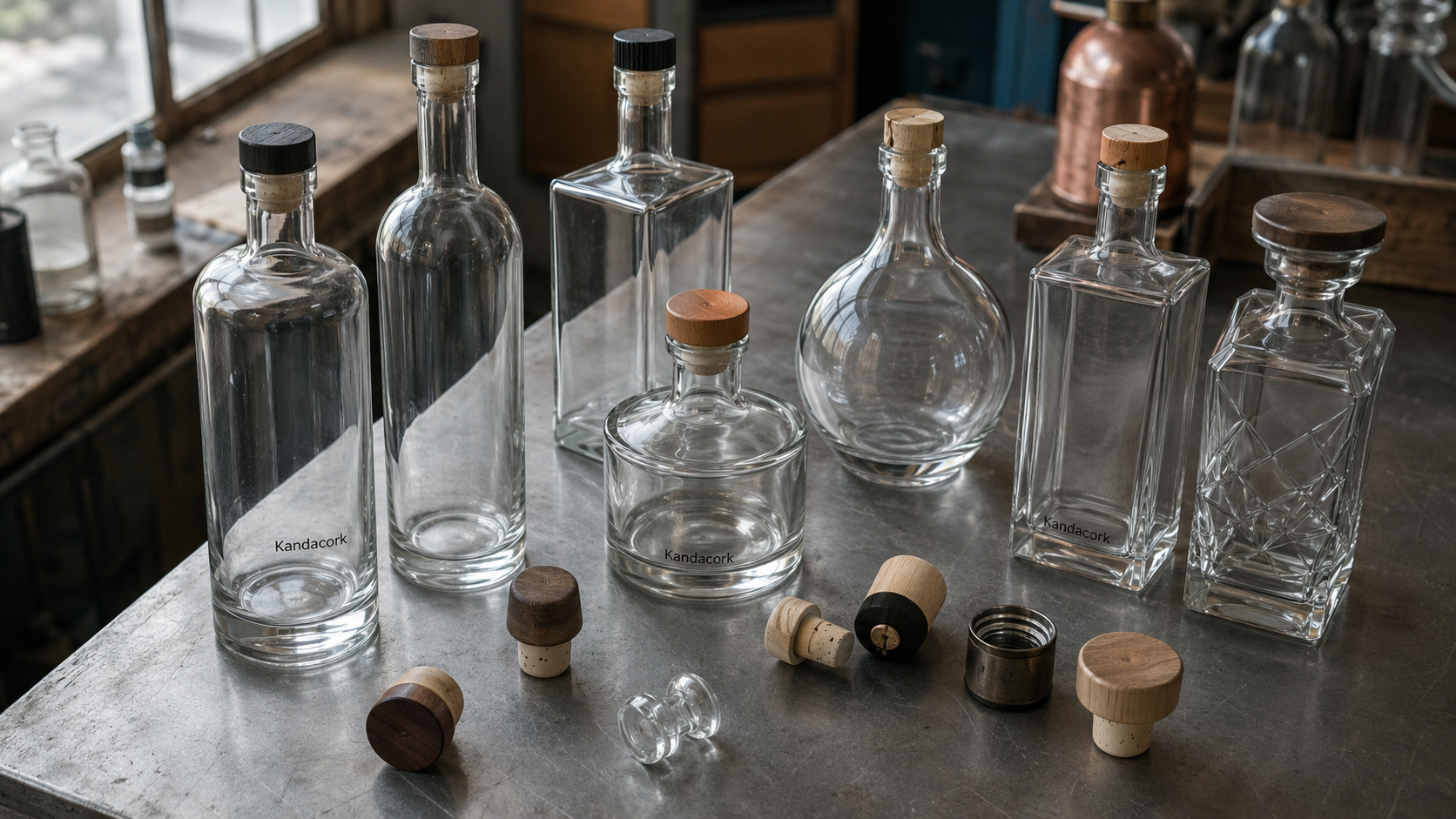
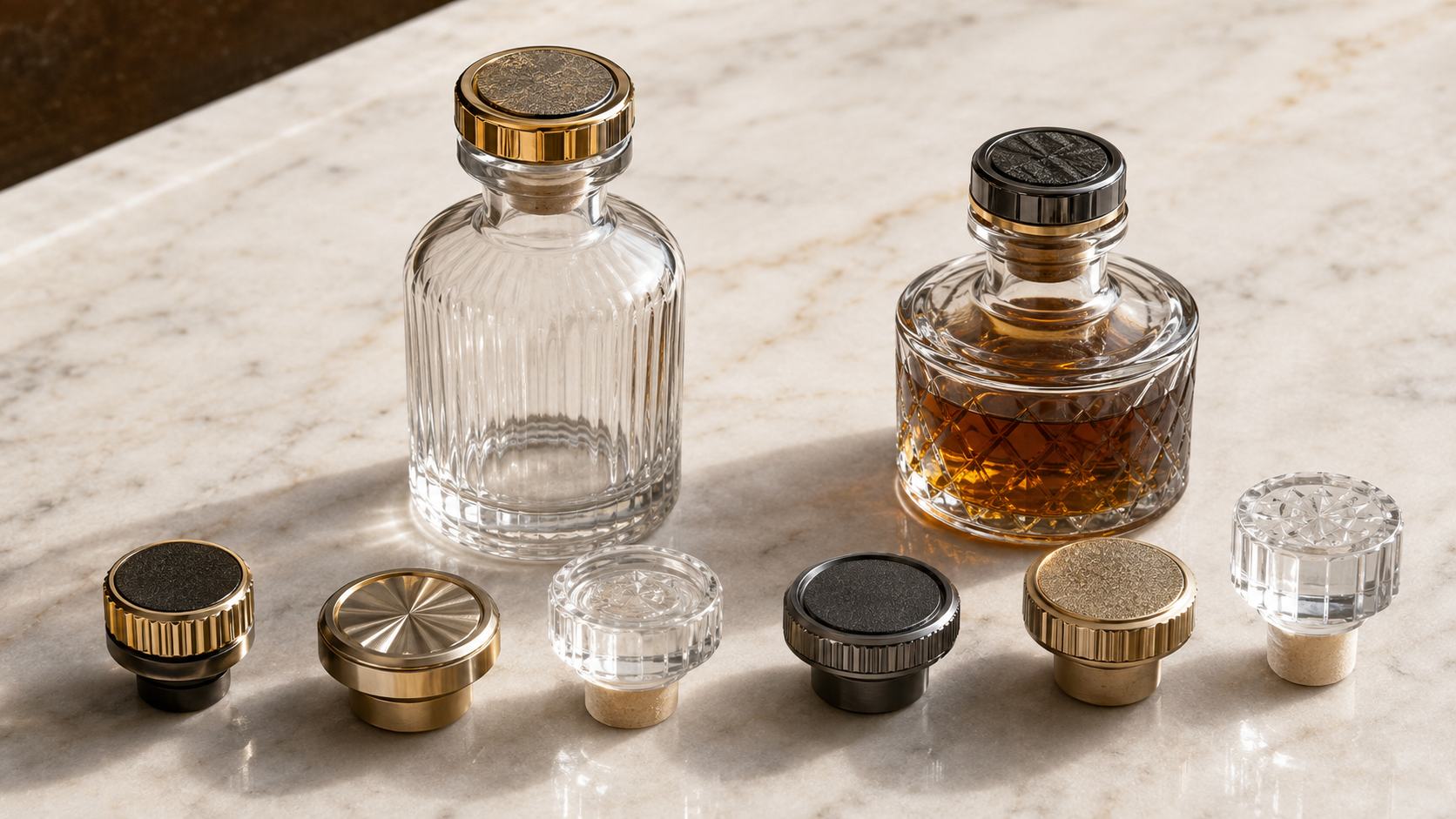
Glass stoppers for spirits bottles are closure systems that usually combine a decorative glass head with a functional sealing insert. The glass head provides the premium appearance, while the insert helps the stopper fit securely inside the bottle neck.
A typical glass stopper may include:
- A clear, frosted, tinted, faceted, or custom-molded glass head
- A synthetic cork, technical cork, polymer, or TPE sealing insert
- A defined insertion depth for stable neck fit
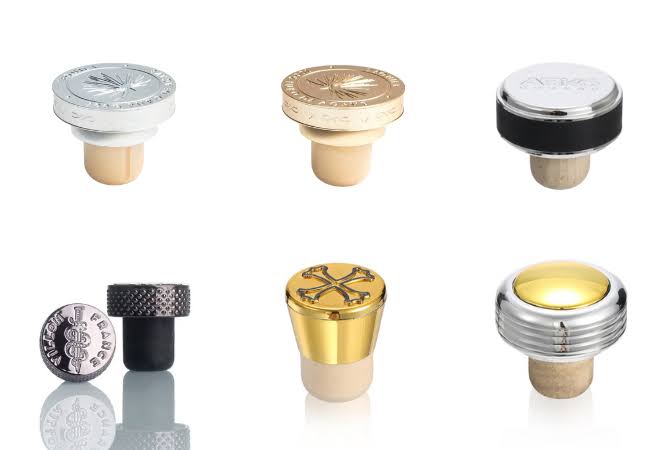
- Optional logo engraving, embossing, sandblasting, color filling, or metal medallion decoration
- Protective packing for bulk shipment, storage, and filling-line preparation
This structure is different from a simple ground-glass laboratory stopper. In spirits packaging, the closure must support brand identity, consumer handling, bottle compatibility, sealing performance, and export transportation.
For bottle programs that also need coordinated glass shapes, shoulder profiles, base weight, and closure compatibility, buyers may work with an integrated packaging partner such as Kandacork Glass to align bottle and stopper decisions early in development.
Why Premium Spirits Brands Use Glass Stoppers
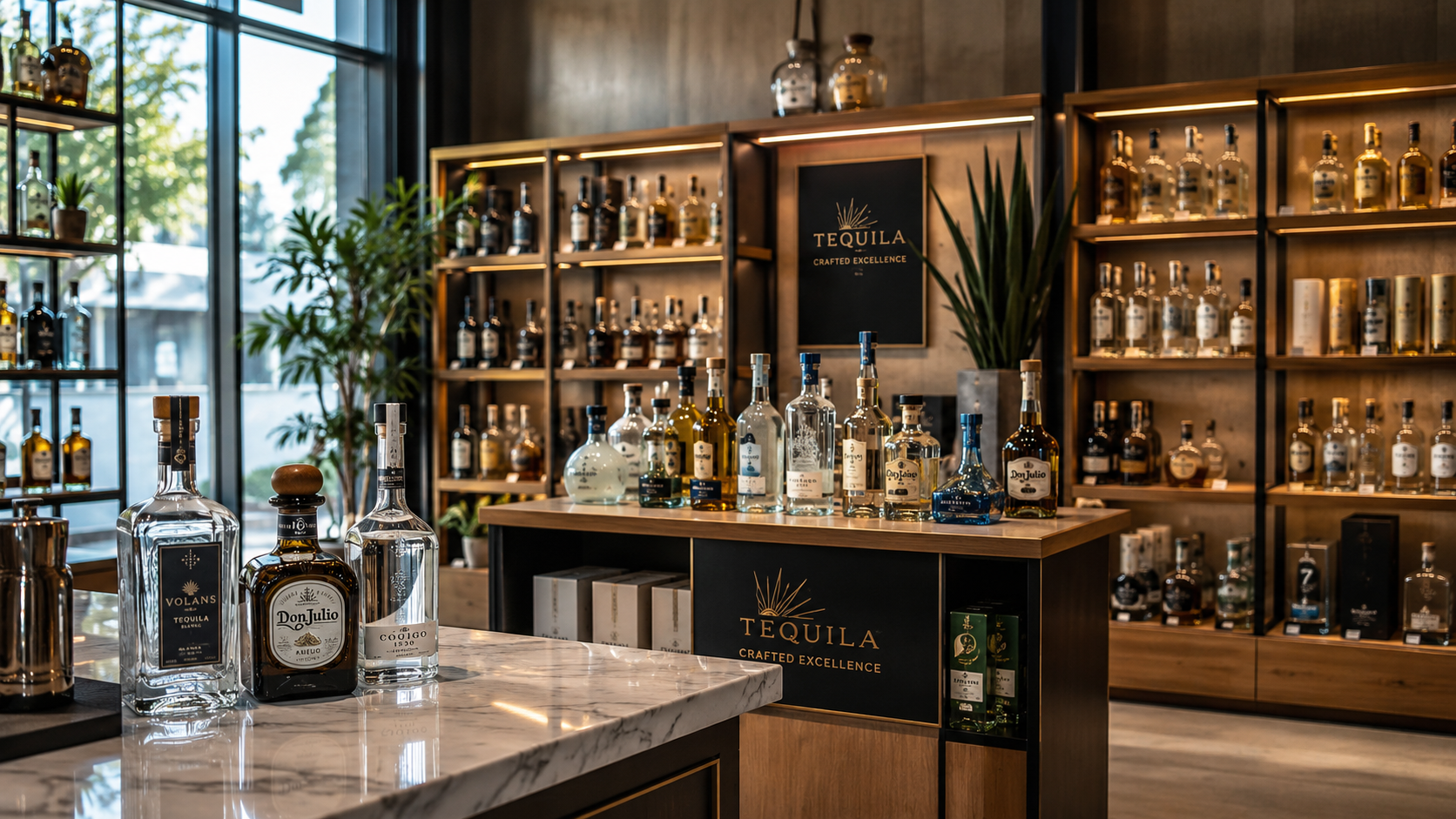
Glass stoppers are a strong choice when a spirits brand wants a premium, clean, collectible, or gift-ready bottle presentation. They are especially suitable for whisky and whiskey bottles, aged rum, tequila and mezcal, vodka and gin, brandy, cognac-style spirits, liqueurs, collector bottles, and limited editions.
Glass stoppers for spirits bottles work best when the closure is part of a complete packaging strategy. A heavy-base bottle, clean label design, metallic decoration, frosted glass finish, custom neck label, or luxury gift box can all increase the perceived value of the final package.
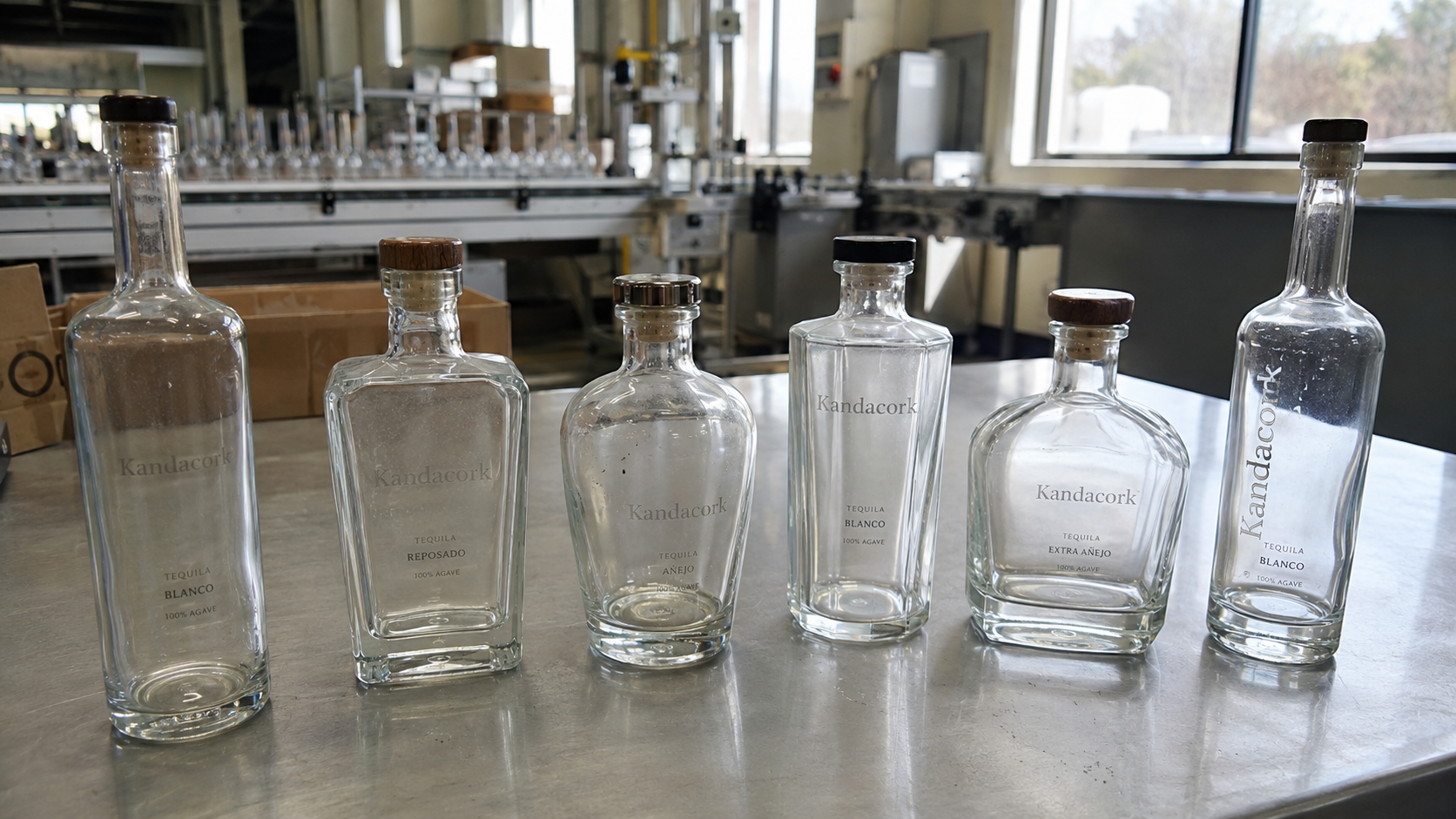
For brands developing a bottle family across multiple SKUs, the closure should be selected before final mold approval. A glass stopper may need to match the bottle’s neck finish, shoulder width, label position, capsule space, and carton height. Buyers sourcing primary packaging through Kandacork Spirits Bottle can coordinate spirits bottle style and closure intent from the beginning of the project.
Glass stoppers are not always the best choice for every project. If a brand needs the lowest-cost closure, very lightweight packaging, or a high-speed commodity closure system, a synthetic stopper, aluminum cap, or ROPP closure may be more practical.
Glass Stoppers vs Other Spirits Bottle Closures
Choosing the right spirits bottle closure depends on brand position, bottle shape, price tier, filling method, export market, and consumer experience. The wider spirits closure and stopper range includes premium bar-top designs, screw caps, cork-based stoppers, synthetic options, non-refillable systems, capsules, and shrink sleeves.
| Closure type | Best for | Main strength | Main limitation |
|---|---|---|---|
| Glass stopper | Luxury spirits, gift packs, limited editions, collector bottles | Premium visual impact and refined hand feel | Higher weight and stricter fit requirements |
| Wooden stopper | Craft whisky, aged rum, botanical spirits, heritage brands | Natural texture and warm brand character | Appearance and texture can vary |
| Synthetic stopper | Scalable spirits packaging and private-label projects | Consistent fit and cost control | Less premium visual effect than glass |
| Aluminum or ROPP cap | High-volume spirits, mini bottles, modern packaging | Efficient application and tamper-evident options | Less collectible or gift-oriented appearance |
| Non-refillable closure | Export spirits and anti-refill requirements | Security and controlled pouring | More technical structure and bottle-neck dependency |
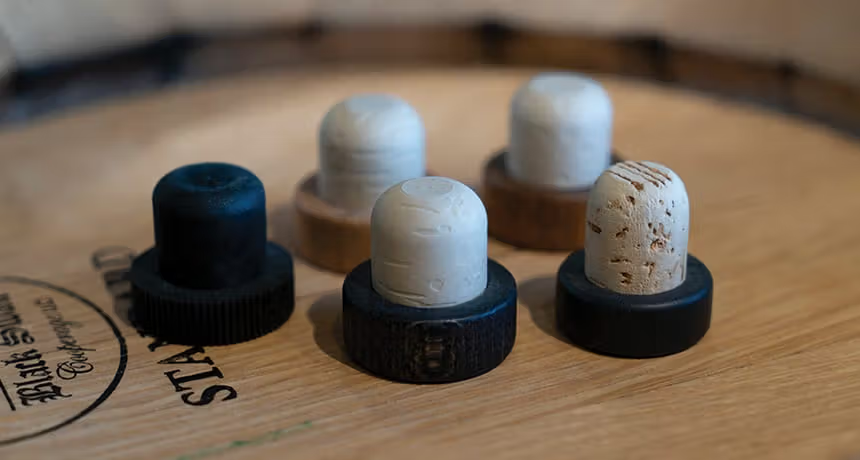
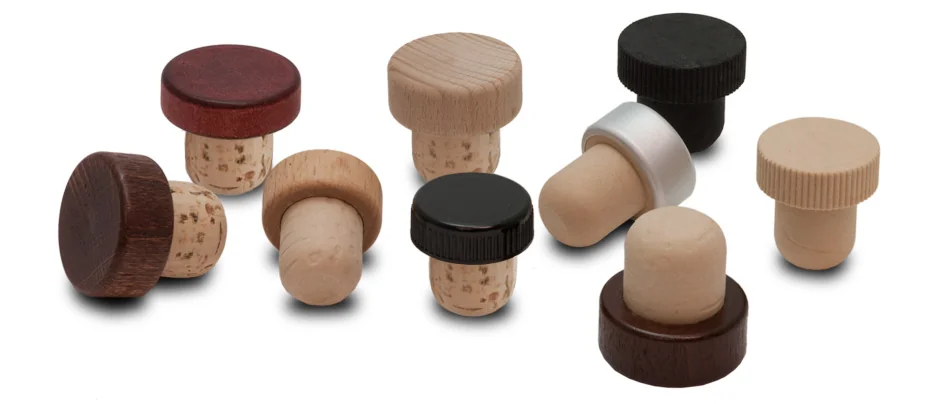
A glass stopper is often selected when the bottle must feel valuable before the consumer reads the label. A wooden stopper can support craft or heritage positioning, while wooden bar-top stoppers are often chosen for whisky, rum, tequila, gin, and premium liqueur projects that need a natural tactile cue. For projects that need dimensional repeatability and scalable cost control, synthetic bottle stoppers may be more practical.
When security, machine application, and pilfer evidence are priorities, ROPP closures are often considered. For luxury spirits, however, the best choice is rarely based on material alone. It depends on bottle neck geometry, shelf position, filling process, export conditions, consumer expectations, and target retail price.
Key Customization Options for Glass Spirits Stoppers
Custom glass bottle stoppers allow spirits brands to build a closure that feels connected to the bottle body and brand story.
Glass Head Shape
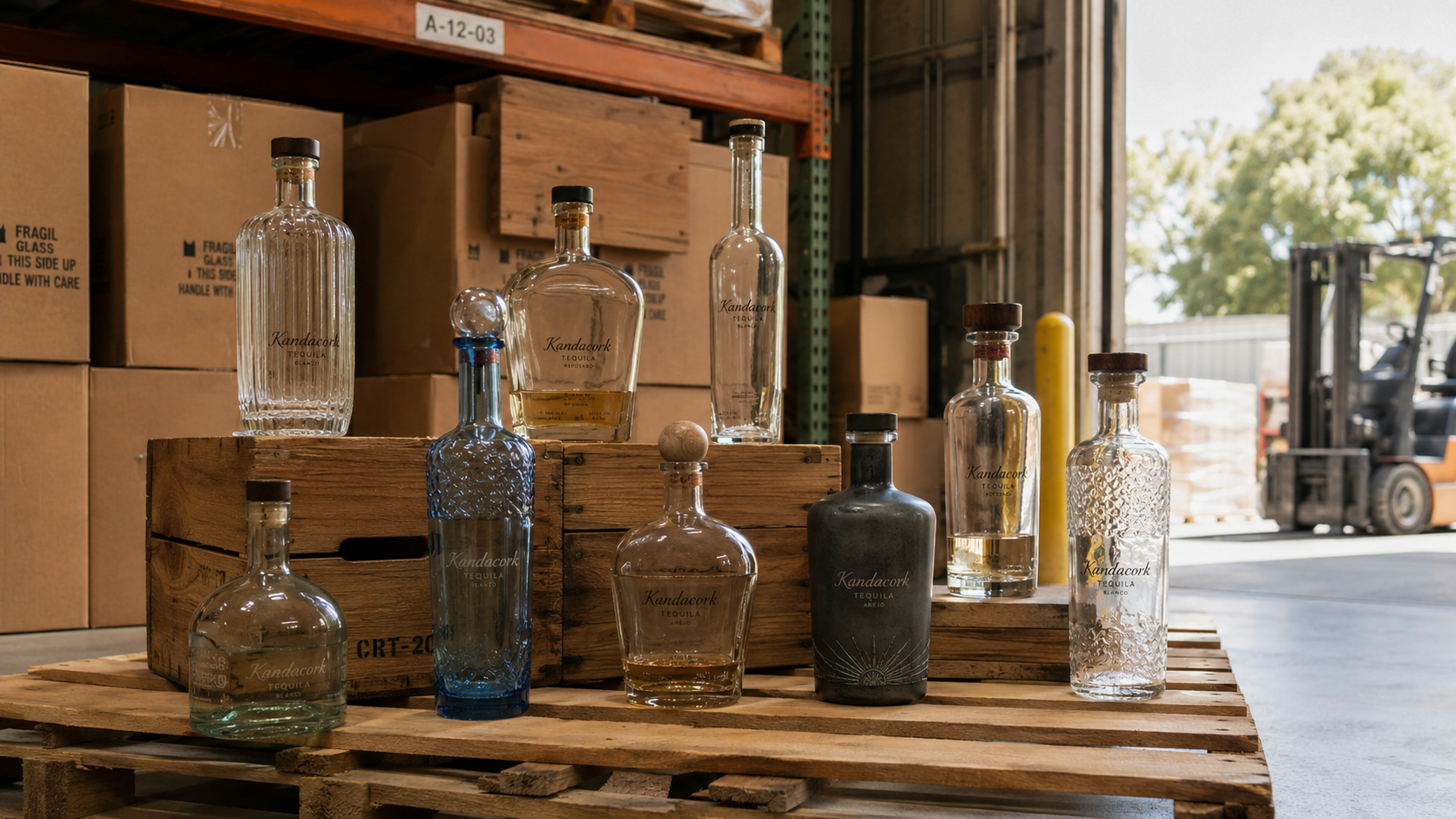
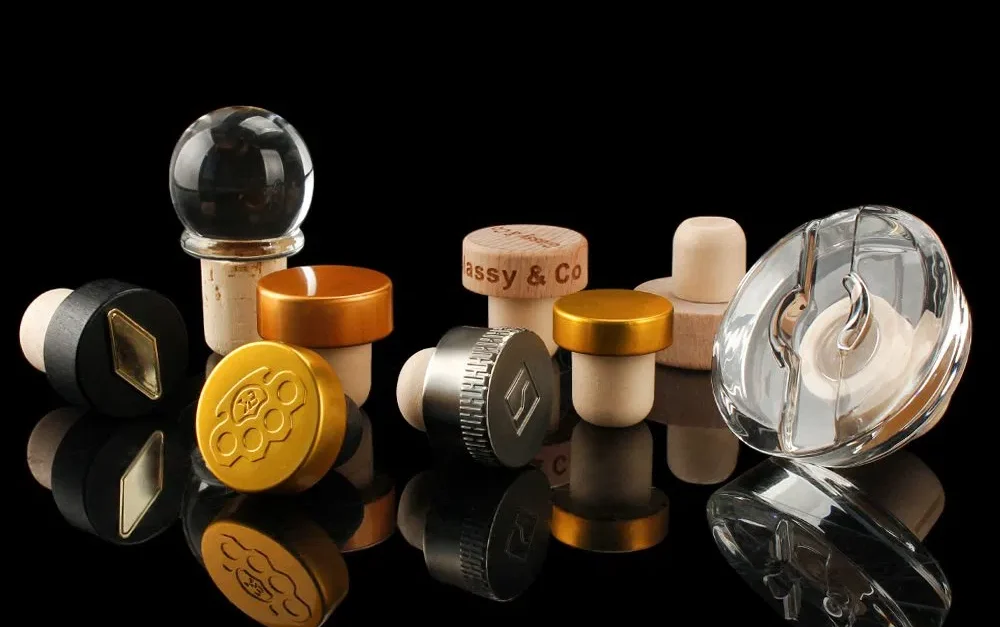
The glass head can be designed in many forms, including round, flat top, globe, oval, square, cone, faceted, diamond-cut, and T-shape styles. Fully custom shapes can also be developed when the brand needs a signature closure.
A square glass stopper can support a modern architectural bottle. A globe-shaped stopper can work well for travel retail, gift packaging, and collectible spirits. A faceted glass stopper reflects light and strengthens the luxury effect on shelf.
Glass Finish
Common finish options include clear glass, frosted glass, tinted glass, colored glass, sandblasted glass, and textured glass. Clear glass creates a clean and pure appearance. Frosted glass feels softer and more refined. Tinted glass can coordinate with amber rum, dark whisky, blue gin, or brand-specific color palettes.
The finish should be selected together with the bottle body. A clear stopper on a heavy flint bottle creates a clean premium look. A frosted stopper on a matte bottle can create a more understated luxury feel. A colored stopper can help the bottle stand out in a crowded spirits category.
Branding and Decoration
Branding options may include laser engraving, embossing, debossing, sandblasting, color filling, metal medallions, or decorative inserts. These techniques help the closure become part of the brand identity rather than a generic bottle component.
For premium spirits, subtle decoration is often more effective than heavy decoration. A small engraved logo, a polished medallion, or a carefully matched color accent can make the closure feel expensive without making the design look crowded. When bottle decoration, stopper branding, neck labels, capsules, and gift-box graphics need to work together, Kandacork Decoration & Branding can support a more consistent packaging presentation across the full bottle.
Neck Fit and Sealing Performance: What Buyers Must Know
The most important technical question is not only how the stopper looks. The more important question is whether the stopper fits and seals correctly.
Glass stoppers for spirits bottles must be reviewed according to the actual bottle neck. A beautiful glass head cannot perform well if the insert is too loose, too tight, too short, too long, or unstable during transport.
Important fit points include:
- Bottle neck inner diameter
- Neck finish tolerance
- Stopper insertion depth
- Seating height above the bottle mouth
- Pull force and removal feel
- Insert material and compression
- Leakage risk during handling and transport
- Alignment between stopper head and bottle shoulder
- Compatibility with capsule, neck label, or gift box
For spirits packaging, fit consistency matters because alcohol products may be shipped long distances, stored in different temperatures, and handled by distributors, retailers, and consumers. A stopper that looks correct in a photo still needs sample testing before bulk production.
Need help checking bottle-neck compatibility? Prepare the bottle drawing, neck size, and target stopper style before confirming samples.
Common Fit Problems in Glass Stopper Projects
Many closure problems appear late because buyers focus only on visual design during the early stage. A glass stopper should be evaluated as a technical packaging component as well as a decorative brand feature.
Common problems include:
- The stopper feels loose after shipment
- The stopper sits too high above the bottle mouth
- The stopper sits too low and weakens the premium look
- The insert is too tight and difficult for consumers to remove
- The glass head is not visually aligned with the bottle shoulder
- The capsule or shrink sleeve does not fit over the stopper
- The stopper scratches during export packing
- The insert material does not match the bottle neck tolerance
- The stopper looks premium but fails leakage testing
These problems can usually be reduced through early fit review, bottle sample checking, insert selection, pull-force testing, leakage review, and packing evaluation. For premium spirits, this step protects both product quality and brand image.
Mistakes to Avoid When Buying Glass Stoppers for Spirits Bottles
Buying glass stoppers for spirits bottles is not only a design decision. It is also a fit, testing, packing, and production decision. Avoiding common mistakes can save time during sampling and reduce risk before bulk orders.
Choosing by Appearance Only
A glass stopper may look impressive in a product photo, but it still needs to match the bottle neck, seating height, insert compression, and consumer opening feel. Visual appeal should always be checked together with function.
Ignoring Neck Inner Diameter
The bottle neck inner diameter is one of the most important details for stopper matching. Even a small mismatch can cause a loose fit, excessive tightness, poor seating, or leakage risk.
Skipping Sample Testing
Sample testing helps confirm the real fit before mass production. Buyers should test insertion, removal, seating height, visual alignment, leakage risk, and packing protection before approving bulk production.
Forgetting Capsule Compatibility
Some premium spirits bottles use capsules, shrink sleeves, neck labels, or tamper-evident seals. The stopper head shape and height must leave enough room for these packaging elements.
Underestimating Export Packing
Glass stopper heads can scratch, chip, or rub against each other during transportation. Proper trays, dividers, wrapping, cartons, and pallet protection are important for maintaining premium appearance.
Not Checking Insert Material Suitability
The insert is the functional part of the closure. Buyers should review insert material, odor control, alcohol compatibility, compression, and food-contact suitability for the target product and market.
Can Glass Stoppers Fit Existing Spirits Bottles?
Yes. Glass stoppers can often be matched to existing spirits bottles, but the bottle neck must be checked first.
A standard or semi-custom glass stopper may work when the bottle has a common neck dimension. If the bottle neck is unusual, the brand requires a special seating height, or the stopper must align with a custom bottle shoulder, a tailored solution may be required.
This step is especially important for luxury spirits packaging because stopper height, shoulder alignment, hand feel, and removal force all influence the final consumer experience.
Glass Stopper Quote Checklist
Before requesting a quote for glass stoppers for spirits bottles, buyers should prepare the key technical and commercial details. This helps the glass stopper supplier recommend the correct structure, estimate cost more accurately, and reduce sampling delays.
| Information needed | Why it matters |
|---|---|
| Bottle drawing | Confirms neck structure, finish, and design requirements |
| Neck inner diameter | Helps match insert size and compression |
| Physical bottle sample | Allows practical fit and pull-force testing |
| Spirit type | Supports material and odor-control review |
| Target market | Helps assess compliance and packaging expectations |
| Stopper shape | Defines visual direction and mold needs |
| Insert material preference | Affects sealing, hand feel, and cost |
| Decoration method | Impacts tooling, sampling, and lead time |
| Order quantity | Influences production route and pricing |
| Launch timeline | Helps select standard, semi-custom, or custom development |
| Export packing needs | Protects glass heads during shipping and storage |
Buyers who prepare this information early can move more quickly from design concept to sample approval and bulk production. For faster sourcing, prepare the bottle drawing and project quantity before requesting a custom glass stopper quote.
Standard, Semi-Custom, and Fully Custom Glass Stopper Development
There are three common sourcing routes for glass stoppers for spirits bottles.
Standard Matching
Standard matching is best for projects that need a faster development process. The supplier checks existing stopper options against the bottle neck and selects a compatible structure. This route can reduce development time and mold cost.
It is suitable for private-label spirits, short launch timelines, pilot batches, and projects where the brand can accept an existing stopper shape.
Semi-Custom Adjustment
Semi-custom development allows the buyer to modify selected elements while keeping the project more efficient than full custom mold development. The brand may choose a standard glass head shape but customize color, frosting, engraving, insert type, or seating height.
This route is useful for brands that want a more premium look without building a completely new closure from zero.
Fully Custom Mold Development
Fully custom development is best for signature packaging, luxury releases, anniversary bottles, high-end whisky, aged rum, tequila, cognac-style spirits, or collector editions.
A fully custom glass stopper can include a brand-owned shape, unique dimensions, logo structure, special finish, and coordinated bottle design. This route usually requires more sampling, mold investment, and approval time, but it can create a closure that competitors cannot easily copy.
Food Contact, Compliance, and Quality Considerations
For spirits packaging, the closure must be evaluated as a system. The visible glass head is only one part. The sealing insert, adhesive, coating, colorant, or decorative component may also matter depending on whether it can contact the product or affect the bottle environment.
The U.S. FDA food-contact guidance explains that food-contact substances can include packaging and its components. The European Commission’s EU food-contact material framework also sets general principles for materials intended to contact food. For spirits brands, this means buyers should pay attention to insert material, odor control, alcohol compatibility, and supplier documentation.
Quality review should include:
- Food-contact suitability of relevant materials
- Odor and sensory impact
- Alcohol resistance of insert components
- Visual consistency of glass heads
- Surface scratches, chips, bubbles, or defects
- Dimensional tolerance
- Pull force consistency
- Leakage testing
- Carton and export packing strength
- Batch-to-batch quality control
For the U.S. market, the Alcohol and Tobacco Tax and Trade Bureau notes that distilled spirits bottles and other containers require a tamper-evident closure or similar device, making TTB distilled spirits closure guidance important when planning the final pack. A glass stopper may need to be paired with a capsule, shrink sleeve, seal, or other tamper-evident feature depending on market and product requirements.
Packaging and Export Protection for Glass Stoppers
Glass stopper heads need proper packing because they are premium visual components. Scratches, chips, friction marks, or impact damage can reduce the perceived value of the final bottle.
Export packing may include individual wrapping, divider trays, inner cartons, reinforced master cartons, pallet protection, and clear handling instructions. If the stopper is decorated with engraving, coating, medallions, or metallic details, the packing design becomes even more important.
Transport testing should be considered when bottles and stoppers are shipped together or when the final filled product will move through long distribution chains. The International Safe Transit Association focuses on packaging design and distribution performance, which makes transport simulation especially relevant for fragile premium packaging.
For premium spirits, packaging protection is not only about avoiding breakage. It is also about preserving the luxury appearance that the consumer sees on shelf or during unboxing.
Sustainability Considerations for Glass Stopper Projects
Sustainability in spirits packaging should be practical, not only promotional. Glass has strong premium appeal and is widely associated with recyclability. The Glass Packaging Institute states that glass can be recycled endlessly without loss in quality or purity, which supports its role in premium beverage packaging.
However, buyers should also consider weight, freight impact, component separation, secondary packaging, and actual recycling infrastructure in the target market. A heavier glass stopper may improve luxury perception, but it may also increase total package weight.
A better sustainability discussion looks at the whole package:
- Is the bottle designed to avoid unnecessary weight?
- Can the stopper components be separated where required?
- Is the gift box recyclable or reusable?
- Is the packaging protective enough to prevent product loss?
- Can recycled glass or lightweight bottle design be considered?
- Does the closure support refill, reuse, or collector value?
For premium spirits, sustainability and luxury do not need to conflict. A durable, well-designed glass stopper can support a longer-lasting package impression, especially for gift sets, limited editions, and collector bottles. Projects that also need recycled-content positioning, lighter bottle structures, or eco-focused glass packaging can coordinate early with Kandacork Eco Glass.
How to Choose the Right Glass Stopper Supplier
A good glass stopper supplier should understand both design and performance. Buyers should not select a supplier only from product photos.
Use this checklist before choosing a partner:
- Does the supplier understand spirits packaging?
- Can they review bottle neck drawings and dimensions?
- Do they offer standard, semi-custom, and custom stopper options?
- Can they advise on sealing inserts?
- Do they support sample testing before bulk orders?
- Can they coordinate decoration with the bottle design?
- Do they understand export packing requirements?
- Can they support batch quality control?
- Do they communicate clearly about MOQ, tooling, sampling, and lead time?
- Can they support bottle, closure, and decoration as one packaging system?
A supplier with closure-specific experience can help reduce trial-and-error between bottle approval, closure sampling, decoration, packing, and filling-line preparation.
Why Work With Kandacork Closures
Kandacork Closures supplies custom glass stoppers for spirits bottles, including clear, frosted, tinted, faceted, decorated, and custom-molded glass heads. The company supports spirits brands, distilleries, private-label companies, packaging developers, and importers that need premium closure solutions for whisky, tequila, rum, brandy, cognac-style spirits, vodka, gin, and liqueurs.
Key support areas include:
- Glass stopper design
- Bottle neck fit review
- Synthetic cork, TPE, polymer, or technical sealing insert options
- Standard and custom glass head development
- Logo engraving, frosting, embossing, debossing, color effects, and medallion details
- Sample testing before bulk production
- Bulk supply and export packaging
- Integrated bottle, stopper, and decoration project support
For brands developing premium spirits packaging, the right closure can increase shelf impact, improve consumer handling, and strengthen brand recognition. Kandacork Closures helps buyers move from early design idea to production-ready stopper solution.
Request a Glass Stopper Fit Review
If you are developing glass stoppers for spirits bottles, the best starting point is a fit review. Send your bottle drawing, neck dimensions, target stopper style, decoration idea, order quantity, and launch timeline when you contact Kandacork Closures.
Kandacork Closures can help evaluate whether your project is suitable for standard matching, semi-custom adjustment, or full custom mold development. This helps reduce trial-and-error, shorten the sampling process, and improve the chance of a production-ready closure.
For premium whisky, rum, tequila, vodka, gin, brandy, liqueur, and private-label spirits projects, a glass stopper should be designed with both visual value and technical performance in mind.
FAQ
What are glass stoppers used for in spirits bottles?
Glass stoppers are used to create a premium bottle-top presentation for whisky, rum, tequila, vodka, gin, brandy, liqueurs, and limited-edition spirits. They combine a decorative glass head with a sealing insert that helps the stopper fit the bottle neck.
Are glass stoppers airtight?
Yes, glass stoppers can provide a secure seal when the insert, bottle neck, and insertion depth are correctly matched. Sealing performance depends on the full closure system, not only the glass head. Sample testing is recommended before bulk production.
Can I customize the shape of a glass stopper?
Yes, glass stopper heads can be made in round, square, oval, flat-top, globe, cone, faceted, or fully custom shapes. The best option depends on your bottle neck, brand design, target quantity, tooling budget, and launch timeline.
Can logos be engraved on glass stoppers?
Yes, logos can often be added through engraving, sandblasting, embossing, debossing, color filling, or metal medallion details. The right decoration method depends on the glass shape, logo complexity, finish, and desired luxury effect.
Do glass stoppers work for whisky bottles?
Yes, glass stoppers are a strong option for premium whisky bottles, especially gift sets, limited editions, aged releases, and collector packaging. They pair well with heavy-base glass bottles, clear labels, metallic decoration, and luxury boxes.
Are glass stoppers suitable for rum and tequila bottles?
Yes, glass stoppers can work well for aged rum, premium tequila, mezcal, and other high-value spirits. They are especially effective when the brand wants a distinctive closure that supports shelf presence and gift appeal.
What information is needed for a glass stopper quote?
A buyer should provide the bottle drawing, neck inner diameter, neck finish, desired stopper shape, target quantity, decoration requirements, insert preference, packaging needs, export destination, and project timeline. A physical bottle sample is helpful for fit testing.
What is the difference between a glass stopper and a bar-top cork?
A bar-top cork usually has a decorative top made from wood, plastic, metal, or glass attached to a cork or synthetic insert. A glass stopper is a premium bar-top style where the visible head is made from glass.
Do glass stoppers need tamper-evident packaging?
In many spirits markets, tamper evidence may be required or commercially expected. A glass stopper can be paired with capsules, shrink sleeves, seals, or other tamper-evident features depending on the product, destination market, and regulatory requirements.
How do I choose a glass stopper supplier?
Choose a glass stopper supplier that can review bottle neck dimensions, recommend sealing inserts, support sample testing, provide decoration options, and protect the stoppers during export packing. Supplier experience matters because glass stoppers must perform as both design elements and functional closures.
Conclusion: Build a Closure That Matches the Value of the Spirit
Glass stoppers for spirits bottles can help a premium spirit look more valuable, feel more collectible, and create a stronger opening experience. But the best stopper is not only attractive. It must also fit the bottle, seal correctly, support the brand identity, and survive the realities of filling, packing, export, and retail handling.
For whisky, rum, tequila, vodka, gin, brandy, liqueur, and luxury private-label projects, Kandacork Closures can support custom glass stopper development from concept to bulk supply. With the right glass head, sealing insert, decoration method, and fit review, your closure can become a signature part of the bottle, not just the final component added before shipment.
If you are developing a premium spirits bottle, start with the bottle neck, brand positioning, and target consumer experience. Then build a glass stopper solution that matches the value of the spirit inside.