Direct Answer
To match caps with non-standard bottle necks, first identify the closure system, then measure the bottle’s external finish, internal bore diameter, neck height, sealing land, thread profile, tamper bead, taper, and production tolerance. Before bulk production, test physical samples for leakage, torque, extraction force, insertion depth, tamper-band performance, appearance, and filling-line compatibility.
A non-standard spirits bottle neck can turn a simple cap order into a leakage, torque, or launch-delay problem. Custom glass, short necks, heavy-base decanters, imported bottles, and unclear ROPP or bar-top finishes often require more than a catalog cap size.
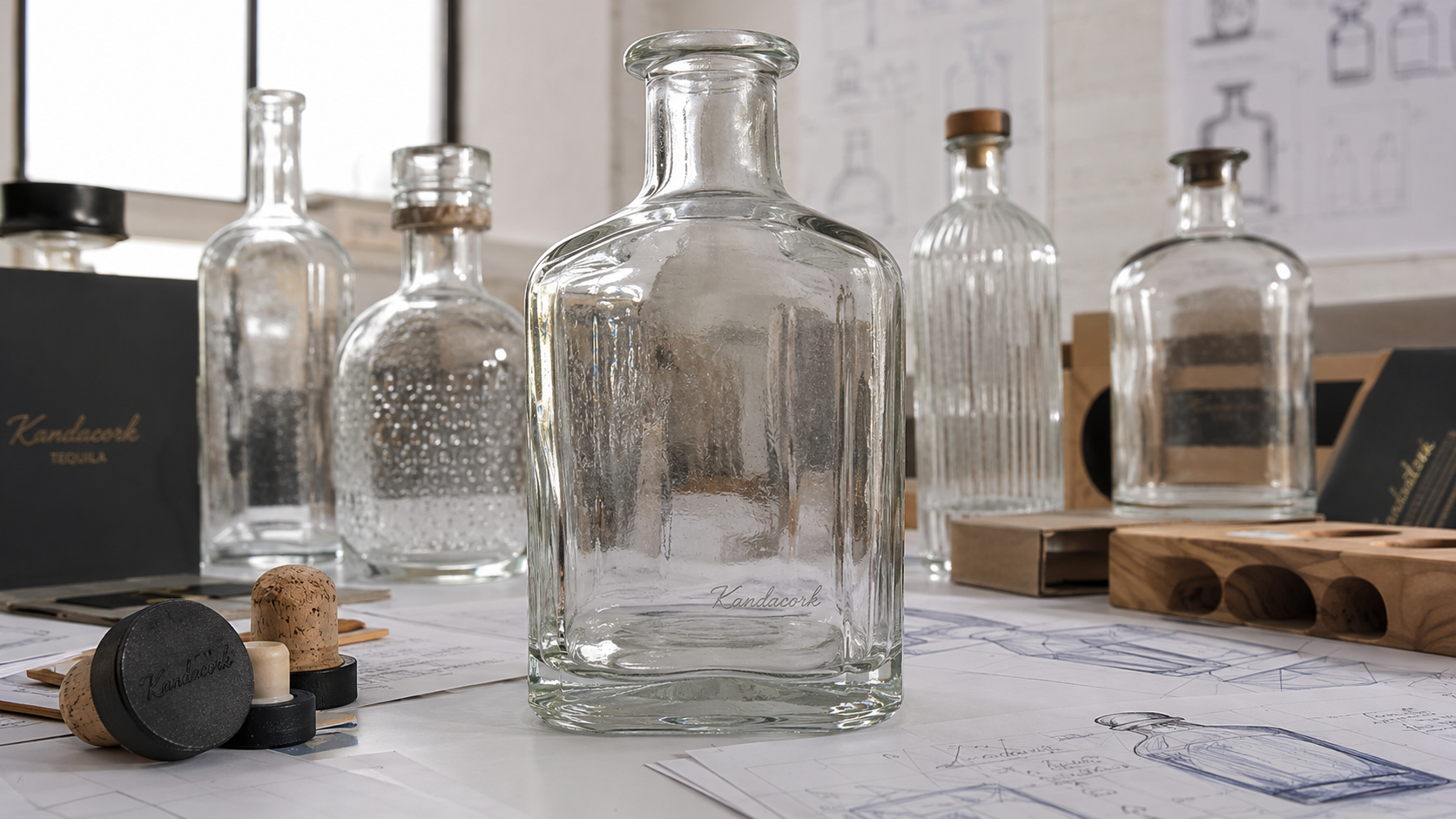
For spirits brands, distilleries, private label buyers, importers, distributors, bottlers, and packaging buyers, the safest approach is to treat the bottle and closure as one complete packaging system. Kandacork Closures & Stoppers can review bottle drawings or physical samples before sample development and quotation.
Do You Actually Have a Non-Standard Bottle Neck?
You may be dealing with a non-standard bottle neck if one or more of these signs appear:
- The bottle supplier cannot provide a complete neck finish drawing.
- The bottle is described only by a nominal size such as “30 mm” or “19.5 mm bore.”
- Stock caps fit inconsistently across different bottle samples.
- The stopper feels loose in some bottles and too tight in others.
- The ROPP cap spins, leaks, wrinkles, or fails tamper testing.
- The bottle is custom molded, imported, handmade-style, short-necked, or heavy glass.
- The filling line needs repeated adjustment during closure application.
- The bottle uses a decorative shoulder or neck shape that limits capping-head access.
If any of these apply, do not select a closure by diameter alone. Measure the bottle, test samples, and confirm closure performance before placing a bulk order. For buyers who are still comparing closure families, Kandacork’s full range of bottle stoppers and closures can help narrow the first selection before technical fit testing begins.
What Is a Non-Standard Bottle Neck?
A non-standard bottle neck is any bottle finish that does not reliably match a common catalog cap, cork, stopper, screw cap, or non-refillable closure without extra measurement and testing.
In spirits packaging, this often includes custom molded whiskey bottles, heavy glass decanters, imported bottles without full drawings, short-neck bottles, wide-shoulder bottles, oval bores, tapered bores, unclear ROPP finishes, BVS-style finishes, and bar-top bottles with unusual insertion depth.
Standard bottle neck guides usually explain finish measurements such as T, E, I, S, and H. These dimensions help define how a bottle neck relates to a closure, especially for threaded caps and common neck finish systems.
However, custom spirits bottles require deeper review. A bottle described as “30 mm” does not automatically fit every 30 mm cap. A bottle with a 19.5 mm bore does not automatically work with every 20.5 mm bar-top cork. A ROPP cap that looks correct may still fail if the pilfer band, bead height, liner, or capping head does not match the bottle.
Standard vs Non-Standard Bottle Necks
| Factor | Standard Bottle Neck | Non-Standard Bottle Neck |
|---|---|---|
| Specification | Clear neck finish code and drawing | May have incomplete drawings or only physical samples |
| Closure choice | Often compatible with catalog caps | Requires sample testing or custom development |
| Main measurement | Nominal diameter and finish style | External finish, internal bore profile, taper, bead, and tolerance |
| Risk level | Lower if supplier specs are accurate | Higher risk of leakage, loose fit, spinning caps, or tamper failure |
| Buyer action | Request matching stock closure samples | Measure, test, adjust, and approve before production |
| Supplier support needed | Standard cap supply | Technical fit review, sample development, and closure engineering |
For a standard bottle, asking “what size cap fits this bottle?” may be enough. For a custom spirits bottle, that question is only the starting point.
Why Standard Cap Size Is Not Enough
Diameter alone does not confirm closure compatibility.
For screw caps, the closure must match the external neck finish, including thread profile, thread depth, thread start, neck height, sealing surface, and application torque. For projects where torque performance matters, ASTM D2063/D2063M is commonly referenced for evaluating torque retention properties in continuous-thread closure systems.
For bar-top corks and synthetic stoppers, the key dimension is usually the internal bore diameter. The decorative top may be wood, aluminum, plastic, glass, resin, or ceramic, but the seal depends on how the cork or synthetic shank compresses inside the bottle neck.
For ROPP closures, the aluminum cap is formed onto the bottle during application. The shell, liner, pilfer band, bridge design, bottle thread, bead, and capping machine must work together. A mismatch can cause spinning caps, leakage, poor opening torque, or tamper-band failure.
For distilled spirits sold in the United States, tamper-evident packaging expectations also make closure fit especially important for spirits brands, importers, and export-focused packaging buyers.
Key Measurements for Custom Bottle Closure Fit
Before requesting closure samples or a quotation, collect these measurements.
| Measurement | Why It Matters |
|---|---|
| T dimension | Identifies the outside diameter across the thread or neck finish |
| E dimension | Shows the outside neck diameter below the thread area |
| I dimension | Determines internal stopper, pourer, or non-refillable fit |
| S dimension | Affects thread start and cap engagement |
| H dimension | Controls cap height, skirt length, liner compression, and tamper-band position |
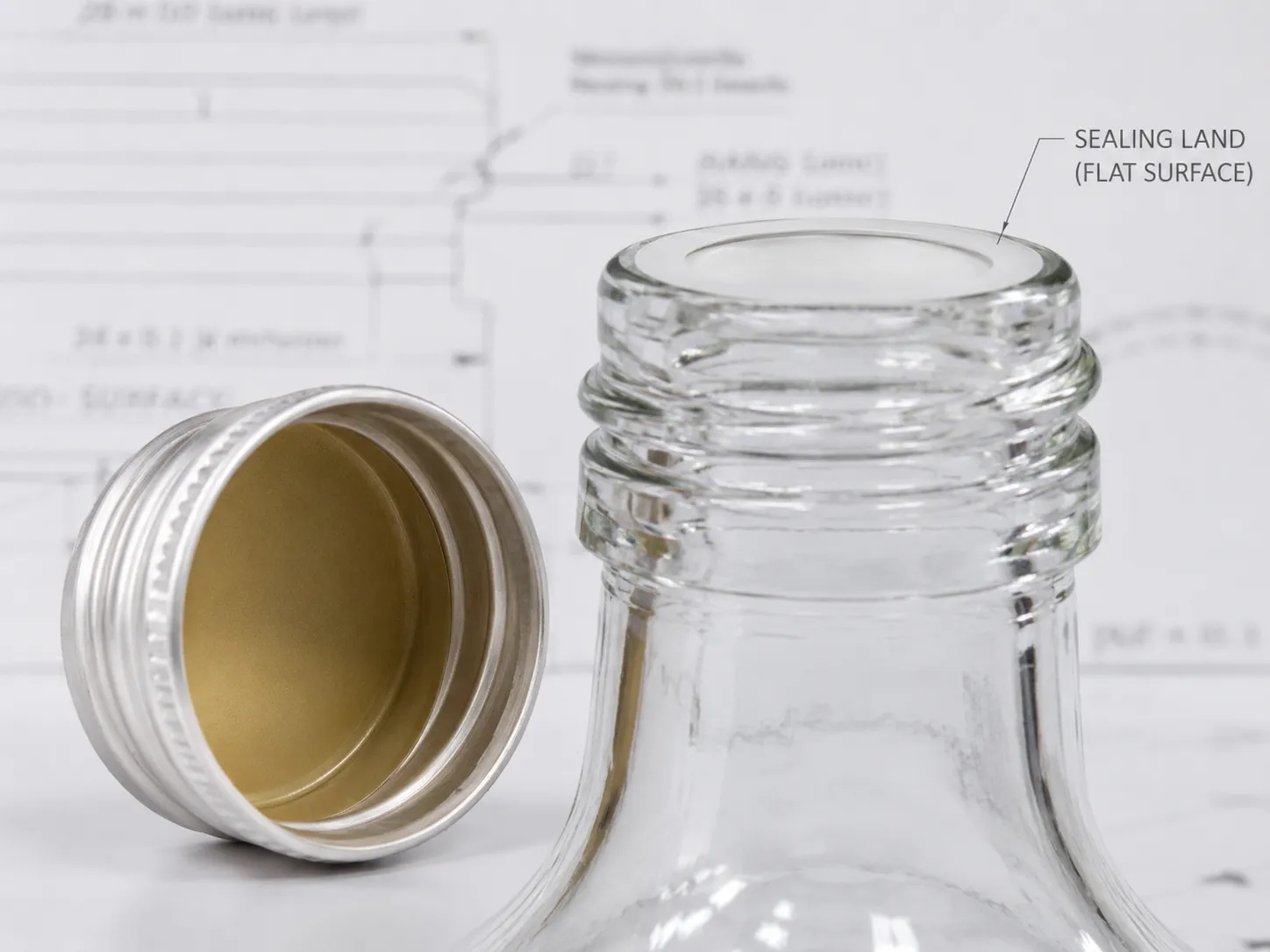
| Sealing land | Supports liner contact and leakage prevention |
| Bead area | Affects ROPP, tamper-evident, and non-refillable closure performance |
| Bore depth | Controls stopper insertion depth and extraction feel |
| Shoulder clearance | Affects capping head access and capsule appearance |
For non-standard projects, measure multiple bottles instead of relying on one sample. Glass tolerance can vary between molds, batches, and suppliers.
Measurements Most Competitor Guides Miss
Many online guides explain T, E, I, S, and H. Those measurements are useful, but custom spirits bottles often require a deeper fit review.
Kandacork recommends checking:
- Bore profile at multiple depths: The internal neck diameter should be measured below the mouth, not only at the opening.
- Ovality: The bore may not be perfectly round, which can make a stopper tight in one direction and loose in another.
- Conicity or taper: Some glass necks gradually narrow or widen.
- Pinch points: Narrower internal areas can increase extraction force or damage the stopper shank.
- Sealing land flatness: Uneven glass can reduce liner compression.
- Pilfer-band engagement zone: Bead geometry must match the tamper band.
- Capping head clearance: Shoulder shape and neck height must allow machine application.
For a more detailed buyer workflow, Kandacork’s glass bottle neck closure matching guide explains how uncertain bottle-neck information can be turned into a clearer closure specification for sampling and bulk supply.
Which Closure Type Fits Your Bottle Neck?
Use this decision flow as a starting point:
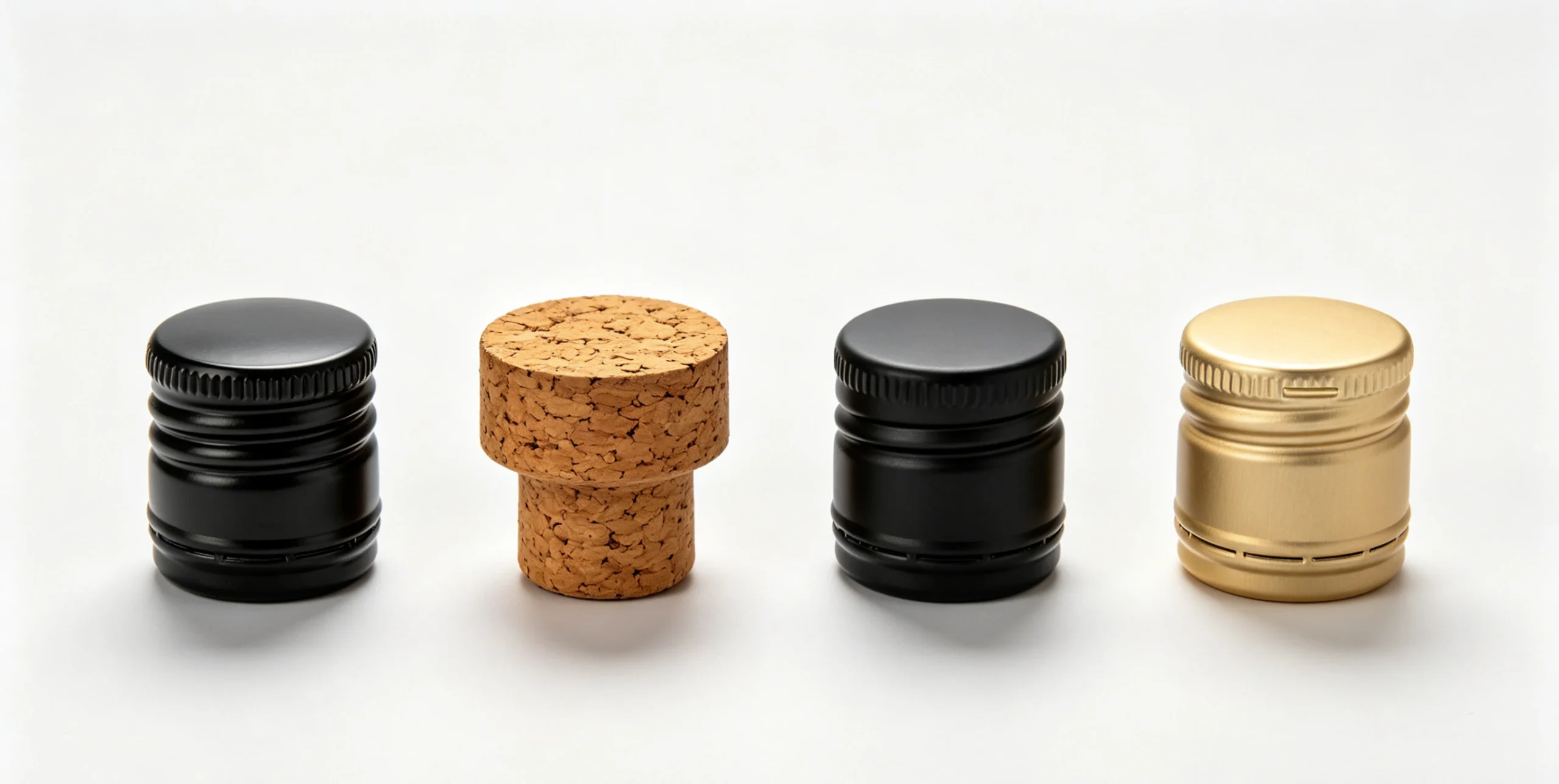
- If the bottle seals inside the bore, test a bar-top cork or synthetic stopper.
- If the bottle has roll-on thread geometry, test a ROPP cap.
- If the bottle has pre-formed external threads, test a CT screw cap.
- If export security or anti-refill protection is required, test a non-refillable closure.
- If only visual finishing is needed, test a capsule or sleeve after cap fit is confirmed.
| Closure Type | Best For | Key Fit Checks |
|---|---|---|
| Bar-top cork | Premium whiskey, rum, gin, tequila, brandy, vodka, liqueurs | Bore diameter, shank diameter, shank length, compression, extraction force |
| Synthetic stopper | Consistent fit, private label, high-repeatability projects | Hardness, compression, taper, alcohol compatibility |
| ROPP cap | Tamper-evident metal closures and high-speed filling | Cap height, shell, liner, thread-forming zone, bead, capping head |
| CT screw cap | Pre-threaded bottles, miniatures, liqueurs, cocktail products | Thread finish, liner, application torque, removal torque |
| Non-refillable closure | Export spirits, anti-counterfeit packaging, controlled pouring | Bore fit, pourer retention, tamper evidence, leakage |
| Capsule or sleeve | Decoration and visual tamper support | Capsule height, diameter, bead coverage, shoulder transition |
Bar-Top Corks
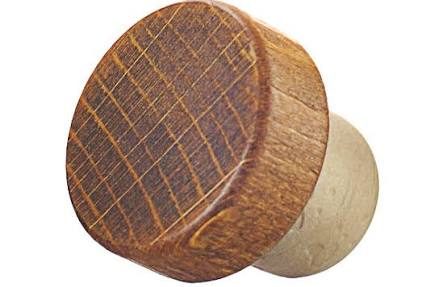
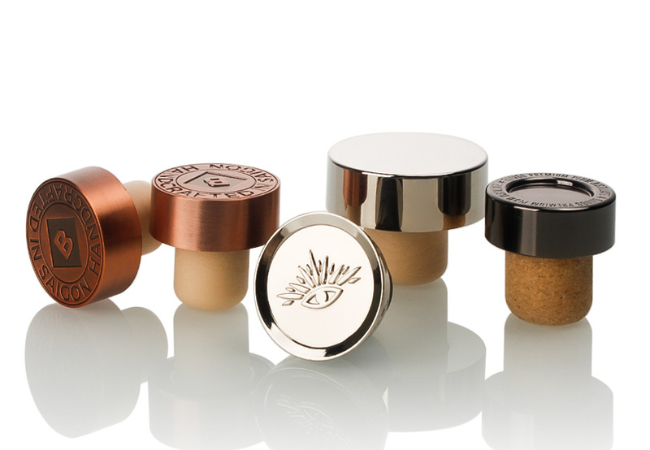
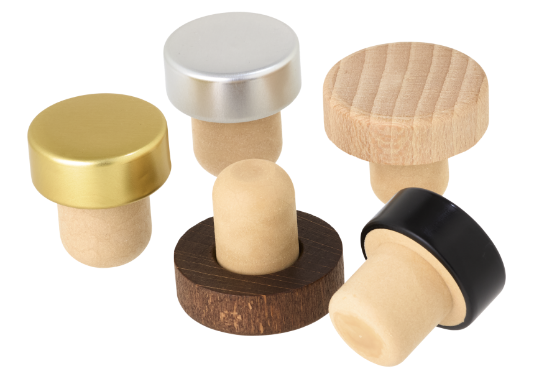
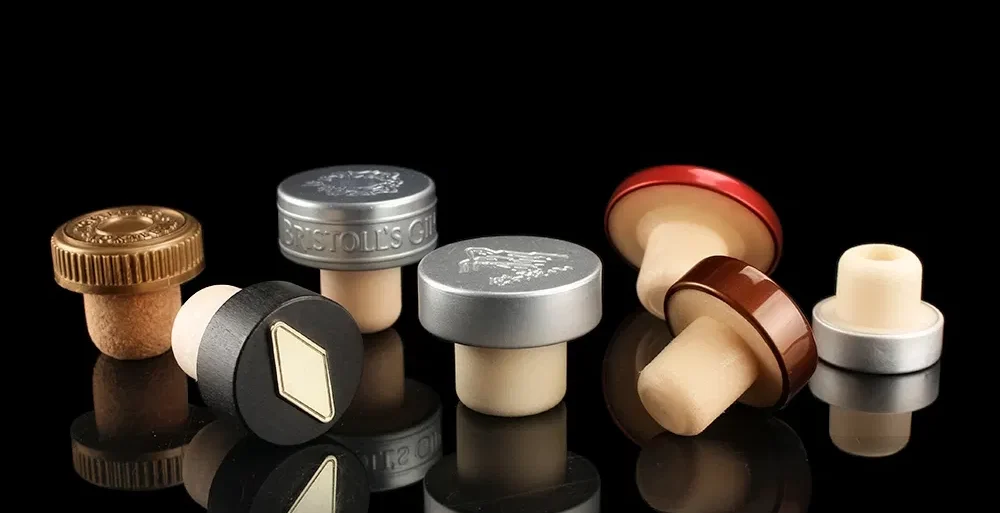
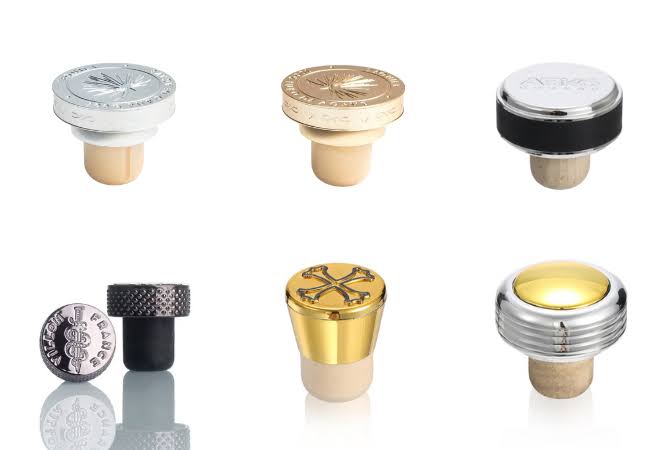
Bar-top corks are common in premium spirits because they combine sealing performance with shelf impact. The top can be wood, aluminum, plastic, glass, ceramic, or resin. The shank may be natural cork, micro-agglomerated cork, or synthetic material.
For non-standard bottle necks, the stopper should be selected by bore profile, not only by mouth diameter. A slightly oversized shank can create a secure fit, but too much compression may make the stopper difficult to remove or damage the cork.
Synthetic Stoppers
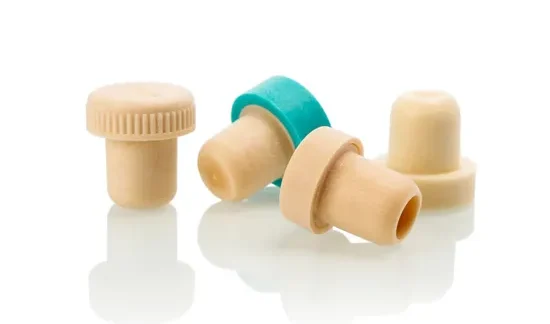
Synthetic stoppers are useful when repeatability matters. They can provide more consistent diameter, density, and compression than some natural materials. They are often suitable for private label projects, higher-volume spirits packaging, or bottles with moderate bore variation.
ROPP Caps
ROPP caps are suitable for spirits brands that need tamper evidence, resealability, and a clean aluminum finish. They can support printing, embossing, debossing, color finishing, and premium decoration.
For non-standard necks, ROPP compatibility depends on cap diameter, cap height, liner, thread-forming area, pilfer band, bead geometry, and capping machine setup. Buyers comparing threaded cap options can also review Kandacork’s screw cap thread finish matching guide before sample testing.
CT Screw Caps
Continuous thread caps are pre-threaded closures used for certain liqueurs, miniatures, cocktail products, specialty spirits, and private label formats. They require matching thread finish and torque testing to confirm both sealing performance and consumer-friendly opening.
Non-Refillable Closures
Non-refillable closures may include an internal pourer, valve, tamper band, and outer cap. They are used when brand protection, controlled pouring, and export-market expectations are important. Physical bottle samples are strongly recommended because bore fit and pourer retention are difficult to confirm from photos alone.
What Counts as a Passed Closure Sample?
Sample approval should be based on measurable performance, not only appearance.
| Test Area | Pass Criteria |
|---|---|
| Hand fit | Closure applies smoothly without forcing or rocking |
| Stopper fit | Stopper inserts securely and removes without excessive force |
| Leakage | No leakage under inversion and transport simulation |
| Opening feel | Cap or stopper opens consistently across multiple samples |
| ROPP performance | Threads form cleanly and pilfer band breaks correctly |
| Torque | Application and removal torque stay within the target range |
| Appearance | Closure sits level and aligns with bottle neck and shoulder |
| Filling line | Cap applies consistently at the target line speed |
| Packaging fit | Closure works with capsule, carton, divider, and case packing |
A sample that looks good on one bottle is not enough. Test multiple bottles, ideally from the same glass batch that will be used for production. For non-standard projects, a dedicated spirits bottle closure matching service can help buyers review bottle drawings, closure structure, liner or shank options, and filling conditions before mass production.
Closure Material Selection
| Material | Best For | Watch Out For |
|---|---|---|
| Wood top + cork | Premium whiskey, rum, gin, tequila, and craft spirits | Natural variation, extraction force, moisture behavior |
| Aluminum | ROPP caps, screw caps, decorated metal closures | Cap height, liner choice, capping head settings |
| Synthetic cork | Consistent stopper fit and repeatable compression | Hardness, recovery, alcohol-contact compatibility |
| Plastic | Cost control, private label, high-volume production | Premium perception and decoration quality |
| Natural cork | Traditional premium positioning | Dimensional variation and cork-grade consistency |
| Glass, ceramic, resin tops | Limited editions and luxury packaging | Weight, adhesive strength, balance, carton fit |
Material choice should support both technical fit and brand positioning. A premium closure that looks good but leaks, spins, or opens poorly will damage the packaging experience.
Closure Fit Problems: Symptoms, Causes, and Fixes
| Problem | Likely Cause | What to Measure | Recommended Fix |
|---|---|---|---|
| Stopper feels loose | Shank too small, bore too wide, material too soft | Internal bore, bore depth, taper | Test larger shank, denser synthetic cork, or adjusted taper |
| Stopper is too tight | Oversized shank, pinch point, short neck, high compression | Bore profile, insertion depth, extraction force | Adjust shank diameter, shank length, or material hardness |
| Cork dust appears | Material abrasion or rough bore condition | Bore smoothness, insertion pressure, cork grade | Test alternative cork grade or synthetic shank |
| ROPP cap spins | Poor thread formation or bead mismatch | Thread profile, cap height, roller setup | Match cap shell, liner, and capping head settings |
| Bottle leaks after shipping | Weak liner compression or poor stopper seal | Sealing land, torque, bore compression, inversion test | Test liner options, stopper diameter, or closure material |
| Tamper band fails | Bead geometry mismatch | Bead height, bridge design, pilfer-band zone | Adjust pilfer band design or cap height |
| Cap is hard to open | Excessive torque or over-compression | Application torque, removal torque, liner compression | Adjust torque target, liner, or cap geometry |
| Capsule wrinkles | Shoulder or bead mismatch | Capsule diameter, height, shrink behavior | Test capsule size and shrink parameters |
This table is useful because closure problems often appear late, after bottle sourcing, decoration, or filling-line planning has already started. Early diagnosis reduces cost and prevents launch delays.
Testing Workflow Before Bulk Production
A structured testing workflow helps buyers reduce closure risk before ordering at scale.
1. Collect Drawings and Bottle Specifications
Ask the glass supplier for the latest bottle drawing, neck finish print, bore tolerance, glass production tolerance, recommended closure type, and mold information. Do not rely only on catalog photos or early design files.
2. Measure Multiple Physical Bottles
Measure several bottles from the same production batch. Record minimum, maximum, and average values for bore diameter, ovality, neck height, bead height, sealing land, thread profile, internal taper, and shoulder clearance.
3. Select Closure Options
Compare the likely closure systems: bar-top cork, synthetic stopper, ROPP cap, CT screw cap, non-refillable closure, capsule, or a combined closure system. At this stage, evaluate both performance and brand positioning.
For brands developing the bottle and closure together, coordinated support from Kandacork Spirits custom glass packaging can help align glass structure, closure fit, decoration, and export packing earlier in the project.
4. Test Samples Under Real Conditions
Recommended tests include hand fit, insertion force, extraction force, application torque, removal torque, inversion leakage, vibration, temperature cycling, alcohol-contact compatibility, filling-line trial, and consumer opening feel.
For premium spirits, testing should reflect real filling, storage, shipping, and retail conditions.
5. Approve Drawings, Tolerances, and Production Samples
Before bulk production, confirm closure dimensions, material specification, liner or shank material, decoration method, color standard, logo artwork, MOQ, lead time, packing method, quality inspection criteria, and approved sample reference.
RFQ Checklist: What to Send Kandacork
To speed up sample development and quotation, prepare the following information.
Bottle Information
- Bottle photos
- Physical bottle samples if available
- Bottle capacity
- Spirit type and ABV
- Neck finish drawing
- Internal bore diameter
- External neck diameter
- Neck height and bead height
Closure Requirement
- Desired closure type
- Preferred material
- Required liner or stopper material
- Opening feel preference
- Tamper-evident requirement
- Non-refillable or pourer requirement
Branding and Decoration
- Logo file
- Color reference
- Printing, embossing, debossing, engraving, or top-disc design
- Premium packaging requirements
Production Details
- Target order quantity
- Filling method
- Capping equipment information
- Manual or automatic application
- Launch timeline
Compliance and Market
- Destination market
- Required food-contact or alcohol-contact documents
- Importer or distributor requirements
- Target price range if available
If drawings are unavailable, physical samples become more important. Kandacork can use bottle samples to evaluate closure fit and recommend suitable sample options before bulk production.
FAQ
How do I know what cap fits my bottle?
Start by identifying the closure type and measuring the bottle neck. For screw caps and ROPP caps, check external dimensions, thread profile, neck height, sealing land, bead, and liner compression. For bar-top corks, measure internal bore, bore depth, taper, ovality, and stopper extraction force.
Can I use a standard cap on a custom spirits bottle?
Sometimes. A standard cap may work if the custom bottle uses a standard neck finish and stable glass tolerance. However, sample testing is still necessary before bulk production.
What measurement matters most for bar-top corks?
The internal bore diameter is the starting point. For non-standard bottle necks, buyers should also measure bore profile, taper, ovality, insertion depth, and pinch points.
What measurement matters most for ROPP caps?
ROPP caps require a match between cap diameter, shell height, liner, thread-forming zone, pilfer band, bead geometry, and capping equipment.
Why does my stopper feel loose or too tight?
A loose stopper may mean the shank is too small, the bore is too wide, or the material is too soft. A tight stopper may indicate an oversized shank, internal pinch point, short neck, or high compression. Testing different shank diameters and materials usually solves the issue.
What makes a closure sample acceptable?
A closure sample should seal without leakage, open smoothly, sit level on the bottle, pass torque or extraction-force checks, perform consistently across multiple samples, and work with the intended filling or capping process.
Should I test closures before ordering bulk production?
Yes. Testing is essential when working with non-standard bottle necks. Samples help confirm fit, sealing, opening feel, leakage resistance, tamper evidence, and filling-line compatibility.