Quick Answer
Bar-top stoppers for private mold spirits bottles are custom or semi-custom closures designed to match a bottle’s neck inner diameter, bore tolerance, shank compression, cap proportion, filling method, and tamper-evident system. They should be reviewed before bottle mold approval, not after production samples are finished.
Early stopper planning helps spirits brands reduce leakage risk, poor opening feel, capsule mismatch, sampling delays, and costly mold corrections. For distilleries, private label buyers, importers, bottlers, and packaging teams, the stopper is part of the full bottle system, not a last-minute accessory.
What Are Bar-Top Stoppers for Private Mold Bottle Projects?
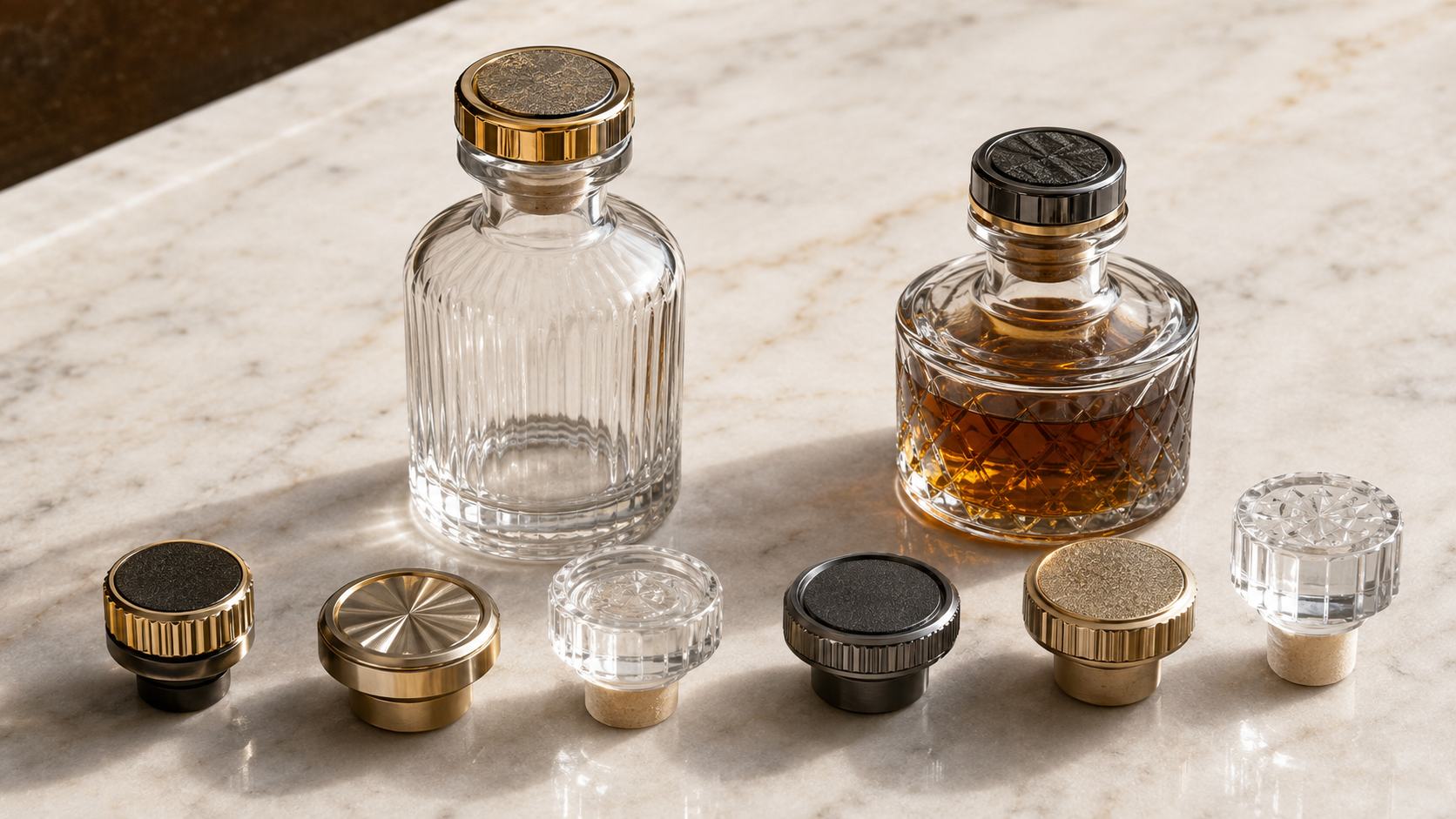
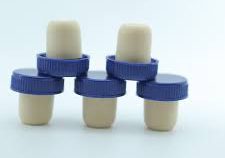
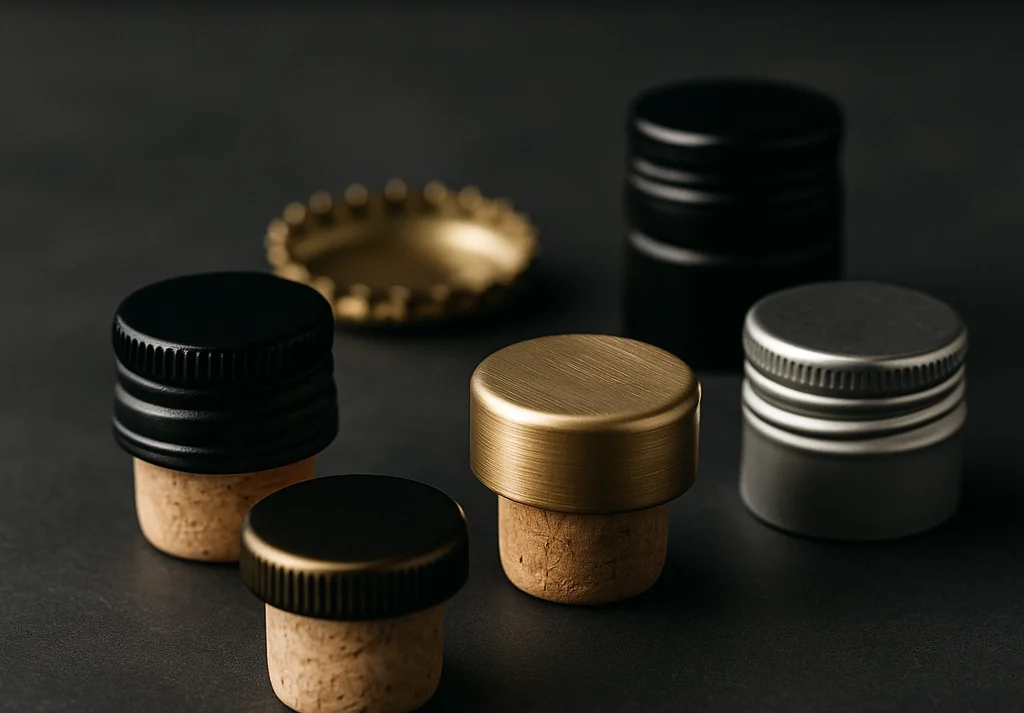
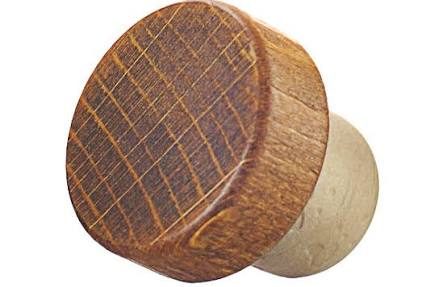
Bar-top stoppers are closure systems made with a decorative top and a sealing shank. The top may be wood, plastic, aluminum, metal, zinc alloy, glass, crystal, or another custom material. The shank may be natural cork, micro-agglomerated cork, synthetic cork, TPE, or a polymer insert.
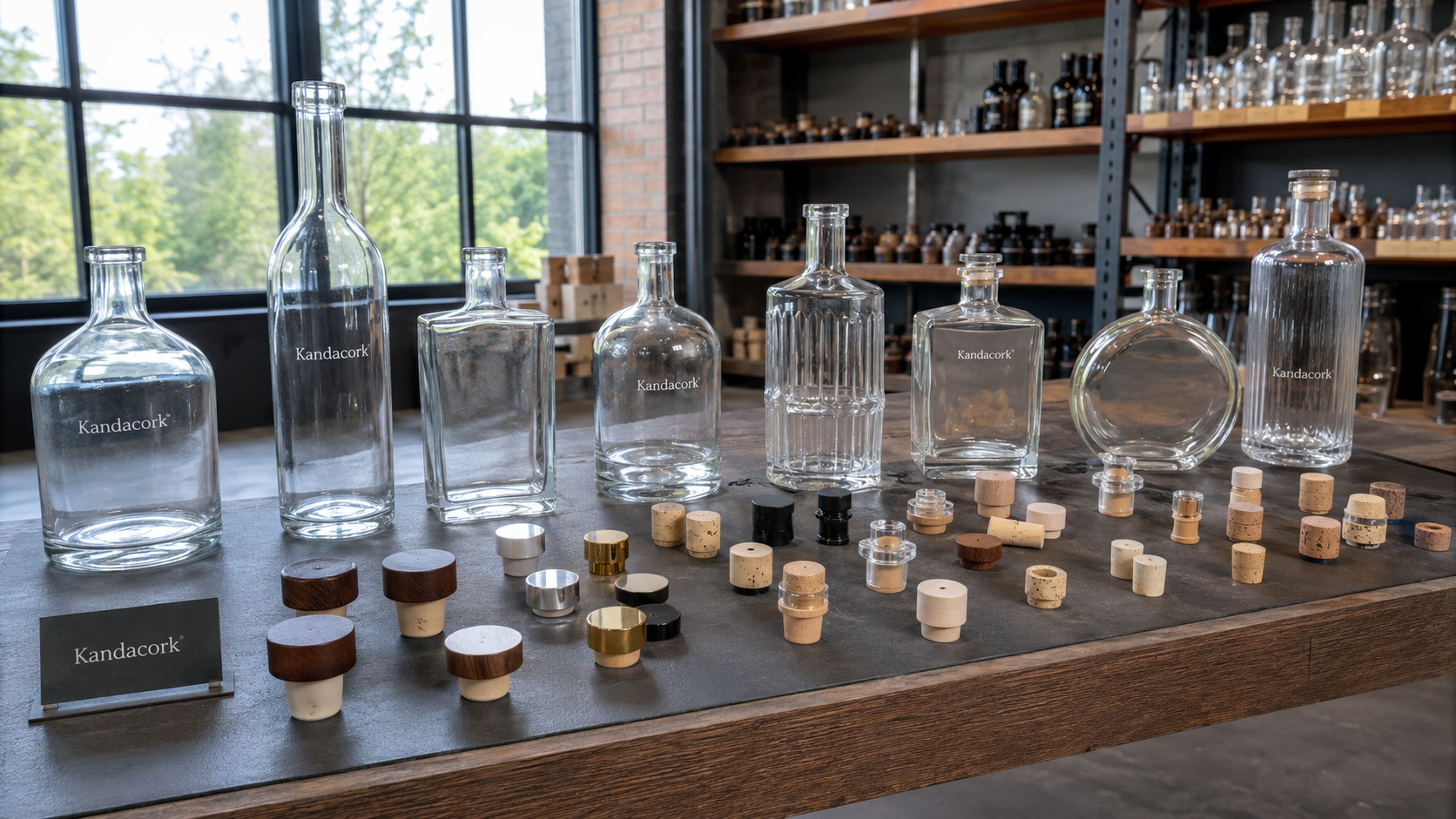
For standard stock bottles, buyers often choose a stopper by matching an existing neck size. For private mold bottle projects, the process is more technical. The bottle mold, neck bore, lip profile, stopper shank, cap diameter, insertion depth, and secondary closure system must be reviewed together.
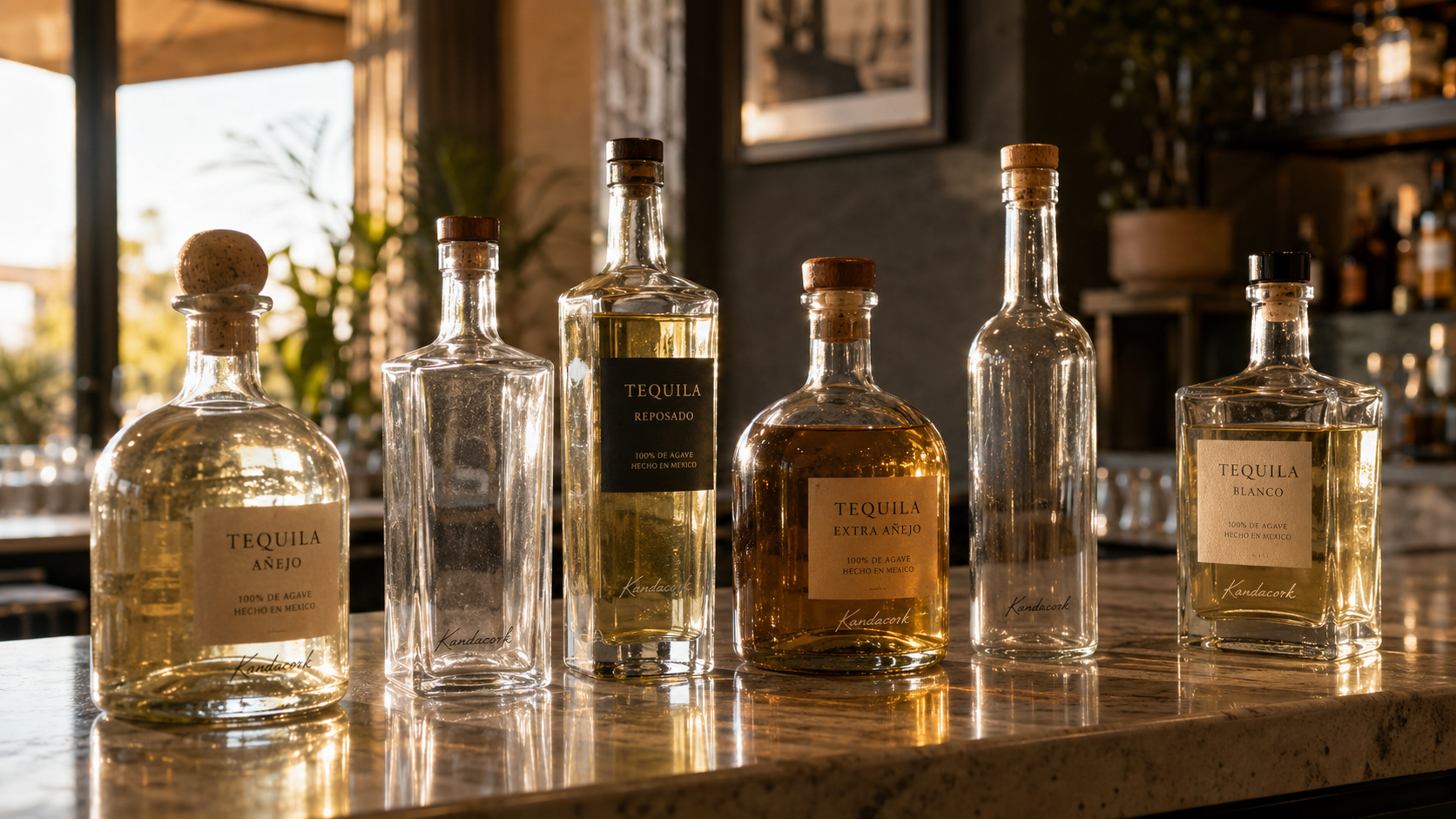
A suitable bar-top stopper does more than close the bottle. It supports sealing, brand identity, filling-line handling, export reliability, shelf presentation, resealing feel, and consumer confidence. For whiskey, rum, gin, vodka, tequila, brandy, cognac, mezcal, and liqueur brands, the closure is part of the product experience.
Why Stopper Planning Should Start Before Bottle Mold Approval
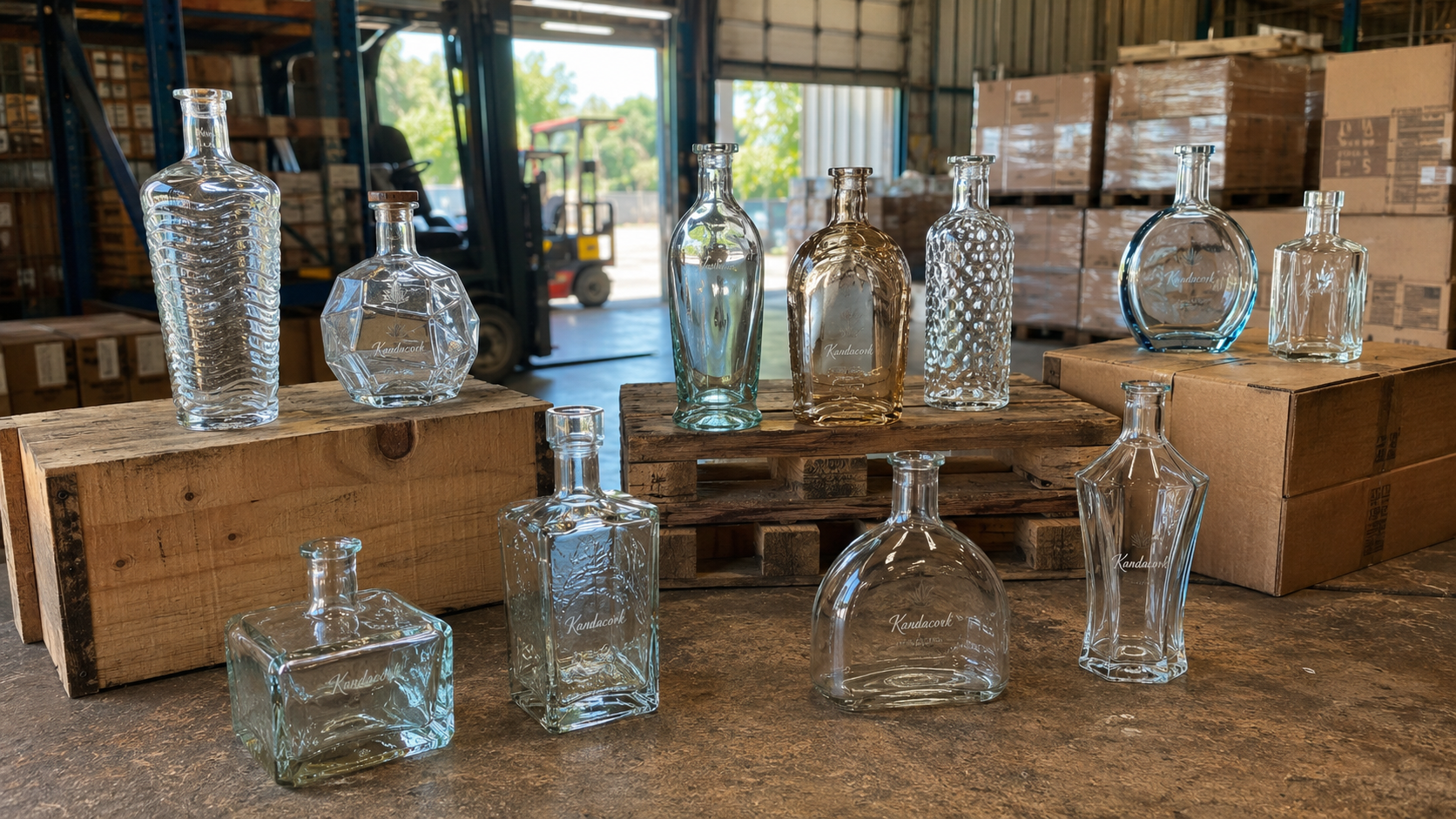
Private mold spirits bottles are often designed for shelf distinction. They may use heavy bases, sculpted shoulders, embossed glass, long necks, short necks, custom lips, or non-standard proportions. These features can improve brand recognition, but they can also create closure risks.
If the stopper is selected after the mold is already approved, the buyer may have fewer options. The stopper may sit too high, feel too loose, require too much extraction force, interfere with the capsule, or look visually unbalanced.
Early stopper planning helps answer key project questions:
Will the shank compress correctly inside the neck?
Does the stopper sit straight after insertion?
Is the cap proportional to the bottle neck and shoulder?
Can the closure work with the filling method?
Will the stopper stay stable during export shipping?
Can the bottle accept a capsule, band, seal, or tax stamp?
When the closure supplier joins early, the buyer can reduce launch risk and move from concept to approved sample more efficiently. Buyers developing the bottle and closure together can also review the wider custom spirits bottle development process before locking mold details.
Key Technical Factors Buyers Must Confirm
Neck Inner Diameter
The bottle neck inner diameter, also called the bore, is the most important fit dimension. A nominal neck size is not enough for private mold projects. The neck finish describes the bottle’s external closure style, while the inner diameter controls how the shank compresses and seals inside the bore.
Even a small difference in bore size can affect sealing pressure, extraction force, and stopper stability. Buyers should confirm the actual bore measurement from bottle drawings and physical samples before approving stopper dimensions.
Bore Tolerance
Private mold bottles are produced within tolerance ranges. One sample may fit well, while another bottle from the same mold trial may feel slightly tighter or looser.
For this reason, buyers should test bar-top stoppers across several bottle samples, not only one perfect prototype. This helps confirm whether the selected shank can perform consistently in real production.
Shank Diameter and Compression
The shank must compress enough to seal the bottle but not so much that insertion becomes difficult. Too little compression can create weak holding force or leakage risk. Too much compression can damage the shank or make the bottle difficult to open.
Natural cork, micro-agglomerated cork, synthetic cork, and TPE inserts behave differently under compression. The best choice depends on bottle bore, alcohol product, filling method, brand tier, and order quantity.
Insertion Depth
Insertion depth affects sealing and appearance. If the stopper sits too high, it may look unstable. If it sits too low, the cap may touch the glass lip or interfere with the capsule.
For private mold bottle projects, insertion depth should be confirmed during sample testing. Some projects may need a standard shank, longer shank, shorter shank, tapered shank, or custom insert.
Extraction Force
Extraction force is the force needed to remove the stopper. It directly affects consumer experience. A loose stopper can feel unsafe or low quality. A stopper that is too tight can frustrate consumers or increase breakage risk.
Premium spirits packaging should open with a controlled and confident feel. Buyers should evaluate extraction feel by real handling, not only by visual inspection.
Cap Proportion
The stopper top must look balanced with the bottle neck, shoulder, label, and overall silhouette. A cap that is too small may look inexpensive. A cap that is too large may interfere with capsules, cartons, gift boxes, or filling-line handling.
For private mold projects, cap proportion should be reviewed with the complete packaging system, including bottle shape, label artwork, closure finish, capsule color, and secondary packaging. For broader stopper structures, material options, and production support, buyers can review Kandacork Closures’ bar-top stopper options.
Is the 1mm Rule Enough for Private Mold Bottles?
Many basic cork-sizing guides suggest choosing a stopper shank slightly larger than the bottle opening, often around 1mm larger than the inner diameter. This can be a useful starting point for standard bottles, but it is not enough for private mold spirits bottles.
Private mold projects need a deeper fit review because bottle bore tolerance, glass production variation, shank material, compression behavior, insertion depth, and extraction force all affect performance. A synthetic shank, natural cork shank, and TPE insert may feel different even when their nominal diameters are similar.
The safest approach is to use the 1mm rule only as an initial reference. Final approval should be based on bottle drawings, several real bottle samples, stopper prototypes, opening feel, resealing feel, and leakage-risk review. Buyers comparing size assumptions can use a dedicated bar-top stopper size guide as a starting point before requesting project-specific testing.
Bar-Top Stopper Material Comparison
| Stopper material | Best for | Key advantage | Buyer risk to check |
|---|---|---|---|
| Wood | Whiskey, rum, brandy, craft spirits | Natural premium feel | Grain, coating, color variation |
| Plastic | Private label, high-volume spirits, promotional SKUs | Cost control and stable molding | Surface finish and perceived value |
| Aluminum | Gin, vodka, tequila, modern spirits | Clean premium look | Color matching and scratch resistance |
| Metal / Zamak | Luxury whiskey, tequila, rum, limited editions | Weight and sculpted branding | Tooling cost, plating, export protection |
| Glass / crystal | Collectible spirits and gift packaging | Luxury visual effect | Fragility, insert fit, packing protection |
| Synthetic / TPE insert systems | Repeat production and controlled fit | Dimensional consistency | Compatibility with bottle bore |
Wooden bar-top stoppers are suitable for whiskey, rum, brandy, tequila, and craft spirits that need a warm, natural, or heritage image. Buyers should confirm grain variation, coating quality, logo position, and golden sample standards before bulk production.
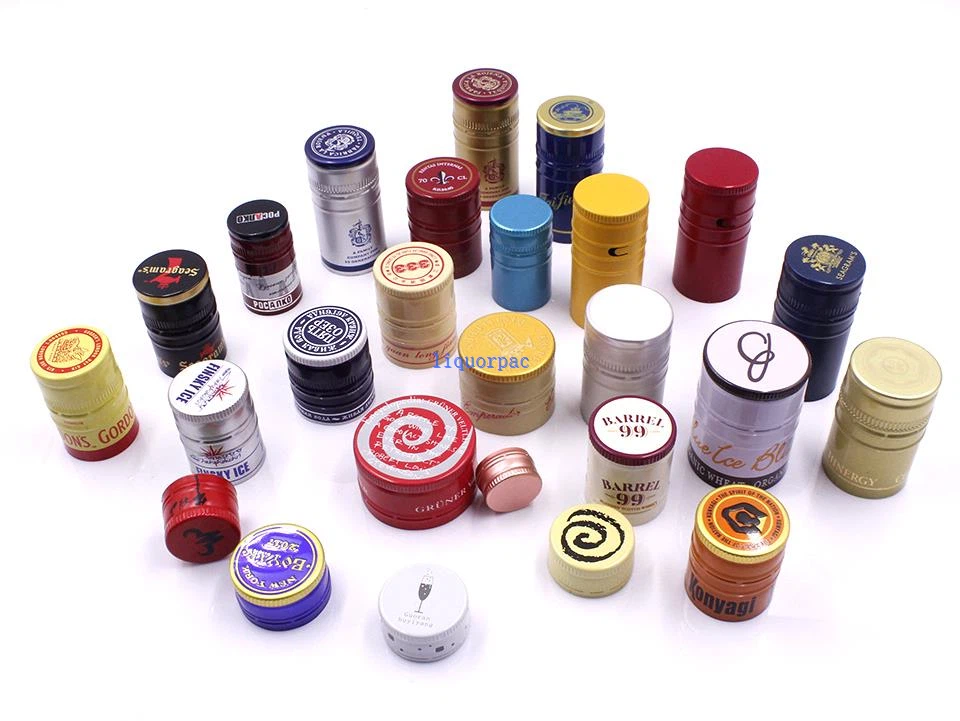
Plastic bar-top stoppers are practical for private label spirits, promotional lines, mini bottles, and high-volume SKUs. With matte, gloss, soft-touch, metallic color, molded logos, or printing, plastic can also support clean modern spirits packaging.
Aluminum bar-top stoppers work well for gin, vodka, tequila, mezcal, and minimalist packaging systems. They offer a precise surface, consistent finish, and strong compatibility with metallic labels, frosted glass, or modern bottle designs.
Metal and Zamak stoppers are often used for luxury spirits, collector bottles, and limited editions. They can support weight, sculpted logos, plated finishes, and high shelf impact, but buyers should review tooling cost, plating quality, bonding strength, and packing protection.
Glass and crystal stoppers are suitable for premium, collectible, and gift-focused packaging. They can create a luxury visual effect, but sealing design, insert stability, fragility, and export packing must be checked carefully.
Standard vs Semi-Custom vs Fully Custom Stoppers
Not every private mold bottle project needs a fully custom stopper. The right choice depends on budget, launch timeline, brand positioning, order quantity, and how much exclusivity the packaging requires.
| Option | Best for | Advantage | Limitation |
|---|---|---|---|
| Standard stopper | Fast sampling, small launch, early market test | Lower cost and shorter lead time | Limited brand differentiation |
| Semi-custom stopper | Private label, mid-volume SKU, brand refresh | Logo, color, and finish customization | Shape may not be exclusive |
| Fully custom stopper | Premium private mold bottle, luxury launch, long-term SKU | Proprietary design and stronger brand identity | Higher tooling cost and longer timeline |
A standard stopper can be practical when speed matters. A semi-custom stopper is often the best balance for commercial private label projects. A fully custom stopper is most suitable when the closure must become part of the brand’s signature packaging system.
Shank Material Options
The decorative top creates the visual impression, but the shank controls sealing performance. Buyers should not choose bar-top stoppers based only on cap appearance.
Natural cork supports traditional premium positioning and is suitable for whiskey, rum, brandy, cognac, and heritage spirits. It gives a familiar cork feel but may show natural variation.
Micro-agglomerated cork provides a more controlled cork-based structure. It can balance natural appearance, cost, and dimensional consistency.
Synthetic cork is useful for high-volume bottling, private label programs, and repeat production because it offers stable dimensions and predictable performance.
TPE and polymer inserts are useful when the project needs controlled compression and modern sealing behavior. They are often paired with plastic, aluminum, glass, crystal, or metal tops.
The right shank depends on actual bottle bore, target extraction feel, filling method, order quantity, and destination market. For a deeper comparison of natural cork, technical cork, and synthetic options, buyers can review this cork shank vs synthetic shank guide.
Private Mold Stopper Development Workflow
A private mold stopper project should follow a clear development process.
First, review the bottle drawing and neck data. The supplier should check the neck inner diameter, bore tolerance, lip profile, and bottle opening.
Second, select the shank and stopper head material. The buyer and supplier should compare natural cork, synthetic cork, TPE, wood, plastic, aluminum, metal, glass, or crystal based on technical fit and brand positioning.
Third, confirm decoration and prototype samples. Logo method, color, finish, embossing, debossing, engraving, printing, hot stamping, plating, or coating should be decided before sampling.
Fourth, test fit, leakage risk, extraction feel, visual proportion, and tamper-evident compatibility. Samples should be tested with real bottle samples rather than only drawings or renderings.
Fifth, approve the golden sample and export packing plan. The golden sample should define the accepted material, color, logo, finish, shank fit, and overall appearance before bulk production.
Custom Mold and Tooling Considerations
A standard stopper may be enough when the buyer needs faster sampling, lower development cost, and a proven closure structure. This is common for early market testing, private label launches, or small-batch projects.
A custom stopper mold is recommended when the brand wants a proprietary shape, sculpted logo, special grip, unique cap profile, or closure design that belongs only to that product line.
Custom molding can improve brand differentiation, but it requires better project inputs. Buyers should prepare bottle drawings, neck measurements, logo files, material references, color standards, order quantity, sampling timeline, and target launch date.
Kandacork Closures can help buyers determine whether a standard stopper, customized decoration, or fully custom molded head is the most practical solution.
Decoration and Branding Options
Bar-top stoppers can be decorated with laser engraving, screen printing, hot stamping, embossing, debossing, molded logos, color coating, plating, or metal badges. The best method depends on the stopper material, surface shape, logo complexity, order quantity, budget, and brand position.
For private mold bottle projects, decoration should always be reviewed on physical samples. A logo may look strong in a rendering but appear too shallow, too small, or poorly positioned after production. Buyers should confirm logo size, color, gloss level, scratch resistance, surface durability, and golden sample standards before bulk approval.
Quality, Compliance, and Testing Considerations
Private mold spirits bottle projects should include quality and compliance review before bulk production. This is especially important for export markets, premium spirits, high-value packaging, and large-volume orders.
Food-Contact Material Review
The U.S. FDA food-contact substance guidance treats food-contact substances as including food packaging and its components. For stopper projects, buyers should request relevant material declarations for cork, plastic, TPE, adhesives, coatings, inks, colorants, or metal finishes when required by the target market.
Leakage Review
Leakage review helps buyers understand whether the bottle and stopper system can withstand handling, storage, and transportation. The review should reflect real risks such as horizontal storage, vibration, temperature change, pressure change, or air transport.
ASTM packaging test methods can provide useful reference points when buyers or laboratories need a formal leakage-test framework for rigid containers. For private mold spirits bottles, the test plan should reflect the actual packaging structure and shipping conditions.
Alcohol Compatibility
Spirits packaging may be exposed to high alcohol content, aromatic compounds, cleaning procedures, and temperature variation. Materials, coatings, inks, adhesives, and inserts should be checked for the intended spirit category.
Extraction and Resealing Feel
A stopper should be secure but still easy to open. Buyers should test the opening feel across multiple bottle samples. Resealing should also feel stable and consistent.
Export Packing Protection
Premium stoppers need protective packing. Trays, bags, dividers, cartons, and pallet systems should prevent friction, impact, moisture, coating damage, and deformation during long-distance shipment.
Tamper-Evident and Secondary Closure Planning
Bar-top stoppers often need to work with a secondary closure system. Depending on the destination market and spirits category, this may include a shrink capsule, tamper-evident band, strip seal, security label, tax stamp, non-refillable device, or another protective component.
For distilled spirits sold in regulated markets, authorities such as the U.S. Alcohol and Tobacco Tax and Trade Bureau require tamper-evident closures or similar devices. Buyers should confirm the applicable rules in each target market before final packaging approval.
The stopper may fit the bottle but still fail the full packaging system if the capsule wrinkles, lifts, tears, or cannot cover the required area. Stopper height, cap diameter, neck shape, shoulder angle, and capsule size should be reviewed together.
Private Mold Stopper Approval Checklist
Before moving to bulk production, buyers should confirm the full closure system, not only the stopper appearance.
| Approval item | Why it matters |
|---|---|
| Bottle drawing reviewed | Confirms neck structure and dimensional basis |
| Neck inner diameter confirmed | Controls shank fit and sealing pressure |
| Bore tolerance checked | Reduces production-batch fit variation |
| Shank material selected | Affects compression, resealing, and opening feel |
| Stopper top proportion approved | Supports shelf appearance and packaging balance |
| Decoration sample confirmed | Controls logo quality, color, and surface finish |
| Fit and extraction feel tested | Confirms real consumer handling experience |
| Tamper-evident system checked | Avoids capsule, band, or seal mismatch |
| Golden sample approved | Defines quality standard for bulk production |
| Export packing confirmed | Protects closures during shipment |
This checklist helps buyers move from design approval to production approval with fewer surprises. For projects that need fit review before sampling, Kandacork Closures’ closure matching service can help compare bottle-neck compatibility, stopper material, shank structure, decoration method, and export packing requirements.
RFQ Checklist for Sample or Quotation Requests
To receive a more accurate sample plan or quotation from Kandacork Closures, prepare the following information:
Bottle drawing
Neck inner diameter
Bottle sample or mold trial sample
Spirit category
Target stopper material
Preferred shank material
Logo file
Target quantity
Destination market
Sample and launch timeline
These inputs allow the supplier to recommend a realistic structure, avoid inaccurate pricing, and prepare useful samples.
How Kandacork Closures Supports Private Mold Bottle Projects
Kandacork Closures supports private mold spirits bottle projects by helping buyers review bottle-neck fit, compare stopper materials, select cork or synthetic shank structures, develop custom molded heads, prepare logo decoration samples, confirm golden samples, and coordinate export-ready bulk supply.
Depending on the project stage, buyers can start with standard stoppers for fast sampling, semi-custom stoppers for private label programs, or fully custom stopper heads for premium private mold bottles. To request a sample plan or quotation, send the bottle drawing, neck inner diameter, bottle sample, logo file, target material, order quantity, and launch timeline.
The goal is to help buyers choose a stopper structure that is realistic for the bottle, suitable for the brand, and ready for commercial supply.
Common Mistakes to Avoid
Do not select the stopper after the bottle mold is fully approved. Early review gives the buyer more options and reduces mold correction risk.
Do not rely only on nominal neck size. Actual bore measurement and tolerance are more important.
Do not choose only by cap appearance. The shank controls sealing performance and opening feel.
Do not approve only digital renderings. Physical samples are necessary for checking proportion, surface finish, color, logo quality, and hand feel.
Do not ignore tamper-evident and export packing requirements. Capsules, bands, seals, tax stamps, cartons, trays, and shipping protection must be compatible with the stopper and bottle neck.
FAQ
What size bar-top stopper do I need for a private mold spirits bottle?
Confirm the actual bottle neck inner diameter, bore tolerance, shank diameter, insertion depth, and extraction feel. Do not rely only on nominal neck size or a general sizing rule. Use bottle drawings and real samples before approving bulk production.
Is the 1mm rule enough for choosing a stopper?
No. A shank slightly larger than the bottle opening can be a starting point, but private mold bottles also require bore tolerance review, shank material comparison, compression testing, extraction feel checks, and sample confirmation.
Should I choose natural cork, synthetic cork, or TPE shank?
Natural cork supports traditional premium positioning. Synthetic cork offers controlled dimensions and repeat production stability. TPE or polymer inserts are useful when predictable compression and modern sealing behavior are required.
When should the stopper supplier join the project?
The stopper supplier should join before the bottle mold is finalized or before production samples are approved. Early review helps confirm neck fit, shank behavior, cap proportion, tamper-evident compatibility, and packing requirements.
Can bar-top stoppers be custom molded with a logo?
Yes. Custom molded stopper heads can include brand-owned shapes, sculpted logos, special cap profiles, embossed details, debossed marks, metal badges, color coating, printing, hot stamping, or laser engraving.
What should I send before requesting a quotation?
Send the bottle drawing, neck inner diameter, bottle sample, target stopper material, preferred shank material, logo file, target quantity, destination market, sample deadline, and production timeline.