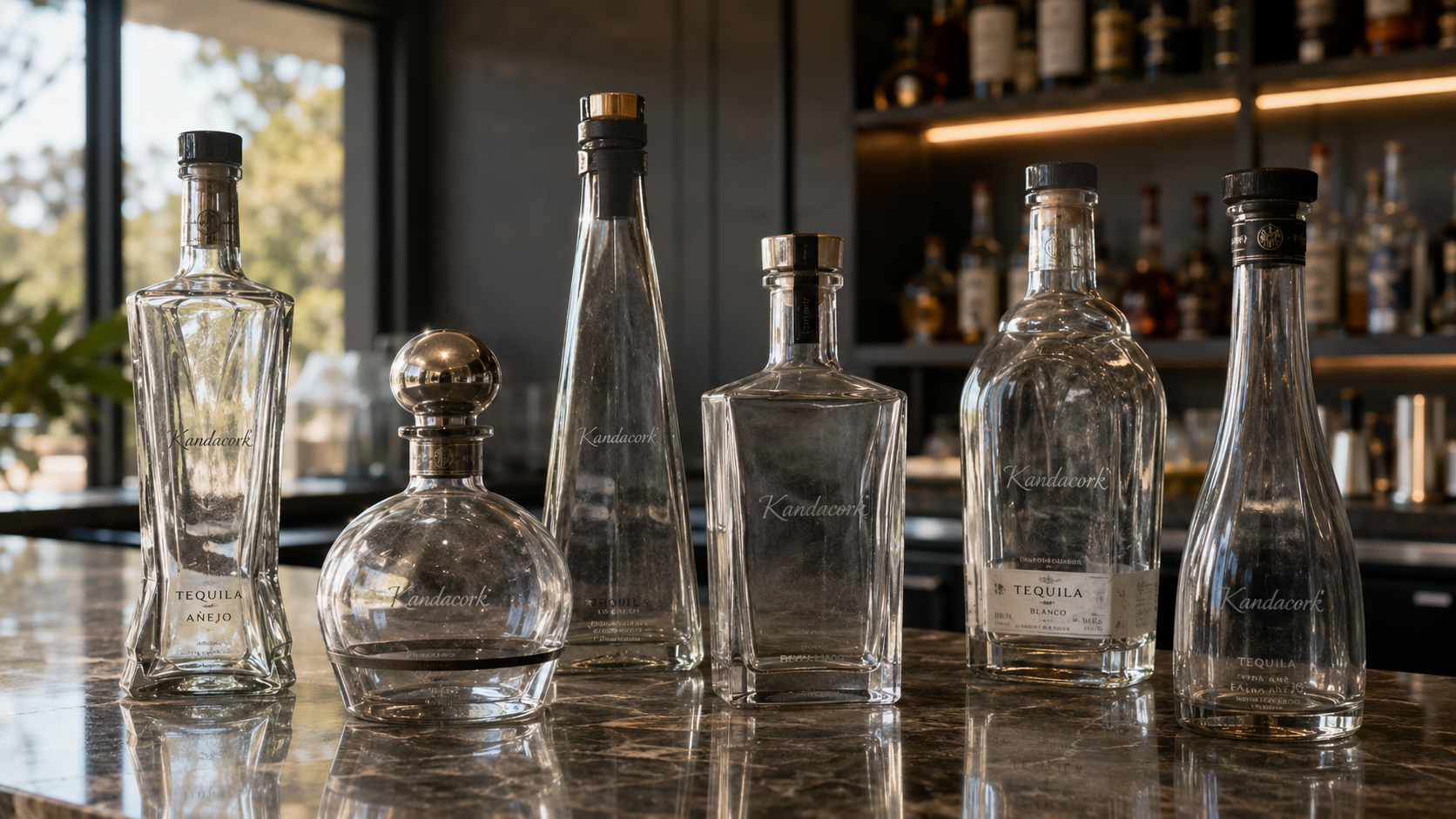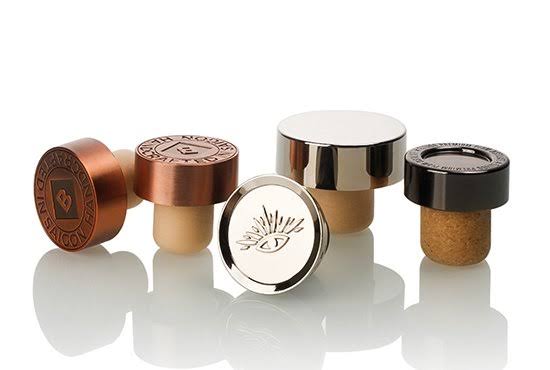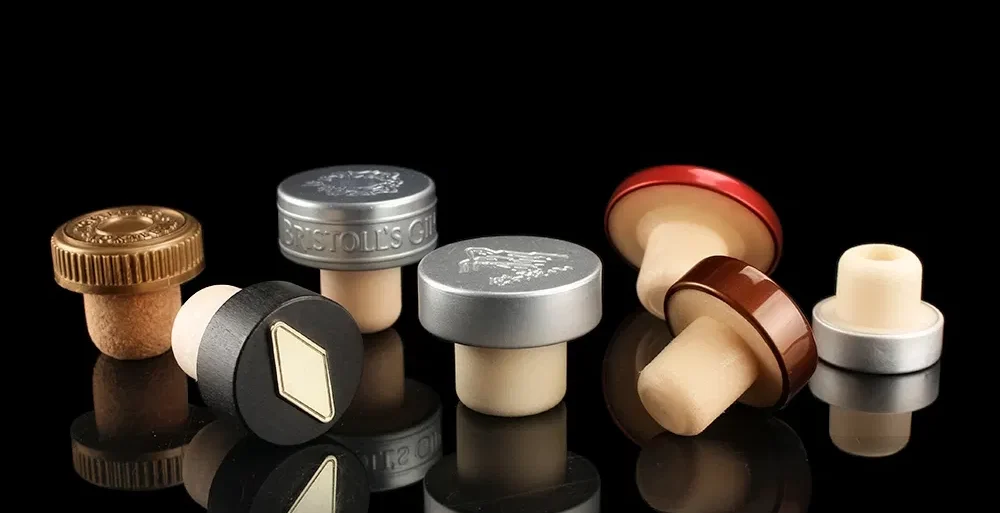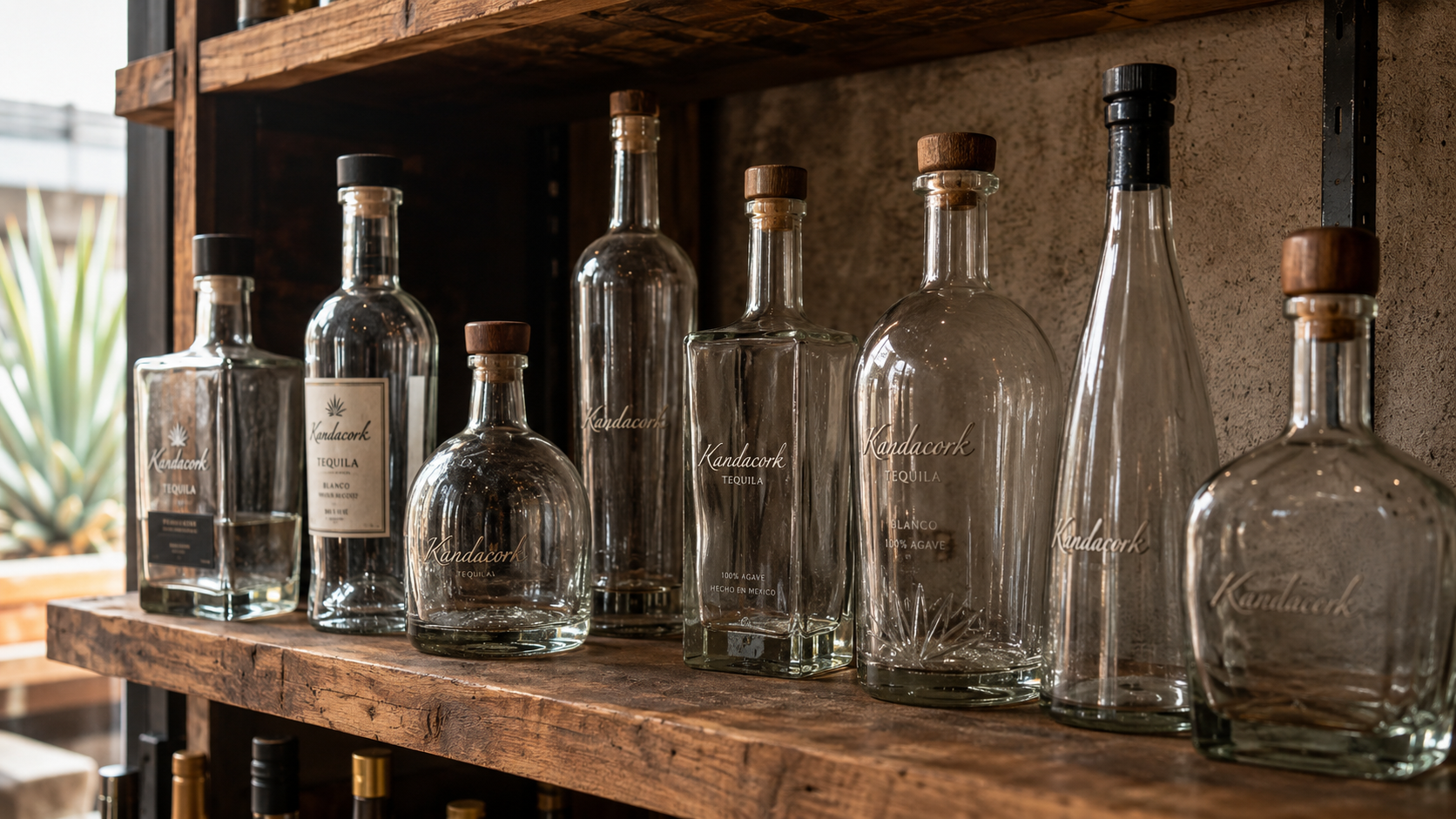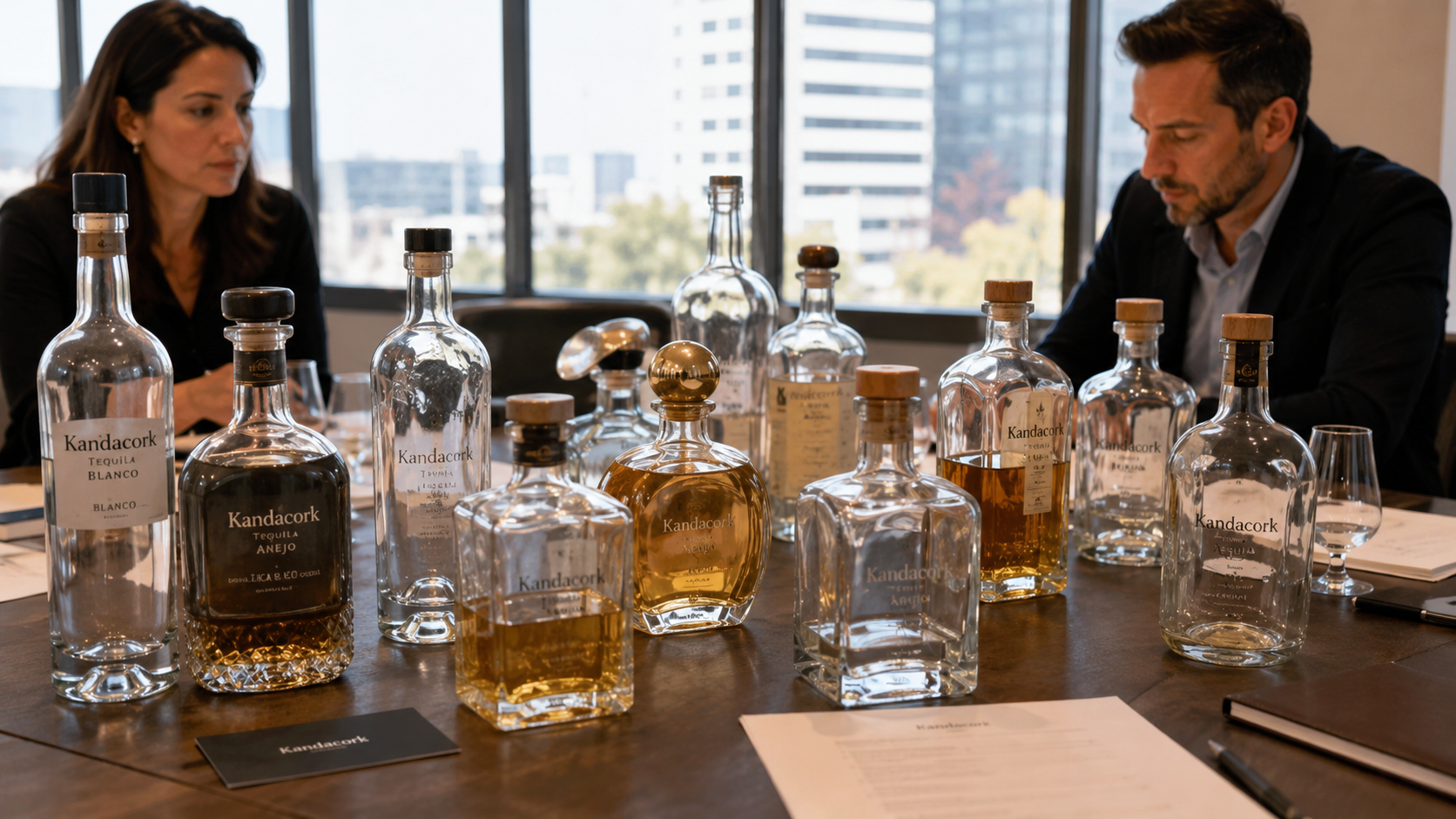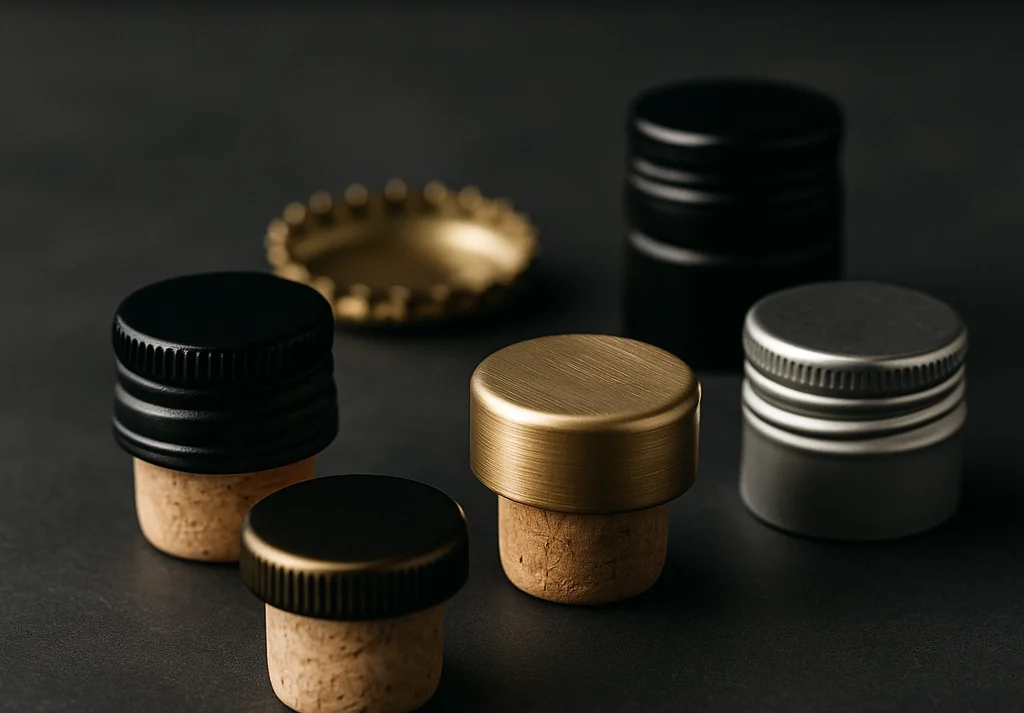
A closure that fits a 750 ml bottle may look too small, pull too hard, seal inconsistently, or fail during transport when used on a 1.75 L or 3 L spirits bottle. Large format spirits bottles create stronger shelf impact, but they also create higher packaging risk.
For spirits brands, distilleries, private label buyers, importers, distributors, bottlers, and packaging buyers, selecting large format spirits bottle closures is not only a design decision. It is a technical packaging decision involving neck fit, inner bore diameter, shank compression, pull force, top weight, filling-line compatibility, leakage testing, and transport validation.
Kandacork Closures & Stoppers helps spirits packaging teams review bottle neck fit, compare cork and synthetic stopper materials, develop custom bar-top closures for spirits bottles, prepare samples, and move toward production-ready quotations.
Quick Answer: How Do You Match Closures With Large Format Spirits Bottles?
To match closures with large format spirits bottles, confirm the bottle’s neck finish, inner bore diameter, sealing surface, closure type, shank diameter, shank material, top size, top weight, filling method, leakage testing needs, and target market.
Do not choose a closure by bottle capacity alone.
The bottle neck determines the fit.
The shank determines the seal.
The top determines the brand impression.
Testing determines whether the closure is ready for production.
Large format spirits bottle closures should be matched by neck fit, shank compression, top weight, filling-line compatibility, and transport testing — not by bottle volume alone.
Need to check closure fit for a 1.75 L, 2 L or 3 L spirits bottle? Kandacork can support spirits bottle closure matching from bottle drawing review to sample recommendations.
What Counts as a Large Format Spirits Bottle?
A large format spirits bottle is generally any bottle larger than a standard 700 ml or 750 ml retail bottle. In commercial spirits packaging, this can include 1 L, 1.5 L, 1.75 L, 1.8 L, 2 L, 3 L, 3.75 L, and custom oversized bottles.
In the U.S. market, 27 CFR § 5.203 for distilled spirits standards of fill lists authorized bottle sizes including larger formats such as 1.00 L, 1.5 L, 1.75 L, 1.8 L, 2 L, 3 L, and 3.75 L. Brands should always check the target market’s bottle size and labeling rules before finalizing packaging.
| Bottle Size | Common Use Case | Main Closure Concern |
|---|---|---|
| 1 L | Travel retail, export, foodservice | Consistent fit and handling |
| 1.5 L | Premium gifting, limited editions | Larger top proportion |
| 1.75 L | Club-store, value, North American retail | Reliable sealing and repeatable application |
| 2 L | Promotional or display packaging | Heavier filled weight |
| 3 L / 3.75 L | Collector, event, oversized retail | Top strength, leakage and transport risk |
| Custom oversized bottle | Private mold, luxury spirits | Full bottle-and-closure engineering review |
Large format bottles are commonly used for whisky, bourbon, rum, tequila, mezcal, gin, vodka, brandy, cognac, liqueurs, and limited-edition spirits.
Large Format vs Standard Spirits Bottle Closure Matching
Standard spirits bottles and large format bottles may use similar closure types, but the matching process is not the same. A standard bottle often needs a basic neck-fit check. A large format bottle needs a fuller packaging review because the bottle is heavier, more visible, and more exposed to transport stress.
| Factor | Standard 700 / 750 ml Bottle | Large Format Spirits Bottle |
|---|---|---|
| Filled weight | Lower | Higher |
| Closure proportion | Standard top often works | Top size must look visually balanced |
| Shank stress | Moderate | Higher handling and pull-force stress |
| Top weight risk | Usually lower | More important for wood, metal or custom tops |
| Transport risk | Lower | Higher vibration, carton and pallet risk |
| Testing need | Basic fit and leakage check | Fit, leakage, pull force, vibration and carton test |
| Supplier review | Stock closure may work | Bottle drawing and physical sample strongly recommended |
This is why large format spirits bottle closures should be evaluated as part of the full packaging system, not as a single accessory.
Why Large Format Bottles Need Special Closure Matching
A closure that works on a 750 ml bottle may not automatically work on a larger bottle. Even when the inner bore is similar, the larger bottle may need a different closure top, stronger bonding, better pull-force control, or more rigorous transport testing.
Large format bottle closures need extra attention for five reasons.
First, the filled bottle is heavier. More liquid and heavier glass increase stress on the bottle neck, stopper, carton, divider, and shipping system.
Second, large bottles have stronger visual demands. A small closure may look unbalanced on a 1.75 L or 3 L bottle, while an oversized closure may look premium but create technical challenges.
Third, transport risk is higher. Large bottles may experience more movement during pallet handling, warehouse storage, export shipping, and retail distribution.
Fourth, top weight matters. Wood, metal, zamac, glass-like, or custom molded tops can place more stress on the connection between the decorative top and the functional shank.
Fifth, filling-line performance can change. Large bottles may require different handling, insertion force, torque control, or equipment setup compared with standard bottles.
Neck Finish vs Inner Bore: What Buyers Must Confirm
The first technical step is to confirm the bottle neck structure. Packaging buyers should not rely only on bottle photos, catalog names, or bottle capacity.
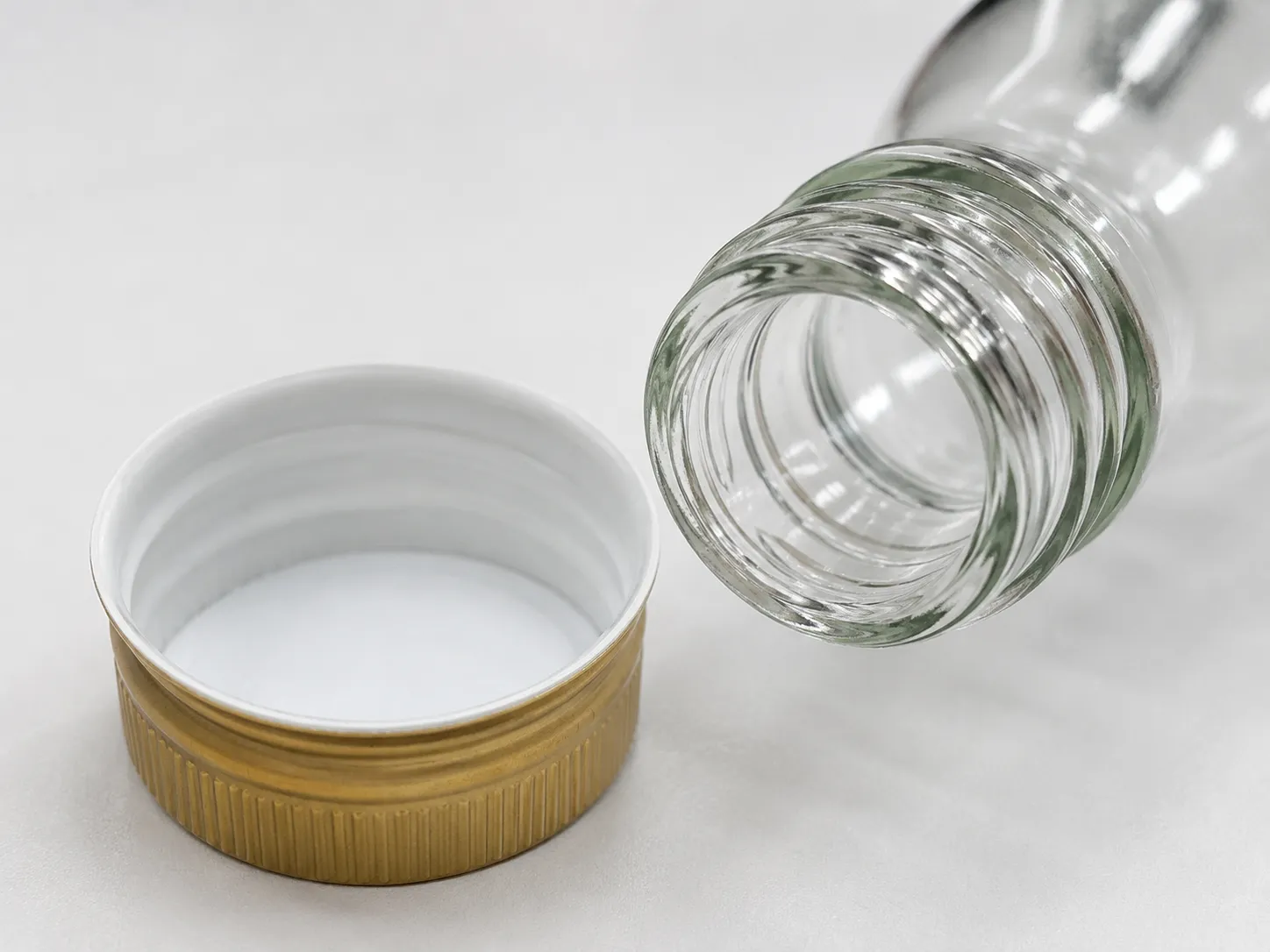
Neck finish refers to the external neck structure, such as a screw thread, ROPP finish, tamper-evident finish, or smooth bar-top finish.
Inner bore diameter refers to the inside opening of the bottle neck. This is especially important for bar-top stoppers, cork shanks, synthetic stoppers, TPE shanks, and polymer shanks.
For bar-top stoppers, inner bore diameter is usually more important than bottle capacity.
If the shank is too small, the closure may feel loose or leak. If the shank is too large, it may be difficult to insert, create excessive pull force, or cause inconsistent bottling-line performance.
Before requesting samples, confirm:
- Bottle drawing
- Bottle capacity
- Neck finish type
- Inner bore diameter
- Neck tolerance range
- Sealing surface quality
- Glass thickness around the neck
- Fill height
- Capsule or tamper-evident requirement
- Manual, semi-automatic, or automatic application method
For screw caps and ROPP closures, thread profile and capper setup are critical. For custom bar-top stoppers, shank diameter, compression, pull force, and top weight are the main approval points.
Closure Type and Material Options
Different large format spirits bottles require different closure systems. The right choice depends on spirit category, brand position, target price, filling method, compliance needs, and consumer experience.
| Closure / Material Option | Best For | Key Check |
|---|---|---|
| Bar-top stopper / T-top cork | Premium whisky, rum, tequila, gin, brandy, cognac | Shank fit, pull force, top weight |
| Natural cork | Heritage spirits and craft brands | Variation, visual grade, dimensional consistency |
| Micro-agglomerated cork | Premium projects needing better repeatability | Compression, bonding quality, batch consistency |
| Synthetic cork | High-volume spirits and private label projects | Material compatibility and resealing behavior |
| TPE / polymer shank | Engineered sealing performance | Hardness, compression, food-contact documentation |
| Screw cap | Convenience, value formats, export projects | Thread finish, liner, torque control |
| ROPP closure | Tamper evidence and controlled application | Capper setup, torque, liner performance |
| Non-refillable closure | Anti-refill or controlled-distribution markets | Pour performance, capsule fit, market requirements |
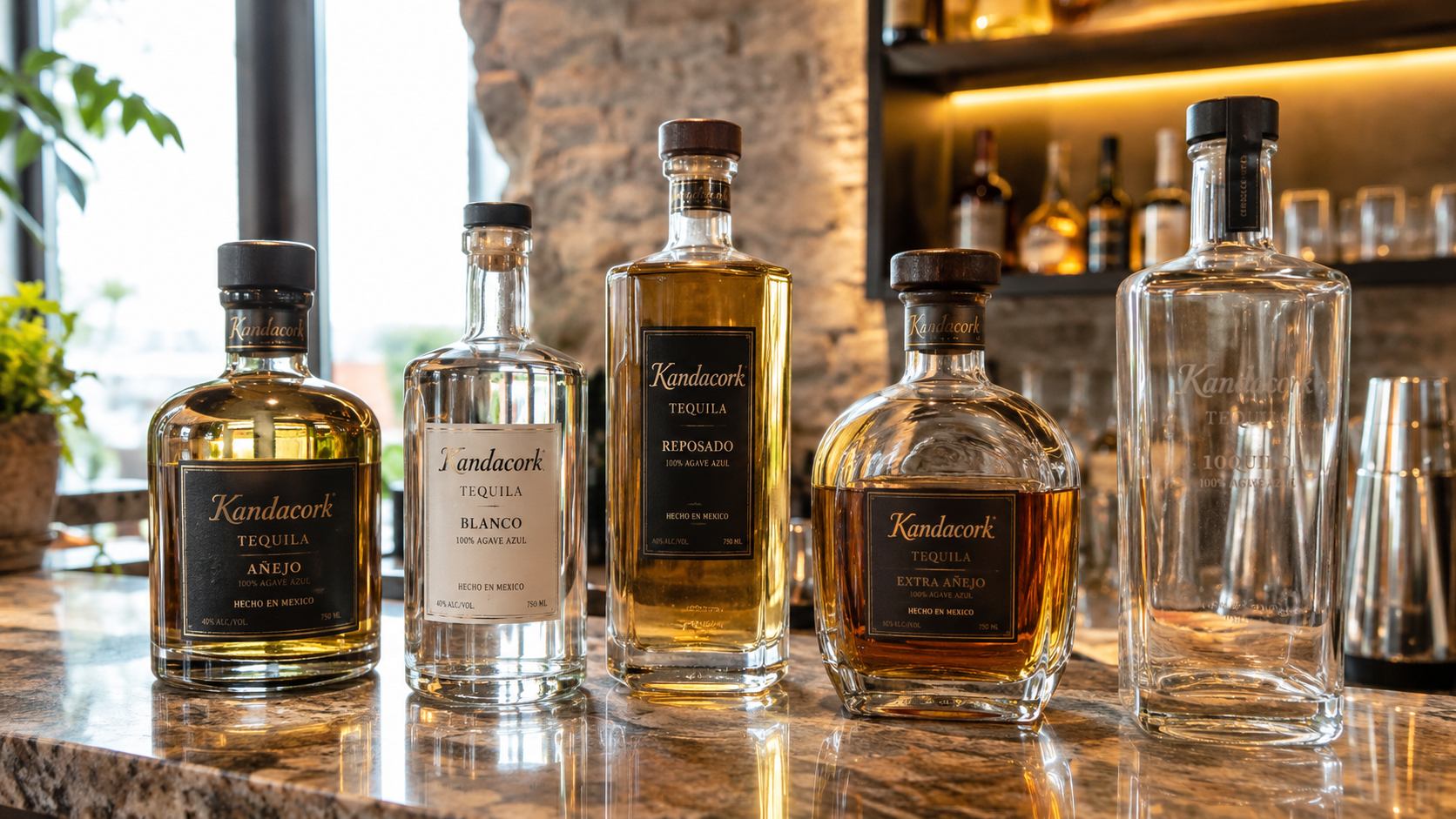
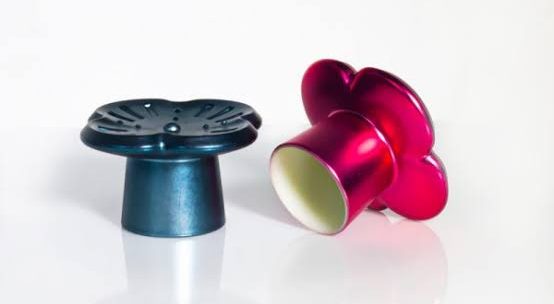
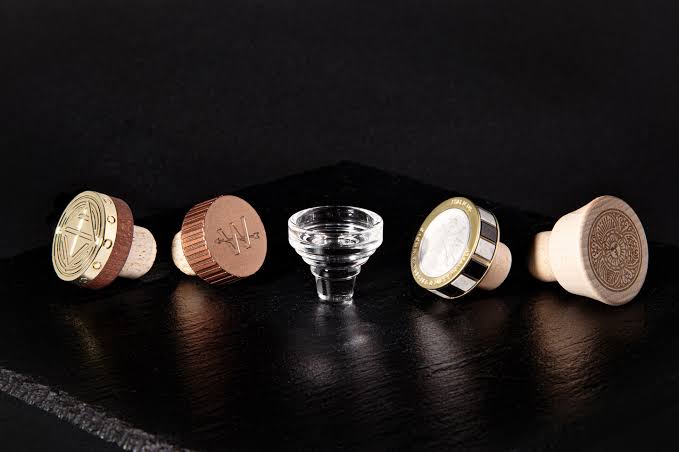
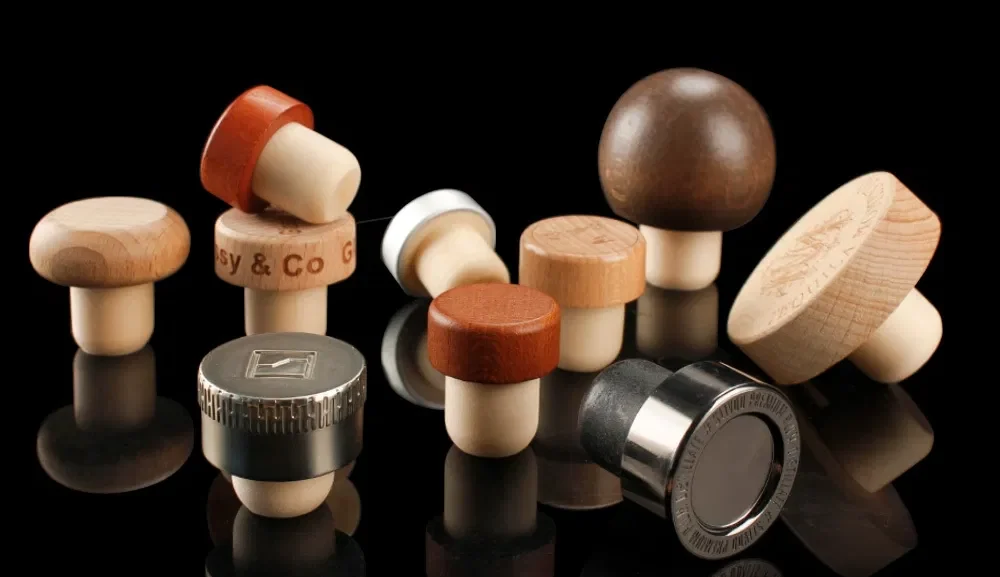
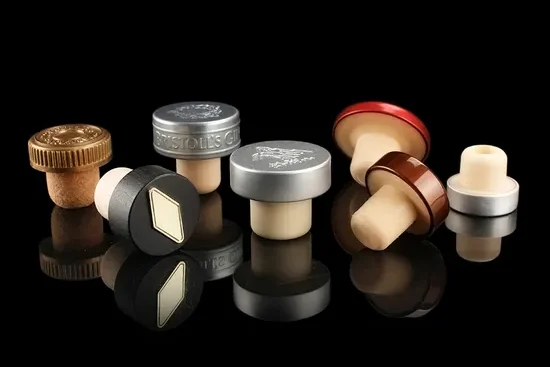
Bar-top stoppers are one of the most common choices for premium large format spirits bottles. They combine a decorative top with a functional shank. The top delivers brand image, while the shank delivers sealing performance.
Natural cork supports a traditional premium image, but buyers should check variation and dimensional tolerance. Micro-agglomerated cork offers a cork-based look with more controlled consistency. Synthetic cork, TPE, and engineered polymer shanks are often selected for stable dimensions, repeatable sealing, and scalable production.
For projects where cap thread, liner, torque, or leak resistance is part of the decision, Kandacork’s guide to screw cap leakage prevention can help buyers think beyond visual closure selection.
Shank Diameter, Compression and Pull Force
The shank is the functional sealing component of a bar-top closure. For large format spirits bottle closures, shank performance is one of the most important approval points.
A good shank should insert consistently, compress enough to seal, avoid excessive insertion force, maintain stable pull force, resist leakage during shipping, reseal after repeated opening, and remain compatible with the spirit product.
The most important shank variables are:
Diameter. Controls seal tightness and leakage risk.
Length. Affects insertion depth and closure stability.
Material. Influences compression, alcohol compatibility, resealing, and production consistency.
Hardness. Affects insertion force and pull force.
Tolerance. Determines whether the closure performs consistently across production batches.
The correct shank size should be selected based on measured inner bore diameter and tolerance range. A 1.75 L bottle and a 750 ml bottle may have similar neck openings, or they may be completely different. Only measurement and sample testing can confirm the fit.
Top Size, Top Weight and Branding
The top is the visible part of the closure. On large format spirits bottles, it plays a major role in brand perception.
A small top may make a large bottle look unfinished. An oversized top may look premium but create technical challenges. The best closure top should balance design, grip comfort, weight, bonding strength, and production cost.
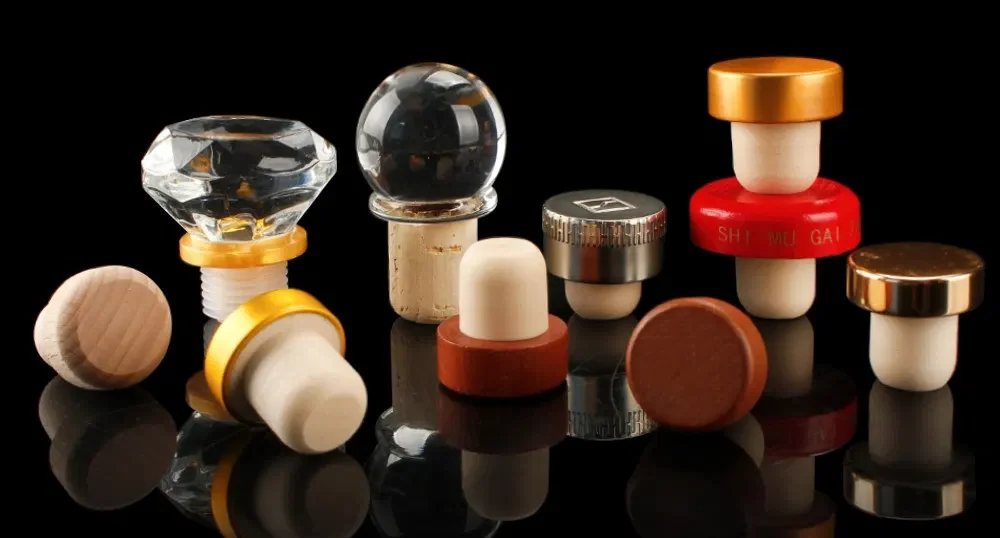
Common top materials include wood, aluminum, plastic, zamac, metal, acrylic, glass-like materials, and custom molded components.
Wood tops communicate craft, warmth, and heritage. Aluminum tops create a clean and modern premium look. Plastic tops support cost control and flexible color matching. Zamac and metal tops create a heavy luxury feel, but they must be tested carefully because top weight can increase stress on the shank connection.
For large format bottle closures, top weight should always be checked during sample approval. A heavy decorative top may need stronger bonding, better mechanical support, or additional testing for twisting, pulling, and repeated opening.
Closure design should also match the full packaging system, including bottle shape, glass color, label material, capsule finish, carton design, brand color, and shelf position. When the project also involves custom glass structure, decoration, and coordinated bottle development, a complete spirits packaging partner such as Kandacork Spirits Bottles can help align the bottle body, neck finish, closure, and presentation system.
Filling-Line Compatibility
A closure that fits by hand may not work reliably on the bottling line. Before approving large format spirits bottle closures, buyers should confirm how the closure will be applied.
Ask these questions before mass production:
- Will the closure be inserted manually, semi-automatically, or automatically?
- What insertion force is required?
- Can the machine handle the closure top diameter and height?
- Is torque control required?
- Is logo orientation required?
- Will the closure be applied before or after capsule placement?
- What line speed is expected?
- Will the test use filled or weighted bottles?
Large format bottles may be harder to stabilize during bottling because of their height and weight. For accurate evaluation, use filled bottles, weighted bottles, or production-equivalent samples.
For bar-top stoppers, focus on insertion force, vertical alignment, shank compression, and pull force. For screw caps and ROPP closures, focus on thread engagement, torque, liner compression, and tamper-evident performance.
Leakage, Pull Force and Transport Testing
Testing helps prevent expensive production failures. Large format spirits bottle closures should be tested more carefully than standard closures because the product value, shipping weight, and packaging risk are higher.
Recommended tests include:
Upright leakage test. Confirms seal performance under normal storage conditions.
Inverted leakage test. Helps evaluate seal performance under stress or non-standard handling.
Pull-force test. Measures whether the stopper is too loose or too difficult to remove.
Repeated open-close test. Confirms resealing behavior after consumer use.
Temperature change test. Evaluates material expansion, contraction, and sealing stability.
Vibration and carton test. Simulates shipping movement and helps identify leakage, loosening, or carton-related risk.
ASTM D4169 is a recognized standard practice for performance testing of shipping containers and systems. For large format spirits bottles, this is useful because the closure should not be tested alone. The full packaging system should be tested together, including filled bottle weight, closure, capsule, label, divider, carton, and pallet arrangement.
For export projects, buyers should also review whether the closure, carton, and pallet plan can withstand international shipping conditions. Kandacork’s article on working with an export-ready closure supplier for spirits bottles explains how sample review, customization, and logistics planning can reduce sourcing risk.
Supplier Capability Checklist
A capable closure supplier should do more than sell a standard part. For large format spirits bottle closures, the supplier should help evaluate fit, samples, materials, decoration, testing, and production consistency.
Before ordering, ask the supplier:
- Can you review bottle drawings and physical bottle samples?
- Can you recommend shank diameter based on measured inner bore?
- Can you provide natural cork, micro-agglomerated cork, synthetic cork, TPE, or polymer shank options?
- Can you customize top material, size, color, shape, and logo?
- Can you provide technical drawings before mass production?
- Can you support food-contact documentation when required?
- Can you provide pre-production samples?
- Can you help evaluate leakage, pull force, or transport risk?
- Can you keep a golden sample for repeat orders?
- What are the MOQ, tooling cost, lead time, and packaging method?
Kandacork Closures & Stoppers can support buyers through bottle neck review, material selection, closure design, sample development, decoration confirmation, and quotation preparation.
What to Send for a Sample or Quotation
Send your bottle drawing, inner bore diameter, and target closure style to Kandacork for a neck-fit review before ordering production samples.
To request samples or a quotation for large format spirits bottle closures, prepare the following information:
| Information to Send | Why It Matters |
|---|---|
| Bottle drawing | Confirms neck dimensions and tolerance |
| Physical bottle sample | Allows real fit testing |
| Bottle capacity | Helps evaluate proportion and handling |
| Neck finish | Required for cap, ROPP, or stopper matching |
| Inner bore diameter | Determines shank size |
| Spirit type and ABV | Helps material compatibility review |
| Target market | Supports compliance and logistics planning |
| Closure type preference | Guides sample direction |
| Shank material preference | Affects seal and opening feel |
| Top material preference | Affects brand image and cost |
| Logo artwork | Supports decoration review |
| Capsule requirement | Affects closure height and appearance |
| Filling method | Affects application performance |
| Estimated quantity | Affects MOQ, tooling, and quotation |
| Launch timeline | Helps plan sampling and production |
If the project is still in the early stage, Kandacork can help compare several closure directions, such as a cost-effective synthetic bar-top stopper, a premium wood-top cork stopper, an aluminum-top closure, a metal-top luxury stopper, or a custom molded closure for a private label spirits launch.
To begin, request closure samples or a large format bottle closure quotation.
Common Mistakes to Avoid
Choosing by Bottle Capacity Alone
Bottle size does not determine closure size. Neck finish and inner bore are more important than volume.
Approving from Photos Only
Photos cannot prove fit, leakage performance, pull force, or filling-line compatibility. Physical samples are necessary.
Ignoring Top Weight
A heavy closure top can look premium, but it may create bonding stress or handling issues. Heavy tops should be tested carefully.
Forgetting Capsule Compatibility
If the bottle uses a capsule, shrink sleeve, or tamper-evident band, closure height and top diameter must be coordinated early.
Testing Only Empty Bottles
Large bottles behave differently when filled. Test with filled, weighted, or production-equivalent bottles.
Assuming One Stock Closure Fits Every Bottle
Two bottles with similar capacity may have different inner bore diameters, neck finishes, and tolerance ranges.
FAQ
How do you match closures with large format spirits bottles?
Match the closure by neck finish, inner bore diameter, shank size, shank material, top diameter, top weight, filling-line method, leakage testing, and target market. Do not match by bottle capacity alone.
What closure is best for a 1.75 L spirits bottle?
A bar-top stopper is often a strong choice for premium 1.75 L spirits bottles because it supports resealing, branding, and a premium opening experience. Screw caps or ROPP closures may be better for high-volume, value, or export-focused products.
Can a 750 ml stopper fit a 1.75 L bottle?
Possibly, but only if the inner bore and neck finish are compatible. Even when the shank fits, the top may look too small on a larger bottle. Always test fit, pull force, leakage, and appearance.
Why is inner bore diameter more important than bottle capacity?
Inner bore diameter determines how the stopper shank compresses inside the bottle neck. Bottle capacity tells you the volume, but it does not confirm the sealing surface, neck tolerance, shank fit, or pull force.
How does top weight affect large format bottle closures?
Top weight affects visual balance, bonding strength, twisting resistance, and repeated opening performance. Heavy wood, metal, zamac, or custom molded tops should be tested carefully before bulk production.
What should I send to request closure samples or a quotation?
Send the bottle drawing, physical bottle sample, inner bore diameter, neck finish, bottle capacity, spirit type, ABV, closure style, shank material preference, top material preference, logo artwork, estimated quantity, target market, and launch timeline.