Introduction: Why Handmade Bottles Need Stopper Fit Testing
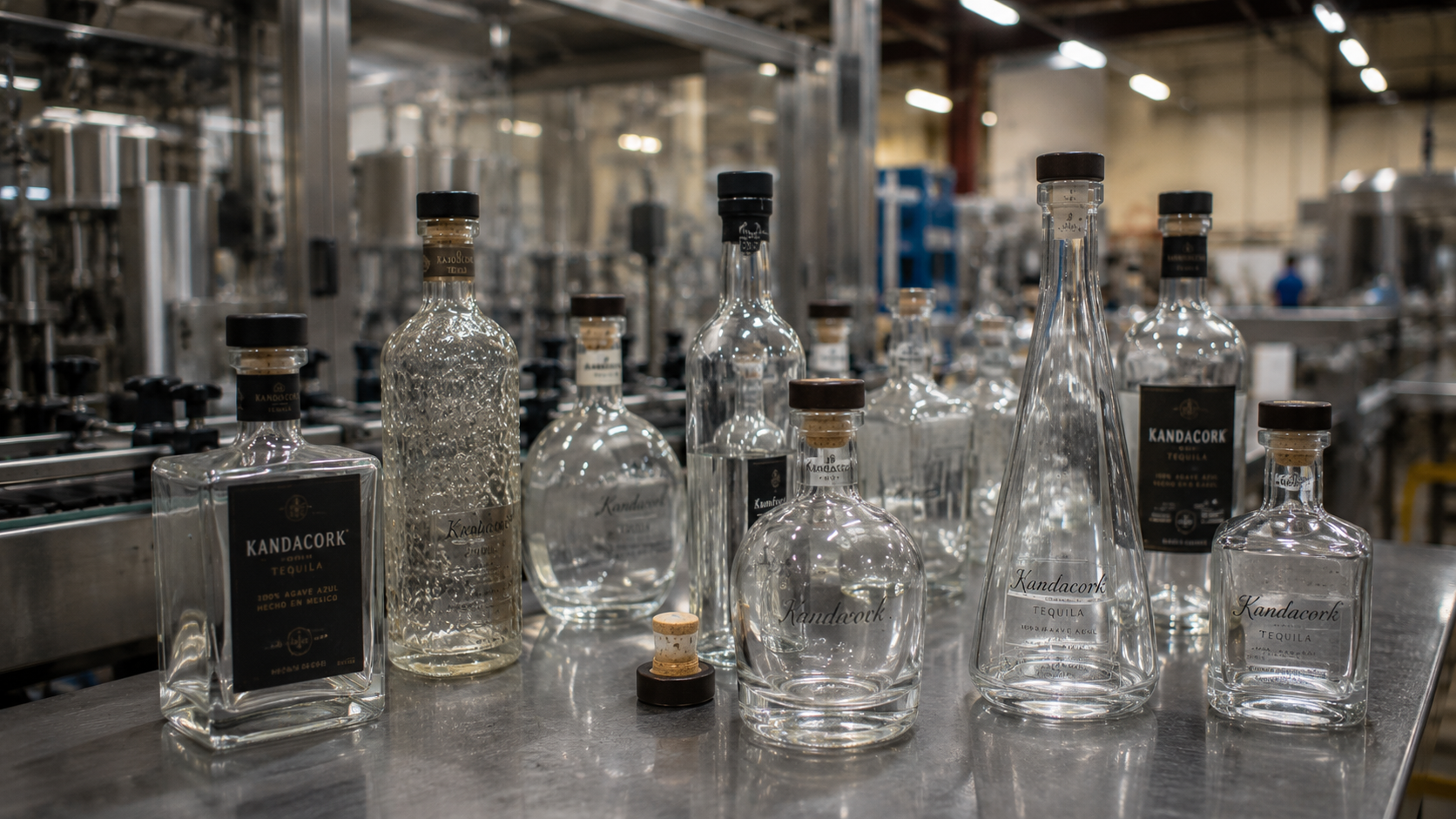
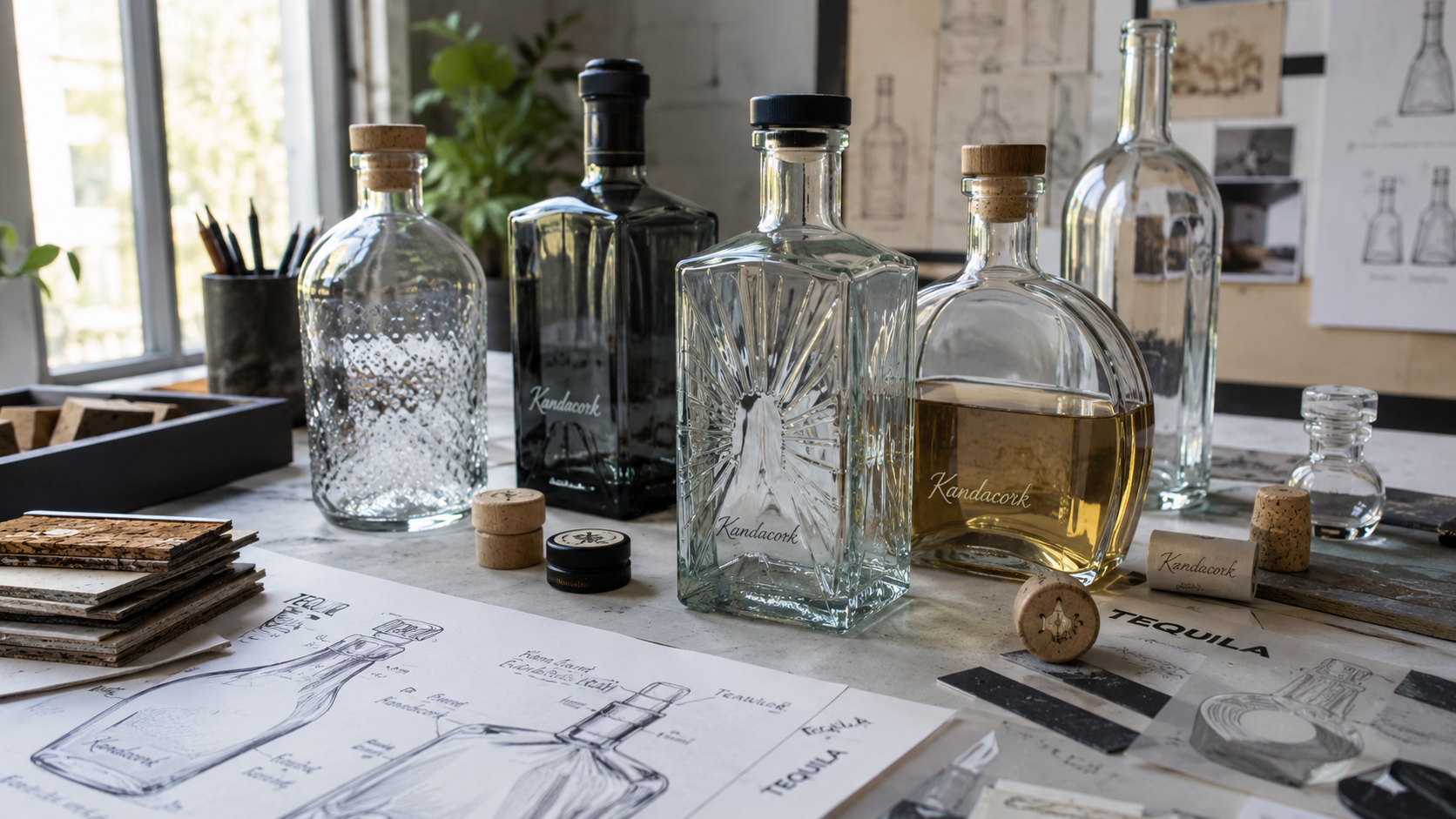
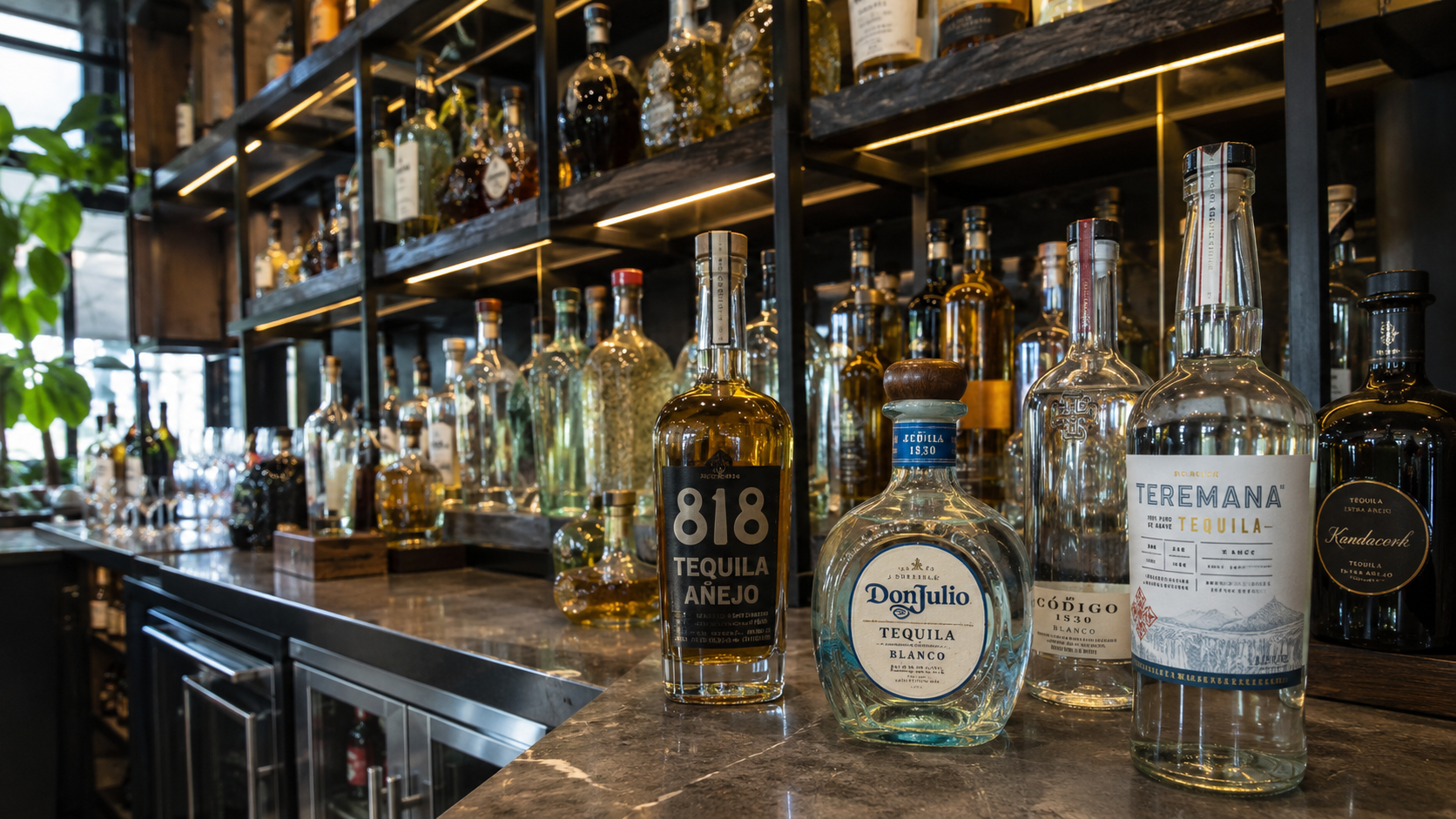
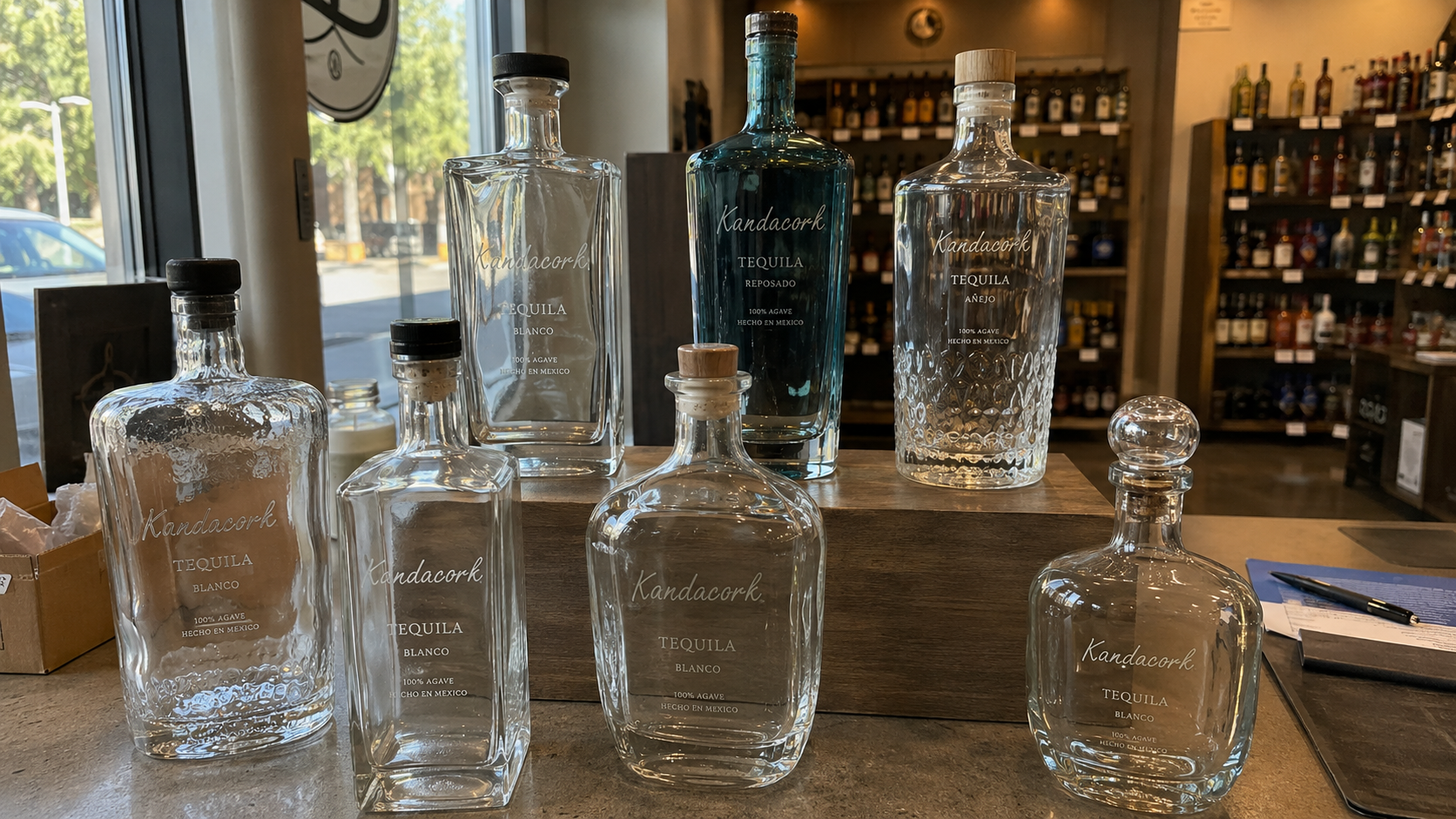
Handmade glass bottles give spirits packaging a premium, crafted, and collectible appearance. Whisky, tequila, gin, rum, brandy, vodka, liqueur, and private label spirits brands often use handmade or semi-handmade bottles to create stronger shelf impact and a more distinctive brand story.
But handmade glass bottles also create a closure challenge. The bottle neck may vary slightly from piece to piece. Inner diameter, rim flatness, wall thickness, neck depth, internal taper, and roundness may not be as consistent as fully automated standard bottles.
That means a stopper that fits one handmade bottle sample may feel too loose, too tight, crooked, or unstable in another bottle from the same production batch.
To match stoppers with handmade glass bottles correctly, buyers should treat the bottle and stopper as one closure system. The right stopper must fit the actual neck tolerance, seal reliably, look level, work with the filling process, and survive transport.
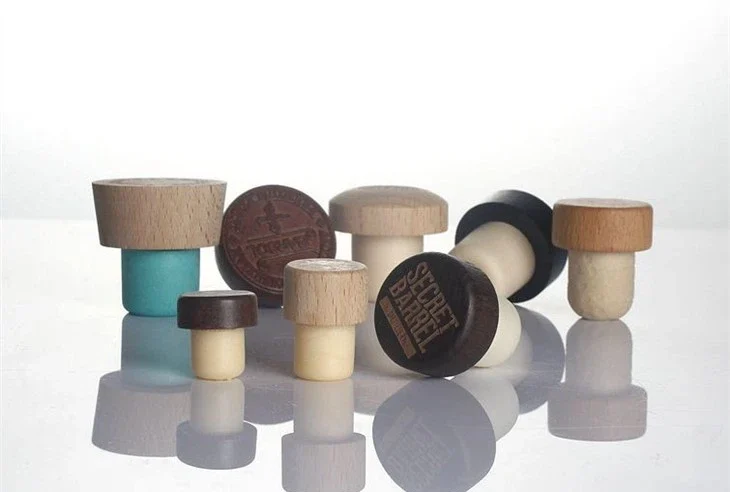
For projects that require a premium visual finish, buyers can start by reviewing custom glass stoppers for spirits bottles to understand how glass or crystal tops can be combined with cork, synthetic, TPE, or silicone sealing components.
Kandacork practical note: For handmade bottle projects, Kandacork does not recommend approving stopper fit from one perfect bottle sample. A safer approach is to test several bottles and identify the smallest, largest, and average bore range before confirming the shank diameter or insert structure.
Quick Answer: How Do You Match Stoppers With Handmade Glass Bottles?
To match stoppers with handmade glass bottles, measure several bottle samples, confirm the real inner neck diameter, check neck depth, ovality, rim flatness, and internal taper, then test multiple stopper shank or sealing insert options before bulk production.
The key checks are:
- Inner neck diameter, also called bottle bore
- Neck depth and usable insertion length
- Ovality or out-of-round condition
- Rim flatness and top-land quality
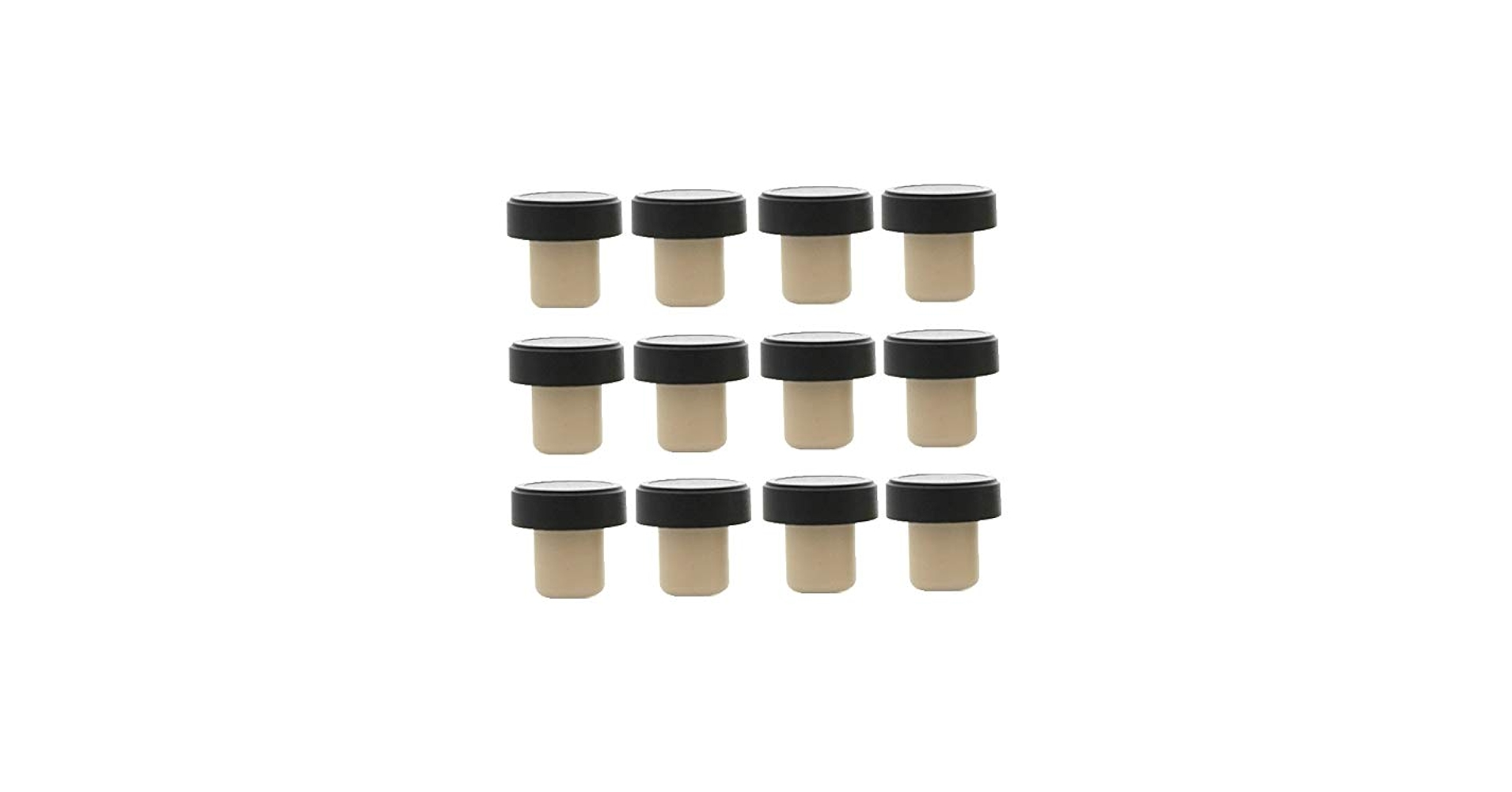
- Stopper shank diameter and material compression
- Insertion force and pull-out feel
- Leakage resistance
- Stopper seating height
- Filling-line and packing compatibility
For inserted stoppers, the inner neck diameter is usually more important than the outside neck appearance. Buyers comparing bar-top formats can also review how bar-top stoppers fit spirits bottle necks before moving into bottle-specific sample testing.
Standard Bottle vs Handmade Bottle: Why Stopper Matching Is Different
A standard spirits bottle may have a more predictable neck finish and bore range. A handmade glass bottle may look more premium, but the closure interface can vary more from piece to piece.
| Factor | Standard Glass Bottle | Handmade Glass Bottle | Stopper Risk |
|---|---|---|---|
| Neck bore | More consistent | May vary by piece | Loose or tight stopper |
| Roundness | More controlled | May show ovality | Uneven sealing pressure |
| Rim flatness | More predictable | May be hand-finished | Crooked stopper head |
| Internal taper | Usually controlled | May vary inside the neck | Stopper jams or leaks |
| Batch consistency | Higher | Lower | One sample may not represent bulk order |
For this reason, handmade bottle stopper matching should always be confirmed with real samples, not only drawings or nominal dimensions.
Key Neck Measurements for Stopper Fit
Before ordering custom stoppers, buyers should collect real bottle data. A technical drawing is useful, but physical samples are more reliable for handmade glass projects.
| Measurement | What It Controls | Risk if Wrong |
|---|---|---|
| Inner neck diameter / bore | Stopper compression | Loose fit, leakage, or over-tight insertion |
| Neck depth | Usable insertion length | Shallow seal or high stopper seating |
| Ovality | Even compression around the shank | Leakage on one side of the neck |
| Rim flatness | Visual seating of the stopper head | Crooked or uneven stopper appearance |
| Internal taper | Fit through the neck depth | Stopper jams, bottoms out, or feels inconsistent |
| Shoulder clearance | Space for stopper head, capsule, wax, or sleeve | Poor visual alignment or packing conflict |
Glass packaging professionals often use neck finish terms such as T, E, I, S, and H dimensions to describe bottle neck geometry. Even when a handmade spirits bottle uses a bar-top stopper instead of a threaded cap, the same measurement discipline is useful.
Starting Point vs Final Approval
For some bar-top closures, a stopper shank slightly larger than the bottle opening can be used as an initial sizing reference. However, this should only be treated as a starting point.
For handmade glass bottles, final approval should depend on real bottle testing. Buyers should confirm insertion force, pull-out feel, leakage resistance, seating height, and packing compatibility before approving bulk production.
A simple size rule may help narrow the first sample direction, but it should not replace practical validation with actual handmade bottle samples.
Stopper Materials Compared
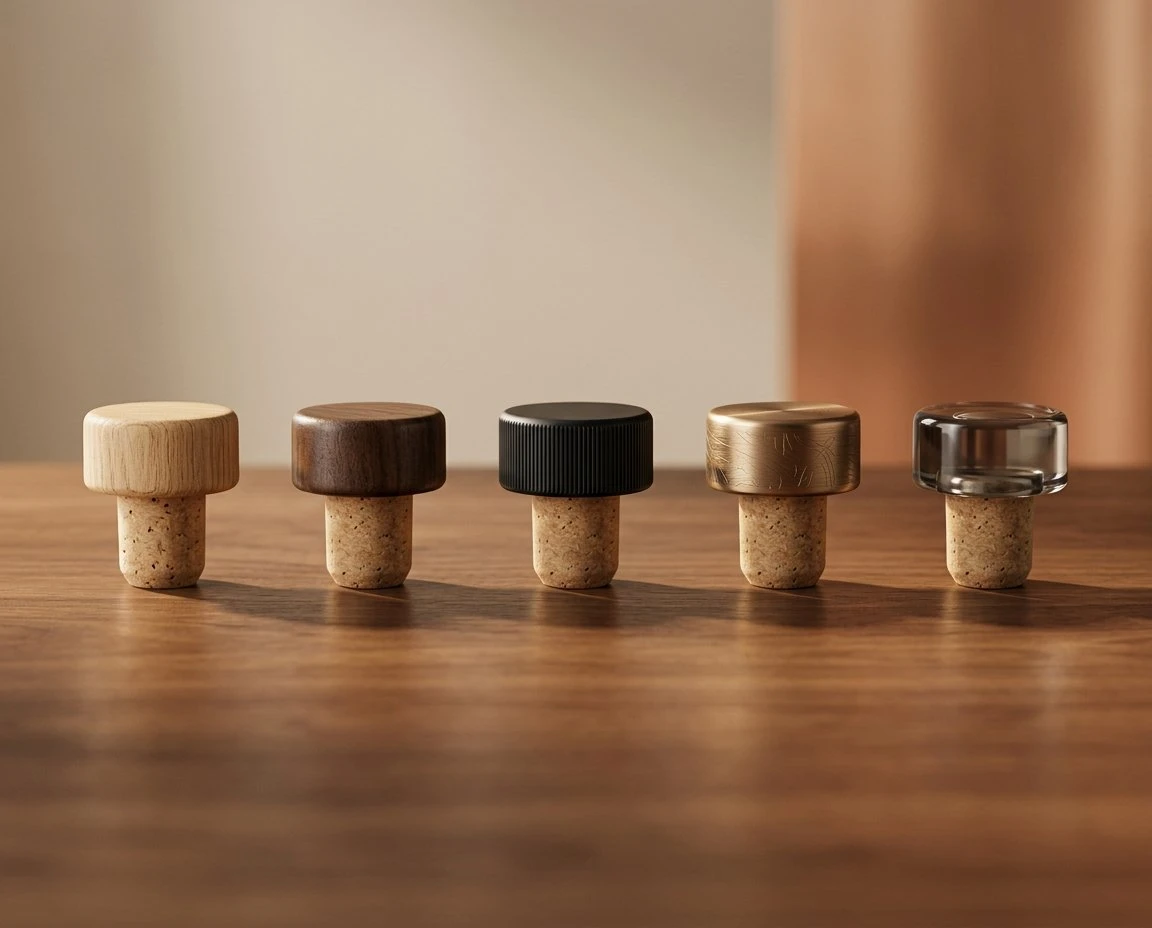
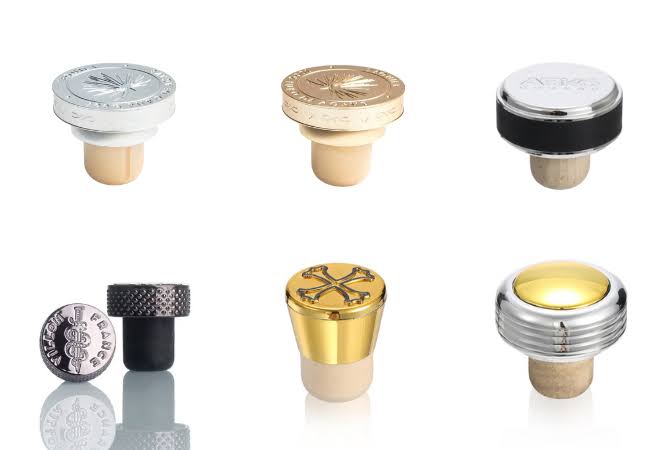
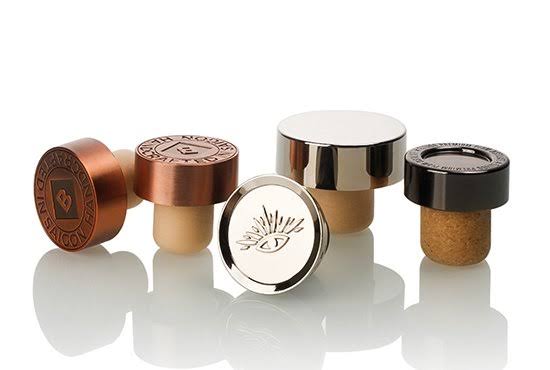
The best stopper material depends on bottle tolerance, brand position, filling method, and target price. For handmade glass bottles, the most important question is not only “Which stopper looks best?” but also “Which stopper structure can seal across the real neck variation?”
| Stopper Type | Best Use | Key Fit Consideration |
|---|---|---|
| Natural cork | Craft spirits, heritage whisky, rum, brandy | Good compression, but natural variation must be controlled |
| Synthetic cork | Private label spirits and larger runs | More consistent diameter and pull-out feel |
| TPE insert | Handmade bottles with moderate neck variation | Flexible sealing helps compensate for tolerance |
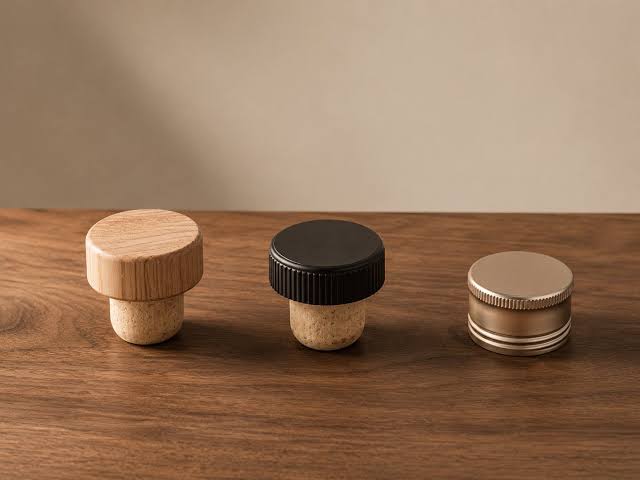
| Glass or crystal top | Luxury spirits, decanters, gift sets | Usually needs cork, TPE, silicone, or another sealing component |
| Wood top | Rustic, natural, or craft-style packaging | Check coating, grain, assembly, and shank consistency |
| Aluminum or metal top | Modern vodka, gin, tequila, premium private label | Check surface finish, weight, and assembly tolerance |
| Plastic top | Cost-sensitive or high-volume projects | Offers color flexibility and stable production cost |
For handmade bottle projects, TPE inserts, synthetic cork, and well-controlled cork shanks are often useful because they provide compression. Glass, crystal, wood, aluminum, and metal tops create the visible brand effect, but the sealing performance usually depends on the shank or insert underneath.
Buyer Decision Box: Which Stopper Should You Test First?
| Your Bottle Situation | Stopper Option to Test First |
|---|---|
| Bore variation is small | Synthetic cork or controlled cork shank |
| Neck is slightly oval | TPE insert or silicone sealing ring |
| Bottle is luxury or decanter style | Glass or crystal top with flexible sealing insert |
| Bottle has a rustic handmade look | Wood top with cork or synthetic shank |
| Bottle tolerance is unclear | Send 3–5 bottle samples for fit review |
This first test does not replace final approval. It helps buyers narrow the sample direction before investing in tooling or bulk production.
The safest approach is to approve the complete system: bottle, stopper, sealing insert, decoration, filling method, and packing. For brands that are developing the bottle, closure, and decorative finish together, Kandacork’s sister site offers broader guidance on glass bottle packaging for spirits.
Stopper Fit Testing Process Before Bulk Production
A beautiful stopper is not enough. It must work with real bottles under real filling, handling, and shipping conditions.
Step 1: Collect Representative Bottle Samples
For handmade glass bottles, do not approve fit from only one perfect sample. Test several bottles if possible. Samples should represent the smallest, largest, and average neck bore within the expected production range.
For handmade bottle projects, Kandacork usually recommends checking multiple bottle samples before confirming stopper diameter or insert structure.
Step 2: Measure the Real Tolerance Range
Record the inner neck diameter, neck depth, ovality, rim flatness, internal taper, bottle height, and shoulder clearance. This gives the closure supplier a practical tolerance range instead of a single nominal size.
In Kandacork’s stopper development process, handmade bottle projects are usually reviewed with actual bottle samples rather than photos alone, because neck bore, rim flatness, and internal taper are difficult to confirm from images.
Step 3: Test Multiple Shank or Insert Options
Small changes in shank diameter, material hardness, taper, or sealing ring thickness can make a large difference. Test more than one stopper option to compare insertion force, sealing compression, and pull-out feel.
When bottle tolerance is unclear, Kandacork usually recommends testing more than one shank diameter or insert hardness before confirming the final stopper structure.
For cork and bar-top style closures, the goal is a firm but hand-removable fit. The stopper should not fall out during handling, but it should not require excessive force to open.
Step 4: Check Seating and Leakage
The stopper should sit straight, reach the intended height, and leave a consistent visual gap. This is especially important for glass, crystal, wood, aluminum, and metal top stoppers.
Leakage checks may include:
- Upright storage
- Inverted observation
- Side-position testing where relevant
- Temperature change observation
- Vibration simulation
- Reopening and reclosing checks
For premium spirits packaging, Kandacork reviews both technical sealing performance and visual seating height, because a stopper can seal correctly but still look unacceptable on a luxury bottle.
CETIE, an international technical reference body for bottling and packaging, has published guidance related to bartop stopper application for spirits, liquors, and fortified wine sectors. This type of industry guidance reinforces the importance of treating stopper application as a technical packaging process, not only a visual design choice.
Step 5: Confirm Filling-Line and Packing Compatibility
Before bulk order, confirm whether the stopper will be inserted manually, semi-automatically, or automatically.
Check insertion force, stopper feeding orientation, head clearance, bottle height variation, capsule or wax compatibility, gift box clearance, and export carton protection.
A stopper that works well by hand may still need adjustment for a bottling line or final retail packaging. For buyers who need sample review, fit testing, and export packing checks in one workflow, Kandacork provides bottle closure testing and quality support.
Common Problems and Solutions
| Problem | Possible Cause | Recommended Solution |
|---|---|---|
| Stopper fits one bottle but not another | Handmade neck tolerance variation | Test multiple bottle samples and define min/max bore |
| Stopper feels too loose | Shank too small or bore too large | Increase shank diameter or use a flexible insert |
| Stopper is too tight | Bore too small or compression too high | Reduce shank size or change insert hardness |
| Stopper sits crooked | Uneven rim, ovality, or poor insertion depth | Check rim flatness and adjust insert geometry |
| Leakage during shipping | Poor compression, shallow seal, or unstable insert | Re-test sealing system and transport conditions |
| Difficult consumer opening | Excessive insertion force | Adjust material, diameter, taper, or surface finish |
This troubleshooting step is important for premium spirits because closure failure can damage the liquid product, label, carton, and brand image.
Supplier Capability Checklist
When selecting a stopper supplier for handmade glass bottles, buyers should evaluate more than price.
A qualified stopper supplier should be able to:
- Review bottle drawings and physical bottle samples.
- Measure neck bore, depth, ovality, rim condition, and tolerance range.
- Recommend cork, synthetic cork, TPE, silicone, glass, crystal, wood, aluminum, plastic, or metal stopper options.
- Provide multiple shank or insert samples for fit testing.
- Support logo decoration, custom mold development, and material documentation.
- Scale from prototype samples to export-ready bulk production.
For handmade bottle projects, supplier capability matters because the final stopper may need adjustment before mass production. If the project involves heavy premium bottles, it is also useful to review how to match bar-top stoppers with heavy glass bottles before confirming shank size, seating height, and packing method.
RFQ Checklist for Kandacork
A complete RFQ helps the supplier recommend a stopper structure instead of guessing from photos.
To receive a faster and more accurate quotation from Kandacork, prepare:
- Bottle drawing or technical specification
- Physical bottle samples if available
- Inner neck diameter range
- Neck depth
- Bottle capacity and fill volume
- Product type: whisky, vodka, gin, rum, tequila, brandy, liqueur, or other spirits
- Preferred stopper type
- Target material: cork, synthetic cork, TPE, glass, crystal, wood, aluminum, metal, or plastic
- Logo artwork and decoration requirements
- Preferred color and finish
- Estimated order quantity
- Destination market
- Filling method
- Packing method
- Sample deadline and launch schedule
Prepare your bottle drawing, samples, artwork, and order quantity before requesting a quotation. This makes stopper recommendation, sample development, and pricing more efficient.
Why Choose Kandacork Closures & Stoppers
Kandacork Closures & Stoppers supports custom closure development for spirits brands, distilleries, private label buyers, importers, distributors, bottlers, and packaging buyers.
For handmade glass bottle projects, Kandacork can help with bottle neck fit review, cork and synthetic cork stopper options, TPE and silicone insert structures, glass and crystal stopper development, wood, aluminum, metal, and plastic top designs, logo decoration, custom mold development, sample testing, bulk production, and export-ready packaging.
This makes Kandacork suitable for buyers who need a stopper that is visually attractive, technically compatible, and ready for commercial spirits packaging.
FAQ
How do you match stoppers with handmade glass bottles?
Measure multiple handmade bottle samples, confirm the inner neck diameter and neck depth, check ovality, rim flatness, and internal taper, then test stopper shank or insert options for insertion force, leakage, pull-out feel, and visual seating before bulk production.
What is the most important measurement for stopper fit?
The most important measurement is the inner neck diameter, also called the bottle bore. Inserted stoppers seal through contact inside the bottle neck, so the bore is more important than the outside neck appearance.
Which stopper material is best for handmade glass bottles?
There is no single best material. Natural cork offers traditional appeal, synthetic cork offers consistency, TPE inserts provide flexible sealing, and glass or crystal tops deliver luxury presentation. The best choice depends on bottle tolerance, brand positioning, and testing results.
Why does a handmade bottle stopper leak?
A stopper may leak because the shank is too small, the bottle bore is too large, the neck is oval, the insertion depth is too shallow, or the sealing material does not provide enough compression.
What should I send for a custom stopper quotation?
Send the bottle drawing, physical samples, inner neck diameter range, neck depth, product type, preferred stopper style, material preference, logo artwork, estimated quantity, filling method, packing requirements, destination market, and sample timeline.