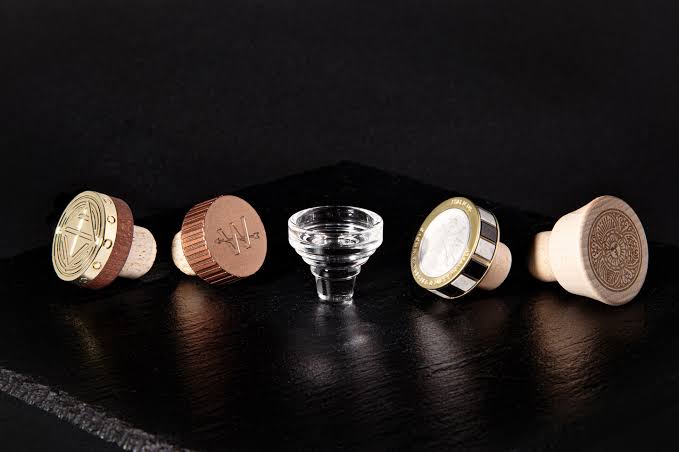
Choosing between aluminium stoppers vs wooden stoppers is not only a style decision. For spirits brands, the stopper affects shelf impact, opening feel, resealing performance, brand positioning, and buyer confidence. A closure sits at the top of the bottle, but it influences the entire packaging experience.
Aluminium usually works best for brands that want modern metallic precision, clean color control, and strong batch-to-batch consistency. Wood usually works best for brands that want natural warmth, craft appeal, heritage character, and a more tactile premium feel.
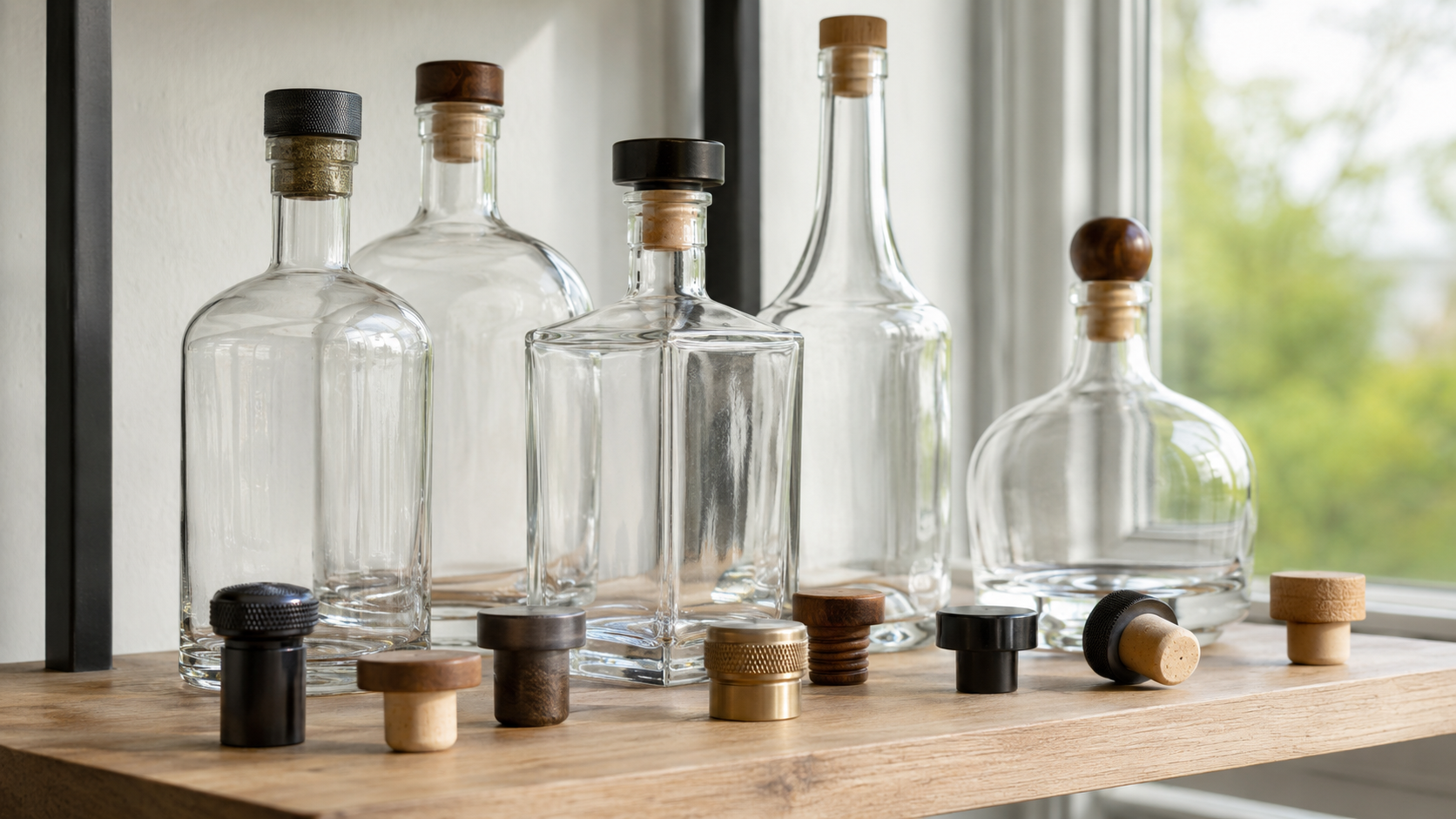
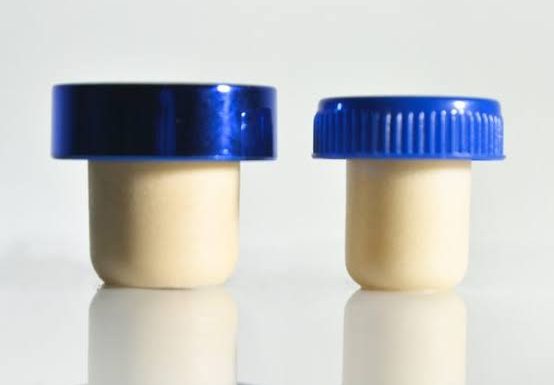
The most important technical point is simple: the visible stopper head affects branding and handling, while the shank affects fit and sealing. When comparing aluminium bar-top stoppers with wood-head closures, buyers should review the full stopper construction, not the top material alone.
Quick Comparison
| Decision Factor | Aluminium Stoppers | Wooden Stoppers |
|---|---|---|
| Best visual message | Modern, metallic, precise, clean | Natural, warm, craft, heritage |
| Best spirit categories | Vodka, gin, tequila, liqueurs, RTD spirits, modern whisky or rum | Whisky, rum, brandy, cognac-style spirits, craft gin, limited editions |
| Surface consistency | Very high | Natural variation in grain and tone |
| Hand feel | Cool, smooth, refined | Warm, tactile, organic |
| Custom branding | Anodizing, brushing, embossing, debossing, printing, laser marking | Staining, engraving, printing, varnishing, shaped profiles |
| Sealing factor | Depends on cork, micro-agglomerated cork, or synthetic shank | Depends on cork, micro-agglomerated cork, or synthetic shank |
| Main buyer risk | Coating durability, scratch resistance, color tolerance | Grain variation, stain consistency, moisture control |
| Best use case | Clean luxury and consistent production appearance | Natural luxury and craft storytelling |
Both options can look premium. The better choice depends on the spirit category, bottle shape, target retail price, decoration method, compliance needs, and production plan.
Why Stopper Material Matters in Premium Spirits Packaging
A stopper is one of the first physical details a customer notices. Before tasting the liquid, the buyer sees the bottle silhouette, touches the top, pulls the stopper, hears the opening sound, and forms an impression of quality.
That moment matters. A lightweight, poorly fitted, or visually mismatched closure can weaken a premium bottle. A well-matched stopper can make the package feel complete.
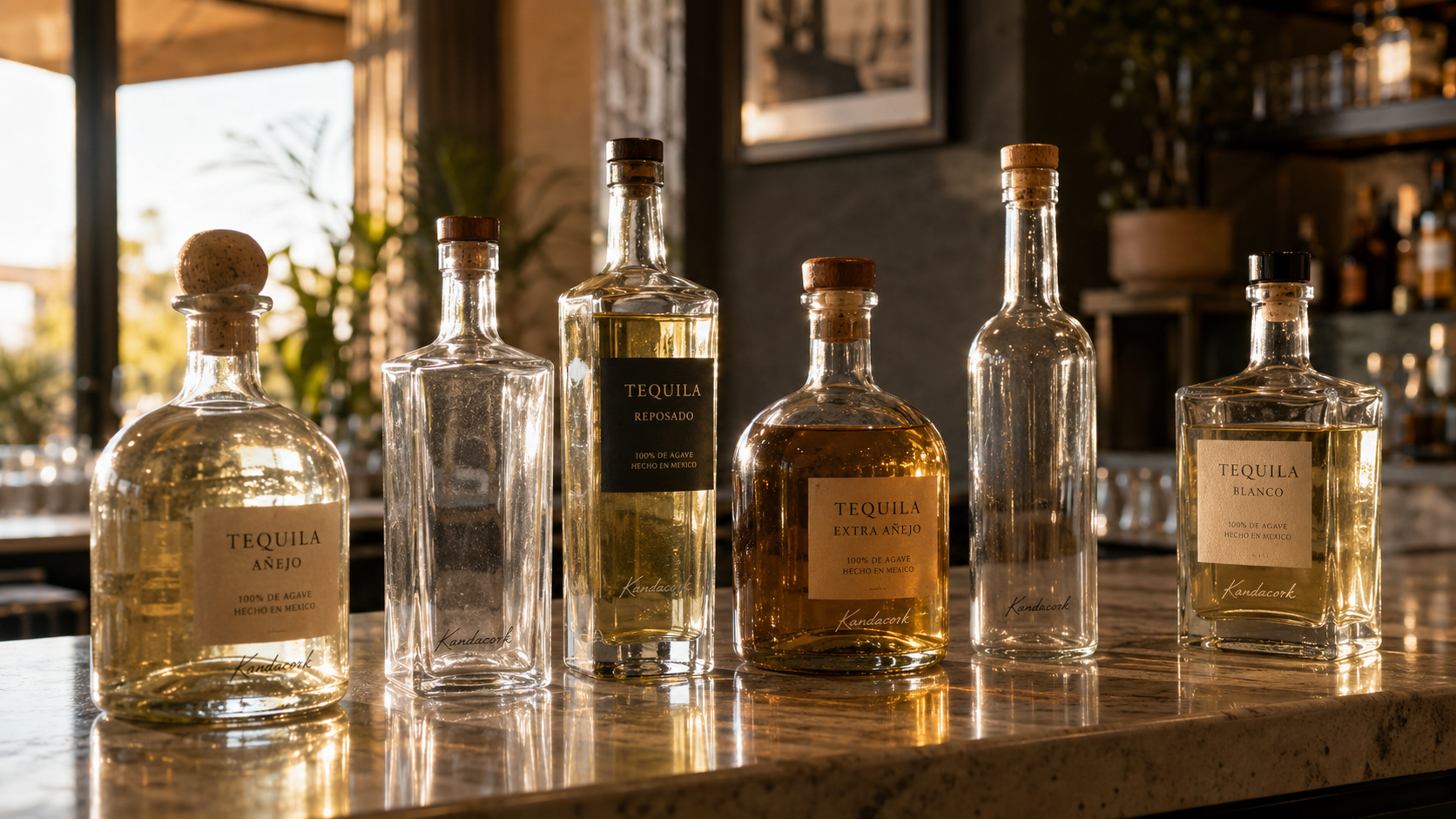
Aluminium stoppers create a controlled, contemporary impression. They suit bottles with frosted glass, minimalist labels, metallic accents, transparent spirits, clean typography, and high-contrast color systems. Wooden stoppers create a warmer and more traditional impression. They suit aged spirits, textured labels, amber glass, heritage packaging, and bottles that need a handmade or barrel-aged cue.
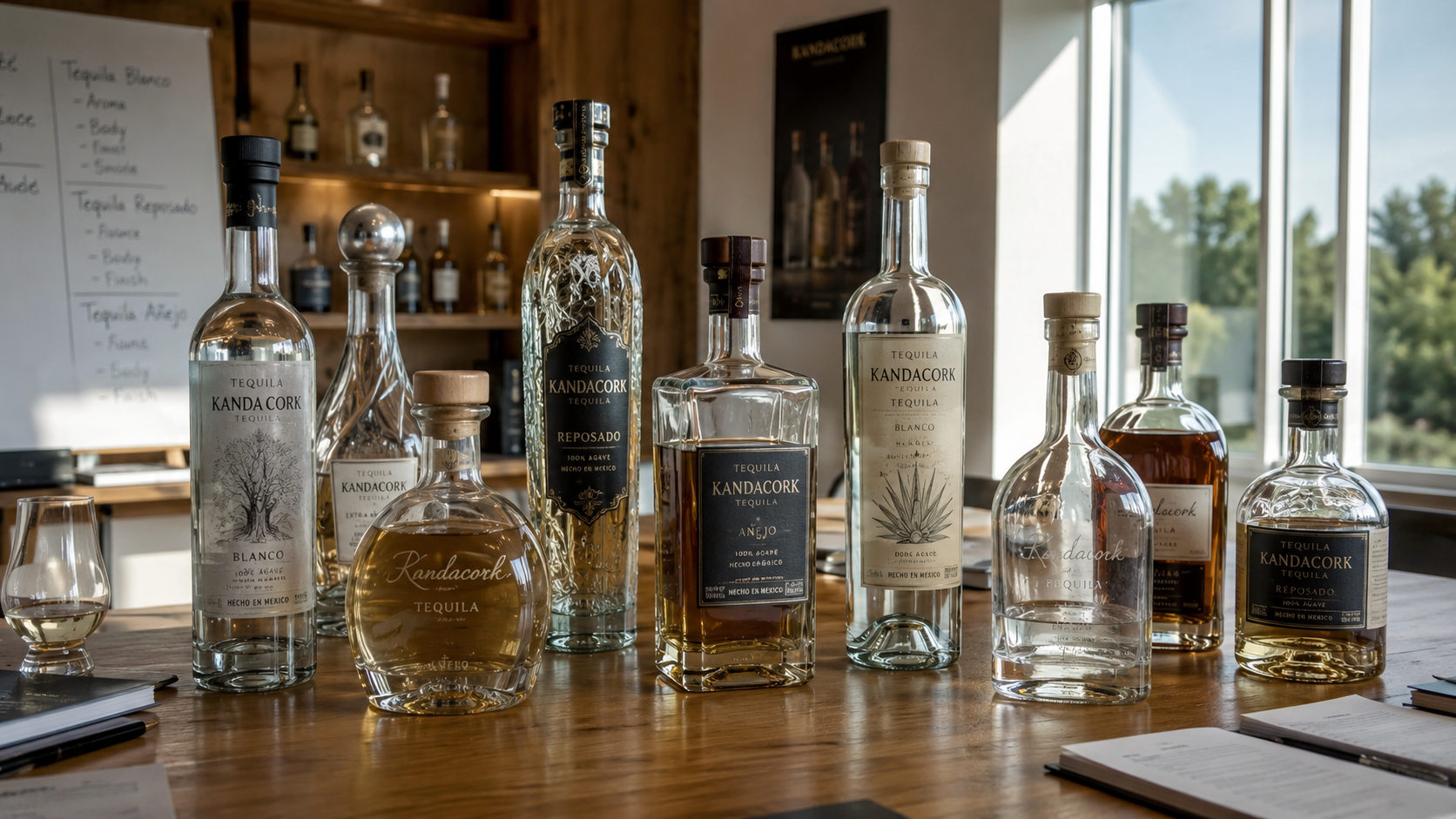
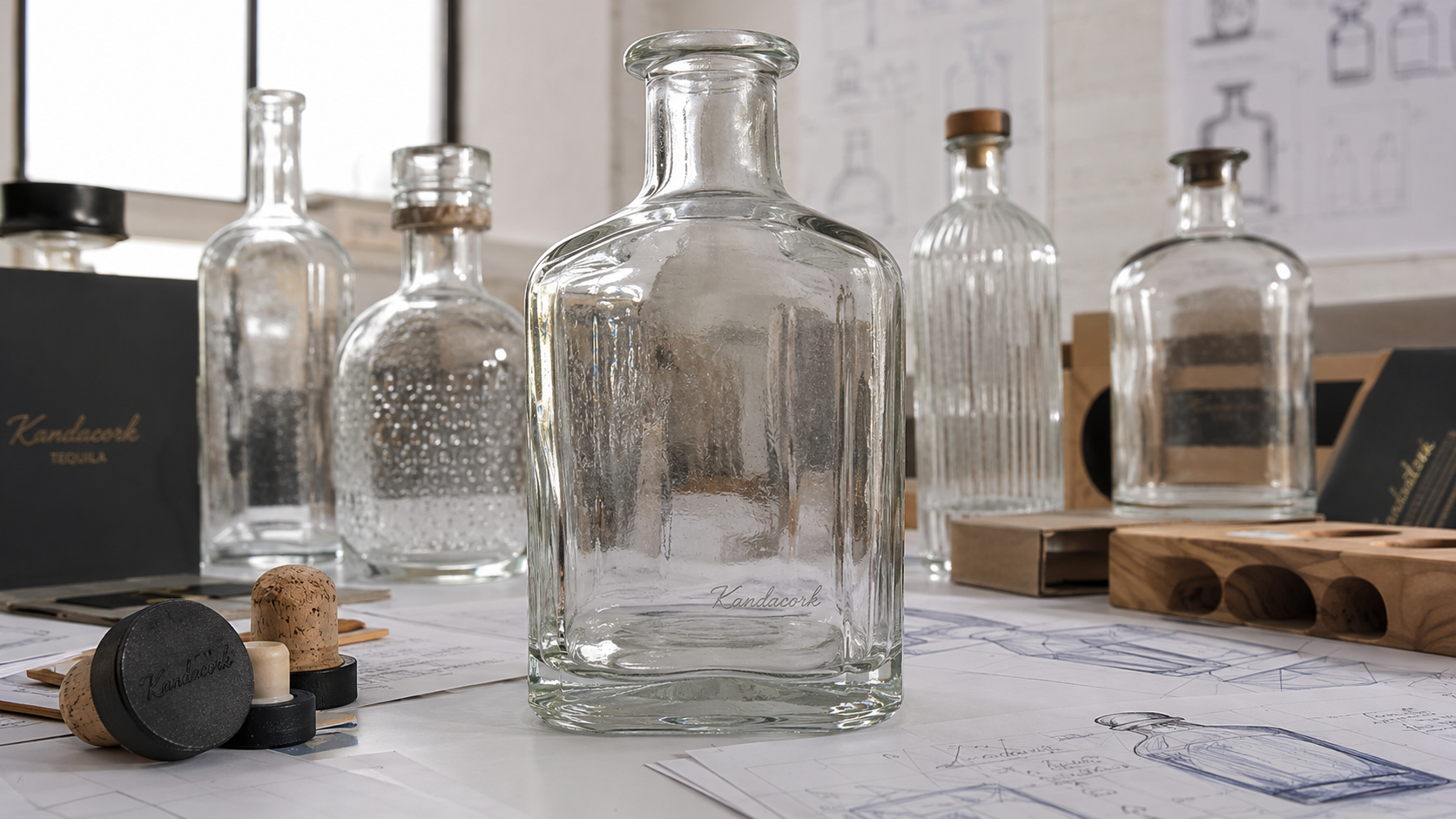
For brands building a complete packaging system, the stopper should be considered alongside bottle shape, label material, capsule, outer box, and shipping format. Kandacork Closures supports custom bottle stoppers and closures for spirits projects where appearance, fit, decoration, and export performance all need to work together.
What Are Aluminium Bar-Top Stoppers?
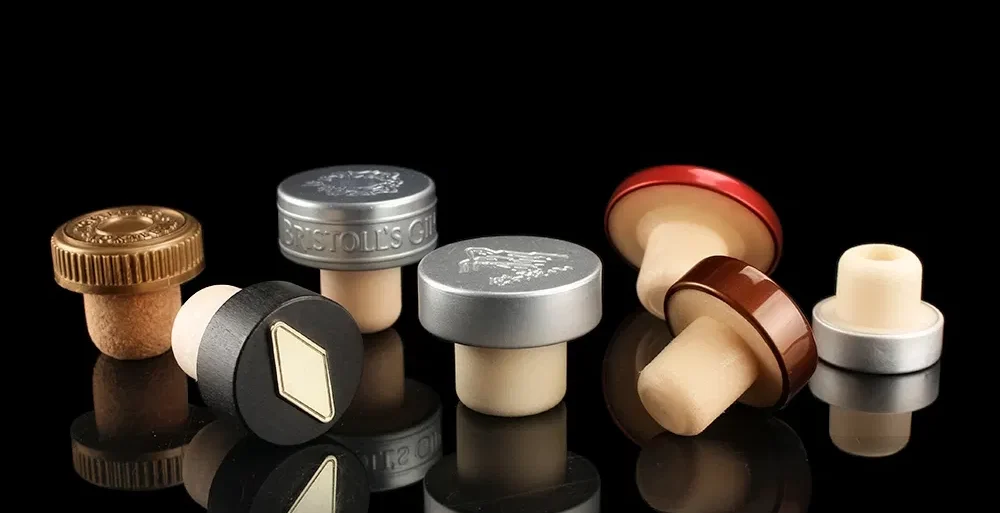
Aluminium bar-top stoppers are bottle closures made with an aluminium head and a cork, micro-agglomerated cork, or synthetic shank. The aluminium head is the visible top. The shank fits into the bottle neck and creates the resealing function.
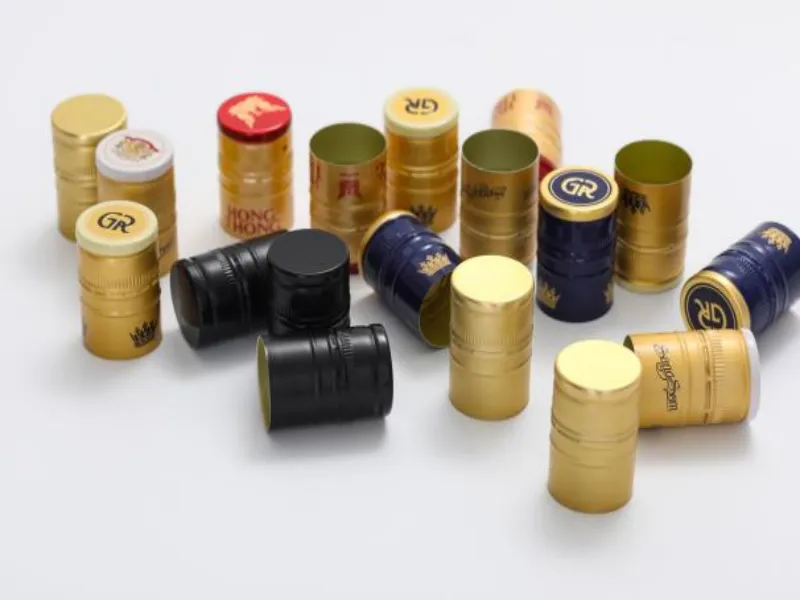
The aluminium head may be brushed, polished, anodized, matte finished, gloss finished, embossed, debossed, printed, laser marked, or color matched. This makes aluminium useful for spirits brands that need repeatable visual control across production batches.
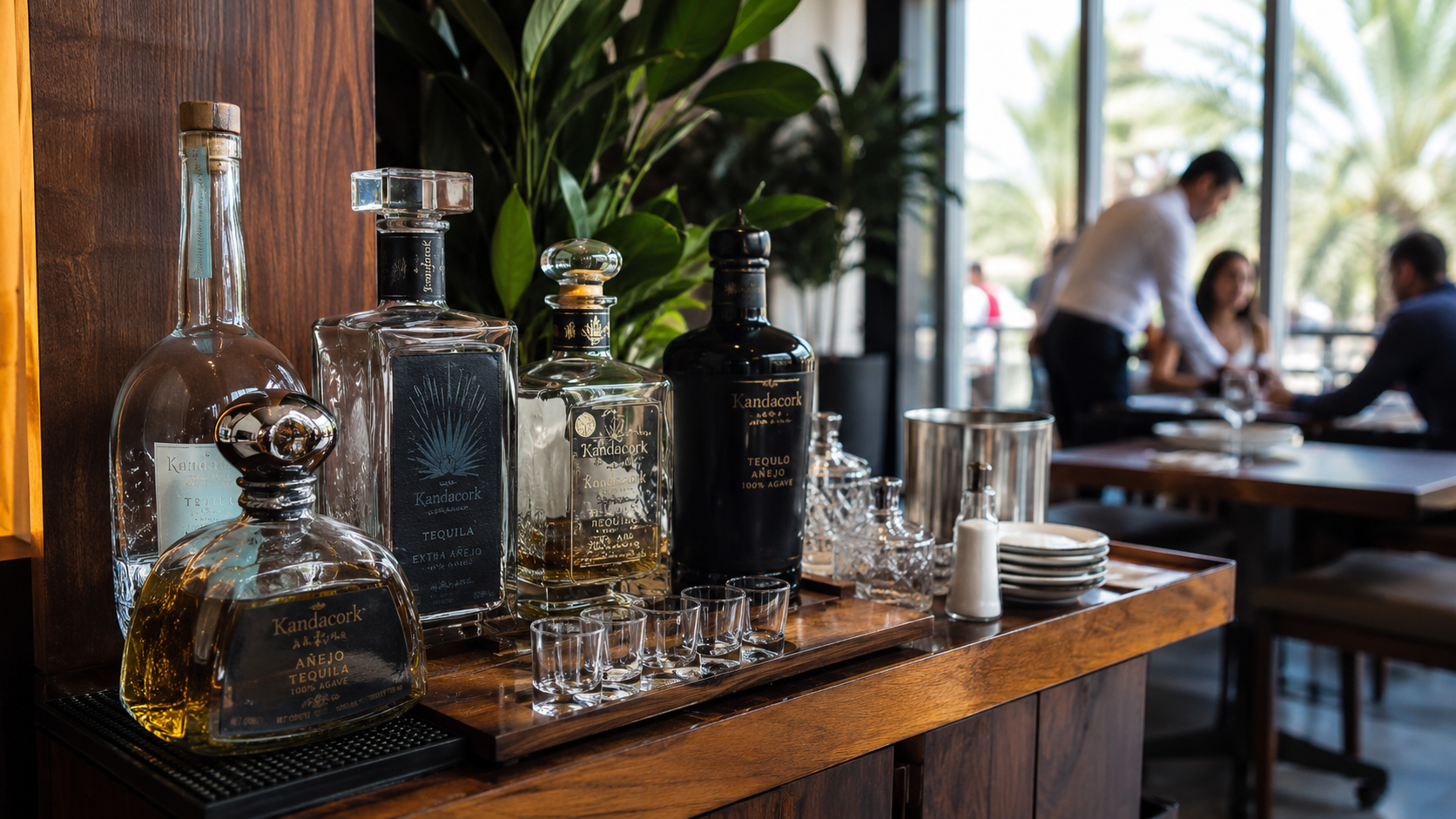
For vodka, aluminium supports a clean and cold premium feeling. For gin, it can match botanical color accents or modern label systems. For tequila, it can add gold, copper, black, or gunmetal impact. For liqueurs and RTD spirits, it helps maintain bright, consistent color coding across product lines.
Aluminium is also useful when the stopper must coordinate with other premium packaging elements, such as decorated glass, metallic label details, or a gift box. A bottle program that includes custom spirits bottles can use aluminium closures to reinforce a clean, modern, and highly controlled brand identity.
What Are Wooden Bar-Top Stoppers?
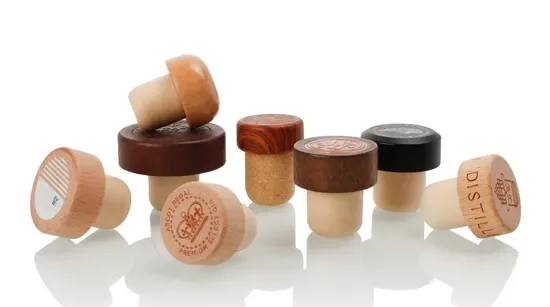
Wooden bar-top stoppers are closures made with a wooden head and a cork, micro-agglomerated cork, or synthetic shank. The wooden top creates the visible brand surface and the tactile hand feel. The shank provides the bottle-neck fit.
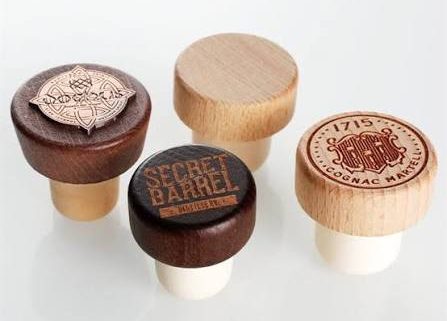
A wooden stopper can be natural, stained, painted, varnished, engraved, printed, or shaped into a custom profile. Common shapes include flat tops, domed tops, mushroom shapes, beveled heads, tapered heads, and sculpted decorative tops.
Wood is strong when the brand needs warmth and authenticity. Whisky brands often use wood because it visually connects with barrel aging and maturation. Rum brands can use darker stains to suggest richness, molasses, oak, spice, and tropical character. Brandy and cognac-style spirits often benefit from traditional wood tones. Craft gin and mezcal-style packaging may use lighter wood to suggest botanicals, handmade production, or natural ingredients.
For buyers who want a warm and premium closure with strong tactile value, wooden bar-top stoppers are often the better fit.
Which Looks More Premium?
Aluminium and wood can both look premium, but they express different kinds of value.
Aluminium looks premium when the bottle needs precision. A brushed aluminium top can feel technical and refined. A polished silver top can feel clean and bright. A matte black aluminium stopper can add strong contrast to clear or frosted glass. A gold or copper finish can make tequila, rum, or liqueur packaging feel more decorative and gift-ready.
Wood looks premium when the bottle needs character. Natural grain gives each stopper a more organic feel. Dark stains can add maturity to whisky or rum. Light wood can help gin or craft spirits feel softer and more handmade. Engraved marks can create a tactile brand signature that feels less industrial than a printed logo.
A simple way to decide is to define the desired customer reaction. If the buyer should think “modern, clean, precise,” aluminium is often stronger. If the buyer should think “crafted, warm, traditional,” wood is often stronger.
Which Stopper Seals Better?
Aluminium stoppers do not automatically seal better than wooden stoppers, and wooden stoppers do not automatically seal better than aluminium. In most bar-top closures, sealing performance depends mainly on the shank.
The shank is the lower insert that enters the bottle neck. It may be natural cork, micro-agglomerated cork, or synthetic material. Each option has different behavior.
Natural cork offers traditional material appeal and natural compression. Micro-agglomerated cork provides a more engineered cork-based structure with better uniformity. Synthetic shanks provide strong dimensional consistency, controlled compression, and predictable fit, especially for larger production runs. Brands that need stable performance across climates and export markets may also consider synthetic bottle stoppers when consistency is a priority.
For sealing performance, buyers should check bottle neck inner diameter, shank diameter, shank taper, compression recovery, insertion feel, pull-out force, leakage resistance, and repeated resealing. A beautiful stopper that does not match the bottle neck can create leaking, loose fit, difficult opening, or poor consumer experience.
The best practice is to test samples on the actual production bottle before confirming bulk orders.
Aluminium Stoppers: Best Applications
Aluminium stoppers are well suited to spirits brands that need a clean, controlled, and modern packaging language.
Vodka often benefits from aluminium because the category is associated with clarity, purity, coldness, and minimalism. Silver, black, white, and frosted-metal finishes can reinforce these cues.
Gin can use aluminium to support contemporary botanical packaging. Colored aluminium tops can match label details, flavor variants, or glass tint.
Tequila can benefit from bolder metallic finishes. Gold, copper, black, and brushed metal tones can help premium tequila stand out on shelf and behind the bar.
Liqueurs and RTD spirits often need strong color systems. Aluminium can support bright, consistent finishes across multiple SKUs.
Modern whisky and rum brands can also use aluminium when they want to move away from traditional packaging and create a cleaner, more contemporary identity.
Wooden Stoppers: Best Applications
Wooden stoppers are well suited to spirits brands that need warmth, natural material cues, and a stronger sense of craft.
Whisky is one of the most natural fits. Wood visually connects with oak barrels, maturation, and heritage. Even when the stopper is not made from barrel wood, the material cue supports the product story.
Rum also works well with wood. Dark wood, rounded profiles, and engraved tops can reinforce aged rum, spiced rum, barrel influence, and craft distilling.
Brandy and cognac-style spirits often use classic luxury cues, and a polished wooden stopper can help the bottle feel established and refined.
Craft gin can use wood when the brand wants to emphasize botanicals, small-batch production, or natural positioning rather than a sleek modern look.
Limited-edition spirits can also benefit from wood because the material feels collectible and personal. A shaped wooden top or engraved emblem can become part of the bottle’s identity.
Customization and Brand Decoration
Stopper customization should support the bottle, label, and brand story. It should not be treated as decoration only.
Aluminium is strong for anodizing, brushing, polishing, embossing, debossing, printing, laser marking, and color matching. These options suit brands that need clean geometry, metallic precision, or repeatable color across multiple product lines.
Wood is strong for staining, varnishing, engraving, printing, hot stamping, shaped profiles, sidewall grooves, and natural grain presentation. These options suit brands that want texture, warmth, and a more handcrafted impression.
The decoration method should be selected early. A design that looks strong in a mockup may not perform the same way after handling, packing, filling-line movement, or retail display. Brands that need logos, embossing, color matching, or multi-surface decoration can coordinate closure artwork with closure decoration and branding decisions so the stopper, bottle, and label feel like one package.
Technical Terms Buyers Should Know
| Term | Meaning |
|---|---|
| Bar-top stopper | A closure with a decorative top and an insert shank |
| Shank | The lower portion of the stopper that fits into the bottle neck |
| Shank diameter | The width of the shank that must match the bottle opening |
| Bottle neck finish | The bottle opening area that determines closure compatibility |
| Pull-out force | The effort required to remove the stopper from the bottle |
| Compression | How the shank deforms and recovers inside the neck |
| Leakage testing | Testing used to check seal performance during handling, storage, or transport |
| Micro-agglomerated cork | Engineered cork material designed for improved consistency |
| Synthetic shank | A non-cork insert designed for stable dimensions and predictable fit |
| Batch traceability | Records that connect materials, production, and quality checks to a specific batch |
Understanding these terms helps buyers compare aluminium bottle stoppers vs wooden bottle stoppers more accurately. It also helps avoid the common mistake of evaluating only the visible top while ignoring the shank and bottle-neck interface.
Sustainability and Material Claims
Sustainability claims should be specific, documented, and realistic. A stopper is often a hybrid component. It may include a head, shank, adhesive, coating, ink, varnish, or insert. Each part can affect recyclability, safety, and environmental messaging.
Aluminium has a strong recycling story. The Aluminum Association notes that recycled aluminum saves about 95% of the energy needed to make new aluminum. This gives aluminium stoppers a strong circular-material message when the closure design and local recycling infrastructure support it.
Wood has a different sustainability story. It can communicate renewable material value, natural texture, and craft positioning. Cork-based shanks can also support a natural-material message when sourcing and documentation are clear.
For broader packaging decisions, ISO’s packaging and environment guidance is useful because it emphasizes optimization of packaging materials in relation to packaging function. In practice, the most responsible stopper is not always the lightest, heaviest, most natural, or most recyclable option. It is the closure that protects the product, fits the bottle, performs through the supply chain, and supports honest material claims.
For brands also evaluating glass weight, recycled content, or lower-impact bottle programs, eco glass packaging can be considered as part of the wider packaging system rather than treating the stopper as an isolated component.
Food-Contact Safety and Compliance
Spirits closures should be reviewed as food-contact packaging components. Even if the decorative top does not directly touch the liquid, the shank, insert, adhesive, coating, ink, and any migration-prone material should be considered.
The European Commission food-contact materials guidance explains that food packaging materials must not endanger health, change food composition, or affect taste or smell under intended use. For U.S. market review, the FDA provides food-contact substance resources for packaging components and regulatory status. For cork-based closure systems, the EDQM cork materials guide is a relevant technical reference for quality and safety considerations.
For spirits brands, compliance review should include the intended alcohol strength, storage time, route to market, shipping conditions, and destination markets. Higher-ABV products may require extra attention to material suitability, especially for coatings, adhesives, and inserts.
Buyers should request food-contact declarations where applicable, material composition information, coating and ink details, adhesive and insert information, batch traceability, migration or safety documentation when required, and confirmation of suitability for alcoholic beverages.
Fit Testing Before Bulk Production
A stopper should be approved on the real bottle, not only on a drawing. Glass bottle dimensions can vary by mold, supplier, production run, and neck finish. A closure that feels secure on one sample bottle may feel loose or too tight on another.
Before mass production, buyers should confirm bottle neck inner diameter, stopper head size, shank diameter, taper, insertion depth, pull-out force, and corking equipment compatibility. A cap and neck compatibility review can reduce the risk of mismatched closures, especially for custom bottle shapes or proprietary neck finishes.
Testing should also reflect real use. A bottle may be stored upright, packed in cartons, exposed to temperature variation, shipped long distance, opened in a bar, and resealed multiple times by the consumer. Fit and seal should remain stable through those conditions.
When the project moves from samples to production, sealing and leakage testing helps confirm whether the selected stopper construction can protect the liquid and maintain the intended opening experience.
Buying Checklist for Spirits Brands
Before choosing aluminium stoppers or wooden stoppers, clarify the full packaging brief.
Define the spirit category, target price tier, bottle shape, label style, market channel, and annual volume. A duty-free limited edition may need a very different stopper from a high-volume private-label vodka.
Confirm the bottle neck finish and inner diameter. This is essential for fit and sealing.
Select the shank material based on performance needs. Natural cork, micro-agglomerated cork, and synthetic shanks have different appearance, compression, and consistency profiles.
Request physical samples. Photos, renderings, and catalog images are not enough for final approval.
Test the stopper on the actual bottle. Review insertion, extraction, resealing, leakage, and handling.
Check decoration durability. Aluminium finishes should be reviewed for scratching, coating adhesion, color tolerance, and logo clarity. Wooden finishes should be reviewed for stain consistency, grain variation, varnish quality, and engraving or printing stability.
Review packing method. Premium stoppers may need dividers, trays, or protective packaging to prevent scratches and surface damage during shipment.
Confirm compliance documentation before bulk production. This is especially important for export projects and higher-ABV spirits.
Coordinate the stopper with the wider bottle system. If the project also includes glass, decoration, caps, cartons, or export packing, working with Kandacork Glass can help align bottle structure, closure fit, decoration, and supply planning.
Common Mistakes to Avoid
The first mistake is choosing only by appearance. A stopper may look excellent in a rendering but fail fit testing on the real bottle.
The second mistake is comparing aluminium stoppers vs wooden stoppers without comparing the shank. The head material affects the look and feel, but the shank usually determines sealing behavior.
The third mistake is ignoring bottle neck variation. Even small dimensional differences can affect insertion force, pull-out force, and leakage resistance.
The fourth mistake is approving decoration without durability testing. A premium finish that scratches, chips, stains, fades, or loses logo clarity can weaken the entire pack.
The fifth mistake is using vague sustainability claims. Brands should not call a closure recyclable, renewable, or eco-friendly unless the full material structure and documentation support the claim.
The sixth mistake is leaving compliance review until the end. Food-contact suitability, material declarations, and export-market requirements should be reviewed before bulk ordering.
How Kandacork Closures Helps Buyers Choose
Kandacork Closures helps spirits brands evaluate aluminium stoppers vs wooden stoppers from both a design and technical sourcing perspective.
For aluminium stopper projects, the focus may include head shape, metallic finish, anodized color, logo decoration, shank selection, scratch resistance, and bottle-neck fit.
For wooden stopper projects, the focus may include wood tone, grain effect, stain consistency, head profile, engraving, printing, varnish, and cork or synthetic shank selection.
For both materials, the goal is the same: a closure that looks aligned with the brand, fits the bottle correctly, performs through filling and transport, and creates a premium opening experience for the consumer.
This is especially useful for new spirits launches, packaging upgrades, private-label projects, export programs, and brands developing several SKUs that need a consistent closure family.
Final Recommendation
There is no universal winner in aluminium stoppers vs wooden stoppers. Aluminium is usually the stronger choice for modern, metallic, clean, color-controlled, and highly consistent packaging. Wood is usually the stronger choice for natural, warm, craft, heritage, and tactile premium packaging.
For sealing, do not judge by the top material alone. Review the shank, bottle neck, pull-out force, leakage resistance, and resealing feel. For sustainability, evaluate the complete closure construction rather than making claims based only on aluminium or wood. For compliance, request documentation before mass production.
If you are comparing aluminium bottle stoppers vs wooden bottle stoppers for a new spirits project, prepare your bottle drawings, neck dimensions, target finish, spirit category, decoration requirements, annual volume, and destination markets. With those details, Kandacork Closures can recommend suitable stopper constructions and provide samples for real fit and finish review before bulk production.
FAQ
Are aluminium stoppers better than wooden stoppers?
Aluminium stoppers are better for modern spirits brands that need metallic finishes, precise color control, and consistent appearance. Wooden stoppers are better for brands that want natural warmth, craft appeal, and heritage positioning.
Do aluminium and wooden stoppers seal differently?
The decorative top is not the main sealing factor. Sealing depends more on the shank material, shank diameter, bottle neck finish, compression, pull-out force, and leakage performance.
Which stopper is better for whisky?
Wooden stoppers are often a strong fit for whisky because they support barrel-aged, heritage, and craft cues. Aluminium can also work for modern whisky brands that want a cleaner and more contemporary identity.
Which stopper is better for gin?
Aluminium stoppers often work well for gin because they support clean design, color matching, and modern botanical packaging. Wooden stoppers can work well for craft gin brands with natural or handmade positioning.
Are wooden stoppers suitable for premium spirits?
Yes. Wooden stoppers are suitable for whisky, rum, brandy, cognac-style spirits, craft gin, tequila, and limited-edition spirits because they create a warm and premium hand feel.
Are aluminium stoppers recyclable?
Aluminium has a strong recycling advantage, but brands should review the complete closure structure, including coatings, inserts, adhesives, shank material, and local recycling conditions.
Which stopper is more customizable?
Both are highly customizable. Aluminium is strong for anodizing, brushing, embossing, debossing, laser marking, and metallic color finishes. Wood is strong for staining, engraving, natural texture, shaped profiles, and craft-style branding.
What should spirits brands test before bulk ordering?
Brands should test bottle neck fit, shank diameter, insertion feel, pull-out force, leakage, resealing performance, decoration durability, color consistency, packing protection, and food-contact documentation.