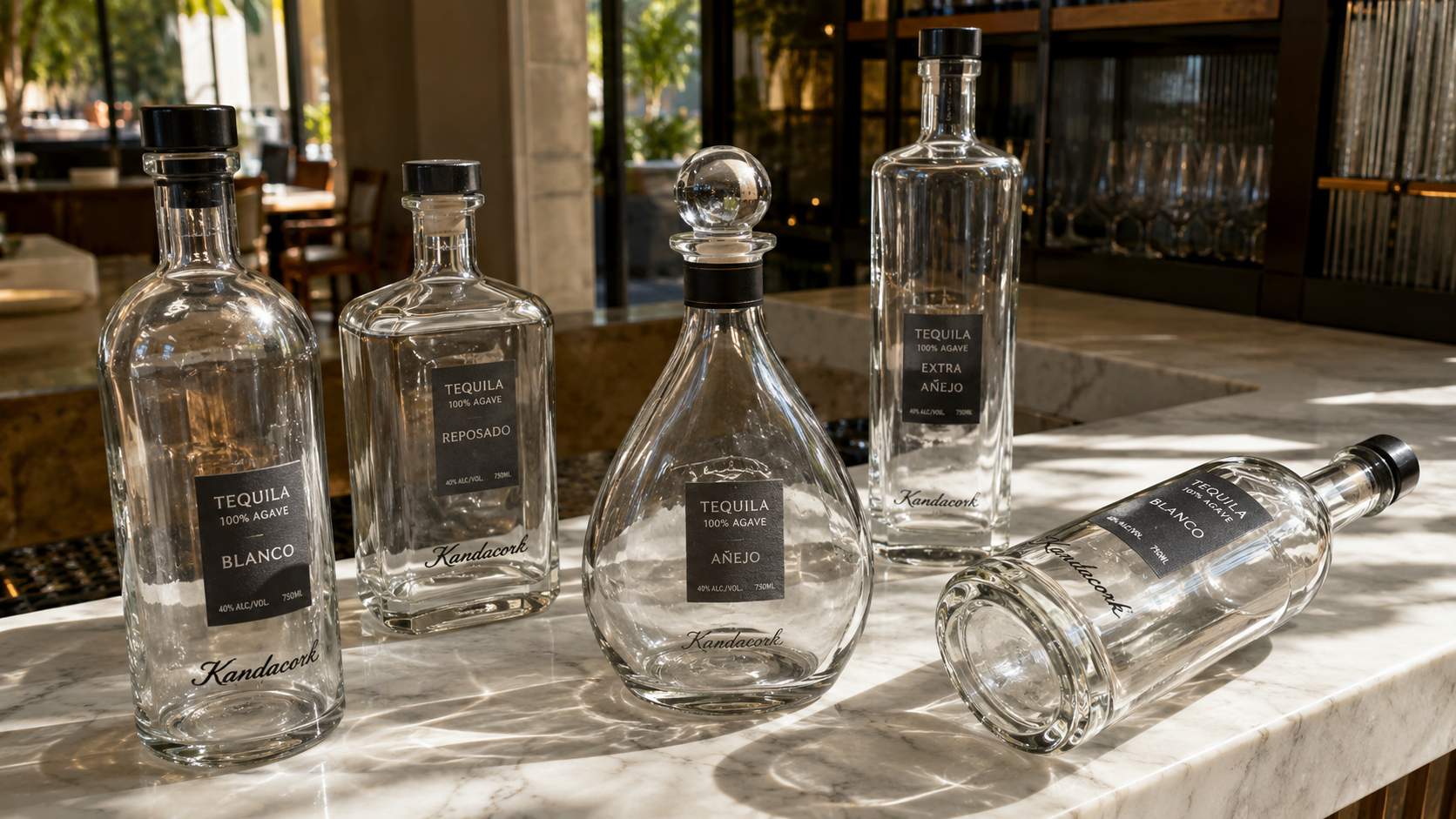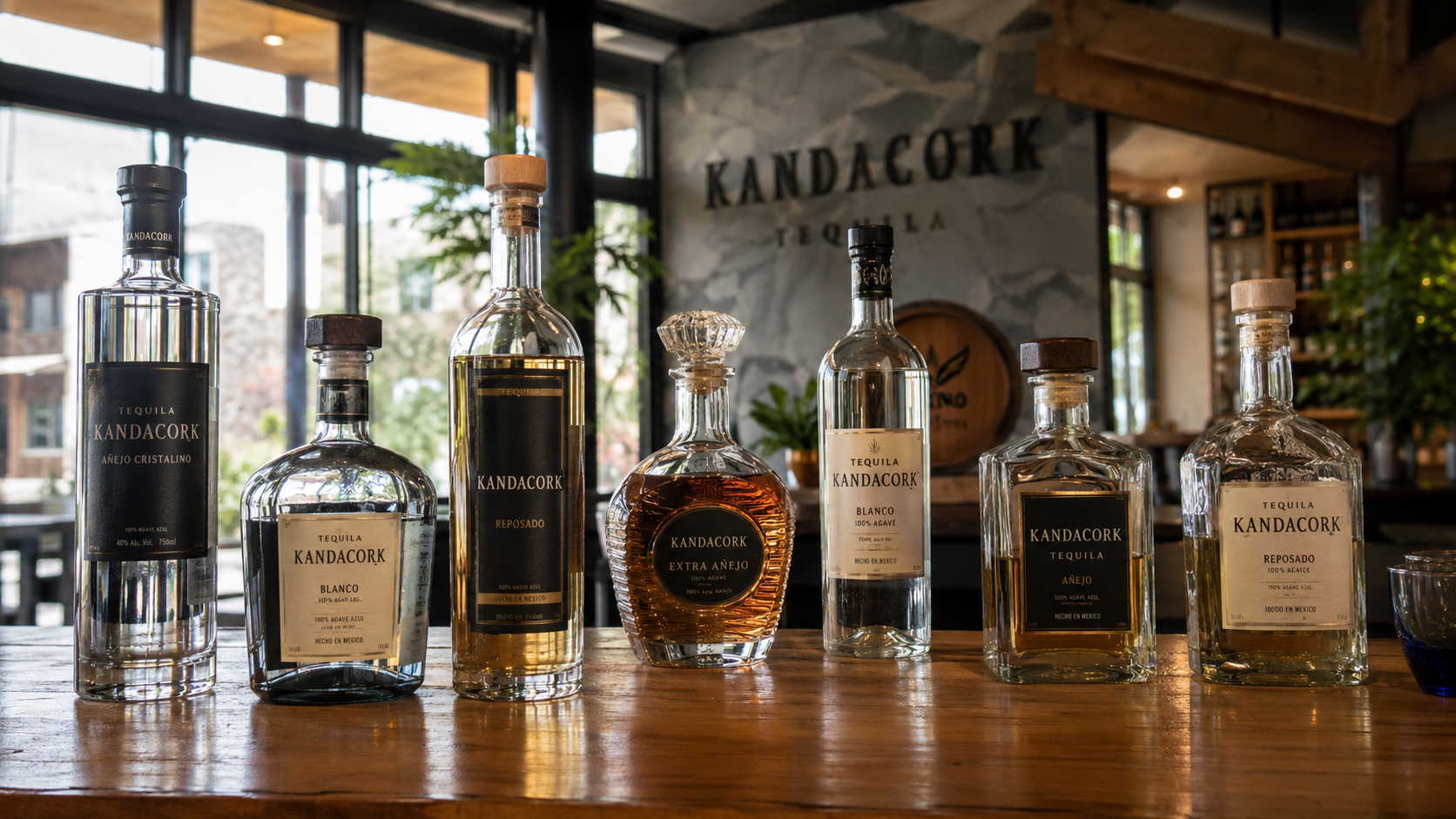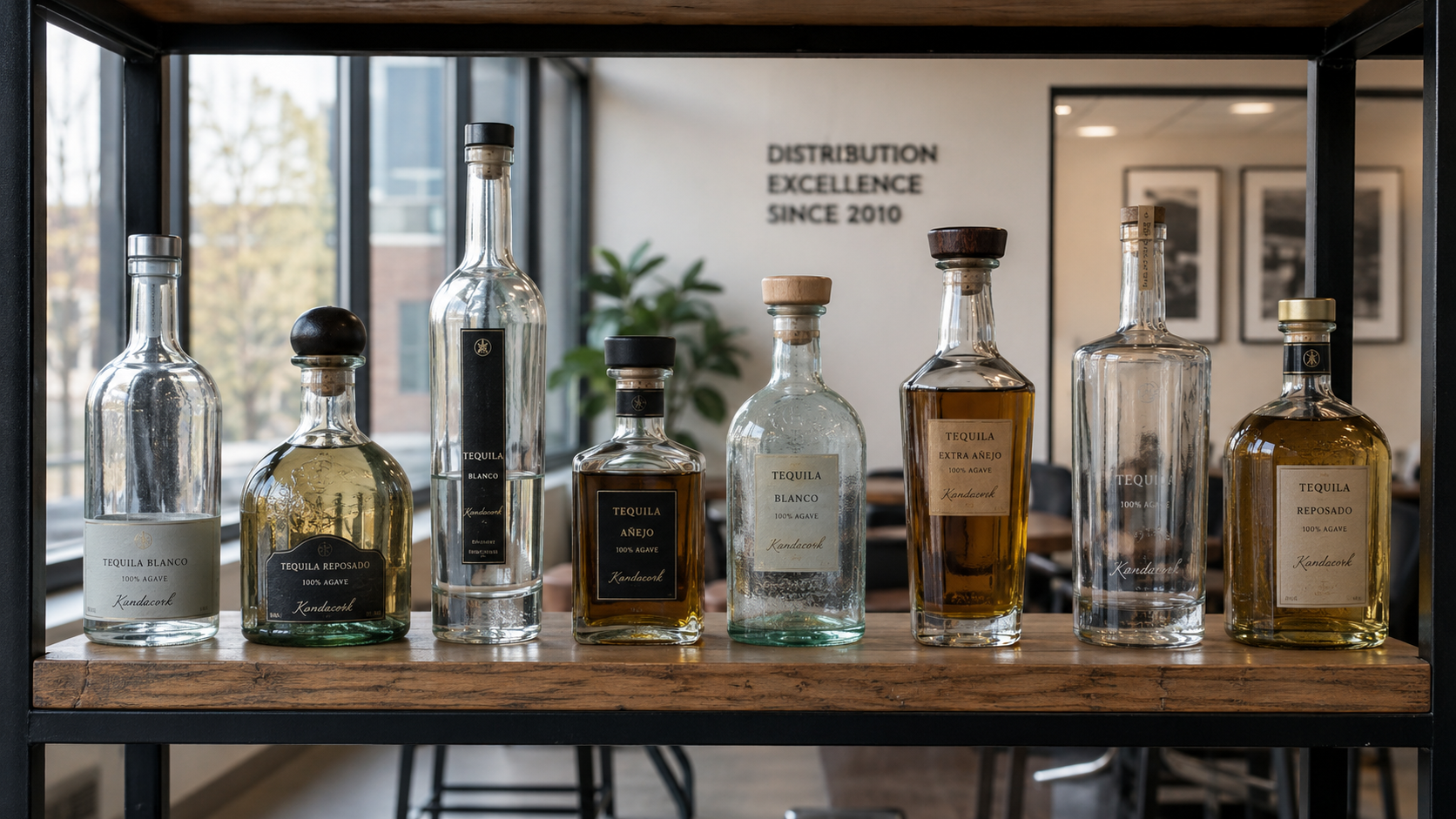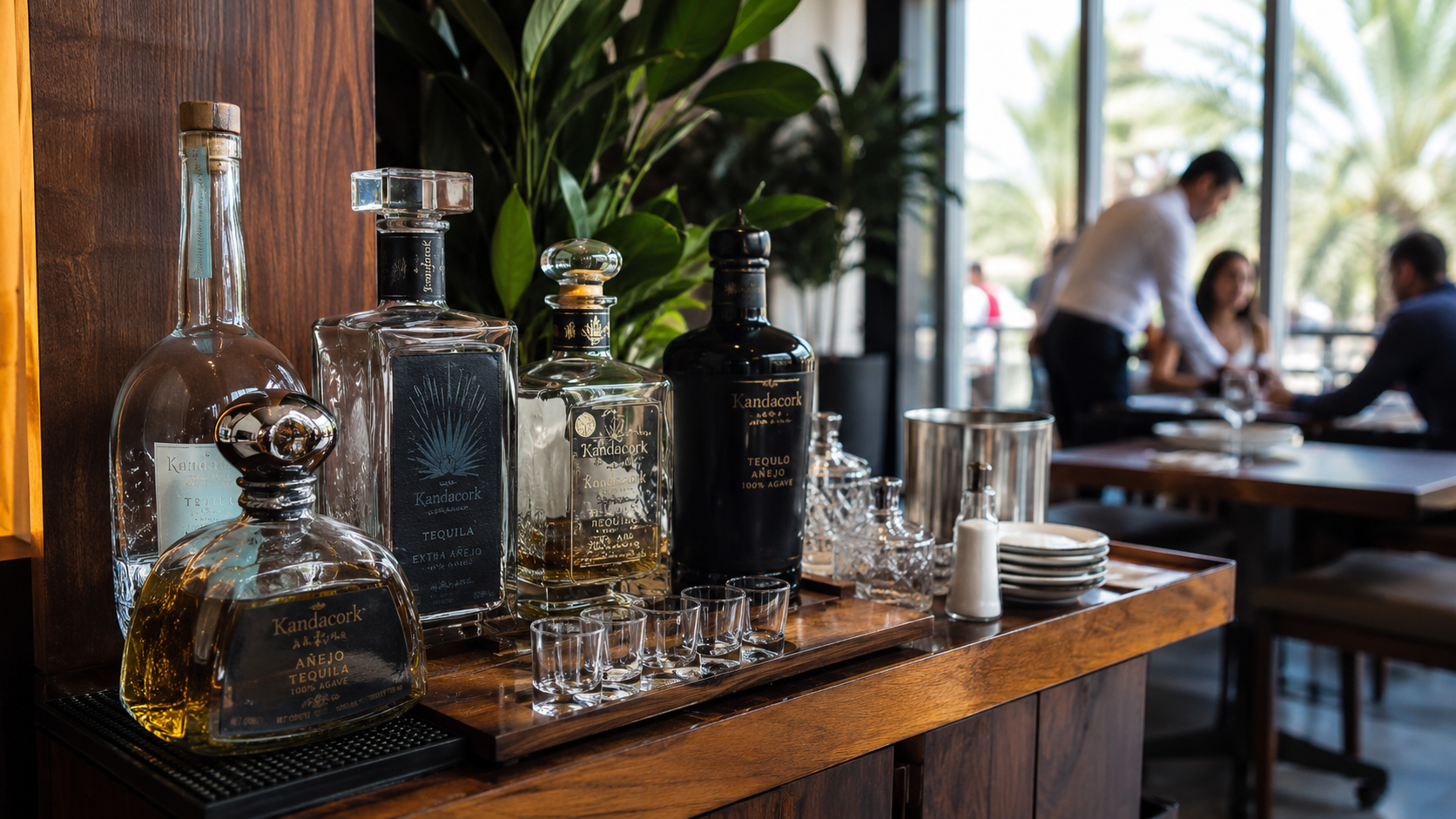
Spirits bottle closure types differ in appearance, fit, sealing method and production requirements. This guide compares cork stoppers, bar-top closures, screw caps, ROPP caps and anti-refill systems to help buyers choose the right option.
What Are Spirits Bottle Closures?
Spirits bottle closures are sealing and finishing components used on distilled spirits bottles. A closure may include a cork stopper, synthetic shank, screw cap, ROPP cap, capsule, shrink sleeve, liner, tamper-evident band, non-refillable insert, pourer, or custom decorative top.
A complete bottle closure system may include a cap or top, a cork or synthetic shank, a liner or sealing disc, a tamper-evident feature, a capsule or sleeve, a pour-control component, and branded decoration such as embossing, engraving, printing, or hot stamping.
The best closure systems combine technical performance with brand presentation. They should prevent leakage, maintain product integrity, support regulatory expectations, feel good in the hand, and match the value of the spirit inside the bottle.
Spirits Bottle Closures Comparison Table
| Closure Type | Best For | Main Benefit | Key Risk | Testing Needed |
|---|---|---|---|---|
| Bar-top corks | Whisky, rum, tequila, mezcal, brandy, craft gin | Premium opening feel and strong shelf appeal | Loose or overly tight fit | Extraction force, leak test, shank fit |
| Screw caps | Vodka, gin, liqueurs, RTD spirits, high-volume lines | Efficient production and easy reclosure | Weak premium perception if poorly designed | Application torque, removal torque, liner test |
| ROPP closures | Vodka, gin, export spirits, commercial liquor bottles | Tamper evidence and consistent sealing | Incorrect torque or poor band breakage | Torque test, pilfer-band test, liner compatibility |
| Non-refillable closures | Premium export spirits, duty-free, high-risk markets | Anti-refill protection and channel security | Higher cost and more complex assembly | Pour test, leak test, valve function test |
| Capsules and shrink sleeves | Whisky, rum, brandy, gin, gift packaging | Neck decoration and tamper visibility | Poor shrink quality or tearing | Heat application, tear strip, visual inspection |
| Glass, wood, or metal stoppers | Luxury spirits and limited editions | Strong brand differentiation | Higher cost, weight, and MOQ | Dimensional fit, durability, extraction force |
This comparison shows why closure selection should be based on application rather than appearance alone. A heavy stopper may be ideal for a limited-edition whisky, while a ROPP closure may be more practical for an export vodka line that needs tamper evidence and high-speed bottling.
Buyer Decision Matrix
| Buyer Goal | Recommended Closure | Why It Works |
|---|---|---|
| Premium shelf appeal | Bar-top cork or custom stopper | Creates a stronger opening ritual and tactile brand value |
| High-speed bottling | Screw cap or ROPP closure | Supports consistent application and scalable filling-line performance |
| Export security | ROPP or non-refillable closure | Improves tamper evidence, product integrity, and anti-refill protection |
| Craft positioning | Wood-top cork or textured custom stopper | Communicates natural, artisanal, and premium cues |
| Cost control | Standard screw cap or synthetic stopper | Offers predictable performance with lower complexity |
| Gift packaging | Custom stopper with capsule or shrink sleeve | Enhances visual value across the bottle, neck, and carton |
| Private-label spirits | Screw cap, synthetic cork, or simple bar-top closure | Balances branding flexibility, lead time, MOQ, and cost |
For buyers comparing custom spirits bottle closures, this matrix can shorten the selection process. Start with the commercial goal, then confirm the bottle neck finish, filling method, tamper-evident requirement, and sample testing plan.
Main Types of Spirits Bottle Closures
Bar-Top Corks and T-Top Stoppers
A bar-top cork is best for premium spirits where opening feel, shelf appeal, and brand experience matter more than the lowest unit cost.
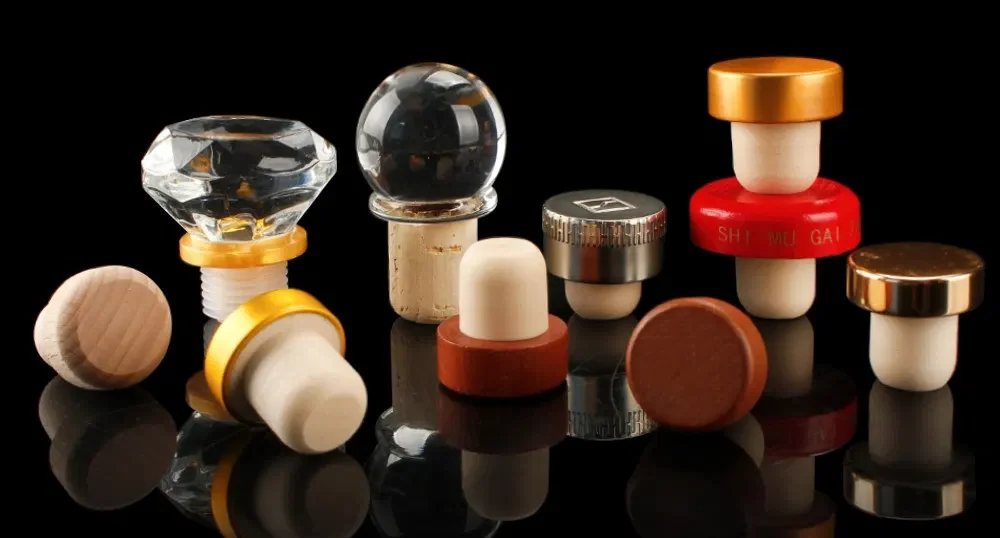
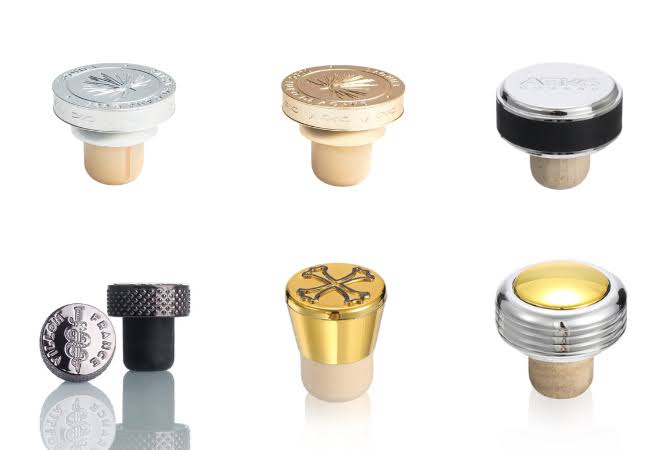
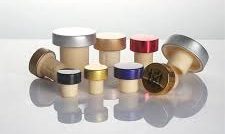
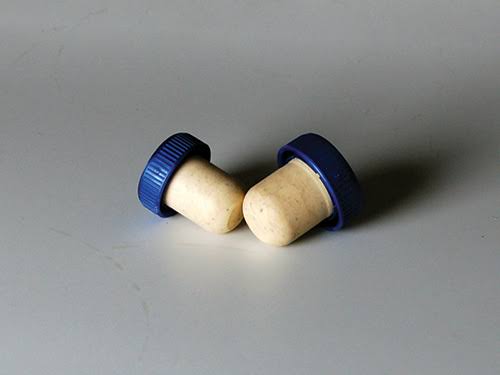
Bar-top corks, also called T-top stoppers, usually combine a decorative top with a cork or synthetic shank that fits into the bottle neck. The top can be made from wood, metal, plastic, glass, ceramic, or composite material. The shank may be natural cork, micro-agglomerated cork, technical cork, or synthetic cork.
Bar-top stoppers are commonly used for whisky, bourbon, aged rum, tequila, mezcal, brandy, craft gin, premium liqueurs, and limited-edition spirits. For brands that want a warm and tactile finish, wooden bar-top stoppers can support craft cues, heritage positioning, and natural shelf appeal.
Their main advantage is consumer experience. A well-fitted stopper gives a secure pull, clean release, and premium sound when opened. For luxury spirits, this opening ritual can become part of the brand story.
The main risk is fit. A stopper that is too loose can leak or feel cheap. A stopper that is too tight may be difficult to open or may damage the cork shank. Buyers should always confirm shank diameter, internal neck diameter, compression, and extraction force before approving bulk production.
Screw Caps
A screw cap is best for spirits brands that need easy reclosure, efficient production, and consistent performance across large-volume orders.
Screw caps are common on vodka, gin, liqueurs, flavored spirits, miniature bottles, RTD formats, and commercial product lines. A screw cap works with a threaded bottle neck. The cap may include a liner that creates the seal, and the exterior can be decorated with printing, embossing, color coating, metallic effects, matte finishes, or brand graphics.
Screw caps are a strong choice when the brand needs fast bottling-line performance, consistent recloseability, lower unit cost, easy consumer opening, and reliable bulk sourcing.
For premium positioning, screw caps can still look refined when paired with aluminum, textured finishes, deep color coating, or high-quality printing. The key is to align the cap material, liner, color, and decoration with the bottle design and retail price point.
ROPP Closures
A ROPP closure is best for spirits brands that need tamper evidence, consistent sealing, and efficient high-speed bottling.
ROPP stands for roll-on pilfer-proof. These aluminum closures are formed onto the bottle neck during bottling. The cap threads are shaped around the bottle finish, and the lower band provides tamper evidence. For brands that need decorated pilfer-proof caps, custom ROPP closures can support branded sidewalls, liners, torque control, and secure neck finishing.
ROPP closures are especially useful for vodka, gin, liqueurs, export spirits, travel retail products, and brands that need a tamper-evident closure without using a traditional cork stopper.
However, ROPP caps require the correct bottle neck finish and suitable capping equipment. Application torque, removal torque, liner selection, cap height, thread formation, and pilfer-band breakage should be checked before mass production.
Non-Refillable Closures
A non-refillable closure is best for premium export spirits and high-risk markets where refill protection and product integrity are important.
Non-refillable closures are designed to reduce refilling, counterfeiting, and product fraud. They are often used for premium export spirits, high-value vodka, tequila, whisky, rum, and products sold in markets where refill risk is a concern.
A non-refillable system may include valves, inserts, pour-control parts, or security features that make it difficult to refill the bottle after opening. For export programs, hospitality channels, duty-free products, and markets where bottle reuse is a concern, non-refillable closures can improve product integrity and consumer trust.
Capsules and Shrink Sleeves
Capsules and shrink sleeves are best for brands that want neck decoration, visible tamper evidence, and a more finished shelf presentation.
Capsules and shrink sleeves are not always the primary seal, but they are important parts of many spirits packaging systems. They cover the neck and closure area, support tamper visibility, protect against dust, and improve the finished appearance of the pack.
Common capsule and sleeve materials include PVC, PET, polylaminate, aluminum, and more sustainable alternatives. Decoration options may include metallic effects, matte finishes, embossing, tear tabs, color matching, and printed brand elements.
Capsules are especially useful for whisky, rum, brandy, gin, and gift-oriented spirits where the neck area contributes to visual value.
Glass, Wood, Metal, and Specialty Stoppers
Specialty stoppers are best for luxury spirits, limited editions, gift packaging, and brands that want a collectible packaging experience.
A heavy glass stopper can feel architectural and premium. A wood-top stopper can communicate craft, heritage, warmth, and natural character. A metal top can create a modern, durable, high-end finish. For contemporary spirits packaging, aluminum bar-top stoppers offer clean lines, stable dimensions, and a metallic surface that works well with minimalist labels, bold bottle decoration, and premium capsules.
Glass stoppers can also elevate collectible packaging. For spirits that need a refined display-ready finish, custom glass stoppers can support luxury presentation when paired with the right bottle structure, carton protection, and sampling plan.
How to Choose Closures by Spirit Category
Whisky and Bourbon
Whisky and bourbon brands often benefit from bar-top corks, wooden stoppers, metal tops, or decorative capsules. These closures support tradition, aging cues, and premium shelf presence.
For entry-level whisky, a screw cap or ROPP closure can work if the design is clean and the seal is reliable. For premium bottles, a custom stopper usually creates a stronger sensory experience.
Vodka
Vodka packaging often uses screw caps, ROPP closures, or non-refillable caps. Vodka brands usually prioritize clean lines, modern finishes, tamper evidence, and production consistency.
A brushed aluminum cap, matte black ROPP closure, or security closure can match the minimalist design language common in vodka packaging.
Gin
Gin brands can move in two directions. Craft and botanical gin often use bar-top stoppers to create a premium, artisanal feeling. Modern or high-volume gin may use screw caps or ROPP caps for convenience, clean presentation, and filling efficiency.
For botanical gin, color matching between the closure, label, glass bottle, and botanical story can improve shelf recognition.
Rum
Rum packaging often uses wood-top corks, dark metal stoppers, capsules, or non-refillable closures. Aged rum and spiced rum benefit from warmer materials and richer colors because these cues support the perception of maturity, barrel aging, and depth.
Export rum brands should also consider tamper evidence and non-refillable systems, especially in markets where refill protection is important.
Tequila and Mezcal
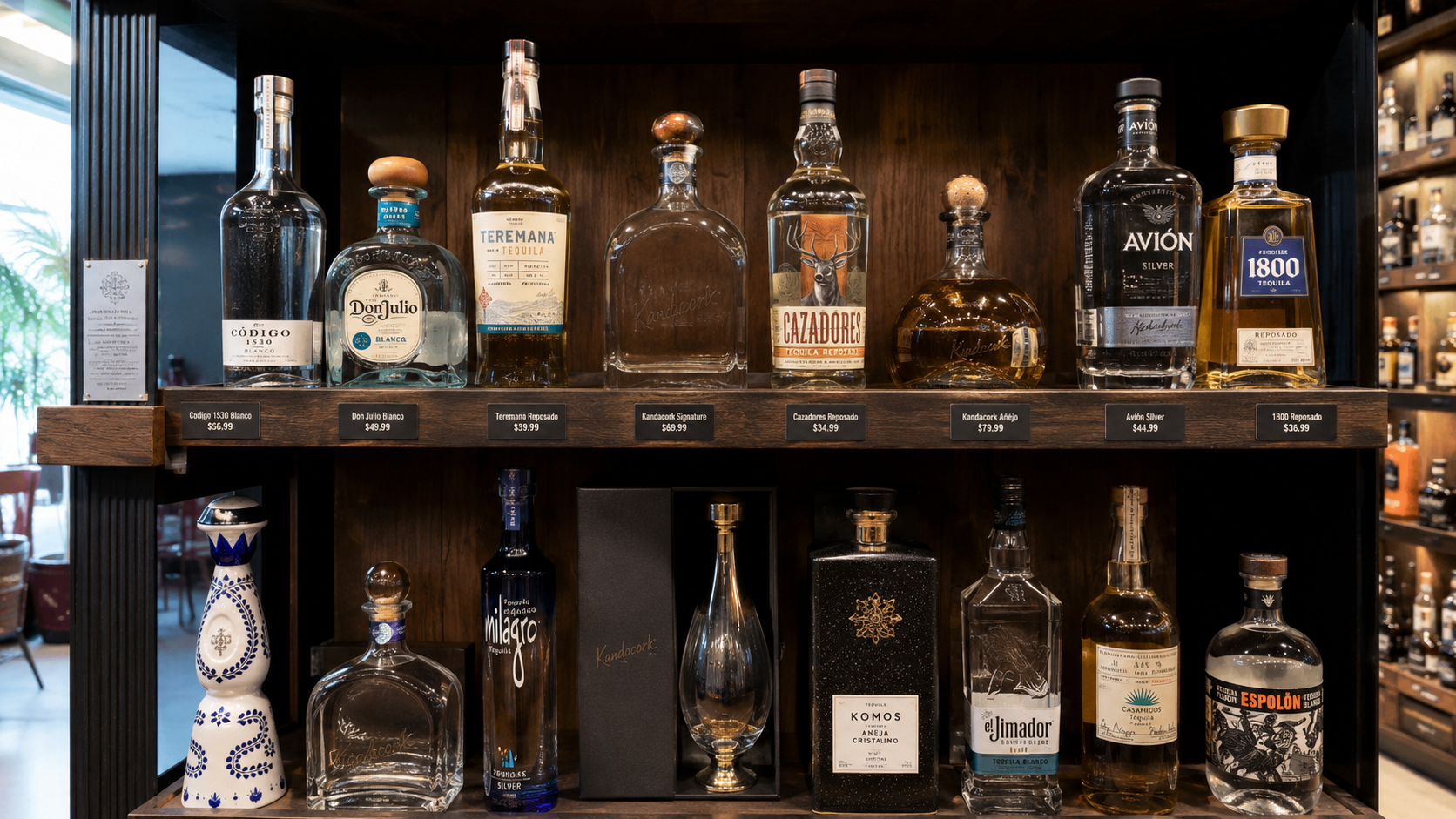
Tequila and mezcal brands often rely on distinctive stoppers, natural textures, and strong bottle silhouettes. Bar-top corks, synthetic corks, wood tops, metal caps, and non-refillable closures are all common options.
For premium tequila and mezcal, the closure should feel secure and handcrafted while still supporting consistent commercial production.
Brandy, Liqueurs, and RTD Spirits
Brandy often uses cork stoppers or decorated caps that communicate maturity and refinement. Liqueurs may use screw caps, bar-top closures, pourers, or specialty caps depending on viscosity, sweetness, serving occasion, and bottle size.
RTD spirits usually require practical closures that support convenience, speed, and distribution efficiency.
Bottle and Closure Development Should Work Together
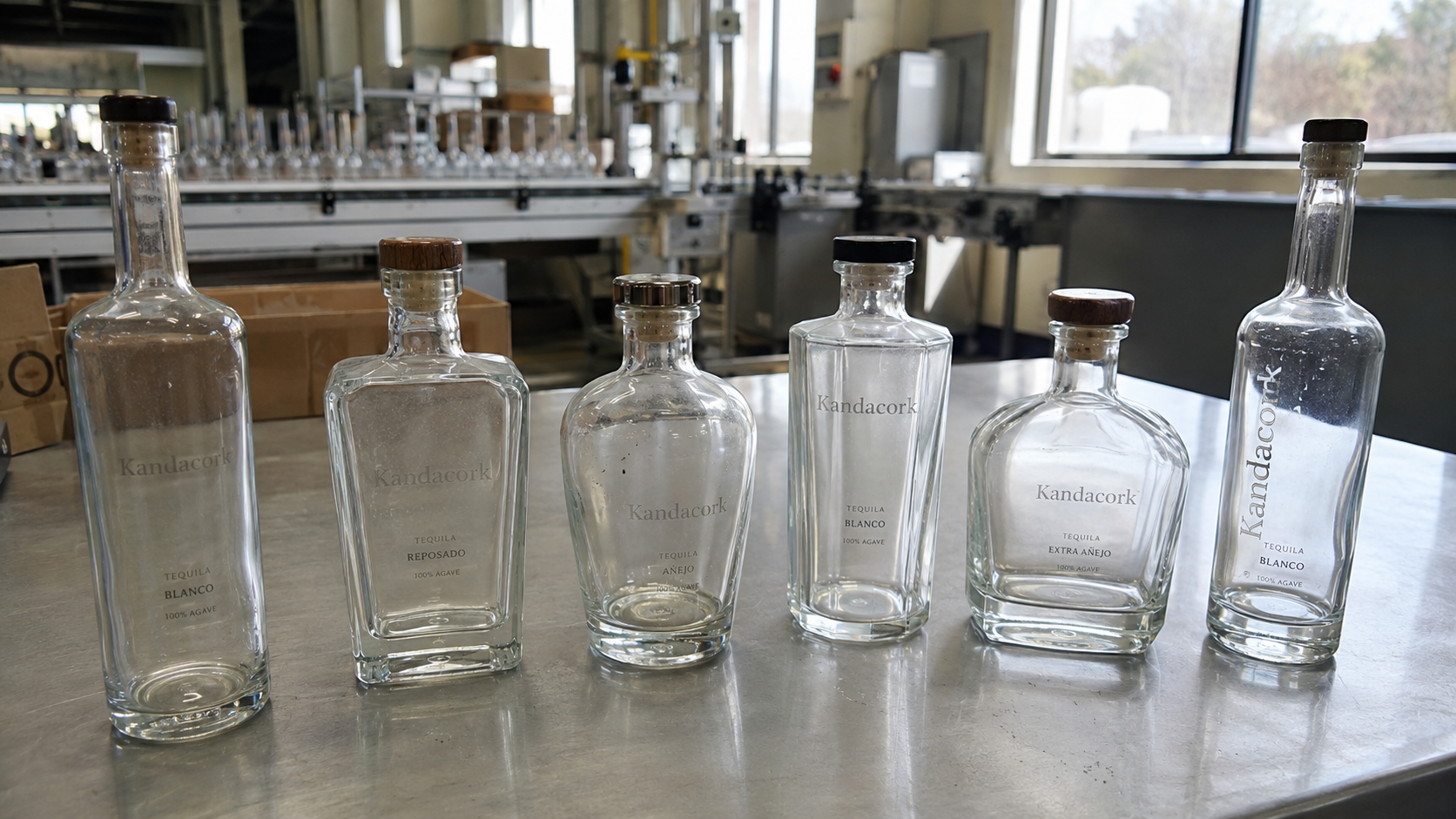
A closure performs best when it is selected together with the bottle, not added at the end of the project. A tall whisky bottle, short-shoulder rum bottle, frosted vodka bottle, or heavy-base tequila bottle can all require different closure proportions, shank specifications, neck finishes, and decoration decisions.
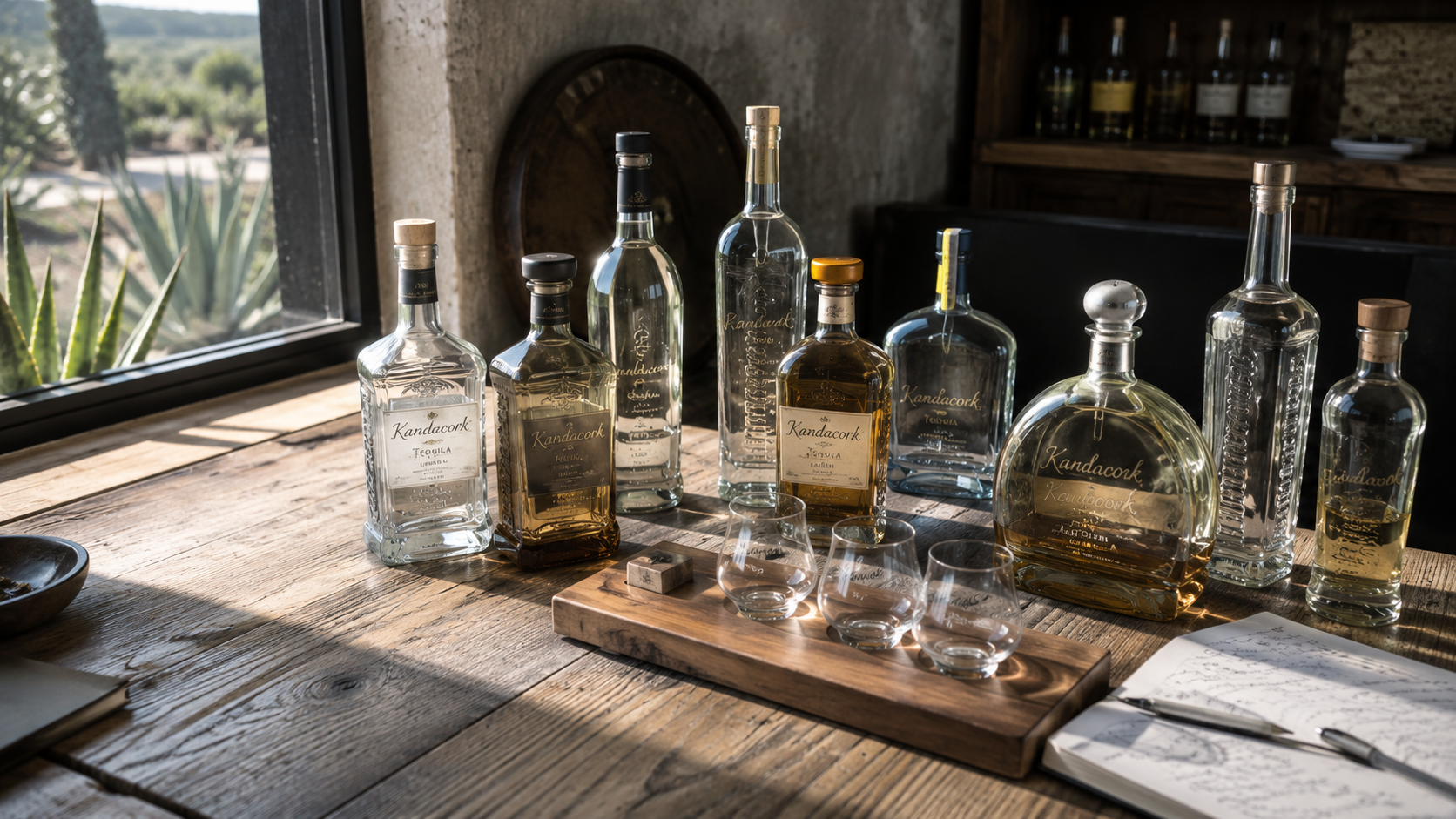
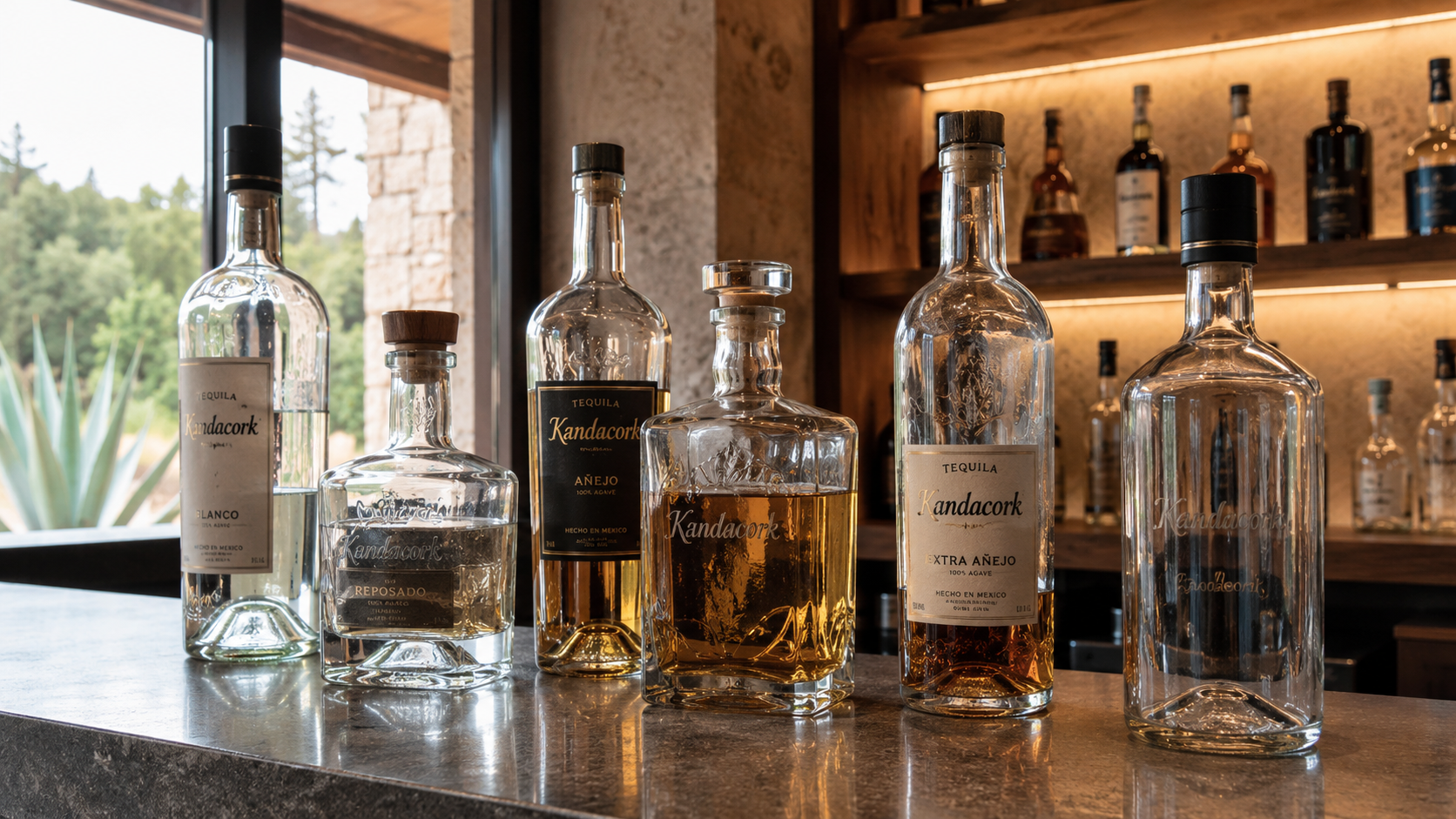
Brands sourcing bottle and closure programs together can reduce mismatched components, late sampling delays, and filling-line surprises. Teams developing complete spirits packs often coordinate with a specialist bottle platform such as Kandacork Spirits so the bottle shape, neck finish, stopper profile, closure color, and carton presentation are evaluated as one system.
For decorated packaging programs, closure color and finish should also be reviewed alongside printing, coating, frosting, labeling, and carton artwork. Coordinating these elements with a dedicated branding partner such as Kandacork Decoration & Branding can help keep the closure, bottle, label, and secondary packaging consistent across product lines.
Closure Fit: Neck Finish, Shank Diameter, and Bottle Compatibility
Fit is one of the most common problems in spirits packaging. Two closures may look similar but perform differently if the bottle neck finish, internal diameter, thread profile, or sealing surface is different.
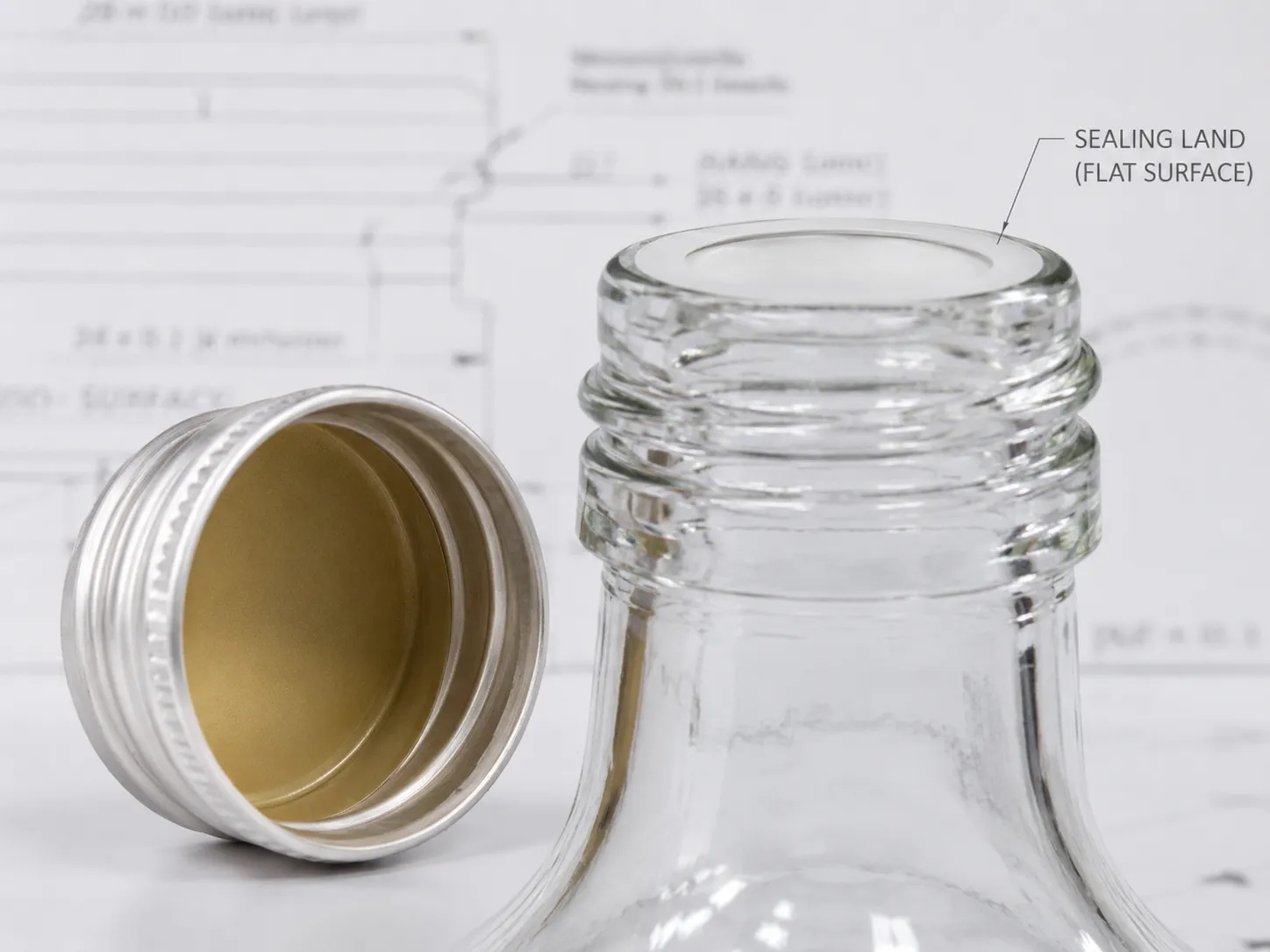
Before ordering closures, buyers should request or confirm the technical bottle drawing. This drawing should show the neck finish, internal bore, outer diameter, thread details, height, sealing surface, and tolerance range.
For bar-top corks, the cork shank must match the internal neck opening. Common spirits bottle openings include sizes around 18.5 mm and 21.5 mm, but actual specifications vary by bottle manufacturer. Many closure suppliers recommend a shank slightly larger than the internal neck diameter to create compression and sealing force. Physical samples are still required because glass tolerance, cork material, humidity, and storage conditions can affect fit.
For screw caps and ROPP closures, buyers need to confirm thread finish, cap diameter, cap height, liner type, torque range, pilfer-band behavior, and capping-equipment compatibility.
Correctly fitted closures should deliver three results: the bottle seals without leakage, the consumer can open and reclose it comfortably, and the closure remains aligned and attractive on the bottle.
Sealing Performance and Quality Testing
Bottle closures should not be approved by appearance alone. They should pass practical performance checks using the actual bottle, actual liquid, filling method, storage conditions, and carton format.
Leak Testing
Leak testing checks whether the closure protects the product during storage, transport, and handling. Filled bottles should be tested upright, inverted, and under realistic shipping conditions.
A practical test plan may include 24-hour, 48-hour, and 72-hour observation periods. Buyers should check for wet necks, stained capsules, liquid loss, odor leakage, cap movement, and carton damage.
Extraction Force
Extraction force is the effort needed to remove a cork or stopper from the bottle. If the force is too low, the stopper may feel loose or unsafe. If it is too high, the consumer may struggle to open the bottle.
For premium spirits, extraction force is part of the brand experience. The International Organization for Standardization describes cork-stopper physical testing through standards such as ISO 9727-5, which addresses the force needed to extract cylindrical cork stoppers. That type of testing concept is useful when evaluating natural cork, technical cork, and synthetic stopper performance.
Torque Testing
Torque testing is important for screw caps and ROPP closures. Application torque measures how the cap is applied during bottling. Removal torque measures how easily the consumer can open the bottle.
Under-torque can cause leakage or poor tamper-band performance. Over-torque can damage threads, deform liners, or make the cap difficult to open.
A proper torque range should be confirmed during filling-line trials, not only during sample review.
Liner and Alcohol Compatibility
The closure liner or sealing material must be compatible with the spirit. Alcohol strength, flavor compounds, sugar content, acidity, essential oils, and storage temperature can all affect closure performance.
High-proof spirits, botanical gin, flavored liqueurs, cream liqueurs, and oily infusions may need additional compatibility testing. Buyers should check for liner swelling, odor transfer, discoloration, flavor impact, and loss of seal after storage.
Temperature and Transport Simulation
Spirits bottles may face vibration, pressure changes, heat, cold, and rough handling during distribution. Testing should include carton fit, pallet stability, drop simulation, temperature cycling, and closure movement after transport.
The International Safe Transit Association describes ISTA test procedures for simulating the motions, forces, conditions, and sequences of transport environments. Even when a brand does not run a full formal test protocol, the same logic is useful: evaluate the filled pack under conditions that resemble real shipping and storage.
Pre-Production Closure Approval Checklist
Before approving bulk production, buyers should review the closure as part of the full bottle system, not as a separate accessory.
Use this checklist before placing a mass order:
- Confirm the final bottle drawing
- Confirm internal neck diameter and neck finish
- Match cork shank, screw finish, or ROPP cap specification
- Approve physical closure samples
- Test upright and inverted filled bottles
- Observe filled samples for 24–72 hours
- Check application torque for screw caps and ROPP closures
- Check removal torque for consumer opening
- Test extraction force for cork stoppers
- Review liner compatibility with alcohol strength and flavor compounds
- Check tamper-band, capsule, sleeve, or tear-strip performance
- Confirm closure alignment and visual appearance
- Review filling-line compatibility with the bottling partner
- Test shipping cartons, dividers, and pallet stability
- Approve decoration, color, logo position, and finish
- Run a small production trial before full-scale manufacturing
This approval process reduces leakage, poor fit, weak tamper evidence, decoration errors, and delayed product launches.
Tamper Evidence, Export, and Compliance
Tamper evidence is a major consideration for distilled spirits. The U.S. Alcohol and Tobacco Tax and Trade Bureau states that distilled spirits plants and importers are required to securely affix a tamper-evident closure or similar device to bottles or other containers of distilled spirits.
The eCFR also provides regulatory context for U.S. distilled spirits plant operations, including liquor bottle, label, and closure requirements under 27 CFR Part 19 Subpart T.
A tamper-evident closure is designed so that opening the container breaks or visibly changes part of the closure system. Examples include ROPP bands, shrink sleeves, tear bands, capsules, security strips, and non-refillable devices.
Export brands should confirm destination-market requirements before bulk ordering. A closure that is acceptable in one market may not be suitable in another. Non-refillable closures, security inserts, special bands, or traceability features may be required for certain regions or distribution channels.
Materials and Decoration Options
The material of a closure influences cost, appearance, weight, sustainability perception, and consumer experience.
Wood is warm, tactile, and premium. It works well for whisky, rum, brandy, tequila, mezcal, and craft spirits. Wood tops can be natural, stained, painted, engraved, or combined with cork shanks.
Aluminum and metal closures create a clean, modern, and durable appearance. They are common in ROPP caps, screw caps, and premium decorative tops. Finishes may include brushed metal, anodized color, matte coating, gloss coating, and embossed details.
Plastic and synthetic materials are lightweight, consistent, and cost-effective. They are useful for high-volume production, colorful designs, and closures that require tight dimensional control.
Glass stoppers create a luxury feeling and can support collectible packaging. They are heavier and more expensive, so they are best used for premium lines, limited editions, or gift packaging.
Natural cork, micro-agglomerated cork, and synthetic cork each offer different benefits. Natural cork has traditional appeal. Technical cork can improve consistency. Synthetic cork can offer controlled dimensions and lower variability.
Custom bottle closures can use many decoration techniques, including embossing, debossing, laser engraving, pad printing, screen printing, hot stamping, color matching, custom molded tops, matte coating, gloss coating, metallic finishes, and textured surfaces.
A closure should be designed with the bottle, label, capsule, and carton as a complete packaging system. This creates a more consistent retail impression and reduces the risk of mismatched components.
Sustainability and Packaging Perception
Sustainability is increasingly important in spirits packaging. Buyers often evaluate closure materials alongside glass weight, label substrate, carton design, recyclability, refill systems, and shipping efficiency.
The Glass Packaging Institute notes that glass can be recycled endlessly without loss in quality or purity. However, the sustainability profile of a complete spirits pack depends on more than the bottle. Closure material, decoration method, transport weight, secondary packaging, and local recycling infrastructure also matter.
For distilled spirits closures, brands may consider responsibly sourced wood, natural cork, aluminum components, lighter-weight designs, recyclable materials, mono-material construction, reduced plastic use, and packaging systems that minimize waste during production.
The best approach is practical. A closure must still seal properly, meet safety expectations, survive distribution, and support the brand experience. Sustainability should improve the packaging system without creating leakage, quality, or compliance risks.
For brands building full glass packaging programs, group-level coordination through Kandacork Glass can help align structural design, closures, decoration, and export-ready production. When projects require broader bottle and jar sourcing across multiple categories, Kandacork Glass Packaging can support custom glass formats, decoration-ready surfaces, matched closures, and logistics planning.
Cost, MOQ, and Procurement Factors
The cost of liquor bottle closures depends on material, size, decoration, tooling, liner, security features, order volume, and packaging requirements.
A standard screw cap may be economical for high-volume production. A custom wood-top cork may require higher MOQ, longer lead time, and tooling approval. A non-refillable closure may cost more but can protect brand integrity in export markets.
Before requesting a quotation, buyers should prepare the spirit category, bottle drawing, neck finish details, target closure type, required material, decoration method, logo artwork, tamper-evident requirement, non-refillable requirement, order quantity, destination market, filling-line information, sample testing plan, and expected launch date.
This information helps Kandacork Closures recommend closure options that are realistic for branding, production, compliance, and budget.
Common Mistakes When Buying Spirits Bottle Closures
Choosing by Appearance Only
A closure can look excellent in a photo but fail in production. Buyers should never select closures based only on color, shape, or surface finish. Fit, sealing, torque, extraction force, compatibility, and filling-line performance are just as important.
Ordering Bulk Closures Without Samples
Samples are essential. Bulk ordering without fit testing can lead to loose stoppers, leakage, tilted caps, poor tamper-band breakage, weak reclosure, or a poor opening experience.
Ignoring Bottle Neck Tolerances
Even small differences in neck diameter or thread finish can affect closure performance. Always match the closure to the exact bottle drawing and test with real samples.
Forgetting Filling-Line Compatibility
Some closures require specific capping heads, torque settings, compression systems, or application equipment. A closure should be reviewed with the bottling partner before production.
Overlooking Export Requirements
Export spirits may need tamper-evident bands, non-refillable inserts, market-specific packaging features, or additional documentation. These requirements should be checked before packaging is finalized.
Why Work With Kandacork Closures?
Kandacork Closures supports spirits brands, distilleries, packaging buyers, and private-label developers with custom closure solutions for premium and commercial spirits.
The company helps buyers evaluate bar-top corks, wooden stoppers, synthetic corks, screw caps, ROPP closures, non-refillable closures, capsules, shrink sleeves, and branded decorative caps.
Kandacork Closures focuses on practical packaging support, including bottle-neck review, closure type selection, cork and shank matching, cap and liner matching, tamper-evident planning, custom decoration support, sample approval, leak and fit testing guidance, bulk order coordination, and export packaging considerations.
To receive accurate recommendations, buyers can prepare the bottle drawing, spirit type, alcohol strength, target market, order quantity, decoration requirements, and expected filling method. Kandacork Closures can then help match closure type, shank size, liner, tamper-evident option, decoration method, and sampling plan before bulk production.
For brands developing whisky, gin, vodka, rum, tequila, mezcal, brandy, liqueurs, or RTD spirits, the right closure can improve both product performance and consumer perception.
FAQ
What are the most common spirits bottle closures?
The most common spirits bottle closures include bar-top corks, synthetic cork stoppers, screw caps, ROPP closures, non-refillable closures, capsules, shrink sleeves, and specialty decorative stoppers.
What closure is best for premium spirits?
Premium spirits often use bar-top corks, wood-top stoppers, metal stoppers, glass stoppers, or decorated capsules. These closures create a stronger opening ritual and help communicate higher product value.
What is the difference between a cork stopper and a screw cap?
A cork stopper fits into the bottle neck through compression. A screw cap fits onto a threaded neck finish. Cork stoppers are often used for premium presentation, while screw caps are often chosen for convenience, speed, and consistent reclosure.
What is a ROPP closure?
A ROPP closure is a roll-on pilfer-proof aluminum cap formed onto the bottle neck during capping. It provides tamper evidence, strong sealing, and efficient production performance.
Do spirits bottles need tamper-evident closures?
Many spirits markets require or strongly expect tamper-evident packaging. Brands should confirm the rules in their production and destination markets before choosing a closure.
How do I choose the right stopper size?
Start with the bottle drawing and internal neck diameter. Then choose a compatible cork or synthetic shank, order samples, test the fit, check extraction force, and confirm leak performance before mass production.
Can spirits bottle closures be customized?
Yes. Spirits bottle closures can be customized with wood tops, metal tops, glass tops, color matching, embossing, debossing, engraving, screen printing, hot stamping, and custom molded shapes.
What should I test before ordering closures in bulk?
Test bottle fit, leakage, torque, extraction force, tamper-band breakage, liner compatibility, alcohol resistance, decoration quality, shipping performance, and filling-line compatibility.
What information should I provide to a closure supplier?
Provide the bottle drawing, spirit category, alcohol strength, target market, order quantity, closure style, material preference, decoration requirements, tamper-evident needs, filling method, and launch schedule.
Conclusion
The right spirits bottle closures protect the liquid, support tamper evidence, improve opening experience, strengthen shelf appeal, and help the brand look more professional. A good closure is not just a cap. It is part of the total packaging system.
For premium spirits, custom bar-top corks, wood stoppers, metal tops, and decorative capsules can create a stronger brand impression. For high-volume or export spirits, screw caps, ROPP closures, and non-refillable systems may provide better consistency, security, and production efficiency.
Kandacork Closures helps spirits brands choose closure systems that match the bottle, liquid, market, and brand story. To get the right recommendation, send Kandacork Closures your bottle drawing, spirit type, alcohol strength, target market, decoration requirements, order quantity, and filling method. The team can help evaluate fit, sealing performance, tamper-evident options, and custom decoration before bulk production.