Private label spirits projects often move quickly, but closure choices still affect bottle fit, shelf appearance, production stability and buyer trust. This guide helps private label brands compare closure types, logo methods, sampling steps, MOQ and export packing requirements.
Private-Label Closure Supply for Brand Owners, Bottlers, and Importers
A private-label closure supplier develops and supplies caps, stoppers, and sealing systems for products sold under a retailer, distributor, importer, or independent brand owner’s label. Unlike a standard cap distributor, a private-label closure partner helps customize the closure so it supports both technical performance and brand presentation.
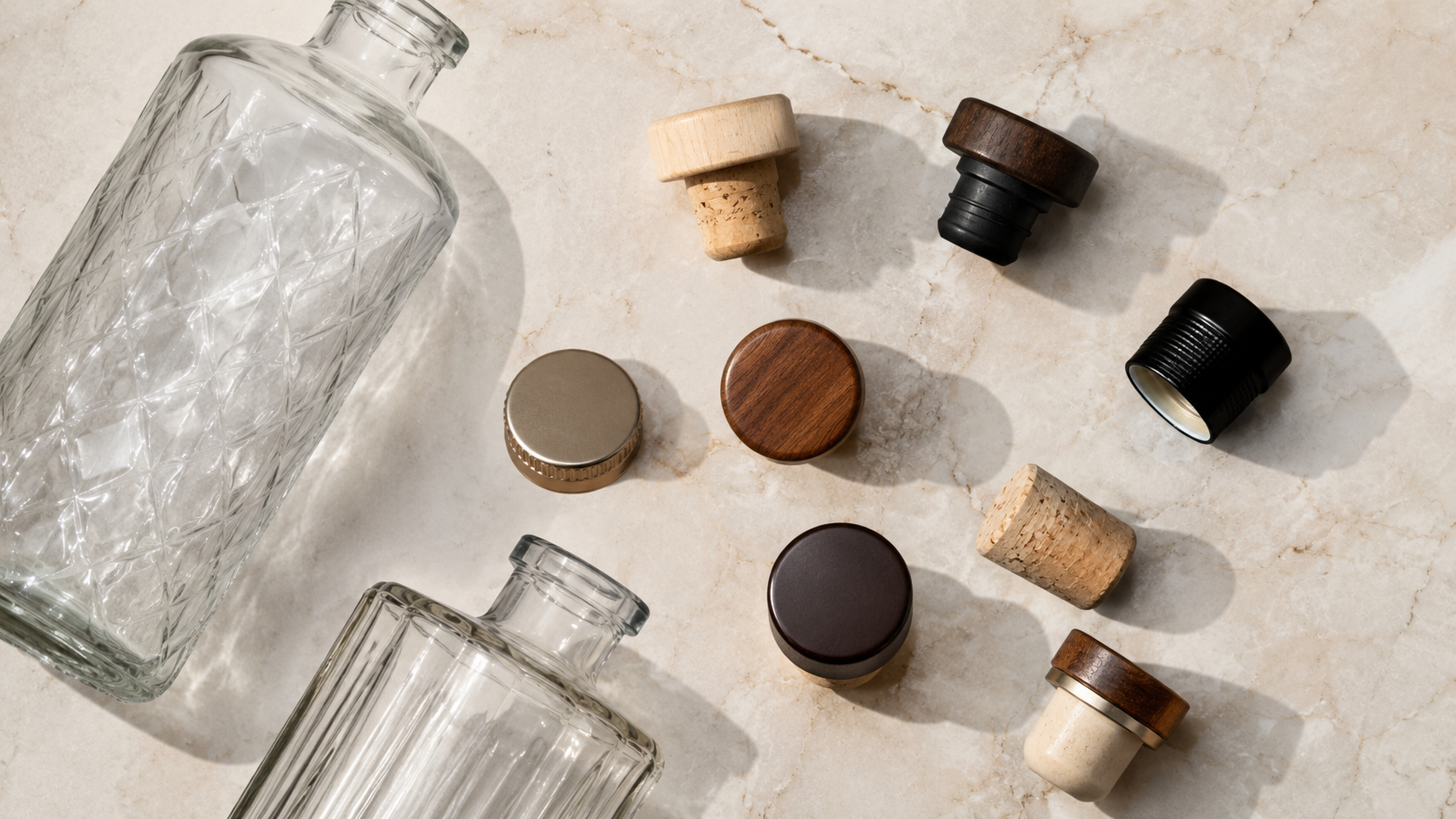
For a spirits or beverage project, the closure may include a wooden T-top stopper, synthetic cork, aluminum screw cap, ROPP cap, non-refillable insert, capsule, shrink sleeve, or decorative top. For gourmet packaging, it may include pourer closures, threaded caps, tamper-evident bands, or branded metal caps.
This type of sourcing support is especially useful for:
- Private-label spirits brands
- Bottlers and co-packers
- Importers and distributors
- Packaging development managers
- Procurement teams
- Beverage startups
- Retail private-label teams
- OEM and ODM packaging buyers
- Premium bottle and closure sourcing teams
Private-label buyers often need more than a product catalog. They need technical review, sample support, branding advice, repeat-order consistency, and export-ready supply. Choosing a closure supplier for private labels early in the packaging development process can reduce leakage risk, decoration problems, bottling-line delays, and late-stage redesign costs.
Why the Right Closure Partner Matters
A closure is a small component, but it has a large influence on how a product performs and sells. It must protect the liquid, fit the bottle, run through the production line, survive transport, and communicate brand quality when a customer picks up the bottle.
For private-label spirits, the wrong closure can create serious problems:
- Poor neck fit can cause leakage or unstable sealing.
- Incorrect torque can create opening problems on screw caps or ROPP closures.
- Weak decoration can scratch, fade, or chip during transport.
- Inconsistent color matching can make a product range look unprofessional.
- Lack of tamper evidence can create regulatory or retail acceptance issues.
- Poor repeatability can make reorders difficult across multiple SKUs.
- Wrong liner selection can affect sealing performance or product compatibility.
A professional closure supplier for private labels reviews these issues before mass production. The goal is not simply to deliver a closure, but to create a complete bottle closure system that works commercially, technically, and visually.
For private-label buyers, this matters because packaging is often the first proof of quality. A premium whisky, vodka, gin, tequila, rum, brandy, liqueur, RTD, or gourmet oil must look finished before the customer ever opens the bottle.
Custom Closure Options for Private-Label Bottles
Different products require different closure systems. A strong private-label packaging program starts by matching the closure type to the bottle, product category, filling process, target market, and brand position. Kandacork’s closure and stopper range includes options for spirits, olive oil, specialty beverages, gift packaging, and export-ready private-label programs.
| Product Type | Recommended Closure | Why It Works |
|---|---|---|
| Private-label whisky | Bar-top stopper | Premium appearance, strong opening experience, and shelf impact |
| Private-label vodka | Screw cap or ROPP closure | Clean look, reliable sealing, and scalable production |
| Private-label gin | Screw cap, ROPP closure, or bar-top stopper | Flexible for modern, craft, and premium brand styles |
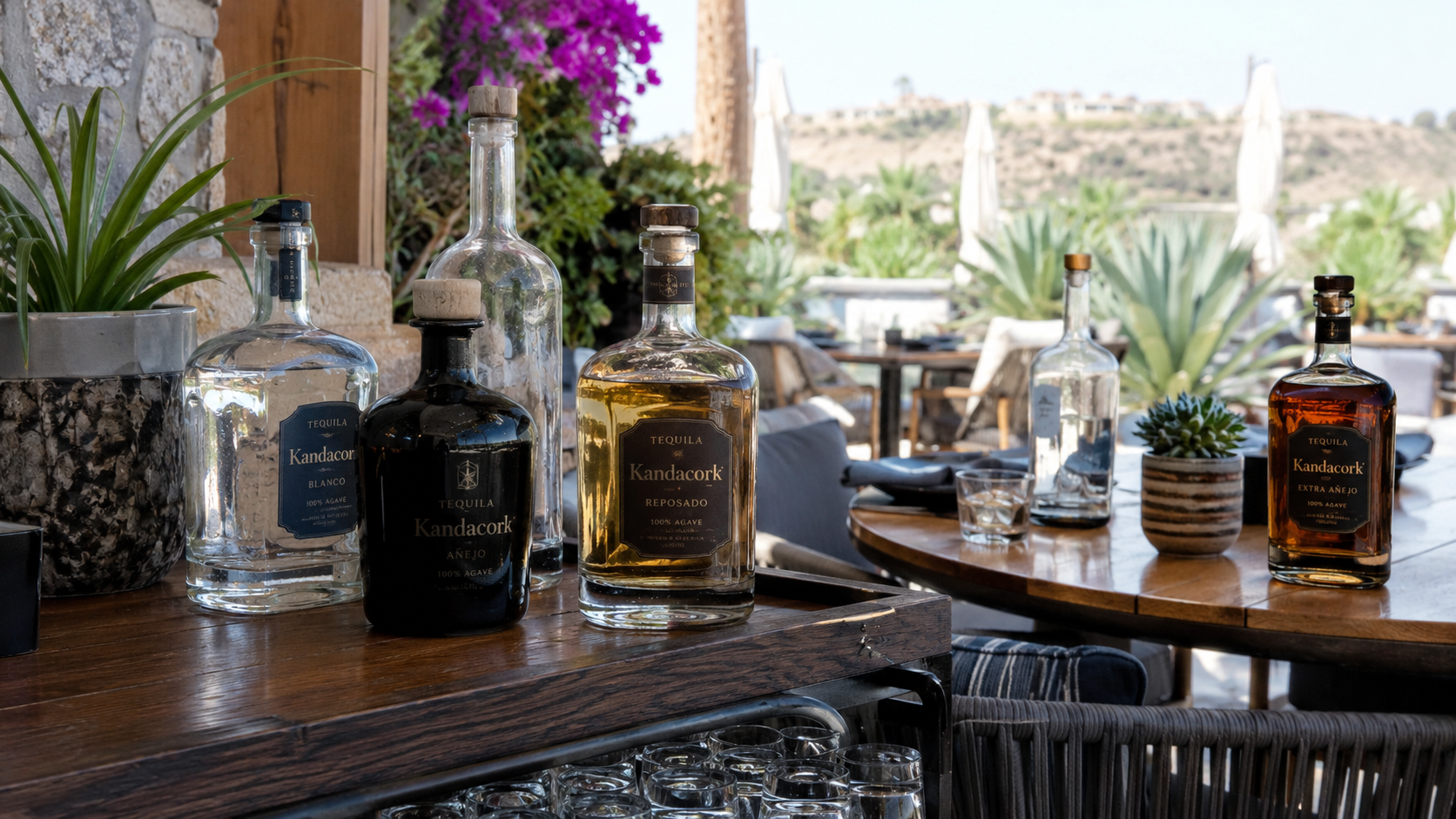
| Private-label tequila or mezcal | Bar-top stopper or non-refillable closure | Premium feel and stronger brand protection |
| Private-label rum | Bar-top stopper, screw cap, or ROPP closure | Suitable for both craft and high-volume ranges |
| Liqueurs and RTDs | Screw cap or ROPP closure | Cost-effective, recloseable, and efficient for bottling lines |
| Olive oil and gourmet liquids | Screw cap or pourer closure | Controlled pouring and practical sealing reliability |
| Gift packaging | Bar-top stopper, capsule, or shrink sleeve | Strong visual presentation and premium finish |
Bar-Top Stoppers
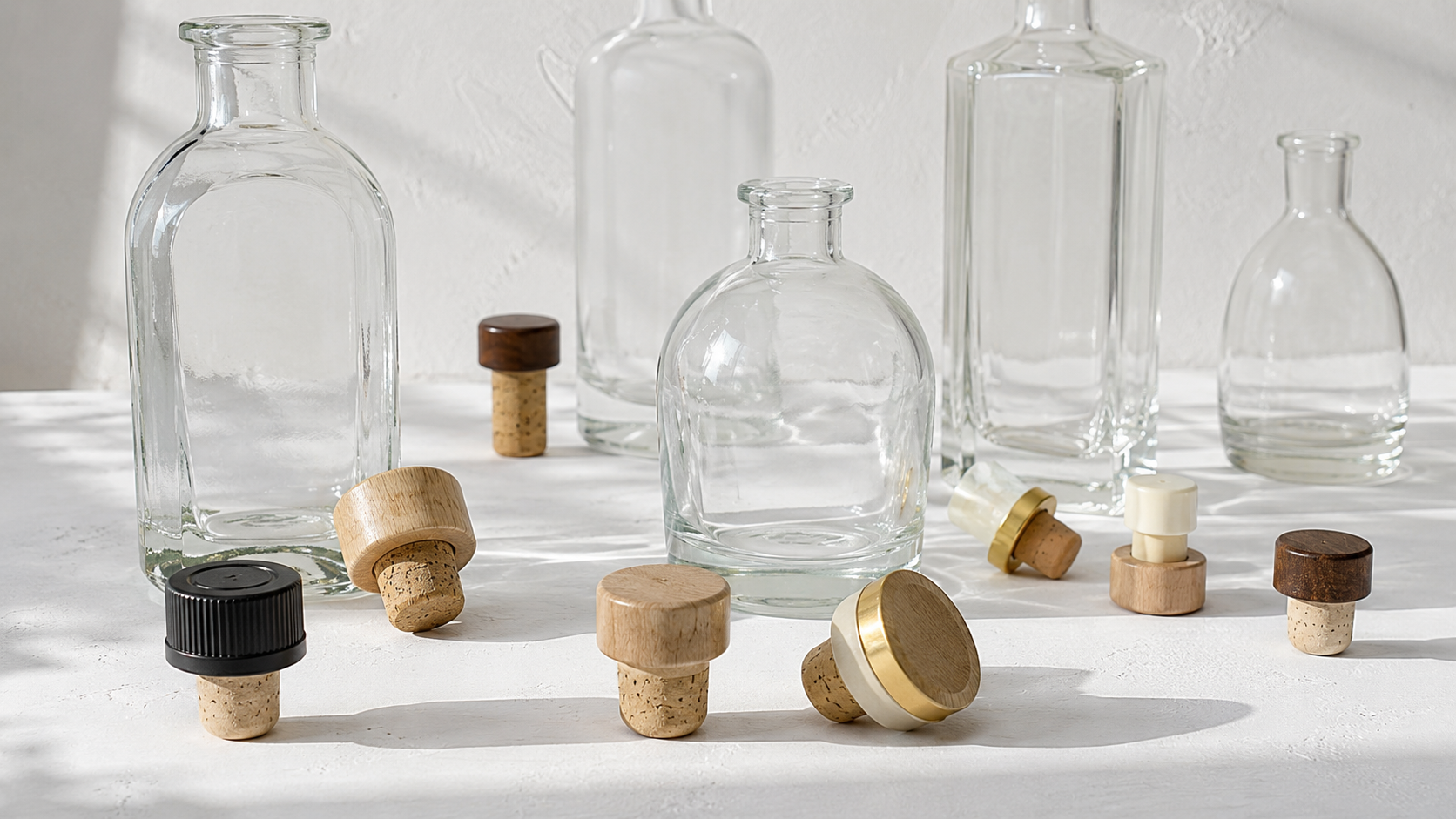
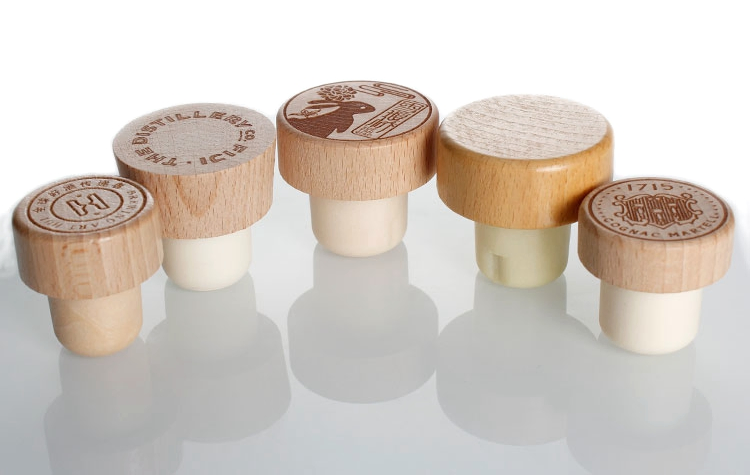
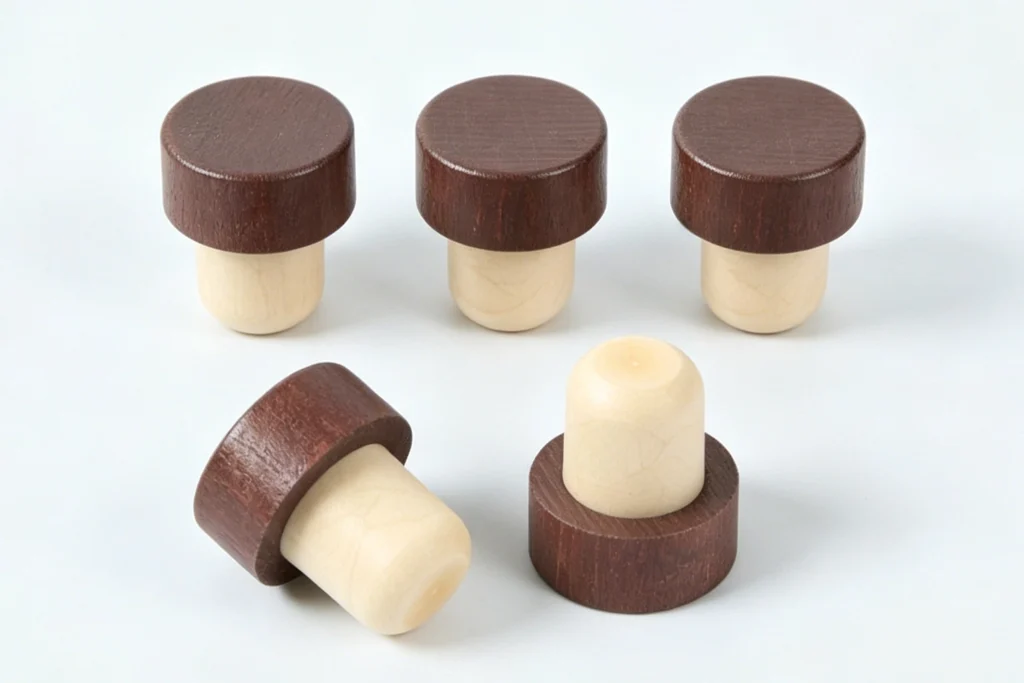
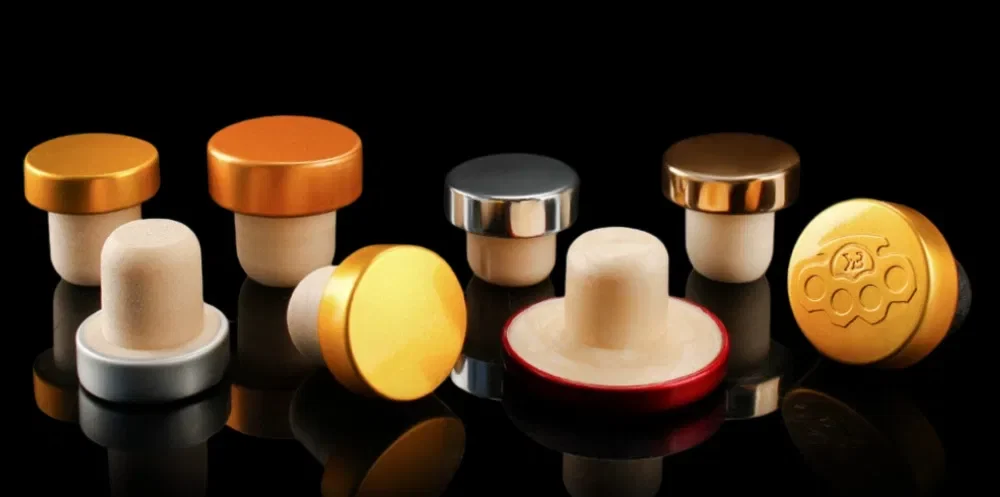
Bar-top stoppers are widely used for whisky, brandy, rum, tequila, gin, mezcal, liqueurs, and premium gift packaging. They combine a top component with a cork or synthetic shank. The top can be made from wood, metal, plastic, glass, ceramic, or composite materials.
For private-label brands, bar-top stoppers offer strong visual value. The top surface can carry an engraved logo, embossed emblem, metal badge, color coating, or custom shape. This makes the closure part of the brand identity rather than only a sealing component.
The supplier should review cork diameter, shank length, top geometry, bottle neck finish, pull-out force, and consumer opening feel. These details help prevent loose fit, difficult opening, leakage, or inconsistent performance during shipment.
Screw Caps
Screw caps are practical, recloseable, cost-effective, and suitable for high-volume private-label programs. They are often used for vodka, gin, liqueurs, RTDs, mini bottles, olive oil, vinegar, and other specialty liquids.
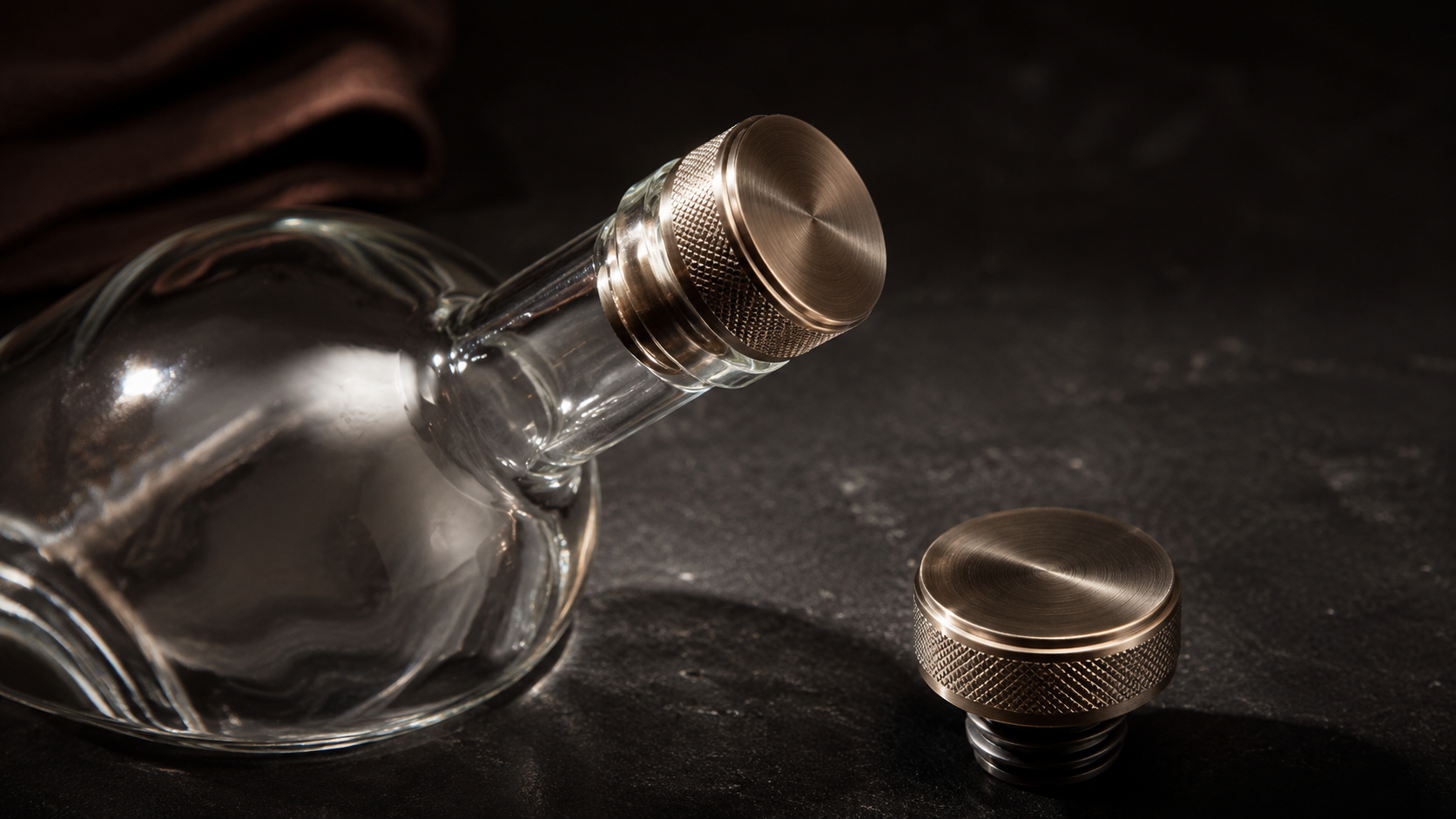
Aluminum screw caps can be decorated with printed graphics, sidewall branding, top logos, hot foil stamping, embossing, matte finishes, gloss finishes, and Pantone-matched colors. Liners can also be selected based on liquid compatibility and sealing requirements.
A bottle closure supplier for private labels should check thread compatibility, liner selection, cap height, tamper-evident band design, and capping torque before bulk orders begin.
ROPP Closures
ROPP means roll-on pilfer-proof. These aluminum closures are formed onto the bottle neck by capping equipment, creating a threaded, tamper-evident closure. ROPP closures are commonly used for spirits, wine, beverages, olive oil, and pharmaceutical-style bottles.
For private-label spirits, custom ROPP closures offer clean appearance, good line speed, reliable reclosure, and visible tamper evidence. They are especially useful for brands that want a secure closure system with a modern look.
A successful ROPP closure project should define the bottle neck finish, shell height, liner, knurling, bridge design, torque range, and capping equipment requirements.
Non-Refillable Closures
Non-refillable closures are designed to reduce refilling risk and protect brand integrity. They are often used for export spirits, duty-free channels, premium liquor, and markets where counterfeit or refilled bottles are a concern.
These non-refillable closures may include one-way pouring systems, internal valves, tamper-evident bands, security sleeves, or other anti-refill structures. For private-label brands entering competitive spirits markets, non-refillable systems can support product security and distributor confidence.
Capsules and Shrink Sleeves
Capsules and shrink sleeves complete the neck area and improve the final presentation of the bottle. They can also provide visible tamper evidence and carry brand colors, patterns, tax-stamp zones, or promotional graphics.
PVC, PET, aluminum, and foil-style capsules can be customized by length, gauge, perforation, color, and printing method. For premium private-label spirits, capsule design should coordinate with the stopper, label, bottle color, carton, and overall shelf positioning.
Buyer Requirement and Closure Selection Guide
Private-label buyers can use the following guide to match the closure direction with the project requirement.
| Buyer Requirement | Best Closure Direction | Practical Benefit |
|---|---|---|
| Premium appearance | Bar-top stopper | Adds weight, texture, and stronger shelf appeal |
| High-speed bottling | Screw cap or ROPP closure | Supports efficient filling-line performance |
| Anti-counterfeit protection | Non-refillable closure | Helps reduce refilling and brand misuse risk |
| Visible tamper evidence | ROPP closure, capsule, or shrink sleeve | Supports consumer confidence and retail acceptance |
| Low MOQ trial order | Existing screw cap or stock stopper | Reduces tooling cost and development time |
| Strong neck decoration | Capsule or shrink sleeve | Adds color, branding, and premium finish |
| Export spirits packaging | Tamper-evident or non-refillable system | Supports market entry and distributor confidence |
| Multi-SKU brand family | Unified closure platform | Creates consistent packaging across product lines |
| Premium gift packaging | Custom stopper with capsule or carton | Improves unboxing and display value |
This decision table helps buyers avoid choosing closures only by appearance. A good closure supplier for private labels should also evaluate technical fit, filling process, sealing performance, cost target, and long-term repeatability.
Custom Branding Options for Private-Label Closures
Private-label packaging needs to look intentional. A generic cap on a premium bottle can weaken the entire brand story. A custom closure helps create consistency across the bottle, label, carton, and retail display.
Closure branding options may include:
- Logo printing on closure tops
- Embossed or debossed brand marks
- Hot foil stamping
- Laser engraving on wood or metal
- Pantone color matching
- Metallic, satin, brushed, matte, and gloss finishes
- Sidewall printing for screw caps and ROPP closures
- Knurled, ribbed, smooth, or fluted textures
- Custom wooden, metal, plastic, or glass top shapes
- Decorative badges, emblems, or inserts
- Matching capsules and shrink sleeves
For projects that need consistent visual identity across caps, stoppers, capsules, and bottle decoration, the supplier should define closure colors and finishes early in the project. Color standards, surface texture, printing method, and logo position all affect how the finished pack looks on shelf and in product photography.
For private-label brands, these details matter because the closure is often visible in e-commerce listings, back-bar displays, duty-free shelves, and gift packaging. In many cases, the top of the closure is the first part of the bottle seen from above.
A strong closure supplier for private labels should understand both decoration and manufacturing feasibility. A beautiful design still needs to resist scuffing, fit the closure component, pass handling tests, and remain consistent across repeat orders.
Matching Closures with Bottle Design and Decoration
Closures should not be selected separately from the bottle. The neck finish, shoulder shape, label size, capsule length, glass color, decoration method, carton design, and target shelf position should all work together.
For spirits brands that need a complete bottle-and-closure direction, Kandacork Spirits supports custom spirits bottle development, closure matching, and packaging coordination. This is useful when a private-label buyer is still choosing bottle shape, neck finish, closure system, and decoration style.
Decoration also affects closure choice. A heavily frosted bottle may need a matte closure finish. A metallic label may look stronger with a brushed aluminum cap or foil-stamped stopper. A minimalist gin bottle may benefit from a clean screw cap, while a premium whisky may need a heavier bar-top stopper with a capsule or gift box.
For on-glass finishing, coating, screen printing, foil, decals, badges, and neck details, Kandacork Bottle Decor can support coordinated decoration programs. This helps private-label brands keep color, texture, and branding consistent across the bottle, closure, and secondary packaging.
Example: Private-Label Whisky Closure Development
A private-label whisky brand may start with a 700ml glass bottle, a wooden bar-top stopper, a synthetic cork shank, a matte black capsule, and gold logo embossing. The design may look simple, but several details must be confirmed before production.
The supplier should check the bottle mouth diameter, cork shank size, pull-out force, top diameter, capsule length, embossing area, logo position, carton protection, and repeat-order color consistency. If the brand plans to sell across several markets, export packing and tamper-evident presentation should also be reviewed early.
In this type of project, the closure is not only a sealing part. It becomes part of the product’s premium positioning. A custom closure supplier for private-label brands can help align the stopper, capsule, label, bottle, and gift box so the final product looks consistent and ready for retail presentation.
How Kandacork Works as a Closure Supplier for Private Labels
A private-label closure project usually starts with the product, the bottle, and the market. The supplier needs to understand what the buyer is filling, how the bottle will be capped, where the product will be sold, and what brand impression the packaging must create.
Project Brief
The project starts with basic information: product category, bottle size, alcohol strength or liquid type, target market, estimated quantity, brand positioning, closure preference, and launch timeline.
For example, a private-label whisky may need a wooden bar-top stopper and capsule, while a private-label vodka may need a clean aluminum screw cap or ROPP closure. A private-label olive oil project may require a pourer closure with controlled flow.
Bottle and Neck Finish Review
The bottle neck finish determines which closure can be used. The supplier reviews drawings, samples, dimensions, thread details, cork mouth size, finish type, and sealing area.
This step helps avoid common sourcing mistakes. A closure that looks correct in photos may not fit the actual bottle neck. For bulk orders, even small tolerance problems can create leakage, breakage, or bottling-line delays.
Closure Recommendation
After reviewing the bottle and product requirements, the supplier can recommend suitable closure options. This may include bar-top stoppers, natural cork, synthetic cork, aluminum screw caps, ROPP closures, non-refillable closures, capsules, shrink sleeves, or a complete closure system.
The recommendation should balance cost, sealing performance, premium feel, line speed, branding area, and export requirements.
Branding and Decoration Development
Once the closure structure is selected, the visual design can be developed. This includes material, top shape, color, logo placement, finish, printing method, embossing depth, capsule design, and carton coordination.
Private-label buyers often need a closure that fits an existing brand style. The supplier should help align the closure with the label artwork, bottle decoration, packaging tier, and target shelf impression.
Sampling and Testing
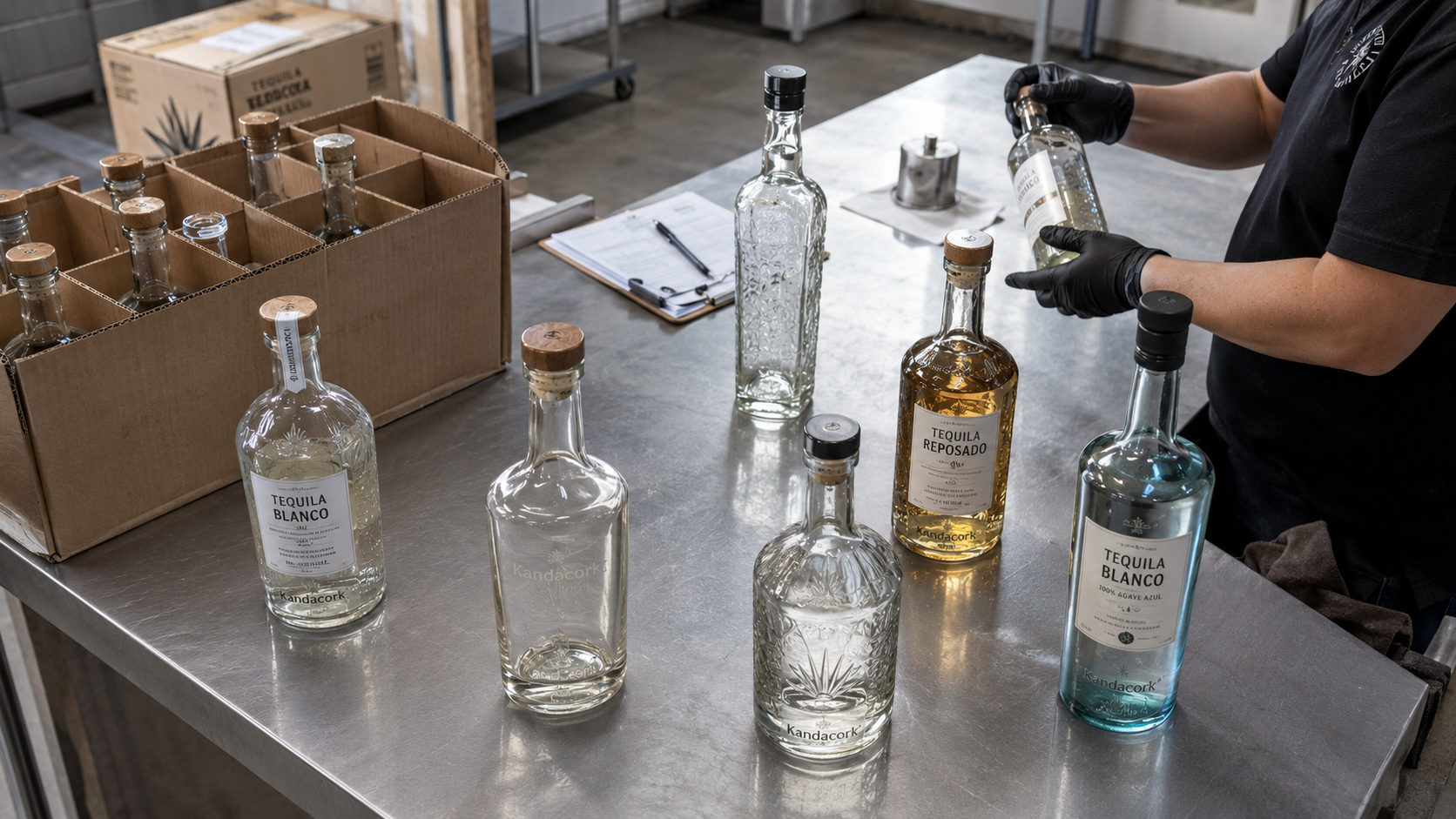
Samples are used to check appearance, size, neck fit, sealing behavior, torque, pull-out force, color, logo effect, and handling feel. For bottlers and co-packers, samples can also support capping-line trials before production.
Testing is especially important for spirits, high-proof alcohol, export routes, duty-free supply, and multi-SKU private-label programs.
Bulk Production and Export Packing
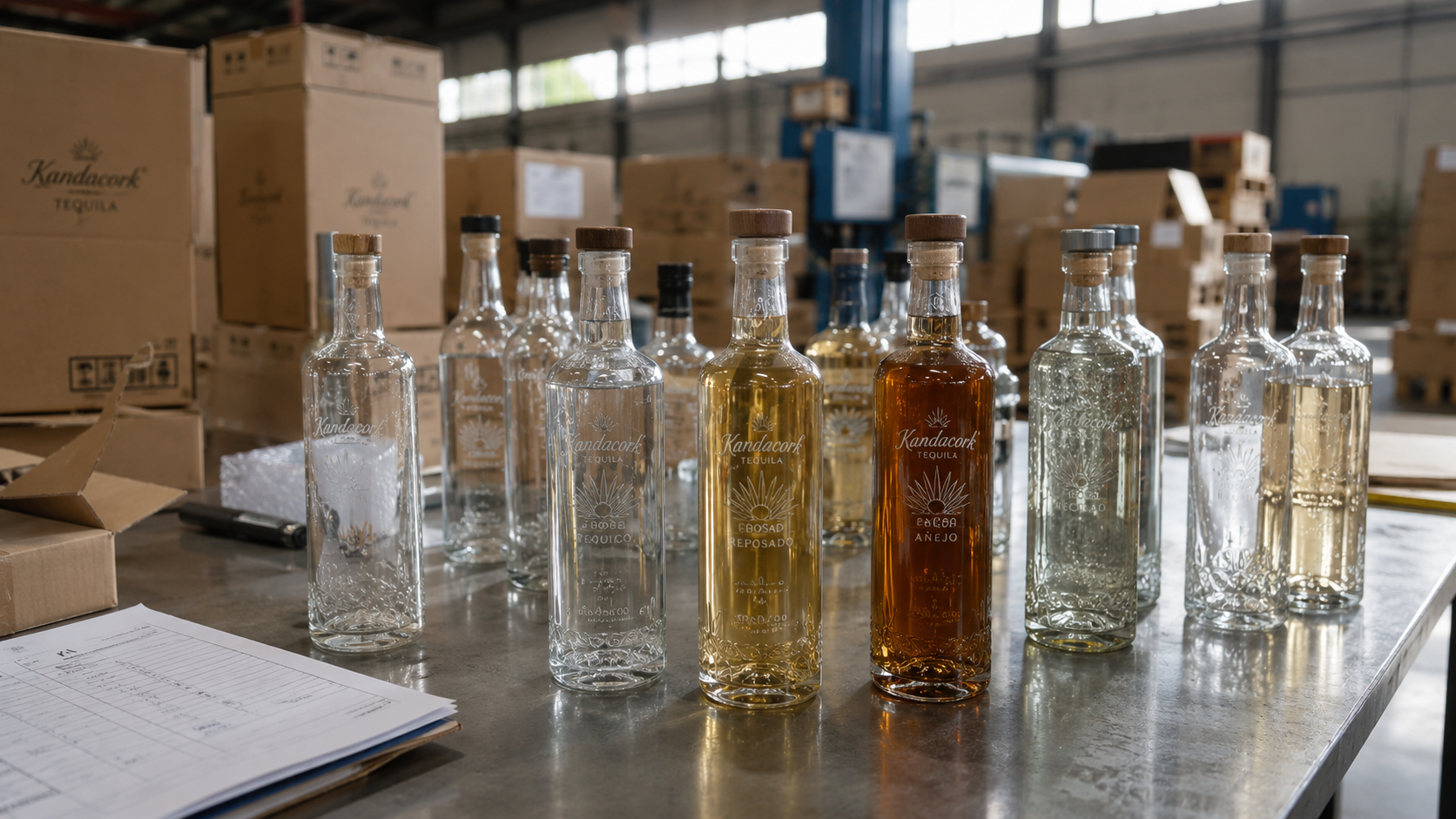
After sample approval, the project moves to production. A professional closure supplier for private labels should control dimensions, material consistency, decoration quality, packaging protection, carton marking, and export documentation.
Stable repeat orders are important for private-label programs because retailers, importers, and distributors may reorder the same closure across multiple batches or markets.
Sample Approval and Lead Time Expectations
Private-label closure projects usually move through sample confirmation before bulk production. This helps buyers confirm appearance, fit, decoration quality, and handling performance before committing to a larger order.
Sample timing depends on the closure type and customization level. Existing structures with simple printing may move faster, while custom molds, special materials, metal parts, non-refillable systems, or complex decoration may require more development time.
Buyers can speed up the process by preparing bottle drawings, physical samples, logo files, target quantity, destination market, and clear decoration requirements. Early approval of color, logo size, finish, and closure structure helps reduce delays before production.
Private-Label Closure Sourcing Checklist
Before confirming a bulk closure order, buyers should review the following points with their supplier:
- Bottle drawing or physical bottle sample
- Neck finish, thread, cork mouth, or sealing surface dimensions
- Product category and alcohol content or liquid type
- Closure structure and material
- Liner or shank compatibility
- Tamper-evident requirement
- Non-refillable requirement, if needed
- Torque range or pull-out force target
- Decoration method and logo placement
- Pantone color or finish requirement
- Sample approval process
- Production tolerance and inspection plan
- Carton packing and export protection
- Repeat-order consistency
- Documentation needed for importer, retailer, or bottler review
This checklist helps private-label buyers compare suppliers more objectively. It also reduces the chance of approving a closure based only on appearance while missing technical details that affect production.
Compliance, Food Contact, and Quality Considerations
Closures for spirits, beverages, oils, and other consumable products may come into direct or indirect contact with the product. Buyers should ask suppliers about material suitability, liner selection, migration considerations, and relevant documentation.
For U.S. projects, the FDA explains that a food contact substance can include food packaging and its components, so buyers should review FDA food-contact substance guidance when evaluating materials used in caps, liners, coatings, and closures.
For EU-market projects, the European Commission food contact materials framework is commonly referenced for the general safety and inertness principles that apply to materials intended to come into contact with food.
For distilled spirits sold in the United States, TTB distilled spirits tamper-evident closure guidance is important because distilled spirits bottles and containers may require a tamper-evident closure or similar device that shows evidence of opening.
Private-label buyers should confirm requirements with their regulatory advisor, importer, bottler, or local authority. A closure supplier can support packaging development by providing technical information, product specifications, and documentation requested for sourcing review.
Quality management also matters. The ISO 9001 quality management standard is widely recognized for systems that help organizations improve performance, meet customer expectations, and demonstrate commitment to quality. For closure buyers, this supports the idea that inspection, traceability, corrective action, and repeatability should be part of supplier evaluation.
Supply-chain identification is also becoming more important for global packaging programs. GS1 standards provide a common language for identifying, capturing, and sharing supply-chain data. While closure components may not always carry direct consumer barcodes, private-label buyers can still benefit from clear batch coding, carton marking, and traceable production records.
Private-Label Closure Supplier vs. Standard Cap Distributor
A standard cap distributor may be useful when a buyer needs quick stock closures with limited customization. This can work for simple packaging projects with flexible design requirements.
A closure supplier for private labels offers a different level of support. The supplier helps connect product positioning, bottle compatibility, decoration, sampling, testing, and export supply.
| Standard Cap Distributor | Closure Supplier for Private Labels |
|---|---|
| Focuses on available stock | Develops stock or custom closure solutions |
| Offers limited decoration options | Supports logos, colors, finishes, embossing, printing, and custom materials |
| Buyer checks fit independently | Supplier helps review bottle neck compatibility |
| Suitable for simple orders | Suitable for branded launch programs |
| Provides less packaging integration | Can coordinate closures with bottles, labels, capsules, and cartons |
| Offers limited technical guidance | Provides sampling, fit checks, torque review, and production support |
| Usually focuses on fast supply | Supports long-term repeat orders and private-label consistency |
For a private-label product, the second approach is usually safer. The closure is part of the finished consumer experience, not only a purchased component.
How to Choose the Right Closure for a Private-Label Product
A private-label buyer can choose a closure more confidently by reviewing the project from technical, commercial, and branding angles.
Start with the bottle. The neck finish, mouth diameter, thread profile, sealing surface, and tolerance determine what closure systems are possible. If the buyer also needs glass bottle support, Kandacork Glass can help align custom spirits bottles with closures, decoration, and export packaging requirements.
Review the product category. High-proof spirits, oily liquids, acidic beverages, carbonated products, and gourmet oils may require different liner or sealing considerations.
Define the brand tier. A premium whisky may need a heavy wooden bar-top stopper, while a high-volume vodka may benefit from a clean aluminum screw cap or ROPP closure.
Confirm tamper evidence. Some markets and retail channels expect visible tamper-evident features such as ROPP bridges, shrink sleeves, capsules, or security bands.
Request samples before mass production. Samples help confirm appearance, color, logo quality, fit, torque, pull-out force, and bottling-line behavior.
A good custom closure supplier for private-label brands should help buyers make these decisions before they invest in bulk production or tooling.
Sustainability and Packaging Efficiency
Sustainability expectations are increasing across spirits, beverage, gourmet food, and retail private-label categories. For closure projects, this does not mean every product must use the same material. It means the closure should be designed with the right balance of performance, weight, recyclability, logistics efficiency, and product protection.
A lighter screw cap may reduce transport weight in high-volume programs. A durable bar-top stopper may improve perceived value for premium products and reduce replacement risk. A well-specified liner can help protect product integrity and reduce losses from leakage or spoilage. Good carton packing can also prevent damage during long-distance shipment.
For brands evaluating glass packaging and sustainability-focused bottle programs, Kandacork Glass Packaging can support bottle, jar, closure, and accessory coordination for multi-category projects.
How to Request a Quote from a Private-Label Closure Supplier
To quote accurately, a closure supplier usually needs the following information:
- Product category, such as whisky, vodka, gin, rum, tequila, liqueur, RTD, olive oil, or specialty beverage
- Bottle drawing or physical bottle sample
- Neck finish details
- Closure type preference
- Reference photos or existing samples
- Logo file or brand artwork
- Target material and finish
- Estimated order quantity
- Target market or export destination
- Bottling method and capping equipment, if available
- Packaging requirements
- Sample deadline and production timeline
The more complete the information, the faster a closure supplier for private labels can recommend the right structure, decoration method, and production plan.
For custom stoppers, screw caps, ROPP closures, capsules, shrink sleeves, samples, and closure matching support, buyers can request a custom closure quote with project details and target requirements.
Common Mistakes to Avoid When Sourcing Private-Label Closures
Private-label packaging projects often move quickly, but rushing closure decisions can create expensive problems later. Buyers should avoid approving a closure only from a product photo. The same cap or stopper style may perform differently depending on bottle neck finish, liner material, shank size, and capping equipment.
Another common mistake is treating decoration as separate from engineering. Logo size, embossing depth, hot foil area, top shape, and surface finish can all affect production feasibility and cost. A private-label closure should be designed for both appearance and repeatable manufacturing.
Buyers should also avoid leaving tamper-evident requirements until the end of the project. Tamper evidence may influence closure type, capsule length, sleeve material, bottling-line setup, and label layout. Discussing this early can prevent redesigns.
Technical Glossary for Private-Label Closure Buyers
| Term | Meaning |
|---|---|
| Neck finish | The bottle neck structure, thread, mouth, and sealing area that determine closure fit |
| ROPP closure | Roll-on pilfer-proof aluminum closure formed onto the bottle neck by capping equipment |
| Torque | The rotational force needed to apply or open a screw cap or ROPP closure |
| Pull-out force | The force required to remove a cork or bar-top stopper from the bottle |
| Liner | The inner sealing material inside a screw cap or closure |
| Tamper-evident band | A closure feature that shows visible evidence after opening |
| Non-refillable closure | A closure system designed to reduce the risk of bottle refilling |
| Capsule | A decorative or tamper-evident sleeve placed over the bottle neck |
| Shrink sleeve | A heat-shrunk sleeve used for decoration, tamper evidence, or neck coverage |
| Pantone matching | Color matching based on a standardized color reference system |
Frequently Asked Questions
What is the best closure for a private-label spirits bottle?
The best closure depends on the spirit category, bottle neck finish, brand positioning, and filling line. Premium whisky, rum, brandy, and cognac often use bar-top cork stoppers. Vodka, gin, liqueurs, RTDs, and high-volume spirits often use screw caps or ROPP closures. Export spirits may also require tamper-evident or non-refillable closures.
Can Kandacork Closures customize logos and colors?
Yes. Kandacork Closures can support custom logo printing, embossing, debossing, engraving, hot foil stamping, color matching, metallic finishes, matte finishes, sidewall decoration, and matching capsules or shrink sleeves.
How do I know if a closure will fit my bottle?
The supplier should review the bottle drawing, neck finish, sealing area, thread details, cork mouth size, and tolerance requirements. For important projects, physical samples and filling-line trials are recommended before bulk production.
Do private-label closures need tamper evidence?
Many spirits and beverage projects require tamper-evident packaging for regulatory, retail, or consumer-trust reasons. Requirements vary by country, category, and channel, so buyers should confirm with their importer, bottler, or regulatory advisor. Tamper-evident bands, ROPP closures, shrink sleeves, capsules, and non-refillable closures may be used depending on the project.
What is the MOQ for custom private-label closures?
MOQ depends on the closure type, material, decoration method, and tooling requirement. Standard colors and existing structures usually have lower MOQ than fully custom molds, special metal parts, or multi-process decoration. Buyers can send their target quantity to Kandacork Closures for a practical recommendation.
Can one closure design be used across multiple SKUs?
Yes, in many cases. A unified closure platform can help private-label brands create a consistent look across whisky, vodka, gin, rum, liqueur, mini bottle, and gift-pack formats. However, each bottle size and neck finish must still be checked technically.
Why should private-label buyers involve a closure supplier early?
Early supplier involvement reduces the risk of poor fit, late redesigns, decoration problems, and bottling delays. A closure supplier for private labels can help align the bottle, cap, label, capsule, carton, and filling process before final artwork and tooling are approved.
What documents should buyers request from a closure supplier?
Buyers may request product specifications, material information, sample inspection records, food-contact statements, batch records, packing details, and other documents required by their importer, bottler, retailer, or regulatory advisor. Document needs vary by product type and destination market.
Work with Kandacork Closures
Kandacork Closures supports private-label spirits, beverage, and specialty packaging projects with custom stoppers, screw caps, ROPP closures, non-refillable closures, capsules, shrink sleeves, branding support, and export-ready supply.
As a closure supplier for private labels, Kandacork helps buyers move from packaging idea to production-ready closure system. Whether you are launching a new whisky, vodka, gin, tequila, rum, liqueur, RTD, olive oil, or premium gift bottle, the right closure can improve sealing performance, shelf presentation, and brand value.
Send your bottle drawing, target closure type, logo file, estimated quantity, and destination market. Kandacork Closures will help you develop a private-label closure solution that fits your bottle, supports your brand, and performs in production.