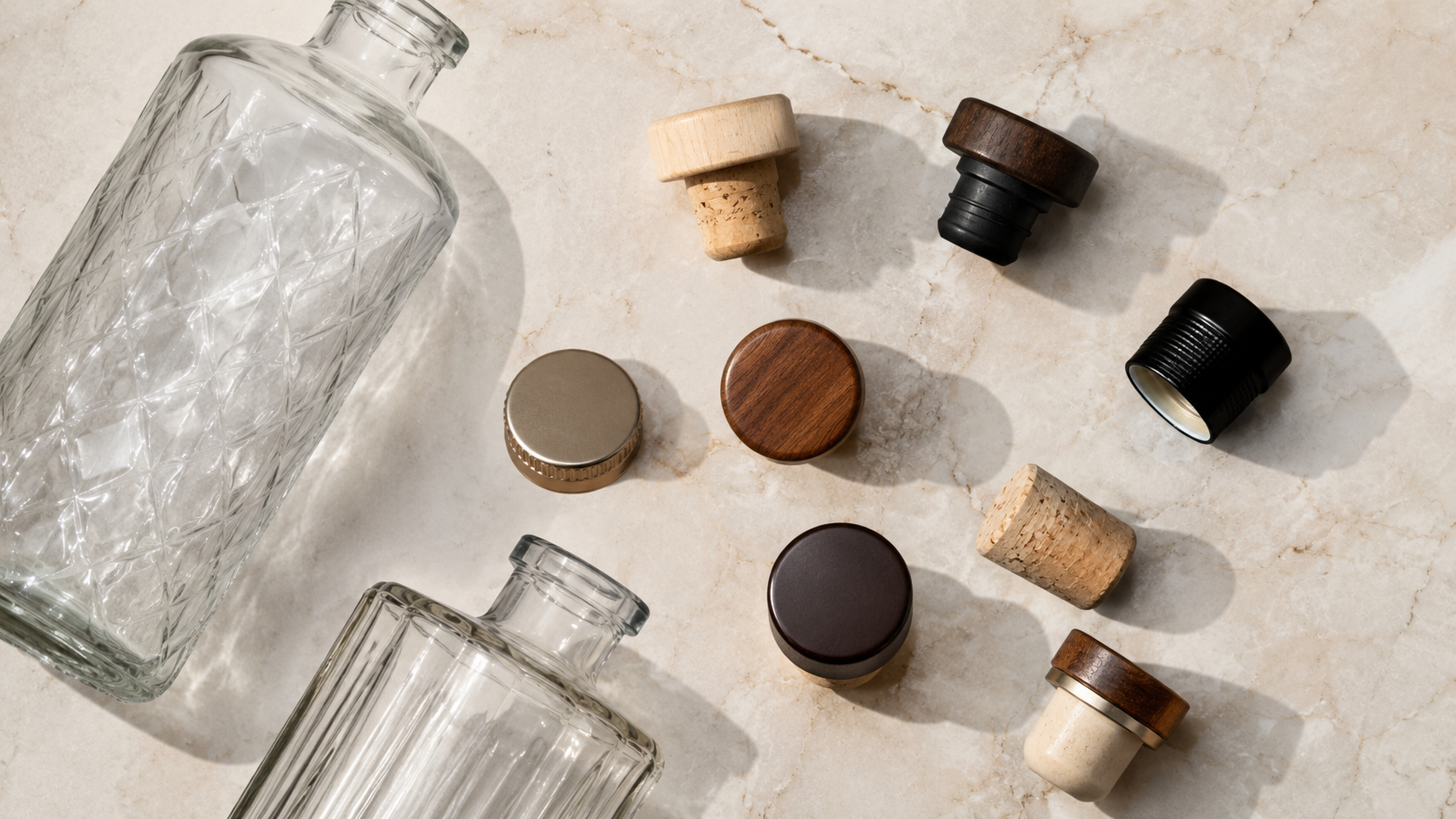
Quick Answer: What Is the Best Closure for Heavy Glass Spirits Bottles?
The best closure for heavy glass spirits bottles is usually a bar-top stopper, T-top stopper, ROPP cap, or premium screw cap, selected according to the bottle neck finish, spirit category, sealing requirement, filling method, and brand positioning.
Premium whisky, rum, cognac, and brandy bottles often work well with wood, metal, or glass bar-top stoppers. Tequila and mezcal brands may prefer decorative T-top closures made from zamak, zinc alloy, glass, or custom molded materials. Vodka, gin, private label spirits, and export-focused projects may use aluminum screw caps or ROPP closures for clean design, tamper evidence, and efficient production.
The key rule is simple: do not choose the closure by appearance alone. Always check the closure against the bottle drawing, inner bore diameter, neck finish, filling process, and physical bottle sample before bulk production.
Why Heavy Glass Spirits Bottles Need Different Closure Matching
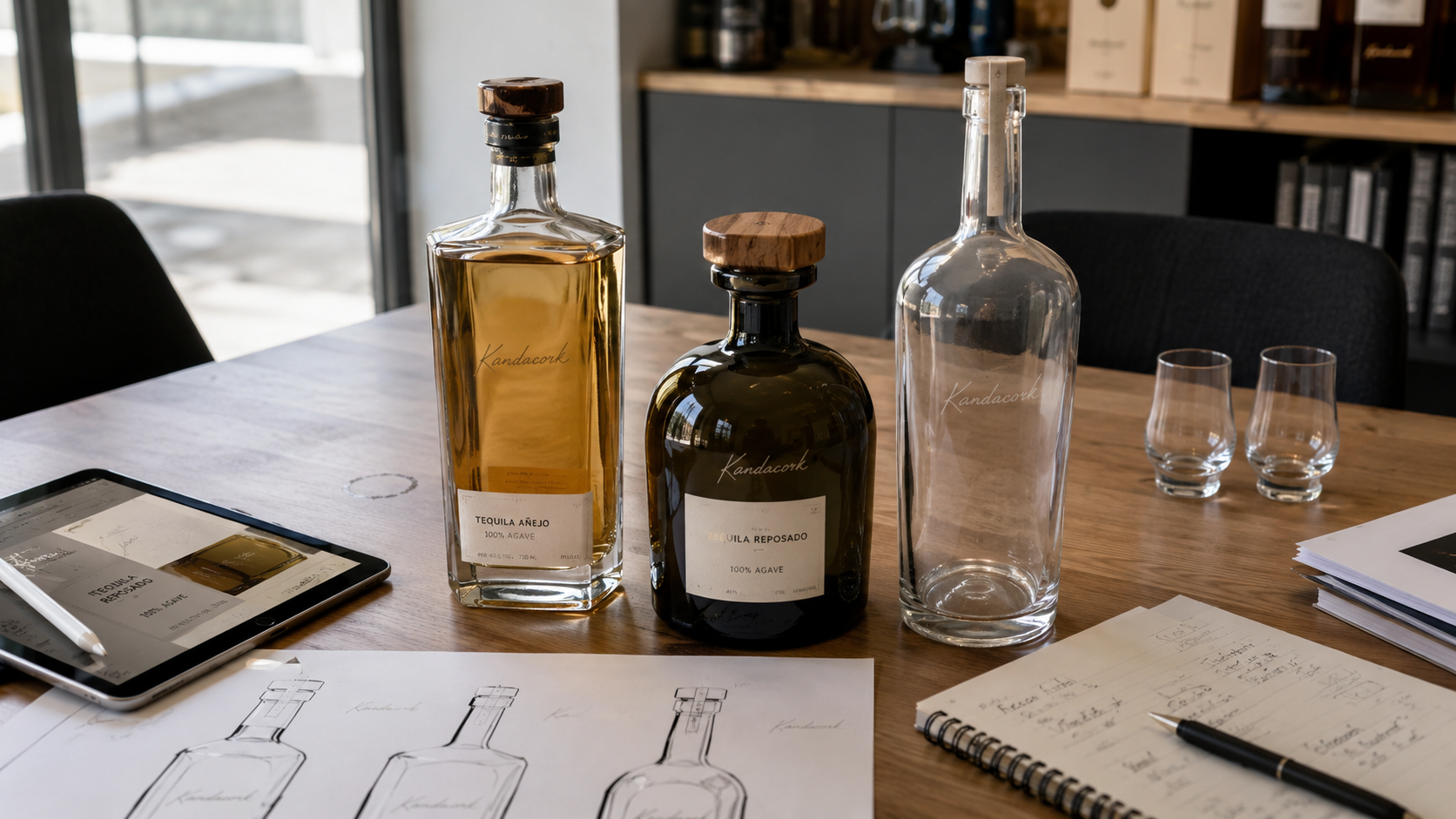
Heavy glass spirits bottles are often used for premium packaging. A thick base, sculpted body, broad shoulder, embossed logo, or decanter-style shape can make the product feel more valuable before the consumer opens it.
That premium impression depends on the closure. If the closure looks too small, too light, or poorly aligned, the bottle may feel unfinished. If the closure is oversized, too heavy, or technically mismatched, it may create problems during filling, shipping, shelf display, or consumer opening.
For premium spirits bottles, closure matching should answer four practical questions:
- Does the closure visually balance the bottle?
A thick-base bottle usually needs a closure with enough visual weight, height, or texture to match the bottle body. - Does the closure fit the neck correctly?
Inner bore, neck finish, thread profile, shank diameter, liner selection, and seating height all affect sealing performance. - Can the closure protect the spirit during storage and transport?
Leakage, cap loosening, stopper movement, and odor issues should be checked before bulk production. - Can the supplier support samples and repeat orders?
For B2B buyers, supplier capability matters as much as closure design.
A bottle, closure, label, capsule, carton, and export pack should be treated as one complete packaging system.
Heavy Bottle Closure Risk Matrix
Heavy glass bottles create different risks from standard lightweight bottles. The closure should be evaluated not only for sealing, but also for proportion, handling, shipping, and premium opening feel.
| Heavy Bottle Factor | Possible Closure Risk | What Buyers Should Check |
|---|---|---|
| Thick base or high bottle weight | Closure looks too small or weak | Top diameter, top height, visual mass |
| Wide shoulder or decanter body | Stopper may look visually unbalanced | Top shape, material texture, head proportion |
| Long-distance export | Leakage, loosening, or cap movement | Filled bottle leak test and transport simulation |
| Heavy metal or glass top | Carton impact or breakage risk | Head weight, bonding strength, packing clearance |
| Private mold neck | Fit inconsistency between samples and bulk bottles | Physical bottle sample and bore measurement |
| Premium price point | Cheap opening feel damages brand perception | Pull force, extraction force, reclosure feel |
| Threaded finish | Cap spinning, torque failure, or pilfer band issue | Thread profile, liner, torque, capping setup |
This matrix helps buyers move beyond appearance-based selection. A closure that looks attractive in a rendering may still fail if it does not match the actual bottle neck, filling line, and shipping method.
What Bottle Information Should Buyers Prepare First?
Before requesting samples or quotations, buyers should prepare accurate bottle information. This helps the closure supplier recommend a suitable structure and reduces unnecessary sampling rounds.
| Buyer Information | Why It Matters |
|---|---|
| Bottle drawing or CAD file | Confirms neck finish, finish height, bore, and thread details |
| Physical bottle sample | Verifies real tolerance, glass thickness, and fit performance |
| Inner bore diameter | Determines stopper shank diameter and compression |
| Outer neck diameter | Helps match top diameter, cap skirt, and capsule design |
| Bottle weight | Affects closure proportion, packing risk, and premium feel |
| Spirit type and ABV | Influences liner, shank material, and odor requirements |
| Filling method | Determines capping compatibility and application force |
| Target market | Affects tamper-evident and compliance requirements |
| Order quantity | Helps estimate MOQ, tooling, and unit cost |
| Logo and decoration file | Supports engraving, embossing, printing, or plating review |
Bottle finish dimensions are especially important. In packaging engineering, closure compatibility depends on measurements such as inner diameter, outer diameter, thread profile, finish height, and sealing surface. For buyers comparing bottle, stopper, and decoration as one complete pack, the broader Kandacork Glass Group can also support integrated spirits bottle and closure packaging when the project requires coordinated bottle supply, decoration, and export packing.
CTA: If you already have a bottle drawing or physical bottle sample, Kandacork Closures & Stoppers can help review the neck finish and recommend suitable closure options before sampling.
Main Closure Options for Heavy Glass Spirits Bottles
Bar-Top and T-Top Stoppers
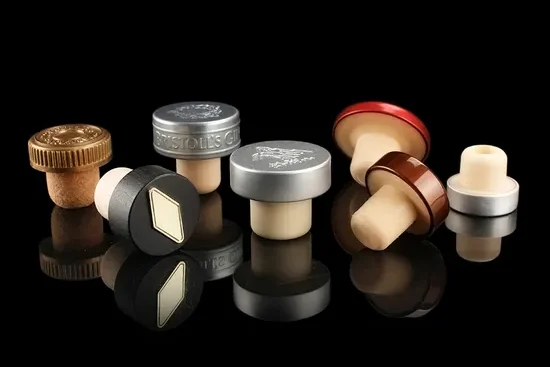
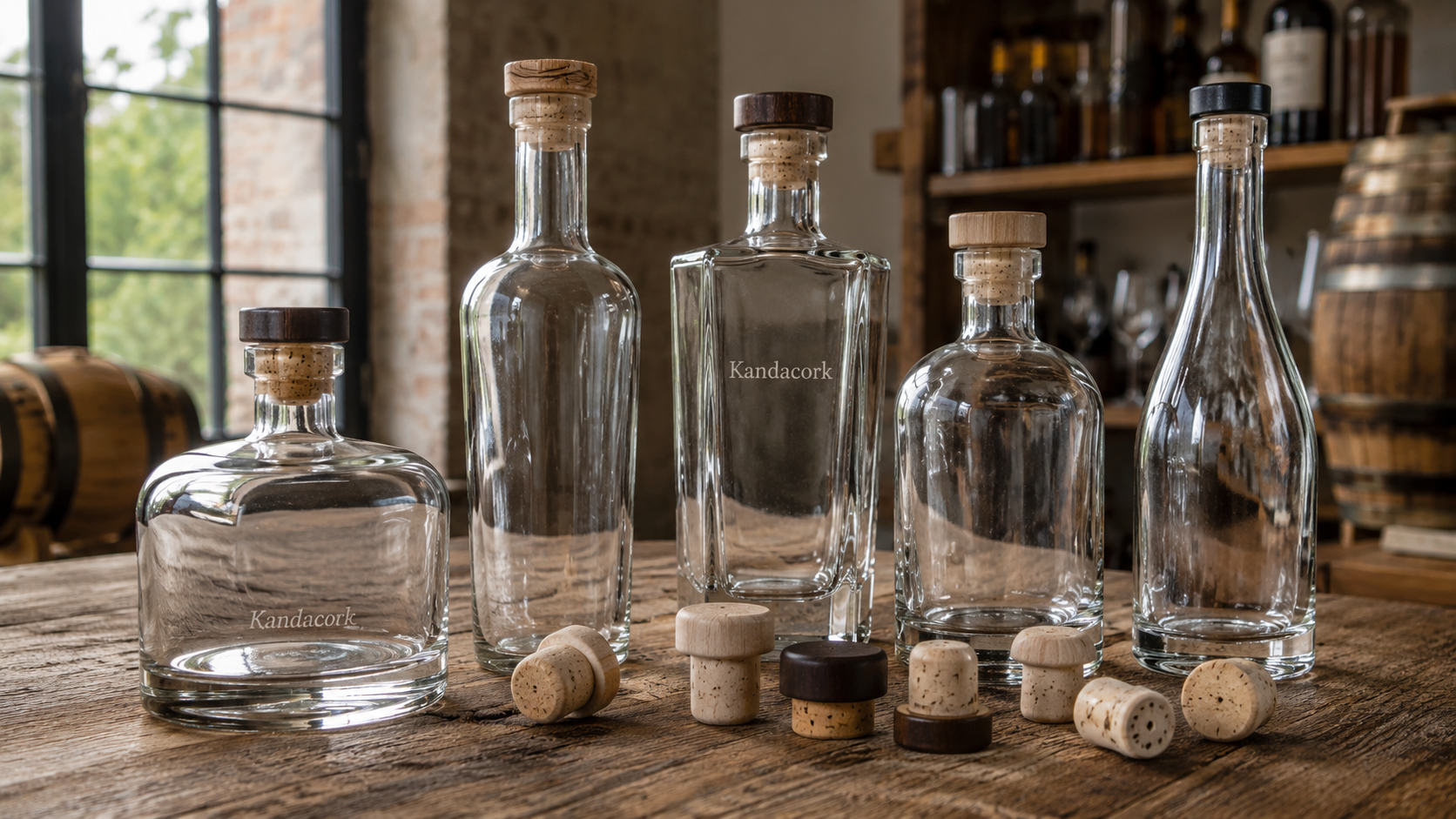
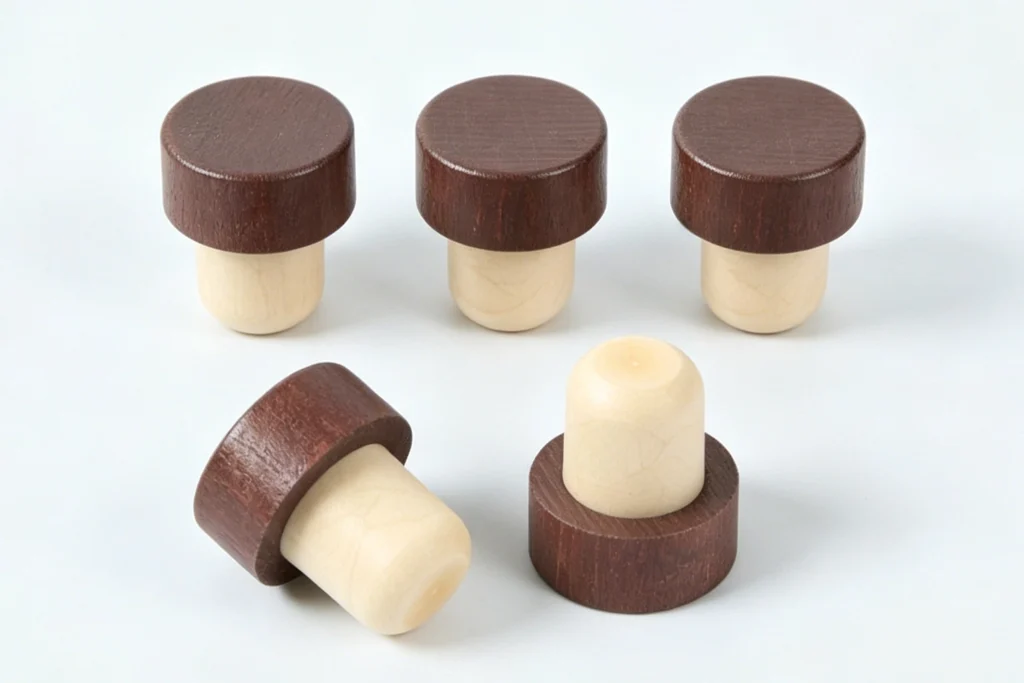
Bar-top and T-top stoppers are among the most common closure choices for premium spirits. They combine a decorative top with a sealing shank, usually made from natural cork, micro-agglomerated cork, synthetic cork, or engineered polymer.
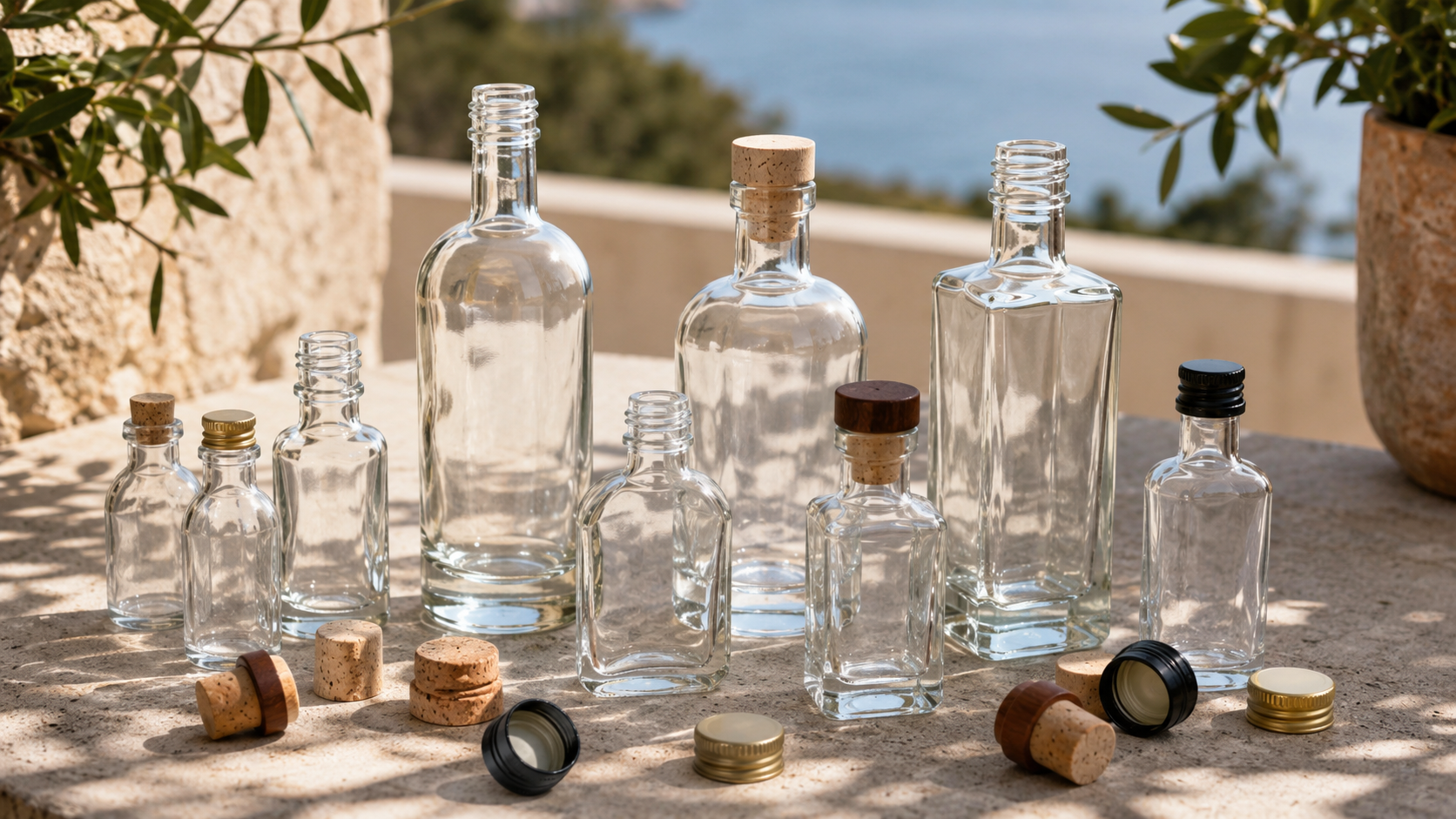
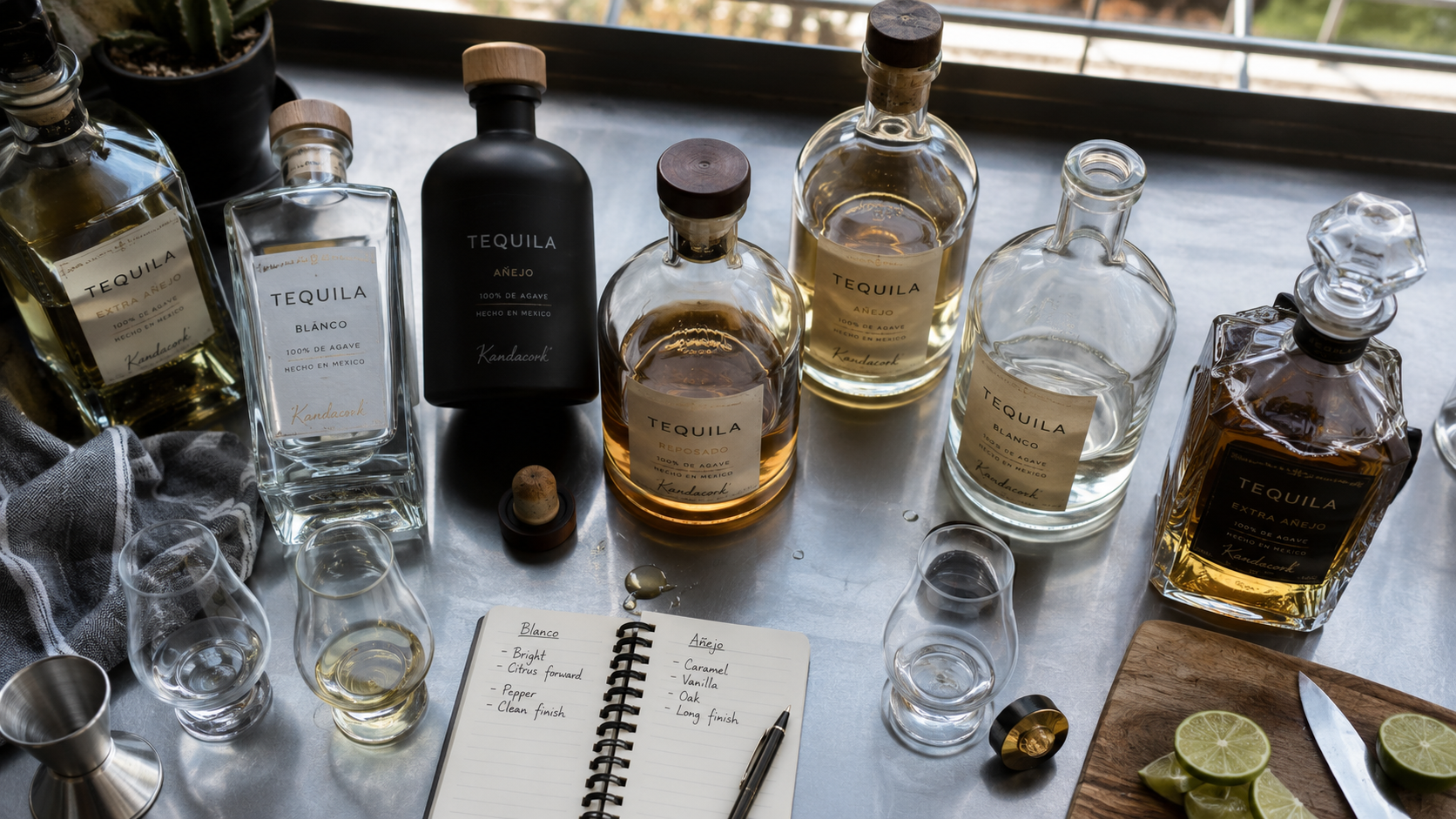
They are commonly used for whisky, rum, brandy, cognac, tequila, mezcal, craft gin, and limited-edition spirits. For a heavy glass bottle, the top material and shape should match the bottle’s visual weight. A small lightweight top may look weak, while a carefully designed wood, metal, or glass top can make the package feel complete.
Key technical points include shank diameter, shank length, insertion depth, pull force, head weight, seating height, and reclosure feel. Buyers comparing closure structures can start from Kandacork’s core range of custom spirits bottle closures and stoppers to understand available product directions before narrowing the specification.
Wood, Metal, and Glass Decorative Tops
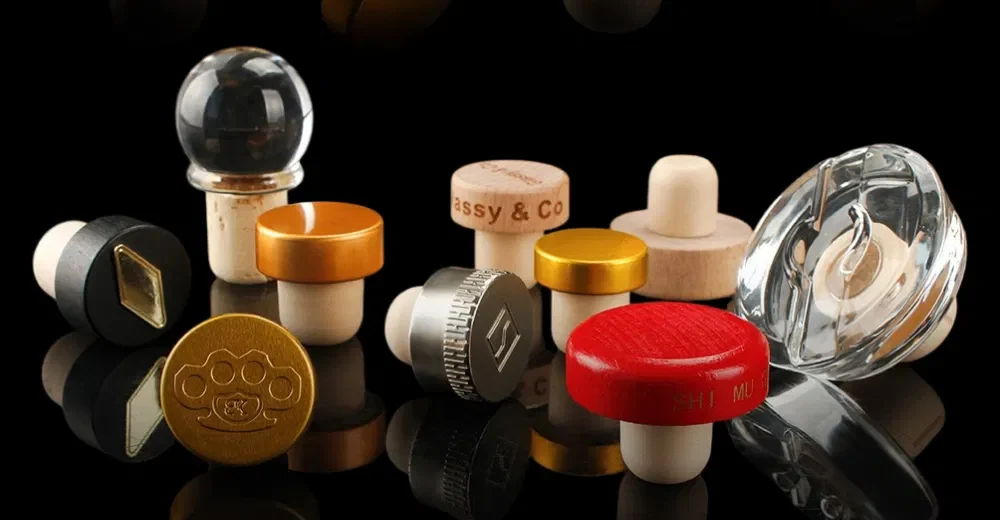
Wooden tops create a warm, traditional, and craft-oriented image. They are suitable for whisky, rum, brandy, cognac, and premium liqueurs. Decoration options may include laser engraving, debossing, staining, varnishing, and logo printing.
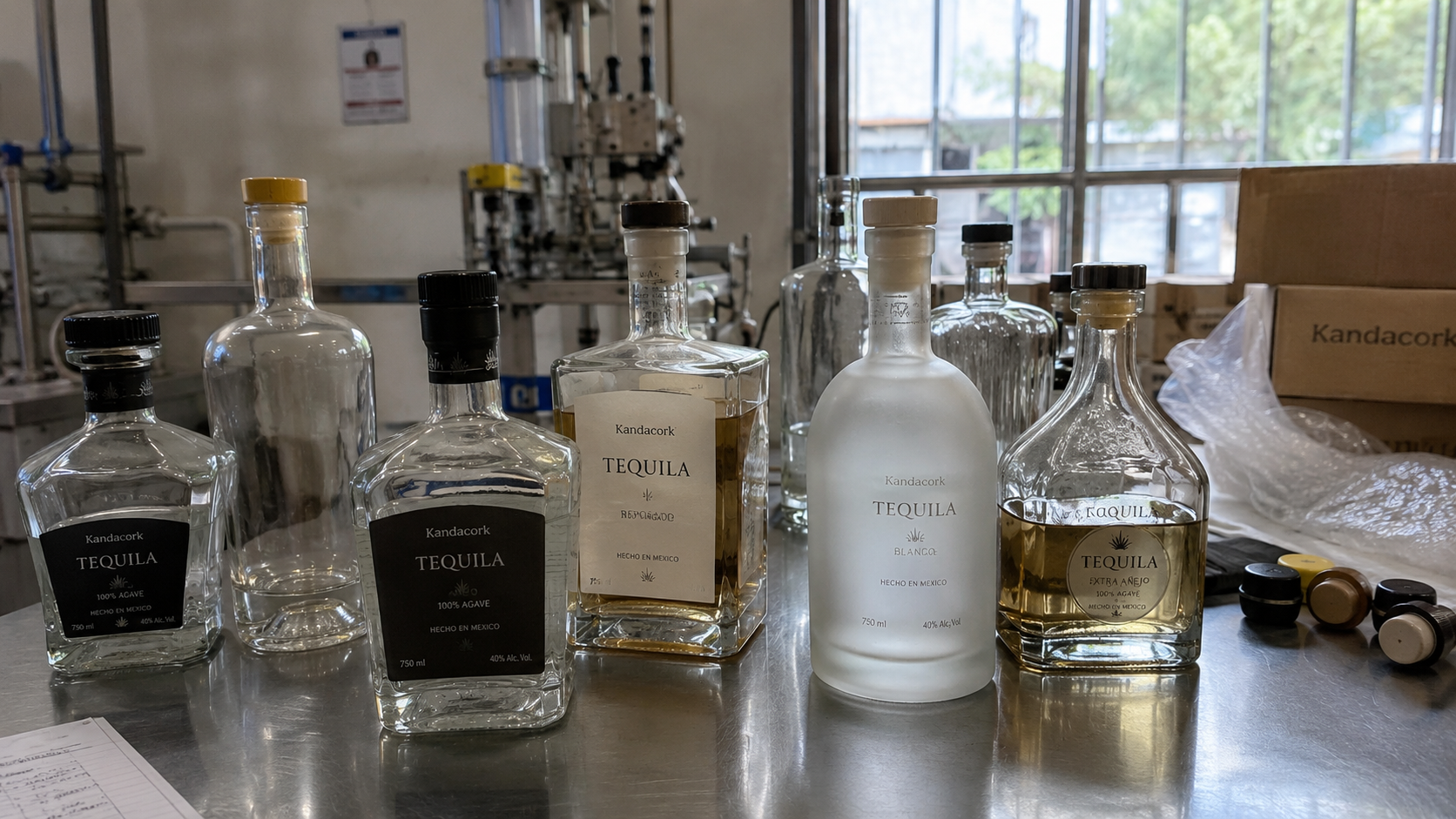
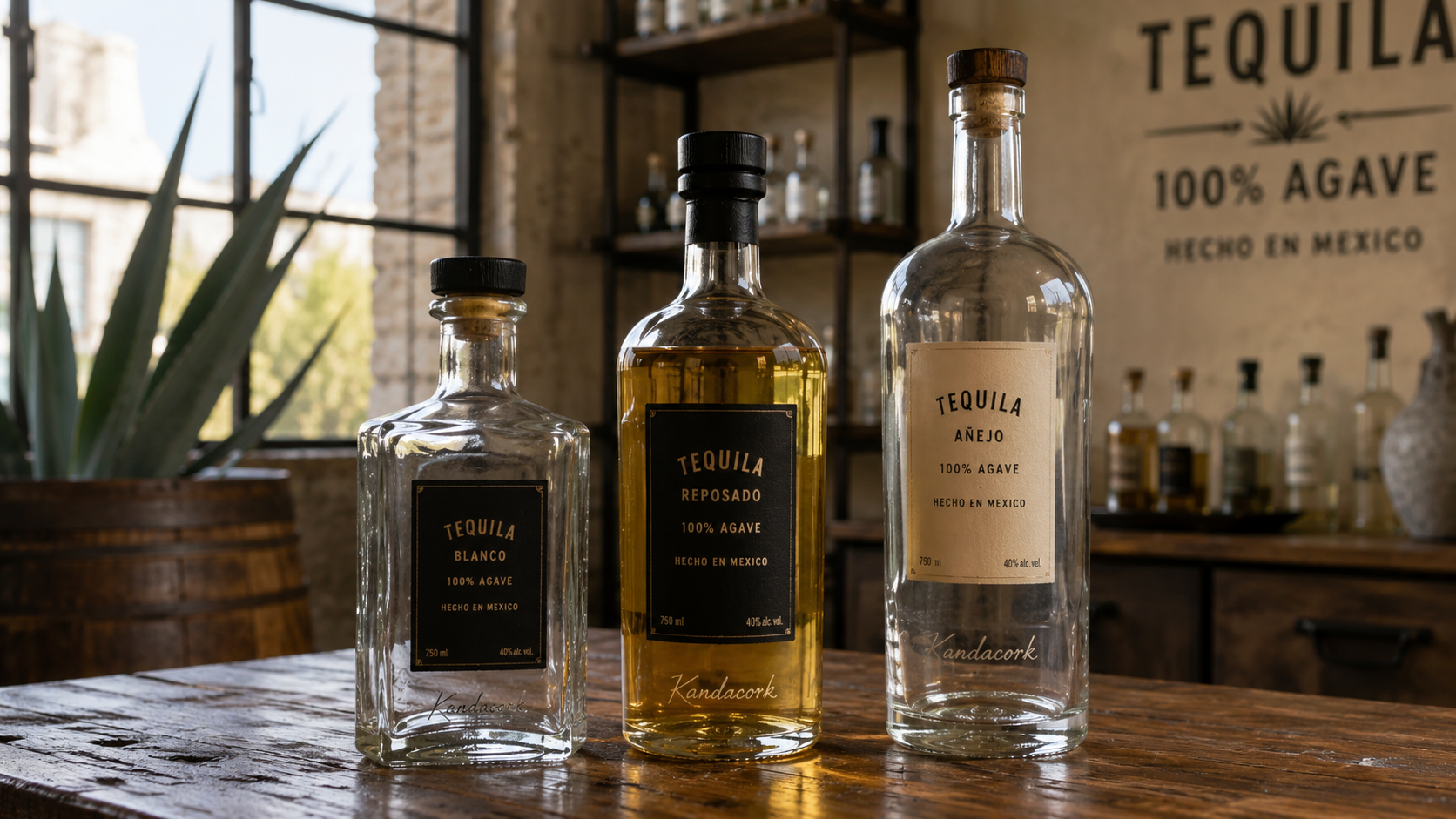
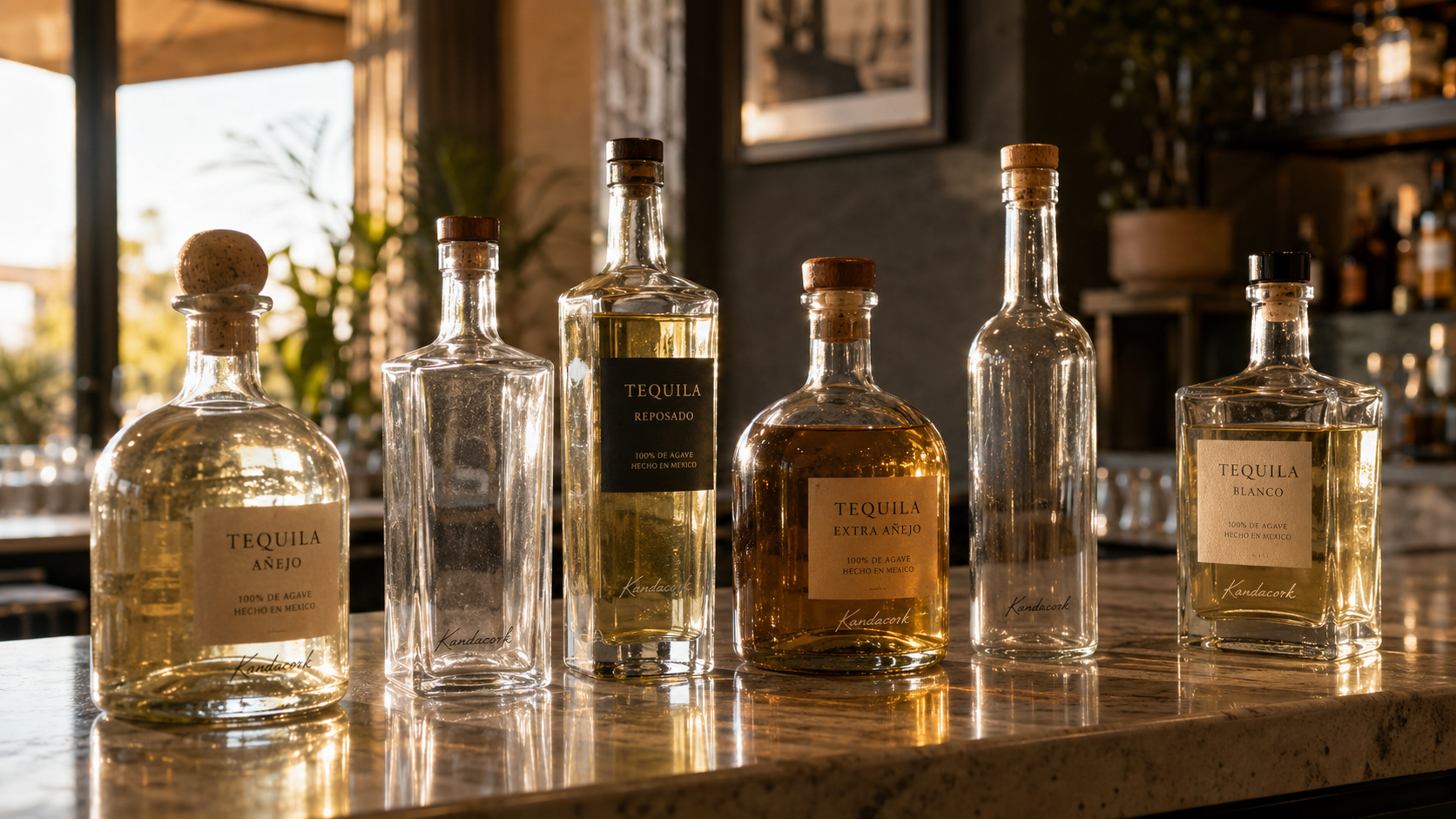
Metal, zamak, and zinc alloy tops are suitable for brands that want a heavier or more sculptural appearance. They are often used for tequila, mezcal, premium whisky, luxury rum, and collector’s editions. These closures can support plating, polishing, antique finishes, custom shapes, and logo details.
Glass and crystal-style tops are often used for decanter bottles, gift packs, and limited releases. They create strong shelf appeal, but buyers should check breakage risk, dimensional control, sealing structure, and export packing protection. For projects comparing premium decorative head materials, this guide to glass stoppers vs metal stoppers can help buyers evaluate visual positioning, weight, and application risks.
Natural Cork vs Synthetic Cork Shanks
The shank is the part of the stopper that enters the bottle neck. It plays a major role in sealing, opening feel, and reclosure performance.
Natural cork gives a traditional premium feel and can support classic spirits positioning. Synthetic cork provides stronger dimensional consistency, controlled compression, and stable performance for repeat orders. Micro-agglomerated cork can offer a balance between natural appearance and engineered consistency.
For heavy glass spirits bottles, the shank should be tested in the actual bottle. Buyers should check compression, insertion force, pull force, odor neutrality, leakage, reclosure feel, and fit after temperature change. If the project is focused on stopper fit, sealing behavior, and repeat production consistency, Kandacork’s cork shank vs synthetic shank buyer guide provides a more detailed comparison.
Synthetic and Plastic Stoppers
Synthetic and plastic top stoppers are useful for private label spirits, promotional projects, and cost-controlled volume orders. They can be lightweight, customizable, and efficient to produce.
The main challenge is premium perception. A simple plastic top may not match a luxury spirits bottle. To improve appearance, buyers can use matte textures, metallic finishes, heavier shapes, embossed logos, or hybrid designs that combine plastic with metal-like decoration.
Threaded Closures: Aluminum Screw Caps and ROPP
Aluminum screw caps and ROPP closures are suitable when the bottle has a threaded finish. They are often used for vodka, gin, liqueurs, private label spirits, and export-focused programs.
Aluminum screw caps offer clean appearance, good resealing, and efficient production. ROPP closures provide machine application and visible first-opening evidence. For spirits brands selling across regulated markets, tamper evidence can be an important part of packaging planning.
For threaded closures, buyers should check thread finish, liner material, application torque, removal torque, cap height, pilfer band position, and capping equipment compatibility.
Closure Material Comparison Table
| Closure Type | Best For | Main Advantage | Key Risk to Check |
|---|---|---|---|
| Wood bar-top stopper | Whisky, rum, brandy, cognac | Warm premium feel and craft identity | Fit tolerance and surface consistency |
| Metal / zamak stopper | Tequila, mezcal, luxury whisky | Heavy luxury appearance and custom molding | Head weight, bonding, packing protection |
| Glass stopper | Gift sets, decanter bottles, limited editions | Strong shelf appeal and collector value | Breakage risk and dimensional control |
| Synthetic stopper | Private label and volume spirits | Consistency and cost control | Lower premium perception if poorly designed |
| Natural cork stopper | Traditional spirits positioning | Natural feel and classic opening experience | Cork variation and odor control |
| Aluminum screw cap | Vodka, gin, modern spirits | Clean look and efficient production | Torque and liner compatibility |
| ROPP closure | Export and high-volume spirits | Tamper evidence and machine efficiency | Thread finish and capping setup |
| Capsule / shrink sleeve | Premium finishing and security | Adds neck decoration and first-opening evidence | Application quality and heat sensitivity |
Neck Fit: The Technical Core of Closure Matching
Neck fit is the most important technical factor in closure matching. Many leakage, opening, and production problems come from inaccurate neck dimensions or insufficient sample testing.
For bar-top and T-top stoppers, the most important measurements include:
- Inner bore diameter
- Shank diameter
- Shank length
- Insertion depth
- Seating height
- Pull force
- Extraction force
- Compression and recovery
- Neck tolerance
The shank must compress enough to create a seal, but not so much that insertion becomes difficult or the glass neck is stressed. If the shank is too small, the stopper may feel loose or leak. If the shank is too large, the bottle may be difficult to open.
For screw caps and ROPP closures, the key technical points include thread finish, cap diameter, cap height, liner material, application torque, removal torque, pilfer band position, and capping machine setup.
A bottle drawing is useful, but a physical bottle sample is strongly recommended. Private mold bottles and thick-base glass bottles may have small tolerance differences that affect real-world closure performance. For buyers who need a deeper breakdown of stopper parts, this bar-top stopper components guide explains how the decorative top, shank, adhesive, finish, and fit details work together.
Tamper Evidence and Export Market Requirements
Tamper evidence is important for spirits because the product is regulated, valuable, and often shipped through multiple distribution channels.
Common tamper-evident options include ROPP pilfer bands, tamper-evident screw caps, shrink sleeves, capsules, tear strips, non-refillable closures, and security overcaps.
For U.S.-bound distilled spirits, buyers should review TTB guidance on tamper-evident closure requirements before finalizing the packaging. These references explain requirements related to securely affixed closures and tamper-evident devices for distilled spirits containers.
Other markets may have different rules, especially for imported spirits, duty-free sales, and high-value products. Tamper evidence should not be treated as a final decoration step. It should be considered during bottle finish selection, closure development, filling-line planning, and retail presentation.
Testing Before Bulk Production
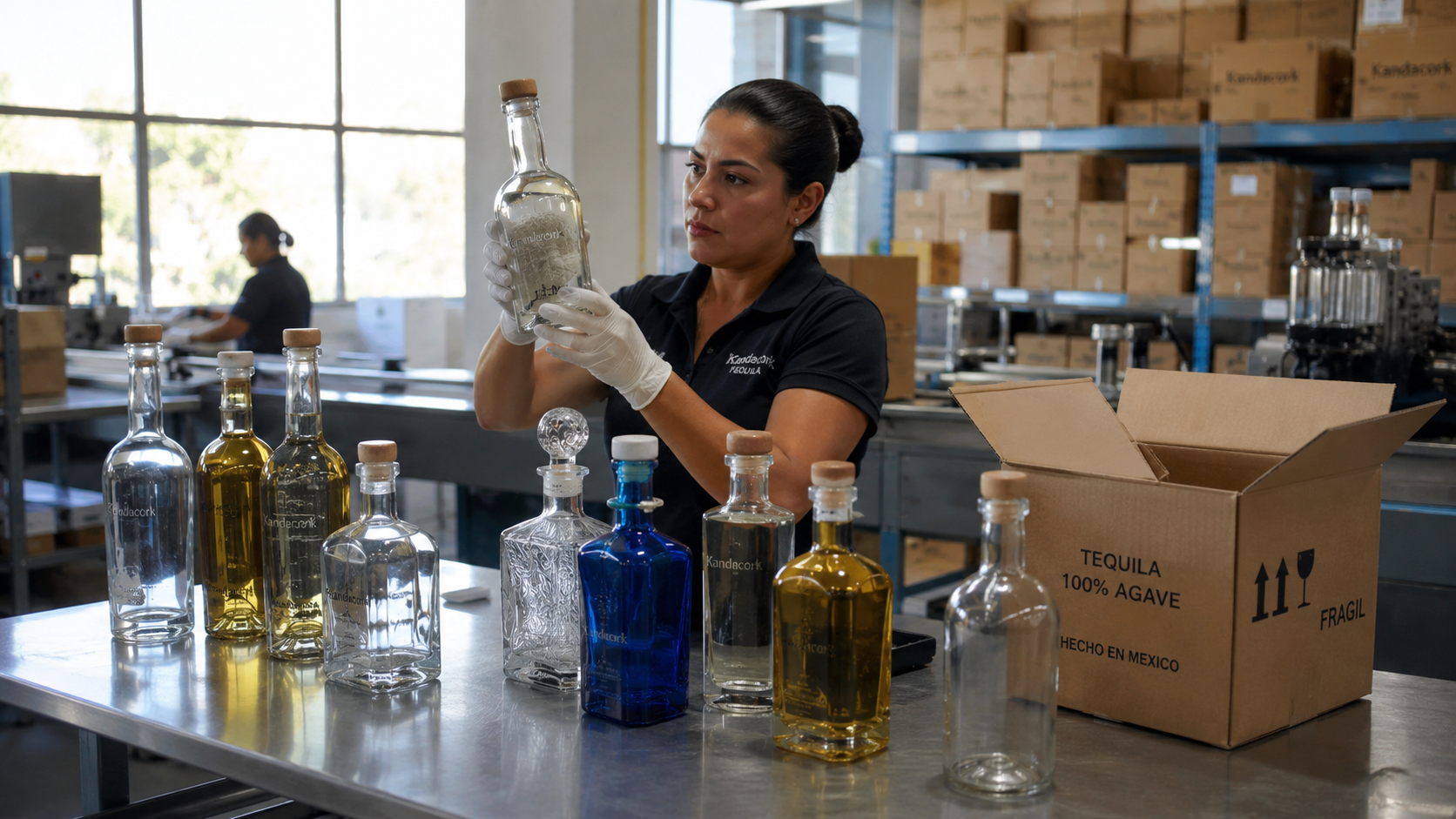
Testing is essential before placing a bulk closure order. Heavy glass spirits bottles may perform differently from standard bottles because of their weight, shape, neck tolerance, and packing requirements.
| Test | Purpose |
|---|---|
| Visual fit test | Confirms the closure sits straight and matches the bottle proportion |
| Manual insertion test | Checks whether the stopper can be inserted smoothly |
| Pull force test | Evaluates opening feel and consumer usability |
| Upright leak test | Confirms basic sealing performance |
| Side and inverted leak test | Simulates storage and transport risks |
| Temperature change test | Checks expansion, contraction, and pressure effects |
| Vibration test | Simulates transport movement |
| Reclosure test | Confirms the bottle reseals after opening |
| Odor review | Checks unwanted material smell or sensory impact |
| Carton packing test | Confirms the closure is protected during shipping |
Packaging test references such as ASTM D4169 and ISTA packaged-product testing procedures are often used to evaluate shipping performance, vibration, and distribution risk. For premium spirits packaging, transport simulation is useful because closure looseness, carton impact, or temperature change can lead to leakage, breakage, or cosmetic damage.
Common closure matching problems include loose stoppers, difficult opening, leakage during transport, caps that spin on the filling line, and closures that look visually undersized. Most of these issues can be reduced by testing filled samples before bulk ordering.
Kandacork Closure Fit Review Process for Heavy Spirits Bottles
A practical closure project should begin with fit review, not mass production. For heavy glass spirits bottles, Kandacork’s review process can help buyers identify fit, sealing, decoration, and packing risks before opening tooling or placing a bulk order.
1. Review the Bottle Drawing
The first step is to check the bottle drawing, especially the neck finish, inner bore diameter, outer diameter, finish height, thread profile, and sealing area. This helps narrow down suitable closure types before samples are prepared.
2. Check the Physical Bottle Sample
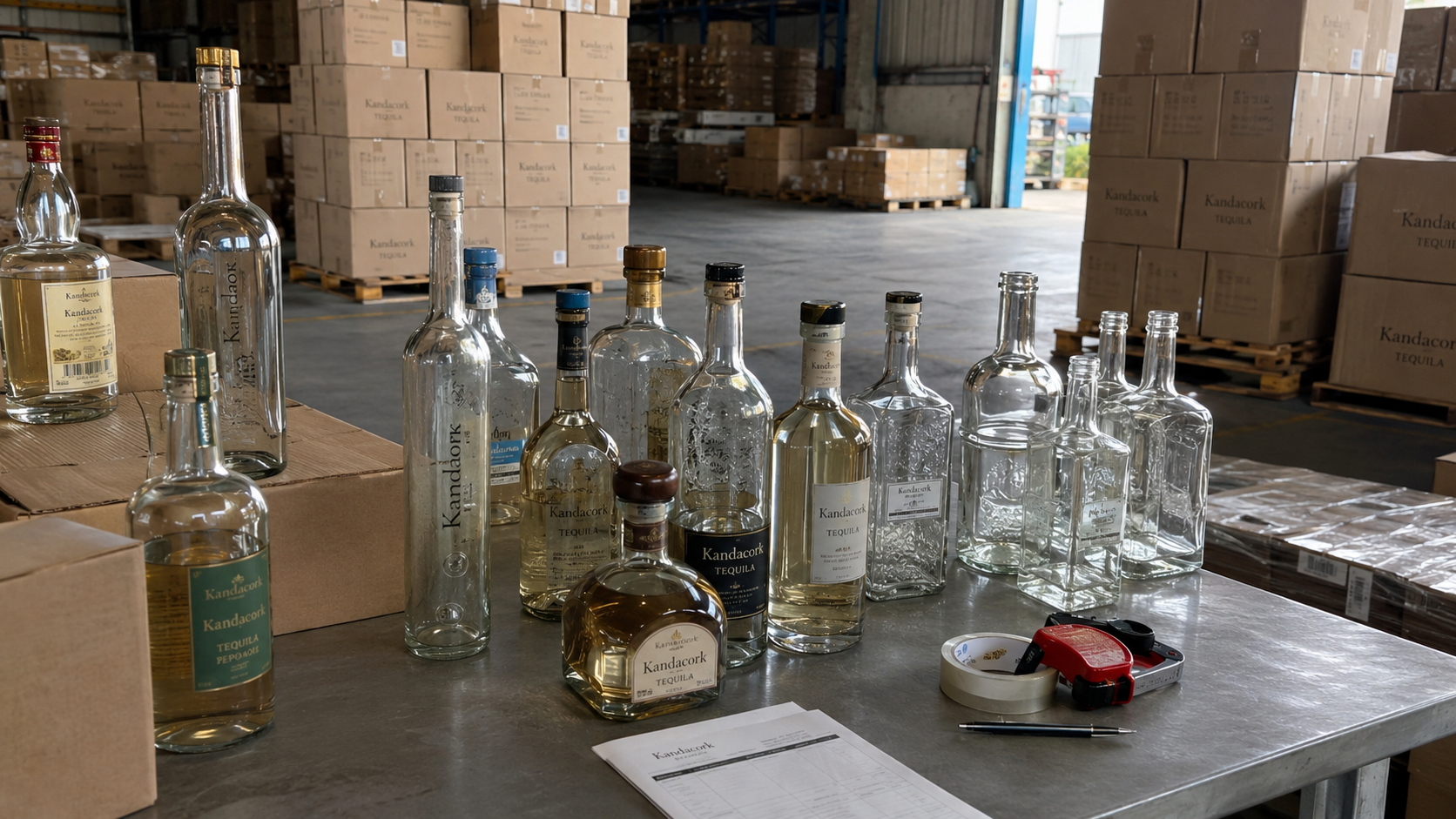
A drawing shows nominal dimensions, but a physical sample reveals real-world tolerance, glass thickness, neck roundness, finish quality, and how the closure actually sits on the bottle.
3. Match the Closure Structure
Based on the bottle and brand direction, Kandacork can help compare wood, metal, glass, aluminum, cork, synthetic, ROPP, or hybrid closure structures. The goal is to match both technical fit and visual positioning.
4. Prepare Sample Closures
Sample closures allow buyers to check appearance, insertion feel, opening force, sealing, decoration effect, and packing clearance before committing to tooling or bulk production.
5. Review Fit, Leakage, Opening Feel, and Packing
The final sample review should include visual alignment, pull force, leakage, reclosure feel, odor review, carton protection, and filling-line compatibility. This step helps reduce risk before purchase orders are placed. Buyers who need structured support can review Kandacork’s closure sample development and fit review services before sending project details.
When Should Buyers Request Samples?
Buyers should request closure samples before bulk production whenever the bottle design, closure material, or supply chain risk is not fully validated.
Sample review is especially important when the bottle is a private mold, uses a thick base, has a non-standard neck finish, or will be paired with a heavy metal or glass decorative top. Samples are also recommended when using ROPP or threaded closures on a new bottle finish, exporting to long-distance markets, or packing the bottle in gift boxes or multi-bottle cartons.
A sample stage helps buyers confirm visual balance, closure fit, leakage performance, opening feel, decoration quality, and carton clearance before placing a larger order.
How to Evaluate a Spirits Closure Supplier
A qualified spirits closure supplier should do more than sell a standard cap or stopper. For heavy glass spirits bottles, buyers need technical review, material comparison, sample support, decoration capability, and reliable production.
Before selecting a supplier, ask:
- Can the supplier review bottle drawings and physical samples?
- Can they recommend shank diameter, cap size, liner, or material structure?
- Do they offer wood, metal, glass, aluminum, cork, synthetic, and ROPP options?
- Can they provide pre-production samples?
- Can they support logo engraving, embossing, printing, plating, or custom finishing?
- Can they explain MOQ, tooling cost, lead time, and packing method clearly?
- Can they support export-ready packing?
- Can they help identify leakage or fit risks before production?
For spirits brands and procurement teams, the right supplier reduces launch risk. The goal is not only to buy a closure, but to protect the product, timeline, budget, and brand image.
RFQ Checklist: What to Send for a Faster Quote
To receive a faster and more accurate closure quotation, prepare a complete RFQ package.
Send the supplier:
- Bottle drawing or CAD file
- Bottle photos
- Physical bottle sample information
- Bottle capacity and bottle weight
- Inner bore diameter and neck finish dimensions
- Preferred closure type
- Preferred material and surface finish
- Spirit type and ABV
- Target market
- Tamper-evident requirement
- Logo or artwork file
- Estimated order quantity
- Packing requirements
- Sample deadline
- Bulk order timeline
A complete RFQ package allows the supplier to respond with a realistic recommendation instead of a generic price.
How Kandacork Supports Heavy Glass Spirits Bottle Closure Projects
Kandacork Closures & Stoppers supports spirits brands, distilleries, private label buyers, importers, distributors, bottlers, and packaging teams that need closure solutions for premium spirits bottles.
Kandacork can help buyers compare closure materials, review bottle neck fit, develop samples, support logo decoration, and prepare bulk quotations. Available closure directions may include bar-top stoppers, T-top stoppers, cork shanks, synthetic shanks, wooden tops, metal tops, glass tops, aluminum closures, ROPP caps, capsules, and custom closure structures.
For new spirits launches, Kandacork can help move a project from bottle concept to closure sampling. For existing bottle projects, Kandacork can review current closure issues and recommend alternatives. For multi-SKU spirits families, Kandacork can help align the closure appearance across different bottle sizes while adjusting the technical fit for each neck.
FAQ
What closure is best for heavy glass spirits bottles?
The best closure is usually a bar-top stopper, T-top stopper, ROPP cap, or premium screw cap. The right choice depends on the bottle neck finish, spirit category, brand positioning, sealing requirement, and filling method.
How do I choose the right stopper size?
You need the bottle’s inner bore diameter, neck finish dimensions, and preferably a physical bottle sample. The supplier can then recommend a suitable shank diameter, shank length, and material for testing.
Are metal stoppers suitable for heavy spirits bottles?
Yes. Metal, zamak, and zinc alloy stoppers can work well for premium tequila, mezcal, whisky, rum, and collector’s editions. However, head weight, bonding strength, packing protection, and transport performance should be tested.
Should I use natural cork or synthetic cork for spirits?
Natural cork provides a traditional premium feel, while synthetic cork offers stronger dimensional consistency and controlled performance. The choice depends on brand positioning, cost, sealing needs, odor control, and supply stability.
Do spirits bottles need tamper-evident closures?
Many markets require or strongly expect tamper-evident packaging for spirits. Common solutions include ROPP pilfer bands, tamper-evident screw caps, capsules, shrink sleeves, and non-refillable closures. Buyers should review the target market’s specific requirements before production.
What information is needed for a closure quotation?
Send the bottle drawing, bottle photos, physical sample details, inner bore diameter, closure style, spirit type, target market, logo artwork, estimated quantity, packing requirements, and production timeline.