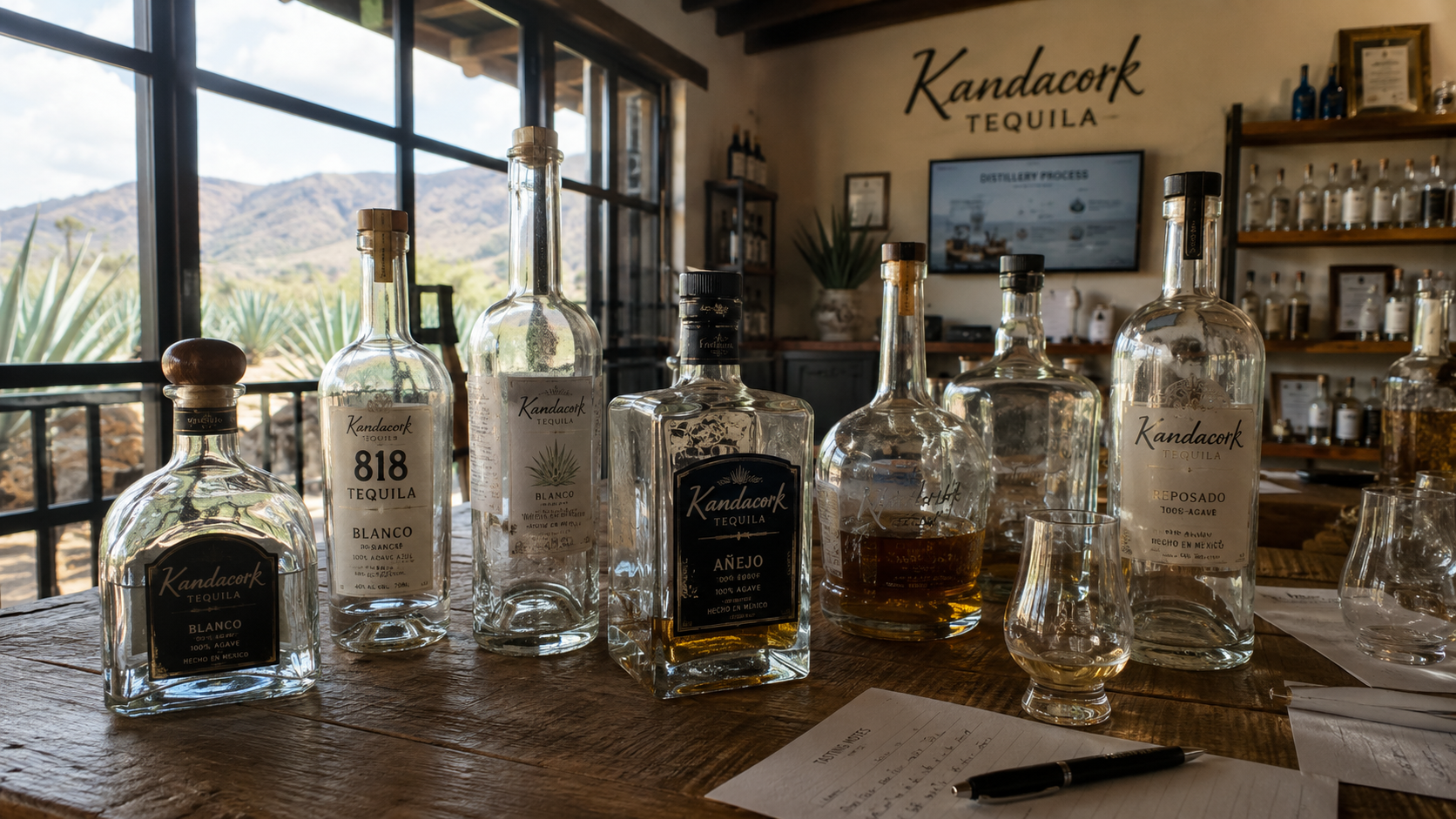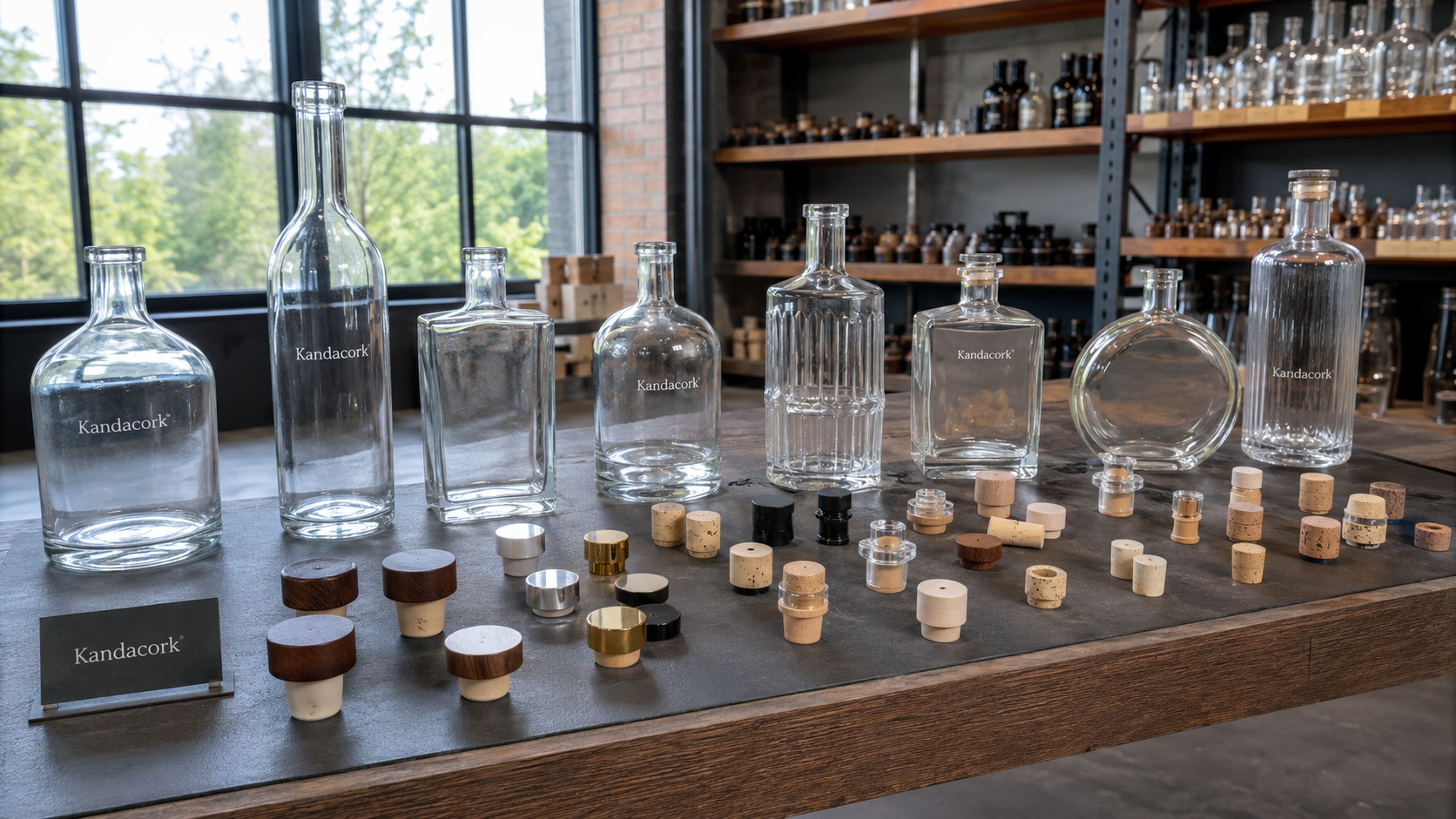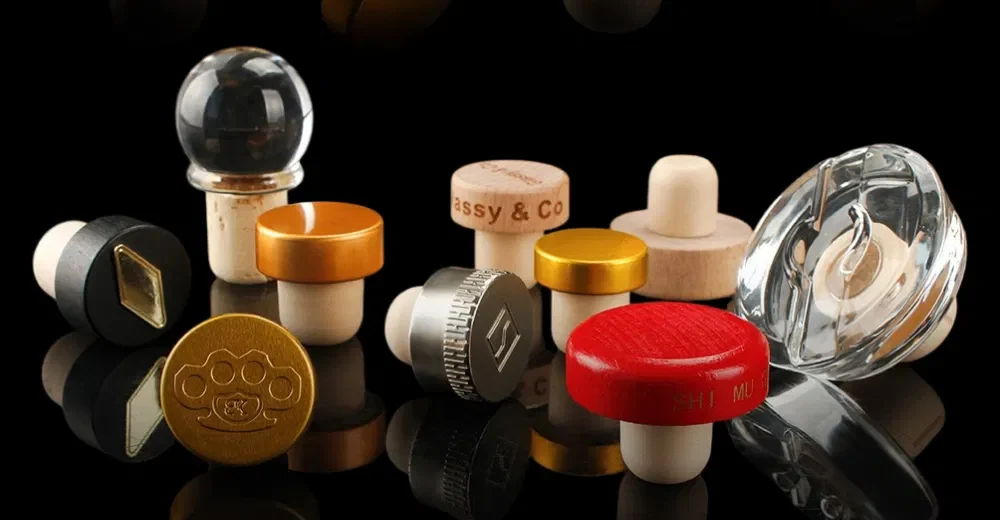
Neck finish tolerance problems in spirits bottle packaging can cause leakage, loose corks, poor torque, broken tamper bands, cross-threading, and filling-line downtime. For spirits brands, distilleries, private label buyers, importers, distributors, bottlers, and packaging procurement teams, the bottle neck finish is the connection point between the glass bottle, closure, liner, stopper material, and capping equipment.
Kandacork Closures helps spirits packaging buyers compare closure options, review technical requirements, match samples, and prepare quotation details before bulk production. This guide explains how neck finish tolerance affects closure fit, how common failures appear, and what buyers should test before approving corks, synthetic stoppers, glass stoppers, ROPP caps, screw caps, or decorative closure systems.
Quick Answer: What Are Neck Finish Tolerance Problems?
Neck finish tolerance problems occur when the bottle neck, bore, thread, sealing land, or tamper-evident bead does not match the closure’s functional tolerance range. These issues can cause leakage, unstable cork fit, poor torque control, tamper-band failure, and filling-line disruption. The solution is to review drawings, measure real samples, test closure fit, and validate filled bottles before bulk orders.
In This Guide
This guide covers:
- Key bottle neck finish dimensions buyers should check
- Common spirits bottle closure failures and likely causes
- Closure selection by cork, stopper, ROPP cap, screw cap, and decorative system
- Testing methods before bulk closure orders
- Supplier red flags and capability checks
- What to send before requesting samples or quotations from Kandacork Closures
Why Neck Finish Tolerance Matters in Spirits Packaging
Spirits packaging is more sensitive to tolerance variation because product value, alcohol content, visual presentation, and distribution conditions are all important. A small variation in the bottle finish may affect seal integrity, cork pull force, ROPP cap rolling quality, screw cap torque, liner compression, tamper evidence, or filling-line efficiency.
In whiskey, rum, gin, tequila, vodka, brandy, liqueur, and craft spirits packaging, the closure must do more than cover the bottle. It must seal the product, support retail and regulatory expectations, protect brand reputation, and create a controlled opening experience for the consumer.
Industry references such as GPI/SPI-style neck finish specifications, CETIE finish data sheets, ASTM-style torque testing methods, and destination-market alcohol packaging requirements can help buyers review technical expectations more clearly. For export-oriented distilled spirits, tamper-evident closure requirements should also be checked against the target market’s rules, including TTB requirements for the U.S. market where relevant.
That is why buyers should evaluate the bottle and closure as one packaging system instead of approving each component separately.
Key Bottle Neck Finish Dimensions Buyers Should Check
A bottle neck finish is the upper part of the bottle designed to receive a closure. It may include the bore opening, sealing land, thread, tamper bead, transfer bead, and finish height. In bottle and closure drawings, buyers often see dimensions such as T, E, I, S, and H. These dimensions are commonly used in neck finish specifications and closure compatibility work.
| Dimension or Feature | What It Means | Why It Matters for Spirits Closures |
|---|---|---|
| T dimension | Outside diameter across the thread or finish | Affects screw cap and ROPP cap fit |
| E dimension | Outside neck diameter below the thread | Affects thread depth and cap clearance |
| I dimension / bore ID | Inner opening of the bottle neck | Critical for corks, stoppers, pourers, and inserts |
| S dimension | Distance from the top of the finish to the thread start | Affects thread engagement and closure seating |
| H dimension | Total finish height | Affects cap height, liner compression, and tamper band position |
| Sealing land | Top sealing surface of the finish | Affects liner or gasket contact |
| Tamper-evident bead | Feature used by pilfer-proof closures | Affects band break and first-opening evidence |
| Ovality | Out-of-round variation in the neck or bore | Affects cork hold, cap seating, and leakage resistance |
A nominal size alone is not enough. A buyer may request a “28 mm cap” or a “21.5 mm cork,” but actual performance depends on the full tolerance range, closure material, liner behavior, and application method.
Common Neck Finish Tolerance Problems, Symptoms, and Tests
The fastest way to diagnose neck finish tolerance problems in spirits bottle packaging is to connect visible symptoms with likely technical causes and the right validation method.
| Problem | What the Buyer Sees | Likely Technical Cause | What to Test |
|---|---|---|---|
| Loose bar-top cork | Stopper rocks, pulls out too easily, or leaks when inverted | Bore ID too large, bore ovality, undersized shank, poor material recovery | Bore gauge, pull-force test, filled-bottle inversion test |
| Cork or stopper too tight | Difficult insertion, damaged shank, hard opening, neck stress | Bore ID too small, oversized stopper, material too hard | Insertion force, pull force, bore measurement |
| ROPP cap leakage | Cap looks closed but liquid leaks in transit | Poor liner compression, sealing land defect, thread mismatch, rolling-head issue | Leak test, torque test, cap height check |
| Screw cap backs off | Cap loosens during shipping or has low opening torque | Low application torque, thread mismatch, liner relaxation | Application torque, removal torque, torque retention |
| Cross-threading | Cap sits at an angle or jams on the line | T dimension variation, thread start inconsistency, closure mismatch | Thread profile inspection, line trial |
| Tamper band failure | Band breaks too early, does not break, or looks uneven | Tamper bead mismatch, skirt length issue, rolling-head misalignment | Bead measurement, opening test, line application test |
| Capsule wrinkles | Capsule, sleeve, or wax finish looks uneven | Neck OD variation, taper issue, seam ridge, shoulder transition problem | OD measurement, visual QC, application trial |
These failures should not be blamed automatically on only the bottle or only the closure. In many cases, the root cause is tolerance stacking across the bottle, closure, liner, stopper, and capping equipment.
Neck Finish Failure Diagnosis: Start Here
When a packaging problem appears, buyers need a fast starting point. The table below helps identify what to check first before changing the closure design or blaming the bottle supplier.
| If You See This | Check First | Then Check |
|---|---|---|
| Bottle leaks during transit | Liner compression or cork compression | Neck finish tolerance and application torque |
| Cork pulls out too easily | Bore ID and bore roundness | Cork shank diameter and material recovery |
| Cork is too hard to remove | Bore ID and insertion depth | Stopper hardness and pull-force target |
| ROPP cap spins | Rolling-head setup | Thread profile, sealing land, and tamper bead |
| Screw cap cross-threads | Thread start and T dimension | Cap compatibility and application torque |
| Tamper band does not break cleanly | Tamper-evident bead | Closure skirt length and rolling-head pressure |
| Capsule wrinkles or tilts | Neck outside diameter and taper | Capsule size and application temperature |
| Line speed becomes unstable | Closure application settings | Bottle batch variation and closure batch consistency |
This diagnostic approach gives buyers a practical way to discuss problems with bottle suppliers, closure suppliers, and bottling partners.
Closure Selection Matrix for Spirits Bottle Buyers
Different closure types respond to neck finish tolerance in different ways. A bar-top cork is highly sensitive to bore ID, while a ROPP cap depends on thread profile, sealing land, liner compression, and rolling-head setup.
| Closure Type | Best For | Most Sensitive Dimension or Feature | Main Test |
|---|---|---|---|
| Bar-top cork | Premium whiskey, rum, gin, tequila, vodka, brandy | Bore ID, bore ovality, shank compression | Pull-force test and leak test |
| Synthetic stopper | Private label spirits, repeat production, color-controlled programs | Bore ID and compression recovery | Pull-force test and ABV compatibility check |
| Glass stopper | Luxury spirits, limited editions, gift packaging | Bore roundness, gasket compression, sealing surface | Leak test and repeated opening test |
| ROPP aluminum cap | Tamper-evident spirits and liqueurs | Thread profile, sealing land, tamper bead | Torque test and filled-bottle leak test |
| Continuous-thread screw cap | Vodka, gin, liqueurs, RTD spirits, export programs | T dimension, thread profile, liner compression | Application torque and removal torque |
| Capsule, wax, or tamper sleeve | Premium shelf presentation and secondary tamper evidence | Neck OD, taper, shoulder transition | Visual QC and application trial |
For buyers comparing materials, structures, and fitment risks, Kandacork’s bottle stoppers and closures range offers a practical starting point for reviewing cork closures, stoppers, ROPP caps, screw caps, capsules, and shrink sleeves as part of one closure system.
Closure-Specific Tolerance Risks
Bar-Top Cork Closures
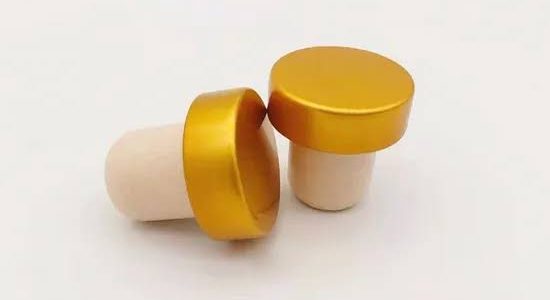
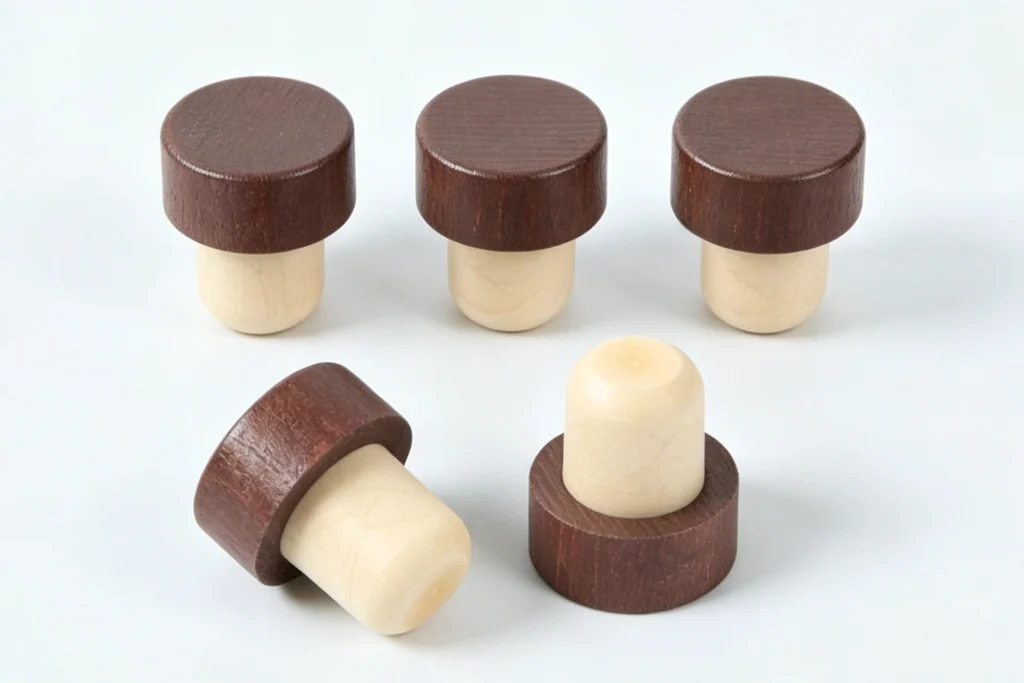
Bar-top cork closures are widely used for premium whiskey, rum, gin, tequila, vodka, brandy, and craft spirits. They may use natural cork, micro-agglomerated cork, synthetic shanks, wood tops, aluminum tops, plastic tops, or custom decorative tops.
The most important tolerance factor is the bore inner diameter. The cork or synthetic shank must compress enough to seal, but not so much that insertion becomes difficult or the opening force feels excessive. Buyers should test bore ID, bore roundness, shank diameter, insertion depth, insertion force, pull force, and material recovery.
A decorative top creates brand value, but the shank creates the functional seal.
ROPP Aluminum Caps
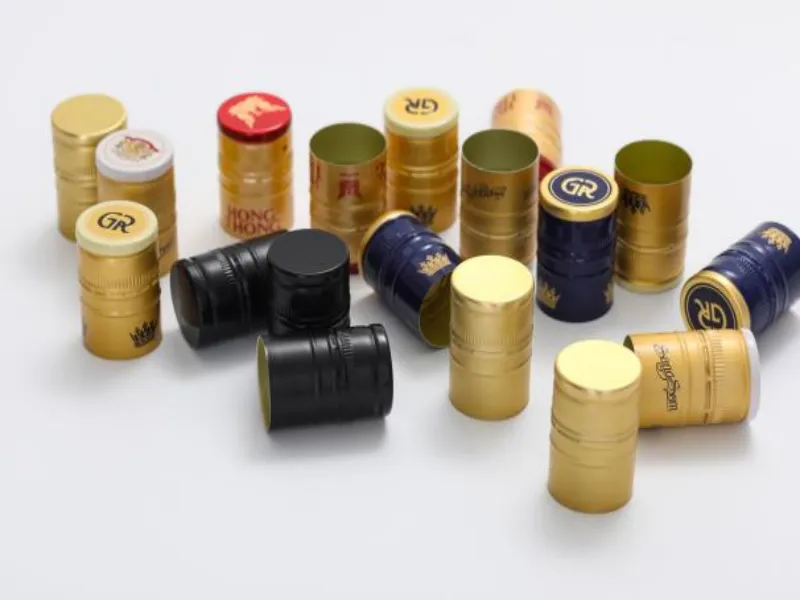
ROPP aluminum caps are common for spirits and liqueurs that need tamper evidence and consistent shelf presentation. ROPP performance depends on the aluminum shell, liner, bottle thread, sealing land, tamper bead, and rolling-head setup.
Common risks include weak thread formation, uneven cap skirt, low removal torque, excessive removal torque, cap spinning, leakage after transport, and poor tamper-band break. Because ROPP caps are formed during application, hand-fit testing is not enough. They should be tested on actual bottles with the intended capping equipment.
Continuous-Thread Screw Caps
Continuous-thread screw caps require matching bottle threads, cap threads, liner design, and torque control. They are sensitive to T dimension variation, thread profile, finish height, sealing land quality, and liner compression.
A screw cap may thread smoothly by hand but still fail after shipping if torque drops, the liner relaxes, or the thread profile does not engage consistently. Buyers should measure application torque, removal torque, and torque retention during validation. For threaded closures, repeatable torque testing is especially important because hand feel alone cannot confirm sealing reliability. Buyers comparing thread engagement details can also review Kandacork’s screw cap thread finish matching guide before sample approval.
Premium Stopper Systems: Synthetic and Glass Stoppers
Synthetic stoppers are useful when brands want stable dimensions, color control, and repeatable material performance. Glass stoppers are often used for luxury spirits and limited-edition packaging. Both systems require careful fitment review.
Synthetic stoppers should be checked for compression recovery, alcohol compatibility, flavor neutrality, and pull-force consistency. Glass stoppers should be checked for gasket compression, neck roundness, sealing surface quality, stopper weight, and repeated opening performance. For glass stopper projects, the glass stopper neck finish matching guide provides additional context on bore size, sealing compression, and leak testing.
Capsules, Wax, and Tamper Sleeves
Capsules, wax seals, and tamper sleeves may not always provide the primary seal, but they strongly affect presentation. Neck outside diameter, taper, shoulder transition, seam ridges, and cap height can all affect whether the package looks straight, premium, and consistent.
For high-end spirits, appearance defects are commercial defects.
Common Spirits Bottle Neck Sizes and Buyer Considerations
Spirits bottles may use different bore and closure formats depending on bottle style, capacity, supplier, market, and closure type. The following are common reference points, not universal standards.
- 18.5 mm bore: often used for smaller spirits bottles, mini bottles, sample bottles, and specialty formats.
- 21.5 mm bore: often seen in many 700 ml and 750 ml premium spirits bottles using bar-top closures.
- 28 mm ROPP finish: commonly used for aluminum pilfer-proof caps and tamper-evident spirits closures.
- Continuous-thread finish: used for screw caps where liner compression and torque control are critical.
- Bar-top finish: used for cork, synthetic, wood-top, aluminum-top, or custom decorative stoppers.
- Glass stopper finish: used for luxury packages that require precise stopper and gasket fit.
These references should guide early sourcing, not replace technical approval. Final selection should be based on bottle drawings, measured samples, and closure testing.
Why Tolerance Stacking Causes Hidden Closure Failures
Tolerance stacking happens when several small variations combine into one functional problem. A bottle bore may be near the upper limit, a cork shank may be near the lower limit, and the stopper material may recover slightly less than expected. Each part may appear acceptable by itself, but together they create a loose seal.
The same issue can occur with ROPP caps and screw caps. A slightly uneven sealing land, marginal liner thickness, low application torque, and small thread variation can combine to cause leakage or low removal torque.
This is why neck finish tolerance problems in spirits bottle packaging should be evaluated as a system. Buyers should test real bottle samples, real closures, and real filling conditions instead of relying only on nominal drawings or hand-fit approval.
Why Hand-Fit Approval Is Not Enough
A closure that fits by hand may still fail on the filling line. Hand testing cannot reproduce production speed, vertical pressure, capping torque, rolling-head settings, bottle vibration, conveyor movement, temperature change, or batch-to-batch variation.
For example, a screw cap may feel correct by hand but cross-thread at high speed. A ROPP cap may look seated before rolling but leak after the thread is formed. A cork may fit one bottle but become loose when tested across bottles from different cartons.
Hand-fit approval is useful for early screening. It should not be treated as final validation.
How to Test Closure Compatibility Before Bulk Orders
A practical validation process helps buyers reduce leakage, rework, and delayed filling.
Review Bottle and Closure Drawings
Confirm the neck finish standard, bore ID, thread dimensions, finish height, sealing land, tamper bead, and closure specification. If drawings are not available, physical bottle samples become more important.
Measure Bottle and Closure Samples
Measure bottles from multiple cartons or production lots. Check bore ID, T dimension, H dimension, sealing land, thread profile, tamper bead, ovality, chips, and roughness.
Measure closures from the same production batch, including cork shank diameter, cap dimensions, liner position, skirt length, gasket consistency, and decoration effects.
Run Dry-Fit and Line-Fit Checks
Dry-fit testing identifies obvious mismatch before filling. Line-fit testing checks whether the closure applies consistently under realistic production conditions.
Run Filled-Bottle Tests
Filled-bottle validation should include inversion testing, leakage inspection, torque testing, pull-force testing, temperature cycling, and transport simulation where relevant. Liquid, alcohol content, headspace, temperature, and movement can reveal issues that dry testing cannot.
Retain Golden Samples and QC Records
Keep approved bottle-and-closure samples as golden references. Record supplier, batch, mold number, sample quantity, test method, and approval date. These records help resolve future tolerance disputes and maintain consistency across production runs.
Red Flags When Choosing a Spirits Closure Supplier
A closure supplier should be able to support technical fitment, not only appearance customization. Be cautious if a supplier shows any of the following signs:
- The supplier cannot review bottle or closure drawings.
- The supplier approves fit only from photos.
- The supplier cannot explain bore ID, liner compression, torque, pull force, or tamper-band requirements.
- The supplier cannot test closures on real bottles.
- The supplier provides appearance samples but no functional samples.
- The supplier cannot discuss high-ABV compatibility for liner, gasket, cork, or synthetic materials.
- The supplier cannot provide QC records for repeat production.
- The supplier cannot support problem investigation after pilot filling.
These red flags do not always mean a supplier is unusable, but they increase project risk. For spirits packaging, technical support is part of supplier value.
Supplier Capability Checklist for Spirits Closure Buyers
A qualified closure supplier should support technical matching, material selection, decoration, sampling, and repeat-order consistency. Before placing a bulk order, ask whether the supplier can provide:
- Bottle and closure drawing review
- Physical bottle sample matching
- Cork, synthetic stopper, glass stopper, ROPP cap, and screw cap recommendations
- Liner or gasket advice for high-ABV spirits
- Pre-production samples
- Leak, torque, or pull-force testing support
- Custom decoration capability
- QC records or production inspection data
For commercial buyers, supplier capability is part of total cost control. A low unit price can become expensive if it causes leakage, delayed filling, shipment rejection, or emergency rework.
What to Send Before Requesting Samples or a Quotation
To speed up closure matching and pricing, send Kandacork Closures complete project information:
- Bottle drawing
- Neck finish standard
- Bore inner diameter
- Bottle capacity
- Bottle material and weight
- Closure type
- Product category and ABV
- Filling temperature
- Capping or insertion method
- Required tamper-evident function
- Application torque or pull-force target if available
- Liner or gasket preference
- Closure material preference
- Logo file or design reference
- Annual order quantity
- Launch timeline
- Destination market
- Shipping conditions
- Physical bottle samples if available
The more complete the information, the faster Kandacork Closures can recommend suitable closure structures, materials, samples, and quotation options. Teams planning a complete bottle-and-closure program can also coordinate glass bottle selection through Kandacork Spirits when bottle format, neck finish, closure fit, and decoration need to be developed together.
Real-World Example: Premium Rum with Loose Bar-Top Corks
A private label buyer selects a heavy-base rum bottle and a wooden bar-top cork. The bottle looks premium, and the closure design fits the brand identity. During pilot filling, some bottles leak when inverted.
At first, the buyer assumes the cork is defective. After measurement, the issue is traced to bore variation across bottles from different cartons. Some bores are slightly larger, reducing cork compression and pull force.
The solution is not simply to select a larger cork. A larger shank may be too tight in bottles with smaller bores. The better approach is to review the bottle bore tolerance, test several shank options, evaluate material recovery, and approve the final closure using bottle samples from multiple lots.
Real-World Example: ROPP Cap Leakage on a Craft Gin Line
A craft gin producer changes to an aluminum ROPP cap for a cleaner, modern look. The cap fits during manual checking, but leakage appears after the line trial.
Inspection shows that liner compression is uneven. The sealing land is inconsistent, and the rolling-head settings are not optimized for the cap and bottle combination.
The solution is to test the ROPP cap with actual filled bottles, adjust capping equipment, review liner material, and verify neck finish dimensions against the closure supplier’s recommendation. Buyers facing similar bottle-neck uncertainty can use Kandacork’s glass bottle neck closure matching guide to prepare drawings, samples, and test requirements before bulk approval.
How Kandacork Closures Helps Reduce Closure Fit Risk
Kandacork Closures helps spirits brands and packaging buyers reduce tolerance-related closure risk before bulk production.
Support can include closure structure comparison, cork and stopper selection, ROPP and screw cap recommendation, bottle drawing review, physical bottle sample matching, material and liner guidance, decoration consultation, sample development, fitment discussion, pre-production approval support, and bulk quotation preparation. This type of engineering and OEM/ODM support helps buyers evaluate closure performance as part of a complete packaging system rather than a standalone decorative component.
Instead of choosing a closure only by appearance, buyers can work with Kandacork Closures to compare the functional requirements behind each option.
Request Closure Samples or a Fitment Review
For fitment review, send Kandacork Closures your bottle drawing, bore ID, closure type, ABV, filling method, and target market.
For sample testing, request cork, synthetic stopper, glass stopper, ROPP cap, or screw cap samples for real bottle validation.
For quotation, provide order quantity, closure material, decoration method, logo requirements, target delivery date, and destination market through the custom closure quote form.
FAQ
What causes most neck finish tolerance problems in spirits bottle packaging?
Most problems come from mismatch between the actual bottle neck dimensions and the closure system. Bore variation, thread inconsistency, finish height problems, sealing land defects, ovality, incorrect liner selection, and capping-machine settings can all contribute.
Why does my liquor bottle leak even when the cap looks closed?
A cap can look closed but still have poor liner compression, low torque, thread mismatch, sealing land defects, or tamper bead issues. Visual inspection should be supported by leak testing and torque testing.
Can one cork fit multiple spirits bottles?
Sometimes, but only if the bore diameter, tolerance range, cork shank diameter, material compression, insertion depth, and pull-force target are compatible. Similar-looking bottles may still require different stopper specifications.
What is the most important dimension for bar-top corks?
The bore inner diameter is critical because it controls cork shank compression. Bore roundness, insertion depth, cork material, and pull-force performance should also be checked.
Why does a closure fit by hand but fail on the filling line?
Hand fitting does not reproduce filling-line speed, pressure, torque, vibration, rolling-head settings, or batch variation. Final approval should include line trials or realistic pilot testing.
What should I send to Kandacork Closures for sample matching?
Send the bottle drawing, neck finish details, bore inner diameter, closure type, product ABV, filling conditions, decoration requirements, target order quantity, and physical bottle samples if available.