A clear closure specification helps prevent sampling delays and bulk production problems. This guide explains how spirits brands can define closure type, bottle neck fit, material, finish, logo method, testing requirements and export packing.
What Are Custom Bottle Closures for Spirits?
Custom bottle closures for spirits are bottle-matched caps, stoppers, corks, ROPP closures, non-refillable systems, capsules, or shrink sleeves designed to seal alcoholic products and support brand presentation. A complete closure system may include a decorative top, cork or synthetic shank, cap liner, pilfer-proof band, capsule, shrink sleeve, or internal non-refillable insert.
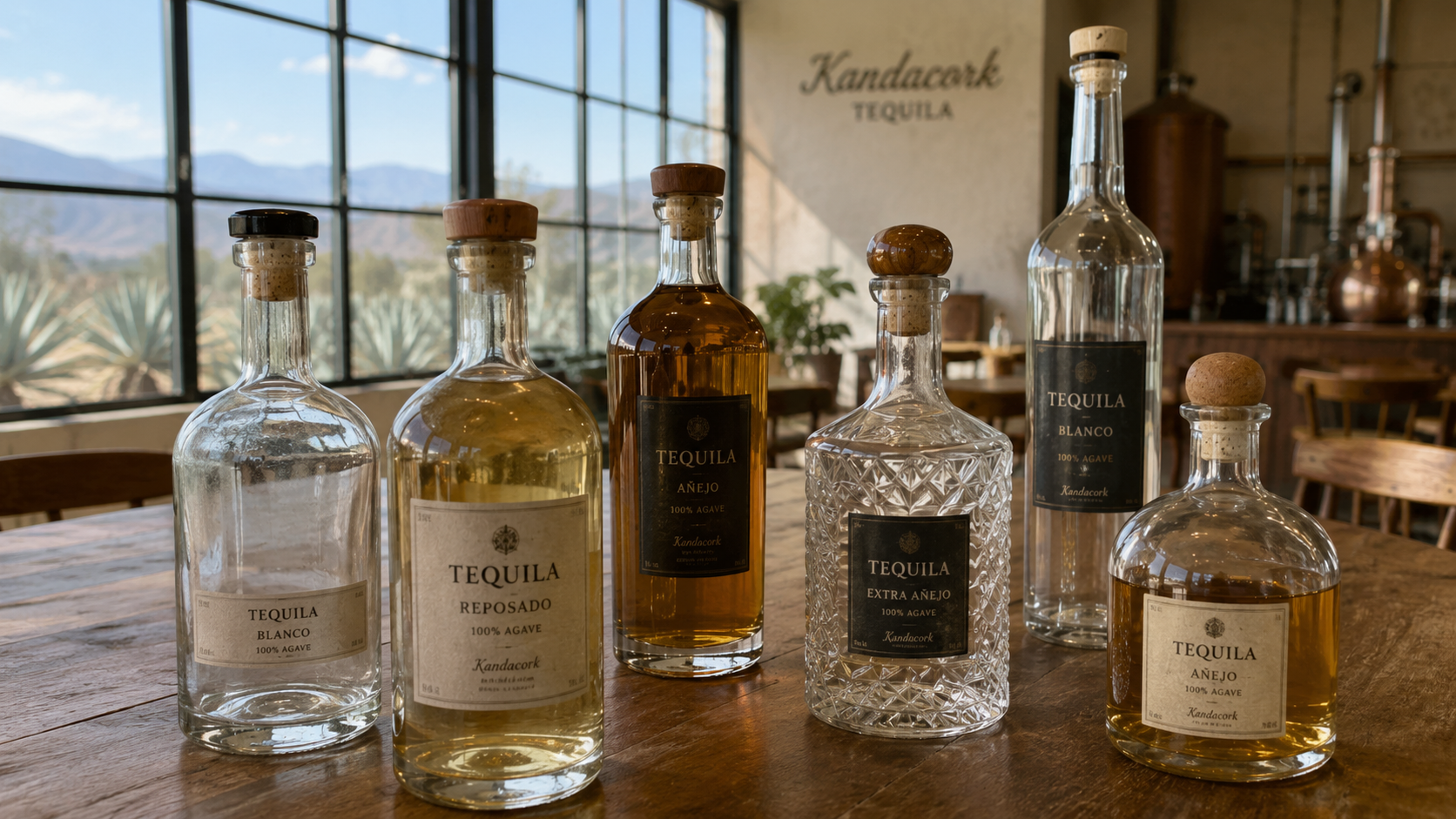
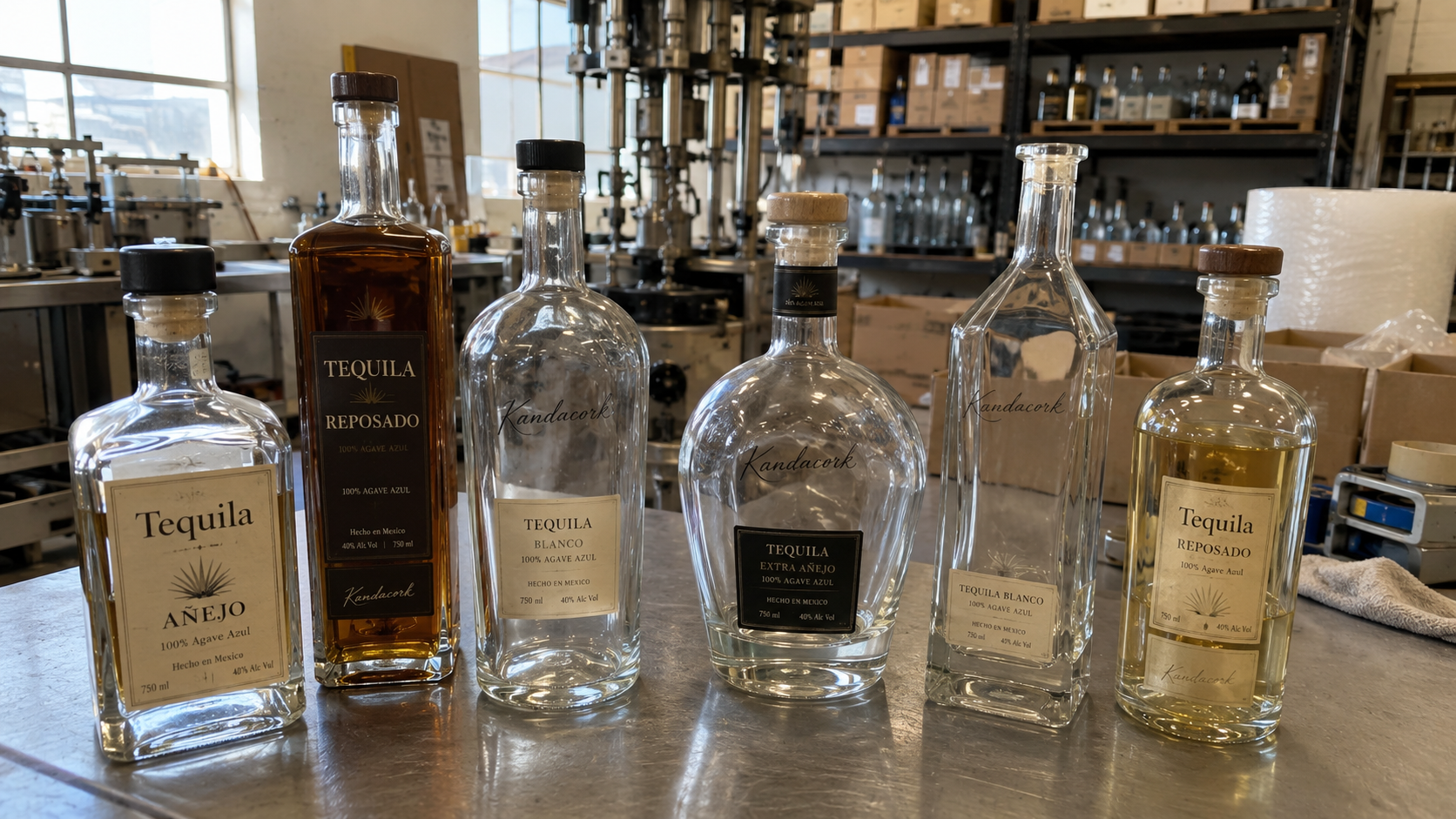
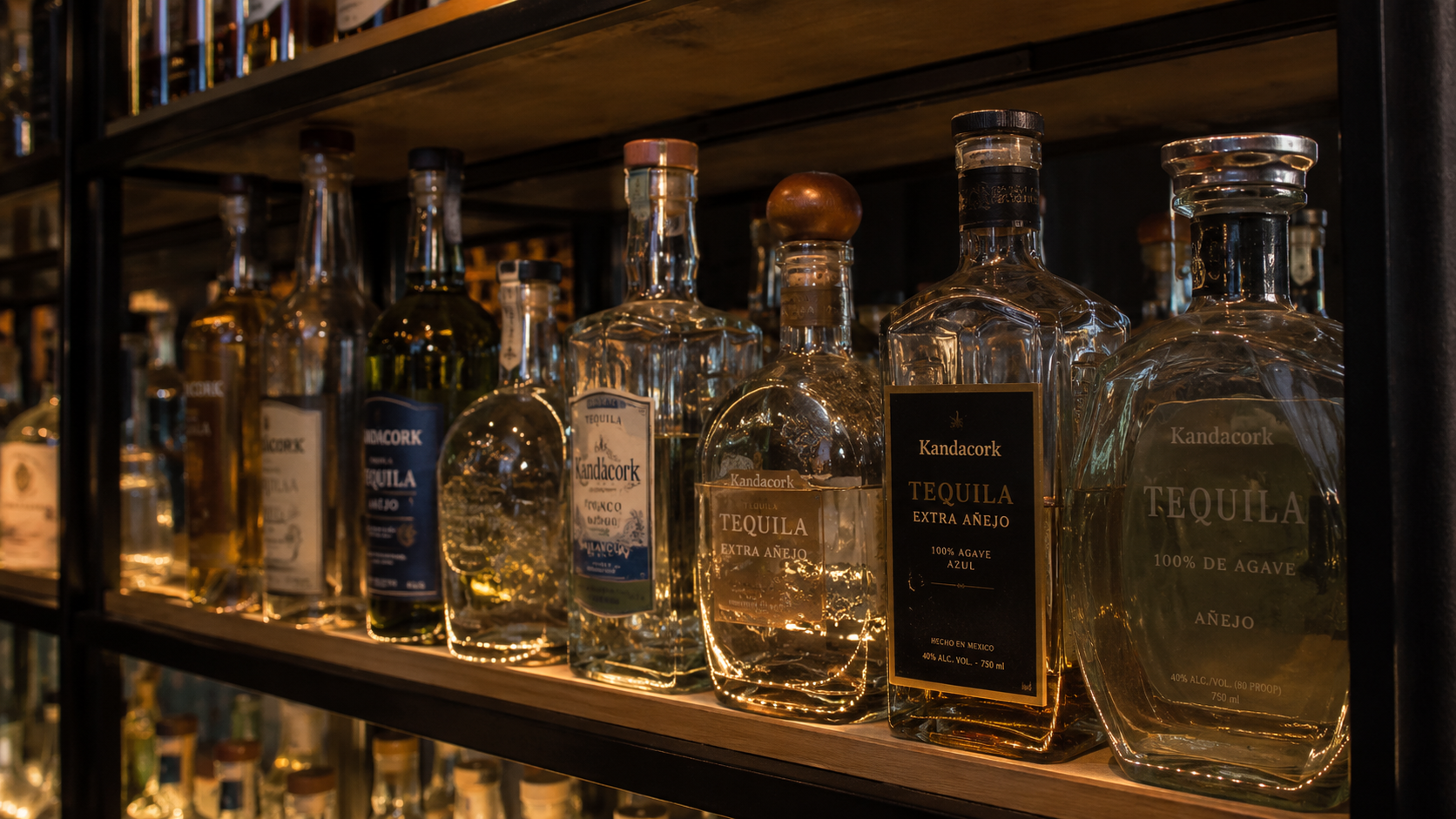
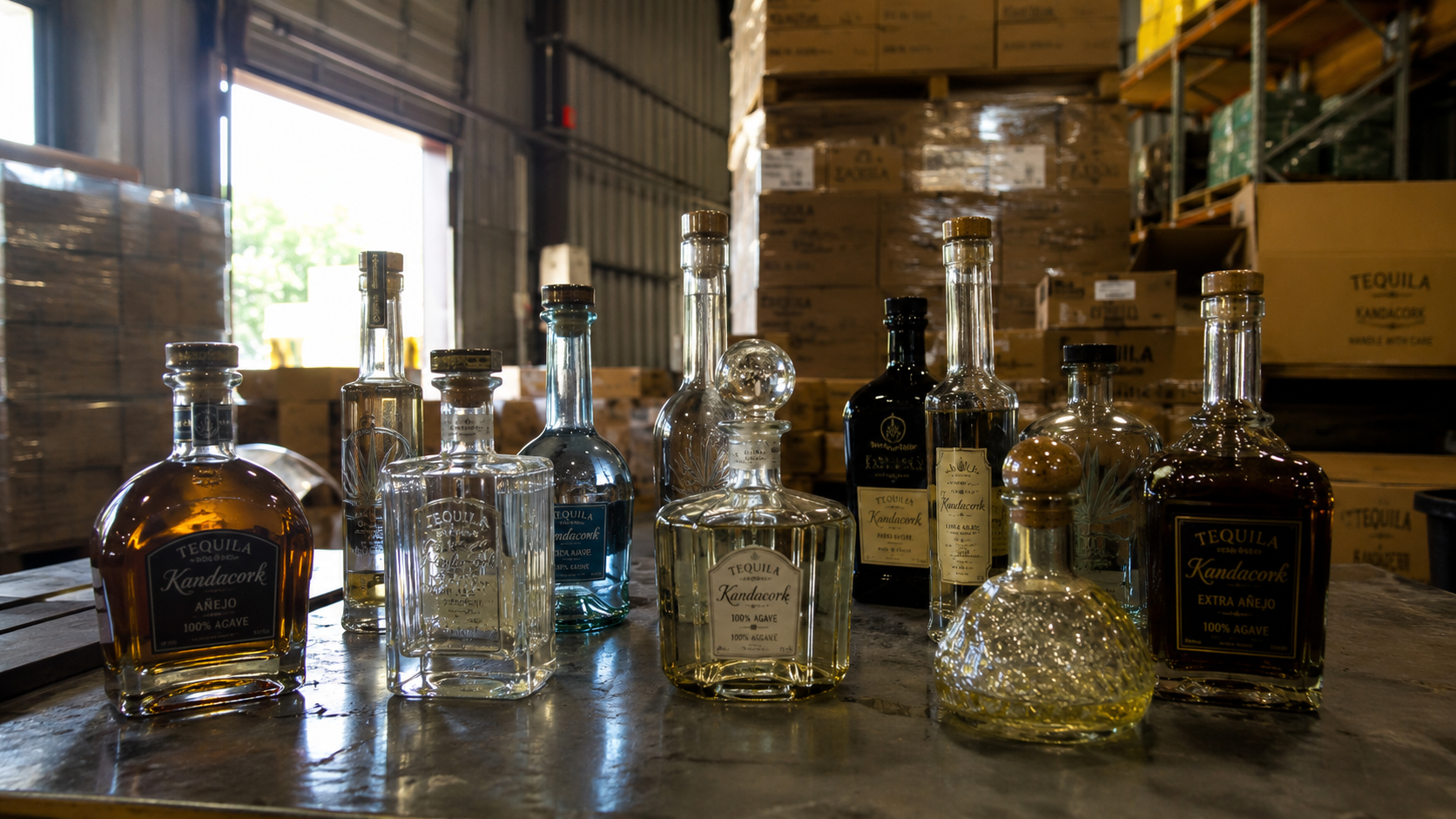
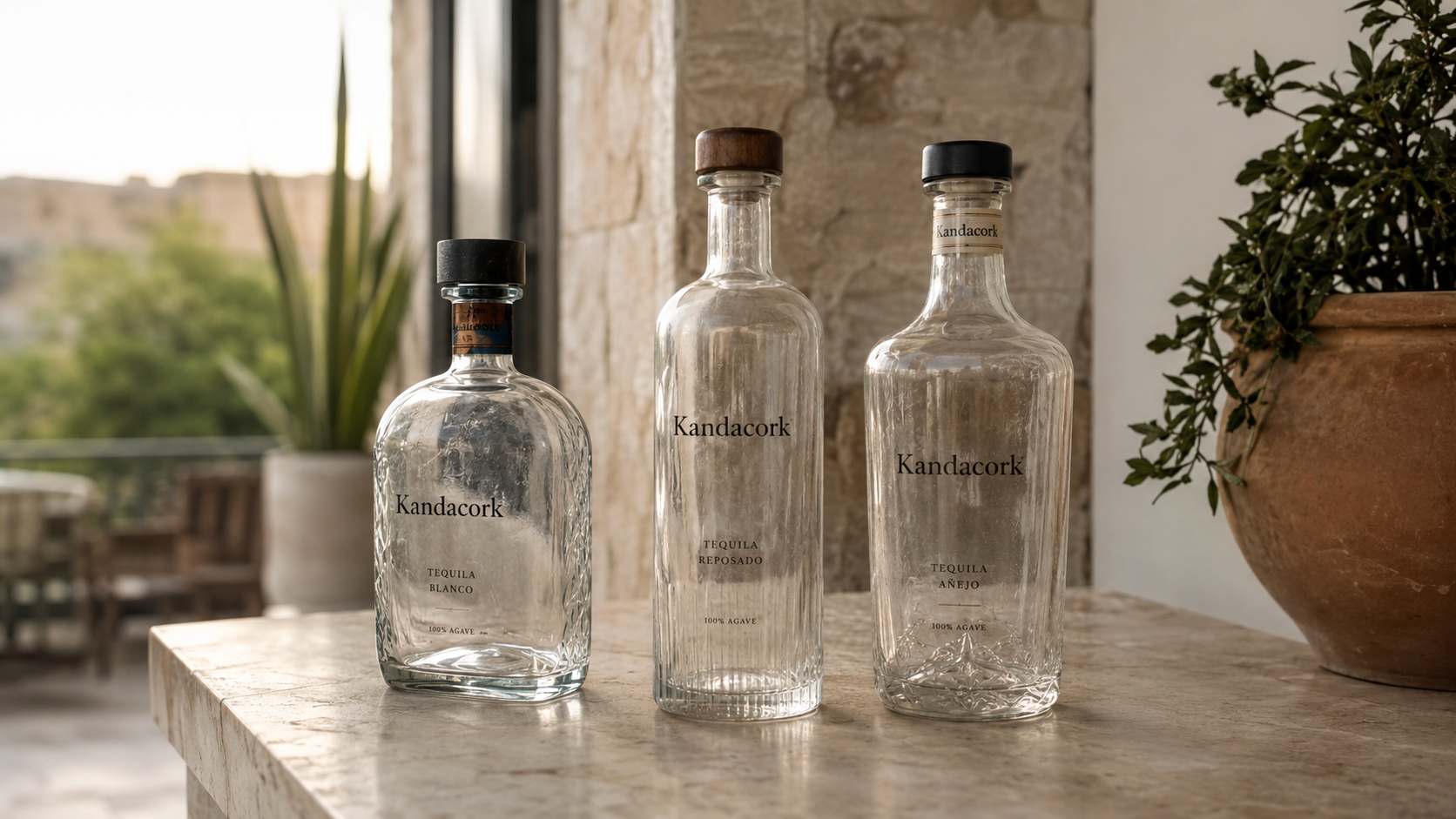
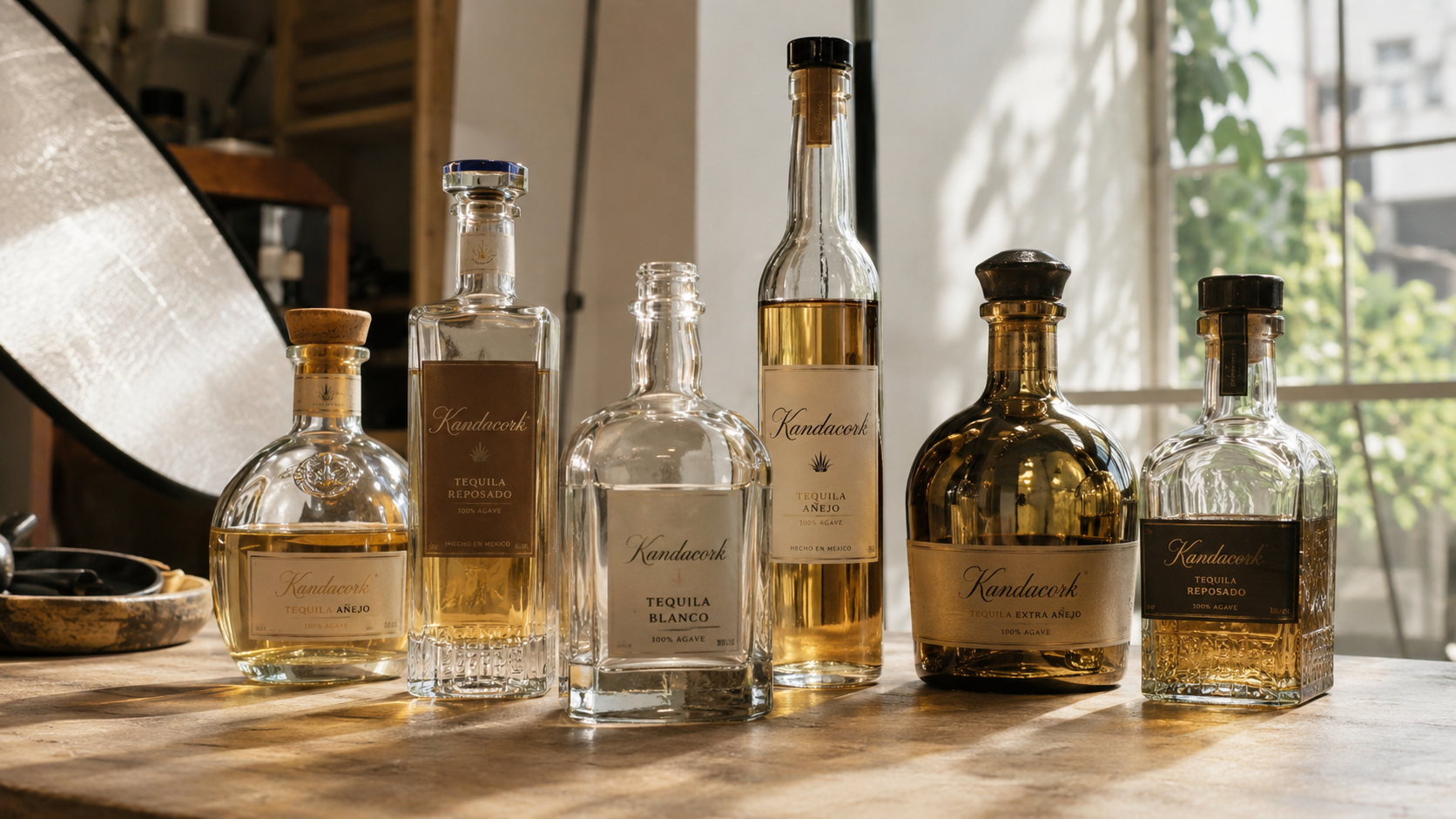
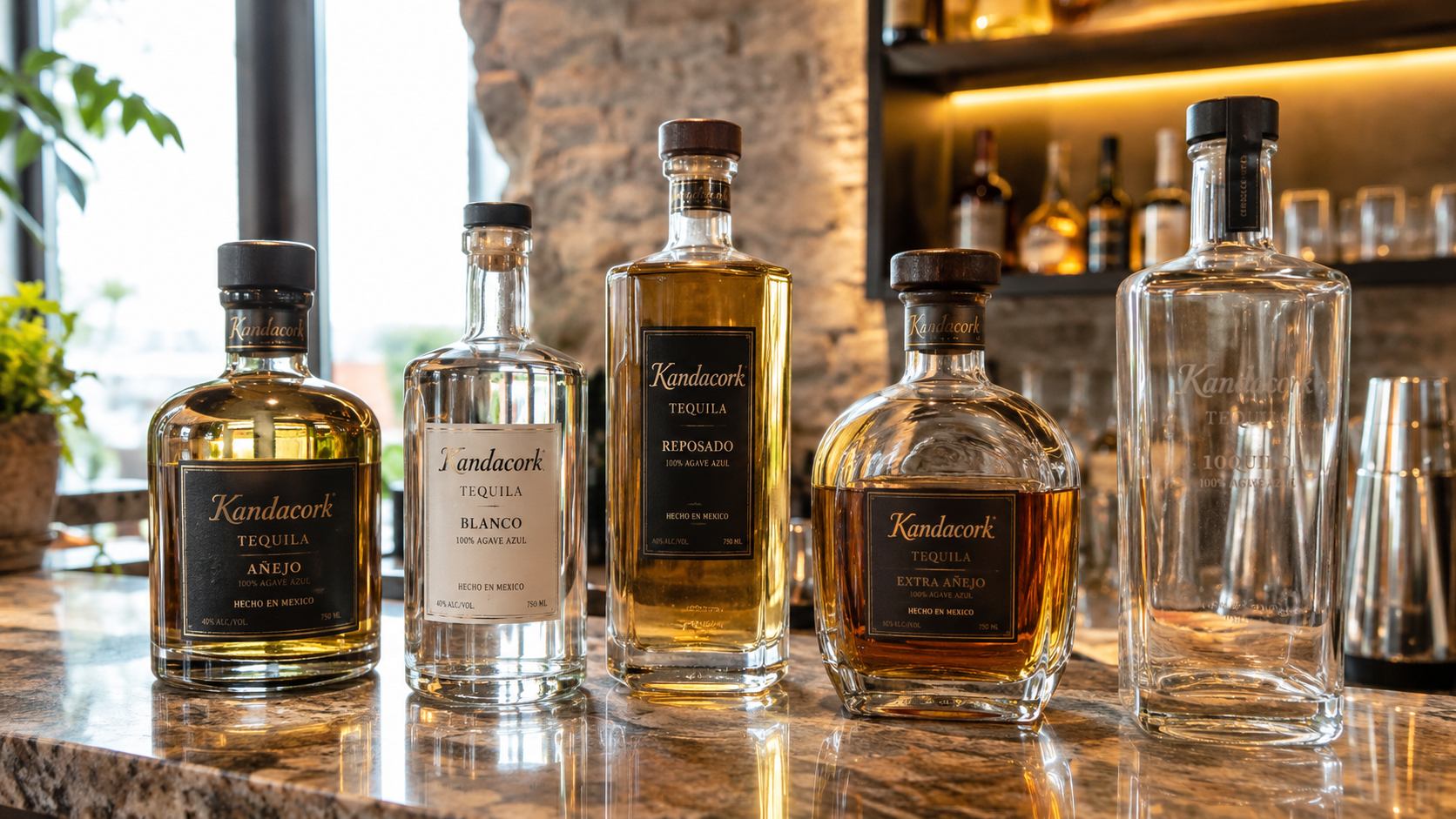
A premium rum bottle may use a stained wooden bar-top stopper with a synthetic shank and neck sleeve. A vodka bottle may use an aluminum ROPP cap with a liner and break band. A duty-free tequila bottle may require a decorative cap, secure fitment, and non-refillable function. In each case, the best closure connects three priorities: product protection, visual identity, and production consistency.
Why Spirits Brands Invest in Custom Closures
Spirits packaging is highly visual. Consumers often evaluate quality from the bottle shape, label, closure, neck finish, carton, and shelf presentation before tasting the liquid. A closure that feels loose, looks generic, or conflicts with the bottle design can reduce perceived value.
Custom bottle closures for spirits help brands improve shelf differentiation, strengthen recognition, and create a better opening experience. A wooden top can make a whisky feel warmer and more traditional. A matte aluminum cap can make a gin bottle look cleaner and more modern. A heavy metal stopper can signal limited-edition value, while a tamper-evident sleeve can reassure retail buyers and consumers.
Closures also solve practical sourcing problems. They help match the closure to the bottle neck, reduce leakage risk, improve repeat resealing, support capping speed, and make export packaging more predictable. For brands developing the bottle at the same time, coordination with a dedicated spirits bottle partner such as Kandacork Spirits Bottle can reduce compatibility risks between bottle structure, neck finish, and closure selection.
Main Types of Custom Spirits Bottle Closures
Bar-Top Stoppers
Bar-top stoppers are common in premium spirits packaging. They usually include a decorative top attached to a cork or synthetic shank. The top may be made from wood, glass, plastic, aluminum, ceramic, zamak, or mixed materials.
Choose bar-top stoppers when premium shelf appeal, opening ritual, and brand storytelling matter. Whisky, bourbon, aged rum, tequila, mezcal, brandy, cognac, and craft gin frequently use this format. Before bulk approval, test shank diameter, insertion force, extraction force, compression, resealing feel, and leakage performance.
Cork and Synthetic Cork Stoppers
Cork-based closures remain popular because they create a traditional premium impression. Natural cork supports heritage positioning, technical cork improves consistency, and synthetic shanks can offer predictable dimensions for larger production runs.
The right shank depends on bore diameter, spirit type, alcohol strength, storage conditions, and expected opening feel. A premium whisky may prefer a natural or technical cork impression, while a private-label project may select synthetic cork for cost control and dimensional consistency.
Custom Screw Caps
Screw caps are practical, recloseable, and scalable. They are often used for vodka, gin, liqueurs, mini bottles, ready-to-drink spirits formats, and high-volume private-label projects.
Aluminum screw caps can support printing, embossing, hot stamping, color matching, matte finishes, gloss finishes, and metallic effects. Plastic screw caps may be suitable when cost, light weight, or dispensing function is important. For a cost-efficient bar-top alternative, molded plastic T-top stoppers can also deliver consistent dimensions and flexible branding across multiple SKUs.
Custom ROPP Caps for Spirits
ROPP means roll-on pilfer-proof. ROPP closures are aluminum caps formed onto the bottle neck by capping equipment, often with a pilfer-proof band and liner. They are widely used when brands need efficient application, tamper evidence, and consistent sealing.
Custom ROPP caps are common for vodka, gin, liqueurs, mini bottles, and export-ready spirits packaging. Buyers should confirm roll-on finish, skirt height, liner material, application torque, removal torque, and compatibility with capping equipment. For projects built around machine capping, custom ROPP closures are often the most practical balance of speed, security, and brandable surface area.
Non-Refillable Closures
Non-refillable closures are designed to reduce bottle refilling or product substitution. They are especially useful for premium spirits, duty-free channels, export markets, and regions where counterfeiting is a concern.
A non-refillable system may include a one-way valve, pourer insert, tamper-evident band, decorative outer cap, and internal fitment. Use this option when product authenticity and channel protection are important buying priorities.
Capsules and Shrink Sleeves
Capsules and shrink sleeves improve neck presentation and provide visible tamper evidence. They may be used over bar-top stoppers, corks, screw caps, or specialty closure systems. A well-matched sleeve can connect the cap, label, bottle color, and carton design into one finished retail package.
For spirits brands that need coordinated neck finishing, capsules and shrink sleeves can add tamper visibility, brand color, metallic effects, and a more complete premium appearance.
How to Choose the Right Closure by Buyer Goal
| Buyer Goal | Recommended Closure | Practical Reason |
|---|---|---|
| Premium shelf appeal | Wood, glass, or metal bar-top stopper | Creates strong hand-feel and a luxury opening moment |
| High-speed filling | ROPP cap or screw cap | Supports automated capping and consistent output |
| Export protection | Tamper-evident or non-refillable closure | Improves consumer trust and channel security |
| Private-label launch | Semi-custom cap or stopper | Balances branding, MOQ, cost, and speed |
| Luxury gifting | Custom molded stopper or decorative capsule | Adds visual weight and gift-ready presentation |
| Mini bottle format | Screw cap or ROPP closure | Works well with compact bottles and scalable filling |
The right choice depends on the bottle, spirit category, bottling equipment, target market, and brand tier. A luxury cognac should not feel unfinished at the closure, but a high-volume vodka line also should not be slowed by an unnecessarily complex stopper.
Match the Closure to the Bottle Neck Finish
One of the most important steps in sourcing custom bottle closures for spirits is confirming the bottle neck finish. A closure should never be selected only from a product photo or bottle capacity.
Buyers should provide a technical drawing or physical bottle sample. Key details include bore diameter, outer neck diameter, finish height, thread profile, bead shape, cork mouth dimensions, and closure contact area. For cork and synthetic stoppers, bore diameter and insertion depth are critical. For screw caps and ROPP caps, the thread or roll-on finish must match the cap and capping head. For non-refillable closures, the insert must sit securely inside the neck.
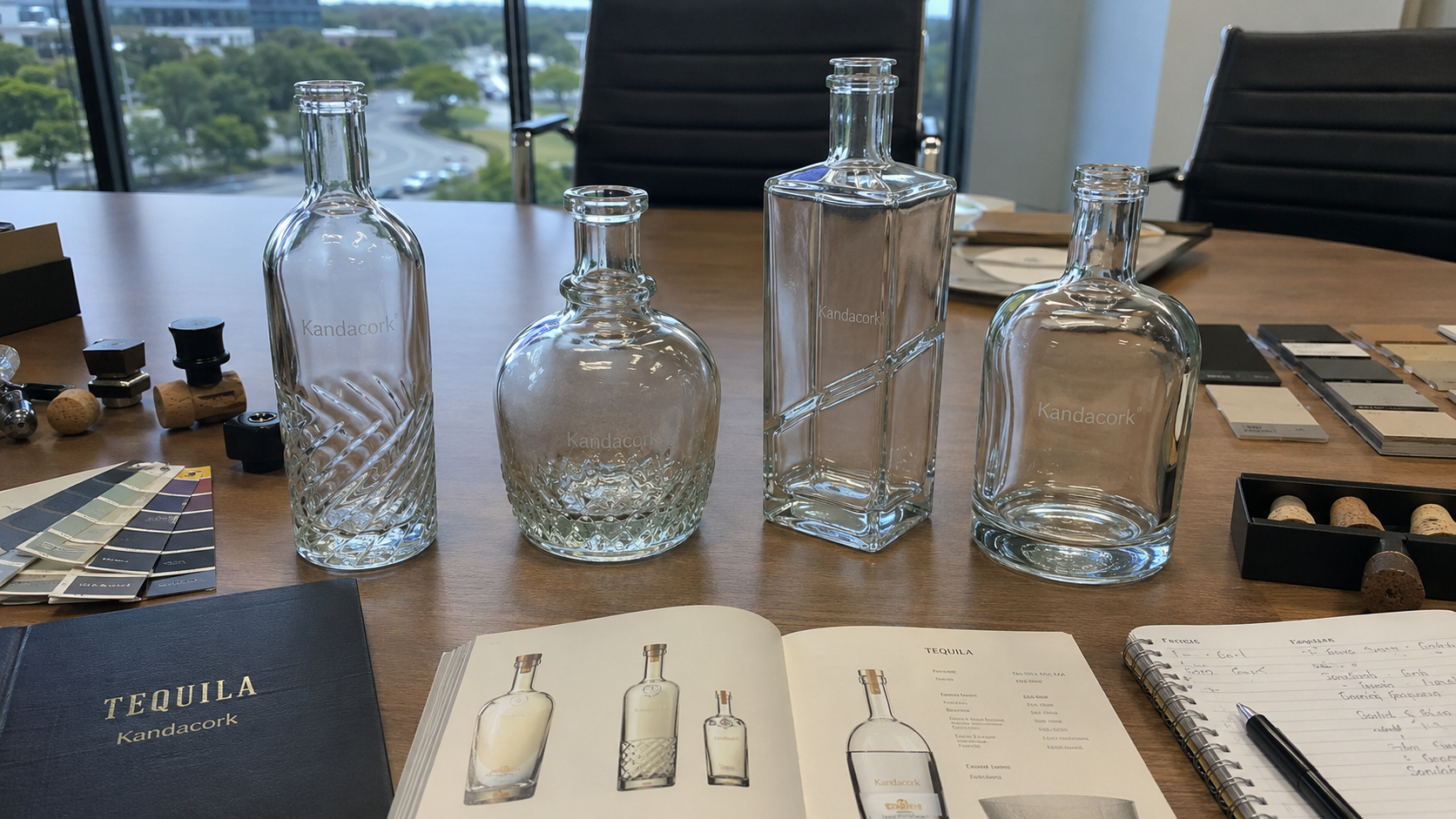
A poor neck match can cause leakage, spinning caps, difficult opening, loose stoppers, broken pilfer bands, or inconsistent line performance. When the bottle, closure, and decoration need to be developed as one packaging system, integrated glass support from Kandacork Glass can help buyers align bottle geometry with closure and branding requirements earlier in the project.
Materials, Decoration, and Brand Fit
Custom spirits bottle closures can be developed in many materials, including wood, natural cork, technical cork, synthetic cork, aluminum, plastic, glass, stainless steel, zamak, ceramic, and composite structures.
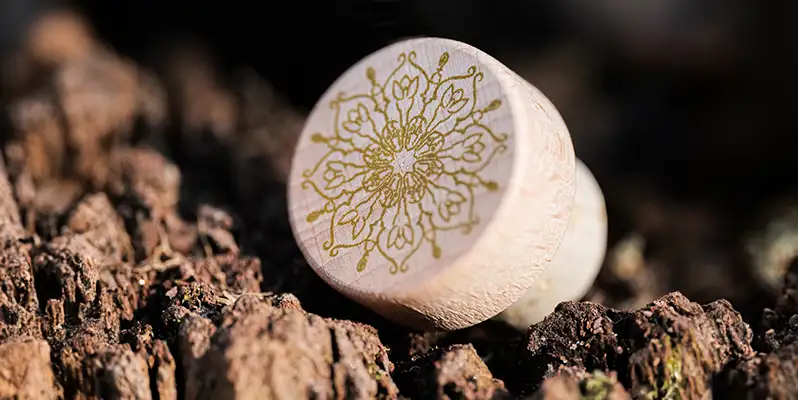
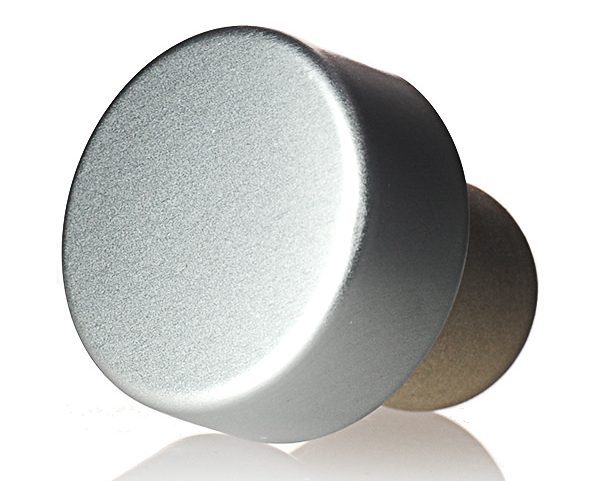
Wood is often used for whisky, rum, tequila, brandy, and craft spirits. Aluminum works well for screw caps and ROPP closures. Glass creates a refined look for premium gin and display-ready spirits. Heavier metal components can add weight and a luxury hand-feel; custom metal stoppers are especially relevant for flagship SKUs, limited editions, and gift packaging.
Decoration options may include logo printing, laser engraving, embossing, debossing, hot stamping, color matching, matte coating, gloss coating, metallic finishing, wood staining, and custom mold development. If the bottle also requires coating, frosting, screen printing, foil, badges, or neck charms, coordinating with Kandacork Decor can help keep the closure finish, bottle decoration, and secondary packaging visually consistent.
Decoration should be selected for durability, not only appearance. Closures may pass through filling, packing, shipping, warehousing, retail handling, and consumer use. A finish that looks impressive in a rendering but scratches during carton packing can weaken the final shelf impression.
Food-Contact, Tamper-Evident, and Quality Considerations
Spirits closures may touch the product directly or indirectly through liners, shanks, adhesives, coatings, and inserts. In the United States, the FDA explains that food-contact substances can include packaging components, adhesives, colorants, and other materials that come into contact with food or beverages; reviewing FDA food packaging and food-contact substances is useful when evaluating material suitability. For European markets, the European Commission food-contact materials legislation sets out the general principles of safety and inertness for food-contact materials.
Tamper evidence is another key requirement in spirits packaging. The U.S. Alcohol and Tobacco Tax and Trade Bureau notes that distilled spirits bottles and containers require a tamper-evident closure or similar device that is broken when opened. Brands preparing for U.S. distribution should review the TTB tamper-evident closure guidance when planning cap, sleeve, or closure systems.
For screw caps and ROPP closures, torque performance should also be controlled. ASTM describes test methods for measuring torque retention of continuous-thread closure systems under defined conditions, and the ASTM torque retention standard is a useful reference for packaging teams discussing application and removal torque. For export cartons and palletized loads, transport vibration matters as well; ISO 13355 addresses vertical random vibration testing for complete, filled transport packages and unit loads.
How to Source Custom Spirits Bottle Closures in Bulk
Bulk sourcing should start with a clear project brief. The most useful information includes spirit type, ABV, bottle drawing, bottle sample, neck finish, closure preference, material, decoration method, artwork file, target order quantity, sample needs, filling method, target market, and export packaging requirements.
After receiving the brief, the supplier should recommend closure types and explain the trade-offs. A bar-top stopper may create stronger premium value, but a screw cap or ROPP closure may run better on a high-speed line. A non-refillable closure may increase complexity, but it can protect high-value export products. A semi-custom closure may be the most efficient route for a growing brand that needs visual identity without full custom tooling.
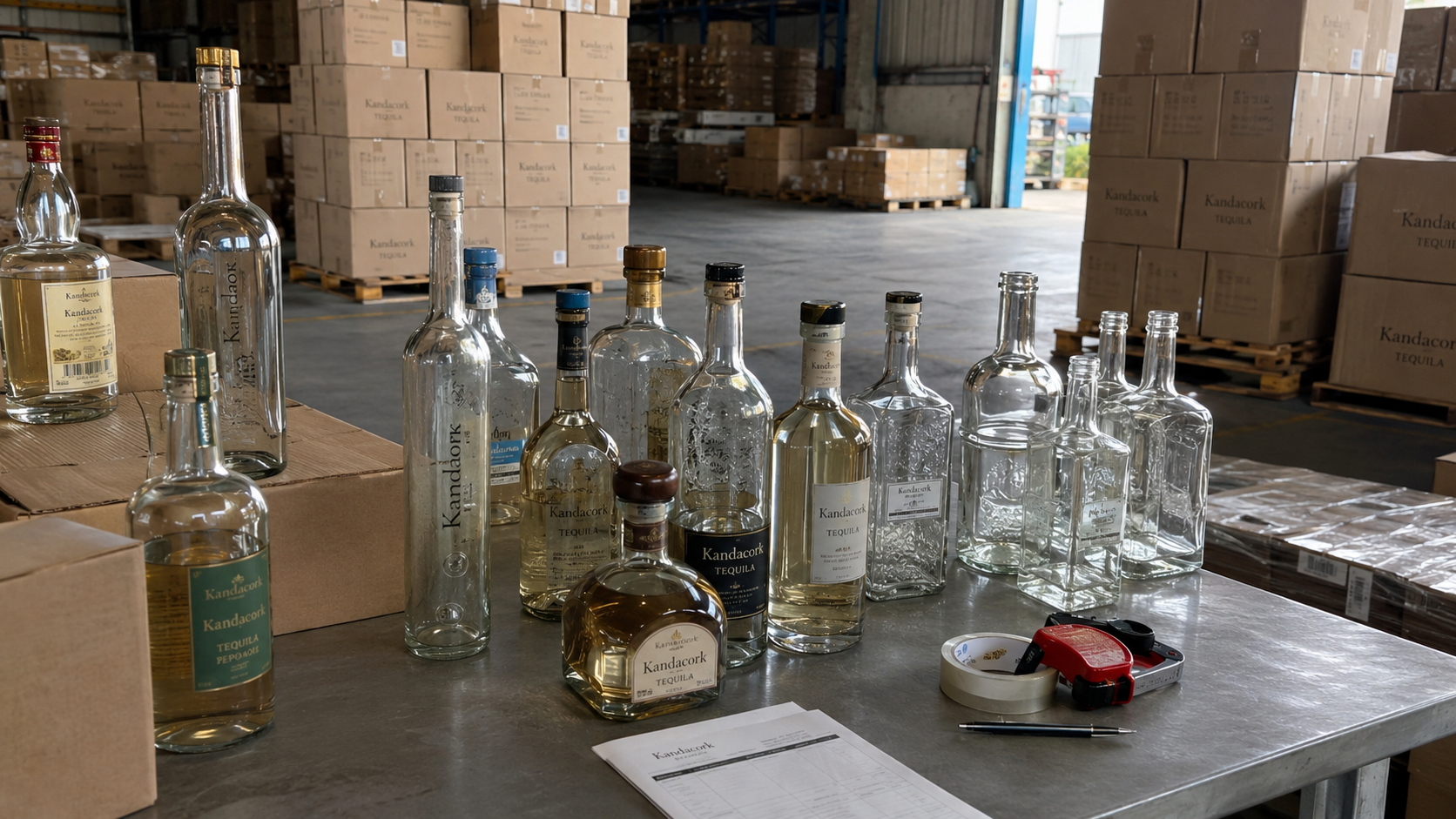
Sample testing should happen before bulk production. Buyers should check appearance, neck fit, leakage, insertion force, extraction force, application torque, removal torque, liner performance, sleeve shrink quality, and packaging stability. When sustainability goals are part of the brief, glass weight, recycled content, refill concepts, and packaging efficiency can be discussed with Kandacork Eco Glass as part of the broader packaging system.
Cost Factors for Custom Bottle Closures for Spirits
The cost of custom bottle closures for spirits depends on closure structure, material, decoration, tooling, MOQ, testing requirements, production volume, and export packing needs.
A standard stock closure with simple decoration is usually the fastest and most cost-effective option. A semi-custom closure uses an existing structure with custom color, logo, finish, or top treatment. This route often gives growing spirits brands the best balance of branding, cost, and speed. A fully custom closure uses new tooling, unique shapes, special inserts, mixed materials, or exclusive decorative details. It is best suited to premium launches, hero products, and long-term brand platforms.
Buyers should avoid comparing suppliers only by unit price. A lower-cost closure can become expensive if it creates leakage, poor torque control, scratched decoration, late samples, or inconsistent reorders. The better question is whether the supplier can support fit review, sample approval, production repeatability, export packing, and clear communication.
Common Mistakes to Avoid
Many closure problems begin when buyers choose by appearance alone. A closure may look attractive but still fail if it does not match the bottle neck, filling process, ABV, or target market.
Common mistakes include choosing the closure before confirming the neck finish, ignoring bore diameter, skipping leakage tests, overlooking liner compatibility, treating shrink sleeves as decoration only, approving artwork before checking finish durability, ordering custom molds before confirming demand, and reviewing export packing too late.
A better approach is to treat the closure as part of a complete packaging system. The bottle, cap or stopper, capsule, label, carton, filling equipment, and route-to-market should be reviewed together before mass production.
Why Spirits Brands Choose Kandacork Closures
Kandacork Closures supports spirits brands, distilleries, private-label buyers, importers, bottlers, and packaging distributors with bottle-matched closure development. The process can include bottle drawing review, closure type recommendation, neck compatibility evaluation, material and decoration feasibility checks, sample-before-bulk approval, leakage or torque review, MOQ planning, export packing coordination, and repeat order consistency.
The goal is practical: help buyers choose a closure that fits the bottle, protects the product, supports the brand, and can be produced reliably. Kandacork Closures can support custom bottle closures for spirits across whisky, vodka, gin, rum, tequila, brandy, cognac, liqueurs, RTD spirits, and private-label projects. When your bottle, decoration, closure, and packing requirements are ready, you can request a custom closure quote with your bottle drawing, sample, artwork, quantity, and target market.
FAQ
What are custom bottle closures for spirits?
Custom bottle closures for spirits are caps, stoppers, corks, ROPP closures, non-refillable systems, capsules, or shrink sleeves designed to seal spirits bottles, support branding, and improve tamper evidence. They are used for whisky, vodka, gin, rum, tequila, brandy, cognac, liqueurs, and RTD spirits.
What are the best closures for premium spirits?
The best closures for premium spirits are usually bar-top stoppers, cork or synthetic shank stoppers, decorative capsules, and non-refillable closures. The right option depends on bottle neck size, brand positioning, production method, target market, and tamper-evident requirements.
When should a spirits brand use ROPP closures?
A spirits brand should use ROPP closures when it needs machine application, consistent sealing, visible tamper evidence, and a clean aluminum cap appearance. ROPP caps are common for vodka, gin, liqueurs, mini bottles, and export-ready spirits packaging.
How can a spirits brand avoid leakage problems?
A spirits brand can reduce leakage risk by confirming bottle neck dimensions, selecting the correct shank or liner, testing insertion force or cap torque, checking seal performance, and approving samples before bulk production. The closure should always be tested with the actual bottle.
How do I choose a custom spirits bottle closure supplier?
Choose a supplier that can review bottle drawings, recommend suitable closure types, provide samples, confirm neck compatibility, support decoration, explain MOQ, and manage bulk production quality. Experience with bar-top stoppers, screw caps, ROPP closures, sleeves, and tamper-evident systems is especially important.
Conclusion
The best custom bottle closures for spirits balance sealing performance, brand identity, production efficiency, tamper evidence, and consumer experience. A closure should fit the bottle technically, match the brand visually, and support the realities of bottling, shipping, retail, and repeat purchasing.
For premium spirits, the closure becomes part of the product story. For high-volume lines, it can improve filling efficiency and consistency. For export and duty-free channels, it can support security and consumer confidence. By choosing the right closure early, spirits brands can reduce sourcing risk, improve packaging quality, and create a stronger finished product.