Quick Answer
Bar-top stoppers for large format spirits bottles should be selected by bottle neck inner diameter, shank compression, stopper material, pull-out force, leak resistance, visual proportion, and export packaging requirements.
For 1L, 1.5L, 1.75L, magnum, gift, and collector spirits bottles, appearance alone is not enough. The closure must seal securely, reseal smoothly, open comfortably, fit the final carton or gift box, and look proportional to the larger bottle body.
The fastest path for a large-format spirits packaging project is to test 2–3 shank options with real bottle samples before confirming tooling, decoration, and bulk quotation.
Who This Guide Is For
This guide is written for spirits brands, distilleries, private label buyers, importers, distributors, bottlers, and packaging buyers who need to evaluate custom bar-top stoppers for spirits bottles.
It is especially useful for buyers working on premium whisky, rum, tequila, mezcal, gin, vodka, brandy, cognac, liqueur, duty-free formats, private label programs, collector bottles, and export retail packaging.
Buyer Decision Snapshot
| Buyer Need | Recommended Focus |
|---|---|
| Premium whisky or aged rum | Wood, Zamak, zinc alloy, natural cork, or synthetic cork with strong shelf presence |
| 1.75L export spirits bottle | Leak testing, pull-out force, carton protection, and repeatable shank fit |
| Private label spirits project | Synthetic shank, stable MOQ, controlled dimensions, and cost efficiency |
| Gift box or collector bottle | Stopper height, head proportion, box clearance, and surface protection |
| Modern vodka or gin | Aluminum, plastic, or synthetic cork with clean finish and accurate color matching |
| Luxury tequila, mezcal, or cognac | Heavy decorative stopper, sculpted metal, custom insert, or premium coating |
| Distributor bulk order | Sample approval, lead time, QC documents, export packing, and batch consistency |
Why Large Format Spirits Bottles Need Different Bar-Top Stoppers
Large format spirits bottles create higher expectations than standard bottle sizes. They are heavier, more visible, and often used for premium retail, travel retail, gift packaging, private label launches, or limited-edition products.
A stopper that works on a standard bottle may not be suitable for a larger format. The head may look too small. The shank may not hold consistently. The closure may feel unstable when the bottle is lifted or poured. The stopper may also interfere with a rigid gift box, display carton, shrink sleeve, or tamper-evident band.
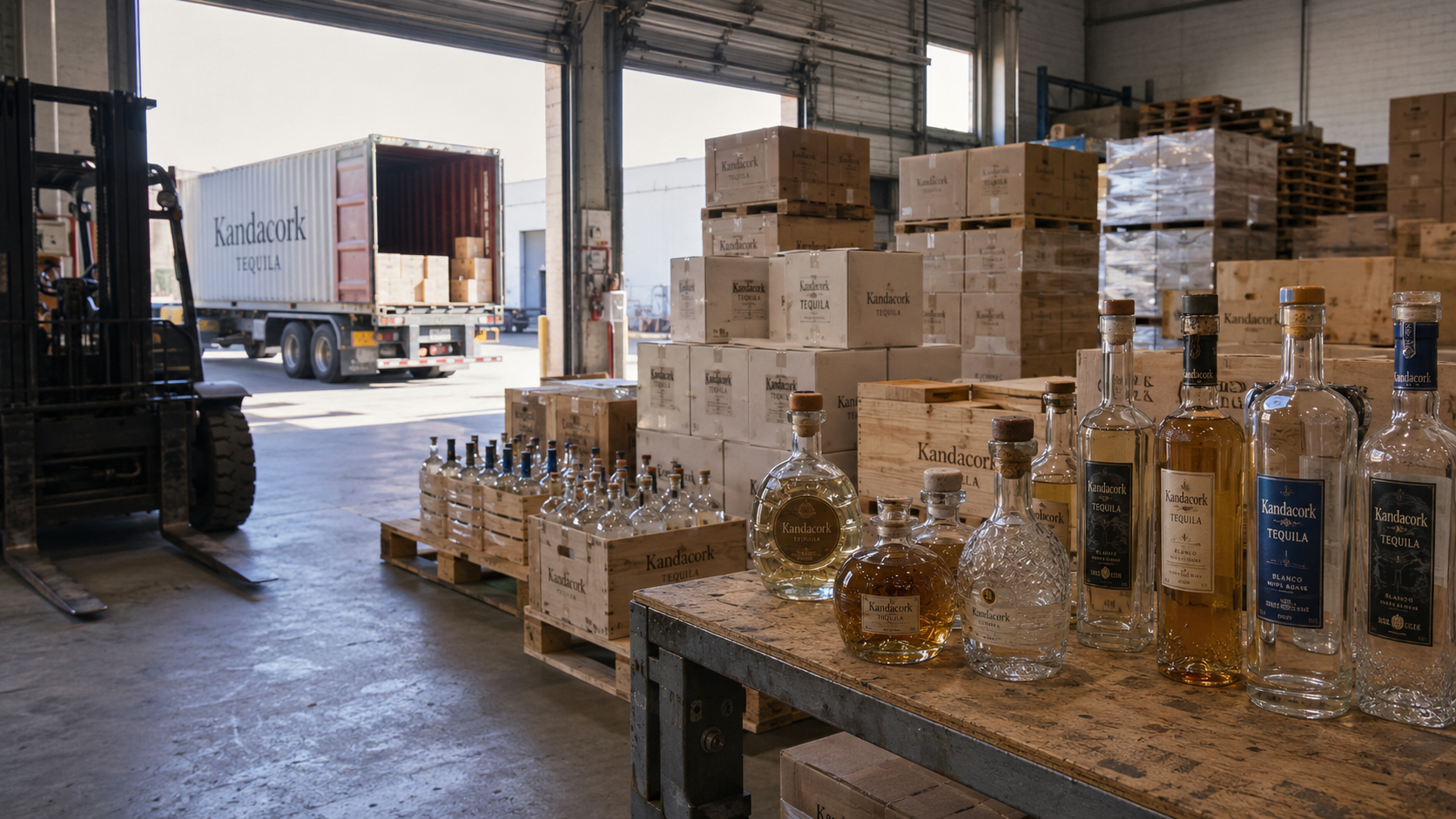
Large bottles also face greater transport risk. During export, they may experience vibration, temperature variation, pallet pressure, and repeated handling. CETIE guidance on bar-top stoppers highlights that high-alcohol beverages can create additional closure stress because alcohol content, expansion, and transport temperature conditions may affect performance.
For buyers coordinating the bottle, closure, decoration, and secondary packaging together, broader spirits bottle packaging support can also help align large-format bottle structure with stopper proportion, gift-box fit, and export presentation.
What Are Bar-Top Stoppers?
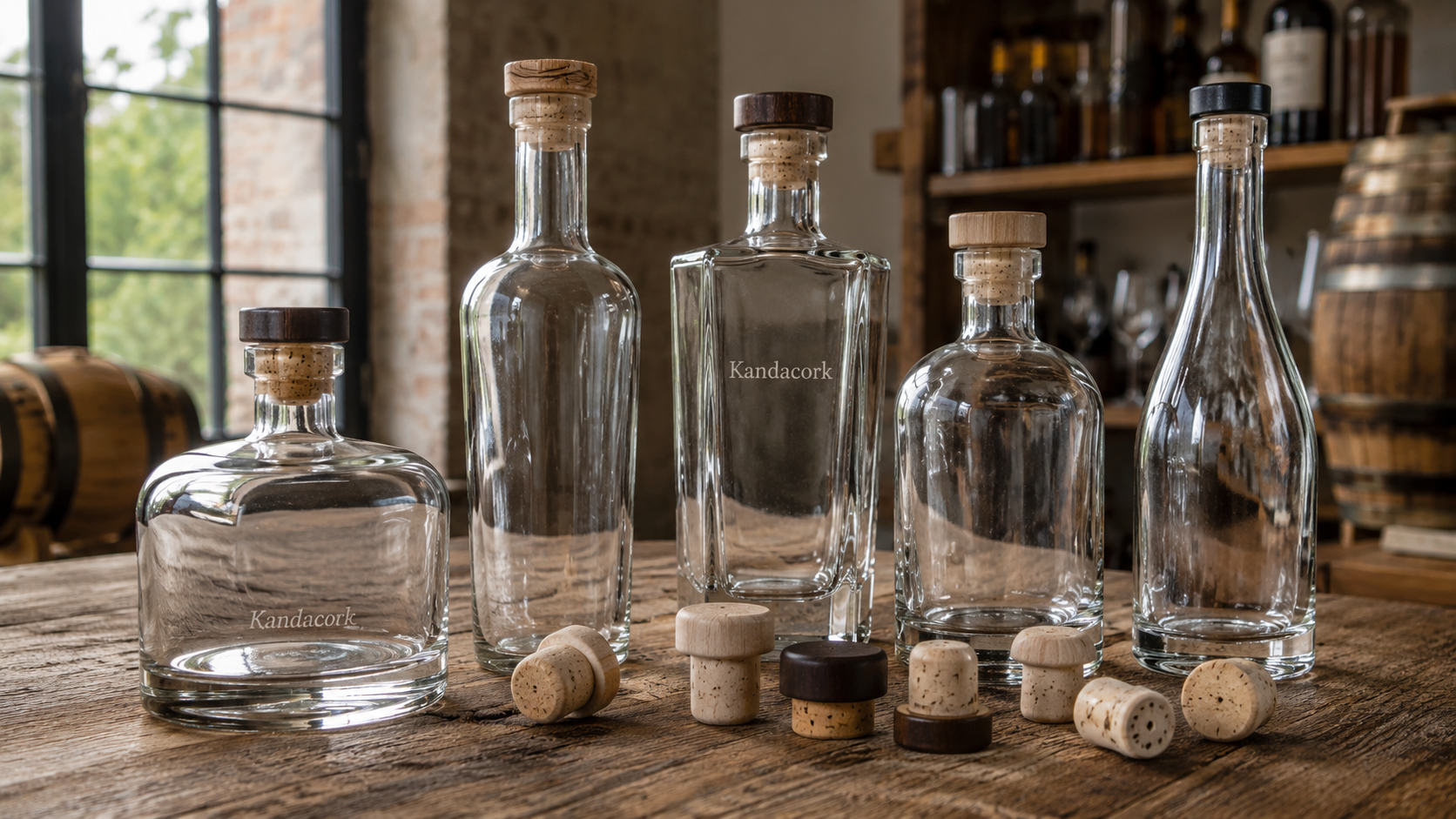
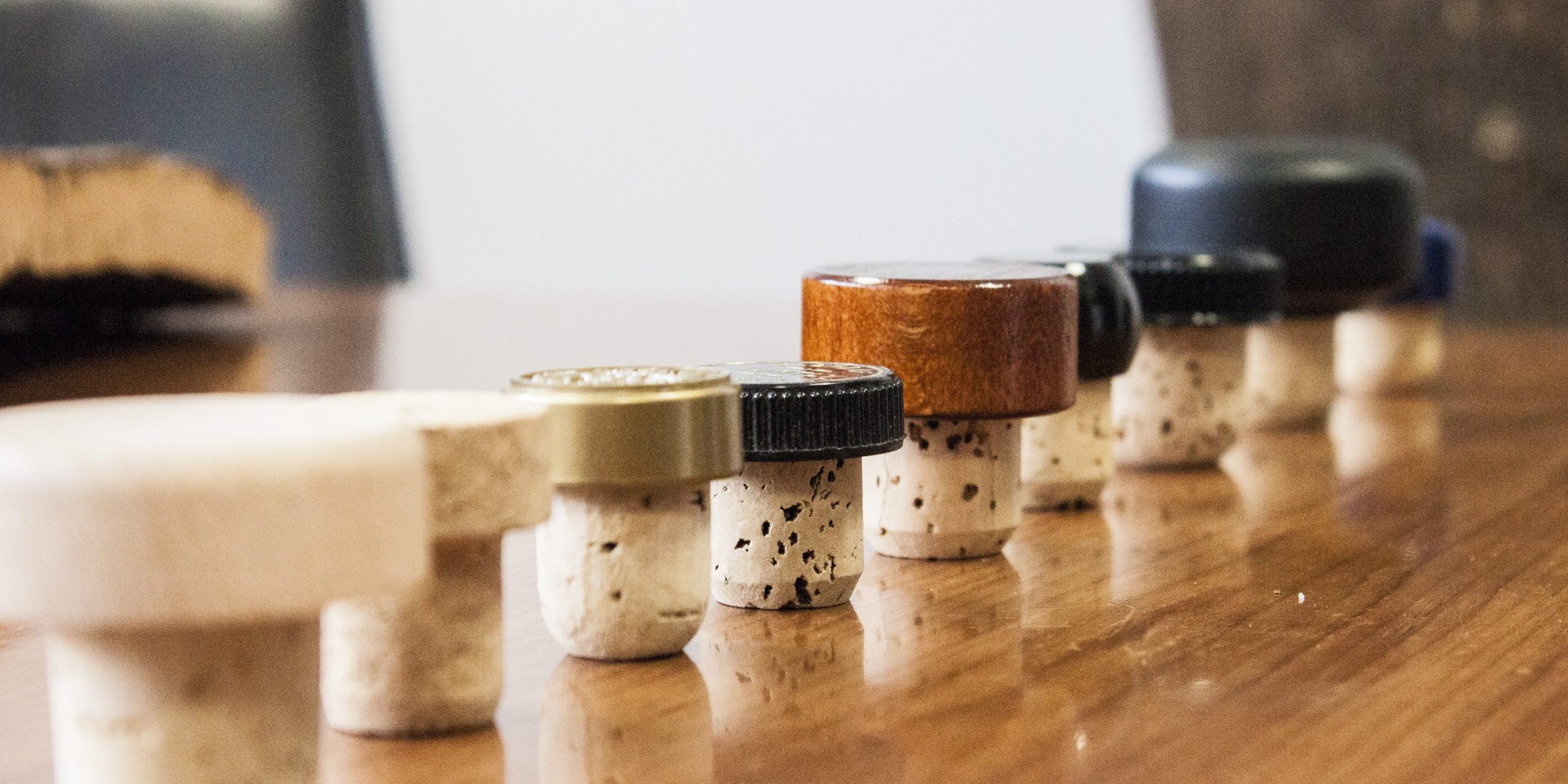
A bar-top stopper is a closure with two main parts: a visible head and an inserted shank.
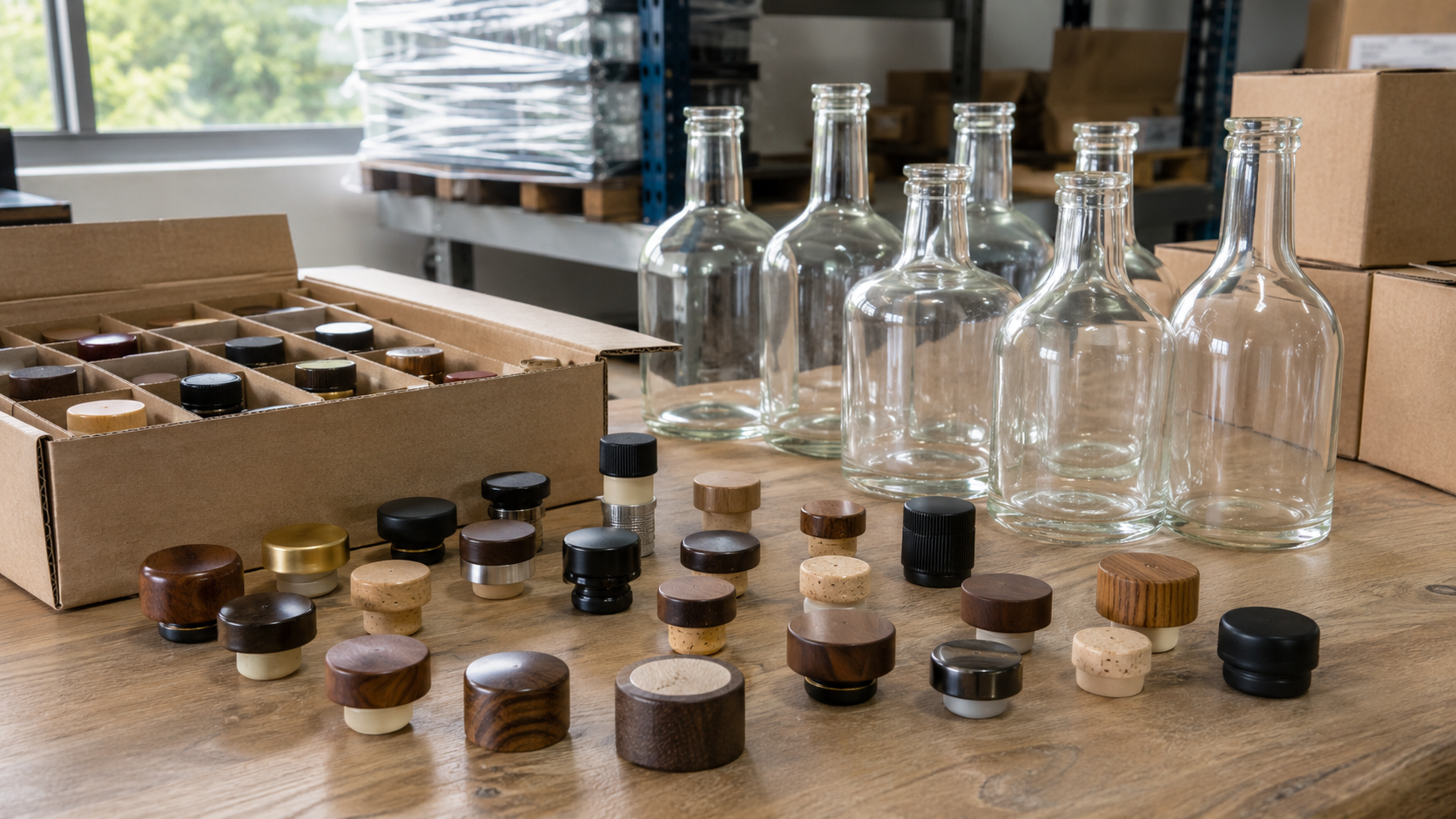
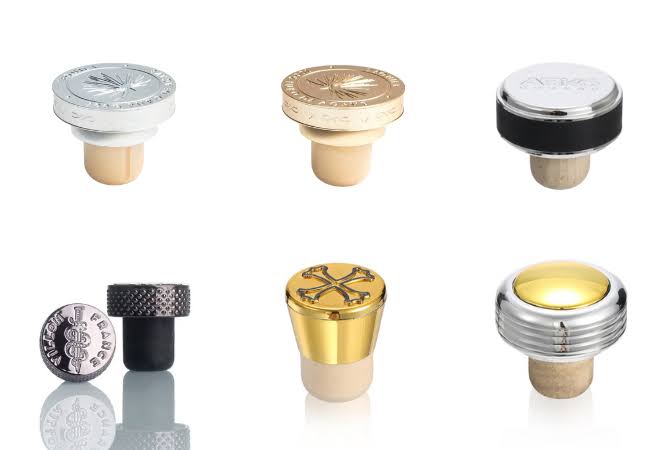
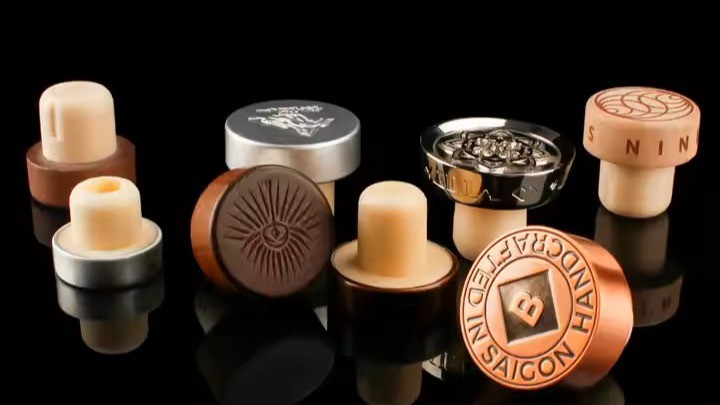
The head, also called the cap, top, or knob, creates the visible brand impression. It can be made from wood, aluminum, plastic, zinc alloy, Zamak, glass-look material, or decorative composite material.
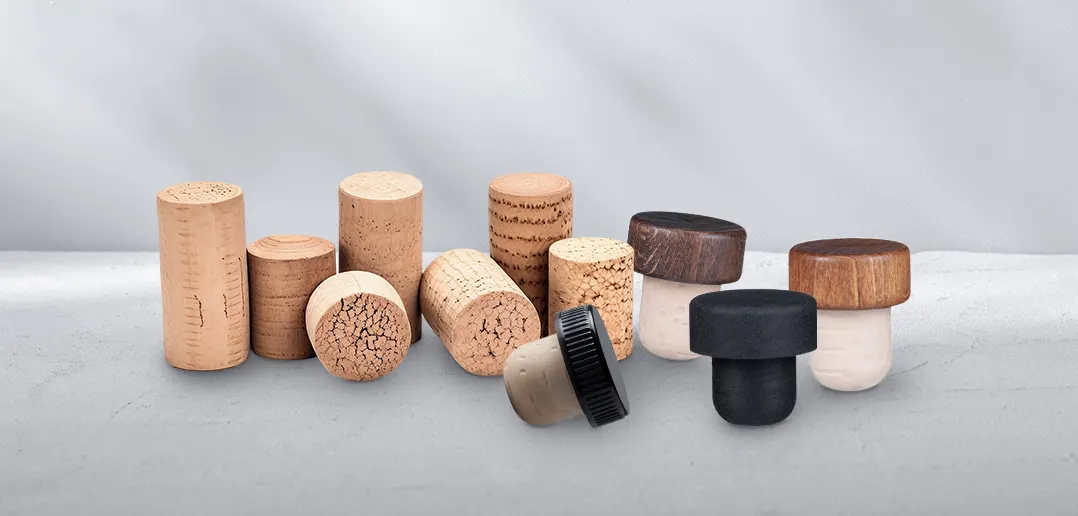
The shank, also called the plug, cork, or sealing body, fits inside the bottle neck. It may use natural cork, micro-agglomerated cork, synthetic cork, or another engineered sealing material.
Buyers may also call this closure a T-top stopper, T-cork, bar-top cork, cork-top closure, spirits bottle stopper, liquor bottle closure, or custom bottle stopper.
The 1 mm Fit Rule: Useful Starting Point, Not Final Approval
Many buyers begin by choosing a shank diameter about 1 mm larger than the bottle neck inner diameter. This can be a helpful starting point because the shank usually needs slight compression to seal inside the bottle neck.
However, the 1 mm rule should not be treated as final approval. For more detailed sizing context, buyers can review this bar-top stopper size guide for custom spirits bottles.
Large format spirits bottles need real sample testing because stopper weight, shank material, bottle neck profile, cork compression, alcohol strength, transport conditions, and consumer opening feel can all affect final performance.
Natural cork, micro-agglomerated cork, and synthetic cork do not always compress in the same way. A heavy Zamak head may also change the opening feel compared with a lightweight plastic or aluminum head.
Treat the 1 mm rule as a sizing shortcut, not a production approval standard.
CTA: Share your bottle neck inner diameter and bottle drawing with Kandacork Closures to confirm suitable shank options before bulk ordering.
Technical Fit Requirements
Bottle Neck Inner Diameter
The bottle neck inner diameter is the first measurement to confirm. Bottle capacity alone does not define stopper size. A 1.75L bottle, for example, may use different shank dimensions depending on the bottle design and internal neck bore.
Buyers should provide bottle drawings and actual bottle samples whenever possible. Real glass bottles may vary from drawings because of mold tolerance, batch variation, or supplier changes.
Neck Profile
The inner neck diameter may not be identical at every depth. Some bottles have taper, tight points, ovality, or internal variation. This can affect insertion, sealing, and pull-out force.
For large format spirits bottles, a supplier should review the internal neck profile, not just the top opening. Kandacork Closures provides bottle closure service support for closure matching, bar-top development, cap and neck compatibility, sealing review, and export packing coordination.
Shank Diameter and Compression
The shank should compress enough to create a reliable seal. If it is too small, the stopper may wobble or leak. If it is too large, the stopper may be difficult to insert or remove.
A good stopper should insert smoothly, sit straight, and reseal consistently after repeated use.
Pull-Out Force
Pull-out force affects consumer experience. The stopper should feel secure but not difficult to open.
For large bottles, this balance is especially important because the bottle may be heavier and the stopper head may be larger. Test several bottle and stopper samples to confirm consistent opening feel.
Leak Resistance
Leak testing should include upright storage, short inverted handling, vibration, temperature variation, and repeated opening and resealing.
This is especially important for export orders, high-value spirits, duty-free formats, and private label programs where product damage can create costly claims.
Cap Alignment
A premium stopper should sit straight. It should not tilt, rotate unevenly, or show visible gaps.
Alignment matters most when the stopper uses a top logo, side logo, metal emblem, engraved wood, embossed pattern, or directional decoration.
Large Format Bottle-Specific Closure Challenges
1.75L Spirits Bottles
A 1.75L spirits bottle needs a stopper that balances cost, sealing, opening comfort, and transport reliability. If the bottle is tall or narrow, avoid choosing a very heavy stopper before balance testing.
Magnum and Collector Bottles
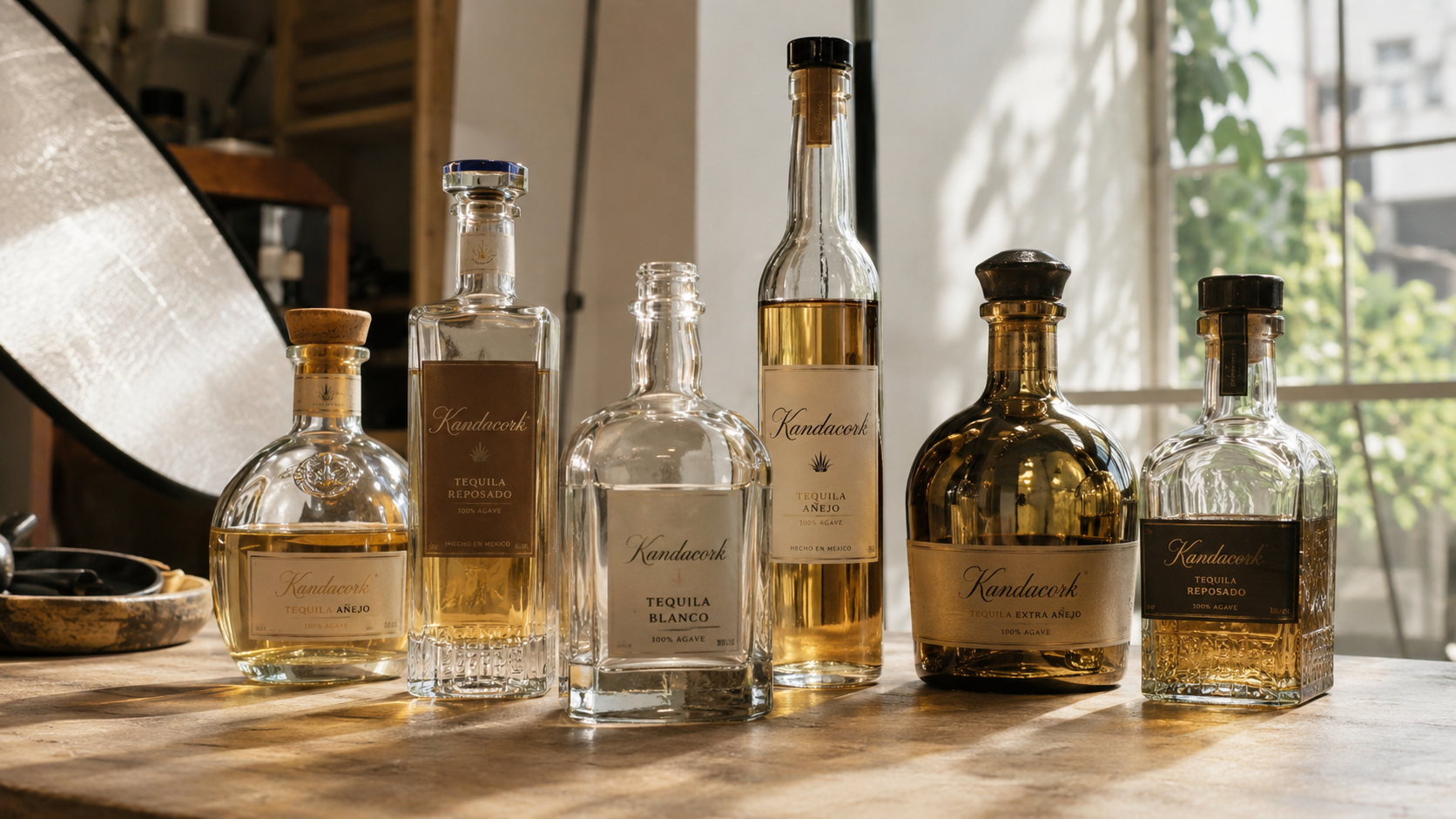
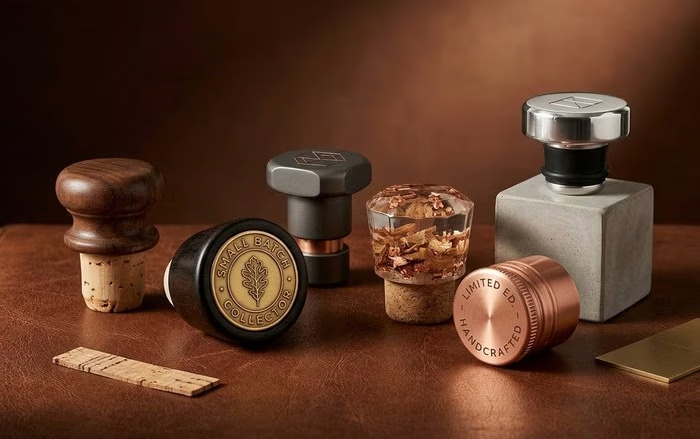
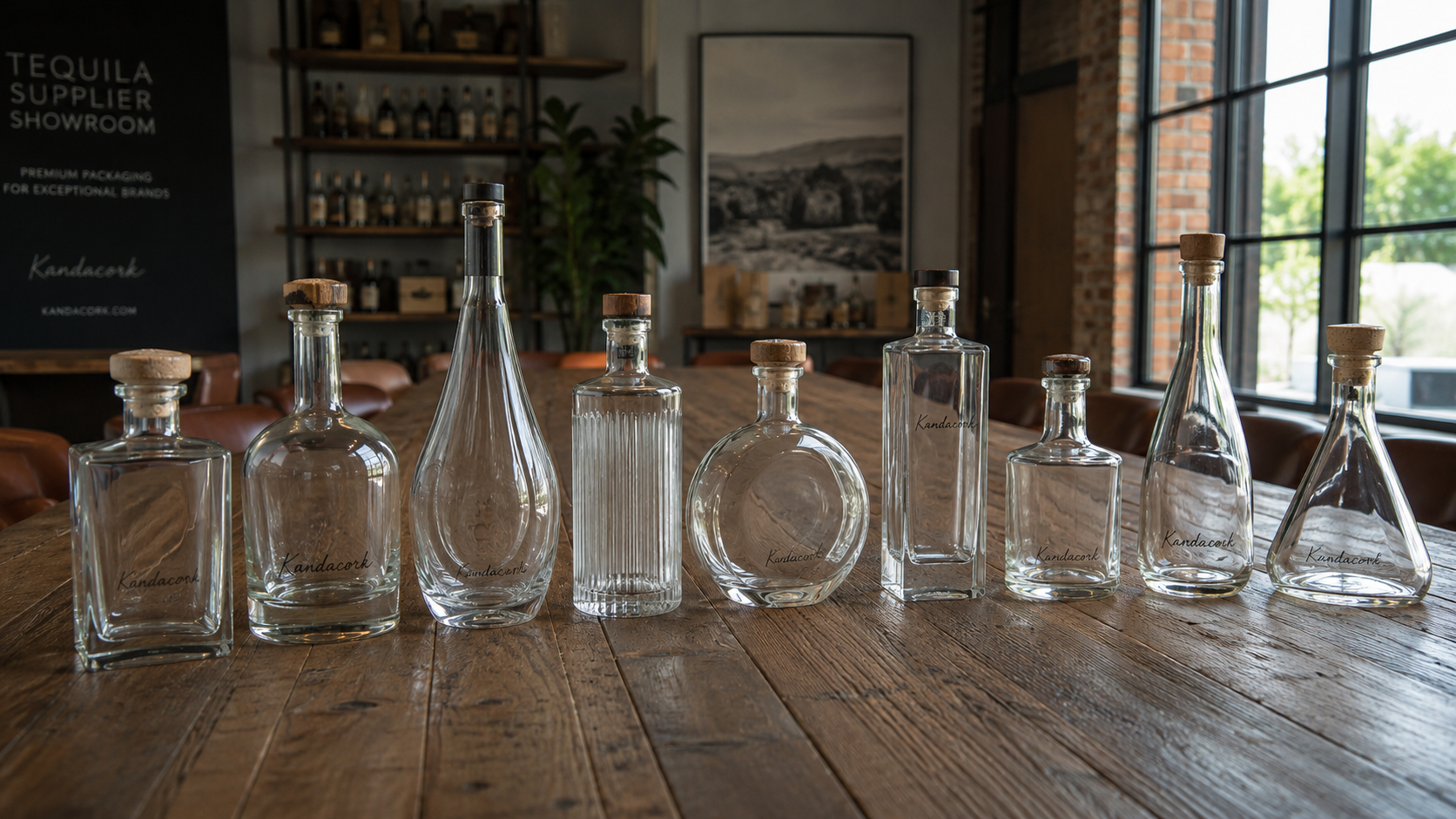
Magnum and collector bottles are judged visually before they are opened. The stopper should look proportional and premium. Custom wood, metal, Zamak, sculpted tops, or branded inserts can improve value perception, but they still need fit and transport testing.
Gift-Pack Bottles
Gift bottles require closure and box compatibility. A stopper may fit the bottle but fail in the final packaging if it is too tall, too wide, or poorly protected.
Test the bottle, stopper, label, capsule, sleeve, gift box, and shipper together before mass production.
Heavy Decorative Stoppers
Heavy stoppers can create a luxury hand feel, but weight should be controlled. A heavy metal stopper may affect bottle balance, neck stress, bonding strength, carton protection, and consumer handling.
Premium weight is useful only when it improves the total packaging experience.
Standard vs Custom Bar-Top Stoppers
Not every project needs a fully custom stopper. Some buyers can use standard head shapes and standard shank structures if the bottle neck is common and the branding requirement is simple.
Custom bar-top stoppers are more suitable when the bottle format, brand identity, decoration, or packaging system requires a unique solution.
| Choose Standard Stoppers When | Choose Custom Stoppers When |
|---|---|
| The bottle uses a common neck bore | The bottle has an unusual neck profile |
| The brand accepts an existing head shape | The brand needs a unique logo or sculpted top |
| Budget and lead time are tight | Premium shelf impact is a priority |
| The order is for a small trial run | The project is a large retail or export launch |
| Gift box complexity is low | Gift box, sleeve, or capsule must match the stopper |
| Simple color or finish is acceptable | Special plating, engraving, insert, or coating is required |
For many large format spirits projects, the best path is a semi-custom solution: a proven shank structure combined with a customized head, finish, logo, or insert.
Material Options for Large Format Bar-Top Stoppers
Wooden Stoppers
Best for: whisky, rum, brandy, cognac, craft spirits, aged spirits, and heritage packaging.
Wood gives a warm and natural appearance. It works well for brands that want a traditional, handcrafted, or premium look. Common options include beech, birch, stained wood, painted wood, coated wood, and engraved wood.
Check before approval: wood coating, color consistency, moisture control, surface finish, and bonding strength.
Aluminum Stoppers
Best for: vodka, gin, liqueurs, modern rum, and contemporary premium spirits.
Aluminum provides a clean metallic look without excessive weight. It can support brushed, polished, anodized, printed, embossed, or color-matched finishes.
Check before approval: color consistency, surface durability, dimensional tolerance, and shank fit.
Zinc Alloy or Zamak Stoppers
Best for: luxury whisky, tequila, mezcal, aged rum, cognac, and collector bottles.
Zinc alloy and Zamak stoppers provide weight, detail, and premium shelf impact. They can support sculpted shapes, plating, antique finishes, emblems, and decorative inserts.
Check before approval: stopper weight, bottle balance, neck stress, cap-to-shank bonding, and carton protection.
Plastic Stoppers
Best for: private label, promotional, high-volume, colorful, or cost-sensitive projects.
Plastic stoppers are lightweight, flexible in color, and suitable for stable bulk production. They can be useful when buyers need cost control and repeatable supply.
Check before approval: material grade, color matching, decoration durability, and market positioning.
Natural Cork Shanks
Best for: traditional premium spirits and brands that value natural material storytelling.
Natural cork offers classic appeal, but it can vary in appearance and structure.
Check before approval: fit consistency, leakage, pull-out feel, cork grade, and batch variation.
Synthetic Cork Shanks
Best for: export programs, private label orders, repeat bulk production, and projects requiring dimensional stability.
Synthetic cork can provide controlled compression, consistent diameter, and repeatable sealing behavior.
Check before approval: alcohol compatibility, leakage, resealing performance, and visual fit with the stopper head.
CTA: For a deeper comparison of wood, aluminum, Zamak, plastic, natural cork, and synthetic cork options, review Kandacork Closures’ bar-top stopper materials guide before requesting samples.
Material Comparison Table
| Stopper Structure | Best Large-Format Use | Main Benefit | Key Check |
|---|---|---|---|
| Wood head + natural cork shank | Premium whisky, rum, brandy, cognac | Warm, natural, traditional look | Cork variation and bonding strength |
| Wood head + synthetic shank | Craft spirits and scalable premium orders | Natural appearance with better consistency | Shank compression and resealing |
| Aluminum head + synthetic shank | Vodka, gin, liqueurs, modern spirits | Lightweight, clean, controlled finish | Surface quality and dimensional tolerance |
| Zamak head + synthetic shank | Luxury whisky, tequila, mezcal, collector bottles | Heavy premium feel and custom shape | Weight, balance, and carton protection |
| Plastic head + synthetic shank | Private label and high-volume projects | Cost control and color flexibility | Material grade and decoration durability |
| Natural cork shank | Traditional premium spirits | Classic cork identity | Leakage and batch consistency |
| Synthetic cork shank | Export and repeat-order projects | Stable fit and repeatable dimensions | Alcohol compatibility and leak testing |
Stopper Selection by Spirits Category
| Spirits Category | Suitable Stopper Style | Key Check |
|---|---|---|
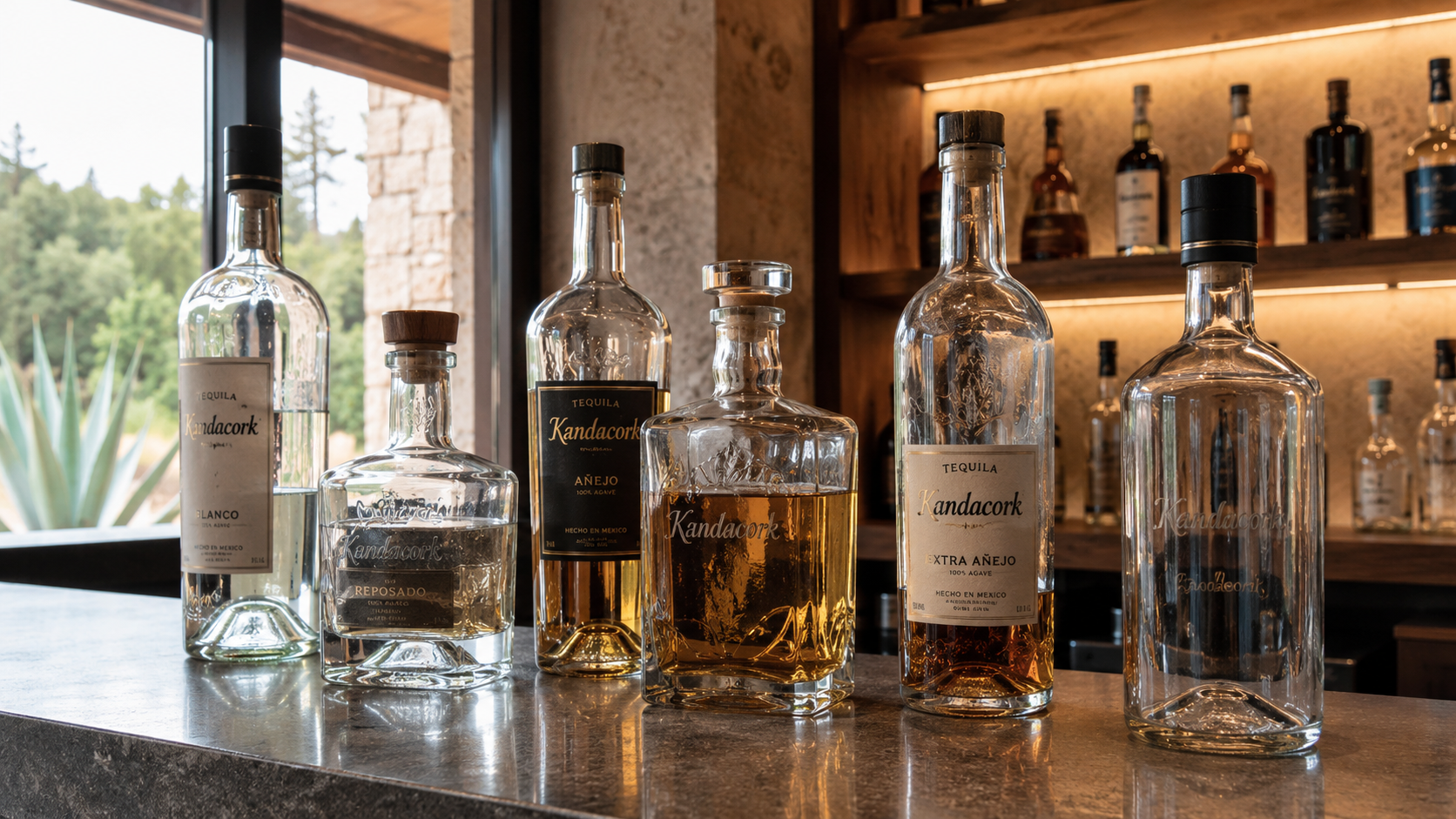
| Whisky / whiskey | Wood, Zamak, zinc alloy, natural cork, synthetic cork | Premium feel, pull-out force, gift-box fit |
| Rum | Wood, antique metal, dark finish, branded insert | Visual warmth, head proportion, seal stability |
| Tequila / mezcal | Sculpted metal, custom wood, decorative top | Weight, balance, decoration durability |
| Vodka / gin | Aluminum, plastic, synthetic cork | Clean finish, color control, dimensional consistency |
| Brandy / cognac | Wood, metal, refined decorative cap | Luxury appearance, cap alignment, surface finish |
| Liqueurs | Plastic, aluminum, custom color cap | Color match, decoration durability, resealing |
Common Mistakes to Avoid
Choosing by Bottle Capacity Only
A 1.75L bottle does not automatically define the stopper size. The correct shank depends on the actual bottle neck inner diameter and neck profile.
Ignoring Actual Bottle Samples
Drawings are useful, but real bottles may vary. Test actual bottles from the intended production batch whenever possible.
Selecting a Heavy Stopper Without Balance Testing
A heavy stopper can feel premium, but it may create handling, packing, or balance problems if not tested.
Forgetting Gift-Box Clearance
A stopper may fit the bottle but fail inside the final box. Always check stopper height, cap width, tray fit, and carton clearance.
Treating the Stopper as Decoration Only
A stopper is both a branding part and a functional closure. Appearance, sealing, resealing, pull-out force, and transport performance all matter.
How to Test Bar-Top Stoppers Before Bulk Orders
Testing should happen before mold approval, decoration approval, and bulk production. For large-format spirits closures, buyers should test the stopper with real bottles and the final packaging system.
| Test Step | What to Check | Why It Matters |
|---|---|---|
| Bottle sample review | At least 3 actual bottle samples if available | Avoid judging by drawing only |
| Neck bore measurement | Multiple internal depth points | Find taper, tight spots, ovality, or variation |
| Shank trial | 2–3 close shank diameters | Compare compression, fit, and pull feel |
| Fit and insertion test | Smooth insertion and straight seating | Prevent excessive force or visible gaps |
| Pull-out force test | Opening comfort and consistency | Avoid too tight or too loose closure feel |
| Leak test | Upright, short inverted, vibration, and temperature variation | Reduce shipping, retail, and consumer claims |
| Reseal test | Repeated opening and closing | Confirm long-term consumer use |
| Packing test | Gift box, tray, carton, pallet, or sleeve fit | Prevent scuffing, loosening, and pressure damage |
A sample that looks good on a table may still fail during transport or after repeated opening. Testing should reflect real handling conditions, not only showroom appearance. Buyers who want more detail on bore, shank, and fit behavior can also read this guide on how bar-top stoppers fit spirits bottle necks.
Compliance and Documentation Buyers May Request
Packaging buyers should treat the stopper as part of the beverage-contact packaging system.
For U.S. projects, buyers may need to review food-contact substances, indirect food additives, coatings, adhesives, colorants, and polymers under the FDA food-contact framework.
For European projects, Regulation EC 1935/2004 provides general principles for food-contact material safety and inertness. This is relevant when closure materials, coatings, adhesives, or decorative components may contact the beverage or bottle mouth.
For transport validation, packaging teams may reference ASTM D4169 and ISTA test procedures when planning vibration, drop, compression, and distribution testing.
Buyers may request:
- Material specification
- Food-contact declaration if required
- Coating, ink, adhesive, or plating information
- Sample approval record
- QC inspection criteria
- Packing specification
- Carton and pallet plan
- Transport test plan for export or high-value projects
- Lead time and batch repeatability confirmation
The practical goal is clear: the stopper should not negatively affect safety, flavor, aroma, sealing performance, appearance, or transport reliability.
How to Evaluate a Bar-Top Stopper Supplier
A qualified supplier should help buyers review bottle fit, material options, decoration methods, sampling, testing, and bulk production quality.
Material Capability
Ask whether the supplier can support wood, aluminum, plastic, zinc alloy, Zamak, natural cork, micro-agglomerated cork, synthetic cork, and hybrid structures.
A wider material range makes it easier to compare cost, weight, appearance, and performance.
Bottle Compatibility Support
The supplier should review bottle drawings, neck finish drawings, actual bottle samples, and stopper dimensions. For large format bottles, actual sample testing is especially important.
Custom Branding Capability
Check whether the supplier can support laser engraving, embossing, debossing, hot stamping, pad printing, screen printing, plating, coating, molded logos, color matching, and decorative inserts.
Sampling Process
A professional supplier should provide reference samples, prototype samples, revised samples, pre-production samples, or final approval samples before bulk production.
Quality Control
Ask how the supplier checks shank diameter, head size, bonding strength, alignment, surface finish, logo position, color consistency, packing, and batch repeatability.
Export and Bulk Supply Experience
For importers, distributors, bottlers, and private label buyers, export experience matters. Confirm MOQ, lead time, documentation support, carton packing, pallet protection, and repeat-order consistency.
Supplier Capability Scorecard
| Evaluation Area | Questions to Ask |
|---|---|
| Fit support | Can the supplier review bottle samples and neck drawings? |
| Material range | Can they compare wood, aluminum, plastic, Zamak, natural cork, and synthetic cork? |
| Decoration | Can they support engraving, embossing, hot stamping, printing, coating, plating, and inserts? |
| Sampling | Can they provide prototypes and revised samples before bulk approval? |
| QC process | Do they inspect dimensions, bonding, alignment, surface quality, and packing? |
| Export support | Can they support cartons, pallets, documentation, and repeat orders? |
| Commercial readiness | Can they provide MOQ, lead time, sample cost, tooling cost, and quotation details clearly? |
What Affects Bar-Top Stopper Cost?
The cost of bar-top stoppers for large format spirits bottles depends on both material and project complexity.
Main cost drivers include:
- Head material, such as wood, aluminum, plastic, zinc alloy, or Zamak
- Shank material, such as natural cork, micro-agglomerated cork, or synthetic cork
- Stopper size, weight, and shape complexity
- Mold or tooling requirements
- Surface finish, coating, plating, or polishing
- Logo decoration, engraving, embossing, printing, or inserts
- Order quantity and repeat-order potential
- Sample development and revision rounds
- Packing method and export carton requirements
- Documentation or testing requirements
For a fast quotation, buyers should share the bottle drawing, neck dimensions, preferred material, branding method, order quantity, and target market at the beginning of the project.
RFQ Checklist: What Buyers Should Send
To receive accurate samples and pricing, buyers should prepare clear project information.
Send the supplier:
- Bottle drawing
- Bottle neck inner diameter
- Neck finish drawing
- Actual bottle sample if available
- Bottle capacity and format
- Spirits category
- Alcohol percentage
- Target market
- Preferred stopper head material
- Preferred shank material
- Branding method
- Reference images
- Estimated order quantity
- Sample timeline
- Bulk production timeline
- Destination country
- Gift box, carton, capsule, sleeve, or tamper-evident requirements
Complete RFQ information helps Kandacork Closures recommend suitable bar-top stoppers for large format spirits bottles faster and more accurately.
CTA: Send your project details through the Kandacork Closures inquiry page to receive stopper recommendations, sample options, and quotation guidance.
Large Format RFQ Example
Here is a simple RFQ example buyers can adapt:
We are sourcing bar-top stoppers for a 1.75L whisky bottle. The bottle neck inner diameter is 21.5 mm, and the bottle will be sold in an export retail gift box. Preferred head materials are wood or Zamak. Preferred shank options are synthetic cork or micro-agglomerated cork. Estimated order quantity is 30,000 pieces. Please recommend suitable shank sizes, sample options, decoration methods, lead time, and quotation details.
A clear RFQ reduces back-and-forth communication and helps the supplier recommend practical options from the start.
Why Work With Kandacork Closures
Kandacork Closures supports spirits packaging buyers who need reliable closure solutions for premium, private label, export, and large format bottle projects.
For bar-top stoppers for large format spirits bottles, Kandacork Closures can help buyers compare materials, review bottle neck dimensions, prepare samples, evaluate branding methods, and coordinate bulk production.
The goal is not only to provide a stopper. The goal is to help buyers build a closure system that fits the bottle, supports the brand, performs during transport, and gives consumers a confident opening experience.
Buyers can share bottle drawings, samples, neck dimensions, stopper design ideas, target quantity, and destination market details to request samples or a quotation.
FAQ
What is the best bar-top stopper for large format spirits bottles?
The best stopper depends on bottle size, neck inner diameter, spirits category, brand positioning, target market, and production requirements. Premium large format bottles often use wood, aluminum, Zamak, zinc alloy, natural cork, micro-agglomerated cork, synthetic cork, or hybrid stopper structures.
What size stopper do I need for a 1.75L spirits bottle?
You cannot choose stopper size by bottle capacity alone. A 1.75L spirits bottle needs a stopper based on the actual bottle neck inner diameter, internal neck profile, shank diameter, compression behavior, and sample testing results.
Are synthetic cork shanks suitable for large format spirits bottles?
Yes. Synthetic cork shanks can be suitable when buyers need stable dimensions, repeatable sealing performance, and consistent bulk production. They should still be tested with the actual bottle and spirit.
Is a heavier stopper better for premium spirits bottles?
A heavier stopper can improve premium hand feel, especially for whisky, tequila, rum, cognac, and collector bottles. However, buyers should test bottle balance, neck strength, pull-out force, bonding strength, and carton protection before approval.
Can bar-top stoppers be used with capsules or shrink sleeves?
Yes, but the stopper shape must be checked with the capsule, sleeve, tamper-evident band, and final packaging. Wide or irregular stopper heads may affect sleeve application, box clearance, or visual alignment.
What should I send when requesting a quotation?
Send the bottle drawing, neck inner diameter, actual bottle sample if available, spirits category, alcohol percentage, stopper material preference, branding method, estimated quantity, destination market, sample timeline, and packing requirements.