Quick Answer
Bottle shoulder shape affects shrink sleeve fit because shrink film must conform to changing diameters around the closure, neck, shoulder, and body. Steep shoulders, short necks, wide closures, and custom glass increase the risk of wrinkles, splitting, loose sleeves, artwork distortion, and poor tamper evidence. Test the sleeve with the actual bottle and closure before bulk production.
Why Shoulder Shape Matters for Spirits Bottles
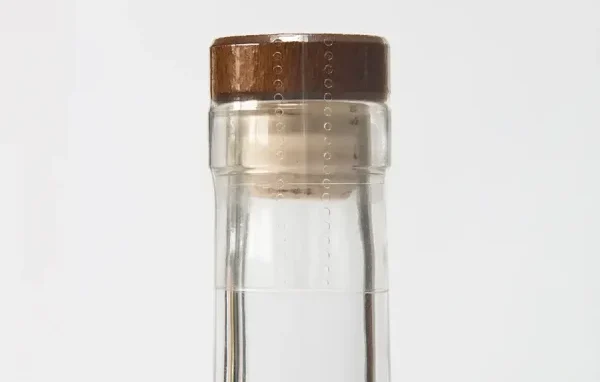
In spirits packaging, a shrink sleeve is not just a decorative label. It can function as a neck capsule, tamper-evident band, full-body branding surface, promotional sleeve, or premium finishing detail.
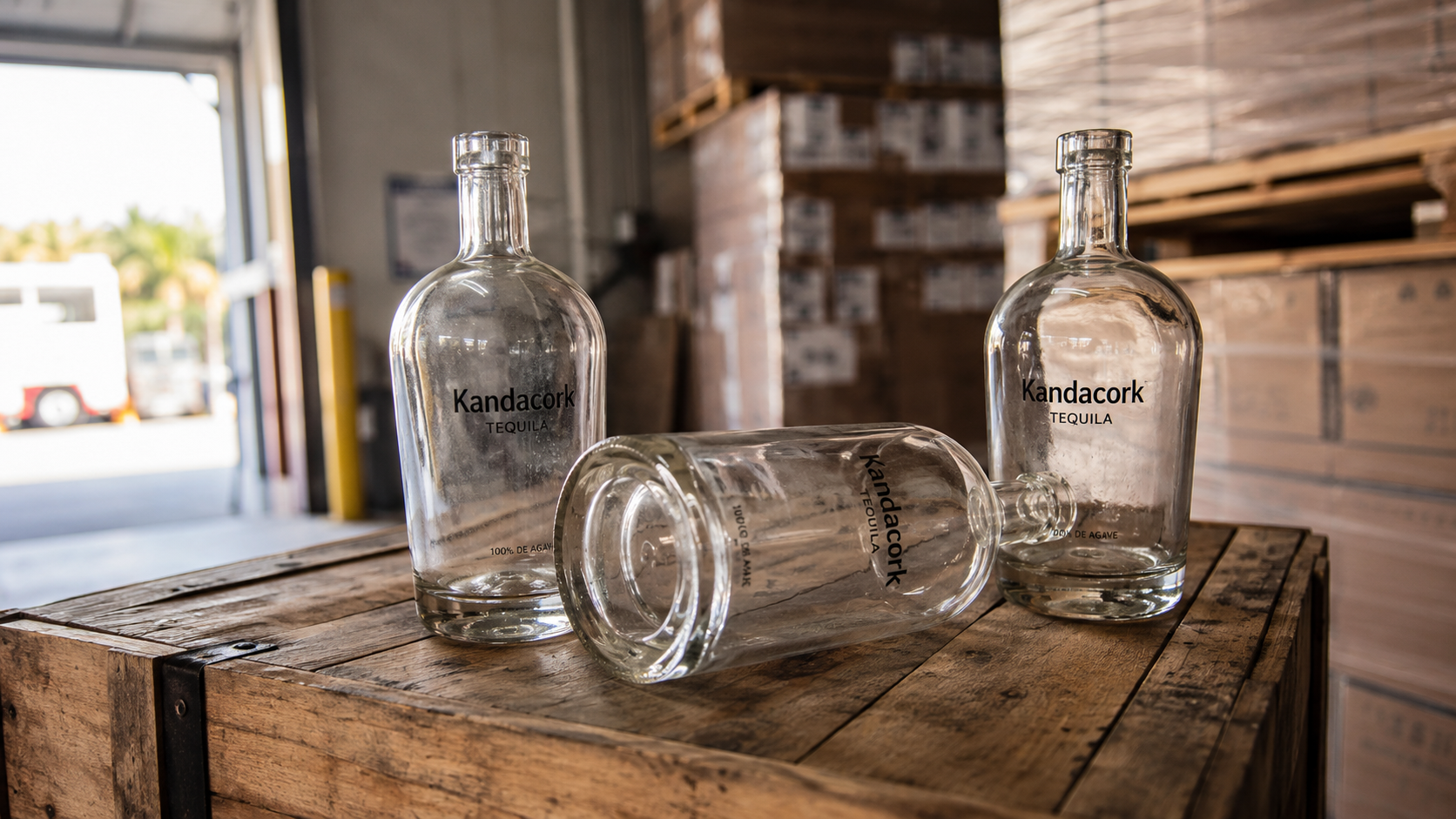
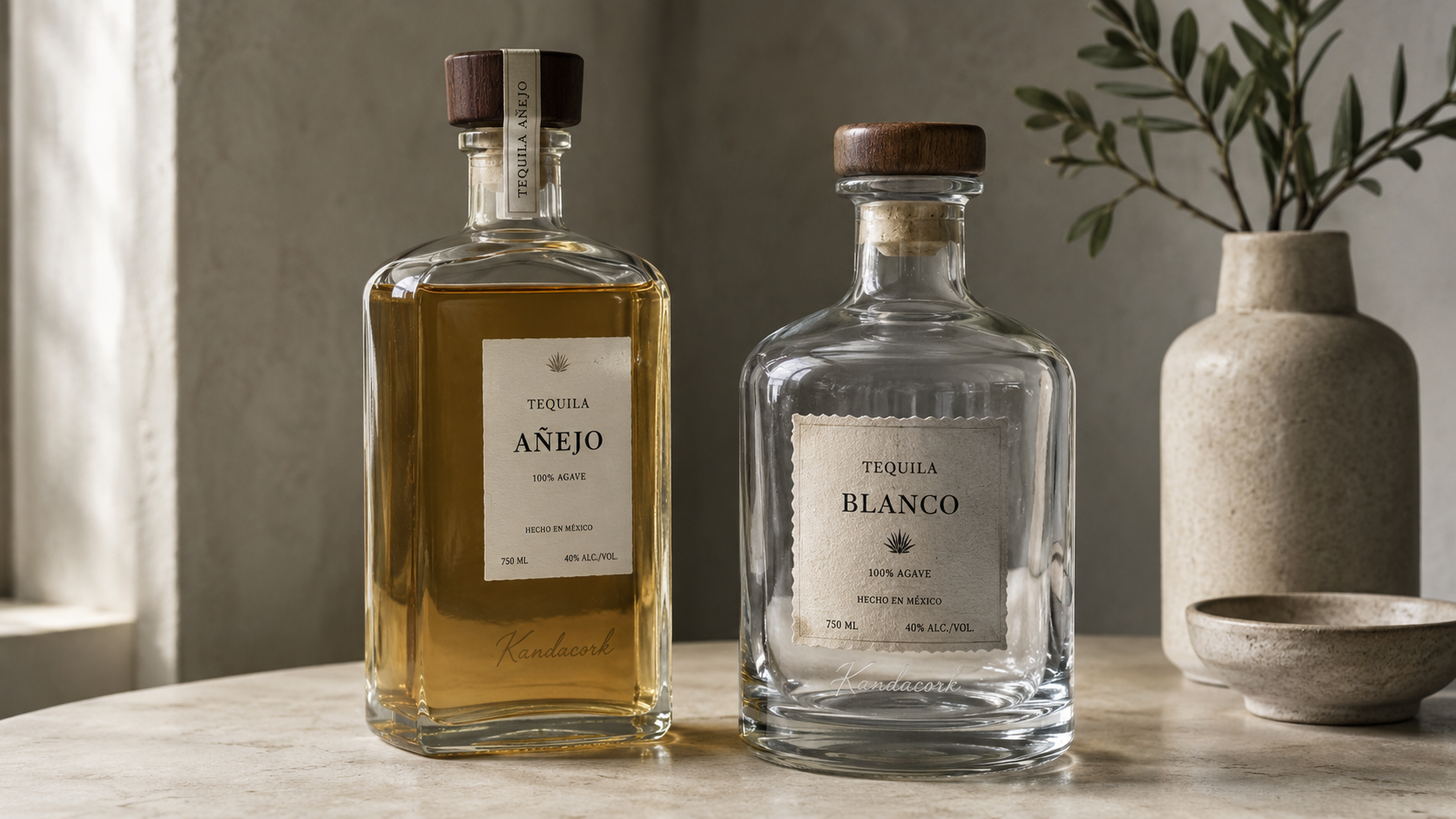
For whiskey, vodka, gin, rum, tequila, brandy, liqueur, and private label spirits, the bottle neck and shoulder area often carries strong visual value. A clean sleeve can make the bottle look premium. A poor sleeve can make even an expensive package look unfinished.
Shrink sleeve systems are widely used for full-body decoration, neck bands, capsule-style sleeves, and tamper-evident packaging. Industry references such as PACK EXPO packaging equipment resources describe shrink sleeve labelers, neck banders, and heat tunnels as systems used to apply heat-shrinkable film to shaped containers.
For Kandacork Closures & Stoppers, the key issue is not only whether the film can shrink. The real question is whether the complete packaging system works together:
- Bottle neck finish
- Shoulder shape
- Closure type
- Sleeve height
- Lay-flat width
- Perforation line
- Sleeve material
- Heat method
- Consumer opening experience
This is why bottle neck, shoulder geometry, closure design, and shrink sleeve fit should be reviewed before bulk production.
Explore Kandacork’s spirits bottle capsules and shrink sleeves for related closure and sleeve options.
What Is the Bottle Neck Shoulder Area?
The bottle neck shoulder area is the transition zone between the closure and the main bottle body. On a spirits bottle, this area may include the cork stopper, bar-top stopper, ROPP cap, screw cap, neck finish, bead, collar, capsule zone, shoulder curve, and upper label panel.
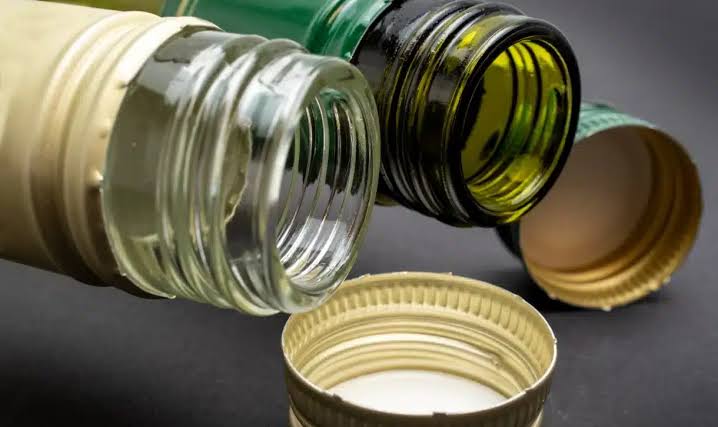
The neck finish is the part of the bottle designed to match the closure. Packaging references often describe neck finish compatibility using dimensions such as T, E, I, S, and H. These measurements help buyers confirm whether a cap, cork, or stopper can seal and function correctly.
However, shrink sleeve fit depends on more than neck finish data. The sleeve must also pass over the closure, grip the neck, shrink across the shoulder, and remain aligned after application.
If the shoulder expands quickly from a narrow neck to a wide body, the sleeve must shrink through a difficult transition. If the shoulder is gradual, the film has more room to conform smoothly. If the bottle has a short neck, the sleeve has less area to anchor before reaching the shoulder.
That is why spirits bottle shrink sleeve projects should be reviewed as a full system, not as separate parts.
For closure-side evaluation, see Kandacork’s closure and neck compatibility testing.
Common Spirits Bottle Shoulder Shapes and Fit Risks
| Shoulder Type | Common Use | Main Sleeve Risk | Fit Recommendation |
|---|---|---|---|
| Straight neck with defined shoulder | Whiskey, rum, brandy, classic spirits | Lower sleeve edge may wrinkle if it crosses the shoulder break | Keep sleeve edge above the steep transition or test a shorter sleeve |
| High shoulder bottle | Whiskey, cognac-style packaging, limited editions | Bunching, wavy lower edge, shoulder wrinkles | Review sleeve height, material shrink range, and heat control |
| Sloped shoulder bottle | Gin, vodka, wine-style spirits | Logo or text distortion across the slope | Use artwork safe zones and avoid fine details in high-shrink areas |
| Rounded shoulder bottle | Vodka, gin, liqueur, premium private label | Uneven shrink if heat is not distributed well | Test with actual bottle and production-like heat method |
| Short neck with wide shoulder | Mini bottles, decorative spirits bottles | Sleeve rotation, poor grip, hard opening | Confirm lay-flat width, perforation, and neck contact area |
| Custom sculpted or asymmetric shoulder | Limited editions, custom glass | Standard sizing charts may not predict final fit | Use physical bottle and closure samples before production |
Most shrink sleeve defects do not come from the film alone. They come from the interaction between sleeve material, bottle geometry, closure size, and heat application.
A high-shoulder whiskey bottle may need a shorter capsule-style sleeve than a long-neck vodka bottle. A rounded gin bottle may need more artwork distortion planning than a straight-neck rum bottle. A custom sculpted bottle may require physical testing even if the drawing looks simple.
For buyers comparing capsule formats, sleeve coverage, materials, and bottle-neck finishing choices, Kandacork’s guide to capsules vs shrink sleeves for spirits packaging can help clarify the difference before sampling.
Shrink Sleeve Fit Problems, Root Causes, and Commercial Impact
For spirits brands, sleeve defects are not only technical issues. They can affect shelf appeal, tamper evidence, consumer trust, and the perceived value of the bottle.
| Problem | Technical Cause | Spirits Packaging Consequence | Kandacork Optimization Approach |
|---|---|---|---|
| Shoulder wrinkles | Sleeve too long, steep transition, excess film, uneven heat | Premium bottle looks low-quality | Adjust sleeve height, review film choice, test real bottles |
| Sleeve splitting | Lay-flat width too tight, sharp transition, excessive heat | Tamper-evident failure or rejected packaging | Recalculate sleeve size and test alternate film |
| Loose sleeve or rotation | Sleeve too wide, low shrink recovery, weak neck anchor | Front logo or tear strip may shift | Improve sleeve tolerance and anchor zone |
| Artwork distortion | Graphics placed in high-shrink area | Logo, seal, QR code, barcode, or tax mark may misalign | Use artwork safe zones and distortion-aware layout |
| Hard opening or poor tear | Perforation line does not match closure structure | Poor consumer opening experience | Test perforated samples with the actual closure |
This diagnosis table is especially useful for private label buyers and bottlers because it connects packaging defects with business risk. A sleeve that looks slightly wrinkled in a sample may become unacceptable once the product reaches retail shelves.
Closure Type and Shrink Sleeve Compatibility
Kandacork’s advantage is the ability to review closure and sleeve compatibility together. Many shrink sleeve suppliers focus on film, but spirits buyers also need to know whether the sleeve works with the cork, stopper, cap, or decorative closure.
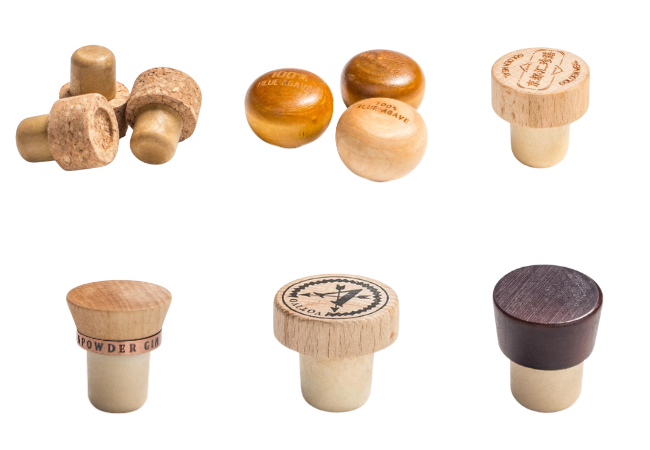
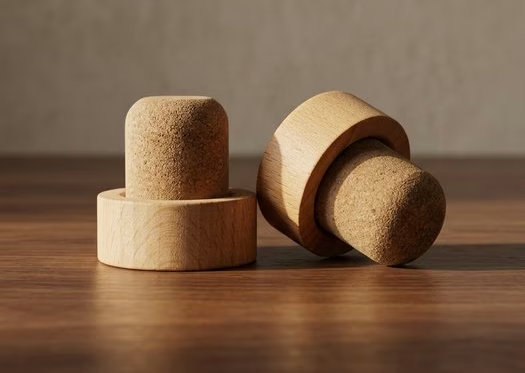
Cork Stoppers
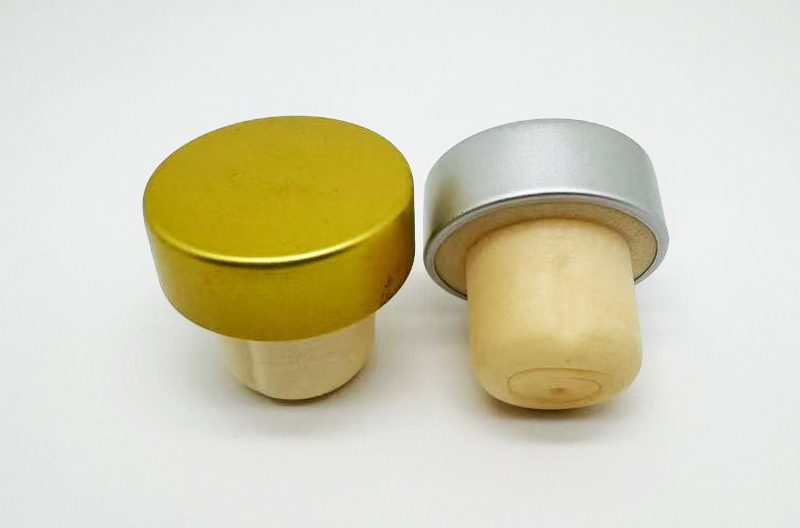
Cork stoppers are common in premium spirits. A shrink sleeve or capsule should create a clean upper finish without making the cork difficult to remove.
Fit risk: sleeve edge wrinkles, poor tear line, or sleeve gripping too tightly around the cork area.
What to check: cork top diameter, insertion depth, sleeve height, and consumer opening path.
Buyer action: test the sleeve with the real cork stopper before approving bulk production.
Bar-Top Stoppers
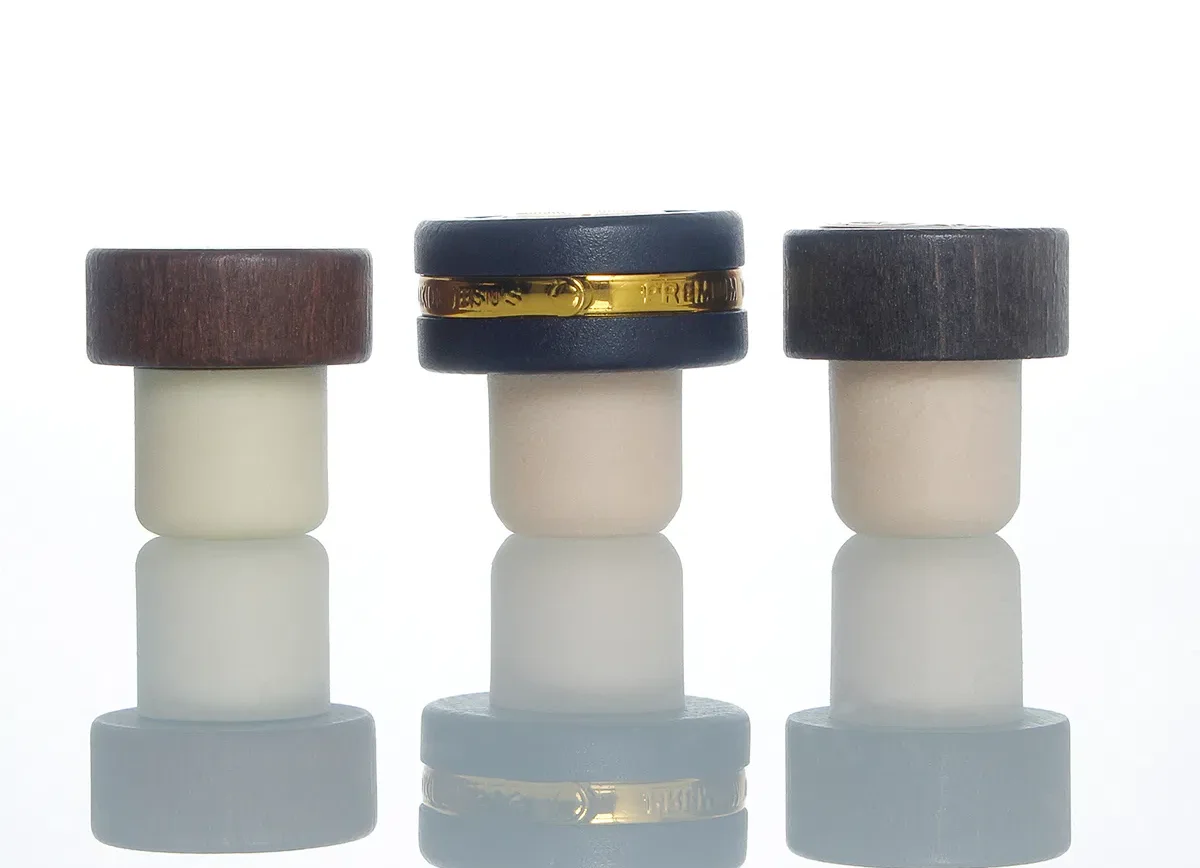
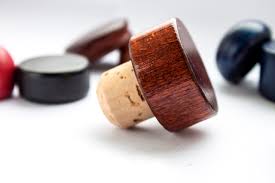
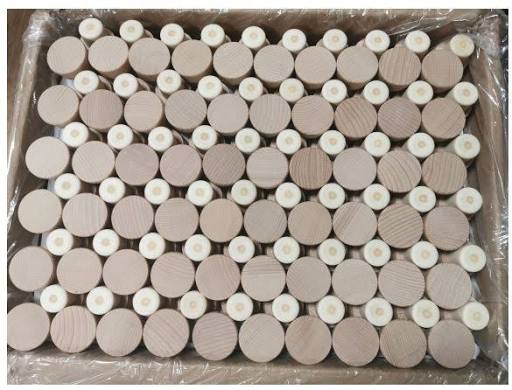
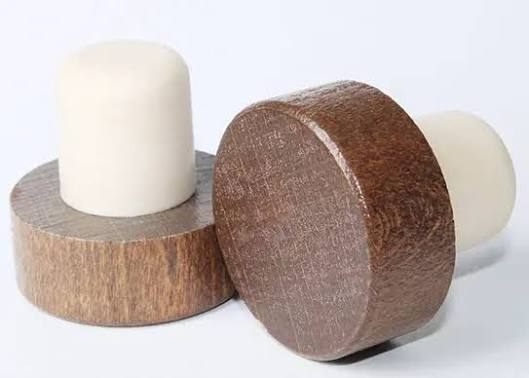
Bar-top stoppers may use wood, synthetic material, glass, ceramic, or metal tops. These tops are often wider than the bottle neck and may react differently to heat.
Fit risk: heat damage, sleeve splitting around a wide top, or hard opening.
What to check: top diameter, material heat resistance, sleeve coverage, and grip area.
Buyer action: request a sample-fit review using the actual stopper material.
ROPP Closures
ROPP closures require proper torque, thread engagement, and tamper-band function. The sleeve must not interfere with cap rotation or tamper-band separation.
Fit risk: sleeve blocking opening torque or interfering with the cap skirt.
What to check: cap height, cap diameter, skirt length, thread finish, and perforation line.
Buyer action: confirm closure function after sleeve application.
Screw Caps
Screw caps are used in some spirits, RTD formats, and private label projects. A tamper-evident shrink band may need to cover both the cap and part of the neck.
Fit risk: poor tamper evidence or difficult cap removal.
What to check: cap height, neck finish, sleeve grip, and tear strip position.
Buyer action: test opening performance after shrinking.
Decorative Premium Closures
Premium closures may include metallic tops, wood inserts, embossing, glass heads, or custom finishes.
Fit risk: surface damage, heat sensitivity, uneven sleeve pressure, or poor brand alignment.
What to check: material, finish, surface coating, and heat exposure.
Buyer action: test appearance and handling before approving final packaging.
For closure selection across cork stoppers, bar-top stoppers, ROPP caps, screw caps, and decorative closure systems, view Kandacork’s custom closures and stoppers.
Buyer Decision Matrix: Which Sleeve Type Fits Your Bottle?
Different bottle and closure combinations need different sleeve strategies. Use this matrix as a starting point before requesting samples or quotations.
| Buyer Situation | Recommended Sleeve Type | Must Check Before RFQ |
|---|---|---|
| Cork stopper with premium whiskey bottle | Capsule-style shrink sleeve | Stopper top diameter, sleeve height, tear line, shoulder break |
| Bar-top stopper with wide decorative top | Custom neck sleeve or capsule sleeve | Top diameter, heat resistance, consumer grip, sleeve split risk |
| ROPP cap for export spirits | Tamper-evident shrink band | Cap skirt, neck finish, perforation line, opening torque |
| Screw cap for private label spirits | Short tamper-evident band | Cap height, neck OD, tear strip position, band grip |
| Rounded gin bottle | Full-body PETG or specialty sleeve | Artwork distortion, shoulder curve, heat tunnel method |
| Short-neck mini bottle | Short neck band | Lay-flat width, neck contact area, opening test |
| Custom sculpted glass bottle | Sample-tested custom sleeve | Physical bottle, closure sample, shrink trial, artwork safe zones |
| Promotional limited edition bottle | Full-body or over-the-cap sleeve | Seam position, barcode readability, tamper evidence, line speed |
This decision matrix is not a substitute for sample testing, but it helps buyers identify the right direction before sending an RFQ.
Material and Heat Method Selection
Material and heat method should be selected after reviewing bottle geometry and closure type. The most common shrink sleeve materials include PVC, PETG, OPS, PLA, polyolefin, and specialty films.
| Material | Best For | Watch Out For |
|---|---|---|
| PVC | Simple neck bands, tamper-evident bands, capsule-style sleeves | Destination-market rules, sustainability goals, material restrictions |
| PETG | Complex curves, full-body sleeves, high visual impact | Cost, recycling compatibility, heat settings |
| OPS | Controlled shrink and clean appearance | Supplier availability and application conditions |
| PLA / specialty films | Sustainability-led projects | Shrink performance, stiffness, clarity, and production compatibility |
The APR Design Guide helps companies evaluate packaging design against recyclability criteria. For glass spirits bottles, recyclability considerations may differ from PET containers, but buyers should still consider material separation, destination-market expectations, and brand sustainability claims.
Heat method also affects final sleeve quality.
| Heat Method | Best For | Limitation |
|---|---|---|
| Heat gun | Early manual samples or quick checks | Inconsistent and not always production-realistic |
| Hot air tunnel | Standard neck bands and simpler bottle shapes | May struggle with difficult shoulders |
| Steam tunnel | Rounded shoulders, complex curves, full-body sleeves | Requires suitable equipment and process control |
A hand-applied sample can help with early review, but it should not be treated as final approval for high-volume production. Production line speed, heat consistency, and bottle handling can all change the final result.
What Kandacork Checks During a Shrink Sleeve Fit Review
A sleeve fit review should focus on the complete packaging system, not just one sleeve dimension. Kandacork can help buyers check whether the selected sleeve, bottle, and closure will work together before production.
During a shrink sleeve fit review, Kandacork typically evaluates:
- Whether the sleeve lower edge crosses the shoulder break
- Whether the closure top diameter is wider than the bottle neck
- Whether the sleeve height supports the intended capsule or tamper-evident function
- Whether the perforation line matches the consumer opening path
- Whether the lay-flat width is suitable for the closure and neck OD
- Whether the selected film can handle the shoulder transition
- Whether artwork needs safe zones around the neck and shoulder
- Whether the closure material may be affected by heat exposure
- Whether physical bottle and closure samples are required before quotation
This review helps identify fit risks early, before artwork approval, sample production, or bulk order confirmation.
CTA Button: Request a Shrink Sleeve Fit Review
CTA Text: Send Kandacork your bottle drawing, closure sample, desired sleeve height, and order quantity. Our team will review sleeve fit risks before quotation.
Measurement Checklist Before Quotation
Before requesting a quotation, buyers should collect accurate bottle, closure, and sleeve information. This reduces back-and-forth communication and helps Kandacork identify fit risks earlier.
Essential Information
- Bottle drawing
- Bottle height
- Body diameter
- Neck outside diameter
- Neck finish dimensions
- Closure type
- Closure diameter
- Closure height
- Desired sleeve height
- Sleeve purpose: decoration, tamper evidence, capsule effect, or full-body branding
- Target order quantity
- Application method
Helpful Information
- Physical bottle sample
- Closure sample
- Shoulder photos
- Artwork or logo file
- Perforation requirement
- Seam location preference
- Material preference
- Destination market
- Filling and capping process
- Sample approval timeline
- Sustainability requirement
The more complete the information, the easier it is to identify shrink sleeve fit risks before production. For custom glass, short-neck bottles, high shoulders, or premium closures, physical samples are strongly recommended.
Send These Files Before RFQ
Before asking for a shrink sleeve or closure quotation, prepare these files and samples:
- Bottle drawing or technical specification
- Closure drawing or physical closure sample
- Neck finish dimensions
- Clear photos of the bottle neck and shoulder
- Desired sleeve coverage height
- Artwork file, logo, or brand layout
- Perforation and tamper-evident requirements
- Expected order quantity
- Application method
- Destination market
Not sure whether your shoulder shape will cause sleeve wrinkles? Send Kandacork your bottle drawing and closure sample through the custom closure quote and inquiry page.
For projects that also need bottle sourcing, decoration, closures, and export-ready packaging coordination, Kandacork Glass provides broader integrated spirits packaging support.
How Kandacork Supports Sample Testing and RFQ
Kandacork Closures & Stoppers supports spirits brands, distilleries, private label buyers, importers, distributors, bottlers, and packaging buyers by reviewing the closure-and-sleeve system before production.
Kandacork can help evaluate:
- Cork stopper and shrink sleeve fit
- Bar-top stopper sleeve coverage
- ROPP closure and tamper band compatibility
- Screw cap and perforated shrink band fit
- Bottle shoulder shrink risk
- Sleeve height and lay-flat width
- PVC, PETG, OPS, PLA, and specialty sleeve options
- Perforation and opening performance
- Sample review before quotation
- Bulk order specification support
A recommended sample review process includes:
- Review bottle drawing and shoulder profile.
- Confirm closure type and dimensions.
- Define sleeve purpose and coverage area.
- Select preliminary sleeve material.
- Calculate sleeve height and lay-flat width.
- Test trial sleeves on real bottles and closures.
- Check wrinkles, splitting, rotation, lower edge quality, and opening performance.
- Review artwork distortion and seam location.
- Confirm final specification before bulk production.
This process helps reduce trial-and-error costs and gives packaging buyers more confidence before approving artwork, samples, specifications, and bulk orders.
For projects focused specifically on visible opening evidence, Kandacork’s guide to tamper-evident sleeves for bottle neck fit and sizing explains how shrink bands should cover, anchor, shrink, and tear correctly.
FAQ
How does bottle shoulder shape affect shrink sleeve fit?
Bottle shoulder shape affects shrink sleeve fit because shrink film must conform to changing diameters around the closure, neck, shoulder, and body. Steep shoulders, rounded shoulders, short necks, and custom contours can increase the risk of wrinkles, splitting, loose fit, and artwork distortion.
Why do shrink sleeves wrinkle around the bottle shoulder?
Shrink sleeves often wrinkle around the bottle shoulder because of excess film, incorrect sleeve height, steep shoulder geometry, poor heat distribution, inaccurate lay-flat width, or unsuitable material shrink range.
What measurements are needed before ordering shrink sleeves for spirits bottles?
Buyers should confirm bottle height, neck outside diameter, shoulder angle, body diameter, closure diameter, closure height, sleeve height, lay-flat width, material type, perforation position, seam location, and application method.
Can one shrink sleeve cover both the closure and shoulder?
Yes. One shrink sleeve can cover both the closure and shoulder, but it requires careful review of closure diameter, neck height, shoulder angle, sleeve material, perforation, and heat application method before bulk production.
What should buyers send Kandacork for a shrink sleeve fit review?
Buyers should send bottle drawings, physical bottle samples if available, closure samples, neck finish dimensions, bottle neck and shoulder photos, desired sleeve coverage height, artwork files, material preference, production quantity, and application method.