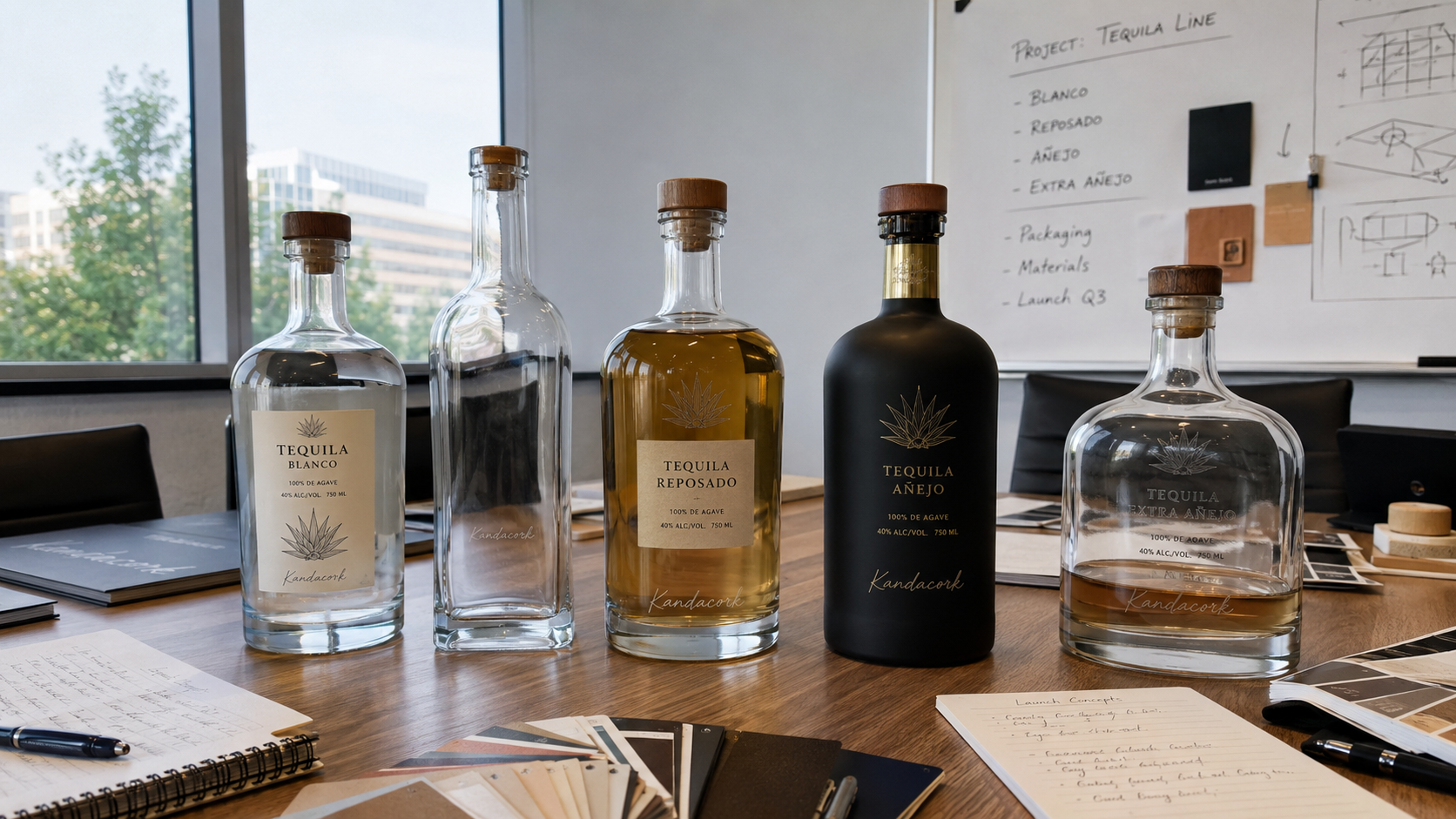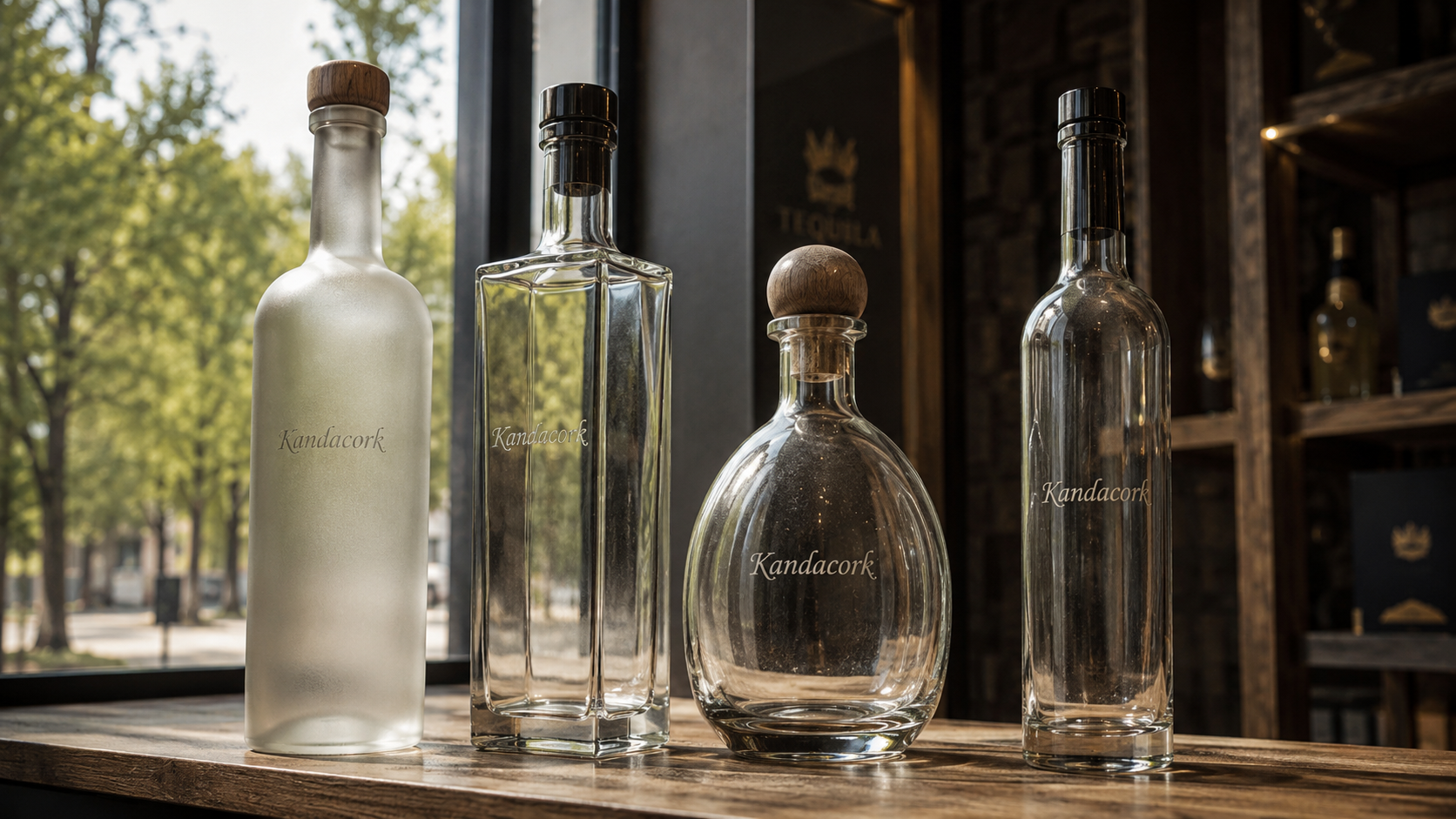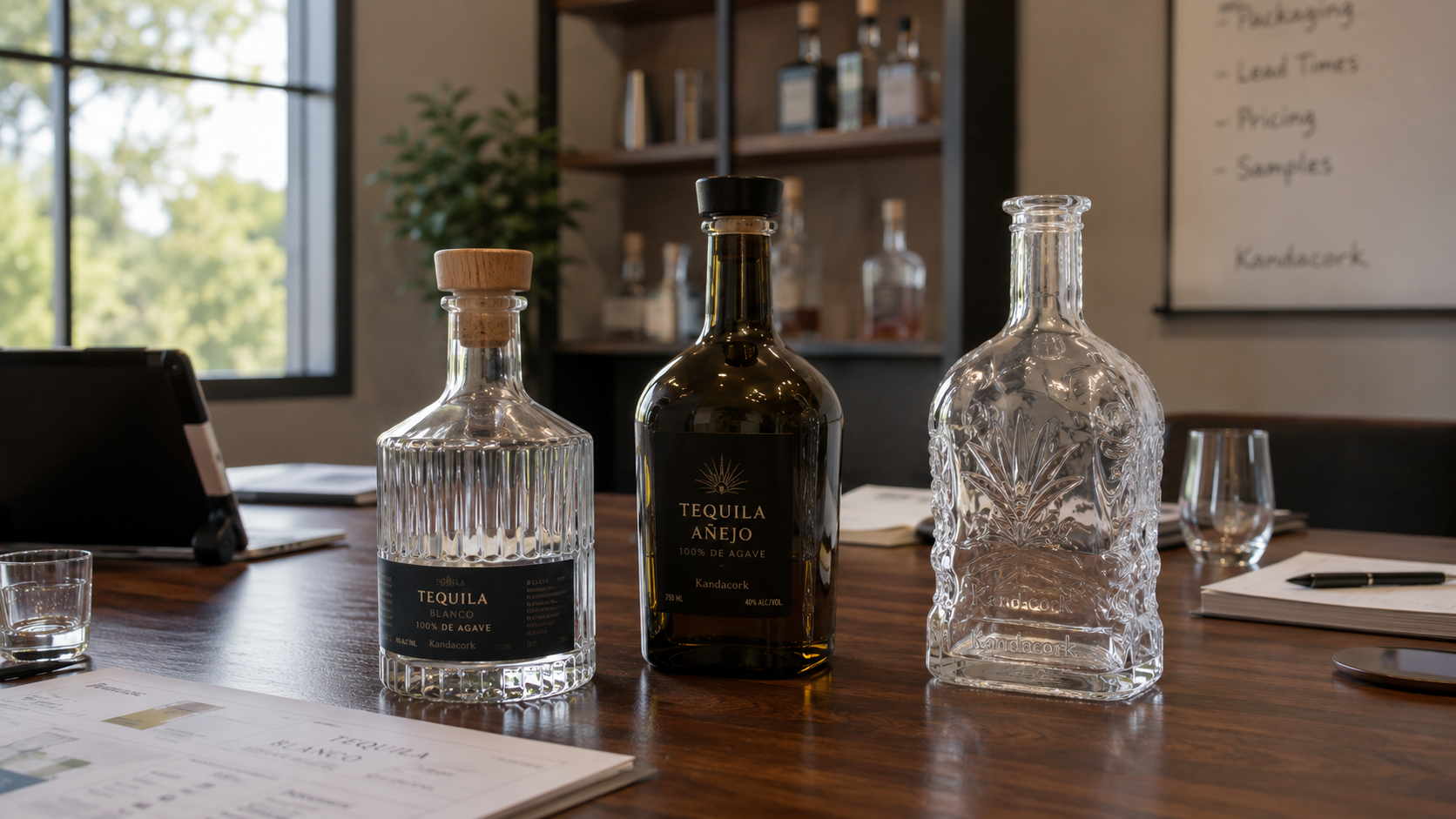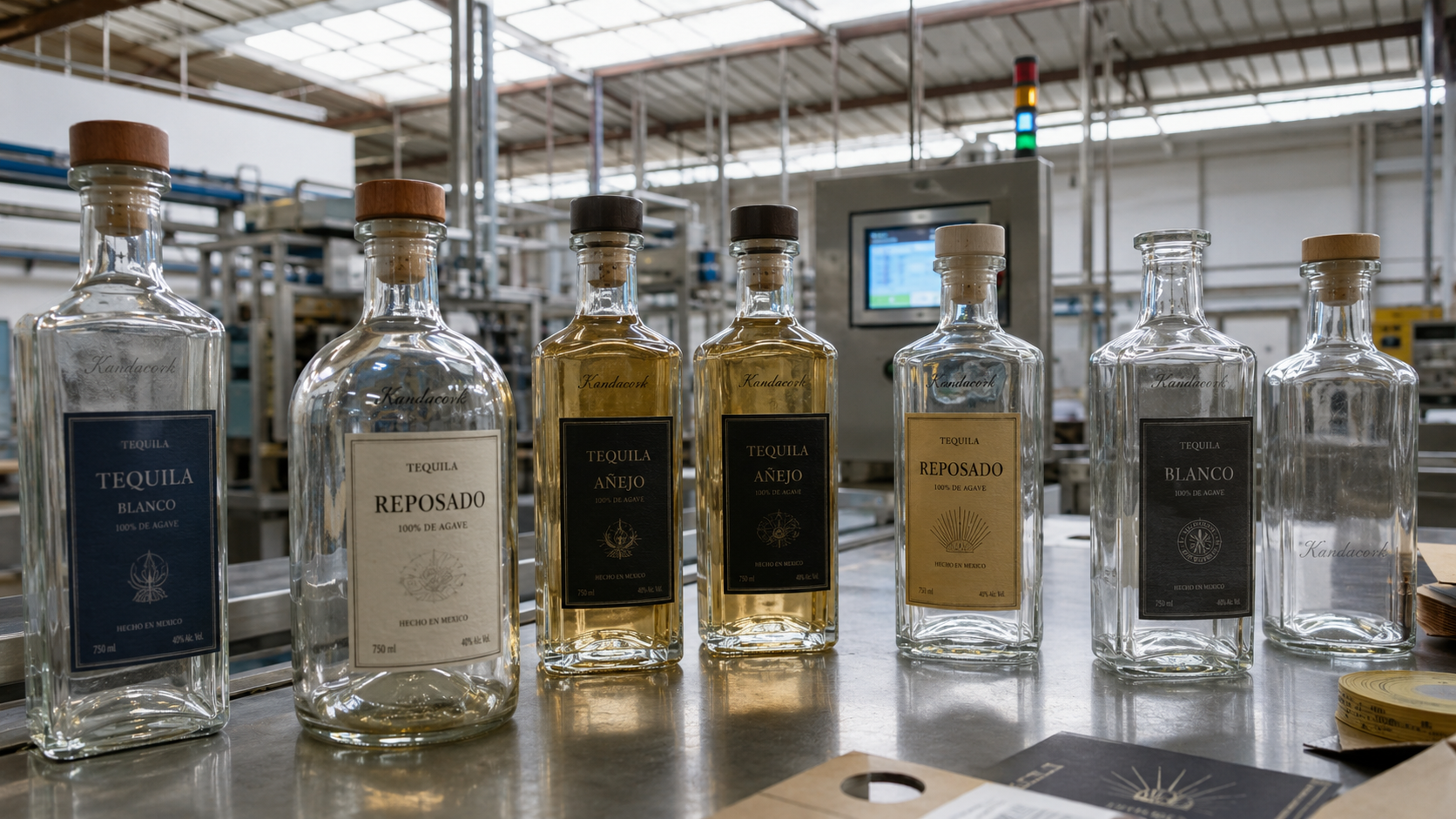
Cork-look synthetic stoppers are often considered for liquor brands that want a traditional closure appearance with stable production quality. This guide covers appearance choices, neck fit, shank performance, branding options and inspection points for bulk orders.
Who This Guide Is For
This guide is for distilleries, spirits brands, private-label liquor companies, packaging buyers, bottle suppliers, importers, exporters, and product development teams comparing synthetic cork stoppers for liquor packaging before sampling or bulk ordering.
It is especially useful for buyers who need custom synthetic cork stoppers for liquor bottles, synthetic bar-top stoppers for spirits, T-top cork stoppers for liquor packaging, synthetic cork shank bottle closures, premium spirits packaging closures, or bulk liquor bottle stoppers for commercial production.
If your project involves a new bottle shape, a custom closure top, a high-ABV spirit, an export market, or a multi-SKU packaging program, stopper selection should be reviewed early in the package development process. It should not be left until the bottle mold, label, carton, and filling plan are already finalized.
What Are Synthetic Cork Stoppers for Liquor Packaging?
Synthetic cork stoppers for liquor packaging are engineered bottle closures designed to seal and reseal spirits bottles while supporting a premium brand appearance. They are commonly used as bar-top stoppers, T-top corks, and custom spirits bottle closures.
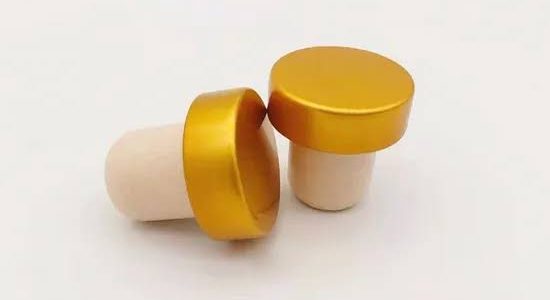
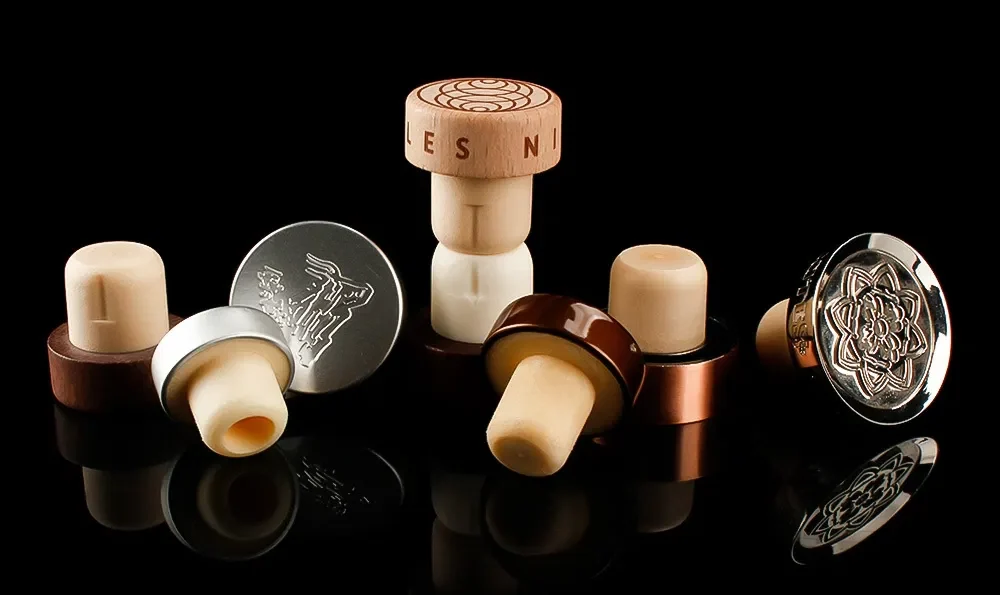
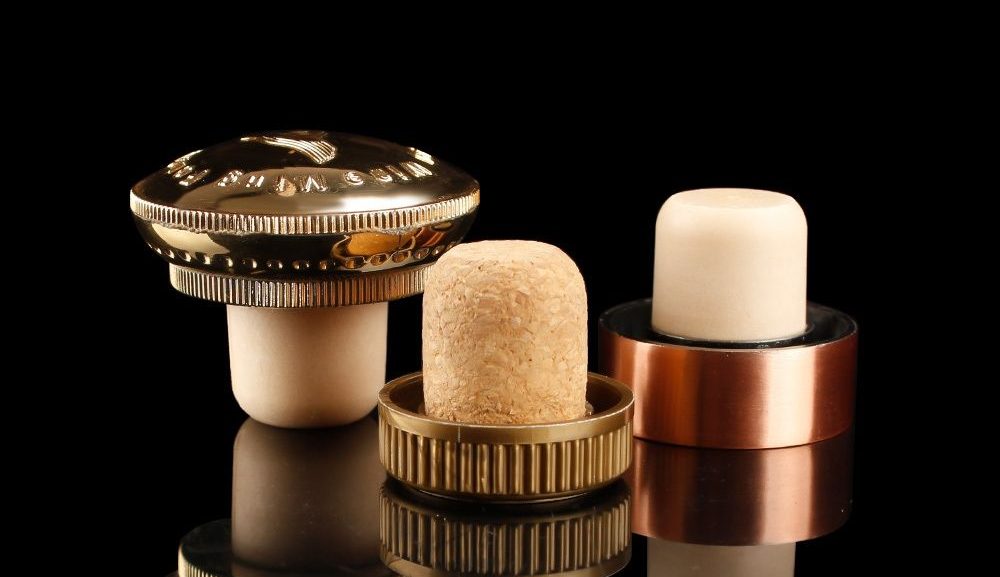
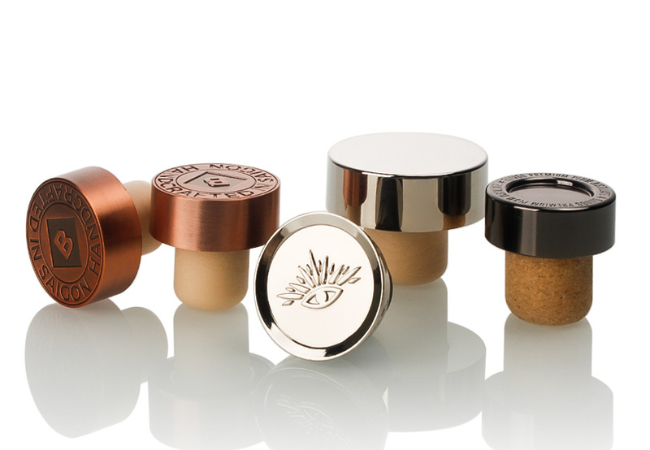
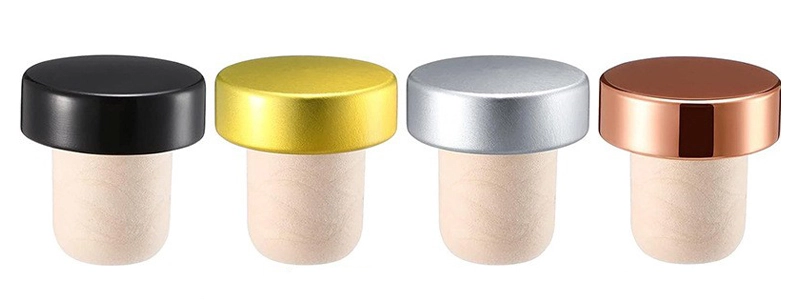
A typical synthetic liquor stopper has two main parts. The first is the visible top, which may be made from wood, plastic, aluminum, metal alloy, glass, ceramic, or composite material. The second is the synthetic cork shank, which enters the bottle neck and creates the sealing function.
These stoppers are used across many liquor categories, including whisky, vodka, gin, rum, tequila, brandy, liqueurs, craft spirits, mini bottles, gift sets, and private-label bottle programs. They are also used when a brand wants a cork-style opening experience but needs more control over size, appearance, color, and supply consistency.
Unlike wine corks, which are often evaluated for oxygen transmission and horizontal storage, liquor stoppers are usually evaluated for neck fit, resealing performance, visual finish, opening feel, transport stability, and brand alignment. A strong spirits closure should feel secure on the bottle, open smoothly, reseal cleanly, and look consistent across every SKU.
For projects that require stock and custom closure development, synthetic bar-top stoppers can be reviewed against the bottle neck, spirit type, filling process, and desired brand finish.
Why Liquor Brands Choose Synthetic Cork Stoppers
Liquor brands choose synthetic cork stoppers when they want controlled appearance, stable dimensions, repeatable performance, and flexible branding. Compared with natural cork, synthetic stoppers can reduce variation in diameter, color, density, and compression.
This consistency matters in commercial packaging. A spirits brand may need thousands or millions of closures that behave the same way on the bottling line and look the same on retail shelves. Even small differences in seating height, pull-out force, or cap alignment can affect consumer confidence.
Synthetic cork stoppers for liquor packaging help solve several practical problems:
They support repeatable stopper dimensions.
They reduce visible variation between bottles.
They can be matched with many cap materials.
They allow custom color, logo, and surface finishes.
They help brands maintain a consistent opening and resealing feel.
They are suitable for sample testing before bulk production.
They can support multi-SKU liquor packaging programs.
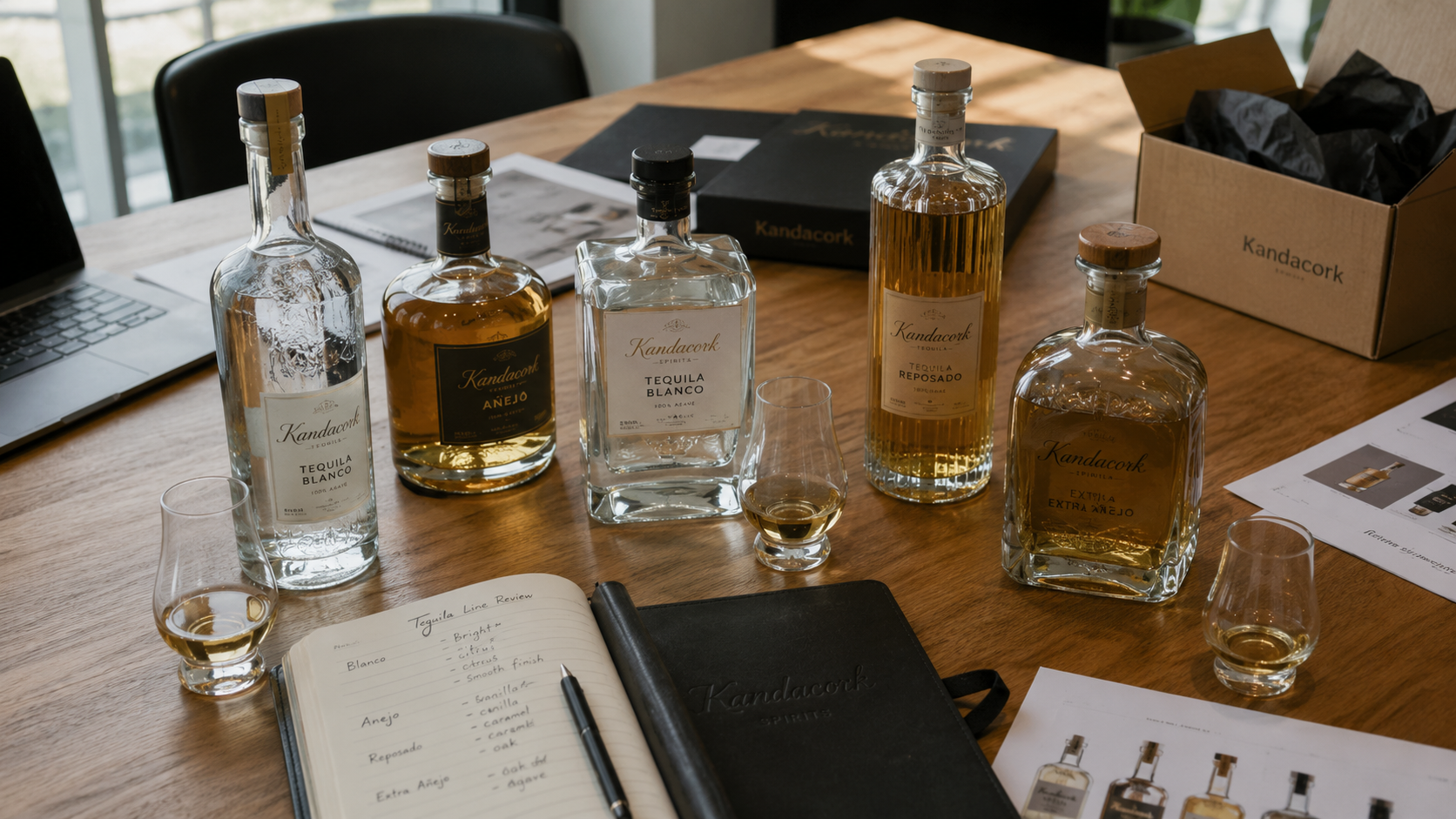
For a premium whisky or aged rum, a wood-top synthetic stopper may create a traditional, warm impression. For vodka or gin, an aluminum-top or matte plastic-top stopper may create a clean and modern appearance. For tequila, liqueur, or limited-edition spirits, a custom decorative top can strengthen shelf differentiation.
Brands developing a full bottle program should also coordinate closure selection with bottle structure, decoration, labeling, and secondary packaging. If the project requires a matching glass bottle system, spirits bottle packaging support can help align bottle format and closure direction from the beginning.
Synthetic Cork vs Natural Cork vs Technical Cork
Synthetic cork is not always better than natural cork, but it is often more consistent for liquor packaging. Natural cork offers heritage appeal, technical cork offers a cork-based engineered option, and synthetic cork offers strong control over fit, appearance, and customization.
| Factor | Synthetic Cork Stopper | Natural Cork Stopper | Technical Cork Stopper |
|---|---|---|---|
| Fit consistency | High | Variable | Medium to high |
| Appearance consistency | High | Naturally variable | Medium |
| Premium perception | Modern and customizable | Traditional and heritage-led | Practical and balanced |
| Bulk production control | Strong | More variable | Good |
| Logo and color customization | Strong | Moderate | Moderate |
| Material variation | Lower | Higher | Medium |
| Best use case | Custom liquor bottle closures and scalable spirits packaging | Heritage spirits and traditional packaging concepts | Cork-based programs needing more controlled performance |
For buyer decision-making, the question should not be “which closure is universally best?” The better question is “which closure gives this bottle the right balance of fit, sealing, opening feel, shelf appearance, and production reliability?”
Synthetic cork stoppers for liquor packaging are a strong choice when a brand needs repeatable neck fit, visual consistency, customized decoration, and a supplier that can support pre-production fit testing before bulk orders.
When Synthetic Cork May Not Be the Best Choice
Synthetic cork stoppers are practical for many spirits projects, but they are not the right answer for every brand. A balanced packaging decision should consider brand story, material preference, technical fit, market expectations, and documentation requirements.
Synthetic cork may not be the best choice when the brand requires a fully natural cork story as part of its identity. Some heritage spirits brands may prefer natural cork because the material itself supports tradition, origin, and craft positioning.
It may also be unsuitable when the bottle neck is incompatible with available shank dimensions or when the closure has not passed sample approval testing. A stopper should not be approved only because it looks good in a product rendering.
Synthetic cork should also be reconsidered if the project requires documentation that the supplier cannot provide. For regulated or export markets, buyers should confirm food-contact suitability, traceability, colorant use, adhesive suitability, and quality control expectations before production.
A decorative stopper that is not designed for resealing should not be treated as a functional liquor closure. Buyers should confirm whether the stopper is intended for repeated opening and closing, especially for full-size spirits bottles.
Key Performance Factors Before Ordering
The right synthetic cork stopper must match the bottle, spirit, bottling process, and brand position. A closure can look attractive but still fail if the shank does not fit the bottle neck correctly or if the stopper feels wrong during opening.
Bottle Neck Inner Diameter
Bottle neck inner diameter is one of the most important specifications. The synthetic cork shank must compress enough to seal the bottle, but not so much that insertion becomes difficult or the stopper deforms.
A stopper that is too loose can feel cheap, leak during transport, or lose consumer trust. A stopper that is too tight can slow production, create excessive pull-out force, or damage the opening experience.
Buyers should provide a technical bottle drawing or physical bottle sample whenever possible. The drawing should show the neck inner diameter, tolerance range, neck finish, seating area, and relevant fill-level details.
Shank Diameter and Shank Length
Shank diameter determines compression. Shank length affects sealing depth, seating stability, and visual balance.
A short shank may work for mini liquor bottles or small-format spirits packaging. A longer shank may be better for larger bottles or heavier decorative tops. However, a longer shank is not automatically better. The shank must match the internal neck geometry and avoid interference with the fill level.
Pull-Out Force
Pull-out force is the amount of force needed to remove the stopper. This directly affects the consumer’s opening experience.
If the pull-out force is too low, the stopper may feel insecure. If it is too high, the bottle may feel difficult to open. A premium spirit should feel firm, controlled, and reliable without frustrating the customer.
A pre-production fit test should include repeated opening and closing cycles. This helps confirm whether the stopper maintains a secure resealing feel after the first opening.
Insertion Force
Insertion force matters for manual and automated bottling. If the stopper requires too much force, production speed may slow down. If insertion force is inconsistent, the bottling line may produce uneven seating heights.
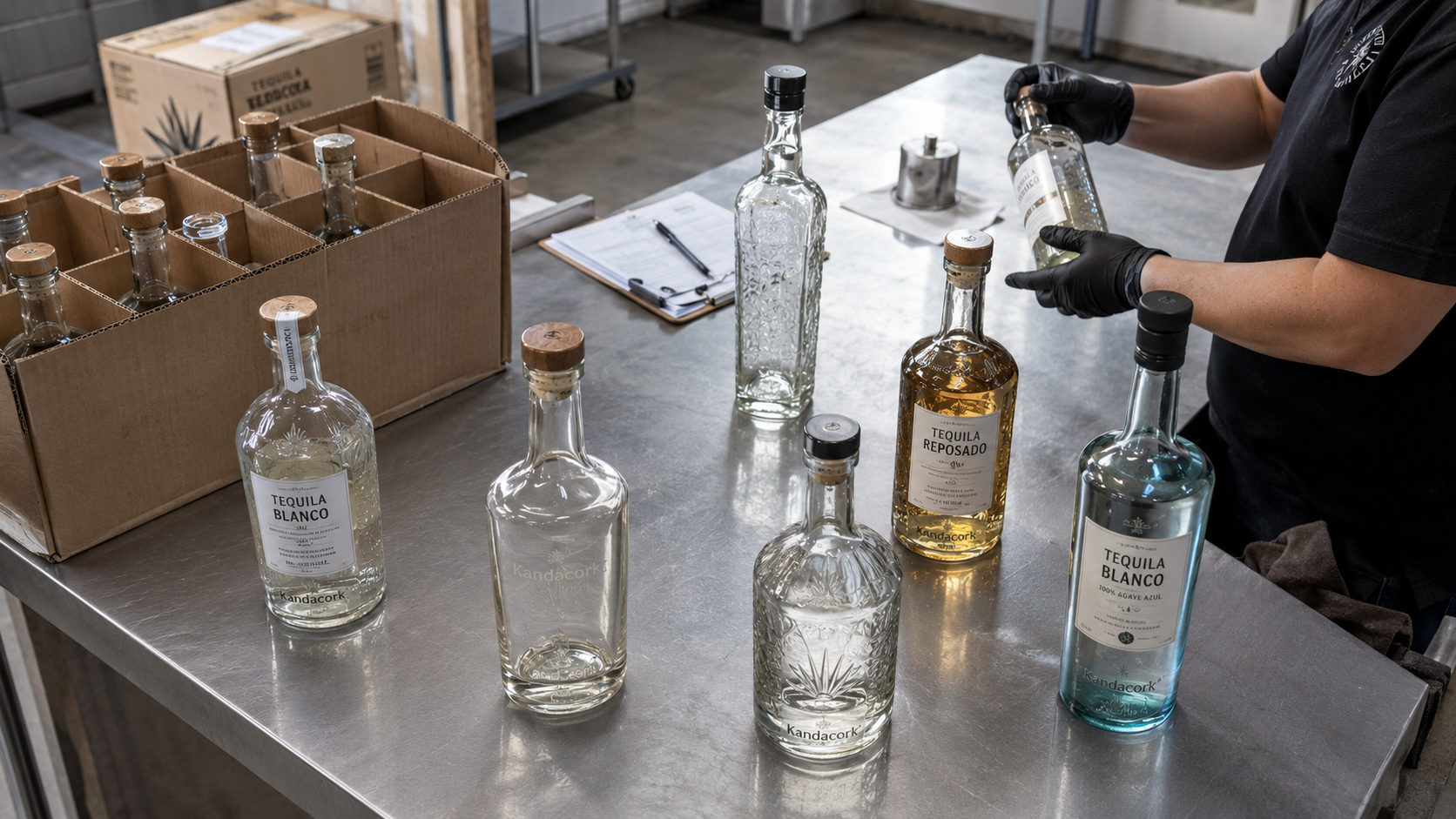
For bulk liquor closure orders, sample testing should be completed with the actual bottle before mass production. Buyers should review closure seating height, cap alignment, insertion consistency, and stopper appearance after application.
Leak Resistance
Liquor bottles are usually stored upright, but they still move during shipping, warehousing, retail handling, and consumer transport. A synthetic cork stopper should be evaluated under practical conditions, including vibration, carton packing, temperature changes, and handling pressure.
A stopper that passes a simple hand test may not always perform well during export shipping or long-distance distribution. For larger production programs, buyers should consider carton drop review, vibration review, temperature exposure checks, and batch consistency inspection.
Alcohol Compatibility
Spirits often contain higher alcohol levels than wine or beer. A stopper used for whisky, vodka, gin, rum, tequila, brandy, or liqueur should be suitable for the target alcohol by volume, storage period, and destination market.
Buyers should discuss ABV, formulation, expected shelf life, and transport conditions with the closure supplier. For high-ABV products, material suitability, sensory neutrality, and closure stability are especially important.
Best Synthetic Cork Stopper Styles by Spirit Type
Different spirits categories often require different closure styles. The stopper should match the bottle shape, label design, retail price point, and brand story.
| Spirit Type | Recommended Stopper Style | Packaging Benefit |
|---|---|---|
| Whisky | Wood-top or metal-top synthetic cork stopper | Communicates maturity, craft, and premium tradition |
| Vodka | Aluminum-top or clean plastic-top synthetic stopper | Supports a modern, minimal, clean shelf image |
| Gin | Metal, glass, colored, or decorative synthetic stopper | Matches botanical, design-led, and craft positioning |
| Rum | Wood-top, dark-finish, or embossed synthetic stopper | Creates warmth, heritage, and aged-spirit character |
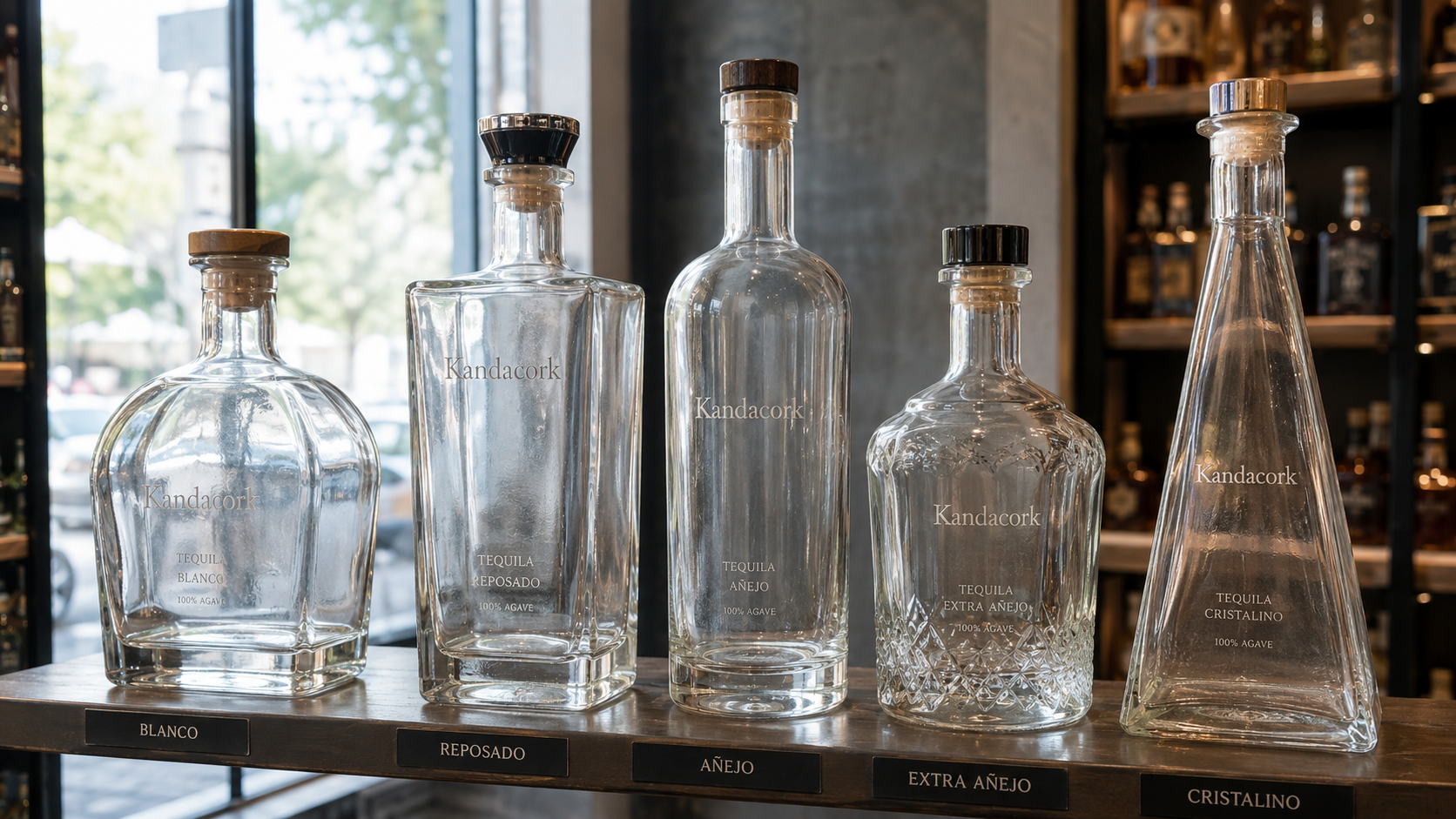
| Tequila | Decorative, custom-molded, or premium metal-top stopper | Adds strong visual differentiation and gift appeal |
| Brandy | Wood-top or refined metal-top synthetic cork stopper | Supports classic, mature, and elegant positioning |
| Liqueur | Color-matched or decorative synthetic stopper | Reinforces flavor identity and gift packaging appeal |
This table should be used as a starting point, not a fixed rule. The final closure should always be tested with the actual bottle neck and reviewed against the brand’s visual system.
For cost-efficient, color-matched, and line-friendly projects, plastic T-top stoppers can work well across value, mid-range, and selected premium spirits. For heavier luxury positioning, metal stoppers can add weight, durability, and a more collectible feel.
How to Choose the Right Synthetic Cork Stopper Size
The safest way to choose a synthetic cork stopper size is to test real samples with the actual bottle. Catalog dimensions are useful, but glass tolerances, bottle weight, neck finish, shank compression, and filling conditions can affect performance.
A practical stopper sizing process should include the following checks:
| Buyer Checkpoint | What to Review | Why It Matters |
|---|---|---|
| Bottle drawing | Neck inner diameter, tolerance, finish, seating depth | Confirms the basic fit range |
| Shank diameter | Compression against bottle neck | Affects sealing and insertion force |
| Shank length | Depth and stability inside the neck | Affects seating and resealing feel |
| Top diameter | Visual balance with bottle shoulder and neck | Affects shelf appearance |
| Pull-out force | Opening resistance | Affects consumer experience |
| Resealing test | Repeated opening and closing | Confirms usability after purchase |
| Transport test | Movement, vibration, temperature variation | Helps reduce leakage risk |
| Bottling test | Manual or automated insertion | Confirms production compatibility |
| Batch check | Dimensional and visual consistency | Reduces variation in bulk production |
A closure should never be selected by appearance alone. Fit testing, sampling, and production review are essential before confirming bulk synthetic cork stoppers for liquor packaging.
Bottle structure also matters. A stopper that looks balanced on a tall cylindrical vodka bottle may look undersized on a heavy-base whisky bottle or too wide on a slim liqueur bottle. Buyers developing a new glass format can coordinate with Kandacork Glass to align bottle shape, neck finish, and closure direction before final tooling.
Common Mistakes When Buying Synthetic Cork Stoppers
Many closure problems happen because buyers choose a stopper too late in the packaging process. The stopper should be evaluated together with the bottle, label, fill level, carton, and shipping method.
Common mistakes include choosing by appearance only, ignoring bottle-neck tolerances, skipping pull-out force testing, assuming all synthetic cork shanks are interchangeable, failing to test resealing, and approving bulk production before sample confirmation.
Another mistake is focusing only on the top material. A beautiful wood or metal top will not solve a poor shank fit. The visible cap supports branding, but the shank determines much of the sealing and opening performance.
Buyers should also avoid treating all spirits the same. A closure for a high-ABV whisky program may need different testing from a liqueur, mini bottle, or decorative gift set. Alcohol content, storage conditions, bottle size, and distribution route all matter.
For export projects, documentation should be discussed early. Waiting until after production to ask about food-contact suitability, traceability, or market requirements can create delays.
Food-Contact and Compliance Considerations
Synthetic cork stoppers for liquor packaging are part of the food-contact packaging system. Even though the stopper is not consumed, it may contact the beverage, the bottle interior, or vapor inside the neck.
The U.S. Food and Drug Administration provides guidance on food-contact substances and packaging materials. Before approving production, buyers should ask whether stopper materials, colorants, adhesives, decorative coatings, and related components are suitable for the intended packaging use.
For brands selling into the European Union, European Commission food-contact material legislation is relevant. Food-contact materials should be safe, sufficiently inert, and suitable for the intended application. Buyers should request documentation that supports the target market and product conditions.
The Alcohol and Tobacco Tax and Trade Bureau is also relevant for distilled spirits sold in the United States. While the closure itself is usually an engineering and packaging decision, bottle presentation, labeling, and standards of fill must align with applicable alcohol regulations.
For quality systems, many packaging buyers recognize ISO 9001 quality management as a useful framework for process control, documentation, corrective action, and continual improvement. A closure supplier does not need to turn every article into a compliance manual, but it should be able to discuss material traceability, inspection steps, and batch consistency clearly.
When sourcing synthetic cork stoppers for liquor packaging, buyers should ask suppliers about material composition, food-contact suitability, migration or compliance statements where applicable, colorant and adhesive suitability, traceability, batch consistency, quality control, and export-market requirements.
Branding, Decoration, and Shelf Impact
A stopper can make a bottle feel finished, premium, and recognizable. For spirits packaging, closure design should work with the bottle silhouette, label material, capsule or neck band, carton, and retail shelf environment.
Common customization options include logo printing, embossing, debossing, hot foil stamping, laser engraving, color matching, molded texture, metallic finishes, matte coatings, gloss coatings, sidewall patterns, and special top shapes. The right method depends on cap material, order quantity, target price point, and brand style.
A craft gin may use a color-matched top to connect with botanical flavors. A whisky brand may choose a warm wood top with debossed initials. A tequila brand may prefer a distinctive metal or decorative cap that creates a stronger gift-pack impression.
For more complex visual systems, closure decoration and branding should be considered before finalizing cap shape. Decoration-friendly geometry can help prevent logo distortion, uneven foil transfer, poor engraving contrast, or decoration areas that are too small for the intended artwork.
Sustainability and Packaging Strategy
Sustainability in spirits packaging should be evaluated across the full packaging system, not only the stopper. Bottle weight, glass type, decoration, secondary packaging, transport distance, and closure materials all contribute to the environmental profile of a finished product.
Glass remains widely used in spirits packaging because it is inert, premium, protective, and recyclable in many markets. The European Container Glass Federation, FEVE, highlights the role of glass packaging in circular economy discussions and beverage packaging sustainability.
For closure buyers, sustainability should be practical and evidence-based. A lighter stopper is not automatically better if it performs poorly and creates leakage, rework, or waste. A more decorative stopper is not automatically worse if it supports refill, reuse, premiumization, or longer product life.
Useful sustainability questions include:
Can the stopper be designed with less material without reducing quality?
Can the closure platform be used across multiple SKUs?
Can packaging waste be reduced during bulk shipping?
Can decoration methods be simplified while preserving brand value?
Can production consistency reduce rejects and rework?
Can the closure be matched with recyclable or reusable packaging goals?
The best approach is to design the bottle, stopper, label, carton, and logistics system together. For buyers focused on lower-impact packaging programs, Kandacork Eco Glass can support broader discussions around glass formats, refillable thinking, and integrated packaging choices.
Bulk Sourcing Checklist for Liquor Brands
A strong RFQ helps the supplier recommend the right closure faster. Before requesting a quote for synthetic cork stoppers for liquor packaging, buyers should prepare the main technical and commercial details.
| RFQ Information | Details to Provide |
|---|---|
| Bottle information | Drawing, sample, capacity, neck inner diameter, tolerance |
| Spirit type | Whisky, vodka, gin, rum, tequila, brandy, liqueur, or other |
| Alcohol content | ABV and any special formulation considerations |
| Closure style | Plastic top, wood top, metal top, aluminum top, glass top, or custom top |
| Branding | Logo, color, finish, embossing, debossing, foil, engraving, printing |
| Production method | Manual insertion or automated bottling |
| Order quantity | Trial order, launch order, annual volume, or multi-SKU forecast |
| Market | Domestic, export, U.S., EU, or other destination |
| Timeline | Sampling date, approval date, launch date, delivery date |
| Testing needs | Fit test, resealing test, transport test, appearance approval |
Providing this information early reduces development delays and helps prevent mismatches between bottle design, stopper size, and production needs.
For example, a craft gin brand may need a matte black aluminum-top stopper with a synthetic shank and printed logo. A premium rum brand may prefer a warm wood-top stopper with debossed branding. A private-label vodka project may prioritize clean appearance, cost control, and repeatable bulk supply.
If your packaging program includes both bottle and closure engineering, coordinated bottle and closure systems can help reduce late-stage fit issues and improve design continuity across a product family.
Why Work With Kandacork Closures
Kandacork Closures helps spirits brands, packaging buyers, importers, and private-label producers develop custom liquor bottle closures that fit both technical and branding requirements.
For synthetic cork stoppers for liquor packaging, Kandacork Closures can support bottle neck review, stopper size matching, synthetic shank selection, cap material selection, logo decoration, sample preparation, bulk order coordination, packaging, and export support.
This support is useful for both new and established brands. A startup distillery may need help choosing its first premium stopper. A growing spirits brand may need a consistent closure platform across multiple SKUs. A private-label company may need a cost-effective stopper that still looks retail-ready.
The right closure should feel secure, look brand-appropriate, perform reliably, and support the commercial production plan. To start sample planning, buyers can request a custom closure quote with bottle drawings, spirit type, ABV, decoration requirements, order quantity, and target launch schedule.
FAQ
Are synthetic cork stoppers suitable for liquor bottles?
Yes. Synthetic cork stoppers are suitable for many liquor bottles when the stopper is correctly matched to the bottle neck, alcohol content, bottling method, and brand requirements. They are commonly used for whisky, vodka, gin, rum, tequila, brandy, liqueurs, and other spirits.
What are synthetic cork stoppers used for?
Synthetic cork stoppers are used to seal and reseal liquor bottles while supporting brand presentation. They are commonly used as bar-top stoppers, T-top corks, custom spirits bottle closures, and decorative closures for premium liquor packaging.
What is the main advantage of synthetic cork stoppers for liquor packaging?
The main advantage is consistency. Synthetic cork stoppers can provide repeatable size, appearance, compression, and branding options, which makes them practical for bulk liquor packaging and multi-batch production.
How do I choose the right stopper size?
Start with the bottle neck inner diameter and technical drawing. Then test the shank diameter, shank length, insertion force, pull-out force, seating height, resealing performance, and transport stability using real samples.
Can synthetic cork stoppers be used for high-ABV alcohol?
They can be used for many high-ABV spirits, but material suitability should be confirmed before bulk production. Buyers should tell the supplier the spirit type, ABV, expected storage conditions, and destination market.
Can synthetic cork stoppers be customized with a logo?
Yes. Synthetic cork stoppers can be customized with printed logos, embossing, debossing, hot foil stamping, laser engraving, color matching, custom cap materials, and custom cap shapes.
Are synthetic cork stoppers better than natural cork?
Synthetic cork stoppers are not always better, but they are often more consistent. Natural cork offers traditional appeal, while synthetic cork offers controlled appearance, stable dimensions, and repeatable production performance.
Are synthetic cork stoppers food-contact safe?
They can be, but buyers should confirm material suitability and documentation with the supplier. Because liquor closures are part of the food-contact packaging system, compliance requirements should be reviewed for each target market.
What should I send to get a quotation?
Send the bottle drawing or sample, target spirit type, ABV, neck size, annual quantity, cap material preference, decoration requirements, destination market, bottling method, and expected launch timeline.
Conclusion
Synthetic cork stoppers are a practical closure solution for liquor brands that need reliable fit, premium appearance, custom decoration, and scalable supply. The right stopper should not be selected only by appearance. It should be tested for neck fit, sealing behavior, opening feel, alcohol compatibility, production efficiency, and brand alignment.
For buyers comparing synthetic cork stoppers for liquor packaging, the best path is to start with the bottle specification, define the spirit category and brand style, request samples, and verify performance before bulk ordering.
Kandacork Closures helps liquor brands develop custom synthetic cork stoppers for whisky, vodka, gin, rum, tequila, brandy, liqueur, and private-label spirits. With the right closure, a bottle can feel more complete, more reliable, and more valuable in the customer’s hand.