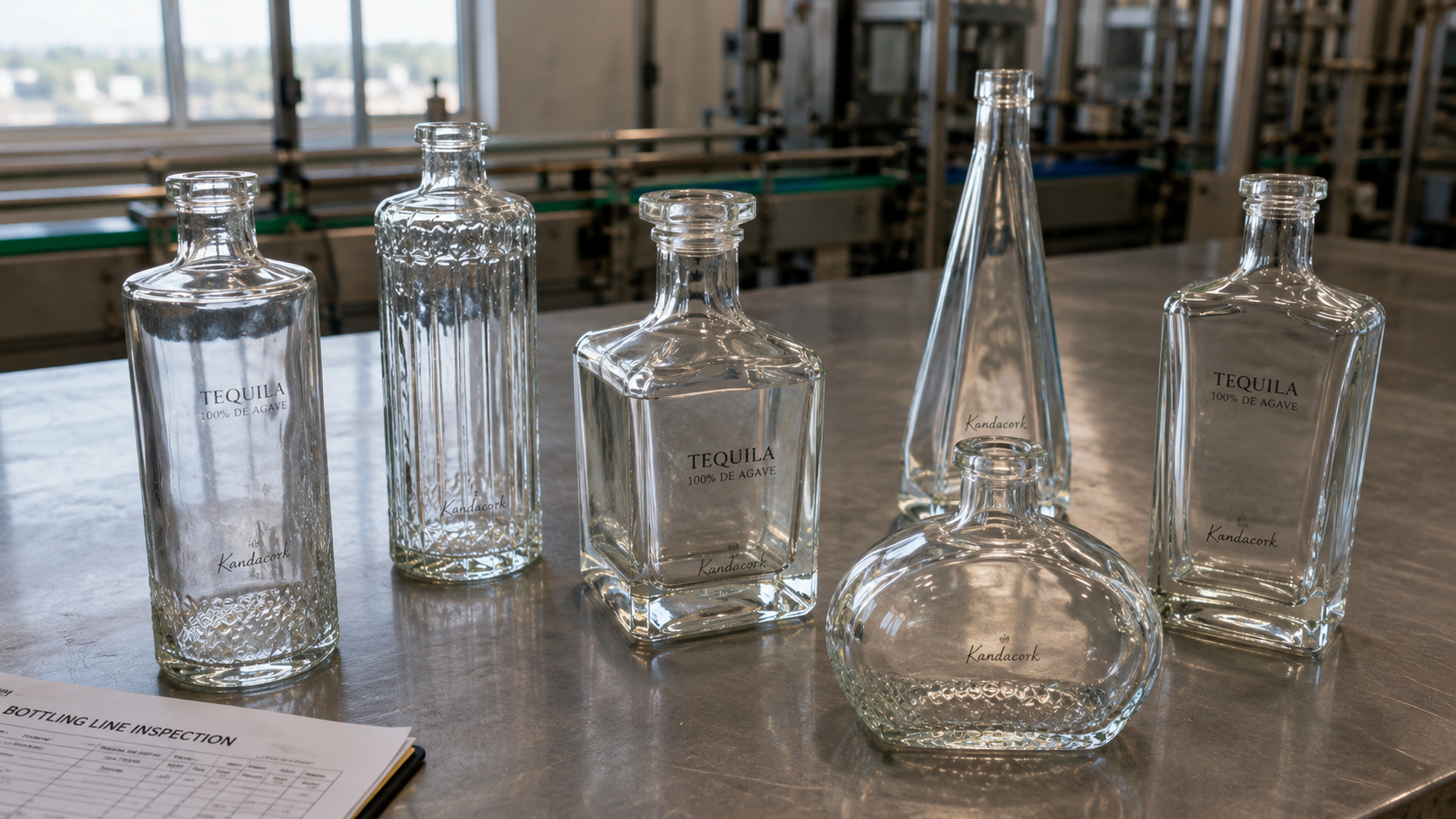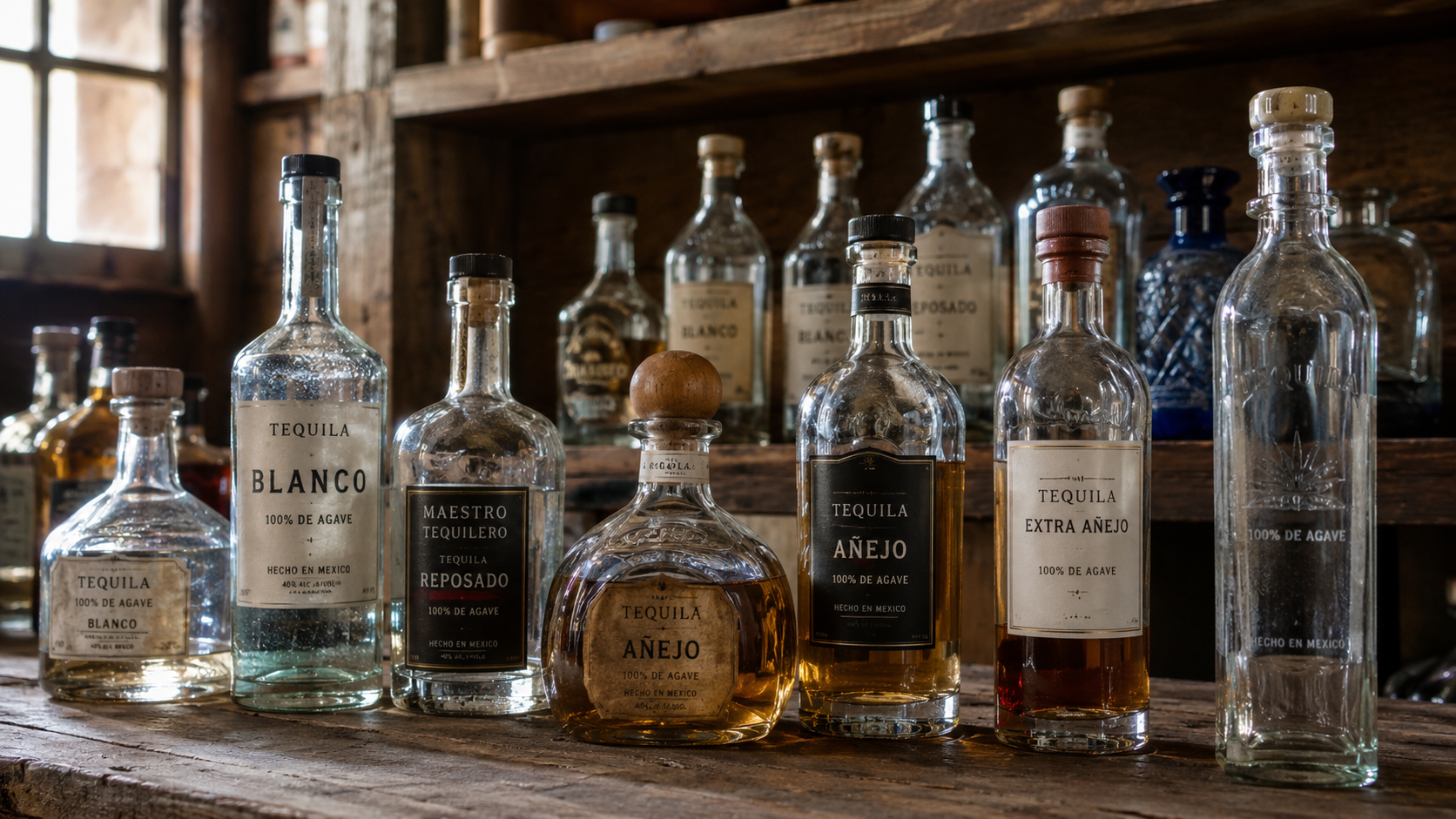
Tamper-evident neck finishing helps protect spirits packaging while supporting a more complete bottle presentation. This guide explains how capsules, shrink sleeves, sizing, material choice and application testing affect bottle neck finishing projects.
What Are Capsules and Shrink Sleeves for Spirits Bottles?
Capsules and shrink sleeves are neck-finishing components applied around the bottle neck, cap, closure, or upper shoulder. They can be decorative, functional, or both.
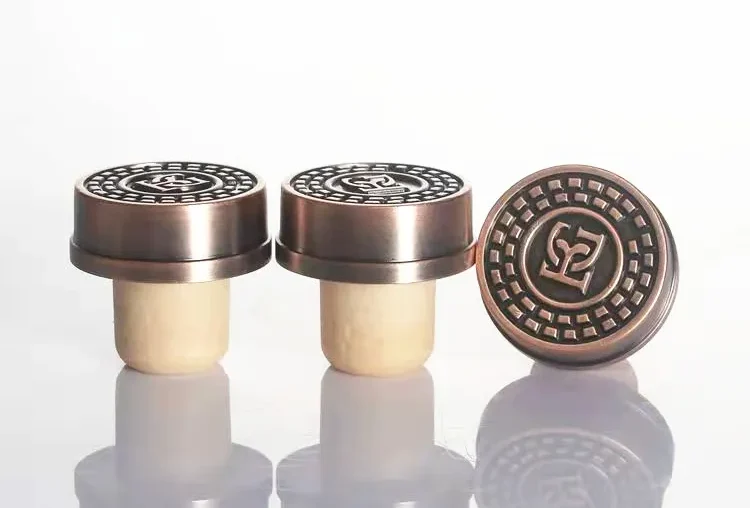
A bottle capsule is a neck-covering component that creates a clean transition between the bottle and closure. It may be made from heat-shrink film, foil-style material, aluminum, PET, PET-G, PVC, or other specialty materials. Capsules are often used when a spirits brand wants a premium finished appearance around a cork, bar-top stopper, screw cap, or ROPP closure.
A shrink sleeve is a heat-shrinkable film that conforms to the neck or closure area after heat is applied. It can carry color, graphics, logo decoration, authentication marks, or simple tamper-evident coverage. A shrink sleeve may cover only the cap and neck, or extend farther down depending on the bottle design.
A shrink band is a narrower heat-shrink component placed over the cap-container junction. Its main purpose is to show visible evidence when the bottle has been opened. Shrink bands are common when a brand wants a simple, cost-effective tamper-evident feature without a full decorative capsule.
Capsule vs Shrink Sleeve vs Shrink Band
| Packaging need | Best option | Why it works |
|---|---|---|
| Premium neck appearance | Capsule | Covers the neck and closure area with a polished decorative finish |
| Simple tamper evidence | Shrink band | Creates visible security over the cap-container junction |
| Printed branding | Shrink sleeve | Supports graphics, color coverage, QR codes, and product storytelling |
| Luxury spirits presentation | Foil or aluminum capsule | Adds metallic finish, tactile value, and gift-ready appeal |
| Craft spirits and small batches | Heat shrink capsule or band | Easier to apply in smaller production runs |
| High-speed bottling | Machine-applied shrink sleeve | Supports repeatable placement and consistent shrink performance |
| Export or duty-free packaging | Tamper-evident sleeve or band | Helps communicate product security and professional finish |
A useful rule is to start with the brand objective. If the goal is premium presentation, choose a capsule. If the goal is visible opening evidence, choose a shrink band. If the goal is both decoration and functional coverage, choose a shrink sleeve.
Why Spirits Brands Use Capsules and Shrink Sleeves
Tamper-Evident Protection
Tamper evidence is one of the main reasons brands use neck sleeves, capsules, and bands. A properly specified shrink band or sleeve should break, tear, or show visible damage when the bottle is opened. This helps consumers see whether the package has been disturbed.
For U.S. distilled spirits containers, the Alcohol and Tobacco Tax and Trade Bureau recognizes the need for tamper-evident closures or similar devices that break when opened and leave part of the device on the container. The U.S. Food and Drug Administration also describes heat shrink bands as wrappers applied around the cap-container junction and shrunk tightly with heat. Although FDA guidance is not written for spirits branding, the definition is useful for understanding why shrink bands are widely recognized as visible security components.
In practice, tamper-evident design should be easy to understand and easy to open. A tear strip hidden inside a complex graphic may frustrate consumers. A band that splits before purchase may make the bottle look damaged. Perforation direction, tab size, film thickness, and sleeve height all affect the opening experience.
Premium Shelf Presentation
Spirits buyers often judge quality before they read the label. Bottle shape, glass clarity, closure weight, label texture, capsule finish, and color harmony all contribute to perceived value.
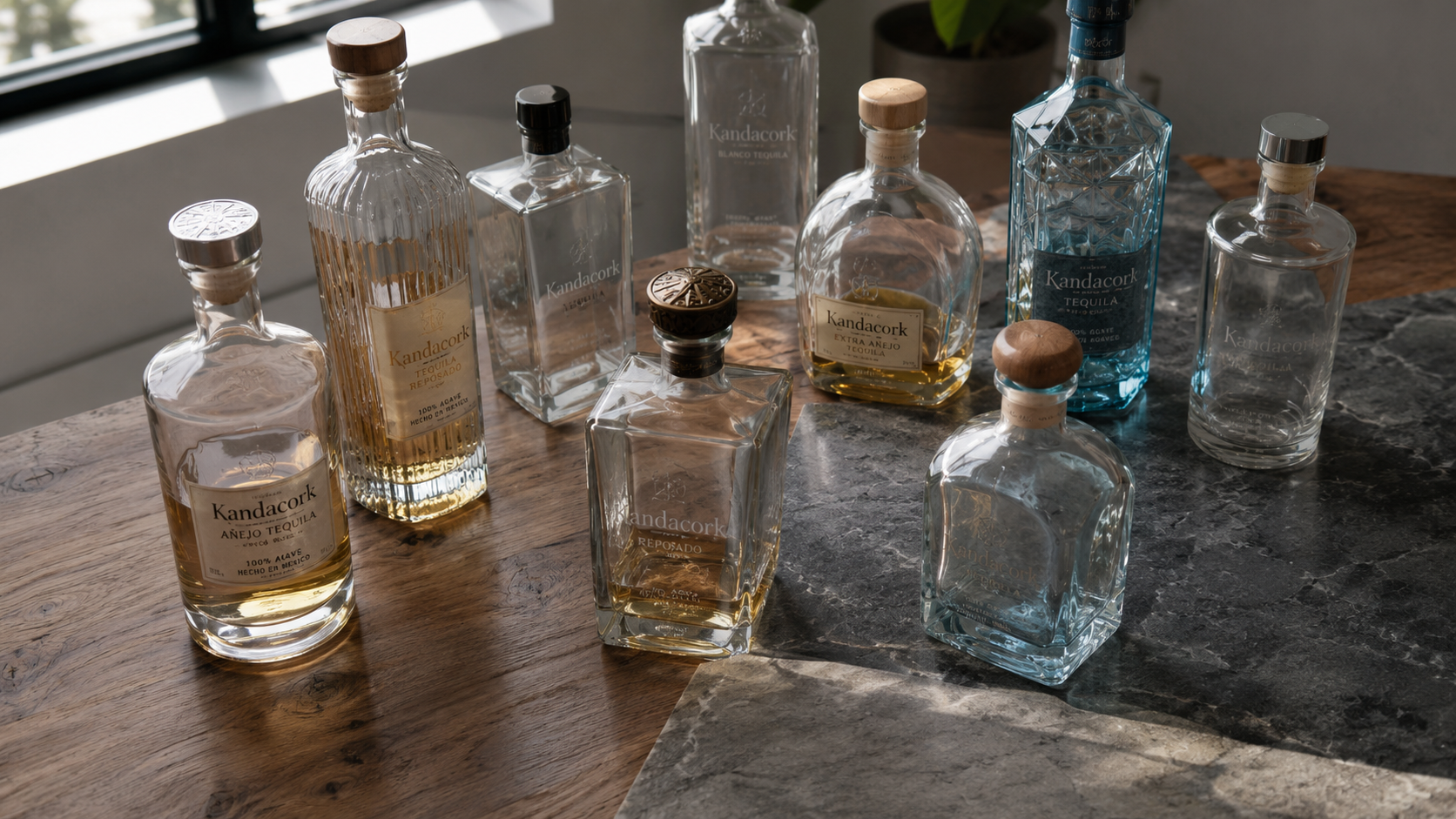
A whisky bottle may use a black matte capsule with gold printing. A vodka bottle may use a clear or frosted shrink sleeve. A gin bottle may use botanical color accents. A rum bottle may use copper, bronze, cream, or deep red tones to suggest warmth and heritage. A tequila or mezcal bottle may need a compact sleeve that fits a short neck without covering label artwork.
The neck finish can also make a standard bottle feel more customized. For private-label spirits and craft distillery launches, this is valuable because the brand can improve shelf appearance without investing immediately in a custom glass mold.
Better Closure Integration
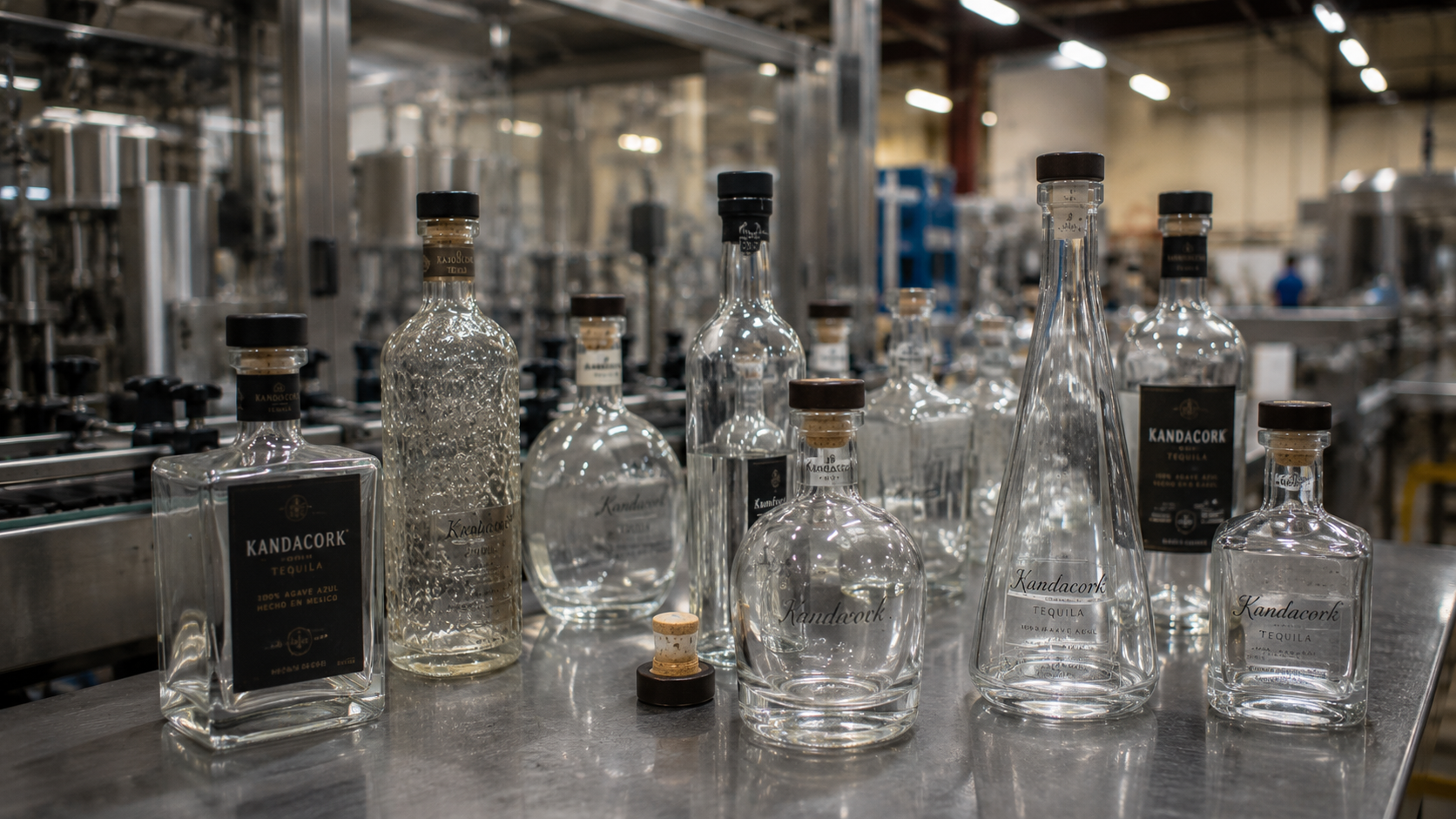
The capsule or sleeve must work with the closure, not only with the glass bottle. Kandacork Closures supports a broad closure and stopper range for spirits brands, so neck finishing can be reviewed together with cork stoppers, bar-top closures, screw caps, ROPP systems, non-refillable closures, and decorative caps.
This matters because each closure has a different shape and opening behavior. A bar-top stopper may need enough clearance around the head. A screw cap may require sleeve placement that does not interfere with turning. A ROPP closure needs careful attention to pilfer-band behavior, torque, and neck finish compatibility. A decorative capsule may need to align with the top disc, label shoulder, and closure sidewall.
Best Option by Buyer Scenario
| Buyer scenario | Recommended solution | Practical reason |
|---|---|---|
| Craft distillery launching a first batch | Heat shrink capsule or shrink band | Flexible, accessible, and suitable for smaller production runs |
| Premium whisky or aged rum brand | Foil, aluminum, or metallic capsule | Creates a luxury neck finish and supports heritage cues |
| High-volume vodka bottling line | Machine-applied shrink sleeve | Supports consistent placement and repeatable shrink performance |
| Export spirits brand | Tamper-evident shrink band with tested perforation | Helps communicate security and professional packaging quality |
| Limited-edition gin release | Printed shrink sleeve | Allows seasonal graphics, color accents, and botanical design |
| Short-neck tequila or mezcal bottle | Compact shrink band or custom capsule | Reduces risk of label overlap and uneven shrinking |
| Private-label spirits project | Custom color capsule or printed sleeve | Creates brand differentiation without changing the bottle mold |
| Gift-ready liqueur or brandy | Metallic capsule with decorative finish | Improves perceived value and premium appearance |
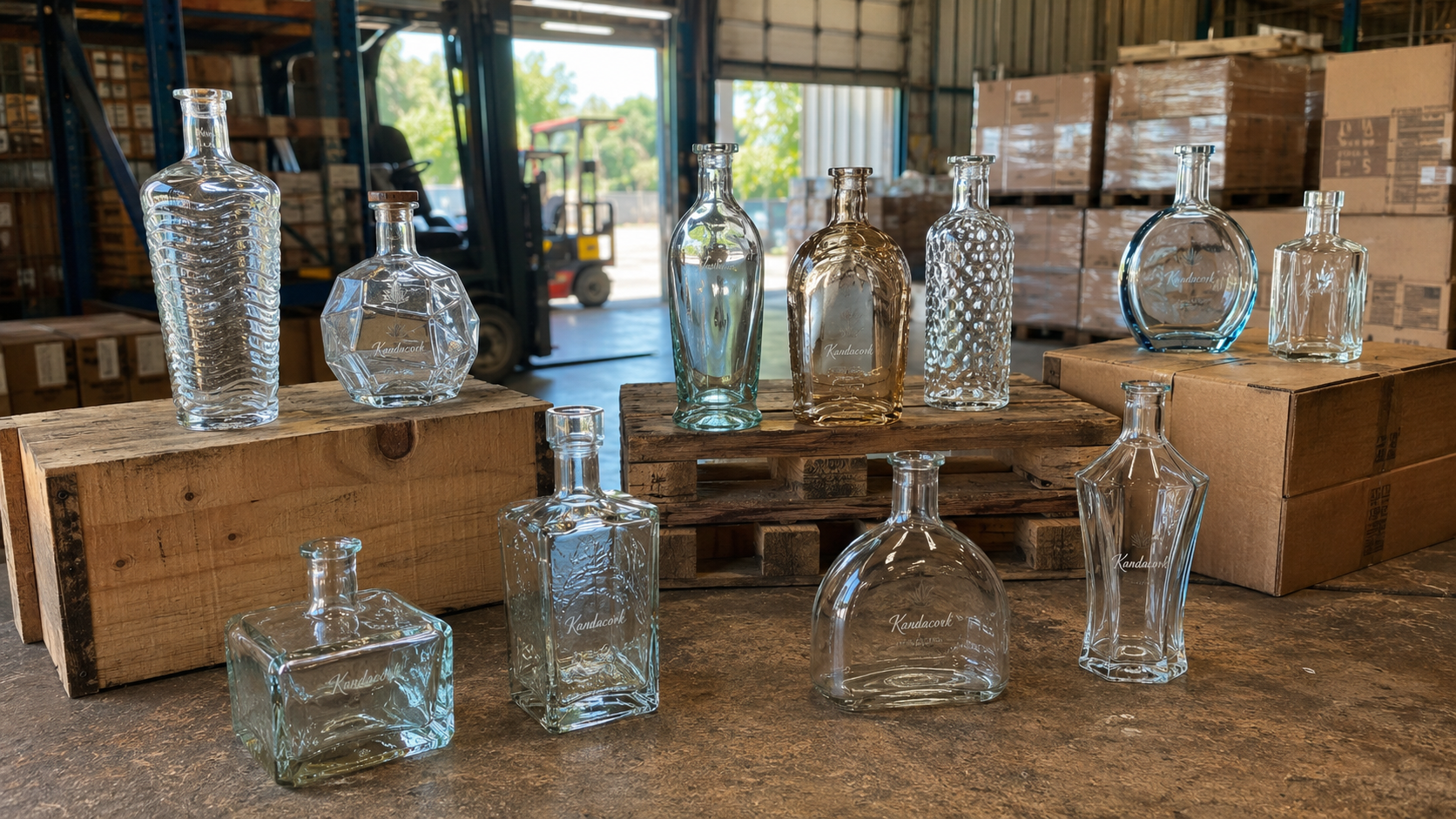
For irregular bottle shapes, sample testing is strongly recommended. Short necks, embossed glass, sloped shoulders, square profiles, and unusual stopper heads can change how a sleeve shrinks, opens, and looks after application.
Materials for Bottle Capsules and Shrink Sleeves
PVC capsules are common because they offer strong shrink performance, good clarity, wide color availability, and efficient application. They can be suitable for standard heat shrink capsules, tamper-evident bands, and decorative neck sleeves. Brands should review PVC in relation to market expectations, retailer requirements, and sustainability goals.
PET and PET-G shrink sleeves are often selected when brands need more advanced print quality, transparent effects, or strong shrink behavior around more complex shapes. PET-G can be useful for irregular profiles, but the final choice should always be tested with the real bottle, closure, and application process.
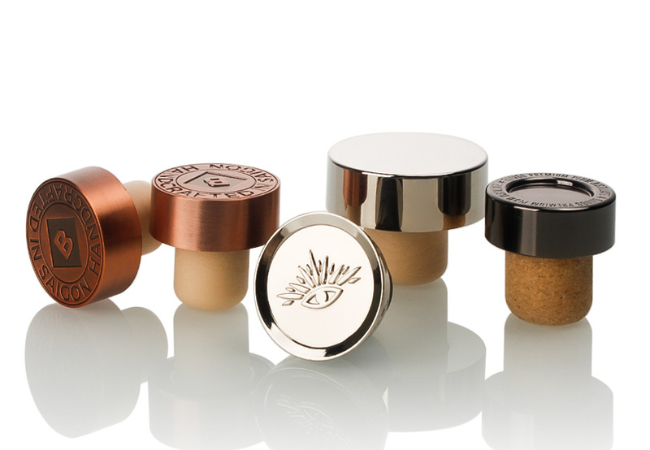
Foil and aluminum capsule options are popular for premium spirits because they support metallic effects, embossing, debossing, top-disc decoration, and a more tactile finish. These options are well suited for whisky, aged rum, brandy, premium gin, gift packaging, and limited-edition releases.
Plant-based, plastic-reduced, or alternative-material options may support sustainability positioning, but buyers should evaluate the full packaging system rather than one component in isolation. Film, ink, adhesive, glass, closure liners, labels, and secondary packaging can all influence environmental claims.
Closure Compatibility and Neck-Fit Details
The best capsule or shrink sleeve starts with accurate measurements. A component that looks right in a drawing may still wrinkle, split, or sit loosely if the bottle neck and closure are not reviewed together.
| Closure type | Recommended neck finish | Key consideration |
|---|---|---|
| Bar-top stopper | Decorative capsule or shrink sleeve | Measure stopper head diameter, shank position, and neck clearance |
| Cork stopper | Capsule or foil-style capsule | Confirm closure height, pull area, and capsule drop length |
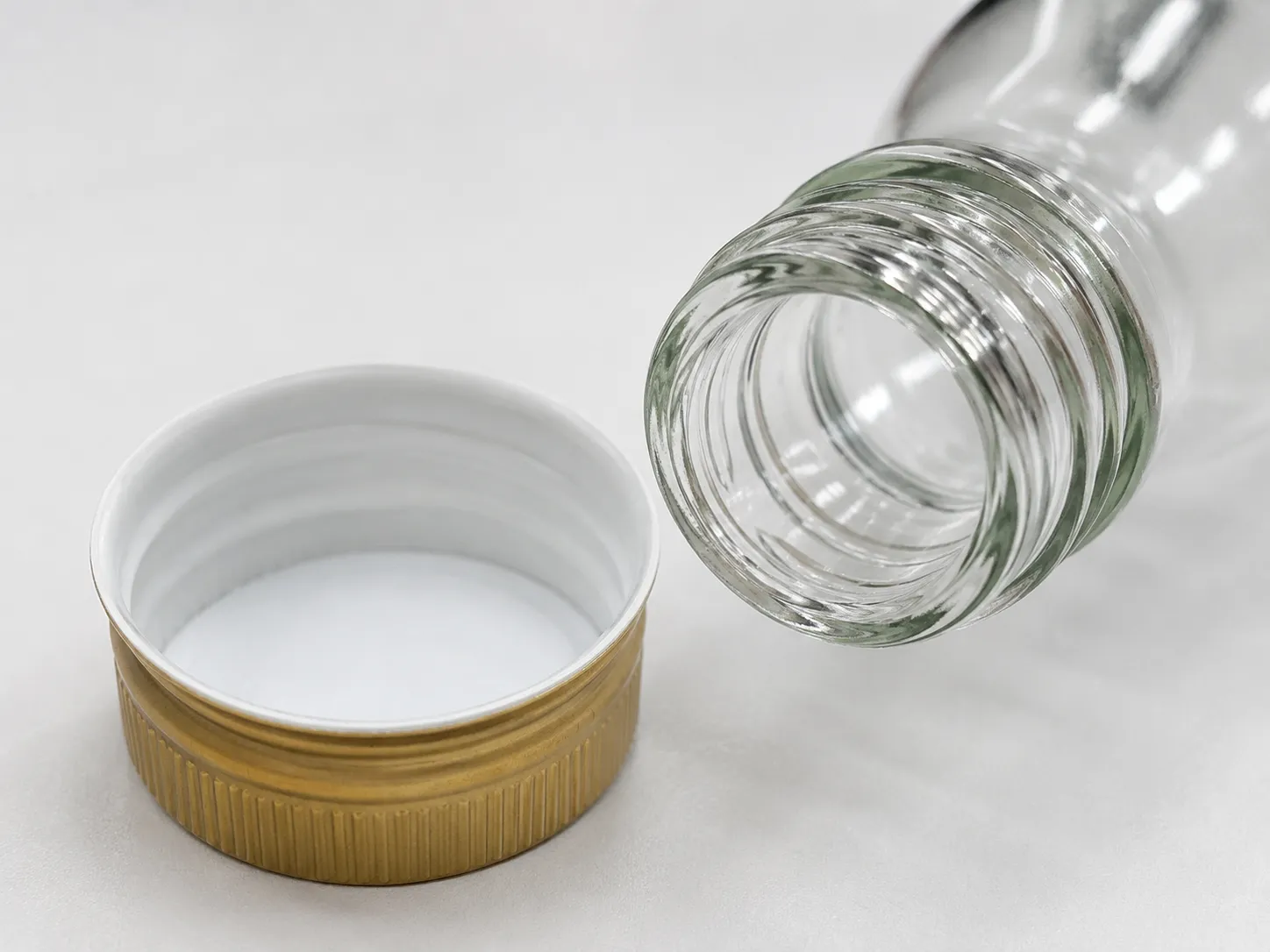
| Screw cap | Shrink band or sleeve | Avoid interference with cap opening and grip |
| ROPP closure | Tamper-evident shrink band or sleeve | Control diameter, pilfer band position, and perforation placement |
| T-top closure | Custom capsule | Check top profile, shoulder transition, and sleeve height |
| Pourer closure | Shrink band or specialty sleeve | Confirm opening access and cap-container coverage |
For brands using ROPP closures for spirits bottles, shrink bands should be reviewed around shell height, pilfer band position, liner compression, and capping equipment. For premium projects using wooden bar-top stoppers, capsule sizing should consider the stopper head diameter, neck height, desired coverage, and opening ritual.
Key Measurements Before Production
Before ordering custom capsules or shrink sleeves for spirits bottles, confirm the technical dimensions of both the bottle and the closure.
Important measurements include closure outside diameter at the widest point, bottle neck diameter, neck finish height, desired capsule or sleeve height, sleeve drop length, shoulder transition, label clearance, top coverage, perforation location, and application method.
The most common fit problems are caused by small specification errors. A sleeve that is too large may wrinkle after shrinking. A sleeve that is too small may split during application. A capsule that is too long may cover a neck label, tax stamp, embossed glass detail, or front-label element. A perforation placed in the wrong position may make the bottle difficult to open.
Opening Experience and Perforation Design
A tamper-evident feature should be obvious, controlled, and comfortable. The consumer should know where to pull, tear, twist, or remove the band.
Common opening features include vertical perforation, horizontal perforation, tear tabs, pull strips, easy-open zippers, full-removal bands, and partial-removal capsules. The right choice depends on the closure type and brand experience. A luxury whisky may benefit from a clean vertical tear strip. A short-neck tequila bottle may need a compact tear tab. A high-volume vodka line may require repeatable perforation placement for machine application.
For projects where the closure sidewall carries branding, grip texture, or print zones, the capsule should be coordinated with sidewall design for spirits closures so graphics, bands, logo areas, and perforations remain visually aligned after shrinking.
Application Method: Manual, Semi-Automatic, or Automated
The same shrink sleeve can perform differently depending on how it is applied. Small distilleries may use a heat gun or hot water dipping for short runs. Larger bottlers may use steam tunnels, dry heat tunnels, shrink tunnels, semi-automatic applicators, or fully automatic production lines.
Manual application gives flexibility but depends heavily on operator consistency. Automated application improves repeatability but requires tighter control of film behavior, cut height, orientation, and line speed. Steam tunnels can produce clean shrink on some shapes, while dry heat may be preferred in other production environments. The best method depends on bottle geometry, film material, production volume, and filling-line setup.
A serious buyer should test the capsule or sleeve under production-equivalent conditions before full approval. Samples should be applied to the actual bottle, with the selected closure, using the intended application method.
Customization Options for Brand Presentation
Custom capsules and shrink sleeves can carry much more than a plain color. They can support matte, gloss, metallic, transparent, frosted, satin, pearl, and opaque finishes. They can also include logos, brand patterns, batch marks, limited-edition artwork, anti-counterfeit details, QR codes, and seasonal graphics.
For brands developing wider bottle decoration and branding systems, the sleeve should be coordinated with label paper, screen printing, frosting, hot stamping, carton design, and closure finish. The goal is not to decorate each component separately. The goal is to make the entire package feel like one brand.
QR codes and digital product experiences can also be considered when the print area and sleeve material allow clean scanning. The GS1 Digital Link standard is useful for brands that want packaging to connect consumers, retailers, and supply-chain partners to product information through a web-enabled code.
Applications by Spirit Category
Whisky and bourbon brands often use black, copper, bronze, gold, dark brown, or textured capsules. These finishes support aged-spirit cues, oak associations, and premium gifting.
Vodka brands often prefer clean and modern packaging. Clear shrink sleeves, white capsules, silver accents, and frosted effects can support a minimalist premium look.
Gin packaging often uses botanical colors, transparent glass, floral patterns, or fresh color systems. A custom neck sleeve can connect the capsule area to the label design and flavor profile.
Rum bottles often use warm tones, vintage design, textured labels, and heritage-inspired details. Copper, cream, black, red, and aged-gold capsules work well for premium rum packaging.
Tequila and mezcal bottles may use cork stoppers, short necks, ceramic-style bottles, or artisanal label systems. Because bottle shapes can vary widely, fit testing is especially important.
Liqueur and brandy bottles often benefit from decorative capsules, metallic finishes, and gift-ready neck decoration. The neck finish can help communicate sweetness, richness, tradition, or luxury.
Common Problems and How to Avoid Them
| Problem | Likely cause | Practical solution |
|---|---|---|
| Wrinkling after shrinking | Oversized sleeve, uneven heat, or unsuitable shrink ratio | Recheck diameter, test application method, and adjust material |
| Loose fit | Sleeve diameter too large or heat not sufficient | Confirm closure diameter and shrink performance |
| Splitting during application | Sleeve too small or material not suitable | Increase diameter or choose a different shrink film |
| Difficult opening | Poor tear-tab or perforation placement | Adjust tear strip direction and test consumer opening |
| Label interference | Sleeve drop length too long | Reduce sleeve height or confirm label clearance |
| Uneven appearance | Irregular bottle shoulder or neck profile | Test with actual bottle samples before production |
| Poor brand alignment | Finish does not match label or closure | Use color matching, print proofing, and sample approval |
The most reliable way to avoid these problems is to test the sleeve or capsule with the actual bottle, closure, filling condition, and application method. A small fit trial can prevent larger production issues later.
Sustainability and Design-for-Recycling Considerations
Sustainability decisions should consider the full packaging system. A spirits bottle may include glass, plastic film, ink, adhesive, cork, aluminum, paper labels, liners, capsules, cartons, and shipping materials. Each material choice can affect sorting, recycling, performance, and consumer perception.
The Association of Plastic Recyclers Design Guide and RecyClass design-for-recycling guidance are useful references when evaluating sleeve materials, decoration choices, and recyclability considerations. Their guidance reinforces a practical point: packaging should be designed for real collection, sorting, and recycling systems, not only for shelf appearance.
For brands coordinating glass, closures, labels, and export packaging, working with Kandacork Glass and Kandacork Glass Packaging can help align bottle structure, decoration-ready surfaces, closure fit, and sustainability goals across the wider packaging program.
Practical sustainability steps include avoiding unnecessary material thickness, selecting materials based on target-market guidance, considering ink coverage and separation behavior, avoiding misleading claims, designing for easy removal when appropriate, and balancing recyclability with product security and production performance.
What Buyers Should Prepare Before Requesting a Quote
A clear quote request helps Kandacork Closures recommend the right capsule, shrink sleeve, or tamper-evident shrink band faster. Buyers should prepare the bottle drawing or physical sample, closure type, closure outside diameter, bottle neck diameter, desired capsule or sleeve height, coverage area, material preference, finish preference, color reference, artwork file, perforation requirement, application method, filling-line speed, target market, estimated order quantity, and launch timeline.
If the bottle and closure are already selected, the review can focus on fit, shrink behavior, decoration, sampling, and production specifications. If the project is still early, the team can help compare options and reduce the risk of choosing a sleeve style that does not match the bottle geometry or filling process.
For custom capsule development, send your artwork and bottle dimensions through the Kandacork Closures quote channel to confirm print options, fit requirements, and the most suitable neck-finishing solution.
Why Work With Kandacork Closures?
Kandacork Closures supports spirits brands, distilleries, packaging buyers, importers, and bottling partners with custom bottle capsules, shrink sleeves, shrink bands, and premium closure-finishing solutions.
The goal is not only to supply a component. The goal is to help create a finished spirits bottle that looks professional, opens correctly, protects the product, and supports brand value. This requires attention to bottle neck dimensions, closure compatibility, material selection, application method, visual branding, tamper evidence, and production approval.
For export spirits packaging, Kandacork Closures can help align tamper-evident sleeve design with target-market expectations, bottle format, closure type, and production requirements. For premium spirits packaging, capsules and shrink sleeves should not be treated as minor accessories. They are visible, functional, and closely connected to consumer trust.
FAQ
What are capsules and shrink sleeves for spirits bottles used for?
Capsules and shrink sleeves for spirits bottles are used to finish the bottle neck, improve shelf appearance, support tamper evidence, and create a more premium package. They can cover the closure area, match brand colors, carry printed decoration, and help the bottle look complete.
Are shrink sleeves tamper-evident?
Shrink sleeves can be tamper-evident when they are designed to break, tear, or show visible damage when the bottle is opened. Common features include perforations, tear tabs, pull strips, and bands that cover the cap-container junction.
What is the difference between a capsule and a shrink band?
A capsule usually provides broader decorative neck coverage, while a shrink band is a narrower security feature applied around the cap or closure. Capsules are often chosen for premium presentation. Shrink bands are often chosen for simple visible tamper evidence.
Can capsules be used with bar-top stoppers?
Yes. Capsules can be designed for bar-top stoppers, but the fit must account for stopper head diameter, neck diameter, closure height, and desired coverage. Sampling is recommended before production, especially for premium spirits bottles.
Can shrink sleeves be used on screw-cap or ROPP spirits bottles?
Yes. Shrink sleeves and shrink bands can be used with screw caps and ROPP closures when the diameter, height, shrink ratio, and perforation design are correct. The sleeve should fit securely without interfering with opening or label visibility.
What causes shrink sleeve wrinkles?
Wrinkles are usually caused by wrong sizing, uneven heat, unsuitable material, excessive sleeve height, or irregular bottle shape. Testing with the actual bottle, closure, and application method is the best way to prevent defects.
What information is needed for a custom quote?
A custom quote usually requires bottle drawings or samples, closure type, neck dimensions, capsule or sleeve height, material preference, finish, artwork, order quantity, application method, and target market. More complete information leads to better recommendations.
Do capsules and shrink sleeves work on irregular bottle shapes?
Yes, but irregular necks, sloped shoulders, embossed glass, square profiles, and short bottle shapes require sample testing. Testing helps confirm shrink behavior, fit, appearance, perforation placement, and opening performance before full production.
What is the best material for spirits bottle shrink sleeves?
The best material depends on bottle shape, decoration needs, application method, target market, and sustainability goals. PVC, PET, PET-G, foil, aluminum, and plastic-reduced options each offer different advantages for shrink performance, appearance, cost, and packaging strategy.
Conclusion
Capsules and shrink sleeves for spirits bottles help brands solve practical and visual packaging challenges. They improve tamper evidence, elevate shelf presentation, support brand consistency, and make a standard bottle feel more customized.
The best solution depends on the bottle shape, closure type, neck dimensions, opening experience, application method, target market, and brand identity. A strong neck finish should look premium, fit accurately, open clearly, and perform under real production conditions.
For custom capsules, shrink sleeves, tamper-evident shrink bands, and premium neck-finishing solutions, Kandacork Closures can help evaluate your bottle, closure, artwork, and launch requirements.