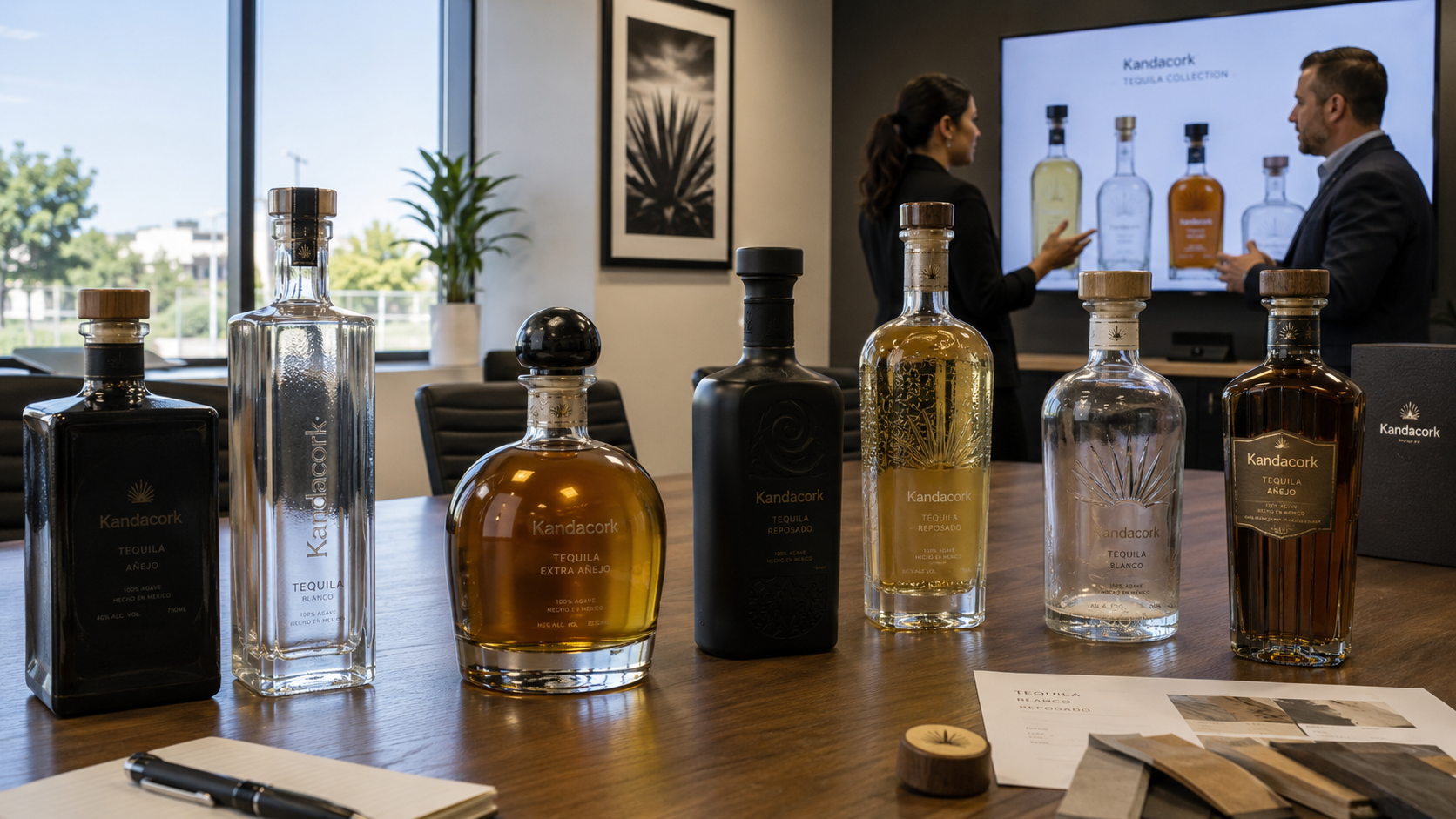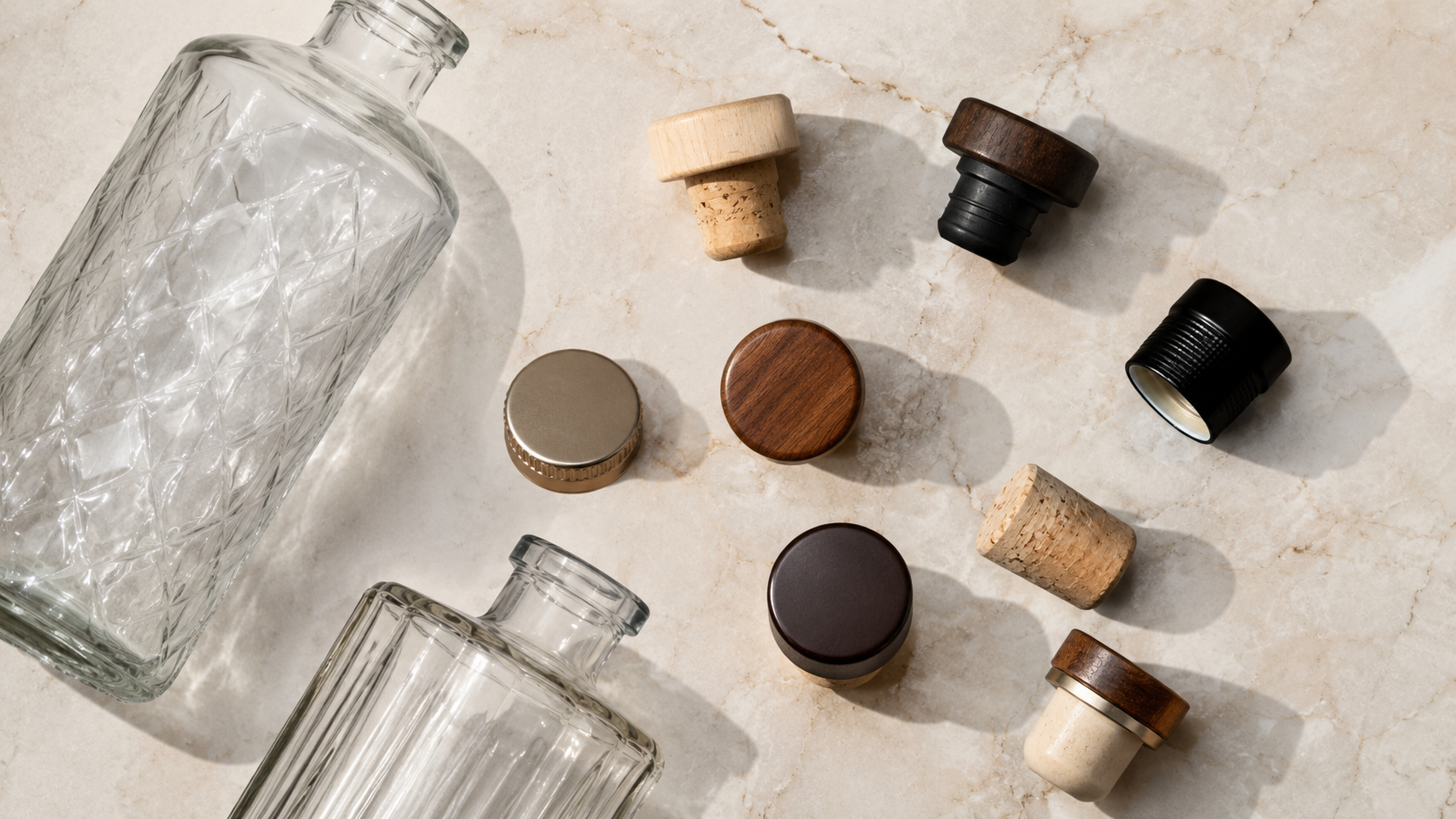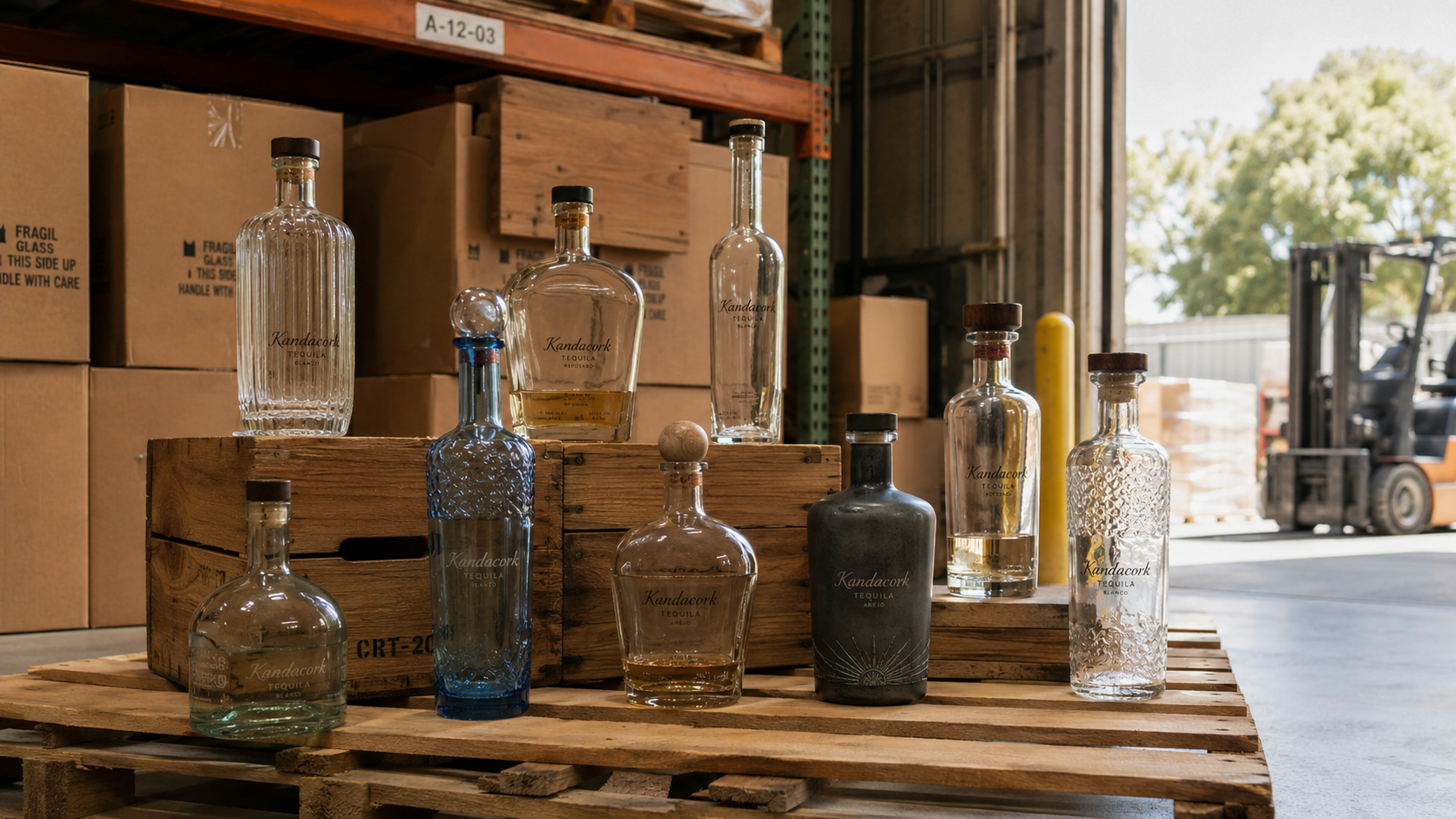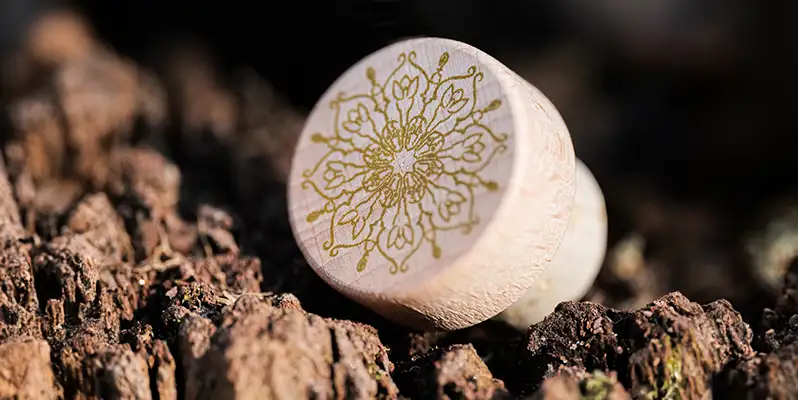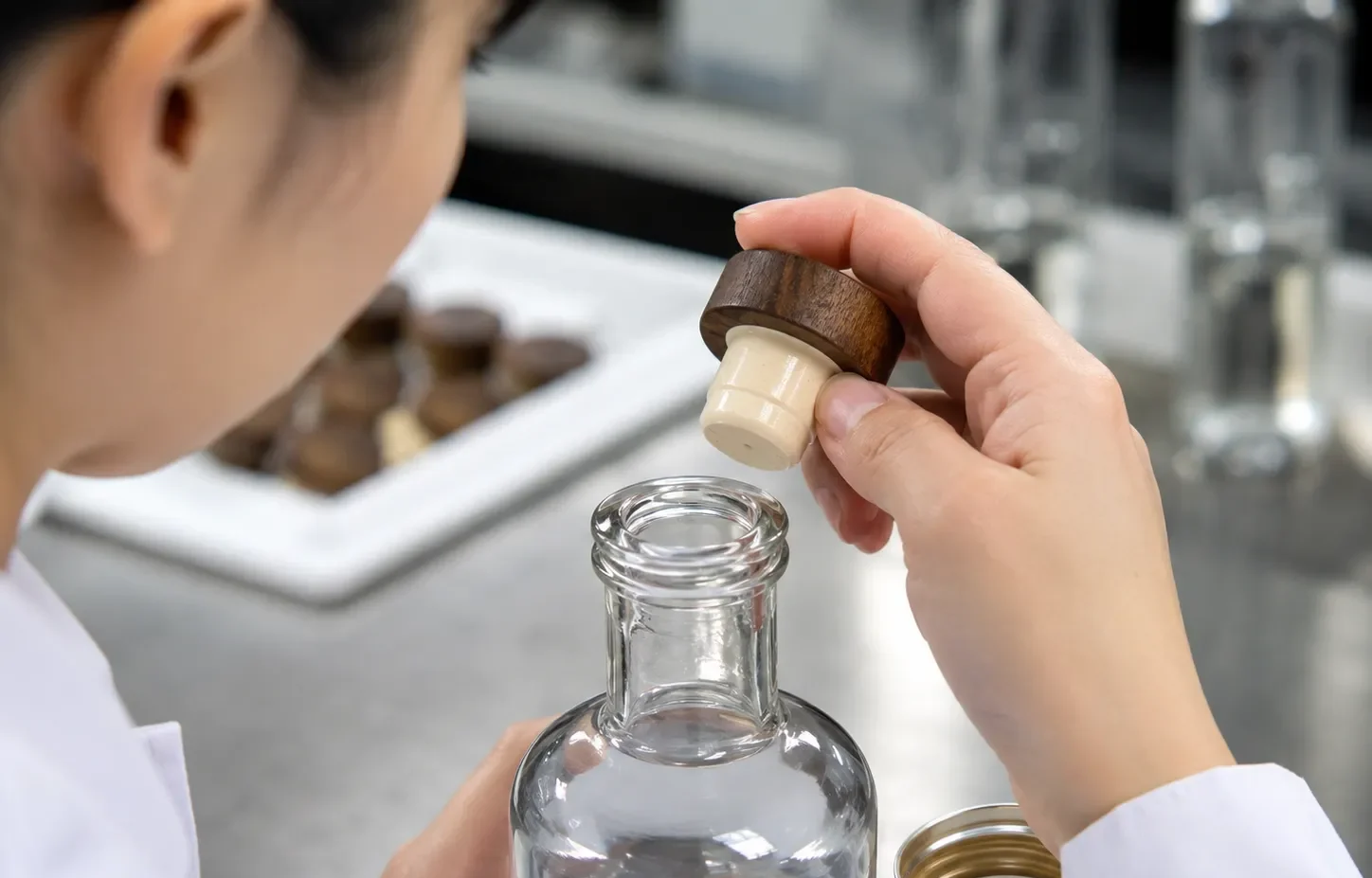
Closure mismatch in spirits packaging can cause leakage, loose stoppers, poor torque, weak tamper evidence, ROPP cap failure, difficult opening, and delayed production. For spirits brands, distilleries, private label buyers, importers, distributors, bottlers, and packaging buyers, the safest approach is to treat the bottle and closure as one tested packaging system.
This procurement-focused guide explains how to check bottle and closure compatibility, compare common spirits closure options, prepare sample requests, and reduce technical risk before ordering in bulk.
Technical Review Note
This guide is prepared by Kandacork Closures & Stoppers based on closure matching support for spirits packaging projects, including bar-top stopper sizing, ROPP closure fit, screw cap compatibility, non-refillable closure review, sample development, custom decoration, and bulk supply coordination.
Quick Answer: How Do You Avoid Closure Mismatch in Spirits Packaging?
To avoid closure mismatch in spirits packaging, confirm the bottle neck finish, inner bore, closure type, shank or liner material, torque or pull-out force, tamper-evidence requirement, and filling-line setup before bulk production. Always test real bottles with real closures before approving samples, quotations, or mass orders.
Need a compatibility review? Send Kandacork your bottle drawing, neck finish drawing, bore size, product ABV, closure preference, decoration needs, and estimated quantity before requesting samples or quotation.
What Is Closure Mismatch in Spirits Packaging?
Closure mismatch in spirits packaging means the closure does not properly match the bottle, sealing method, product, filling process, or target market requirement. It is not only a design issue. A closure may look correct on a bottle but still fail during filling, storage, export shipping, or consumer use.
Common symptoms include:
- Loose bar-top stoppers
- Hard-to-insert cork or synthetic stoppers
- Liquor bottle leakage
- ROPP cap spinning
- Poor removal torque
- Screw cap thread mismatch
- Weak tamper-band break
- Non-refillable insert failure
- Capsule or shrink sleeve wrinkling
- Poor premium shelf appearance
For distilled spirits sold in the United States, closure choice can also affect compliance because the Alcohol and Tobacco Tax and Trade Bureau states that distilled spirits plants and importers must securely affix a tamper-evident closure or similar device to bottles or containers of distilled spirits.
Who Should Use This Guide?
This guide is written for B2B spirits packaging decisions, especially when a buyer needs to compare closure options, prevent leakage, prepare a sample request, or reduce technical risk before placing a bulk order.
| Buyer Type | Main Concern | Recommended Action |
|---|---|---|
| Spirits brand owner | Premium feel, leakage risk, shelf appearance | Approve both visual and functional samples |
| Distillery | Filling-line compatibility | Test closures with real bottling equipment |
| Private label buyer | Cost, MOQ, fast launch | Use proven bottle and closure combinations |
| Importer or distributor | Transport leakage, tamper evidence | Request export packing and leakage checks |
| Bottler or packaging buyer | Torque, insertion force, repeatability | Run sample and line trials before bulk production |
Why Closure Mismatch Happens
Closure mismatch usually comes from six areas: dimensions, sealing performance, material behavior, filling equipment, decoration, or market requirements.
Dimensional mismatch happens when the closure does not match the bottle’s actual neck opening, thread, bead, cap height, insertion depth, or sealing surface. This often appears as loose stoppers, cross-threaded caps, poor liner contact, or incorrect tamper-band engagement.
Sealing mismatch happens when the closure cannot maintain a reliable seal after filling, storage, handling, or transport. For cork and synthetic stoppers, sealing depends on shank diameter, compression, material recovery, and insertion depth. For ROPP and screw cap systems, sealing depends on liner compression, cap application, torque, and bottle finish accuracy.
Material mismatch happens when the closure material is not suitable for the product, brand positioning, or production method. Natural cork, synthetic cork, aluminum, plastic, wood, glass, and metal components all behave differently. For high-ABV spirits, liner and material compatibility should be reviewed carefully.
Filling-line mismatch happens when a closure works during hand sampling but fails during manual insertion, semi-automatic corking, automatic capping, ROPP rolling, or torque-controlled screw cap application.
Decoration mismatch happens when the closure technically fits but does not support the visual identity of the bottle. A wrong top diameter, cap height, surface finish, color, or logo position can make a premium spirits package look unfinished.
Market requirement mismatch happens when the selected closure does not meet tamper-evidence, anti-refill, controlled-pour, export, or duty-free channel requirements.
Start With the Bottle Neck Finish, Not the Closure Photo
The most important rule in spirits closure matching is simple: start with the bottle, not the closure.
A buyer may like the appearance of a wood-top stopper, aluminum cap, ROPP closure, screw cap, or non-refillable closure, but the closure must first match the bottle’s technical structure. For buyers still comparing cap, liner, and seal decisions, this bottle closure selection checklist can help organize the early review.
Before requesting samples, confirm:
- Bottle drawing
- Neck finish drawing
- Inner bore size for stopper projects
- Filling and capping method
- Target closure family
- Material and decoration requirements
- Tamper-evidence or non-refillable needs
- Estimated order quantity and timeline
Bottle and Closure Compatibility Table
| Closure Type | Bottle Detail to Confirm | Main Mismatch Risk |
|---|---|---|
| Bar-top stopper | Inner bore, insertion depth, neck roundness | Loose fit, hard pull, leakage |
| Natural cork stopper | Bore size, compression, storage condition | Variable pull feel, sealing inconsistency |
| Synthetic stopper | Shank diameter, compression, material recovery | Too tight, too loose, poor resealing |
| ROPP closure | ROPP finish, cap height, liner, rolling setup | Leakage, spinning cap, weak tamper band |
| Screw cap | Thread profile, torque range, liner | Cross-threading, poor seal, removal issues |
| Non-refillable closure | Neck finish, insert fit, pourer structure | Assembly failure, poor pour, refill risk |
| Capsule or shrink sleeve | Neck height, shoulder shape, cap diameter | Wrinkling, poor coverage, weak appearance |
Closure Mismatch Diagnosis Table
The fastest way to solve bottle and closure compatibility problems is to identify the visible symptom, then test the likely technical cause.
| Problem | Likely Cause | What to Test | What to Send Supplier |
|---|---|---|---|
| Loose stopper | Shank too small, bore variation, poor compression | Bore size, pull-out feel, resealing | Bottle sample, bore measurement, current stopper |
| Stopper too hard to insert | Shank too large, wrong material, sharp bore entry | Insertion force, insertion depth | Bottle mouth photo, stopper shank spec |
| Liquor bottle leakage | Poor seal, wrong liner, weak stopper compression | Inverted test, liner contact, torque | Neck finish drawing, bottle sample, closure sample |
| ROPP cap spins | Poor rolling, wrong neck finish, weak thread formation | Removal torque, pilfer band break | ROPP finish drawing, machine information |
| Screw cap cross-threads | Thread mismatch or application error | Thread engagement, torque range | Bottle thread drawing, cap sample |
| Tamper band fails poorly | Band design or application mismatch | Bridge break, band retention | Closure drawing, filling-line information |
| Sleeve wrinkles | Wrong shrink ratio or neck/shoulder mismatch | Heat tunnel test, sleeve coverage | Bottle neck and shoulder photos |
| Closure looks too small | Wrong top diameter or cap height | Visual proportion, shelf appearance | Bottle render, brand reference, top size preference |
Example: Loose Bar-Top Stopper After Shipping
A spirits buyer may approve a bar-top stopper by hand on one bottle sample, but later find that some stoppers loosen after export shipping. The likely cause is bore variation, insufficient shank compression, unsuitable stopper material recovery, or inconsistent insertion depth.
Before reordering, the buyer should measure multiple bottle necks, test pull-out feel, check insertion depth, and send both bottle and closure samples to the supplier for review. This type of issue is easier to solve before bulk ordering than after the product has entered distribution.
How to Prevent Liquor Bottle Leakage
Most liquor bottle leakage problems should be investigated from the closure system first: stopper compression, liner contact, torque, thread engagement, neck finish, and sealing surface.
Before bulk ordering, test the actual bottle and closure combination after filling. Check upright storage, inverted position, temperature change, carton packing, and transport handling. If bottles and closures come from different suppliers, ask both parties to confirm dimensional drawings before sample approval.
For bar-top stoppers, leakage prevention depends on correct bore measurement, shank compression, insertion depth, and resealing performance. For ROPP and screw caps, leakage prevention depends on neck finish accuracy, liner compression, application torque, and capping equipment setup.
How to Match Main Spirits Closure Types
Different spirits closure systems solve different problems. The right option depends on bottle finish, product category, brand position, filling method, target market, and budget. If your team is deciding between cork-style stoppers and cap-style systems, the guide to bottle closures vs bottle stoppers is a useful companion resource.
Bar-Top Stoppers
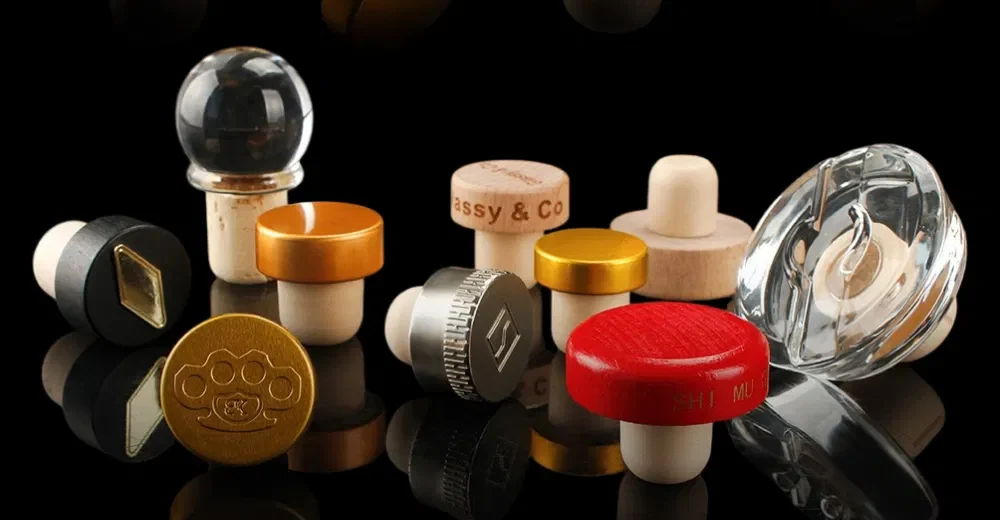
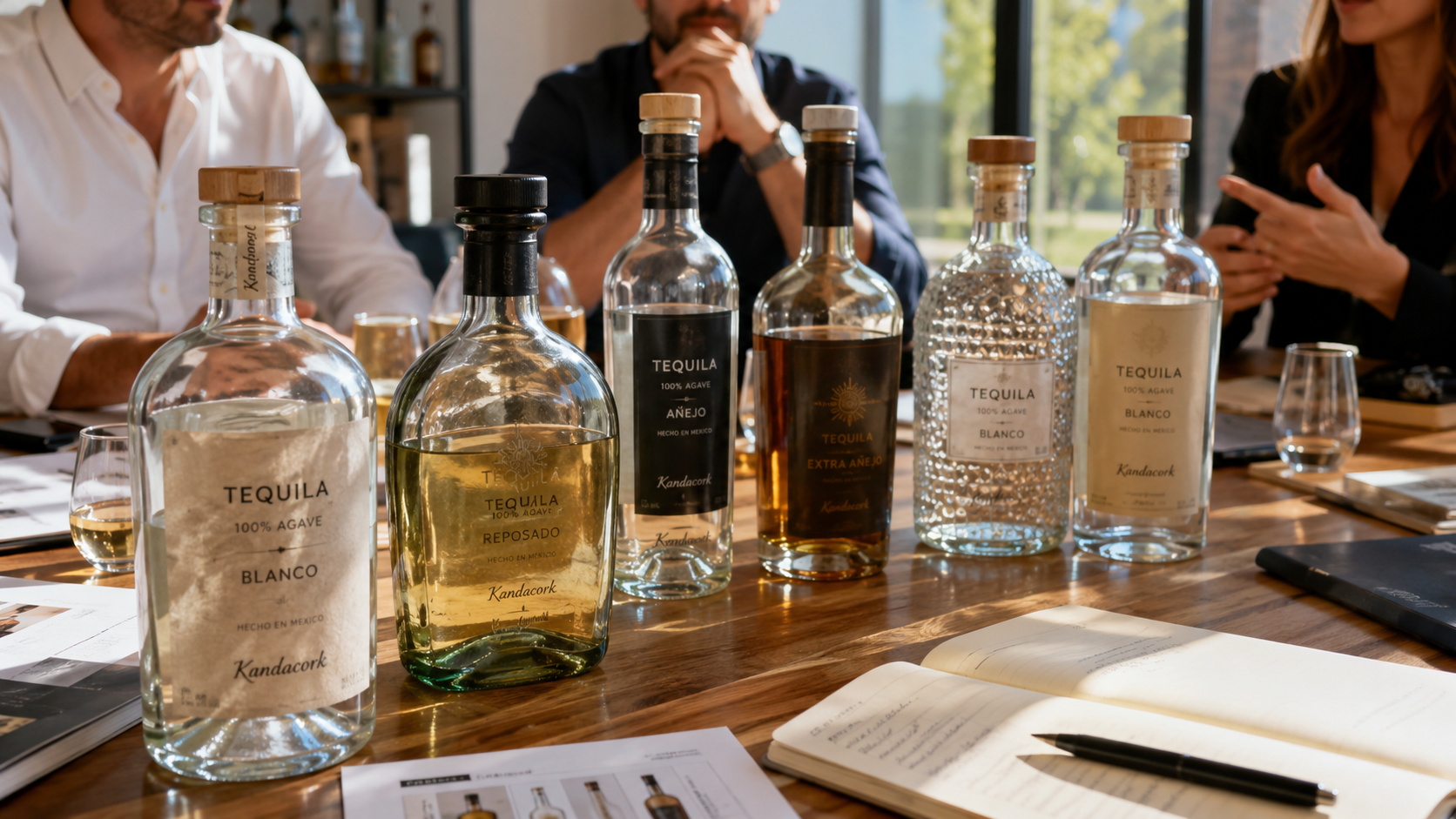
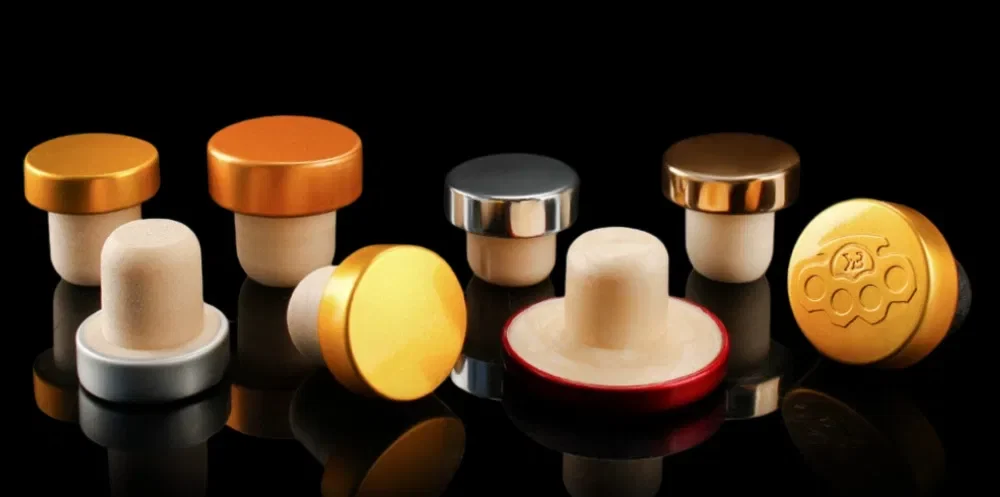
Bar-top stoppers are widely used for whisky, gin, vodka, tequila, rum, brandy, liqueurs, and craft spirits. They usually combine a top component with a natural cork or synthetic shank.
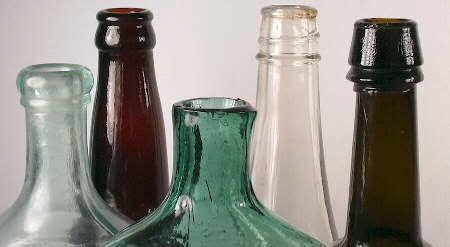
The first technical question is whether the shank matches the bottle bore. The bottle’s inner bore should be measured at the mouth and at different depths inside the neck, because glass bottle necks are not always perfectly straight or perfectly round.
Common spirits bottle openings such as 18.5 mm and 21.5 mm are useful references, but the actual bottle must always be measured. A small bore difference can affect insertion feel, pull-out force, leakage risk, and resealing performance.
Natural cork is often selected for premium spirits because it communicates tradition and craftsmanship. Synthetic cork is often selected when buyers need more consistent dimensions, controlled compression, and repeatable performance across larger production runs.
Pull-out force is also important. If the force is too low, the stopper may feel loose or leak. If it is too high, consumers may struggle to open the bottle. ISO 9727-5 specifies a test method for determining the maximum force necessary to extract a cylindrical cork stopper, which makes it a useful technical reference when discussing stopper performance.
ROPP Closures
ROPP means roll-on pilfer-proof. ROPP closures for spirits bottles are commonly used when brands need tamper evidence, clean appearance, cost efficiency, and reliable production performance.
A ROPP closure is mechanically rolled onto the bottle finish during application. This means the cap, bottle neck, liner, and capping machine must work together. ROPP mismatch usually appears as leakage, cap spinning, poor removal torque, weak pilfer-band break, or uneven skirt formation.
Before ordering ROPP closures, confirm:
- Bottle neck finish drawing
- Closure diameter and height
- Aluminum shell specification
- Liner material
- Pilfer-band design
- Capping machine type
- Roller pressure and setup
- Target removal torque
- Leakage test method
For ROPP closures, approval should include both sample fit and machine setup review. The cap is formed during application, so roller pressure, capping head condition, closure feeding, liner compression, and removal torque should be verified during a line trial.
Do not approve ROPP closures based only on diameter. A 30 mm ROPP closure from one supplier may not perform like another 30 mm closure if the liner, aluminum temper, cap height, skirt design, or application conditions are different.
Screw Caps
Screw caps are often selected for convenience, resealability, cost control, and clean shelf appearance. Screw cap mismatch usually happens when the bottle thread profile and closure thread design are not compatible.
Buyers should confirm bottle finish code, thread design, cap height, liner material, target application torque, removal torque, and tamper-band behavior.
A screw cap should be tested after filling, not only on an empty bottle. Product residue, temperature, capper setup, bottle tolerance, and liner compression can all affect sealing performance.
Non-Refillable Closures
Non-refillable closures are often used for premium spirits, export markets, duty-free channels, anti-counterfeiting strategies, and controlled-pour applications.
A non-refillable closure may include internal inserts, valves, pourers, or multi-component systems. Because of this, mismatch risk is more complex than with a simple stopper.
Buyers should test neck finish compatibility, insert retention, valve function, pouring speed, tamper evidence, reclosure behavior, assembly strength, and transport performance.
For premium spirits, anti-refill and tamper-evident closures support brand integrity. They help reduce the risk of refilling, product substitution, and counterfeit presentation.
Capsules and Shrink Sleeves
Capsules and shrink sleeves are finishing components, but they can still create visible packaging mismatch. A sleeve that wrinkles, bridges, tears, or fails to cover the closure properly can make a premium bottle look poorly engineered.
Before approval, confirm closure height, cap diameter, bottle neck height, bead position, shoulder angle, sleeve material, shrink ratio, heat tunnel setting, and tamper-evident perforation design.
Fit, Seal and Feel: Three Approval Standards
A spirits closure should pass three approval standards before bulk production.
Fit means the closure matches the bottle neck, bore, thread, cap height, insertion depth, and filling-line setup.
Seal means the closure protects the liquid during storage, handling, transport, and consumer resealing.
Feel means the closure supports the brand experience through pull force, opening torque, top weight, material, finish, and visual proportion.
For premium whisky, tequila, rum, gin, brandy, vodka, and liqueurs, the closure should not only prevent leakage. It should feel intentional in the consumer’s hand.
Closure Material Comparison
Closure material affects sealing performance, brand perception, MOQ, unit cost, decoration method, and production stability.
| Material | Best For | Key Check |
|---|---|---|
| Wood top | Premium whisky, rum, tequila, craft spirits | Color tolerance, moisture control, logo finish |
| Aluminum top | Modern premium spirits | Surface finish, weight, embossing or printing accuracy |
| Plastic top | Private label or cost-sensitive projects | Mold quality, color consistency, perceived value |
| Glass or metal top | Luxury packaging | Weight, assembly strength, transport protection |
| Natural cork shank | Traditional premium positioning | Pull-out force, storage condition, bore variation |
| Synthetic shank | Consistent mass production | Compression, resealing, alcohol compatibility |
| ROPP or screw cap liner | Sealing and tamper-evident systems | Alcohol compatibility, odor neutrality, compression |
For high-ABV spirits, buyers should pay special attention to liner performance, alcohol contact suitability, odor neutrality, and long-term sealing stability.
Minimum Specifications to Confirm Before Sampling
Before requesting a closure sample, buyers should prepare a minimum technical specification. This helps the supplier check fit faster and reduces unnecessary sample revisions.
| Area | Specifications to Confirm |
|---|---|
| Bottle | Bottle drawing, neck finish drawing, inner bore size, sealing surface detail, thread or ROPP finish type, physical bottle sample if available |
| Closure | Closure type, cap or stopper diameter, shank or liner material, cap height or insertion depth, tamper-evident requirement, decoration method |
| Production | Filling method, capping or corking equipment, target torque or pull-out feel, target market, product ABV, estimated order quantity |
If any of these details are missing, ask for a closure matching review before requesting a formal quotation. This is especially important when the bottle supplier and closure supplier are different companies.
Sampling Checklist Before Requesting a Quotation
A clear sample request reduces development time and helps the supplier recommend the right closure faster.
Before requesting samples or a quotation from Kandacork Closures & Stoppers, prepare the following information:
| Information | Why It Matters |
|---|---|
| Bottle drawing | Confirms overall neck and finish structure |
| Neck finish drawing | Required for ROPP, screw cap, and non-refillable closure matching |
| Inner bore measurement | Required for bar-top stopper sizing |
| Bottle mouth photos | Helps identify rim, bead, shoulder, and finish details |
| Physical bottle samples | Allows real fit testing |
| Current closure sample | Useful for replacement or improvement projects |
| Product category | Whisky, gin, vodka, tequila, rum, brandy, or liqueur may require different closure styles |
| Alcohol strength | Helps evaluate liner and material compatibility |
| Filling method | Manual, semi-automatic, and automatic lines require different checks |
| Target market | May affect tamper-evident or non-refillable requirements |
| Logo and decoration needs | Affects mold, printing, engraving, embossing, or color process |
| Estimated quantity | Helps recommend suitable MOQ and production method |
| Launch timeline | Helps plan sampling, testing, and bulk production |
For complete bottle-and-closure programs, buyers can also review integrated spirits bottle options through Kandacork Spirits closure systems when the bottle format, closure style, decoration, and filling-line requirements need to be coordinated together.
How to Test Closure Fit Before Bulk Production
Fit testing should include both appearance and function. A closure that looks good but leaks is not acceptable. A closure that seals well but feels cheap may weaken the brand.
1. Visual Fit Test
Check whether the closure proportion matches the bottle. Review top diameter, cap height, color, logo position, shoulder transition, capsule coverage, and shelf impact.
2. Functional Fit Test
Test insertion force, pull-out feel, resealing, removal torque, tamper-band break, liner compression, and pour performance. For bar-top stoppers, test multiple bottles from the same batch to understand bore variation.
3. Leakage Test
Leakage checks may include upright observation, inverted observation, temperature change, carton packing review, and transport simulation. The goal is to identify sealing weakness before the product enters distribution.
4. Filling-Line Trial
A filling-line trial is especially important for ROPP closures, screw caps, non-refillable closures, and automatic stopper insertion projects. The test should confirm capping speed, machine adjustment, torque control, closure feeding, rejection rate, and operator handling.
5. Bulk Approval
Before mass production, confirm the approved sample standard, dimensional tolerance, color tolerance, decoration position, packaging method, inspection criteria, lead time, and reorder process.
How to Evaluate a Spirits Closure Supplier
The best closure supplier does more than sell catalog items. For packaging buyers, the supplier should be able to support technical review, sampling, decoration, testing, and production planning.
Ask these questions before choosing a supplier:
- Can the supplier review bottle and neck finish drawings?
- Can they recommend suitable closure systems instead of only quoting one product?
- Can they compare natural cork, synthetic cork, wood, aluminum, plastic, glass, metal, ROPP, screw cap, and non-refillable options?
- Can they provide samples before bulk ordering?
- Can they discuss shank diameter, liner compression, torque, pull-out feel, leakage risk, and tamper evidence?
- Can they support custom logo decoration?
- Can they manage MOQ, lead time, export packing, and repeat orders?
- Can they help compare appearance, cost, and technical risk across options?
For new spirits bottle development, supplier support at the matching stage can prevent expensive changes later.
When Should You Request Samples from Kandacork?
Request samples when the bottle design, neck finish, target closure type, material direction, decoration method, and estimated order quantity are clear.
For early-stage projects, request a closure matching review first. This helps confirm whether the bottle finish is suitable for the preferred closure before tooling, decoration, sampling, or bulk production begins.
For replacement projects, send the current closure sample, bottle sample, and a short description of the problem, such as:
- Current stopper is loose after shipping.
- ROPP cap spins after opening.
- Screw cap does not seal consistently.
- Sleeve wrinkles near the bottle shoulder.
- Current closure looks too small for the bottle.
Kandacork Closures & Stoppers supports spirits brands, distilleries, private label buyers, importers, distributors, bottlers, and packaging buyers with closure matching, sample development, custom decoration, and bulk closure supply.
Send your bottle drawing, neck finish drawing, mouth photos, inner bore size, closure preference, product category, product ABV, decoration requirements, quantity estimate, and target launch schedule for a professional compatibility review before sampling or quotation.
FAQ
What causes closure mismatch in spirits packaging?
Closure mismatch in spirits packaging is usually caused by incorrect bottle neck finish, wrong bore measurement, poor stopper compression, liner mismatch, wrong torque, incompatible filling equipment, or unclear tamper-evidence requirements.
How do I know which closure fits my spirits bottle?
Start by identifying the bottle neck finish or inner bore size. Bar-top stoppers depend mainly on bore size, shank diameter, and insertion depth. ROPP and screw caps depend on neck finish, cap height, liner, torque, and application setup. Non-refillable closures require insert and pourer compatibility.
What measurements are needed before ordering spirits closures?
The most important measurements are inner bore diameter, neck finish, cap diameter, cap height, insertion depth, bead position, thread profile, and sealing surface. For bar-top stoppers, measure the bore at several depths because the internal neck may vary.
Why do liquor bottles leak after filling?
Liquor bottle leakage is often caused by poor closure fit, weak liner contact, wrong stopper compression, incorrect torque, bottle finish mismatch, product residue, or filling-line setup problems. Testing real bottles and closures before bulk production is the best prevention.
What is the difference between ROPP closures and screw caps?
A ROPP closure is rolled onto the bottle finish during application, forming the thread and tamper band. A screw cap is usually applied to a pre-threaded bottle finish. ROPP closures depend heavily on rolling equipment, liner compression, and bottle neck finish accuracy.
What should I send to Kandacork before requesting samples?
Send the bottle drawing, neck finish drawing, physical bottle samples if available, bottle mouth photos, inner bore size, product type, alcohol strength, closure style, decoration needs, estimated quantity, target market, and launch timeline.