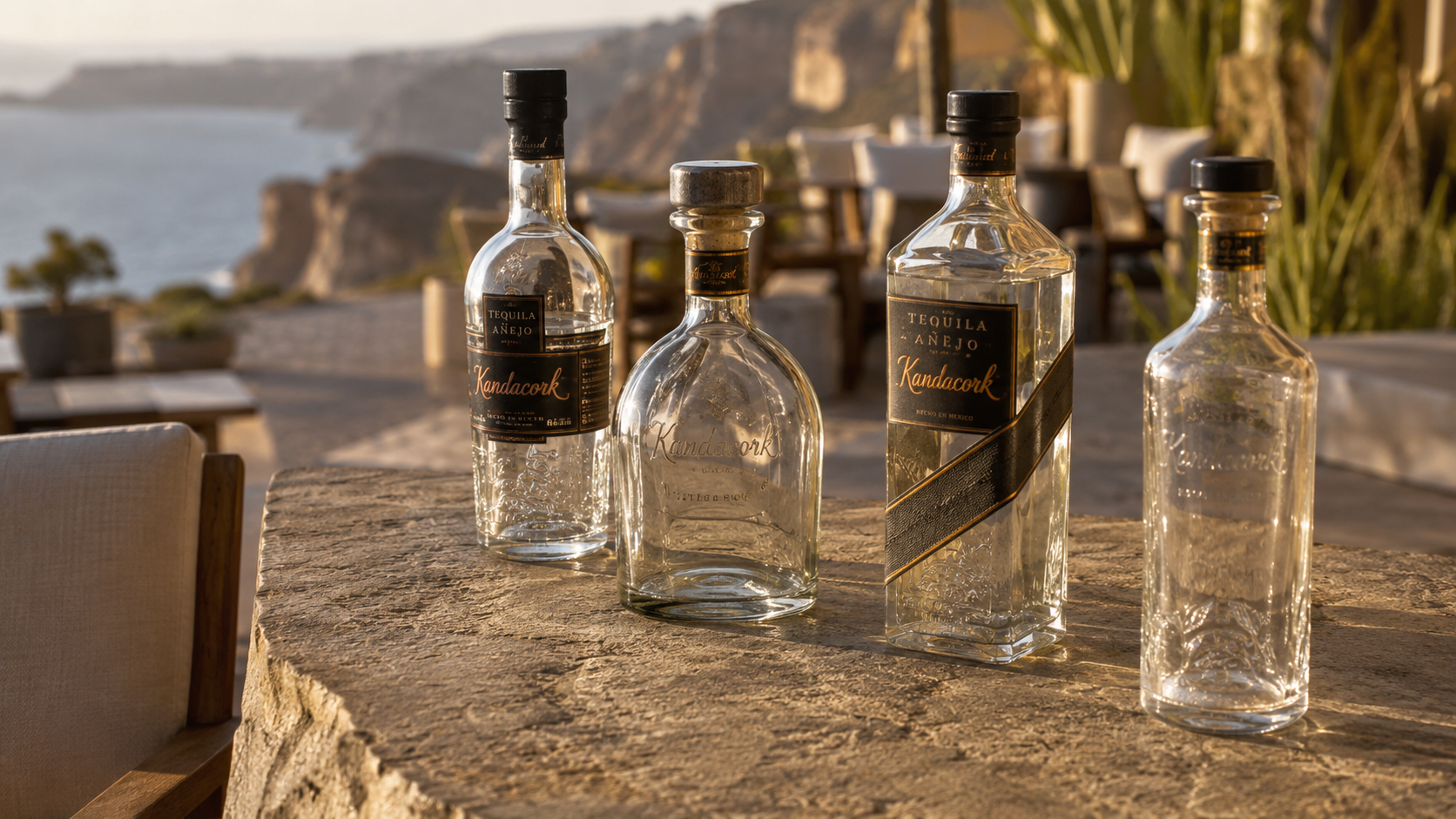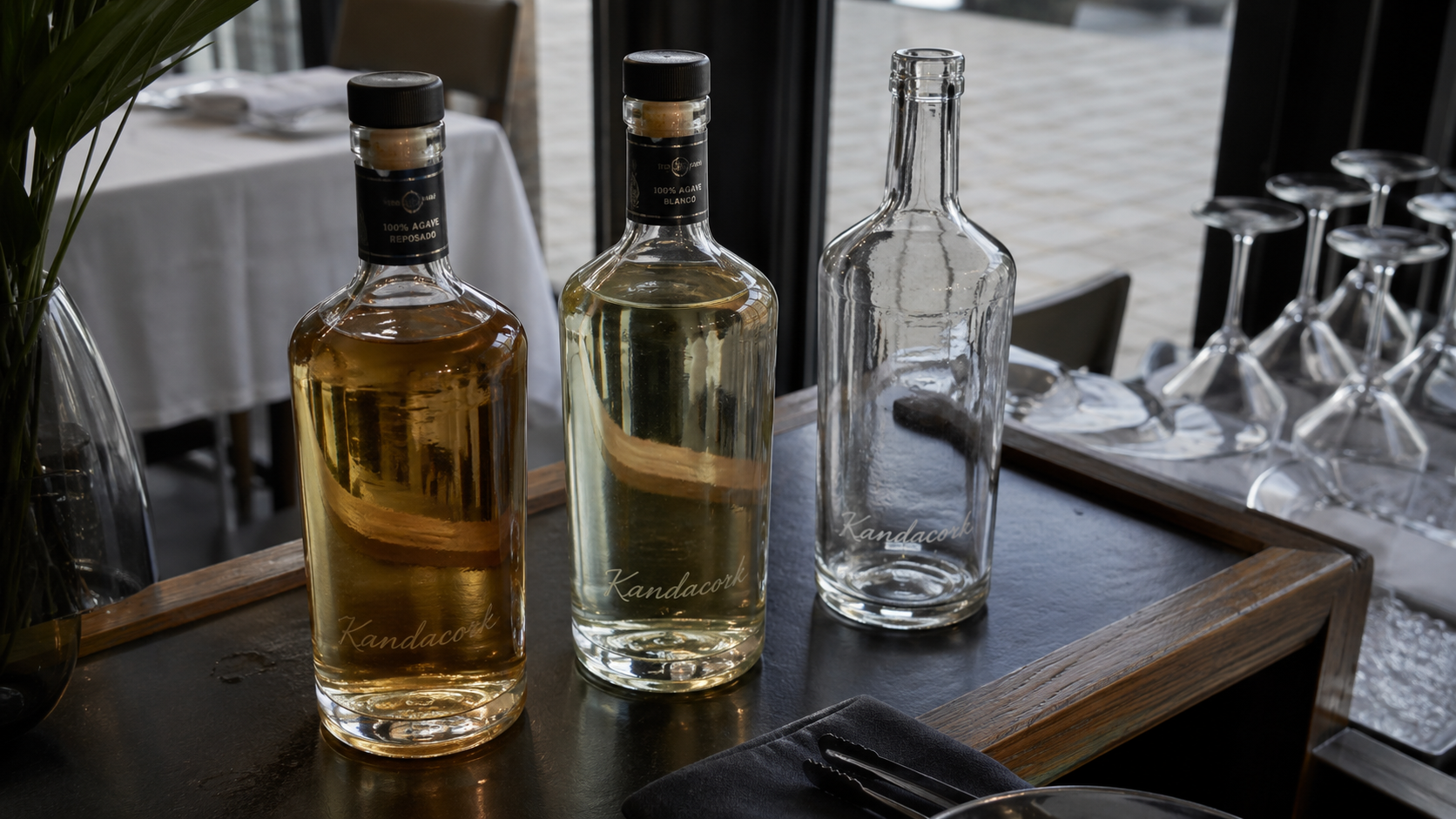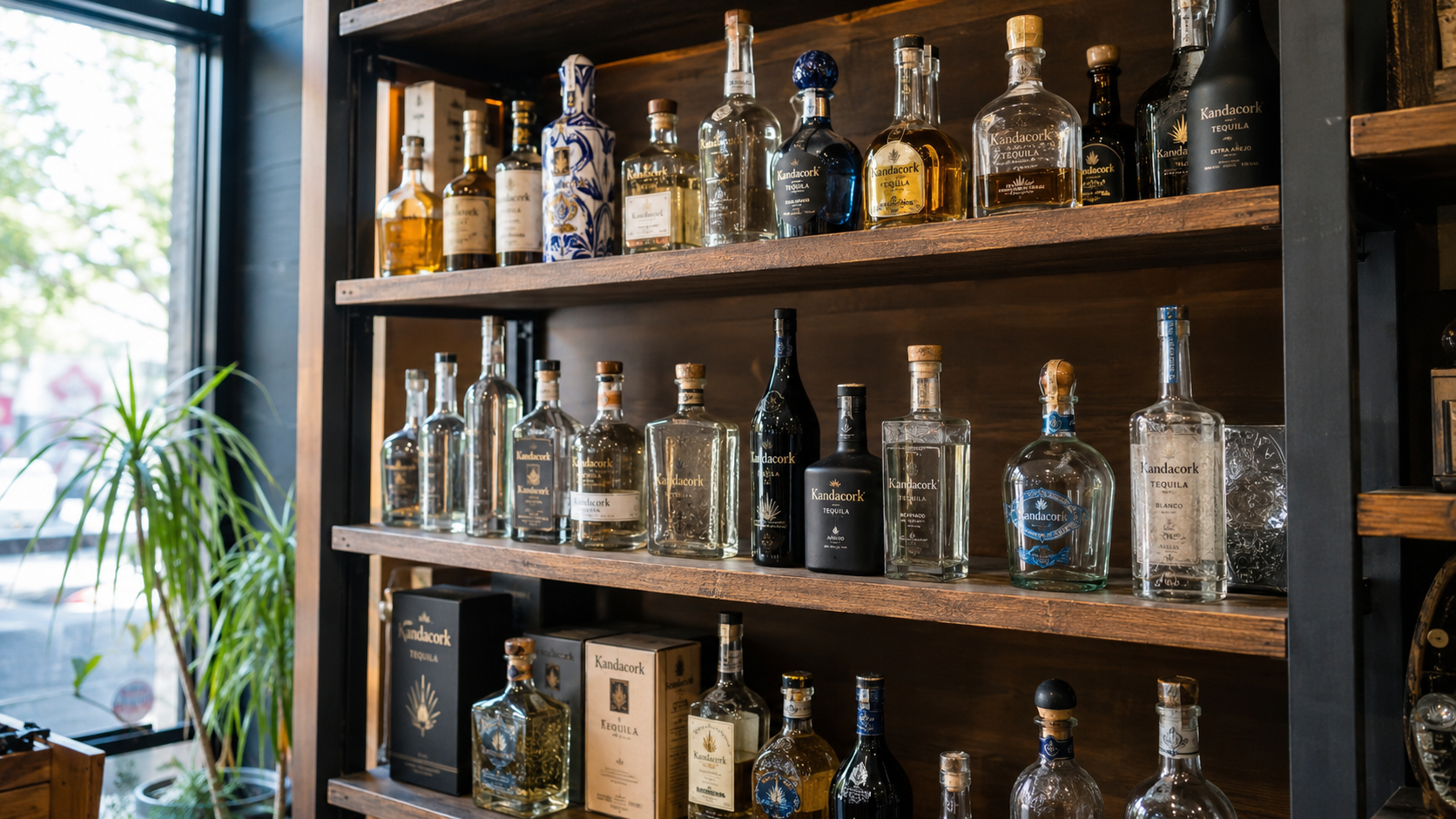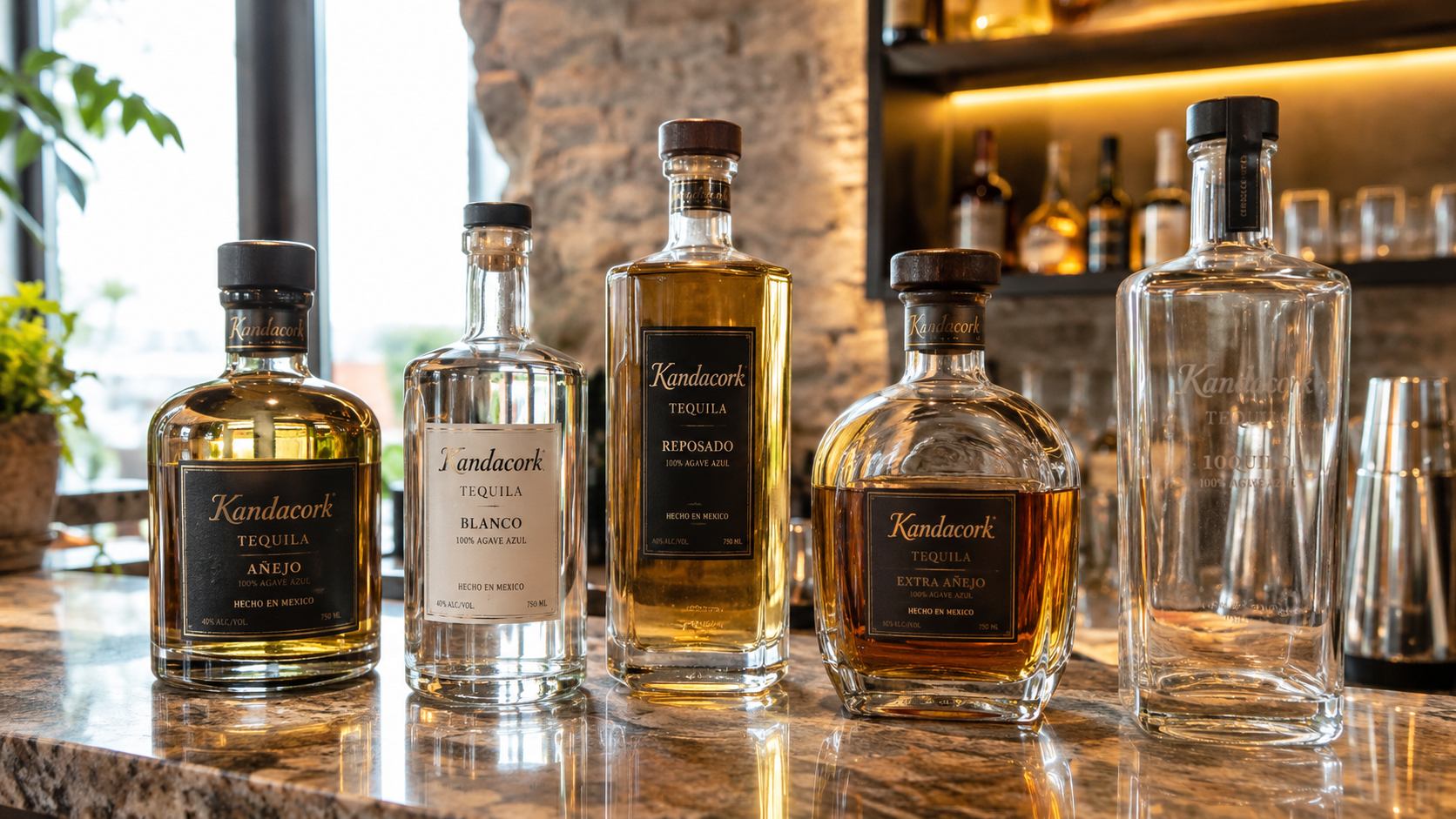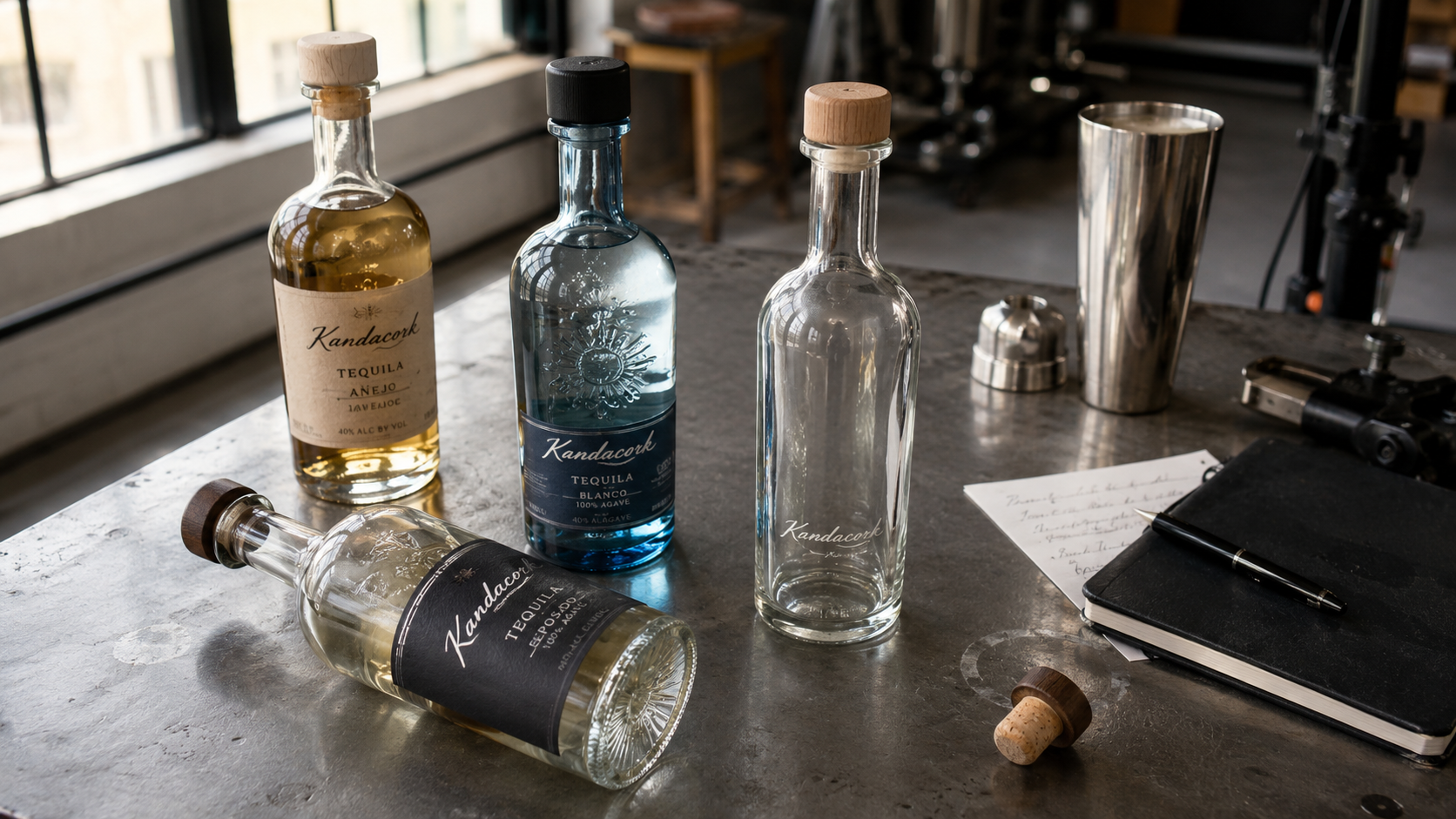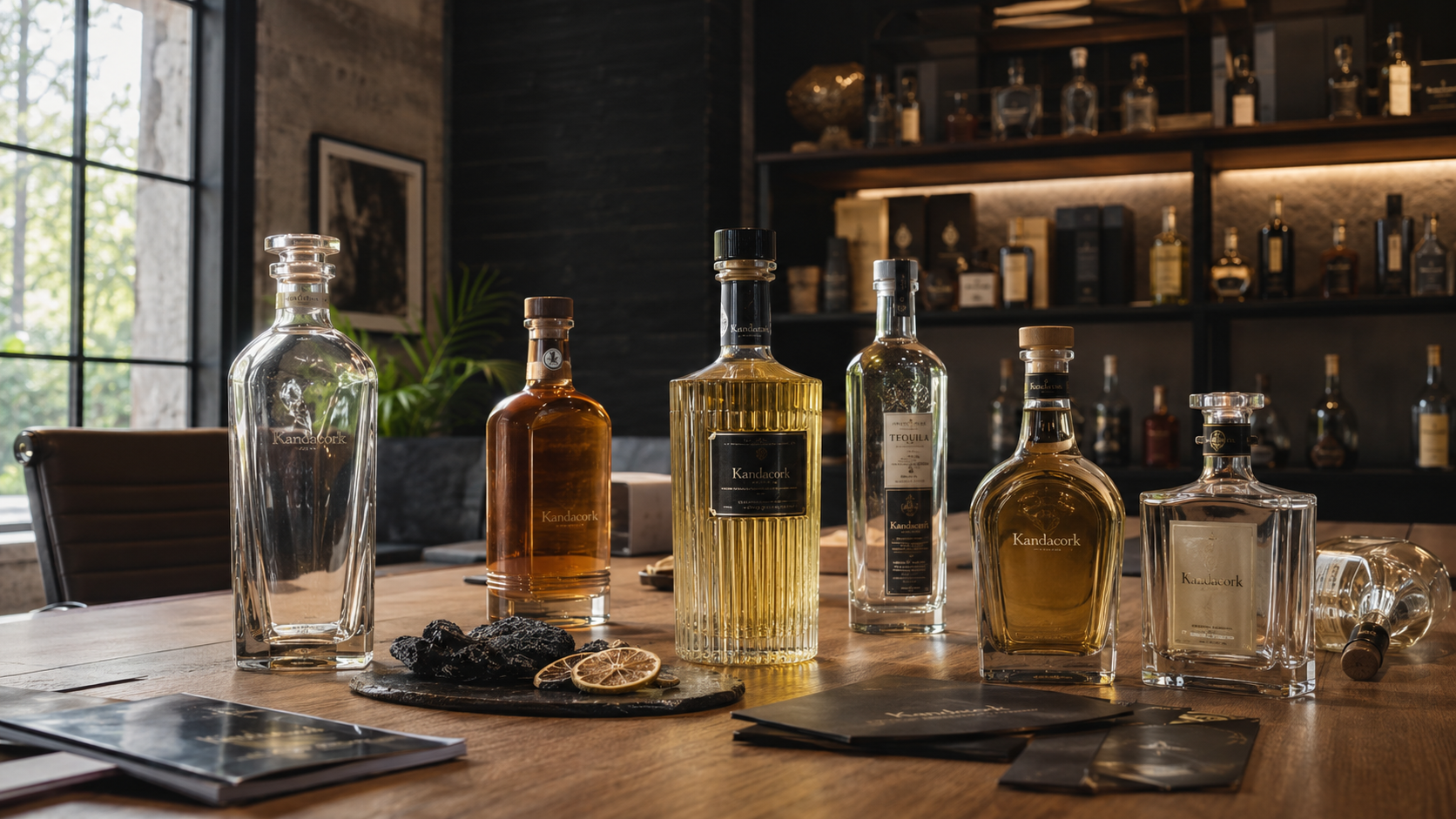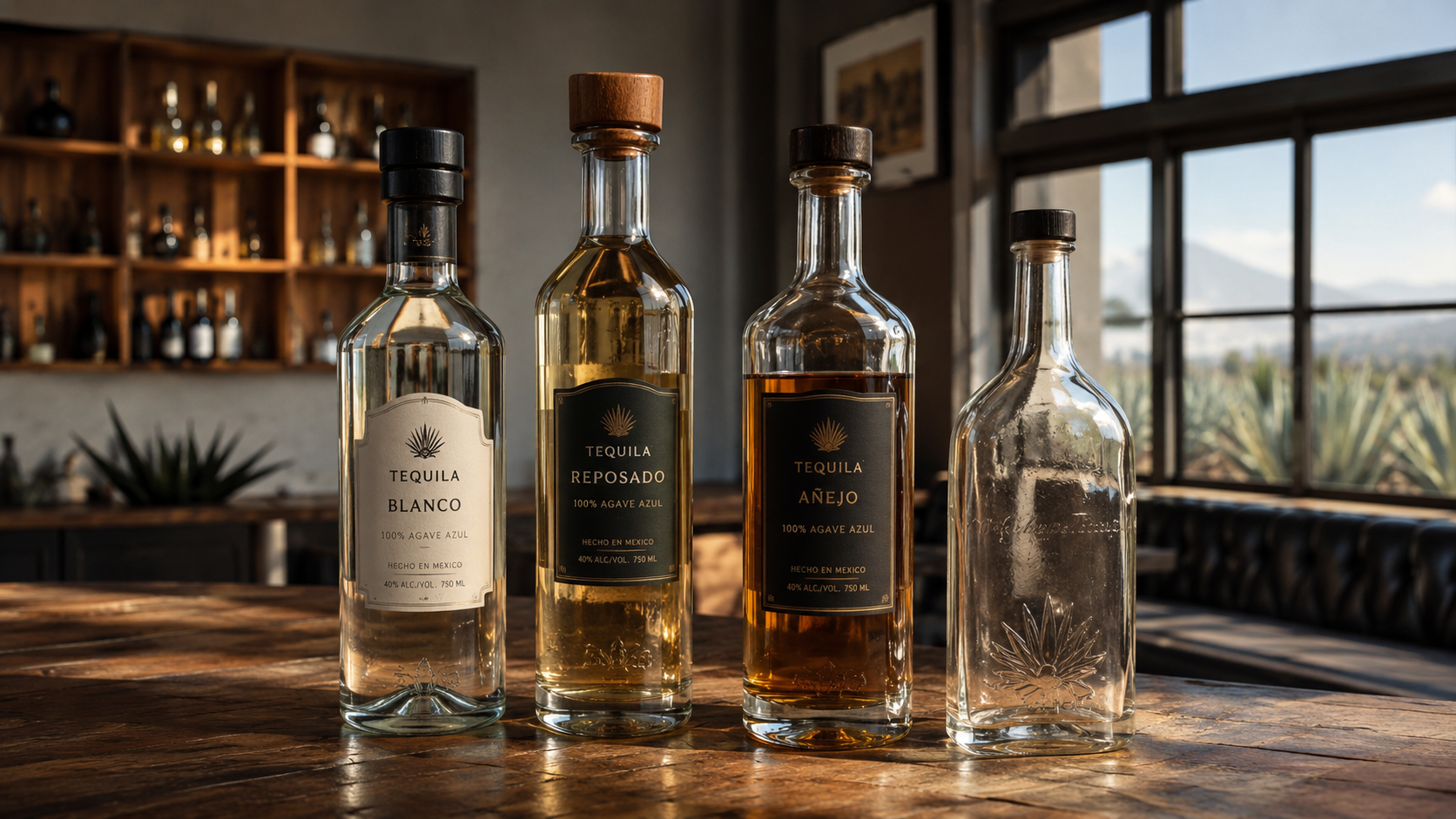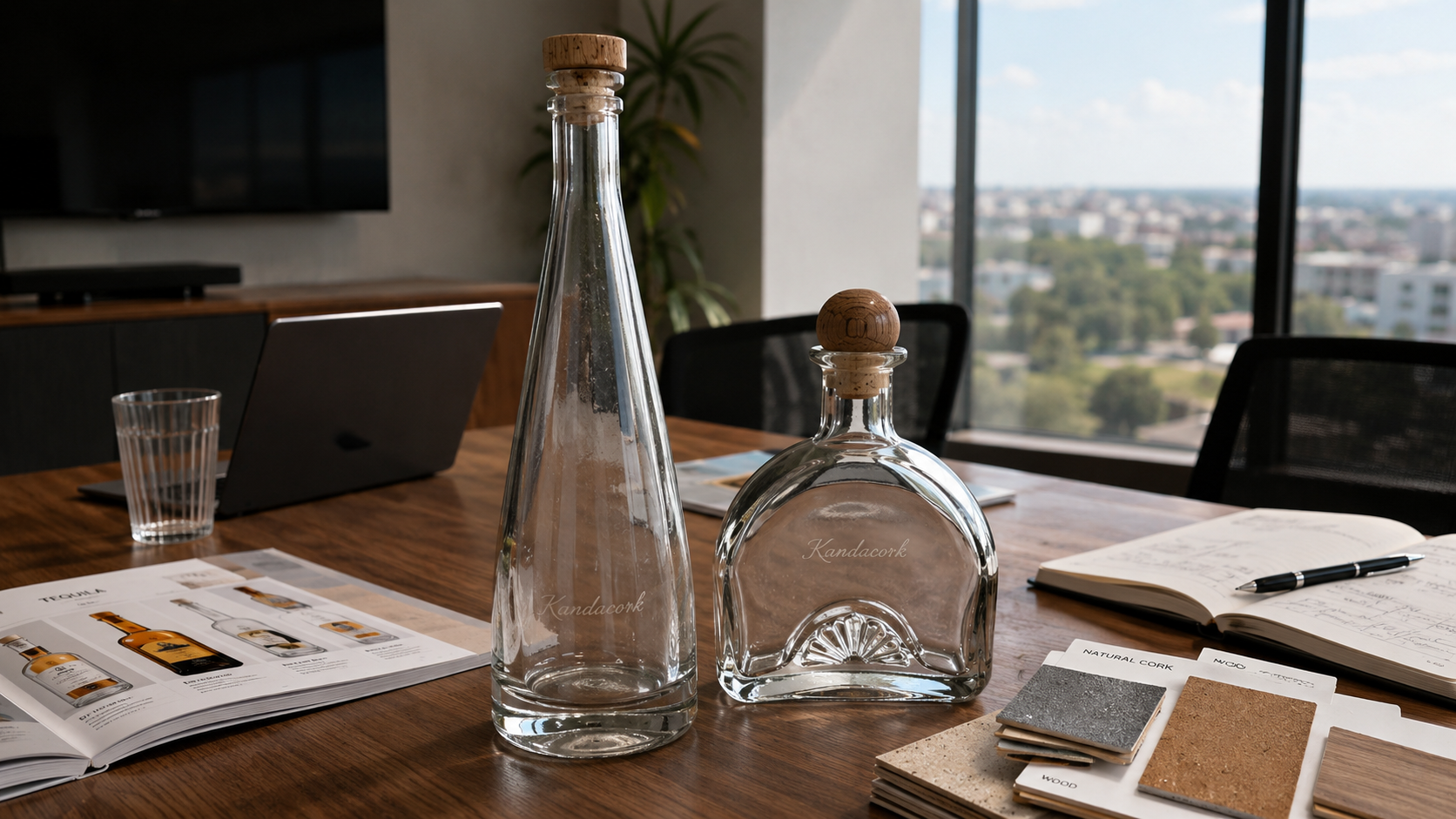
Tequila and mezcal packaging often requires a closure that feels premium, fits securely and supports brand protection. This guide explains how to compare bar-top stoppers, cork shanks, synthetic inserts, anti-refill systems and tamper-evident options for tequila bottle projects.
What Does a Tequila Bottle Closure Supplier Do?
A tequila bottle closure supplier designs, customizes, manufactures, and supplies corks, caps, stoppers, and sealing systems for tequila bottles. The supplier helps brands select the correct closure type, match the closure to the bottle neck, develop custom branding, test fit and sealing performance, and prepare closures for commercial production.
For tequila brands, the supplier should do more than provide standard stock parts. The right partner should help prevent leakage, loose fit, difficult opening, inconsistent capping, poor decoration quality, and export packaging problems. This is especially important for premium tequila, where the closure directly affects perceived value.
A well-prepared closure program usually starts with the bottle drawing, physical bottle sample, target market, filling method, logo artwork, and estimated order quantity. With these details, the supplier can recommend suitable materials, decoration methods, testing steps, and packaging options before tooling or bulk production begins.
Best Closure Options for Tequila Brands
For premium tequila, T-top corks, wooden stoppers, metal stoppers, zamac closures, and glass-top stoppers are often the best choices because they improve shelf appeal and opening experience. For high-volume tequila production, ROPP caps and screw caps may be more practical because they support faster application, tamper evidence, and consistent filling-line performance.
| Buyer Need | Best Closure Direction |
|---|---|
| Premium shelf appeal | T-top cork, wooden stopper, zamac stopper |
| High-speed filling | ROPP cap or screw cap |
| Anti-counterfeit packaging | Non-refillable closure or tamper-evident system |
| Craft brand image | Wooden bar-top stopper |
| Luxury gift packaging | Metal, glass, zamac, or custom molded stopper |
| Private-label cost control | Synthetic stopper or standard screw cap |
| Export-ready spirits packaging | ROPP closure, tamper-evident cap, or tested T-top cork |
The best choice depends on bottle design, tequila category, retail price, filling method, order quantity, and destination market. A blanco tequila may need a clean and efficient closure, while an añejo or extra añejo may need a heavier stopper that supports a premium shelf image.
Why Tequila Bottle Closures Matter for Premium Spirits Brands
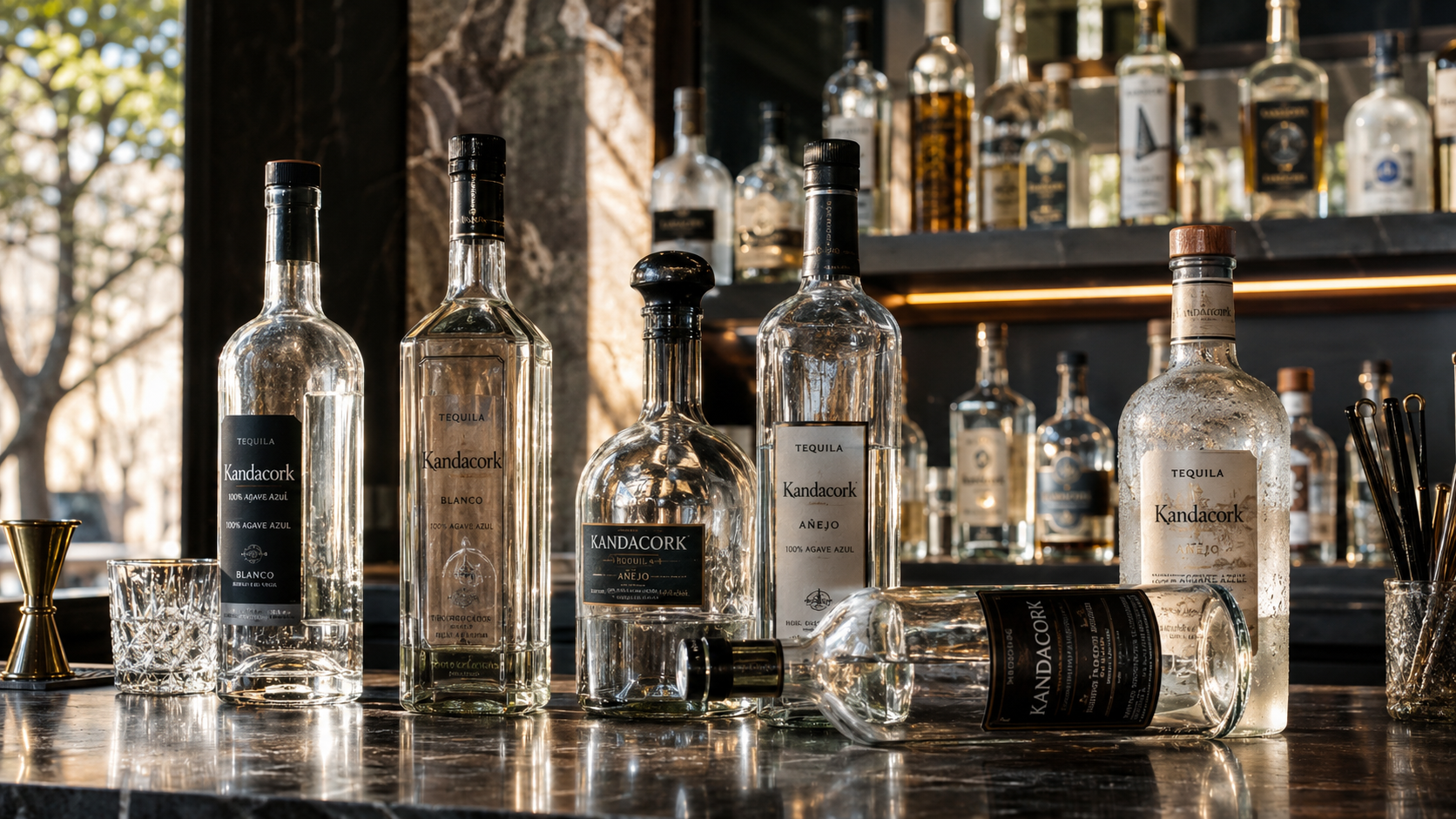
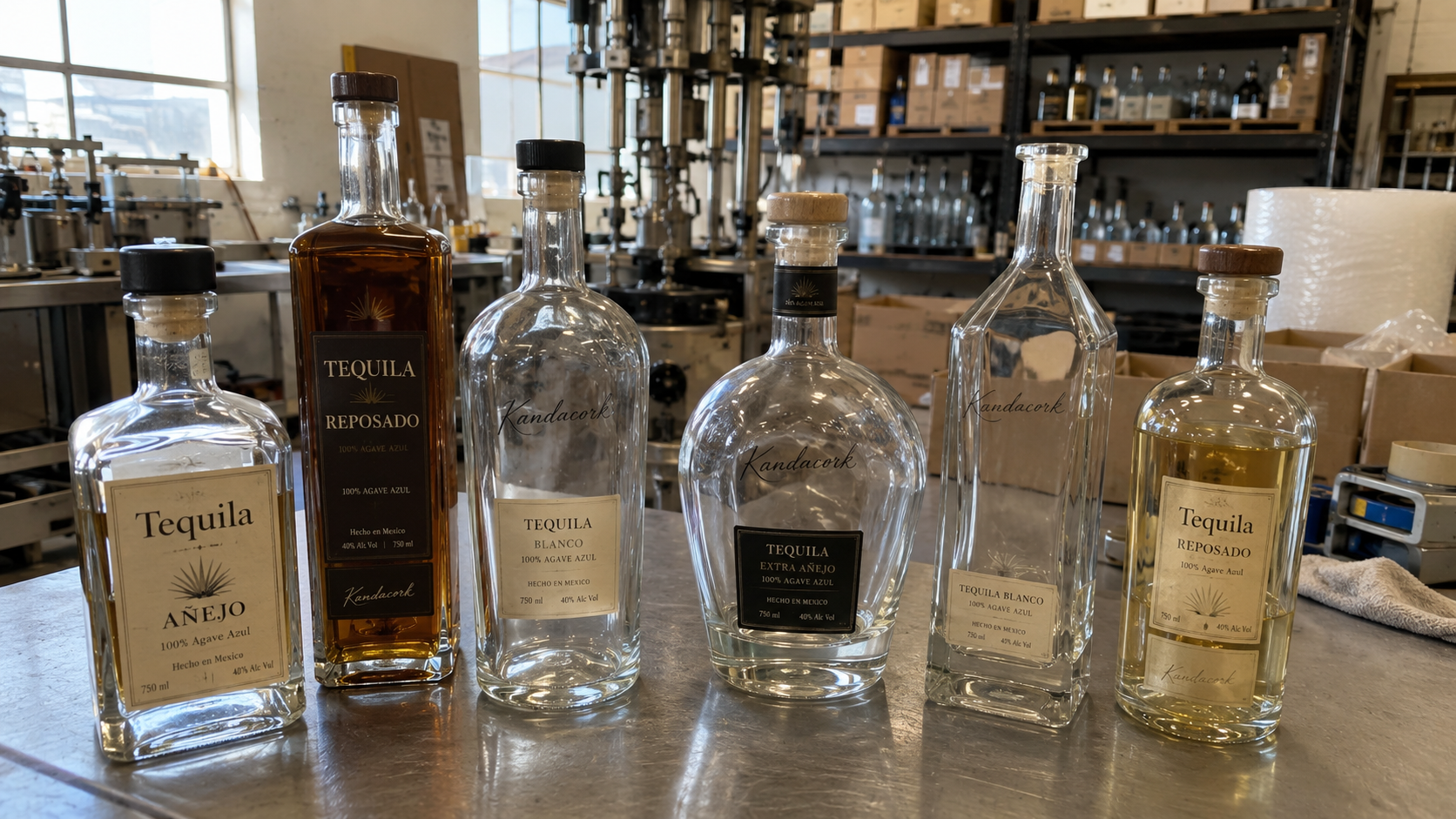
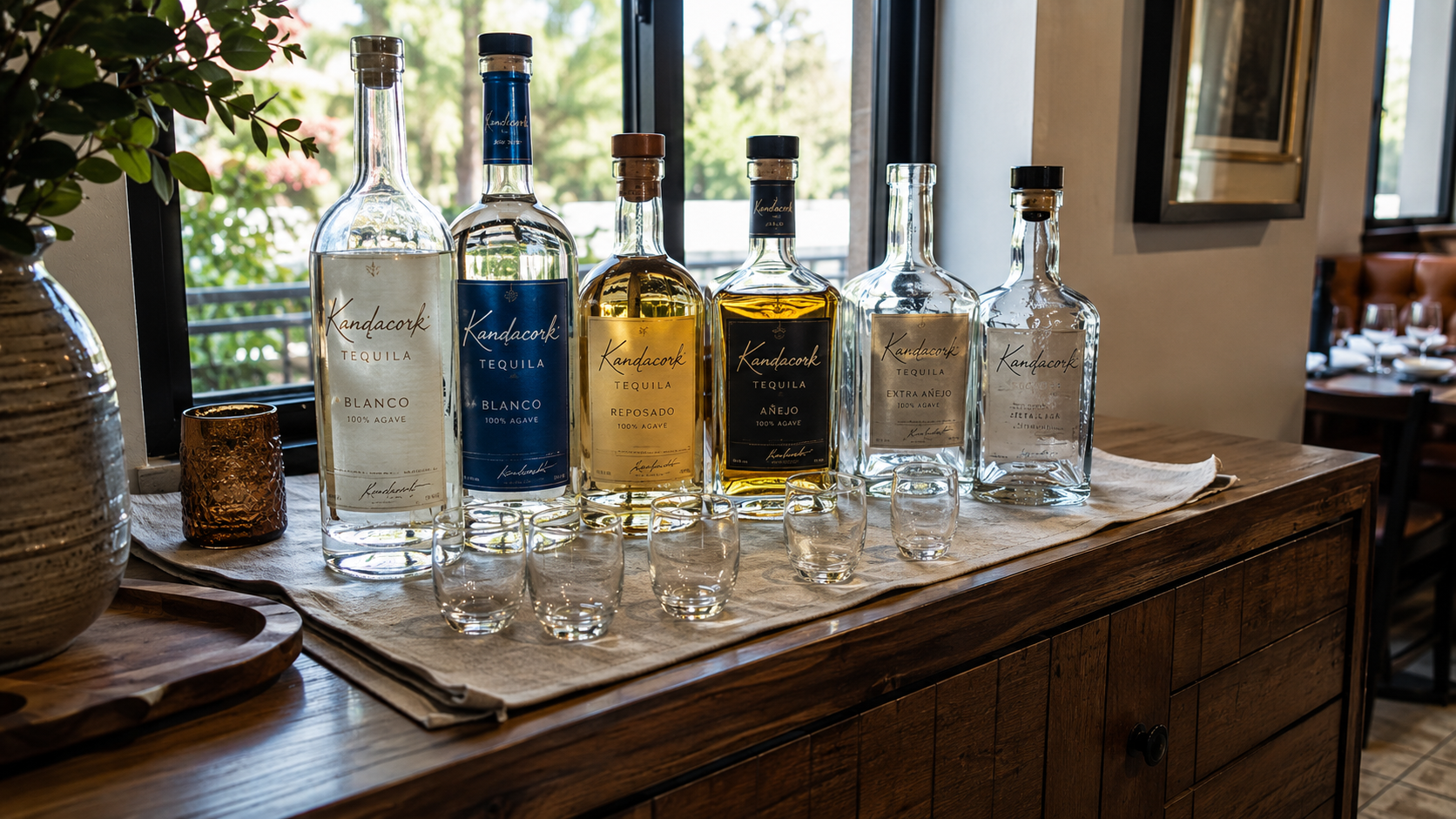
Tequila packaging is highly visual. The bottle shape, glass weight, label, closure, capsule, and gift box all work together to communicate brand positioning. A basic closure may be acceptable for low-cost spirits, but premium tequila often requires a more customized solution.
A strong closure improves several parts of the buyer and consumer experience:
- It helps protect the tequila during storage and transportation.
- It supports a smooth opening and resealing experience.
- It gives the bottle a more premium appearance.
- It reinforces brand identity through material, shape, color, and logo decoration.
- It helps reduce leakage and closure failure during export shipping.
- It supports retail, bar, hospitality, and gift-pack presentation.
Tequila is also a regulated product category. The Consejo Regulador del Tequila certification body references NOM-006-SCFI-2012 as the official Mexican standard covering tequila specifications and quality criteria. While the closure is only one part of the total package, serious tequila packaging projects should treat bottle, closure, label, filling, and export requirements as a connected system.
Common Types of Tequila Bottle Closures
Different tequila products require different closure systems. A qualified tequila bottle closure supplier should help buyers compare closure types based on brand tier, bottle neck finish, filling line, export market, MOQ, and budget.
T-Top Cork Stoppers
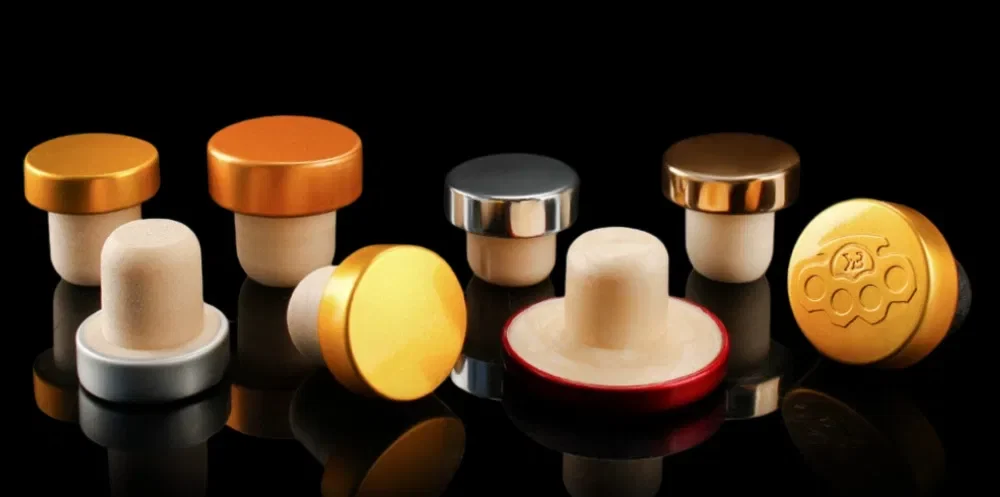
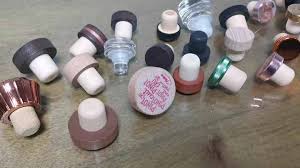
T-top cork stoppers, also called bar-top corks or T-shaped cork stoppers, are widely used in premium spirits packaging. They combine a visible top component with a cork, synthetic cork, or polymer shank that fits inside the bottle neck.
For tequila packaging, T-top cork stoppers create a premium opening ritual. They are suitable for añejo, extra añejo, craft tequila, limited editions, gift packaging, and high-end private-label spirits.
The top can be made from wood, metal, zamac, plastic, glass, ceramic, or custom molded material. The shank can use natural cork, micro-agglomerated cork, synthetic cork, or polymer materials. Each option has different performance, cost, consistency, and appearance characteristics.
Wooden Bar-Top Stoppers
Wooden bar-top stoppers are popular for tequila brands that want a natural, handcrafted, or heritage-inspired look. Wood can support brand stories related to agave fields, oak aging, traditional production, and artisanal craftsmanship.
Wooden tops can be natural, stained, painted, varnished, laser engraved, debossed, or combined with metal badges. Common shapes include flat top, dome top, mushroom top, tapered top, and custom sculpted top.
For bulk production, wood color consistency, moisture control, surface smoothness, logo clarity, and bonding strength are important. A wooden closure should look premium, feel comfortable in the hand, and remain stable during packing, shipping, and repeated consumer use.
Metal and Zamac Stoppers
Custom metal bottle stoppers are often selected for luxury tequila bottles. They offer weight, shine, strength, and a premium hand feel. These closures are suitable for high-end tequila, gift boxes, travel retail, limited editions, and collector packaging.
Metal tops can be polished, brushed, plated, painted, engraved, embossed, or combined with custom inserts. Zamac closures are especially useful when a brand wants a sculptural shape, metallic texture, or heavier premium closure.
However, heavy stoppers require careful engineering. The supplier must balance top weight, cork shank fit, insertion depth, pull-out force, and transport stability. If the closure is too heavy or poorly fitted, the risk of movement, leakage, or consumer complaints increases.
Synthetic Stoppers and Plastic Closures
Synthetic stoppers and plastic closures are practical for large production runs, private-label projects, and value-to-midrange tequila lines. They provide consistent dimensions, stable colors, flexible shapes, and cost-effective decoration options.
Plastic tops can be molded in different colors and shapes, then decorated with printing, hot stamping, embossing, debossing, or labels. Synthetic cork shanks are useful when brands need predictable insertion and pull-out performance across larger quantities.
For brands that prioritize stable supply, repeat orders, and controlled unit cost, synthetic closures can be a smart choice. They are also useful when a project requires repeatable dimensions across multiple markets or filling locations.
ROPP and Screw Cap Closures
ROPP closures are widely used in spirits packaging where efficiency, security, and tamper evidence are important. ROPP means roll-on pilfer-proof. The aluminum cap is applied with capping equipment that forms threads around the bottle finish.
ROPP caps and screw caps can be suitable for blanco tequila, mini bottles, RTD spirits, high-volume filling lines, and export-ready spirits packaging. They can also support top printing, side printing, embossing, color matching, and tamper-evident design.
Before choosing a ROPP closure, buyers should confirm bottle finish, cap diameter, finish height, liner compatibility, application torque, and filling-line speed. This is especially important when the bottle is already selected and the closure must match an existing neck finish.
Tamper-Evident and Non-Refillable Closures
Tamper-evident closures show visible evidence after opening. Non-refillable closures help prevent refilling and product substitution. These systems are especially relevant for premium tequila, duty-free channels, hospitality supply, export markets, and regions where spirits counterfeiting is a concern.
For the U.S. market, the Alcohol and Tobacco Tax and Trade Bureau guidance on tamper-evident closures explains that distilled spirits containers must use a closure or similar device that provides visible evidence when opened. For brands that need added brand protection, non-refillable closures can be combined with decorative caps, pourers, or tamper-evident structures to create a more secure package.
Tequila Bottle Closure Comparison Table
| Closure Type | Best For | Main Advantages | Key Watch-Outs |
|---|---|---|---|
| T-top cork stopper | Premium tequila, añejo, extra añejo | Premium opening feel, strong brand presentation, customizable top | Requires accurate inner neck fit and shank tolerance |
| Wooden bar-top stopper | Craft tequila, heritage-style brands | Natural look, warm texture, strong storytelling value | Wood color and finish must be controlled |
| Metal or zamac stopper | Luxury tequila, limited editions | Heavy feel, premium appearance, custom shapes | Higher mold cost and weight management needed |
| Synthetic stopper | Private label, large production runs | Consistent size, stable cost, scalable production | May feel less premium than wood or metal |
| ROPP closure | High-volume filling, export spirits | Tamper evidence, efficient application, secure fit | Requires compatible bottle finish and capping equipment |
| Non-refillable closure | Anti-counterfeit packaging, duty-free, export | Helps prevent refilling and product substitution | More complex structure and testing requirements |
Closure Selection by Tequila Category
| Tequila Category | Recommended Closure Options | Brand Positioning |
|---|---|---|
| Blanco | ROPP cap, screw cap, synthetic T-top cork | Clean, modern, efficient, fresh |
| Reposado | Wooden T-top cork, synthetic cork with wood top | Warm, balanced, aged, craft-oriented |
| Añejo | Metal stopper, zamac stopper, premium wood stopper | Mature, premium, refined |
| Extra añejo | Heavy custom stopper, glass top, zamac top | Luxury, collectible, gift-ready |
| Limited edition | Custom molded top, sculptural metal closure, numbered stopper | Distinctive, exclusive, high-value |
This table is only a starting point. A real sourcing decision should also consider filling line, target retail price, export route, carton design, and the consumer experience after opening.
How to Choose the Right Closure for Your Tequila Bottle
The best closure is not always the most expensive one. The best closure is the one that fits the bottle correctly, protects the liquid, supports production, and strengthens the brand story.
Match the Closure to the Bottle Neck Finish
Bottle neck finish is the first technical checkpoint. For bar-top corks, the inner neck diameter, taper, insertion depth, and tolerance must match the cork shank. For screw caps and ROPP closures, the thread profile, finish height, sealing surface, liner, and cap dimensions must be correct.
A small mismatch can create serious issues:
- Loose closure fit
- Excessive insertion force
- Cork breakage during opening
- Inconsistent cap torque
- Leakage during shipping
- Poor resealing experience
- Failed filling-line trials
Glass bottle development and closure matching should be considered together whenever possible. For brands developing a full tequila package, custom spirits bottle development can help align bottle shape, neck finish, closure type, decoration, and secondary packaging from the beginning.
Match the Closure to the Brand Positioning
A tequila closure should support the product’s price tier and market position. A high-end extra añejo bottle may require a heavy zamac stopper or luxury wood top. A high-volume blanco product may need a more efficient ROPP closure or screw cap.
For premium tequila packaging, closure details such as weight, finish, top shape, logo position, and opening feel can influence consumer perception. The closure should feel consistent with the bottle, label, capsule, carton, and retail price.
Match the Closure to the Filling Line
A beautiful closure still needs to perform on the filling line. Before production, confirm whether the closure will be applied manually or automatically. For T-top corks, review insertion force, shank compression, pull-out force, and top alignment. For ROPP caps and screw caps, review torque, liner compression, cap height, and thread formation.
Pilot testing is important when using a new bottle, custom stopper, new mold, or new filling equipment. A small trial can reveal issues that are difficult to see from drawings or renderings alone.
Match the Closure to the Export Market
Tequila bottles may move through long export routes, warehouses, retail shelves, hospitality channels, and e-commerce distribution. During shipping, closures may face vibration, pressure changes, temperature shifts, carton movement, and bottle orientation changes.
For export-ready tequila packaging, review the following before bulk shipment:
- Inversion leakage test
- Pull-out force test
- Torque test for caps
- Drop test
- Vibration test
- Carton stacking test
- Temperature and humidity exposure
- Visual inspection after transport simulation
The International Safe Transit Association focuses on package design and distribution testing to help reduce product damage through real-world logistics conditions. For spirits brands, this type of thinking is useful when evaluating closure stability, carton strength, pallet configuration, and export packaging performance.
Custom Tequila Bottle Closure Options
Customization is one of the main reasons brands search for a tequila bottle closure supplier instead of purchasing generic stock closures. A custom closure can turn the bottle neck into a clear brand asset.
Materials
Common material options include natural cork, micro-agglomerated cork, synthetic cork, polymer shanks, wood, aluminum, zamac, plastic, glass, ceramic, and composite materials.
Each material creates a different brand impression. Wood feels natural and artisanal. Metal feels strong and premium. Zamac supports luxury shapes and weight. Plastic supports scalable production. Glass can feel decorative and elegant. Cork communicates tradition and authenticity.
When selecting materials, brands should also consider food-contact expectations. The FDA information on food packaging and food contact substances explains that food packaging components and substances that contact food are part of the food-contact framework. For spirits packaging buyers, material documentation and supplier declarations should be reviewed early in the project.
Surface Finishes
Surface finish affects both appearance and touch. Popular closure finishes include natural wood, dark stained wood, matte coating, gloss coating, brushed metal, polished metal, antique metal, gold plating, silver plating, black electroplating, soft-touch coating, and custom color painting.
The finish should match the bottle design, label color, capsule, gift box, and overall brand identity. For coordinated product launches, bottle decoration and branding can help align closure color, on-glass decoration, label effects, and secondary packaging details.
Logo Decoration
Logo decoration turns a closure into a brand asset. Common decoration methods include laser engraving, embossing, debossing, pad printing, screen printing, hot stamping, metal badge application, top inserts, side logo printing, and custom molded logos.
For tequila bottles, top decoration is especially important because the closure is often visible from above in bars, retail displays, gift boxes, and photography. A clear logo on the top surface can support brand recall even when the front label is partially hidden.
Shape Customization
Closure shape can make a tequila bottle more recognizable. A brand may choose a flat top for modern simplicity, a dome top for softness, a mushroom top for classic spirits packaging, a heavy metal top for luxury, or a custom sculptural form for limited editions.
Custom shape development may require sketches, 3D drawings, mold evaluation, prototype sampling, tooling confirmation, and approval samples before production. For complex packaging, the closure shape should be reviewed together with the bottle shoulder, neck height, label panel, capsule, and carton insert.
Quality Control for Tequila Bottle Closures
Quality control is essential for premium spirits packaging. A professional tequila bottle closure supplier should test both appearance and function before bulk production.
Fit Testing
Fit testing should use actual bottles whenever possible. Bottle drawings are helpful, but physical bottle samples reveal real glass tolerance, neck variation, and closure behavior.
Fit testing should review shank diameter, insertion depth, pull-out force, reclosure feel, top alignment, visual appearance, and neck compatibility.
Leakage Testing
Leakage testing helps protect labels, cartons, gift boxes, and brand reputation. Filled bottle samples should be tested in upright, side, and inverted positions. Brands shipping internationally should also consider vibration and temperature exposure.
Pull-Out Force Testing
Pull-out force affects consumer experience. If the closure is too loose, it may leak or detach. If it is too tight, consumers may struggle to open the bottle or break the cork. Testing helps find the correct balance between secure sealing and smooth opening.
Torque Testing
For ROPP caps and screw caps, torque testing is critical. Incorrect torque can cause leakage, poor opening experience, cap damage, or filling-line problems. Cap torque should be validated with the actual bottle, liner, cap, and capping machine.
Decoration Durability
Decoration must remain stable during production, packing, shipping, and normal handling. Buyers should check logo clarity, scratch resistance, coating adhesion, color accuracy, plating consistency, and batch-to-batch appearance.
Transport Testing
Transport testing helps predict how closures perform during real distribution. Depending on the sales channel, brands may review drop testing, vibration testing, carton stacking, pallet stability, and e-commerce handling conditions.
Sustainability and Packaging Material Considerations
Sustainability is increasingly important in premium spirits packaging, but it should be handled with practical engineering judgment. A lighter closure may reduce transport weight, while a durable premium closure may improve perceived value and support long product life. Glass, aluminum, wood, cork, synthetic materials, and composite components each have different sourcing, processing, and end-of-life considerations.
The Glass Packaging Institute notes that glass can be recycled repeatedly without loss in quality or purity. For tequila brands using premium glass bottles, closure selection should support the same long-term packaging story through responsible material choice, clear decoration planning, and realistic logistics testing.
Sustainability decisions should not weaken closure performance. A closure still needs to seal properly, survive transport, run on the filling line, and match the consumer’s quality expectations.
Kandacork Closures Custom Development Process
Kandacork Closures supports both standard and custom tequila closure projects. Buyers can provide a bottle drawing, physical sample, logo artwork, target order quantity, and destination market requirements. Based on these details, the team can recommend closure type, top material, shank material, decoration method, sample direction, and bulk packaging plan.
For brands comparing several closure styles, the bottle stoppers and closures range provides a practical starting point for matching wooden, metal, plastic, synthetic, ROPP, screw-cap, capsule, and non-refillable options to different spirits projects.
| Development Step | What Happens | Buyer Benefit |
|---|---|---|
| Requirement review | Buyer provides bottle drawing, samples, logo, target quantity, and market details | Supplier understands technical and branding needs |
| Closure recommendation | Suitable closure types, materials, and decoration options are proposed | Buyer receives practical options instead of generic catalog suggestions |
| Design confirmation | Shape, color, finish, logo position, and shank structure are reviewed | Packaging direction becomes clear before sampling |
| Sample development | Prototype or pre-production samples are prepared | Buyer can check appearance, fit, and handling |
| Fit and function testing | Closure is tested with the actual bottle when possible | Leakage and compatibility risks are reduced |
| Line trial support | Buyer can test the closure with the filling or capping process | Production risks are identified before bulk orders |
| Bulk production | Approved design moves into mass production | Buyer receives consistent closures for commercial use |
| Export packaging | Closures are packed for international transport | Products are protected during shipment |
Simple sourcing process:
Bottle Neck Finish → Closure Fit Test → Sample Approval → Line Trial → Bulk Production → Export Packaging
This process is especially useful for tequila brands developing new bottle shapes, custom closures, export packaging, or premium gift-ready products.
RFQ Checklist for Custom Tequila Bottle Closures
A complete RFQ helps your tequila bottle closure supplier provide accurate pricing, realistic lead time, and suitable technical recommendations.
| Information Needed | Why It Matters |
|---|---|
| Bottle drawing or bottle sample | Confirms neck finish, dimensions, and closure compatibility |
| Bottle capacity | Helps match common tequila sizes such as 50 ml, 375 ml, 500 ml, 700 ml, 750 ml, and 1 L |
| Inner neck diameter | Essential for T-top cork and stopper fit |
| Bottle finish type | Essential for screw cap and ROPP closure selection |
| Closure type | Helps define material, mold, cost, and testing requirements |
| Top material | Affects appearance, weight, price, and brand positioning |
| Shank material | Affects sealing, insertion, pull-out force, and consistency |
| Logo artwork | Confirms decoration method and feasibility |
| Color or finish requirement | Supports brand matching and visual consistency |
| Filling method | Helps confirm manual or automatic application compatibility |
| Destination market | Helps review export, tamper-evident, and packaging needs |
| Target order quantity | Affects production method, tooling, and unit cost |
| Sample deadline | Helps plan development schedule |
| Bulk delivery schedule | Helps align production and shipping expectations |
If the bottle is still being developed, coordinate closure planning early. A small adjustment to neck finish, stopper shank, or cap specification can prevent large problems later in production.
Common Tequila Closure Problems and How to Avoid Them
Leakage is often caused by poor fit, incorrect shank diameter, weak liner compression, cap torque problems, or bottle neck inconsistency. The best prevention is to test closures with actual filled bottle samples before bulk production.
Loose fit can happen when the cork shank is too small or the bottle inner neck diameter is larger than expected. Accurate neck measurement and tolerance review are essential.
Difficult opening may happen when the stopper is too tight or the pull-out force is too high. A supplier should balance sealing strength with consumer usability.
Poor logo quality can result from unsuitable decoration methods, weak coating, rough material surfaces, or incorrect artwork preparation. Decoration samples should be approved before mass production.
Transport damage may occur when closures are too heavy, poorly fitted, or insufficiently protected in cartons. Export packaging and transport testing can help reduce this risk.
For complete spirits packaging projects, Kandacork Glass can support bottle and closure coordination, while Kandacork Glass Packaging can help with broader glass packaging requirements where matched accessories, decoration-ready surfaces, and export logistics need to be considered together.
FAQ
What is the best closure for premium tequila?
The best closure for premium tequila is usually a custom T-top cork, wooden stopper, metal stopper, zamac stopper, or glass-top stopper. The right choice depends on bottle design, brand positioning, filling method, budget, and target market.
Can tequila bottles use cork stoppers?
Yes. Many premium tequila bottles use T-top cork stoppers or bar-top cork closures. These closures provide a premium opening experience and can be customized with wood, metal, glass, plastic, zamac, or other top materials.
What is the difference between a T-top cork and a screw cap?
A T-top cork fits inside the bottle neck and is pulled out by hand. It is often used for premium spirits. A screw cap or ROPP closure threads onto the bottle finish and is often used for efficient production, tamper evidence, and high-volume filling.
What size cork stopper fits a tequila bottle?
The correct cork stopper size is determined by the tequila bottle’s inner neck diameter, neck taper, insertion depth, and manufacturing tolerance. The best method is to test stopper samples with the actual bottle before bulk production.
What closure is best for a 750 ml tequila bottle?
The best closure for a 750 ml tequila bottle depends on the brand tier and filling method. Premium tequila often uses T-top corks, wooden stoppers, metal stoppers, or zamac stoppers, while high-volume tequila may use ROPP caps or screw caps.
Can I customize tequila bottle stoppers with my logo?
Yes. Custom tequila bottle stoppers can be decorated with laser engraving, embossing, debossing, pad printing, screen printing, hot stamping, metal badges, top inserts, or molded logos depending on the closure material and design.
Are tamper-evident closures necessary for tequila?
Tamper-evident closures are often recommended for tequila, especially for export markets, retail distribution, duty-free channels, hospitality supply, and premium spirits. Requirements vary by destination market, so brands should confirm local regulations before finalizing packaging.
What is a non-refillable tequila closure?
A non-refillable tequila closure is designed to make bottle refilling more difficult after opening. It helps protect brand integrity and reduce the risk of counterfeit or substituted liquid in some markets.
How do I avoid leakage in tequila bottle closures?
Leakage prevention starts with accurate bottle neck measurement, correct closure selection, fit testing, pull-out force testing, torque testing, inversion testing, filling-line trials, and transport simulation. Using actual bottle samples during development is one of the best ways to reduce risk.
What information does a supplier need for a custom tequila closure?
A tequila bottle closure supplier usually needs a bottle drawing or sample, bottle capacity, inner neck diameter, closure type, material preference, logo artwork, finish requirement, order quantity, destination market, sample deadline, and bulk delivery schedule.
What MOQ is typical for custom tequila bottle closures?
MOQ depends on closure type, material, decoration method, mold requirements, and production complexity. Standard closures usually have lower MOQ than custom molded metal, zamac, or special-shaped closures.
How long does custom closure sampling take?
Sampling time depends on the material, decoration method, tooling needs, and design complexity. Simple logo decoration is usually faster than custom shape development or new mold production.
Conclusion
The right tequila closure must balance sealing performance, production efficiency, shelf appeal, export reliability, and brand storytelling. For premium tequila brands, the closure is not an afterthought. It is a visible quality signal and an important part of the consumer experience.
A strong tequila bottle closure supplier should help you evaluate bottle neck finish, material selection, decoration method, testing requirements, filling-line compatibility, and export packaging before bulk production. This reduces risk and helps the final bottle feel consistent from the first sample to commercial shipment.
If you are looking for a tequila bottle closure supplier, prepare your bottle drawing, closure concept, logo artwork, target quantity, and destination market requirements. A clear brief will help move your project from closure idea to tested sample and from approved sample to scalable production.