Introduction
For spirits brands, distilleries, private label buyers, importers, distributors, bottlers, and packaging teams, a bar-top stopper is more than a bottle closure. It affects sealing performance, shelf presentation, opening experience, filling-line efficiency, export readiness, and brand value.
Choosing the right bar-top stopper materials helps buyers reduce leakage risk, improve consumer handling, match the bottle’s design language, and prepare more accurate sample or quotation requests.
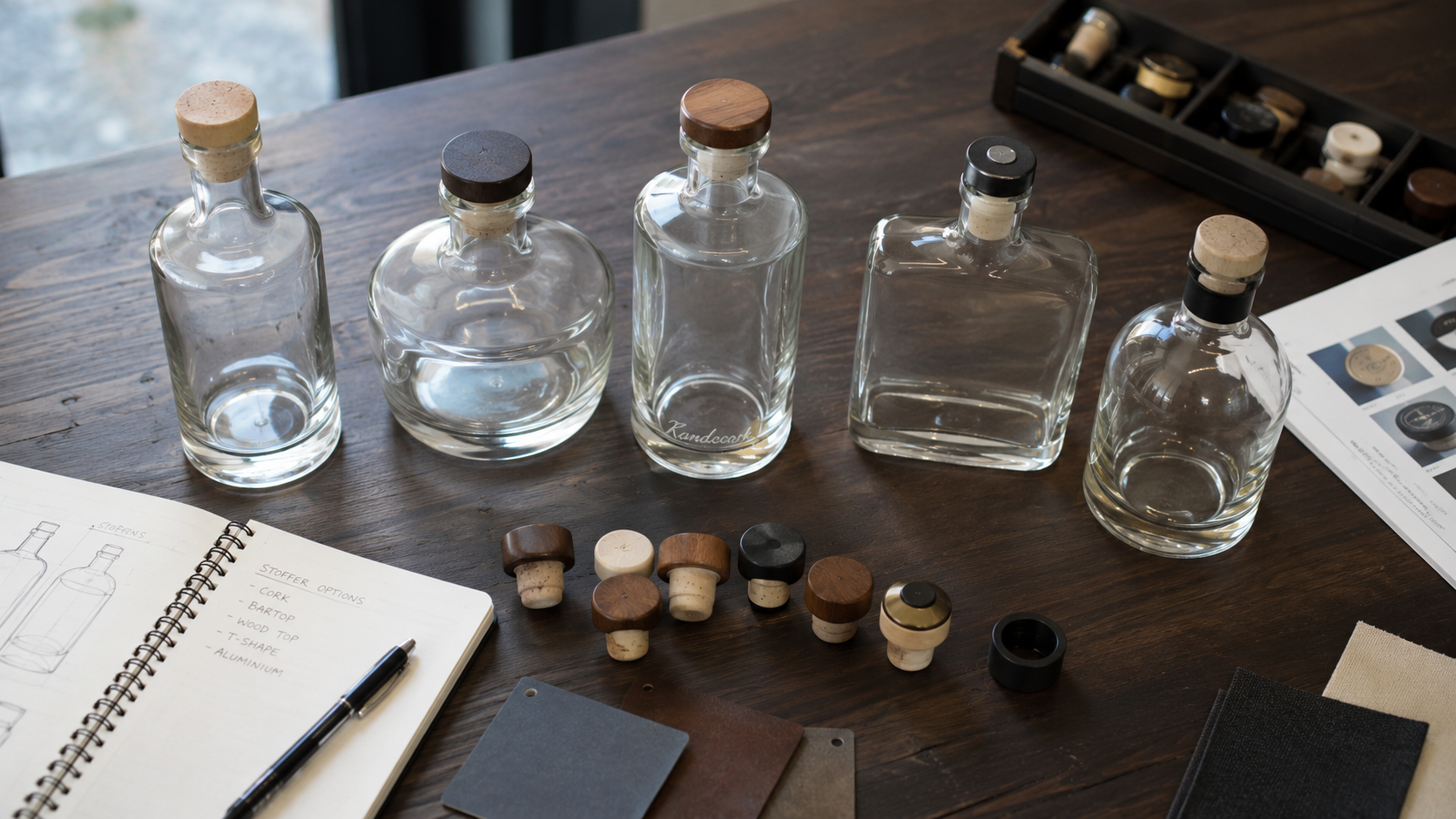
This guide compares cork, synthetic cork, polymer, wood, plastic, aluminum, Zamak, glass, and acrylic stopper options for spirits bottle packaging projects. It also explains bottle neck bore measurement, shank fit, food-contact documentation, supplier capability, testing requirements, and RFQ preparation.
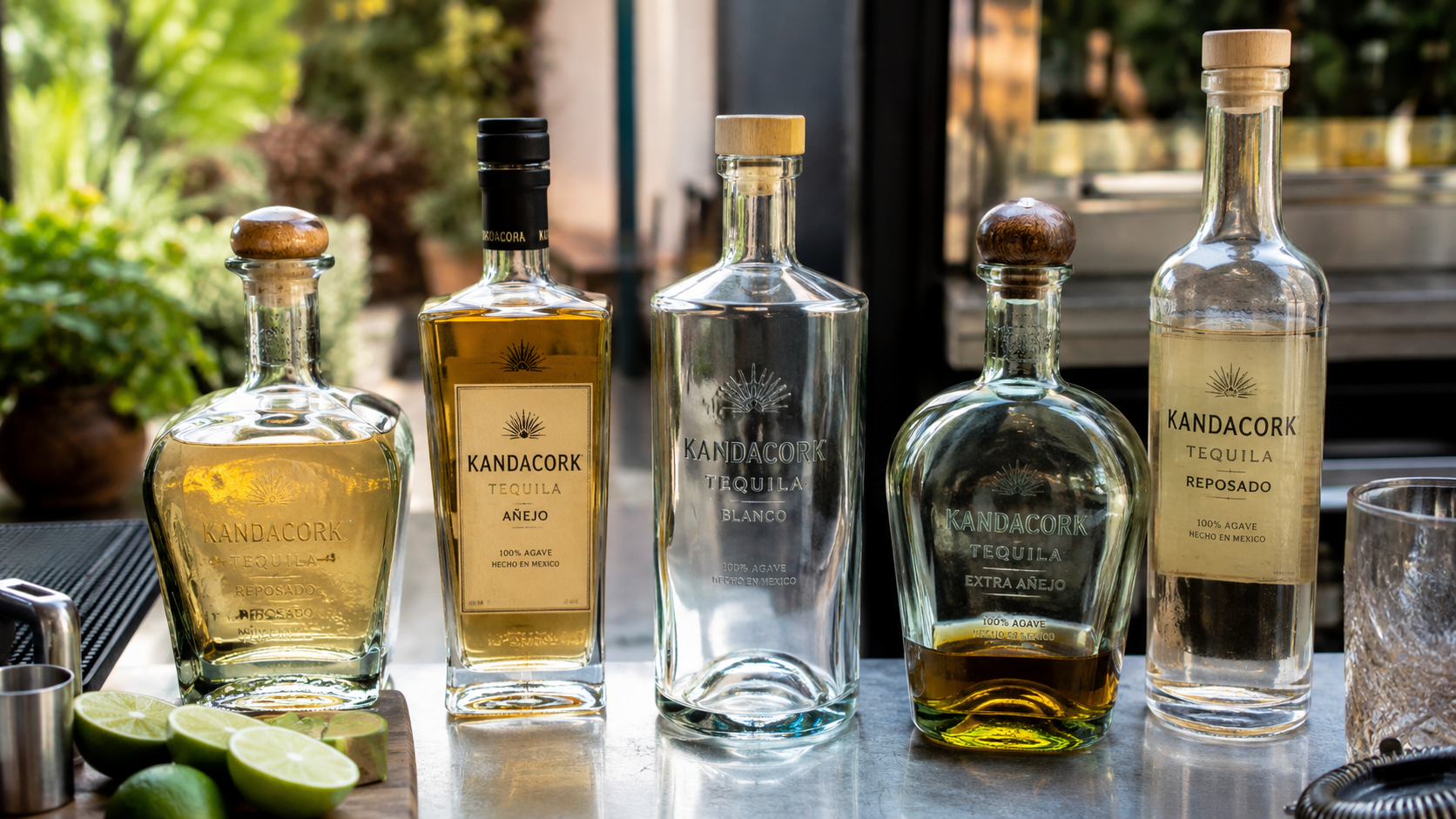
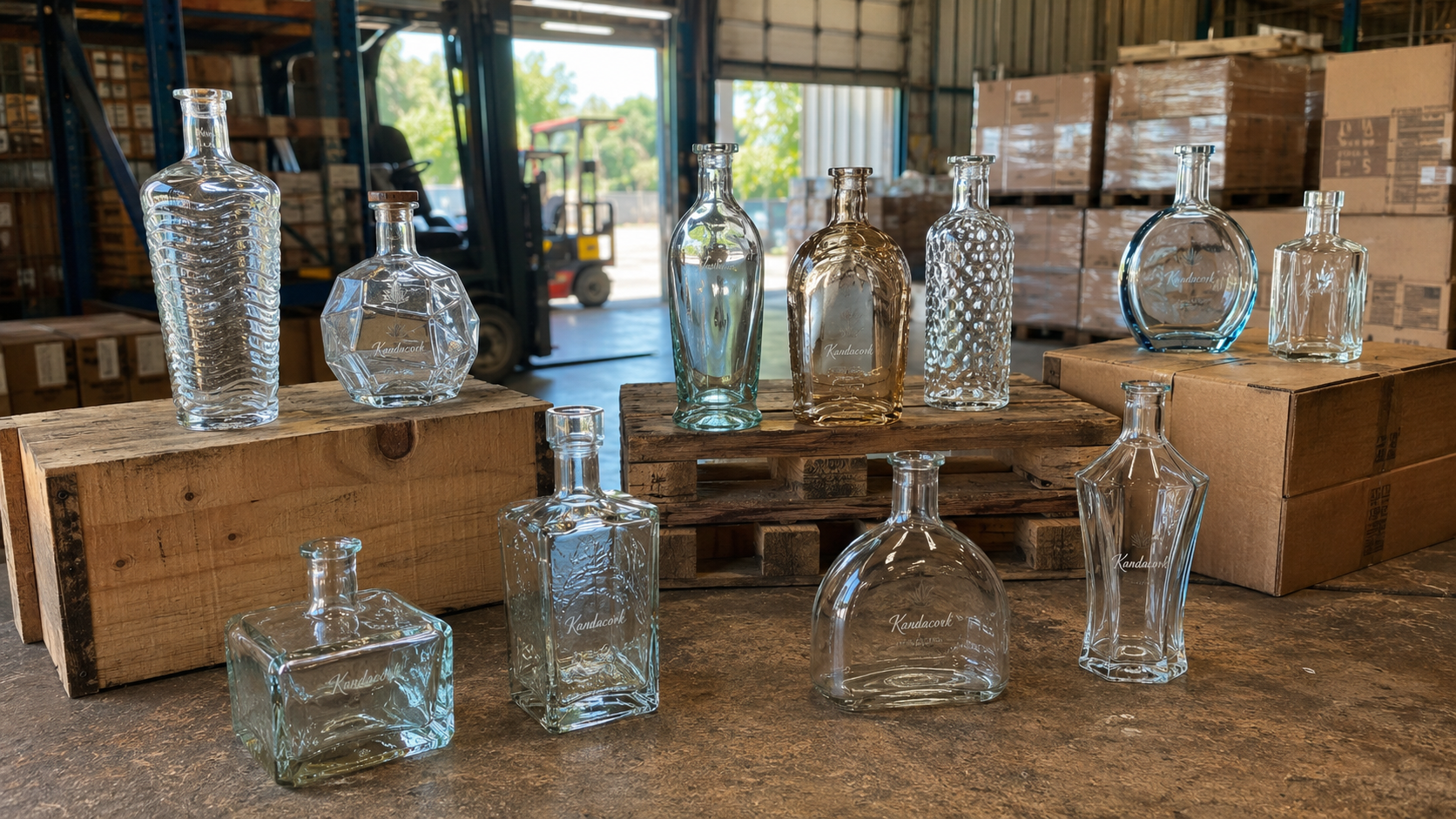
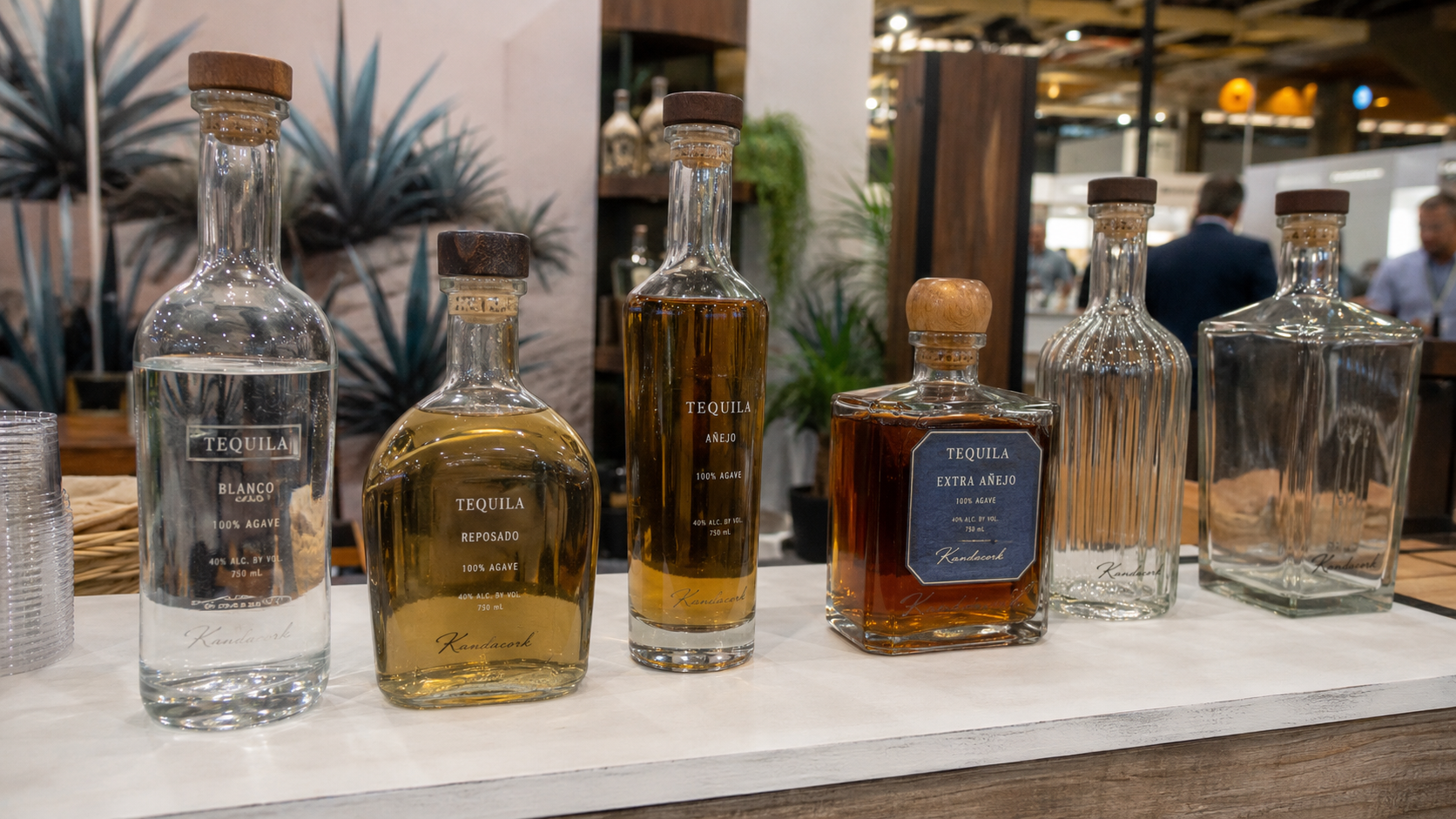
Kandacork Closures supports custom bar-top stopper development for whisky, gin, vodka, rum, tequila, liqueurs, and private label spirits packaging. For buyers managing bottles, closures, and decoration together, the broader integrated spirits packaging support from Kandacork Glass can also help align the full packaging system.
Quick Answer: Which Bar-Top Stopper Material Should You Choose?
For most spirits bottle packaging projects, choose wood or Zamak for premium whisky, rum, tequila, and limited editions; aluminum or acrylic for modern gin, vodka, and liqueurs; plastic for cost-controlled private label programs; natural cork for heritage positioning; and synthetic cork or polymer shanks for consistent fit, export orders, and repeat production.
The best material depends on five factors:
- Bottle neck fit
- Brand positioning
- Decoration method
- Food-contact suitability
- Order quantity and lead time
Before approving bulk production, buyers should test real stopper samples with the actual bottle, confirm shank diameter, check pull force, review leakage performance, and request compliance documents.
What Is a Bar-Top Stopper and How Does It Work?
A bar-top stopper is a closure commonly used for spirits bottles, liqueurs, premium beverages, and specialty packaging. It is also called a T-top stopper, T-stopper, cork stopper, bottle stopper, or bar top closure.
A standard bar-top stopper has two parts.
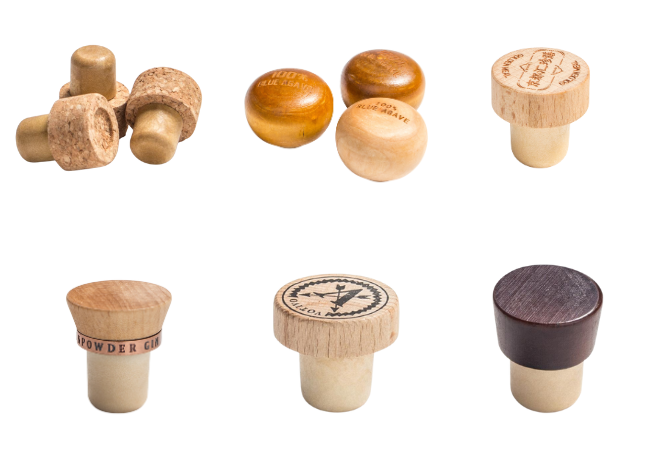
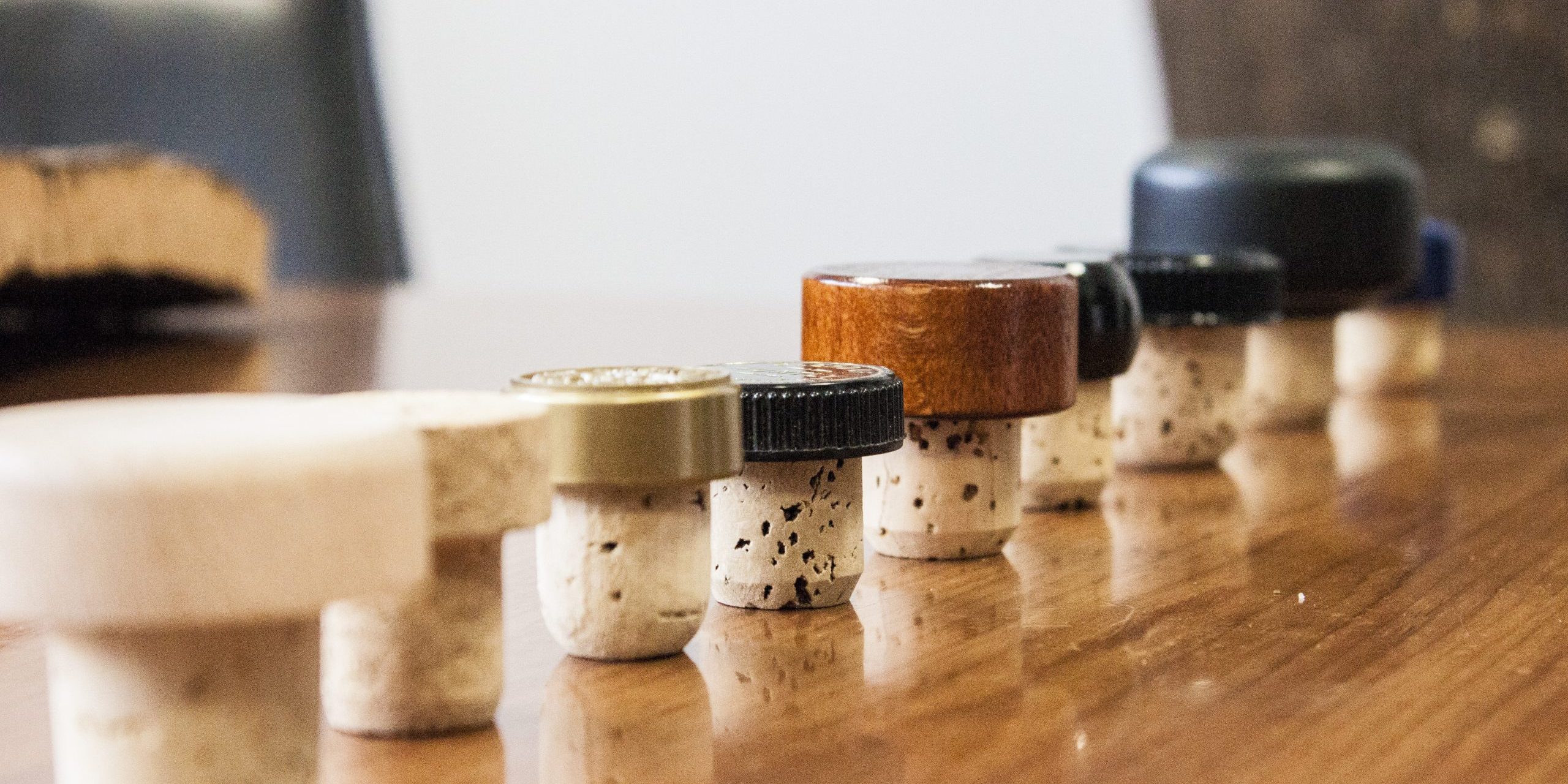
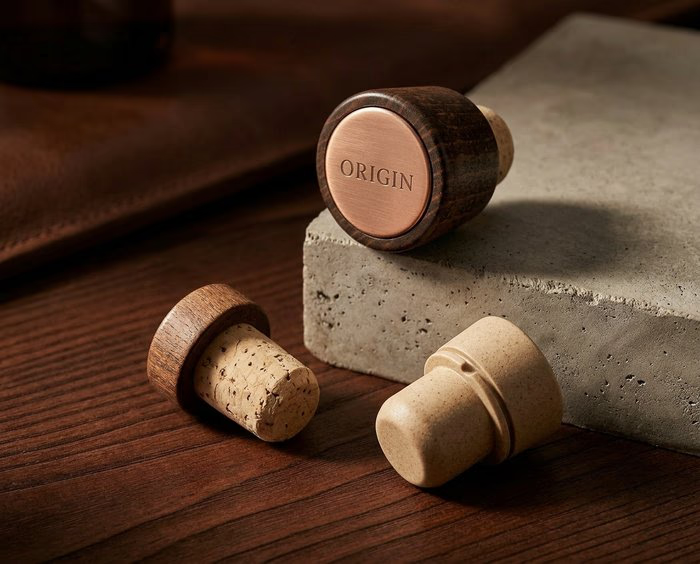
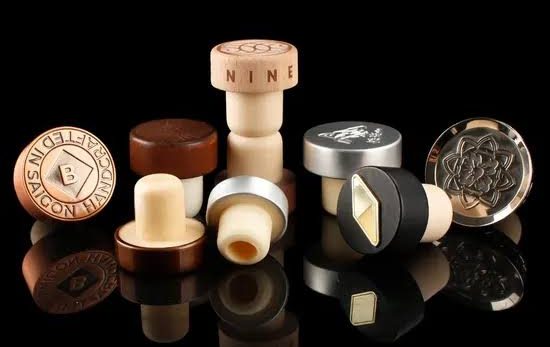
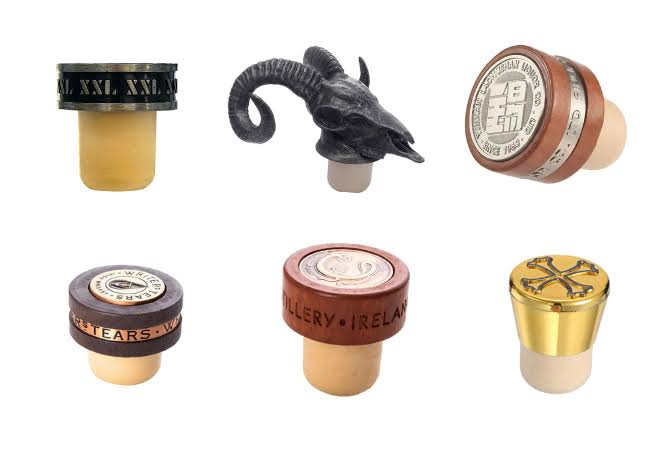
The top, also called the cap or head, is the visible component. It affects branding, hand feel, decoration, and shelf impact. Common top materials include wood, plastic, aluminum, Zamak, glass, acrylic, and cork.
The shank, also called the stem or plug, is inserted into the bottle neck. It provides the functional fit and sealing behavior. Common shank materials include natural cork, synthetic cork, micro-agglomerated cork, polymer, or custom sealing compounds.
The top creates the brand experience. The shank controls closure performance. A successful stopper must balance both.
Bar-Top Stopper Materials Comparison Table
| Material | Best For | Brand Positioning | Cost Level | Customization | Key Buyer Risk |
|---|---|---|---|---|---|
| Natural cork shank | Whisky, rum, brandy, heritage spirits | Traditional, natural, craft | Medium | Medium | Natural variation, odor control, dimensional tolerance |
| Synthetic cork shank | Private label, export, repeat orders | Clean, stable, commercial | Medium | Medium | Material formulation, sensory suitability, compression |
| Polymer shank | High-volume or cost-controlled projects | Technical, repeatable | Low–Medium | Medium | Pull force and bottle-bore matching |
| Wood top | Whisky, rum, tequila, craft gin | Warm, premium, natural | Medium | High | Color variation, finish consistency |
| Plastic top | Mini bottles, promotions, private label | Flexible, colorful, economical | Low | High | Lower perceived value if poorly designed |
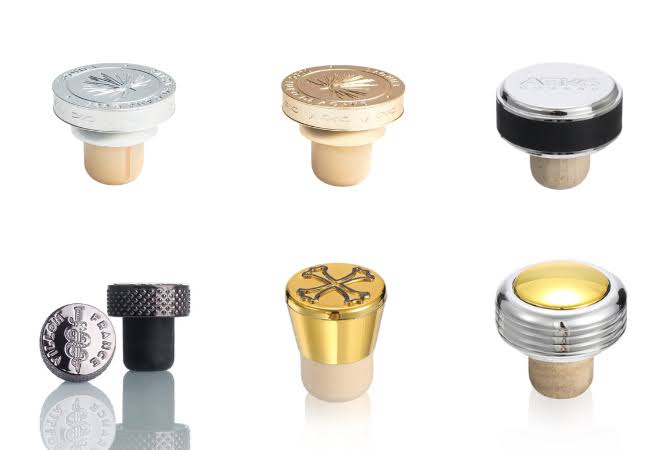
| Aluminum top | Vodka, gin, liqueurs, modern spirits | Clean, metallic, premium | Medium–High | High | Denting, scratches, coating consistency |
| Zamak metal top | Luxury whisky, tequila, rum, limited editions | Heavy, sculpted, luxury | High | Very High | Tooling cost, lead time, shipping weight |
| Glass or acrylic top | Vodka, gin, liqueurs, gift packaging | Transparent, design-led | Medium–High | Medium | Breakage, scratches, assembly defects |
This table helps buyers shortlist stopper options. Final approval should always be based on bottle-fit testing, decorated samples, compliance review, and production feasibility.
Need help comparing wood, plastic, aluminum, Zamak, or synthetic cork bar-top stoppers? Send Kandacork Closures your bottle drawing and target spirits category for material recommendations.
Main Bar-Top Stopper Materials
Natural Cork Shanks
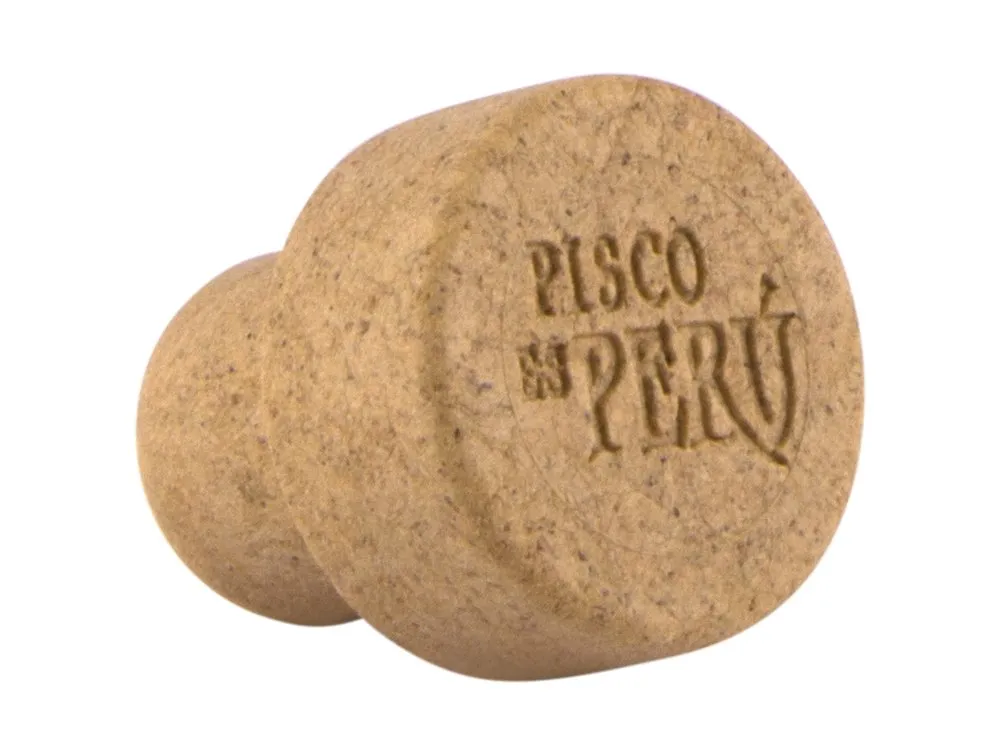
Natural cork shanks are suitable for brands that want a traditional, craft, or heritage image. They are often used for whisky, rum, brandy, cognac-style packaging, and premium small-batch spirits.
Natural cork provides familiar texture, elastic sealing behavior, and a natural material story. However, it also has natural variation. Buyers should confirm cork grade, odor neutrality, surface quality, moisture control, shank diameter tolerance, and batch inspection standards.
Natural cork is a strong option when authenticity matters, but it should be approved through physical sample testing before mass production.
Synthetic Cork and Polymer Shanks
Synthetic cork and polymer shanks are widely used in commercial spirits packaging because they provide repeatable dimensions, controlled appearance, and stable production behavior.
These materials are practical for vodka, gin, tequila, liqueurs, private label spirits, and export programs where consistency matters. They can help reduce natural variation and support repeat orders across multiple batches.
Buyers should check material hardness, compression behavior, odor neutrality, alcohol-contact suitability, food-contact documentation, and compatibility with the bottle neck bore.
Synthetic cork and polymer shanks are often the best choice when buyers need consistent fit, scalable production, and export reliability. For broader closure comparison during early sourcing, buyers can also review this guide to bar-top stoppers, screw caps, and ROPP closures.
Wood Tops
Wood tops are popular for premium spirits because they create warmth, craft character, and a natural hand feel. They work well for whisky, rum, tequila, mezcal, brandy, craft gin, and heritage-style liqueurs.
Common finishes include natural wood, dark stained wood, matte black wood, varnished wood, and oak-look finishes. Decoration options include laser engraving, hot stamping, pad printing, and debossing.
The main risk is variation in grain, color, and stain absorption. For large retail programs, buyers should define acceptable color range, surface finish, and logo clarity before production.
Plastic Tops
Plastic tops are used for cost-controlled spirits, mini bottles, promotional packs, travel-size formats, flavored spirits, and private label projects. They offer color flexibility, efficient production, and lightweight handling.
Plastic can be molded into different shapes, matched to brand colors, and decorated with printing or molded logos. When designed well, it can support modern, colorful, or high-volume spirits packaging.
Buyers should check plastic type, food-contact suitability, Pantone matching, surface texture, scratch resistance, and compatibility with the selected shank.
Plastic is best when the project needs cost efficiency, color flexibility, and scalable production.
Aluminum Tops
Aluminum tops are a strong option for modern spirits packaging. They are commonly used for vodka, gin, premium liqueurs, contemporary whisky, and minimalist bottle designs.
Aluminum provides a clean metallic appearance without the heavy weight of Zamak. It supports brushed, matte, glossy, anodized, printed, embossed, or debossed finishes.
Buyers should check dent resistance, coating consistency, edge quality, surface protection, and packing method. Metallic finishes can look premium, but scratches or coating defects quickly reduce perceived value.
Aluminum is suitable when buyers want a modern premium look with better weight and cost control than heavy alloy closures.
Zamak Metal Tops
Zamak, a zinc alloy material, is used for luxury spirits closures where weight, sculpted detail, and premium hand feel are important. It is suitable for high-end whisky, tequila, mezcal, rum, cognac-style packaging, and limited editions.
Zamak can support custom shapes, raised logos, antique finishes, plating, color filling, and three-dimensional design. For luxury packaging, the stopper can become a signature brand asset.
However, Zamak requires more planning. Buyers should confirm tooling cost, sample lead time, plating quality, assembly strength, carton protection, bottle balance, and total closure weight.
Zamak is best when the stopper is central to premium brand identity.
Glass and Acrylic Tops
Glass and acrylic tops are selected when transparency, light reflection, and shelf impact matter. They are often used for premium vodka, gin, liqueurs, gift boxes, and design-led bottle projects.
A clear top can create a crystal-like effect and pair well with frosted bottles, clear glass, colored liquid, or luxury secondary packaging.
Buyers should evaluate breakage risk, scratch resistance, glue visibility, assembly strength, surface clarity, and packing protection. These materials can be visually strong but require careful inspection during sampling and mass production.
How to Measure Bottle Neck Bore and Choose Shank Diameter
Correct sizing is one of the most important steps in bar-top stopper development. Many closure problems happen because buyers approve a stopper by appearance instead of testing the shank fit.
To choose the right shank diameter:
- Measure the bottle neck inner diameter with a caliper.
- Measure several bottles, not only one sample.
- Record minimum, maximum, and average values.
- Check whether the bore is consistent across bottle batches.
- Share bottle drawings and physical samples with the stopper supplier.
- Test recommended shank diameters with actual bottles.
- Review insertion force, pull force, leakage, and reseal behavior.
Do not rely only on bottle capacity, such as 500 ml or 750 ml. Bottles with the same capacity can have different neck bores and different closure requirements.
Some buyers use a simple size allowance when matching a cork shank to a bottle neck, but commercial spirits packaging should not rely only on a generic rule. Bottle bore tolerance, shank material hardness, taper, insertion depth, filling-line method, and pull-force target should all be checked with real samples.
If you already have production bottle samples, request a stopper fit review before confirming bulk closure production.
Specification Checklist for Bar-Top Stopper Fit
| Specification | What Buyers Should Confirm |
|---|---|
| Bottle neck inner diameter | Actual measured bore, not only nominal bottle size |
| Shank diameter | Supplier-recommended size after bottle review |
| Shank length | Match neck depth and desired insertion feel |
| Top diameter | Match bottle proportion, neck design, and grip comfort |
| Insertion depth | Ensure stable fit without difficult removal |
| Pull force | Comfortable for consumers and stable during transport |
| Leakage test | Test with actual or simulated filled bottles |
| Application method | Confirm hand-applied or machine-applied closure process |
| Packing protection | Prevent scratches, dents, breakage, or surface defects |
This checklist helps buyers move from visual selection to technical approval. It also gives suppliers the information needed to prepare more accurate sample and quotation options.
Stopper Testing Checklist Before Bulk Production
Before mass production, buyers should test bar-top stopper samples with actual bottles. Testing helps reduce shipment damage, closure failure, sensory risk, production delays, and customer complaints.
| Test Item | Why It Matters |
|---|---|
| Fit test | Confirms shank and bottle bore compatibility |
| Pull-force check | Ensures consumers can remove the stopper comfortably |
| Leakage test | Reduces transport, storage, and retail display risk |
| Reseal test | Checks repeated opening and closing performance |
| Odor review | Helps avoid sensory issues in spirits packaging |
| Decoration durability | Checks logo, coating, plating, or printing stability |
| Surface inspection | Identifies scratches, dents, color variation, or defects |
| Packing test | Reduces damage during shipment and warehousing |
A stopper that looks good in a sample photo still needs physical testing. Fit, pull force, leakage behavior, decoration durability, and packing protection should be confirmed before approving bulk production.
Engineering Note: How Kandacork Closures Reviews a Stopper Project
In custom stopper projects, Kandacork Closures usually reviews the bottle drawing, physical bottle sample, target spirits category, neck bore measurement, preferred top material, shank material, decoration method, and target sales market before recommending a stopper structure.
For new bottle molds, private label projects, export programs, and premium spirits launches, physical fit testing is recommended before bulk production. This helps confirm shank compression, insertion feel, pull force, leakage resistance, decoration quality, and packing protection before the buyer commits to a larger order. For projects that need deeper technical review, Kandacork Closures provides closure expertise for bar-top stoppers and spirits packaging from material selection through sampling and production preparation.
Food-Contact and Compliance Documents Buyers Should Request
Bar-top stopper materials may include cork, plastic, polymer, adhesive, ink, coating, varnish, plating, metal, or decorative components. When used for beverage packaging, these materials should be suitable for the intended market and use conditions.
For U.S. packaging projects, buyers should review FDA guidance on food-contact substances and packaging materials. For EU projects, buyers should consider the European Commission framework for food-contact materials and Regulation (EC) No. 1935/2004. If plastic materials are used, relevant EU plastic food-contact requirements may also apply. ISO 9001 can help buyers evaluate supplier quality management systems, while TTB guidance may be relevant for distilled spirits sold in the U.S. market.
Before bulk production, buyers should request:
- Food-contact declaration
- Material specification sheet
- Compliance or migration report where applicable
- Restricted substance statement
- Heavy metal statement
- Odor or sensory evaluation record
- Batch inspection report
- Dimensional tolerance sheet
- Packaging specification
Bar-top stopper materials can be food-contact compliant when each relevant component is selected, tested, and documented for the intended beverage market. Buyers should not assume compliance based only on appearance or supplier claims.
Choosing Materials by Spirits Category
| Spirits Category | Recommended Stopper Direction |
|---|---|
| Whisky | Wood top, Zamak top, natural cork shank, premium synthetic cork shank |
| Gin | Aluminum, acrylic, colored plastic, wood, glass-like tops |
| Rum | Dark wood, antique metal, natural cork, synthetic cork |
| Tequila / Mezcal | Zamak, textured metal, wood, sculpted custom tops |
| Vodka | Aluminum, acrylic, glass-like tops, clean synthetic materials |
| Liqueurs | Plastic, aluminum, acrylic, colorful decorative tops |
| Mini bottles | Plastic tops, lightweight synthetic solutions, cost-controlled shanks |
| Limited editions | Zamak, sculpted metal, glass, premium wood, custom decoration |
This table helps buyers connect material choice with category expectations. A whisky stopper may need warmth and weight, while a vodka stopper may need clarity and minimalism. A gin stopper may need color or botanical storytelling, while a private label project may need cost control and reliable repeat orders.
Decoration and Branding Options
The top of a spirits stopper is a valuable branding surface. It can communicate quality, category, flavor, origin, price tier, and brand personality.
Common decoration methods include:
- Laser engraving
- Hot stamping
- Pad printing
- Embossing
- Debossing
- Molded logos
- Plating
- Anodizing
To speed up sample development, buyers should provide vector logo files, Pantone references, bottle drawings, target finish images, retail positioning notes, and expected order quantity.
A complete design brief helps the supplier recommend realistic bar-top stopper materials, suitable decoration methods, and accurate quotation options. If the project involves coordinated closure colors, cap textures, logo placement, or decorative finishes, Kandacork Decor can support the wider spirits bottle decoration and branding process.
Supplier Capability Checklist
A qualified stopper supplier should do more than provide catalog options. For B2B spirits packaging, supplier capability affects sample accuracy, lead time, quality consistency, and reorder reliability.
Before placing an order, ask whether the supplier can:
- Review bottle drawings and physical samples
- Recommend shank diameter and material
- Provide multiple top material options
- Support standard and custom molds
- Develop decorated samples
- Match Pantone or finish references
- Provide food-contact and quality documents
- Control dimensional tolerance
- Inspect surface finish and assembly quality
- Support export packaging and repeat orders
Kandacork Closures can support buyers who need to compare materials, review neck-fit requirements, develop decorated samples, and prepare quotation details before mass production.
Common Mistakes When Buying Bar-Top Stoppers
Many sourcing problems can be avoided during the early project stage. The most common mistakes include:
- Choosing only by top design and ignoring shank fit
- Using bottle capacity instead of neck-bore measurement
- Approving a rendering without testing physical samples
- Ignoring pull force, leakage, and reseal performance
- Failing to confirm food-contact documents
- Choosing a low-cost material that does not match the brand tier
- Ignoring filling-line application method
- Skipping decorated sample approval before mass production
- Comparing unit price without considering failure risk
A stopper that looks good in a product photo may still fail in production. Sample testing and documentation review are essential for commercial bottle packaging projects.
Cost, MOQ, and Lead-Time Considerations
Bar-top stopper cost depends on material, tooling, decoration method, shank type, order quantity, surface finish, inspection level, and packing method.
Plastic and standard wood tops usually offer faster development and lower tooling cost. Aluminum may require more finish control. Zamak and sculpted metal tops usually require tooling, plating trials, and longer sampling. Glass and acrylic tops may need stronger packing and more detailed inspection.
For early-stage projects, standard shapes and proven shank dimensions can reduce risk. For premium launches or mature brands, custom tooling may be worthwhile if the stopper becomes part of the brand identity.
MOQ should be evaluated together with launch volume, reorder forecast, budget, and storage capacity. A lower unit price is not always better if the material creates fit problems, decoration defects, or inconsistent reorder quality.
Sample Request Checklist
Before requesting samples or a quotation, prepare:
- Bottle drawing
- Physical bottle sample if available
- Bottle neck inner diameter
- Spirits category
- Target stopper material
- Preferred top shape
- Preferred shank material
- Quantity forecast
- Logo artwork
- Pantone or finish reference
- Target sales market
- Compliance requirements
- Filling method
- Launch schedule
- Packing requirement
Prepare these details before requesting samples to receive faster material recommendations, more accurate stopper-fit advice, and a clearer quotation.
FAQ
What is a bar-top stopper used for?
A bar-top stopper is used to close and reseal spirits bottles, liqueur bottles, and specialty beverage bottles. It combines a visible top for branding and handling with an inserted shank that fits into the bottle neck for sealing and resealing.
What size bar-top stopper do I need for my bottle?
The correct size depends on the bottle neck inner diameter, shank diameter, shank length, insertion depth, and target pull force. Buyers should measure several bottle samples with a caliper and test physical stopper samples before bulk production.
What is the best material for bar-top stoppers?
The best material depends on bottle fit, brand positioning, cost, decoration, compliance, and order volume. Wood and Zamak are strong for premium spirits. Plastic works well for cost-controlled projects. Aluminum suits modern bottles. Synthetic cork and polymer shanks support consistency.
Natural cork vs synthetic cork: which is better?
Natural cork is better for traditional texture and heritage storytelling. Synthetic cork is better for consistent dimensions, repeatable fit, and large-volume production. Many spirits brands test both options before final approval.
Which stopper material is best for whisky, gin, rum, or vodka?
Whisky often uses wood, Zamak, natural cork, or premium synthetic cork. Gin often uses aluminum, acrylic, colored plastic, wood, or glass-like tops. Rum works well with dark wood, antique metal, and cork. Vodka often uses aluminum, acrylic, or clean transparent designs.
What documents should I request before quotation?
Request food-contact declarations, material specification sheets, compliance or migration reports where applicable, restricted-substance statements, odor or sensory records, batch inspection reports, dimensional tolerance sheets, and packing specifications.
Conclusion
Choosing the right bar-top stopper materials is both a technical decision and a brand decision. The closure must fit the bottle, support the product experience, meet compliance expectations, and remain practical for production, export, and repeat orders.
For packaging buyers, the safest process is to compare materials early, measure the bottle neck bore, test samples with real bottles, review food-contact and quality documents, approve decoration samples, and confirm supplier capability before mass production.
Kandacork Closures helps spirits brands, distilleries, private label buyers, importers, distributors, and bottlers develop custom bar-top stoppers for whisky, gin, vodka, rum, tequila, liqueurs, and specialty spirits packaging.
Send your bottle drawing, neck measurement, target material, decoration requirements, and order quantity to request material recommendations, samples, and a quotation.