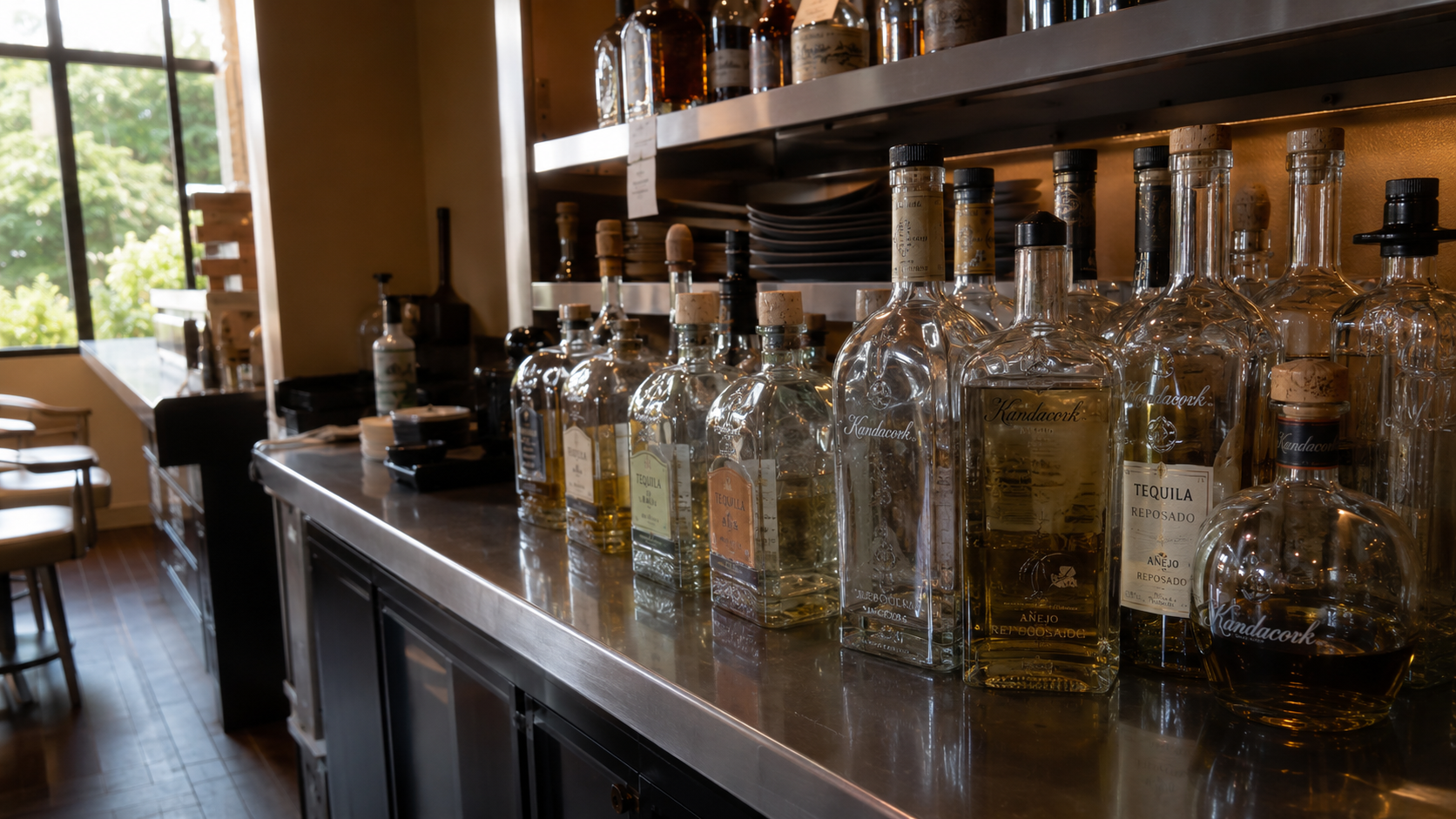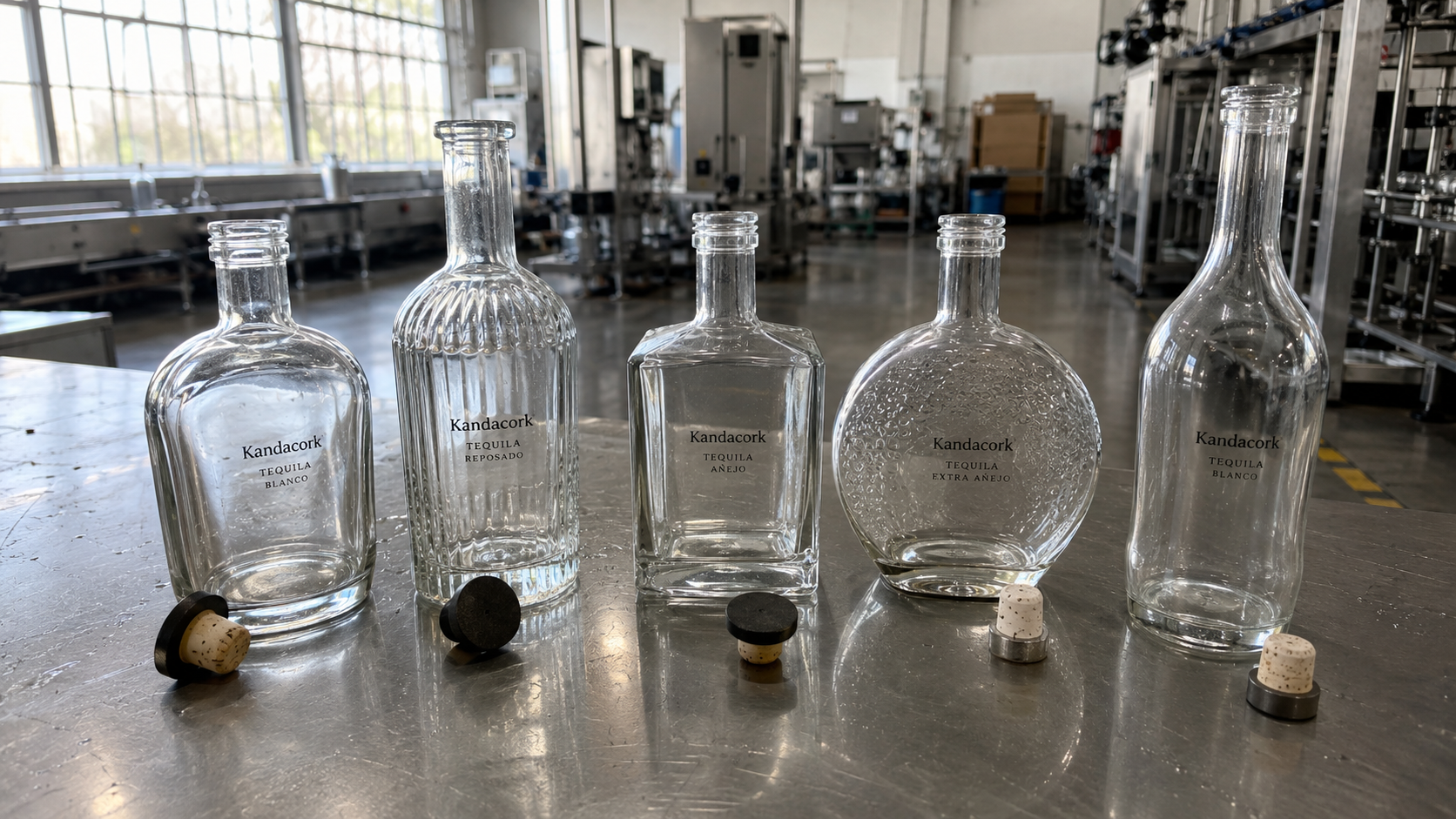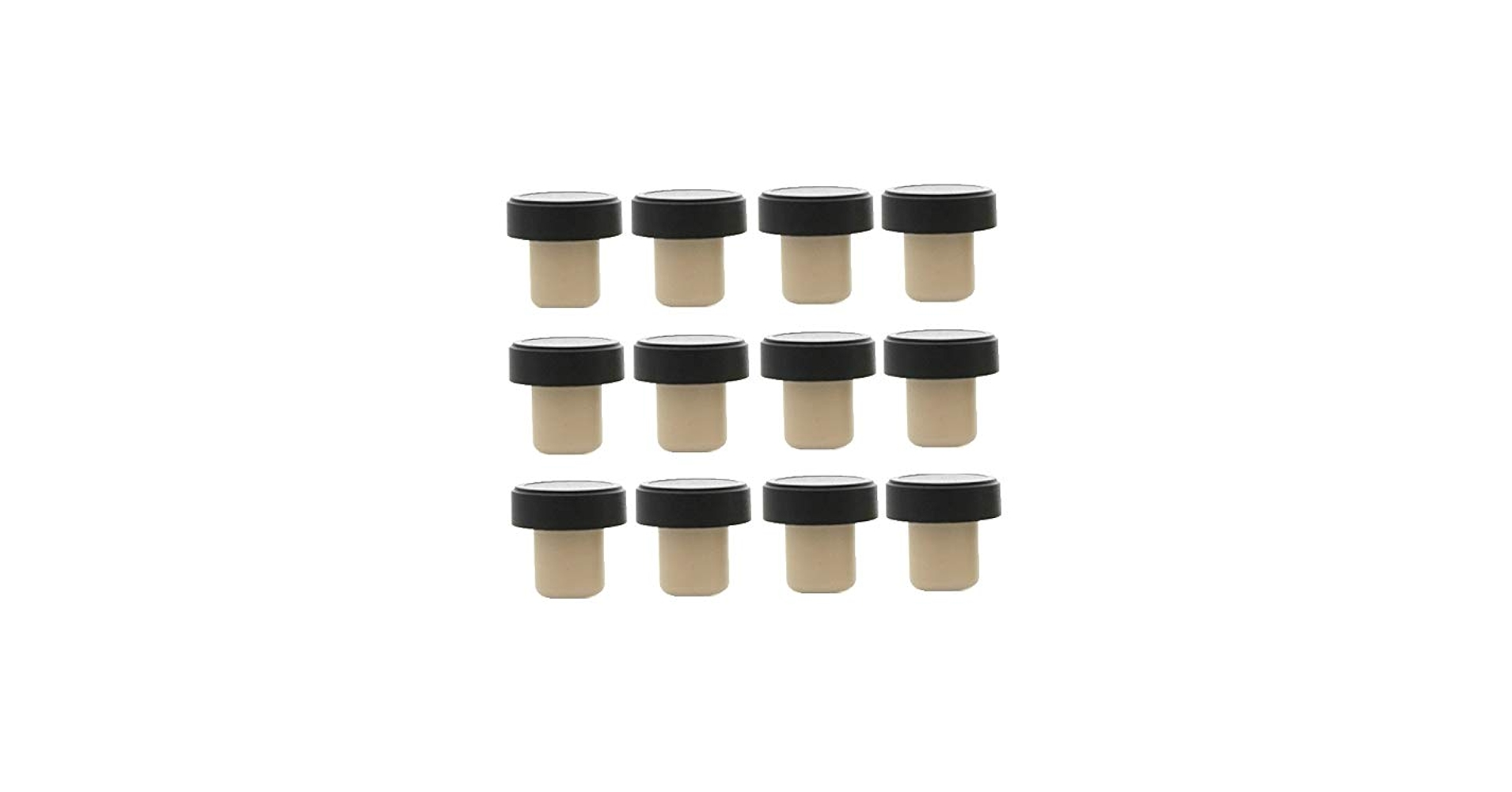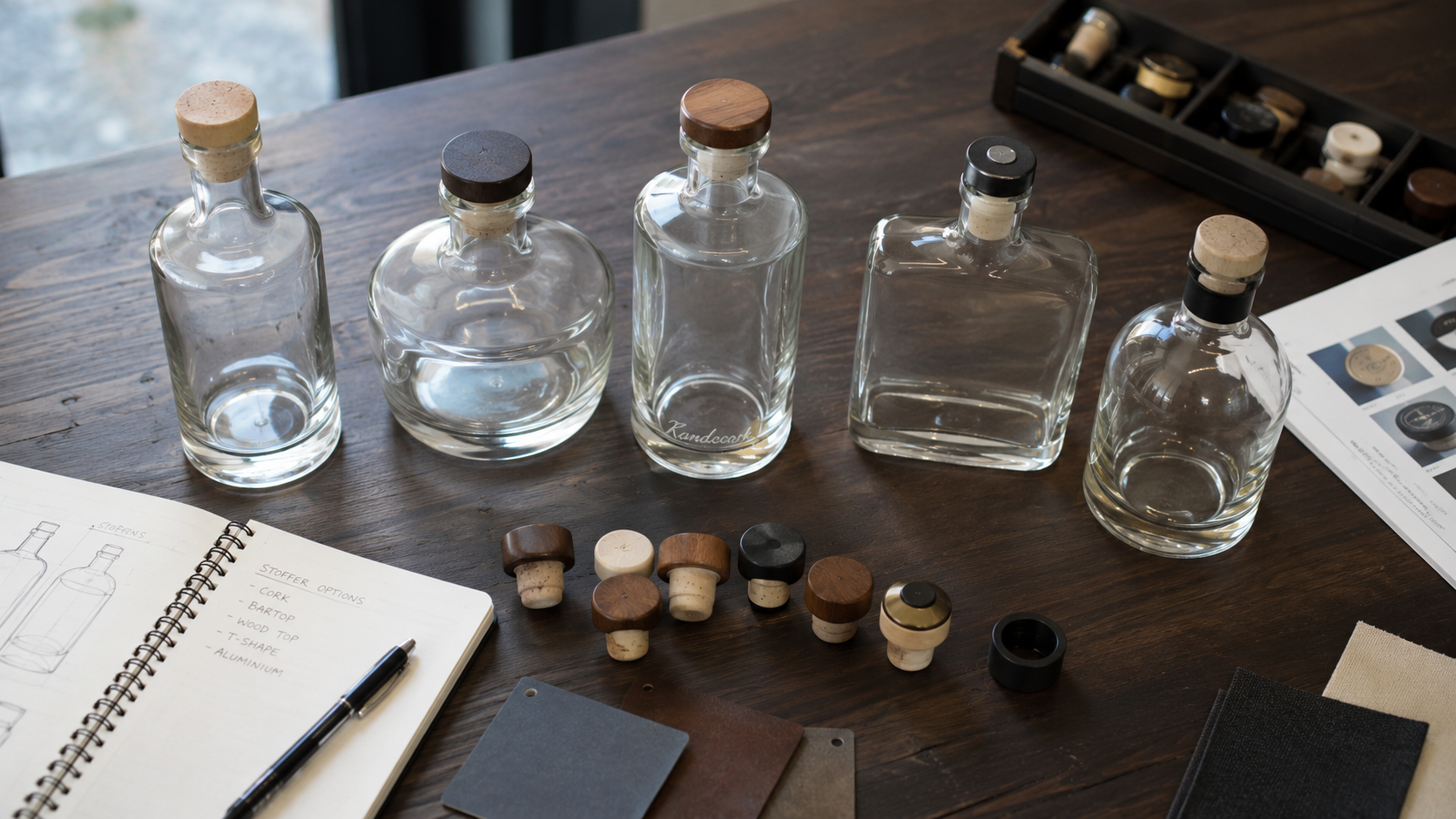
A stopper project should start with clear bottle drawings, neck dimensions, material preferences and branding requirements. This guide explains the key points liquor brands should confirm before requesting samples, approving artwork and moving into bulk stopper production.
Spirits Packaging Stopper Basics
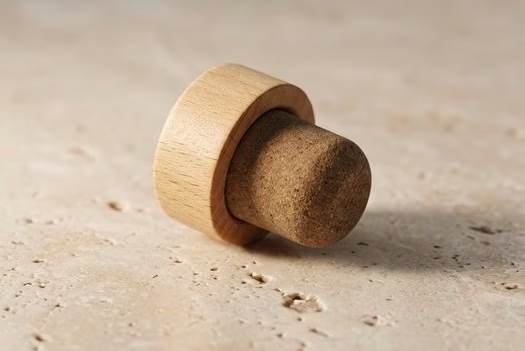
A spirits packaging stopper is the closure used to seal and present a liquor bottle. It may include a decorative head made from wood, metal, aluminum, plastic, or glass, plus a sealing shank made from natural cork, micro-agglomerated cork, synthetic cork, TPE, or another compatible material.
For premium spirits, the visible top creates the first impression on the shelf, while the shank or insert must fit the bottle neck securely. A professional custom spirits bottle stopper supplier should review the bottle finish, inner neck diameter, cork compression, filling method, shipment conditions, and brand positioning before recommending a closure.
Common closure options include bar-top stoppers, T-top closures, natural cork stoppers, synthetic cork stoppers, screw caps, ROPP closures, non-refillable closures, capsules, and shrink sleeves. These can be selected individually or developed as part of a wider bottle stoppers and closures program for spirits packaging.
Importance of Choosing the Right Spirits Bottle Stopper
The right spirits bottle stopper helps prevent leakage, improves shelf presentation, supports smooth bottling, and creates a better consumer opening experience. The wrong closure can cause loose fit, difficult insertion, weak sealing, cork breakage, evaporation, repacking claims, or transport damage.
This is especially important for export spirits. Bottles may go through ocean freight, warehouse storage, temperature changes, pallet movement, and repeated handling before reaching the retail shelf. A stopper that appears acceptable during visual inspection may still fail if the shank diameter, taper, pull-out force, or head-to-shank bonding is not properly controlled.
The closure also communicates product value. A stained wooden bar-top stopper suggests craft, heritage, and warmth. A metal or aluminum stopper can support a premium or limited-edition image. A glass stopper can create a decanter-style presentation. A plastic or synthetic stopper can provide stable dimensions and scalable cost for high-volume private-label projects.
For this reason, buyers should evaluate their liquor bottle closure supplier as part of the complete packaging system. If the bottle, stopper, capsule, label, carton, and export pack are developed separately, small mismatches can create production delays or inconsistent shelf presentation.
Spirits Bottle Stopper Comparison Guide
| Closure Type | Best For | Main Benefit | Common Materials |
|---|---|---|---|
| Bar-top stoppers | Whisky, rum, brandy, tequila, gin | Premium opening feel and strong shelf image | Wood, cork, synthetic cork, metal, plastic |
| Wooden T-top stoppers | Craft spirits and heritage brands | Natural texture and brand warmth | Wood, natural cork, micro-agglomerated cork |
| Metal or aluminum stoppers | Luxury spirits and limited editions | Weight, durability, and premium finish | Aluminum, zinc alloy, stainless steel |
| Plastic and synthetic stoppers | Private label and high-volume bottling | Stable dimensions and flexible color options | Plastic, synthetic cork, TPE |
| Glass stoppers | Gift packs, decanters, liqueurs | High-end visual appeal | Glass, crystal-style glass, TPE inserts |
| Screw caps | Vodka, gin, liqueurs, mini bottles | Cost efficiency and convenient resealing | Aluminum, plastic |
| ROPP closures | High-volume spirits production | Tamper evidence and line efficiency | Aluminum |
| Non-refillable closures | Anti-refill and controlled-pour markets | Product security and brand protection | Plastic, aluminum, composite parts |
This comparison helps buyers quickly match closure type with product positioning, filling method, and target price level. For premium spirits closures, visual impact and opening experience may be the priority. For high-volume spirits packaging, line speed, sealing repeatability, and stable cost may matter more.
Stopper Recommendations by Spirits Category
Different spirits categories often require different closure directions. A whisky closure may need a warmer, more traditional look, while a vodka closure may need a cleaner, more modern appearance. A bottle closure supplier for distilleries should help match the stopper to both the liquid and the brand story.
| Spirits Category | Recommended Closure Direction | Packaging Notes |
|---|---|---|
| Whisky / Bourbon | Wooden bar-top stopper, natural cork, micro-agglomerated cork | Suitable for heritage, craft, premium, and aged-spirit positioning |
| Vodka | Aluminum cap, glass stopper, plastic T-top, ROPP closure | Works well with clean, modern, minimal, or luxury bottle designs |
| Gin | Color-matched plastic stopper, glass stopper, metal T-top | Strong fit for botanical, craft, and design-led brands |
| Rum | Wooden stopper, dark stained stopper, metal stopper | Supports aged, tropical, premium, or heritage packaging styles |
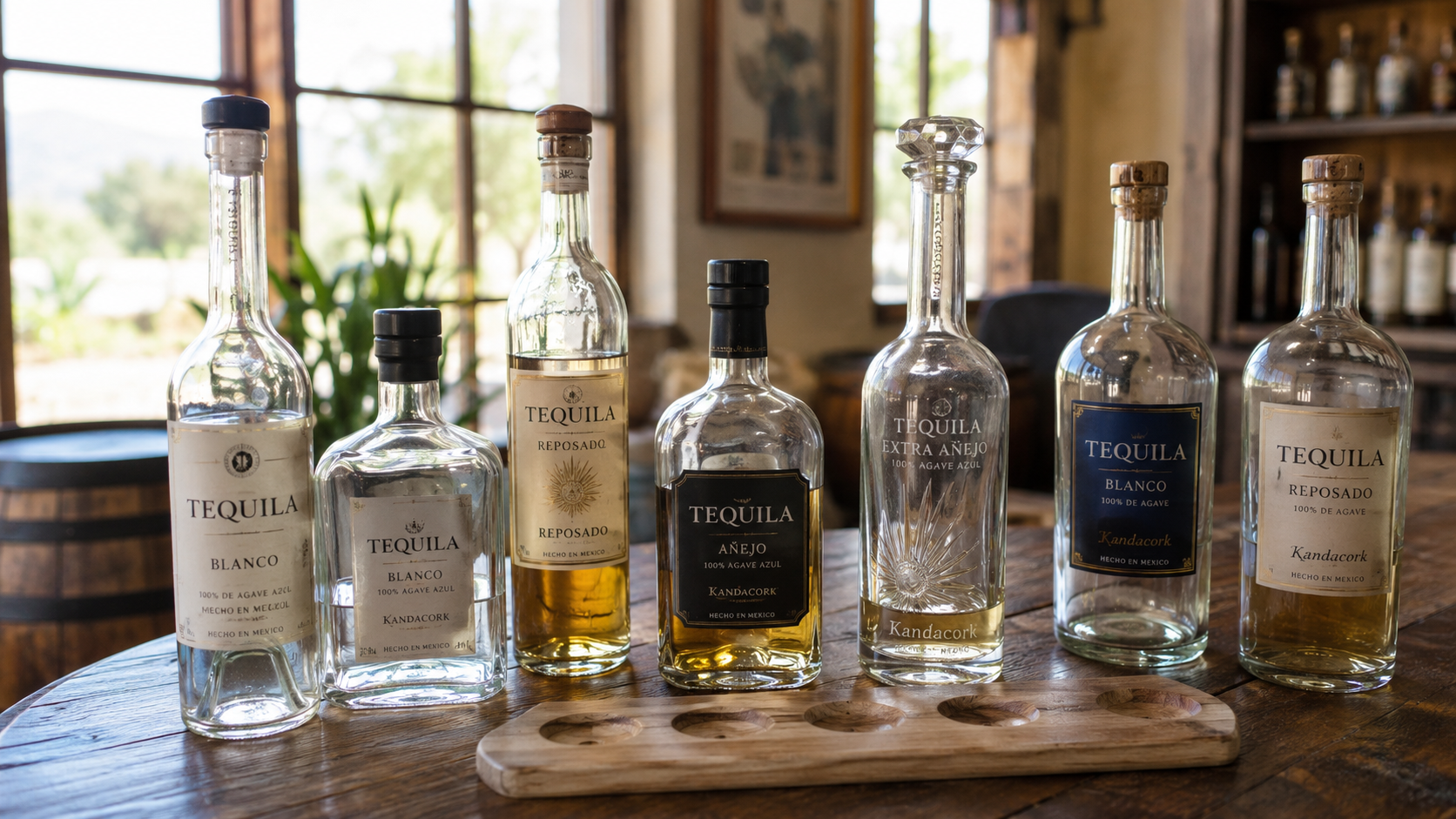
| Tequila / Mezcal | Wooden stopper, metal stopper, embossed or engraved top | Useful for craft identity, authenticity, and premium shelf image |
| Brandy / Cognac-style spirits | Wooden or metal bar-top stopper | Suitable for classic, premium, and gift packaging |
| Liqueurs | Screw cap, glass stopper, decorative synthetic stopper | Works for colorful bottles, gift packs, and flavored products |
| Mini bottles | Screw caps, ROPP closures, compact plastic closures | Practical for sampling, travel retail, and promotional packs |
| Private-label spirits | Plastic stopper, synthetic stopper, screw cap, ROPP closure | Supports cost control, repeatability, and scalable supply |
This category-based approach helps buyers avoid generic closure selection. The best stopper is not always the most expensive option. It is the option that fits the bottle, supports the brand image, runs well in production, and meets the target market’s expectations.
Types of Spirits Bottle Stoppers for Liquor Brands
Wooden Bar-Top Stoppers
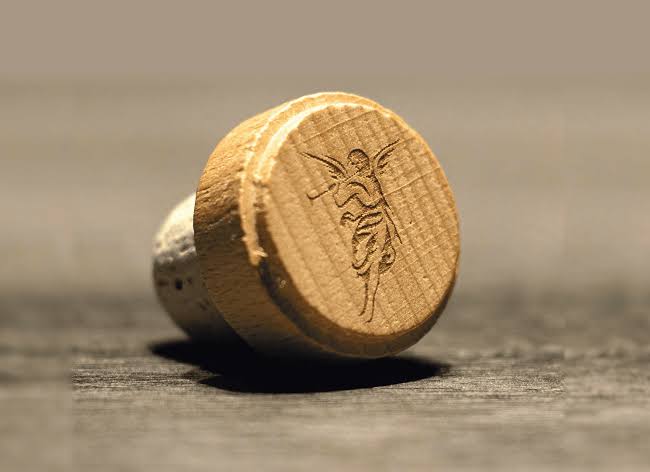
Wooden bar-top stoppers are widely used for whisky, bourbon, rum, brandy, tequila, mezcal, gin, and craft spirits. They offer a warm hand feel and a premium natural appearance.
Wood can be stained, polished, printed, laser engraved, debossed, or combined with logo badges. For brands that want a traditional, handmade, or craft identity, wooden stoppers are often a strong choice.
A reliable bar-top stopper manufacturer should evaluate the wood head diameter, shank length, cork compression, logo position, surface smoothness, and carton protection before mass production. The stopper must feel good in the hand, look consistent from batch to batch, and remain stable during filling, shipment, and retail handling.
Metal and Aluminum Stoppers
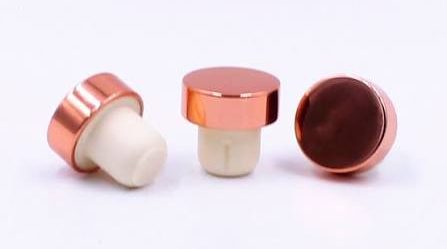
Metal and aluminum stoppers are suitable for premium spirits, luxury bottles, travel retail, gift packaging, and limited-edition releases. They create weight, shine, and a stronger tactile impression when consumers open and reclose the bottle.
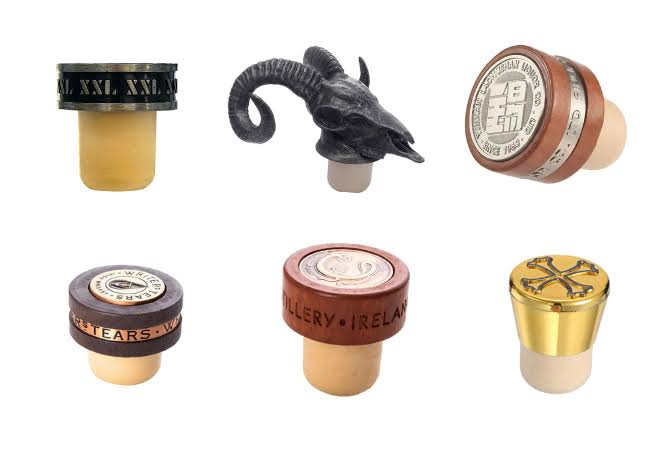
Common finish options include brushed aluminum, anodized color, matte black, gold plating, silver plating, rose gold, antique bronze, embossing, debossing, laser engraving, and inlaid brand elements. For heavy premium closures, Kandacork can support custom metal spirits stoppers that are engineered for both shelf impact and repeatable fit.
For luxury spirits packaging, the supplier must control surface scratches, plating consistency, logo placement, head weight, and bonding strength between the head and shank. These details determine whether the stopper feels premium in real use, not only in a rendering.
Plastic and Synthetic Stoppers
Plastic and synthetic stoppers are practical for private-label spirits, high-volume production, and brands that need repeatable dimensions across multiple SKUs. Modern plastic stoppers can still look premium when the color, shape, texture, and branding are carefully designed.
These closures can support Pantone color matching, hot stamping, embossing, molded logos, matte finishes, gloss finishes, and lightweight export packing. Kandacork’s plastic T-top stoppers are useful when buyers need a balance between cost, consistency, line performance, and customization.
Plastic and synthetic closures are often selected for regional launches, core product lines, promotional SKUs, RTD-adjacent spirits, and private-label programs where repeatable supply matters as much as visual appeal.
Glass and Crystal-Style Stoppers
Glass stoppers are often used for decanter-style bottles, liqueurs, gift boxes, luxury vodka, premium gin, and limited-edition spirits. They create a clear, elegant, and collectible appearance.
Because glass stoppers can be heavier than other closure types, fit testing is essential. The supplier should review head weight, balance, insert material, sealing diameter, packaging protection, and carton drop resistance. A glass stopper can elevate a bottle, but it must be engineered carefully to avoid breakage, instability, or poor fit during transport.
Screw Caps, ROPP Closures, and Non-Refillable Closures
Not every spirits bottle uses a cork-style stopper. Screw caps, ROPP closures, and non-refillable closures are widely used in vodka, gin, rum, tequila, liqueurs, mini bottles, and export spirits.
ROPP closures are rolled onto the bottle neck and can support tamper evidence, efficient production, and consistent opening torque. Kandacork’s custom ROPP closures are suitable for brands that need secure, reclosable aluminum caps tuned to their glass finish and capping line.
Non-refillable closures are useful when brands need anti-refill protection, controlled pouring, or stronger product security in markets where counterfeiting is a concern. Kandacork can also support non-refillable closure systems for spirits brands that need additional product protection without losing visual appeal.
Choosing a Spirits Packaging Stopper Supplier
Choose a spirits packaging stopper supplier that can review bottle-neck fit, recommend suitable materials, provide custom branding, support sampling, test sealing performance, and manage bulk export production. The supplier should understand both closure engineering and premium liquor packaging design.
The first factor is bottle-neck compatibility. The inner diameter, tolerance, height, finish type, and glass consistency determine whether a cork shank, synthetic shank, screw cap, or ROPP closure can seal properly.
The second factor is the spirits category. Whisky, rum, gin, vodka, tequila, brandy, liqueur, cream spirit, and flavored spirits may require different design styles and material choices. High-ABV products also require careful review of materials that may contact the product or vapor.
The third factor is brand tier. A core-range product may need a reliable, cost-efficient closure for repeat orders. A premium bottle may need a heavier stopper, special finish, and gift-box coordination. A limited edition may justify custom tooling or more complex decoration.
The fourth factor is production method. Buyers should consider filling-line speed, corking equipment, capper settings, insertion force, extraction force, operator handling, packing method, and pallet shipment.
The final factor is market destination. Spirits sold in the United States, European Union, United Kingdom, Canada, Australia, Japan, and other markets may require different documentation, food-contact declarations, traceability records, or packaging compliance support.
Need help matching a stopper to your spirits bottle? Send Kandacork Closures your bottle drawing, sample photo, closure idea, and target quantity for a custom recommendation.
Custom Spirits Bottle Stopper Options
A strong custom liquor bottle stoppers manufacturer should offer customization across materials, dimensions, finish, branding, and packaging coordination. This allows buyers to build a closure system that supports both technical performance and shelf differentiation.
Material options may include wood, aluminum, zinc alloy, stainless steel, plastic, glass, natural cork, micro-agglomerated cork, synthetic cork, and hybrid structures. Each material has different cost, weight, appearance, tooling needs, and production lead time.
Shape options may include flat-top, domed, mushroom, cylindrical, tall, short, faceted, rounded-edge, sculpted, weighted, or fully custom-molded designs. The shape should match the bottle shoulder, label style, capsule, secondary packaging, and brand identity.
Surface finish options may include natural wood grain, dark stain, matte coating, gloss coating, anodized aluminum, brushed metal, plated metal, frosted glass, colored plastic, soft-touch finish, and textured grip details. Logo and color planning should be coordinated with the wider bottle design, including glass color, label material, capsule color, carton design, and photography needs.
Branding options may include logo printing, hot stamping, laser engraving, embossing, debossing, sidewall branding, metal badges, coin inserts, molded logos, and Pantone color matching. If the bottle also requires coating, printing, frosting, metallic effects, or logo placement, a specialist decoration and branding workflow can help align closure design with the full packaging appearance.
For premium spirits, the stopper should be developed together with the bottle, label, capsule, shrink sleeve, carton, gift box, and shipping pack. This creates a complete packaging system instead of a disconnected group of components.
Bottle, Closure, and Decoration Coordination
A stopper performs best when it is engineered with the bottle from the beginning. The bottle neck finish, bore diameter, shoulder shape, label area, closure height, capsule length, and carton divider all affect how the final package works.
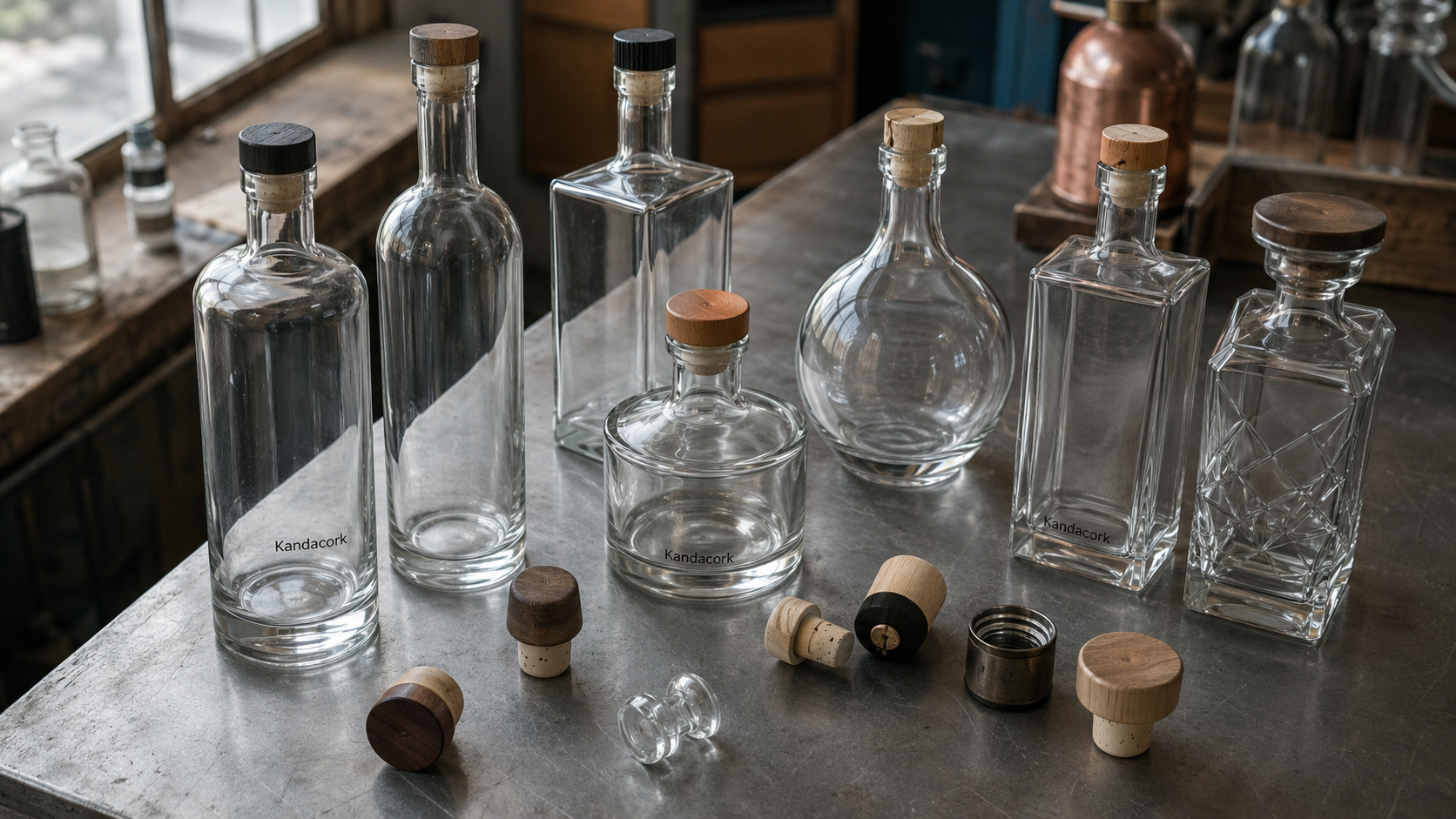
For new glass packaging projects, brands may need to coordinate bottle structure and closure fit together. A spirits bottle development team such as Kandacork Spirits can support bottle shape, capacity, neck finish, closure matching, and decoration-ready surfaces for whisky, vodka, gin, rum, tequila, brandy, liqueur, and private-label spirits.
For broader packaging programs, Kandacork Glass can help buyers think about the complete system: custom glass bottles, matched stoppers, bottle decoration, cartons, export packing, and repeat-order supply. This is useful for brand owners that want a consistent packaging family across several SKUs or markets.
When the project includes multi-category packaging, custom bottle formats, or integrated closure systems, Kandacork Glass Packaging can help align bottle engineering, closure performance, and production feasibility. This reduces the risk of attractive packaging that looks strong in design but performs poorly on the filling line.
Sealing Performance, Fit Testing, and Quality Control
Sealing performance is one of the most important reasons to work with a professional spirits packaging stopper supplier. A beautiful stopper can still fail if it is too loose, too tight, poorly bonded, or not compatible with the filling line.
For bar-top stoppers, the shank must compress correctly inside the bottle neck. If the fit is too loose, the bottle may leak or the stopper may move during transport. If the fit is too tight, the corking process may become difficult and consumers may struggle to open the bottle.
For screw caps and ROPP closures, the supplier should check thread profile, skirt height, torque, tamper-evident band performance, capper compatibility, liner selection, and sealing surface quality.
Important inspection points may include:
- Bottle-neck compatibility
- Shank diameter and taper
- Shank length and compression
- Pull-out force testing
- Insertion force testing
- Head-to-shank bonding strength
- Leak resistance
- Tilt or inversion testing
- Surface finish inspection
- Logo position and color accuracy
- Scratch and abrasion checks
- Carton protection
- Export pallet stability
- Golden sample retention
- Pre-shipment AQL inspection
Real bottle testing is strongly recommended before bulk production. A sample tested on the actual bottle provides more useful information than a drawing alone.
Buyer Checklist Before Ordering Custom Spirits Stoppers
Before requesting a quote, buyers should prepare clear project information. This helps the supplier recommend the right closure and reduces unnecessary revisions.
Useful information includes:
- Bottle drawing or physical bottle sample
- Neck inner diameter and tolerance
- Required closure type
- Spirit category and ABV range
- Target market or destination country
- Annual quantity estimate
- First order quantity
- Preferred head material
- Preferred shank material
- Logo artwork or brand reference
- Surface finish requirements
- Filling line or corking machine details
- Required documentation
- Packaging and shipping requirements
- Launch deadline
A buyer who provides these details early can usually receive a more accurate recommendation, faster sampling plan, and more reliable quotation.
Regulatory and Documentation Considerations
Spirits packaging operates in a regulated product environment. Closures may not always carry the main legal label, but they still form part of the packaging system and may include materials that contact the bottle, product, vapor, or consumer.
In the United States, the Alcohol and Tobacco Tax and Trade Bureau provides guidance related to distilled spirits containers and labeling requirements. For packaging components that may come into contact with food or beverages, the U.S. Food and Drug Administration explains food-contact substances to include food packaging and its components.
In the European Union, the European Commission’s food contact materials framework emphasizes safety and inertness for materials intended to contact food. This is relevant for synthetic cork, plastic inserts, coatings, adhesives, colorants, liners, and other components that may directly or indirectly interact with the product.
For quality systems, ISO 9001 is widely recognized as a quality management standard. For transport packaging, ASTM D4169 provides a reference for evaluating shipping units under distribution conditions. These standards do not replace project-specific testing, but they help buyers frame practical expectations for quality control, documentation, and shipment protection.
A professional spirits packaging stopper supplier should be able to discuss material specifications, product drawings, inspection criteria, packing details, food-contact declarations where applicable, and batch traceability records.
Kandacork as Your Spirits Packaging Stopper Supplier
Kandacork Closures supports custom closure projects for spirits brands, distilleries, bottlers, importers, packaging distributors, and private-label companies. The product range includes wooden stoppers, aluminum stoppers, plastic stoppers, synthetic stoppers, synthetic cork stoppers, glass stoppers, metal stoppers, screw caps, ROPP closures, non-refillable closures, capsules, and shrink sleeves.
Kandacork focuses on matching closure structure with bottle-neck fit, brand image, filling method, and export requirements. This matters because spirits packaging must achieve both reliable sealing and premium presentation.
For a whisky brand, Kandacork may recommend a stained wooden bar-top stopper with a natural cork or micro-agglomerated cork shank. For a gin or vodka brand, a matte or gloss plastic stopper with color matching may be more suitable. For a luxury tequila, rum, or limited-edition spirits project, a metal or glass stopper can create stronger shelf impact. For high-volume bottling, screw caps or ROPP closures may provide better line efficiency and repeatability.
A qualified OEM spirits packaging closures supplier should not recommend the same closure for every project. The right choice depends on the bottle finish, product category, brand tier, target market, quantity, filling method, and budget.
Custom Stopper Project Workflow
Project Brief
The buyer shares bottle drawings, bottle samples, neck finish details, target spirit category, preferred closure style, annual volume, brand positioning, destination market, and launch timeline.
Closure Recommendation
The supplier reviews the bottle-neck structure, sealing needs, stopper material, decoration method, cost target, and production risks. Suitable closure options are recommended based on real project requirements.
Sample Development
Samples are produced for appearance review, bottle fit, pull-out force, branding accuracy, surface finish, and packaging compatibility. For custom tooling projects, prototype timing should be included in the launch schedule.
Fit and Line Testing
The buyer or bottling partner tests the closure on actual bottles and filling equipment. This helps identify insertion issues, loose fit, capper adjustment needs, scratching, carton interference, or transport concerns.
Specification Confirmation
The final specification should include drawings, tolerances, materials, colors, decoration method, packing format, inspection standards, MOQ, lead time, and shipping plan.
Mass Production and Export Supply
After approval, the supplier manufactures the closure, performs quality inspection, packs the goods securely, and supports export delivery according to the buyer’s production schedule.
MOQ, Lead Time, and Quotation Information
MOQ and lead time depend on closure material, tooling requirements, decoration method, surface finish, order quantity, and packaging complexity.
Standard closure options usually have faster lead times than fully custom-molded or complex decorated stoppers. Wooden and plastic stoppers may have different MOQ requirements from metal, aluminum, or glass stoppers. Special finishes such as plating, engraving, embossing, debossing, custom molds, and inlaid logo details may require additional development time.
For accurate pricing, buyers should provide bottle drawings, samples, target quantity, logo artwork, preferred material, target market, packing requirements, and launch timeline. Clear project information allows Kandacork Closures to recommend the correct structure and quote more efficiently.
If you need wholesale liquor bottle stoppers or custom closure solutions for a new spirits launch, Kandacork can review your bottle, recommend a suitable stopper structure, and support sampling before mass production. Buyers can submit project details through the custom closure quote page.
FAQ
What is the best stopper for premium spirits bottles?
The best stopper depends on the bottle, brand tier, and production method. Wooden bar-top stoppers are strong for whisky, rum, tequila, and brandy. Metal stoppers are suitable for luxury or limited-edition spirits. Glass stoppers work well for decanter-style packaging. Plastic and synthetic stoppers are practical for scalable, cost-controlled projects.
What is the difference between a bar-top stopper and a screw cap?
A bar-top stopper plugs into the bottle neck using a cork or synthetic shank. It is often used for premium spirits where opening feel and visual presentation matter. A screw cap threads onto the outside of the bottle neck and is often selected for speed, cost control, tamper evidence, or resealing convenience.
Can spirits bottle stoppers be customized with logos?
Yes. Custom branding options include printing, hot stamping, laser engraving, embossing, debossing, metal badges, sidewall branding, molded logos, color matching, and special surface finishes. The best method depends on the stopper material and the desired brand effect.
How do I know which stopper size fits my bottle?
The supplier needs the bottle drawing or physical sample. Neck inner diameter, tolerance, height, and finish type determine the correct shank diameter, taper, and length. Sampling on the actual bottle is strongly recommended before mass production.
Are synthetic cork stoppers suitable for liquor bottles?
Yes. Synthetic cork stoppers are widely used when brands need consistent diameter, controlled compression, stable appearance, and scalable production. Natural cork may be preferred for heritage positioning, while synthetic materials can offer stronger dimensional consistency.
What makes a good spirits packaging stopper supplier?
A good spirits packaging stopper supplier understands both packaging design and closure engineering. The supplier should review bottle fit, sealing performance, material selection, decoration, compliance needs, MOQ, lead time, sampling, quality control, and export packing before production.
What information is needed for a custom stopper quote?
Useful quote information includes bottle drawings or samples, neck finish details, spirit category, ABV range, preferred closure type, material, logo artwork, order quantity, market destination, required documentation, and launch timeline.
Can Kandacork Closures support OEM and ODM spirits stopper projects?
Yes. Kandacork Closures supports OEM and ODM stopper projects, including custom materials, shapes, colors, logos, surface finishes, shank structures, capsules, shrink sleeves, and export packaging for spirits brands and packaging distributors.
Build a Better Spirits Package from the Closure Up
The closure is one of the most important touchpoints in spirits packaging. It protects the product, completes the bottle design, supports brand positioning, and shapes the consumer’s first opening experience.
Working with the right spirits packaging stopper supplier helps brands reduce leakage risk, improve shelf impact, simplify sourcing, and prepare for repeat production. Kandacork Closures supports custom stopper and closure projects from material selection and sample development to sealing checks, branding, mass production, and export supply.
If you are developing a new whisky, vodka, gin, rum, tequila, brandy, liqueur, or private-label spirits project, share your bottle drawing, closure idea, quantity, and target market with Kandacork Closures. The team can help you build a closure system that looks premium, fits correctly, and supports your next spirits packaging launch.