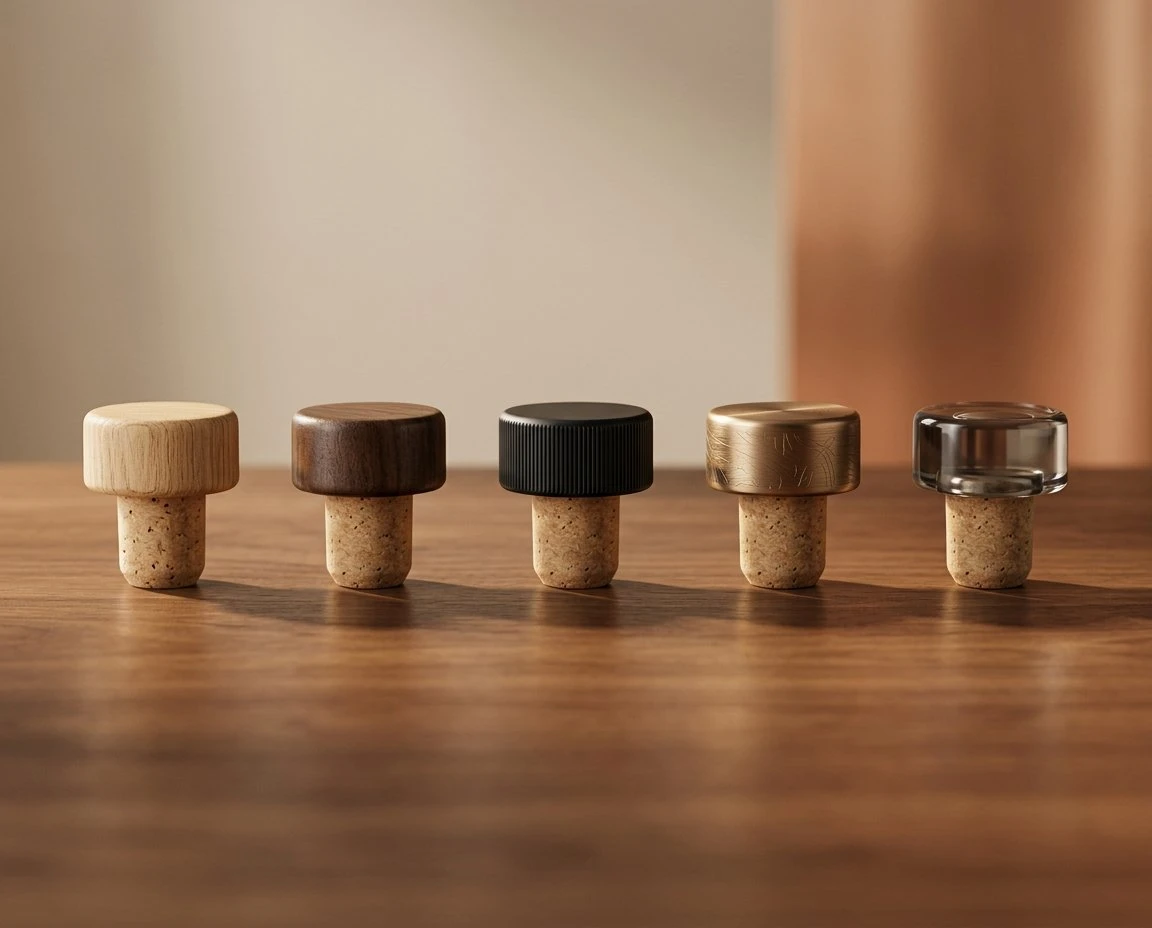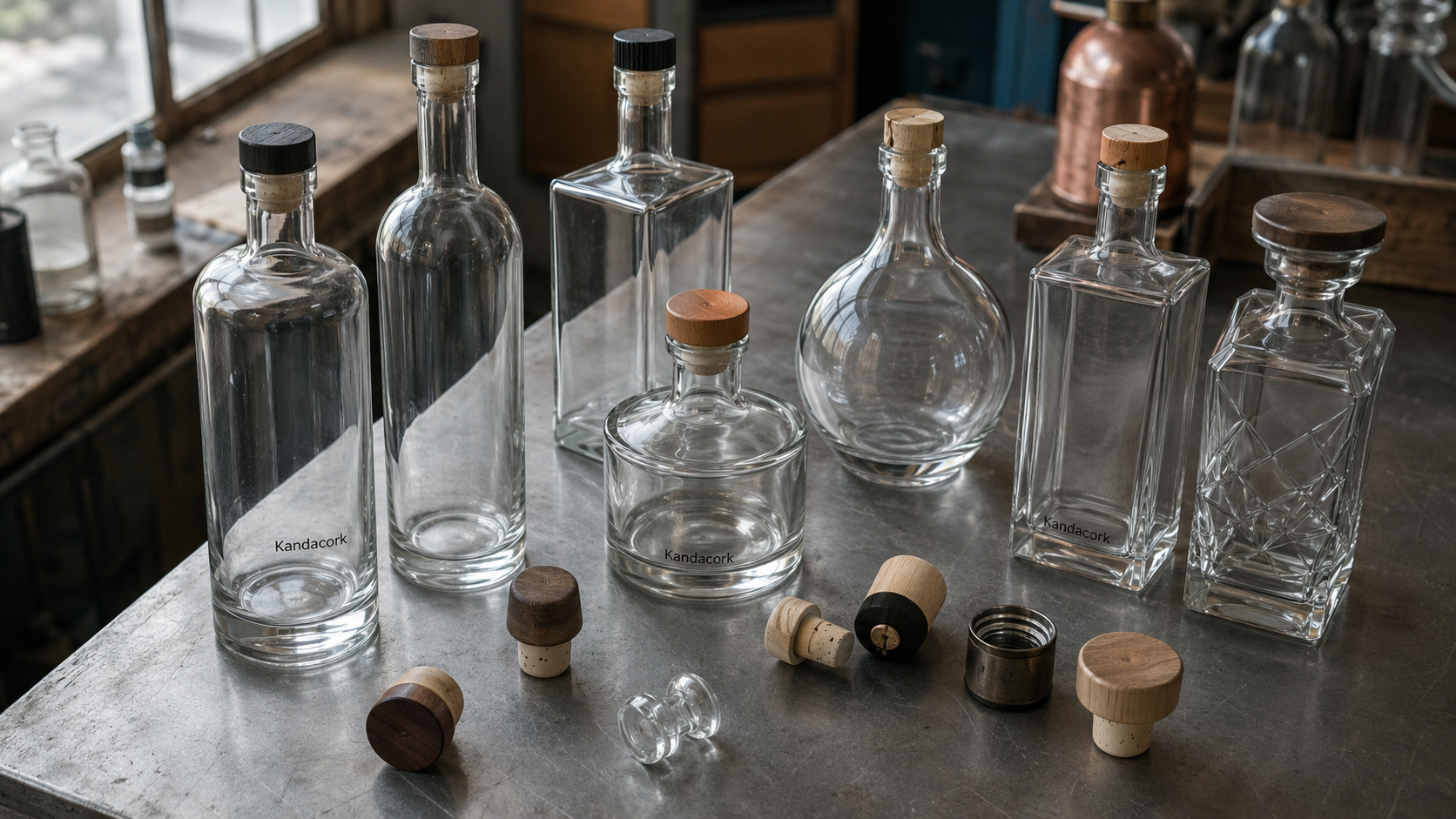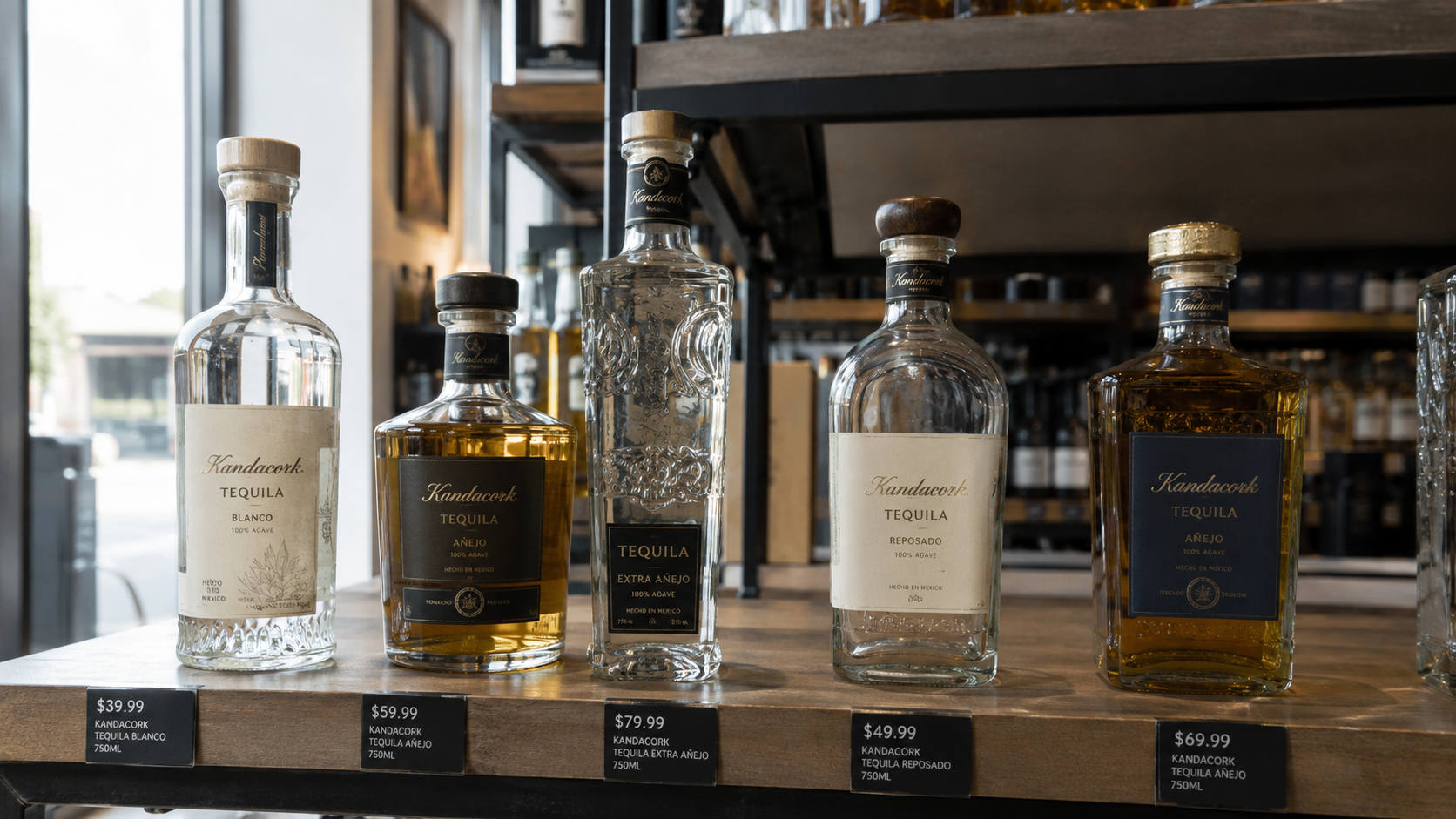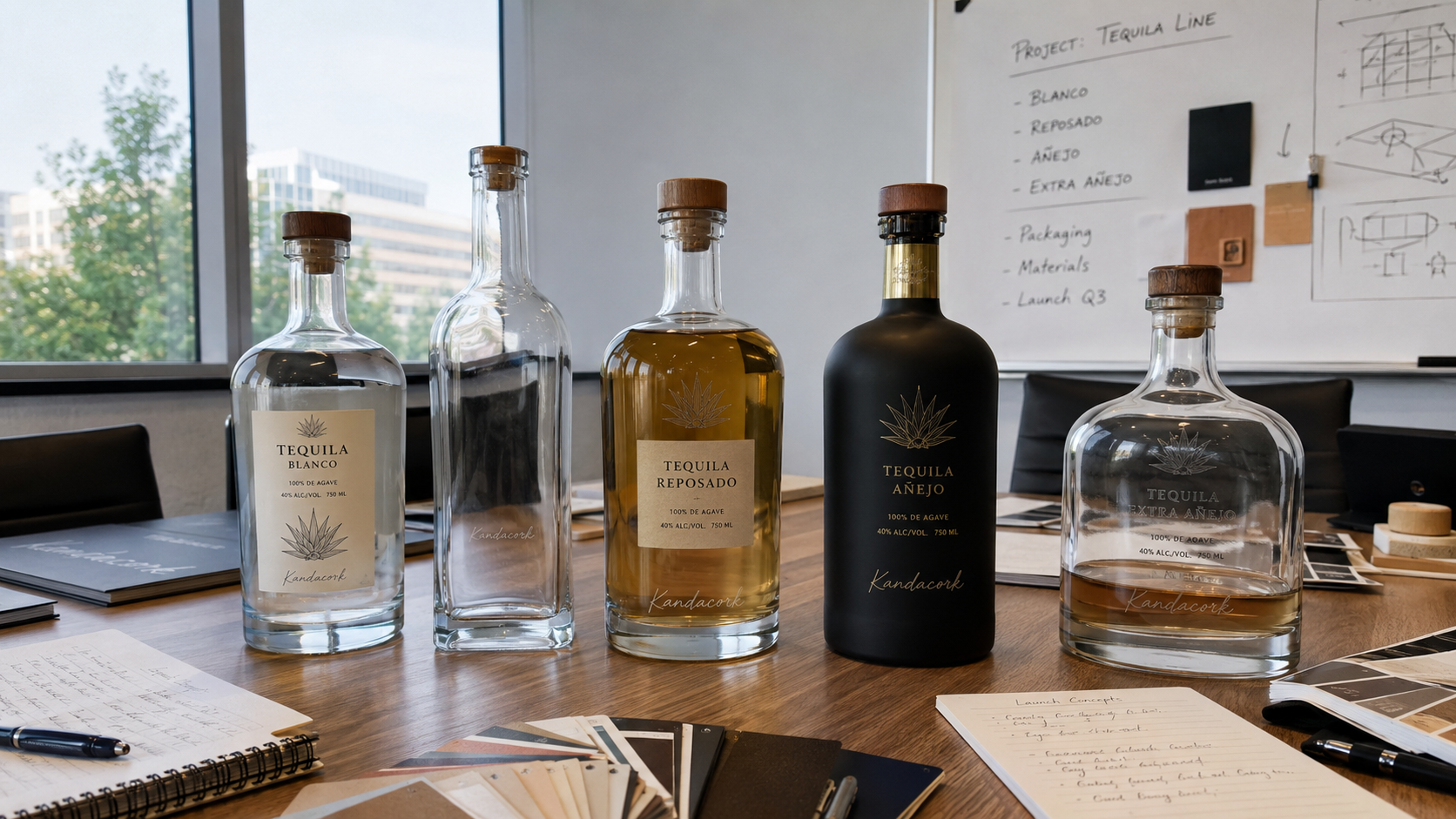
Brandy bottle closures should support a premium feel while remaining practical for production and export. This guide compares common closure options for brandy packaging, including wooden stoppers, metal tops, cork shanks, synthetic inserts, caps and branded finishing methods.
Best Closure Options for Brandy Bottles
Wooden bar-top stoppers are suitable for craft and premium brandy. Synthetic cork stoppers are ideal for stable bulk production. Natural cork and micro-agglomerated cork support traditional brand presentation. Metal and zamak stoppers fit luxury XO-style products. ROPP caps and non-refillable closures are practical for export, retail and tamper-evident packaging.
| Closure Type | Best For | Main Advantage |
|---|---|---|
| Wooden bar-top stopper | Craft and premium brandy | Natural premium appearance |
| Synthetic cork stopper | Bulk production | Stable fit and batch consistency |
| Natural cork stopper | Heritage-style brandy | Traditional opening feel |
| Micro-agglomerated cork | Premium spirits with repeat orders | Cork character with controlled structure |
| Zamak or metal stopper | XO-style and luxury brandy | Heavy hand feel and premium identity |
| Crystal glass stopper | Decanter-style brandy | High-end visual presentation |
| Aluminum screw cap | Entry-level and mass-market brandy | Efficient sealing and cost control |
| ROPP cap | High-volume bottling | Tamper evidence and line efficiency |
| Non-refillable closure | Export and anti-counterfeit markets | Brand protection and refill resistance |
This comparison gives brand owners a practical starting point. The final decision should always be confirmed through bottle-neck measurement, closure sampling and line compatibility testing.
Who This Guide Is For
This guide is useful for brandy brands, distilleries, private-label spirits companies, importers, packaging distributors and glass bottle suppliers looking for matching closures.
It is especially relevant if you are developing:
- A new brandy packaging project
- A cognac-style spirits bottle
- A VSOP or XO-inspired product line
- A craft brandy bottle
- A private-label liquor range
- A gift-box spirits edition
- A bulk export brandy program
- A premium closure for an existing bottle
For these projects, the closure should not be selected only by appearance. Buyers also need to confirm fit, sealing performance, filling-line compatibility, decoration method, packaging protection and export requirements.
What Are Custom Bottle Closures for Brandy?
Custom bottle closures for brandy are sealing and branding components designed to fit a specific bottle neck, spirits category, production process and brand image. A closure can be functional, decorative or both.
In spirits packaging, common closure types include bar-top cork stoppers, T-top stoppers, wooden bottle stoppers, synthetic cork stoppers, natural cork shanks, aluminum screw caps, ROPP caps, tamper-evident closures, non-refillable closures, zamak stoppers, metal caps and crystal glass luxury stoppers.
For brandy, the closure should match the product’s positioning. A craft brandy may choose a wooden T-top stopper for a warm handcrafted look. A luxury XO-style product may use a weighted metal or crystal stopper. A large-volume export brandy may require an aluminum cap, ROPP cap or non-refillable system for tamper evidence and distribution security.
The best closure is not always the most expensive option. The best closure is the one that fits the bottle, protects the liquid, supports the filling line and strengthens the brand story.
Best Closure Types for Brandy Bottles
Wooden Bar-Top Stoppers
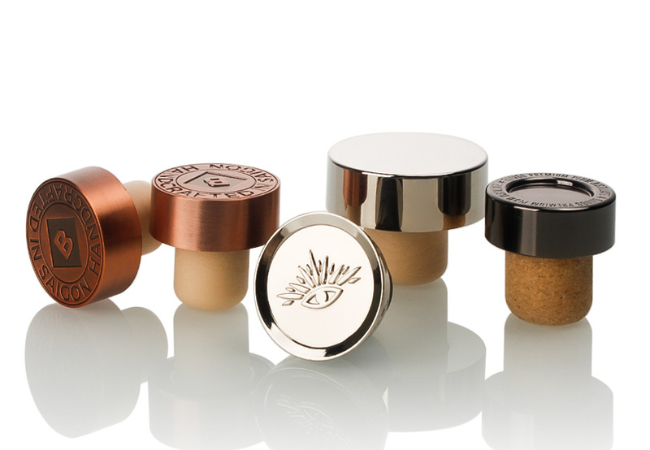
Wooden bar-top stoppers are one of the most popular choices for premium brandy packaging. They combine a wood head with a cork, synthetic or micro-agglomerated shank. The head provides grip and visual identity, while the shank provides the sealing function inside the bottle neck.
Wood creates a natural, warm and artisanal appearance. This makes it suitable for aged brandy, craft spirits, small-batch releases and heritage-style packaging. Brands can customize the wood type, head shape, stain color, surface finish and logo decoration.
Common decoration methods include laser engraving, hot stamping, pad printing, debossing, top branding and side printing. For brandy brands that want a premium but not overly flashy closure, a wooden bar-top stopper is often a practical and attractive solution.
Synthetic Cork Stoppers
Synthetic bottle stoppers are widely used when consistency is a priority. They offer controlled dimensions, stable compression and clean visual repeatability across large production runs. For distilleries and bottlers, this consistency can help reduce fitting issues and support repeat orders.
Synthetic cork can be used as the full stopper body or as the shank under a wooden, plastic, aluminum or metal top. It is especially suitable for brandy brands that need reliable sealing performance, scalable production and predictable appearance.
For private-label brandy, supermarket spirits, export programs and long-term supply contracts, synthetic cork stoppers can balance cost, performance and brand presentation.
Natural Cork and Micro-Agglomerated Cork
Natural cork is often associated with tradition, premium packaging and authentic craftsmanship. For high-end brandy or cognac-style presentation, natural cork can help create a classic sensory experience during opening.
Micro-agglomerated cork provides a more engineered option. It is made from processed cork granules and designed for more uniform size and structure. This can make it useful for brands that want a cork-based closure with improved consistency.
When choosing cork shanks for custom bottle closures for brandy, buyers should confirm bottle neck tolerance, stopper diameter, insertion force and pull-out force. A beautiful cork closure still needs to perform well during filling, storage, transport and consumer use.
Metal and Zamak Stoppers
Metal and zamak stoppers are often selected for luxury spirits. They provide a heavier hand feel and stronger premium signal. This is useful for XO brandy, limited editions, gift sets and collector bottles.
A metal stopper can be plated, brushed, polished, engraved, embossed or combined with decorative inserts. It may use gold, silver, bronze, black, gunmetal or custom metallic finishes. For brands that want the closure to become a signature design element, zamak and metal tops offer strong customization potential.
Buyers should consider weight, cost, mold development, surface protection and carton packing. Premium closures need careful packaging to prevent scratches during international shipping.
Crystal Glass Stoppers
Crystal glass stoppers are used for luxury brandy, decanter-style bottles and high-end gift packaging. They offer transparency, light reflection and a premium display effect.
These closures can be paired with heavy glass bottles, decorative labels, metal neck rings and rigid gift boxes. When a brand needs a coordinated bottle and stopper system, custom glass packaging support can help align bottle structure, closure fit and export protection.
For this type of closure, sample testing is essential. The supplier should confirm the stopper fit, bottle opening diameter, sealing insert, tolerance and protection method during shipping.
Aluminum, ROPP and Non-Refillable Closures
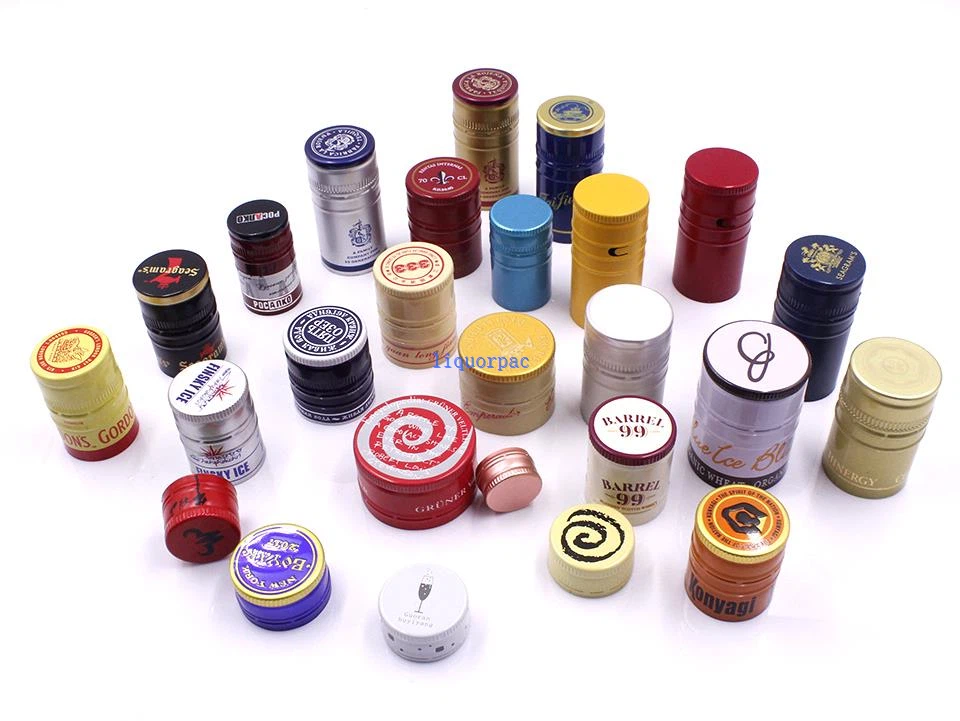
Aluminum screw caps and custom ROPP closures are often used for mass-market spirits, export brandy and products requiring tamper-evident packaging. They are efficient for high-volume production and can support decoration methods such as printing, embossing and color matching.
Non-refillable closures are especially useful in markets where brand protection, anti-counterfeit packaging and product authenticity are priorities. These closures can include internal pourers, valves or security components that make refilling more difficult.
For brandy brands selling through distributors, duty-free channels or international retail networks, tamper-evident and non-refillable closure systems can help protect both the product and the brand reputation.
Brandy Closure Selection by Product Tier
| Brandy Product Type | Recommended Closure | Main Benefit |
|---|---|---|
| Entry-level brandy | Aluminum screw cap or ROPP closure | Cost control and tamper evidence |
| Craft brandy | Wooden T-top stopper with synthetic cork | Premium look and stable sealing |
| VSOP-style brandy | Wooden or aluminum bar-top stopper | Balanced cost and shelf appeal |
| XO-style brandy | Zamak, metal or crystal stopper | Luxury positioning and strong hand feel |
| Export brandy | Non-refillable or tamper-evident closure | Brand protection and market security |
| Gift-box edition | Custom metal, glass or decorated wooden stopper | Collectible presentation |
A strong packaging decision should consider not only the closure cost but also the bottle value, product price point, filling-line process, logistics route and consumer experience.
Need help choosing the right closure? Explore the broader range of spirits bottle closures and stoppers available for premium spirits, private-label liquor, specialty bottles and export packaging projects.
Custom Decoration Options for Brandy Closures
A closure is a small component, but it can carry powerful brand signals. Custom bottle closures for brandy can be decorated in many ways depending on the material and project budget.
Popular decoration options include:
- Logo engraving
- Debossed or embossed brand marks
- Hot foil stamping
- Screen printing
- Pad printing
- Laser marking
- Color matching
- Matte, gloss, satin or metallic finishes
- Wood staining
- Metal plating
- Custom molded shapes
- Top medallions or inserts
- Neck capsule matching
For premium brandy packaging, the closure should match the bottle, label, capsule, gift box and overall brand language. A heritage brand may choose dark stained wood with gold hot stamping. A modern craft distillery may prefer a clean natural wood head with simple laser engraving. A luxury XO product may use a heavy metal stopper with an embossed crest.
When a brand needs decoration across both glass and closures, bottle decoration and branding support can help align color, logo placement, finish texture and shelf presentation across the full pack.
Technical Factors Buyers Should Confirm
Bottle Neck Finish and Stopper Fit
The most important technical factor is fit. The closure must match the bottle neck finish, internal diameter and tolerance. Even a small mismatch can create leakage, loose fit, difficult insertion or poor consumer experience.
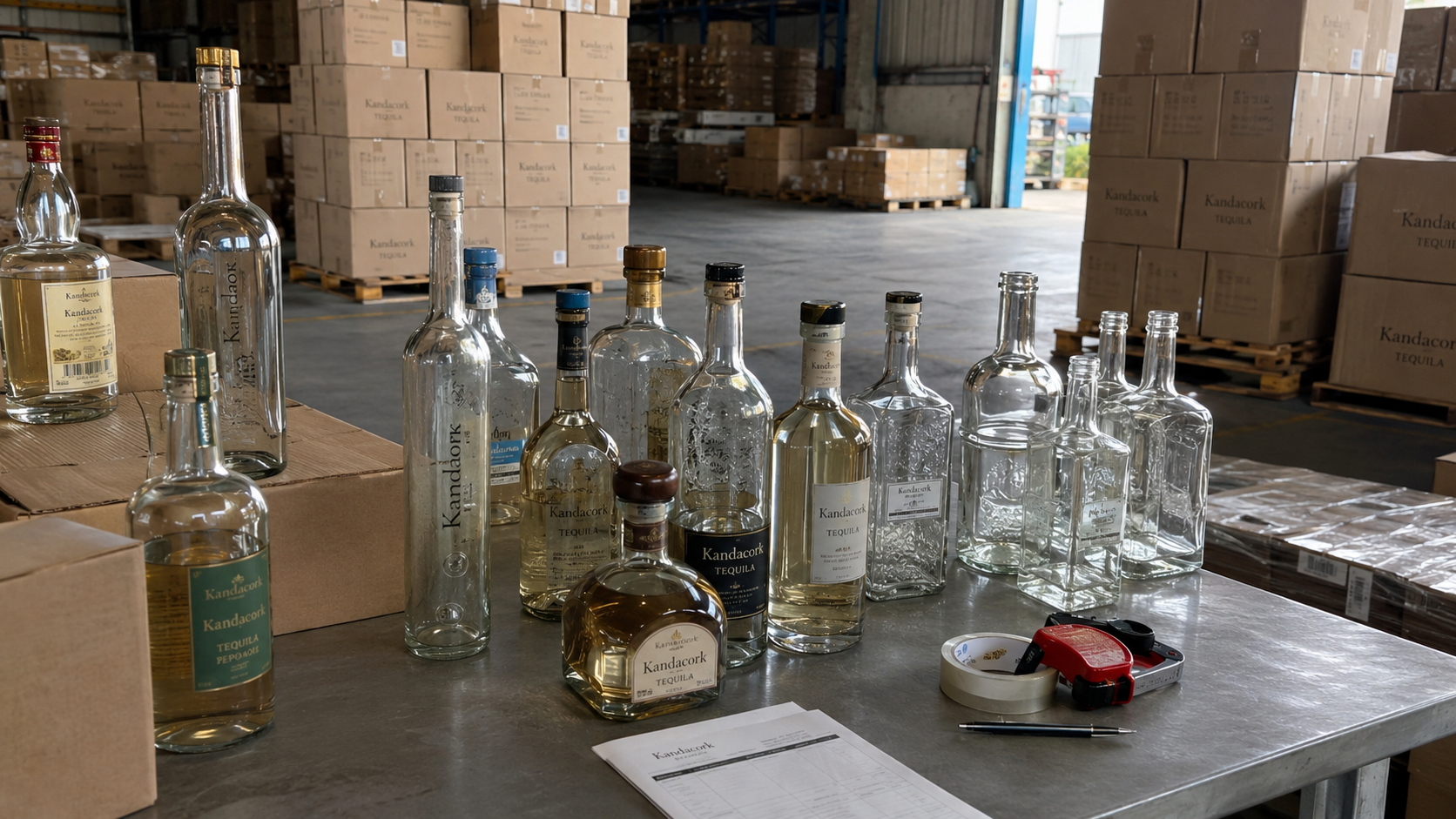
Before ordering custom bottle closures for brandy, buyers should provide a bottle drawing or physical bottle sample. The supplier can then recommend the right stopper shank diameter, length and material.
| Technical Factor | What to Confirm |
|---|---|
| Bottle mouth inner diameter | Match stopper shank size and bottle tolerance |
| Neck finish | Confirm closure type, insertion depth and fit |
| Stopper shank diameter | Support sealing without excessive insertion force |
| Stopper shank length | Match bottle neck depth and opening experience |
| Pull-out force | Ensure consumer-friendly opening |
| Insertion force | Confirm manual or automatic line compatibility |
| Closure height | Match bottle design, carton size and shelf appearance |
| Surface finish | Prevent scratching, fading or decoration failure |
| Export packing | Protect closures from vibration, pressure and abrasion |
Accurate pack measurements also matter for cartons, pallets, e-commerce data and distributor systems. The GS1 Package and Product Measurement Standard is a useful reference for consistent product and package measurement methods in supply-chain communication.
Sealing Performance
Brandy is usually bottled at a higher alcohol level than wine, so closure material compatibility matters. The closure should help prevent leakage, evaporation, odor transfer and visible defects.
For cork-based closures, the supplier should consider cork density, surface quality, dimensional stability and moisture behavior. For synthetic shanks, the supplier should consider compression recovery, alcohol resistance and batch consistency. For screw caps or non-refillable closures, liner and inner component compatibility should be reviewed.
A premium closure must look good, but it also needs to survive filling, capping, storage, export vibration and long-distance transport.
Filling-Line Compatibility
A closure that works in a sample test may still cause issues on the production line if it is not compatible with the capping or corking equipment. This is why filling-line information should be part of the quotation process.
Buyers should confirm whether the line is manual, semi-automatic or automatic. They should also provide target line speed, corking head requirements and packaging sequence. For screw caps, cap dimensions and thread compatibility are essential. For bar-top stoppers, insertion force and height consistency are important.
Food-Contact and Export Requirements
Brandy bottle closures may include cork, synthetic polymers, adhesives, inks, coatings, aluminum, glass, wood or metal. Any material that may contact the product or bottle mouth should be suitable for food-contact use.
For U.S. market projects, buyers may review FDA guidance on packaging and food contact substances. For European market projects, buyers may consider Regulation (EC) No 1935/2004, which covers materials and articles intended to come into contact with food.
Spirits brands should also consider labeling, classification and container rules in the target market. For the United States, 27 CFR Part 5 sets out requirements for labeling and advertising of distilled spirits.
Kandacork Closures can support documentation based on the project material, closure type and target market.
Packaging Protection
Closures can be damaged if they are not packed correctly. Wooden and synthetic cork stoppers need protection from dust, moisture and deformation. Metal and glass stoppers need scratch-resistant packing. Decorated closures require extra care to protect printed, engraved or plated surfaces.
Common packing methods include inner bags, trays, dividers, cartons, foam protection, pallet wrapping and export cartons. For luxury brandy closures, packaging protection should be confirmed during sampling, not after mass production.
For brands reviewing material choices and recyclability claims, the World Packaging Organisation sustainability resources can provide a broader packaging-industry perspective on design, recovery and responsible packaging decisions.
Common Mistakes When Ordering Brandy Bottle Closures
Many closure problems happen because the buyer selects a design before confirming the technical requirements. A closure may look attractive in a rendering but fail during filling, shipping or consumer use.
Common mistakes include:
- Choosing a stopper before confirming bottle neck dimensions
- Using luxury materials without checking filling-line compatibility
- Ignoring pull-out force and leak testing
- Selecting decoration methods unsuitable for the material
- Requesting a quote without a bottle drawing or artwork file
- Forgetting to confirm carton protection for decorated closures
- Choosing a low-cost closure that does not match a premium brandy bottle
- Ordering bulk production before approving samples
- Ignoring export market requirements for tamper evidence or non-refillable features
A better approach is to treat the closure as part of the full packaging system. Bottle, closure, label, capsule, gift box and shipping carton should be reviewed together.
What Information Should You Send for a Brandy Closure Quote?
To receive an accurate quote for custom bottle closures for brandy, send the supplier as much project information as possible.
Recommended quote checklist:
- Bottle drawing or neck finish specification
- Physical bottle sample if available
- Bottle photos from multiple angles
- Brandy type and alcohol content
- Target market or export destination
- Annual order quantity
- First order quantity
- Preferred closure material
- Desired head shape and size
- Logo file in AI, PDF or vector format
- Preferred decoration method
- Required color and finish
- Filling-line method
- Packing requirement
- Launch timeline
- Compliance or testing requirements
A complete quotation brief helps the supplier recommend the right closure faster. It also reduces the risk of sampling delays, wrong dimensions or unsuitable decoration methods.
Ready to start a custom closure project? Send Kandacork Closures your project details so our team can evaluate fit, decoration, sampling and bulk production options.
Why Choose Kandacork Closures for Custom Brandy Bottle Closures?
Kandacork Closures develops and supplies custom bottle closures for brandy and other premium spirits. We support distilleries, brand owners, bottlers, importers and packaging distributors with closure selection, sampling, decoration and bulk production.
Our product range includes:
- Wooden bar-top stoppers
- Natural cork stoppers
- Micro-agglomerated cork stoppers
- Synthetic cork stoppers
- Aluminum caps
- Screw caps
- ROPP closures
- Non-refillable closures
- Metal and zamak stoppers
- Crystal glass stoppers
- Capsules and matching packaging components
Our advantage is not only product variety. We help buyers connect design, fit, sealing performance, decoration and production practicality. For brandy packaging, this matters because the closure must work as both a technical component and a brand asset.
Kandacork Closures can help with bottle neck matching, closure material selection, logo decoration, color and finish development, sample production, bulk manufacturing, export packaging and project-based OEM/ODM support.
For buyers managing complete bottle, closure and decoration programs, Kandacork Glass can help coordinate packaging decisions across bottle structure, stopper fit, decoration and export logistics.
FAQ
What is the best closure for a premium brandy bottle?
The best closure for a premium brandy bottle is usually a wooden bar-top stopper, metal stopper, zamak stopper or crystal glass stopper. The final choice depends on the bottle design, brand tier, target market and budget. For luxury packaging, a heavier stopper with custom decoration can create a stronger premium feel.
Can I customize the logo on a brandy bottle stopper?
Yes. Logos can be added by laser engraving, hot stamping, embossing, debossing, screen printing, pad printing or metal plating, depending on the closure material. Vector artwork is recommended for best results.
What is the MOQ for custom bottle closures for brandy?
MOQ depends on the closure type, material, decoration method and mold requirement. Standard wooden or synthetic cork stoppers may support lower MOQs than fully custom metal or crystal stoppers. For exact MOQ, send your bottle drawing, quantity and design requirements to Kandacork Closures.
Can Kandacork Closures match closures to my existing bottle?
Yes. Kandacork Closures can recommend a suitable closure based on your bottle drawing, neck finish, inner diameter and physical sample. Fit testing is recommended before bulk production.
Are wooden stoppers suitable for brandy bottles?
Yes. Wooden stoppers are suitable for many brandy bottles, especially craft, premium and heritage-style products. They offer a warm natural appearance and can be combined with synthetic cork, micro-agglomerated cork or natural cork shanks.
What is the difference between synthetic cork and natural cork for brandy?
Synthetic cork offers strong consistency, stable dimensions and predictable performance in large production runs. Natural cork provides a more traditional and premium appearance. Micro-agglomerated cork sits between the two, offering cork-based character with more controlled structure.
Can I order tamper-evident or non-refillable closures for brandy?
Yes. Tamper-evident caps, ROPP closures and non-refillable systems are available for brandy packaging. These options are useful for export markets, retail distribution and brand protection.
What size cork stopper fits a brandy bottle?
The correct cork stopper size depends on the bottle mouth inner diameter, neck finish tolerance, stopper material and required insertion force. Buyers should provide a technical drawing or physical bottle sample before confirming stopper size.
Which closure is best for cognac-style bottles?
Cognac-style bottles often use wooden bar-top stoppers, natural cork stoppers, micro-agglomerated cork stoppers, metal stoppers or crystal glass stoppers. The best option depends on whether the product is positioned as craft, premium, luxury or gift packaging.
Are brandy bottle stoppers reusable?
Many bar-top stoppers are designed for repeated opening and closing after purchase. Reusability depends on the shank material, fit, cork recovery, product storage method and consumer handling.
Can I order brandy bottle closures in bulk?
Yes. Kandacork Closures can support bulk production for brandy brands, distilleries, bottlers, importers and packaging distributors. The final MOQ depends on closure type, material, decoration method and mold requirements
Can custom brandy closures match my bottle and label design?
Yes. Closure color, material, top shape, logo decoration and surface finish can be developed to match the bottle, label, capsule, gift box and overall brand identity.
What is the difference between a bar-top stopper and an ROPP cap?
A bar-top stopper is usually used for premium opening experience and visual branding, while an ROPP cap is a roll-on pilfer-proof aluminum closure used for tamper evidence, high-volume bottling and efficient sealing.
Can custom brandy closures include anti-counterfeit features?
Yes. Depending on the closure structure, brandy closures can include tamper-evident bands, non-refillable systems, special pourers, security components, serialized decoration, QR codes or other brand-protection features.
What files are needed for logo customization?
Vector artwork is preferred for logo customization. Buyers should provide AI, PDF, EPS or high-resolution artwork files, plus color references, logo position, decoration method and surface finish requirements.
How long does custom closure development take?
Development time depends on the closure type, artwork, mold requirement, sampling process and testing needs. Simple decoration on an existing stopper is usually faster than creating a new custom metal or glass mold. For a smoother timeline, prepare bottle drawings, logo files and target quantity before requesting a quote.
Conclusion
Custom bottle closures for brandy should be selected with both design and performance in mind. The right closure can improve shelf presence, protect the product, support filling-line efficiency and strengthen consumer trust.
For a successful project, start with the bottle neck finish, target market, product tier and brand identity. Then choose the material, decoration method, sealing structure and packaging solution that match the full brandy packaging system.
Kandacork Closures can support your project from concept to bulk production. Send us your bottle drawing, target quantity, logo file and preferred closure style, and our team will recommend suitable custom bottle closures for brandy packaging, sampling and export-ready production.