Whisky bottle closures need to balance premium appearance, secure fit, comfortable opening and repeatable production quality. This guide explains how buyers can define stopper materials, shank size, neck compatibility, branding details and packaging requirements before starting a custom whisky closure project.
Quick Answer
A whisky bottle closure supplier provides custom corks, bar-top stoppers, T-top closures, screw caps, ROPP caps, capsules, shrink sleeves, and non-refillable closures for whisky brands and spirits packaging buyers. The best supplier should help match the closure to the bottle neck finish, sealing requirement, brand positioning, filling line, tamper-evident need, and export market.
For most premium whisky bottles, bar-top corks and T-top stoppers are preferred because they offer strong resealability and a premium opening experience. For high-volume whisky lines, mini bottles, private-label spirits, and export programs, screw caps, ROPP caps, or non-refillable closures may be more practical.
Send your bottle drawing, neck finish dimensions, or physical sample to Kandacork Closures for a custom whisky closure recommendation.
Whisky Bottle Closures and Brand Value
Whisky packaging is strongly connected with perception. Consumers often judge quality through bottle weight, label finish, carton design, neck presentation, and closure feel. A loose, lightweight, or generic closure can weaken the value of the entire product, even if the whisky itself is excellent.
A well-designed whisky bottle closure supports airtight sealing, leakage prevention, smooth opening, resealability, premium hand feel, shelf appeal, tamper evidence, anti-refill protection, export packaging reliability, and compatibility with filling equipment.
This is why choosing a reliable whisky bottle closure supplier is important for both established spirits brands and new distillery projects. The right supplier can help the buyer avoid poor closure fit, decoration inconsistency, leakage risk, unstable capping, packaging delays, and launch problems.
Main Types of Whisky Bottle Closures
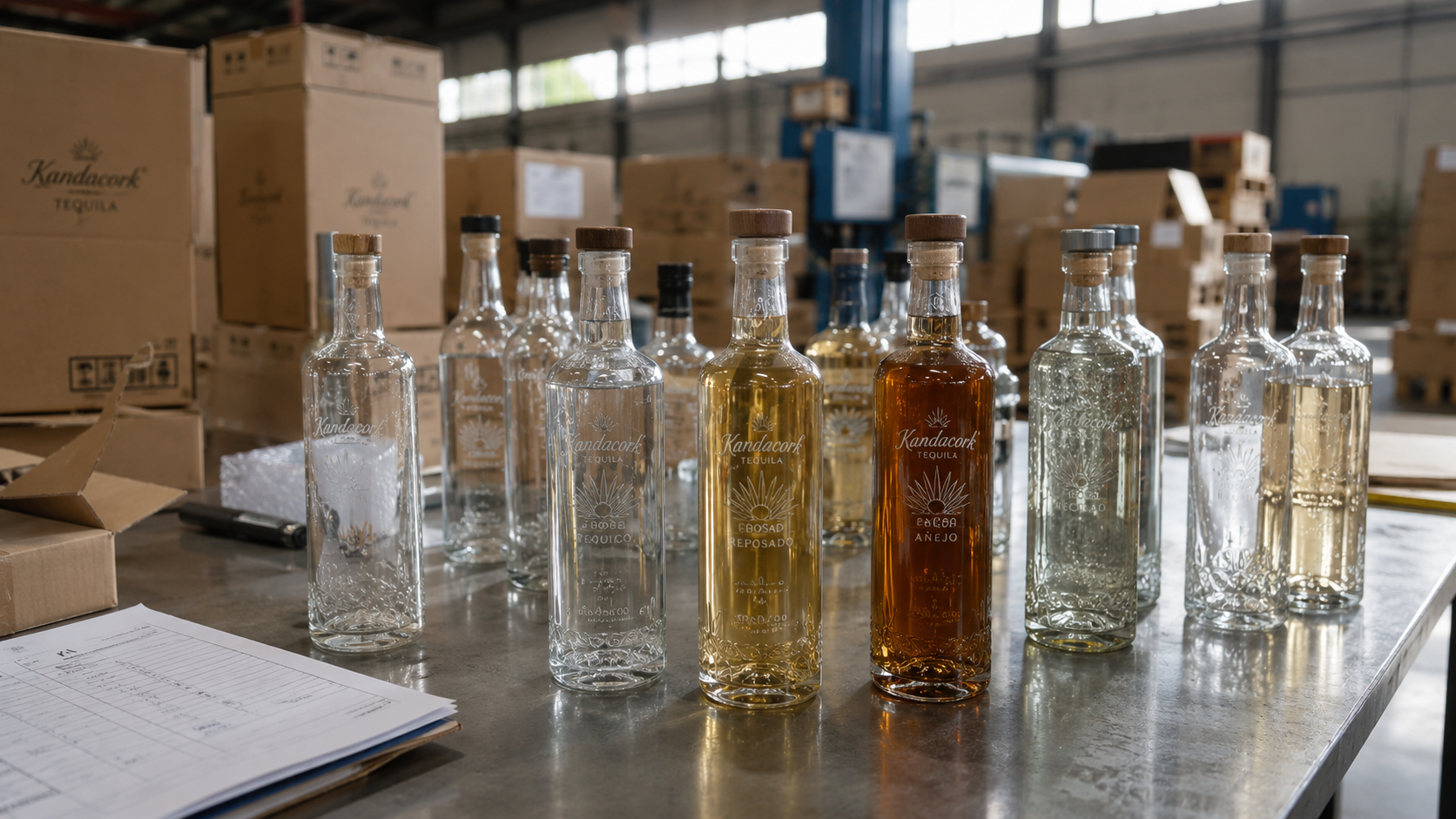
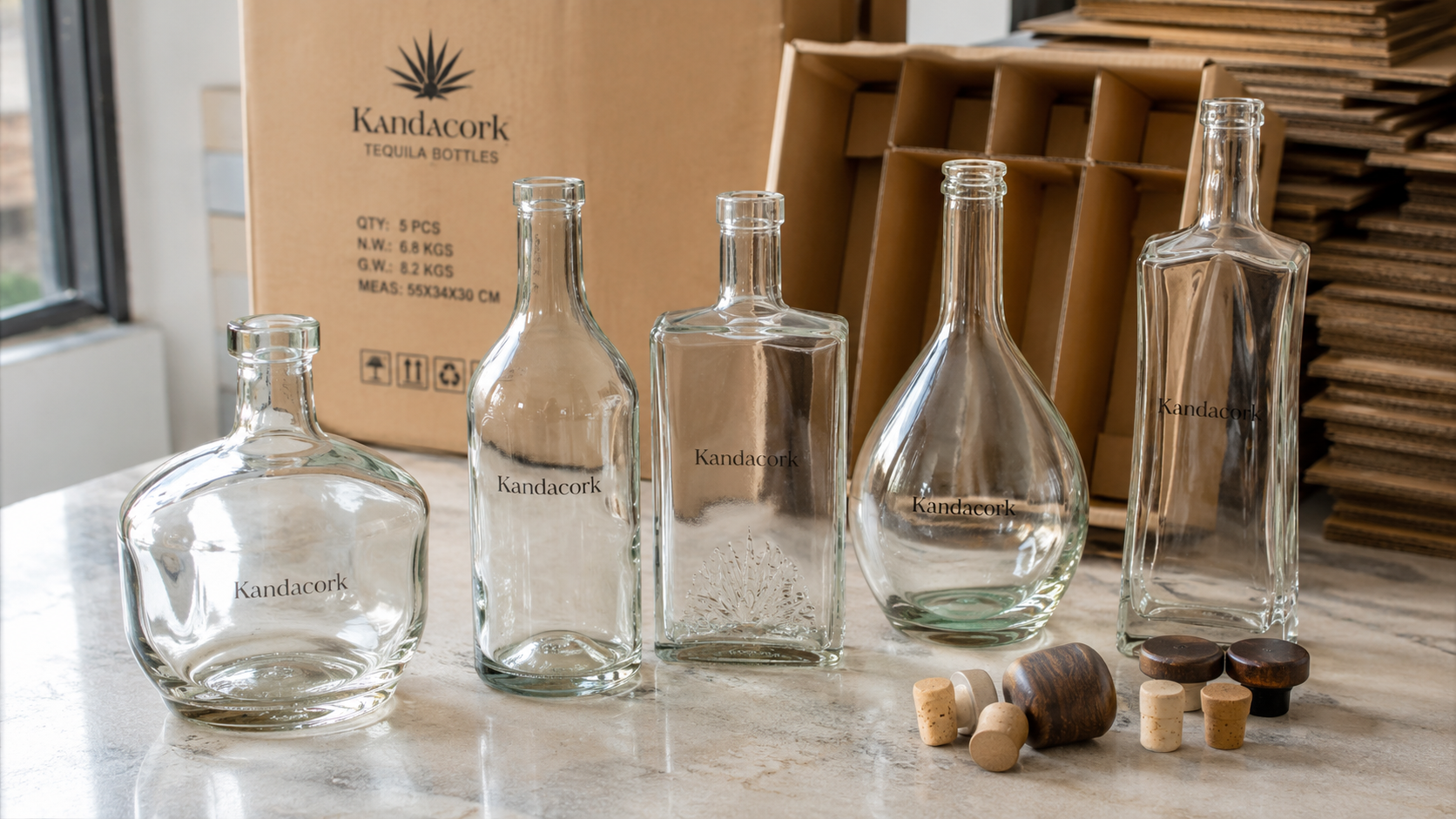
Whisky brands use different closure systems depending on product positioning, bottle design, production volume, destination market, and security requirements. Kandacork’s bottle stoppers and closures range includes multiple closure structures for spirits, specialty bottles, and premium packaging projects, allowing buyers to match the closure to the brand and production line instead of forcing one standard solution.
Bar-Top Corks
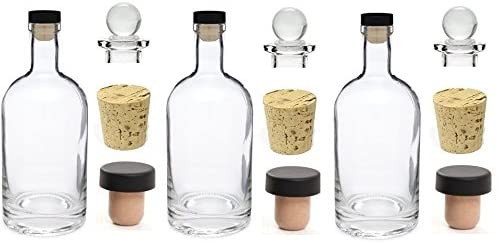
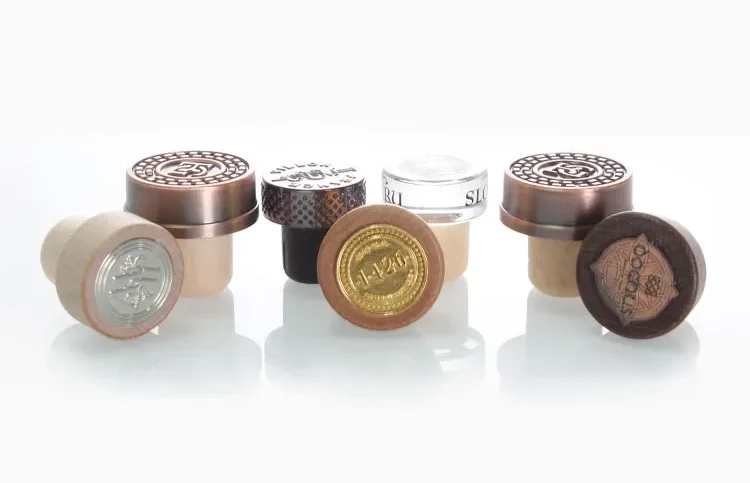
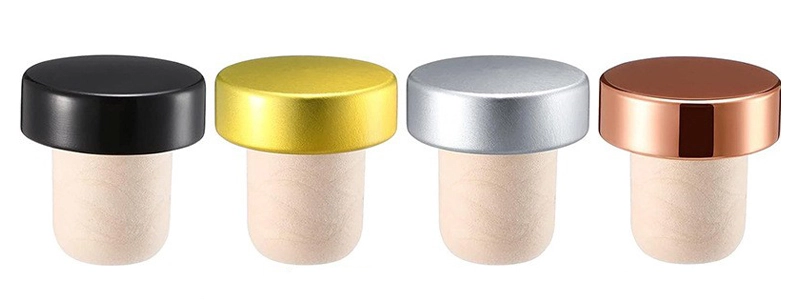
Bar-top corks are widely used for premium spirits. They combine a cork or synthetic shank with a decorative top made from wood, plastic, glass, ceramic, aluminum, zamak, or other materials.
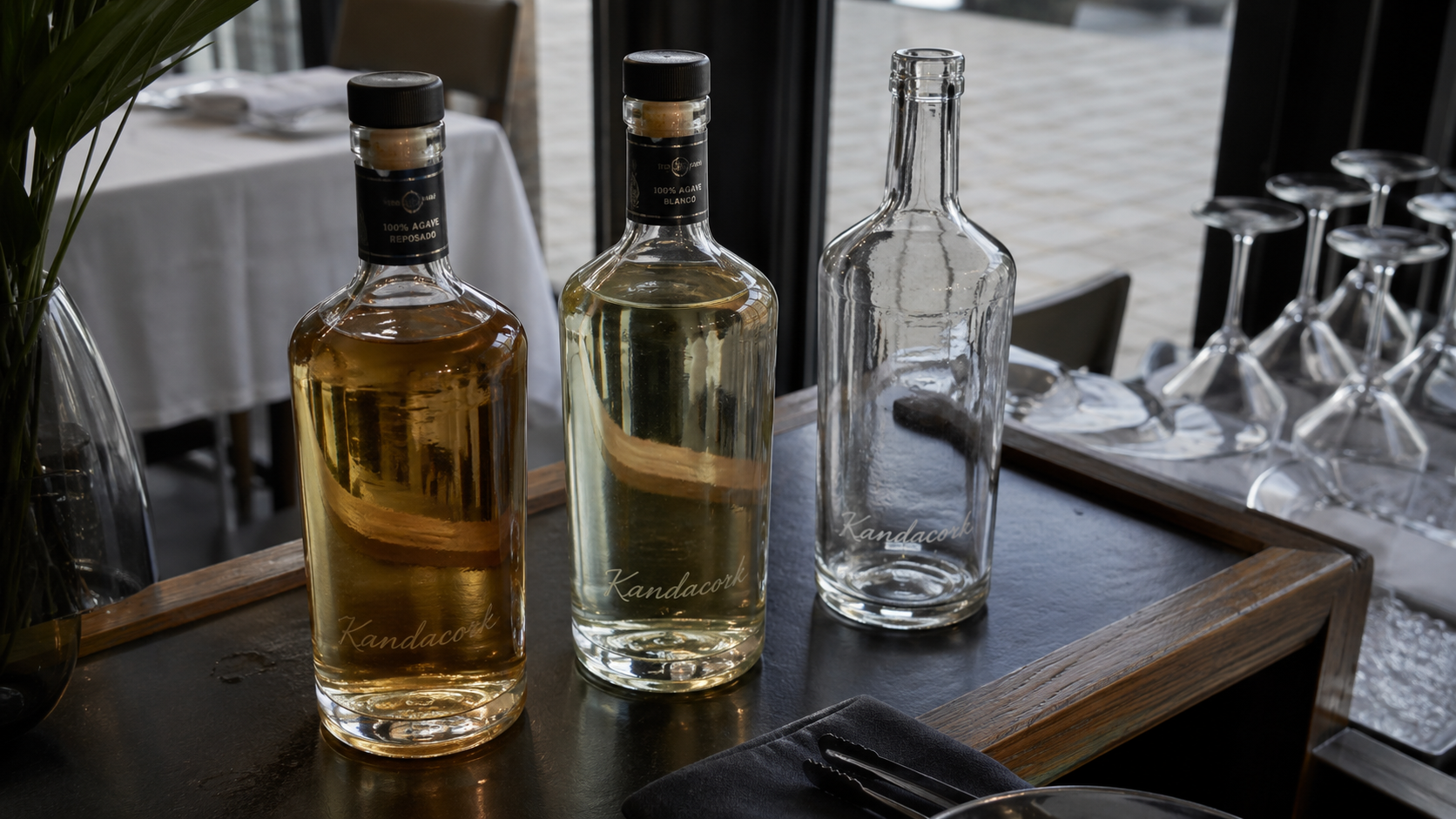
Bar-top corks are suitable for premium whisky, craft whisky, small-batch bourbon, single malt whisky, blended whisky gift bottles, limited-edition spirits, and luxury private-label projects.
The main advantage of a bar-top cork is its traditional opening experience. The consumer pulls the stopper by hand, hears the release, pours the whisky, and reseals the bottle. This creates a more premium and emotional experience than a basic cap.
T-Top Stoppers
T-top stoppers are commonly used for luxury whisky and high-end spirits. They are designed with a larger top head connected to a cork, synthetic cork, or plastic shank.
T-top closures can be produced with natural wood tops, aluminum tops, weighted metal tops, zamak tops, glass tops, ceramic tops, plastic tops, natural cork shanks, micro-agglomerated cork shanks, or synthetic cork shanks.
For whisky brands that want to express craftsmanship, heritage, and premium positioning, a T-top stopper is often a strong choice. It offers visual impact, comfortable grip, and excellent decoration potential.
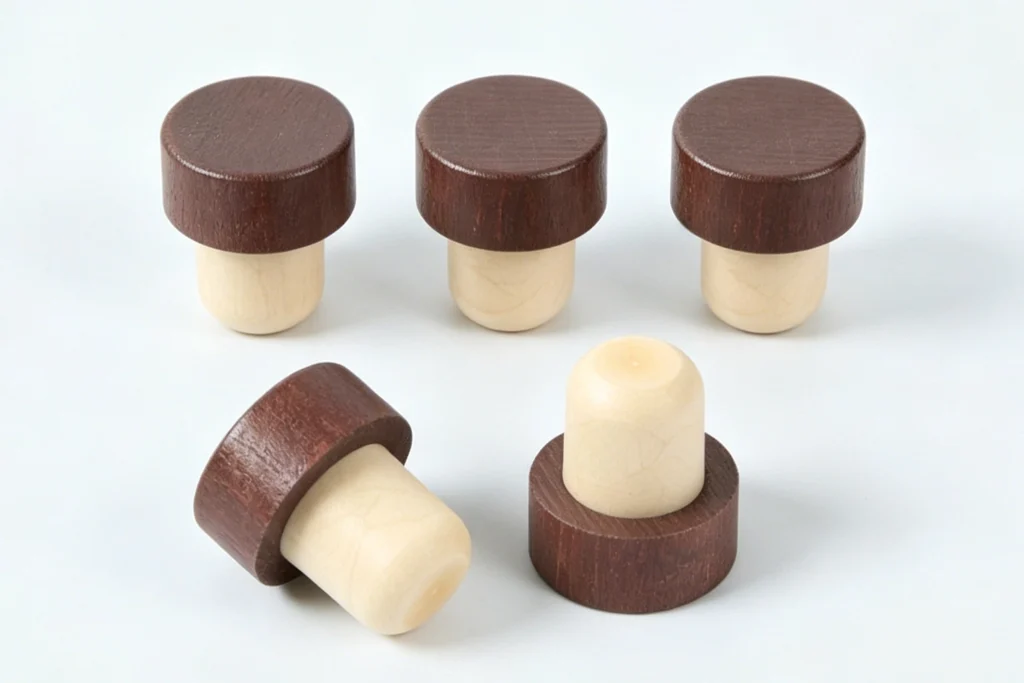
Wooden Bar-Top Stoppers
Wooden closures are popular for whisky because they communicate warmth, craft, and authenticity. A wooden top can be simple and natural, dark and refined, or shaped into a distinctive profile that supports the bottle’s brand story.
Kandacork develops custom wooden bar-top stoppers with wood type selection, head shape development, logo decoration, color tone matching, and cork or synthetic shank fitting. This makes wooden stoppers a strong option for craft whisky, bourbon, heritage-style packaging, and premium gift sets.
Screw Caps
Screw caps are practical and efficient for high-volume whisky packaging. They are often used for mini whisky bottles, entry-level whisky, flavored whisky, ready-to-drink spirits, and private-label programs.
A screw cap must be matched carefully with the bottle thread and liner. Important details include cap diameter, thread profile, liner material, opening torque, sealing pressure, and filling-line speed.
Screw caps can also be customized with color coating, embossing, debossing, printing, metallic finishes, and tamper-evident bands. For brands that need cost control and production efficiency, screw caps can be a practical choice.
ROPP Closures
ROPP means roll-on pilfer-proof. These aluminum closures are applied by capping equipment that forms the cap around the bottle thread during production.
Kandacork’s custom ROPP closures can be developed with pilfer bands, liners, full-height graphics, color finishes, embossing, debossing, and torque requirements matched to the bottle and filling line.
ROPP caps are commonly selected when brands need tamper evidence, stable sealing, and efficient automated bottling. They are suitable for export whisky, private-label spirits, high-volume production, and bottle formats that require secure closure performance.
Non-Refillable Closures
Non-refillable closures are designed to reduce unauthorized refilling and counterfeiting. They may include internal valve systems, pour-control inserts, security bands, or anti-refill components.
Kandacork develops non-refillable closures for spirits bottles across multiple structures, including aluminum, screw cap, plastic, and decorative capsule systems. This allows brands to add security features without necessarily redesigning the entire bottle range.
This closure type is especially useful for whisky brands selling in markets where counterfeit spirits, refilling, or gray-market distribution may create risk. A non-refillable closure can help protect brand reputation and improve consumer confidence.
Capsules and Shrink Sleeves
Capsules and shrink sleeves are often used with cork stoppers, bar-top closures, or other premium spirits closures. They cover the bottle neck, improve presentation, and can add tamper-evident function.
Common options include PVC shrink capsules, PET shrink sleeves, aluminum capsules, polylaminate capsules, and printed neck sleeves. For premium whisky packaging, capsules help connect the bottle neck, closure, label, and gift box into a complete brand system.
Whisky Closure Selection by Product Type
| Whisky Product Type | Recommended Closure | Main Reason |
|---|---|---|
| Single malt whisky | T-top stopper or premium bar-top cork | Luxury feel, resealability, and strong shelf presentation |
| Bourbon | Wood-top cork or synthetic bar-top stopper | Traditional craft appearance and comfortable opening |
| Blended whisky | Screw cap, ROPP cap, or bar-top cork | Flexible choice based on price tier and production volume |
| Mini whisky bottles | Screw cap or ROPP cap | Efficient application and secure small-format sealing |
| Export whisky | ROPP cap or non-refillable closure | Tamper evidence, channel control, and secure distribution |
| Gift-box whisky | Heavy T-top stopper | Premium tactile feel and stronger unboxing experience |
| Craft distillery whisky | Custom bar-top cork | Brand storytelling and small-batch identity |
| Private-label whisky | Screw cap, ROPP cap, or custom stopper | Balance between cost, customization, and lead time |
Best Closure by Buyer Goal
| Buyer Goal | Best Closure Direction | Packaging Benefit |
|---|---|---|
| Premium appearance | T-top stopper or bar-top cork | Adds visual weight and improves shelf appeal |
| High-speed filling | Screw cap or ROPP cap | Supports efficient automated production |
| Anti-counterfeiting | Non-refillable closure | Helps reduce refilling and channel risk |
| Gift packaging | Heavy top stopper with capsule | Improves tactile feel and unboxing experience |
| Cost control | Screw cap or standard bar-top cork | Balances budget and function |
| Craft brand identity | Wood-top cork stopper | Creates natural, handmade, heritage-style appeal |
| Export security | ROPP or tamper-evident closure | Supports distribution safety and visible opening control |
| Luxury limited edition | Glass, ceramic, zamak, or weighted top | Creates stronger differentiation and collectible value |
Closure Comparison for Whisky Packaging Buyers
| Closure Type | Best For | Premium Feel | Tamper Evidence | Custom Decoration | Production Suitability |
|---|---|---|---|---|---|
| Bar-top cork | Premium whisky, craft whisky, gift bottles | High | Optional | High | Medium |
| T-top stopper | Luxury whisky, single malt, special editions | Very high | Optional | Very high | Medium |
| Screw cap | Mini bottles, RTD spirits, high-volume lines | Medium | Possible | High | High |
| ROPP cap | Export whisky, efficient bottling, private label | Medium | Strong | High | High |
| Non-refillable closure | Anti-counterfeit markets, premium spirits | Medium to high | Very strong | High | Medium to high |
| Capsule or shrink sleeve | Neck finishing, tamper evidence, branding | High | Optional | High | High |
Custom Whisky Bottle Closure Options
A strong whisky bottle closure supplier should support both technical matching and visual customization. The closure must fit the bottle correctly, but it should also match the brand’s desired market position.
| Item | Custom Options |
|---|---|
| Closure type | Bar-top cork, T-top stopper, screw cap, ROPP cap, non-refillable closure |
| Top material | Wood, aluminum, plastic, glass, ceramic, zamak, composite material |
| Shank material | Natural cork, micro-agglomerated cork, synthetic cork, plastic |
| Decoration | Engraving, embossing, debossing, silk-screen printing, UV printing, hot foil, coating |
| Finish | Matte, gloss, metallic, natural wood, textured, custom color |
| Application | Whisky, bourbon, brandy, rum, gin, vodka, tequila, liqueur |
| Buyer type | Distillery, bottler, packaging distributor, importer, private-label brand |
| Order type | Sample development, OEM, ODM, wholesale, bulk production |
For projects that require a matching glass bottle and closure system, Kandacork Spirits can support spirits bottle development, neck finish planning, closure matching, and complete packaging coordination for liquor brands.
Technical Specification Checklist
| Specification Item | Details to Confirm |
|---|---|
| Bottle neck finish | Thread, bore diameter, outer diameter, height, finish type |
| Cork or shank size | Diameter, length, compression, insertion depth |
| Cap size | Diameter, height, liner, thread profile, tamper band |
| Closure top | Material, shape, weight, color, surface finish |
| Decoration | Logo method, artwork format, color reference, finish approval |
| Testing | Fit, leakage, torque, pull-out force, resealability, shipping stability |
| Packaging | Inner packing, carton, pallet, export protection |
| Compliance | Food-contact suitability, material statement, market-specific requirements |
| Production | MOQ, sample lead time, bulk lead time, inspection standard |
This checklist helps packaging buyers prepare a clearer quotation request. It also helps the supplier recommend a closure that is technically suitable before tooling, decoration, or bulk production begins.
Material Selection for Whisky Closures
Material choice affects appearance, cost, weight, sealing, and consumer experience. Premium whisky brands often use natural wood, metal, glass, ceramic, or cork-based components to create a more luxurious impression.
Wood tops are popular for craft whisky, bourbon, and heritage-style packaging. Aluminum and zamak tops can create a modern or luxury appearance. Glass and ceramic tops are often used for special editions or premium gift packaging. Cork and synthetic cork shanks provide resealability and traditional spirits appeal.
For bulk whisky packaging, the selected material should also be stable during production, consistent across batches, and suitable for the expected storage and shipping environment.
For wood-based components, some brands consider responsible sourcing and forest certification. The Forest Stewardship Council explains how FSC forest sustainability supports responsible forest management and traceability for forest-based products.
Decoration Methods for Custom Whisky Closures
Custom decoration helps the closure become part of the brand identity. A whisky bottle closure can be designed to match the bottle label, carton, gift box, neck label, and overall visual system.
Common decoration methods include:
- Laser engraving
- Hot foil stamping
- Embossing
- Debossing
- Silk-screen printing
- UV printing
- Color coating
- Metallic coating
- Matte finishing
- Gloss finishing
- Custom mold development
Luxury whisky closures often use deeper engraving, metal-weighted tops, dark wood finishes, or metallic highlights. Craft whisky closures may use natural wood grain, simple logo stamping, or textured surfaces to create an authentic handmade impression.
For bottle surface effects, coordinated colors, logo systems, and secondary packaging details, Kandacork decoration and branding can help align closures with labels, coatings, glass decoration, capsules, and retail presentation.
Technical Fit and Bottle Neck Compatibility
Closure-to-bottle compatibility is the first technical checkpoint. A closure may look beautiful, but it will fail if it does not fit the bottle correctly.
For cork and T-top closures, key details include bore diameter, plug diameter, shank length, insertion depth, cork compression, and pull-out force. For screw caps and ROPP caps, key details include thread profile, cap height, liner selection, opening torque, and tamper-band performance.
Kandacork Closures can help review bottle drawings or physical samples before production. This helps reduce the risk of loose fit, difficult opening, leakage, unstable capping, or poor resealability.
Custom Closure Development Process
Kandacork Closures supports custom whisky closure projects through a practical development process. This helps buyers move from design idea to tested sample and then to bulk production with fewer delays.
| Development Step | Main Work |
|---|---|
| Project review | Review bottle drawing, physical sample, target market, and closure idea |
| Neck finish confirmation | Check bore diameter, outer diameter, thread, height, and closure contact area |
| Closure recommendation | Suggest cork, cap, stopper, capsule, ROPP, or non-refillable solution |
| Material selection | Confirm top material, shank material, liner, color, finish, and weight |
| Decoration planning | Review logo artwork, engraving, printing, embossing, coating, and mold needs |
| Sample production | Prepare physical samples for fit, appearance, and function review |
| Sample testing | Check fit, sealing, leakage, torque, pull-out force, and resealability |
| Bulk confirmation | Confirm approved sample, packing method, production quantity, and delivery plan |
This process is especially useful for custom whisky closures for distilleries, private-label brands, and spirits packaging distributors that need reliable repeat production.
Sample Testing Before Bulk Production
Sample testing is an important step before approving bulk whisky closures. Buyers should never approve a closure based only on photos or decoration renderings.
Recommended tests include:
- Fit test with the actual bottle
- Leakage test
- Pull-out force check for cork stoppers
- Opening and resealing test
- Torque test for screw caps and ROPP caps
- Visual inspection of logo decoration
- Filling-line trial where possible
- Carton and shipping simulation
- Color and finish approval
- Batch sample confirmation before mass production
For export projects, packaging teams may also evaluate filled-bottle cartons against distribution conditions. ASTM describes D4169 performance testing as a practice for evaluating shipping units through a uniform system based on expected distribution hazards.
Common Mistakes When Choosing Whisky Bottle Closures
Many packaging issues happen because the closure is selected too late in the project. Whisky brands should confirm closure structure early, ideally while bottle design and label design are still being finalized.
Common mistakes include:
- Choosing a closure based only on appearance
- Ignoring bottle neck finish dimensions
- Approving decoration before fit testing
- Using a closure that does not match the filling line
- Forgetting tamper-evident requirements for export markets
- Not testing leakage under shipping conditions
- Selecting a closure that weakens premium brand positioning
- Choosing a low-cost option that creates a poor opening experience
- Failing to confirm MOQ and lead time before launch planning
Working with an experienced whisky bottle closure supplier can help prevent these problems before mass production begins.
Compliance and Quality Control
Whisky closures may come into contact with beverage alcohol, so material safety and quality control are important. Packaging buyers should review food-contact suitability, material specifications, dimensional tolerances, and decoration safety before bulk production.
For U.S. distribution, the FDA explains that food packaging and other food-contact substances can include packaging components, adhesives, colorants, coatings, and other materials that contact food. For distilled spirits sold in the United States, TTB states that distilled spirits plants and importers must securely affix a tamper-evident closure or similar device to bottles or containers of distilled spirits. For European distribution, the European Commission provides guidance on food contact materials and the general safety principles that apply when such materials are placed on the EU market.
A supplier should be able to support quality control with:
- Material specifications
- Food-contact statements where applicable
- Dimensional inspection
- Appearance inspection
- Sealing and leakage checks
- Pull-out or torque checks
- Decoration approval samples
- Batch consistency control
- Export packaging review
For premium whisky packaging, quality consistency is essential because closure color, logo placement, surface finish, and fit all influence brand perception.
Anti-Counterfeiting and Tamper-Evident Options
Premium spirits brands often face risks from counterfeiting, unauthorized refilling, and gray-market distribution. Closures can help reduce these risks when combined with suitable packaging design.
Options may include:
- Tamper-evident bands
- Breakable security rings
- Non-refillable valve systems
- Pour-control inserts
- Custom molded closure shapes
- Embossed logos
- Serialized labels
- QR codes
- NFC-enabled packaging
- Custom neck sleeves
The right security level depends on product value, target market, distribution channel, and brand risk. A high-value whisky for export may need a non-refillable closure and tamper-evident neck treatment, while a local craft release may only require a bar-top cork with a capsule or shrink sleeve.
Sustainability Options for Whisky Closures
Sustainability is increasingly important in spirits packaging. Many whisky brands want closures that support responsible sourcing, recyclability, reduced plastic use, or a more natural brand image.
Possible options include:
- Natural cork stoppers
- Micro-agglomerated cork components
- FSC wood tops
- Recyclable aluminum caps
- Reduced-weight closure structures
- Recyclable shrink sleeve materials
- Bulk packaging optimization
Cork is often valued because it is renewable and strongly associated with traditional beverage packaging. Aluminum may support recyclability when designed and collected properly. Wood tops can create a natural appearance, especially when responsibly sourced.
For brands that want to coordinate closure choices with lighter bottles, recycled-content glass, or broader sustainable packaging programs, Kandacork Eco Glass can support glass packaging development alongside closure and decoration considerations.
Sustainability should still be balanced with sealing performance, transport stability, production compatibility, and consumer experience.
Kandacork Closures as Your Whisky Bottle Closure Supplier
Kandacork Closures supports whisky packaging buyers from concept development to bulk supply. We help distilleries, bottlers, importers, packaging distributors, and private-label spirits brands select closures that match their bottle design, brand identity, and market needs.
Kandacork Closures can support:
- Custom whisky bottle closures
- Bar-top corks
- T-top stoppers
- Natural cork and synthetic cork stoppers
- Screw caps
- ROPP closures
- Non-refillable closures
- Capsules and shrink sleeves
- Logo decoration
- Custom mold development
- Bottle and closure compatibility review
- Bulk production and export packaging
As a whisky bottle closure supplier, Kandacork focuses on both appearance and function. The goal is to help buyers create packaging that looks premium, seals reliably, supports production, and fits the commercial requirements of the target market.
RFQ Checklist for Whisky Bottle Closure Projects
To receive an accurate quotation, send the following details to Kandacork Closures:
- Bottle drawing or physical bottle sample
- Bottle capacity
- Neck finish dimensions
- Inner bore diameter
- Closure type
- Top material preference
- Cork or shank diameter
- Decoration artwork
- Logo file
- Required color or finish
- Tamper-evident requirement
- Non-refillable requirement
- Order quantity
- Target market
- Filling-line information
- Required sample deadline
- Expected delivery schedule
Complete project information allows the supplier to recommend the correct structure, estimate tooling or decoration costs, prepare samples, and confirm production feasibility faster. Buyers can also request a custom closure quote with project details, artwork, bottle dimensions, or sample requirements.
For projects that need bottles, closures, decoration, and shipping coordination together, Kandacork Glass and Kandacork Glass Packaging can support integrated glass packaging development across spirits and other premium product categories.
FAQ
What is the best closure for premium whisky?
For premium whisky, bar-top corks and T-top stoppers are often preferred because they provide strong visual identity, resealability, and a premium opening experience. Heavy wood, metal, glass, or ceramic tops can increase perceived value.
Are screw caps suitable for whisky?
Yes. Screw caps can be suitable for whisky, especially for high-volume products, mini bottles, private-label lines, flavored whisky, and modern packaging concepts. The cap must be matched with the correct bottle thread and liner.
What is a non-refillable whisky closure?
A non-refillable whisky closure is designed to make unauthorized refilling difficult after the bottle has been opened. It is often used for premium spirits, export markets, and regions where counterfeiting is a concern.
Can whisky closures be customized with a logo?
Yes. Whisky closures can be customized with laser engraving, embossing, debossing, hot foil stamping, silk-screen printing, UV printing, color coating, metallic finishing, and custom mold design.
What information is needed for a custom whisky closure quote?
A supplier usually needs the bottle drawing, neck finish, bottle sample, closure type, material preference, decoration artwork, order quantity, target market, and any tamper-evident or non-refillable requirements.
How should a whisky closure be tested before bulk production?
Buyers should request samples and test fit, sealing, leakage, resealability, decoration quality, capping-line compatibility, shipping stability, and consumer opening experience before approving bulk production.
Can Kandacork Closures supply bulk whisky bottle closures?
Yes. Kandacork Closures supports bulk whisky bottle closure projects, including custom corks, caps, stoppers, capsules, ROPP closures, and non-refillable closure solutions for distilleries, bottlers, importers, and private-label spirits brands.
What is the MOQ for custom whisky bottle closures?
MOQ depends on closure type, material, decoration method, mold requirement, and customization level. Standard closure options usually have lower MOQ requirements than fully customized structures or private mold projects.
Can Kandacork match closures with custom whisky bottles?
Yes. Kandacork Closures can review bottle drawings, neck finish dimensions, or physical samples to recommend compatible corks, caps, stoppers, capsules, and tamper-evident options.
What is the difference between a bar-top cork and a T-top stopper?
A bar-top cork usually combines a decorative top with a cork or synthetic shank, while a T-top stopper often has a larger premium head designed for stronger visual impact and easier grip. Both are widely used in premium spirits packaging.
Conclusion
The right whisky closure protects the liquid, supports brand value, improves consumer experience, and helps the bottle meet market requirements. For premium spirits, the closure should not be treated as a simple accessory. It is part of the complete packaging system.
Kandacork Closures is a whisky bottle closure supplier for custom corks, caps, stoppers, capsules, and premium spirits packaging solutions. Whether you need bar-top corks for craft whisky, T-top stoppers for luxury packaging, ROPP caps for export production, or non-refillable closures for brand protection, Kandacork can help develop a solution that fits your bottle, your brand, and your market.
Send your bottle drawing, closure concept, or packaging brief to Kandacork Closures to request samples and a custom quotation.