GPI and ROPP neck finishes require different cap structures and production checks. This guide explains how thread design, liner choice, torque range and bottle compatibility affect spirits screw cap projects.
What Are Custom Screw Caps for Spirits?
Custom screw caps for spirits are bottle closures designed around the technical and visual needs of alcoholic beverage packaging. They may be made from aluminum, plastic, composite structures, or aluminum-plastic combinations. They can include liner systems, pilfer-proof bands, color coatings, metallic finishes, printed logos, embossing, debossing, hot stamping, and special surface effects.
A standard screw cap is usually chosen by size. A custom screw cap is developed around a full packaging system. That system includes the bottle’s threaded neck finish, sealing land, cap skirt height, liner compression, torque range, tamper-evident band clearance, decoration method, and filling-line setup.
For spirits, this matters because alcohol content, aroma compounds, sugar, botanical extracts, and long transport routes can all affect closure performance. A cap may look correct on the bottle but still cause leakage, inconsistent opening feel, or liner compatibility problems if it is not tested correctly.
Why Screw Caps Are Used in Spirits Packaging
Spirits brands choose screw caps because they offer convenient opening, reliable reclosure, efficient application, and flexible branding. They are common in modern vodka, gin, liqueur, RTD, mini bottle, and private-label packaging. They can also work for rum, whisky, tequila, and specialty spirits when the bottle style and brand position support a screw-cap format.
Tamper evidence is a major reason for using a well-designed closure. In the United States, eCFR distilled spirits rules under 27 CFR Part 19 include closure requirements for certain spirits containers, so packaging teams should always review destination-market rules before approving a closure system.
Screw caps also help production teams improve repeatability. When the cap structure, liner, bottle finish, and torque setting are aligned, the bottling process can become more stable. That means fewer loose caps, fewer leakage complaints, and a more consistent consumer experience.
ROPP vs GPI Screw Caps
Most spirits buyers compare two screw-cap directions: ROPP screw caps and GPI-style continuous-thread caps. The right option depends on production volume, bottle finish, tamper-evident needs, and capping equipment.
What Is a ROPP Screw Cap?
ROPP means roll-on pilfer-proof. A ROPP cap is usually an aluminum shell that is formed onto the bottle neck by a capping machine. During application, rollers shape the thread profile and tamper-evident band around the bottle finish.
ROPP closures are often chosen when spirits brands need strong tamper evidence, a clean metal appearance, and machine-applied consistency. They are especially suitable for commercial vodka, gin, tequila, rum, whisky, liqueur, and export spirits packaging. Kandacork Closures provides ROPP closures for buyers who need roll-on structures, liner direction, and bottle-fit review before bulk production.
What Is a GPI Screw Cap?
GPI screw caps are used with compatible continuous-thread bottle finishes. Depending on the project, they may be applied manually, semi-automatically, or automatically. They can be useful for smaller batches, specialty bottles, private-label programs, mini spirits, and limited-edition packaging.
The advantage of GPI caps is flexibility. The risk is fit inconsistency if the bottle thread, cap thread, liner, and torque are not reviewed together. Buyers should confirm drawings or submit physical bottles before finalizing the cap.
ROPP vs GPI Comparison
| Buyer Need | Better Closure Direction |
|---|---|
| High-volume spirits bottling | ROPP screw cap |
| Strong tamper evidence | ROPP pilfer-proof cap |
| Small-batch spirits | GPI screw cap |
| Specialty threaded bottle | GPI or custom-thread cap |
| Premium metallic look | Custom aluminum screw cap |
| Mini liquor bottle | Small-format screw cap |
| Private-label launch | Printed screw cap with controlled color |
| High-proof spirits | Alcohol-compatible liner review |
| Export shipment | Fit, torque, liner, and transport testing |
Neither option is automatically “better.” ROPP is often stronger for machine-applied tamper-evident programs. GPI may be better for flexible threaded bottles or small-batch production. The best choice is the one that matches the bottle, liquid, line, and brand target.
Key Technical Factors Before Ordering
Bottle Neck Finish
The bottle neck finish is the area where the cap engages with the bottle. It includes the diameter, thread profile, sealing surface, height, transfer bead, and production tolerances. Even small differences in the finish can affect liner compression, opening torque, and tamper-band break.
Packaging specifications should be reviewed through reliable drawings and recognized finish references. Organizations such as ISO publish standards related to bottles, jars, small containers, and closures, while CETIE provides professional documentation related to bottling, capping, and packaging. Practical bottle-finish control still depends on supplier drawings and real production samples.
For custom screw caps for spirits, Kandacork Closures can support cap and neck compatibility review before bulk orders. This helps reduce the risk of loose fit, cap spinning, leakage, difficult opening, or mismatched skirt height.
Liner Selection
The liner is the material inside the cap that contacts the bottle’s sealing surface. It helps create the seal and affects leakage resistance, aroma protection, and opening feel.
Common liner directions may include EPE, PE, Saranex, Tin-Saran, or other barrier structures. The correct choice depends on alcohol percentage, flavor profile, shelf life, storage temperature, transport method, and market expectations. A high-proof spirit, flavored liqueur, or botanical gin may require more careful liner review than a short-life promotional sample.
Because liners and coatings may be food-contact components, buyers should review relevant material compliance expectations. The U.S. FDA maintains information on packaging and food contact substances, which is a useful reference point when discussing food-contact materials and documentation with suppliers.
Torque Control
Torque control affects both production safety and consumer experience. Application torque is the force used to apply the cap. Removal torque is the force the consumer feels when opening the bottle.
If application torque is too low, leakage can occur during storage or shipment. If it is too high, the cap may be difficult to open or the thread may distort. If torque varies too much, the same product line may feel inconsistent from bottle to bottle.
A professional screw-cap project should include sample testing, torque checks, and line trials. This is especially important when switching cap suppliers, using a new bottle mold, changing liner structure, or increasing bottling speed.
Capping Equipment
ROPP caps normally require suitable roll-on capping equipment. GPI screw caps may allow more flexibility, but they still require correct application force and repeatable thread engagement. Buyers should confirm capper type, chuck or head design, target line speed, torque range, bottle handling, and inspection method.
For new spirits packaging, the bottle and closure should be discussed before the bottle mold is finalized. This prevents expensive changes to neck finish, cap height, tamper-band clearance, or label placement later in the project.
Customization Options for Spirits Screw Caps
Custom screw caps for spirits can support both performance and brand identity. The cap can be simple and modern, or it can become a premium design feature.
Materials and Finishes
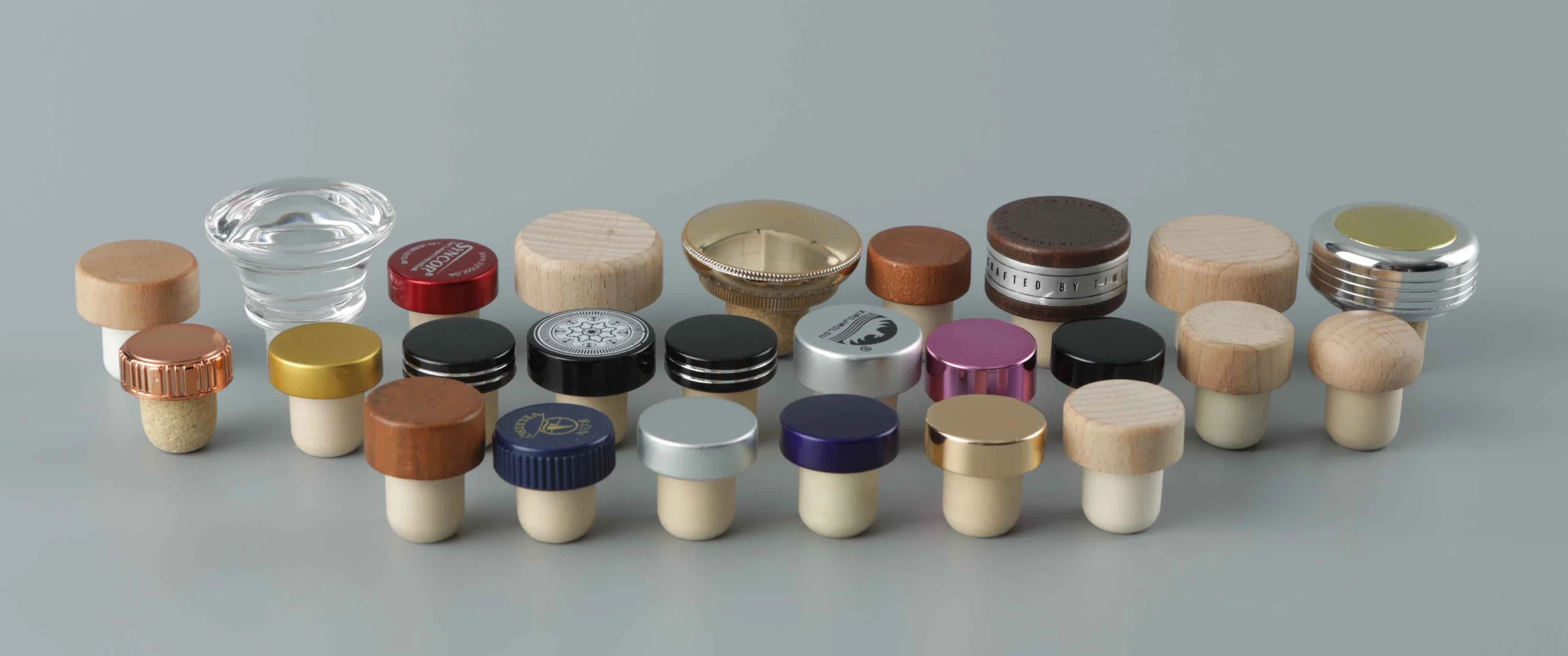
Aluminum is a popular material for spirits screw caps because it supports light weight, clean forming, premium metallic effects, and detailed decoration. Plastic and composite structures may be suitable for certain cost targets, cap shapes, or functional needs.
Surface finishes can include matte black, gloss white, brushed silver, metallic gold, satin copper, soft-touch coating, textured coating, or brand-matched color. Aluminum is also relevant to sustainability discussions because industry groups such as European Aluminium describe aluminum as recyclable while retaining its material properties through repeated recycling.
Decoration and Branding
Brand decoration may include top printing, sidewall printing, embossing, debossing, laser marking, hot stamping, or color matching. For premium spirits, physical samples should be approved before mass production because printed color, coating reflectivity, logo clarity, and embossing depth can look different from digital artwork.
Kandacork Closures supports closure branding and material selection for buyers who need a closure to coordinate with labels, bottle color, cartons, capsules, or gift packaging.
For a more complete pack, a spirits brand may pair screw caps with custom spirits bottle development or coordinate closure color with bottle decoration and branding. This is especially useful for multi-SKU vodka, gin, liqueur, and RTD ranges where every detail must stay consistent across the shelf.
Closure Direction by Project Type
| Project Type | Best Closure Focus |
|---|---|
| Craft gin launch | Matte or color-matched aluminum cap |
| Private-label vodka range | Consistent logo printing across SKUs |
| Export tequila project | Tamper evidence, liner review, transit testing |
| Mini liquor bottle | Small-format precision and high-volume efficiency |
| Flavored liqueur | Liner compatibility and aroma retention |
| Premium rum or whisky | Brushed, embossed, debossed, or metallic cap finish |
| RTD cocktail program | Scalable application and easy consumer opening |
| Limited edition spirits | Decorative finish and strict color control |
This table can guide early planning, but final selection should still be based on bottle drawings, physical samples, filled-product testing, and capping-line checks.
Applications by Spirit Type
Vodka and Gin
Vodka and gin often use clean, modern packaging. Custom aluminum screw caps in black, silver, white, blue, green, or brand-matched colors can work well with clear, frosted, or colored glass bottles. For gin, cap color can support botanical identity. For vodka, a clean metallic or frosted cap can reinforce purity and simplicity.
Tequila and Mezcal
Tequila and mezcal packaging often emphasizes craft, origin, and shelf impact. While bar-top closures remain common for premium tequila, screw caps can work well for modern tequila, RTD tequila cocktails, mini bottles, and export-oriented private-label programs. The key concerns are tamper evidence, liner choice, and premium decoration.
Rum and Whisky
Rum and whisky often use heavier bottles, darker glass, embossed details, or vintage-inspired shapes. A plain stock cap can make the package feel less valuable, while a brushed, embossed, debossed, or metallic screw cap can support a more premium impression.
Liqueurs and Flavored Spirits
Liqueurs may contain sugar, botanical extracts, cream ingredients, colorants, or aromatic compounds. These products require careful liner review because flavor and aroma retention may be important. A reliable screw cap is useful because consumers often use liqueurs gradually for cocktails, desserts, coffee drinks, or home bars.
RTD Cocktails and Mini Bottles
RTD cocktails and mini spirits need efficient production, compact closure sizes, and reliable tamper evidence. Dimensional accuracy is especially important because small tolerance differences can affect sealing and opening performance. For bottle-and-closure coordination across a full packaging program, buyers may also work with integrated spirits glass packaging teams.
Quality Testing and Approval
A custom spirits closure should be tested before bulk production. The most important checks include sample fit, leakage resistance, liner contact, torque range, tamper-band behavior, decoration durability, and export packing protection.
Fit testing confirms that the cap sits correctly on the bottle neck. Leak testing checks whether the filled bottle can withstand storage, inversion, temperature variation, vibration, and handling. Torque testing confirms that caps can be applied consistently and opened comfortably. Decoration testing helps prevent scratches, coating damage, or print misalignment.
Kandacork Closures provides sealing and leakage testing support for closure projects where fit, liner compression, torque, and shipment stability need to be reviewed before production. For brands focused on lower-impact packaging concepts, closure selection may also be considered alongside glass weight, recyclability, and broader packaging choices from Kandacork Eco Glass.
Common Problems and How to Avoid Them
Cap Does Not Fit the Bottle Neck
This usually happens when a cap is selected by diameter but not by full neck-finish geometry. Always confirm the bottle drawing and test physical samples.
Leakage During Transport
Leakage can come from poor liner compression, incorrect torque, weak sealing land, cap deformation, or bottle tolerance variation. Test filled samples under realistic transport conditions before shipment.
Inconsistent Opening Feel
If one bottle opens easily and another is too tight, the issue may be torque variation, bottle tolerance, liner compression, or equipment setup. Record torque targets during sample approval.
Tamper Band Does Not Break Correctly
Tamper-band failure may come from incorrect skirt height, wrong neck finish, poor band clearance, or unsuitable capping setup. Test the band before approving bulk production.
Decoration Does Not Match the Brand Standard
Cap colors and metallic finishes can shift under different lighting. Approve physical samples, not only digital renderings.
Wrong Liner for Alcohol Strength
A liner that works for water or low-alcohol products may not be suitable for spirits. Review liner compatibility with alcohol percentage, flavor ingredients, shelf life, and storage conditions.
What Buyers Should Prepare for a Quote
To receive a useful quotation for custom screw caps for spirits, prepare the following information:
Bottle drawing or neck-finish drawing
Physical bottle sample or clear sample photos
Spirit category and alcohol percentage
Bottle volume and fill level
Preferred cap type, size, and height
ROPP or GPI direction if already known
Liner requirement or liquid details
Tamper-evident requirement
Color, finish, and artwork files
Logo decoration method
Estimated order quantity
Capping method and line speed
Destination market
Packing and shipping requirements
Target launch date
The more complete the brief, the faster the supplier can recommend the right structure, liner, decoration method, testing plan, and production route.
How Kandacork Closures Supports Custom Screw Cap Projects
Kandacork Closures helps B2B buyers develop screw caps that match both technical and commercial goals. For new packaging projects, the team can review bottle necks, cap formats, liners, materials, colors, artwork, sample requirements, and production direction. For existing products, the team can help troubleshoot leakage, loose caps, inconsistent torque, tamper-band issues, or decoration mismatch.
For private-label launches, multi-SKU spirits programs, and export packaging, Kandacork Closures can help buyers avoid generic cap mistakes and build a closure specification that supports the bottle, liquid, filling line, retail channel, and brand position.
If you are developing a new vodka, gin, tequila, rum, whisky, liqueur, RTD, or mini spirits project, you can request a custom closure quote with your bottle drawing, product details, cap requirements, and branding goals.
FAQ
Can screw caps be used for spirits bottles?
Yes. Screw caps can be used for vodka, gin, rum, tequila, whisky, liqueurs, RTD cocktails, mini bottles, and private-label spirits. The cap must match the bottle neck finish, liner requirement, alcohol content, capping method, and tamper-evident needs.
What is the difference between ROPP and GPI screw caps?
ROPP screw caps are roll-on pilfer-proof closures formed onto the bottle neck with capping equipment. GPI screw caps are used with compatible continuous-thread bottle finishes. ROPP is often preferred for machine-applied tamper-evident packaging, while GPI can be useful for specialty threaded bottles and smaller production runs.
What liner is best for spirits screw caps?
There is no universal best liner. The right liner depends on alcohol percentage, flavor profile, storage time, sealing surface, transport conditions, and regulatory requirements. EPE, PE, Saranex, Tin-Saran, and other barrier structures may be considered depending on the project.
Can custom screw caps include a logo?
Yes. Custom screw caps can include top printing, sidewall printing, embossing, debossing, hot stamping, laser marking, or color-matched decoration. The best method depends on the cap material, logo detail, surface finish, and order quantity.
Do ROPP caps require a capping machine?
Yes. ROPP caps normally require suitable roll-on capping equipment. Buyers should confirm equipment compatibility, capper head setup, torque range, and line speed before ordering.
Are screw caps suitable for premium spirits?
Yes. Screw caps can be suitable for premium spirits when the material, finish, decoration, and bottle fit are carefully designed. A brushed, embossed, metallic, or color-matched aluminum cap can support a premium shelf presentation.
Conclusion
Custom screw caps for spirits should be selected as part of the full packaging system, not as an isolated component. The best closure must fit the bottle neck, seal the liquid, support tamper evidence, work with the capping process, protect the product during transport, and reinforce the brand’s shelf identity.
ROPP screw caps are often a strong direction for tamper-evident, machine-applied spirits packaging. GPI screw caps may be suitable for compatible threaded bottles, specialty products, small-batch spirits, and private-label programs. In both cases, bottle drawings, liner review, torque testing, sample approval, and decoration checks are essential.
Kandacork Closures helps spirits brands and packaging buyers develop custom screw caps that are practical, brand-ready, and suitable for commercial production.