Choosing between bar-top stoppers vs screw caps vs ROPP closures is not just a packaging preference. It affects leakage control, tamper evidence, alcohol compatibility, bottling speed, consumer opening experience, shelf appeal, export readiness, and total packaging cost.
For distilleries, spirits brands, private-label buyers, importers, and packaging distributors, the best closure is the one that fits the full packaging system. That means the bottle neck finish, spirit formula, filling line, target market, security requirement, and brand position all need to work together.
Kandacork Closures helps buyers develop custom spirits closures and stoppers for whisky, rum, vodka, gin, tequila, brandy, liqueurs, miniatures, RTDs, and specialty bottle projects. This guide compares the three major closure options so buyers can make a confident sourcing decision before sampling or bulk production.
Best Overall Closure for Spirits Bottles
There is no single best closure for every spirits bottle. Bar-top stoppers are best for premium image and tactile value. Screw caps are best for convenience and practical reclosure. ROPP closures are best for tamper evidence, secure aluminum sealing, and high-volume bottling.
The final choice should be based on bottle neck geometry, alcohol content, filling method, line speed, security needs, decoration goals, and how the consumer will use the product after opening.
Quick Answer: Which Closure Should You Choose?
Choose bar-top stoppers when your brand needs a premium, traditional, or gift-ready appearance. They are common for whisky, rum, tequila, brandy, cognac, craft gin, liqueurs, limited editions, and high-value private-label spirits.
Choose screw caps when your product needs simple opening, easy reclosure, flexible sourcing, and practical production. They are often used for vodka, gin, liqueurs, flavored spirits, RTD cocktails, mini bottles, and everyday retail ranges.
Choose ROPP closures when your bottle needs built-in tamper evidence, consistent capping performance, and secure first-open protection. They are widely used for standard spirits, mini liquor bottles, export products, duty-free packaging, and automated bottling lines.
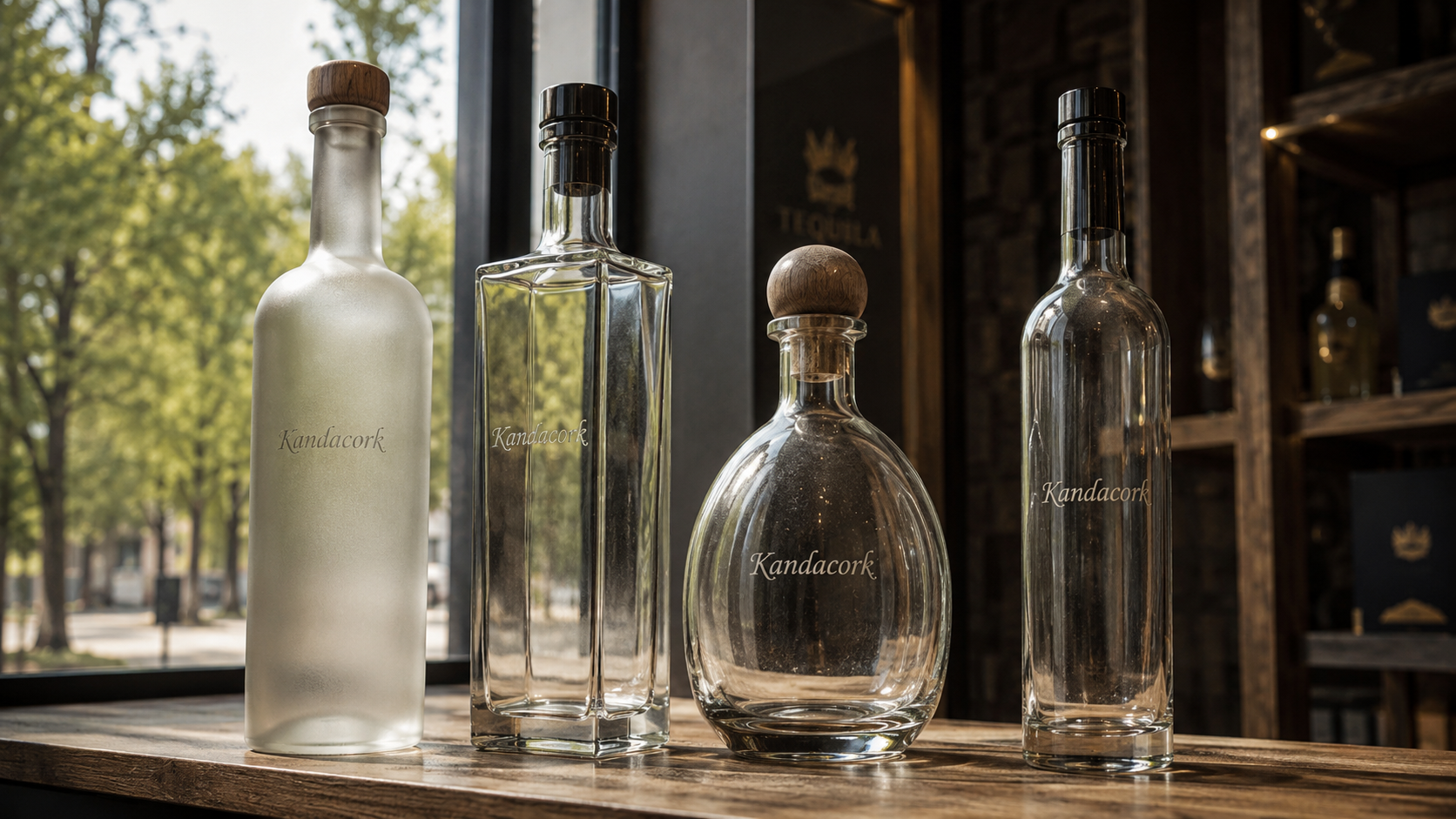
For projects that include both bottle sourcing and closure selection, buyers can also coordinate closure decisions with custom spirits bottles early in the design stage to reduce fit and production risks.
Comparison Table: Bar-Top Stoppers vs Screw Caps vs ROPP Closures
| Factor | Bar-Top Stoppers | Screw Caps | ROPP Closures |
|---|---|---|---|
| Main structure | Decorative top with cork, synthetic cork, or polymer shank | Pre-threaded cap with liner | Aluminum shell rolled onto the bottle neck |
| Best use | Premium spirits, craft releases, gift packs | Convenient, modern, everyday spirits | Tamper-evident retail and export spirits |
| Neck requirement | Cork-mouth or compatible stopper finish | Threaded bottle finish | ROPP-compatible neck finish |
| Tamper evidence | Usually requires capsule, sleeve, strip, or seal | May use tamper band, shrink sleeve, or security feature | Built-in pilfer-proof band |
| Reclosure | Strong tactile resealing | Easy twist-on reclosure | Reclosable after first opening |
| Premium perception | Very high | Medium to high | Medium to high |
| Equipment needs | Manual, semi-automatic, or press-fit setup | Manual or automatic capping | ROPP capping equipment |
| Main risk | Loose fit, excessive tightness, or leakage | Thread mismatch or liner failure | Poor rolling, weak band break, or torque issues |
| Best buyer profile | Craft and premium spirits brands | Flexible beverage and private-label programs | Export, retail, and high-volume spirits lines |
Best Choice by Bottle Project
| Bottle Project | Recommended Closure | Why It Works |
|---|---|---|
| Premium aged rum | Bar-top stopper | Adds weight, tradition, and high-end opening feel |
| Craft whisky gift pack | Bar-top stopper | Supports shelf appeal and brand storytelling |
| Modern gin bottle | Screw cap or ROPP closure | Offers clean branding, secure sealing, and flexible decoration |
| Vodka miniature | ROPP closure | Compact, secure, and suitable for tamper-evident retail formats |
| RTD cocktail bottle | Screw cap | Easy to open, reseal, and use in convenience-led channels |
| Export liquor bottle | ROPP closure | Supports first-open protection and consistent line application |
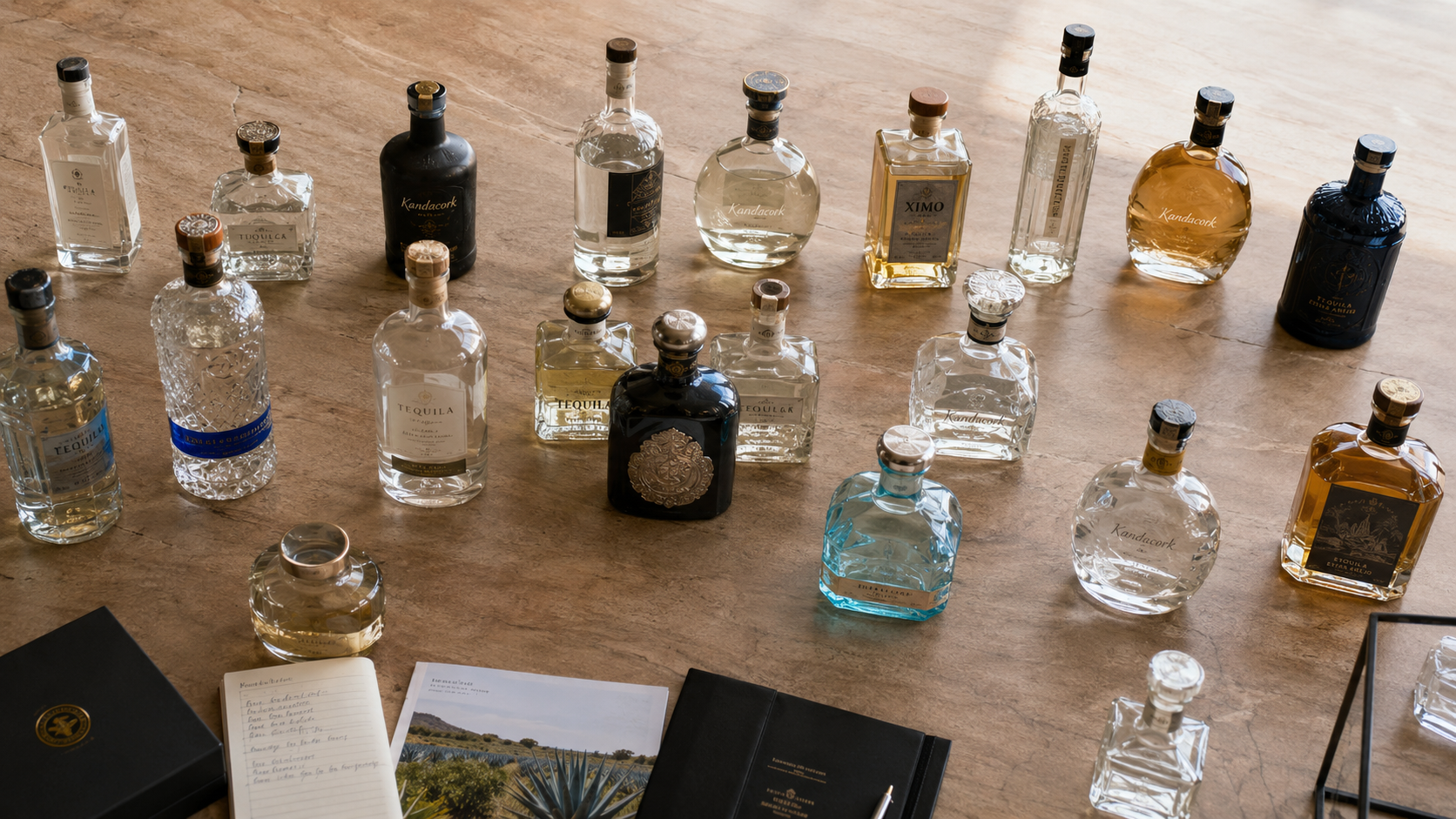
| Premium tequila bottle | Bar-top stopper | Creates a stronger tactile and visual brand impression |
| High-volume retail spirits | ROPP closure | Works well with automated bottling and torque control |
This table is a starting point, not a final specification. The final closure should always be confirmed with bottle drawings, physical samples, fit testing, sealing review, and production-line validation.
What Are Bar-Top Stoppers for Spirits Bottles?
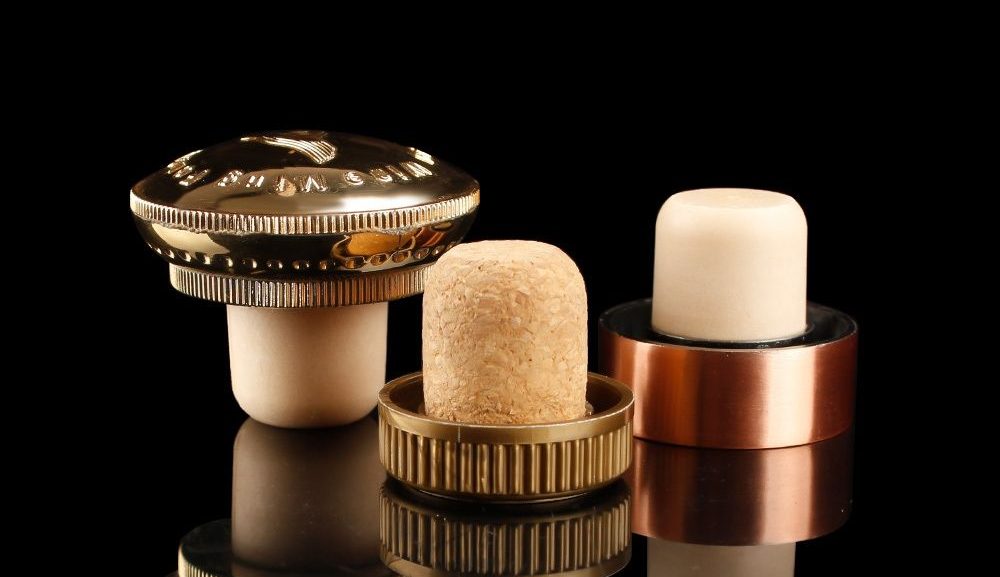
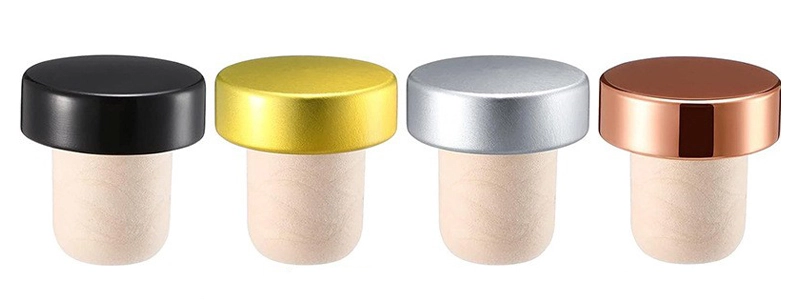
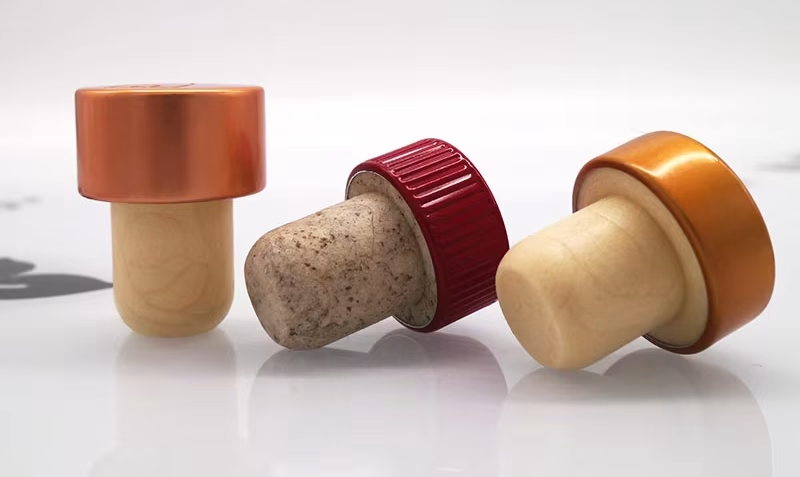
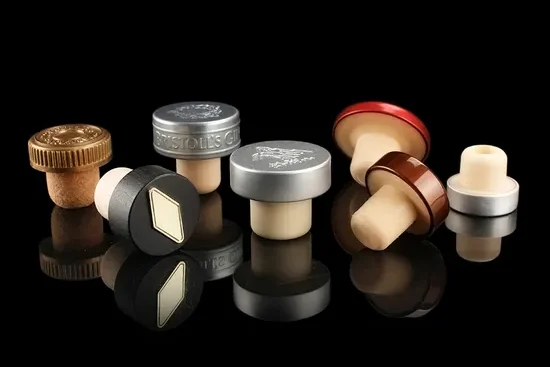
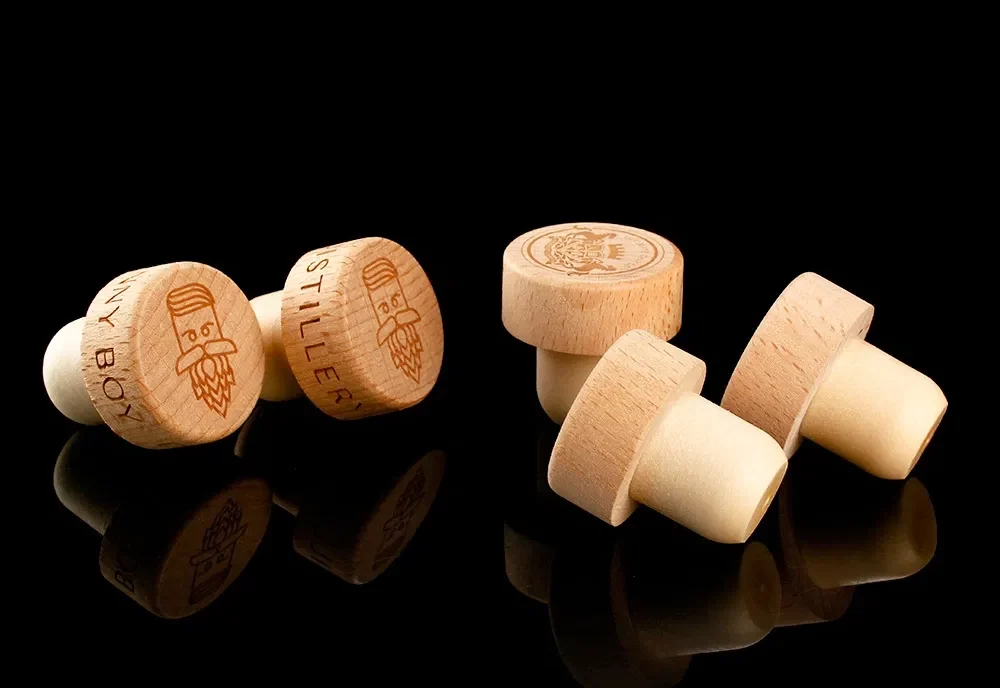
Bar-top stoppers are closures made with a decorative top and an inserted shank. The shank may be natural cork, micro-agglomerated cork, synthetic cork, or a polymer material. The top may be wood, aluminum, plastic, glass, ceramic, or another custom material.
In spirits packaging, bar-top stoppers are popular because they create a premium opening experience. When a consumer pulls the stopper from the bottle, the action feels more ceremonial than twisting a cap. This makes the format especially suitable for whisky, rum, tequila, brandy, cognac, premium gin, and craft liqueurs.
A bar-top stopper can also become part of the brand identity. A wooden top suggests craft and tradition. A metal top communicates modern luxury. A custom-shaped top can help the bottle stand out on a retail shelf, in a tasting room, or behind a bar.
Advantages of Bar-Top Stoppers
Bar-top stoppers offer strong visual and tactile value. They can make a standard bottle feel more premium and support top printing, embossing, debossing, engraving, color matching, metal inserts, and custom shapes.
They are also practical for spirits that consumers open and close repeatedly. A well-matched stopper should insert smoothly, hold securely, and provide a confident pull-out feel.
For limited editions, gift packaging, aged spirits, and premium private-label projects, bar-top stoppers often create stronger perceived value than basic caps.
Limitations of Bar-Top Stoppers
The main challenge with bar-top stoppers is fit. The shank must match the inner neck diameter, neck depth, bottle mouth shape, and closure tolerance. A stopper that is too loose can leak or feel low quality. A stopper that is too tight can be hard to remove or may create stress during insertion.
Natural cork and technical cork also need careful quality control. Buyers should consider dimensions, compression recovery, extraction force, moisture, odor neutrality, and liquid tightness. For cork-based closures, physical test references such as ISO cylindrical cork stopper standards can support more consistent quality review.
Bar-top stoppers may also need an added tamper-evident feature, such as a capsule, shrink sleeve, tax strip, paper seal, or other security device. This should be planned before artwork approval and bulk production.
What Are Screw Caps for Liquor and Spirits Bottles?
Screw caps are closures designed to twist onto a matching threaded bottle neck. They may be made from aluminum, plastic, or other materials and usually include a liner to improve sealing between the cap and bottle finish.
In the comparison of bar-top stoppers vs screw caps vs ROPP closures, screw caps are usually the most familiar to consumers. They are easy to open, simple to close, and practical for frequent use.
Screw caps are often used for vodka, gin, liqueurs, flavored spirits, RTD cocktails, mini bottles, and modern private-label beverage programs. With the right finish, coating, knurling, top design, and printing, screw caps can also support premium branding.
Advantages of Screw Caps
Screw caps are convenient and efficient. They are easy for consumers to understand and can work well for both manual and automated production, depending on cap style, bottle finish, torque requirement, and line setup.
They also offer flexible decoration. Brands can use printed sidewalls, embossed tops, matte coatings, gloss coatings, metallic finishes, color matching, different knurling patterns, and custom liners.
For fast-moving product lines, screw caps can reduce complexity because they are simple to apply, easy to test, and suitable for many beverage packaging formats.
Limitations of Screw Caps
A screw cap must match the bottle thread correctly. A poor match can cause cross-threading, weak torque, leakage, difficult opening, spinning, or inconsistent sealing.
The liner is also important. Spirits with high alcohol content, botanical oils, sugars, acids, or flavor compounds may require compatibility review. A liner that works for one product may not be suitable for another formula.
Screw caps may also need a tamper-evident band, shrink sleeve, or additional security feature depending on the product and market. For spirits, visible first-open protection is often a key buyer, distributor, and retail expectation.
What Are ROPP Closures for Spirits Packaging?
ROPP means roll-on pilfer-proof. A ROPP closure usually starts as an aluminum shell. During capping, the shell is placed over the bottle neck and rolled into shape by capping heads. This forms the thread and tamper-evident band around the bottle finish.
ROPP closures are different from ordinary pre-threaded screw caps. A standard screw cap is already threaded before application. A ROPP closure is formed onto the bottle during capping.
Kandacork supports custom ROPP closures for spirits brands that need visible first-open protection, secure sealing, consistent torque, and decoration flexibility.
Advantages of ROPP Closures
ROPP closures are strong when tamper evidence is important. The pilfer-proof band breaks when the bottle is first opened, leaving visible evidence that the package has been opened.
They are also efficient for larger production runs. When the bottle finish, cap, liner, and capping equipment are correctly matched, ROPP closures can support stable sealing and repeatable line performance.
ROPP closures can be decorated with custom aluminum colors, metallic finishes, matte coatings, embossed tops, printed sidewalls, and branded tamper bands. This makes them suitable for both standard retail spirits and premium-looking bottle designs.
Limitations of ROPP Closures
ROPP closures require compatible bottle neck finishes and proper capping equipment. Buyers must confirm the neck drawing, cap dimensions, liner specification, skirt height, tamper band design, and torque target before production.
If the bottle and closure are not matched correctly, problems may include leakage, spinning caps, difficult opening, weak tamper-band separation, liner damage, or inconsistent torque.
ROPP closures are excellent for many spirits projects, but they may not be the simplest choice for very small manual runs unless the buyer has access to suitable ROPP capping equipment.
How Bottle Neck Finish Affects Closure Selection
Closure performance starts with bottle geometry. A closure should never be approved based only on appearance.
Before choosing a custom liquor bottle closure, buyers should confirm the inner neck diameter, outer neck diameter, neck height, thread profile, sealing land, cork-mouth finish, ROPP finish, GPI or CT finish, drawing tolerance, and filling method.
For bar-top stoppers, the inner diameter and shank compression are critical. For screw caps, the thread finish and liner contact area matter. For aluminum ROPP caps for spirits, the shell, skirt height, liner, tamper band, and capping rollers must match the bottle finish.
If a brand is still choosing bottles and closures at the same time, Kandacork can help review the closure concept before the buyer commits to bulk bottle production.
How to Test Spirits Bottle Closures Before Bulk Production
Closure failure can be expensive. It may cause leaking bottles, stained cartons, damaged labels, product loss, distributor complaints, and delayed shipments.
A professional spirits closure review should include fit, sealing, torque, alcohol compatibility, and shipping stability.
Fit check: Confirms whether the closure physically matches the bottle neck.
Leak test: Evaluates whether liquid escapes during storage, inversion, or handling.
Torque test: Measures opening and closing force for screw caps and ROPP closures.
Pull-out force test: Checks how much force is needed to remove a bar-top stopper.
Insertion force test: Reviews how easily a stopper can be applied without damaging the bottle or closure.
Alcohol compatibility test: Confirms that liners, cork, adhesives, coatings, inks, and polymers remain stable with the spirit formula.
Shipping review: Evaluates vibration, temperature change, carton pressure, and handling risk. Packaging teams often use distribution-testing principles from organizations such as the International Safe Transit Association when reviewing export packing and logistics stress.
Line trial: Confirms whether the closure performs under actual filling and capping conditions.
Before approving bulk production, buyers should test closure samples on real bottles, with the actual spirit formula whenever possible.
Tamper-Evident Closures for Spirits Bottles
Tamper evidence is a major factor in spirits packaging. For U.S. distilled spirits, the Alcohol and Tobacco Tax and Trade Bureau explains that bottles or containers require a securely affixed tamper-evident closure or similar device that breaks when opened and leaves evidence on the container. Buyers can review the TTB tamper-evident closure guidance when planning U.S.-bound spirits packaging.
Different closure systems achieve tamper evidence in different ways.
Bar-top stoppers often use capsules, shrink sleeves, tax strips, paper seals, or other visible security features.
Screw caps may use tamper-evident bands, shrink sleeves, tear strips, or additional security seals.
ROPP closures usually provide tamper evidence through the pilfer-proof band formed during capping.
For export products, duty-free packaging, and regulated retail channels, buyers should confirm destination-market requirements before final approval.
Food-Contact and Material Compatibility
Spirits closures must be reviewed not only for appearance and fit, but also for material compatibility. Cork, synthetic shanks, liners, coatings, inks, adhesives, aluminum surfaces, and plastic components may interact differently with alcohol-based liquids.
The U.S. Food and Drug Administration describes food-contact substances as packaging and other materials that come into contact with food but are not intended to have a technical effect in the food. Buyers can use FDA food-contact material information as a reference point when discussing material suitability with packaging partners.
A practical material review should consider alcohol strength, flavor compounds, botanical oils, storage temperature, expected shelf life, and shipping route. This is especially important for gin, herbal liqueurs, flavored spirits, and products with strong extracts or colorants.
Sustainability and Aluminum Closure Considerations
Sustainability decisions should be based on the full packaging system, not on one material alone. Glass weight, closure material, liner composition, decoration process, shipping distance, recycling infrastructure, and carton design all influence environmental impact.
Aluminum ROPP caps are valued because they are lightweight, brandable, and widely recyclable where collection systems exist. The Aluminum Association recycling resources describe aluminum as one of the most recycled and recyclable materials in use today, which is one reason aluminum remains important in beverage packaging.
For bar-top stoppers, buyers may review cork, synthetic shank, mixed-material separation, and decorative top materials. For screw caps, liner choice and cap material are central. The most practical approach is to balance product protection, consumer usability, supply reliability, and end-of-life considerations.
Branding and Decoration Options
The closure is one of the first packaging components consumers touch. It should support the product’s price point, shelf position, and brand story.
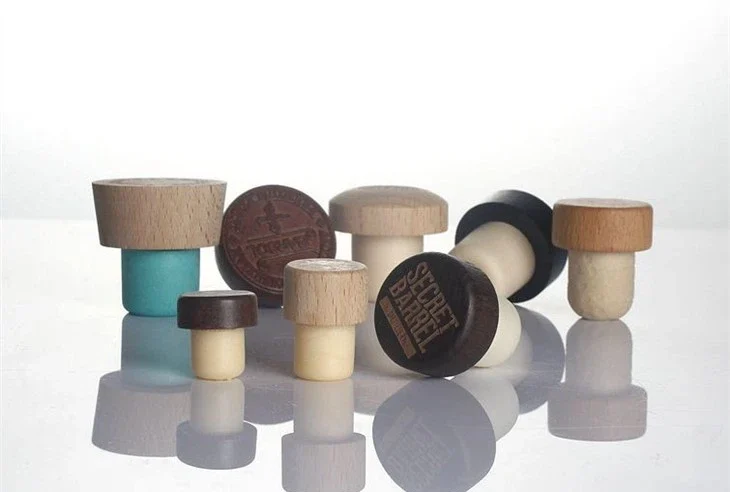
Bar-top stoppers can be customized with wood grain, stained wood, printed tops, embossed logos, debossed logos, metal plaques, plastic tops, glass tops, ceramic tops, and unique shapes. Kandacork supplies options such as wooden bar-top stoppers for premium spirits that need warmth, craft cues, and tactile value.
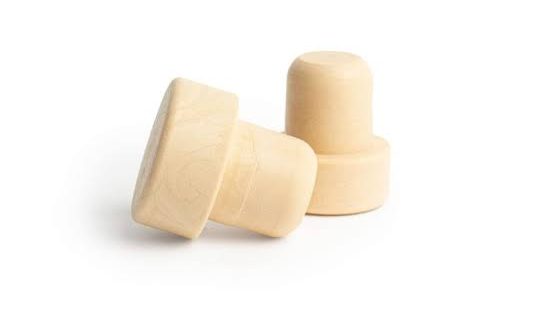
For buyers who need consistent dimensions or a more cost-controlled solution, synthetic bar-top stoppers can provide stable fit, flexible branding, and production-friendly performance across multiple SKUs.
Screw caps and ROPP closures can use sidewall printing, top embossing, matte coatings, gloss coatings, metallic finishes, foil effects, knurling, and custom color systems. When the closure needs to coordinate with labels, cartons, capsules, or glass decoration, it is useful to plan bottle decoration and branding as part of one visual system rather than as a final add-on.
Kandacork also develops colors and finishes for custom spirits closures so buyers can align stopper tops, screw caps, ROPP caps, capsules, and brand palettes across a full packaging range.
Cost, MOQ, and Production Efficiency for Custom Bottle Closures
The cost of bar-top stoppers vs screw caps vs ROPP closures depends on material, tooling, decoration, liner selection, order quantity, assembly method, testing, and export packing.
Bar-top stoppers often cost more when they use premium materials, custom shapes, metal parts, or natural cork. However, they can increase perceived value and support higher retail pricing for premium spirits.
Screw caps can be cost-effective for many projects, especially when using standard sizes and simpler decoration. Custom printing, special coatings, premium liners, and custom tooling may increase cost.
ROPP closures can be efficient for scale production, but they require correct capping equipment and setup. Tooling, cap dimensions, liner choice, and line validation are important cost factors.
Buyers should compare total packaging value, not only unit price. A cheaper closure that leaks, fails torque testing, damages labels, or weakens shelf appeal can cost more in the long run.
Common Closure Selection Mistakes
Many spirits packaging problems begin before production. The most common mistake is choosing a closure by appearance before checking the bottle neck finish.
Another mistake is ignoring liner compatibility. Spirits can contain alcohol, oils, botanical extracts, sugars, acids, or flavor compounds that interact differently with liners and closure materials.
Some buyers choose ROPP closures without confirming whether their filling partner has compatible ROPP capping equipment. This can delay production or require last-minute closure changes.
Brands may also skip leak testing because the closure looks correct on the sample bottle. This is risky because storage position, vibration, temperature change, and carton pressure can reveal problems that are not obvious during a simple fit check.
Another common issue is forgetting tamper evidence until the final packaging stage. Tamper-evident bands, capsules, sleeves, or seals should be planned before artwork and production approval.
How to Choose the Right Closure for Your Spirits Brand
The most practical way to compare bar-top stoppers vs screw caps vs ROPP closures is to start with the product and work backward to the packaging system.
For premium spirits, luxury editions, aged products, and gift packaging, bar-top stoppers usually offer the strongest presentation.
For mainstream retail spirits, flavored spirits, RTD beverages, and modern private-label products, screw caps may provide the best balance of convenience and cost.
For export spirits, standard retail bottles, miniatures, and high-volume bottling, ROPP closures often provide the best combination of tamper evidence, secure sealing, and production consistency.
The final decision should consider brand tier, bottle neck finish, filling line, target market, consumer use, regulatory expectations, and budget.
Closure Recommendations by Spirit Type
Whisky, rum, tequila, brandy, cognac, and premium gin often benefit from bar-top cork stoppers because these products rely heavily on shelf presence and opening ritual.
Vodka, gin, liqueurs, flavored spirits, and RTD cocktails often work well with screw caps because convenience and reclosure are important.
Vodka, rum, gin, liqueurs, miniatures, and export spirits often use ROPP caps for liquor bottles when tamper evidence and bottling consistency are priorities.
There is no universal closure for every spirits brand. A craft rum brand may choose a bar-top stopper for premium image, while a high-volume rum exporter may choose ROPP closures for security and line efficiency.
RFQ Checklist for Closure Buyers
Before requesting a quote, prepare as much technical information as possible. This helps reduce sampling time and improves closure matching accuracy.
Useful RFQ information includes bottle drawing, bottle sample, neck inner diameter, neck outer diameter, neck finish type, fill volume, spirit type, alcohol by volume, target market, closure material preference, liner requirement, tamper-evident requirement, bottling method, expected order quantity, branding artwork, packing requirement, export destination, sample deadline, and mass production timeline.
If the neck finish is unknown, Kandacork can review the bottle sample or drawing and recommend suitable closure options.
Kandacork Closure Matching Process
Kandacork Closures supports buyers from concept review to production-ready supply. The goal is to reduce closure risk before bulk production begins.
The process may include reviewing the bottle drawing or physical sample, confirming neck finish and sealing surface, comparing closure formats, recommending shank or liner materials, reviewing tamper-evident caps for alcohol bottles, checking whether the closure suits manual or automatic filling, preparing prototype samples, adjusting dimensions or decoration, reviewing artwork before finishing, preparing pre-production samples, supporting leak or torque review, confirming export packing, and coordinating mass production after approval.
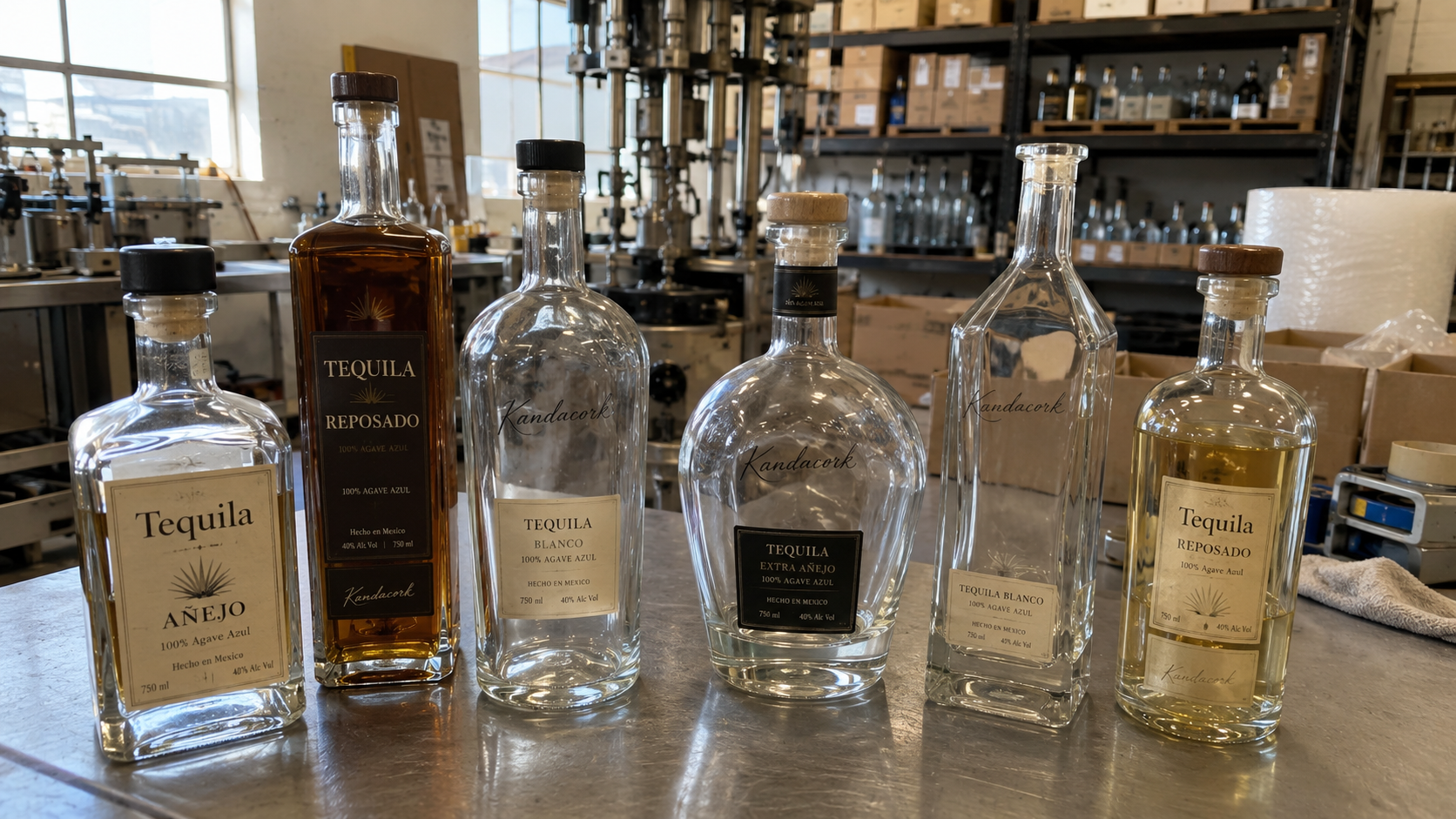
This process is especially useful for new spirits launches, private-label packaging, bottle redesigns, and buyers sourcing closures for multiple bottle formats. It also works well when the project needs coordinated bottles, closures, and decoration through integrated spirits packaging.
Prototype Sample vs Production Sample
A prototype sample helps the buyer check appearance, basic fit, and design direction. It is useful during early packaging development, especially when the brand is comparing several custom spirits packaging closures.
A production sample is closer to the final mass-production specification. It should match the approved material, color, logo decoration, liner, shank, cap dimensions, and packing method.
Buyers should not treat a rough prototype as final approval for bulk production. For custom liquor bottle closures, the final approval should be based on fit, seal, decoration, handling, and production feasibility.
For broader packaging programs that include bottles, jars, and accessories, custom glass packaging coordination can help keep glass design, closure fit, decoration area, and export packing aligned from the beginning.
Technical Glossary for Spirits Bottle Closures
| Term | Meaning |
|---|---|
| Bar-top stopper | A closure with a decorative top and inserted shank, often used for premium spirits |
| Cork shank | The inserted part of a stopper that fits into the bottle neck |
| Synthetic shank | A non-natural cork insert designed for consistent fit and sealing |
| Neck finish | The shape and dimensions of the bottle neck where the closure is applied |
| Sealing land | The bottle surface where the liner, cork, or closure creates the seal |
| Liner | The sealing material inside a cap |
| Torque | The rotational force needed to apply or open a screw cap or ROPP closure |
| ROPP closure | A roll-on pilfer-proof aluminum closure formed onto the bottle neck during capping |
| Pilfer-proof band | A tamper-evident band that breaks when the closure is first opened |
| ROPP skirt | The lower aluminum section that is rolled around the bottle neck |
| Capping head | The machine component that applies or forms the closure |
| Pull-out force | The force needed to remove a stopper from a bottle |
| Insertion force | The force needed to push a stopper into the bottle neck |
| Line trial | A production test to confirm closure performance on actual filling equipment |
Conclusion
Bar-top stoppers, screw caps, and ROPP closures each solve different spirits packaging problems.
Bar-top stoppers are best when premium presentation, tradition, and tactile experience matter most.
Screw caps are best when convenience, simple reclosure, and flexible production are priorities.
ROPP closures are best when tamper evidence, secure sealing, and high-volume consistency are important.
The right closure is not chosen by appearance alone. It should match the bottle neck, spirit type, alcohol formula, filling line, tamper-evident requirement, target market, and brand strategy.
For a new spirits packaging project, send your bottle drawing, bottle sample, closure concept, order quantity, and branding requirements to request a custom closure quote. Kandacork Closures can help compare bar-top stoppers vs screw caps vs ROPP closures and recommend a practical closure solution for your product.
FAQ
Are bar-top stoppers better than screw caps?
Bar-top stoppers are better for premium spirits that need strong shelf appeal, tactile value, and a traditional opening experience. Screw caps are better for convenience, easy reclosure, and practical production. The better choice depends on the bottle, spirit type, filling line, and brand positioning.
Are ROPP closures the same as screw caps?
No. A standard screw cap is usually pre-threaded and twists onto a matching bottle neck. A ROPP closure starts as an aluminum shell and is rolled onto the bottle during capping, forming the thread and tamper-evident band.
Do ROPP closures require special equipment?
Yes. ROPP closures require suitable capping equipment that can roll the aluminum shell onto the bottle neck correctly. The bottle finish, cap size, liner, and capping heads must be matched before production.
Which closure is best for premium spirits?
Bar-top stoppers are often best for premium whisky, rum, tequila, cognac, brandy, and craft gin because they provide a stronger tactile and visual experience. Premium screw caps and decorated ROPP closures can also work well for modern spirits brands.
Which closure is best for mini liquor bottles?
ROPP closures and screw caps are commonly used for mini liquor bottles because they support compact formats, efficient production, and secure sealing. The best choice depends on the bottle finish, tamper-evident requirement, and filling method.
What is the most secure closure for spirits bottles?
ROPP closures are often the strongest option when built-in tamper evidence is required. Bar-top stoppers and screw caps can also be secure when used with capsules, shrink sleeves, tamper bands, or other first-open protection features.
What closure is best for export liquor bottles?
ROPP closures are often preferred for export liquor bottles because they provide tamper evidence, secure sealing, and consistent application on compatible bottling lines. Premium export spirits may also use bar-top stoppers with additional security seals.
Can bar-top stoppers be tamper-evident?
Yes. Bar-top stoppers can be paired with capsules, shrink sleeves, tax strips, tear seals, or other tamper-evident devices. The security method should be selected based on the product, destination market, and brand presentation.
Can screw caps be tamper-evident?
Yes. Screw caps can be designed with tamper-evident bands or used with shrink sleeves and other security features. The closure system should be reviewed based on the target market, product type, and bottle finish.
Are ROPP caps better than screw caps for alcohol?
ROPP caps are often better when tamper evidence and high-volume line consistency are priorities. Screw caps may be better when simple reclosure, flexible production, and lower equipment complexity are more important.
What closure should I use for a premium rum bottle?
A premium rum bottle often works well with a bar-top stopper because it improves shelf presence and creates a more memorable opening experience. If the project requires export security or high-speed filling, a decorated ROPP closure may also be suitable.
What closure should I use for a gin bottle?
A craft or premium gin bottle may use a bar-top stopper for stronger branding. A modern retail gin bottle may use a screw cap or ROPP closure for convenience, tamper evidence, and production efficiency.
What information is needed to quote custom closures?
A closure quote usually requires bottle drawings, bottle samples, neck finish dimensions, closure type, material preference, liner needs, order quantity, decoration artwork, target market, and production timeline.
How do I know if a closure fits my bottle neck?
The best method is to check the bottle drawing, confirm the neck dimensions, produce samples, and test fit, sealing, torque, or pull-out force before mass production.
Should I test closures before bulk production?
Yes. Closure testing is strongly recommended before bulk production. Testing helps prevent leakage, poor opening feel, weak tamper evidence, torque issues, alcohol compatibility problems, and shipment damage.