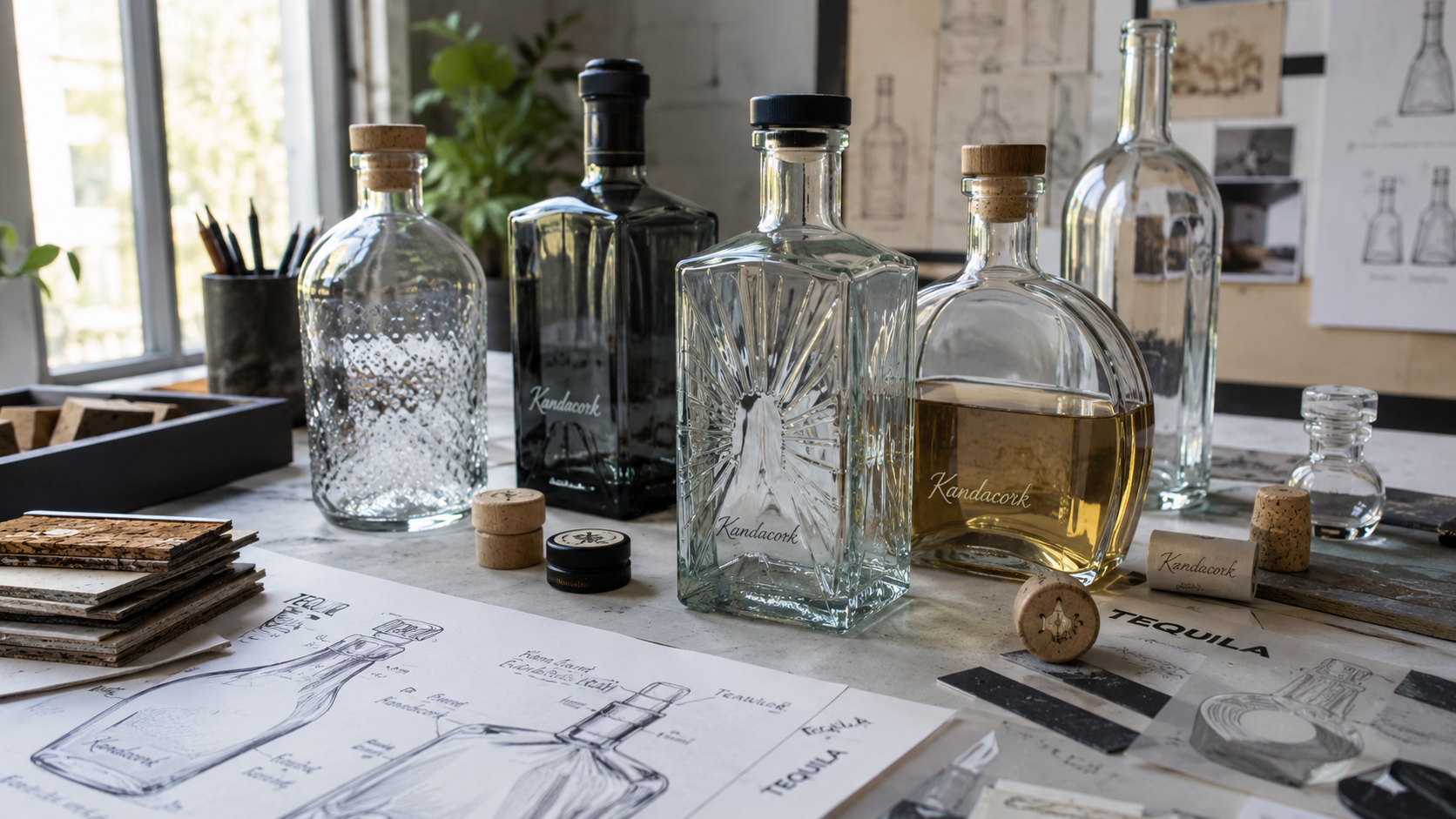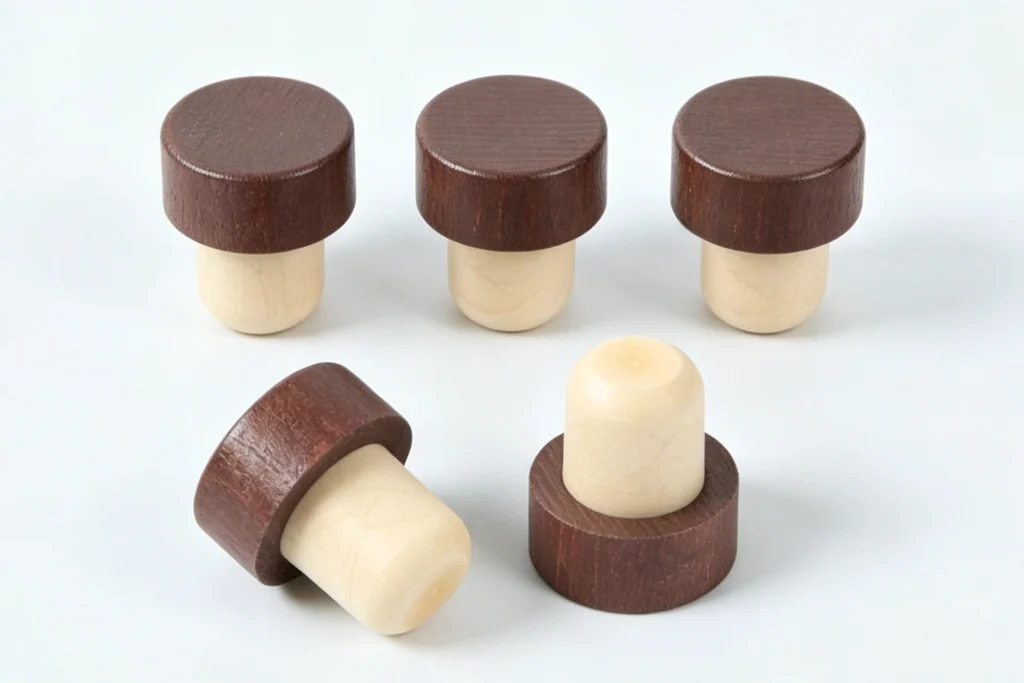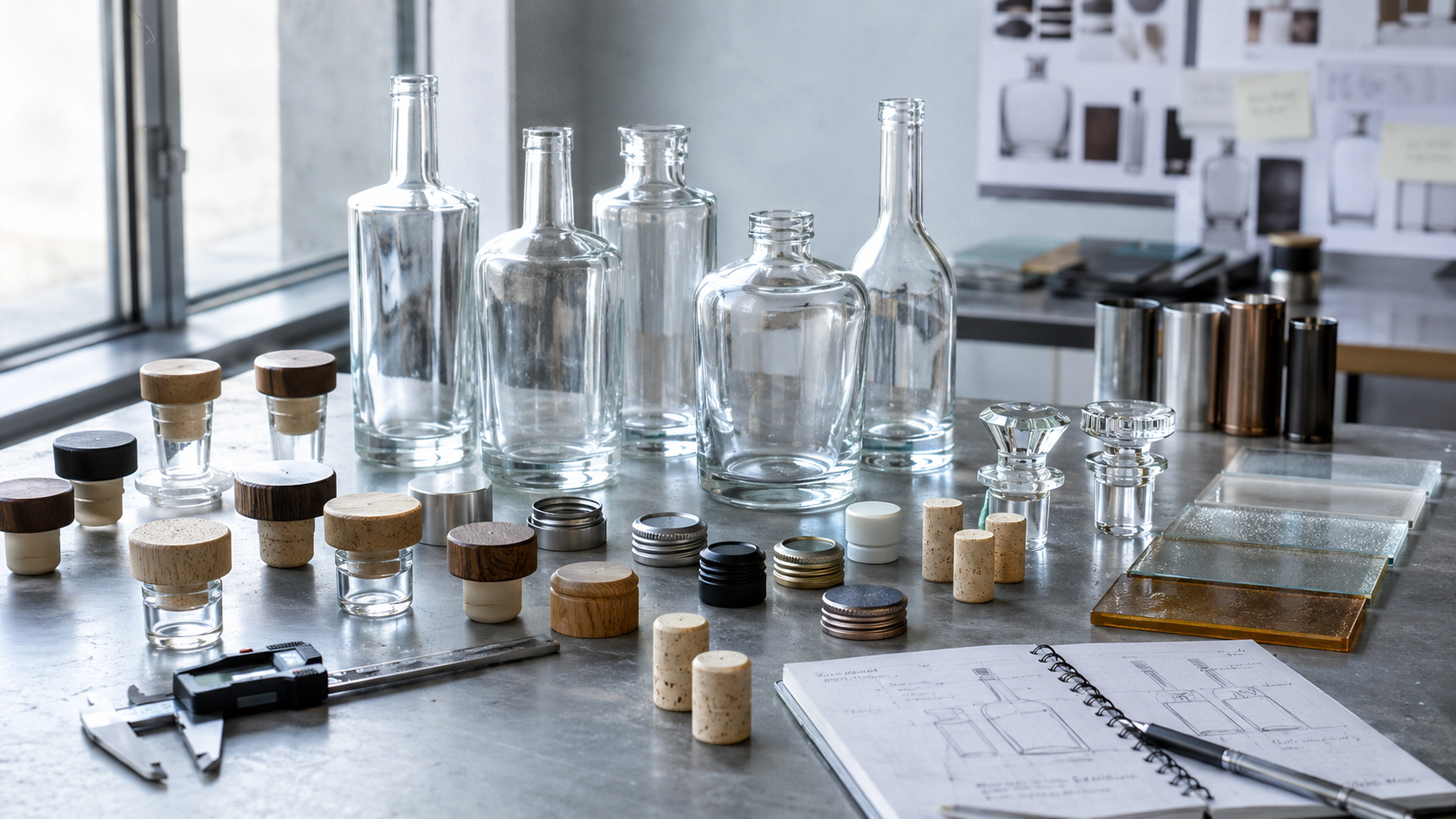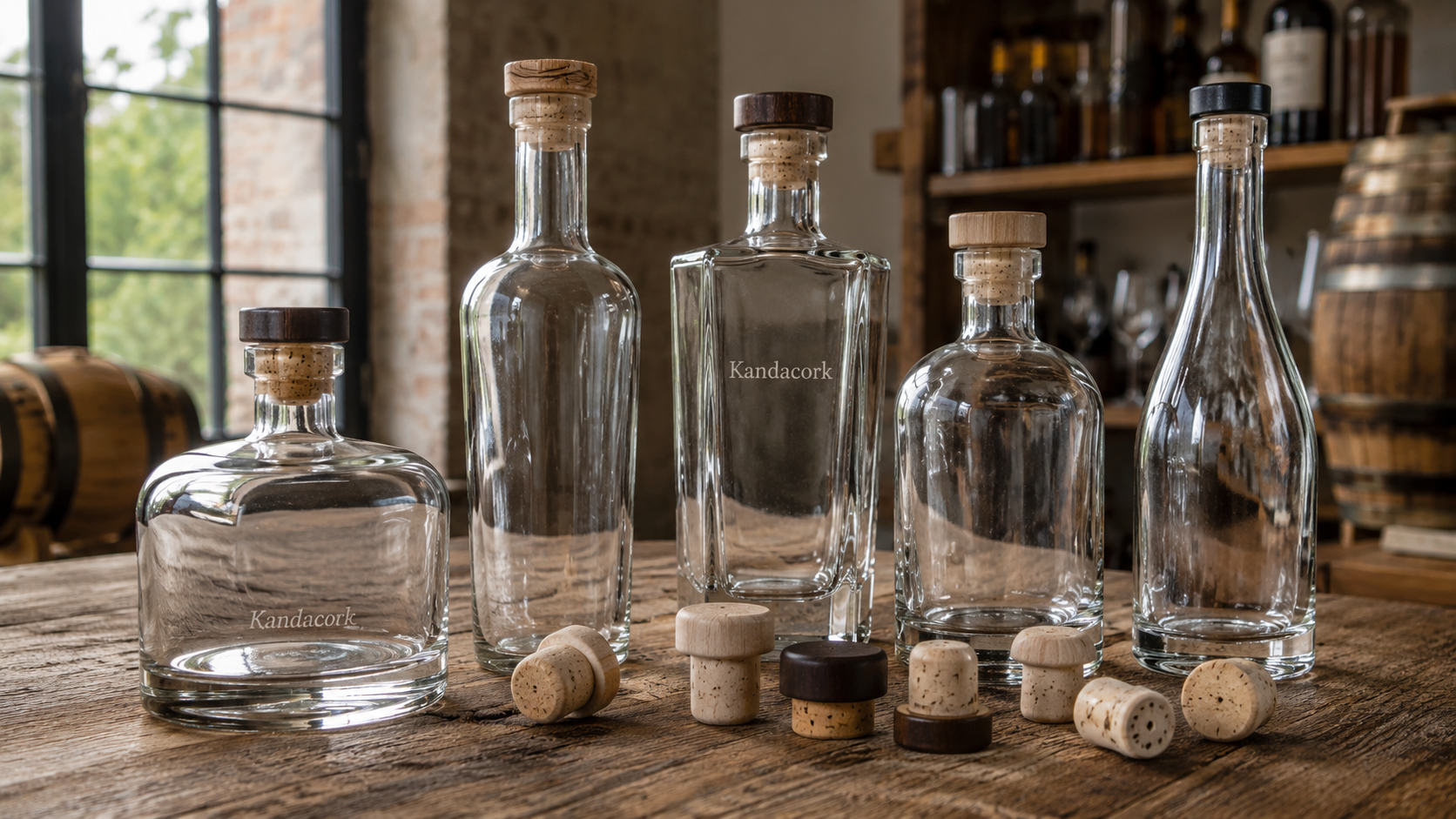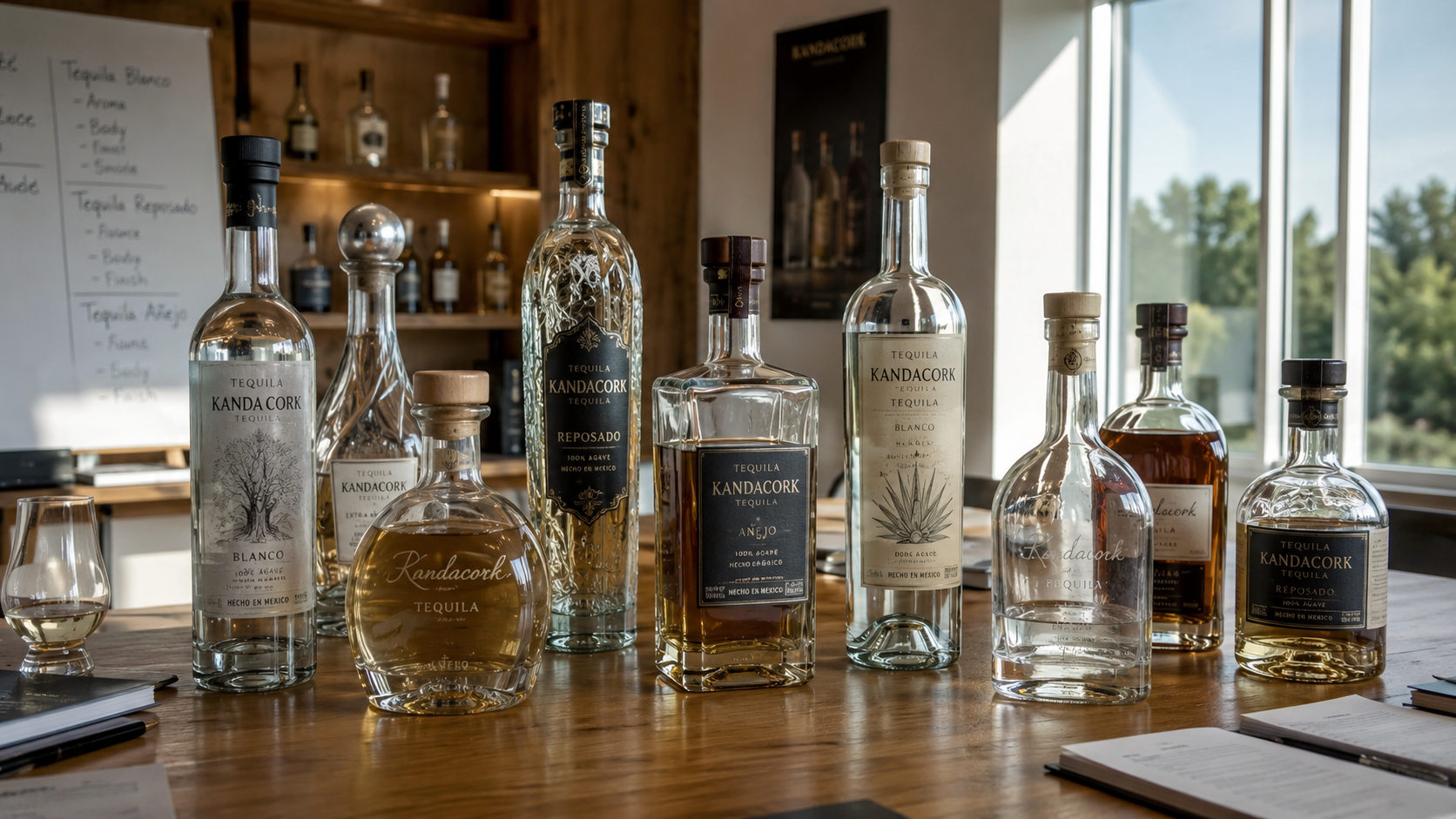
Glass stoppers can create a luxury closure appearance, but they need careful review before production. This checklist helps buyers evaluate neck fit, stopper structure, breakage risk, assembly method, surface finish and export packing for premium spirits bottles.
What Are Custom Glass Stoppers?
Custom glass stoppers are premium bottle closures made with a decorative glass head and a functional insert or shank. The glass head creates the visible brand effect, while the insert controls how the closure seats inside the bottle neck.
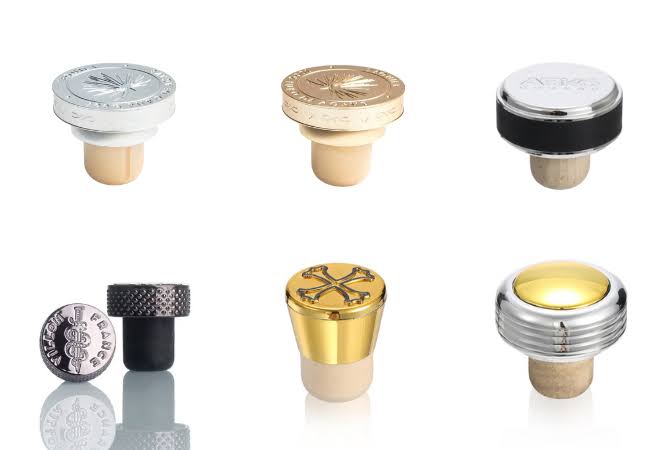
A complete glass stopper system may include a clear, frosted, tinted, faceted, or colored glass top; a synthetic cork, micro-agglomerated cork, TPE, or technical polymer insert; a defined insertion depth; a controlled seating height; and a logo, medallion, sandblasted finish, or other decorative treatment.
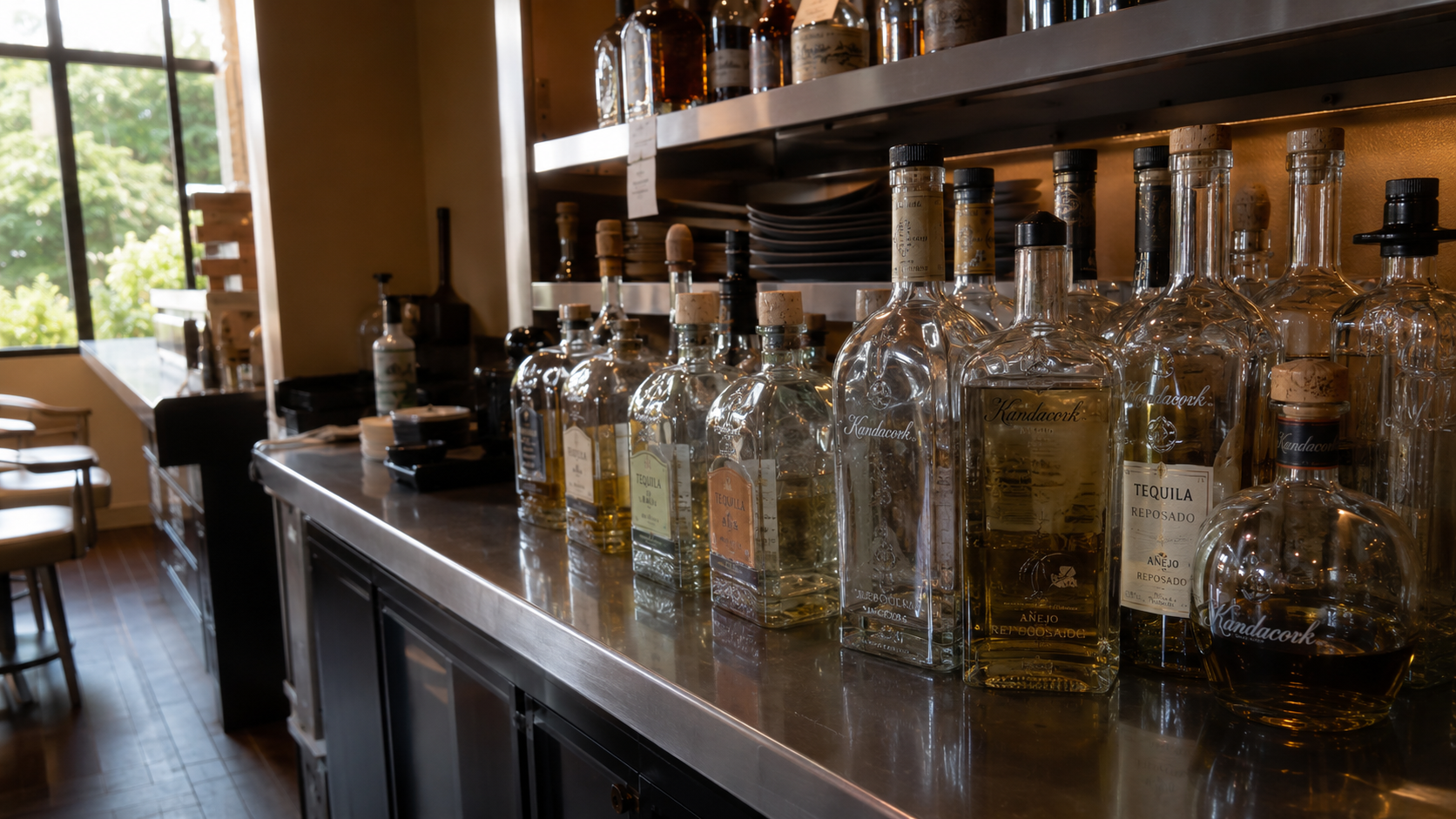
In spirits packaging, custom glass stoppers are commonly used for decanter-style bottles, collector releases, luxury gift packs, premium private-label projects, and brands that want the closure to become a recognizable part of the package. They are especially effective when paired with heavy glass bottles, distinctive bottle shoulders, premium labels, and well-designed cartons.
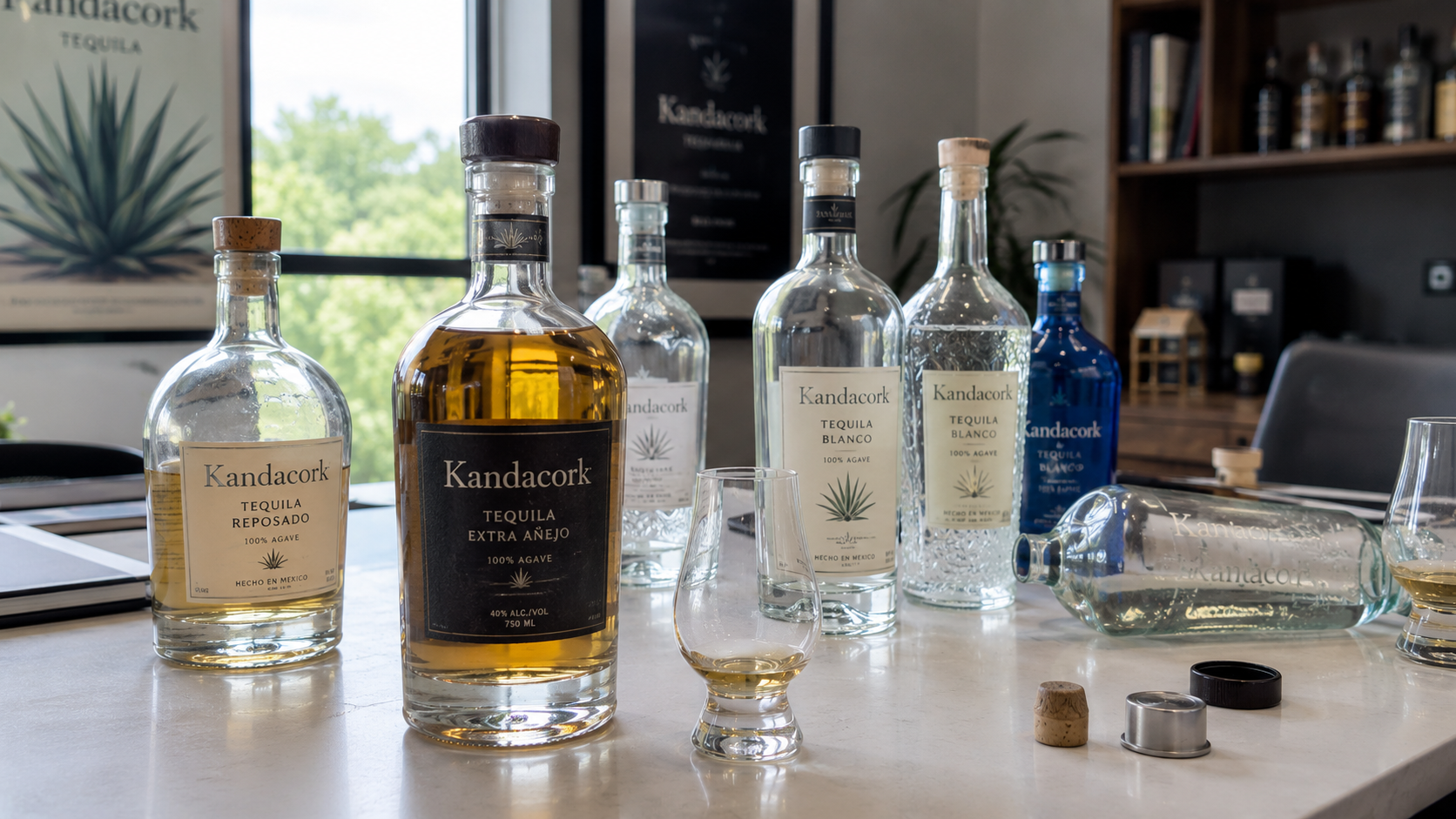
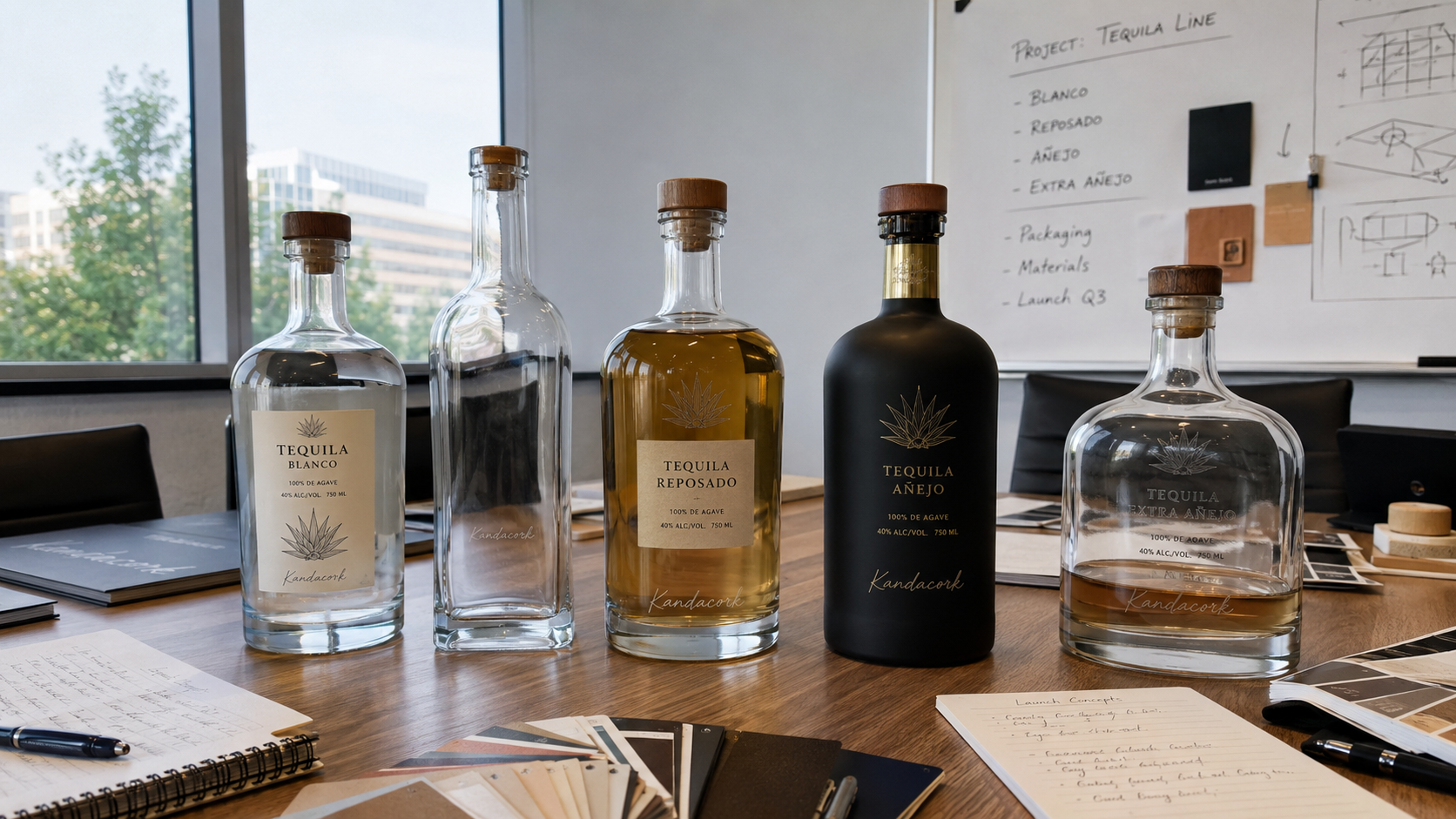
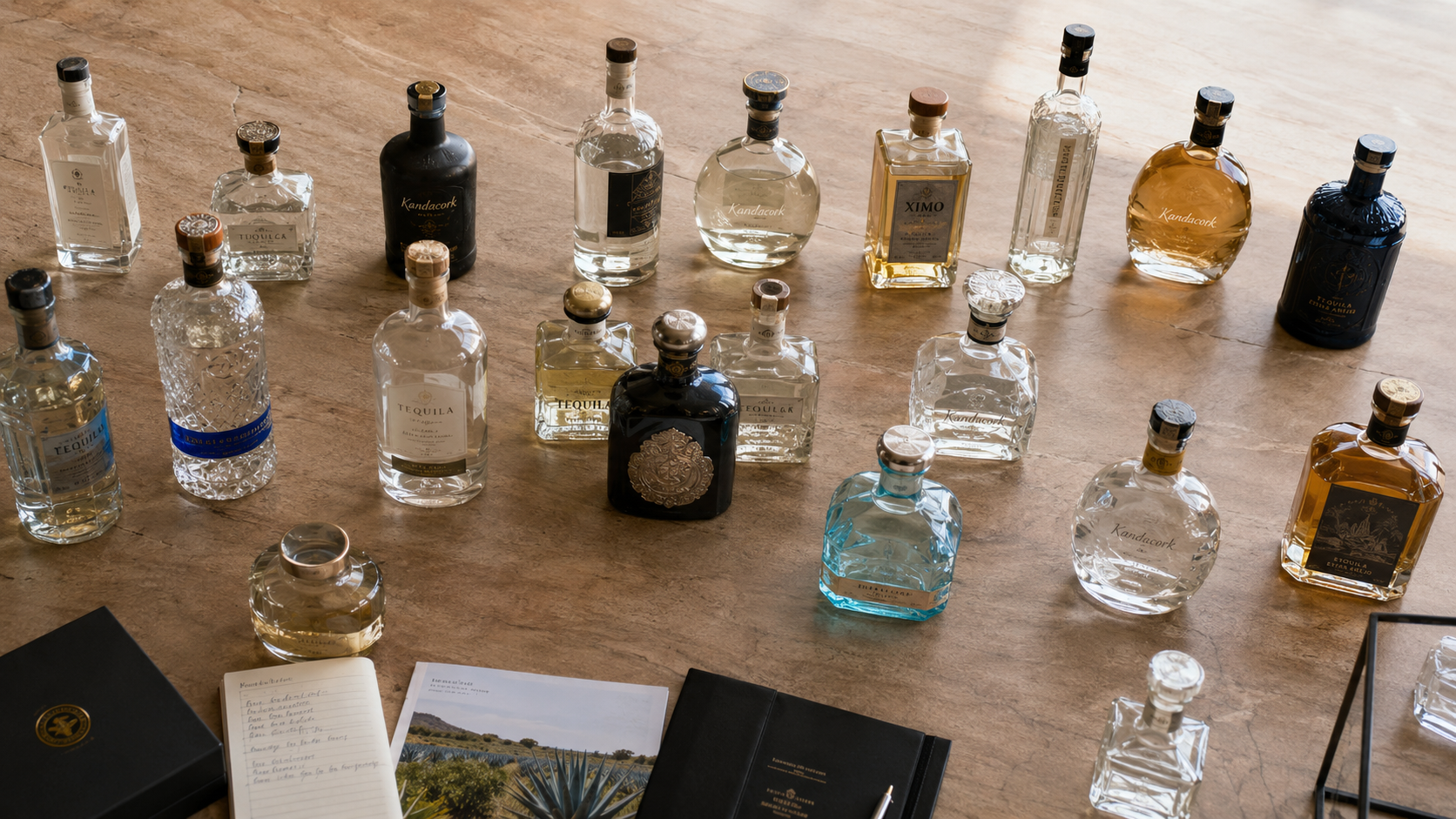
For buyers comparing multiple options, Kandacork’s broader closure and stopper range provides a useful starting point because glass stoppers can be evaluated beside wooden, metal, plastic, synthetic, ROPP, and other closure systems.
Why Spirits Brands Choose Custom Glass Stoppers
Spirits brands choose custom glass stoppers because they improve visual value, hand feel, and product differentiation. On a crowded retail shelf, many bottles compete through shape, color, label material, capsule design, closure weight, and secondary packaging. The stopper is one of the first details a buyer notices from above, at eye level, or during handling.
A clear glass stopper can communicate purity and transparency. A frosted stopper can create a softer, contemporary feel. A diamond-cut or faceted glass top can suggest luxury, collectability, and craftsmanship. A tinted glass stopper can connect with the liquid color, brand palette, or category story.
The right stopper also improves the opening ritual. When a consumer removes a well-fitted glass stopper, the weight, pull force, sound, and reseating feel all contribute to perceived quality. For premium spirits, these physical details can support the price point as strongly as the bottle label or carton.
When Glass Stoppers Are the Right Choice
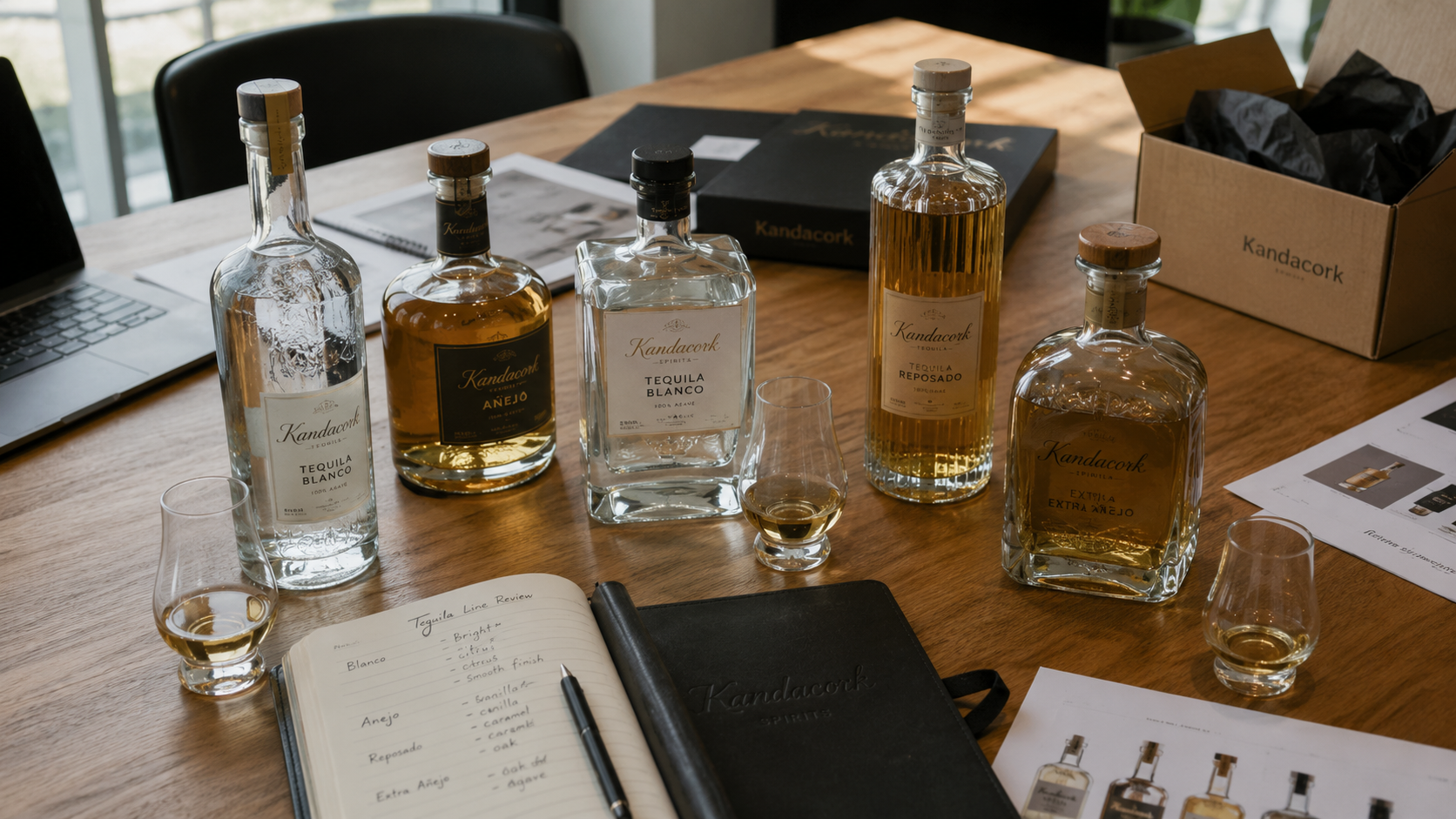
Custom glass stoppers are most suitable when the brand needs a premium identity, a reusable closure experience, and strong shelf recognition. They are a natural fit for whisky, cognac, brandy, rum, gin, tequila, mezcal, vodka, and liqueur projects where packaging plays a major role in purchase decisions.
They are especially useful for limited editions, travel-retail packs, holiday gift sets, decanter-style bottles, brand anniversaries, and flagship SKUs. In these cases, the stopper becomes part of the product story rather than a hidden technical component.
Glass stoppers may not be the best solution for every project. Very low-cost, high-speed, tamper-evident, or single-serve programs may be better served by screw caps, ROPP closures, plastic closures, or other line-friendly systems. A reliable supplier should help buyers choose the closure that fits the product, not simply recommend the most premium-looking option.
Main Types of Custom Glass Stoppers
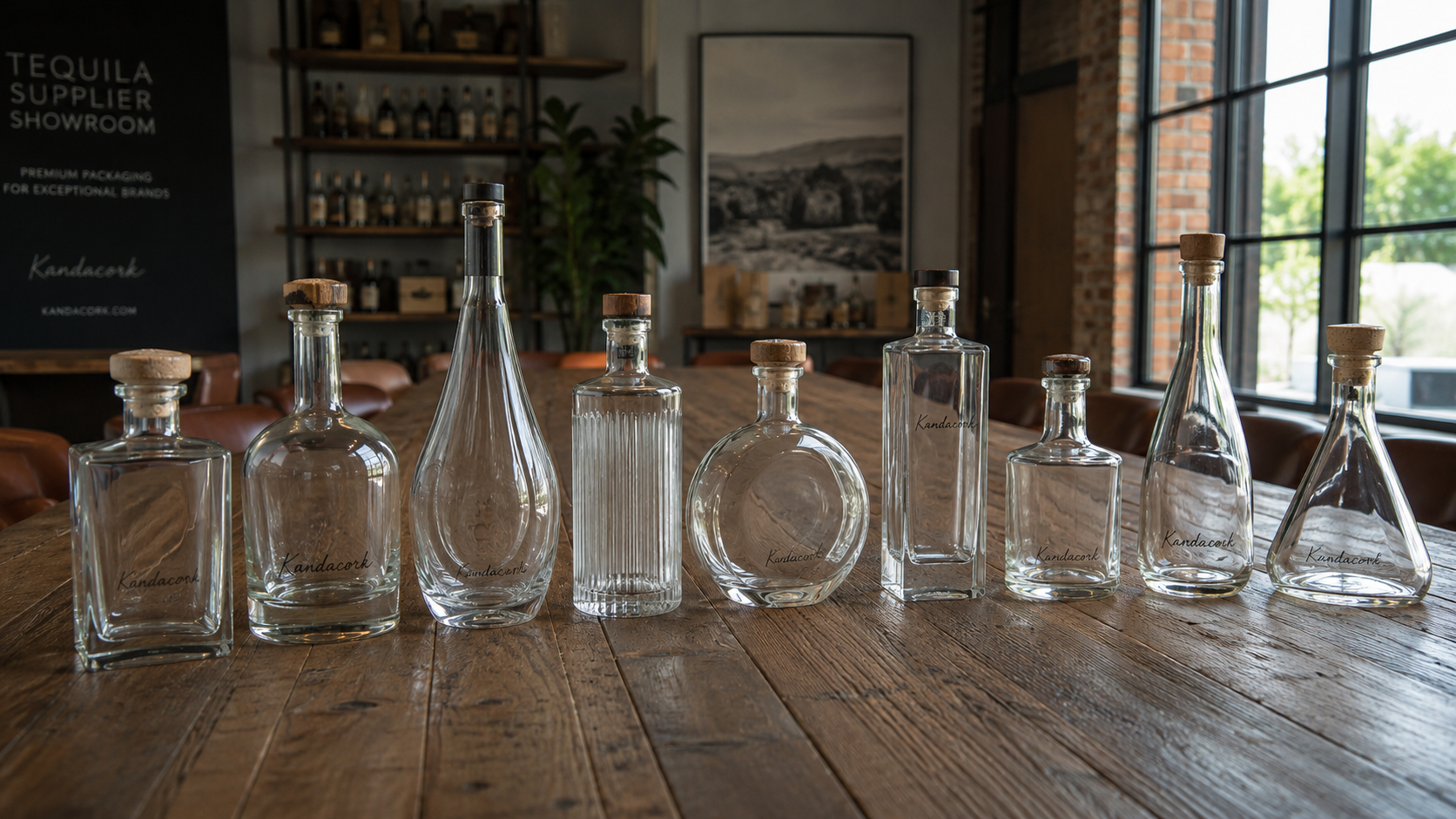
Round glass stoppers are a strong choice for classic spirits bottles, heritage rum, brandy, cognac, liqueur, and traditional gift packaging. They create a softer profile and pair well with curved shoulders, vintage labels, and warm brand narratives.
Square glass stoppers are often used for tequila, vodka, gin, and modern whisky bottles. Their geometry works well with rectangular labels, heavy-base bottles, and clean contemporary branding. If the top surface carries a logo, orientation and alignment should be checked during sample approval.
Diamond-cut and faceted glass stoppers are ideal for luxury whisky, cognac, brandy, limited-edition rum, and collector-style bottles. The cut surfaces reflect light and create a crystal-like appearance. Buyers should inspect clarity, edge consistency, surface quality, and packing protection because faceted tops can show defects more clearly than simple shapes.
T-top glass bar-top stoppers combine a familiar bar-top structure with an upgraded glass head. They are practical for spirits brands that want a premium closure while keeping an intuitive opening and resealing experience.
Frosted, tinted, and colored glass stoppers help brands coordinate the closure with the bottle glass, liquid color, label palette, or outer carton. A frosted glass stopper may suit modern vodka or gin. Amber or smoky tones may support rum, whisky, or brandy. Blue, green, or black glass can create stronger shelf identity when used carefully.
Fully custom molded glass stoppers are used when a brand wants a signature closure shape that competitors cannot easily copy. This route may require more development time and tooling investment, but it can create long-term packaging recognition for flagship or high-margin products.
Customization Options for Glass Bottle Stoppers
Custom glass bottle stoppers can be personalized through shape, color, finish, decoration, insert material, and dimensional control. Common options include clear glass, frosted glass, tinted glass, polished surfaces, matte finishes, logo engraving, sandblasting, embossing, debossing, printing, metal medallions, colored sealing rings, and custom shank structures.
For a complete spirits packaging program, the stopper should be developed with the bottle and decoration system in mind. A closure that looks strong on its own may feel disconnected if it does not match the bottle shoulder, label material, capsule, carton, or brand color.
When bottle structure and closure design need to be developed together, teams working on glass forms can coordinate with Spirits Bottle support for bottle concepts, while surface treatments and logo expression can be aligned with Decoration & Branding requirements. This helps the finished package feel intentional rather than assembled from unrelated components.
Neck Fit Is the Most Important Technical Detail
The glass head creates the premium impression, but the insert determines whether the stopper performs correctly. Neck fit should be reviewed before bulk production, especially when a buyer is matching a new stopper to an existing bottle.
Important fit parameters include bottle neck inner diameter, neck finish tolerance, stopper shank diameter, insert compression, insertion depth, seating height, pull force, head alignment, reclosing feel, leakage risk, and filling-line compatibility.
A small dimensional mismatch can affect the entire package. If the insert is too loose, the closure may feel unstable or leak during handling. If it is too tight, consumers may struggle to open the bottle, or production teams may experience inconsistent closure application. If seating height is wrong, the bottle may look unfinished, uneven, or incompatible with cartons and dividers.
A reliable project should move through drawing review, physical sample checking, stopper sample development, neck-fit testing, visual approval, leak-risk review, pull-force review, and bulk-production inspection.
Choosing the Right Sealing Insert
The insert material should be selected according to the bottle neck, spirit category, target price, export market, and desired opening feel.
Synthetic cork inserts are widely used for spirits because they provide a familiar bar-top experience with stable dimensions and repeatable production. Buyers evaluating consistent compression and clean visual repeatability can compare options such as synthetic stoppers when glass heads are not the only possible solution.
TPE sealing rings can provide controlled compression and a clean modern appearance in certain glass closure systems. Technical polymer inserts may be useful for custom projects that require consistent performance and engineered fit. Micro-agglomerated cork can support traditional or craft positioning, but natural variation should be considered during specification and QC.
For export projects, buyers should also consider storage position, shipment vibration, temperature changes, carton structure, and resealing expectations after opening. A stopper that performs well in a sample room must also survive real distribution conditions.
Buyer Specification Checklist
Before requesting a quote, packaging teams should prepare enough information for the supplier to evaluate both appearance and technical performance.
| Specification | Why It Matters | What Buyers Should Provide |
|---|---|---|
| Bottle neck inner diameter | Controls insert fit and sealing performance | Technical drawing or accurate measurement |
| Neck finish dimensions | Affects seating height and stopper stability | Bottle drawing or physical bottle sample |
| Stopper shank diameter | Influences compression, pull force, and leakage risk | Target fit range or reference stopper |
| Insertion depth | Controls how far the insert enters the neck | Bottle sample and preferred opening feel |
| Seating height | Affects final appearance and carton compatibility | Approved bottle design or reference image |
| Insert material | Determines compression, resealing, and user experience | Spirit category, market, and filling process |
| Glass head shape | Defines brand identity and shelf impact | Sketch, rendering, sample, or design brief |
| Decoration method | Affects logo clarity, durability, and cost | Logo file and finish requirement |
| Target quantity | Impacts tooling, MOQ, and unit economics | Trial order and forecast volume |
| Export destination | May affect documentation and compliance needs | Country or region of sale |
| Packing method | Protects glass heads from chips and scratches | Carton, tray, pallet, and shipping needs |
A complete brief reduces delays and helps the supplier recommend whether the project should use a standard, semi-custom, or fully custom development route.
Standard, Semi-Custom, and Fully Custom Development
Standard matching uses existing glass stopper structures and available insert options. This route is useful when a brand needs faster sampling, lower tooling cost, or a proven closure style.
Semi-custom development adjusts the finish, color, logo treatment, insert material, or seating detail. This is often the most practical route for brands that want differentiation without the time and cost of a private mold.
Fully custom development creates a dedicated glass head shape, mold, decoration method, and fit solution. It is best for luxury spirits, flagship products, collector bottles, and long-term brand packaging systems where a signature closure can become a brand asset.
A practical workflow usually includes bottle review, stopper concept, insert selection, sample production, decoration approval, neck-fit testing, packing review, bulk production, and shipment coordination.
Custom Glass Stoppers vs Other Closure Types
Custom glass stoppers offer luxury presentation, clarity, and collectible value, but other closure materials may be better for specific packaging goals.
Wooden stoppers create warmth, craft appeal, and natural texture. Metal stoppers add weight, shine, and a polished premium impression. For projects that require a metallic look and repeatable bar-top structure, buyers may also evaluate aluminium bar-top stoppers. ROPP closures provide tamper evidence and are often used for high-volume spirits. Plastic closures can be practical for cost-sensitive or multi-SKU programs.
The best closure is the one that supports the brand position, filling process, retail channel, export route, and consumer experience. Glass stoppers are most powerful when the product needs to look giftable, premium, and memorable from the first touch.
Quality Control and Sample Approval
Quality control for custom glass stoppers should cover both appearance and function. Cosmetic inspection is important, but it is not enough.
Visual checks should include glass clarity, bubbles, scratches, chips, color consistency, head shape, edge finish, logo position, engraving quality, sandblasting definition, printing accuracy, medallion alignment, and overall finish. Functional checks should include insert alignment, seating height, pull force, resealing feel, stopper stability, and compatibility with the actual bottle neck.
Sample approval should answer practical questions. Does the stopper match the approved design? Does it seat correctly in the bottle? Does it open smoothly without feeling loose? Does it reseal properly? Does the decoration look clean from normal viewing distance? Is the packing strong enough to protect the glass heads during export?
For buyers building broader custom glass packaging programs, Kandacork Glass can support the relationship between bottle design, closure selection, and production-ready packaging requirements.
Material Safety, Compliance, and Sustainability
Glass is widely used in food and beverage packaging because it is inert, visually premium, and recyclable. Industry bodies such as FEVE describe glass as an inert packaging material that can support circular packaging systems, while the Glass Packaging Institute highlights the recyclability of glass when collection and recycling infrastructure are available.
For spirits closures, buyers should also consider the non-glass components. The insert, coating, adhesive, printing material, or decorative element may be relevant to food-contact safety depending on its use and market. Brands selling into Europe should understand the principles behind European Union food-contact materials, while brands selling into the United States should review the FDA framework for food-contact substances.
Quality systems also matter. A supplier does not need to turn every article into a technical manual, but buyers should still ask how samples, production batches, inspections, records, and corrective actions are managed. International frameworks such as ISO 9001 quality management provide useful language for discussing process control and continuous improvement.
For brands with sustainability-led briefs, closure decisions should consider the complete packaging system: glass head, insert material, bottle compatibility, recycling route, refill or reuse potential, carton materials, and export logistics. Teams developing greener packaging narratives can also coordinate with Kandacork Eco Glass when bottle, closure, and material choices need to work together.
Why Work With Kandacork Closures?
Kandacork Closures helps spirits packaging buyers develop custom glass stoppers that combine premium design with practical production support. The company can assist with stopper style selection, glass head shape, color and finish options, logo engraving, sandblasting, printing, medallion concepts, insert matching, bottle neck fit review, sample development, packing requirements, and bulk supply planning.
This integrated approach reduces sourcing risk. Instead of selecting a stopper from a photo, buyers can review the full closure system: glass top, insert, bottle neck, decoration, testing, packing, and supply schedule.
For multi-category projects beyond spirits, Kandacork Glass Packaging can support broader packaging development where bottles, jars, closures, and decoration-ready surfaces need to be coordinated for international brand programs.
FAQ
What are custom glass stoppers used for?
Custom glass stoppers are used for premium spirits bottles, decanters, gift sets, collector editions, and luxury liquor packaging. They combine a decorative glass head with a functional sealing insert to improve brand presentation, opening experience, resealing convenience, and perceived bottle value.
Can custom glass stoppers fit an existing bottle?
Yes. Custom glass stoppers can fit an existing bottle if the bottle neck is measured and tested correctly. Buyers should provide a bottle drawing, physical sample, inner diameter, neck finish dimensions, and target insertion depth before approving bulk production.
What spirits are suitable for glass bottle stoppers?
Glass bottle stoppers are suitable for whisky, tequila, rum, gin, vodka, brandy, cognac, mezcal, liqueur, and premium limited editions. They are most effective when the brand wants a luxury, gift-ready, collectible, or decanter-style appearance.
Can a logo be added to a glass stopper?
Yes. Logo options may include engraving, sandblasting, embossing, debossing, printing, color effects, or metal medallion inserts. The best method depends on the glass shape, available decoration area, order quantity, brand style, and desired finish.
Are custom glass stoppers leak-proof?
Custom glass stoppers can provide reliable sealing when the insert and bottle neck are correctly matched. Leak resistance depends on neck tolerance, insert material, insertion depth, pull force, and sample testing. No stopper should be approved for bulk production based only on appearance.
What is the MOQ for custom glass stoppers?
MOQ depends on the development route. Standard matching usually has a lower MOQ than fully custom mold development. Semi-custom options such as logo decoration, color adjustment, or insert changes may require medium-volume production. Buyers should share target quantity early in the quotation process.
How long does custom glass stopper development take?
Development time depends on stopper complexity, mold requirements, logo decoration, sample approval, material selection, and production volume. A standard or semi-custom project is usually faster than a fully custom glass stopper project with private tooling.
Can Kandacork Closures support the full closure development process?
Yes. Kandacork Closures can support glass stopper style selection, insert matching, bottle neck review, decoration planning, sample development, quality checks, packing requirements, and bulk supply coordination for premium spirits packaging projects.
Conclusion
Custom glass stoppers are a powerful packaging choice for premium spirits brands. They improve shelf appeal, enhance the opening ritual, and make the closure part of the brand identity. But successful development requires more than an attractive glass top.
The right stopper must match the bottle neck, sealing insert, spirit category, brand position, decoration method, production process, quality standard, and export requirements. Packaging teams should review drawings, samples, neck dimensions, insert materials, logo decoration, sample approval, shipment protection, and market compliance before approving bulk production.
For whisky, tequila, rum, gin, vodka, brandy, cognac, mezcal, liqueur, and collector packaging projects, Kandacork Closures can help develop custom glass stoppers that are visually distinctive, technically practical, and ready for premium spirits packaging.
Share your bottle drawing, stopper reference, logo file, target quantity, and launch schedule through the Kandacork Closures quote page to begin sample review and custom closure development.