Quick Answer
Cork shank compatibility testing confirms whether a cork, synthetic cork, or micro-agglomerated shank fits a specific spirits bottle neck before bulk production. It includes bottle neck measurement, inner profile review, trial shank sizing, insertion testing, pull-out force evaluation, leakage testing, repeat-use checks, and transport simulation.
Unlike a simple cork size chart, compatibility testing checks how the shank performs with the actual bottle, filled product, application method, and shipping conditions.
For spirits brands and packaging buyers, this process helps prevent leakage, stopper pop-up, loose fit, difficult opening, and inconsistent closure performance.
Why Cork Shank Compatibility Testing Matters Before Bulk Orders
A spirits closure must do more than complete the look of a bottle. It must protect the liquid, support brand presentation, open smoothly, reclose securely, and remain stable through filling, storage, shipping, and consumer use.
The cork shank is the part of a bar-top closure or T-top stopper that enters the bottle neck and creates the friction seal. If the shank does not match the bottle correctly, the bottle may leak during transport, the stopper may pop up after filling, or the consumer may find the closure too difficult to remove.
This is why cork shank compatibility testing should happen before confirming a large order. A closure can look correct on a drawing but still fail when tested with actual glass bottles, filled product, application equipment, or export conditions.
For commercial spirits packaging projects, early testing reduces risk before bottle decoration, bottling-line setup, carton packing, and bulk closure production. Buyers developing custom spirits bottle closures should treat shank testing as part of the full packaging approval process.
What Is a Cork Shank in a Bar-Top Closure?
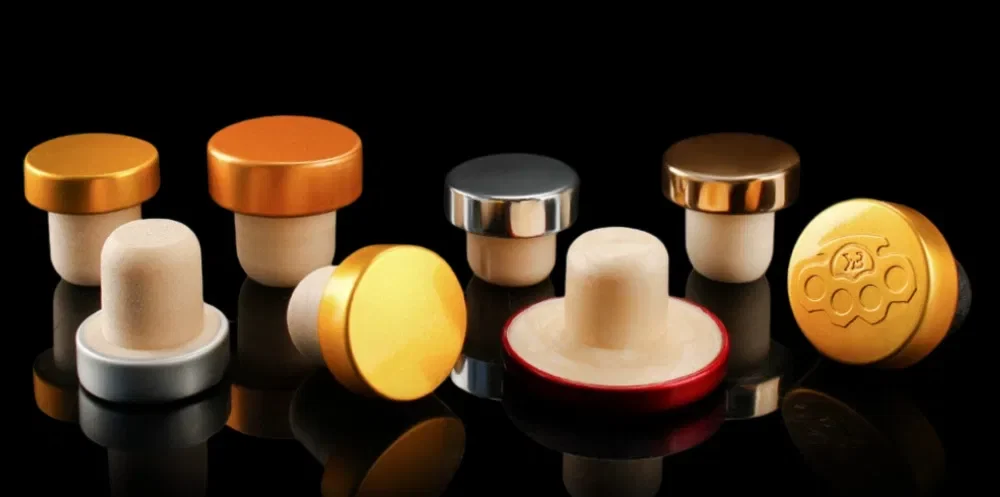
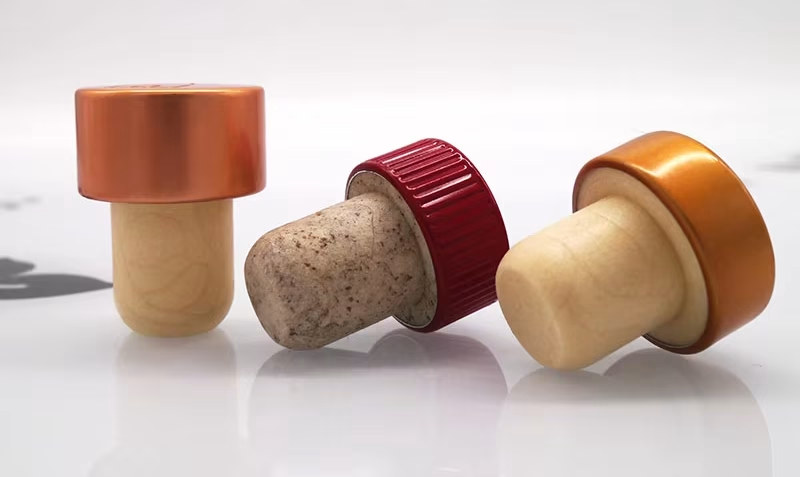
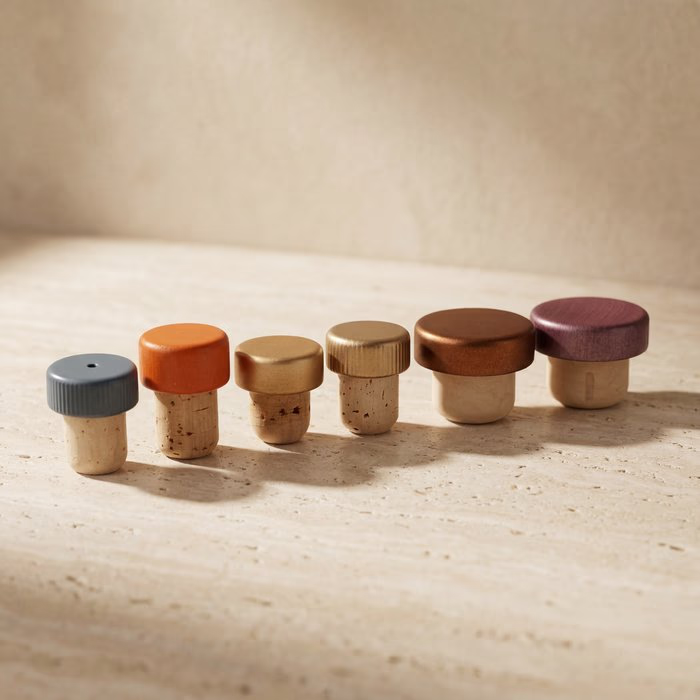
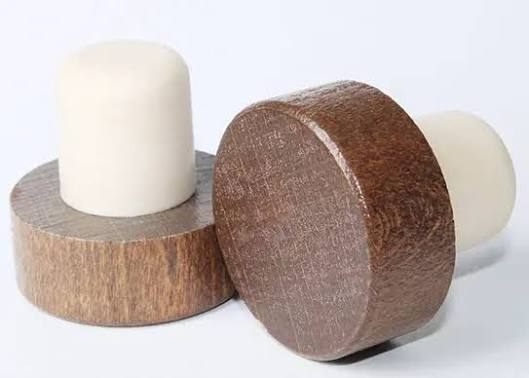
A cork shank is the lower sealing part of a bar-top closure. The upper visible part is usually called the cap head or top. Together, they form a complete T-top stopper or bar-top bottle closure.
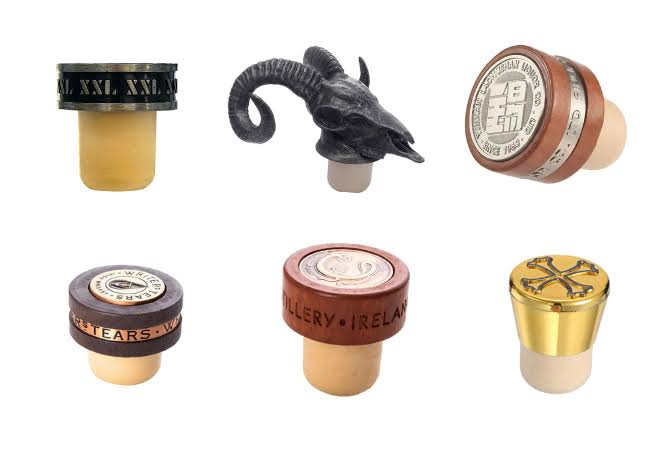
The cap head affects brand appearance. It may be made from wood, aluminum, plastic, glass, metal, ceramic, or composite materials. It can also be customized with logo engraving, embossing, printing, hot stamping, color coating, or other decoration methods.
The shank affects function. Common shank materials include natural cork, micro-agglomerated cork, agglomerated cork, synthetic cork, and cork-look polymer materials.
A premium cap head cannot compensate for a poorly matched shank. The full closure system must be tested with the bottle neck, filling method, and product conditions. Buyers who need more background on stopper sizing can review this bar-top stopper fit guide before final sample approval.
Why Cork Shank Diameter Alone Is Not Enough
Many buyers start with a simple sizing rule: the cork shank is usually selected slightly larger than the bottle neck opening so it can compress and hold inside the neck. For example, a 19.5 mm shank may be tested for an 18.5 mm bottle neck opening.
This rule is useful for early screening, but it is not enough for final approval.
Real glass bottles can vary from the nominal drawing. The inner neck may be slightly oval, tapered, rough, narrow at a lower point, or inconsistent between batches. A shank that fits one sample bottle may not perform the same across a full production run.
Final compatibility depends on:
- Bottle neck bore
- Inner neck profile
- Neck depth
- Glass tolerance
- Shank diameter
- Shank length
- Material compression
- Insertion depth
- Pull-out force
- Product fill level
- Filling and transport conditions
CAD drawings are helpful, but physical bottle samples are essential. Real bottles reveal practical fit issues that may not appear in a technical drawing.
Key Measurements for Cork Shank and Bottle Neck Fit
Before approving custom spirits closures, packaging buyers should confirm the following measurements.
| Measurement | What to Check | Why It Matters |
|---|---|---|
| Bottle inner mouth diameter | Actual neck bore at the opening | Defines the starting shank size |
| Inner neck profile | Taper, depth, pinch points, internal shape | Affects compression and sealing |
| Roundness / ovality | Whether the neck is circular or slightly oval | Prevents uneven sealing pressure |
| Cork shank diameter | Width of the cork or synthetic shank | Controls grip and extraction force |
| Cork shank length | Depth of insertion into the bottle neck | Affects seal area and stability |
| Seating height | Final cap position on the bottle | Affects shelf appearance |
| Cap head clearance | Alignment between cap and bottle finish | Prevents wobble or uneven fit |
| Application method | Manual or machine insertion | Impacts insertion pressure and consistency |
| Product condition | ABV, fill level, headspace, temperature | Helps predict leakage and pop-up risk |
These measurements should be reviewed before bottle decoration approval, line trials, export shipment, and private label rollout.
Natural Cork vs Synthetic Cork Shank Compatibility
Different shank materials behave differently during insertion, compression, extraction, and reuse. The best material depends on brand positioning, bottle design, production volume, and required consistency.
| Shank Material | Best For | Testing Focus |
|---|---|---|
| Natural cork shank | Premium whisky, brandy, rum, craft spirits | Natural variation, compression recovery, pull feel |
| Micro-agglomerated cork shank | Premium projects needing better consistency | Dimensional control, sealing behavior, clean appearance |
| Synthetic cork shank | Private label, high-volume, color-stable projects | Friction, extraction force, repeat opening |
| Cork-look polymer shank | Modern packaging and controlled visual uniformity | Material compatibility, sealing, consumer feel |
Natural cork is often chosen for traditional premium spirits because it provides a familiar tactile experience and authentic appearance. Because it is a natural material, sample testing should confirm compression behavior and pull-out consistency.
Micro-agglomerated cork offers a more controlled cork-based structure. It can be useful when buyers want a premium cork identity with better batch consistency.
Synthetic cork shanks can support controlled dimensions and consistent appearance, which may suit private label and high-volume packaging programs. However, synthetic materials can feel different from natural cork during opening and reclosing, so testing is still necessary. Buyers comparing material options can also review this synthetic cork vs natural cork stoppers guide.
Practical Testing Note
In real spirits packaging projects, two bottles with the same nominal neck size may still require different shank adjustments because of glass tolerance, inner neck taper, or application method. This is why physical bottle testing is recommended before confirming bulk closure production.
A drawing can suggest the starting point. Actual bottles confirm whether the closure will seal, sit straight, open comfortably, and survive shipping conditions.
How to Test Cork Shank Compatibility Step by Step
Step 1: Collect Bottle Drawings, Samples, and Filling Data
Start with the bottle CAD drawing, neck finish drawing, physical bottle samples, target closure style, preferred shank material, product type, alcohol content, fill level, filling temperature, application method, and export requirements.
This information helps the closure supplier recommend a practical starting size and material.
Step 2: Measure the Bottle Neck Bore and Inner Profile
Measure the mouth opening and the internal neck profile. The top opening alone does not show whether the neck becomes tighter or uneven deeper inside.
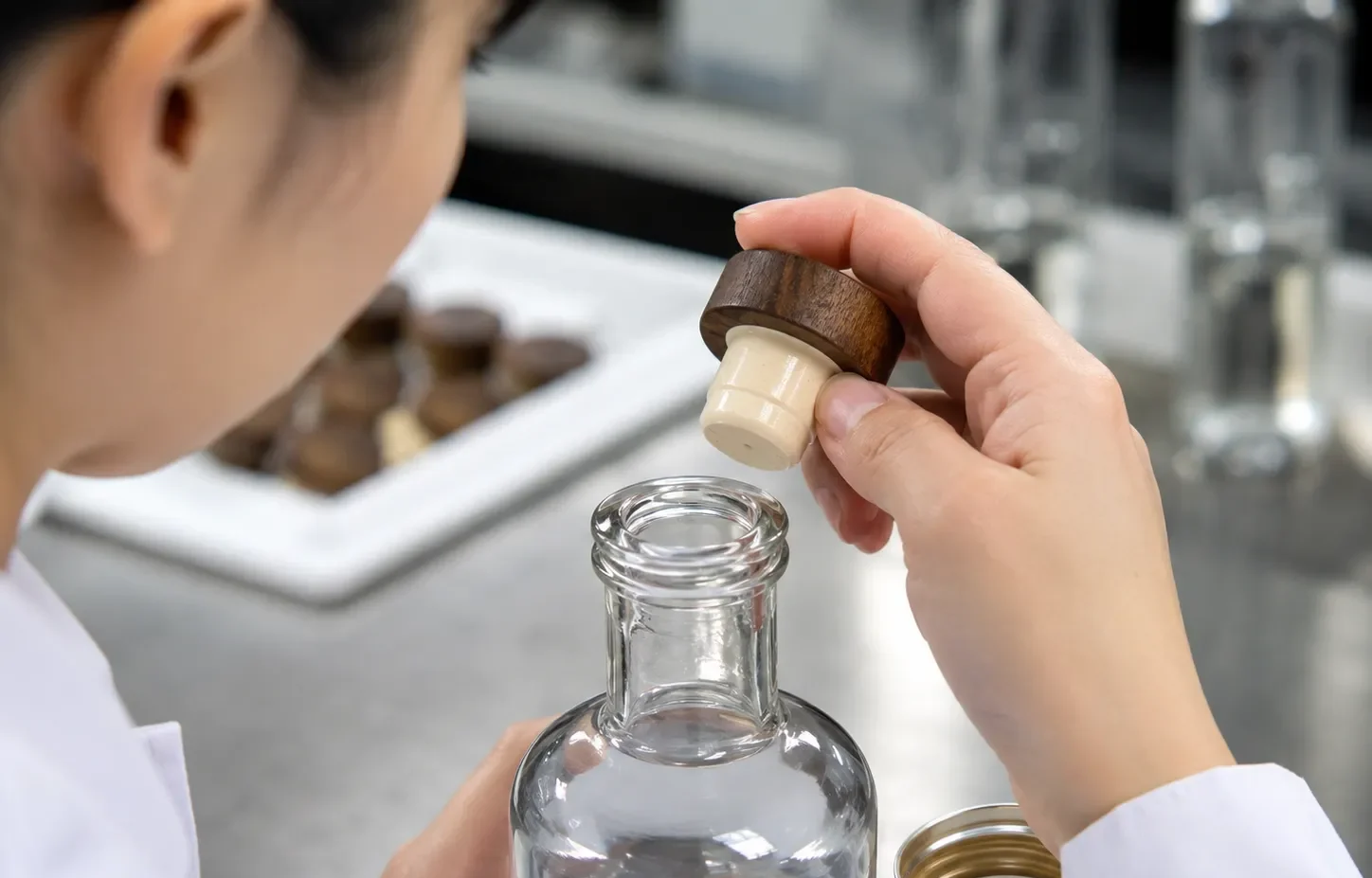
The testing team should check for taper, ovality, roughness, pinch points, and variation between bottle samples. For projects with custom bottles, closure fit and custom stopper support can reduce the risk of approving the wrong closure size.
Step 3: Select and Test Trial Shank Sizes
When tolerances are unclear, test several shank diameters around the expected fit range.
The best cork shank is not always the largest option. An oversized shank can cause difficult opening, inconsistent seating, or stopper pop-up. An undersized shank can cause leakage or loose fit.
Step 4: Check Insertion, Seating Height, and Cap Alignment
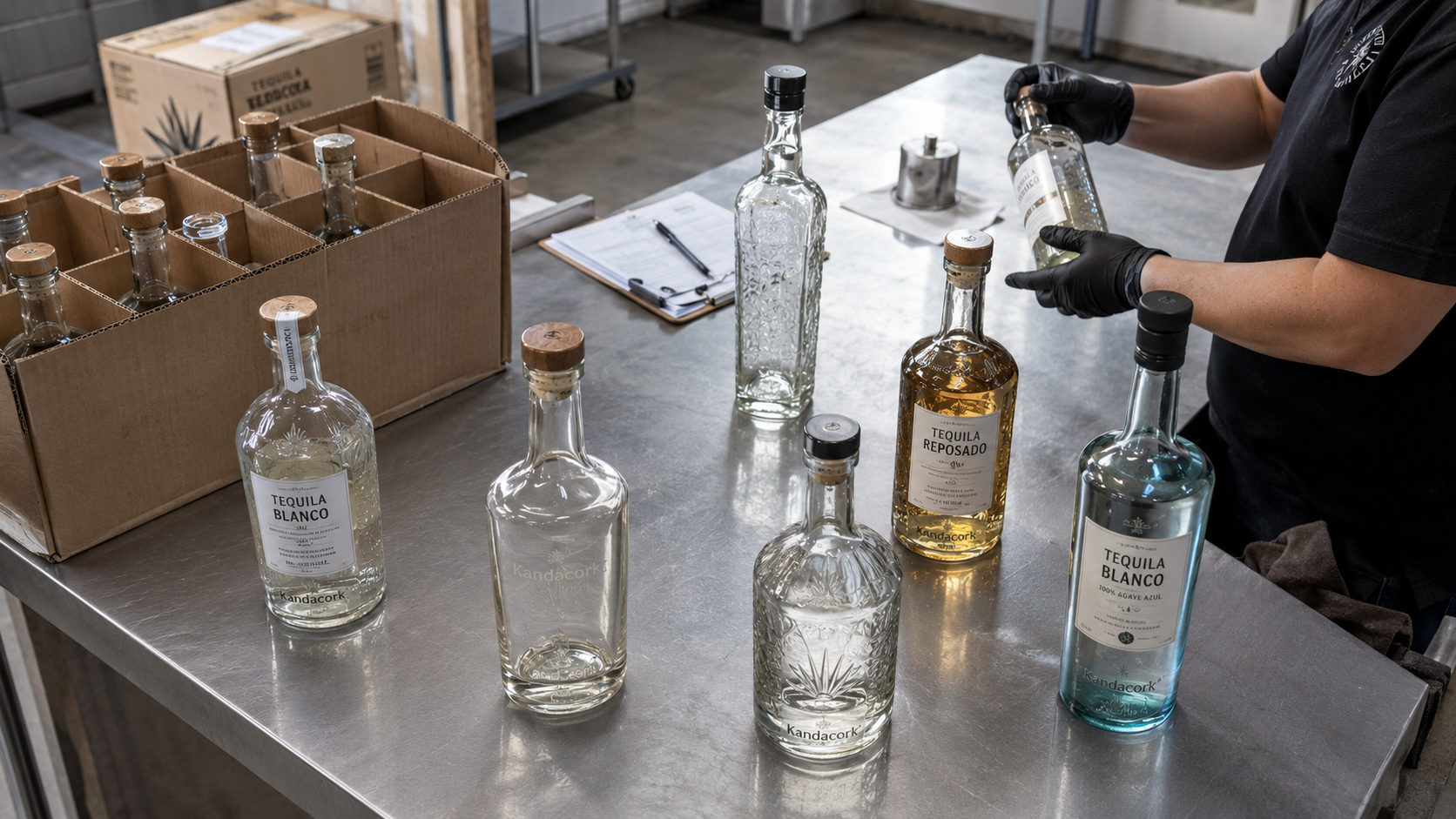
Insert sample closures into the actual bottle. Check whether the shank enters smoothly, whether the cap sits straight, whether the seating height is consistent, and whether the closure wobbles.
This step confirms both technical fit and visual presentation.
Step 5: Measure Pull-Out or Extraction Force
Pull-out force affects both sealing security and consumer experience. A stopper that is too loose may leak. A stopper that is too tight may be difficult to open or may stress the cap-shank assembly.
ISO 9727-5 is a useful quality reference for cork stopper extraction force testing. For spirits closures, the target should be suitable for the bottle, shank material, cap design, and expected user experience.
Step 6: Run Leakage, Repeat-Use, and Transport Tests
Leakage testing should be done with filled bottles, not only empty bottles. Alcohol contact, wet glass, temperature change, vibration, and headspace pressure can all affect closure performance.
Useful checks include upright storage, tilted storage, inverted testing, repeated opening and closing, temperature cycling, carton packing, and transport simulation.
The Natural Cork Council Bottling Handbook references performance concepts such as dimensional recovery, liquid seal capability, and extraction force, which are relevant when evaluating cork-based stopper performance.
For importers and distributors, leakage testing is especially important because shipment failure can lead to repacking costs, distributor complaints, and brand damage.
Step 7: Approve Pre-Production Samples Before Bulk Order
Before mass production, approve the final shank size, cap material, color, logo decoration, seating height, packaging method, and quality standard.
A confirmed pre-production sample gives both buyer and supplier a clear reference for bulk production inspection.
Pass / Fail Criteria for Cork Shank Testing
A compatibility test should not only describe what was checked. It should also define what a successful result looks like.
| Test Item | Pass Signal | Warning Signal |
|---|---|---|
| Insertion | Smooth insertion and stable seating | Excessive force, tilted cap, uneven seating |
| Pull-out force | Firm but consumer-friendly opening | Too loose, too tight, or inconsistent pull |
| Leakage | No seepage after filled-bottle checks | Wet neck, seepage marks, carton staining |
| Repeat use | Stable resealing after open-close cycles | Loose fit after reopening |
| Transport | No movement, leakage, or pop-up after packing test | Stopper lift, cap tilt, liquid marks |
| Appearance | Straight cap, consistent seating height | Wobble, visible misalignment, uneven shelf look |
These criteria help buyers make a clearer approval decision before confirming samples or placing a bulk closure order.
Common Cork Shank Fit Problems and Prevention
| Problem | Likely Cause | Prevention |
|---|---|---|
| Stopper pops up | Oversized shank, wet neck, trapped air, high internal pressure | Test filled bottles under real filling conditions |
| Leakage during shipment | Undersized shank, uneven neck bore, poor compression | Run inverted and transport simulation tests |
| Too hard to remove | Oversized shank or high-friction material | Measure extraction force and test alternate sizes |
| Loose after reopening | Poor recovery or material softening | Run repeat open-close cycle testing |
| Uneven seating height | Bottle tolerance or line setup issue | Conduct line trial and seating-height checks |
| Cap-head separation | Poor bonding or excessive pull force | Test assembly strength and supplier QC |
| Odor or taste concern | Material/product incompatibility | Run product contact and sensory review |
These problems are easier to solve during sample development than after filling, packing, or export shipment.
When Should Buyers Request Cork Shank Compatibility Testing?
Buyers should request cork shank compatibility testing whenever the bottle, closure material, supplier, or production condition changes.
Testing is especially important when launching a new spirits bottle, using a new glass supplier, switching from natural cork to synthetic cork, changing the shank diameter, preparing an export shipment, or moving from hand application to machine application.
It is also recommended when previous batches had leakage, stopper pop-up, difficult opening, loose fit, or inconsistent seating height.
For private label spirits and premium bottle launches, testing should happen before final artwork approval, bottle decoration, closure tooling, and bulk production. Early testing gives buyers more room to adjust the closure specification before costs increase.
How to Evaluate a Cork Closure Supplier
A reliable cork closure supplier should support both product customization and technical fit validation.
Before selecting a supplier, ask:
- Can you review bottle drawings and physical bottle samples?
- Can you test multiple cork shank diameters?
- Can you compare natural cork, micro-agglomerated cork, and synthetic cork shanks?
- Can you support leakage and extraction force evaluation?
- Can you check seating height and cap alignment?
- Can you support manual or machine application testing?
- How do you control shank diameter tolerance?
- Can you provide pre-production samples?
- What is the MOQ and sample lead time?
- What information is needed for a quotation?
These questions help buyers compare suppliers by technical capability, not only by unit price.
What to Send for Samples or a Quotation
To speed up sample development and quotation, send a clear project brief to Kandacork Closures & Stoppers.
Include:
- Bottle CAD drawing or neck finish drawing
- 3–5 physical bottle samples
- Target closure type, such as wood top, aluminum top, plastic top, or luxury custom top
- Preferred shank material, such as natural cork, micro-agglomerated cork, or synthetic cork
- Bottle neck bore measurement, if available
- Product type and alcohol content
- Fill level and filling temperature
- Manual or machine application method
- Capsule, wax, shrink sleeve, or tamper-evident requirement
- Logo, color, engraving, printing, or embossing requirements
- Target order quantity
- Destination market and export route
- Required testing, such as fit, leakage, pull-out force, or transport simulation
The more complete the project information, the faster the supplier can recommend a suitable closure structure and prepare accurate samples. Buyers can use the request samples or a quotation page to share bottle details and project requirements.
Work With Kandacork Closures & Stoppers
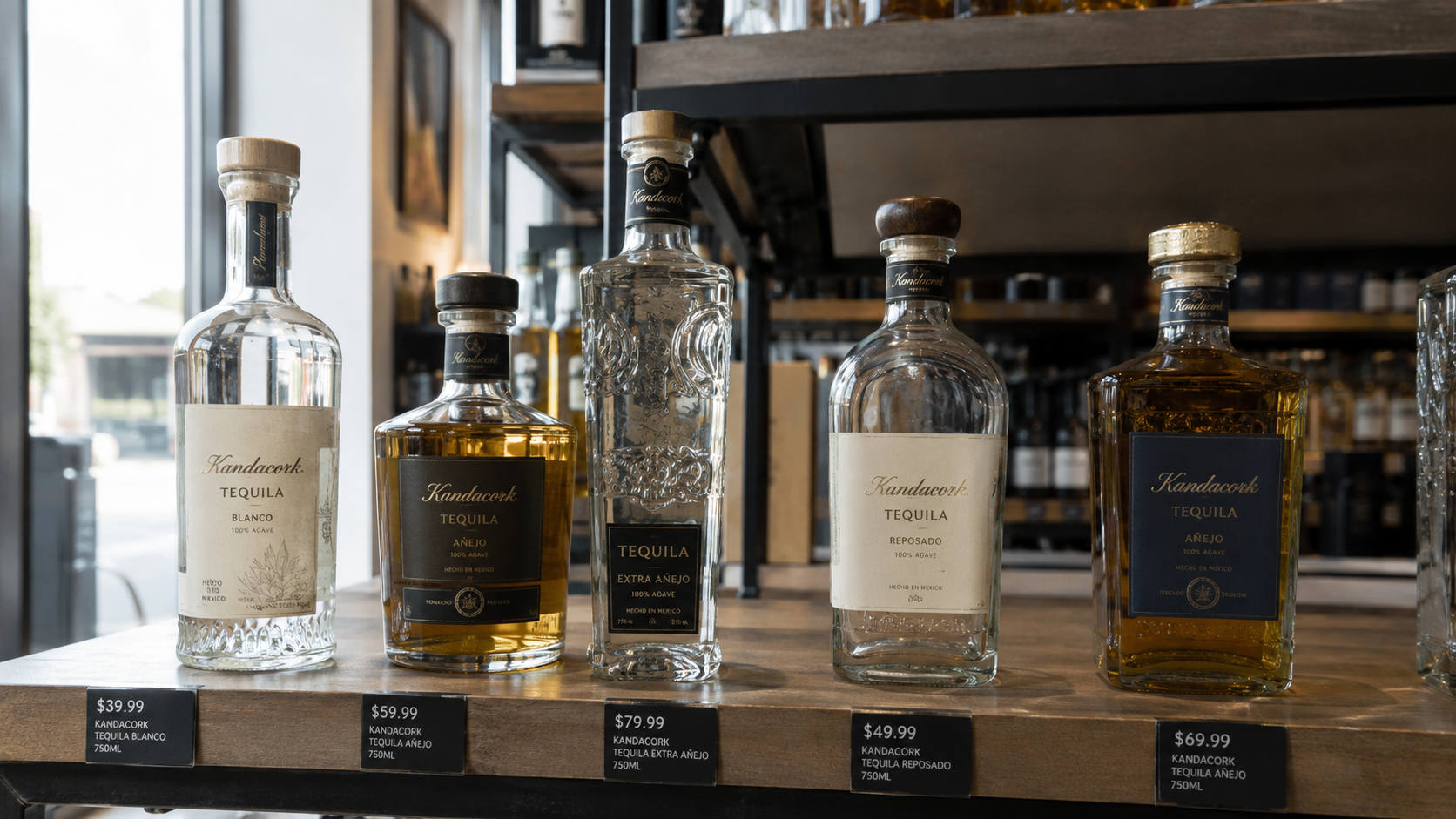
Kandacork Closures & Stoppers helps spirits brands, distilleries, private label buyers, bottlers, importers, distributors, and packaging teams evaluate cork shank fit before bulk production.
By reviewing bottle drawings, physical samples, shank material options, decoration requirements, and application conditions, Kandacork can support sample development and quotation preparation for custom bar-top closures and T-top stoppers.
For complete spirits packaging projects, buyers may also review custom spirits bottle packaging options before finalizing bottle, closure, and decoration requirements.
For new spirits packaging projects, send your bottle drawing, physical bottle samples, closure style, order quantity, and export destination to request compatibility review, samples, or a quotation.
Conclusion: Test Before You Scale
Cork shank compatibility testing protects the product, the packaging investment, and the brand experience. A reliable spirits bottle closure should seal securely, open comfortably, reclose properly, and perform consistently through filling, storage, transport, and consumer use.
The right cork shank cannot be confirmed by diameter alone. Buyers should evaluate bottle neck tolerances, shank material behavior, insertion depth, extraction force, leakage risk, and real-world application conditions before approving bulk production.
For brands preparing a new spirits bottle project, the safest next step is to test the closure with actual bottle samples before scaling the order.
FAQ
What is cork shank compatibility testing?
Cork shank compatibility testing checks whether a cork, synthetic cork, or micro-agglomerated shank fits a specific bottle neck correctly. It includes bottle measurement, insertion testing, pull-out force review, leakage testing, and repeat-use testing.
How do you test cork shank fit for spirits bottles?
Measure the bottle neck bore, review the inner neck profile, test several shank diameters, check insertion depth and seating height, measure pull-out force, run leakage tests, and test the closure under real filling and transport conditions.
Is the 1 mm cork shank rule always correct?
No. The 1 mm rule is only a starting point. Final fit depends on actual bottle neck bore, inner profile, glass tolerance, shank material, compression behavior, insertion depth, and desired extraction force.
What causes cork shank leakage?
Cork shank leakage can be caused by an undersized shank, uneven bottle neck, poor compression, incorrect seating depth, wet neck surfaces, temperature changes, vibration, or product pressure during transport.
Why does a bar-top stopper pop up?
A stopper may pop up if the shank is oversized, the bottle neck is wet, air is trapped during insertion, the fill level is too high, or internal pressure increases after closure.
Should I choose natural cork or synthetic cork shanks?
Natural cork is often preferred for premium traditional spirits packaging, while synthetic cork may offer stronger dimensional control for some projects. Micro-agglomerated cork can provide a balance between cork identity and controlled performance. The best choice should be confirmed through sample testing.
Can Kandacork test cork shanks with my actual bottle samples?
Yes. Buyers can send bottle drawings and physical samples so Kandacork can review neck bore, shank fit, material options, seating height, leakage risk, and sample requirements before quotation or bulk production.
What should buyers send for cork shank sample testing?
Buyers should send bottle drawings, physical bottle samples, target closure style, preferred shank material, product type, ABV, fill level, application method, decoration requirements, order quantity, and export destination.