Quick Answer
For many spirits bottles, the stopper shank should start about 1 mm larger than the bottle neck inner diameter. An 18.5 mm neck often pairs with a 19.5 mm shank, while a 21.5 mm neck often pairs with a 22.5 mm shank. Final approval should be based on bottle samples, bore tolerance, shank material, insertion depth, filling conditions, pull-out force, and leak testing.
| Bottle Neck ID | Starting Stopper Shank Size | Fit Note |
|---|---|---|
| 18.5 mm | 19.5 mm | Common for gin, vodka, slim spirits bottles, and some mini formats |
| 21.5 mm | 22.5 mm | Common for whiskey, rum, tequila, brandy, and premium spirits bottles |
| Tapered or irregular neck | Custom tested | Requires multi-point measurement and physical sample testing |
For standard projects, buyers should send at least 3 physical bottle samples for stopper review. For high-volume, private-mold, or export projects, test 10 or more bottles from different cartons or production batches.
A stopper may look simple, but the shank controls how securely the closure fits inside the bottle neck. For spirits brands, distilleries, private label buyers, bottlers, importers, distributors, and packaging teams, choosing the wrong shank size can cause leakage, loose fit, difficult extraction, inconsistent shelf appearance, or delayed production approval.
This guide helps buyers match cork, synthetic, TPE, silicone, wood-top, metal-top, and glass-top stoppers to real bottle neck dimensions before selecting custom spirits bottle closures and stoppers for sampling or quotation.
[Image placeholder: Stopper shank anatomy diagram]
Alt text: Stopper shank diameter, shank length, insertion depth, and bottle neck ID diagram.
What Is Stopper Shank Size?
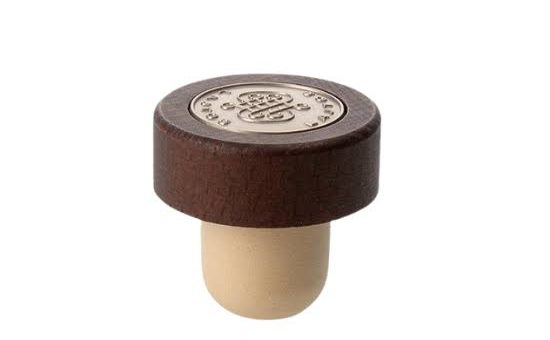
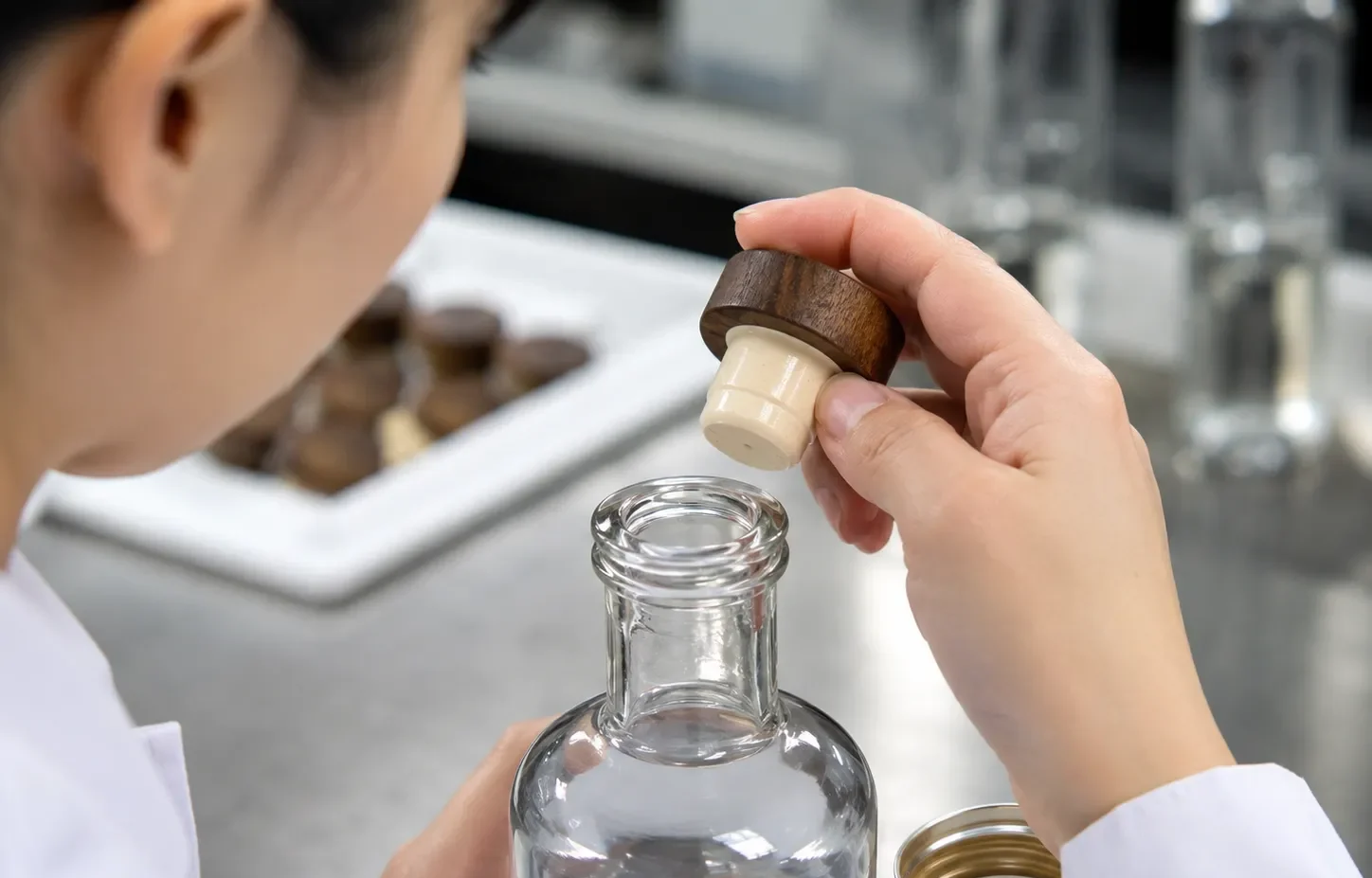
Stopper shank size refers to the diameter and length of the lower part of a stopper that enters the bottle neck. The visible top may be made from wood, metal, glass, plastic, ceramic, or composite material, but the shank creates the mechanical fit and sealing contact.
| Term | Meaning | Why It Matters |
|---|---|---|
| Bottle neck inner diameter | Internal opening of the bottle neck | Determines the starting shank diameter |
| Bore | Internal passage inside the neck | Reveals taper, restriction, or inconsistency |
| Shank diameter | Outside diameter of the sealing part | Controls compression and friction |
| Shank length | Vertical length of the sealing part | Affects stability and sealing contact |
| Insertion depth | How far the shank enters the neck | Affects seating height and pull-out force |
| Pull-out force | Force needed to remove the stopper | Impacts retention and consumer experience |
A product page can tell you which shank size is available, but a bottle neck compatibility review tells you whether that shank will seal reliably on your actual bottle, filling line, carton, and export route.
Common Bottle Neck ID and Stopper Shank Size Chart
The following chart gives a practical starting point for spirits bottle stopper selection. It should be used for initial review, not final approval.
| Bottle Neck Inner Diameter | Common Starting Shank Size | Typical Use | Buyer Note |
|---|---|---|---|
| 18.5 mm | 19.5 mm | Gin, vodka, mini spirits, slim bottles | Common bar-top fit; confirm by sample testing |
| 19.5 mm | Custom tested | Special molds, private label bottles | Review bore shape before selecting shank |
| 21.5 mm | 22.5 mm | Whiskey, rum, tequila, brandy, premium bottles | Common for wider premium spirits necks |
| 22.5 mm+ | Custom shank | Luxury bottles, limited editions, heavy tops | Requires drawing review and physical testing |
| Irregular or tapered bore | Custom or semi-custom | Sculpted necks, private molds | Measure at several insertion depths |
For standard bar-top spirits bottles, 18.5 mm and 21.5 mm inner neck sizes are common. The corresponding 19.5 mm and 22.5 mm stopper shank sizes are often used as initial options. Buyers comparing standard T-top or bar-top structures can also review a dedicated bar-top stopper size guide before preparing samples.
However, final bottle neck compatibility depends on tolerance, shank length, stopper material, filling method, headspace, carton design, and shipping conditions.
[Image placeholder: 1 mm stopper shank rule diagram]
Alt text: 18.5 mm bottle neck with 19.5 mm stopper shank and 21.5 mm neck with 22.5 mm shank.
The 1 mm Oversize Rule: When It Works and When It Fails
A common rule is to choose a stopper shank about 1 mm larger than the bottle neck inner diameter. This works because cork, synthetic cork, and engineered inserts can compress slightly inside the bottle neck.
For example, an 18.5 mm bottle neck ID may start with a 19.5 mm shank. A 21.5 mm bottle neck ID may start with a 22.5 mm shank.
This rule is useful for sampling, but many fit problems happen when buyers apply it without checking bottle tolerance, bore shape, material hardness, filling conditions, or logistics requirements.
| When the 1 mm Rule May Fail | Risk | Better Approach |
|---|---|---|
| Bottle neck tolerance is wide | Some bottles feel loose, others feel tight | Test minimum and maximum neck ID |
| Bottle bore is tapered | Insertion depth becomes inconsistent | Measure ID at several depths |
| Stopper head is heavy | Stopper may tilt or loosen during transport | Adjust shank length or material hardness |
| Synthetic shank is too hard | Difficult insertion or poor opening feel | Adjust hardness, diameter, or profile |
| Natural cork density varies | Batch-to-batch inconsistency | Require QC checks and pre-production samples |
| Export shipping is demanding | Leakage after vibration or temperature change | Add inverted leak and vibration testing |
| Gift box clearance is tight | Seating height may affect packing | Test the filled bottle in final packaging |
For premium spirits, the goal is repeatable sealing, controlled insertion, stable pull-out force, and a polished consumer experience.
How to Measure Bottle Neck Inner Diameter
Accurate measurement is the foundation of bottle neck compatibility. Buyers should not rely only on catalog terms such as “standard spirits bottle” or “bar-top bottle.” Two similar-looking bottles may have different inner neck dimensions.
Start with the bottle drawing. Ask the glass bottle supplier for the latest technical drawing and check the neck finish, mouth opening, bore size, tolerance range, and any notes about internal taper. If the bottle uses a private mold, confirm that the drawing matches the latest production version.
Then measure the bottle neck with a calibrated digital caliper. Measure the mouth opening first, then check the bore at the expected sealing depth. A stopper does not seal only at the top edge. It enters the neck and creates contact along the internal wall.
For a more reliable profile, measure:
- At the mouth opening.
- Around 5 mm below the mouth.
- Around 10 mm below the mouth.
- At the expected final sealing depth.
- At any visible internal taper or restriction point.
Measure bottles from different cartons, pallets, or production batches. Record the minimum, maximum, and average inner diameter. If the range is wide, test the stopper against both the smallest and largest bottle necks.
A drawing helps the supplier estimate the stopper shank size, but real bottles confirm the actual fit.
[Image placeholder: Bottle neck ID measurement with caliper]
Alt text: Measuring spirits bottle neck inner diameter with a digital caliper.
Stopper Materials Compared
Different shank materials behave differently under compression. Two stoppers with the same nominal diameter may perform differently if the material hardness, elasticity, density, or surface friction is different.
| Material | Best For | Main Advantage | Key Risk |
|---|---|---|---|
| Natural cork | Premium whiskey, rum, brandy, craft spirits | Traditional feel and natural character | Natural density and surface variation |
| Micro-agglomerated cork | Mid-premium spirits and controlled cork-look projects | More consistent cork-based performance | Binder quality and compression consistency |
| Synthetic cork | Private label, gin, vodka, tequila, liqueur | Dimensional consistency and repeatability | Hardness and alcohol compatibility |
| TPE / silicone insert | Glass-top, luxury, and decorative stoppers | Controlled sealing profile | Food-contact review and material suitability |
| Engineered composite shank | Custom premium closure projects | Customizable performance | Tooling cost, testing timeline, and QC control |
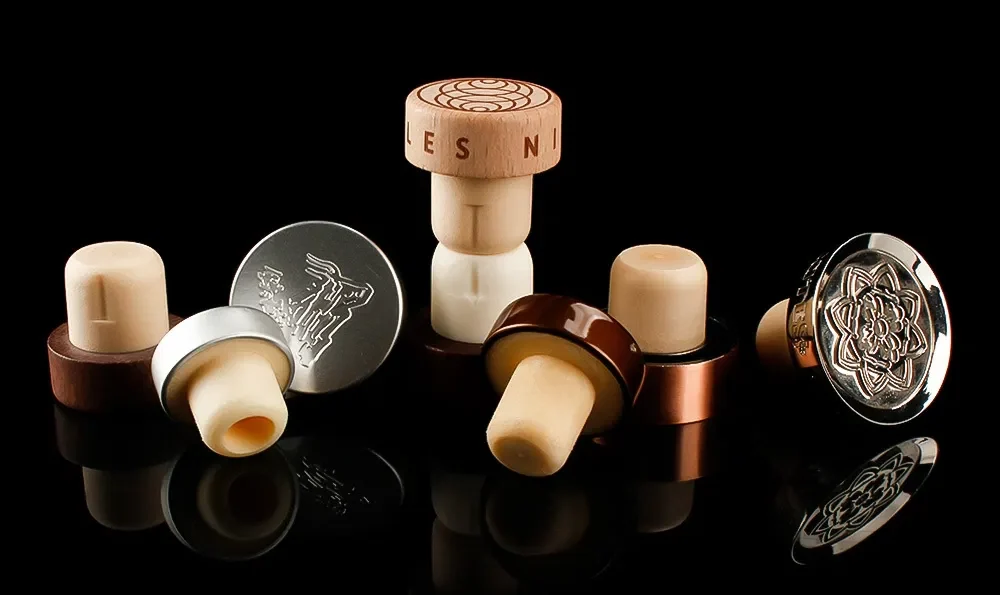
Natural cork is often used when authenticity and tactile value matter. Micro-agglomerated cork can suit brands that want cork character with more consistent performance. Synthetic cork is often chosen when repeatability, controlled cost, and stable insertion are priorities. For buyers comparing sealing feel, appearance, and dimensional control, a focused cork vs synthetic shank guide can help narrow the material direction.
TPE, silicone, and engineered inserts are often used with glass stoppers, decorative tops, and custom luxury closures. The right material depends on bottle neck geometry, alcohol formula, stopper top weight, launch volume, target market, and required brand appearance.
Common Stopper Fit Problems and Solutions
Stopper problems usually come from a combination of shank size, bottle neck tolerance, material behavior, and packing conditions.
| Problem | Possible Causes | Practical Solution |
|---|---|---|
| Stopper feels loose | Shank too small, bore larger than expected, material too soft, shank too short | Test larger shank, longer shank, or firmer material |
| Stopper leaks during shipping | Poor sealing contact, weak insertion depth, vibration, inconsistent bottle bore | Add inverted leak test, vibration test, and bottle tolerance review |
| Stopper is too tight | Shank too large, bore smaller than drawing, material too hard, excessive insertion depth | Reduce diameter, adjust hardness, review insertion depth |
| Fit varies between bottles | Glass tolerance, stopper tolerance, material compression variation | Test multiple bottles and request dimensional QC |
| Stopper sits unevenly | Neck taper, heavy top, poor insertion control | Adjust shank profile, length, or packing process |
| Resealing feels weak | Shank loses compression after opening | Review material recovery and repeated open-close performance |
A stopper that fits well at the first sample check may still fail during logistics or consumer use. Buyers should test the closure as a system: bottle, stopper, filling method, fill height, headspace, carton, gift box, and distribution route.
Fit Testing Before Bulk Production
Before placing a bulk order, buyers should perform or request a structured compatibility test.
The first step is a hand insertion test. The stopper should enter smoothly without excessive force and should not wobble after insertion. If the stopper requires too much force, it may slow production or create a poor consumer experience.
Next, check seating height. The stopper top should sit consistently across multiple bottles. Inconsistent seating can create visual defects on the shelf and may interfere with cartons, gift boxes, or display packaging.
Pull-out force should also be reviewed. Too little force may indicate weak retention. Too much force may make the bottle difficult to open. For cork-based closures, ISO extraction-force methods provide a useful reference point for treating removal force as a measurable performance factor.
Leak testing is essential. Filled or simulated bottles should be stored inverted for a defined period to check for leakage. This is especially important for export shipping, e-commerce, duty-free channels, and gift packs.
Repeated opening and resealing should also be tested. A stopper should maintain sealing performance after first use. Several open-close cycles can reveal whether the shank recovers well or loses compression.
Production and filling variables should be reviewed before approval. These include:
- Designated fill height.
- Filling temperature.
- Headspace.
- Alcohol percentage.
- Storage temperature.
- Filling-line insertion method.
- Bottle orientation during packing and shipping.
Material compatibility is another key point. Spirits may contain high alcohol levels, botanical extracts, sugar, acids, colorants, and flavor compounds. Packaging components that contact the product should be reviewed under applicable food-contact rules for the target market, such as FDA food-contact requirements in the United States or relevant EU regulations for European distribution.
Transport simulation can help validate the full packaging system. Vibration testing is useful for heavy bottles, luxury stoppers, fragile glass designs, and long-distance export programs.
[Image placeholder: Stopper fit testing workflow]
Alt text: Stopper fit testing workflow from bottle drawing to leak test and sample approval.
Stopper Direction by Spirits Category
| Spirits Category | Common Stopper Direction | Compatibility Focus |
|---|---|---|
| Whiskey / Bourbon | Wood-top, metal-top, heavy bar-top stoppers | Stable seating, premium pull-out feel |
| Gin | Synthetic cork, wood-top, glass-top, colored decorative tops | Slim neck fit, clean appearance |
| Rum | Wood texture, metal accents, vintage-style tops | Heavy top stability and shipping performance |
| Tequila / Mezcal | Glass, ceramic, metal, or sculptural tops | Custom shank stability and strong shelf identity |
| Vodka / Liqueur | Minimalist synthetic, plastic, or glass-top options | Repeatability, cost control, and clean resealing |
A stopper is both a technical component and a brand asset. The shank must fit the bottle, while the top should support the visual language of the spirit.
Sample and Quotation Checklist for B2B Buyers
Choosing a stopper supplier is not only about price. Packaging buyers should confirm whether the supplier can support compatibility review, material selection, sample testing, and production control.
| Supplier Should Provide | Buyer Should Send |
|---|---|
| Standard 19.5 mm and 22.5 mm options | Bottle drawing |
| Custom shank diameter development | Bottle neck inner diameter |
| Shank length adjustment | Neck finish details |
| Cork, synthetic, TPE, silicone, wood, metal, plastic, and glass options | At least 3 physical bottle samples |
| Bottle sample testing | Current stopper sample, if available |
| Pull-out force and leak testing support | Product category and alcohol percentage |
| Dimensional inspection and QC reports | Fill height, filling temperature, and headspace |
| Decoration and logo options | Target market and filling method |
| Pre-production samples | Branding artwork or decoration requirements |
| Export packing guidance | Estimated order quantity, sample deadline, and launch timeline |
The more technical information the supplier receives, the faster the sample process can move. For private label buyers, importers, and bottlers, this preparation reduces back-and-forth communication and helps avoid ordering a stopper that looks good but fails during filling or shipping.
For a complete spirits packaging project, bottle shape, glass weight, neck finish, decoration, closure fit, carton protection, and export handling should be reviewed together. Buyers coordinating both bottle and closure decisions can also explore premium spirits bottle packaging support to keep the full package more consistent from concept to shipment.
Why Choose Kandacork Closures?
Kandacork Closures supports spirits brands, distilleries, bottlers, importers, distributors, and private label buyers with standard and custom stopper solutions. The goal is not simply to supply a closure, but to help buyers match stopper structure, shank size, bottle neck compatibility, decoration, and commercial requirements.
Project support can include:
- Bar-top cork stoppers.
- Synthetic cork stoppers.
- Wood-top stoppers.
- Metal-top stoppers.
- Glass-top stoppers.
- Plastic and composite-top closures.
- Custom decorative stopper development.
- Bottle sample review.
- Fit troubleshooting.
- Sample and quotation preparation.
Not sure whether your bottle needs a 19.5 mm, 22.5 mm, or custom shank? Send your bottle drawing, neck finish details, fill height, filling temperature, headspace, and at least 3 sample bottles to request stopper samples or a quotation.
FAQ
What stopper shank size fits an 18.5 mm bottle neck?
A 19.5 mm shank is often used as the starting point for an 18.5 mm bottle neck. However, the final choice should be confirmed by testing real bottle samples, checking insertion feel, pull-out force, and leakage performance.
What stopper shank size fits a 21.5 mm spirits bottle neck?
A 22.5 mm shank is commonly used as a starting point for a 21.5 mm spirits bottle neck. This is common for whiskey, rum, tequila, brandy, and premium bottle formats, but physical testing is still required.
Why does a stopper leak even when the size seems correct?
A stopper may leak because of poor compression, inconsistent bottle bore, wrong material hardness, insufficient insertion depth, filling temperature, headspace, vibration during shipping, or tolerance variation between production batches.
Should buyers send bottle samples before ordering stoppers?
Yes. Bottle samples are strongly recommended before bulk production. For standard projects, send at least 3 physical bottle samples. For high-volume or private-mold projects, test 10 or more bottles from different cartons or production batches.