Quick Answer: What Are Closure Matching Risks?
Closure matching risks happen when the bottle neck finish, bore diameter, stopper shank, cap thread, liner, torque, or capping method does not match the real production bottle. In custom or low-tolerance spirit bottle projects, these risks can cause leakage, loose stoppers, hard opening, poor resealing, weak tamper evidence, export complaints, and delayed bottling schedules.
For complex projects, buyers should review drawings, test real bottle samples, confirm filled-bottle performance, and approve a golden sample before bulk closure production.
For early project review, buyers can start with spirit bottle closure fit testing to check whether the bottle and closure should move forward to sample approval.
Who This Guide Is For
This guide is for spirits brands, distilleries, private label buyers, importers, distributors, bottlers, and packaging teams evaluating closures for custom or low-tolerance spirit bottles.
It is especially useful before requesting samples, approving decorated closures, changing bottle suppliers, validating a new filling line, or placing a bulk closure order.
This article focuses on risk evaluation before sample approval. It is not a general neck finish guide or a closure product catalog. The goal is to help buyers understand where closure fit problems come from and how to reduce risk before production.
Why Low-Tolerance Spirit Bottles Are Harder to Match
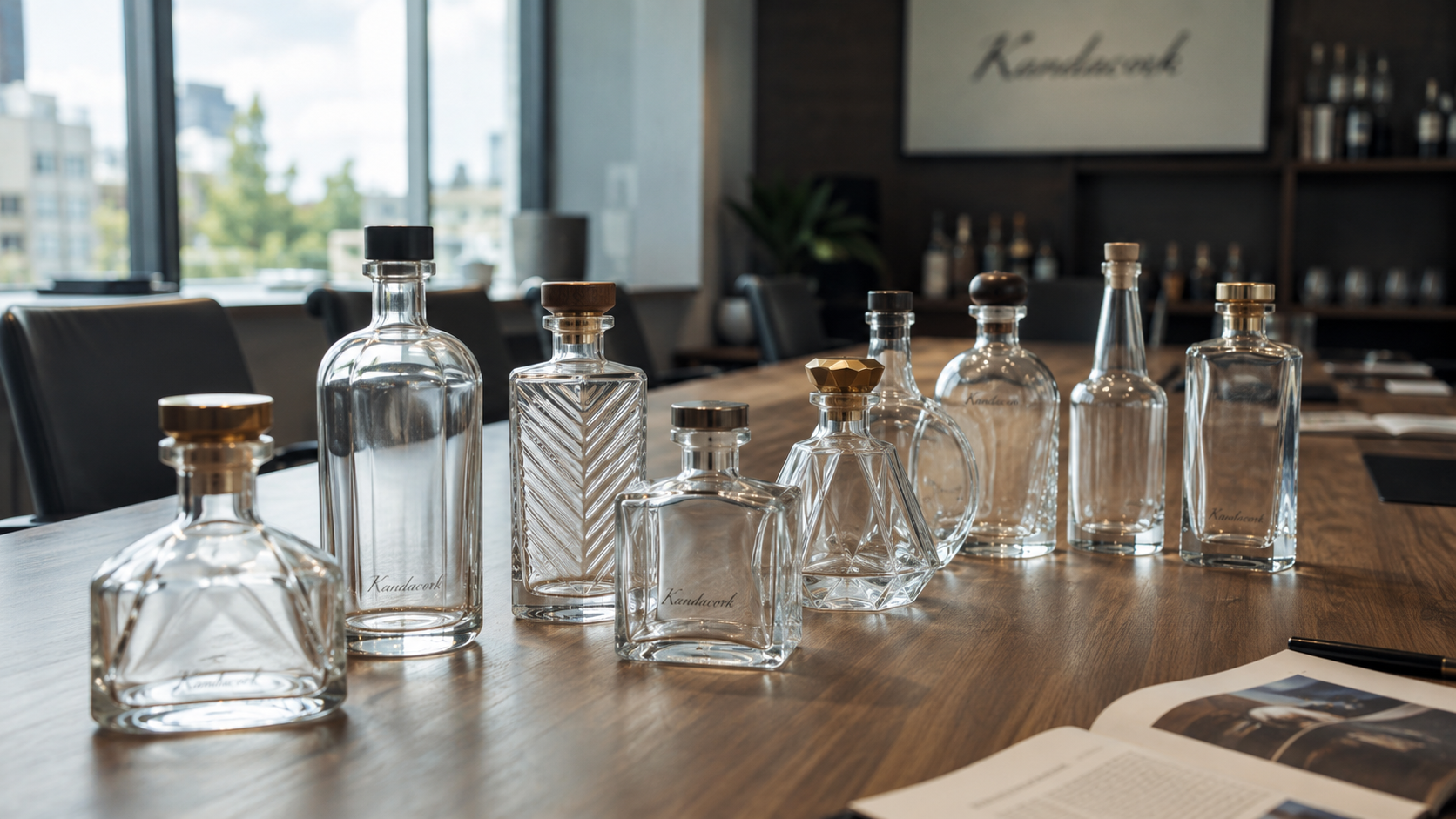
In premium spirits packaging, the bottle and closure are often developed by different suppliers. A glass bottle factory may produce the custom bottle. A closure manufacturer may supply the bar-top stopper, screw cap, ROPP closure, or non-refillable closure. A bottler may then apply the closure on a filling line.
If these parts are not checked together early, the final package may look premium but fail in real use.
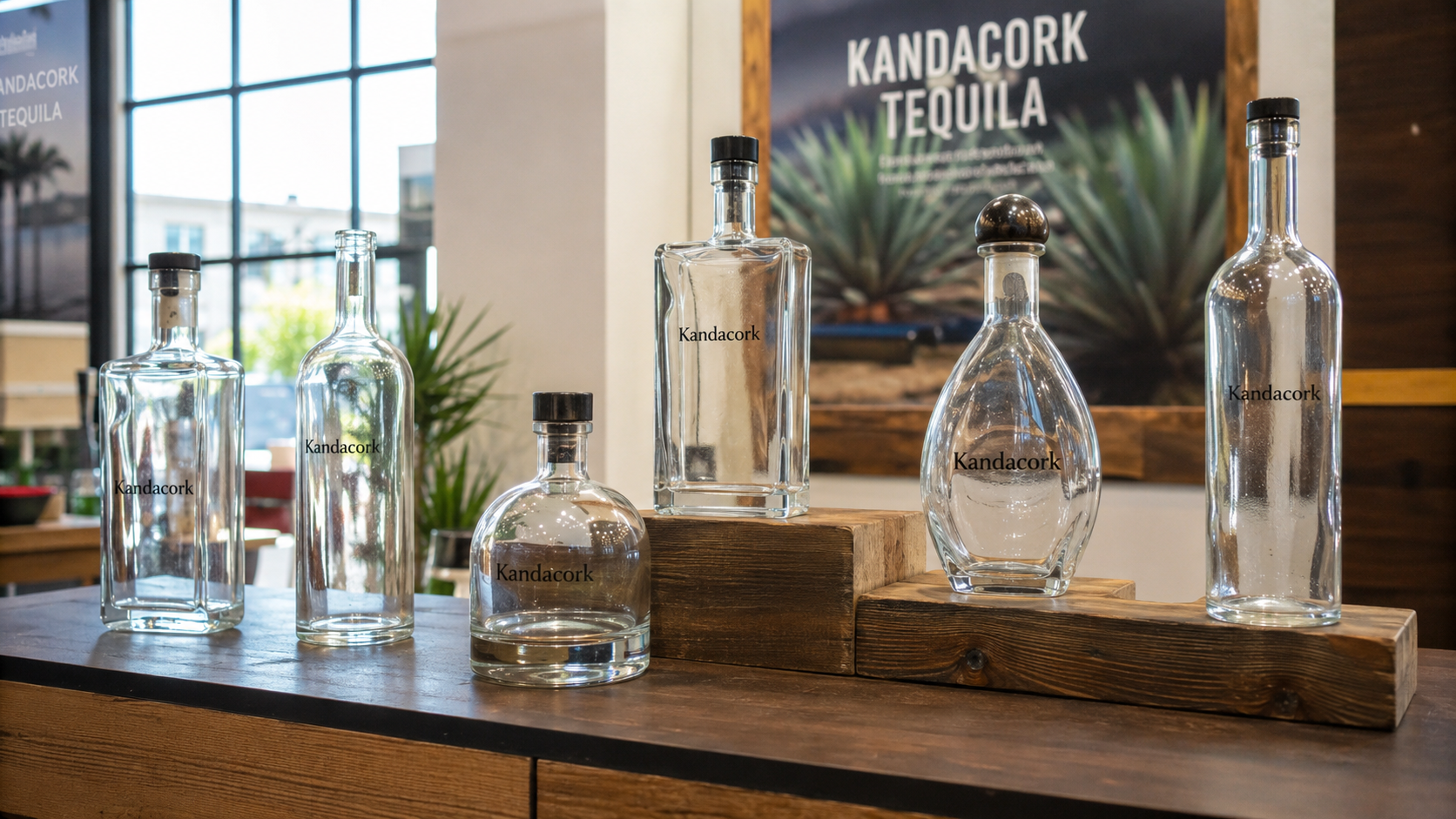
A low-tolerance bottle project is a packaging project where small dimensional changes can affect closure fit, sealing performance, or consumer opening feel. This is common in heavy glass whiskey bottles, custom vodka bottles, short-neck tequila bottles, premium gin bottles, liqueur bottles, and private label spirits projects using decorative closures.
Low-tolerance does not only mean the bottle is narrow or small. It means there is limited adjustment room between the bottle neck, closure structure, sealing area, liner, stopper shank, filling equipment, and secondary packaging.
Common risk situations include:
- Heavy premium glass bottles with custom neck geometry
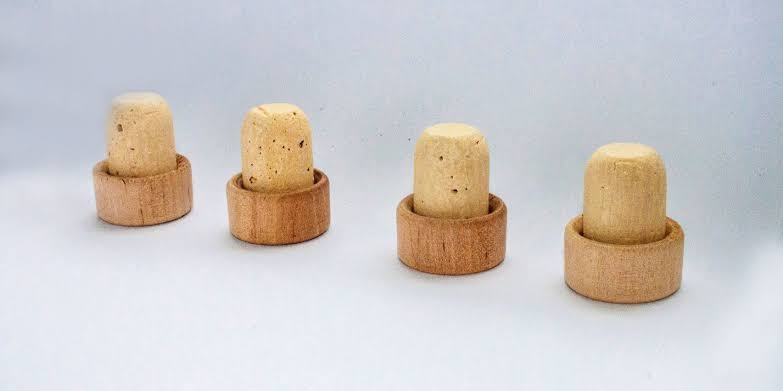
- Bar-top cork stoppers requiring accurate bore and shank matching
- Synthetic stoppers with strict compression requirements
- Screw caps with narrow application torque windows
- ROPP closures that depend on accurate neck finish and roller settings
- Non-refillable closures with inserts, pourers, or tamper-evident parts
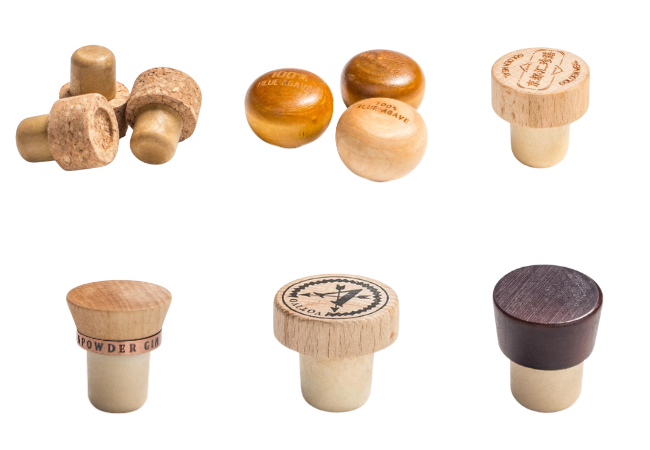
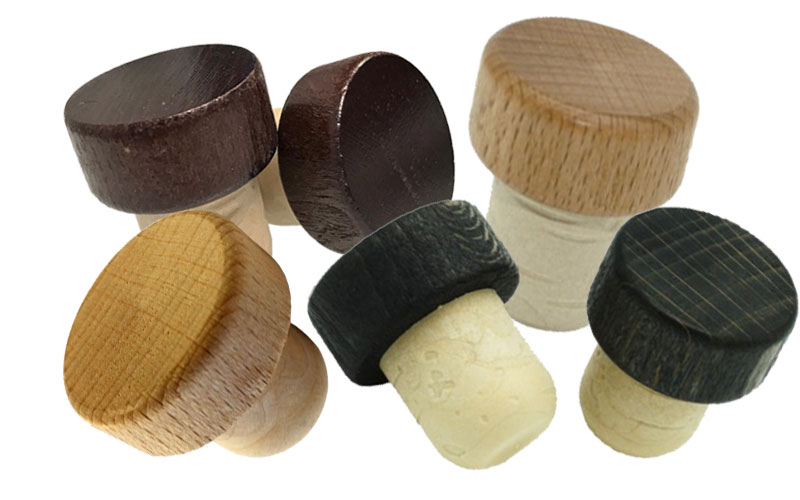
- Decorative closures with wood tops, metal tops, plating, embossing, capsules, wax, sleeves, cartons, or gift-box clearance requirements
For full packaging projects that involve both custom glass bottles and closure development, buyers may also need to coordinate bottle structure, decoration, closure fit, and export packing through an integrated spirits packaging partner such as Kandacork Glass.
In these projects, nominal size alone is not enough. Buyers need to confirm real bottle dimensions, closure structure, material behavior, and application conditions before bulk approval.
How Tolerance Stack-Up Causes Closure Failure
Many closure failures are not caused by one obvious mistake. They happen because several small variations combine.
For example, the bottle bore may be slightly wider than the drawing. The cork shank may be slightly smaller than the target. The glass neck may have minor ovality. The stopper material may compress less than expected. Individually, each variation may seem acceptable. Together, they can create a loose stopper and leakage risk.
The opposite can also happen. A slightly narrow bore plus a slightly oversized synthetic shank may create excessive insertion force, hard opening, cork damage, or neck stress.
This is tolerance stack-up. It is one of the most important fit risks in custom spirit bottle projects because each component may be technically within tolerance, while the final bottle-and-closure system may still fail.
A reliable approval process should include drawing review, physical bottle testing, filled-bottle testing, decoration clearance testing, and golden sample confirmation.
Main Closure Matching Risks Buyers Should Evaluate
1. Leakage During Storage or Export
Leakage is one of the most expensive problems in spirits packaging. It can damage labels, cartons, gift boxes, pallets, retail displays, and customer trust.
Leakage may be caused by poor stopper shank compression, weak liner contact, uneven sealing land, incorrect torque, poor thread engagement, transport vibration, or temperature change.
For threaded or lug-style closures, ASTM D5094/D5094M covers gross leakage testing for liquid containers and helps evaluate whether a container-and-closure system can maintain integrity in distribution environments.
For export spirits projects, filled-bottle testing is more reliable than empty-bottle checking because real liquid contact, storage angle, vibration, and temperature changes can expose weak sealing performance.
Buyers planning export shipments should also review closure leakage and torque testing before bulk approval.
2. Loose or Over-Tight Stopper Fit
For bar-top stoppers, the relationship between the bottle bore and stopper shank is critical.
If the stopper is too loose, the bottle may leak, evaporate, or feel low quality to the consumer. If the stopper is too tight, the bottle may be difficult to open, the cork may deform, or the filling line may experience slower insertion and higher rejection rates.
This risk is common in whiskey, rum, brandy, tequila, gin, vodka, and liqueur bottles using wood-top, metal-top, glass-top, ceramic-top, natural cork, or synthetic cork stoppers.
Buyers should test several bottle samples from the actual bottle supplier and compare shank diameter, insertion feel, pull-out force, and resealing performance before approving decoration. For more detail on bore and shank fit, see this guide to how bar-top stoppers fit spirits bottle necks.
3. Screw Cap or ROPP Torque Failure
Torque is not only a capping machine setting. It is affected by bottle finish, cap material, liner type, thread profile, cap height, knurling, application equipment, and storage conditions.
Too little torque may cause leakage or weak tamper evidence. Too much torque may damage the thread, deform the liner, distort the cap, or make the bottle difficult to open.
ASTM D2063/D2063M is used to measure torque retention properties of packages with continuous thread closures and supports packaging development and engineering evaluation.
For custom spirits projects, buyers should define both application torque and removal torque targets. The closure should be tested after filling, resting, transport simulation, and temperature exposure.
4. Thread or Neck Finish Mismatch
For screw caps and ROPP closures, the bottle neck finish must match the closure design. A similar finish is not always compatible.
Thread start, thread depth, sealing surface, cap skirt height, tamper band position, liner compression, and capping equipment all affect performance. A mismatch can cause cross-threading, incomplete seating, leakage, poor reclosure, cap distortion, or tamper-band failure.
For distilled spirits sold in the United States, tamper-evident closure requirements may also apply. The Alcohol and Tobacco Tax and Trade Bureau states that distilled spirits plants and importers are required to securely affix a tamper-evident closure or similar device to bottles or containers of distilled spirits.
5. Decoration and Packaging Clearance Problems
Many spirits closures are decorative, not only functional. They may include wood tops, aluminum tops, zinc alloy tops, glass tops, ceramic tops, embossing, debossing, hot stamping, plating, matte coating, gloss finishing, capsules, wax seals, or sleeves.
Decoration can change the real fit environment. A wide top may interfere with a capsule. A tall stopper may not fit the carton. A plated surface may require special handling. A heavy top may affect opening feel.
For this reason, buyers should approve functional fit first, then approve decorated samples on real bottles.
Closure Type Risk Comparison
| Closure Type | Main Matching Risk | Buyer Should Check |
|---|---|---|
| Bar-top cork stopper | Loose fit, over-tight fit, weak pull-out force | Bore diameter, shank diameter, shank length, neck depth |
| Synthetic stopper | Compression mismatch, alcohol compatibility issue | Material recovery, ABV resistance, dimensional consistency |
| Screw cap | Leakage, torque loss, poor resealing | Thread profile, liner type, application torque, removal torque |
| ROPP closure | Poor rolling, weak tamper band, cap distortion | Neck finish, roller setting, cap skirt, liner compression |
| Non-refillable closure | Pourer mismatch, assembly failure, compliance risk | Neck finish, insert fit, market requirements, tamper evidence |
| Decorated closure | Visual conflict, capsule conflict, carton fit issue | Top diameter, height, logo position, finish, packaging clearance |
This comparison helps buyers avoid choosing closures only by appearance. The correct option should be selected according to the bottle neck, liquid type, filling method, decoration, logistics route, and target market.
For projects that need custom materials, top designs, or branded decoration, review available custom spirits bottle closures after the technical fit requirements are clear.
Technical Dimensions Buyers Should Confirm
Before requesting samples or a quotation, buyers should prepare the bottle and closure information that affects fit, sealing, and production.
| Data to Confirm | Why It Matters |
|---|---|
| Neck finish code | Identifies the basic closure family |
| Bore diameter | Critical for bar-top stopper and synthetic stopper fit |
| Neck depth | Affects stopper insertion and stability |
| T / E / I / H / S dimensions | Helps confirm finish geometry and cap engagement |
| Sealing land condition | Affects liner contact and leakage control |
| Thread profile | Essential for screw cap and ROPP closure compatibility |
| Stopper shank diameter | Determines compression, pull-out force, and resealing feel |
| Liner material | Affects sealing, torque, and liquid compatibility |
| Cap or top diameter | Affects visual balance, capsule fit, and carton clearance |
| Filling method | Affects application force, torque, speed, and rejection rate |
| Liquid type and ABV | Helps assess cork, synthetic material, liner, and long-term contact suitability |
For low-tolerance spirit bottles, the most important point is not whether one dimension looks correct. It is whether the full bottle-and-closure system performs consistently across real production samples.
CAD Drawing vs Physical Bottle Sample
CAD drawings and physical bottle samples are both important, but they answer different questions.
A CAD drawing shows design intent. It helps the closure supplier review nominal dimensions, neck geometry, bore size, cap height, shoulder shape, and visual proportions. This is useful for early screening and quotation planning.
A physical bottle sample shows the real manufacturing result. It reveals glass variation, bore feel, sealing land quality, thread behavior, surface smoothness, decoration impact, and actual closure feel.
For low-tolerance bottle projects, do not rely on drawings alone. Use drawings to narrow the closure options, then use physical samples to confirm real fit, torque, pull-out force, leakage resistance, and visual alignment.
Recommended Closure Matching Test Process
1. Drawing and Dimension Review
Send the bottle drawing, neck finish, bore diameter, neck depth, and preferred closure type. This helps the supplier identify obvious mismatch risks before sampling.
2. Empty Bottle Fit Test
Test closures on real empty bottles from the actual bottle supplier. Check seating, alignment, insertion feel, cap engagement, thread movement, and clearance.
3. Filled-Bottle Leakage and Torque / Pull-Out Test
Test filled bottles, not only empty bottles. For screw caps and ROPP closures, measure application torque and removal torque. For bar-top stoppers, check pull-out force and resealing feel.
4. Decoration and Packaging Clearance Test
After functional fit is confirmed, test decorated samples on real bottles. Check logo position, surface finish, capsule clearance, wax compatibility, carton fit, gift-box fit, and scratch resistance.
5. Golden Sample Approval
Confirm one approved bottle-and-closure assembly as the golden sample. This sample should guide production comparison among the brand owner, bottle supplier, closure supplier, decorator, filler, and quality-control team.
Real-World Example: Premium Whiskey Bottle Stopper Fit
A premium whiskey brand approved a wood-top cork stopper based on drawings. During physical sample testing, some bottles showed loose pull-out force while others felt too tight.
The issue came from bore variation across production bottle samples. The closure design looked correct on paper, but the real glass bottles created inconsistent shank compression.
The solution was to test several shank diameters, compare compression behavior, confirm pull-out feel, and approve a golden sample before decorated closure production.
This type of review prevents a common mistake: approving a beautiful closure before confirming that it performs correctly on real bottles.
Common Mistakes vs Better Practice
Most closure failures can be avoided if buyers improve the approval process, not only the closure specification.
| Common Mistake | Better Practice |
|---|---|
| Choosing a closure by catalog photo | Test closures on real bottle samples |
| Assuming the same nominal size means compatible | Confirm neck finish, bore, thread, and sealing area |
| Testing empty bottles only | Test filled bottles under storage and transport conditions |
| Approving decoration before fit | Approve functional fit first, then decoration |
| Using only one bottle sample | Test several samples from the real production batch |
| Ignoring torque or pull-out force | Define measurable performance targets |
| Changing bottle suppliers after closure approval | Revalidate closure fit with the new bottle source |
| Skipping export simulation | Test for vibration, temperature change, and long storage |
What to Check Before Asking for Samples or a Quote
A closure supplier for low-tolerance spirit bottle projects should be able to support both technical review and commercial execution.
| Ask the Supplier | Send to the Supplier |
|---|---|
| Can you review bottle drawings before sampling? | Bottle drawing |
| Can you test with physical bottle samples? | Physical bottle samples |
| Can you recommend shank diameter, liner type, or cap structure? | Neck finish code, bore diameter, neck depth |
| Can you provide several sample options for comparison? | Closure type preference |
| Can you support decorated samples? | Artwork, logo, color, and finish requirements |
| Can you support repeat-order consistency? | Target quantity and launch timeline |
| Can you advise on export and leakage risks? | Destination market and export route |
| Can you coordinate product and packaging clearance? | Capsule, wax, carton, sleeve, or gift-box requirements |
Kandacork Closures & Stoppers supports buyers with custom bar-top stoppers, synthetic stoppers, screw caps, ROPP closures, non-refillable closures, decorative finishes, sample preparation, and quotation support.
To move from evaluation to sampling, buyers can request matched closure samples with bottle drawings, real bottle samples, decoration requirements, quantity, and destination market.
Decision Summary for Packaging Buyers
If the bottle uses a standard finish and a plain closure, drawing review and sample testing may be enough. If the project uses a custom glass bottle, bar-top stopper, ROPP closure, non-refillable closure, export route, or decorated top, buyers should test real bottles, filled samples, torque or pull-out force, decoration clearance, and golden sample consistency before placing a bulk order.
The higher the bottle value, the tighter the tolerance, and the more complex the decoration, the earlier closure matching should begin.
FAQ
What are closure matching risks in spirit bottle packaging?
Closure matching risks are fit, sealing, torque, decoration, and production risks that appear when a closure does not properly match the real bottle neck or filling process. These risks can cause leakage, loose fit, tight fit, poor resealing, tamper-evident failure, export complaints, or launch delays.
Why are low-tolerance spirit bottles more difficult to match?
Low-tolerance spirit bottles have less room for dimensional variation. Small changes in bore diameter, neck finish, stopper shank size, liner compression, torque, or decoration clearance can affect sealing, opening feel, and production consistency.
Why do liquor bottles leak after filling or shipping?
Liquor bottles may leak because of poor stopper compression, weak liner contact, incorrect torque, thread mismatch, transport vibration, temperature change, or bottle neck variation. Filled-bottle testing is important because some leakage risks do not appear during empty-bottle checks.
Can CAD drawings replace physical bottle samples?
No. Drawings help shortlist closure options, but physical bottle samples confirm real fit, pull-out force, torque, leakage performance, decoration clearance, and visual alignment.
What information should I send before requesting closure samples?
Send bottle drawings, physical bottle samples, neck finish, bore diameter, closure preference, liquid type, alcohol percentage, filling method, decoration requirements, quantity, destination market, export route, and launch timeline.