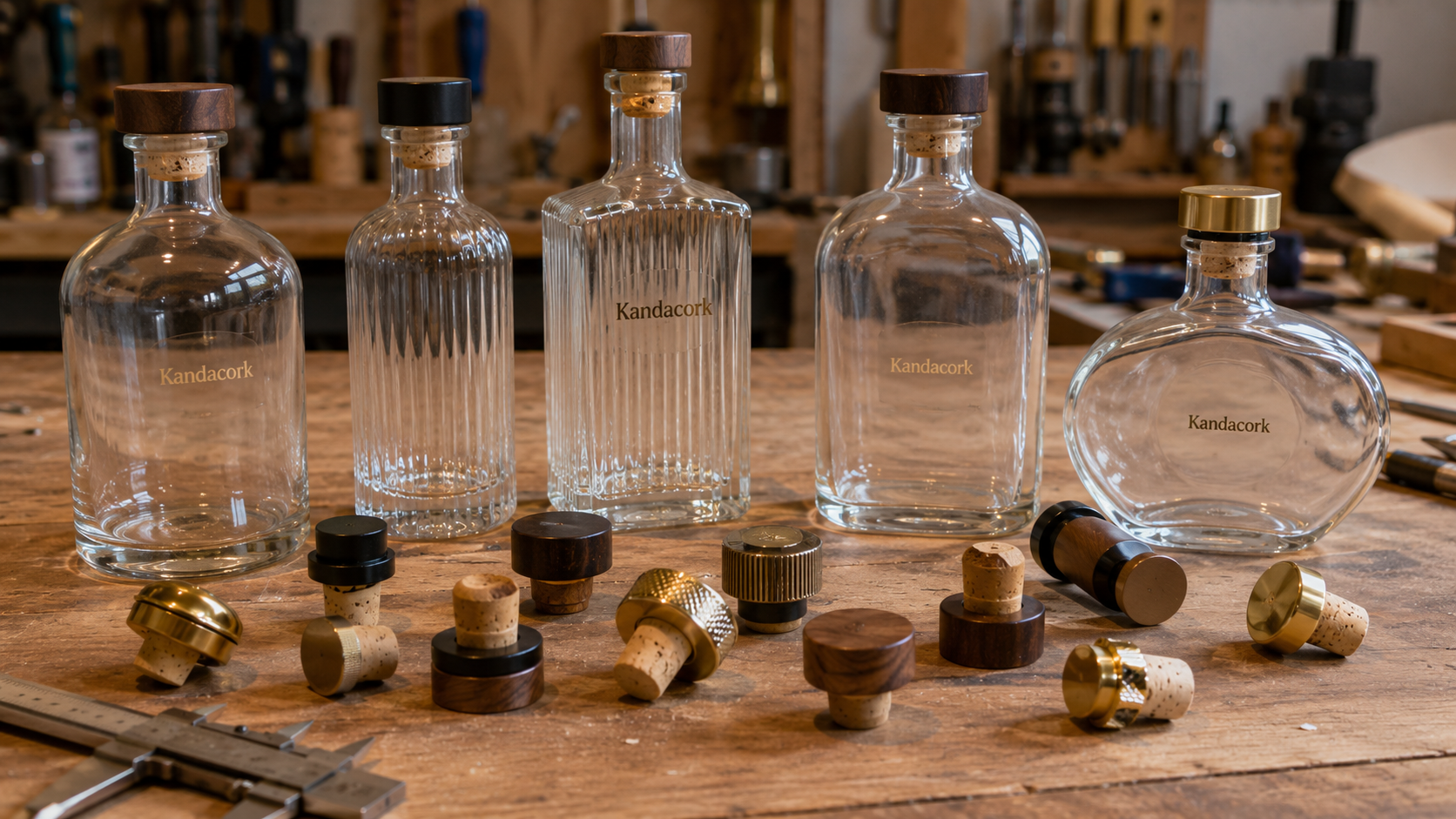
A strong closure specification helps prevent sampling delays, mismatched bottle necks and inconsistent production results. This guide explains how spirits brands can define materials, dimensions, fit, finish, logo method, testing requirements and packing details before ordering.
Key Takeaways
Custom spirits closures should be selected by bottle neck finish, spirit type, brand tier, sealing performance, decoration method, MOQ, and filling-line compatibility. Bar-top stoppers are often suitable for premium whisky, rum, tequila, brandy, and gin, while ROPP caps and screw caps are practical for high-volume vodka, liqueurs, RTDs, and private-label spirits.
Non-refillable closures are useful when brand protection, tamper evidence, and anti-refill security are important. For the best result, buyers should confirm the bottle drawing, neck finish, closure material, decoration method, testing expectations, and bulk packaging requirements before approving mass production.
Quick Closure Selection Guide
| Spirit Type | Recommended Closure | Best Material Options | Key Buyer Priority |
|---|---|---|---|
| Whisky / Bourbon | Bar-top stopper | Wood, metal, cork, micro-agglomerated cork | Premium feel, heritage image, secure fit |
| Vodka | Screw cap, ROPP cap, minimalist stopper | Aluminum, plastic, synthetic, glass-style top | Clean design, filling speed, consistent torque |
| Gin | Bar-top stopper or aluminum cap | Wood, aluminum, glass-style, synthetic | Botanical identity, color matching, shelf appeal |
| Tequila / Mezcal | Custom stopper or non-refillable closure | Wood, metal, synthetic, non-refillable system | Bold design, security, export protection |
| Rum / Brandy | Wooden or metal stopper | Wood, copper-tone metal, cork, synthetic shank | Warm premium look, gifting appeal |
| Liqueur / RTD | Screw cap or synthetic closure | Plastic, aluminum, synthetic shank | Cost control, high-volume efficiency |
| Limited Edition | Custom-molded stopper | Metal, glass, wood, composite | Collectability, luxury presentation |
For many buyers, the best approach is to begin with the bottle neck drawing and brand positioning, then select the closure type, material, decoration method, and testing process. A premium closure must look good, but it must also perform reliably during filling, storage, shipping, and repeated opening.
What Are Custom Closures for Spirits Brands?
Custom closures for spirits brands are packaging components developed or decorated for a specific liquor bottle, product range, and market position. They may include bar-top stoppers, T-top stoppers, wooden stoppers, metal stoppers, plastic caps, ROPP closures, screw caps, capsules, shrink sleeves, and non-refillable systems.
A standard closure may only provide basic sealing. A custom closure can be engineered around the bottle, spirit type, brand story, consumer experience, and production process. For example, a premium whisky may use a heavyweight wooden or metal stopper, while a modern vodka brand may prefer a clean aluminum cap with a matte finish. A tequila or mezcal brand may need a distinctive stopper shape, textured sidewall, or non-refillable system for brand protection.
Buyers who need a broader view of stopper formats can compare bottle stoppers and closures for spirits packaging before deciding whether a stock, semi-custom, or fully custom solution is the best fit.
Why Closure Design Matters for Premium Spirits
A spirits bottle closure is one of the first physical touchpoints consumers notice. Before a customer smells or tastes the liquid, they see the bottle top, feel the material, twist or pull the closure, and judge the packaging quality.
For premium and craft spirits, the closure can communicate value in several ways:
- A wooden stopper suggests natural craft, heritage, and warmth.
- A metal stopper creates a luxury, heavyweight, high-end impression.
- A minimalist screw cap supports a clean, modern vodka or gin design.
- A custom-molded stopper makes a limited-edition bottle more collectible.
- A non-refillable closure helps protect the brand in markets where refilling is a concern.
Closure design also has technical value. It must help prevent leakage, evaporation, contamination, and poor opening performance. It also needs to work with the bottle neck, capsule, carton, and filling line. A beautiful closure that fails during transport or cannot run efficiently on the bottling line creates risk for the entire product launch.
Main Types of Custom Closures for Spirits Bottles
Bar-Top and T-Top Stoppers
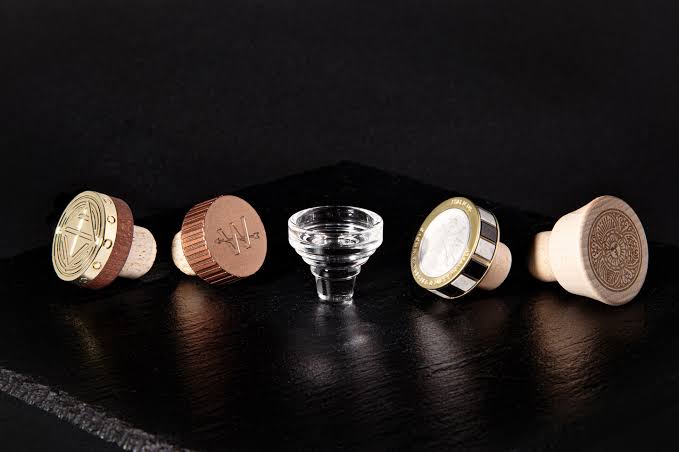
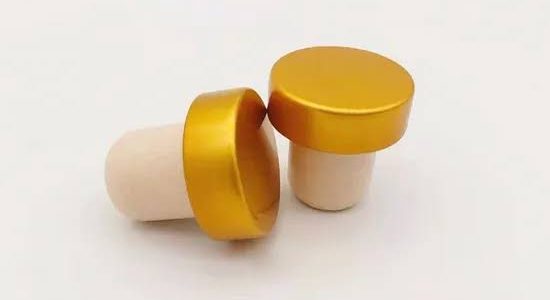
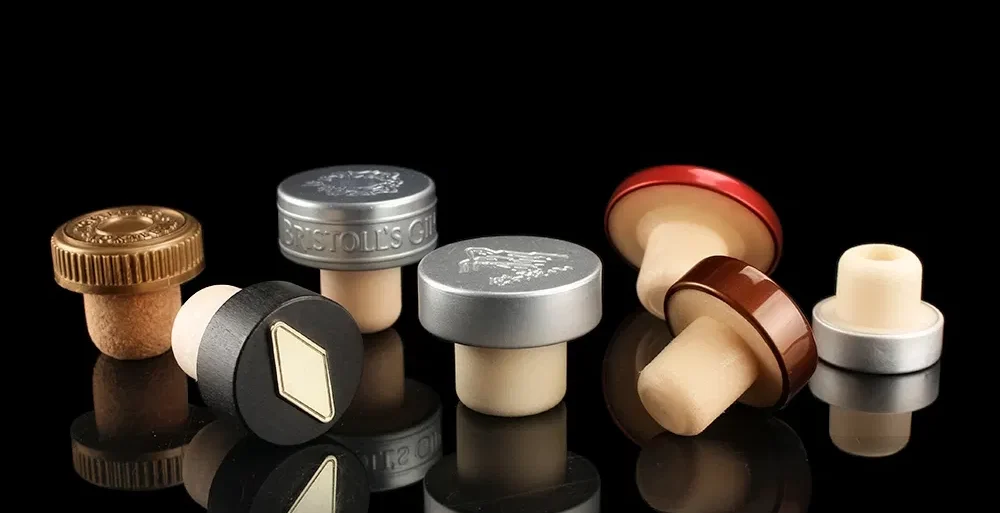
Bar-top stoppers, also called T-top stoppers, are widely used for premium spirits. They usually include a decorative top and a cork, synthetic, or micro-agglomerated shank that fits into the bottle neck.
These closures are common for whisky, bourbon, rum, gin, tequila, brandy, and liqueurs. They combine sealing function with a premium opening experience. The top can be made from wood, aluminum, zinc alloy, plastic, glass, ceramic, or composite material.
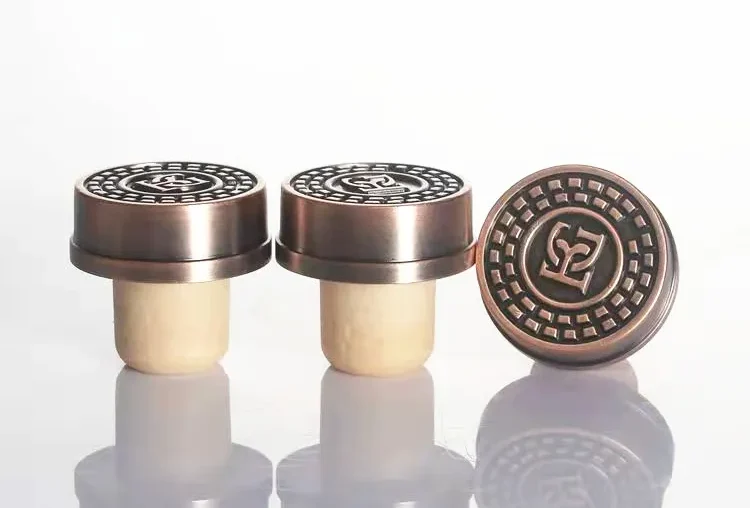
For custom closures for spirits brands, bar-top stoppers offer strong branding flexibility. The top surface can carry a logo, emblem, pattern, or special finish. The sidewall can also be designed with grooves, ridges, engraving, embossing, debossing, or metallic decoration.
Wooden Stoppers
Wooden closures are often selected for craft spirits, whisky, rum, gin, and natural-positioned brands. Wood creates a warm and tactile feeling that works well with heritage labels, botanical spirits, small-batch products, and eco-conscious packaging stories.
Wooden stoppers can be stained, lacquered, laser engraved, printed, or combined with cork or synthetic shanks. Brands that want a natural, tactile closure for whisky, rum, tequila, gin, or limited editions often choose custom wooden bar-top stoppers because they support both premium image and bottle-fit customization.
Metal Stoppers
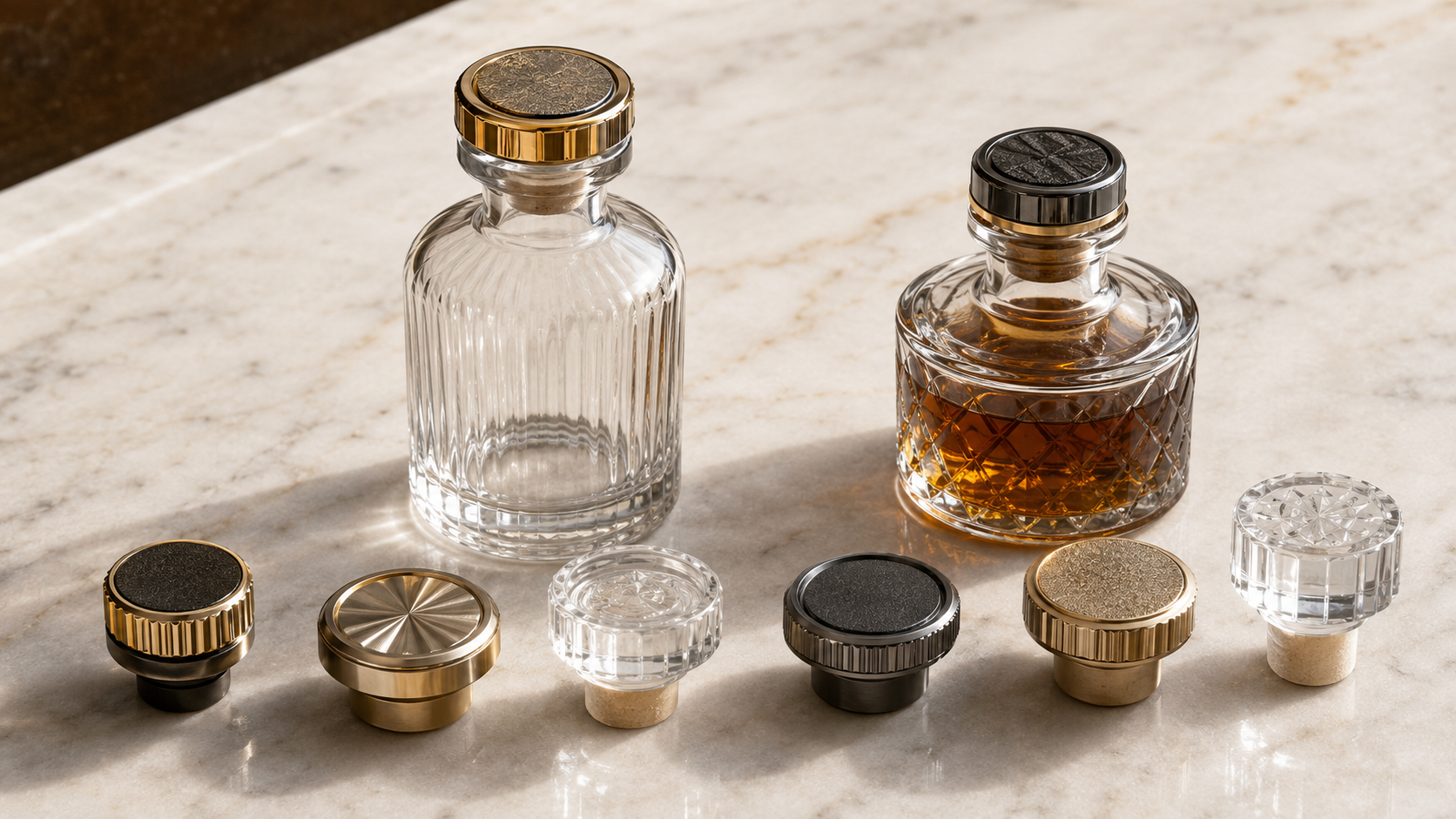
Metal stoppers are often used for luxury spirits, gift packs, duty-free products, and flagship SKUs. Aluminum and zinc alloy are common options. Metal creates a cool, solid, premium hand feel that supports a high-value product image.
Common decoration options include brushed finish, matte finish, gloss finish, anodizing, electroplating, laser engraving, embossing, and debossing. Heavyweight custom metal bottle stoppers are especially useful for brands that want a stronger luxury signal, a collectible top design, or a premium closure for limited-edition spirits.
Plastic and Synthetic Closures
Plastic and synthetic closures can be practical for larger-volume spirits programs, entry-level products, RTDs, liqueurs, and private-label ranges. They are lightweight, scalable, cost-efficient, and consistent in shape and color.
A plastic closure does not have to look cheap. With the right mold, surface texture, color matching, and logo decoration, it can support a clean and modern design. It is also suitable for brands that need repeatable production and stable pricing across multiple SKUs.
ROPP, Screw Caps, and GPI Caps
ROPP closures, screw caps, and other threaded closures are often chosen for efficient bottling and strong tamper-evident performance. They are common for vodka, gin, rum, liqueurs, mini bottles, and certain export spirits.
When choosing these closures, buyers should pay attention to neck finish, liner material, application torque, pilfer band performance, thread profile, and filling-line compatibility. For high-speed production, custom ROPP closures must run smoothly with the capping equipment and maintain consistent torque from batch to batch.
Non-Refillable Closures
Non-refillable closures are designed to reduce the risk of bottles being refilled after opening. They are often used for premium spirits, export markets, duty-free channels, and regions where counterfeit refilling is a major concern.
These systems may include one-way pourers, tamper-evident components, internal valves, controlled-flow inserts, and security bands. For high-value whisky, tequila, rum, and brandy, non-refillable spirits closures can support consumer trust, brand protection, and route-to-market security.
Capsules and Shrink Sleeves
Capsules and shrink sleeves are secondary closure components that improve presentation and tamper evidence. They can be used with bar-top stoppers, cork stoppers, or screw-cap systems.
A well-designed capsule can visually connect the closure, bottle shoulder, and label. It also creates a more finished appearance for premium spirits packaging.
Closure Examples by Packaging Scenario
Different spirits projects require different closure priorities. A luxury limited edition may need weight and collectability, while a high-volume private-label spirit may need fast application, stable pricing, and repeatable performance.
| Packaging Scenario | Best Closure Type | Why It Works |
|---|---|---|
| Premium whisky in a gift box | Wooden or zinc alloy bar-top stopper | Adds weight, heritage character, and a premium opening experience |
| High-volume private-label vodka | Aluminum ROPP cap | Supports fast bottling, consistent torque, and cost control |
| Export tequila or mezcal | Non-refillable closure | Helps reduce refill risk and supports brand protection |
| Botanical craft gin launch | Wood, aluminum, or glass-style stopper | Supports botanical identity, color matching, and shelf appeal |
| Aged rum or brandy | Wooden or copper-tone metal stopper | Creates a warm, mature, and premium presentation |
| Liqueur line extension | Plastic screw cap or synthetic stopper | Balances cost, repeatability, and production efficiency |
| Duty-free limited edition | Custom-molded metal or glass-style stopper | Improves collectability and premium gift-pack value |
These scenarios help buyers move from general product ideas to practical closure decisions. A spirits packaging closure manufacturer should be able to recommend options based on bottle fit, brand tier, target market, decoration needs, and filling method.
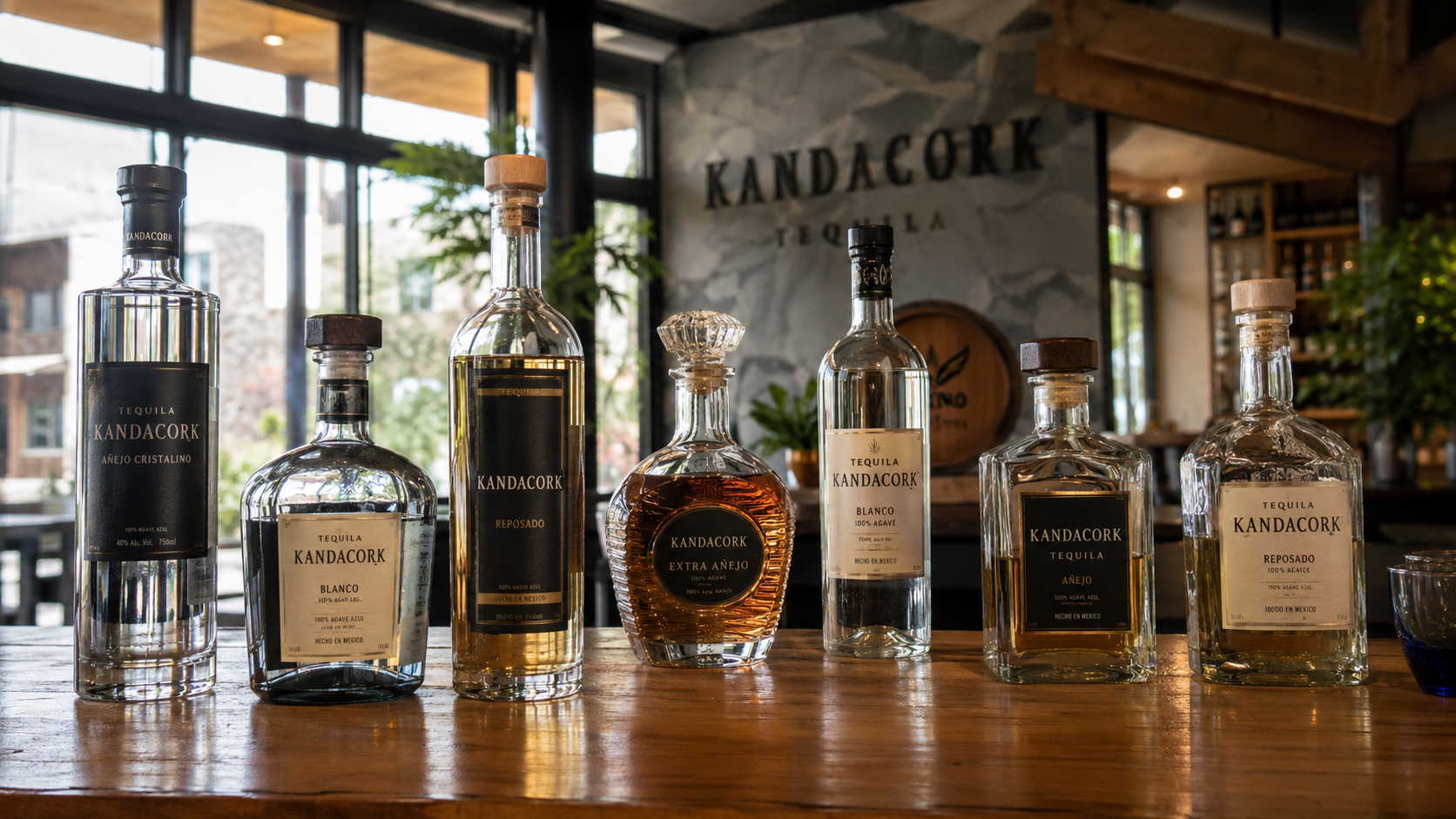
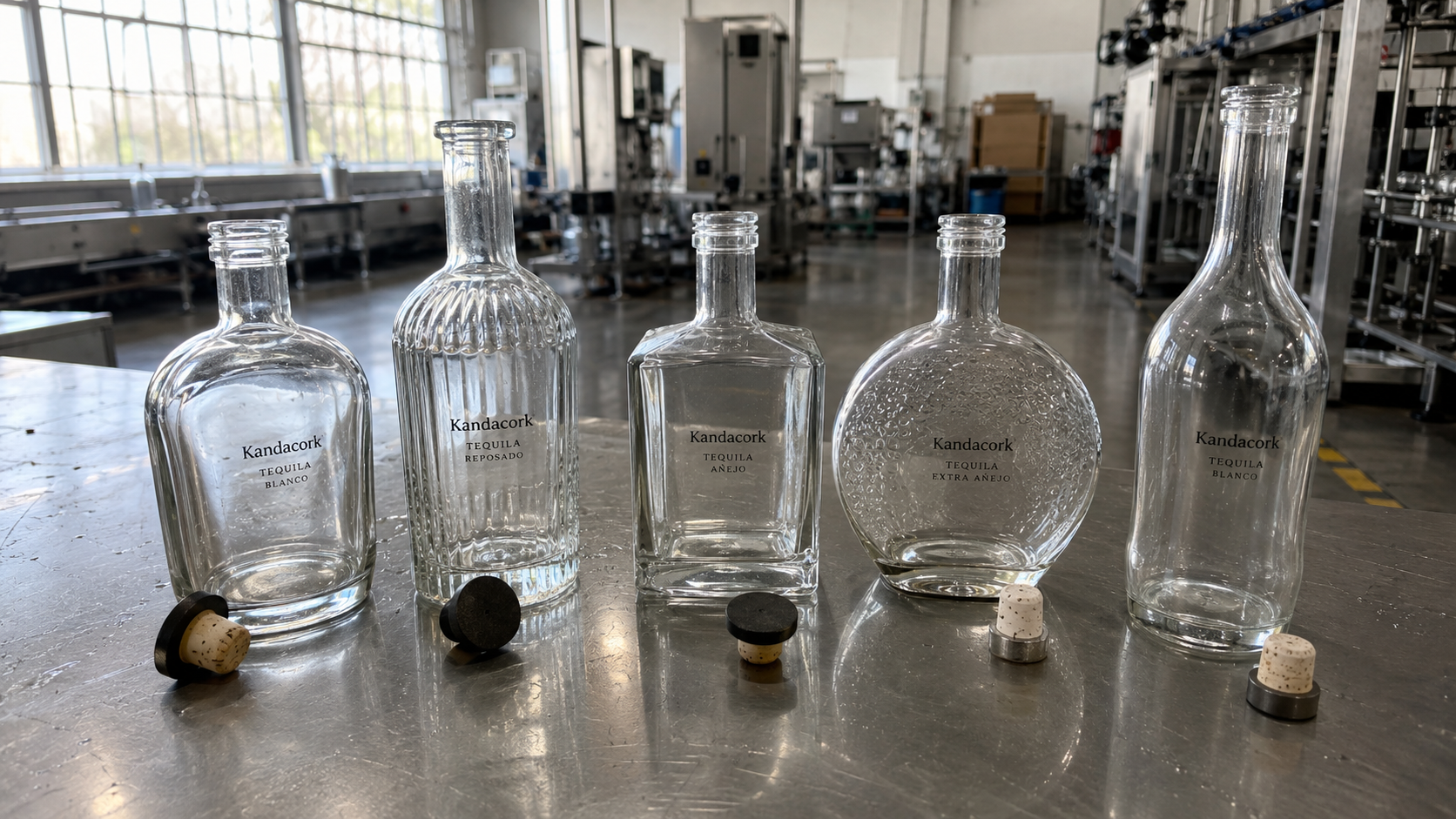
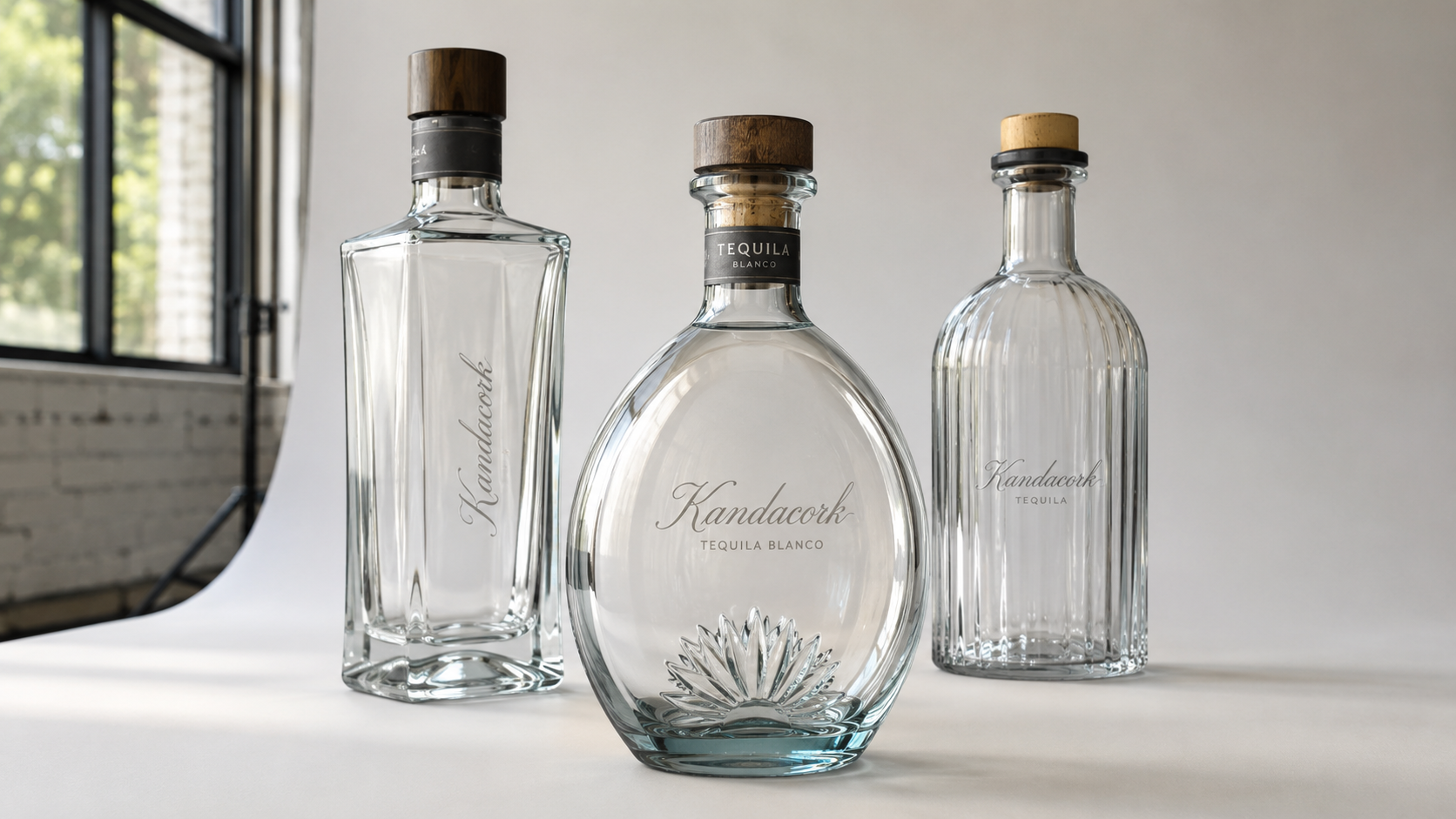
For projects that require bottle development as well as closure matching, Kandacork Spirits supports glass spirits bottle programs where neck finish, bottle structure, closure fit, and brand presentation need to be considered together.
How to Choose the Right Closure for Your Spirits Brand
The best closure is not always the most expensive one. It is the closure that fits the bottle, supports the brand story, works on the filling line, meets market requirements, and stays within the project budget.
Match the Closure to the Spirit Type
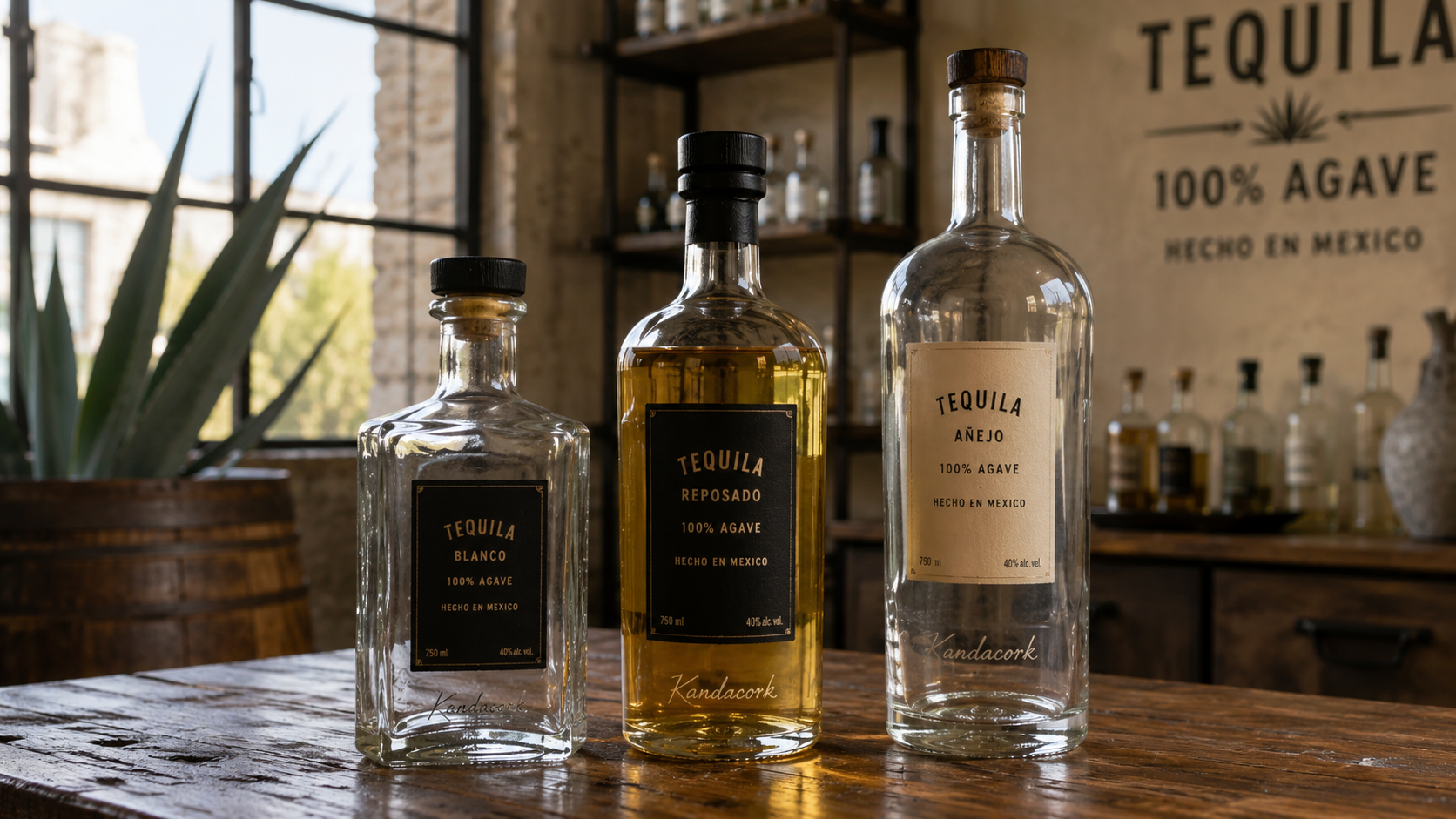
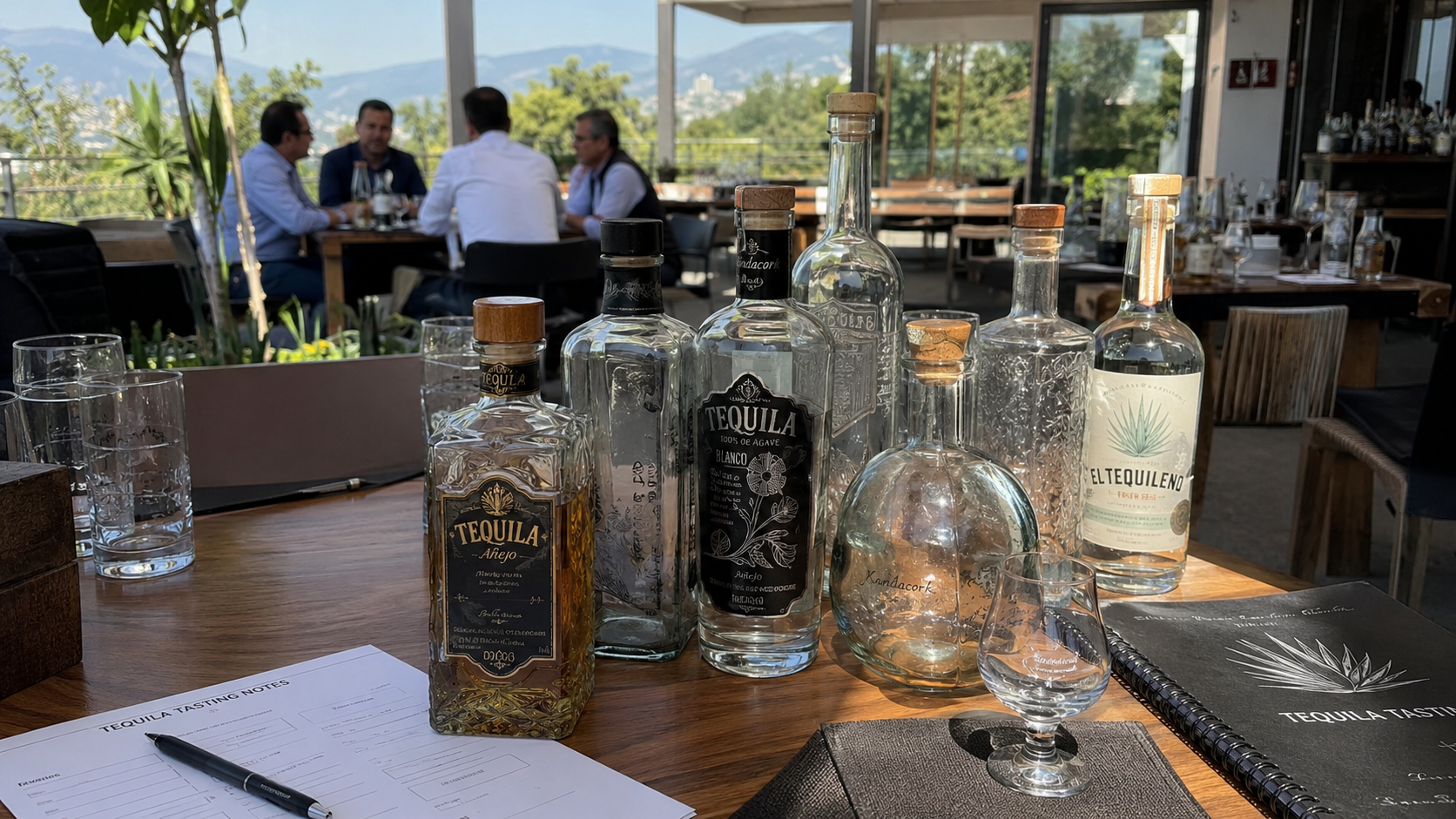
For whisky, bourbon, and rye, wooden or metal bar-top stoppers often work well because they communicate tradition, weight, and quality. For tequila and mezcal, brands often choose bold materials, textured finishes, custom shapes, or non-refillable closures to support shelf distinction and brand security.
For gin and vodka, the ideal closure may be more minimal. Aluminum caps, glass-style stoppers, clean synthetic tops, or simple screw caps can match a modern bottle design. For rum and brandy, warm wood tones, copper effects, gold finishes, or heavier stoppers can strengthen the premium feel.
For liqueurs, RTDs, and private-label spirits, cost control and line efficiency may be more important. Screw caps, synthetic stoppers, or decorated plastic closures can provide a practical balance of appearance and performance.
Match the Closure to the Brand Tier
Entry-level products may use stock closures with logo printing or color customization. Core product ranges often benefit from semi-custom designs, such as a standard stopper shape with a brand-specific top finish. Premium products may require custom materials, custom molds, heavyweight tops, and multi-process decoration.
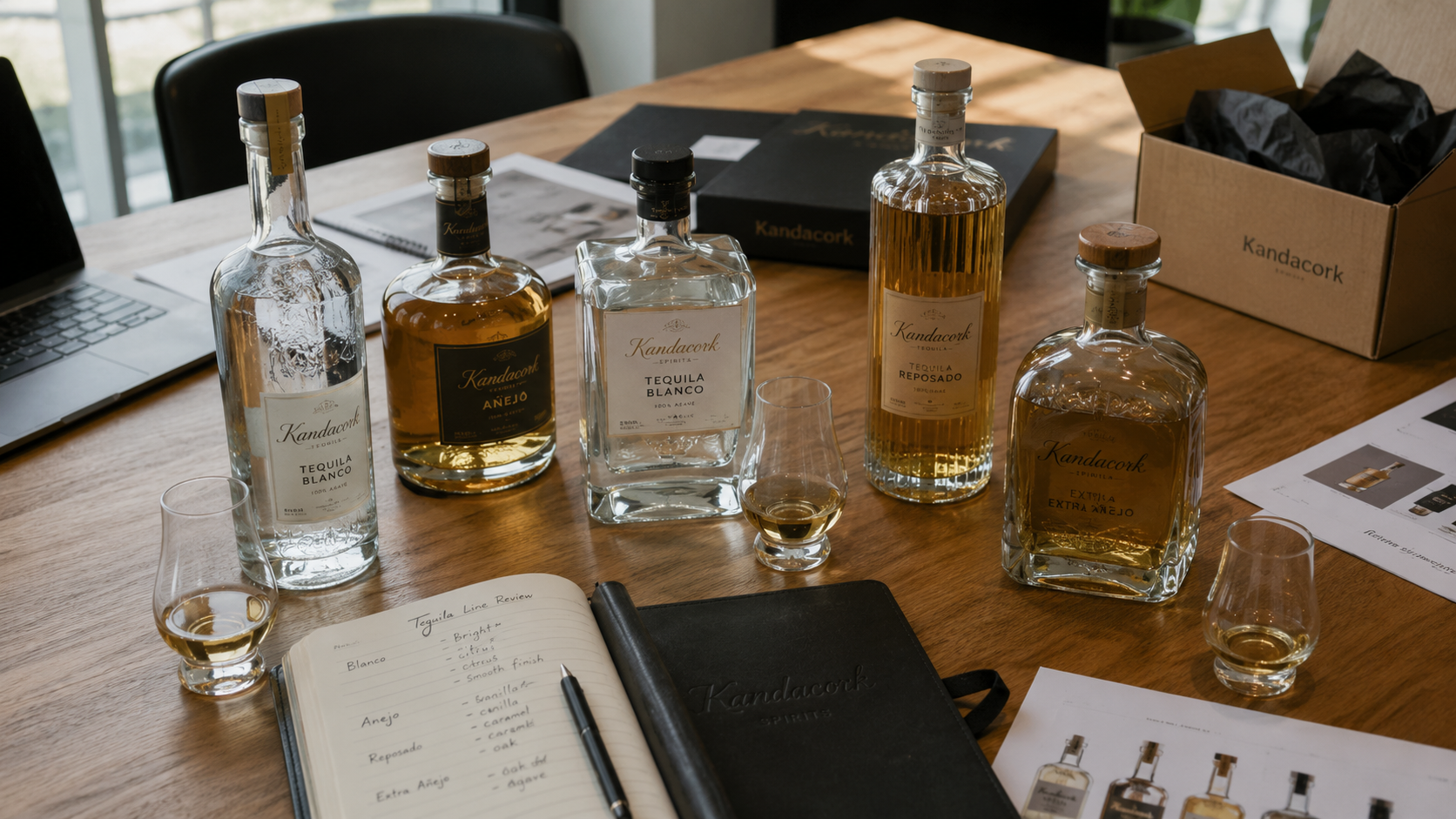
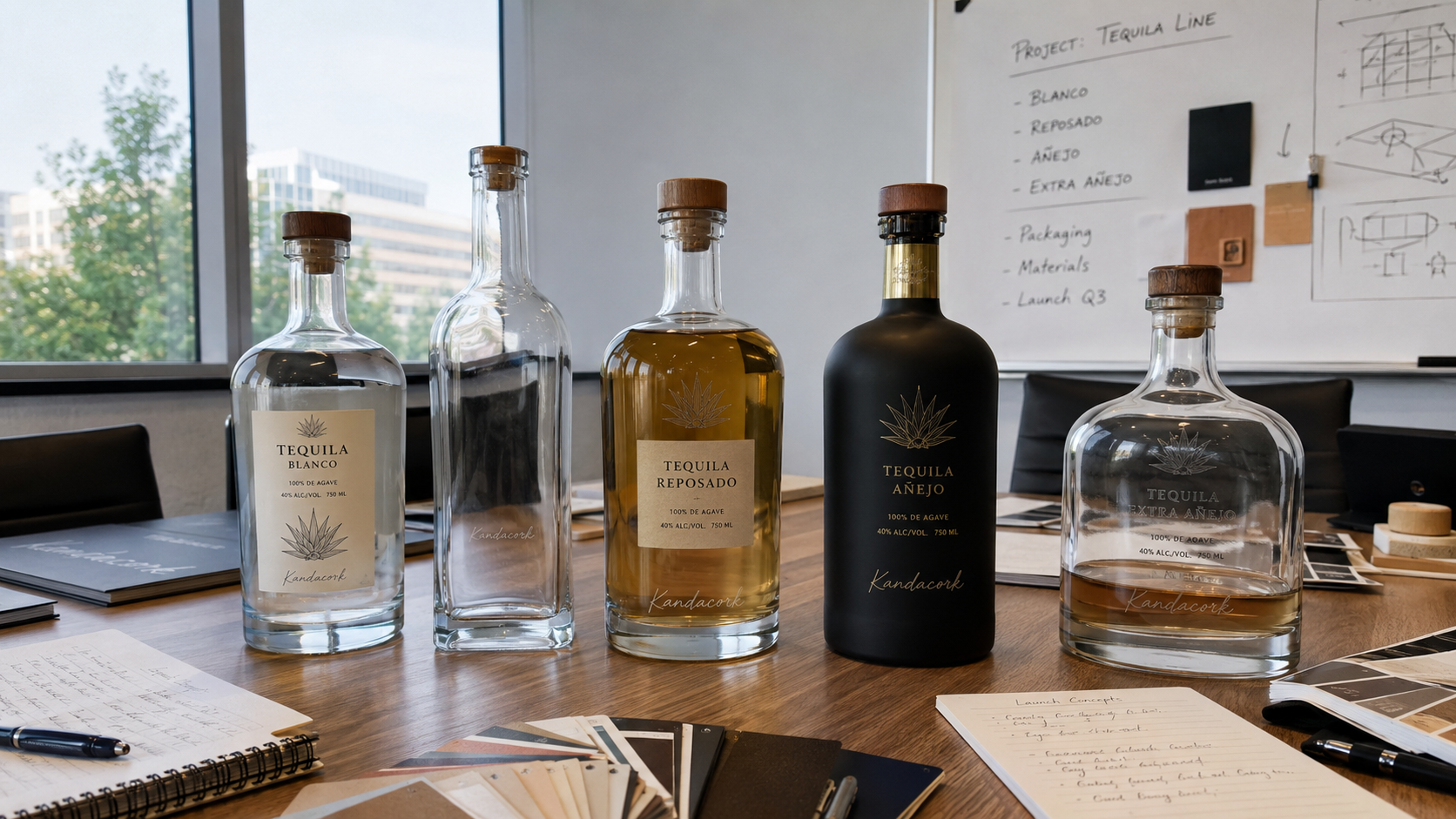
Limited editions and gift packs usually need the highest level of detail. In these projects, the closure should match the carton, label, bottle shape, and launch story. A custom-molded stopper or metal insert can help the bottle feel more collectible.
Match the Closure to the Bottle Neck and Filling Line
A closure must be selected according to the bottle neck finish and actual production conditions. Important factors include neck inner diameter, outer diameter, height, thread profile, cork shank diameter, shank taper, insertion force, extraction force, application torque, liner compression, and capper settings.
For bar-top stoppers, the shank must hold securely without being too hard to open. For screw caps and ROPP closures, torque must be consistent and suitable for the liner, neck finish, and tamper band. For non-refillable systems, the pourer and valve must fit the bottle and perform reliably.
Sampling and line trials are important before bulk production. A closure that looks correct in a photo still needs to pass real bottle-fit testing.
Technical Fit Factors Buyers Should Confirm
Technical fit is one of the most important parts of custom spirits closure development. A closure may look premium, but if it does not match the bottle neck or filling equipment, it can cause leakage, poor opening feel, slow production, or rejected shipments.
| Technical Factor | Why It Matters |
|---|---|
| Bottle neck finish | Determines whether the closure, thread, cap, shank, liner, or pourer can fit correctly |
| Inner bore diameter | Critical for cork, synthetic shank, and non-refillable insert fit |
| Outer neck diameter | Affects capsule, sleeve, cap, and closure appearance |
| Cork shank compression | Influences seal strength, insertion force, and extraction force |
| Application torque | Essential for screw caps, ROPP caps, and tamper-evident closures |
| Liner compatibility | Helps control leakage, oxidation, and alcohol contact performance |
| Filling-line speed | Determines whether the closure can run efficiently in production |
| Temperature changes | Can affect material expansion, seal pressure, and transport performance |
| Leakage testing | Confirms closure performance after filling and shipping |
| Transport simulation | Helps identify vibration, drop, compression, or carton protection risks |
For premium spirits bottle closures, buyers should test samples on real bottles filled under realistic conditions. Testing should include upright and inverted leakage checks, opening feel, tamper-band function, torque consistency, carton packing, and transport handling.
Quality systems also matter when closures move from sampling to repeat orders. The International Organization for Standardization describes ISO 9001 as a globally recognized quality management standard that helps organizations improve performance, meet customer expectations, and continually improve quality systems.
Custom Branding Options for Spirits Closures
Custom closures for spirits brands can be decorated in many ways, depending on the material, order quantity, budget, and desired finish.
Top surface branding options include logo embossing, debossing, laser engraving, metal coins, printed emblems, epoxy domes, foil details, and textured inserts. Sidewall branding options include knurling, ribbing, wrap-around brand names, decorative bands, grip patterns, and custom edge profiles.
Color and finish also play a major role. A closure can be matte black, brushed silver, antique gold, glossy white, natural wood, walnut stain, copper tone, or Pantone-matched to the label. For premium spirits, the closure should be designed together with the label, bottle color, carton, capsule, and display box.
When bottle decoration, closure color, and logo placement need to work as one system, Kandacork Decor can support surface decoration concepts for spirits bottles, packaging programs, and premium brand presentation.
Materials Comparison for Spirits Closures
| Material / Closure Type | Best Use Case | Visual Effect | Key Sourcing Notes |
|---|---|---|---|
| Wood stopper head | Whisky, rum, gin, craft spirits | Natural, warm, artisanal | Check wood finish, moisture stability, and decoration quality |
| Aluminum stopper head | Vodka, gin, tequila, premium spirits | Clean, modern, metallic | Suitable for anodizing, brushing, printing, and engraving |
| Zinc alloy / zamac head | Luxury spirits and gift packs | Heavy, premium, sculptural | Good for custom shapes but may increase cost and weight |
| Plastic stopper head | Liqueurs, RTDs, private-label spirits | Flexible and cost-efficient | Good color consistency and scalable production |
| Glass or crystal-style stopper | Luxury spirits and limited editions | Elegant and decorative | Requires careful fit and protective packing |
| Natural cork shank | Traditional spirits | Classic and natural | Must match bottle neck and performance requirements |
| Micro-agglomerated cork shank | Premium and stable supply programs | Consistent and clean | Good option for repeatable fit and appearance |
| Synthetic shank | Large-volume production | Uniform and practical | Good dimensional consistency and moisture resistance |
| ROPP aluminum cap | High-speed bottling | Efficient and secure | Requires correct torque, liner, and neck finish |
| Non-refillable closure system | Premium and export spirits | Secure and functional | Needs bottle compatibility and performance testing |
Material selection should consider brand image, cost, decoration method, filling-line needs, transportation, sustainability goals, and compliance expectations. For custom liquor closures, the most effective solution is often a balanced structure rather than the most decorative material.
Security, Tamper Evidence, and Anti-Refill Protection
Security is a major concern for many spirits brands. In some markets, tamper evidence is not only a trust factor but also a regulatory and retail expectation. The Alcohol and Tobacco Tax and Trade Bureau states that distilled spirits plants and importers must securely affix a tamper-evident closure or similar device to bottles or containers of distilled spirits.
For higher-value products, anti-refill solutions may also be necessary. Non-refillable closures reduce the risk of used bottles being refilled with lower-quality liquid and resold. This is especially relevant for whisky, tequila, rum, cognac, brandy, and duty-free channels.
Additional brand protection features may include QR codes, serialized codes, NFC tags, security inks, hidden marks, controlled-flow pourers, and custom-molded components. These solutions should be considered early in the packaging development process because they can affect closure design, assembly, cost, and production time.
Compliance and Documentation to Discuss Before Bulk Production
Compliance and documentation should be discussed before approving mass production, especially when closures will be used for export spirits, premium products, or regulated retail channels. A clear documentation process helps reduce risk for the brand, importer, bottler, and packaging buyer.
Buyers should confirm food-contact suitability, material declarations, closure drawings, dimensional specifications, approved artwork, decoration requirements, and sample approval records. For the U.S. market, FDA food-contact packaging references include substances listed under relevant parts of 21 CFR, and buyers can review the FDA’s inventory of food contact substances when discussing packaging material suitability.
For brands selling into the European Union, the European Commission explains that Regulation EC 1935/2004 sets general principles for safety and inertness of food-contact materials. Spirits packaging buyers should confirm the exact requirements for their target markets, product category, and distribution route before finalizing closure specifications.
For screw caps and ROPP closures, documentation may include liner details, torque expectations, thread compatibility, and tamper-band requirements. For bar-top stoppers, important records may include stopper dimensions, shank material, shank diameter, extraction force expectations, head material, surface finish, logo decoration method, and approved sample references.
Before placing a bulk order, buyers should also clarify carton packing, palletization, shipping marks, storage conditions, and reorder control. These details help protect the closure during international transport and improve batch-to-batch consistency.
Sustainability Considerations for Custom Spirits Closures
Sustainability is becoming more important in spirits packaging. Many brands already use glass bottles, paper labels, cartons, recycled-content materials, and lighter-weight packaging. Closures should be part of the same conversation.
Possible sustainability considerations include recyclable aluminum, cork-based shanks, wood from responsible sources, reduced plastic content, mono-material designs, refill-compatible concepts where suitable, and packaging that is easier to separate after use. For bottle projects where recycled glass, glass weight, and closure fit are considered together, Kandacork Eco Glass can support packaging programs that align structure, decoration, and matched accessories.
Glass remains an important part of premium spirits packaging because it supports clarity, shelf presence, and recyclability. The Glass Packaging Institute notes that glass can be recycled endlessly with no loss in quality or purity, which is why many spirits brands connect closure selection with broader glass packaging and circularity goals.
Sustainability claims should be specific and supportable. Instead of using vague phrases such as “green” or “eco-friendly,” brands should ask suppliers for material details, recyclability guidance, compliance statements, and available documentation.
OEM/ODM Development Process for Custom Spirits Closures
A reliable OEM/ODM process reduces risk and helps the buyer move from idea to production more efficiently.
Project Brief
The buyer should provide the spirit type, bottle drawing, neck finish, target market, annual volume, brand positioning, artwork, launch date, and target budget. This helps the supplier recommend a suitable closure structure instead of guessing.
Closure Concept and Engineering
The supplier helps define the closure type, material, shank or liner, dimensions, surface finish, decoration method, and packaging method. For custom closures for spirits brands, this stage should connect visual design with actual bottle-fit requirements.
Sampling
Samples may include existing reference closures, color samples, logo samples, prototype molds, or decorated pre-production samples. Buyers should test samples on the real bottle, not only review them visually.
Line Trial and Performance Review
Before mass production, the closure should be tested for fit, opening feel, leakage risk, torque, insertion force, extraction force, tamper-band function, and transport performance. For automatic bottling lines, line-trial feedback is especially important.
Mass Production and Quality Control
Quality control should include material inspection, dimensional checks, decoration review, assembly control, sealing performance checks, and final packaging inspection. For export orders, cartons and pallets should protect closures during long-distance shipping.
Delivery and Reorder Support
For multi-SKU spirits programs, reorder consistency matters. The supplier should control color, material, decoration, tooling, and packaging records so future batches match the approved sample as closely as possible.
MOQ, Lead Time, and Quotation Checklist
MOQ and lead time depend on the closure type, material, finish, decoration, mold requirements, order quantity, and packaging needs. Stock closures with simple logo printing usually have lower MOQs and shorter lead times. Custom-molded metal or plastic closures require more development time and tooling investment.
Before requesting a quotation, buyers should prepare:
- Bottle drawing or physical bottle sample
- Neck finish details
- Preferred closure type
- Spirit category and target market
- Logo file or artwork
- Target color and finish
- Estimated order quantity
- Required samples
- Compliance or testing requirements
- Desired delivery date
- Packaging requirements for cartons, trays, or pallets
Providing this information early allows the supplier to recommend a practical solution and avoid delays caused by missing technical details.
To speed up quotation, share your bottle drawing, artwork, target quantity, target market, and required finish through the custom closure quote page. The more complete the brief, the faster the supplier can recommend the right custom closure solution.
Common Mistakes to Avoid When Buying Spirits Closures
Many closure problems happen because buyers focus only on appearance. Design matters, but performance must be tested before mass production.
Avoid these common mistakes:
- Choosing a stopper without confirming the bottle neck dimensions
- Approving a closure sample without testing it on the real bottle
- Ignoring extraction force or opening feel
- Selecting a material that does not match the brand tier
- Forgetting capsule, carton, or gift-box compatibility
- Waiting too long to discuss MOQ, tooling, and lead time
- Assuming all closures work with automatic filling lines
- Making sustainability claims without documentation
- Skipping transport and leakage testing before bulk order
For custom bottle closures for spirits brands, a successful project requires both design approval and technical validation.
Why Work with Kandacork Closures?
Kandacork Closures supports spirits brands, distilleries, private-label companies, bottlers, importers, and packaging agencies with custom closure development for premium and commercial spirits packaging.
The product range can include wooden stoppers, bar-top stoppers, cork and synthetic shanks, metal closures, plastic closures, ROPP caps, screw caps, capsules, and non-refillable closure solutions. For buyers developing custom closures for spirits brands, Kandacork Closures can assist with design selection, material matching, finish development, logo decoration, sampling, bottle-fit review, and bulk supply.
Kandacork Closures can support multi-material closure development across wood, cork, synthetic shank, aluminum, zinc alloy, plastic, capsule, and anti-refill closure systems. This helps spirits brands compare appearance, performance, MOQ, cost, and production feasibility before finalizing the best custom closure solution.
A strong closure project should combine appearance, performance, and manufacturability. Kandacork Closures focuses on helping buyers match the right closure to the bottle, brand tier, market requirement, and production process.
For brands that need a complete glass bottle, closure, and decoration ecosystem, Kandacork Glass supports integrated spirits packaging programs where bottle design, closure matching, and decoration planning work together from concept to export-ready supply.
Whether you are launching a craft gin, upgrading a whisky bottle, developing a tequila gift pack, sourcing private-label liquor packaging, or creating a limited-edition spirits range, the closure should support both brand value and operational reliability.
FAQ
What is the best closure for a premium spirits bottle?
The best closure depends on the bottle design, spirit category, brand position, and production method. Premium whisky, rum, and tequila often use wooden or metal bar-top stoppers. Vodka and gin brands may prefer clean aluminum caps, glass-style stoppers, or minimalist screw caps. High-risk export markets may require non-refillable or tamper-evident systems.
Can I customize the logo and color of a spirits closure?
Yes. Common customization options include logo embossing, debossing, laser engraving, screen printing, hot stamping, color matching, surface texture, custom sidewall design, and special metal or wood finishes.
What information is needed to develop a custom bottle stopper?
You should provide a bottle drawing, neck finish, bottle sample if available, spirit type, target market, order quantity, artwork, desired material, finish preference, and production timeline. This allows the supplier to recommend the correct structure and dimensions.
What should I send to a supplier for a custom spirits closure quote?
Send the bottle drawing, bottle sample if available, neck finish, target closure type, logo artwork, desired finish, target market, order quantity, compliance needs, and launch timeline. Complete information helps the supplier recommend a more accurate closure structure, MOQ, sampling process, and quotation.
What is the difference between stock, semi-custom, and fully custom spirits closures?
Stock closures use existing shapes, structures, and finishes. Semi-custom closures use existing structures with customized colors, logos, surface finishes, or decoration. Fully custom closures may require new molds, custom materials, unique shapes, special assembly, and longer development time.
What is the difference between a bar-top stopper and a screw cap?
A bar-top stopper is usually inserted into the bottle neck and has a decorative top with a cork or synthetic shank. A screw cap works with threads on the bottle neck and is applied by twisting or capping equipment. Bar-top stoppers are often used for premium presentation, while screw caps and ROPP caps are often used for efficiency and tamper evidence.
Are non-refillable closures necessary for spirits brands?
They are not necessary for every product, but they are valuable for premium spirits, export markets, duty-free channels, and regions where counterfeit refilling is a concern. Non-refillable closures help protect the brand and improve consumer confidence.
Can custom closures work with existing bottle designs?
Yes, but the closure must be tested with the actual bottle neck. The supplier may need neck dimensions, bottle samples, or technical drawings to confirm fit, sealing performance, insertion force, extraction force, or torque.
What are typical MOQs for custom spirits closures?
MOQs vary by material and customization level. Stock closures with decoration usually have lower MOQs. Custom molds, special metal finishes, complex decoration, and non-refillable systems usually require higher MOQs.
How long does sampling and mass production take?
Lead time depends on the closure type and development complexity. Simple decorated closures can move faster, while custom-molded stoppers, metal components, and non-refillable systems need more time for design, tooling, sampling, testing, and approval.
Which closure is best for whisky, gin, vodka, rum, or tequila?
Whisky often works well with wood or metal bar-top stoppers. Gin can use wood, aluminum, glass-style, or minimalist closures. Vodka often fits clean screw caps or modern metal closures. Rum can use warm wood or premium metal finishes. Tequila and mezcal brands often benefit from bold custom stoppers or non-refillable security systems.
Can one supplier develop closures for multiple spirits SKUs?
Yes. A custom spirits closure supplier can help standardize materials, finishes, dimensions, decoration methods, and packaging details across whisky, gin, vodka, tequila, rum, brandy, and liqueur ranges while adjusting details for each SKU.
Can Kandacork Closures support custom closure development from concept to bulk order?
Yes. Kandacork Closures can support material selection, closure structure, decoration, sampling, bottle-fit review, packaging, and bulk supply for spirits packaging projects.
Conclusion
Custom closures for spirits brands should do more than close a bottle. They should protect the liquid, support the brand identity, work with the filling line, meet market requirements, and improve the consumer experience.
The right closure connects design, material, sealing, security, sustainability, and supply reliability. Before starting a project, prepare your bottle drawing, artwork, target market, closure preference, and order quantity. Kandacork Closures can help you develop custom stoppers, caps, and closure systems for your next whisky, vodka, gin, rum, tequila, brandy, or liqueur packaging project.