Aluminium bar-top stoppers are often used for modern premium spirits packaging, but fit and finish must be checked carefully. This guide explains how buyers can review shank size, neck compatibility, surface finish, logo method and sample testing.
Who This Guide Is For
This guide is for brand owners, procurement teams, packaging designers, distilleries and bottlers sourcing aluminium bar-top stoppers for commercial spirits packaging.
It is especially useful if you are preparing a new bottle launch, upgrading from plastic or wooden stoppers, solving closure fitment problems, comparing stopper materials, or requesting quotations for bulk aluminium spirits closures.
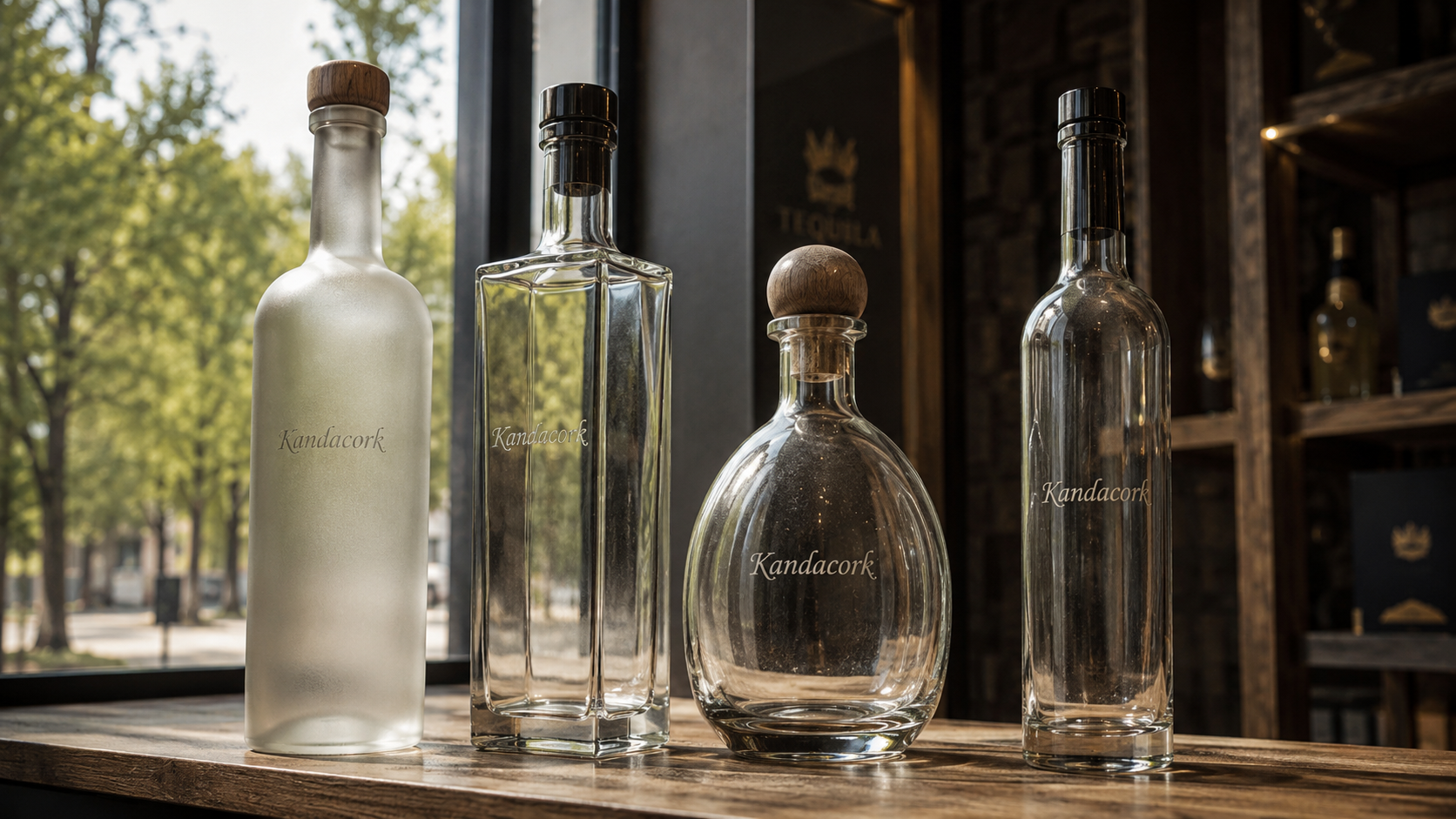
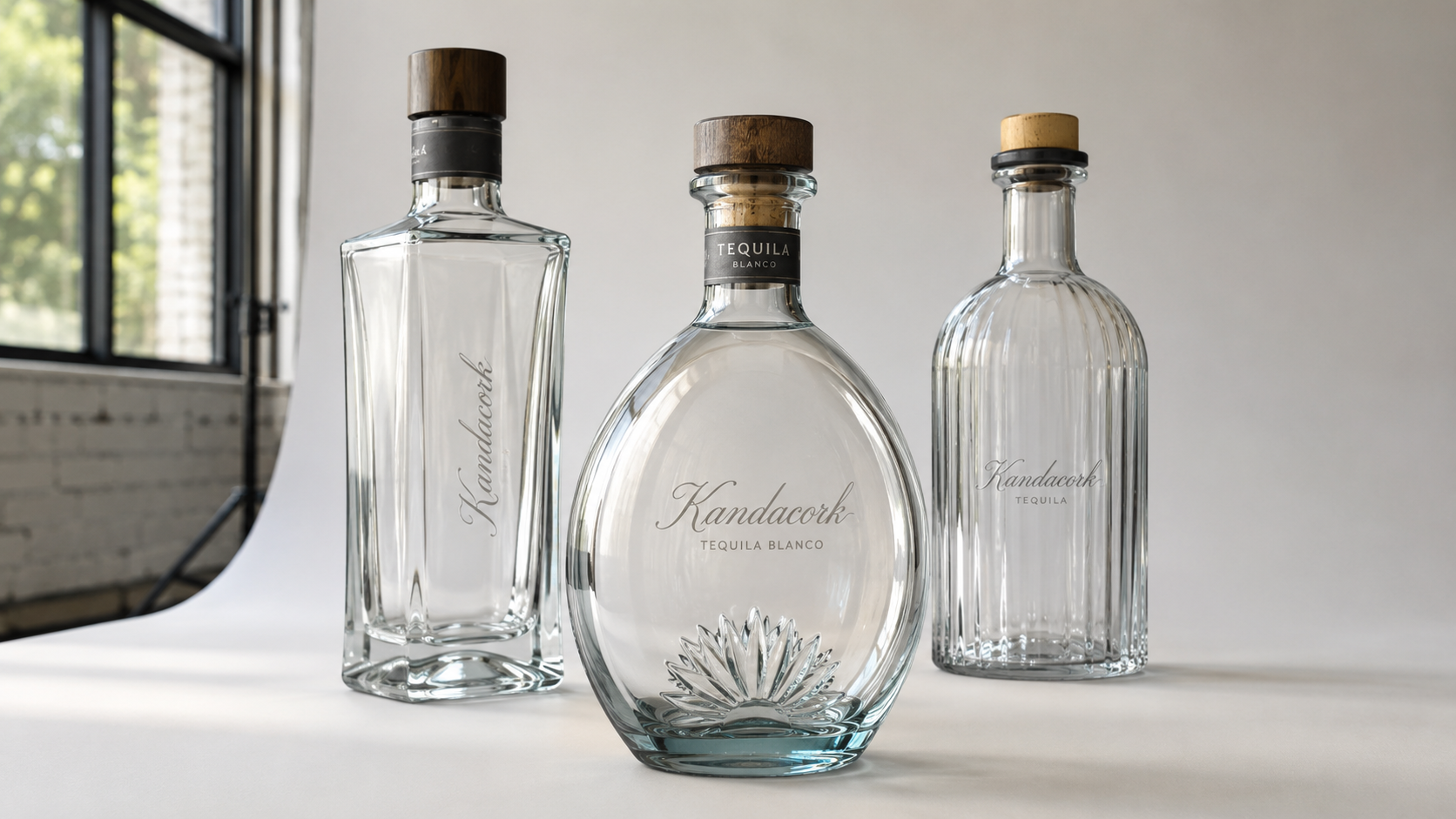
Buyers working on broader bottle projects can also coordinate stopper selection with bottle format, decoration, glass color and closure finish. For example, spirits brands may combine closure development with custom bottle sourcing through Kandacork Spirits when building a complete whisky, gin, rum, vodka or tequila packaging program.
How to Choose Aluminium Bar-Top Stoppers
The best aluminium bar-top stoppers are selected by matching bottle neck dimensions, shank material, head design, logo method and production requirements before mass production.
| Selection Area | Buyer Action | Why It Matters |
|---|---|---|
| Bottle neck | Confirm inner bore, neck finish and tolerance | Prevents loose fit, leakage and excessive insertion force |
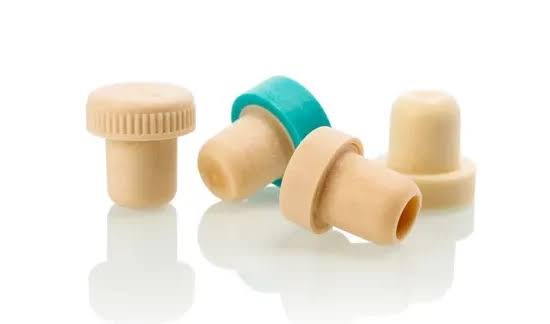
| Shank material | Choose natural cork, microgranule cork, synthetic cork or TPE | Affects sealing, pull-out feel and line consistency |
| Aluminium head | Select diameter, height, shape and finish | Controls shelf impact and brand appearance |
| Logo method | Choose engraving, embossing, printing or insert | Determines visual detail, durability and cost |
| Sample testing | Validate fit, leakage, pull-out feel and line performance | Reduces production risk before bulk ordering |
| Packing method | Confirm trays, separators, bags or export cartons | Protects metallic finishes during transport |
A buyer should not choose aluminium bar-top stoppers by appearance alone. The right closure must support branding, filling-line performance, export safety and consumer handling.
What Are Aluminium Bar-Top Stoppers?
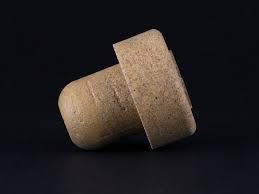
Aluminium bar-top stoppers are resealable spirits closures made from two main parts: a visible aluminium head and an inserted sealing shank. The aluminium head provides the decorative and tactile brand surface, while the shank fits inside the bottle neck to create closure resistance and sealing performance.
These closures are also called aluminium T-top stoppers, aluminium T-corks, metal bar-top closures, spirits bottle stoppers, custom aluminium bottle stoppers and aluminum bar-top closures in U.S. search terminology. The terms vary by supplier and market, but the core purpose is the same: the closure must fit correctly, seal reliably and support the bottle’s visual positioning.
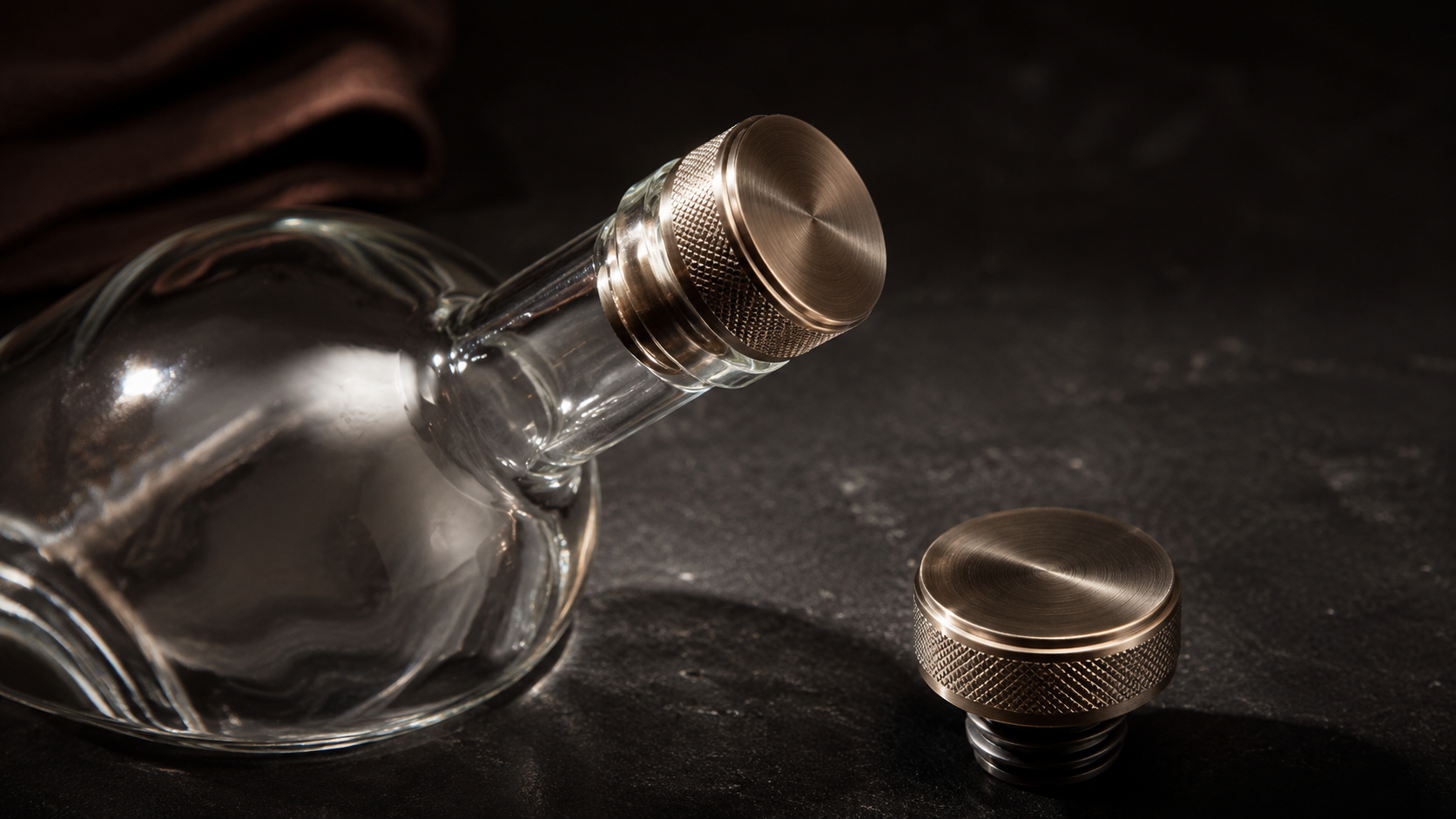
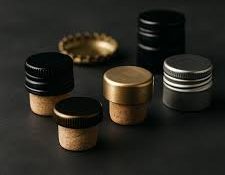
The aluminium head can be brushed, polished, anodized, coated, laser engraved, embossed, debossed, printed or decorated with inserts. The shank can be natural cork, agglomerated cork, microgranule cork, synthetic cork or TPE-based synthetic material.
For premium spirits packaging, aluminium bar-top stoppers offer a strong balance of appearance, durability, customization and scalable production cost.
Why Spirits Brands Choose Aluminium Bar-Top Closures
Spirits brands choose aluminium bar-top stoppers because they combine premium metallic appearance with practical production performance. They can support both luxury branding and high-volume commercial packaging when the design is engineered correctly.
Aluminium gives a clean, modern finish that works well with clear glass, frosted glass, colored glass, heavy-base bottles, minimalist labels and premium cartons. Matte black aluminium is often used for contemporary whisky and vodka packaging. Brushed silver works well for gin and tequila. Warm metallic tones can support rum, brandy and liqueur bottle designs.
Aluminium bar-top stoppers also help brands build consistency across multiple bottle sizes. A distillery may use the same closure color and logo style on 50 ml, 200 ml, 500 ml, 700 ml and 750 ml bottles while adjusting the shank size for each bottle neck.
For contract bottlers, consistency is critical. A closure that looks premium but causes unstable insertion, loose fit, feeding problems or surface scratching can slow the filling line and increase rejection rates. This is why aluminium bar-top closures should be reviewed as both branding components and technical packaging parts.
Aluminium vs Wood, Plastic, Zamak and Crystal Stoppers
Aluminium bar-top stoppers are best for spirits brands that want a premium metallic look, reliable customization and scalable bulk supply without the higher weight or cost profile of some luxury alloy closures.
| Stopper Material | Best For | Strength | Limitation |
|---|---|---|---|
| Aluminium | Premium scalable spirits lines | Lightweight, metallic, customizable and suitable for many finishes | Requires careful surface protection during packing |
| Wood | Craft, heritage and natural-positioned spirits | Warm texture and traditional feel | Natural grain and color variation |
| Plastic | Entry-level, promotional or high-volume products | Cost-effective and flexible | Less premium tactile value |
| Zamak | Luxury editions and heavy-feel closures | Strong weight and high-end appearance | Higher cost and heavier shipping weight |
| Crystal or glass | Gift packs and collectible bottles | Decorative and premium display value | More fragile and packing-sensitive |
Wooden stoppers are often selected for craft whisky, rum and artisan spirits because they create warmth and natural character. Plastic stoppers are practical for budget-sensitive products and miniatures. Zamak closures are suitable for flagship bottles and limited editions where a heavy hand feel is part of the luxury experience. Crystal or glass stoppers work well for decorative gifting but require careful handling.
Aluminium bar-top stoppers sit between these options. They are premium enough for modern spirits brands, lighter than many alloy closures, more refined than many plastic options and easier to standardize than natural wood.
Key Design Options for Custom Aluminium Bar-Top Stoppers
Custom aluminium bar-top stoppers can be designed through head shape, surface finish, logo method, shank material and packaging compatibility. Each design choice affects appearance, cost, production lead time and consumer experience.
Common head shapes include round, square, cylindrical, low-profile, tall-profile, beveled-edge and heavy-look designs. A larger head can create a stronger premium impression, while a compact head can support minimalist packaging.
| Design Element | Common Options | Buyer Consideration |
|---|---|---|
| Head shape | Round, square, cylindrical, tall, flat, beveled | Match the bottle shoulder, neck height and brand style |
| Finish | Brushed, polished, matte, anodized, coated | Consider scuff resistance and color consistency |
| Logo method | Laser engraving, embossing, debossing, printing, insert | Match detail level, order quantity and budget |
| Sidewall texture | Smooth, grooved, ribbed, knurled | Improves grip and visual distinction |
| Shank type | Natural cork, microgranule cork, synthetic cork, TPE | Affects sealing, insertion force and consistency |
Brushed aluminium gives a premium industrial look. Polished aluminium creates a brighter reflective effect. Matte finishes feel modern and understated. Anodized color can support brand-specific metallic tones such as black, gold, bronze, red, blue and silver.
For more refined packaging programs, closure colors and surface effects should be developed together with the label, capsule, carton and bottle decoration. Kandacork Closures supports custom closure colors and finishes for spirits brands that need controlled appearance across repeat orders.
Logo decoration can include laser engraving, embossing, debossing, pad printing, screen printing, medallions, top inserts and epoxy dome effects. For more advanced bottle presentation, decorative planning can also be coordinated with spirits bottle decoration and branding so the closure, glass, label and secondary packaging feel like one complete design system.
Bottle Neck Fitment: The Most Important Technical Detail
The most important factor in aluminium bar-top stoppers is fitment. A beautiful closure only succeeds if the shank matches the bottle neck correctly and delivers the right insertion and pull-out feel.
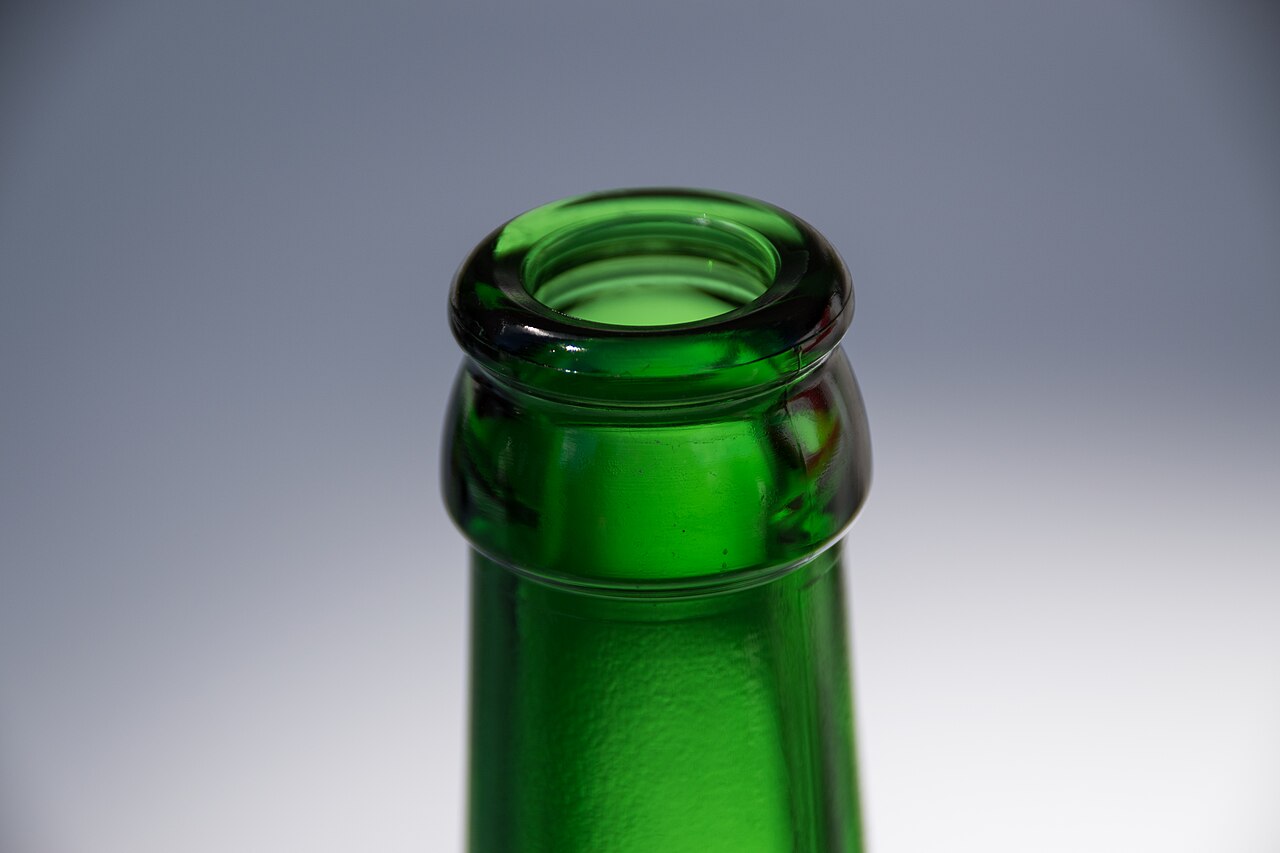
Fitment depends on inner neck diameter, neck finish, mouth height, shank diameter, shank length, material compression and bottle tolerance. If the shank is too small, the stopper may feel loose, leak during transport or allow evaporation. If the shank is too large, insertion force may be too high, the corker may jam, or the consumer may struggle to remove the closure.
Before production, buyers should provide a bottle technical drawing or physical bottle sample. The most useful details include neck bore, neck finish, mouth height, tolerance range, filling method and storage conditions.
| Required Item | Why It Matters |
|---|---|
| Bottle drawing | Confirms neck finish, bore size and tolerance |
| Physical bottle sample | Allows real fitment and pull-out testing |
| Filling-line information | Confirms automation and corking compatibility |
| Target market | Helps confirm compliance and packing needs |
| Storage and shipping conditions | Helps assess leakage, vibration and temperature risk |
| Logo file | Confirms decoration method and visual feasibility |
| Target quantity | Affects tooling, unit cost and production planning |
Sample testing is essential before mass production. A pre-production aluminium bar-top stopper should be tested for insertion force, extraction feel, sealing performance, visual alignment and compatibility with any capsule, sleeve or tamper-evident system.
Choosing the Right Shank Material
The shank is hidden inside the bottle neck, but it determines how aluminium bar-top stoppers perform during filling, storage, shipping and consumer use.
Natural cork shanks are valued for tradition, tactile feel and premium storytelling. They are often selected for whisky, brandy, rum and craft spirits where a classic closure experience supports the brand story.
Agglomerated cork and microgranule cork provide a more controlled cork-based option. They can balance cork appearance, cost and consistency for medium and large spirits production runs.
Synthetic shanks are widely used when brands need repeatable sealing performance, reduced cork dust risk and consistent dimensions. They are practical for automated filling lines, export markets and high-volume spirits packaging.
Synthetic cork-look shanks are useful when a brand wants a cork-style appearance but also needs controlled fitment and stable production behavior.
There is no single best shank for every project. The right choice depends on bottle neck tolerance, product positioning, target price, filling speed, destination market and expected consumer experience.
Are Aluminium Bar-Top Stoppers Suitable for Automated Bottling Lines?
Yes. Aluminium bar-top stoppers can be suitable for automated and semi-automated bottling lines when the head geometry, shank tolerance, insertion force and feeding behavior are tested before mass production.
On a filling line, the stopper may pass through bowls, rails, chutes, starwheels and corking heads. If the head geometry is unstable, the closure may not feed smoothly. If the shank tolerance varies too much, insertion force may become inconsistent. If the surface finish is too delicate, scratches may appear during high-speed handling.
Line trials help bottlers check feeding behavior, insertion depth, closure alignment, rejection rate and finished-bottle appearance. For contract bottlers, this step is especially important because a stopper that works well by hand may not perform consistently at production speed.
Grip and handling also matter in real bar environments. Knurled, grooved or ribbed sidewalls can improve tactile control while supporting a distinctive package identity. Kandacork Closures can engineer sidewall design options for spirits closures around diameter, material, grip feel and line-running requirements.
Quality Control for Bulk Aluminium Bar-Top Stoppers
Bulk aluminium bar-top stoppers should be inspected as both decorative packaging components and functional closures. Quality control should cover appearance, dimensions, sealing behavior and export packing strength.
Important inspection points include aluminium head diameter, head height, surface finish, color consistency, logo position, engraving depth, print registration, shank diameter, shank length and bonding strength between head and shank.
Functional testing may include insertion testing, pull-out testing, leakage testing, abrasion checks and carton drop simulation. For export orders, packing quality is especially important because metallic surfaces can be scratched by vibration, pressure or direct contact.
The ISO 9001 quality management standard is relevant because it focuses on documented processes, repeatable controls and continuous improvement. For closure buyers, this means clearer inspection procedures, batch records, supplier accountability and more consistent production expectations.
For packaging that may contact food or beverages, buyers should also understand food-contact expectations. The U.S. Food and Drug Administration provides guidance on food packaging and food contact substances, while the European Commission explains the EU framework for food contact materials. These references do not replace project-specific compliance review, but they help buyers define the documentation mindset expected from packaging suppliers.
Quality management is not only about finding defects. It is about preventing loose fit, tight insertion, color variation, decoration misalignment and transit damage before the product reaches the customer.
Common Problems and How to Prevent Them
Aluminium bar-top stoppers can perform reliably when they are designed and tested correctly. Most problems come from poor fitment, insufficient sampling, weak packing or unclear quality standards.
| Problem | Likely Cause | Practical Solution |
|---|---|---|
| Loose stopper | Shank diameter too small or bottle bore too wide | Test with real bottles and adjust shank size |
| Tight insertion | Shank too large or material too hard | Adjust shank diameter, profile or hardness |
| Leakage during transport | Poor fitment or unstable compression | Conduct seal testing and vibration checks |
| Scratched aluminium finish | Direct contact or poor carton protection | Use trays, separators, film or controlled packing |
| Color variation | Inconsistent anodizing or coating | Approve golden sample and define color tolerance |
| Logo misalignment | Poor fixture control or unclear artwork standard | Confirm artwork, tooling and pre-production samples |
| Line feeding problems | Head shape not suitable for automation | Conduct line trials before bulk production |
Loose fit is one of the most common problems. It can happen when the shank diameter is too small, the bottle tolerance is wider than expected or the shank material does not provide enough compression.
Tight insertion can also create problems. If the closure requires too much force, it may damage the shank, slow the corking machine or create a poor consumer experience.
Surface scratching is another key risk. Brushed, polished and dark anodized finishes can show scuffs if closures are packed too tightly or handled roughly. Protective packing, carton dividers and controlled loading can reduce this risk.
Sustainability Considerations for Aluminium Closures
Aluminium bar-top stoppers can support responsible packaging strategies when they are designed for durability, efficient production and reduced waste. Aluminium is widely used in packaging because it is lightweight, durable and recyclable in many material streams.
The Aluminum Association notes that aluminum recycling plays an important role in the modern aluminum industry, including reduced energy demand when recycled aluminum is used compared with primary aluminum production.
Sustainability should still be discussed accurately. A bar-top stopper is usually a mixed-material component because the aluminium head is connected to a cork or synthetic shank. Recyclability may depend on whether the closure can be separated and whether local recycling systems accept the materials.
Brands should avoid vague environmental claims and focus on practical improvements. These include reducing rejected closures, improving fitment accuracy, using efficient carton packing, preventing transit damage and considering recycled aluminium options where available.
For premium spirits, sustainable packaging is not only about material choice. It is also about designing the closure correctly the first time, reducing sampling waste, optimizing shipping volume and creating packaging that feels valuable enough for consumers to keep or reuse.
MOQ, Lead Time and Cost Factors
The cost of aluminium bar-top stoppers depends on head size, head shape, aluminium finish, logo method, shank material, order quantity, tooling complexity, inspection level and packing requirements.
Simple standard aluminium heads with basic decoration are usually more economical. Custom shapes, special anodized colors, inserts, embossing, debossing or multi-step finishing may require tooling and longer development time.
| Cost Factor | Impact on Price and Lead Time |
|---|---|
| Head size and shape | Larger or custom heads may require more material or tooling |
| Surface finish | Special anodizing, coating or polishing adds processing steps |
| Logo method | Engraving, embossing, printing and inserts have different cost levels |
| Shank material | Natural cork, synthetic and microgranule options vary in cost |
| Quantity | Larger orders usually improve unit price |
| Packing method | Trays, separators and protective film can increase packing cost |
| Testing requirements | Extra QC, line trials and documentation may affect timeline |
Buyers should prepare bottle drawings, physical samples, target stopper style, order quantity, logo file, preferred finish, shank preference, destination market and filling-line type before requesting a quote.
A typical project moves through design confirmation, technical review, quotation, sample production, fitment testing, pre-production approval, mass production and final inspection. For urgent projects, using an existing head shape and a proven shank material can reduce development time.
Sample Development and Bulk Order Workflow
A custom aluminium bar-top stopper project usually starts with bottle review and ends with approved bulk production. A clear workflow helps avoid delays, rework and fitment mistakes.
| Project Stage | What Happens | Buyer Output |
|---|---|---|
| Packaging brief | Supplier reviews bottle, brand style and target market | Initial recommendation |
| Technical review | Neck drawing, bore size and shank requirements are checked | Fitment direction |
| Design confirmation | Head shape, finish and logo method are selected | Sample specification |
| Sample development | Pre-production samples are produced for testing | Physical approval samples |
| Fitment testing | Insertion, pull-out, leakage and line behavior are reviewed | Adjustment notes or approval |
| Bulk production | Approved design moves into mass production | Finished order |
| Final inspection | Appearance, dimensions, packing and documentation are checked | Export-ready shipment |
This process is especially important for custom aluminium bar-top stoppers because a small dimensional difference can affect closure feel, leakage risk and automated bottling performance.
If a project also needs bottles, closures and decoration coordinated together, buyers may work with Kandacork Glass for broader glass packaging supply while Kandacork Closures focuses on closure engineering and stopper fitment.
Best Applications by Spirits Category
Aluminium bar-top stoppers can be adapted to many spirits categories because the head finish, logo method and shank material can be customized around the brand’s visual language.
For whisky and bourbon, brushed silver, matte black, bronze, antique silver and engraved aluminium tops work well with heavy-base glass, textured labels and premium cartons.
For gin and vodka, clean silver, white, black, blue and bright anodized finishes can create a modern and crisp appearance. Aluminium pairs especially well with clear glass, frosted bottles and minimalist label systems.
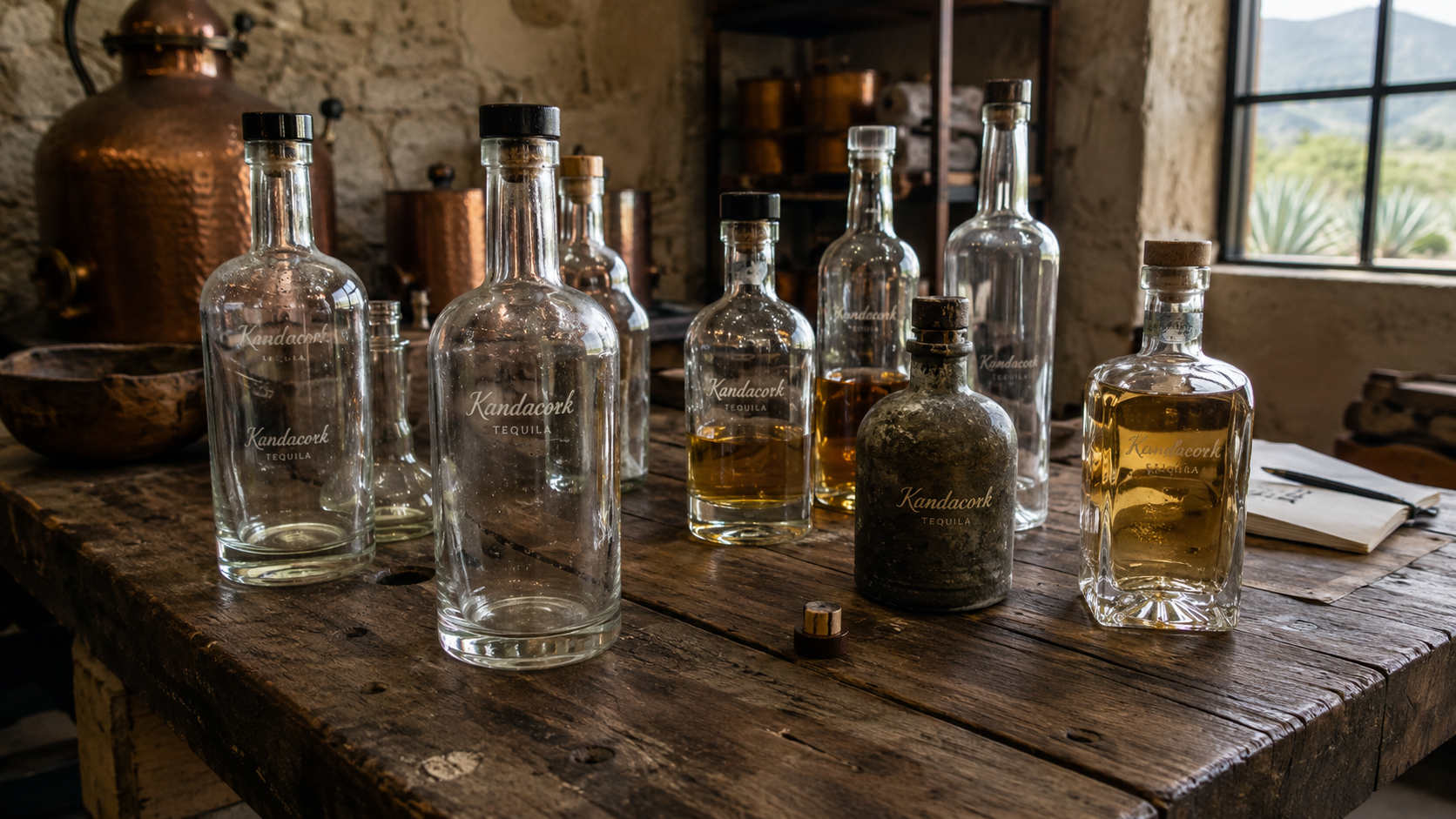
For rum and tequila, warmer metallic tones, embossed tops, textured sidewalls and bold logo details can help communicate authenticity, richness and craft value.
For liqueurs and flavored spirits, aluminium bar-top stoppers can support color-coded product ranges. A brand can use different closure colors for different flavors while keeping the same bottle shape and label architecture.
For travel retail and gift packaging, aluminium gives a premium appearance without excessive closure weight. This makes it suitable for multi-bottle packs, limited editions and seasonal releases.
Image Planning for Product Pages
Strong product images can improve buyer understanding and make the page easier to evaluate. For aluminium bar-top stoppers, the most useful visuals show both appearance and technical function.
| Image Type | Suggested Alt Text |
|---|---|
| Stopper on whisky bottle | custom aluminium bar-top stoppers for whisky bottles |
| Component diagram | aluminium bar-top stopper head and cork shank structure |
| Finish comparison | brushed matte and anodized aluminium bar-top closures |
| Fitment testing image | aluminium bar-top stopper neck fitment testing |
| Bulk packing image | export packing for aluminium spirits bottle stoppers |
Images should show real stopper proportions, realistic bottle applications, surface finishes and packing details. Avoid over-edited visuals that make the closure appear different from the production product.
How Kandacork Closures Supports Custom Aluminium Stopper Projects
Kandacork Closures helps buyers develop aluminium bar-top stoppers from packaging concept to production-ready closure. The process begins with the bottle, brand direction, market requirement and filling-line conditions.
For new bottle designs, Kandacork Closures can recommend stopper proportions that match the glass shape and target positioning. For existing bottles, the team can work from drawings or physical samples to develop a closure with the right fit, pull-out feel and appearance.
Project support can include design review, shank selection, finish recommendation, logo method evaluation, sample development, fitment adjustment, line-trial support, pre-production approval, bulk inspection and export packing.
Kandacork Closures also supports adjacent closure systems when a brand needs a coordinated packaging range. For bottle formats that require pilfer-proof metal caps instead of T-top stoppers, buyers can review custom ROPP closures for spirits, wine, olive oil and specialty bottle applications.
The goal is not only to produce aluminium bar-top stoppers that look premium. The goal is to supply closures that fit correctly, run smoothly, protect the product and strengthen the brand at every consumer touchpoint.
Traceability, QR Codes and Smart Packaging
Some spirits brands now use QR codes, serialized labels or connected packaging to support authentication, product information, loyalty programs or market-specific consumer experiences. The closure does not always carry the code, but it should be considered part of the total packaging system.
GS1 explains that a QR Code can carry more information than a traditional one-dimensional barcode, making it useful for packaging programs that connect physical products with digital information.
For premium spirits, digital packaging features should not interfere with closure performance or brand appearance. If a QR code, NFC feature, tamper-evident sleeve or security label is added near the stopper, the brand should confirm clearance, opening behavior, line handling and retail presentation before production.
Brands building more environmentally focused packaging systems may also coordinate stoppers, bottles and cartons with Kandacork Eco Glass when sustainability, lightweighting or glass packaging optimization is part of the project brief.
FAQ
What are aluminium bar-top stoppers used for?
Aluminium bar-top stoppers are used to seal and reseal spirits bottles while adding a premium metallic design element. They are common on whisky, gin, rum, vodka, tequila, mezcal, brandy and liqueur bottles where brand appearance, reliable fit and consumer experience all matter.
Are aluminium bar-top closures suitable for whisky, gin, rum and tequila bottles?
Yes. Aluminium bar-top closures are suitable for whisky, gin, rum, tequila, vodka, brandy, liqueurs and other spirits. The key is matching the aluminium head, shank material and stopper dimensions to the bottle neck finish, brand style and filling-line requirements.
How do I choose the right stopper size?
To choose the right stopper size, provide the bottle drawing or a physical bottle sample. The supplier should check inner neck diameter, neck finish, mouth height, shank diameter, shank length and target insertion force before approving samples for production.
Can aluminium bar-top stoppers be customized with a logo?
Yes. Aluminium bar-top stoppers can be customized with laser engraving, embossing, debossing, top printing, side printing, anodized color, brushed finishes, inserts and medallions. The best method depends on brand style, budget, order quantity and surface finish.
What is better: synthetic shank or natural cork shank?
Synthetic shanks are best for consistency, automated bottling and controlled sealing performance. Natural cork shanks are better for traditional premium positioning and a classic cork feel. Agglomerated or microgranule cork can provide a balanced option between cost, appearance and performance.
Can aluminium bar-top stoppers run on automatic bottling lines?
Yes. Aluminium bar-top stoppers can run on automatic bottling lines when head geometry, shank dimensions, feeding behavior and insertion force are tested before mass production. Line trials help confirm corking stability, alignment and rejection rate.
What is the MOQ for custom aluminium bar-top stoppers?
MOQ depends on head design, finish, logo method, tooling and shank material. Standard designs usually support lower order quantities, while custom shapes, special anodized colors, embossing or inserts may require higher MOQs because they involve tooling and additional production setup.
How long does sample development usually take?
Sample development depends on whether the project uses an existing aluminium head or a fully custom design. Existing shapes with standard finishes are usually faster, while custom tooling, special color matching, embossing, inserts or complex logo decoration require more development and approval time.
Can aluminium bar-top stoppers be matched with custom spirits bottles?
Yes. Aluminium bar-top stoppers can be matched with custom spirits bottles by adjusting head diameter, head height, finish, logo method, shank material and shank size. The best results come from reviewing the bottle drawing and testing physical samples before mass production.
Are aluminium T-top stoppers suitable for export spirits packaging?
Yes. Aluminium T-top stoppers can be suitable for export spirits packaging when fitment, leakage resistance, surface protection and carton strength are tested properly. Export projects should consider vibration, temperature changes, long-distance shipping and protective packing for metallic finishes.
What information is needed for a quotation?
For an accurate quotation, provide bottle drawings or samples, target stopper style, quantity, logo file, preferred aluminium finish, shank material, destination market, packing requirements and filling-line information. Kandacork Closures can review these details through its custom closure quote process and recommend the right design and cost structure.
Conclusion: Source Aluminium Bar-Top Stoppers With Fitment Confidence
Aluminium bar-top stoppers are a strong choice for spirits brands that want premium appearance, custom branding and reliable resealing performance. They can support modern whisky, gin, rum, vodka, tequila and liqueur packaging while giving buyers flexible options for color, logo, finish and shank material.
The most successful projects start with the bottle neck, not only the visible design. By confirming fitment, testing samples and approving surface quality before mass production, brands can avoid leakage, tight insertion, scratches, color variation and line-running issues.
Kandacork Closures supplies custom aluminium bar-top stoppers for spirits bottle projects that require both design value and technical reliability. Send your bottle drawing, physical sample, logo file, target quantity and market requirements to develop a closure that looks premium, fits correctly and supports long-term brand growth.