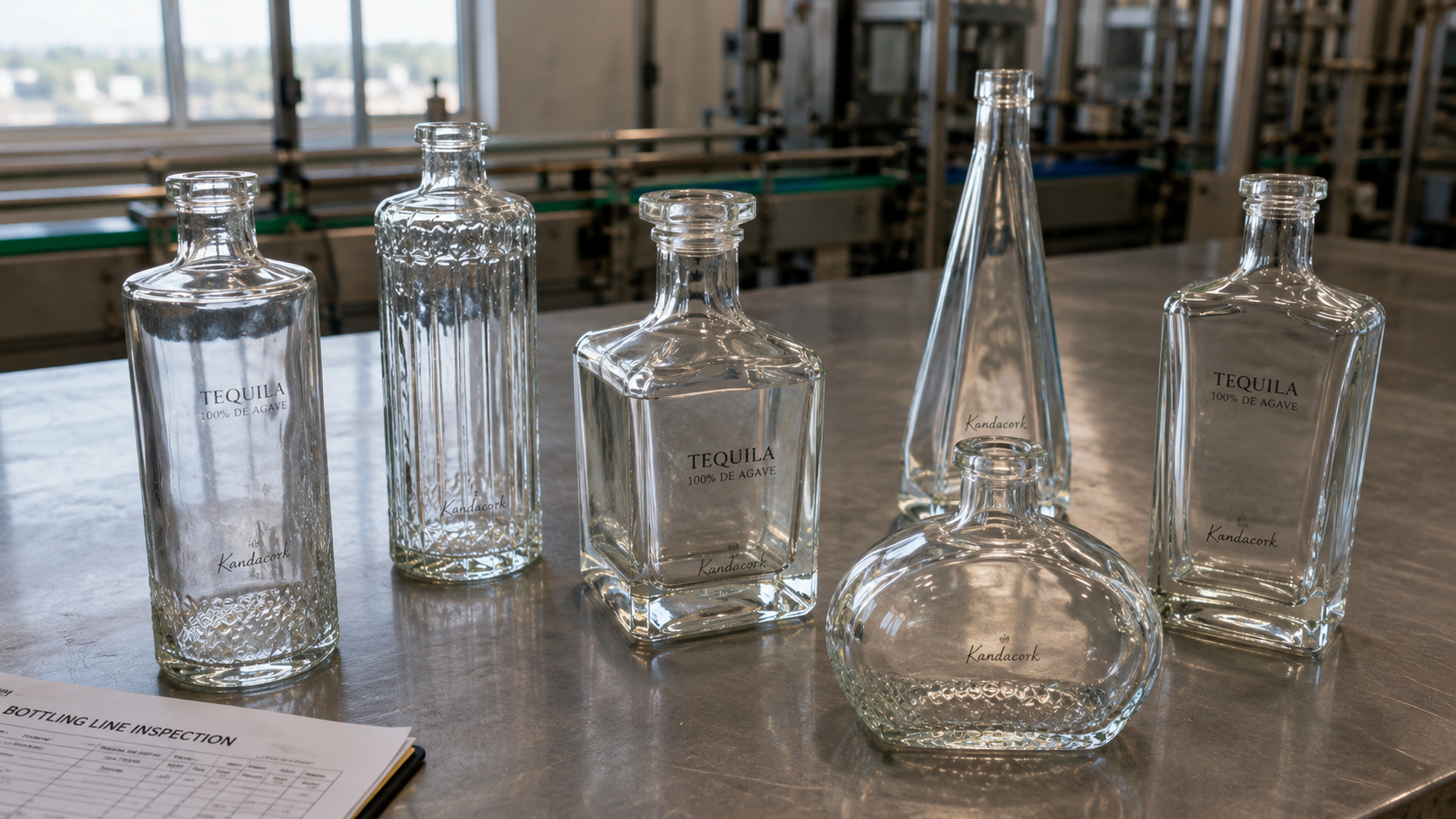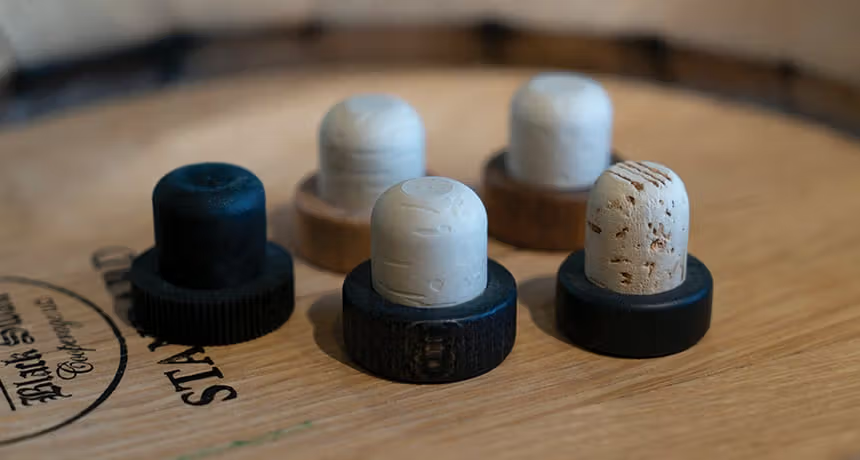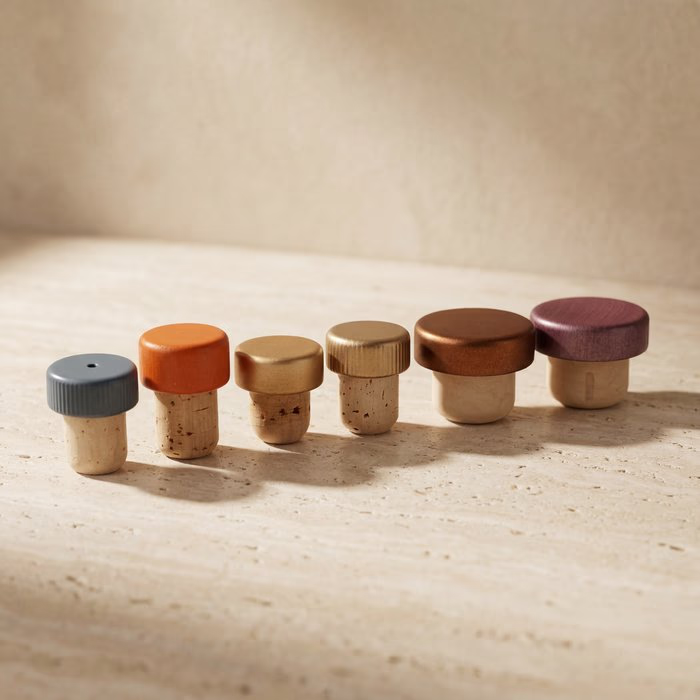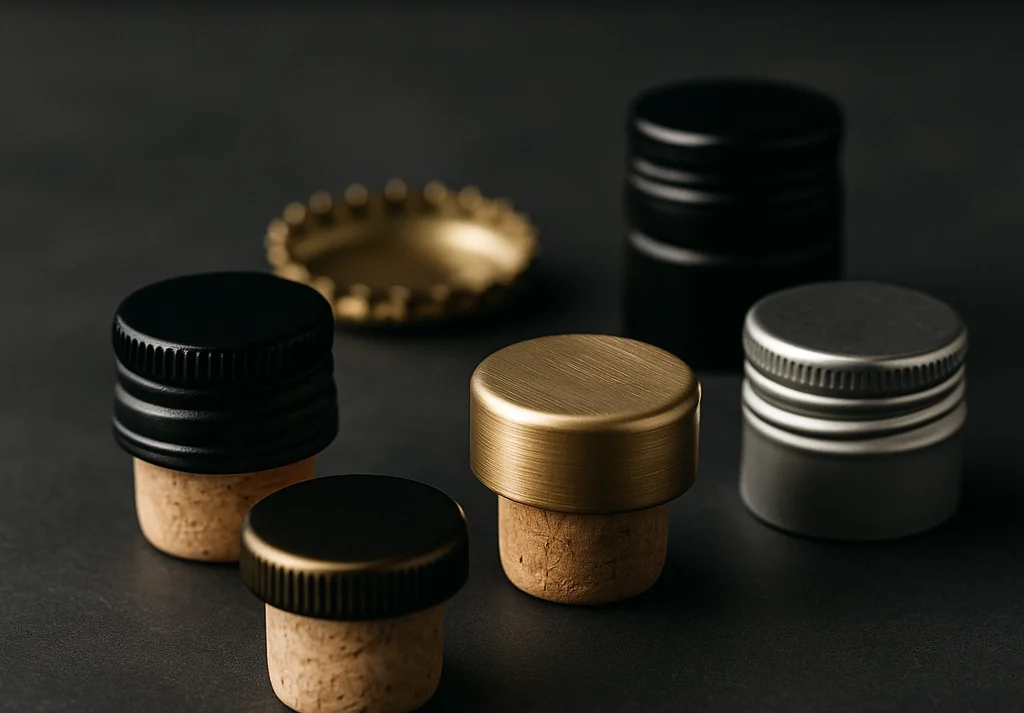
A screw cap looks simple from the outside, but its sealing performance depends on a precise relationship between the liner, application torque, removal torque, and bottle thread finish. For spirits brands, this is not only a packaging detail. It affects leakage risk, opening experience, alcohol compatibility, export reliability, tamper evidence, and the final impression customers have when they open the bottle.
For buyers sourcing screw caps for vodka, gin, rum, tequila, whisky, brandy, liqueurs, or RTD spirits, the safest approach is to treat the closure as a complete system. The cap shell, liner, bottle neck finish, sealing surface, capping method, and torque target must work together before bulk production begins.
Quick Answer
Screw cap performance depends on three connected factors. The liner creates the seal, torque controls liner compression, and thread finish determines whether the cap and bottle fit correctly. A cap that matches by diameter alone may still leak, strip, sit crooked, or open too easily if the liner, torque range, or bottle finish is wrong.
For spirits bottles, buyers should test the actual cap, liner, bottle, liquid, and filling method before placing a production order. Generic torque charts can help with early planning, but final approval should come from controlled application torque, removal torque, leak testing, storage trials, and line testing.
Why Screw Cap Liners, Torque, and Thread Finish Matter
Screw cap liners torque thread finish compatibility is one of the most important checks in spirits packaging. When this system is not reviewed properly, common problems include loose caps, label staining, carton damage, difficult opening, failed induction seals, cap back-off, stripped threads, and customer complaints after shipping.
A closure that feels secure during hand testing may not perform the same way on a semi-automatic or automatic capping line. A liner that works for dry products may not be suitable for high-proof alcohol. A bottle neck that looks similar to another finish may still require a different cap.
This is why Kandacork Closures supports spirits brands with a system-based approach: review the bottle finish, closure style, liner type, decoration method, torque range, filling process, and quality expectations before production.
What Is a Screw Cap Liner?
A screw cap liner is the sealing layer inside the closure. It sits between the cap and the bottle’s sealing surface. Its role is to create compression, reduce leakage risk, protect aroma, support resealability, and help the package survive storage and transport.
In spirits packaging, the liner affects:
- Alcohol compatibility
- Leak resistance
- Aroma retention
- Opening force
- Tamper evidence
- Induction sealing quality
- Export and e-commerce performance
- Long-term package stability
The liner should be selected according to the product, not only the cap size. A neutral vodka, botanical gin, spiced rum, whisky, tequila, cream liqueur, and flavored RTD spirit may each require different liner validation because alcohol strength, sugars, oils, acids, and flavor compounds can interact differently with packaging materials.
Food and beverage packaging components should also be reviewed through the lens of regulatory suitability. In the United States, the FDA provides information on packaging and food-contact substances, which is relevant when buyers evaluate liner materials, coatings, adhesives, and other components that may contact the product or package environment.
Common Screw Cap Liner Types
Different screw cap liner types solve different problems. The best option depends on sealing goal, product compatibility, capping method, tamper-evident requirement, and distribution conditions.
Foam Liners
Foam liners provide flexible compression and good resealability. They can help compensate for small variations in the bottle sealing surface and are often used where repeated opening and closing is expected.
For spirits brands, foam liners may be useful when the package needs a simple, resealable closure. However, alcohol compatibility must be confirmed. High-proof alcohol, botanical oils, citrus flavors, spices, colorants, and sugars can affect liner performance over time.
Pressure-Sensitive Liners
Pressure-sensitive liners use an adhesive layer that bonds to the bottle sealing surface after the cap is applied. They need consistent pressure, a clean sealing surface, and sufficient dwell time.
These liners may be useful in some packaging applications, but they should not be assumed suitable for liquid spirits without testing. If the bottle lip is wet, oily, dusty, or inconsistent, the liner may not bond correctly.
Heat Induction Liners
Heat induction liners use a foil and polymer structure to create a membrane seal across the bottle opening. After the cap is applied, the bottle passes under an induction sealing head. The foil heats and the polymer layer bonds to the bottle lip.
For spirits packaging, induction liners may be considered when a brand needs stronger tamper evidence, improved transport protection, or better leak resistance. The challenge is that induction sealing depends on several variables: liner compatibility, bottle material, sealing-surface quality, cap torque, line speed, induction power, and head alignment.
If the cap is under-torqued, the liner may not contact the bottle lip evenly. If the cap is over-torqued, the liner or closure may deform. Correct torque is therefore essential for reliable induction sealing.
Plastisol Liners
Plastisol liners are often used in metal closure systems where a gasket-like compound creates a seal. Suitability depends on the closure type, bottle finish, product compatibility, processing conditions, and storage environment.
For spirits bottles, buyers should confirm whether the compound is appropriate for the intended alcohol percentage and whether it supports the required sealing and opening performance.
Specialty Liners
Specialty liners may be needed for high-proof spirits, flavored spirits, oily formulations, liqueurs, export shipments, or premium closure systems. These liners should be evaluated through product compatibility testing, torque checks, leakage trials, and sensory review where aroma protection is important.
Liner Selection Matrix for Spirits Bottle Screw Caps
| Packaging Need | Recommended Liner Direction | Key Validation Test |
|---|---|---|
| Basic resealability | Foam liner or compatible compression liner | Removal torque and leak test |
| Tamper evidence | Induction liner or tamper-evident system | Seal peel test and leak test |
| High-proof spirits | Alcohol-compatible specialty liner | Product compatibility test |
| Export shipping | Higher-performance liner with controlled torque | Vibration, storage, and leakage test |
| Premium aluminum cap | Liner matched to cap height and bottle finish | Torque test and visual inspection |
| Flavored spirits or liqueurs | Liner tested against oils, sugars, and colorants | Aging and sensory check |
| Automatic filling line | Liner compatible with machine speed and torque control | Production-line torque audit |
This matrix is a starting point. Final closure approval should use the real bottle, real cap, real liner, real liquid, and real filling method.
What Is Application Torque?
Application torque is the rotational force used to apply a screw cap to a bottle. It is usually measured in inch-pounds or newton-centimeters.
Correct application torque compresses the liner enough to create a seal without damaging the cap, liner, or bottle finish. If torque is too low, the cap may leak, loosen, or fail to activate a pressure-sensitive or induction liner. If torque is too high, the cap may be difficult to open, the liner may over-compress, the threads may strip, or the glass neck may be stressed.
Torque charts can help during early planning, but they should not replace real package testing. The best torque range depends on the closure diameter, liner structure, cap material, bottle thread finish, sealing-surface quality, and filling-line setup.
What Is Removal Torque?
Removal torque is the force required to open the cap after it has been applied. It helps show whether the closure remains secure after the liner has settled.
Many packaging teams check removal torque shortly after capping and again after storage. This matters because a closure can lose torque over time. That reduction is often called back-off.
Back-off can be influenced by liner compressibility, cap material, thread geometry, bottle finish tolerance, temperature changes, vibration, and capping-machine consistency. A cap may feel tight immediately after application but become loose after transport.
For spirits brands, removal torque is both a quality issue and a consumer-experience issue. The closure must be secure enough to prevent leakage but not so tight that customers struggle to open the bottle.
What Is Thread Finish?
Thread finish describes the bottle neck diameter and thread style. It determines which closure can physically and functionally fit the bottle.
A common format is 28/410 or 28-410. The first number usually refers to the neck diameter in millimeters. The second number identifies the thread style or finish series. A 28/410 closure is not automatically interchangeable with a 28/400 closure because the diameter may be similar while the thread geometry is different.
The Glass Packaging Institute is a recognized trade association for the North American glass container industry, and glass finish terminology is often used by packaging teams when discussing container and closure compatibility. For buyers, the practical lesson is simple: confirm the technical finish, not only the visual appearance of the bottle neck.
For premium spirits bottles, thread finish becomes even more important because many projects use long-skirt aluminum caps, tamper-evident bands, decorative shoulders, custom glass finishes, pourer inserts, or higher-value decoration. For broader bottle matching, buyers may also coordinate with spirits bottle packaging resources so the bottle and closure are developed together instead of separately.
Key Neck Finish Dimensions Buyers Should Know
Packaging engineers use specific dimensions to confirm bottle and cap compatibility. Buyers do not need to become engineers, but they should know these terms well enough to request accurate drawings.
T Dimension
The T dimension is the outside diameter across the threads. It is one of the most important measurements for closure fit.
E Dimension
The E dimension is the outside diameter of the neck, excluding the thread. It helps define thread depth and cap engagement.
I Dimension
The I dimension is the inside diameter of the bottle opening. It matters for filling speed, pourer inserts, fitments, and plug-style components.
S Dimension
The S dimension is the distance from the top sealing surface to the start of the thread. It affects how the cap starts, seats, and compresses the liner.
H Dimension
The H dimension is the height of the neck finish. It affects cap height, skirt clearance, liner contact, and whether the closure bottoms out before a proper seal forms.
Two bottle necks can look similar but perform very differently once the cap is torqued. Technical drawings are always safer than visual matching.
Standards and Technical References That Support Better Closure Decisions
Recognized packaging entities help buyers evaluate closure compatibility with more discipline.
CETIE publishes technical documentation and best-practice guidance for bottling and associated packaging. Its work reinforces the importance of container finish design, closure compatibility, and bottling performance.
For distribution validation, ASTM D4169 provides a framework for performance testing shipping units through a uniform system of distribution-related hazards. Spirits brands that sell through export channels, retail distribution, or e-commerce can use this kind of thinking when evaluating whether a leak-resistant closure can survive real handling conditions.
Quality management also matters. ISO 9001 is a globally recognized quality management standard that helps organizations improve performance, meet customer expectations, and maintain quality processes. For closure buyers, supplier quality systems can influence dimensional control, liner insertion consistency, printing accuracy, inspection records, and corrective action.
These references do not replace supplier testing, but they help buyers ask better questions and build a stronger packaging approval process.
How to Match Screw Cap, Liner, Torque, and Thread Finish
The most reliable approach is to review the closure as a system.
Start with the bottle neck finish. Confirm the diameter, thread style, sealing surface, and technical drawing. If the bottle is already selected, the cap must be matched to that bottle. If the closure style is already selected, the bottle finish must be compatible with that closure.
Next, select the liner based on the product. For spirits, this includes alcohol percentage, aroma sensitivity, flavor oils, colorants, sugar content, and storage conditions. A botanical gin may require different testing from a neutral spirit. A cream liqueur may create different compatibility concerns from a dry whisky.
Then define the target torque range. Use charts only as references. Validate the final value with physical samples and measure both application torque and removal torque.
Finally, test the production method. Hand-applied caps can behave differently from caps applied by semi-automatic or automatic capping equipment. If the project includes ROPP closures or other pilfer-proof systems, line trials should confirm forming, sealing, opening torque, and tamper-evident performance.
Common Mistakes When Ordering Screw Caps
Many closure problems begin before production because buyers choose a cap by appearance, catalog size, or price without confirming technical compatibility.
Choosing by Diameter Only
A 28 mm cap is not enough information. The thread finish, cap depth, liner type, and bottle sealing surface must also match. A 28/400 closure and a 28/410 closure may look similar, but they are not automatically interchangeable.
Ignoring Liner Alcohol Compatibility
A liner that works for water, dry products, or personal-care packaging may not work for spirits. High-proof alcohol, botanicals, citrus oils, spices, and sugars can affect liner performance. Cap liner compatibility testing should use the actual liquid.
Using a Generic Torque Chart Without Testing
Torque charts provide a useful starting point, but they do not replace validation. Application torque and removal torque should be checked with the actual bottle, cap, liner, and filling method.
Testing by Hand but Producing by Machine
Hand-applied caps may pass a small sample test, but automatic capping can create different torque behavior. Line speed, chuck condition, cap feeding, bottle handling, and capper setup all affect closure performance.
Assuming Premium Decoration Solves Technical Fit
A custom aluminum screw cap, embossed cap, matte cap, metallic cap, or long-skirt cap still needs the correct liner and thread engagement. For projects where shelf appearance is central, closure decoration and branding should be planned alongside fit, torque, and liner selection.
Forgetting Export and E-Commerce Conditions
Spirits bottles may face vibration, pressure changes, temperature swings, and rough handling. A closure that works in the tasting room may not survive parcel delivery or overseas shipping without validation.
Sample Testing Process for Screw Cap Closures
A structured sample testing process helps reduce leakage risk and prevents expensive corrections after production.
Confirm the Bottle Drawing and Neck Finish
Collect the bottle technical drawing and confirm the thread finish, T dimension, E dimension, I dimension, S dimension, H dimension, sealing surface, and bottle material. If a new bottle is still being developed, coordinate the closure and glass design early with resources such as Kandacork Glass.
Select Two or Three Liner Options
Ask the closure supplier to recommend liner options based on product type, alcohol percentage, aroma sensitivity, tamper-evident needs, and shipping conditions. Testing multiple liners can help identify the best balance between sealing performance and opening experience.
Apply Caps at Controlled Torque Ranges
Use a torque tester or controlled capping equipment to apply caps within defined torque ranges. Avoid approving a closure only through casual hand tightening.
Check Removal Torque After Settling
Measure removal torque after an initial settling period and again after storage. This helps identify cap back-off, over-compression, inconsistent liner behavior, or poor thread engagement.
Run Leak, Storage, and Vibration Checks
Test bottles upright, inverted, and on their side where appropriate. Include temperature variation, vibration, and shipping simulation for export or e-commerce products.
Review Appearance and Consumer Experience
Inspect cap alignment, tamper-evident bridge quality, decoration, skirt condition, label staining, and ease of opening. A closure must perform technically and support the brand experience.
Approve the Best Cap and Liner Combination
Choose the closure system that performs consistently with the real bottle, real product, real liner, and real filling process. Keep records of the approved cap, liner, torque range, test results, and production settings.
Spirits Bottle Closure Considerations
Spirits packaging has different priorities from many dry-product or personal-care applications. The closure must protect the liquid, aroma, brand value, and customer trust.
Alcohol Compatibility
High-proof alcohol can interact with unsuitable liner materials. Flavored spirits may include citrus oils, spices, botanicals, sugars, or colorants that influence liner performance. Buyers should request liner compatibility guidance and test samples with the actual product.
Aroma Retention
Gin, whisky, rum, tequila, brandy, vodka, and liqueurs all depend on aroma perception. A poor liner can contribute to aroma loss, unwanted odor transfer, or quality concerns. For premium spirits, sensory testing should be part of packaging validation.
Leak Resistance
Leakage is one of the most expensive closure failures. It can damage labels, cartons, shipping cases, and customer confidence. A leak-resistant screw cap depends on liner compression, torque control, thread finish, bottle sealing surface, and filling-line setup.
Premium Appearance
Spirits brands often use aluminum screw caps, embossed caps, printed closures, matte finishes, gloss finishes, metallic colors, or long-skirt designs. Decoration must be planned with closure performance in mind. A beautiful cap still needs the correct liner, thread engagement, and torque window.
Sustainability and Glass Compatibility
Many spirits brands also consider recyclability, refill programs, lightweighting, and premium glass presentation. When the bottle is part of a broader sustainability or packaging strategy, Kandacork Eco Glass can help align glass packaging choices with closure compatibility, shelf appeal, and practical sourcing needs.
Manual vs Automatic Capping
Manual capping is common for small-batch spirits, pilot runs, and craft distilleries. It offers flexibility but can create torque variation from operator to operator.
Semi-automatic capping improves consistency but still needs setup checks. Automatic capping lines require more detailed validation because speed, chuck condition, cap sorting, bottle handling, and line pressure can all affect final closure performance.
For every production method, a torque tester should be used to document performance. Operators should record removal torque, leakage results, and visible defects such as crooked caps, cap skirt damage, broken tamper bridges, label staining, or carton wetting.
Troubleshooting Common Screw Cap Problems
The Screw Cap Leaks
The most common causes are under-torque, wrong liner selection, damaged bottle sealing surface, mismatched thread finish, poor cap application, or product-liner incompatibility.
A leaking cap should not be solved by simply increasing torque. Higher torque may hide one issue while creating another, such as hard opening, thread stripping, or glass stress. The full system should be checked.
The Cap Is Too Hard to Open
A cap may be too hard to open because the application torque is too high, the liner is over-compressed, the thread fit is too aggressive, or the closure material is not suited to the bottle finish.
For consumer spirits packaging, opening force must balance safety and usability. If customers need excessive force, the closure experience can damage brand perception.
The Cap Strips or Skips Threads
Thread stripping can occur when the cap and bottle finish do not match, when the closure is applied with too much torque, or when the cap material cannot withstand the application force.
Check the T dimension, thread style, cap material, closure drawing, and capping-head setup.
The Induction Seal Fails
Induction seal failure may be caused by insufficient torque, poor liner contact, contaminated sealing surfaces, wrong liner material, incorrect induction power, excessive line speed, or poor cap alignment.
The cap must hold the liner evenly against the bottle lip before induction sealing. If the liner does not make correct contact, heat alone will not create a reliable seal.
The Cap Looks Crooked
A crooked cap can result from cross-threading, bottle finish variation, poor cap feeding, unstable bottle handling, or incorrect capping-head alignment. Crooked caps should be treated as a quality warning, not only a cosmetic issue.
Buyer Checklist Before Ordering Custom Screw Caps
Before ordering custom screw caps, prepare the following information:
- Bottle neck finish, such as 28/400 or 28/410
- Bottle technical drawing
- Cap diameter and thread style
- Bottle material and sealing-surface condition
- Closure material, such as aluminum or plastic
- Liner type and liner thickness
- Product type and alcohol percentage
- Flavor oils, sugar content, or special ingredients
- Filling temperature
- Manual, semi-automatic, or automatic capping method
- Target application torque
- Target removal torque
- Tamper-evident requirements
- Decoration requirements
- Shipping method and export market
- Leak-test requirements
- Sample approval quantity
- Bulk production tolerance expectations
A detailed checklist helps suppliers recommend the correct screw cap liners torque thread finish combination for the actual package rather than guessing from cap size alone. Buyers comparing multiple closure formats can also use a custom closure sourcing guide to organize technical, branding, and production requirements before sampling.
Mini Glossary for Closure Buyers
Application Torque
The rotational force used to apply the cap to the bottle.
Removal Torque
The force required to open the cap after application and settling.
Back-Off
The reduction of torque after the closure has been applied. It can happen because of liner compression, temperature changes, vibration, or material relaxation.
Thread Finish
The bottle neck diameter and thread style that determine closure compatibility.
Neck Finish
The complete finish area of the bottle neck, including threads, sealing surface, height, and related dimensions.
T Dimension
The outside diameter across the bottle threads.
E Dimension
The outside diameter of the neck excluding the thread.
I Dimension
The inside diameter of the bottle opening.
S Dimension
The distance from the top sealing surface to the start of the thread.
H Dimension
The height of the neck finish.
Induction Liner
A liner with a foil layer that can bond to the bottle lip when heated by induction equipment.
Pressure-Sensitive Liner
A liner that bonds to the bottle sealing surface through pressure after the cap is applied.
Tamper-Evident Closure
A closure system designed to show visible evidence if the package has been opened or disturbed.
How Kandacork Closures Supports Spirits Brands
Kandacork Closures works with spirits brands that need closure solutions for custom bottles, premium packaging, and scalable production. Instead of treating the cap as a separate component, the team helps evaluate the full closure system.
Support may include screw cap style selection, liner matching guidance, bottle neck finish review, closure decoration options, tamper-evident closure planning, sample coordination, production-ready closure sourcing, and packaging compatibility discussion.
Kandacork Closures can also support buyers who need custom aluminum screw caps, leak-resistant spirits closures, cap liner compatibility testing, removal torque testing, induction seal torque control, and coordinated spirits closure systems for broader packaging programs.
To move from concept to sample approval, send the bottle drawing, thread finish, cap size, liner preference, alcohol percentage, filling method, tamper-evident needs, decoration requirements, and target order quantity. The team can help prepare compatible screw cap samples before bulk production.
FAQ
What is the best liner for screw caps on spirits bottles?
The best liner depends on alcohol compatibility, sealing goal, tamper-evident needs, and filling conditions. Foam liners may support resealability, induction liners may improve tamper evidence and leak resistance, and specialty liners may be needed for high-proof or flavored spirits. Always test the liner with the actual product before bulk production.
What torque should be used for screw caps?
Torque should be based on cap size, liner type, bottle finish, closure material, and filling process. General torque charts can provide a starting point, but the final value should be validated through removal torque testing, leak testing, storage trials, and line testing.
How do I know my bottle thread finish?
Check the bottle drawing or measure the neck finish. The first number usually indicates neck diameter, while the second number indicates thread style. For example, 28/410 means a 28 mm neck with a 410 thread finish. If you are unsure, send the bottle drawing or sample to your closure supplier.
Why do screw caps leak during shipping?
Shipping leaks may be caused by under-torque, closure back-off, poor liner compression, mismatched thread finish, damaged sealing surfaces, temperature changes, or vibration. Export and e-commerce shipments should be tested before large-scale release.
Can the same screw cap fit different bottles?
Only if the neck diameter, thread style, sealing surface, and closure depth are compatible. Bottles with similar-looking necks may still require different closures. Always confirm the technical finish, not only the visual shape.
Is an induction liner necessary for spirits bottles?
An induction liner is not always necessary, but it can be useful when a brand needs stronger tamper evidence, improved leak resistance, or better transport protection. The decision depends on bottle material, cap design, product type, filling line, and market requirements.
Why does removal torque change after capping?
Removal torque can change because liners compress, materials relax, and the closure system responds to temperature or vibration. This is why torque should be checked shortly after capping and again after storage or shipping simulation.
What information should I send to a screw cap supplier?
Send the bottle drawing, neck finish, cap size, liner preference, closure material, alcohol percentage, filling method, tamper-evident requirement, decoration needs, target order quantity, and expected shipping conditions.
Can Kandacork Closures customize screw caps for spirits brands?
Yes. Kandacork Closures can support custom screw cap projects for spirits packaging, including cap style, liner selection, bottle fit review, decoration, tamper-evident options, and sample preparation. To begin, request closure matching support with your bottle drawing and packaging requirements.
Conclusion
Screw cap performance depends on more than diameter. A reliable spirits closure requires the right liner, controlled torque, and a matching thread finish. When these three factors work together, brands can reduce leakage risk, improve opening experience, protect product aroma, and create a more professional packaging system.
For buyers, the best approach is to confirm the bottle neck finish, choose the correct liner, validate application and removal torque, and test the real package before bulk production.
Kandacork Closures helps spirits brands turn technical closure requirements into practical packaging decisions. Whether the project involves vodka, gin, rum, tequila, whisky, brandy, liqueur, or RTD spirits, the strongest results come from matching the cap, liner, bottle, torque range, decoration, and filling process before production begins.